Rachel Robles contracted COVID in March 2020. The 27-year-old data analyst has not gone a single day without symptoms since. Most doctors did not believe her when she described how she had gone from running the Brooklyn Half Marathon the previous year to enduring such crippling fatigue that her couch felt like quicksand. How she suddenly struggled to put numbers together, despite her technical training. How no matter how many breaths she took, she always felt starved for air.
Three months in, one doctor told her, “COVID doesn’t last for 90 days. You either get over it or you die.”
That dichotomy—in which the only possible outcomes of COVID are either complete recovery or death—has turned out to be anything but true. Between 8 million and 23 million Americans are still sick months or years after being infected. The perplexing array of symptoms known as long COVID has left an estimated 1 million of those people so disabled they are unable to work, and those numbers are likely to grow as the virus continues to evolve and spread. Some who escaped long COVID the first time are getting it after their second or third infection. “It is a huge public health crisis in the wake of acute COVID infection,” says Linda Geng, a physician and codirector of Stanford Health Care’s long COVID clinic.
Over the last few months, Republican politicians have been working on a nonsense plan to force their spam into your inboxes. This kicked off following some Republican operatives misunderstanding (whether through their own cluelessness, or on purpose) a study about political spam and how different email providers deal with it. Since then, Republicans have been screaming about how Google is trying to silence their campaign emails — even though their emails tend to be a lot more spammy. And then you have GOP digital marketing people being so clueless that they misconfigure their email settings, and blame Google for it, rather than realizing it was their own fault (the party of personal responsibility is no longer, it seems).
Anyway, faced with so much misplaced anger over all this, Google caved, and introduced a pilot program to whitelist political spam. It requested that the Federal Election Commission bless the program to make sure that it was not deemed an unauthorized in-kind political contribution. Like any such request, this was opened to public comment, and the public absolutely hated the idea. I mean, really, really, really hated it.
It turned into one of the most active items ever on the FEC’s docket, with over 2600 comments on the initial proposal, and another 100 on the draft opinions the FEC released (one in favor of the program, and one rejecting it) and almost all universally spoke out against political spam and asked the FEC to reject the program.
Except, of course, the petition was not about whether or not political spam is good or bad, or whether or not Google’s whitelisting plan was good or bad. It was just about whether or not it constituted an in-kind contribution that would trigger campaign finance laws. And there’s really no reasonable way to argue that it should trigger such laws. And, so, the FEC has (quite reluctantly) given its blessing to the program.
This is the right call, legally speaking. This kind of service shouldn’t be seen as an in-kind contribution, and it sounds like all but one of the FEC commissioners realized that. Ellen Weintraub disagreed, calling it an in-kind contribution, and pushed forth the draft opinion rejecting the program. Weintraub argued that this kind of thing — avoiding spam filters — seems like something of value that lots of others would want, and to only offer it to campaigns suggests that political actors are getting something special, which (to her) is an in-kind contribution. Google responded to that in noting that this is being offered equally across the board to any campaign, and the issue of in-kind contribution tends to be one that is focused on trying to influence an election one way or the other — and this is not designed to do that.
Other commissioners noted, correctly, that even as they disliked the very idea of the program, there was no legal basis to block it. You can see the discussion in the video below, starting at 5 minutes and 40 seconds.
It’s actually pretty interesting to watch the discussion. Commissioners repeatedly try to dig down on just why Google is doing this, and even ask Google’s lawyer directly if it’s in response to Republicans whining about this. The Google lawyer diplomatically tap dances around that, even though that’s obviously what’s going on here.
Since Google keeps insisting its trying this pilot program for commercial, not political reasons, one commissioner asks Google’s lawyer if she’s aware of the universal anger in the comments to the program — leading her to note that they’re paying attention to all sorts of feedback and that’s why this is a “pilot” program, to see how users actually like it.
Of course, that all feels like a smokescreen. Google is doing this to try to calm down technically ignorant, but very angry, Republicans. Of course, saying that then makes this feel more like a political move — not necessarily to benefit one party, but to stop it from attacking the company so much (not that that will actually work).
It would be nice if people could just admit that the Republicans pushing for all this are a bunch of tech-clueless children, but apparently that’s not allowed to be part of the discussion.
One commissioner, Dara Lindenbaum, who only recently joined the Commission, noted that she was supporting the approval of the pilot program even though “I don’t want to, and it is for the same reason all the commenters don’t want to.” But, as she notes, the precedents all support the program, and she (rightly) fears that rejecting it could hinder future innovations and pilot programs for politicians that would be useful. So, even though this program is about spam — and people rightly have a negative feeling about spam — that’s not really the issue for the FEC to decide. Rather it’s whether or not this program is a problematic in-kind contribution, and all but Weintraub couldn’t see how it could be seen as one.
Again, this is annoying, but it’s right from a legal standpoint. One hopes that Google quickly discovers that with this program users absolutely loathe it and political spam, and they decide not to expand this program, but to shutter it.
But, congrats to the technically clueless Republicans out there who are forcing more spam into everyone’s in-boxes. I hope that Democrats start campaigning on just how much you want to seize people’s inboxes for your annoying spam.
Even after the release of the warrant and property receipt on Friday afternoon, we don’t exactly knowwhat the documents were or even if they arerelated to America’s nuclear arsenal or that of a foreign power. Trump, for his part, predictably slammed the report on social media, calling it a “hoax.” But if the Washington Post’s reporting is even remotely accurate, it raises troubling questions about why the former president decided to purloin the documents. It also explains why the Justice Department was willing to go to such extreme lengths to recover them.
Yet while Attorney General Merrick Garland’s logic in authorizing the search now appears sound, its consequences appear increasingly dire.
On Thursday, a man identified as Ricky Shiffer — a Trump supporter who attended the January 6, 2021, Capitol riot — attacked an FBI building in Cincinnati, Ohio, with a nail gun, ultimately dying in a confrontation with police. On Truth Social, Trump’s social media platform, Shiffer indicated that he was motivated by the FBI raid. “We must not tolerate this one,” he wrote in one message.
On Friday, Temple Beth David — a South Florida synagogue attended by the federal judge who authorized the search — was scheduled to host evening services on the beach. But a member of the synagogue on Thursday said that the Beach Shabbat event was canceled amid a deluge of antisemitic threats. The judge’s involvement in the synagogue had been publicly identified in a Tuesday Twitter post by Lenny Dykstra, a former New York Mets outfielder and convicted felon, who followed up with antisemitic comments about Beth David’s religious practices.
What we are seeing is shocking, but it’s part of an established pattern. Trump engages in some kind of egregious misbehavior, prompting official scrutiny and condemnation of his actions. He treats these actions as unjustified persecution, proof that the “deep state” is out to get him, a claim that the Republican Party and conservative press dutifully echo. His most radical supporters become even more radical, even contemplating violence.
Eva Marie Uzcategui/Bloomberg via Getty Images
Supporters of former President Donald Trump rally outside Mar-a-Lago in Palm Beach, Florida, on August 9.
January 6 is, of course, the most terrible illustration of this sequence to date. As Trump’s legal problems mount, there is every reason to expect it to repeat and even escalate, given the furious rhetoric from Trump and the GOP in recent days attacking the foundational legitimacy of the American state. The consequences could be calamitous.
The Trump-GOP-extremism feedback loop
We are closer to the beginning of the Trump investigations than the end of them.
None of these investigations is a witch hunt. In each case, there are serious reasons to believe that the president violated the law. If prosecutors chose not to even investigate Trump, that itself would be politically motivated — a tacit admission that if a political figure is popular enough, he is above the law.
But the result of prosecutors doing their job is predictable: Trump reacts by casting it as proof that he is under attack by nefarious forces. Take his reaction to the reports of the nuclear weapons documents, posted on Truth Social:
The litany of grievances, the sense that Trump has been forever persecuted by the government, the unfounded implication that the FBI was “planting information” at his house — all of it screams victimization, that Trump is the target of a vast and shadowy conspiracy pulling the FBI’s strings.
The fact that a Truth Social user had just been radicalized by such talk — posting violent threats on the site before attempting an armed breach of an FBI building — isn’t deterring Trump at all. He is, as the political scientist Julia Azari puts it, a nationalist who has no concept of a nation; a narcissist who abuses the language of patriotism without any commitment to the underlying idea that he has some responsibility to preserve order and cohesion in the polity. In fact, he does the opposite — sowing division and stoking violent distrust if it helps him.
Perhaps Trump’s talk wouldn’t be so dangerous if the rest of the GOP would work to tamp it down. Yet it’s become excruciatingly clear in the wake of his emergence as the GOP’s standard-bearer that Republicans are not taking Trump’s transgressions and troubles as opportunities to dump him, but rather to dig in, right by his side, in similarly radical terms.
Look at what leading Republicans said immediately after the news of the raid broke: how willing the party was to attack federal law enforcement, how swiftly they moved to paint the FBI as jackbooted thugs operating at the behest of a tyrannical federal government.
Florida Gov. Ron DeSantis, the leading non-Trump prospective candidate in the 2024 GOP primary race, called it “another escalation in the weaponization of federal agencies against the Regime’s political opponents.” Florida Sen. Rick Scott, head of the National Republican Senatorial Committee, described the FBI’s behavior as “3rd World country stuff.” New York Rep. Elise Stefanik, the third-ranking House Republican, called for “an immediate investigation and accountability into Joe Biden and his Administration’s weaponizing this [Justice] department against their political opponents.”
Conservative media has taken a similar line. Fox News has been leading the charge against Judge Bruce Reinhart, who authorized the FBI search warrant, on grounds that he represented clients with ties to Jeffrey Epstein over a decade ago. On Thursday night, Fox host Brian Kilmeade displayed a fake picture of Reinhart on a plane with Epstein confidante Ghislaine Maxwell. Little wonder, then, that Reinhart and his synagogue have been receiving threats.
Susan Walsh/AP
Rep. Elise Stefanik, backed by, from left, fellow Reps. Rick Crawford, Trent Kelly, and Mike Turner, speaks at a news conference on Capitol Hill on August 12 concerning the FBI serving a search warrant at Mar-a-Lago.
This behavior will not end as the investigations into Trump continue. In fact, it’s almost certain to escalate. The more desperate he is, the more aggressively he’s willing to attack the legal system and even the broader government as secret pawns of his enemies — a tactic we’ve seen before with Trump and similar far-right populists abroad, like Israel’s Benjamin Netanyahu (currently on trial on corruption and bribery charges).
As it escalates, there is every chance that Trump’s supporters will become more radicalized. A recent survey from academics at UC Davis found that half of Americans agreed that “in the next several years, there will be civil war in the United States.”
This is almost certainly overstated, but the finding does point to a growing and well-founded belief that more Americans have become willing to engage in political violence. The Department of Homeland Security has thought since at least 2020 that white nationalists are now the greatest terrorist threat to the American homeland. The odds of a greater increase in far-right terrorism, especially from disgruntled Trump supporters who have been taught to see the Biden administration as part of a tyrannical “Regime,” are rising — and will continue to rise as the broader conservative movement keeps using the virulent anti-government language of the fringe right.
The United States is at a troubling crossroads. If investigators in jurisdictions around the country drop their inquiries into Trump, they are tacitly conceding that he can break any laws without consequence prior to a near-certain 2024 presidential run — an incredibly dangerous precedent. If they continue their work, they risk stoking further unrest and civil conflict, pushing an already polarized country toward an even more dangerous form of division.
Trump and his enablers have taken the country to a very dark place. And we have every reason to believe things will get darker before the dawn.
The US Federal Election Commission approved a Google plan on Thursday to let campaign emails bypass Gmail spam filters. The FEC's advisory opinion adopted in a 4-1 vote said Gmail's pilot program is permissible under the Federal Election Campaign Act and FEC regulations "and would not result in the making of a prohibited in-kind contribution."
The FEC said Google's approved plan is for "a pilot program to test new Gmail design features at no cost on a nonpartisan basis to authorized candidate committees, political party committees, and leadership PACs." On July 1, Google asked the FEC for the green light to implement the pilot after Republicans accused the company of giving Democrats an advantage in its algorithms.
Republicans reportedly could have avoided some of their Gmail spam problems by using the proper email configuration. At a May 2022 meeting between Senate Republicans and Google's chief legal officer, "the most forceful rebuke" was said to come "from Sen. Marco Rubio (R-Fla.), who claimed that not a single email from one of his addresses was reaching inboxes," The Washington Post reported in late July. "The reason, it was later determined, was that a vendor had not enabled an authentication tool that keeps messages from being marked as spam, according to people briefed on the discussions."
The past two election cycles have seen an explosion of attention given to “echo chambers,” or communities where a narrow set of views makes people less likely to challenge their own opinions. Much of this concern has focused on the rise of social media, which has radically transformed the information ecosystem.
However, when scientists investigated social media echo chambers, they found surprisingly little evidence of them on a large scale – or at least none on a scale large enough to warrant the growing concerns. And yet, selective exposure to news does increase polarization. This suggested that these studies missed part of the picture of Americans’ news consumption patterns. Crucially, they did not factor in a major component of the average American’s experience of news: television.
We first measured just how politically siloed American news consumers really are across TV and the web. Averaging over the four years of our observations, we found that roughly 17% of Americans are politically polarized – 8.7% to the left and 8.4% to the right – based on their TV news consumption. That’s three to four times higher than the average percentage of Americans polarized by online news.
Moreover, the percentage of Americans polarized via TV ranged as high as 23% at its peak in November 2016, the month in which Donald Trump was elected president. A second spike occurred in the months leading into December 2018, following the “blue wave” midterm elections in which a record number of Democratic campaign ads were aired on TV. The timing of these two spikes suggests a clear connection between content choices and events in the political arena.
The 2018 midterm elections saw campaign ads reach new levels of partisanship.
Staying in TV echo chambers
Besides being more politically siloed on average, our research found that TV news consumers are much more likely than web consumers to maintain the same partisan news diets over time: after six months, left-leaning TV audiences are 10 times more likely to remain segregated than left-leaning online audiences, and right-leaning audiences are 4.5 times more likely than their online counterparts.
While these figures may seem intimidating, it is important to keep in mind that even among TV viewers, about 70% of right-leaning viewers and about 80% of left-leaning viewers do switch their news diets within six months. To the extent that long-lasting echo chambers do exist, then, they include only about 4% of the population.
Narrow TV diets
Partisan segregation among TV audiences goes even further than left- and right-leaning sources, we found. We identified seven broad buckets of TV news sources, then used these archetypes to determine what a typical unvaried TV news diet really looks like.
We found that, compared to online audiences, partisan TV news consumers tend not to stray too far from their narrow sets of preferred news sources. For example, most Americans who consume mostly MSNBC rarely consume news from any other source besides CNN. Similarly, most Americans who consume mostly Fox News Channel do not venture beyond that network at all. This finding contrasts with data from online news consumers, who still receive sizable amounts of news from outside their main archetype.
Distilling partisanship
Finally, we found an imbalance between partisan TV news channels and the broader TV news environment. Our observations revealed that Americans are turning away from national TV news generally in substantial numbers – and crucially, this exodus is more from centrist news buckets than from left- or right-leaning ones. Within the remaining TV news audience, we found movement from broadcast news to cable news, trending toward MSNBC and Fox News.
Together, these trends reveal a counterintuitive finding: Although the overall TV news audience is shrinking, the partisan TV news audience is growing. This means that the audience as a whole is in the process of being “distilled” – remaining TV viewers are growing increasingly partisan, and the partisan proportion of TV news consumers is on the rise.
Why it matters
Exposure to opposing views is critical for functional democratic processes. It allows for self-reflection and tempers hostility toward political outgroups, whereas only interacting with similar views in political echo chambers makes people more entrenched in their own opinions. If echo chambers truly are as widespread as recent attention has made them out to be, it can have major consequences for the health of democracy.
Our findings suggest that television – not the web – is the top driver of partisan audience segregation among Americans. It is important to note that the vast majority of Americans still consume relatively balanced news diets.
Enlarge / A truck delivery of fiber conduit and other materials for Jared Mauch's broadband network. (credit: Jared Mauch)
Jared Mauch, the Michigan man who built a fiber-to-the-home Internet provider because he couldn't get good broadband service from AT&T or Comcast, is expanding with the help of $2.6 million in government money.
When we wrote about Mauch in January 2021, he was providing service to about 30 rural homes including his own with his ISP, Washtenaw Fiber Properties LLC. Mauch now has about 70 customers and will extend his network to nearly 600 more properties with money from the American Rescue Plan's Coronavirus State and Local Fiscal Recovery Funds, he told Ars in a phone interview in mid-July.
The US government allocated Washtenaw County $71 million for a variety of infrastructure projects, and the county devoted a portion to broadband. The county conducted a broadband study before the pandemic to identify unserved locations, Mauch said. When the federal government money became available, the county issued a request for proposals (RFP) seeking contractors to wire up addresses "that were known to be unserved or underserved based on the existing survey," he said.
The past two election cycles have seen an explosion of attention given to “echo chambers,” or communities where a narrow set of views makes people less likely to challenge their own opinions. Much of this concern has focused on the rise of social media, which has radically transformed the information ecosystem.
However, when scientists investigated social media echo chambers, they found surprisingly little evidence of them on a large scale—or at least none on a scale large enough to warrant the growing concerns. And yet, selective exposure to news does increase polarization. This suggested that these studies missed part of the picture of Americans’ news consumption patterns. Crucially, they did not factor in a major component of the average American’s experience of news: television.
Google Fiber says it plans to expand its fiber-to-the-home Internet service to several new states for the first time since it announced a pause in construction in October 2016. The plans are pending local approvals. The Alphabet division said in a press release today that it is "talking to city leaders" in five states "with the objective of bringing Google Fiber's fiber-to-the-home service to their communities."
The new states are Arizona, Colorado, Nebraska, Nevada, and Idaho. Three of those were just announced, while projects in Colorado Springs, Colorado, and Mesa, Arizona, were announced in recent months.
"These states will be the main focus for our growth for the next several years, along with continued expansion in our current metro areas," Google Fiber CEO Dinni Jain wrote. "In addition, we'd also love to talk to communities that want to build their own fiber networks. We've seen this model work effectively in Huntsville and in West Des Moines, and we'll continue to look for ways to support similar efforts."
The Federal Communications Commission (FCC) has rejected Starlink's application to receive $885.51 million in broadband funding, essentially canceling a grant awarded by the FCC during then-Chairman Ajit Pai's tenure.
Starlink was tentatively awarded the Rural Digital Opportunity Fund (RDOF) grant in December 2020. But the satellite provider still needed FCC approval of a long-form application to receive the money, which is intended for areas with little or no high-speed broadband access.
We wrote about potential problems with the SpaceX grant a week after the FCC's reverse auction, in which ISPs bid on grants organized by census blocks. Consumer advocacy group Free Press accused Pai of "subsidiz[ing] broadband for the rich," pointing out that Starlink was awarded money in urban areas including locations at or adjacent to major airports.
Enlarge / FTC Chair Lina Khan said the commission intends to act on commercial data collection, which happens at "a massive scale and in a stunning array of contexts." (credit: Getty Images)
The Federal Trade Commission has kicked off the rulemaking process for privacy regulations that could restrict online surveillance and punish bad data-security practices. It's a move that some privacy advocates say is long overdue, as similar Congressional efforts face endless uncertainty.
The Advanced Notice of Proposed Rulemaking, approved on a 3-2 vote along partisan lines, was spurred by commercial data collection, which occurs at "a massive scale and in a stunning array of contexts," FTC Chair Lina M. Khan said in a press release. Companies surveil online activity, friend networks, browsing and purchase history, location data, and other details; analyze it with opaque algorithms; and sell it through "the massive, opaque market for consumer data," Khan said.
Companies can also fail to secure that data or use it to make services addictive to children. They can also potentially discriminate against customers based on legally protected statuses like race, gender, religion, and age, the FTC said. What's more, the release said, some companies make taking part in their "commercial surveillance" required for service or charge a premium to avoid it, employing dark patterns to keep the systems in place.
ProPublica is a nonprofit newsroom that investigates abuses of power. Sign up for Dispatches, a newsletter that spotlights wrongdoing around the country, to receive our stories in your inbox every week.
A group of Georgia mothers has been trying to get certain library books banned by reading sexually graphic passages aloud at school board meetings. Now, after the board barred one of the mothers from attending, the group is claiming in a federal lawsuit that their First Amendment rights have been violated.
In essence, members of the group, which has dubbed itself the Mama Bears, are arguing that they’re being censored — in their own pursuit of censorship.
At a February school board meeting in Forsyth County, Georgia, Mama Bears member Alison Hair wanted to draw attention to a book that was available at her son’s middle school library, according to the lawsuit. Turning to a page from “Extremely Loud and Incredibly Close,” Jonathan Safran Foer’s 2005 novel about a 9-year-old boy whose father was killed in the 9/11 attacks, Hair began to read: “I know that you give someone a blow job by putting your penis ...”
That’s as far as she made it before Board of Education Chair Wesley McCall cut her off. He reminded her of “the rules that we talked about in the beginning” of the meeting concerning the board’s policy about “profane comments.” He also let her know that “we understand your point” and stated that the district already has a vetting system in place “so these books are not read out loud to students.”
Hair continued to try to speak during her allotted three minutes, asking that she be given back the time that McCall spent interrupting her. “Here’s what I’m here to tell you,” she said. “I am here to confront evil.”
McCall cut her off again: “Your time is up.”
Hair returned to the Forsyth School Board meeting the following month, again attempting to read from a book and again getting cut off. The board later sent her a letter banning her from school board meetings until she agreed to follow board policies: “It was clear that your intent was not to comment to the Board in the public forum but was to disrupt the meeting of the Board of Education to draw attention to yourself and your beliefs.”
The lawsuit, filed in late July by the Institute for Free Speech on behalf of Hair, Mama Bears of Forsyth County, and Mama Bears Chair Cindy Martin, claims that “the Forsyth County School Board, embarrassed by debate about its choices, has gone so far as to silence and banish from its meetings any parent who simply reads aloud from its schools’ library books.”
Del Kolde, a senior attorney with the Institute for Free Speech Institute who’s representing the plaintiffs, said of the lawsuit: “It’s not about censoring the books. It’s about reading from the books in a public setting. We don’t see any irony.”
“To me, the irony is if you’re putting books in the system, why can I not read them in a public setting?” Hair told ProPublica. “But again, this is not about books. This is about my right to speak to the school board about concerns that we have regarding our children.”
According to Kevin Goldberg, an attorney and First Amendment specialist with the nonprofit free-speech advocacy group Freedom Forum, “There’s at least some merit to the suit. The premise is valid.” (Forsyth County Schools Chief Communications Officer Jennifer Caracciolo said the district and school board could not comment on pending litigation; individual school board members did not respond to requests for comment.)
Goldberg points out that “the First Amendment provides a right for parents to petition.” And he notes that “the suit is not the first of its kind and likely won’t be the last, because it has legs.”
Below, Goldberg provides commentary on the lawsuit. ProPublica has provided relevant excerpts from the suit to give some additional context to Goldberg's analysis.
Lawsuit: Plaintiffs — mothers who wish to protect their young children from Defendants’ questionable choices — want to exercise their right to criticize the placement of pornographic books in school libraries by accurately reading those books aloud at public meetings. The books’ language, after all, best illustrates why the parents contend the books are inappropriate for school. Plaintiffs want to read these books aloud because they want to elicit in these elected officials, and in their fellow citizens participating in the debate, the same emotions that struck them when they first read these words; embarrassment and motivation to action. They want their audience, including elected board officials, to hear the jarring, unsettling, and sexually graphic words in their original medium. If Plaintiffs cannot read these excerpts, then the power of their message is lost, indeed, the message itself is censored.
Goldberg: Parents have a right — and frankly, we want them to have a right — to be able to speak during these meetings. They also have a right to speak as they want to speak, and that right should be very broad. That’s why I think this case has some merit.
Lawsuit: At the February 15, 2022 school board meeting, Defendant McCall adopted the practice of opening every Public Comment period by purporting to read from the Public Participation Policy though he added language that cannot be found in the policy. This spoken variation of the policy adds a new category of things the boards can censor: A reading from something “inappropriate.”
“We want to remind our citizens that public participation is to present issues or concerns to the Board” [the lawsuit quotes McCall as saying] “but in doing so we do not allow profane comments or comments which involve inappropriate public subjects. If your comments include anything that you might read tonight is … inappropriate to being stated in public you will be instructed to stop.”
Goldberg: The policy as written is problematic, I think, from a First Amendment point of view. But certainly when you go off script, it raises a host of First Amendment problems, primarily because it tends to be vague.
The biggest problem with vagueness is that I don’t know how to moderate or calculate my speech, which means I’m likely to self-censor to not get in trouble. That is a clear First Amendment violation.
Vagueness also leads to selective enforcement. What we end up seeing here is one side being told to be quiet because they’re being inappropriate or disruptive.
Lawsuit: Protecting the innocence of Forsyth County’s children is central to Mama Bears and its members. Barring the availability of pornographic materials in school libraries is among the group’s chief concerns. …
The Mama Bears have identified over one hundred books they believe are inappropriate.
Goldberg: A stated purpose of their exercising their First Amendment right in this issue is to bar the availability of pornographic materials in school libraries. But pornography is protected by the First Amendment, and there’s no clear evidence that any of these materials are actually pornographic.
The First Amendment right of the parents is absolutely necessary for them to speak, to be a part of the process. It’s what makes the process work. It’s what helps us come to a final decision. But the parents should not be making that decision. The parents should not be imposing that decision. And that’s my real concern, that when they are imposing their decisions, their preferences on everybody else, we run into another First Amendment problem. They are now seeking to use the process to restrict the First Amendment rights of other parents.
Lawsuit: On March 17, 2022 Wes McCall sent Hair a letter banning her from attending future public meetings until she provided a guarantee in writing that she would follow the public participation rules and his directives. …
Though Hair did not attend any meetings after March 15, on May 11, 2022, the full FCS Board sent Hair a second letter, signed by each individual defendant Board member, confirming that she is banned from attending public meetings.
Goldberg: I would hope that they [the school board members] would be pushing to keep as many of these books in the library as possible, but they are at the same time shutting down speech.
Cohen v. California was a really fun and interesting case from the Supreme Court that was decided about 50 years ago. It’s best known as the “fuck the draft” case, where the guy wears the jacket in the L.A. County Courthouse that says “fuck the draft” on the back.
The court said, look, I mean, one man’s vulgarity is another man’s lyric. If you don’t like it, avert your eyes. We do not think that the mere presence of bad words is sufficient to punish somebody.
Well, I think that applies here. If you can use the words “fuck the draft” in a courthouse, you can use them in a school board meeting.
For decades, Techdirt has highlighted the wide array of incredibly stupid anti-piracy ads the entertainment industry has used to try and steer people away from piracy. Usually these ads were being run at the same time the industry was busy fighting against evolution (providing less expensive, more convenient alternatives piracy) or demonizing new technologies (Home Taping Is Killing Music!).
Would you be shocked to learn that these ads not only didn’t work, they, in some instances, resulted in people pirating content more? That’s the finding of a new paper (hat tip, TorrentFreak and Motherboard) that studied several decades of anti-piracy advertising by the entertainment industry.
The study is filled with advice for industry, such as don’t bother to run anti-piracy ads in the theater (pirates just cut them out), don’t use rich spokespeople to profess poverty from piracy (users won’t buy your claims of financial harm), and don’t throw too many (often ludicrous) claims at a user lest the message get lost in transmission:
“The most striking example might be the (in)famous ‘You would not steal a car’ awareness video aired in cinemas and on DVDs worldwide during the 2000s. It compared downloading a movie to various forms of stealing, including reasonably relevant ones (stealing a DVD in a store) and somewhat absurd others (stealing handbags, TVs, cars), which diluted down the message.”
“All videos starred well-known actors, whose net worth is estimated to be $22–$400 million dollars, in a country where the annual per capita income is a bit less than $2,000. This can offer to pirates a moral justification: they only steal the rich to ‘feed the poor’, a form of ‘Robin Hood effect’ that makes even more sense with some cultural or sport-related goods,” the researchers add.
In short, a lot of these ads may make entertainment executives feel like they’re doing something productive in fighting piracy, but in reality the ads were often busy doing something else: either making pirates feel morally justified, making the industry look stupid and out of touch, or turning the message into little more than meme fodder.
You won’t find any line today at Georgetown Cupcake. The sweet-tooth hotspot was shut down by DC’s health department on Wednesday, August 10. Georgetown Cupcakes said in statement the closure had more to do with paperwork than unsanitary conditions, however inspectors did find numerous health violations just weeks earlier. “Our business license (which was posted […]
A customer makes a purchase at Shell Lumber and Hardware in Miami, Florida, on July 13. Inflation cooled to 8.5 percent in July from a year ago, an improvement from 9.1 percent in June. | Joe Raedle/Getty Images
The slowdown in price growth is a significant step in the right direction. But higher prices for many goods and services could be in store for a while.
The monthly inflation rate was also flat, meaning that overall, prices didn’t pick up from June.
The slowdown last month — driven largely by falling fuel prices — is a significant step in the right direction. But the United States is still a long way from the Federal Reserve’s goal of 2 percent annual inflation over time, and the bad news is that high prices for many goods and services are likely here to stay for a while.
The Fed is taking aggressive steps to get inflation under control, but that doesn’t mean that prices overall are going to rapidly decline or return to pre-pandemic levels. It just means that prices as a whole will level off and increase more slowly, rather than continuing to skyrocket.
That’s how the Fed’s policy works. The central bank isn’t trying to bring prices down but rather rein in the rate of increase so they rise at a slower and more stable rate.
Fed officials target a low inflation rate partly because the central bank is wary of deflation — falling price levels — which can hurt economic growth. If prices are declining overall, consumers could pull back on spending money because they expect costs will be even lower in the future. Decreased spending could lead to a slowdown in hiring and business investment, meaning that more workers could be laid off and wage gains could slow. If Americans can instead expect prices to rise at a stable rate around 2 percent, they can better plan ahead and make more sound decisions about their finances.
But just because prices as a whole will continue to rise doesn’t mean that everything will be this expensive forever. Prices for many goods increased sharply during the pandemic as demand for goods soared, and economists say that certain categories could eventually see some price declines.
“Will prices go back to where they were in a pre-pandemic sense? Probably not,” said Michael Gapen, the head of US economics at Bank of America. “But is there room for some prices to fall fairly dramatically in the direction of where they were in the pre-pandemic era? I think the answer to that is yes.”
Americans have already seen some of those price declines happen. Gas prices fell 7.7 percent from the month before, according to the Consumer Price Index report released on Wednesday. After peaking at above $5 a gallon in June, gas prices have been falling steadily for weeks, although they still remain nearly $1 higher than they were a year ago.
Frederic J. Brown/AFP via Getty Images
A customer pumps gas in Monterey Park, California, on July 19. Gas prices have been falling since peaking in June.
Retail gas could conceivably continue to fall in the future, possibly below $3 a gallon, because fuel prices tend to be more volatile. Used car and furniture prices, which both spiked during the pandemic, could also become cheaper as supply chains untangle and demand fades.
Services, on the other hand, typically get more expensive over time and are slower to change in price. That means that things like rent, meals at restaurants, and medical care will likely continue to get costlier, albeit at a more moderate pace, economists say.
That might seem dim. But eventually, it might not be so bad. If average wages are rising and outpacing the rate of inflation, that means that many Americans could afford to buy more even if prices are increasing. Right now, that isn’t happening. Average hourly earnings have picked up by 5.2 percent over the past year as workers have remained in high demand and businesses have struggled to fill open positions during the pandemic. That’s a rapid clip, but wage gains still haven’t been able to keep up with inflation, eroding those gains for many workers.
Jason Furman, an economics professor at Harvard University and former Obama administration economic adviser, said that ultimately what matters is how much wages rise compared to the rate of inflation.
“If wages keep growing quickly and price growth slows, people would be more able to afford things than they were before all of this,” Furman said. “So if we come out of this episode, and everyone’s making 15 percent more than they were before and prices are 12 percent higher, that’s not so bad.”
Goods that soared in price could see reversals
Demand for goods shot up during the pandemic as consumers used their pent-up savings to purchase new couches and work-from-home equipment. Economists say certain goods could see prices drop as inflation moderates and consumers spend more on services and less on goods. But economists caution that significant price declines for many items are still months or years away, meaning that the United States will be in an uncomfortable period of higher prices for some time.
Wendy Edelberg, the director of the Brookings Institution’s Hamilton Project, said she expected to see prices fall for many goods, including exercise bikes and small appliances, as demand falls and supply constraints ease. Big retailers like Walmart and Target have already said they would sell products at discounted rates to relieve their overstocked inventories.
“As both of those factors recede, I fully expect goods prices to outright fall,” Edelberg said. “How far they fall and whether or not they get back to trend, or whether or not they actually even dip below trend for a little while, depends on a couple of different factors.”
Edelberg said there were “huge unknowns,” such as how the war in Ukraine continues to affect energy costs, which would impact the cost of transporting goods to stores. Consumer and business expectations for inflation also matter. If firms expect inflation to remain high, they might be reluctant to lower prices even as demand starts to subside, Edelberg said.
Laura Rosner-Warburton, a senior economist at MacroPolicy Perspectives LLC, said used car prices could decline as supply chain disruptions ease (used car prices fell slightly in July, but they’re still 6.6 percent higher than a year ago). Car manufacturers have struggled to acquire critical parts like semiconductor chips during the pandemic, stalling production and driving up prices. The lack of new cars has had spillover effects on the used car market, since people are trading in fewer vehicles.
Pat Greenhouse/The Boston Globe via Getty Images
An employee plugs in a 2019 pre-owned Nissan Leaf SV — the only electric vehicle on the lot —at Milford Nissan in Massachusetts on July 13. Because of a global chip shortage, car dealerships have had trouble stocking in-demand electric and other vehicles.
“We’ve seen such an unprecedented rise in the price level of vehicles,” she said. “Even if supply improves, we will likely still be at a higher price level than we were prior to the pandemic, but we could see a lot of the increase reverse, particularly in used cars.”
Rosner-Warburton said that supply remains tight, though, and that car prices could see more of a decline in the next two to three years, rather than the next six months.
Food and gas prices, which tend to be more volatile, are also more likely to fall compared to other goods. Retail gas prices have declined in recent weeks because of a drop in oil prices as investors grow more worried about a potential recession. The cost of food, however, picked up in July, rising 1.1 percent from June.
“Food and fuel are two of the more volatile components in the inflation basket. They may go up and they may go down,” said Joe Brusuelas, the chief economist at RSM US. “You may see fuel back in the $2.50 range.”
But economists warn that the war in Ukraine still makes the outlook on gas prices uncertain, and relief would likely only be temporary if fuel prices did plummet below $3 a gallon.
On the services side, airline fares will likely continue to decline after seeing an enormous boom earlier this year, Rosner-Warburton said. Airline fares already fell sharply in July, decreasing 7.8 percent from the month before. As summer demand recedes and people travel less, price levels should fall further but could still remain higher than pre-pandemic levels because of higher costs for labor and fuel, Rosner-Warburton said.
Services are more likely to keep climbing
It’s unlikely for many services to see significant price declines, mostly because businesses are paying more for labor now and workers usually don’t experience pay cuts, said James Knightley, the chief international economist at ING Economics. As labor costs increase, it becomes more expensive for businesses to operate, leading to firms passing on some of those cost increases to consumers.
“Employers don’t like doing it,” Knightley said. “The relationship with your workers is hurt very badly. So actual wage cuts, you only tend to see that in extreme circumstances.”
Justin Sullivan/Getty Images
A Panda Express restaurant advertises positions open for hire in Marin City, California, on August 5. According to data released by the Bureau of Labor Statistics, the US economy added 528,000 jobs in July, far more than the 250,000 expected by analysts.
Knightley said that even if the United States tips into a recession in the coming months, he was expecting it to be a relatively shallow downturn, since many aspects of the labor market remain strong (employers added 528,000 new jobs to the economy last month and the unemployment rate dropped to 3.5 percent, the same level as in February 2020).
While food at the grocery store could become cheaper, meals at restaurants are more likely to increase in price, although at a slower pace than now, because businesses are facing higher labor costs that have spiked during the pandemic recovery, said Robert Dent, a senior US economist at Nomura Securities.
“Right now, wage inflation in the food services industry is very, very high,” Dent said. “So that could mean that consumers might see a divergence between how quickly grocery store prices normalize compared to restaurant menu prices.”
Rent is also unlikely to get cheaper. Although rent prices will probably grow at a slower rate than they are now in the coming months and years, they don’t typically see outright price declines outside of a severe economic downturn, said Omair Sharif, the founder of research firm Inflation Insights. In July, rent prices continued to climb, rising 0.7 percent from June.
“Wage growth and labor income tend to be the biggest drivers of those gains,” Sharif said. “And then just being short of affordable rentals is probably part of why they tend to steadily increase over time.”
Prices for hospital and physician services will also probably keep getting more expensive, since overall medical care has seen few periods of price declines, Sharif said. And goods that haven’t seen huge price spikes during the pandemic, such as apparel and alcoholic beverages, don’t have much room to fall. Apparel prices, which are about 4 percent above the pre-pandemic trendline, could decrease as retailers try to offload excess inventory, but it wouldn’t take long for those prices to fall back to more normal levels, Sharif said.
Wage gains could help people cope. But it’s unclear when they’ll outpace inflation again.
To get inflation under control, the Fed has been raising interest rates since March to cool consumer demand. As borrowing money gets more expensive, the idea is that consumers will start to buy fewer goods and services, eventually leading to a drop in prices. But if consumers are spending less, businesses could pull back on hiring, likely resulting in lower demand for workers and slower wage growth, said Sarah House, a senior economist at Wells Fargo.
“I think we’re still probably a year or so out before wage growth actually starts to exceed inflation,” House said.
Adam Shapiro, an economist at the Federal Reserve Bank of San Francisco, said that nominal wage growth has historically outpaced inflation by about a percentage point. Shapiro said that nominal wage growth could rise at a slightly faster rate than inflation in the medium run, or roughly over the next two to five years, but he noted that the time frame was extremely uncertain since it depends on the easing of pandemic-related and geopolitical disruptions.
Frederic J. Brown/AFP via Getty Images
People shop at an Alhambra, California, grocery store on July 13.
That might be little comfort for Americans who are finding it difficult now to afford basic essentials, such as gas, rent, and groceries.
Amanda Krause, 36, a managing editor for a publisher in Tucson, Arizona, said she was relieved to see gas prices decline in recent weeks. It now costs her about $30 to fill up her 2006 Ford Focus, a slight decrease from roughly $40 a month ago.
But Krause said other parts of her budget have become more expensive, including day care for her 3-year-old daughter and groceries for her family. Krause said she recently noticed that the price of a loaf of bread she usually buys every week rose by $1, and ground beef that used to cost $10 has increased to nearly $14.
Although Krause received a 3.5 percent salary increase last month, she said she has still struggled to keep up with rising prices, and she was unsure if she would ever see her grocery or child care costs fall substantially.
“I wish I could be optimistic,” Krause said. “We’ve seen gas prices steadily fall over the last three or four weeks, but today I noticed my grocery bill actually went up quite a bit since last week, and I bought the same amount of food or less. So that doesn’t make me feel super hopeful.”
Texas Attorney General Ken Paxton, second from left, and Missouri Attorney General Eric Schmitt, right, walk out of the US Supreme Court after arguments in their case about the “Remain in Mexico” immigration policy on April 26. | Chip Somodevilla/Getty Images
It’s easy to secure court orders blocking major policies when you can choose your own judges.
One of the biggest impediments to President Joe Biden’s ability to govern is a small crew of Republican-appointed federal trial judges, all of whom sit in Texas.
In August of 2021, for example, a Trump-appointed judge named Matthew Kacsmaryk ordered the Biden administration to reinstate a Trump-era immigration policy, known as “Remain in Mexico,” which forced many migrants to live in awful conditions on the Mexican side of the US/Mexico border. Although the Supreme Court eventually determined that Kacsmaryk egregiously misread federal immigration law, it left his order in place for nearly a year — and the Court’s most recent decision concerning Remain in Mexico makes it very easy for Kacsmaryk to seize control of federal border policy once again.
Indeed, the status of this case, known as Texas v. Biden in Kacsmaryk’s court, is changing almost by the hour. On Monday, Kacsmaryk lifted his original order requiring the Biden administration to implement Trump’s policy — something he had to do given the Supreme Court’s decision — and the administration swiftly announced that it would wind down the program.
This one Trump judge’s ability to override an elected president’s policies and assume the powers of a Cabinet secretary is just one aspect of a much larger problem. With the Supreme Court’s tacit blessing, Texas officials and other right-wing litigants can handpick the trial judge who will hear their challenges to Biden administration policies. And when those handpicked judges overreach in ways that even this Supreme Court deems unacceptable, decisions by men like Kacsmaryk can remain in place for as much as a year — effectively replacing governance by an elected presidential administration with rule by unelected Republican judges.
In another, similar case, the Supreme Court allowed a Trump judge named Drew Tipton to temporarily strip Homeland Security Secretary Alejandro Mayorkas of much of his authority over Immigration and Customs Enforcement (ICE). This is the same Drew Tipton who issued a legally dubious order six days after Biden took office, which blocked the Biden administration's call for a 100-day pause on deportations while the new administration was figuring out its immigration policies.
Meanwhile, O’Connor is widely expected to strike down the Affordable Care Act’s provisions requiring health insurers to cover a wide range of vaccinations and preventive care in a pending case called Kelley v. Becerra.
The fact that all these cases — and this is just a sample of the many policy-setting lawsuits being shunted to a handful of the most conservative judges in Texas — are winding up before a few GOP-appointed judges is not a coincidence. It is a deliberate strategy, made possible by procedural rules that effectively allow litigants to select which judge will hear their lawsuits, and by all appearances, intentionally pursued by the Texas attorney general’s office.
These Texas federal judges’ orders, moreover, appeal to the US Court of Appeals for the Fifth Circuit, almost certainly the most conservative federal appeals court in the country, which tends to regard those orders with the same level of partisanship that is a feature in Kacsmaryk, Tipton, and O’Connor’s courtrooms.
So the Biden administration’s policies are routinely blocked, not because an impartial judge gives those policies a fair hearing and determines them to be illegal, but because Republican litigants can ensure that lawsuits seeking to undermine President Biden are heard by some of the most partisan judges in the country.
Why Texas gets to choose which judges hear its lawsuits
Chance normally plays a big role in federal litigation. When a plaintiff files a lawsuit, that suit is typically assigned to a district judge at random from among the federal trial judges who sit in the same geographic region. On appeal, the overwhelming majority of cases are heard by three-judge panels selected at random from among an appeals court’s judges. Only at the Supreme Court level, where a fixed panel of nine justices hears all cases, are litigants normally sure which judges will hear their case.
In Texas, however, things work a little differently. Texas is divided into four large geographic regions known as “districts,” each overseen by a federal district court. These districts are further subdivided into smaller “divisions.” Anti-Obamacare Judge O’Connor, for example, sits in the Fort Worth Division of the Northern District of Texas.
A problem arises, however, because federal law permits each federal district court to determine how cases are divided among the court’s judges, and Texas’s district courts divide their work in ways that make it easy for plaintiffs challenging a federal policy to choose which judge will hear their case.
When a plaintiff files a lawsuit in a division of one of Texas’s federal district courts, their case will typically be heard by one of the judges in that division. Some divisions, however, are fairly small and may have a single judge who hears all or nearly all of the cases. In the Amarillo Division of the Northern District of Texas, for example, 95 percent of all civil cases are assigned to Kacsmaryk. In the Victoria Division of Texas’s Southern District, Tipton hears virtually all civil cases.
To be clear, it’s unlikely that these geographic case assignment rules arose from an intentional effort to let litigants choose their own judges — they are most likely a response to the fact that Texas is very large, and litigants don’t want to travel hundreds of miles to a federal courthouse in a distant part of the state every day for a lawsuit — but they’ve certainly had that effect. While the Texas case assignment rules would be benign in a world where federal judges can be trusted to be fair and impartial, they take on a much more sinister cast in a world where judges like O’Connor exist. It’s the combination of well-known judges who act as rubber stamps for a political party, and local court rules that frequently allow plaintiffs to select which judge will hear their case, that effectively rigs Texas’s federal court system for the GOP.
Many normal litigants still file at their closest federal courthouse. But if you are a plaintiff determined to undermine Biden, why would you file a lawsuit in Austin or Dallas when you can drive a few hours to a courthouse presided over by a Kacsmaryk or a Tipton?
The Texas attorney general’s office is particularly ruthless in doing just that, manipulating the rules to ensure that its lawsuits will be heard by the GOP’s allies on the bench.
As Steve Vladeck, a law professor at the University of Texas, documented in a recent amicus brief filed in the Supreme Court, “the Texas Attorney General appears to have filed 19 cases in the Texas district courts” against the Biden administration. Of these 19 cases, “judges appointed during Republican presidencies are presiding in all but one.”
Texas achieved this feat by being very selective about where it files lawsuits. As Vladeck writes, Texas filed 12 of its 19 lawsuits against the Biden administration “in divisions where judges appointed during Republican presidencies preside over 100 percent of newly filed civil cases.” The remaining seven “were filed in divisions where judges appointed during Republican presidencies preside over 95 percent of new civil cases.”
Notably, the Texas AG’s office has not filed a single case in Austin — the city where that office is actually located — a choice that most likely can be explained by the fact that half of all federal cases filed in Austin are heard by Judge Robert Pitman, an Obama appointee.
The Supreme Court has largely encouraged this behavior
Although the Supreme Court has, at times, disagreed with the judges Texas’s Republican leaders selected to hear their lawsuits, it’s done nothing to discourage the Texas AG’s judge-shopping. Indeed, if anything, it’s encouraged it.
Recall, for example, the Supreme Court’s decision in Biden v. Texas, which determined that Judge Kacsmaryk mangled federal immigration law when he ordered the Biden administration to reinstate the Remain in Mexico program. While that was a victory, both for Biden and for the rule of law, it was an exceedingly narrow one.
Ten months before the justices handed down their decision rebuking Kacsmaryk, the Biden administration asked the Supreme Court to block his order while the case was making its way through the appeals process. But the Court refused to do so, with only its three Democratic appointees registering their dissent. That meant that Kacsmaryk wielded much of DHS Secretary Mayorkas’s policymaking authority for nearly an entire year.
Then, even when the Court did rule against Kacsmaryk in its Biden decision, it explicitly left open several legal questions which Kacsmaryk could easily latch onto to seize control of federal border policy once again. Texas has already asked Kacsmaryk to do so.
Just a few weeks after its decision in Biden, moreover, the Court issued a similar order to the one allowing Kacsmaryk to set border policy for 10 months. In this case, Judge Tipton effectively placed himself in charge of ICE’s decisions about which immigrants to target for enforcement actions by striking down a memo from Mayorkas that set enforcement priorities for the agency.
Tipton’s order is egregiously wrong — among other things, a federal statute explicitly gives Mayorkas the power to establish “national immigration enforcement policies and priorities.” Nevertheless, the Supreme Court voted 5-4 to leave that order in place, at least until the justices can fully consider the case later this year. Even if the Court does correct Tipton’s error in this case, it could feasibly not hand down its decision until June of 2023 — leaving Tipton as the de facto head of ICE for nearly a full year.
Notably, the Court was far quicker to intervene when lower court judges blocked Trump administration policies. In early 2020, liberal Justice Sonia Sotomayor warned that her GOP-appointed colleagues were “putting a thumb on the scale in favor of” the Trump administration in cases asking the Court to temporarily block lower court decisions while a case was still on appeal.
Around the same time, conservative Justice Neil Gorsuch complained about a system where any one of the “more than 1,000 active and senior district court judges, sitting across 94 judicial districts” could block one of the Trump administration’s policies. Although liberal litigants typically did not engage in judge-shopping to the same degree that Texas now does, litigants suing the Trump administration would often file lawsuits in left-leaning districts such as the Northern District of California.
In any event, Gorsuch appears to have lost interest in solving the problem of judge-shopping and nationwide injunctions after a Democrat moved into the White House.
So what can be done?
Every year Chief Justice John Roberts releases a “year-end report on the federal judiciary.” The document is normally quite brief; his 2021 report was only nine pages long, and three of those pages were charts and statistics describing the workload of the federal courts.
And yet, Roberts devoted a considerable amount of that report to what he described as “an arcane but important matter of judicial administration.” Patent litigators throughout the country were taking advantage of the same judge-shopping rules that Texas uses to its advantage in order to shunt a high percentage of patent infringement suits to a single federal trial judge in Texas (not one we’ve discussed here). And Roberts announced that he’d asked one of the federal judiciary’s internal governing bodies to look into this problem of judge-shopping in patent litigation.
In what was likely a response to Roberts’s rebuke, the Western District of Texas recently announced that it would randomly assign patent cases to one of 12 judges, thus ending this one judge’s monopoly over so many of these cases. But Texas’s federal courts have not taken similar action to stop Texas Republicans from shopping around for sympathetic judges. And Roberts has not urged them to do so.
If the courts want to solve the problem of judge-shopping, it would not be hard for them to do so. One solution is to apply the same rule to Texas’s anti-Biden litigation as the Western District of Texas now applies to patent litigation — if a party seeks an order blocking a federal policy, that case will be randomly assigned to any judge within the entire district court where it is filed, not just one in the smaller division.
Alternatively, a court could assign lawsuits seeking a nationwide injunction against a federal policy to a panel of three judges. That’s the solution Fifth Circuit Judge Gregg Costa proposed in a 2018 piece published by the Harvard Law Review’s blog.
In any event, the details of such a solution don’t matter all that much. The important thing is that litigants who are actively trying to sabotage the United States government should not be allowed to handpick judges who share their agenda. For the moment, however, the courts seem to lack the will to address this problem. Texas Republicans can shop around for the judges they want, and that seems to suit a Supreme Court dominated by Republican appointees just fine.
WTF, TikTok? Time and time again we see that TikTok does weird things regarding content moderation. More than most firms in the space, TikTok often does things that suggest that it hasn’t bothered to speak to other experts in trust and safety, and they want to reinvent the wheel… but with terrible, terrible instincts. Apparently that applies to the company’s third party moderators as well.
Forbes has an astonishing piece claiming that a key third party company that TikTok uses for moderation, Telepresence, had, as part of its moderator training, actual images of child sexual abuse material (CSAM) shown to trainees. This is so unbelievably stupid that I still almost don’t believe it could possibly be true. Possession of CSAM is a strict liability situation. There are rules for how online service providers handle any CSAM they come across, involving notifying the National Center for Missing & Exploited Children (NCMEC) via its CyberTipline. 18 U.S. Code § 2258A has the details of how a provider that discovers CSAM must handle that content — sending a report to NCMEC, and then preserving the content as evidence for law enforcement.
But also, making damn sure that the content is kept very, very locked up:
A provider preserving materials under this section shall maintain the materials in a secure location and take appropriate steps to limit access by agents or employees of the service to the materials to that access necessary to comply with the requirements of this subsection.
Nowhere in the law do I see anything even approximately suggesting that a company can not just hang onto this material in a non-secure manner, but then to show the content to employees as part of training. I mean… I just can’t. How did anyone think this made sense?
I mean, sure, you can concoct a thought process chain that gets you there: we need to train employees, and the best way to train employees is to show them examples on which to train them. But, holy shit, how does no one realize way earlier that YOU DON’T DO THAT with CSAM?! I don’t see how it’s even possible that people didn’t realize how problematic this was. I mean, this paragraph just has me screaming out loud, because how does this happen?
Whitney Turner, who worked for Teleperformance’s TikTok program in El Paso for over a year and departed in 2021, also recalled being shown sexually exploitative imagery of kids as part of her training. Whitney was given access to a shared spreadsheet that she and other former employees told Forbes is filled with material determined to be violative of TikTok’s community guidelines, including hundreds of images of children who were naked or being abused. Former moderators said the document, called the “DRR,” short for Daily Required Reading, was widely accessible to employees at Teleperformance and TikTok as recently as this summer. While some moderators working in unrelated functions were restricted from viewing this material, sources told Forbes that hundreds of people across both companies had free access to the document. The DRR and other training materials were stored in Lark, internal workplace software developed by TikTok’s China-based parent company, ByteDance.
The excuses given are equally unbelievable..
Teleperformance’s Global President of Trust & Safety Akash Pugalia told Forbes the company does not use videos featuring explicit content of child abuse in training, and said it does not store such material in its “calibration tools,” but would not clarify what those tools are or what they do. He declined to answer a detailed list of other questions regarding how many people have access to child sexual abuse material through the DRR and how Teleperformance safeguards this imagery.
The Forbes piece has lots of crazy details, including the fact that tons of people had access to this content, and other things: like one moderator who claims her job didn’t even involve CSAM content, and she never encountered any on the job other than when it was showed to her as part of her training.
Honestly, this feels like the kind of thing that could, and perhaps should, lead to criminal charges against someone.
At least two security-sensitive companies—Twilio and Cloudflare—were targeted in a phishing attack by an advanced threat actor who had possession of home phone numbers of not just employees but employees' family members as well.
In the case of Twilio, a San Francisco-based provider of two-factor authentication and communication services, the unknown hackers succeeded in phishing the credentials of an undisclosed number of employees and, from there, gained unauthorized access to the company's internal systems, the company said. The threat actor then used that access to data in an undisclosed number of customer accounts.
Two days after Twilio's disclosure, content delivery network Cloudflare, also headquartered in San Francisco, revealed it had also been targeted in a similar manner. Cloudflare said that three of its employees fell for the phishing scam, but that the company's use of hardware-based MFA keys prevented the would-be intruders from accessing its internal network.
Enlarge / Flooding from hurricanes like Irma in Florida can overwhelm sewer systems and spread pathogens in other ways. (credit: Brian Blanco | Getty Images)
Climate change can exacerbate a full 58% of the infectious diseases that humans come in contact with worldwide, from common waterborne viruses to deadly diseases like plague, our new research shows.
Google and Sonos are headed back to court. After Google lost an earlier patent case over speaker volume controls, Google is now suing Sonos over voice control technology. Google confirmed the lawsuit to The Verge this morning, with the company saying it wants to "defend our technology and challenge Sonos’s clear, continued infringement of our patents." Google alleges infringement of seven patents related to voice input, including hot-word detection and a system that determines which speaker in a group should respond to voice commands.
Sonos has typically supported the Google Assistant and Amazon Alexa for voice control, but Google and Amazon are also Sonos's biggest speaker competitors. So Sonos launched its own voice assistant feature in May, opening it up to this new pile of Google patents. (For now, Sonos supports all three options.)
Google rarely uses patents offensively, but this is part of a multi-lawsuit battle that has sent the company's smart speaker line reeling after Google lost a previous ruling in January. Rather than pay royalties to Sonos, Google decided to reach into customers' homes and start breaking devices they had already bought. Google stripped Nest Audio and Google Home speakers of the ability to control volume for a speaker group, turning what was an effortless and common-sense task into an ordeal requiring a screen full of individual sliders. It's hard to overstate how annoying this is for consumers, as volume control is a primary function of any speaker.
To be in law enforcement is to be almost criminally obtuse. (We haven’t criminalized that. YET! But when we do…)
They can’t stay out of their own way. The public may be willing to cut them some slack but they constantly make moves that dis-endear them to the people they’re supposed to be serving.
DNA evidence is considered the gold standard. It isn’t. But it’s considered to be. And now cops are using all the DNA they can to move investigations forward. Cops running DNA samples from crime scenes against samples taken from suspects who have been detained and informed of their rights? Fine.
Running samples against private DNA databases with sock puppet accounts in order to avoid scrutiny of their actions? Not cool. Running rape victims’ DNA through criminal databases? Definitely not cool.
New Jersey police may have used blood samples taken from babies to investigate crimes, according to public defenders in the state.
According to a lawsuit filed by the New Jersey Office of the Public Defender (OPD), the practice came to light after a case in which New Jersey State Police successfully subpoenaed a testing lab for a blood sample drawn from a child. Police then performed DNA analysis on the blood sample that reportedly linked the child’s father to a crime committed more than 25 years ago.
The suspect then became a client of the OPD, which alerted the office to the techniques used to identify the man. The lawsuit, filed jointly by the OPD and the New Jersey Monitor, now seeks to compel the state of New Jersey to disclose information on the full extent ofthe practice.
There’s no opting out of this collection, as Faife points out. State law mandates blood collection from infants to screen them for 60 different disorders. These samples are processed by the state and data is passed on to parents and the state health system.
Supposedly, cops are not supposed to have access to these samples, at least not directly. But it does appear law enforcement is accessing these records indirectly, possibly by issuing subpoenas to the state health agency.
That’s what the New Jersey Office of the Public Defender and its co-plaintiff, the New Jersey Monitor, allege in their lawsuit [PDF] against the New Jersey Department of Health and the lab that processes these mandated samples. Both entities are seeking public records related to law enforcement’s access to this testing data — records the state has previously denied them access to.
Alarmed by this practice it strongly believes constitutes an illegal search, OPD seeks to learn how often State agencies are utilizing the Newborn Screening Laboratory as an investigatory tool for its prosecutions in order to sidestep the constitutional rights of defendants to be free from warrantless searches and seizures.
[…]
Defendants refused produce any redacted records, nor would they produce a Vaughn Index. Thus, they have deprived OPD of any information whatsoever regarding how widespread the forensic practice of utilizing newborn blood samples from the Newborn Screening Laboratory is. OPD needs this information to effectively defend their indigent criminal defendant clients from warrantless searches and seizures.
There’s definitely no informed consent before blood draws are taken. Nor are parents made aware these samples will be retained for an extended period of time. While the blood may be disposed of after testing, a “residual dried blood spot” (from which DNA can be obtained) remains in the hands of the Department of Health for 23 years. Parents are not informed of this extended storage period either.
As the lawsuit points out, the investigation of a 1996 “cold case” had generated a small list of suspects. But since the investigators did not have probable cause to obtain DNA from the suspects, it chose to approach the Dept. of Health to see what DNA it could obtain from samples still being stored by the agency. Working backwards from the newborn’s DNA, investigators honed in on one suspect. At no point did anyone appear to consider the Fourth Amendment implications of utilizing non-consensual blood draws from infants to work around warrant requirements for DNA samples from much older suspects.
Whether or not this was a one-off abridgment of rights is unknown. But the state’s refusal to turn over records suggests this isn’t an anomaly. If it was a single case, it could be brushed away as an ill-advised move by one investigator. But if it’s common practice — and there’s no reason to believe it isn’t, at least not at this point — there’s a whole bag full of “pattern and practice” litigation headed in the state’s direction.
If this litigation ultimately reveals this is common practice, it will again prove law enforcement’s highest calling remains “can,” rather than “should.”
A supporter of former President Donald Trump drives past his Mar-a-Lago estate in Palm Beach, Florida, after the FBI executed a search warrant there to retrieve classified White House documents on August 8. | Wilfredo Lee/AP
Trump is possibly in legal jeopardy, but we don’t know yet what charges he could face, if any at all.
On Monday, FBI agents executed a search warrant at Mar-a-Lago, former President Donald Trump’s Florida home. Trump confirmed in a statement published online that his residence was “occupied by a large group of FBI agents,” although Trump himself was reportedly in New York when the search warrant was executed.
Little is known about the raid — or what, if any, further steps the Justice Department might take — but even this moment is politically and historically significant. There are constitutional rules regarding what law enforcement must do to justify searching private property, and the Justice Department has institutional norms on top of those about the treatment of political figures that could influence elections. It’s unlikely the decision to search Mar-a-Lago was taken lightly.
It’s not yet clear what specifically these agents were looking for during the raid, but CNN reports a few details about it. Among other things, the search “included examining where documents were kept” in Trump’s personal residence and office, and “boxes of items were taken.” Currently, the Justice Department is conducting two known investigations into Trump: one on his efforts to overturn the 2020 election and the ensuing January 6 attack on the US Capitol, and the other regarding Trump’s alleged mishandling of classified documents.
According to the New York Times, the search focused on material Trump brought from the White House to Mar-a-Lago after he left office — material that included classified documents and other documents subject to the Presidential Records Act, which requires official presidential documents to be turned over to the National Archives at the end of a presidency. Trump’s son Eric told Fox News something similar on Monday night.
Beyond this reporting, however, little is known about the raid, how it ties into the broader investigations into Trump, whether federal charges are imminent or even if they will be forthcoming, and whether those charges will ultimately be filed against Trump. Even the White House reportedly says it’s in the dark — President Joe Biden’s inner circle reportedly learned about the raid from Twitter around the same time that the rest of the nation did.
Trump’s fellow Republicans, meanwhile, responded to the raid with intimidation. House Minority Leader Kevin McCarthy promised to “conduct immediate oversight” of the Justice Department if his party takes control of the House and instructed Attorney General Merrick Garland to “preserve your documents and clear your calendar.” Other Republicans responded with more unhinged — and even transparently unconstitutional — threats.
It’s time for us in the Florida Legislature to call an emergency legislative session & amend our laws regarding federal agencies
Sever all ties with DOJ immediately
Any FBI agent conducting law enforcement functions outside the purview of our State should be arrested upon sight
— Rep. Anthony Sabatini (@AnthonySabatini) August 9, 2022
So while we do not know yet how this investigation will play out or if anyone in Trump’s orbit will even face criminal charges, the stakes are, obviously, quite high. A former president could face a criminal trial, and Republicans are already signaling that they will retaliate against Democrats and law enforcement if they regain power in Washington.
Just how much evidence does the FBI have against Trump?
Trump’s statement confirming that the search occurred is written with typical Trumpian bluster. He claims that such a raid can only happen in “broken, Third-World Countries,” and asks “what is the difference between this and Watergate?”
To answer Trump’s question, the difference between this FBI raid and Watergate is that the Watergate break-in was an illegal burglary committed by five individuals tied to then-President Richard Nixon’s reelection campaign. When the FBI obtains and executes a search warrant, by contrast, it must comply with a laundry list of requirements laid out in the Constitution.
The Fourth Amendment provides that no search warrant may issue except “upon probable cause, supported by oath or affirmation, and particularly describing the place to be searched, and the persons or things to be seized.” According to Black’s Law Dictionary, “probable cause” exists when law enforcement has “a reasonable ground to suspect that ... a place contains specific items connected with a crime.”
Although law enforcement may obtain a search warrant based on “less than evidence that would justify a conviction,” the probable cause requirement means that federal agents may not simply search a home based on a hunch, a vendetta, or a quizzical plan to boost Nixon’s 1972 presidential campaign.
Because the Fourth Amendment requires federal agents to describe both the place they intend to search and the “persons or things to be seized” before a warrant may issue, the FBI agents who searched Trump’s home would have needed a fairly good idea what they were looking for, and they would have needed probable cause to believe that they would find it within Mar-a-Lago.
Mandel Ngan/AFP via Getty Images
Then-President Donald Trump speaks to the press at Mar-a-Lago in 2018.
Additionally, they would need to seek such a warrant from a federal magistrate judge — thus ensuring that a judicial officer who, at least in theory, is neutral and impartial would decide whether the warrant should issue.
It’s worth noting, moreover, that probable cause is the bare minimum to obtain a search warrant under the Constitution. As I’ll explain in more detail below, the Justice Department’s rules and norms counsel extraordinary caution when investigating “politically sensitive individuals and entities,” and the DOJ also must have known that an FBI raid targeting the GOP’s most prominent figure would trigger threats of retaliation from Republican officials. Given these sensitivities, it is unlikely the FBI would have moved forward with this raid unless it was very confident that it would find evidence of a crime in Mar-a-Lago.
What charges could Trump face?
Again, we do not yet know what specific evidence FBI agents sought during the raid, whether they turned up any such evidence, or which specific statutes they believe Trump or someone in his orbit may have violated.
If the reports that this raid focused on Trump’s alleged mishandling of classified information are accurate, however, Trump may have violated a federal law that applies to anyone who “willfully and unlawfully conceals, removes, mutilates, obliterates, or destroys, or attempts to do so, or, with intent to do so takes and carries away” certain federal documents. If Trump is convicted under this statute, he may be fined and imprisoned for up to three years.
Trump may also be charged with violating other criminal statutes because of his efforts to overturn the 2020 election and his alleged incitement of the January 6 attack — although, again, it is unclear whether this FBI raid sought evidence that he violated those statutes. Last March, for example, a federal judge determined that Trump most likely violated statutes making it a crime to obstruct Congress’s official business or to conspire to defraud the United States.
Could Trump run for president again if he is charged or even possibly convicted?
As a general rule, someone charged with a crime or even someone convicted of most crimes may run for federal office. On Twitter, however, Democratic election lawyer Marc Elias noted that the statute governing the mishandling of federal documents carries an additional penalty — someone who violates it can be “disqualified from holding any office under the United States.”
The media is missing the really, really big reason why the raid today is a potential blockbuster in American politics. pic.twitter.com/3BdI9NA9Az
That said, even if Trump is convicted of violating this law and declared to be ineligible for the presidency, it is unclear whether the Constitution permits him to be disqualified from elected federal office absent his impeachment by the US House, conviction by the Senate, and a decision by the Senate to declare him ineligible for federal office.
The closest thing to a Supreme Court case on this point is Powell v. McCormack (1969), which involved the House’s refusal to seat Rep. Adam Clayton Powell (D-NY) due to allegations that Powell “had deceived the House authorities as to travel expenses” and made illegal payments to his wife while he chaired a congressional committee.
The Court, however, ruled that Congress had only limited power to exclude a duly elected member that it deems ineligible for office.
The Constitution lays out certain minimum qualifications for a member of the House — they must “have attained to the age of twenty five years, and been seven years a citizen of the United States,” and they must “be an inhabitant of that state in which he shall be chosen.” Under Powell, a Congress that wishes to exclude a member “is limited to the standing qualifications prescribed in the Constitution” — that is, they can only exclude a member who is deemed to be too young, not an inhabitant of their state, or a too recently naturalized citizen.
Although Powell concerned members of the House and not presidents, its logic could also apply to the presidency. The Constitution also lists the minimum qualifications of a president — they must be a “natural born citizen”; they must “have attained to the age of thirty five years”; and they must have been a US resident for 14 years (they also must not have been disqualified through an impeachment proceeding).
If a court deemed Trump ineligible for the presidency because he violated a federal statute, Trump would have a strong legal argument under Powell that he nonetheless remained eligible — although it would ultimately be up to the Supreme Court to decide if Powell’s reasoning applies to the presidency.
The Justice Department is extraordinarily cautious about targeting major political figures
Last May, Attorney General Garland issued a memorandum to all DOJ personnel, warning them that “law enforcement officers and prosecutors may never select the timing of public statements (attributed or not), investigative steps, criminal charges, or any other action in any matter or case for the purpose of affecting any election,” nor should they take any action that may create “the appearance of such a purpose.”
Joe Raedle/Getty Images
The Atlantic Ocean is seen adjacent to the beach front Mar-a-Lago resort in 2018.
The DOJ, in other words, has for a long time been hyper-cautious about taking any action that could change the result of an election or even appear to be intended to — which is why then-FBI Director James Comey’s decision to repeatedly disparage Democratic presidential candidate Hillary Clinton in 2016 was such a betrayal of the Justice Department and of the United States. As former Deputy Attorneys General Jamie Gorelick and Larry Thompson explained in a 2016 op-ed, the DOJ even has a rule that “in the 60-day period before an election, the balance should be struck against even returning indictments involving individuals running for office, as well as against the disclosure of any investigative steps.”
The reason for such strict rules, Gorelick and Thompson explained, is that “such allegations could not be adjudicated” before the election takes place, so the public has no way of knowing with any degree of certainty whether the DOJ’s allegations against a political candidate are truthful before the election happens.
An August raid against a former president in a midtermelection year is not the kind of unforgivable betrayal that Comey committed in 2016 — among other things, Trump is not currently a candidate for elected office — but it is very serious business. Such a raid obviously could influence voters who are trying to decide whether to vote for a party very much still tied to Trump in November.
The raid also brings other very serious risks. As Minority Leader McCarthy’s statement reveals, Republicans are likely to turn much of their resources — including its allied media organizations and propaganda outlets — toward the task of discrediting the Justice Department and the FBI. A darker possibility is that, if Republicans regain control of the Justice Department, the increasingly authoritarian GOP could cite the FBI’s raid on Mar-a-Lago as a casus belli for using law enforcement to target prominent Democrats.
So, while we don’t yet know what evidence the Justice Department has against Trump or what it hoped to accomplish with Monday’s raid, there can be little doubt that the DOJ understood it took a tremendous risk when it greenlit that raid. It is unlikely that it would have done so unless its highest officials were convinced that it would uncover evidence that would justify such a risk.
Enlarge / Volkswagen is one of several automakers that are already assembling their EV battery packs locally. But the value of the materials that go into the pack will determine whether it qualifies for the revised clean vehicle tax credit. (credit: Volkswagen)
The Inflation Reduction Act of 2022 passed the United States Senate on Sunday and heads to the House of Representatives, where it is expected to pass easily. It contains numerous changes to the tax code, meant in large part to prevent the worst effects of climate change.
Among these is a revision to the existing tax credit for new plug-in electric vehicles. As we detailed last week, the IRA introduces income caps for the tax credit, and it will only apply to sedans that cost less than $55,000 and other EVs that cost less than $80,000. The bill also drops the 200,000 vehicle-per-OEM cap on the tax credit, which would benefit both General Motors and Tesla.
At least it will if their EV batteries are mostly made within North America, with at least 40 percent of the materials used having been extracted and processed within North America or a country with a free trade agreement. Now, instead of being based on battery capacity, half the credit ($3,750) is tied to where the pack is made, and the other half its supply chain. And that will be a problem if you're looking to buy an EV in 2023.
Most US school districts are going mask-optional this coming school year. | Brian van der Brug/Los Angeles Times via Getty Images
The enthusiasm for requiring kids to get their shots has mostly evaporated.
For the third summerin a row, school leaders are facing the question of what — if anything — they’re going to do to stop the spread of Covid-19 when students return to classrooms.
One thing is clear: Almost none of them will be requiring vaccines.
Just 31 percent of children between 5 and 11 in the US have been fully vaccinated, and 61 percent of 12- to 17-year-olds have been. (Only about 3 percent of children under 5 had received a first dose by July 20.)
Still, no statein the country is planning to require student vaccinations, a marked turnaround from where things seemed to be headed last winter, when multiple states and school districts suggested vaccine mandates were coming soon. Only Washington, DC, has announced a mandatory school vaccine policy this fall, for students 12 and older.
Other mitigation measures — from masks to ventilation — may also be on their way out. The Centers for Disease Control and Prevention will likely soon recommend easing school testing, quarantine, and social distancing requirements, CNN reported last week. (Many schools often disregarded CDC guidelines, but the update is a sign of how expectations have shifted.)
Burbio, a company that specializes in aggregating school calendars, reported that so far, the vast majority of school districts it tracks nationwide will not be requiring masks this fall. And a June CDC study found just under 40 percent of American public schools had replaced or upgraded their HVAC systems to provide improved ventilation.
For the last three years, school requirements — closed or open? masks on or off? — have been a battleground in the culture war over Covid-19. Fear of wading back into the polarized fights over vaccination is one reason school leaders have backed away from requiring the shots. So is the fact that vaccines for children under 12 are not yet fully approved by the FDA.
But an even bigger factor might be mass indifference: American adults are more hesitant to vaccinate their kids, especially younger kids, than they were to get shots themselves. And no influential health group or federal agency is pushing states to require them to do so.
How California backtracked on vaccine mandates
In October 2021, California’s Democratic Gov. Gavin Newsom was the first in the nation to announce a planned Covid-19 vaccine mandate for K-12 students once the FDA had fully approved the shots. He said at the time that it could take effect as early as January.
Some school districts in the state tried to impose vaccine mandates that would take effect even earlier. Los Angeles Unified School District, the second largest in the nation, announced in September 2021 that students 12 and older must be fully vaccinated by December 19, or switch to online schooling. In Oakland, California, the school board passed a similar vaccine requirement in late September for eligible students, with a deadline of January 1. The Pfizer vaccine for 16- and 17-year-olds had been fully approved in August, while the shots for 12- to 15-year-olds were still under FDA’s emergency use authorization.
By December 2021, facing both political and legal pressure, school leaders pushed back the vaccine mandates to the start of the 2022-23 school year.LAUSD board president Kelly Gonez has said their decision was “not about conceding to a vocal minority of anti-vaxxers,” although those who oppose mandatory Covid vaccines hailed the delay as a victory.
But as 2022 continued, pressure for youth Covid-19 vaccines declined. A state lawmaker in California who had introduced a bill to require Covid-19 vaccines for K-12 students withdrew it in April, saying that focus needed to be on ensuring access to the vaccine. The same week, the California Department of Public Health announced it would no longer add the Covid-19 vaccine to its list of mandated childhood vaccines for public schools because they had not all yet received full FDA approval. The earliest the requirement would take effect, they said, was July 2023. Individual school districts like Los Angeles followed suit.
A California health department spokesperson told Vox that the state was waiting “to ensure sufficient time for successful implementation of new vaccine requirements.” As of last month, the vaccines are now fully approved for ages 12 and up, but not yet for younger children. The California health agency also said even after all the shots receive full approval, officials would still take into consideration other health group recommendations before issuing a new mandate.
Louisiana, likewise, retreated on a student vaccine mandate Democratic Gov. John Bel Edwards announced last November. New Orleans Public Schools is the only district in the state to require students to be vaccinated against Covid-19, though policy enforcement has been mixed. New York City Mayor Eric Adams, whosaid in January he was considering a student vaccine mandate for the fall, quietly dropped the idea, scaling it back to a requirement for students participating in certain sports and other “high-risk” extracurriculars like choir.
Why districts have been loath to require Covid vaccines for students
The California situation illustrates the several factors at play in schools’ reluctance to require vaccines.
One issue is the lack of full FDA approval for vaccines for younger children. The US Supreme Court has endorsed states’ authority to require student vaccines, but many policymakers were wary of testing that legal authority for Covid-19 shots that had only received emergency use authorization. (The Justice Department issued a memo last summer saying schools could legally do this, but the threat of defending those decisions in court was both real and unappealing.)
As a result, even once youth vaccines became available, leaders hesitated to require them without full FDA approval. But now the FDA has fully approved vaccines for teens and adolescents, and that still hasn’t led states or districts to require the shots for older kids.
Policymakers are also wrestling with the fact that the virus is much less deadly for children compared to adults. (Approximately 1,180 of the more than 1 million Americans who have died of the virus were 17 or younger, though health experts stress vaccination can still help protect against these rare outcomes.) Kids can also catch the virus in school and spread it back at home to their more vulnerable parents and grandparents, but that risk became easier to tolerate once adult vaccines were approved.
Most school districts were wary of igniting another public school culture war battle at a time when students were still struggling to regain academic and social skills lost during the pandemic. On the eve of the anniversary of the January 6 riot, former President Donald Trump blasted President Joe Biden for supposed “talk” that his administration might enforce a vaccine mandate for school children and urged “MAGA nation” to rise up against any such requirements. (The Biden administration has not publicly discussed any student vaccine mandate.)
Conservative law firms were also helping to mount legal challenges against proposed Covid-19 vaccine requirements, and groups fighting mask and vaccine mandates have insisted there is no reason to vaccinate kids to protect more vulnerable populations.
Pollingalso indicated that many parents were not eager to have their kids get the shots, and administrators felt hesitant to impose any rules that could keep vulnerable students — particularly Black and Latino students — out of in-person learning for even longer than they already endured.
The Covid-19 Vaccine Monitor, run by the Kaiser Family Foundation, reported recently that parents’ intentions to vaccinate their older children have remained relatively steady since the start of the year: About six in 10 parents of those aged 12-17 say their child has been vaccinated (57 percent); about 30 percent say they will definitely not get their teen vaccinated. Eight percent said they will only vaccinate their child if required.
Covid vaccination uptake is even lower among children ages 5-11, and nearly half of parents of that age group either say they will only get them vaccinated if required to do so (10 percent) or say they definitely won’t (37 percent).
While all demographic groups in the KFF study expressed concerns about long-term effects and side effects, Black and Hispanic parents also voiced more concerns over the logistics of getting their kids vaccinated.
Jeremy Singer, an education policy researcher who has been studying Covid-19 school reopenings, said it’s notable that resistance to youth Covid-19 vaccine requirements is present in nearly all school districts. One reason why, he said, may be what school districts are hearing from parents and community members.
“District leaders may still be feeling risk-averse, but at this point the ‘riskier’ thing for them could be to impose an unpopular mandate,” he said.
In January 2022, Singer and his colleaguessurveyed Detroit parents on whether they supported or opposed various health measures. “Parents expressed overwhelming support for almost every measure ... except vaccine mandates for staff and especially students, for which there was a lot more ambivalence,” he said of their findings, which are not yet published.
National groups and federal agencies aren’t pushing for vaccine mandates
Back in February, Education Secretary Miguel Cardona wrote in a letter to schools, “The #1 tool we have available right now to make sure our schools remain safe and open for all students is vaccination,” and encouraged schools to provide information and host clinics. But the department has stopped short of encouraging schools to require the shots. Elaine Quesinberry, a spokesperson for the Education Department, referred Vox’s questions about student Covid-19 vaccines to the CDC, and the CDC did not return a request for comment.
The CDC’s last updated schools guidance, posted in late May, does not recommend schools require the shot, though encourages schools doing targeted outreach to promote it. A White House spokesperson declined earlier this year to say if Biden would support schools requiring Covid-19 vaccines for students if the vaccines had received full FDA approval.
Susan Martin, a spokesperson for the American Academy of Pediatrics, referred Vox to their policy statement recommending Covid-19 vaccines for all eligible children, and their interim guidance on safe schools, which says Covid vaccination and boosters should be encouraged.
Even teacher unions — which were influential in shaping school reopening decisions in the 2020-21 school year — have not staked out youth vaccination as a dealbreaker for safe in-person learning. An NEA spokesperson said, “Our position on vaccines have not been changed or updated at this point” and referred Vox to a position statement published in December 2020,which saidparents should follow vaccine guidelines from the CDC and the American Academy of Pediatrics.
Back in October 2021, the last time the American Federation of Teachers released a formal statement on youth vaccines, president Randi Weingarten said “vaccine approval will be critical to keeping our kids safe and healthy, and making sure our schools stay open and remain safe and welcoming for all.” In a statement to Vox, Weingarten said the group is awaiting “full authorization by the FDA to inform requirements for kids — but in the meantime we must ensure the other guardrails, including revamped ventilation, are in place.”
Washington, DC, is moving forward with its student vaccine requirement
The big exception is in the nation’s capital. In late December, Washington, DC, councilmembers voted overwhelmingly in favor of legislation requiring all eligible students to get vaccinated against Covid-19.
The bill set a vaccination deadline for March 1, 2022, though enforcement was delayed until the start of the 2022-23 school year, a concession to help keep students in school. At the time, just over 60 percent of DC young people ages 12-17 had received their two shots.
Last month the city announced it would move forward with its back-to-school vaccination policy, requiring Covid-19 vaccines for all students ages 12 and older within the first 20 school days. DC is also ramping up outreach and enforcement for its other required youth vaccinations — like measles and mumps — which the city didn’t enforce strictly last year, and students fell behind on.
“I think one thing that is important to know in terms of how DC is moving forward is we’re not just talking about the Covid vaccination, we are having a conversation about routine child immunization, and the Covid vaccine just happens to be a part of the series where kids need to get caught up,” said Christina Henderson, a DC councilmember and the lead sponsor of the bill requiring Covid-19 vaccines for students.
Henderson said their effort this year involves more concerted help from pediatricians, school leaders, and public health officials, to stress the importance of vaccination and to relay the evidence that millions of young people by now have safely received the shots.
Henderson pointed to the recent case of an unvaccinated 20-year-old with polio, and stressed that this is not the time to waver on the importance of pediatric vaccination. “We also know mandates work,” she added, noting that while many teen athletes were initially ambivalent about getting vaccinated, following DC Mayor Muriel Bowser’s vaccination requirement to participate in sports last September, even hesitant students got their shots.
The Washington Post reported in late July that about 85 percent of DC students ages 12-15 have been vaccinated against Covid-19, but just 60 percent of Black children in that age range have been.
“If one school has a high unvaccinated rate of students, then we will bring a mobile vaccine clinic there,” Henderson said. “We are not going to assume that parents are purposely saying ‘I don’t want to get my child covered.’ It might just be they were away all summer and didn’t know about it, or didn’t have time.”
Kathryn Lynch-Morin, a spokesperson for DC’s Office of the State Superintendent of Education, told Vox that city agencies have been coordinating closely with schools to support them with technical assistance, guidance, and outreach to families.
“Our children belong in school with their friends and teachers who care about them,” she said. “But, we know if an outbreak of one of these serious or deadly diseases were to occur, it could have a harmful impact on our children, families, and staff. We also know that vaccinations save lives.”
The black-footed ferret, an endangered species, is one of many animals and plants in the US that would benefit from the $1.4 billion Recovering America’s Wildlife Act. | Kathryn Scott Osler/Denver Post via Getty Image
Recovering America’s Wildlife Act would funnel millions of dollars into saving overlooked species.
The Biden administration is on the cusp of enacting the biggest piece of climate legislation ever, after the Senate passed the Inflation Reduction Act Sunday with a vote straight down party lines. But there’s actually another huge piece of environmental legislation that could soon become law — and it has bipartisan support.
Known by the acronym RAWA, Recovering America’s Wildlife Act would provide close to $1.4 billion a year for restoring wildlife populations across the country. At its core, RAWA addresses a big problem: More than a third of the nation’s plants and animals are threatened with extinction, from the monarch butterfly to the Florida panther, putting outdoor recreation and ecosystems that Americans depend on at risk.
The bill isn’t just some animal-lover’s fantasy: It passed the House in June on a bipartisan vote, and it’s poised to clear the Senate, where it has 16 Republican co-sponsors, as soon as this fall.
Unlike climate-focused legislation, RAWA has a broad base of support, in part because it appeals to hunters and fishers, many of whom tilt conservative. It also gives power to states to decide how to spend the money. Plus, wildlife-related recreation is a $140 billion industry, so protecting plants and animals comes with a strong economic incentive.
Creative Touch Imaging Ltd./NurPhoto via Getty Images
A monarch butterfly caterpillar on a milkweed plant in Markham, Ontario, Canada.
To put this bill in perspective: RAWA would be the biggest piece of legislation for wildlife since the Endangered Species Act of 1973, which is credited with saving grizzly bears, gray wolves, and dozens of other beloved American animals from extinction, said Sen. Martin Heinrich, a Democrat from New Mexico.
“It would be a real shame if we didn’t take advantage of this,” said Sen. Heinrich, who introduced the bill to the Senate last summer, along with Republican Sen. Roy Blunt of Missouri.
By funneling money into wildlife conservation, RAWA would protect thousands of plants and animals beforethey’re at imminent risk of extinction, according to Heinrich and environmental experts. Ultimately, that could save taxpayers money.
Here’s how it would work — and why RAWA is an acronym worth knowing.
Why the US has struggled to prevent wildlife declines
Much of the work to protect animals falls on state wildlife agencies. They have a range of programs to monitor and manage plant and animal populations that include reintroducing locally extinct species and setting regulations for hunting and fishing. Yet these agencies have only been able to help a small sliver of the nation’s imperiled animals — more than 12,000 species in the US are still in need of protection, according to state wildlife agencies.
The first problem is money. Roughly 80 percent of funding for state-led conservation comes from selling hunting and fishing licenses, in addition to federal excise taxes on related gear, such as guns and ammo. But these activities aren’t as popular as they once were. In the early 1980s, for example, hunters made up 7.2 percent of the US population; by 2020, that proportion had fallen to 4.2 percent, according to the environmental advocacy group Wildlife for All.
State conservation is funded through a customer-based model, said Andrew Rypel, a professor of biology at the University of California Davis. And in the last few decades, “the customer base has been declining,” he said. “That results in less conservation work getting done.”
Another problem is how state agencies spend those dwindling funds. Virtually all of the money for conservation is funneled into animals that people like to hunt or fish, such as elk and trout, said Daniel Rohlf, a law professor at Lewis & Clark Law School. That leaves out countless other species, many of which are threatened with extinction. “At the state level, there’s been almost zero focus on non-game fish and wildlife,” Rohlf said.
Jessica Rinaldi/The Boston Globe via Getty Images
A fisherman holds a small brown trout that he caught along a river in Vermont.
Fish that have no commercial value are a good example, Rypel said. “There’s this whole group of fish species that nobody cares about, which people call rough fish,” he said. These are species like the freshwater drum and largescale sucker that have no commercial value yet typically serve a vital role in the ecosystem. “Many of them have been declining over time and they never get worked on because they don’t fall into this customer-driven model,” he said.
That’s why researchers like Rypel are so excited about RAWA: The bill seeks to solve both of these problems by providing funding to protect all at-risk plants and animals.
Each state will get millions of dollars more to spend on conservation
The bill would disperse a total of more than $1.3 billion each year among state wildlife agencies, based on the state’s size, human population, and the number of federally threatened species. California, for example, could get more than $50 million a year, whereas Vermont or New Hampshire — where fewer animals are at risk — could receive closer to $10 million.
The idea is that these funds would pay for 75 percent of each state’s Wildlife Action Plan. These are formal blueprints, drafted by each state in 2005, that detail which species are vulnerable and how the agency plans to keep them off the federal endangered species list.
New York state’s plan, for example, includes 366 species in need of protection, such as the timber rattlesnake and the saltmarsh sparrow, and a wide range of actions to protect them. Those include things like minimizing pollution and protecting forests, wetlands, and other habitats.
Historically these actionplans have been vastly underfunded: States can only pay for about 5 percent or less of them. RAWA seeks to fix that. The bill will also require states to contribute 25 percent in matching funds from other sources, such as license plate sales (so a state that receives $10 million from the government would kick in an additional $2.5 million).
Michael Pearce/Wichita Eagle/Tribune News Service via Getty Images
Two male lesser prairie chickens, a vulnerable species, fight for territory in a grassland in Kansas.
One feature of RAWA that makes it so important, experts say, is that it requires states to protect animals that are imperiled, whether or not they’re targeted by hunters and fishers. “That’s funding that doesn’t exist right now,” Rohlf said. The money could provide a lifeline for endangered salamanders, songbirds, and countless other non-game animals that are, as the bill states, “of greatest conservation need.”
RAWA also aims to restore wildlife populations before they’re at risk of extinction, to avoid having to list animals as threatened under the Endangered Species Act, which comes with all kinds of regulatory burdens and costs. “It’s often more expensive to take action once a species is imperiled than it is to take action when it’s doing okay,” said Brent Keith, a senior policy adviser at the Nature Conservancy, a nonprofit organization that has been promoting the new legislation.
The act could help New York protect habitat for the vulnerable saltmarsh sparrow, for example, according to Amanda Rodewald, senior director of the Center for Avian Population Studies at the Cornell Lab of Ornithology. That could ensure the bird, which is in decline, isn’t listed as endangered, and it could also benefit coastal communities that rely on salt marshes to help dampen flooding during storms.
“There are so many shared threats or stressors that are facing wildlife and human communities,” she said. “We just can’t separate out our needs.”
That’s another reason why RAWA has drawn bipartisan support. It would help states avoid having the federal government step in to manage species, which conservative legislators tend to oppose.
A “game changer” for tribes
RAWA also includes nearly $100 million for the nation’s Native American tribes, which own or help manage nearly 140 million acres of land in the US (equal to about 7 percent of the continental US).
“It truly is a game changer,” said Julie Thorstenson, executive director of the Native American Fish and Wildlife Society and a member of the Cheyenne River Sioux Tribe.
The nation’s 574 tribes manage hundreds of threatened species, and some of their citizens depend closely on wildlife for food. Yet they don’t receive federal money for conservation from excise taxes, like states do, even though Native Americans pay those taxes themselves when they buy guns and other hunting gear, Thorstenson said.
Courtesy of the Native American Fish and Wildlife Society
Wildlife biologist Don Reiter, a member of the Menominee Indian Tribe of Wisconsin, has studied the ecology of black bears for decades.
“There’s no base funding for tribes,” she told Vox, referring to money for conservation. Instead, tribal governments have to cobble together funding from a variety of different sources and compete with each other for small federal grants. “The inequities of funding for tribal fish and wildlife is one of the most important and least-known issues in conservation,” Thorstenson said.
Though RAWA’s $100 million provides tribes with far less money than states, it would chip away at those inequities. “It’s not enough,” Thorstenson said, but “it’s a start.”
How likely is it that RAWA will pass?
The biggest hurdle ahead is finding a way to offset RAWA’s large price tag. It would cost the government roughly $14 billion over the next decade, and the bill would make the funding permanent.
In past negotiations, legislators proposed paying for RAWA by closing loopholes in charitable tax breaks for people who conserve undeveloped land, which some wealthy individuals have exploited. (ProPublica’s Peter Elkind has written a lot about what he calls “the tax scam that won’t die.”)
But that strategy likely won’t generate enough money, Keith said. Sen. Heinrich, meanwhile, declined to share details about a potential pay-for. “We’re still in active conversations with both the Finance Committee and also leadership in the Senate,” he told Vox. “I don’t think that [the pay-for] will be an impediment to get this done.”
Should legislators find a way to offset RAWA’s cost, it could come to a vote as soon as September. Environmental experts are confident that the bill will pass; with more than a dozen Republican co-sponsors in the Senate, it will likely have well over 60 votes.
That’s something to celebrate, Rypel said. “You just don’t hear about a lot of bipartisan bills anymore,” he said. “It could be a very good thing for our country to have a functional and powerful piece of legislation pass in today’s polarized time.”
Update: A third victim—a 29-year-old man unrelated to the Wisconsin couple—has now reportedly died, as well. During last night’s ferocious thunderstorm, a lightning strike in Lafayette Square sent four victims to the hospital with life-threatening injuries. Two of the victims—James Mueller, 76, and his wife, Donna Mueller, 75—died last night and this morning, respectively. The […]
The Constitution doesn’t tell us which rights it protects, and now the power to decide that question rests with people like Samuel Alito.
I believe that the Constitution protects a right to abortion.
I want to state that upfront because the rest of this essay will be highly critical of the Supreme Court’s opinion overturning Roe v. Wade, and of the open-ended approach to constitutional interpretation exemplified by that decision. As I will argue below, the right to an abortion should be found within the Constitution’s promise of gender equality — an approach which does far more to limit judicial power than the Roe opinion itself.
Roe, the landmark case that first established a constitutional right to abortion, rested on the idea that judges have a practically unlimited power to find rights within the Constitution that aren’t mentioned anywhere within it. The 1973 decision found the right to abortion within a broader “right of privacy,” which itself was found within “the 14th Amendment’s concept of personal liberty and restrictions upon state action.”
The legal name for this kind of constitutional analysis is “substantive due process.” It refers to the theory that certain unenumerated rights — rights that are never explicitly mentioned in the Constitution — are nonetheless implicit in a passage of the 14th Amendment providing that no one shall be denied “liberty” without “due process of law.”
Substantive due process is best known now as the bedrock of many of the most celebrated progressive Supreme Court victories in the last several decades. In addition to Roe, current doctrine holds that rights closely tied to the family — including the right to marry whoever you choose, the right to sexual autonomy, and the right to guide your own children’s upbringing — are among the unenumerated rights protected by the 14th Amendment.
But the Court only started to use substantive due process to advance equality and other progressive values fairly recently. There’s also a much darker history underlying doctrines like substantive due process.
Not long after the 14th Amendment was ratified, ex-Confederates, including a disgraced former Supreme Court justice, tried to twist it into a shield protecting white supremacy — and they very nearly succeeded. Several decades later, substantive due process became a tool of plutocrats, and the Court routinely wielded it to strike down pro-labor legislation.
Chip Somodevilla/Getty Images
Supreme Court Justice Samuel Alito testifying at a House committee hearing in 2019.
Now, the power to read new constitutional rights into our founding document is held by conservative Republicans like Justice Samuel Alito — the same justice who relied on a centuries-old treatise written by a judge who sentenced two “witches” to death in his opinion overruling Roe. It is a terrible mistake to trust this man with that kind of power.
Abandoning substantive due process, moreover, should not mean sacrificing hard-fought victories for reproductive choice or marriage equality. A sounder strategy is to root these rights in constitutional provisions that offer more specific protections. The Constitution’s guarantee that no one may be denied “the equal protection of the laws,” for example, is capacious enough to protect both.
It’s time, in other words, to put substantive due process to bed.
The right to an abortion can exist without an unenumerated “right to privacy”
The Constitution is clearly supposed to protect some rights that aren’t mentioned within it — this is apparent from the Ninth Amendment, which provides that “the enumeration in the Constitution, of certain rights, shall not be construed to deny or disparage others retained by the people.”
But the Constitution’s text also provides few clues about what these unenumerated rights might be. And judges have struggled for more than a century to come up with a coherent theory of which such rights are protected by the Constitution. American judges haven’t even settled on a persuasive theory about which provision of the Constitution permits them to find unenumerated rights to be implicit in the document.
One way to square this circle is to allow judges — and ultimately the Supreme Court — to determine which unenumerated rights should enjoy constitutional protection. That’s a fine solution if you are comfortable giving this power to whoever sits on the Court, including the specific justices who currently do.
But if you are concerned that Alito and his fellow conservative justices do not have your best interests at heart, then it makes more sense to limit the Court’s power — and that means that our rights must be grounded in constitutional text that places some limits on judicial discretion.
The right to reproductive freedom — including the right to abortion — should be found within the Constitution’s guarantee that no one shall be denied “the equal protection of the laws.”
As the late Justice Ruth Bader Ginsburg wrote shortly before she joined the Supreme Court, the question of whether women will be able to “participate as men’s full partners in the nation’s social, political, and economic life” hinges upon their “reproductive autonomy.” Gender equality, at least at a systemic level, is not possible in a society where women’s bodies can be seized by the state for nine months at a time.
Roe, however, said surprisingly little about equality, instead claiming that the right to an abortion is implicit in a right to privacy, which is itself implicit in the due process clause of the Constitution.
Oscar White/Corbis/VCG via Getty Images
Supreme Court Justice Hugo Black.
The question of whether to root abortion rights in gender equality or in a broader right to privacy may seem academic, but the stakes are high. The judiciary’s power to guarantee equal protection is potent but limited. It merely allows judges to equalize rights, providing to a disadvantaged group what the government has already provided to a more advantaged group. In extreme cases, equal protection may also invalidate policies, like the “inherently unequal” segregated schools rejected by Brown v. Board of Education, that systemically relegate a disadvantaged group to an inferior position in society.
Substantive due process and similar doctrines, by contrast, permit the courts to find any right they choose within the Constitution, including “rights” that do serious harm to already disadvantaged groups. As Justice Hugo Black, a liberal Franklin Roosevelt appointee, wrote in 1970, the methods his Court uses to find unenumerated rights within the Constitution are “an arrogation of unlimited authority by the judiciary.”
And much of the history of substantive due process — and the Supreme Court’s use of it — backs Black up.
The battle lines on unenumerated rights were drawn very soon after the Civil War
The idea that important political rights flow from a provision of the Constitution that only guarantees “due process” is quite odd. And it’s especially odd because the 14th Amendment also states that “no state shall make or enforce any law which shall abridge the privileges or immunities of citizens of the United States.” This language provides a much stronger hook to hang substantive rights upon than the due process clause.
The story of why this privileges or immunities clause plays almost no role in modern constitutional law, however, is instructive. It is a story about how easily bad actors can manipulate vague constitutional language that guarantees undefined rights.
And it starts with John Archibald Campbell, one of the great villains of the Reconstruction Era. A former Supreme Court justice and West Point classmate of Robert E. Lee and Jefferson Davis, Campbell quit the Court at the beginning of the Civil War and eventually become the Confederacy’s assistant secretary of war. After the war, he lived in New Orleans, where he complained in an 1871 letter to his daughter that Louisiana’s Reconstruction government put “Africans in place all about us.”
MPI/Getty Images
John Archibald Campbell, circa 1880.
Campbell read the 14th Amendment and saw an opportunity to neutralize laws enacted by Black legislators. In one case, he argued that a law requiring racially integrated theater seating was unconstitutional because the right to run a segregated business was one of the unnamed “privileges or immunities” protected by the new amendment.
The apotheosis of Campbell’s racist litigation strategy, however, was the Slaughter-House Cases (1873), which split the justices 5-4 between two wildly divergent theories of unenumerated rights, both of which would remain relevant for decades.
Around the time of the Civil War, New Orleans was the unhealthiest city in the nation. One in 12 residents died every year, often from outbreaks of cholera or yellow fever. One of the most significant contributors to this public health crisis was the city’s slaughterhouses, whose waste littered the streets and polluted with rotting offal the Mississippi River that supplied New Orleans’s drinking water.
To deal with this problem, the state’s Reconstruction legislature shut down all of New Orleans’s slaughterhouses and replaced them with a single grand slaughterhouse that would be open to all butchers — and that would sit downriver of the intake pipes that supplied the city with water.
Campbell objected to this law largely because the legislature that enacted it included 35 Black lawmakers. But he primarily adopted proto-libertarian rhetoric in order to challenge the law in court. Claiming he stood for “Freedom. Free action, free enterprise [and] free competition,” Campbell told the Supreme Court that the Reconstruction legislature’s slaughterhouse law must fall.
A majority of the Court saw through Campbell’s effort to achieve racist ends by laissez-faire means, and upheld the slaughterhouse law. The purpose of the 14th Amendment, Justice Samuel Miller wrote for the majority, is to ensure “the freedom of the slave race, the security and firm establishment of that freedom, and the protection of the newly-made freeman and citizen from the oppressions of those who had formerly exercised unlimited dominion over him.” It wasn’t to impose small-government conservatism on the states at the very moment when Black Americans first began to exercise legislative power.
But while Miller’s decision was a victory for public health — and at least a temporary defeat for Campbell’s white supremacist project — it achieved this outcome by reading the privileges or immunities clause so narrowly as to render it virtually meaningless.
Library of Congress/Corbis/VCG via Getty Images
Justice Samuel Freeman Miller.
Though Miller did concede that the 14th Amendment protected some very limited rights, such as the right “to come to the seat of government to assert any claim he may have upon that government” or the right to “use the navigable waters of the United States,” the thrust of his opinion was that judges should be very reluctant to find rights within the 14th Amendment, lest the courts be transformed into “a perpetual censor upon all legislation of the States.”
In effect, Slaughter-House neutralized much of the 14th Amendment. Miller essentially decided it was better to eliminate the possibility that the privileges or immunities clause would be used for good, than to risk allowing someone like Campbell to use it for evil. As Justice Stephen Field complained in dissent, the Court’s decision transformed the privileges or immunities clause into “vain and idle enactment, which accomplished nothing.”
Field’s vision for the 14th Amendment, however, was as inconsistent with its antiracist purpose as Campbell’s. If Campbell embraced a kind of proto-libertarianism as a cynical ploy to undermine Black lawmakers, Field did so earnestly and enthusiastically. He believed that the Constitution provides expansive, unenumerated rights to capital. And his vision would eventually prevail during the first third of the 20th century.
Substantive due process as a tool of plutocrats
Field could be the patron saint of modern-day figures like Paul Ryan and Neil Gorsuch, who seek to shrink the government until it can be drowned in a bathtub. After Congress enacted a 2 percent income tax that applied only to the wealthiest one-thousandth of Americans, Field wrote an apocalyptic opinion claiming that “the present assault upon capital is but the beginning,” and that it would lead to a “war of the poor against the rich.”
His dissent in Slaughter-House, meanwhile, foreshadowed an age when the Supreme Court would routinely strike down pro-labor legislation on the dubious theory that workers have a right to enter into oppressive labor contracts. Quoting from the economic philosopher Adam Smith, Field wrote that preventing a poor man “from employing this strength and dexterity in what manner he thinks proper” is a “manifest encroachment upon the just liberty both of the workman and of those who might be disposed to employ him.”
This theory of liberty, and particularly the idea that workers and employers both benefit from a system where workers may enter into oppressive labor contracts, won majority support on the Supreme Court shortly after Field’s death in 1899.
The case that most exemplified this era was Lochner v. New York(1905). Today, Lochner is widely viewed as one of the worst decisions in the Court’s history — even Alito denounced it as “discredited” in his Dobbs opinion overruling Roe. Lochner struck down a New York law providing that bakery workers, who were typically paid by the day or week and thus gained nothing from longer hours, would work a maximum 10-hour work day and a 60-hour work week.
Lochner claimed that the law “interferes with the right of contract between the employer and employees,” embracing the laissez-faire approach to labor policy that Field advocated in Slaughter-House.
The Court eventually abandoned Lochner, and its so-called “right to contract,” in 1937. But Lochner was still one of the most consequential decisions of its time. Among other things, the Court relied on Lochner’s so-called “right to contract” to strike down laws protecting the right to unionize and laws providing for a minimum wage.
By the early 20th century, two distinct concepts of unenumerated rights had gained purchase on the Supreme Court. One, which was first articulated by Field and later embraced by a majority of the justices in Lochner, saw the Court as a bulwark against too-aggressive legislatures. Under this theory, the Court had at least some duty to step in when lawmakers enacted policies that offended not only the text of the Constitution, but also the justices’ personal sense of how a capitalist society should function.
Bettmann Archive
Justice Oliver Wendell Holmes.
The other approach, which resembled Justice Miller’s position in Slaughter-House, called for judges to defer to lawmakers’ policy decisions. In a now-celebrated dissent, Justice Oliver Wendell Holmes articulated this approach: “A Constitution is not intended to embody a particular economic theory, whether of paternalism and the organic relation of the citizen to the state or of laissez faire.”
Or, as Holmes put it in a more colorful moment, “if my fellow citizens want to go to hell, I will help them.” Under this approach, it simply was not the job of judges to find new rights in the Constitution that could thwart the actions of democratically elected lawmakers.
Two more aspects of the Court’s Lochner-era jurisprudence are worth noting. One is that Lochner and its progeny cited the due process clause, not the privileges or immunities clause, as the source of the right to contract. This shift allowed the Court to recognize unenumerated rights without having to explicitly overrule Slaughter-House — even though that meant tying substantive rights to a provision that speaks only of “process.”
The other is that, while Lochner and similarly plutocratic decisions loom large over this era, there was another line of early 20th-century substantive due process cases involving the rights of parents. And these decisions would eventually blossom into cases like Roe v. Wade.
The right to family autonomy
In 1919, Nebraska forbade school teachers from teaching “any subject to any person in any language than the English language” before the student passed the eighth grade. It was a transparently nativist law, enacted, in the words of Nebraska’s highest court, because “the Legislature had seen the baneful effects of permitting foreigners, who had taken residence in this country, to rear and educate their children in the language of their native land.”
Three years later, Oregon required most parents to send their kids to public and not parochial schools. This law was almost certainly motivated by anti-Catholic sentiment.
The Court struck both laws down in a pair of substantive due process decisions, Meyer v. Nebraska (1923) and Pierce v. Society of Sisters (1925), both of which emphasized that parents have a right — though not an unlimited one — to direct the upbringing of their children.
As the Court ruled in Meyer, individuals have a right “to marry, establish a home and bring up children.” A parent has a “natural duty” to “give his children education suitable to their station in life.” And that duty brings with it a right to employ a teacher “to instruct their children” in subjects they wish those children to learn.
Beginning in 1937, when a majority of the Supreme Court agreed to scrap Lochner and stop sabotaging much of President Roosevelt’s New Deal, the Court began a purge of Lochner-like decisions that thwarted progressive economic regulation. Indeed, the Lochner decision was so offensive to liberals that many left-leaning judges and justices formed an identity around opposing it. As Justice Black said in 1967, the entire reason “why I came on the Court” was because “I was against using due process to force the views of judges on the country.”
But Meyer and Pierce, which did not threaten progressive economic programs such as the New Deal, survived this purge — despite Black’s belief that any decision reading unenumerated rights into the due process clause was illegitimate. And eventually a majority of the justices decided once again to drink from the forbidden chalice of substantive due process.
Bettmann Archive
Justice William Orville Douglas on April 17, 1939, when he was sworn into office as an associate justice of the Supreme Court.
Justice William Douglas’s opinion in Griswold v. Connecticut (1965), which built upon Meyer and Pierce to hold that the Constitution permits married couples to use contraception, reads like the work of a sorcerer’s apprentice who knows that he is toying with black magic and ineptly tries to hide it.
“We are met with a wide range of questions that implicate the Due Process Clause of the Fourteenth Amendment,” Douglas writes in Griswold, as well as a suggestion that “Lochner v. State of New York should be our guide.” But Douglas insisted that his Court would “decline that invitation.”
Instead, Griswold relied on the truly risible argument that married couples’ right to contraception could be found within the “penumbras” and “emanations” of various constitutional amendments that “create zones of privacy.” This argument, whose only virtue is that it allowed the Court to find an unenumerated right within the Constitution without using the cursed words “substantive due process,” is rarely mentioned in the Court’s later decisions, except maybe to mock it.
Yet, while Griswold fumbled around for a way to protect contraceptive access without adopting the substantive due process framework that animated Lochner, it also shares the Court’s revulsion in Meyer and Pierce at the idea that the government would intrude too deeply into intimate decisions that should be made by families. “Would we allow the police to search the sacred precincts of marital bedrooms for telltale signs of the use of contraceptives?” Douglas asked. “The very idea is repulsive to the notions of privacy surrounding the marriage relationship.”
By the time Roe was handed down eight years later, the Court was less coy about the fact that it was relying on substantive due process — Roe situated the right to an abortion in “the Fourteenth Amendment’s concept of personal liberty and restrictions upon state action.” More significantly, the Roe opinion explicitly placed various decisions protecting the right to decide when and how to form a family under the umbrella of a “right to privacy.”
This right, according to Roe, included “activities relating to marriage, procreation, contraception, family relationships, and child rearing and education.”
When you read the Court’s unenumerated rights cases in conjunction (or, at least, the cases that do not rest on the discredited reasoning in Lochner), a very clear and consistent ideology emerges. Every American has a right to marry a person of their choosing (1967’s Loving v. Virginia, 2015’sObergefell v. Hodges); to form and dissolve intimate bonds with whomever they choose (Lawrence v. Texas in 2003); to have, or not to have, children at a time of their choosing (Griswold, 1972’s Eisenstadt v. Baird, Roe); and to raise those children as they desire, subject to laws prohibiting abuse, truancy, and the like (Meyer, Pierce).
Under the pre-Dobbs understanding of substantive due process, there must be firm safeguards against the government interfering too much in these deeply personal decisions. And yet, if you find this vision of family autonomy compelling — and I personally find it quite compelling — I urge you to think for a moment about what the current Court, with its 6-3 Republican supermajority, might do with the power to wall off certain family-centered decisions from government policymakers.
What does substantive due process really accomplish?
The question that looms over every single one of the Court’s unenumerated rights decisions is whether we can trust an unelected Supreme Court to decide which rights are protected by the Constitution.
Heritage Art/Heritage Images via Getty Images
Justice Stephen Field.
Imagine what sort of “rights” John Archibald Campbell might have found within the 14th Amendment’s vague language if he’d remained on the Court rather than committing treason in defense of slavery. Imagine what Stephen Field might have done if he’d had the votes to impose his laissez-faire vision on the country during his lifetime. Imagine, for that matter, what someone like Samuel Alito might do now that he has the power to invent new constitutional “rights.”
Historically, cases like Meyer and Pierce have not been understood to allow conservative parents to impose their will on public school curriculums and policies. But someone like Alito could certainly read them that way. If parents have a right to decide their children’s’ upbringing, what prevents a socially conservative Court from holding that they have a right to send their kids to a public school that doesn’t have trans-inclusive bathrooms?
Leading anti-LGBTQ groups have already spent years thinking about how to use substantive due process to achieve their agenda, sometimes even embracing rhetoric lifted straight out of Griswold or Roe.
Before we sacrifice our constitutionally protected right to privacy at the altar of gender identity politics... https://t.co/wDMwaI94Br
The lesson of Lochner is that the power to make “rights” can be used in terrible ways. And it can be used to enhance the might of the already-too-powerful.
But what then of rights, such as marriage equality or the right to sexual autonomy, which current case law finds within the Constitution’s due process clause? The short answer is that these rights should be found elsewhere in the Constitution.
The Court’s early substantive due process decisions — including Lochner, Meyer, and Pierce — were the product of a very different era when the text of the Constitution was often treated as an afterthought. As Georgetown law professor Victoria Noursewrites, “for over fifty years, from 1880 until 1937, American constitutional jurisprudence was neither particularly textual nor particularly focused on original intent.” Judges routinely decided constitutional cases based on common law principles derived only from other judicial decisions, or from ill-defined concepts such as the “police power,” which play a vastly diminished role in modern constitutional law.
Many of the leading lawyers, judges, and legal scholars of that era were quite open about their belief that constitutional law exists separately from the Constitution’s text. As Christopher Tiedeman, an enormously influential legal scholar whose work was quoted with approval by hundreds of judicial decisions around the turn of the 20th century, wrote in a 1900 treatise, “the conservative classes stand in constant fear of the advent of an absolutism more tyrannical and more unreasoning than any before experienced by man — the absolutism of a democratic majority.”
One consequence of this atextualist era in American constitutional law is that judges often relied on vague doctrines like substantive due process to reach outcomes that could have been achieved by relying on a right that is explicitly protected by the Constitution. If a case like Meyer were to arise today, for example, a modern court would undoubtedly find that the right to teach a foreign language is protected by the First Amendment’s free speech clause.
It also helps that, led largely by Justice Black, the Court spent much of the middle of the 20th century holding that states must comply with nearly all of the Bill of Rights, slowly chipping away at an 1833 decision saying that the Bill of Rights applies only to the federal government.
That means that almost all the rights currently protected by substantive due process can be found elsewhere in the Constitution. The anti-Catholic law struck down in Pierce violated the First Amendment’s command that everyone can freely exercise their religion. Laws that deny equal marriage rights to same-sex couples, or that criminalize gay sex, violate the Constitution’s command that no one may be denied “the equal protection of the laws” (unless, of course, a state is also willing to prohibit opposite-sex marriage and straight sex).
Charles Dharapak/AP
Justice Ruth Bader Ginsburg in 2013.
The right to reproductive autonomy — including the right to abortion — can also be found within this equal protection clause. Recall Justice Ginsburg’s argument that the question of whether women will be able to “participate as men’s full partners in the nation’s social, political, and economic life” hinges upon their “reproductive autonomy.”
I want to be clear that shifting individual rights jurisprudence away from substantive due process, and toward provisions that explicitly protect more carefully enumerated rights, is not a panacea against partisan or ideological judging. Explicit constitutional rights can be interpreted in ways that undermine democracy and lift up the most powerful — hence the Court’s decision in Citizens United v. FEC (2010) that the Constitution’s free speech clause protects the right of corporations to spend unlimited money to influence elections.
But constitutional provisions like the free speech, free exercise, and equal protection clauses are, at least, bounded. They permit judges to halt government censorship, attacks on religion, and efforts to foster inequality. They don’t permit judges to invent literally any right, as substantive due process does. The only real limits on substantive due process are the limits the judiciary imposes on itself.
I also acknowledge that, in arguing that it is time to let the judiciary’s unchecked power to recognize unenumerated rights fall by the wayside, I too am making a somewhat atextualist argument. The Ninth Amendment and privileges or immunities clause are still there, tempting judges to read into them whatever they choose.
But if you disagree with my argument that judges should not use such an extraordinarily vague provision to decide what our rights will be, I want to leave you with a question: How much do you trust Samuel Alito with that power?
Vacant homes in Providence, Rhode Island, are seen though a chain link fence in April, shortly before ground was broken on a new affordable housing project. | Suzanne Kreiter/The Boston Globe via Getty Images
States are remembering that they can own housing, too.
What if one of the answers to America’s housing crisis is something that’s been staring us in the face?
Public housing — but not exactly the kind most people think of.
Even before the pandemic, the nation had too few homes available to buy or rent. Housing prices were eating up bigger chunks of people’s budgets every year — and that was all before inflation started wreaking havoc on American bank accounts. Now, with the Federal Reserve hiking interest rates to try to rein in inflation, one unfortunate but entirely predictable consequence is a reduction in home construction. With mortgage rates going up, fewer people are looking to buy, which means fewer private developers are launching projects compared to a year ago, unwilling to risk not landing a buyer. Housing experts warn that the longer this all drags on, the harder it will be to get new projects started later, worsening an already serious housing shortage.
To prevent this grim spiral, a small but growing number of analysts and lawmakers are turning their sights to an idea that has fallen mostly out of favor over the last 50 years: what if the government steps in to develop its own housing? Specifically, state and local governments.
In June the Rhode Island legislature approved $10 million in its state budget for a new pilot program to build mixed-income public housing. It’s one of several state and local governments starting to get into a game that’s historically been the federal government’s purview.
K. Joseph Shekarchi, a Democrat who serves as the state’s powerful House speaker, pushed to include this funding as one way to tackle Rhode Island’s affordable housing crisis. “I think housing authorities in Rhode Island are one of the best-kept secrets. They produce clean, affordable, low-income housing that are really well-maintained and high quality,” he told Vox. “So with this $10 million, we want to see if there’s an appetite for incentivizing housing authorities to increase their housing stock.”
Governments have successfully addressed past housing shortages through publicly developed housing in places like Vienna, Finland, and Singapore, but citing these examples often leads to glazed eyes and weary skepticism that such models could ever work in the US, with our more meager welfare systems and our strong cultural attitudes toward private homeownership. America’s958,000 units of federal public housing have also long suffered from reputation problems both real and exaggerated, with many seen as ugly, dirty, or unsafe. Few understand that many of the woes of American-style public housing have had to do with rules Congress passed nearly 100 years ago that predictably crippled its success and popularity, rules like restricting the housing to only the very poor.
“There’s just real skepticism that governments can do things well, and there’s the stigma of American public housing driven by racist and classist policy choices that have undermined public housing here in ways that European and Asian public housing programs have not,” said Alex Lee, a California state representative, who introduced a bill this year to create new publicly owned mixed-income housing.
Lee prefers the term “social housing” — to help differentiate his vision from the segregated, income-restricted, and underfunded public housing that has defined the American model. “But just because there were mistakes made doesn’t mean we’re doomed to repeat them,” he added.
Lee’s legislation commanded wide support from powerful constituencies in California, and passed through both his chamber and the state Senate’s housing committee. Though his bill is now stalled out, experts say it went farther than anyone expected on its first try, and Lee has pledged to keep pushing next year.
In Colorado, lawmakers just passed a bill creating a new state office to develop 3,500 new housing units targeted to middle-class families. And in Hawaii, lawmakers recently passed several bills that make it easier for the state to build mixed-income condos with 99-year leases, similar to how public housing works in Singapore.
But where this model may already most clearly demonstrate the government’s power to increase housing supply is in Montgomery County, Maryland — a suburb just outside Washington, DC. The local public housing authority there is on track to build nearly 9,000 new publicly owned mixed-income apartments over the coming years, by leveraging relatively small amounts of public money to create a revolving fund that can finance short-term construction costs. One of their initial projects — 268 new apartment units located near a planned bus rapid transit line — is set to be finished this year.
“What I like about what we’re doing is all we have effectively done is commandeered the private American real estate model,” said Zachary Marks, the chief real estate officer for Montgomery County’s housing authority. “We’re replacing the investor dudes from Wall Street, the big money from Dallas.”
State and local governments don’t have the best track record at quickly spinning up new affordable housing, and most public housing authorities lack staff like Marks, experienced in this kind of real estate acquisition. But the public sector can start with acknowledging they have the tools and resources that make it easier to build even in weak economic periods, plus no voracious investor to satisfy at the end of a project. Governments could even step in now to buy half-finished housing from companies that suddenly find themselves unable to make their financing math work.
Montgomery County Housing Opportunities Commission
The Hillandale Gateway development in Montgomery County, Maryland, includes affordable housing. It just got permit approval and work on the site is slated to begin early next year.
While Montgomery County is a liberal area in a blue state, Marks notes there’s nothing about what they’re doing with the Housing Production Fund that heavily relies on government subsidies, which is typical of traditional affordable housing projects. “This kind of project is better for the taxpayer, it avoids a concentration of poverty, and it’s very capitalist in my view,” he said. “A lot of this is just convincing governments that you don’t even know how powerful you actually are.”
States can become public developers in different ways
When Meghan Kallman was first elected to the Rhode Island state Senate in 2020, she knew she wanted to focus on housing. The pandemic had intensified housing insecurity in her district, and Rhode Island ranked near the bottom nationally for building new units. And while an early 1990s law already required every Rhode Island city and town to have at least 10 percent of its housing be affordable to low and moderate-income households, only six out of 39 municipalities actually met that target in 2020.
Kallman said this all showed more aggressive state action was needed. With the backing of Reclaim RI, an activist group formed by leaders of Bernie Sanders’s 2020 presidential campaign, Kallman proposed the Create Homes Act, legislation to launch a new state agency that could build, own, and operate housing.
The idea, Kallman explained, is to have an agency that could develop plans not only for increasing housing supply but also for maintaining and repairing existing housing stock. She introduced it near the end of this year’s session, and though it didn’t pass, it picked up significant support, including Rhode Island’s Senate President Dominick Ruggerio. Kallman thinks they’re well positioned to get it over the finish line in 2023.
“What would it look like to have a system where rental units are state-administered, and it falls into the category of a public good that people can avail themselves of?” she asked. “I think that’s a really interesting proposal and something I’m really excited to support and see how it works out.”
Andrew Friedson, a Montgomery County councilmember who has been leading efforts in Maryland to address his region’s housing shortage, told Vox he’s been supporting the public development idea because “there is now much broader recognition and understanding” that governments have to be more aggressive. “The status quo and even marginal improvements are not going to come anywhere close to meeting the need,” he said.
Indeed, states typically have not attempted any of this. While states since the 1980s have taken a leading role in funding and administering affordable rental housing, developing and owning mixed-income housing has not been something governments in the US have done, or even seen as their responsibility.
Mark Shelburne, a national housing policy consultant, said the public developer idea holds promise. “It’s pretty rare that someone actually has a truly new idea in this space,” he said. “Pretty much every idea out there has already been said before — and who knows, maybe at some point in history someone had this same concept and we’ve all just forgotten — but I will say this does seem like a new idea today.” Shelburne added that the concept “absolutely can be viable” if the authorizing legislation is set up properly and flexibly.
It’s not an immediate fix —“getting out of this mess will take no less than 20 years,” he wrote in an essay last August on solving the housing crisis — but it’s one of the only viable solutions he sees.
“Congress is not going to fund new public housing, we can’t even get them to fund the capital backlog,” Williams told Vox, referring to the billions of dollars needed for outstanding repairs and maintenance of existing federal housing units. “So getting local and state governments to create public enterprises to do public development is what I see as the way to move this forward.”
States are rediscovering their self-interest
Why did states retreat from developing their own affordable housing, anyway? Part of the reason is that the federal government stepped up to the plate, with the Housing Acts of 1937 and 1949, and establishing the US Department of Housing and Urban Development in 1965. States and local governments were happy to let HUD take over, but when federal public housing started to lose support in Congress in the 1970s, and the Reagan and Clinton administrations slashed HUD’s budget in the ’80s and ’90s, there was no real state and local infrastructure around to fill the void.
Shekarchi, the Rhode Island House speaker, noted that housing has always been a difficult and complicated issue, and on the local level, many communities balk at any hint of affordable housing construction and associated tax increases. “Many people don’t want it because they think affordable housing means more traffic or diminishing of home values or crime or drugs or low-income people,” he said. “And I think state government is reflective of those views. We have two-year election cycles and legislators are reflective of the public.”
But despite these NIMBY attitudes, some local policymakers are beginning to recognize their own self-interest in stepping up on housing development, capitalizing on tools and public ownership that can create value and be reinvested into the community.
“Both because we don’t have to meet the private sector return requirements, and because it’s much easier to set policy on things that you own, all of that [revenue] just gets poured back into overall housing production and operation,” said Marks, of Montgomery County. “A lot of the time I’m talking to people about the short-term benefits [of our development model], but frankly the biggest benefit is that value that we’re creating very slowly over 20 years, so that the people sitting in my chair in two or three decades will have a ton of resources that can be realizable by them then, to continue the mission.”
Stanley Chang, a state senator in Hawaii who has been leading efforts in his state to promote social housing, says he spent a lot of time visiting places like Vienna and Singapore to understand regions that actually solved their housing shortages. “I’m not arguing we should copy-and-paste but I do think we should learn the lessons from these places,” Chang said.
Kallman, the Rhode Island state senator, says she doesn’t view her proposed public developer bill as a revenue generator for the state, though she acknowledges it could indeed turn out to be one. “For me this is primarily about the state stepping up,” she said. “To solve a housing problem that is affecting huge numbers of people.”
For years, we’ve noted how one of the greasier lobbying tactics in telecom is the co-opting of civil rights groups to provide cover for anti-competitive and anti-consumer policies.
Such groups are given cash for a shiny new event center in exchange for parroting any policy position that comes across their desks, even if it dramatically undermines their constituents. As a result, we’ve shown how time and time again you’ll see minority coalitions like the “Hispanic Technology & Telecommunications Partnership” supporting awful mergers or opposing consumer-centric policies like more cable box competition or net neutrality.
It’s a lobbying tactic that provides the illusion of broad, diverse support for telecom industry favored policies that almost always, upon closer inspection, are shit.
The telecom lobby has been using the tactic once again to try and scuttle the confirmation vote of Gigi Sohn to the FCC. The goal: keep the agency mired in 2-2 partisan gridlock, ensuring it can’t do anything popular with consumers, like restoring net neutrality, restoring media consolidation rules, or holding telecom monopolies accountable for much of anything.
Sohn’s a hugely popular reformer on both sides of the aisle. There’s not much to criticize. So instead, the telecom industry has taken to an old tactic long employed by Comcast and AT&T: astroturfing. They’ve worked with lobbyist strategists on both sides of the aisle to seed claims that Sohn hates cops, hates rural America… and would be terrible for the nation’s Hispanics.
Last Spring, the Arizona Daily Star, ran an op-ed by the League of United Latin American Citizens Council (LULAC) smearing Sohn. The group, which has financing ties with AT&T and Comcast, claimed that Sohn has “deeply problematic track record on media diversity issues,” which, if you actually know Sohn and her record, isn’t true. The article provided no coherent evidence to support its claims.
This week, a “nonpartisan” DC policy group named ALLVanza issued a press release urging the Biden administration to choose a new nominee for the FCC. The missive is framed in such a way as to suggest that the concern is that Sohn should be replaced with a more suitable Hispanic candidate:
Today, ALLvanza appealed to the White House and Senate Majority Leader Chuck Schumer to acknowledge that the nomination of Gigi Sohn for commissioner at the Federal Communications Commission (FCC) has permanently stalled and to nominate a Hispanic candidate who can quickly secure the 50 Senate votes needed for confirmation.
Comcast wants to delay an FCC voting majority under Biden for as long as possible, lest they engage in any real consumer protection reform. If there has to be a third FCC Commissioner, Comcast wants it to be a feckless centrist that won’t rock the boat. They’re utterly terrified of an actual reformer like Sohn that opposes consolidation, monopolization, and consumer price gouging.
Using civil rights groups as a policy marionette has been a favorite Comcast tactic for years. Comcast enjoys relative immunity for it because they’re smart enough to never put clear quid pro quos into writing, so when accused they can indignantly pretend any such allegation is an outrage. Generally, the press doesn’t want to risk blowback from criticizing civil rights groups, so it never gets much attention.
If the press does cover claims made by these co-opted civil rights groups, they’re usually covered much like this piece at Bloomberg; just as good faith alliances for the betterment of humanity:
AT&T Inc., Verizon Communications Inc., Charter Communications Inc., and Comcast Corp. are members of the LULAC Corporate Alliance, an advisory board that says it seeks to foster stronger partnerships between corporations and the Hispanic community.
But I’ve covered telecom for 22 years and have seen these groups routinely used as marionettes to push policies that actively hurt their constituents. Again, if you’re a widely despised telecom monopoly you can’t come out and say you oppose a popular reformer and want American telecom regulators mired in a gridlocked quagmire for all eternity, because people will correctly laugh at you.
So you have to get… creative. And that creativity usually includes using just an army of proxy groups to distract the press, public, and policymakers from your actual agenda: protecting monopoly revenues, crushing all competition, and gutting most state and federal consumer protection oversight.


/cdn.vox-cdn.com/uploads/chorus_asset/file/23940955/GettyImages_1242409313.jpg) Eva Marie Uzcategui/Bloomberg via Getty Images
Eva Marie Uzcategui/Bloomberg via Getty Images
/cdn.vox-cdn.com/uploads/chorus_asset/file/23940545/Screen_Shot_2022_08_12_at_9.52.16_AM.png)
/cdn.vox-cdn.com/uploads/chorus_asset/file/23940969/AP22224546812754a.jpg) Susan Walsh/AP
Susan Walsh/AP







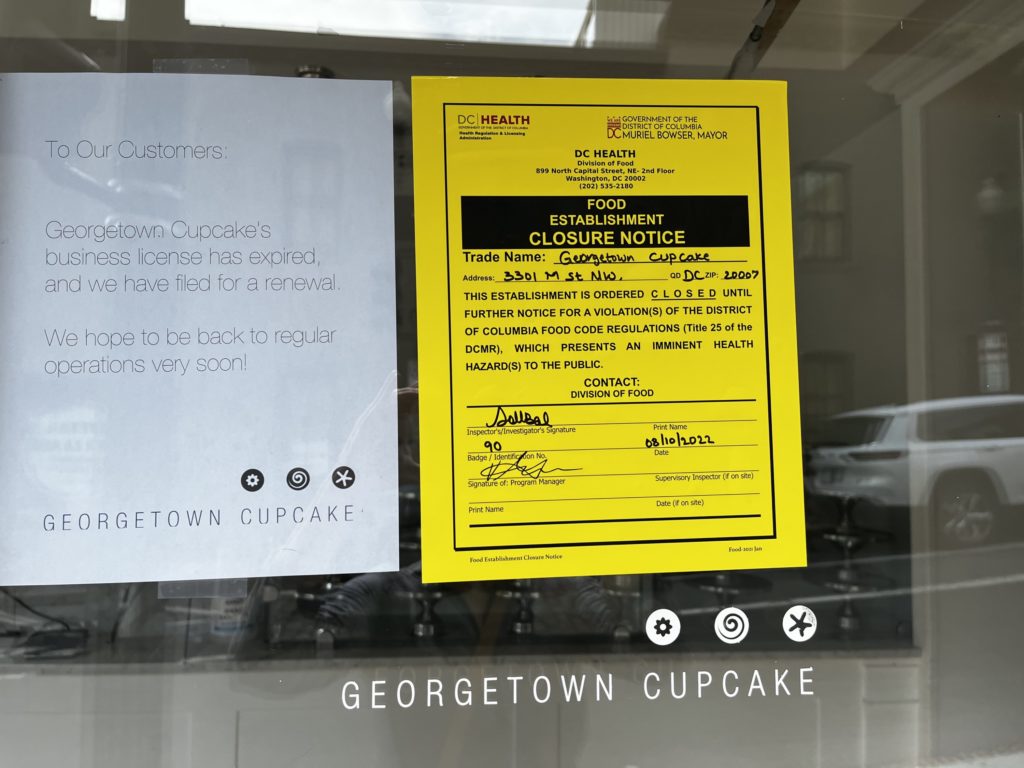

/cdn.vox-cdn.com/uploads/chorus_asset/file/23935095/GettyImages_1242002475a.jpg) Frederic J. Brown/AFP via Getty Images
Frederic J. Brown/AFP via Getty Images
/cdn.vox-cdn.com/uploads/chorus_asset/file/23933916/GettyImages_1241982221.jpg) Pat Greenhouse/The Boston Globe via Getty Images
Pat Greenhouse/The Boston Globe via Getty Images
/cdn.vox-cdn.com/uploads/chorus_asset/file/23934056/GettyImages_1413127584.jpg) Justin Sullivan/Getty Images
Justin Sullivan/Getty Images
/cdn.vox-cdn.com/uploads/chorus_asset/file/23934100/GettyImages_1241885624.jpg) Frederic J. Brown/AFP via Getty Images
Frederic J. Brown/AFP via Getty Images


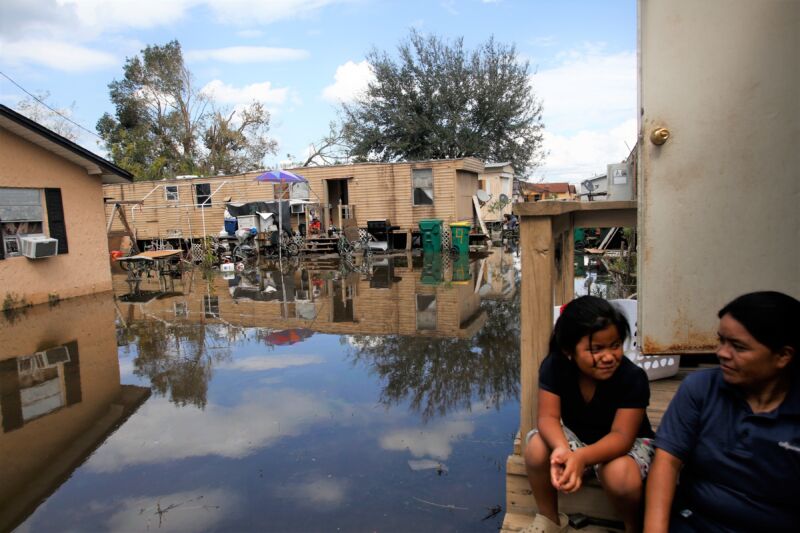


/cdn.vox-cdn.com/uploads/chorus_asset/file/23932038/GettyImages_1064313534a.jpg) Mandel Ngan/AFP via Getty Images
Mandel Ngan/AFP via Getty Images
/cdn.vox-cdn.com/uploads/chorus_asset/file/23932043/GettyImages_903944602.jpg) Joe Raedle/Getty Images
Joe Raedle/Getty Images



/cdn.vox-cdn.com/uploads/chorus_asset/file/23920454/GettyImages_1241572273.jpg) Creative Touch Imaging Ltd./NurPhoto via Getty Images
Creative Touch Imaging Ltd./NurPhoto via Getty Images
/cdn.vox-cdn.com/uploads/chorus_asset/file/23920452/GettyImages_1241976286.jpg) Jessica Rinaldi/The Boston Globe via Getty Images
Jessica Rinaldi/The Boston Globe via Getty Images
/cdn.vox-cdn.com/uploads/chorus_asset/file/23920467/GettyImages_143379282.jpg) Michael Pearce/Wichita Eagle/Tribune News Service via Getty Images
Michael Pearce/Wichita Eagle/Tribune News Service via Getty Images
/cdn.vox-cdn.com/uploads/chorus_asset/file/23921378/IMG_2929.JPG) Courtesy of the Native American Fish and Wildlife Society
Courtesy of the Native American Fish and Wildlife Society
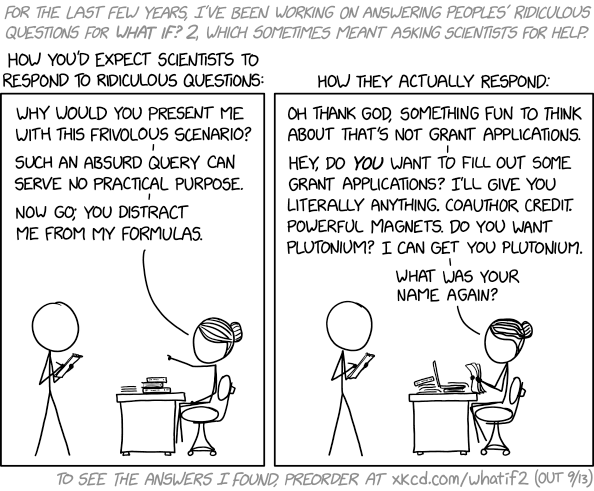


/cdn.vox-cdn.com/uploads/chorus_asset/file/23915673/GettyImages_1134321073.jpg) Chip Somodevilla/Getty Images
Chip Somodevilla/Getty Images
/cdn.vox-cdn.com/uploads/chorus_asset/file/23915893/GettyImages_635752401a.jpg) Oscar White/Corbis/VCG via Getty Images
Oscar White/Corbis/VCG via Getty Images
/cdn.vox-cdn.com/uploads/chorus_asset/file/23915728/GettyImages_3069580.jpg) MPI/Getty Images
MPI/Getty Images
/cdn.vox-cdn.com/uploads/chorus_asset/file/23915744/GettyImages_640460321.jpg) Library of Congress/Corbis/VCG via Getty Images
Library of Congress/Corbis/VCG via Getty Images
/cdn.vox-cdn.com/uploads/chorus_asset/file/23915836/GettyImages_514892820.jpg) Bettmann Archive
Bettmann Archive
/cdn.vox-cdn.com/uploads/chorus_asset/file/23915873/GettyImages_517317650a.jpg) Bettmann Archive
Bettmann Archive
/cdn.vox-cdn.com/uploads/chorus_asset/file/23915884/GettyImages_1410610221a.jpg) Heritage Art/Heritage Images via Getty Images
Heritage Art/Heritage Images via Getty Images
/cdn.vox-cdn.com/uploads/chorus_asset/file/23915916/AP20339671162645a.jpg) Charles Dharapak/AP
Charles Dharapak/AP

/cdn.vox-cdn.com/uploads/chorus_asset/file/23920543/HillandaleGateway__Rendering1_080322_.png) Montgomery County Housing Opportunities Commission
Montgomery County Housing Opportunities Commission