Shared posts

05 Aug 16:20

Manchin rebuffs industry criticism of new EV tax credit

by Jonathan M. Gitlin
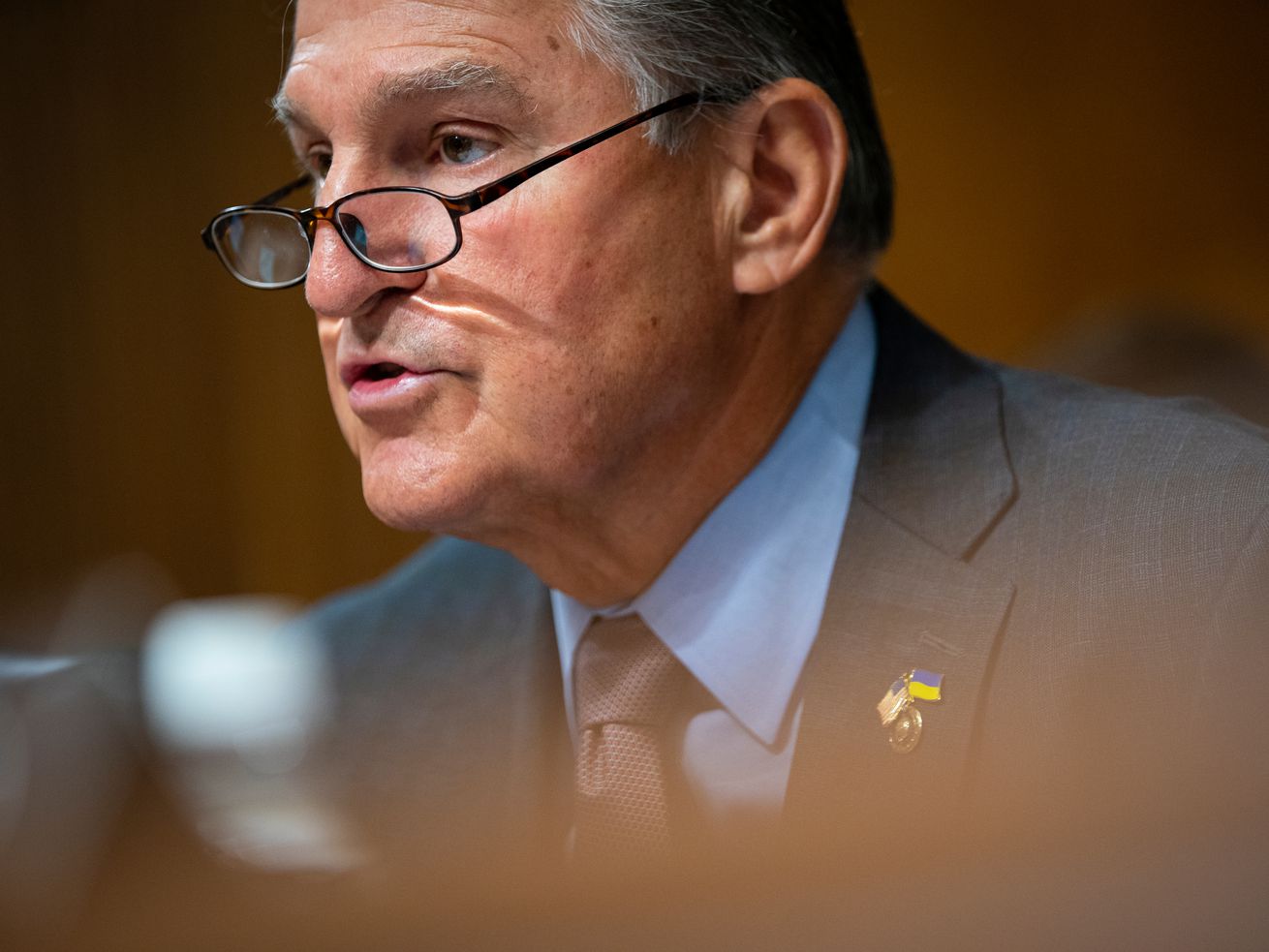
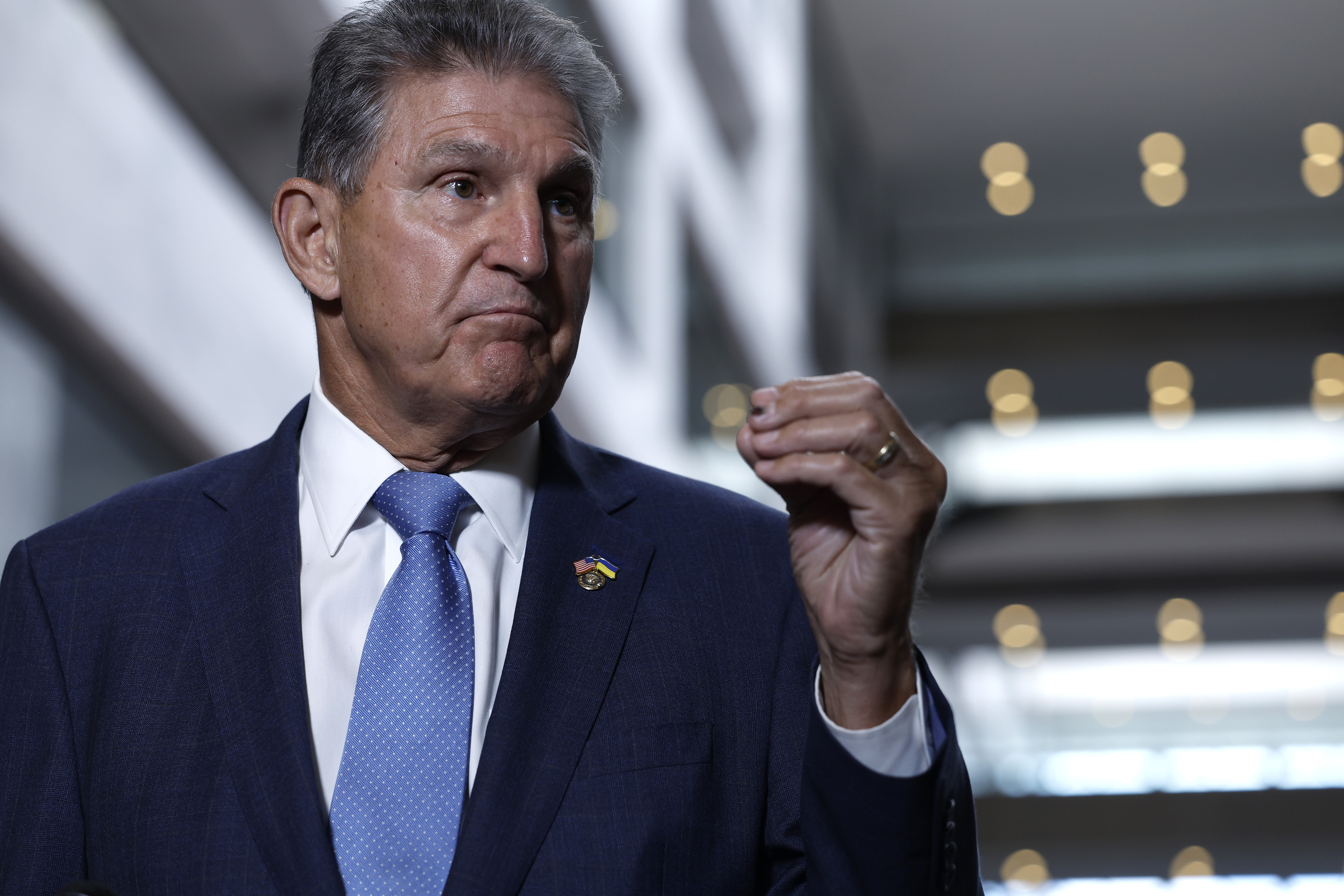
Sen. Joe Manchin (D-W.V.) speaking to reporters in the Hart Senate Office building on August 1, 2022, in Washington, DC.

Enlarge / Sen. Joe Manchin (D-W.V.) speaking to reporters in the Hart Senate Office building on August 1, 2022, in Washington, DC. (credit: Anna Moneymaker/Getty Images)

Among the many provisions of the Inflation Reduction Act (IRA) of 2022 is a revamp of the federal tax credit for electric vehicles. The changes would restore the eligibility of Tesla and General Motors and includes a smaller credit for the purchase of a used EV. Despite this, the bill is running into opposition from the auto industry, and most of the EVs currently on sale would no longer qualify. But the bill's author, Senator Joe Manchin, has little time for complaints.

Currently, almost all new plug-in vehicles qualify for the plug-in electric drive vehicle credit, as laid out in Internal Revenue Code section 30D, introduced on the basis that the high cost of a lithium-ion traction battery is the main impediment to electric vehicles reaching price parity with their gasoline- or diesel-powered alternatives.

The credit is based on battery capacity. Starting at $2,917 for a plug-in vehicle with a 5 kWh pack, the credit increases by $417 per kWh to a maximum of $7,500. But there's a penalty for sales success—once an automaker has sold 200,000 qualifying plug-in vehicles, the credit begins to sunset. So far, this has only happened to Tesla and General Motors, both of which triggered the process in 2018.

Read 13 remaining paragraphs | Comments

05 Aug 13:22

The DOJ is suing to make sure women who need medically necessary abortions can actually get them

by Ian Millhiser
A protester in front of the Idaho State Capitol dome holds a sign that reads, “Idaho: The women as property state.”
Attendees at a pro-abortion rights rally hold up signs outside the Idaho State Capitol in Boise on May 14. The Supreme Court’s reversal of Roe v. Wade triggered an unusually strict abortion ban in Idaho that will take effect on August 25. | Sarah A. Miller/Idaho Statesman/Tribune News Service via Getty Images

A federal law requires ERs to care for patients with medical emergencies. The DOJ wants that enforced for abortion patients.

A month after the Supreme Court’s decision overruling Roe v. Wade, it’s unclear whether many patients with dangerous pregnancies can receive medically necessary abortions. Some women have traveled to other states for lifesaving care because doctors in their home state feared prosecution. Others were left to bleed by their health care providers who feared they couldn’t legally provide care that would stop it.

A lawsuit, filed by the Justice Department on Tuesday, could alleviate at least some of these cases — and potentially provide legal clarity to doctors who want to perform medically necessary abortions but fear being hauled off to prison if they do. The case is United States v. Idaho.

The suit involves the Emergency Medical Treatment and Labor Act (EMTALA), which typically requires emergency rooms at hospitals that accept Medicare funds to provide “stabilizing treatment” for patients with medical emergencies. The DOJ argues in its suit that EMTALA requires these hospitals to perform an abortion if one is medically required to save a patient’s life or prevent serious bodily harm.

This law could matter in quite a few states — at least 22 states have laws on the books banning many or nearly all abortions — but it is particularly relevant in Idaho, where an unusually strict abortion ban will take effect on August 25. That ban provides, with only narrow exceptions, that “every person who performs or attempts to perform an abortion ... commits the crime of criminal abortion.”

The Idaho law does provide exceptions for abortions that are necessary to save the life of a patient, or for pregnancies resulting from rape or incest. Significantly, however, the law does not permit an abortion when a patient may suffer very serious health consequences — including a permanent disability — but their life is not threatened.

Additionally, while criminal laws typically require prosecutors to prove their case beyond a reasonable doubt, the Idaho law places the burden of proof on the abortion provider to convince a jury that one of these narrow exceptions applies. Thus, a doctor who performs an abortion on a patient who literally will die without it could still be thrown in prison for up to five years if they fail to convince a jury that the abortion was “necessary to prevent the death of the pregnant woman.”

The DOJ’s legal argument is straightforward. The Constitution provides that federal law “shall be the supreme Law of the Land,” and thus state laws that conflict with a federal statute are typically “preempted” and cannot be enforced by the state. Idaho’s abortion ban fairly clearly conflicts with EMTALA, at least when the only way for a hospital to provide “stabilizing treatment” during a medical emergency is to perform an abortion that is illegal under Idaho’s law.

The Idaho case will be heard by Judge Lynn Winmill, a Bill Clinton appointee, but Winmill is unlikely to have the last word on this issue. Last month, Texas filed a lawsuit (Texas v. Becerra) which claims that EMTALA does not require hospitals to perform emergency abortions. And other lawsuits are likely to proliferate in states with strict abortion laws.

Ultimately, in other words, it is likely that these suits will produce a morass of conflicting lower court decisions that will need to be resolved by the Supreme Court — the very same Supreme Court that overruled Roe.

EMTALA requires most hospitals to treat medical emergencies

Although EMTALA only applies to hospitals that accept Medicare funds, that includes the overwhelming majority of hospitals in the United States, as Medicare pays the lion’s share of medical costs for elderly patients. In Idaho, according to the Justice Department’s complaint, “there are approximately 43 hospitals that voluntarily participate in Medicare” (as of 2020, 52 hospitals were licensed to operate in Idaho, according to the state’s Department of Health & Welfare). DOJ says that “approximately 39” of these hospitals have emergency rooms that must comply with EMTALA.

The primary purpose of EMTALA is to prevent “patient dumping” — hospitals refusing to treat patients with medical emergencies who are unable to pay for their care and telling the patient to go elsewhere — but the law is written in expansive terms. It provides that “if any individual ... comes to a hospital and the hospital determines that the individual has an emergency medical condition,” the hospital typically must “stabilize the medical condition” (in certain limited circumstances, the hospital may transfer the patient to a different facility, which will provide this stabilizing treatment).

 Drew Angerer/Getty Images
US Attorney Merrick Garland, backed by Associate Attorney General Vanita Gupta, speaks during a news conference on August 2, announcing that the US Department of Justice has filed a lawsuit seeking to block Idaho’s new restrictive abortion law.

EMTALA, moreover, defines the term “emergency medical condition” to include not just life-threatening conditions, but also conditions that place someone’s health “in serious jeopardy,” or that threaten “serious impairment to bodily functions” or “serious dysfunction of any bodily organ or part.”

Thus, for example, if a patient’s pregnancy could damage their uterus and render them infertile, EMTALA requires hospitals to treat this patient and to provide them with an abortion if necessary — even though such an abortion would be illegal in Idaho unless the abortion is also “necessary to prevent the death of the pregnant woman.”

EMTALA, moreover, explicitly provides that it preempts a state law that “directly conflicts” with EMTALA’s requirements. So the DOJ has a very strong argument that Idaho’s law cannot be enforced against health providers who perform abortions that are necessary to treat an “emergency medical condition,” as that term is defined by federal law.

Texas’s lawsuit offers a preview of how Idaho might try to prevent EMTALA from functioning

The Becerra lawsuit out of Texas is, to say the least, very odd. It does not challenge EMTALA itself. Instead, it asks a court to “hold unlawful and set aside” a six-page document issued by the Biden administration last month, which states the administration’s position that physicians subject to EMTALA must provide an abortion when one is needed to stabilize a medical emergency.

One glaring problem with the Becerra lawsuit is that the document Texas finds objectionable doesn’t actually have any legal effect on health providers. It merely summarizes the Biden administration’s understanding of EMTALA. So, even if a court did block this document, EMTALA would remain good law and its terms would still apply to patients who need an emergency abortion.

Nevertheless, Texas does raise a few legal arguments that Idaho is likely to raise in defense of its abortion ban.

The first rests on a budget rider which, Texas claims, prohibits the DOJ from spending its own funding “to ‘require any person to perform, or facilitate in any way the performance of, any abortion.’” Even if a federal court could enforce this rider against the Justice Department, however, that would, at most, require the DOJ to quit its own lawsuit against Idaho. It wouldn’t prevent private citizens from suing to enforce EMTALA.

Texas’s strongest argument, meanwhile, rests on Supreme Court decisions limiting the government’s ability to place conditions on federal funding offered to states. Congress is allowed to say to states that “if you take this money, you must agree to the following conditions,” but, as Texas argues in its complaint, “if Congress intends to impose a condition on the grant of federal moneys, it must do so unambiguously.”

The crux of Texas’s argument is that the EMTALA statute did not “unambiguously condition ... the receipt of Medicare funds on providing abortions.”

But there are two problems with this argument. One is that, while EMTALA does not explicitly state that hospitals must specifically provide abortions, it does state that any hospital subject to EMTALA must “stabilize the medical condition” of “any individual” who arrives at an emergency room with a medical emergency. That’s unambiguous language that is broad enough to include emergency abortion care.

The Supreme Court’s cases dealing with grants to states, moreover, apply specifically to federal funds given to state governments. But EMTALA primarily imposes obligations on private hospitals that accept Medicare funding. Thus, even if a state-run hospital might not be subject to all of EMTALA’s obligations, private hospitals should still be required to comply with EMTALA.

All of which is a long way of saying that the DOJ’s Idaho lawsuit should be a slam dunk — although it’s anyone’s guess what a judiciary dominated by Republican appointees will do with that case.

If the DOJ prevails, that does not mean that every patient who seeks an abortion from an emergency room will receive care. It doesn’t even mean that every pregnant patient with a serious medical condition will receive such care — EMTALA applies only to medical emergencies, not to all conditions that may eventually endanger a patient’s life or health.

But if the DOJ does prevail, it should mean that patients with emergency medical conditions can legally receive medically necessary abortions in most hospitals — even if their state tries to ban them.

05 Aug 13:18

Wemo’s confused Smart Dimmer shows how hard standardizing IoT may be

by Kevin Purdy
Wemo’s confused Smart Dimmer shows how hard standardizing IoT may be

Enlarge (credit: Wemo)

When the smart home compatibility standard Matter finally arrives, it promises to simplify and improve the connections and compatibility between different device brands, using Thread as its secure, low-energy backbone.

Until then, let devices like Wemo's new Smart Dimmer with Thread serve as a warning: Matter runs on Thread, but not all Thread devices will give you a Matter experience. Belkin's new dimmer is a prime example of a device "with Thread" that is far from universally accessible—and likely confusing to buyers.

Wemo's new dimmer doesn't require the onerous Wi-Fi setup you might remember from switches of old, instead connecting to your smartphone by Bluetooth or an NFC tap. To use it outside of Bluetooth range, you'll need a Thread network in your home. But here's where it gets tricky: This smart dimmer is controlled exclusively through HomeKit, so you'll specifically need a HomePod Mini or second-generation Apple TV 4K within a reasonable range of the switch. Those more robust devices can act as "border routers" in a Thread network, allowing more single-purpose devices like a dimmer to connect to a Thread mesh and access the Internet.

Read 4 remaining paragraphs | Comments

05 Aug 13:18

Google’s video chat merger begins: Now there are two “Google Meet” apps

by Ron Amadeo
Someday, Google's messaging lineup will look like this (assuming Google can stop launching competing products).

Enlarge / Someday, Google's messaging lineup will look like this (assuming Google can stop launching competing products). (credit: Ron Amadeo)

Google is officially kicking off the merger of its two video chat apps, Google Meet and Google Duo. Google announced the merger in June, with the plan to keep the Google Meet brand name while merging the best of both code bases into the Google Duo app. According to Google's PR email (no links, sorry), people will begin seeing Duo's app and website branding swap over to Google Meet this week. Google's various rebrandings are all on a rollout, so they'll arrive at different times for different people, but Google says the complete rebrand should finish for everyone by September.

So Google Duo is being rebranded to Google Meet, and the existing Google Meet app is sticking around for a bit. That means there are now two apps called "Google Meet." Google has a help article detailing this extremely confusing situation, calling the two Meet apps "Google Meet (original): The updated Meet app" and "Google Meet: The updated Duo app." The "Google Meet (original)" app will someday be put out to pasture; it's just sticking around while Google rebuilds the meeting functionality on top of Google Duo. Did everyone follow that?

The Meet and Duo video services were both built as reactions to Google's far more stable communication competition. Google Meet was technically created in 2017 as a group business video chat application called "Google Hangouts Meet," but it really became a major project after Zoom's growth exploded in 2020 during the COVID-19 pandemic. Google Meet was still locked behind a paywall during the initial months of the work-from-home era, and while it eventually became as easy to use as Zoom, it was after Zoom became a household name.

Read 3 remaining paragraphs | Comments

05 Aug 12:54

The US could stop one cause of heat wave deaths tomorrow

by Rebecca Leber
Felisa Benitez, 86, wipes the sweat from her brow while taking a break from cleaning her stand-up electrical fan on the porch of her home at San Fernando Gardens Public Housing in Pacoima, California, where temperatures reached 99 degrees on August 4, 2021. Benitez spends a great deal of her day seated in the shade of her porch and tries only to use a fan to cool herself even though she has an AC unit, which she uses sparingly as she is on a limited budget. | Genaro Molina/Los Angeles Times via Getty Images

Utility disconnections during a heat wave can be deadly. They’re also preventable.

The human body can’t withstand extra-hot temperatures for very long. A healthy person can tolerate 95 degrees Fahrenheit of combined heat and humidity for a few hours, but prolonged exposure causes weakness, cramps, confusion, dizziness, and dehydration. After a certain point, vital organs like the brain begin to swell.

Nearly 100 million Americans faced these dangerous conditions over the past few weeks. Yet very few live in places that guarantee any kind of access to cooling. Throughout most of the country, air conditioning is still treated as a luxury to be used for comfort, not as a public health necessity that saves lives.

The US has managed to do better when it comes to helping people get through the winter. The vast majority of states have policies that forbid power shutoffs during a winter freeze. Most states also require heating for multifamily homes. But policy governing cooling in the summers is a patchwork that lets the most vulnerable slip through the cracks. Federal buildings, housing, and prisons have standards for heat, but no guarantee of AC. And only a handful of states have any kind of requirements that utilities keep the power on during a heat wave, according to data compiled by Energy Justice Lab of Indiana University and shared with Vox.

“We understand the public health implications if a person has an apartment that’s too cold, especially for the elderly,” said energy economist Mark Wolfe, executive director of the National Energy Assistance Directors Association and the Energy Programs Consortium, an organization that assists low-income consumers. “We have rules that require that multifamily building owners must provide adequate heat. There’s no gray area.”

The nation doesn’t have an accurate picture of just what the lack of any coherent cooling strategy costs the public. Some low-income consumers have to choose between turning on the AC or buying food. For some, it means utilities have cut off their power for falling behind on an unpaid bill, even in life-threatening heat.

Reports are just starting to trickle in on how fatal the current heat wave is. Many of these deaths are entirely preventable. That’s especially true when heat-related deaths and illnesses happen inside the home, where we spend most of our time. When Oregon faced a triple-digit heat wave last summer, officials reported many of the people who had died were found indoors without AC or a fan. According to Arizona Department of Health Services numbers, roughly a third of heat-caused deaths happen inside the home.

Cooling policies have not caught up to a hotter planet

One thing we can count on: More heat are waves coming. The world has already warmed by 1.1 degrees Celsius, a seemingly small shift in the climate that results in extreme heat becoming more common and more frequent. There are more extremely hot days, and fewer extremely cold ones, across the globe.

In the US, Climate Central identified 126 locations that now have an extra week of extremely hot days annually compared to 1970 (places like Phoenix and Austin are worst off, now seeing weeks above 100 degrees). And summer nights are warming nearly twice as fast as daytime temperatures, leaving people with no respite from the heat.

The health consequences of that 1-degree shift are showing up in mortality data: Arizona’s Maricopa County has reported a mid-season record of 222 suspected deaths from heat, 29 of them confirmed. At least 25 of these happened in the past week. These numbers are roughly in line with what studies have estimated: More heat waves mean more deaths and illnesses from heat stress. For every additional day of extreme heat per month, one investigation in the Journal of the American Medical Association found, there are 7 additional deaths per 10 million people.

 Nathan Howard/Getty Images
A woman and her dogs took shelter in a cooling center in Portland, Oregon, in June 2021. Hundreds of people ended up dying from the heat waves that struck the Pacific Northwest in 2021.

You don’t have to live in a traditionally hot climate to face risks. Historically cooler states face even greater challenges. Fewer residents have AC, and people are less acclimated to the heat. A 95-degree day in Washington state can be more deadly than the same temperature in Texas. Last summer, more than 500 people died in Oregon, Washington, Idaho, and Canada when temperatures shattered records in the triple digits.

The answer to hot weather is to get people out of the heat. That’s especially true for the most vulnerable populations, which have lower tolerances. This includes older adults, very young children, people with chronic conditions like high blood pressure, and people who are overweight.

But simply going indoors might not be any better. There are all sorts of reasons the home can become a death trap: People live in concrete houses that were built to withstand the cold, but lack AC or ventilation to keep cool. Or people have AC but are afraid to turn it on because they can’t pay the bill. Or the AC unit is broken and the landlord hasn’t fixed it. Or the utility company shut off the power over a missed bill payment. The Census’s Pulse Survey, for example, has found that about one in every five households has been unable to pay a utility bill in the last 12 months.

Cooling tends to be overlooked at every level of government. The designated federal program to help low-income consumers, the Low Income Home Energy Assistance Program (LIHEAP), spends 85 percent of its funds on heating in winter, rather than cooling in summers, Wolfe explained. Biden last week announced $385 million in more funding for LIHEAP, but Wolfe estimated its needs for cooling to be about $3.8 billion, equal to its heating budget.

Even cities with robust climate plans have been slow to change. Chicago, for instance, only recently passed a requirement this summer for assisted living homes to provide AC. Some traditionally hot places have these protections in place, but not all. And the problem is that climate change is blurring the lines between hot and cold climates.

Indoor heat deaths are entirely preventable

There’s one policy the US can pass today that can also save lives: stopping utility shutoffs in the summertime because a customer has missed one or more payments.

Right now, only 18 states have any protections that prevent utilities from shutting off a customer’s power in a heat wave because of missed payments, while 41 states have these protections for the cold. That leaves most of the population vulnerable to utility shutoffs during the deadliest extreme weather window of the year.

Utility disconnections have been getting more attention. During the first year of the Covid-19 pandemic, some states prevented any utility disconnections for nonpayment. A Center for Biological Diversity report found that since the pandemic began in January 2020 through December 2021, households had their power shut off more than 3.6 million times. Florida, Georgia, Indiana, Pennsylvania, and Illinois accounted for the most disconnections.

The size of the population affected by utility cutoffs is hard to pin down. Some utilities voluntarily suspend power shutoffs above certain temperatures, but there is no oversight or even reporting in many states. Indiana University researchers are attempting to collect data for the first nationwide database that gets at the scope of this problem. David Konisky, Indiana University’s co-director of the Energy Justice Lab, estimated the number to be in the tens of thousands every summer.

Arizona is one of the few states with a policy to protect its residents from utility disconnects in the heat. In 2018, 72-year-old Stephanie Pullman died after Arizona Public Service (APS) cut her power amid a 107-degree heat wave. Pullman fell short of her payment by about $50 that month. Her death didn’t become public until Phoenix New Times reporter Elizabeth Whitman published an article in 2019.

Pullman’s case built support for Arizona to finally ban these kinds of utility disconnections in the summer. In 2022, Arizona’s utility regulator made its temporary rules permanent for utilities like APS. The rule prevents some Arizona utilities from shutting off power in summer months or when temperatures pass 95 degrees.

 Brandon Bell/Getty Images
The Johnson family spends time together in the shade outside of their house on June 10 in Houston, Texas, when the state was under a heat wave alert with record high temperatures projected.

Stacy Champion, a climate activist who lives in Phoenix in Maricopa County and advocated for the new rule, argues the policy is still riddled with loopholes. First of all, it does not apply to the state’s second-largest utility, Salt River Project, because it’s not regulated by the same body. The state legislature could fix that with a law that governs all utilities. Second, the rule itself sets a relatively high temperature threshold that’s limited to summer months, which means early-season heat waves aren’t covered.

Champion has advocated for even stronger heat protections that are temperature-driven, pointing to her years of submitting records requests from Maricopa County on heat-related deaths. She sees reports on heat-related deaths start to crop up as soon as temperatures rise past 85.

Setting the threshold for utilities at 95 degrees may not even be enough to protect the most vulnerable. Indiana University’s Konisky thinks there’s a more chronic problem even when the temperature is milder. “We tend to focus on [disconnections] during heat waves, or during cold spells, or during natural gas price spikes, but this is happening all the time,” he said. “It’s not just the very poor who get disconnected more frequently, but it’s people of color, people with young children, people with medical disabilities.”

One of the chronic underlying problems is racial discrimination. Just like utility disconnections data, this is difficult to show. In 2017, NAACP released a report on utility disconnection in colder months showing that they happened to African Americans at a higher rate than white people, regardless of income. In New York City, Black residents in New York City account for half of heat-related fatalities despite being 22 percent of the population. Access to air conditioning is a key factor, but so is the green spaces and tree cover that can make a neighborhood cooler.

Filling this policy gap on utility disconnections doesn’t have to be left to the states. “Congress could pass a law tomorrow that says utilities cannot disconnect anyone for nonpayment” at certain times of the year, Wolfe said. Whether it’s states or Congress that fills the gap, there isn’t any more time to waste.

“Twenty years ago, maybe once during the summer you’d have this very bad heat wave,” Wolfe said. “This summer it is just continuous. Our society is not ready for this. Our programs aren’t ready for it. People aren’t ready for it.”

05 Aug 12:43

4 charts that show just how big abortion won in Kansas

by Rani Molla
A poll worker helps voters cast their ballots in the Kansas primary election at Merriam Christian Church in Merriam, Kansas, on August 2. | Kyle Rivas/Getty Images

More people turned out than in any primary in Kansas history — and that could happen elsewhere, too.

On Tuesday, an unprecedented number of Kansans voted against a constitutional amendment that would have allowed lawmakers to end abortion protections. That’s a big win for women’s rights, but the outcome also carries major implications for elections nationwide this November. It’s especially true in those states where abortion rights are on the ballot after the overturning of Roe Vs. Wade and where Democrats are seeking to stay in power.

Contrary to what some conservatives had thought, abortion is an issue that can mobilize voters.

More than 900,000 Kansans showed up to the polls to vote on the state’s abortion referendum. That’s the biggest turnout for a primary election in the state’s history, according to the Kansas Secretary of State’s office. That number is closer to what we’d expect to see in a general election turnout, which is always vastly higher than primaries. And it suggests we could also see high turnout in upcoming primaries where abortion is on the docket.

More Kansans voted on the abortion referendum than in any primary election in Kansas history

Known as “Value Them Both,” the amendment would have removed constitutional protections for abortion that came from a 2019 ruling by the Kansas Supreme Court. Nearly 60 percent of those Kansas voters this year voted against the amendment — or in favor of abortion rights — while about 40 percent voted for it. That margin is higher than one would expect in a state where polling has showed an even split between those who support abortion and those who are against it. Nationally, Americans overwhelmingly support abortion access in some instances.

Kansans voted by a large margin (59% no, 41% yes) against a proposed amendment that would have ended protections for abortion.

What’s perhaps most surprising about the referendum vote is that it happened in a very Republican state. Just a quarter of registered voters in Kansas are Democrats, while 40 percent are Republicans. Nearly a third are unaffiliated.

Registered Republicans in Kansas far outnumber Democrats. Democrats are 26% while Republicans are 44% of registered voters.

In the last general election, Kansas, as it has done for decades, went for the Republican candidate. But in Tuesday’s primary, in every single county, votes on the referendum were to the left of what they were in the 2020 presidential election, according to a Washington Post analysis of Kansas Secretary of State data.

The referendum in particular seems to have brought out women, who are considered to be most affected by abortion laws. As Tom Bonier, CEO of a Democratic data firm TargetSmart, pointed out, the share of new Kansas registrants who were women skyrocketed after news of US Supreme Court’s Dobbs decision.

In Kansas, the issue brought out record numbers of voters. Even Republicans might have voted for abortion rights. The question now is whether people across the country will turn out for this issue as well.

05 Aug 12:36

Marco Rubio Got Furious At Google Because His Fundraising Emails Were Going To Spam. Turns Out His Email Was Misconfigured

by Mike Masnick

Over the last few months, we’ve been covering a ridiculous situation in which Republicans are trying to force their spam into your inboxes. It began with a study that some Republicans misread (or deliberately misinterpreted) to claim that Google was “censoring” their political mailings. That study showed that for an untrained, brand new mailbox, Google would send more GOP campaign mailings to spam as compared to Democrats. However, it also showed that the reverse was true for other large email providers Outlook.com and Yahoo Mail. Perhaps even more importantly, it showed that if the user did just a bit of training of Gmail’s spam filter, this issue went away. Also, the study did not take into account the differences in tone, style, and content of Republican and Democrat emails.

And yet… if you talk to some Republicans, you’d think this was the biggest issue ever. Of course, last week the NY Times may have uncovered the real root cause of this (though it did not connect the two): donations to Republicans have been dropping. There are likely many reasons for this. It could be the tight economy. It could be that more and more people are realizing Republicans no longer stand for anything beyond stupid culture wars. It could be that for all the fun it is to “own the libs,” now that the Supreme Court has dismantled a variety of rights and protections, people are waking up with a bit of a hangover, and a realization that this isn’t what they actually wanted. There are lots of reasons it could be, but the Republicans — driven by the Republicans’ favorite spamming agency, Targeted Victory — have decided that it must be because Google is sending their emails to spam.

Thus, they’re doing everything they can to force their spam into your inbox. This includes introducing an actual law that says email providers can no longer shunt politician emails to spam. Google, perhaps fearing an upcoming GOP administration, folded like a cheap card table, and requested that the Federal Election Commission allow them to whitelist politician emails. The FEC has been flooded with comments about this proposal, almost all of them screaming that they don’t want this. It’s still quite possible that the FEC will approve the program, because the request to the FEC is really about whether or not this is an unfair campaign contribution, not whether or not people want more political spam in their inbox.

And, yes, it’s political spam. As we’ve noted repeatedly, Republicans in recent years have really embraced extremely spammy techniques that appear to be much more focused on separating gullible rubes from their money, including tricking them into unwittingly making recurring donations (perhaps another reason why their fans are less interested in donating this time around). We’ve also covered how one Republican candidate is tricking people into donating to his campaign by pretending he’s sending emails on behalf of more famous candidates like Trump or DeSantis.

In short: Republicans are using spam techniques, pushing historically unpopular ideas, and ripping off their base. But, rather than fix any of that, they want to force people to see their spammy emails in their inboxes.

Last week, the Washington Post had a deep dive article on all of this with a few quite revealing anecdotes. It covers various meetings and sessions where clueless GOP politicians scream at Google without realizing how much they’re telling on themselves. The most notable: Marco Rubio apparently was absolutely furious with Google… until someone realized whoever he was paying to handle his email hadn’t configured his email properly, and that was the problem:

The most forceful rebuke, attendees said, came from Sen. Marco Rubio (R-Fla.), who claimed that not a single email from one of his addresses was reaching inboxes. The reason, it was later determined, was that a vendor had not enabled an authentication tool that keeps messages from being marked as spam, according to people briefed on the discussions. Rubio campaign manager Mark Morgan said the problem also required Google to perform a reset on its end. Google’s Castañeda said such resets are standard practice once senders adhere to best practices.

The article doesn’t go into detail, but it sounds like Rubio’s spamming operation didn’t set up a DKIM/DMARC authentication setup. I know this is plaguing lots of folks. Hell, it’s something we’ve had to deal with at Techdirt after we realized that Google was sending a lot of our emails to spam. But, rather than whine about “bias” against us, we explored the details and figured out how to fix our email configuration.

Also notable in the WaPo story? The fact that this is driven by the Republicans favored spamming company, Targeted Victory. We wrote a story suggesting they were behind this whole moral panic and the WaPo story, in passing, more or less confirms it:

Both Coby, from the Senate GOP’s campaign arm, and Zac Moffatt, Targeted Victory’s chief executive, were present, which struck some participants as unusual for a policy lunch.

Uh yeah. You don’t normally have your campaign spam vendor showing up to a policy lunch. Unless your campaign spam vendor is so shit at their job, that they have to go and blame Google rather than admit that their spammy fund raising tactics are failing because more and more people are sick and tired of the spam.

But, honestly, throughout the article, the one sense you get over and over again is that Republicans have an astounding sense of entitlement, combined with an incredible ignorance of how basic technology works. Add to that a lack of concern for the truth, and you get nonsense like this:

Some were unconvinced by the company’s responses. “What Google is saying is false,” Moffatt told The Post, accusing the company of seeking to “distract attention from the proven problem of unfair filtering. … Now that there has been independent, third-party confirmations, they are scrambling to find a half-baked solution that is completely unworkable.”

Coby, in a statement, said voters who sign up to receive campaign emails “should receive 100 percent of the emails unless they unsubscribe or mark the email as spam.”

“This is not what happens on Gmail. They choose to actively block GOP emails even if the voter has not taken these actions,” he added. “Google is lying if they tell you they only block emails when a voter marks as spam or unsubscribes.” (Google does not say that, in fact outlining a range of factors that go into spam filtering, such as suspicious links and phrases, in addition to user behavior.)

These very unserious people are so convinced that they’re the victims of some conspiracy that they’re even making up what Google is trying to explain to them as to why their spam gets classified as spam.

The “Google is lying if they tell you…” line is hilariously revealing. Google has never said that. It’s what an unserious, very foolish person is pretending they said because he can’t come to terms with the fact that his own company sucks at what it does, and his clients are mad. So, now he’s convinced them that Google is to blame, because his clients are even more ignorant. It’s nonsense all the way down.

Hilariously, this situation has gotten so stupid that pretty much the only people who think that Google is deliberately blocking emails are Republican politicians. As I was finishing up this article, I saw that Erick Erickson, a very rightwing/Republican supporting commentator, had a whole Substack post complaining about this same thing, and noting that this is all an attempt by Republican spam consultants to shift the blame away from their own shit email practices.

The consultant class of the GOP is pushing the mythology that Google and Apple are flagging their emails because tech companies hate Republicans. I’ve spent a week on the phone with many Republican consultants, including those tied to campaigns whose emails make it to my inbox. They all tell me the same thing — the problem is not Google or Apple, but the GOP consultant class.

He posts multiple screenshots of his own email inbox, which is basically full of Republican political spam that he never signed up for, and highlights how it’s all just terrible email practices from Republican campaigns and their “digital” consultants.

These are not examples of Google abusing Republican emails. This is an example of Republican consultants abusing emails they have access to and Google and Apple protecting their users from spam.

Unfortunately, the Republican consultants have the ears of their leaders and their solution is to pressure Google and Apple to let all the spam go through. They are selling Republican elected officials on the idea that Google is nefariously blocking their emails.

The reality is the consultants will not fess up to their abuses. They will not own up to their poor stewardship of email lists. They’ll claim the Democrats are more effective because of tech company biases and not because the Democrats are actually better stewards of an email file.

The reality though is easy to notice. 

So, even their supporters are noticing that Republican emails go to spam because they are spam. As Erickson notes:

Email and SMS spam are driving away small dollar Republican donors. The candidates are now reaping what their consultants have been sowing.

It would be nice if the media stopped covering this made up campaign as if it’s a real story, and noted the same reality that Erickson has noticed. The problem is not the spam filters. The problem is the “digital campaign” companies and their terrible practices.

05 Aug 12:34

Please Don’t Normalize Copyright As A Tool For Censorship

by Mike Masnick

Yes, yes, copyright is a tool for censorship. Contrary to the claims of copyright system supporters that copyright can’t be used for censorship, the reality is that is basically the only thing that copyright is good for. I mean, at this point, you are either not paying attention, or are just outright lying if you claim that copyright isn’t regularly used to silence people. I could go on linking to examples, but you get the point.

That said, it’s one thing to recognize that copyright is a tool for censorship and another altogether to normalize and embrace that fact.

Over the last few months, we’ve had a few stories about cops blasting copyright-covered music in an effort to block people filming them from being able to upload the videos online. The steps to getting here are not hard to figure out. The legacy copyright industry spent a couple decades screaming about copyright infringement online, and demanding that internet services wave a magic wand and stop it. And, eventually, a variety of automated copyright filters sprung up to try to get Hollywood to just stop whining all the time.

Of course, filters can’t understand context or fair use, so in practice, these filters block all sorts of important content just because they have ancillary copyright-covered music playing the background. From there, cops figured that this was “this one weird trick” that would get them out of being held accountable for their own misdeeds.

When cops are doing it, it’s clearly problematic, because as multiple courts have noted, you have a constitutional right to film police. So the use by police to try to get these videos taken down are a nefariously clever attempt to using copyright law to stifle the public’s rights.

But that doesn’t mean it’s okay when private citizens do it. Even if in pursuit of a good cause. Just as it’s not right when people abuse the DMCA to take down content being used for harassment and abuse, it’s not right to try to use copyright to block people from being able to film you.

David Hogg is a prominent activist on gun control issues. Whether or not you agree with his positions, no one can deny that he’s been incredibly successful in drawing attention to the causes he supports. And, with that, of course, comes a tremendous level of harassment from those who are opposed to his policy ideas. And, that, in part, is coming because he’s had such an impact with his activism.

That said, over the weekend, he gleefully talked about how he was using this same “one weird copyright trick” to stop opposing activists from being able to do anything with the video they were trying to take of him.

If you can’t see the images of the tweets, here’s what he said:

Today in DC- I had a Republican come up with a video camera trying to harass me. I immediately started playing under the Sea from the Little mermaid. He said “why are you playing that music you know it’s copyrighted so I can’t use this video right?” I said “yeah that’s the point”

I love copyright law

Thank you to Disney’s copyright lawyers!

While this is nowhere near as problematic as public officials doing this to prevent the exercise of rights, it’s still problematic. It’s normalizing, and even cheering on, the abuse of copyright law for the purpose of stifling speech.

I tweeted something about this and received some pushback, so I wanted to respond to a few points people raised about this:

Is this really copyright abuse or just taking advantage of others already abusing the system?

It’s a bit of both. To me, any use of copyright law to deliberately stifle speech is an abuse of copyright law. That the copyright system is so broken as to make this easy to do is also a criticism of the system and previous abuses, but it doesn’t excuse those jumping in to support and normalized this activity.

Yeah, but he gets so much abuse, so it’s okay.

Yes, he, like many prominent outspoken people, gets an unfair level of abuse. But that’s no excuse to abuse some other law to try to silence people. Once again, it normalizes the activity and makes sure more and more people will abuse copyright law in this same way. And that’s not good. If you think he receives an unfair level of abuse and harassment, focus on ways to deal with that that don’t involve encouraging further abuse of other laws.

Well maybe this will help demonstrate the problems of copyright law, and get them fixed.

Which seems more likely? Congress fixing broken copyright law? Or Congress and lots of others getting excited about new ways to exploit this “feature” of copyright law to their own benefit. It’s the latter and no one seriously thinks the former is going to happen.

Copyright law is used for censorship all the time. It’s good at that. That doesn’t mean we should embrace it or support it. And it definitely does not mean we should be normalizing that kind of abuse.

05 Aug 12:33

Google Fiber’s 2016 Expansion Freeze May Be Coming To An End

by Karl Bode

When Google Fiber launched back in 2010, it was heralded as a game changer for the broadband industry. Google Fiber, we were told, would revolutionize the industry by taking Silicon Valley money and disrupting the viciously uncompetitive and anti-competitive telecom sector.

Initially, things worked out well; cities tripped over themselves offering all manner of perks to the company in the hopes of breaking free from the broadband duopoly logjam. Google got endless free press for doing something truly disruptive. And in markets where Google Fiber was deployed, prices dropped thanks to this added competition (fancy that!).

The fun didn’t last.

In late 2016, a new era of Alphabet execs began getting cold feet about the high costs and slow returns of the project, and effectively mothballed the entire thing — without admitting that’s what they were doing. The company blew through several CEOs in just a few months, laid off hundreds of employees, froze any real expansion, and cancelled countless installations for users who had been waiting years.

And while Google made a lot of noise about how it would be shifting from fiber to wireless to possibly cut costs, those promises also remained stuck in neutral.

But there are some faint indications that the Google Fiber freeze might be thawing somewhat. Last year, Google announced it had started working with officials in West Des Moines, Iowa on a potential expansion into the city. More recently, the company indicated it was expanding into Mesa, Arizona. And it’s also pushing harder into select portions of Utah:

“We’ve expanded to a bunch of new cities around our Utah footprint. We’ve also expanded to Smyrna, for example, around Tennessee, within our Nashville footprint,” Strama told Government Technology. “We’ll continue to be expanding around our existing footprint for the long term.”

To be clear, many of these efforts remain somewhat… modest, and it’s clear Google Fiber’s overall ambitions have scaled back. In a country where 83 million live under a broadband monopoly, and somewhere between 20-40 Americans lack any broadband at all (see our recent report on this), some scattered deployments in limited portions of mid-tier cities can only go so far.

Still, it’s good to see Google trying all the same. For a while there after the freeze, it seemed entirely possible the company could pack it in and sell the network (much like it sold out its principles on concepts like net neutrality). And while Google Fiber (much like Google) isn’t the same disruptive force it was in 2010, when it comes to mediocre U.S. broadband, every last bit helps.

05 Aug 12:32

Joe Manchin’s Price for Supporting the Climate Change Bill: A Natural Gas Pipeline in His Home State

by by Ken Ward Jr. and Alexa Beyer, Mountain State Spotlight

by Ken Ward Jr. and Alexa Beyer, Mountain State Spotlight

This article was produced for ProPublica’s Local Reporting Network in partnership with Mountain State Spotlight. Sign up for Dispatches to get stories like this one as soon as they are published.

From his Summers County, West Virginia, farmhouse, Mark Jarrell can see the Greenbrier River and, beyond it, the ridge that marks the Virginia border. Jarrell moved here nearly 20 years ago for peace and quiet. But the last few years have been anything but serene, as he and his neighbors have fought against the construction of a huge natural gas pipeline.

Jarrell and many others along the path of the partially finished Mountain Valley Pipeline through West Virginia and Virginia fear that it may contaminate rural streams and cause erosion or even landslides. By filing lawsuits over the potential impacts on water, endangered species and public forests, they have exposed flaws in the project’s permit applications and pushed its completion well beyond the original target of 2018. The delays have helped balloon the pipeline’s cost from the original estimate of $3.5 billion to $6.6 billion.

But now, in the name of combating climate change, the administration of President Joe Biden and the Democratic leadership in Congress are poised to vanquish Jarrell and other pipeline opponents. For months, the nation has wondered what price Democratic West Virginia Sen. Joe Manchin would extract to allow a major climate change bill. Part of that price turns out to be clearing the way for the Mountain Valley Pipeline.

“It’s a hard pill to swallow,” said Jarrell, a former golf course manager who has devoted much of his retirement to writing protest letters, filing complaints with regulatory agencies and attending public hearings about the pipeline. “We’re once again a sacrifice zone.”

The White House and congressional leaders have agreed to step in and ensure final approval of all permits that the Mountain Valley Pipeline needs, according to a summary released by Manchin’s office Monday evening. The agreement, which would require separate legislation, would also strip jurisdiction over any further legal challenges to those permits from a federal appeals court that has repeatedly ruled that the project violated the law.

The provisions, according to the summary, will “require the relevant agencies to take all necessary actions to permit the construction and operation of the Mountain Valley Pipeline” and would shift jurisdiction “over any further litigation” to a different court, the D.C. Circuit Court of Appeals.

In essence, the Democratic leadership accepted a 303-mile, two-state pipeline fostering continued use of fossil fuels in exchange for cleaner energy and reduced greenhouse emissions nationwide. Manchin has been pushing publicly for the pipeline to be completed, arguing it would move much needed energy supplies to market, promote the growth of West Virginia’s natural gas industry and create well-paid construction jobs.

“This is something the United States should be able to do without getting bogged down in litigation after litigation after litigation,” Manchin told reporters last week. He did not respond to questions from Mountain State Spotlight and ProPublica, including about the reaction of residents along the pipeline route.

ProPublica and Mountain State Spotlight have been reporting for years on how a federal appeals court has repeatedly halted the pipeline’s construction because of permitting flaws and how government agencies have responded by easing rules to aid the developer.

The climate change legislation, for which Manchin’s vote is considered vital, includes hundreds of millions of dollars for everything from ramping up wind and solar power to encouraging consumers to buy clean vehicles or cleaner heat pumps. Leading climate scientists call it transformative. The Sierra Club called on Congress to pass it immediately. Even the West Virginia Environmental Council urged its members to contact Manchin to thank him.

“Senator Manchin needs to know his constituents support his vote!” the council said in an email blast. “Call today to let him know what climate investments for West Virginia means to you!”

But even some residents along the pipeline route who are avidly in favor of action against climate change say they feel like poker chips in a negotiation they weren’t at the table for. And they are anything but happy with Manchin. “He could do so much more for Appalachia, a lot more than he is, but he’s chosen to only listen to industries,” farmer Maury Johnson said.

It’s not clear exactly when the Mountain Valley Pipeline became a focal point of the efforts to win Manchin’s vote on the climate change legislation. Reports circulated in mid-July that the White House was considering giving in to some Manchin demands focused on fossil fuel industries. That prompted some environmental groups to urge Biden to take the opposite route, blocking the pipeline and other pro-industry measures.

Pipeline spokesperson Natalie Cox said in an email that it “is being recognized as a critical infrastructure project” and that developers remain “committed to working diligently with federal and state regulators to secure the necessary permits to finish construction.” Mountain Valley Pipeline LLC, the developer, is a joint venture of Equitrans Midstream Corp. and several other energy companies.

The company “has been, and remains, committed to full adherence” with state and federal regulations,” Cox added. “We take our responsibilities very seriously and have agreed to unprecedented levels of scrutiny and oversight.”

The White House and Senate Democratic Leader Chuck Schumer’s office did not respond to requests for comment.

Mountain Valley Pipeline is one of numerous pipelines proposed across the region, reflecting an effort to exploit advances in natural gas drilling technologies. Many West Virginia business and political leaders, including Manchin, hope that natural gas will create jobs and revenue, offsetting the decline of the coal industry.

To protect the environment, massive pipeline projects must obtain a variety of permits before being built. Developers and regulators are supposed to study alternatives, articulate a clear need for the project and outline steps to minimize damage to the environment.

In Mountain Valley Pipeline’s case, citizen groups have successfully challenged several of these approvals before the 4th U.S. Circuit Court of Appeals. In one widely publicized ruling involving a different pipeline, the panel alluded to Dr. Seuss’ “The Lorax,” saying that the U.S. Forest Service had failed to “speak for the trees” in approving the project. The decision was overturned by the U.S. Supreme Court, but not before the project was canceled.

The 4th Circuit has ruled against the Mountain Valley Pipeline time and again, saying developers and permitting agencies skirted regulations aimed at protecting water quality, public lands and endangered species. In the past four years, the court has found that three federal agencies — the U.S. Forest Service, the U.S. Army Corps of Engineers and the Interior Department’s Bureau of Land Management — illegally approved various aspects of the project.

While those agencies tweaked the rules, what Manchin’s new deal would do is change the referee. In March, Manchin told the Bluefield Daily Telegraph that the 4th Circuit “has been unmerciful on allowing any progress” by Mountain Valley Pipeline.

Then, in May, lawyers for the pipeline petitioned the 4th Circuit to assign a lawsuit by environmental advocates to a new three-judge panel, instead of having it heard by judges who had previously considered related pipeline cases. Among other things, the attorneys cited a Wall Street Journal editorial, published a week earlier, declaring that the pipeline had “come under a relentless siege by green groups and activists in judicial robes.”

Lawyers for the environmental groups responded in a court filing that Mountain Valley Pipeline LLC was just “dissatisfied that it has not prevailed” more often and was unfairly lobbing a charge that the legal process was rigged. The 4th Circuit rejected the company’s request.

It is unclear whether this pending case, which challenges a water pollution permit issued by West Virginia regulators, would be transferred if the Manchin legislation becomes law.

Congress has intervened in jurisdiction over pipeline cases before. In 2005, it diverted legal challenges to decisions on pipeline permits from federal district courts to the appeals court circuit where the projects are located. The move was part of a plan encouraged by then-Vice President Dick Cheney’s secretive energy task force to speed up project approvals. (Under the Constitution, Congress can determine the jurisdiction of all federal courts except the U.S. Supreme Court.)

Besides the pipeline, Manchin has cited other reasons for his change of heart on the climate change bill. He has emphasized that the bill would reduce inflation and pay down the national debt.

Approval for the pipeline may not be a done deal. Both senators from Virginia, where the pipeline is also a hot political issue, are signaling that they don’t feel bound by Manchin’s agreement with the leadership. Manchin’s own announcement said that Democratic leaders have “committed to advancing” the pipeline legislation — not that the bill would pass. Regional and national environmental groups are walking a fine line. They support the climate change legislation while opposing weakening the permit process.

The pipeline’s neighbors say they’ll keep fighting, but they recognize that the odds are against them. “You just feel like you’re not an equal citizen when you’re dealing with Mountain Valley Pipeline,” Jarrell said.

Do You Have a Tip for ProPublica? Help Us Do Journalism.

04 Aug 19:30

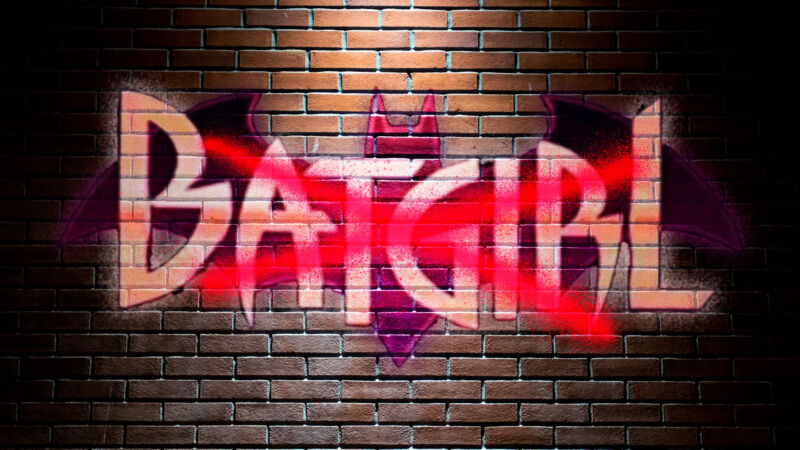
WB Discovery merger strikes down “nearly finished” live-action Batgirl film

by Sam Machkovech
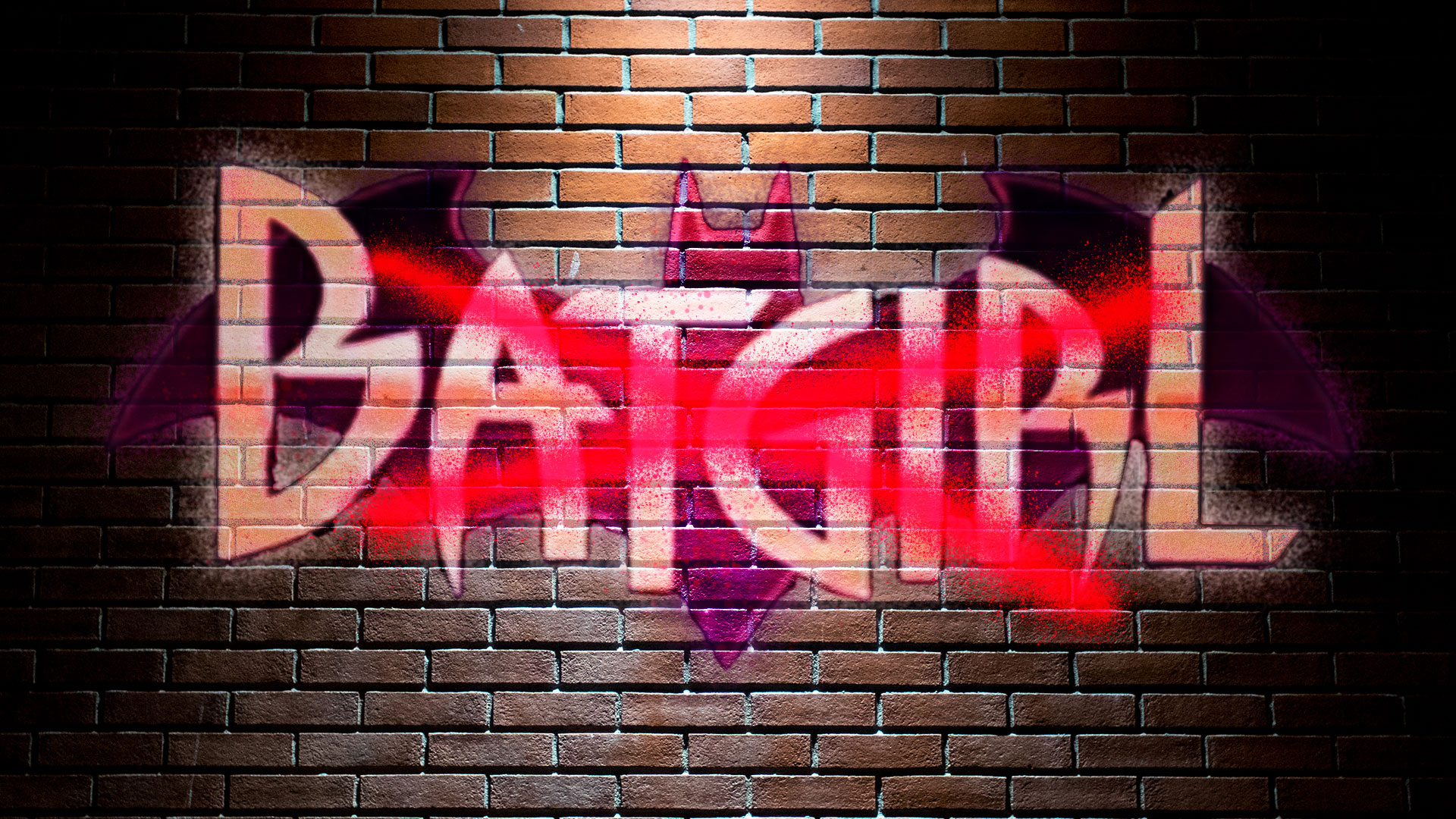
We hardly knew ye, feature-length live-action film version of <em>Batgirl</em>, and perhaps we never will.

Enlarge / We hardly knew ye, feature-length live-action film version of Batgirl, and perhaps we never will. (credit: Aurich Lawson / Warner Bros)

In response to mounting reports and rumors, the creative teams behind the upcoming straight-to-HBO-Max films Batgirl and Scoob 2: Holiday Haunt confirmed this week that both had been canceled and locked away to apparently never be released in any way, shape, or form.

The bizarre news began unfolding on Tuesday thanks to a report from the New York Post, which alleged that Batgirl, a feature-length, live-action reimagining of the DC Comics superhero that began production last year, would be outright shelved and hidden away in the wake of test screenings. The nearly complete film, which had a budget exceeding $70 million and co-starred Michael Keaton as the character of Batman for the first time in nearly 30 years, was reportedly "unspeakable" on a quality basis.

Two inevitabilities: Death (of possibly decent DC films) and taxes

Shortly after that report went live, well-placed industry rags blamed Batgirl's cancellation on a different issue: accounting and taxes. Deadline pointed to a limited-time opportunity for new WB corporate owners Discovery, which initiated its $108 billion acquisition of Warner in May 2021, to write off both Batgirl and the CGI animation feature Scoob 2: Holiday Haunt as a "purchase accounting maneuver." The outright cancellation would have to happen by "mid-August," according to Deadline; any other attempt to commercially release either film in any way (streaming, theatrical runs, VOD sales) would nix the accounting move.

Read 8 remaining paragraphs | Comments

04 Aug 19:30

As Earth spins faster, Meta joins fight against leap seconds

by Kevin Purdy
An atomic clock based on a fountain of atoms.

An atomic clock based on a fountain of atoms. (credit: National Science Foundation)

Meta recently joined the ranks of tech giants calling for the end of the leap second, the fascinatingly complex way humans account for tiny changes in the Earth’s rotation timing. The owner of Facebook and Instagram adds to a chorus that has been growing for years, and the debate could come to a head at a global conference in 2023—or even sooner if the Earth keeps having record-short days.

Facebook, like many large-scale tech companies, is tired of trying to time a global network of servers against leap seconds, which add between 0.1 and 0.9 seconds to Coordinated Universal Time (UTC) every so many years. There have been 27 leap seconds added since 1972. In a post on Meta’s engineering blog, Oleg Obleukhov and Ahmad Byagowi say 27 is quite enough for non-solar-scientist types—"enough for the next millennium."

International timekeeping bodies add leap seconds at unpredictable intervals because the things that cause them—the braking action of tides on rotation, moon position, the distribution of ice caps on mountaintops, mantle flow, earthquakes—are unpredictable. When the Earth’s speed varies too much from atomic time-keeping, a leap second is called for by the International Earth Rotation and Reference Systems Service (IERS).

Read 6 remaining paragraphs | Comments

04 Aug 19:29

With help from BA.5, new COVID hospitalizations quadrupled since April

by Beth Mole
With help from BA.5, new COVID hospitalizations quadrupled since April

Enlarge (credit: Getty | David Gannon)

As the wave of omicron coronavirus subvariant BA.5 continues to flood the US, daily COVID-19 hospitalizations are four times higher than four months ago, according to the latest data from the Centers for Disease Control and Prevention.

The data reflects the high ongoing transmission of coronavirus subvariants adept at evading fading immune responses in a population that is largely unboosted.

In early April, as the US fell into a brief pandemic lull in the wake of the towering BA.1 omicron wave, the seven-day rolling average for new hospitalizations sank to around 1,420 per day nationwide. Now, after waves of subvariants BA. 2, BA.2.12.1, and the current BA.5, hospitalizations have floated back up. The current seven-day rolling average is nearing 6,300. Overall, more than 37,000 people in the US are currently hospitalized with COVID-19.

Read 6 remaining paragraphs | Comments

04 Aug 17:44

How Misinformation About COVID Vaccines and Pregnancy Took Root Early On and Why It Won’t Go Away

by by Duaa Eldeib

by Duaa Eldeib

ProPublica is a nonprofit newsroom that investigates abuses of power. Sign up for Dispatches, a newsletter that spotlights wrongdoing around the country, to receive our stories in your inbox every week.

Even before the COVID-19 vaccine was authorized, there was a plan to discredit it.

Leaders in the anti-vaccination movement attended an online conference in October 2020 — two months before the first shot was administered — where one speaker presented on “The 5 Reasons You Might Want to Avoid a COVID-19 Vaccine” and another referred to the “untested, unproven, very toxic vaccines.”

But that was only the beginning. Misinformation seeped into every corner of social media, onto Facebook feeds and into Instagram images, pregnancy apps and Twitter posts. Pregnant people emerged as a target. A disinformation campaign preyed on their vulnerability, exploiting a deep psychological need to protect their unborn children at a moment when so much of the country was already gripped by fear.

“It’s just so powerful,” said Imran Ahmed, the founder and chief executive officer of the U.S. nonprofit Center for Countering Digital Hate, which tracks online disinformation.

A majority of the disinformation came from a group of highly organized, economically motivated actors, many of them selling supplements, books or even miracle cures, he said. They told people the vaccine may harm their unborn child or deprive them of the opportunity to become parents. Some even infiltrated online pregnancy groups and asked seemingly harmless questions, such as whether people had heard the vaccine could potentially lead to infertility.

The Center for Countering Digital Hate found that nearly 70% of anti-vaccination content could be traced to 12 people, whom they dubbed The Disinformation Dozen. They reached millions of people and tested their messaging online, Ahmed said, to see what was most effective — what was most frequently shared or liked — in real time.

“The unregulated and unmoderated effects of social media where people are allowed to spread disinformation at scale without consequences meant that this took hold very fast,” Ahmed said. “That’s had a huge effect on women deciding not to take the vaccine.”

Some people, such as Robert F. Kennedy Jr., seized on the initial dearth of research into vaccines in pregnant people. “With no data showing COVID vaccines are safe for pregnant women, and despite reports of miscarriages among women who have received the experimental Pfizer and Moderna vaccines, Fauci and other health officials advise pregnant women to get the vaccine,” Kennedy posted in February 2021 on Facebook. Kennedy did not respond to requests for comment.

Disinformation flourished, in part, because pregnant people were not included in the vaccine’s initial clinical trials. Excluding pregnant people also omitted them from the data on the vaccine’s safety, which created a vacuum where disinformation spread. Unsure about how getting the shots might affect their pregnancy — and without clear guidance at the time from the Centers for Disease Control and Prevention — pregnant people last year had some of the lowest vaccination rates among adults.

The decision to delay or avoid vaccination, often made out of an abundance of caution and love for the baby growing inside of them, had dire consequences: Unvaccinated women who contracted COVID-19 while pregnant were at a higher risk of stillbirths — the death of a fetus at 20 weeks or more of pregnancy — and several other complications, including maternal death.

Although initial clinical trials did not include pregnant people, the Food and Drug Administration ensured that vaccines met a host of regulatory safety standards before authorizing them. Citing numerous studies that have since come out showing the vaccine is safe, the CDC now strongly recommends that people who are pregnant, breastfeeding or planning to become pregnant get vaccinated. The major obstetric organizations, including The American College of Obstetricians and Gynecologists and the Society for Maternal-Fetal Medicine, also urge pregnant people to get vaccinated.

But two and a half years into the pandemic, misinformation is proving resilient.

A May 2022 Kaiser Family Foundation poll found more than 70% of pregnant people or those planning to become pregnant believed or were unsure whether to believe at least one of the following popular examples of misinformation about the COVID-19 vaccine: that pregnant people should not get vaccinated; that it’s unsafe to get vaccinated while breastfeeding; or that the vaccine has been shown to cause infertility. None of which are true.

Dr. Laura Morris, a University of Missouri, Columbia family physician who delivers babies, has heard all those falsehoods and more from her patients. She has long relied on science to help encourage them to make well-informed decisions.

But when officials rolled out the vaccine, she found herself without her most powerful tool, data. The disinformation didn’t have to completely convince people that the vaccine was dangerous; creating doubt often was sufficient.

“That level of uncertainty is enough to knock them off the path to accepting vaccination,” Morris said. “Instead of seeing vaccines as something that will make them healthier and improve their pregnancy outcomes, they haven’t received the right information to make them feel confident that this is actually healthy.”

Before COVID-19, Morris typically saw one stillbirth every couple of years. Since the pandemic started, she said she has been seeing them more often. All followed a COVID-19 diagnosis in an unvaccinated patient just weeks before they were due. Not only did Morris have to deliver the painful news that their baby had died, she also told them that the outcome might have been different had they been vaccinated. Some, she said, felt betrayed at having believed the lies surrounding the vaccine.

“You have to have that conversation very carefully,” Morris said, “because this is a time where the people are feeling awful and grieving and there’s a lot of guilt associated with these situations that’s not deserved.”

In December 2021, the Federation of State Medical Boards found a proliferation of misinformation about COVID-19 among health care workers. Two-thirds of state medical boards reported an increase in complaints about misinformation, but fewer than 1 in 4 of them reported disciplining the doctors or other health care workers.

Dr. Sherri Tenpenny, an osteopath, was the speaker at the October 2020 conference who called the COVID-19 vaccine “toxic.” She later testified at an Ohio state House Health Committee hearing on the Enact Vaccine Choice and Anti-Discrimination Act. She falsely claimed that the vaccine could magnetize people. “They can put a key on their forehead, it sticks,” she said. “They can put spoons and forks all over them, and they could stick.” She also questioned the connection between the vaccine and 5G towers.

Despite her statements, the State Medical Board of Ohio has not taken any disciplinary action against her. Her medical license remains active. Tenpenny did not respond to requests for comment.

It’s difficult to know exactly how many doctors were disciplined, a term that can mean anything from sending them letters of guidance to revoking their license. State medical boards in some cases refused to disclose even the number of complaints received.

Some records were made public if formal disciplinary action was taken, as in the case of Dr. Mark Brody. The Rhode Island physician sent a letter to his patients that the state medical board determined contained several falsehoods, including claims that “there exists the possibility of sterilizing all females in the population who receive the vaccination.” The Rhode Island Board of Medical Licensure and Discipline reprimanded him for the letter, then suspended his medical license after other professional conduct issues were uncovered. He surrendered his license in December.

Brody said in an interview that he stands by the letter. He said the word “misinformation” has been politicized and used to discredit statements with which people disagree.

“This term doesn’t really apply to science,” he said, “because science is an ever-evolving field where today’s misinformation is tomorrow’s information.”

The Washington Medical Commission has received more than 50 complaints about COVID-19 misinformation since the start of the pandemic, a spokesperson there said. California does not track misinformation complaints specifically, but a Medical Board of California spokesperson said that, in that same time period, the group received more than 1,300 COVID-19-related complaints. They included everything from fraudulent promotion of unproven medications to the spreading of misinformation.

“We were certainly surprised that more than half of boards said they had seen an increase in complaints about false or misleading information,” said Joe Knickrehm, vice president of communications for the Federation of State Medical Boards, which in April adopted a policy stating that “false information is harmful and dangerous to patients, and to the public trust in the medical profession.”

Other groups, including The American College of Obstetricians and Gynecologists, warned doctors about spreading misinformation. In October, the organization asked its members to sign a letter endorsing the COVID-19 vaccine, writing that “the spread of misinformation and mistrust in doctors and science is contributing to staggeringly low vaccination rates among pregnant people.” But the letter was never published. “We didn’t achieve the numbers we had hoped,” a spokesperson for the organization said, “and did not want to release it if it was not going to be compelling to patients.”

The fact that some medical professionals have been spreading disinformation or failing to engage with their patients about the vaccine is profoundly disappointing, said Dr. Rachel Villanueva, a clinical assistant professor of obstetrics and gynecology at New York University’s Grossman School of Medicine and president of the National Medical Association, which represents Black doctors.

Research has shown that hearing directly from a health care provider can increase the likelihood that patients get vaccinated. And doctors, Villanueva said, have a responsibility to tell their patients the benefits of getting vaccinated and the risks of choosing not to. She has explained to her patients that although the vaccine development program was named Operation Warp Speed, for example, manufacturers followed proper safety protocols.

“Before COVID, there already existed a baseline distrust of the health care system, especially for women of color, feeling marginalized and feeling dismissed in the health care system,” she said. “I think that just compounded the already lack of confidence that existed in the system.”

Help Us Continue Our Reporting

We plan to continue reporting on stillbirths. If you’re interested in sharing a story about your experience, please sign up here and we may follow up.

04 Aug 17:02

“God, No, Not Another Case.” COVID-Related Stillbirths Didn’t Have to Happen.

by by Duaa Eldeib

by Duaa Eldeib

This story contains descriptions of stillbirths.

ProPublica is a nonprofit newsroom that investigates abuses of power. Sign up for Dispatches, a newsletter that spotlights wrongdoing around the country, to receive our stories in your inbox every week.

Late one afternoon last October, Dr. Shelley Odronic sat in her office and, just as she had thousands of times before, slid a rectangular glass slide onto her microscope.

A pathologist who works in rural Ohio, Odronic leaned forward to examine tissue from the placenta of a woman who had recently given birth. She increased the magnification on the microscope. Never had she seen so many tiny, congealed reservoirs of blood or such severe inflammation of the tissue, a sign the placenta had been fighting an infection.

“Right away, I knew it wasn’t compatible with life,” Odronic said.

She asked her secretary to print out the patient’s chart. In dark letters were the words “fetal demise.” A stillbirth, the death of a fetus at 20 weeks or more of pregnancy. But that didn’t solve the mystery. Odronic had examined many placentas from pregnancies that ended in stillbirth. None looked like this — withered and scarred.

Dr. Shelley Odronic works in her office in Lima, Ohio. Odronic, a pathologist, noticed severe damage in the placentas of pregnant people who had COVID-19. (Maddie McGarvey for ProPublica)

Odronic kept reading. No chronic medical conditions. Good prenatal care. Then, buried in the middle of the report, she spotted something. Seven days before the stillbirth, the mother had tested positive for COVID-19. Odronic wondered if the virus could explain the damage to the placenta. In the world of placenta pathology, a new affliction is unusual, especially one so dramatic in presentation and so devastating in effect.

Her mind traveled to Dr. Amy Heerema-McKenney, a pathologist at Cleveland Clinic and an expert on the placenta, who had trained Odronic during residency. Odronic went to sleep that night with a pit in her stomach and a plan to call her former teacher in the morning.

Heerema-McKenney was in her office when the phone rang. As she listened, she knew that what Odronic was describing was what she and her colleagues had observed repeatedly over the past several months: a patient positive for the coronavirus, a placenta destroyed by COVID-19, a baby stillborn.

Their next discovery was equally stunning. None of the stillbirths they studied involved a pregnant person who had been fully vaccinated. The doctors checked with colleagues across the country and around the world. The fatal pattern held.

Placenta slides (first image) in Dr. Amy Heerema-McKenney’s office at the Cleveland Clinic. Heerema-McKenney (second image), a placenta pathologist, works in the lab. She noticed the impact COVID-19 was having on placentas and stillbirths. (Maddie McGarvey for ProPublica)

Unvaccinated women who contracted COVID-19 during pregnancy were at a higher risk of stillbirths. They also were more likely to be admitted to the intensive care unit, give birth prematurely or die. Yet their greatest protection — the COVID-19 vaccine — sat largely untouched, buried under doubt, polluted by disinformation.

Pharmaceutical companies and government officials failed to ensure that pregnant people were included in the early development of the COVID-19 vaccine, a calamitous decision made amid the urgency of a rapidly spreading pandemic. That decision left pregnant people with little research to rely on when making a critical decision on how best to keep the babies growing inside of them safe.

At the same time that research was excluding pregnant people from vaccine trials, a full-scale assault on vaccination was unfolding online. Taking advantage of the lack of data, conspiracy theorists, anti-vaxxers and even some medical professionals spread false claims about the vaccine’s safety in pregnancy, leading many pregnant people to delay or refuse the vaccine. Even now, with numerous studies unequivocally announcing the safety of the vaccine for pregnant people, some doctors have failed to communicate the dangers of COVID-19 to pregnant people or the vaccine’s role in mitigating it.

The Centers for Disease Control and Prevention contributed to the confusion with vague early messaging about whether pregnant people should get vaccinated. While Americans lined up at pharmacies and stalked vaccine websites in hopes of securing a shot last year, pregnant people had some of the lowest vaccination rates among adults, with only 35% fully vaccinated by last November. Meanwhile, many Americans were already moving on to their boosters after federal officials that month expanded eligibility for the additional shots to anyone 18 or older. And much of the country was beginning to return to pre-pandemic life. The Sunday after Thanksgiving, for instance, set the record for the busiest day of air travel since March 2020.

November also marked a key moment in the understanding of COVID-19’s impact on stillbirths. A CDC study looking at 1.2 million births in the first 18 months of the pandemic found that more than 8,000 pregnancies ended in stillbirths, including more than 270 of them in patients with a documented COVID-19 diagnosis at the time of delivery.

Although stillbirths were rare overall, babies were dying. The risk of a stillbirth nearly doubled for those who had COVID-19 during pregnancy compared with those who didn’t. And during the spread of the delta variant, that risk was four times higher.

Odronic inspects a placenta. The placenta is vital to keeping a growing fetus alive, delivering oxygen and nutrients as their organs develop. (Maddie McGarvey for ProPublica)

Indeed, doctors discovered that some stillbirths resulted from COVID-19 directly infiltrating the placenta, a condition they named SARS-CoV-2 placentitis. Cases were found even in people whose COVID-19 symptoms were mild or nonexistent. In some cases, however, placentas were discarded with medical waste without being tested for COVID-19, and parents never learned what led to their baby’s stillbirth.

COVID-19 also led to stillbirths among pregnant people who became exceedingly ill after contracting the virus. It damaged their lungs and clotted their blood, putting their babies in such severe distress that they were born before they could take their first breath.

“These are pregnancies that should not have ended,” Heerema-McKenney said.

She and others had tried to alert the CDC as well as maternal and state health organizations to their findings, but she said they either didn’t get a response or were told they needed to collect more data and publish studies. Pathologists are experts in disease diagnosis, dealing with death and illness from the safe distance of their labs. Convincing obstetricians who met with patients daily or doctors who were making policy recommendations was a challenge.

“I tried to sound the alarm. We tried so hard to get people to listen,” Heerema-McKenney said. “It was a really frustrating place to be as pathologists doing these autopsies, looking at these placentas and saying, ‘God, no, not another case.’”

Around the same time Heerema-McKenney was examining the damaged placentas, Ginger Munro was on life support in a hospital 250 miles away in another part of Ohio.

She and her husband, Kendal, had been trying to have a child for five years. They hadn’t expected that she’d get pregnant in the middle of a pandemic. But when her pregnancy test came back positive in the spring of 2021, she rushed to post a picture of it in an online pregnancy group. “Is it just me or can you see the 2 lines??” she asked.

The pandemic had already brought much change to their lives. Ginger, who lives in the small town of Washington Court House in southwest Ohio, quit her job as assistant nutrition director with the county’s Commission on Aging. She stationed hand sanitizer throughout her house and in her car, and she only went grocery shopping early in the morning. If she noticed someone in an aisle, she skipped it.

“I knew the virus was real,” she said, “but I was terrified to take the vaccine.”

Ginger Munro sits in her home in Washington Court House, Ohio. (Maddie McGarvey for ProPublica)

Ginger worried that the vaccine’s development had been rushed, and she hadn’t seen any data showing it was safe for pregnant people. At this point, the CDC had not explicitly recommended the vaccine during pregnancy. Ginger already worried she was tempting fate by getting pregnant at 40; she said she didn’t want to risk endangering her baby by taking the vaccine.

Besides, if it was really important, her doctor would have mentioned it, and, she said, she would have followed his advice. But, she said, he never did. Her family hadn’t gotten vaccinated either. In a mostly rural county where less than half of the residents were vaccinated, they were hardly alone.

Her doctor declined to comment through a spokesperson at the hospital system where he works; the spokesperson said the hospital couldn’t disseminate information about the vaccine to pregnant patients before it was recommended.

Ginger’s pregnancy progressed without complications. She and Kendal shared the news of a new baby with Ginger’s two daughters from a previous marriage. At their kitchen table, near a sign that read “eat cake for breakfast,” Sophia, then 14, covered her mouth with both hands while Hailee, then 18, simply beamed.

At a backyard gender reveal three months later, Ginger’s growing belly resembled a basketball against her tiny frame. She leaned in to kiss her husband, her long, dark hair falling onto her shoulders. Red confetti rained down on the deck.

Kendal, an aircraft maintenance and avionics manager at an airport two counties away, worked through the pandemic. In the summer, when they realized his cough was actually COVID-19, it was too late. Ginger was sick.

What the Placenta Does

The placenta’s job is as critical as it is clear: keep the baby alive.

For the most part, it does that well. The placenta is the first organ to develop after conception, and it connects to the fetus through the umbilical cord, which delivers oxygen. The placenta provides nourishment, expels waste and does much of the work of the fetus’s lungs, kidneys and liver as they develop. The dark-red organ typically is solid, with a sponge-like texture and blood vessels that spread out like the branches of a tree.

The placenta also acts as a shield against most viruses, but when it’s attacked by COVID-19, the branches can collapse, killing the cells, cutting off oxygen to the fetus, leaving holes to be filled by pools of blood. In response to the infected and dying cells, inflammation and scarring spread throughout the placenta.

Unable to survive the damage to the placenta, many babies were stillborn.

Having trouble reaching her doctor, she went to two different emergency rooms. One, she said, declined to treat her with monoclonal antibodies, which research had shown can be an effective treatment for pregnant people with COVID-19. The other, which described her in medical records as “an exceedingly pleasant individual admitted with symptomatic COVID-19 pneumonia,” transferred her about an hour away to the University of Cincinnati Medical Center. There, records show, she was admitted with acute respiratory distress syndrome due to COVID-19.

The University of Cincinnati doctor asked Ginger and Kendal — who was on FaceTime because of the hospital’s COVID-19 protocols — about “fetal priority.” Ginger made her wishes clear: Save the baby, their baby, the baby they had tried so hard to have. Kendal, who was worried about both his wife and their unborn child, said he went along with Ginger in that moment.

“You were so scared,” Kendal wrote in a notebook that night. “We told each other over and over how much we loved each other.”

They hung up so the doctors could insert a breathing tube. Before they could begin, Kendal called back three more times just to hear her voice.

Doctors put Ginger on ECMO, a form of life support reserved for the sickest patients. Kendal, Hailee, Sophia and Ginger’s mother and sister were later allowed in the hospital two at a time, and they prayed at her bedside nearly every night. Ginger was sedated, her face swollen and obscured by tubing, her cheeks flattened by the crush of the ventilator straps, her wrists tied down so she wouldn’t accidentally pull out her breathing tube.

Her family took solace in knowing the baby’s heartbeat was steady and her ultrasounds were normal. The doctors gave Ginger medication to help the baby’s lungs mature in case she was born early. After more than 30 days on ECMO, doctors took Ginger off the machine only to put her back on the next morning. She was the first patient in the hospital’s history to be placed on ECMO twice.

The plan, records show, was to deliver at 28 weeks. But the day after Ginger was put back on life support, Kendal got the call telling him the baby was on her way. As doctors prepared for the delivery in Ginger’s intensive care room, the family camped out in the waiting room, jittery from excitement and vending machine snacks. They talked about baby names and future family outings. They pulled the waiting room chairs together to form makeshift beds and covered themselves with blankets they brought from home.

They don’t know if they actually fell asleep before a nurse burst through the doors screaming at them to follow. “She’s coming! She’s coming!” They didn’t make it far before they were blocked by doctors and nurses, some huddled over an incubator in the middle of the hall and the rest crowded around Ginger.

Hailee tried to peer over the sea of blue scrubs to catch the first glimpse of her little sister. She smiled beneath her black mask. She’ll be OK, she said to herself.

But after a few minutes of trying to revive the baby, a doctor told Kendal it was time. Kendal nodded, asked for a chair and collapsed as he tried to process his daughter’s death.

Then another wave of grief washed over him. Someone would have to tell Ginger.

A baby bonnet and memorial card for Elliotte, who was stillborn on Sept. 14, 2021. Her mother, Ginger, was hospitalized with COVID-19, placed on life support and eventually went into early labor. (Maddie McGarvey for ProPublica)

Ginger’s medical records describe a baby born at 27 weeks “without signs of life” after an “uncomplicated delivery.” Her placenta had separated from the wall of the uterus, the risk of which studies have shown increases with COVID-19.

When Ginger woke up, she looked down at her sunken belly and realized she had given birth. She assumed her daughter was in the newborn intensive care unit. Ginger was barely able to speak around the tube in her trachea, but after a few days in which no one brought the baby to her, she couldn’t wait any longer. Ginger turned to her mother and sister and mouthed the words, “Where’s the baby?”

The room fell silent. They called Kendal, who rushed to the hospital. He told her what had happened. He described their daughter’s dark hair and her long fingers and toes, just like her mother’s.

Ginger, who had always loved the sweet smell of a newborn’s breath, whispered to her husband.

“Did you smell her breath?”

“She wasn’t breathing,” he said.

Ginger and Kendal Munro visit their daughter Elliotte’s grave. She was stillborn at 27 weeks. (Maddie McGarvey for ProPublica)

In the hurried quest for a safe and effective COVID-19 vaccine, pharmaceutical companies and government officials did not include pregnant people in their initial plans. It’s a failure that continues to reverberate.

“They absolutely should have been included in COVID vaccine trials from the beginning,” said Kathryn Schubert, president and CEO of the Society for Women’s Health Research, a Washington, D.C.-based nonprofit that advocates for the inclusion of women in research and clinical trials.

Researchers and advocates have spent more than four decades trying to dismantle the belief that it’s unsafe or unethical for pregnant women to participate in clinical trials. A couple years ago, it seemed like they had finally prevailed.

Shortly before leaving office, President Barack Obama signed into law the 21st Century Cures Act, which established the Task Force on Research Specific to Pregnant Women and Lactating Women. The group found longstanding obstacles, including liability concerns, to including pregnant and lactating people in clinical research. It concluded that recommending halting medication or forgoing treatment while pregnant may actually endanger the health of the mother and her fetus more than the treatment itself.

The need for everything from asthma to depression medication doesn’t stop when a person gets pregnant, and when a catastrophic event such as a pandemic hits, experts said, pregnancy should not preclude someone from receiving life-saving treatment.

Around the same time, researchers discovered that the Zika virus, which was mainly transmitted through mosquitoes, could pass from a pregnant person to their fetus and cause severe birth deformities. A second group of experts joined together to develop separate guidance on including pregnant people in the research, development and deployment of pandemic vaccines.

Both groups pushed to remove pregnant women from a list of vulnerable populations that required additional review before being allowed to participate in research. Instead of proving that pregnant women should be included, manufacturers would need to provide compelling evidence for why they shouldn’t.

In 2018, the federal task force issued recommendations calling for including pregnant and breastfeeding people in biomedical research, and the Department of Health and Human Services adopted some of the guidance. But a gap remained between what the task force and others insisted was needed and what was actually happening.

“We were frustrated because COVID-19 provided an opportunity to implement the recommendations of the task force,” said Dr. Diana Bianchi, the director of the Eunice Kennedy Shriver National Institute of Child Health and Human Development and the chair of the task force.

In February 2021, Bianchi and her colleagues published an article lamenting the exclusion of those who were pregnant or breastfeeding from the initial COVID-19 vaccine clinical trials. “Pregnant and lactating persons should not be protected from participating in research, but rather should be protected through research,” they wrote.

Ruth Faden, the founder of the Johns Hopkins Berman Institute of Bioethics, helped lead the group that issued the guidance after Zika. She and others urged manufacturers to include pregnant people in the development of the COVID-19 vaccine as part of Operation Warp Speed, the federal program that provided billions of taxpayer dollars to pharmaceutical companies to speed up vaccine production.

“There is a playbook in place so that when the U.S. launches Operation Warp Speed, it should be pretty obvious what should be done,” she said. “It’s not like no one knows how to do this, either ethically or technically.

“Nevertheless, it doesn’t happen,” Faden added. “Once again, pregnant people are left behind.”

A spokesperson for Pfizer said the company followed guidance from the Food and Drug Administration. Although pregnant people were not included in the initial vaccine clinical trials, Pfizer tested its vaccine on pregnant rats and did not identify any safety concerns. The company subsequently launched a clinical trial with pregnant women but halted it because at that point the vaccine had already been recommended for pregnant people.

Similarly, Moderna also studied its vaccine on pregnant animals, but the company said it made the decision “to prioritize the study of the safety and efficacy” of the vaccine in adults who weren’t pregnant. It called that approach “consistent with the precedent to study new vaccines in pregnant women only after demonstration of favorable benefit and risk in healthy adults.”

In response to questions from ProPublica, Johnson & Johnson referred a reporter to its website, which didn’t address the relevant issues.

Some government officials, including several from the Food and Drug Administration, said they support having pregnant women take part in clinical studies of vaccines for emerging infectious disease, including COVID-19. A spokesperson for the National Institute of Allergy and Infectious Diseases, which is part of the National Institutes of Health, said the agency did not “dictate the protocol development” for the trials and said that responsibility lies with the companies.

The failure to include pregnant people early on in COVID-19 vaccine trials was, at least in part, a casualty of the tremendous urgency to respond to an intense public threat and develop the vaccine as quickly as possible, Faden said. But multiple groups had published road maps on how to ethically include pregnant people without slowing down that process.

“I can’t tell you how many pregnant people might not have died or how many stillbirths might not have occurred if the playbook had been followed,” she said, “but I’m willing to bet it was a significant chunk that would have been prevented if there had been a full-throated, evidence-based recommendation for COVID-19 vaccines in pregnancy almost simultaneous to when it was available for the rest of the adult population.”

By the time the CDC specifically recommended the vaccine for pregnant people, in August 2021, the damage had been done.

A dizzying and vague series of advisories led to confusion and delayed vaccinations. When the COVID-19 vaccines were first made available in December 2020, the CDC said health care workers and residents of long-term care facilities should be prioritized, but the shots were not explicitly recommended for pregnant people. Instead, the agency said on its webpage for vaccines and pregnancy that pregnant health care workers “may choose to be vaccinated.” In explaining that decision, the CDC said that experts had considered how mRNA vaccines, which do not contain the live virus, work. They concluded that the vaccines “are unlikely to pose a risk for people who are pregnant.”

“However,” the CDC added, “the potential risks of mRNA vaccines to the pregnant person and her fetus are unknown because these vaccines have not been studied in pregnant women.”

In January, the World Health Organization recommended against pregnant people getting the vaccine unless they faced increased risk, such as complicating comorbidities or exposure to the virus due to a job in health care, but the agency later reversed course.

A few months later, in March 2021, the CDC continued its lukewarm messaging that pregnant people “may choose” to be vaccinated. The agency listed some points for pregnant people to consider discussing with their health care providers, starting with how likely they are to be exposed to COVID-19.

After a promising study showed that the vaccine was safe for pregnant people, CDC Director Dr. Rochelle Walensky said at a White House briefing in late April that the CDC was recommending the vaccine for them. But the CDC did not update its website to reflect her comments and said the agency’s guidance had not changed: Pregnant people “may choose to be vaccinated.”

Once again, pregnant people were put in the precarious position of receiving ambiguous and inconsistent recommendations. In May 2021, the CDC reiterated that pregnant people faced an increased risk of getting severely ill from COVID-19, but the language surrounding the vaccine — “If you are pregnant, you can receive a COVID-19 vaccine” — was noncommittal.

A CDC spokesperson, responding to questions from ProPublica, said in an email that pregnant people were part of the first recommendations in December 2020 that encouraged people 16 and older to get vaccinated. At that time, data about the safety and efficacy of the vaccine during pregnancy was limited “because pregnant people had been excluded from pre-authorization clinical trials,” so the CDC included additional supporting language for pregnant people, saying they were eligible and could choose to receive the vaccine. The agency said its recommendations were based on available evidence and evolved throughout the pandemic.

Before making changes to its guidance, the CDC had its team of scientists review available data to ensure that there was “an abundance of evidence.”

“For each update to the statement of risks during pregnancy, multiple types of studies and the strength of evidence for each were reviewed,” another CDC spokesperson said. “These reviews of the evidence were accompanied with discussions among subject matter experts both internally and externally with clinical partners for an ultimate determination of risk.”

Dr. Cynthia Gyamfi-Bannerman, a perinatologist and chair of the department of obstetrics, gynecology and reproductive sciences at the University of California, San Diego School of Medicine, shared the daunting task of making vaccine recommendations for pregnant people as part of COVID-19 task forces for two leading organizations, The American College of Obstetricians and Gynecologists and the Society for Maternal-Fetal Medicine.

In the beginning, she said, the only pregnancy-specific data they had came from a few dozen participants who were inadvertently included after becoming pregnant during the clinical trials and from some pregnant animal data.

“It played out in real time in the COVID pandemic because we see the effects of not including pregnant people in these trials,” Gyamfi-Bannerman said. “We couldn’t make a strong recommendation, so pregnant people were hesitant. I think that directly led to fewer people using the vaccine than we would have wanted.”

At the end of June 2021, the CDC added a general update to its website to reflect the dangers of the delta variant tearing across much of the country. “Getting vaccinated prevents severe illness, hospitalizations, and death,” it wrote. “Unvaccinated people should get vaccinated and continue masking until they are fully vaccinated.”

But it wasn’t until Aug. 11, eight months after the first vaccine was administered, that the CDC issued its formal recommendation that pregnant and breastfeeding people get vaccinated.

“The vaccines are safe and effective,” Walensky said in a statement at the time, “and it has never been more urgent to increase vaccinations as we face the highly transmissible Delta variant and see severe outcomes from COVID-19 among unvaccinated pregnant people.”

August would prove to be the deadliest month for COVID-19-related deaths of pregnant people. The CDC issued an emergency call the next month strongly recommending the vaccine to pregnant people, noting that approximately 97% of pregnant people hospitalized with COVID-19 were unvaccinated. The dangers to symptomatic pregnant people included a 70% increased risk of death, and their developing babies could face a host of perils, including stillbirths.

Researchers have yet to determine exactly why some pregnant people with COVID-19, vaccinated and unvaccinated alike, deliver stillborn babies, while others do not. Attempts to answer that question have been hindered, in part, by incomplete data. The CDC’s statistics on COVID-19-related fetal and maternal deaths are undercounts. The CDC has data on less than 73,000 birth outcomes following a mother’s confirmed COVID-19 diagnosis in 2020 and 2021, of which 579 were pregnancy losses.

That information was sent in by fewer than three dozen health departments, and those estimates don’t include states like Mississippi, which in September reported 72 COVID-19-related stillbirths since the start of the pandemic, nearly double what the state would have expected, according to data from the Mississippi State Department of Health. Preliminary state data shows total stillbirths increased there in 2020 then dipped in 2021, but were still higher than pre-pandemic numbers.

A separate CDC database shows more than 220,000 COVID-19 cases and at least 305 deaths among pregnant people.

“CDC recognizes that pregnant people faced challenging decisions about how to best protect themselves in the setting of uncertainty related to both the infection and the COVID-19 vaccine,” a CDC spokesperson said, adding, “COVID-19 vaccination remains one of the best ways to protect yourself and your family from serious illness from COVID-19.”

Heartbroken and determined, Jaime Butcher has emerged as an unofficial ambassador for the vaccine, posting in online pregnancy and stillbirth forums about the risks of being pregnant and unvaccinated.

No one, she said, told her of the risks. Doctors, the CDC and health officials, she continued, aren’t doing enough to inform people. Even now, well into the pandemic’s third year, the message still isn’t getting through.

“I kept seeing it happening more and more to women and it wasn’t talked about,” she said. “They just say, ‘Oh, get the vaccine,’ which is great, but they don’t talk about what getting the virus can do to pregnant women.”

As a wedding planner, Butcher was surrounded by love. She found it with her husband, then in the daughter growing in her belly, who they named Emily after Butcher’s grandmother.

Butcher suffered five miscarriages before, she said, she opened an email from an in-vitro fertilization clinic confirming her pregnancy in the summer of 2020. She screamed, and her husband rushed to wrap her in a hug.

They waited until she was five months along to announce her pregnancy at Thanksgiving. The next day, Black Friday, they bought a high chair, a tummy time mat and pink onesies.

They were taking precautions, Butcher said, especially since the vaccine wasn’t yet available to her or her husband. But a week later, she woke up with a runny nose, though she didn’t think much of it. Still, she went to the hospital to make sure everything was OK. An ultrasound came back normal.

When her daughter’s kicking slowed the next morning, she called her doctor’s office again. They told her to eat something sweet to get the baby moving. She tried everything she could find: orange juice, Cheerios, Twix, graham crackers, peanut butter and jelly. Nothing worked.

A few hours later, Butcher drove herself to the hospital, where she followed her daughter’s heartbeat on the screen. Steady. Then slow. Then still.

She delivered at 23 weeks. Butcher didn’t know she had COVID-19 until they tested her at the hospital. A lab report later revealed extensive damage to the placenta.

“I was in shock. I was in shock that I lost my daughter, in shock that I had COVID,” Butcher said. “She should be alive, but it’s because of COVID that I lost her.”

A week later, she parked in front of Kohl’s to return the high chair, the clothes still on tiny hangers and the stroller her mom gave her. As she made her way to the register, she saw a baby in an identical stroller. The tears stung all the way down her cheeks.

“You see what you want right in front of you,” she said, “and it’s like, ‘My baby should be here. This shouldn’t have happened.’”

Even before the pandemic, almost a quarter of all stillbirths may have been preventable. The stillbirth crisis has simmered silently in the U.S., claiming the lives of more than 20,000 babies annually. But parents often suffer alone, overwhelmed by grief and guilt.

Butcher, now 45, scheduled her vaccine as soon as she could. Her second dose fell on what was supposed to be Emily’s due date. After getting the shot, she and her husband drove up to Cleveland to visit their daughter’s grave and tell her that her mother got the vaccine in her honor. They let her know how much she was loved and how desperately they wished she was still safe inside her mother’s womb.

They didn’t linger long that spring day. It was a quiet visit. Butcher brought Emily pink flowers, always pink, and said goodbye.

They didn’t know it at the time, but they’d be back in a year to introduce her to her little brother.

Amid the devastation of the pandemic, Heerema-McKenney sees a glimmer of hope. The antibodies from the vaccine have been shown to transfer through the placenta. That immunity in the womb, research shows, reduces the risk of the youngest infants being hospitalized with COVID-19. She continues to encourage pregnant patients to get vaccinated and boosted. If not for them, for their baby.

Heerema-McKenney stands outside the hospital in Cleveland. (Maddie McGarvey for ProPublica)

While 71% of pregnant people were fully vaccinated as of mid-July, a figure not much lower than national vaccination rates for people 18 or older, only around 2% received at least one of their shots while they were pregnant — suggesting that persuading people who are already pregnant to get vaccinated remains a challenge. Research points to a substantial waning in immunity five to eight months after getting the first vaccine, yet only 58% of pregnant people were boosted. Like with booster rates among those who aren’t pregnant, Black and Hispanic people trail behind.

Heerema-McKenney said obesity, high blood pressure, age and diabetes may also increase the risk of stillbirth, but, she said, it appears the strongest risk factor is not being vaccinated.

“We have a set of data saying that the vaccination is safe, and we have a set of data saying that COVID causes an increase in stillbirth. When you’re seeing those two,” she said, “to me it says, ‘Get the vaccine.’”

Another reason for optimism is that the height of SARS-CoV-2 placentitis appears to have coincided with the dominance of the delta variant; Heerema-McKenney said she has not seen a case of COVID-19 directly infiltrating the placenta for months.

Neither has Odronic, who is relieved to get back to her routine work of cancer biopsies after the punishing period last fall when she saw one to two stillbirths a week. Her hospital honored her in November as Physician of the Year for the “tireless leadership she demonstrated during the COVID response,” the first time the award was given to a pathologist.

Odronic saw one to two stillbirths a week last fall. (Maddie McGarvey for ProPublica)

But, doctors warn, the virus continues to mutate and the risk of stillbirth remains.

“Maybe we’re out of the woods with this, but we just don’t know,” Heerema-McKenney said. “There’s nothing more tragic than seeing a healthy pregnancy end because of something that’s potentially preventable.”

Back in southwest Ohio, doctors released Ginger from the hospital at the end of October, two and a half months after she was admitted. Her oldest daughter, Hailee, who is now 19, got vaccinated shortly after her mother was hospitalized. Ginger said she wanted to get vaccinated when she awoke in the hospital, but she said her doctors told her to wait a bit.

Since then, she said, her fear of the vaccine came flooding back.

At a recent appointment, Ginger listened carefully as her doctor urged her to get vaccinated, which, the doctor said, would be even more important if she were to get pregnant again. Ginger trusted her. “There’s no agenda behind it,” Ginger said. “I will get the vaccine.”

Ginger continues to wrestle with feelings of gratitude and guilt for surviving when her baby did not. In December, the family held a memorial service for the daughter they named Elliotte Jo and called Ellie. Ginger and Kendal were still too grief-stricken to speak, so Hailee and her uncle prepared remarks.

“You have the best dad that I know would have given you everything under the sun and protected you with every ounce of his being,” Hailee said. “And you also have the best mom to guide you through life. Having two older sisters, you would have had the best wardrobe and many visits to Starbucks.”

She breathed laughter into the room, if only briefly.

In June, the family traveled to Florida. As the waves lapped against the shore and the sunrise turned the sky pink, they etched Elliotte’s name in the sand.

A photo of Kendal with Hailee and Sophia, who are holding their stillborn baby sister, Elliotte. (Maddie McGarvey for ProPublica) Help Us Continue Our Reporting

We plan to continue reporting on stillbirths. If you’re interested in sharing a story about your experience, please sign up here and we may follow up.

Mariam Elba and Gabriel Sandoval contributed research.
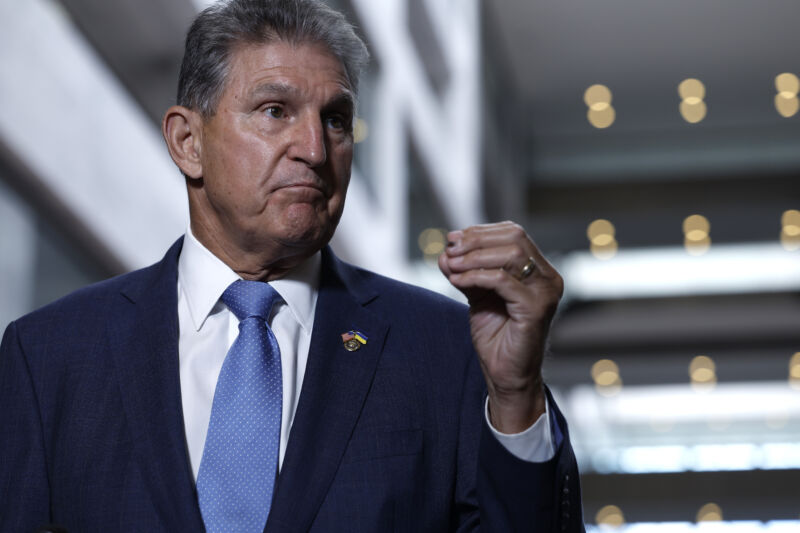
04 Aug 11:57

What It Was Like to Be Trapped on I-95 During the January 2022 Snowstorm That Brought Traffic to a Halt

by Jane Recker

Truck drivers, families with kids returning from the holidays, locals making a quick trip between towns, even a US senator on his way back to the Capitol—all found themselves stranded, unprepared to make it through the coming night. Watching their gas dwindle, looking in vain for official assistance, posting TikTok videos to document hour 18 […]

The post What It Was Like to Be Trapped on I-95 During the January 2022 Snowstorm That Brought Traffic to a Halt first appeared on Washingtonian.

03 Aug 15:40

President Biden has rebound Covid. How risky is that?

by Vox Staff
President Biden Delivers Remarks after Isolating due to COVID-19
President Joe Biden delivers remarks from the Rose Garden of the White House on July 27 after testing negative for Covid. He has since tested positive again. | Kent Nishimura/Los Angeles Times via Getty Images

With Paxlovid rebound cases, the risk of spread is the biggest concern.

President Joe Biden tested positive for Covid-19 over the weekend, just days after testing negative and resuming a regular schedule of in-person meetings. It’s a classic case of “rebound Covid,” something thousands of Americans have experienced after taking a course of the antiviral drug Paxlovid, as Biden had.

How risky is rebound Covid to Biden and others who take Paxlovid? Not terribly, according to Vox senior health reporter Keren Landman. For people at high risk of severe Covid disease or death, the risk of a bad outcome is greatly reduced by the treatment.

The real problem with rebound Covid is the risk of infecting others who come in contact with an individual who has gone back out into the world after a negative test. Biden, for example, had Cabinet members and staff with him for meetings at the White House and spoke to reporters indoors on Thursday, between his negative and positive tests. The White House doctor said Saturday that Biden had no reemergence of symptoms, and the White House said that no one who had been in close contact with Biden had tested positive.

Landman explained more about Paxlovid rebound Covid last month on an episode of Today, Explained.

Here’s Keren:

If your endpoint is preventing severe disease and death in high-risk folks, [Paxlovid] is still doing great. There’s no indication that it has fallen off in any way, even with BA.5 on the scene. But it is proving to be an incomplete treatment for controlling symptoms.

You probably heard that Anthony Fauci himself had what’s called rebound symptoms after taking Paxlovid. He basically just took a second course of Paxlovid and did fine, as do most people who have these rebound symptoms. But he didn’t go to the hospital and obviously had no severe outcome from the infection, as do, to my knowledge, all people who have had rebound symptoms after a Paxlovid course. Part of fine-tuning a new drug is figuring out how it works in the real world. In Pfizer’s trial, only maybe 1 or 2 percent of people had rebound symptoms after five days of Paxlovid for an early Covid infection. But it seems just from the anecdotal reports, like in the real world, there’s probably a higher proportion of people who are experiencing that. It probably is going to need some fine-tuning in how it’s dosed and what we expect from it going forward.

...

It’s not that the Paxlovid is giving [patients] an additional bout of Covid. It’s that the original Covid that they had is giving them persistent symptoms that the Paxlovid was not enough to completely turn back. There’s some question about why that is. People are worried: Does that mean that if I take these five days of [Paxlovid] and my symptoms come back, is it a super-Covid? Is that Covid stronger than it was before because it overcame those first five days, or is something else going on?

Single-patient studies suggest that’s not what’s going on, that it’s really just that the viral infection requires a higher dose for a longer time, or even just the same dose for a longer time to get into all the cells where the Covid might have gotten into. So I think it’s probably just a matter of the science of pharmacokinetics and how drugs get into your body’s cells and take action and how they get eliminated by your body. Drugs act differently in different people because our metabolism of drugs is different. I think we’ll probably end up seeing the dosage that’s recommended of this drug change as we learn more about how many people are experiencing this and and who might need a little bit more of the drug in order to completely treat the viral infection with Covid.

...

[Paxlovid] has done a lot more good than bad. I mean, when you think about what “bad” Paxlovid might have done, okay, it has some side effects. They’re generally pretty minor. I hear most about the metallic taste in people’s mouth, but otherwise it’s generally pretty well tolerated.

03 Aug 13:19

Most notable person, everywhere in the world

by Nathan Yau

Who is the most famous person born in the place you live? This interactive map by Topi Tjukanov lets you answer that question for anywhere in the world. The pool of possible people comes from a cross-verified database of 2.29 million people, based on Wikipedia entries and Wikidata. You can also see the most notable person per category: culture, science, leadership, and sports.

See also The Pudding’s U.S. map from 2019 that showed the most notable person who lived in each city.

Tags: people, Topi Tjukanov

03 Aug 13:19

More friendships between rich and poor might mean less poverty

by Nathan Yau

Recently published in Nature, research by Chetty, R., Jackson, M.O., Kuchler, T. et al. suggests that economic connectedness, or friendships between rich and poor, could improve economic mobility. The researchers used Facebook connection data from 70.3 million users, along with demographic and income data. NYT’s The Upshot explains the relationships with a collection of maps and charts.

You can find an anonymized, aggregated version of the data through the Social Capital Atlas. Also, I am very much into this socially-focused use of social media data.

Tags: economics, facebook, income, poverty, relationships

03 Aug 13:17

896

by jamesst87@gmail.com
get shut up stephen merch
30 Jul 13:51

The Case Against Reality Winner Was A Travesty

by Mike Masnick

Ever since Reality Winner was arrested, we’ve written about the ridiculousness of her case. It was yet another in a long line of cases using the Espionage Act to go after whistleblowers who aren’t spies, but are actively trying to do the right thing — and, as per the Espionage Act — not even allowed to give the context to the court. And, as we noted, the information that Winner “leaked” and for which she was sentenced to five years in prison, was publicly revealed by other government agencies anyway, which seems to completely erase any claim that the leaking of the documents caused some sort of harm to national security.

This week, 60 Minutes conducted an interview with Reality Winner and it’s worth reading (or watching). A key part is that Winner’s whistleblowing actually helped to better secure the 2018 election, providing useful information to protect against hackers:

But what prosecutors called grave damage was a bombshell of truth to the Federal Election Assistance Commission, which helps secure the vote. In hours, the commission issued an alert on the “NSA document leak.” It spelled out the top secret email addresses “utilized by the attackers.” And urged officials to “check email logs.” Blindsided by Winner’s revelation, the commission called for “full disclosure of election security intelligence.” Two former officials told us, Reality Winner helped secure the 2018 midterm election.

That sure sounds like fundamental whistleblowing, and not “espionage.” But, under the Espionage Act, Winner was not allowed to discuss any of that.

The piece also details her motivations, which were basically to make sure people knew that the president was (1) lying about election hacks, and (2) as noted above, to make sure the people who needed to actually protect our elections were aware of vulnerabilities:

President Trump: If you don’t catch a hacker, okay, in the act, it’s very hard to say who did the hacking.

The president was raising doubt that Russia attacked the 2016 election. His interview with John Dickerson was typical of the time. 

President Trump: I’ll go along with Russia, could have been China, could’ve been a lot of different groups.

But it was Russia and the NSA knew it. Reality Winner had seen proof in a top secret report on an in-house newsfeed.

Reality Winner: I just kept thinking, “My God, somebody needs to step forward and put this right. Somebody.” 

The secret report said, in 2016, the Russian military “executed cyber espionage” against “122… local government organizations” “targeting officials involved in the management of voter registration systems.” It was top secret, in part, because it revealed what the U.S. knew about Russian tactics. Winner told us she was exposing a White House cover up. She printed the report, dropped it in this mailbox, addressed anonymously to an online news source that specialized in government wrongdoing. The NSA report was published a month later. 

The piece also highlights the unfair treatment Winner got as compared to things that seem a hell of a lot more serious (and much, much closer to actual espionage):

In 2008, Gregg Bergersen, a Pentagon employee, was convicted of selling secrets to the Chinese. He was seen in FBI surveillance getting his pocket stuffed with cash. His sentence was six months shorter than Reality Winner’s. In 2012, former Army general and CIA Director David Petraeus gave notebooks of top secret information to an author who was his mistress. He was charged with misdemeanor mishandling of classified information and never spent a minute in jail. 

The Espionage Act itself is a travesty and needs to be repealed. The entire setup of the law is such that it is not that useful in actual espionage cases, but has become a powerful tool for the government go after whistleblowers.

30 Jul 11:31

As BA.5 continues to blaze across US, feds scrap summer booster plans

by Beth Mole
As BA.5 continues to blaze across US, feds scrap summer booster plans

Enlarge (credit: Getty | Bloomberg)

Federal officials have reportedly scrapped plans to expand access to second COVID-19 booster doses this summer, opting instead to pressure vaccine-makers Moderna and Pfizer-BioNTech to produce their next-generation BA.5-targeting boosters even faster than before, possibly in September.

Currently, people ages 50 and over, as well as those 12 and up with certain health conditions, can receive a second COVID-19 booster dose. But, with the ultratransmissible BA.5 wave threatening more infections and reinfections at a time when vaccine protections are fading, officials earlier this month toyed with the idea of opening second boosters to all adults. At the time, they were expected to decide the matter within the following weeks.

That decision window has now closed. And although BA.5 is still raging, the Biden administration has reportedly abandoned the plan to instead focus on the new booster vaccines for those 12 and up, which were previously expected to roll out in October and November.

Read 13 remaining paragraphs | Comments

29 Jul 15:05

How Democrats plan to overhaul taxes, climate spending, and health care before the midterms

by Li Zhou
Senator Joe Manchin.
This week, Sen. Joe Manchin (D-WV) announced his support for a version of Build Back Better. | Al Drago/Bloomberg via Getty Images

Sen. Joe Manchin’s new deal is giving Biden’s agenda another chance.

After months of back and forth, Sen. Joe Manchin (D-WV) has finally found a version of Build Back Better that he actually likes. Now the question for Democrats is whether they can hold their caucus together to quickly pass it.

On Wednesday, Manchin put out a statement in support of a new compromise, the Inflation Reduction Act of 2022, which addresses everything from prescription drug costs to corporate taxes to the climate. The new bill, which Democrats released a one-page fact sheet for, contains significantly less than what the party previously pushed for in Build Back Better but is far more expansive than the reconciliation package Manchin signed on to a few weeks ago.

As of earlier this month, Manchin was only on board for a bill that would lower prescription drug costs and extend ACA subsidies. He’d argued that doing anything more would increase inflation and hurt the economy. Now, Manchin says, he has found a way to decrease inflation (whether that’s correct is unclear) and advance Democrats’ legislative agenda.

What’s in the Inflation Reduction Act of 2022

The latest compromise includes the previously agreed-upon health care provisions as well as a 15 percent corporate minimum tax, a proposal to close the carried interest tax loophole, and a provision for IRS enforcement. Additionally, it contains historic spending for climate, though it’s on a smaller scale than what the House envisioned last year.

All told, Democrats estimate the bill will bring in $739 billion in revenue and will invest $433 billion in spending. It also addresses Manchin’s goal of reducing the deficit and would do so by $300 billion or more. The bill’s investment in areas like clean energy, tax credits, and reducing health care costs is notable, though it’s much less ambitious than the provisions in the $1.75 trillion bill that the House passed last year.

Manchin made his announcement shortly after the CHIPS+ bill passed the Senate with bipartisan support. Previously, Senate Minority Leader Mitch McConnell had threatened to hold that bill hostage if Democrats pursued reconciliation. After CHIPS+ was approved, however, Democrats appeared freer to make progress and put forth this deal.

Here are the key provisions the legislation contains:

Taxes

  • Sets a new corporate minimum tax of 15 percent: Although corporations technically have a tax rate of 21 percent, many use loopholes to pay much less. This bill sets a hard 15 percent corporate minimum tax rate for companies that are bringing in more than $1 billion in profits each year, and is estimated to raise $313 billion in revenue as a result.
  • IRS enforcement: The US loses an estimated $1 trillion a year due to fraudulent tax returns and dubious accounting. The legislation would invest millions into the IRS to help the agency track down these funds; that money, along with other spending on the agency, is expected to bring in $124 billion.
  • Closes the carried interest tax loophole: The carried interest loophole enables money managers, like hedge fund managers, to pay a lower tax rate (20 percent) on compensation they get from overseeing and investing clients’ funds. This bill would close that loophole and require managers to pay a tax rate of up to 37 percent — the top rate for standard wages — on that compensation. If implemented, it could bring in $14 billion in revenue.

Health care

  • Allows Medicare to negotiate prescription drug prices: Currently, Medicare is unable to negotiate prices for prescription drugs, so the cost is set by the manufacturer. Beginning in 2023, this bill enables Medicare to negotiate on 10 drugs in the first year. These negotiations could help reduce costs for people who use these drugs and are estimated to generate $288 billion in revenue because of the savings for Medicare.
  • Extends ACA subsidies for three years: In the American Rescue Plan, lawmakers approved subsidies that would lower insurance premium costs for millions of people covered by the Affordable Care Act. Those subsidies are poised to sunset at end of this year, and this bill would extend them for three years through 2025. This provision is expected to cost $64 billion.

Climate

  • Clean energy tax credits: There are big investments in a wide range of tax credits, including ones that aim to make homes more energy-efficient, incentivize clean energy vehicles purchases, and spur the use of clean sources of electricity and energy storage.
  • Industry and manufacturing: The bill also has significant funding aimed at curbing existing pollution from manufacturing, and pushing for the establishment of more manufacturing facilities in the US that help to produce clean energy products like solar panels and electric cars.
  • Environmental justice: Billions of dollars are set aside for grants dedicated specifically to places that have experienced outsize pollution, with the goal of helping these areas combat public health risks. Some of these funds are also allocated to tackle the negative impacts of transportation infrastructure, and other public projects, on communities.

What’s next for the bill

Democrats have long planned to use the budget reconciliation process in order to pass many of these provisions, since that process allows them to move policy forward with just 51 votes and no Republican support. This week, Schumer announced that the party intends to vote on this bill next week and pass it before leaving for recess on August 5.

Whether that timeline is realistic remains to be seen. The legislation has been submitted to the Senate parliamentarian, a procedural expert who will advise on whether the provisions address taxing and spending enough to qualify for budget reconciliation; it will take her some time to review the package. If the parliamentarian gives the green light, Democrats will be able to vote and pass the bill, which would then head over to the House. If she does not, the party will likely the alter the bill.

There are some other outstanding questions as well. Thus far, Sen. Kyrsten Sinema (D-AZ), who previously took issue with certain corporate tax increases in Build Back Better, has yet to say if she will support the Inflation Reduction Act. Similarly, it’s not yet clear what support in the House will look like, specifically from a contingent of moderate Democrats who had demanded the bill bring back the state and local tax deduction, also known as SALT.

Further complicating things is a surge in Covid-19 cases including among Senate Democrats, who will need every vote they have to pass any reconciliation bill. Thursday, Sen. Dick Durbin (D-IL) announced he tested positive for Covid-19, after Manchin announced the same earlier this week. Both will likely be back in time to participate in a vote if it happens next week, though any additional cases could add to the uncertainty.

All these factors mean the immediate passage of the bill could be in jeopardy unless lawmakers agree to stay in town for longer than originally planned.

Update, July 28, 2:30 pm: This story has been updated to include new information on the contents of the Inflation Reduction Act.

29 Jul 15:01

Gulf Coast tests confirm deadly tropical soil bacterium now endemic to US

by Beth Mole
<Em>Burkholderia pseudomallei</em> grown on sheep blood agar for 24 hours. <em>B. pseudomallei</em> is a Gram-negative aerobic bacteria, and it's the causative agent of melioidosis.

Enlarge / Burkholderia pseudomallei grown on sheep blood agar for 24 hours. B. pseudomallei is a Gram-negative aerobic bacteria, and it's the causative agent of melioidosis. (credit: Getty | CDC/Courtesy of Larry Stauffer, Oregon State Public Health Laboratory)

For years, health officials in the US noted sporadic, mysterious cases of a foreign bacterial infection, called melioidosis. The infection—which is difficult to diagnose, tricky to treat, and often deadly—was thought to only strike travelers or those who came in contact with contaminated imported goods or animals. Yet, now and then, an American would inexplicably fall ill—no recent travel, no clear links.

Now, health officials have a definitive explanation. And it confirms a dreaded, long-held suspicion: The deadly bacterium is foreign no more. Rather, it's a permanent US resident entrenched in American soil.

Three samples taken from soil and puddle water in the Gulf Coast region of southern Mississippi tested positive for the bacterium, officials from the Centers for Disease Control and Prevention announced Wednesday. The sampling was part of an investigation into two mysterious cases in the area that occurred in 2020 and 2022. The positive test results mark the first time that investigators have caught the deadly germ in US environmental samples, though they've been looking for it for years.

Read 22 remaining paragraphs | Comments

28 Jul 18:12

Chuck Schumer Admits What’s Been Obvious For A While: There Just Aren’t Enough Votes To Pass Sketchy Antitrust Bill Targeting Tech Companies

by Mike Masnick

Advocates for the problematic American Innovation and Choice Online Act (AICOA) (which includes groups and organizations I often agree with and work with) keep insisting that they have the votes to pass the bill and demanding that Senator Chuck Schumer bring it to the floor for a vote. Schumer, who correctly has no interest in wasting floor time on a controversial bill that won’t pass, has now admitted that the votes just aren’t there to pass it.

Schumer called the bill a “high priority,” but said the Senate doesn’t have the 60 votes needed to approve it, according to people who attended a fundraiser for Schumer at Bistro Bis, a restaurant near Capitol Hill.

Schumer made the comments in response to a question about the measure, the American Choice and Innovation Online Act, which would prevent internet platforms from giving advantages to their own products and services. 

As we’ve been discussing, the only way that this bill has Republican support is because the bill is written in a manner that will open it up to abuse by Republican politicians and officials to go after these companies over content moderation choices they disagree about, claiming that they’re preferencing for anti-competitive reasons. Republicans have made it abundantly clear that they ONLY support the bill for this very reason and will pull their support if the bill is clarified to say that it’s about actual competition issues, and not content moderation.

That should alarm Democrats pushing the bill AND our friends in the activist community who are so committed to this mistargeted bill.

But they’re so infatuated with getting a “win” on antitrust, that they no longer seem to care about the damage this bill could do.

I mean, as if to put an exclamation point on the dangers of this bill, the same article quoting Schumer that he doesn’t have the votes also quotes an extreme rightwing ideologue from the American Principles Project talking about how important it is to pass the bill. While the article frames the American Principles Project as “a right-leaning group that advocates for antitrust reform” that is underselling APP by quite a bit.

It’s a far right extremist group that has argued Republicans need to embrace exclusionary extremist culture wars to win elections, has been a leader in pushing for censorship of books in schools and libraries, more or less kicked off the entire anti-trans culture war, among many other things. It was also a driving force (something it was quite proud of) in pushing false and misleading claims in trying to block the nomination of Ketanji Brown Jackson to the Supreme Court.

This is not a “right-leaning group that advocates for antitrust reform.” It’s an extremist group pushing nonsense Trumpist culture wars. And its one of the most active in pushing for AICOA. Which many Democrats are supporting. At some point, someone needs to ask why?

Thankfully, Schumer’s comments about not having the votes suggests that at least some Democrats are realizing that maybe they don’t want to pass a bill that the GOP is eagerly, and quite publicly, planning to exploit.

28 Jul 13:53

U.S. ISPs That Ripped Out Huawei Gear After Promise Of FCC Funding Now Struggle To Get FCC Funding

by Karl Bode

You might recall that the FCC under both Trump and Biden has made a big deal about forcing U.S. telecoms to rip out Huawei gear from their networks, under the allegation that the gear is used to spy on Americans. You’re to ignore, of course, that the United States spies on everyone, constantly.

The U.S. government has never really provided clear public evidence of Huawei gear being used to spy on Americans at any real scale, we’ve just all assumed regulators and lawmakers must be seeing something we’re not. And that this truly is about national security, and not, say, just about giving U.S.-based network vendors a big revenue boost under the guise of national security.

So in 2020, the FCC announced it would also be banning companies that take subsidies from including Huawei or ZTE equipment in their networks. This was of particular concern to smaller telecom operators, who had long leveraged the lower cost of this equipment to reduce costs.

And while the FCC stated it would originally help smaller telecoms pay for the cost of this dramatic move, it’s now announcing that it can only cover about 40 percent of “rip and replace” costs at this time:

The Federal Communications Commission (FCC) has reviewed all the applications for the Huawei and ZTE rip and replace program and determined there is a $3.08 billion shortfall. Therefore, the initial reimbursements will only pay eligible service providers about 39.5% of their rip and replace costs.

Small and mid-sized carriers made it clear for years that they would have to eat the higher costs of network components, since companies like Ericsson, Nokia, and Cisco wouldn’t match Huawei’s pricing. These higher costs will in turn be directly passed on to consumers in both the U.S. and Canada, who already pay sky-high prices due to limited competition and consolidation.

It’s not clear if the FCC has much of an answer to that end of the equation, since it already does a piss poor job protecting U.S. consumers from monopoly harm. It also has a pretty poor track record of actually following through on where subsidies go, which opens the door to additional fraud.

I’m not keen on defending China given the government’s horrific human rights abuses. And, it’s certainly possible that the Chinese government mandates that Chinese-based telecom equipment manufacturers include covert backdoors into U.S. network hardware.

There have been key instances where specific, sophisticated targeted exploitation of Huawei gear has been seen in countries like Australia. And Huawei certainly isn’t any sort of angel, having been caught helping African governments spy on political opponents and journalists. Huawei, like most telecom giants (see: AT&T) is a government-pampered ethical mess.

All of that said, U.S. companies like Cisco, Oracle, and others have a pretty long history of drumming up DC hysteria on this front in a bid to simply undermine lower-cost competitors they don’t want to compete with. Given the xenophobia of many lawmakers, this really isn’t hard. So it’s kind of important that, if the U.S. takes this path, it’s transparent about evidence and claims, which hasn’t happened.

The other problem, of course, is hypocrisy. The U.S. is notorious for wanting to install backdoors in absolutely everything, be it Cisco hardware or Huawei hardware. The U.S. has done a hell of a job undermining its own credibility here, so it’s not as if skepticism wasn’t warranted. Many of the claims of “Huawei backdoors” have also, at times, proven to be little more than telnet interfaces.

There’s also the problem of generalized inconsistency. We become easily obsessed about singular threats (Tiktok! Huawei!) while doing very little about broader privacy and security issues, such as the wholesale lack of accountability and transparency in adtech, the privacy and security dumpster fire that is the internet of things, or very real telecom vulnerabilities in satellite and wireless networks.

None of this nuance is of particular interest of a U.S. tech press that’s generally blind to its own patriotic bias, and not particularly keyed into the way corruption worms its way into this discussion. It’s hard for them to both tread a line that cares about privacy and national security, while still clarifying that the U.S. policymakers, very frequently, couldn’t care less about privacy and national security.

As a result the coverage tends to be a comically simplistic “U.S. good” and “China bad” press narrative when nobody in this conversation has proven themselves to be particularly trustworthy.

So again, I don’t want to defend China. It’s very possible they do spy on everyone, constantly, globally, just like the U.S. does. Which is and has always been a bad thing. But the corruption, inconsistency, hypocrisy, and lack of transparency in U.S. efforts to “combat the Chinese threat” does raise an eyebrow if you’re actually paying objective attention.

28 Jul 11:48

Study sheds light on how dogs recognize their favorite toys

by Jennifer Ouellette

A new study found that dogs form a “multi-model mental image” of their toys.

Specific breeds of dogs, like border collies, can learn the verbal names of their favorite toys, but what is going on in the dog's mind when it's told to fetch a given toy? According to a recent paper published in the journal Animal Cognition, these dogs store key sensory features about their toys—notably what they look like and how they smell—and recall those features when searching for the named toy.

"If we can understand which senses dogs use while searching for a toy, this may reveal how they think about it," said co-author Shany Dror, a biologist at Eotvos Lorand University in Budapest, Hungary. "When dogs use olfaction or sight while searching for a toy, this indicates that they know how that toy smells or looks like."

Prior studies suggested that dogs typically rely on vision, or a combination of sight and smell, to locate target objects. A few dogs can also identify objects based on verbal labels, which the authors call "gifted word learner" (GWL) dogs. "Just like humans, GWL dogs not only recognize the labeled objects—or categories of objects—as stimuli they have already encountered, but they also identify them among other similarly familiar named objects, based on their verbal labels," the authors wrote. They wanted to investigate whether GWL dogs have an enhanced ability to discriminate and/or recognize objects compared to typical dogs.

Read 8 remaining paragraphs | Comments

28 Jul 11:48

FDA’s top tobacco scientist takes job at Marlboro-maker Philip Morris

by Beth Mole
FDA’s top tobacco scientist takes job at Marlboro-maker Philip Morris

Enlarge (credit: Getty | Bloomberg)

The top tobacco scientist at the Food and Drug Administration has left his job to go work for tobacco giant Philip Morris International (PMI), best known as the maker of Marlboro cigarettes.

It is the second high-profile FDA hire by PMI in recent months, and it comes at a time when the FDA is struggling to regulate the evolving smoking and vaping products by companies such as PMI. Earlier this month, for instance, the FDA announced an embarrassing backpedal in its bungled attempt to ban Juul e-cigarette products. Juul—largely blamed for an epidemic of youth vaping—is partly owned by Altria, which spun-off PMI in 2008.

On Tuesday, Matt Holman, director of the Office of Science at the FDA's Center for Tobacco Products (CTP), announced his departure, effective immediately, to accept a position at PMI. Holman, a biochemist by training, was at the FDA for over 20 years and director of the CTP's Office of Science since 2017.

Read 6 remaining paragraphs | Comments

28 Jul 11:45

Girl Scouts Settle Trademark Suit With Scouts BSA

by Dark Helmet

For roughly the past four years, we have been following the trademark lawsuit brought by the Girl Scouts of America (GSA) against Scouts BSA, formerly the Boy Scouts of America. While these two organizations coexisted peacefully for many years thanks to BSA’s “girls have cooties” viewpoint, that changed when BSA suddenly started allowing girls to join and underwent the rebrand to Scouts BSA. That rebrand often times included putting “girl” and “scouts” next to each other in recruiting branding, the use of Girl Scout slogans, pictures of in-uniform Girl Scouts in BSA recruiting material, and on and on. GSA notably also provided real-world examples of the above causing confusion in the public.

Despite that, the judge in the case commented that he was planning to rule in favor of Scouts BSA, mostly because GSA actually sued over the words “scout” and “scouting” instead of suing for the individual cases of infringement mentioned above.

Senior U.S. District Judge Alvin Hellerstein in what he called “temporary findings,” said he planned to rule for the Boy Scouts on its summary judgment motion, finding the group can use the general word “Scouting” to describe its co-ed programs without causing confusion with the Girl Scouts.

“‘Boy Scouts’ is a brand, ‘Girl Scouts’ is a brand, but ‘Scouting’ alone is an activity,” Hellerstein said.

And, yeah, that’s right. But that left the question, as the dispute continued on appeal, what to do about the confusion in the public? Well, GSA and Scouts BSA have now settled the case in a manner that will attempt to limit that confusion.

The bankrupt Boy Scouts said the proposed settlement includes the Girl Scouts dropping its appeal, withdrawing its opposition to the Boy Scouts proposed reorganization, and dropping its roughly $11 million claim in the bankruptcy. The Boy Scouts will withdraw a motion in the district court case that roughly $16 million of its legal fees and expenses be covered.

Settlement terms also include the Boy Scouts not using “girls” before “scouts,” and not doing cookie fundraisers. The Girl Scouts can’t do any fundraising involving popcorn.

And so that’s how this all ends: bans on cookies and popcorn respectively for each side and Scouts BSA can’t use “girl” and “scouts” in a manner that would cause confusion due to proximity.

Will this keep the confusion at bay? Maybe. Probably! At least to some extent. But the real question is why we had to navigate through a four year lawsuit in order to get to a place that Scouts BSA probably should have gotten to all by itself without litigious intervention.

28 Jul 11:44

Should DC’s Empty Office Buildings Get Turned Into Apartments?

by Marisa M. Kashino

From the outside, it’s not much of a stretch to envision the previous life of Park & Ford, a recently opened luxury apartment development in Alexandria. Though balconies have been added and the pair of concrete towers have been painted from brownish-­beige to a more pleasant gray, they maintain the unmistakable, Brutalist-lite ambiance of a […]

The post Should DC’s Empty Office Buildings Get Turned Into Apartments? first appeared on Washingtonian.