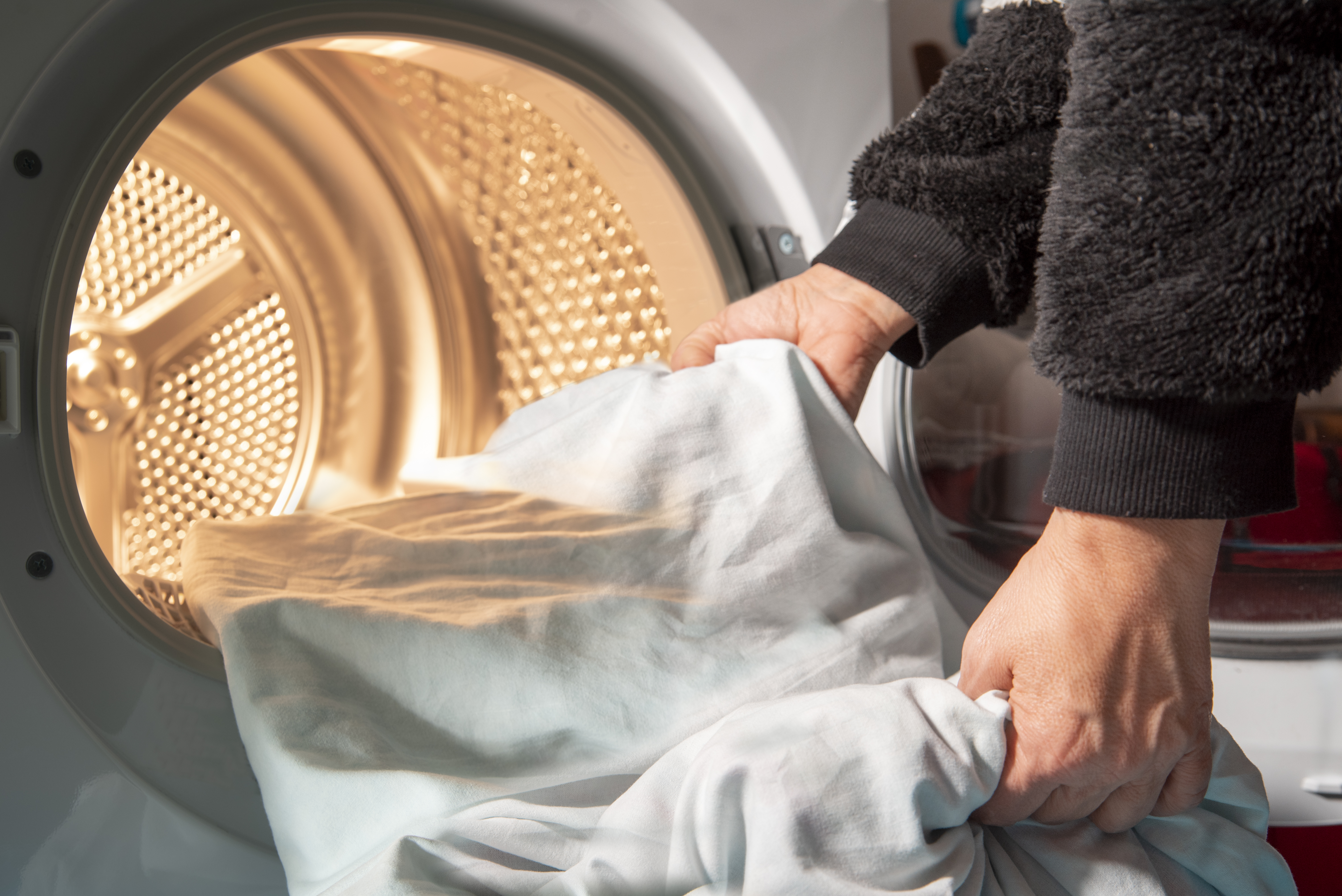
Enlarge / The SmartDry laundry sensor was widely regarded as a useful smart home gadget that saved money and time. When its owners' servers go dark at the end of September, users face a useless device or a notable DIY journey. (credit: Getty Images)
SmartDry was a smart home product that did something useful: tell you when your clothes in your dryer were actually dry.
A small pack mounted inside nearly any dryer drum could prevent clothes from shrinking, save you energy costs (at least $60 per year, the marketing claimed), and even warn you about clogged vents causing high heat—or, much worse, gas buildup. A second-generation version could even turn off your gas dryer automatically. Reviewers greatly preferred it to their own dryers' unpredictable dryness sensors.
The problem is that SmartDry alerted you to dry clothing by connecting to your home's Wi-Fi; the device sent a message to parent company Connected Life's servers and then relayed that message to your smartphone. But Connected Life Labs is closing, discontinuing SmartDry, and shutting down its servers on September 30. After that, "cloud services will cease operations and the product apps will no longer be supported."
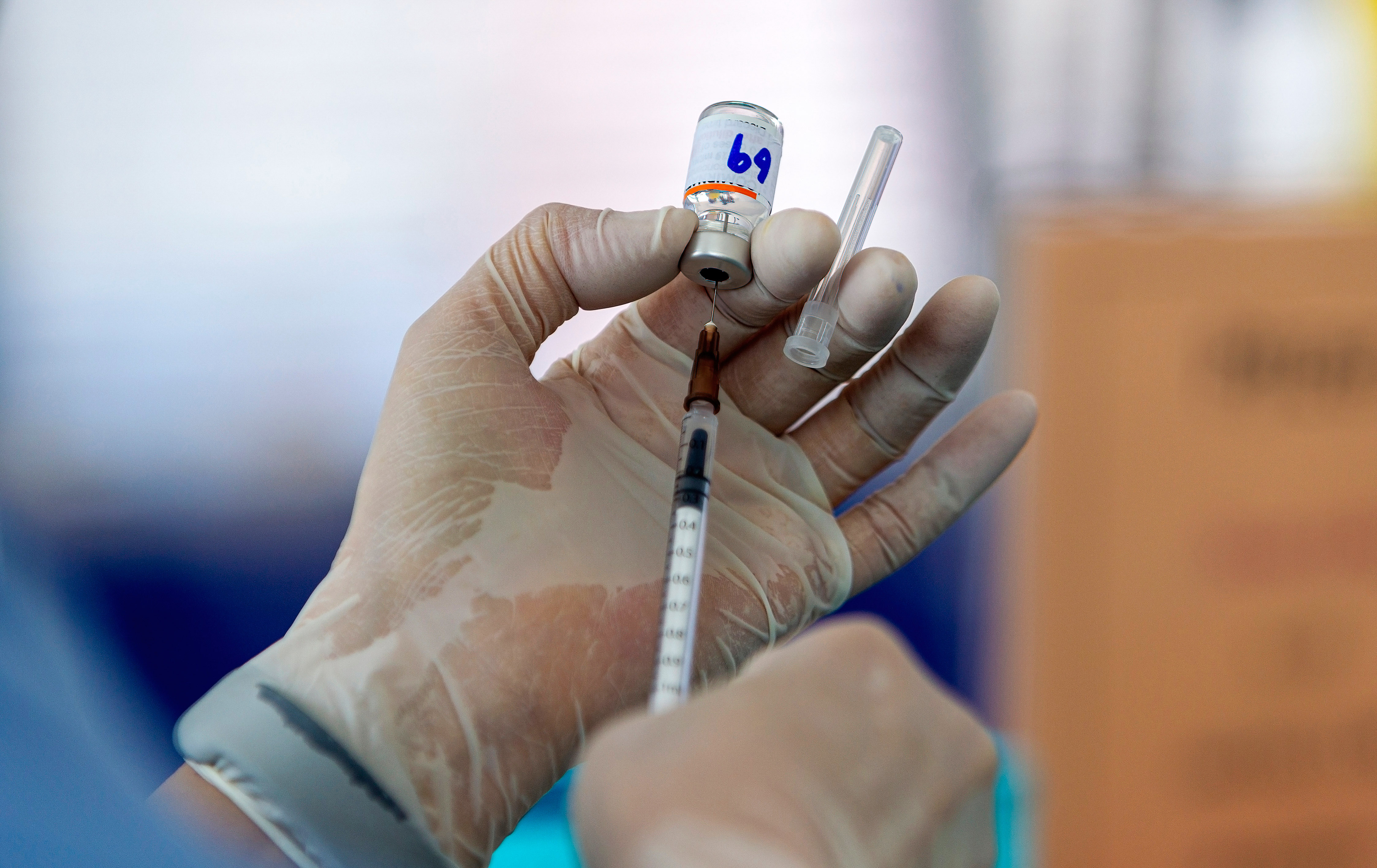
Enlarge / Moderna states that it doesn't want to halt production or distribution of Pfizer/BioNTech's vaccine, but it does want to be paid a license for its claimed patents. (credit: Getty Images)
Now that the vaccine race is over and shots are broadly available, Moderna has filed suit against Pfizer and BioNTech, claiming they infringed on Moderna's mRNA patents from 2010-2016.
Moderna, a Massachusetts-based firm, filed suit against New York-based Pfizer and BioNTech in Düsseldorf, Germany, related to the firms' joint Comirnaty vaccine and its similarities to Moderna's Spikevax. Moderna claims in the suit that it doesn't want to halt vaccine production. The suit also doesn't seek damages for sales before March 8, 2022, sales in lower or middle-income AMC 92 nations, or sales where "the US Government would be responsible for any damages."
In a statement announcing the suit, Moderna stated that it expected Pfizer and BioNTech to "respect its intellectual property rights" and "consider a commercially reasonable license" to sell vaccines outside those accepted conditions, but the firms failed to do so.
As expected, the document is heavily redacted. Or, rather, almost entirely redacted, after the DOJ asked the judge to conceal any parts of it that would hinder its investigation or compromise participants in it.
Still, the affidavit does shed new light on federal investigators’ fight to retrieve classified documents from Trump’s home in Florida, and includes several new bits of information:
It notes that, among the 15 boxes that Trump returned to the National Archives earlier this year, there were “184 unique documents bearing classification markings, including 67 documents marked as CONFIDENTIAL, 92 documents marked as SECRET, and 25 documents marked as TOP SECRET.”
The FBI believed there were additional documents at Mar-a-Lago, but that they’d also find evidence of obstruction of justice there as well: “Further, there is probable cause to believe that additional documents that contain classified NDI [National Defense Information] or that are Presidential records subject to record retention requirements currently remain at the PREMISES [Mar-a-Lago]. There is also probable cause to believe that evidence of obstruction will be found at the PREMISES.”
Politico’s Andrew Desiderio noted on Twitter that some of the documents allegedly contained human intelligence source information and foreign intelligence intercepts. That is, information that could reveal the actual identities of intelligence sources or closely guarded intel on US adversaries allies. This kind of intelligence is obviously extremely closely guarded and its exposure could put lives or sources at risk.
Classified and sensitive documents were allegedly stored at multiple unsecure locations at Mar-a-Lago.
The affidavit itself is the result of months of back-and-forth between federal investigators and Trump and his legal team, which spurred the FBI to ask a judge for permission to conduct its August search of Mar-a-Lago. During that search, the bureau found a cache of classified and sensitive documents.
In total, according to the New York Times, Trump “took more than 700 pages of classified documents, including some related to the nation’s most covert intelligence operations, to his private club and residence in Florida when he left the White House in January 2021.” The documents authorities searched for in Trump’s home included classified nuclear secrets and information that is “among the most sensitive secrets we hold,” the Washington Post reported.
Earlier this year, the National Archives recovered at least 15 boxes of presidential documents from Mar-a-Lago. But investigators began to believe that there was more, and that Trump’s team was not being totally forthcoming with them.
The potential legal exposure for Trump and his team is serious. A search warrant released earlier this month revealed that the FBI searched Trump’s home because of potential violations of three federal laws, including the Espionage Act, the willful destruction or concealment of federal records, and obstructing an investigation.
Presidential documents, no matter how small or obscure, are required by federal law to be turned over to the National Archives when a president leaves office. Trump and his aides have claimed that he had a “standing order” to declassify all documents in his possession. (Other former Trump officials have denied that there was any such order.)
But a president does not have unilateral authority to broadly declassify the nation’s most sensitive secrets — doing so involves several formal steps and consultation with other government agencies.
Here’s some amazingly good news amidst all of the nonsense of late. On Thursday, the Office of Science and Technology Policy (OSTP) at the White House announced that they were updating policy guidance to mandate that all taxpayer-supported research should be immediately available to the public at no cost. According to the actual policy guidelines, US departments and agencies have until the end of 2025 to make this change (though, it’s not clear that there’s any remedy if they don’t). This is really huge — and it seems to have come out of nowhere.
Long term Techdirt readers know this is an issue that we’ve talked about for ages. All the way back in 2008, we wrote about how research journals were locking up publicly funded research. And, that’s kind of crazy, because if the public funded it, then the public should have access to it. There has been a back and forth in the government over the years, with a general movement towards making more government funded research open-access, but often after an embargo period (usually, private journals can publish it for a period of 12 months, and then it goes open).
Some in Congress (at the behest of the academic publishers) have tried to pass legislation that would go in the other direction and lock up more federally funded research.
But, with this move today, the government is going fully open. And — this part is incredibly refreshing — they talk up how this should actually lead to much greater innovation:
This policy will likely yield significant benefits on a number of key priorities for the American people, from environmental justice to cancer breakthroughs, and from game-changing clean energy technologies to protecting civil liberties in an automated world.
This is a nice rebuke for all the people who insist that locking up ideas and research is necessary for innovation. It’s great to see this White House recognize otherwise.
“When research is widely available to other researchers and the public, it can save lives, provide policymakers with the tools to make critical decisions, and drive more equitable outcomes across every sector of society,” said Dr. Alondra Nelson, head of OSTP. “The American people fund tens of billions of dollars of cutting-edge research annually. There should be no delay or barrier between the American public and the returns on their investments in research.”
This is really big. And really good. And should help innovation tremendously, and provide more access to useful ideas and data that the American public has been funding.
In the actual guidance document, OSTP notes that part of the reason for this is what was learned during the early part of the COVID pandemic, when open and free access to research proved tremendous helpful:
Americans were offered a window into the great benefits of immediate public access to federally funded research at the outset of the COVID-19 pandemic. In the wake of the public health crisis, government, industry, and scientists voluntarily worked together to adopt an immediate public access policy, which yielded powerful results: research and data flowed effectively, new accessible insights super-charged the rate of discovery, and translation of science soared. The shift in practice during COVID-19 demonstrated how delivering immediate public access to federally funded research publications and data can provide near real-time returns on American taxpayer investments in science and technology. Immediate public access to COVID-19 research is a powerful case study on the benefits of delivering research results and data rapidly to the people. The insights of new and cutting-edge research stemming from the support of federal agencies should be immediately available—not
3 just in moments of crisis, but in every moment. Not only to fight a pandemic, but to advance all areas of study, including urgent issues such as cancer, clean energy, economic disparities, and climate change. American investment in such research is essential to the health, economic prosperity, and well-being of the Nation. There should be no delay between taxpayers and the returns on their investments in research.
Of course, it also wouldn’t surprise me if Congress comes back with bills to lock up such research again — or a future administration flip flops on this. But… for now… good news!
Unlike last year, there is now little consistency when it comes to school masking policies. In some cases, mask requirements even change from building to building. Here’s where local schools stand when it comes to face coverings: Colleges and Universities American University: Masks are required in classrooms, but remain optional in most campus locations. Catholic […]
Immigration advocates rally to urge Congress to pass permanent protections for DACA recipients, and to create a pathway to citizenship, near the US Capitol on June 15. | J. Scott Applewhite/AP
Nothing short of federal legislation can ensure DACA’s survival.
The Biden administration is again trying to shore up the Deferred Action for Childhood Arrivals (DACA) program against ongoing legal challenges that threaten to revoke protections for thousands of immigrants.
The effort is an important signal of the Biden administration’s commitment to the program, but is far from a perfect fix. While the more than 450-page final rule, effective October 31, would formally codify DACA as a federal regulation, it will offer current “DREAMers” — unauthorized immigrants who came to the US as children — little immediate protection. It also doesn’t allow any new DACA applications for now, narrowing its impact to the more than 600,000 people currently enrolled in the program.
“Today, we are fulfilling our commitment to preserve and strengthen DACA by finalizing a rule that will reinforce protections, like work authorization, that allow Dreamers to live more freely and to invest in their communities more fully,” President Joe Biden said in a statement on Wednesday.
Since former President Barack Obama created the program in 2012 via executive action, the program has shielded more than 800,000 DREAMers from deportation and allowed them to apply for work permits. Recent legal challenges to the program have put it in danger, however, leading the Biden administration to issue the new rule.
Because there are still more than two months until the rule goes into effect, the immediate status quo will not change, meaning those legal challenges still loom over the program, and DREAMers have no protection from any new challenges in the intervening period.
Even once the rule goes into effect, courts could still strike down the program as unlawful. If the rule is successfully implemented and Biden isn’t reelected in 2024, his successor could potentially overturn it, but would likely have to go through the arduous federal rulemaking process to do so. Because of all this, the rule is no substitute for codifying the program in federal law, which is the only ironclad measure that would ensure its survival against attacks from anti-immigrant hawks.
“While the Biden administration’s new rule sends a clear message that DACA works, our communities need more,” Marielena Hincapié, executive director of the National Immigration Law Center, said in a statement. “Strengthening DACA is a crucial step, but it is not a substitute for congressional action.”
What the rule does — and doesn’t — do
The rule replaces the policy guidance laid out in the 2012 memo that created DACA, maintaining the preexisting criteria for eligibility and the process for DACA applicants to request work permits. It also affirms that DACA is not a form of lawful status, but that DACA recipients are considered “lawfully present” for certain purposes — and that they should not be prioritized for deportation.
But the rule is not a cure-all. Former President Donald Trump closed DACA to new applicants, but stopped short of dismantling the program altogether after the Supreme Court prevented him from doing so in a June 2020 ruling. The Biden administration briefly resumed processing new applicants, approving some 1,900 individuals for DACA status in the first five months of 2021, before a Texas federal judge ordered it to stop. Roughly 1.1 million individuals would have been eligible to apply for the program as of the end of 2021. For now, that court order remains in place, even despite the new rule.
Immigrant advocates have also been calling on the Biden administration to update the eligibility criteria for the program, which they argue is outdated. Under the current criteria, applicants must have been under the age of 31 as of June 15, 2012, and have continuously resided in the US since at least June 15, 2007, among other requirements. Those eligibility dates haven’t been updated since the program was created.
The Department of Justice didn’t immediately respond to comment as to why the rule did not update the eligibility requirements, but it’s likely out of fear of legal challenges.
The fact that the rule cleared the federal rulemaking process — which involved soliciting and reviewing more than 16,000 comments from the public — might make it more robust to legal challenges than the 2012 memo. But the program is still under immediate threat from a pending lawsuit in the US Fifth Circuit Court of Appeals, and additional challenges to the rule are anticipated.
If the Fifth Circuit strikes down DACA as expected, an average of 5,000 DACA recipients each week for the next two years will lose their ability to work and become vulnerable to deportation, according to Todd Schulte, the president of the immigrant advocacy group FWD.us.
“Given this fact, it is absolutely critical for current DACA recipients to seek renewals as soon as they are eligible and consult with a lawyer about their options,” he wrote in a statement for the group on Twitter.
DACA has been a victim of gridlock in Congress
Versions of the DREAM Act, which would have codified the DACA program in federal law and provided a path to citizenship to DREAMers, have failed to pass for years.
In March 2021, a round of bipartisan negotiations fizzled out. A bipartisan group of senators — including Sens. Dick Durbin (D-IL), Alex Padilla (D-CA), Thom Tillis (R-NC) and John Cornyn (R-TX) — restarted immigration reform talks in April, but have yet to achieve any meaningful progress.
One reason for that is Republicans have shown little interest in passing the DREAM Act or similar legislation unless it’s paired with beefed-up border security measures, something Democrats have rejected. Because of Democrats’ one-vote majority in the Senate, however, they need Republican buy-in to overcome any filibuster and to pass legislation.
Democrats tried to go it alone last year and pass immigration reforms in a social spending bill through budget reconciliation, which only requires a simple majority to pass, but the Senate parliamentarian rejected several of their proposals, arguing the new policies violated reconciliation rules.
Immigration reform remains broadly popular: A June 2021 poll by the American Civil Liberties Union found that 72 percent of voters support the DREAM Act. Polling like that has done little to sway GOP lawmakers, however, and with the midterm elections months away, Republicans have even less incentive to help Democrats realize their long-term goal of protecting DREAMers.
And, by delaying action, Republicans may be able to strengthen their bargaining position on the issue. If Republicans retake control of the House, as is widely expected, the odds of passing the DREAM Act without Democrats’ acquiescing to at least some GOP demands on the border are incredibly slim.
If there’s any glimmer of hope for DREAMers, it might be in the Senate’s compromise on another highly divisive topic: gun control. Congress had been at an impasse on gun control since the 2012 shooting at Sandy Hook Elementary School in Newtown, Connecticut. But a series of major mass shootings finally galvanized enough bipartisan support to pass a gun safety package earlier this year that didn’t go as far as Democrats wanted, but still introduced tailored reforms. With the right motivation, immigration advocates hope a similar sort of negotiation might be possible on immigration, as well.
A bookstore in New York’s East Village, in August 2020. | Noam Galai/Getty Images
Penguin Random House is officially not going to become Penguin Random Simon & Schuster.
The government has now officially blocked a proposed merger between book publisher Penguin Random House and rival Simon & Schuster. In an order published Monday night, the District Court for the District of Columbia found that the proposed merger might “substantially lessen competition,” a decision that should have a massive impact on both the multibillion-dollar book publishing industry and on how the government handles corporate consolidation cases going forward. Perhaps fittingly for a case with such high stakes, the trial, which took place this August, was characterized by obfuscation and downright disinformation nearly the whole way through.
Penguin Random House and Simon & Schuster are two members of what’s called the “Big Five” of publishing, with the other three slots filled by HarperCollins, Hachette, and Macmillan. The Big Five control roughly 80 percent of the trade market for books in the US, and Penguin Random House, with a market share of 25 percent in 2020, is the biggest one of all. Penguin Random House is itself the product of many mergers, with one independent publishing imprint after another joining together to form a massive conglomerate, culminating in the merger of Penguin and Random House in 2013 that brought the then-Big Six down to the Big Five.
When parent company ViacomCBS put Simon & Schuster up for sale in 2020, the smart money was on another one of the major publishers acquiring the house, and the Big Five becoming the Big Four. PRH and HarperCollins were indeed the final bidders in the auction, and PRH won the day with a reported bid of $2.2 billion.
It was clear that a new publishing house made of Penguin Random House and Simon & Schuster would dominate the industry in a way no one had seen before, but few in the industry appeared to believe that then-President Trump’s apparently corporate-friendly Justice Department would actually care enough about the proposed merger to try to interfere.
A new publishing house would dominate the industry in a way no one had seen before
“I’m pretty sure the Department of Justice wouldn’t allow Penguin Random House to buy us, but that’s assuming we still have a Department of Justice,” joked Simon & Schuster CEO Jonathan Karp in an email with an author.
One year later, under the new Biden administration, the DOJ filed suit against both Penguin Random House and Simon & Schuster, as well as parent companies Bertelsmann and ViacomCBS. “Authors are the lifeblood of book publishing,” the suit argued. “Penguin Random House’s proposed acquisition of Simon & Schuster would result in substantial harm to authors, particularly authors of anticipated top-selling books.”
Most of us are familiar with the idea of a monopoly and how such a selling market can drive up consumer prices, but with this case, the DOJ was arguing that PRHS&S would form a monopsony — an unfair buying market that would drive down the money paid to authors. Such cases are historically rare. The DOJ’s success here sets a major precedent for the way the US prosecutes corporate giants.
It also puts a stop to one of the biggest publishing houses American publishing would ever be likely to see. Yet despite the very real possibility that Penguin Random House and Simon & Schuster could have combined to form a monster of a corporation, both publishers continually presented themselves as scrappy underdogs doing their best to ride out a tough market. When the proposed merger between PRH and S&S was first announced in 2020, the prevailing narrative was that a combined PRHS&S would give helpless publishers the leverage they needed to push back against the almighty force of Amazon.
In an early sign that this trial would scar publishing’s romantic image, however, the DOJ’s initial lawsuit turned up internal emails in which PRH’s CEO Markus Dohle admits that he “never, never bought into that argument,” and that one of the “goals” of the post-merger PRHS&S would be to become an “exceptional partner” to Amazon.
Over the course of the trial that ensued, publishers would continue to insist on their existing public image as helpless incompetents at the whims of larger companies and an irrational market. The government, meanwhile, stuck to the narrative that the publishers were savvy operators who knew exactly what they were doing with their billion-dollar companies. Their story has now won — and it will help decide the future of American antitrust law.
Monopsony 101
A monopsony is the mirror image of a monopoly, and is sometimes called a buyer’s monopoly. Instead of a market with only one seller who can charge whatever they like, a monopsony is a market with only one buyer, who can set their price however they like. It’s still a case where the laws of supply and demand have been skewed to favor one party unfairly over the other.
A mining town where the mining company is the only major employer, and as such can set wages low, would be one example of a monopsony. The Justice Department’s argument was that the merger of Penguin Random House and Simon & Schuster would create another.
Had PRH and S&S combined forces, they would be publishing what the Wall Street Journal estimated to be one-third of all the books in the US every year. The government’s model was more specific. It sets a market of what it’s calling “anticipated top-sellers”: books for which publishers pay an advance of $250,000 or more, which they presumably expect will sell very well when they hit bookstores. The government estimated that in such a market, a combined PRHS&S would have a 50 percent market share. The next largest publisher, HarperCollins, would have less than half that.
The government argued that with this combined market share, the proposed PRHS&S would be able to buy books from authors with minimal competition. It would be able to offer lower and lower advances, and authors would have no choice but to accept these lower offers.
Meanwhile, Penguin Random House and Simon & Schuster both argued that the merger wouldn’t lead to any change in competition. Because of publishing’s imprint model, editors who work at the same publishing house bid against one another for the same book all the time. They would continue to do so, publishers argued, even if Penguin Random House and Simon & Schuster became one entity — and because the merger would make both publishers more efficient, they would actually be able to offer larger advances than before.
We could be entering an era in which monopsonies face much more aggressive government scrutiny than they did before
Judge Florence Pan’s verdict was hard to predict in this case, because there simply wasn’t much case law to cite. Historically, the US hasn’t prosecuted monopsony often. Instead, it has tended to treat antitrust law as a means of protecting consumers, not a means of protecting laborers.
Some antitrust experts have been thinking of this trial as a kind of test balloon. If the government wins, we could be entering an era in which monopsonies in many other industries (Hollywood, for instance, as well as Big Tech) could face much more aggressive government scrutiny than before. Power could be redistributed away from giant corporations and back toward the independent workers they employ.
These esoteric questions about economic policy were not what the bulk of the trial was focused on, however. For the most part, the trial centered on the minutiae of publishing, with high-powered authors, literary agents, and CEOs from major publishing houses taking the stand to explain bits of industry jargon like “backlist titles” (books more than a year old) and “midlist authors” (authors who aren’t best-sellers but still sell a little). In the process of testifying, these industry luminaries spoke with unusual clarity about the parts of the publishing world that tend to be hidden from public view.
“Everything is random in publishing”
One of the ironies of this trial, industry magazine Publishers Weekly noted early on, was that “the government’s case relies in part on making publishers look extraordinarily savvy about the market in which they operate, in addition to benefiting from their sheer size.” For publishers to rebut that case, they in turn had to present themselves as essentially incompetent gamblers, risking the company’s money in an industry no one could predict, all for the sheer love of literature.
Throughout the trial, publishers depicted the industry as one of chaos and romance in equal measure, a hazy and lovely space in which publishers routinely hand out large sums of money for great works of literature, unable to either predict or care whether they would ever make their money back. Within this space, publishers argued, the narrow slice of publishing that the government was focused on — books with an advance of $250,000 and above — was meaningless. There was no true correlation, they said, between the books that they paid high advances for and the actual sales figures of those books. And so one by one, highly paid CEOs took the stand to argue that they had no idea what they were doing with all their money.
Bernd von Jutrczenka/picture alliance via Getty Image
Markus Dohle, CEO of Penguin Random House, at a board presentation for parent company Bertelsmann in 2019.
Occasionally, they walked right up to the line of credibility in making that case. “You have to work just as hard on every book, because you have no idea which one is going to break out,” said Simon & Schuster CEO Jonathan Karp during his testimony.
Judge Pan was apparently skeptical of that statement. “If you pay a lot for a book — like one of these million-dollar books — you’re not going to market that book harder … than your run-of-the-mill books?” she asked. Karp allowed that a higher advance would mean more pressure on a publisher to try to get more sales, but he remained committed to his larger argument.
It’s worth noting here that Pan was correct in her understanding of how publishers figure out the budget for each book. Upon acquiring a new book, editors run a profit and loss statement, or P&L, in which they work out how much money they expect to spend on a given book and how much they expect to make. While the P&L is only a rough guide (it’s “really fake,” Pan concluded later in the trial), it’s where publishers set the expectations for a new book. And to make a P&L balance, publishers traditionally match the marketing and publicity budget to the advance. The bigger the advance, the more money they plan to spend on actually selling the book.
On the other hand, it’s also true that P&Ls frequently get thrown out the window as publishers’ priorities change. That’s why Pan declared P&Ls “fake.” Everything in publishing changes on the fly, frequently for no clear reason.
Both depictions of publishing on display at this trial, as Publishers Weekly acknowledged, have an element of truth. The book market really is notoriously unpredictable, and book publishers really are fairly savvy about manipulating that market in order to ensure their own profits. That’s how publishing CEOs traditionally justify their enormous salaries: They are supposed to be the people who understand how to make money out of an irrational business.
If publishing isn’t really a business, then there are no structural inequalities
To hear the publishers on the stand during the trial, though, it sounded like anyone could do their jobs. To compete with industry giant Penguin Random House, “all it takes is a publisher with a vision and a couple of good editors,” Karp declared during his testimony. “It’s basically an investment in talent.”
In reality, as DOJ attorney John Read repeatedly emphasized, no new publisher has been able to successfully break into the ranks of the Big Five in over 30 years. The big publishers are now so big, with such extensive backlists and such deep pockets, that it’s nearly impossible to compete with them at scale. Regardless of their claims, they wield enormous power in the industry.
It suits publishers to describe their industry as illogical, quirky, or romantic. Such a depiction of publishing gives cover to the status quo, in which the industry is 76 percent white and 95 percent of books published between 1950 and 2018 were written by white people. If publishing isn’t really a business, but an investment in people’s dreams, then there are no structural inequalities that publishers have to worry about that might have led to this state of affairs. And since those structural inequalities don’t exist, they can’t possibly be exacerbated by further industry consolidation.
“Consolidation is bad for competition,” opined Stephen King, when he appeared at the trial to testify for the government. King, who introduced himself as a freelance writer, described a publishing landscape that’s changed dramatically over his 50 years in the industry.
“When I started in this business, there were literally hundreds of imprints, and some of them were run by people with extremely idiosyncratic tastes, one might say,” King said. “Those businesses were either subsumed one by one or they ran out of business. I think it becomes tougher and tougher for writers to find enough money to live on.”
The story of American publishing over the past 100 years is the story of an industry consolidating itself, and of that consolidation encouraging homogeneity, blandness, and the safest possible publishing decisions. It remains to be seen whether the court’s decision in this case will turn that consolidation around. The most likely next step for Simon & Schuster, after all, is to merge with HarperCollins instead.
Update, November 1, 10:57 am: This article was originally published on August 25, 2022, after the close of oral arguments. It has been updated with the results of the trial verdict.
We’ve frequently noted how stupid it is that we’ve ceded a major communications platform to robocalling scammers and scumbags. We’ve noted for just as long that many regulatory “solutions” to the robocall problem have been dumb and half-hearted. Every six months the FCC will announce some new plan they promise will demolish robocalls, and every single time the result is muted at best.
Until recently, when the Biden FCC began coordinating enforcement action against scam robocalls in cooperation with law enforcement in 43 states. This joint action recently took specific aim at 22 defendants responsible for billions of illegal auto warranty robocalls, ranging from the robocallers themselves, to the dodgy VoIP companies that turn a blind eye to the practices.
After an Ohio lawsuit targeted two men responsible for most of the calls, auto warranty scam robocalls immediately dropped 80 percent in the U.S. according to analysis by YouMail, a robocall blocking and analysis company. In visual form, the improvement is remarkable:
Brian Fung at CNN had an excellent breakdown of the progress made thanks to this new joint action:
“The warranty calls from Cox/Jones — the ones the AGs and others went after — are down to near zero,” Alex Quilici, YouMail’s CEO, told CNN in an email. “There are other warranty calls out there — probably in the 500k-1m range — but they are from other folks. So the biggest culprits have been effectively shut down, and now it’s on to the smaller fry.”
Working more closely with the states, cracking down harder on lazy phone and VoIP providers that turn a blind eye to scammers, and pushing industry to implement new SHAKEN/STIR anti-spoofing tech is clearly paying dividends. But there’s still work to be done, given that Americans alone still receive an estimated 5.1 million robocalls every single hour.
One, as we’ve noted a few times, is that most robocalls aren’t coming from “scammers”:
Groups like the National Consumer Law Center (NCLC) have repeatedly issued studies showing how “legitimate” companies and debt collectors use all the same tools and tricks as scammers, often harassing people they know can’t pay (or don’t want their services) sometimes hundreds of times a day. And they do so with the blessing of federal and state policy and lawmakers, who’ve been lobbied into apathy.
Lobbyists for marketing companies have worked tirelessly to erode regulatory authority over “legit” telemarketing companies, while simultaneously ensuring rules include vast loopholes for “legitimate” behavior. They also shape a press and policy discourse that fixates exclusively on outright scammers, and not on the ordinary, giant, everyday companies that utilize many of the same tactics to annoy users.
Given its limited resources, regulators like the FCC like to go after smaller robocall scammers and telecom industry enablers they can easily defeat in court, though they’re less likely to consistently go after bigger, “above board” fish that harass U.S. consumers (notice the huge ratio of telecom giants in the list above, often busy trying to upsell American consumers to products and services they don’t want).
At the same time, the fines levied are usually a small fraction of the money that’s been gleaned over decades, and the vast, vast majority of FTC and FCC fines on this subject are never collected at all.
So while the attack on car warranty robocalls specifically is a great and laudable thing, there’s a lot more work that needs doing. Especially as it pertains to giving consumers greater ability to avoid harassment by velour track suit wearing scumbags and “respectable businesses” alike.
California is about to vote on a plan to end the sales of fossil fuel-powered vehicles by 2035. | Josh Edelson/AFP via Getty Images
State regulators just passed a proposal to ban sales of gasoline vehicles by 2035.
California, the state that buys the most cars and trucks in the United States, will ban the sale of fossil fuel-powered vehicles by 2035. This represents the largest government move against gasoline and diesel to date, with the potential to ripple throughout the country and the global auto industry.
The California Air Resources Board, which regulates pollution in the state, voted unanimously on Thursday to approve a proposal that will require 100 percent of all cars sold in the state to produce zero greenhouse gas emissions in 13 years. The board is invoking its authority to protect air quality and deal with the impacts of climate change. Gasoline and diesel-powered vehicles worsen both.
Lauren Sanchez, senior climate adviser to California Gov. Gavin Newsom, told reporters Wednesday the vote marks “a huge day not only for California, but for the country and the entire world as we dive headfirst into the next chapter of the zero-emission vehicle revolution.”
On top of that, the new rule, called the CARB Advanced Clean Cars II rule, sets an interim milestone requiring 35 percent of new vehicles to produce zero emissions “that rapidly increases to nearly 70 percent of new vehicles sales by 2030, further increasing to 100 percent by the 2035 model year,” according to the text of the resolution.
California has long held the pole position in the auto industry. The state has close to 30 million registered cars and trucks, and in 2021, registered an additional 1.8 million new vehicles, of which roughly 8 percent were electric. CARB also has special permission from the federal government to set tougher air quality rules for all vehicles, rules that 17 other states have adopted as well. Automakers don’t like making different cars for different states, so California sets the de facto standard for the country and other parts of the world.
The open question now is whether the state can meet the targets set out by the new rule. “It is expected that EVs will dominate the new vehicle market nationwide in the future,” said Kate Whitefoot, an associate professor of engineering and public policy at Carnegie Mellon University, in an email. “The uncertainty is exactly when this will occur. This regulation by California would serve to accelerate that timeline.”
The challenge is not only getting carmakers to build zero-emissions vehicles but also convincing drivers to buy them. The 2035 deadline is far off from an environmental perspective, but very close when it comes to vehicle development timelines. It takes years for a car to go from the drawing board to the road, and meeting all the diverse needs of drivers will demand a new generation of zero-emissions vehicles. But in the meantime, most cars sold will still run on fossil fuels that heat up the planet.
Transportation is the largest source of greenhouse gases in the US, so meeting domestic and international targets for cutting emissions demands rapid decarbonization in cars and trucks right away. By 2030, the US is aiming to cut its overall emissions at least 50 percent relative to 2005. But currently, only a tiny fraction of new vehicles in the US produce zero emissions. At the current rate of growth, just a quarter of new cars across the country will be electric by 2035, so sales have to pick up drastically.
And the CARB proposal doesn’t take gasoline cars off the road; it only stops dealers from selling them. Given that the average car stays on the road for more than 11 years, California will still be thirsty for gasoline and diesel for years past 2035.
As for automobile manufacturers, many have said that they are betting on a future powered by electrons, but California’s fossil fuel vehicle phaseout will test their commitments.
A spokesperson for General Motors said the company is still evaluating the CARB proposal, but said in an emailed statement that the company and California “have a shared vision of an all-electric future, eliminating tailpipe emissions from new light-duty vehicles by 2035.”
Stellantis, the company formed from the merger of Fiat Chrysler and Peugeot S.A. last year, said California’s gasoline and diesel phaseout is in line with their own ambitions. “Stellantis is committed to net-zero carbon emissions by 2038, evidenced by our recent $35-billion investment in vehicle electrification and related software toward the introduction [of] 25 US-market battery-electric vehicles by 2030,” said Eric Mayne, a spokesperson for Stellantis, in an email.
Ford, however, was far more enthusiastic about the new rule. “The CARB Advanced Clean Cars II rule is a landmark standard that will define clean transportation and set an example for the United States,” said Bob Holycross, chief sustainability officer at Ford, in an email. (The company previously sided with California when a group of Republican state attorneys general sued this year to try to take away California’s special authority to set pollution rules for vehicles.)
These constraints make EVs an even tougher sell right now. Many electric cars are currently more expensive than their gasoline-powered siblings. There are, however, federal and state credits and incentives to lower the cost of cleaner cars and trucks. The recently passed Inflation Reduction Act gives buyers $7,500 in credits per new electric vehicle, and roughly $4,000 for a used one. The law includes $100 billion to finance EV production, as well as $250 billion in loan guarantees. The federal government is also setting tougher fuel economy standards to prod companies into making cleaner cars.
But electric cars aren’t the only way to decarbonize transportation. Nearly three-quarters of vehicle trips in the US are less than 10 miles, so getting people out of cars and onto buses, bikes, scooters, and trains would take a bigger bite out of greenhouse gas emissions than just electrification. That, too, will require more incentives and investment in infrastructure.
Still, California’s deadline to get new fossil fuel cars off of its roads is an important signal for the auto industry to change direction. It could be the push needed for rumbling, carbon dioxide-spewing motors to find an exit and drive off into the sunset.
Update, August 25, 5:15 pm ET: This story was originally published August 24 and has been updated to reflect the passage of the measure to end the sale of fossil fuel-powered cars in California.
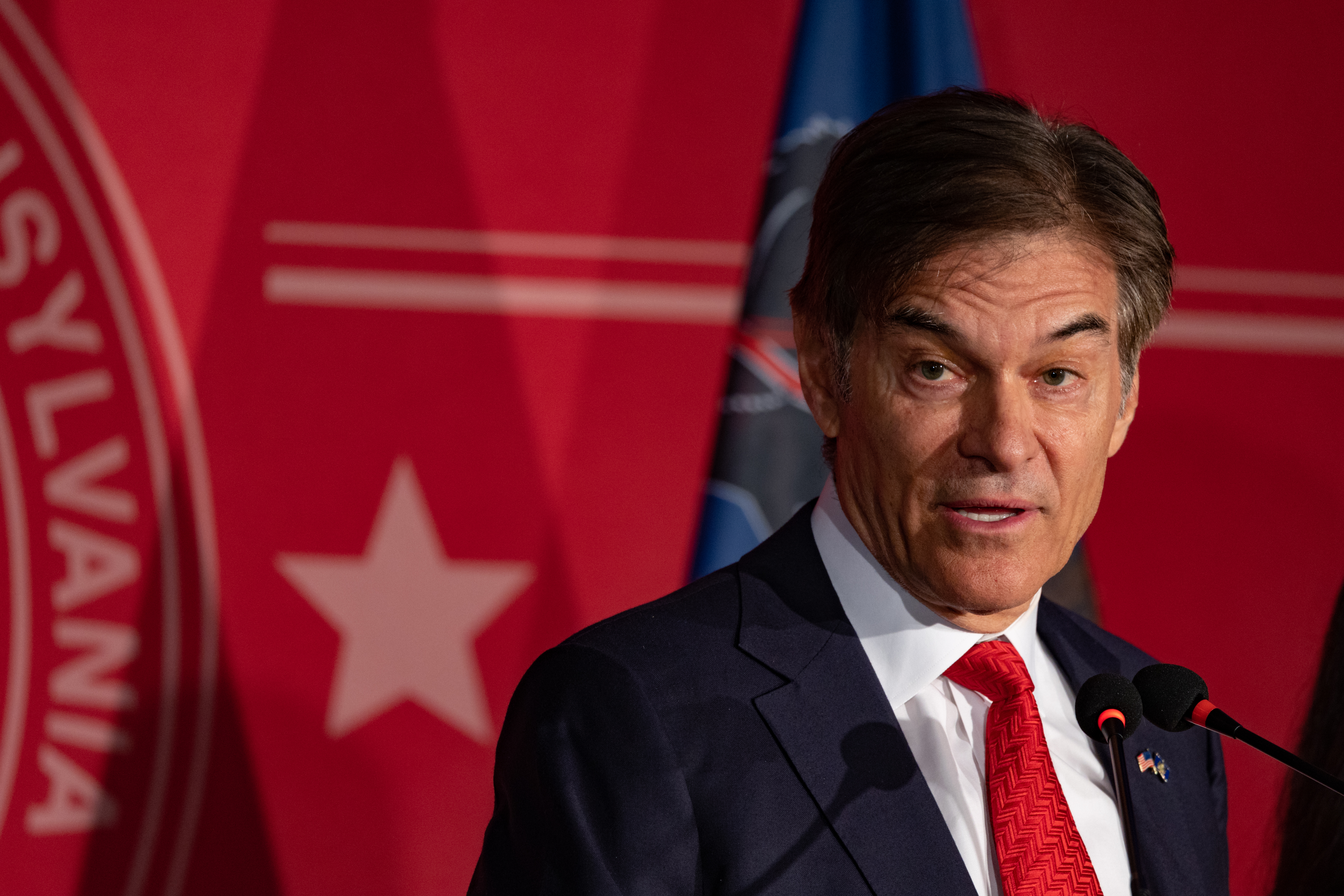
Enlarge / Mehmet Oz, US Republican Senate candidate for Pennsylvania, speaks during a campaign event in King of Prussia, Pennsylvania, on Thursday, June 9, 2022. (credit: Getty | Bloomberg)
In the early days of the COVID-19 pandemic, Mehmet Oz—aka Dr. Oz—repeatedly emailed top-level Trump administration officials, urging them to push the ineffective malaria drug, hydroxychloroquine, to treat COVID-19 based on scant, sketchy data from a now-disgraced French researcher.
Emails from the notorious celebrity doctor were revealed for the first time Wednesday in a report from the House select subcommittee on the coronavirus crisis. The report, titled "A 'Knife Fight' with the FDA," delved into how the Trump administration worked to undermine, pressure, and bully the Food and Drug Administration during the pandemic.
Specifically, it unearthed how the Trump White House pressured the FDA to bend safety standards so that COVID-19 vaccines could be released before election day. It also revealed the tenacious efforts and subterfuge by top Trump trade adviser Peter Navarro and adviser Steven Hatfill to pressure the FDA into supporting the use of the debunked malaria drug. The report's title stems from a direct quote from Hatfill that the White House had a "knife fight scheduled with the FDA" over hydroxychloroquine.
Enlarge (credit: Matt Anderson Photography/Getty Images)
Data privacy in the US is, in many ways, a legal void. While there are limited protections for health and financial data, the cradle of the world’s largest tech companies, like Apple, Amazon, Google, and Meta (Facebook), lacks any comprehensive federal data privacy law. This leaves US citizens with minimal data privacy protections compared with citizens of other nations. But that may be about to change.
The incubation period for COVID-19—the time between when SARS-CoV-2 first infects a person and when resulting COVID-19 symptoms first appear—has gradually shortened as the pandemic has stretched on and the virus has mutated. That's according to a new meta-analysis published this week in JAMA Network Open by researchers in Beijing, who harvested data on over 8,000 patients from 142 COVID-19 studies.
When the original version of the novel virus mushroomed out of Wuhan, China, the mean incubation period was 6.65 days, according to pooled data from 119 studies. But then, the incubation period got shorter as the variants evolved. The alpha variant had a mean incubation of 5 days, according to one study; beta, 4.5 days, according to another; delta had a mean of 4.41 days, according to pooled data from six studies; and now with omicron, the incubation period has shrunk to 3.42 days, according to data from five studies.
The current shortened incubation period now puts SARS-CoV-2 more in line with commonplace respiratory viruses, including the four human coronaviruses that circulate seasonally and cause mild infections similar to the common cold. Their incubation period is 3.2 days. Rhinovirus, the most common cause of the common cold, has a mean incubation period of 1.4 days. For influenza, it can range from 1.43 to 1.64 days, and parainfluenza has a mean of 2.6 days.
Vaccine-making partners Pfizer and BioNTech announced Monday that they had completed their request to the US Food and Drug Administration for authorization of their bivalent omicron BA.4/5 booster doses, which the Biden administration is planning to distribute beginning in early September.
The request follows guidance from the FDA in late June directing vaccine makers to ready second-generation COVID-19 booster doses for the fall that target both the original version of SARS-CoV-2 and BA.4/BA.5, two omicron subvariants that share the same spike protein. Currently, BA.5 is the dominant variant in the world and in the US, where it accounts for 89 percent of infections, according to the latest estimates by the Centers for Disease Control and Prevention.
FDA booster guidance
The FDA's guidance was based on the advice of its committee of independent vaccine advisers, who in a June meeting felt that a bivalent BA.4/5-targeting vaccine offered the best chances for improving efficacy against the currently circulating variants. The current COVID-19 booster doses, which target only the original SARS-CoV-2 strain, are still strongly effective against severe disease and death from COVID-19 but have been losing efficacy against infection amid a rapid succession of variants and omicron subvariants.
Ron DeSantis likes to pretend that he’s in favor of free speech. He talks about free speech quite frequently. But the fact is that he’s a garden variety authoritarian censor in a cheap suit. He keeps passing culture war pro-censorship bills that try to stifle the free speech rights of his critics — quintessential anti-1st Amendment censorship. And each time people, rightly, sue to protect their rights. And each time, DeSantis has to waste taxpayer money to defend his indefensible bills. And each time he loses as courts point out that, dude, the 1st Amendment doesn’t allow you to do that shit.
As you’ll recall, we wrote quite a bit about his attempt to block the editorial rights of websites with his content moderation bill. That bill was declared unconstitutional by both the district court and the appeals court (the latter with an opinion written by a Trump-appointed judge who many people insisted to me would certainly rule in favor of Florida).
But, of course, DeSantis has many culture wars to fight and many libs to own if he’s going to keep his name in the headlines to support his eventual White House bid as “Trump, but more competently authoritarian, rather than bumbling.” So he’s passed a bunch of similarly blatantly unconstitutional laws, including his bill to punish Disney for… mildly suggesting that DeSantis’ culture war attacks were not great.
Perhaps the blatantly unconstitutional bill that has received the most attention was DeSantis’ “Stop WOKE Act,” also called the “Individual Freedom Act” (or IFA, which is its official name and how it’s referred to by the court below). That bill, which (falsely) claimed to be an “antidiscrimination” law, attempted to ban a bunch of practices designed to bring about more diversity in the work place, and like so many bills these days, opened up companies to frivolous nuisance lawsuits by the public.
A Florida based tech company, HoneyFund, sued DeSantis over the law, and a district court has now granted a preliminary injunction blocking the enforcement of the law and saying it’s clearly unconstitutional. The court also sorta rejected DeSantis’ claim that he’s not the proper defendant — though it denied the part of the injunction targeting him, noting that he’s not really the guy enforcing the law (the injunction instead goes towards other Florida officials, such as the Attorney General of the state).
The federal judge, Mark Walker, recognizes the nonsense that is coming from the governor’s office these days. The opening of his ruling even cites that Netchoice v. Moody case (the social media content moderation law) to highlight how Florida and DeSantis are trying to ignore the 1st Amendment:
In the popular television series Stranger Things, the “upside down” describes
a parallel dimension containing a distorted version of our world. See Stranger Things
(Netflix 2022). Recently, Florida has seemed like a First Amendment upside down.
Normally, the First Amendment bars the state from burdening speech, while private
actors may burden speech freely. But in Florida, the First Amendment apparently
bars private actors from burdening speech, while the state may burden speech freely.
Compare NetChoice, LLC v. Moody, 546 F. Supp. 3d 1082, 1084 (N.D. Fla. 2021),
with § 760.10(8)(a)–(b), Fla. Stat.
Now, like the heroine in Stranger Things, this Court is once again asked to
pull Florida back from the upside down. Before this Court is a motion for a
preliminary injunction, asking this Court to enjoin a host of Government officials
from enforcing portions of the Individual Freedom Act—a law that prohibits
employers from endorsing any of eight concepts during any mandatory employment
activity. Because the challenged provision of the Act is a naked viewpoint-based
regulation on speech that does not pass strict scrutiny, Plaintiffs’ motion for a
preliminary injunction, ECF No. 18, is GRANTED in part.
All of Florida’s very weak excuses as to how the law was constitutional fail the laugh test. Florida said the law is okay because it targets conduct, not speech. Not so, notes the court:
To start—though trainings are admittedly at the center of this case—the IFA
does far more than ban mandatory trainings. It bars “any . . . required activity” at
which the eight forbidden “concepts” are discussed and endorsed. § 760.10(8)(a),
Fla. Stat. (emphasis added). Conceivably, that includes trainings, phone calls,
assignments, discussions—anything that is required and endorses the concepts.
More to the point, the IFA does not ban all mandatory employee trainings.
Nor does it ban mandatory trainings addressing certain concepts. No, the IFA only
prohibits trainings that endorse the covered concepts. Indeed, the IFA grants
employers free rein to hold mandatory trainings addressing any of the eight concepts
so long as those trainings condemn or take no position on those concepts
Take that idea further. Because the IFA covers any required activity, an
employer could require every employee to read Woke, Inc., Inside Corporate
America’s Social Justice Scam but could not require employees to read The Color of
Law. Worse still, a nonprofit corporation devoted to promoting the idea that white
privilege exists could not hold a required meeting at which it endorses the concept
of white privilege. But a nonprofit holding the opposite view could freely hold
meetings criticizing the concept of white privilege.
The bottom line is that the only way to determine whether the IFA bars a
mandatory activity is to look to the viewpoint expressed at that activity—to look at
speech. Plainly, the IFA regulates speech.
There are a bunch of other similarly silly arguments made by Florida, but I’ll highlight just one. Florida claimed that striking down the law would “directly threaten the validity of Title VII’s protections against hostile working environments.” It’s no secret that the people who put together the law tried to model it on civil rights law to make this argument. But that’s an argument that only works on very, very silly people. And the judge is not silly:
Title VII does not regulate speech. Rather, it targets conduct—discriminating
“with respect to . . . compensation, terms, conditions, or privileges of
employment”—and only incidentally burdens speech. 42 U.S.C. § 2000e-2(a)(1);
see Wisconsin v. Mitchell, 508 U.S. 476, 487 (1993) (calling Title VII “a permissible
content-neutral regulation of conduct”); see also R.A.V., 505 U.S. at 389; FAIR, 547
U.S. at 62; Sorrell, 564 U.S. at 567. That prohibition on conduct includes a bar on
“requiring people to work in a discriminatorily hostile or abusive environment.”
Harris v. Forklift Sys., Inc., 510 U.S. 17, 21 (1993). In turn, to be sure, it can be
mostly speech that creates this environment, but only when such speech is both
objectively and subjectively offensive and when it is sufficiently severe or pervasive.
This “severity or pervasiveness” requirement—“that is, a requirement that the
conduct objectively and subjectively creates a hostile environment or substantially
interferes with an individual’s work”—provides “shelter for core protected speech.”
DeJohn v. Temple Univ., 537 F.3d 301, 317–18 (3d Cir. 2008).
The IFA is the inverse. It targets speech—endorsing any of eight concepts—
and only incidentally burdens conduct. Even the slightest endorsement of any of the
eight concepts at any required employment activity violates the statute; the IFA
requires no evidence that the statement be even subjectively offensive. Nor does the
IFA require that the statement create a severely or pervasively hostile work
environment. Thus, the IFA, by design, “provides no shelter for core protected
speech.”
Given that the law impacts speech, the court runs it through the strict scrutiny test and… finds that it fails. Easily.
In sum, the IFA sweeps up an enormous amount of protected speech to ban a
sliver of offensive conduct that exists somewhere between the trainings Plaintiffs
wish to hold and what the FCRA already bars. It is, to borrow a phrase from defense
counsel, self-evident. The IFA is not narrowly tailored. And so, the IFA violates the
First Amendment.
The judge then — somewhat beautifully — turns the whole free speech stuff around on the state of Florida and notes that if it believes this stuff is so horrible, it can express its opinion on it, but it can’t ban it:
Florida’s Legislators may well find Plaintiffs’ speech “repugnant.” But under
our constitutional scheme, the “remedy” for repugnant speech “is more speech, not
enforced silence.” Whitney v. California, 274 U.S. 357, 377 (1927). Indeed, “it is the
purpose of the First Amendment to preserve an uninhibited marketplace of ideas in
which truth will ultimately prevail.” Red Lion Broad. Co. v. FCC, 395 U.S. 367, 390
(1969). If Florida truly believes we live in a post-racial society, then let it make its
case. But it cannot win the argument by muzzling its opponents. Because, without
justification, the IFA attacks ideas, not conduct, Plaintiffs are substantially likely to
succeed on the merits of this lawsuit
There’s a lot more in the ruling, but once we’ve gotten to the point that the law is so blatantly unconstitutional the rest isn’t important. You may see that the injunction request was only granted “in part,” but the only part that wasn’t granted (as discussed above) is the part enjoining DeSantis himself, since he has no real enforcement authority directly. The injunction basically blocks everyone who could actually enforce the law.
It’s notable that this lawsuit, from an employer in the state, focused on the parts of the law that blocked certain kinds of diversity training in the workplace. The same day that this ruling came out, a bunch of students, represented by the ACLU, have also sued the state over the classroom parts of the bill…
Of course, at some point, I’d love to hear the supposedly “fiscally conservative Republicans” who “support the Constitution” defend the fact that their governor is throwing away taxpayer dollars pushing blatantly unconstitutional bills that make a mockery of the 1st Amendment solely to “own the libs” and further his own political ambitions. Feel free to display your cognitive dissonance in the comments.
It sounds like something out of an urban legend: Some Windows XP-era laptops using 5400 RPM spinning hard drives can allegedly be forced to crash when exposed to Janet Jackson's 1989 hit "Rhythm Nation."
According to Chen, CVE-2022-38392 was originally discovered by "a major computer manufacturer," and it can affect not just the laptop playing the song but adjacent laptops from other PC companies as well. The specific hard drive model at issue—again from an unnamed manufacturer—would crash because "Rhythm Nation" used some of the same "natural resonant frequencies" that the drives used, interfering with their operation.
Among the first location data brokers to publicly come under fire by the Federal Trade Commission for allegedly selling sensitive reproductive health data is Kochava, Inc. In a lawsuit filed by the adtech company this week, Kochava asked a federal court to intervene and stop the FTC from an alleged overreach.
Kochava’s complaint revealed for the first time how the FTC might act to protect consumer data from being used to support abortion prosecutions in post-Roe America. In it, Kochava described a proposed FTC complaint against Kochava that alleges that the company's data collection practices make it possible for third parties and bad actors to track users' sensitive location data. The FTC suggests that mobile phone users weren't reasonably informed that they were sharing this data with Kochava, making the practice unfair or deceptive and allegedly in violation of the Federal Trade Commission Act.
In a statement to Ars, Kochava defended its data collection practices: “Kochava operates consistently and proactively in compliance with all rules and laws, including those specific to privacy. Nonetheless, Kochava has been threatened by the FTC with a lawsuit and a proposed settlement, the merits upon which are not accurate. This is a manipulative attempt by the FTC to give the appearance that it is protecting consumer privacy despite being based on completely false pretenses.” Suing the FTC to block its lawsuit, Kochava in its complaint noted that the FTC has up to 60 days—by mid-October—to answer a court summons.
Earlier this week, Bloomberg released a well-investigated, and somewhat damning article highlighting how people searching for abortion clinics on Google Maps are often being misled to go to “crisis pregnancy centers,” which are sketchy organizations designed to try to convince women to give birth.
Google Maps routinely misleads people looking for abortion providers, a new analysis by Bloomberg News has found. When users type the words “abortion clinic” into the Maps search bar, crisis pregnancy centers account for about a quarter of the top 10 search results on average across all 50 US states, plus Washington D.C., according to data Bloomberg collected in July. In 13 states, including Arkansas, South Carolina and Idaho where the procedure is newly limited, five or more of the top 10 results were for CPCs, not abortion clinics.
The article has a nice interactive graphic showing details of each state. I recommend clicking through to see the interactive bits, but here’s the static image:
Interactive image via Bloomberg
The article also has a fun (I mean, depending on your definition of fun) “abortion clinic or crisis center” quiz that shows how the two often look nearly identical and can be indistinguishable from each other.
The article makes a credible case that women are being fooled by these misleading results on Google Maps. And, also, that these mistakes can be tremendously harmful to those women.
But, what it leaves out is the absolutely stupid political fight behind some of this, driven by now years of media and politicians arguing over how every internet company should moderate, with threats going back and forth if sites don’t moderate the way this or that politician wants.
The objectively correct thing to do is for Google to remove those results, or at the very least, make it abundantly clear that they are not abortion clinics and do not have medical professionals on staff.
But, all of this highlights how fraught it is when politicians start demanding how websites moderate. It also highlights how trust and safety and content moderation decisions can be about a lot more consequential stuff than “when do we ban the harassing asshole?”
The fact that we’re now politicizing trust & safety issues is a dangerous turn. Companies need to be free to figure out how to best moderate without fear of having to litigate every decision. That’s the point of Section 230… and all the grandstanding over this is also part of the reason why politicians of both parties are trying to dismantle that law.
Enlarge / Not all progress is good. (credit: Hispanolistic/Getty Images)
It's probably a little early to be warning of extinction, but in some new cars, buttons are becoming hard to find. Given that a screen has to go into the dashboard anyway (thanks to things like backup camera requirements) and the fact that people increasingly won't consider a car without Android Auto or Apple CarPlay, touchscreens make life easier for automakers in terms of design and assembly.
It's just that they don't make life easier for drivers. Instead, we're treated to bad interfaces that don't create muscle memory but instead distract us while we should be driving. And now, Swedish car publication Vi Bilägare has the data to prove it.
VB tested 11 new cars alongside a 2005 Volvo C70, timing how long it took to perform a list of tasks in each car. These included turning on the seat heater, increasing the cabin temperature, turning on the defroster, adjusting the radio, resetting the trip computer, turning off the screen, and dimming the instruments.
The Espionage Act has historically been employed most often by law-and-order conservatives. But the biggest uptick in its use occurred during the Obama administration, which used it as the hammer of choice for national security leakers and whistleblowers. Regardless of whom it is used to prosecute, it unfailingly prompts consternation and outrage.
We are both attorneys who specialize in and teach national security law. While navigating the sound and fury over the Trump search, here are a few things to note about the Espionage Act.
Espionage Act seldom pertains to espionage
When you hear “espionage,” you may think spies and international intrigue. One portion of the act – 18 U.S.C. section 794 – does relate to spying for foreign governments, for which the maximum sentence is life imprisonment.
But spy cases are rare. More typically, as in the Trump investigation, the act applies to the unauthorized gathering, possessing or transmitting of certain sensitive government information.
Transmitting can mean moving materials from an authorized to an unauthorized location – many types of sensitive government information must be maintained in secure facilities. It can also apply to refusing a government demand for its return. All of these prohibited activities fall under the separate and more commonly applied section of the act – 18 U.S.C. section 793.
A violation does not require an intention to aid a foreign power
Willful unauthorized possession of information that, if obtained by a foreign government, might harm U.S. interests is generally enough to trigger a possible sentence of 10 years.
Current claims by Trump supporters of the seemingly innocuous nature of the conduct at issue – simply possessing sensitive government documents – miss the point. The driver of the Department of Justice’s concern under Section 793 is the sensitive content and the connection to national defense information, known as “NDI.”
One of the most famous Espionage Act cases, known as “Wikileaks,” in which Julian Assange was indicted for obtaining and publishing secret military and diplomatic documents in 2010, is not about leaks to help foreign governments. It concerned the unauthorized soliciting, obtaining, possessing and publishing of sensitive information that might be of help to a foreign nation if disclosed.
Two recent senior Democratic administration officials – Sandy Berger, national security adviser during the Clinton administration, and David Petraeus, CIA director under during the Obama administration – each pleaded guilty to misdemeanors under the threat of Espionage Act prosecution.
Berger took home a classified document – in his sock – at the end of his tenure. Petraeus shared classified information with an unauthorized person for reasons having nothing to do with a foreign government.
The act is not just about classified information
Some of the documents the FBI sought and found in the Trump search were designated “top secret” or “top secret-sensitive compartmented information.”
Both classifications tip far to the serious end of the sensitivity spectrum.
One theory floated by Trump defenders is that by simply handling the materials as president, Trump could have effectively declassified them. It actually doesn’t work that way – presidential declassification requires an override of Executive Order 13526, must be in writing, and must have occurred while Trump was still president – not after. If they had been declassified, they should have been marked as such.
And even assuming the documents were declassified, which does not appear to be the case, Trump is still in the criminal soup. The Espionage Act applies to all national defense information, or NDI, of which classified materials are only a portion. This kind of information includes a vast array of sensitive information including military, energy, scientific, technological, infrastructure and national disaster risks. By law and regulation, NDI materials may not be publicly released and must be handled as sensitive.
The public can’t judge a case based on classified information
Cases involving classified information or NDI are nearly impossible to referee from the cheap seats.
None of us will get to see the documents at issue, nor should we. Why?
Because they are classified.
Even if we did, we would not be able to make an informed judgment of their significance because what they relate to is likely itself classified – we’d be making judgments in a void.
And even if a judge in an Espionage Act case had access to all the information needed to evaluate the nature and risks of the materials, it wouldn’t matter. The fact that documents are classified or otherwise regulated as sensitive defense information is all that matters.
Historically, Espionage Act cases have been occasionally political and almost always politicized. Enacted at the beginning of U.S. involvement in World War I in 1917, the act was largely designed to make interference with the draft illegal and prevent Americans from supporting the enemy.
But it was immediately used to target immigrants, labor organizers and left-leaning radicals. It was a tool of Cold War anti-communist politicians like Sen. Joe McCarthy in the 1940s and 1950s. The case of Julius and Ethel Rosenberg, executed for passing atomic secrets to the Soviet Union, is the most prominent prosecution of that era.
In the 1960s and 1970s, the act was used against peace activists, including Pentagon Paper whistleblower Daniel Ellsberg. Since Sept. 11, 2001, officials have used the act against whistleblowers like Edward Snowden. Because of this history, the act is often assailed for chilling First Amendment political speech and activities.
The Espionage Act is serious and politically loaded business. Its breadth, the potential grave national security risks involved and the lengthy potential prison term have long sparked political conflict. These cases are controversial and complicated in ways that counsel patience and caution before reaching conclusions.
Enlarge / A hunger stone in the Elbe River in Děčín, Czech Republic. The oldest readable carving is from 1616, with older carvings (1417 and 1473) having been wiped out by anchoring ships over the years. (credit: Dr. Bernd Gross/CC BY-SA 3.0)
Stories have been circling around the Internet this past week about the re-emergence in certain Czech and German rivers of so-called "hunger stones"—rocks embedded in rivers during droughts to mark the water level and warn future generations of the likely famine and hardship to come whenever the stones became visible again. The coverage has been fueled largely by an August 11 tweet noting one stone in particular, inscribed with a dire warning: "If you see me, weep."
Hunger stones (hungerstein) are very much a real thing with a long and fascinating history. And Europe is in the midst of a historically severe drought—severe enough that water levels may indeed be sufficiently low for the stones to re-emerge once more. But that August 11 tweet and the related coverage are actually rehashing a series of news stories from 2018, when the re-emergence of the hunger stones in the midst of that year's extreme drought in Europe made headlines.
It's hardly an egregious case of misinformation, but it does provide an illustrative example of why including context is so important in the digital age—even in a relatively simple tweet enthusing about newly acquired knowledge.
Enlarge / Digging into bleeding-edge Chrome code has made some bloggers hopeful, but Google has been focused on its own feeds for a while now. (credit: Getty Images)
Does Google enjoy teasing and sometimes outright torturing some of its products' most devoted fans? It can seem that way.
Tucked away inside a recent bleeding-edge Chrome build is a "Following feed" that has some bloggers dreaming of the return of Google Reader. It's unlikely, but never say never when it comes to Google product decisions.
Chrome added a sidebar for browsing bookmarks and Reading List articles back in March. Over the weekend, the Chrome Story blog noticed a new flag in Gerrit, the unstable testing build of Chrome's open source counterpart Chromium. Enabling that #following-feed-sidepanel flag (now also available in Chrome's testing build, Canary) adds another option to the sidebar: Feed.
Rep. Liz Cheney gives a concession speech to supporters in Jackson, Wyoming, on August 16, after losing to challenger Harriet Hageman. | Jae C. Hong/AP
Cheney’s Wyoming loss was predictable. Her bigger fight, against Trumpism, is now fully underway.
Liz Cheney lost on Tuesday night. The question is whether it was a battle or a war.
The immediate political fate of the three-term Wyoming Congress member had been a foregone conclusion; public polling consistently had Cheney lagging her Donald Trump-backed opponent Harriet Hageman, and the big margins — 66 to 29 percent with 95percent of the votes reporting — also came as no surprise.
Instead, Cheney had sought to characterize her race as part of an existential struggle for American democracy that pitted her against Trump. Her closing ad featured her father, former Vice President Dick Cheney, speaking straight to camera and insisting that “in our nation’s 246-year history, there has never been an individual who is a greater threat to our republic than Donald Trump.”
In her remarks after her defeat on Tuesday, Cheney returned to this message, showing her willingness to target Trump and the Republicans who abet him. “Two years ago, I won this primary with 73 percent of the vote,” she said. “I could easily have done the same again. The path was clear. But it would’ve required that I go along with President Trump’s lie about the 2020 election. It would’ve required that I enable his ongoing efforts to unravel our democratic system and attack the foundations of our republic. That was a path I could not and would not take.”
Cheney repeatedly referenced the Civil War and drew comparisons to the current political climate in the United States. “Our nation is barreling, once again, toward crisis, lawlessness, and violence,” she said. She went on to seemingly declare war on much of the Republican Party — which has nominated candidates who have echoed Trump’s false claims about the 2020 election across the country — by adding, “No American should support election deniers for any position of genuine responsibility.”
Cheney got her loudest applause toward the end of her remarks when she told the crowd, “I have said since January 6 that I will do whatever it takes to ensure Donald Trump is never again near the Oval Office. And I mean it.”
In contrast, a Trump spokesperson released an edited video on Twitter of the former president dancing to the late 1960s hit “Na Na Hey Hey Kiss Him Goodbye.”
A long-running internal conflict between factions of the Wyoming Republican Party deeply colored how voters in the Cowboy State made up their minds about Cheney’s race. But it captured national attention as a referendum on Trump’s standing and pull within the GOP.
After all, Cheney, the daughter of the former vice president and former chair of the House Republican Conference, had seemingly impeccable conservative credentials — save, of course, for her vocal and virulent opposition to Trump in the aftermath of the January 6 attack on the Capitol. She was one of 10 House Republicans who voted to impeach the former president, and became a total apostate when she became the vice chair of the January 6 committee.
Through this lens, Cheney’s loss is certainly a setback for the Never Trump forces within the Republican Party, but it leaves her ongoing fight to make Trump persona non grata within the GOP unresolved. Cheney will have five more months to pursue her work on the January 6 committee without a campaign hanging over her head. Then, as Ahab pursued Moby Dick after leaving the Pequod for a whaling boat, she will be able to continue to target Trump as a private citizen even without her seat in Congress.
Cheney has further built up her national profile in the past two years as the leading Republican opponent of Trump and will be able to draw on an array of major donors opposed to Trump — as well as a formidable campaign war chest, which had over $7 million still on hand only weeks before the primary. Whether via a super PAC or a kamikaze presidential campaign or something else, Cheney has more options than the typical anti-Trump Republican who leaves Congress for a cable news gig.
By Wednesday morning, Cheney had launched a political organization geared at opposing Trump, and said in a Today show interview that a presidential run is something she is considering.
“I’ll make a decision in the coming months.” — Rep. Liz Cheney said about possibly running for President. pic.twitter.com/b2SjAYVN2W
While Cheney reaffirmed “I am a conservative Republican” in her remarks on Tuesday, she pitched herself to a nonpartisan audience of all Americans opposed to Trump. “Let us resolve that we will stand together, Republicans, Democrats, independents, against those who would destroy our republic.”
Local factors mattered in Tuesday’s race. Wyoming has seen a long-running internal conflict between a more traditional GOP establishment and a more ardently conservative new guard within the party. Cheney, as the daughter of a former vice president, was destined by birth to be in the first camp.
She had personal baggage as well. Her crusade against Trump alienated Wyomingites not just because they were die-hard MAGA loyalists, but because it seemed like she was neglecting key local and parochial issues for the national spotlight. Hageman’s ads didn’t just hit Cheney for being anti-Trump; they also used that as a way to indicate that the three-term incumbent was out of touch with voters. Cheney had also raised the ire of local Republicans in 2013 when she launched an abortive primary campaign against incumbent Sen. Mike Enzi that was heavily focused on her family legacy.
Cheney is the first federal incumbent in Wyoming to lose a primary since another political scion, William Henry Harrison III, lost his primary for Congress in 1968. While Harrison did have a notable political genealogy (his grandfather and great-great-grandfather both served as president), he had little else in common with Liz Cheney. Former Wyoming Gov. Mike Sullivan, a Democrat, recalled him as “sort of a weak link” and didn’t think there was “any comparison” to Cheney, for whom he changed his party registration to vote on Tuesday.
Update, August 17, 11:45 am: This story was originally published on August 16. It has been updated to include the latest numbers from the Wyoming Republican primary and Cheney’s remarks about considering a presidential run.
There are very few things that are more dangerous for citizens and cops than no-knock warrants. These warrants allow cops to raid houses without announcing themselves, leading those on the receiving end to assume they’re being invaded by armed criminals.
People who don’t know they’re dealing with cops defend themselves. Cops, who believe everyone should know they’re cops despite being allowed to enter unannounced, respond violently. People die. In some cases, cops die. And all that’s needed to allow cops to treat people as hostile combatants — even when they’ve been startled awake by armed intruders — is some boilerplate presented to a judge who’s also been roused from their slumber to sign off on some state-sanctioned violence.
Limitation of this power has been hit and miss. It’s usually prompted by a high profile killing that police can’t manage to cover up. More pressure to alter the rules of combat has been applied by other high profile killings by officers that didn’t involve no-knock warrants. The unilateral power to kill when officers willingly place themselves in danger has seen even more judicial and legislative scrutiny in recent months, but there’s still a whole lot of work to be done before cops stop considering themselves an unassailable blend of James Bond and the Punisher when engaging in warrant service.
The killing of Breonna Taylor by Louisville, Kentucky police has prompted reforms in Kentucky, as well as in nearby states. Seven officers stormed Taylor’s apartment, supposedly in search of Jamarcus Glover and Adrian Walker — both of whom were suspected of selling drugs out of a house located nearly 10 miles away from Taylor’s residence.
Officers executed the no-knock warrant On March 13, 2020. Taylor and her boyfriend, Kenneth Walker (no relation to Adrian Walker) were awoken by the raid and assumed criminals were entering the house. Walker fired one shot at the intruders. The intruding cops fired 32 shots. None hit Walker but Breonna Taylor was hit by six bullets and died. Neither person in the house was a criminal suspect. And, while officers claimed they announced themselves, Walker stated he heard no announcement and the cops were in possession of a no-knock warrant.
The assault and attempted murder charges brought against Walker for firing a single warning shot (which struck an officer’s leg) were dismissed with prejudice a year later. One cop was fired for “firing blindly” through a covered window into the apartment. The city paid out a $12 million settlement to Taylor’s family. Later that year, the fired officer (Brett Hankinson) was indicted on wanton endangerment charges.
– that members of [LMPD’s] Place-Based Investigations Unit falsified the affidavit used to obtain the search warrant of Ms. Taylor’s home;
– that this act violated federal civil rights laws;
– and that those violations resulted in Ms. Taylor’s death.
Specifically, we allege that Ms. Taylor’s Fourth Amendment rights were violated when defendants Joshua Jaynes, Kyle Meany, and Kelly Goodlett sought a warrant to search Ms. Taylor’s home knowing that the officers lacked probable cause for the search.
We allege that the defendants knew the affidavit in support of that warrant contained false and misleading information and that it omitted material information.
Among other things, the affidavit falsely claimed that officers had verified that the target of the alleged drug trafficking operation had received packages at Ms. Taylor’s address. In fact, Defendants Jaynes and Goodlett knew that was not true.
We further allege that Defendants Jaynes and Meany knew the search warrant would be carried out by armed LMPD officers, and that conducting that search could create a dangerous situation for anyone who happened to be in Ms. Taylor’s home.
In other words, cops lied. Several cops lied. These lies were presented to a judge who then gave them permission to perform a violent entry and respond violently when someone with a legally obtained gun responded to the unidentified violent threat he was faced with. The guy with the legal gun fired one shot. Cops responded with a hail of gunfire, killing a person who had done nothing more than be rudely awakened by the unexpected presence of people wielding weapons.
Lying on a warrant application is just regular police work, as defense attorney Scott Greenfield points out. It happens so often and so casually that a cop failing to add a few lies is probably considered incapable of handling affidavit paperwork.
Out of thousand of cases I’ve defended, I can count on less than one hand the number of times there was no lie told. The vast majority of times the lie is tangential, filling in a gap here or there that needs to appear filled for the sake of court but wasn’t deemed worthy of actual concern on the street. So the cops don’t know? They make it up. They fill in the blanks. They know what the right words are and say them.
Most of the time, the lies come after the fact, when the defendant has been busted, the contraband seized, the warm glow of knowing you framed the guilty filling the courtroom. The cops know it. The prosecutors know it. Even the judge knows it, and knows that without it, there were be a lot more work, more expense, more griping and fewer cases made. And it’s not as if the defendants aren’t guilty, right?
But every so often, the lies result in innocent people being killed. Cops consider this acceptable collateral damage. The public does not. Courts vary in their determinations. Sometimes lives are worth respecting. At other times, the deaths are just the unfortunate side effect of law enforcement work.
But the DOJ’s indictments send a message: cops who lie face the chance (however small) of being prosecuted for misleading their way into an unjustified killing. The odds still favor cops who don’t give a shit, but any reduction in the odds of getting away with it is something to be noted. Until the entire system starts treating police misconduct seriously, it’s probably best to hold our applause. But this is still an anomaly worth noting. Sometimes cops don’t get away with their lies. And if this means even a handful cops across the nation will think twice before loading up warrant applications with unjustified assertions, it may allow innocent people to avoid be killed in a hail of cop gunfire.
Enlarge / Technologists think that allowing cars to communicate with each other could eradicate traffic collisions. (credit: metamorworks/Getty Images)
The long-running saga of V2X (vehicle to everything), a system that uses part of the wireless spectrum to allow vehicles to communicate with our road infrastructure and each other, appears to finally be over. On Friday, the US Court of Appeals for the District of Columbia ruled that the Federal Communications Commission can go through with its plan to free up part of the spectrum previously set aside for vehicles and infrastructure to talk to each other. Instead, that bandwidth will be turned over to Wi-Fi instead.
The FCC set aside the 5.9 GHz band for V2X back in 1999. A communications protocol that vehicles could use to alert each other to dangers sounded like a great idea at the time, and the plan was to use dedicated short-range radio communication (DSRC) wireless to power the system.
Originally, the technology was meant to be fitted just to vehicles, but engineers got ambitious and decided that instead of just V2V, vehicles should be able to talk to things like traffic lights as well. This would lead us to a traffic utopia, where congestion and crashes are things of the past. There was even thought given to making pedestrians dependent on DSRC to avoid being flattened by speeding cars.
While reading this NYT article, by Jodi Kantor and Arya Sundaram, on the drawbacks of activity and time tracking for work, the article itself tracks your reading behavior. You see counters for the time you spend reading and scrolling, clicks, keystrokes, idle time, and active time. It comes complete with snippy comments and a final grade — and a bitter taste for productivity tracking.
To help combat caste-based discrimination, the Indian government saves spots at the best Indian universities for lower-caste students, who often take that opportunity and turn it into a tech job in Silicon Valley. In the US, discrimination laws don’t specifically protect citizens based on caste, though that is changing. Reuters reports that, out of all the Big Tech companies relying on India’s skilled workers, Apple has been most explicit about preventing discrimination by caste among its US employees.
Reported this week for the first time publicly, Apple updated its employee conduct policy in 2020 to “explicitly prohibit discrimination on the basis of caste,” the same way it prohibits discrimination on the basis of race, gender, age, and ancestry.
The decision came after “the first US employment lawsuit about alleged casteism” was filed in June 2020 by a California employment regulator defending a low-caste engineer working at Cisco Systems. The engineer alleged that two of his Cisco bosses were higher-caste and impeded his advancement opportunities at the tech company.
Enlarge / Former president Donald Trump, right, listens to Deborah Birx, former coronavirus response coordinator, as she speaks during a news conference in the White House in Washington, DC, on Thursday, April 23, 2020. (credit: Getty | Bloomberg)
This December, the US Centers for Disease Control and Prevention will finally regain control of national COVID-19 hospital data—which the agency abruptly lost early in the pandemic to an inexperienced private company with ties to then-President Donald Trump.
As SARS-CoV-2 raged in the summer of 2020, the Trump administration was busy sabotaging the once-premier public health agency. The administration's meddling included stripping the CDC of its power to collect critical data on COVID-19 patients and pandemic resources in hospitals around the country.
According to multiple investigative reports at the time, then-White House Coronavirus Task Force Coordinator Deborah Birx was frustrated by the CDC's slow and somewhat messy process of collecting and tidying the data submitted by thousands of hospitals. The data included stats on admissions, patient demographics, bed availability, ventilator use, discharges, and personal protective equipment (PPE) supplies.
Google has begun its rollout of Android 13, the company announced today. The update is now shipping to Pixel phones, and Google is also releasing Android 13 to its Android Open Source Project (AOSP).
According to Google's blog post, Android 13 will come to Android devices from Samsung's Galaxy line and to devices from Asus, Nokia (via HMD), iQOO, Motorola, OnePlus, Oppo, Realme, Sharp, Sony, Tecno, Vivo, Xiaomi, and others "later this year."
Android 13 doesn't come with many groundbreaking features, but it includes enhancements to customization options, audio, and security. Google is also expanding the Material You UI it introduced with Android 12 so that even non-Google apps can coordinate with the colors of your wallpaper and theme.
Just over a month after dropping the policy, Prince George’s County Public Schools announced it will be bringing back its indoor mask mandate starting Aug. 15.
In a statement issued Friday, the school system announced it will be reinstating the policy in all schools and facilities until further notice. Consistently taking a more cautious approach to COVID procedures compared to its regional peers, the school system was the last in the region to drop its mask mandate in July, and is now the first to bring it back.
According to PGCPS, the decision was made at the guidance of the county’s public health department, and in light of the highly transmissible BA.5 variant. Community transmission of the virus in Prince George’s County is in the “high” range according to the Centers for Disease Control and Prevention. The metric is determined by the case rate per 100,000 residents, the rate of new COVID patients admitted to the hospital, and the percentage of beds occupied with COVID-19 patients.
As of Friday, the county reported a case rate of 205, and 11 new hospital admissions per 100,000 residents. Six percent of hospital beds are occupied by COVID-19 patients.
Other school systems in the region have yet to issue a similar mask guidance for students, who are due back in classrooms in roughly a month. In neighboring Montgomery County, the health department recently issued a recommendation for indoor masking as the county entered high transmission of the virus, but the public school system has not mandated students wear masks again after dropping the policy last spring.
In D.C., officials have not reinstated a mask mandate, although the city is attempting to enforce one of the strictest COVID-19 student vaccination requirements in the nation. Following the passage of a new law in 2021, all students 12 and over (for whom the FDA has granted full authorization of a COVID-19 vaccine) must be vaccinated against the virus in order to attend school.
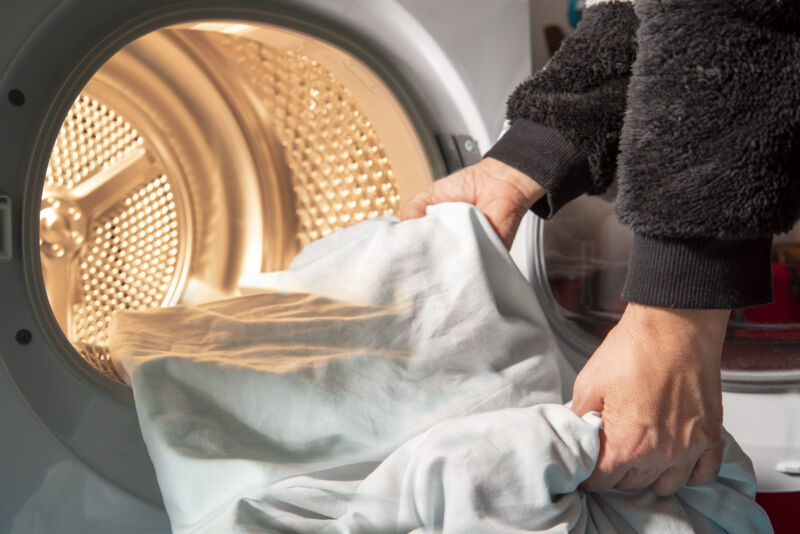
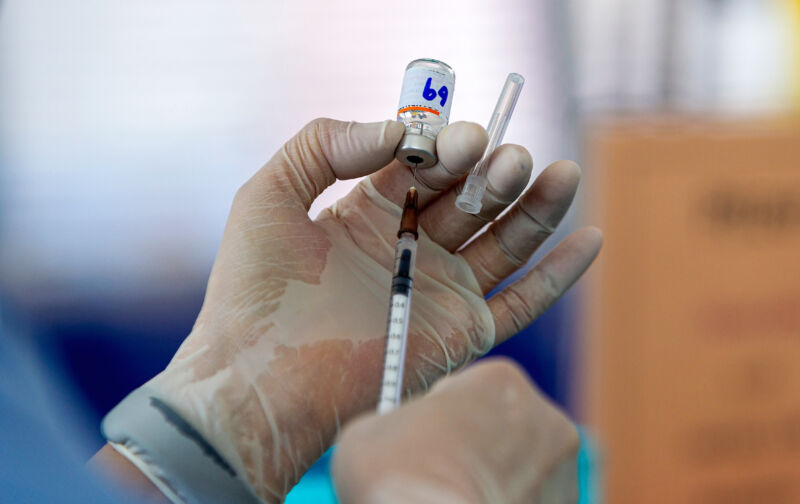
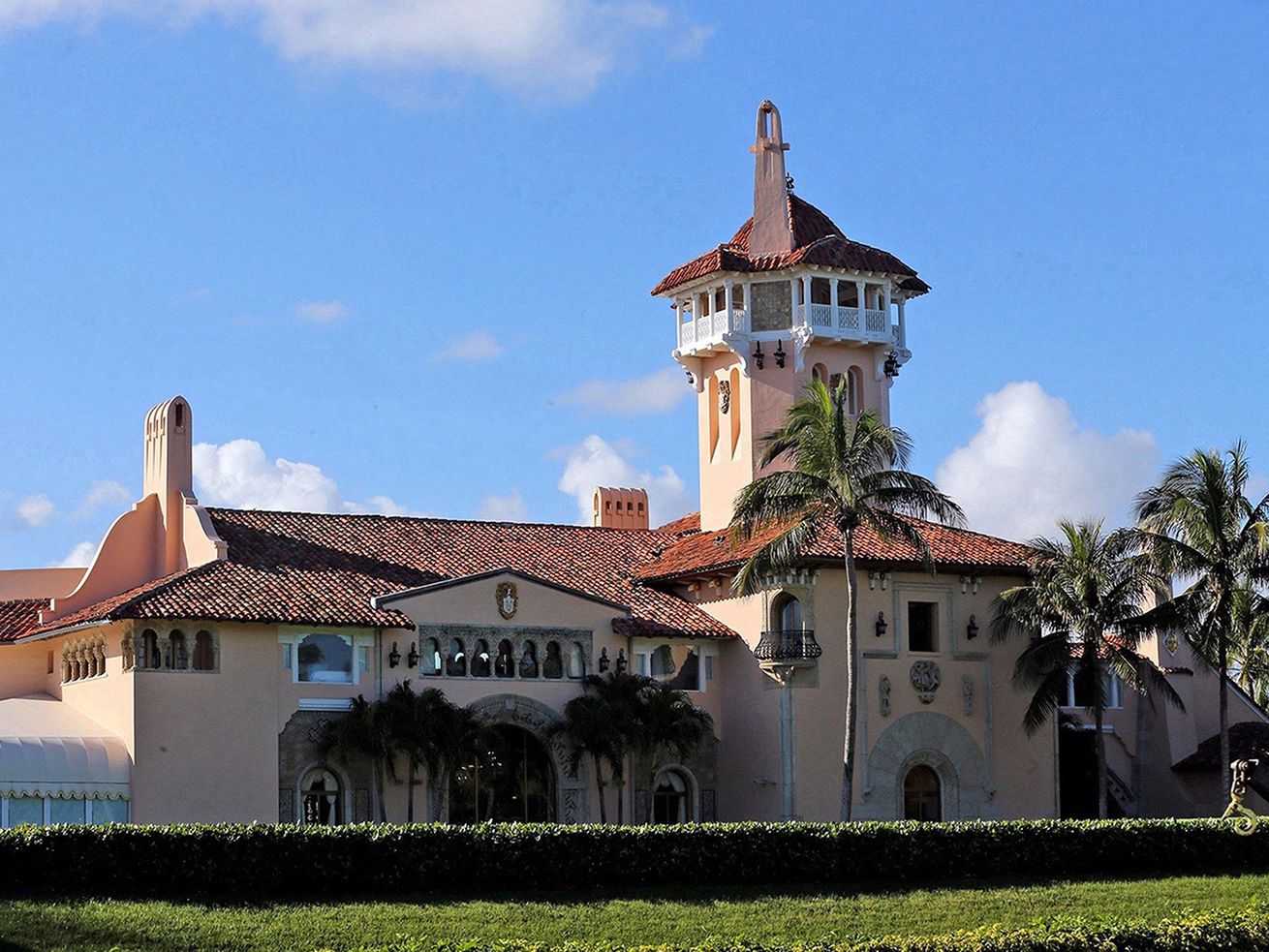



/cdn.vox-cdn.com/uploads/chorus_asset/file/23968361/GettyImages_1132895766.jpg) Bernd von Jutrczenka/picture alliance via Getty Image
Bernd von Jutrczenka/picture alliance via Getty Image