Shared posts

17 Sep 12:10

Russian official says civilian satellites may be “legitimate” military target

by Jon Brodkin
A stack of 60 Starlink satellites being launched into space, with Earth in the background.

Enlarge / A stack of 60 Starlink satellites launched in 2019. (credit: SpaceX / Flickr)

A Russian diplomat said civilian satellites could be legitimate military targets in a statement that seems to refer to Starlink providing broadband access in Ukraine. Civilian satellites "may become a legitimate target for retaliation," the Russian official said in a statement to the United Nations' open-ended working group on reducing space threats.

The quote is from an unofficial English translation of the statement on September 12 by Konstantin Vorontsov, head of the Russian delegation to the United Nations Office for Disarmament Affairs (UNODA) working group. The translation is provided with other countries' statements from the session on the UNODA's meeting website.

Vorontsov said:

Read 10 remaining paragraphs | Comments

16 Sep 11:39

3 takeaways from that Trump judge’s latest order in the Mar-a-Lago case

by Ian Millhiser
Former President Trump Holds Campaign Rally In Pennsylvania To Support Local Candidates
Former president Donald Trump speaks to supporters at a rally to support local candidates on September 3 in Wilkes-Barre, Pennsylvania. | Spencer Platt/Getty Images

Judge Aileen Cannon’s latest order shows a disregard for established law.

Aileen Cannon, the Trump-appointed judge recently known for twisting the law in knots in ways that undermine one of the Justice Department’s criminal investigations into former president Donald Trump, has issued a new order that, well, twists the law into knots.

Last month, the FBI executed a search warrant at Mar-a-Lago, Trump’s Florida residence, and seized several boxes of documents. They include 103 documents with classified markings, some of them indicating that the information contained in those papers is classified at the highest levels. According to the Washington Post, among these papers was “a document describing a foreign government’s military defenses, including its nuclear capabilities.”

Trump’s legal team has been waging a campaign in Cannon’s court to hinder the DOJ’s ability to look into those documents. Cannon on Thursday gave Trump another win in that campaign, although her latest order does slightly narrow one of Trump’s earlier victories in her courtroom.

The Constitution provides several safeguards against unreasonable searches and seizures by law enforcement. The FBI must have probable cause to justify a search of a private residence, and it must obtain a warrant issued by a neutral magistrate.

Although DOJ complied with these constitutional requirements, Cannon issued an order earlier this month arguing that Trump is entitled to special protections that are rarely afforded to any criminal suspect, in large part because of Trump’s “former position as President of the United States.”

Specifically, Cannon ordered the Justice Department to halt its criminal investigation into Trump until a court-appointed official known as a “special master” reviews the seized documents.

Although Cannon’s original order permitted DOJ to continue a parallel national security investigation assessing how Trump’s possession of these documents may have damaged national security, DOJ informed Cannon in a motion filed last week that these two investigations “cannot be readily separated,” in large part because they are being conducted by the same personnel.

In last week’s motion, DOJ asked Cannon to allow its criminal investigation to continue with respect to the 103 classified documents. On Thursday, Cannon formally denied that request, and appointed Raymond Dearie, a senior federal judge, as that special master to review all of the documents seized from Trump for indications that they may be protected by attorney-client or executive privilege. Cannon also instructs Dearie to begin his review with the classified documents.

DOJ has already indicated that it will seek relief from a federal appeals court, possibly as soon as Thursday night. The case is called Trump v. United States.

But there are several things worth digging into with Cannon’s order first.

Cannon’s new order suggests that Trump could somehow own classified government documents

Cannon’s original order rests on the proposition that Trump has made a plausible case that he has a “right to possess at least some of the seized property.” But, as the Justice Department noted in last week’s motion, Trump “does not and could not assert that he owns or has any possessory interest in classified records.”

Classified documents by definition belong to the federal government and not to a private individual — indeed, the whole point of classifying a document is to prevent that document from coming into the possession of anyone whom the government does not want to see it.

Moreover, the FBI says that some of the relevant documents are marked as “classified/TS/SCI,” a designation that refers to “sensitive compartmented information” — information that is typically stored in specialized facilities to prevent the information from getting out.

In her recent order, Cannon essentially says that the FBI cannot be trusted when it claims that these documents are classified. “The Court does not find it appropriate to accept the Government’s conclusions,” Cannon writes, that “all of the approximately 100 documents isolated by the Government (and “papers physically attached to them”) are classified government records.”

Such skepticism of a law enforcement agency’s assertions might be welcome in another context. But, again, the Constitution lays out the requirements that the FBI must comply with in order to seize documents and use them in a criminal investigation — probable cause plus a warrant — and the FBI complied with these constitutional obligations.

If Trump believes that some of these documents were unlawfully seized from him, he can raise that argument at his criminal trial, if he is ever indicted, and seek to have the documents excluded from that trial. He could do, in other words, what every other criminal defendant is permitted to do.

But Cannon is giving him additional protections that virtually no criminal suspect enjoys, based largely on the fact that he used to be president.

Cannon gives the Justice Department a little more leeway, but probably not enough that they can safely make use of it

Recall that Cannon’s original order said that the FBI could continue its national security investigation into how Trump’s possession of these documents may have damaged the nation’s intelligence interests, but that it must pause its criminal investigation. In response to DOJ’s argument that these two investigations are difficult to disentangle, Cannon essentially replies that “difficult” does not mean “impossible.”

One of the government’s filings, she notes, “states that it would be ‘exceedingly difficult’ to bifurcate the personnel involved in the described processes.” But “exceedingly difficult,” she claims, is not the same thing as “inextricably intertwined.”

That said, Cannon’s latest order does contain some language suggesting that DOJ can continue some parts of its criminal investigation.

Though Cannon forbids the Justice Department from “presenting the seized materials to a grand jury and using the content of the documents to conduct witness interviews as part of a criminal investigation” — a restriction that effectively precludes DOJ from indicting Trump until Cannon’s order is lifted — she does write that “to the extent that the Security Assessments truly are, in fact, inextricable from criminal investigative use of the seized materials,” then the criminal investigation may continue.

In practice, however, it is far from clear that the Justice Department can take advantage of this concession by Cannon. Cannon’s new order contains only limited descriptions of what DOJ can and cannot do. And it is possible that the FBI will be unwilling to make its own judgment calls so long as it knows that a seemingly hostile judge may hold them in contempt if she disagrees with the FBI’s judgment.

Cannon seems to have no idea how classified documents work

One other line in Cannon’s opinion is worth noting. In its motion from last week, the Justice Department argued that “the Court’s order would irreparably harm the government and the public by unnecessarily requiring the government to share highly classified materials with a special master.”

As the Supreme Court held in Department of the Navy v. Egan (1988), “For ‘reasons . . . too obvious to call for enlarged discussion,’” determinations about who should be allowed to see classified documents “must be committed to the broad discretion of the agency responsible, and this must include broad discretion to determine who may have access to it.”

But Cannon’s order effectively brings the special master, who does not have a “need to know” the information in the classified documents that is grounded in national security concerns, inside the community of individuals who are allowed to see specific highly classified documents. That places her order at odds with Egan, and with ordinary practices governing the nation’s most highly guarded secrets.

In any event, the most important upshot of Cannon’s order is that DOJ is now free to seek relief from a higher court. It is likely that they will do so as fast as their lawyers can draft the appropriate motion.

16 Sep 11:38

Map of mega warehouses in the United States

by Nathan Yau

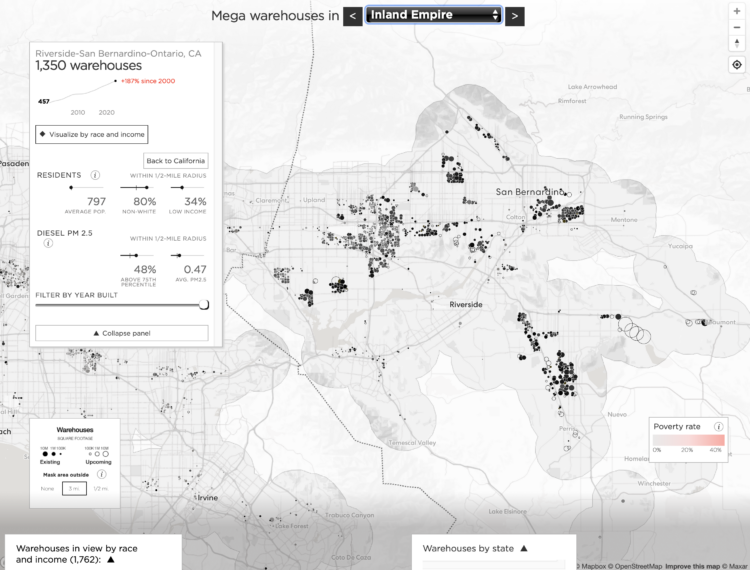
With the growth in online shopping over the years, companies required more space to store their products, which gave rise to mega warehouses (more than 100k square feet) across the country. Judith Lewis Mernit and Geoff McGhee describe and show the growth with a map.

Tags: shopping, Sierra, warehouses

15 Sep 19:36

Easier than a plug: Wireless EV charging gets ready for prime time

by Jonathan M. Gitlin
A rendering of a public wireless charging station. In fact, WiTricity expects most wireless chargers to be installed in homes.

Enlarge / A rendering of a public wireless charging station. In fact, WiTricity expects most wireless chargers to be installed in homes. (credit: WiTricity)

In our recent explainer on electric vehicle charging, you might have noticed that we didn't mention wireless EV charging. Now common on smartphones, wireless charging works the same way on cars, just at higher power levels and with much bigger batteries. But after some demos and news releases during the mid-teens, the technology seemed to fall off the radar.

Behind the scenes, though, engineers were hashing out an industry standard, aided by industry consolidation along the way. That's now final, and the first EVs with factory-fit wireless charging systems are starting to appear, albeit not here in the US just yet. But given its ease of use, even for drivers who can't imagine life beyond the gas pump, the potential for adoption seems good.

Ars got its first look at wireless car charging back in 2015. Back then, chip-maker Qualcomm was developing what it called Halo, which it was demonstrating at Formula E races by recharging the battery in a safety car, a BMW i8 plug-in hybrid. It wasn't the only outfit developing wireless charging, however. In Massachusetts, an MIT spinoff called WiTricity started playing around with wireless car charging in 2010 after an investment by Toyota.

Read 10 remaining paragraphs | Comments

15 Sep 13:07

San Francisco sued by woman who says her rape-kit DNA was used to arrest her

by Jon Brodkin
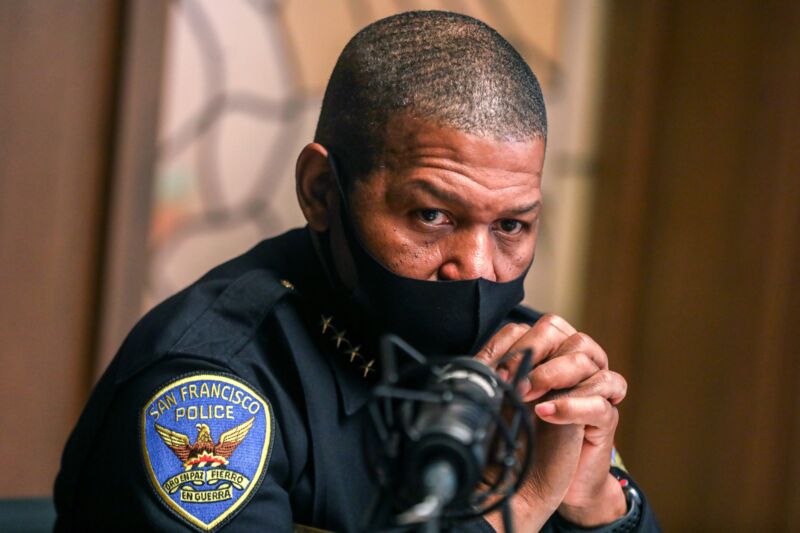
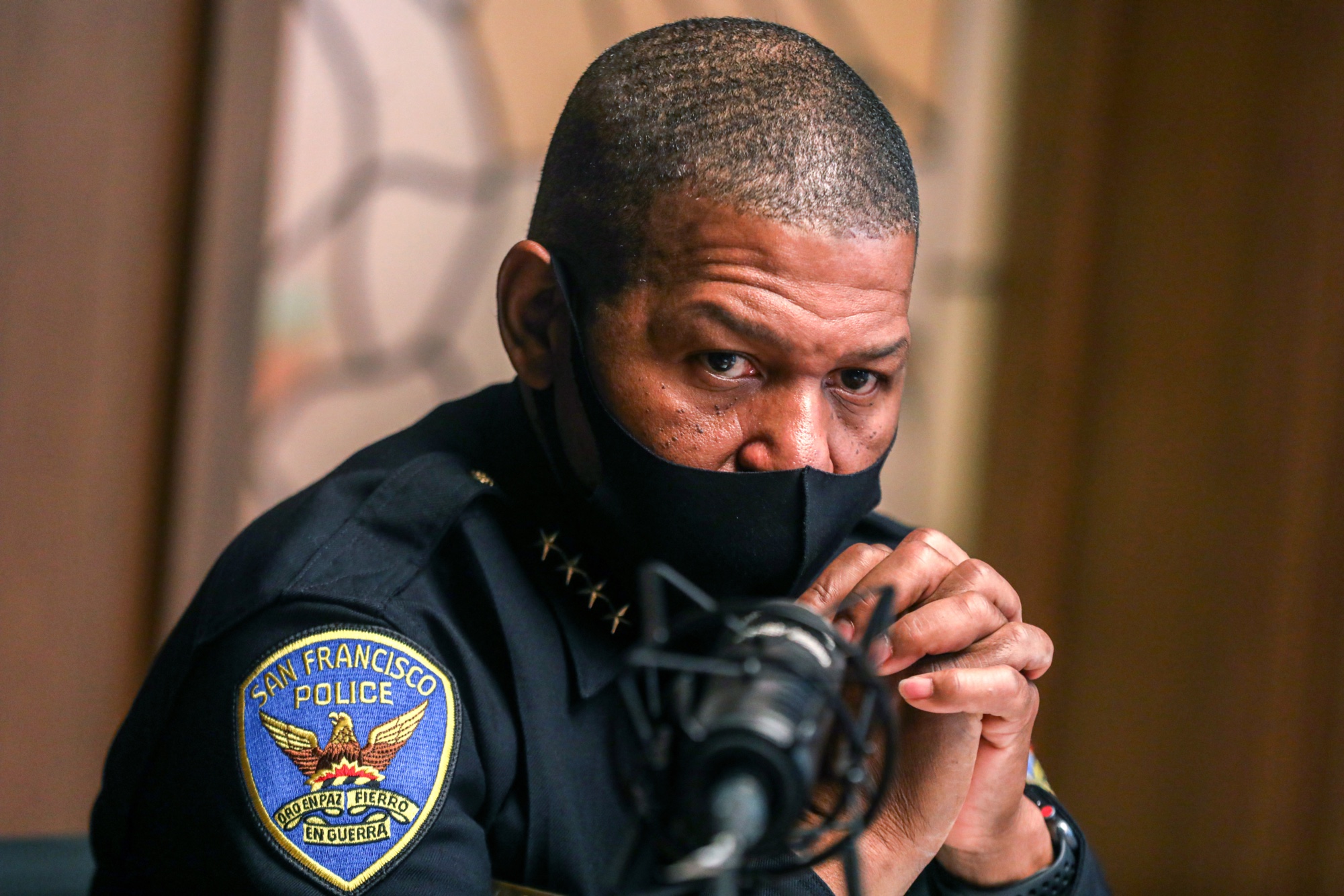
San Francisco Police Chief Bill Scott wearing a mask and sitting at a table.

Enlarge / San Francisco Police Chief Bill Scott answers questions in a meeting with the San Francisco Chronicle editorial board on Tuesday, Feb. 15, 2022. (credit: San Francisco Chronicle/Hearst Newspapers via Getty Images)

San Francisco has been sued by a sexual assault victim in a complaint that describes "the San Francisco Police Department's shocking practice of placing crime victims' DNA into a permanent database without the victims' knowledge or consent."

"Plaintiff Jane Doe, a sexual assault survivor, was re-victimized by this unconstitutional practice," alleged the lawsuit filed Monday in US District Court for the Northern District of California. "In 2016, she provided a DNA sample to the San Francisco Police Department as part of its investigation into her sexual assault. However, she never consented to it to be stored or used for any other purpose. Nevertheless, the Department maintained Plaintiff Doe's DNA in the database for more than six years."

According to the lawsuit, Jane Doe was arrested on burglary charges in 2021 after DNA from a crime scene apparently matched the DNA she provided five years earlier. The charges were eventually dropped.

Read 12 remaining paragraphs | Comments

15 Sep 13:06

What’s at stake in the freight rail labor fight

by Emily Stewart
Two freight trains on parallel tracks.
Freight trains travel through Houston on September 14, 2022. | Brandon Bell/Getty Images

A strike was likely averted — but it would have been an economic disaster.

Editor’s note, September 15, 9 am: Railroads and union leaders announced early Thursday morning that they had reached a tentative deal to avert a strike, which now goes to the unions’ membership for a vote. Workers will not go on strike while voting is underway. The original story, which was published September 14, before the deal was announced, is below.

A railroad strike that would disrupt the entire American economy: not ideal, given, you know, everything. Yet one could be on the horizon.

Tens of thousands of freight rail workers are prepared to go on strike on Friday at 12:01 am, which could have wide-ranging effects across the economy. It’s already causing some disruptions for rail passengers, freight companies, and others.

The cause is a dispute between the freight industry and the workers who make it run.

Most of the 12 unions representing the workers have already agreed to a proposal put together by a presidential emergency board established by the White House over the summer to try to help resolve the dispute. The proposal includes a 24 percent increase in wages for workers by 2024, but many workers have complained that it fails to address leave, on-call scheduling, and poor working conditions.

The holdout unions’ position is that pay increases aren’t enough to make up for some real downsides — and dangerous aspects — of the job.

The two most powerful unions involved in the negotiations, which represent engineers and conductors, are continuing to resist the proposal, putting both sides in a deadlock. If workers do go on the strike they appear to be hurtling toward, it would be the first such strike in 30 years.

“If they were to strike, all the other unions would respect the picket line,” said Tony Hatch, a transportation analyst and head of the consulting firm ABH Consulting, referring to the engineers and conductors. “We’re in a pressure-cooker time.”

If a freight strike were to occur — and especially if it’s long-lasting — it could have disastrous effects across an already fragile economy still reeling from supply chain disruptions and inflation.

“Rail moves a lot of the foundational, basic goods that we don’t think about day-to-day,” said Rachel Premack, editorial director at FreightWaves, which covers supply chains. “They’ll move sand and gravel that would then be crushed into concrete for roads or for laying home foundations. Railroads move the chemicals used to purify water or to compromise fertilizer for crops, soybeans that could become food for humans or [animals] that are then food for humans. It’s a lot of early-chain-type goods.”

Many passenger trains also run on freight rails, and their service could be suspended. Amtrak has already warned of potential disruptions and canceled cross-country trains in anticipation of a strike, though so far its Northeast service will not be affected.

Federal officials and lawmakers are urging a compromise, recognizing that a national freight strike of tens of thousands of workers is not a good look when the 2022 midterm elections are coming up and, again, the economy is already off-kilter.

Replacing freight with other forms of transportation is not easy if workers do walk out. Mike Steenhoek, executive director of the Soy Transportation Coalition, told Vox in an interview that one train has the freight capacity of 400 semi-trucks. “I don’t know of a shipper who just has 400 semis sitting in a garage ready to be accessed,” he said. He noted that for agriculture, the timing couldn’t be worse because of harvest season, adding more urgency for a deal.

Right now, workers and unions realize they have a labor-friendly administration in place and believe they can squeeze a bit more out in negotiations on what would amount to a five-year deal retroactive to 2020, Hatch said. “All sides are playing out the cards they were given,” he said. “It’s all alarmist, it’s all part of the game.” The Association of American Railroads has projected a strike could cost the economy $2 billion a day — which is why Hatch doesn’t believe that if a strike happens, it will not last for long.

But if it does stretch on, “yes, it would have a huge effect,” he said, impacting anything from agriculture to automobiles, gas to food.

Premack was even more dire in her warning. “We would definitely start to see a lot of key parts of our consumer society really break down,” she said, “which is a little apocalyptic to say.”

Hence the urgency in Washington to get to an agreement. While congressional Democrats have yet to stake out a policy response, the Labor Department is scrambling to shepherd negotiations between labor unions and carriers in a series of last-minute meetings.

If forced to act, Democrats must weigh the political pressure to stop a strike along with the commitment they’ve long espoused to labor unions, who are pushing for basic improvements to working conditions. “It is time for Congress to stand on the side of workers for a change,” Sen. Bernie Sanders (I-VT) said in a floor speech. “Rail workers have a right to strike for reliable schedules, they have a right to strike for paid sick days, they have a right to strike for safe working conditions.”

Politically, this is complicated for many parties involved, given the state of the economy and voting fast approaching. “They need a rail service disruption like they need a hole in the head,” Steenhoek said.

A freight strike would, indeed, not be fun

What happens next for consumers depends on two factors: whether a strike happens at all, and how long it lasts.

Currently, we’re in what could be considered the first phase of the strike: the pre-strike disruptions as companies and shippers prepare. Amtrak cancellations fall into this category. Some freight companies are also pausing the shipment of hazardous or sensitive cargo, such as fertilizer, chemicals for purifying water, or items that need to be preserved at a specific temperature. Railroad companies such as Union Pacific and CSX put an embargo on the shipment of multiple materials, which the Wall Street Journal notes are used commonly in manufacturing and pharmaceuticals.

If you know it’s going to take four to five days for a freight train to get the items you’re shipping from New Hampshire to California, you do not want the cargo stuck on said freight train in the middle of Kansas on day two or three. Knowing a potential stoppage is on the horizon, some companies and shippers aren’t going to load their cargo on that train today.

The first few hours or days of the strike itself is the second phase. Steenhoek compared the situation to thinking about your pantry. If, for whatever reason, you can’t make it to the grocery store for a few extra days, you are hopefully stocked up enough that it’s not the end of the world. But as the days stretch on, the situation gets increasingly dire. If you are an egg farmer, you’ve probably got enough soybeans stored up to feed your chickens for a while.

Still, given that some industries are already suffering from supply chain issues and inflation is already a problem, a short strike will be disruptive. The level of disruption depends on the industry.

Even if the strike ends quickly, transportation and rail isn’t easy to turn on and off like a light switch. “It takes a while to get all that started and resuming and back to full speed,” Steenhoek said.

Companies can try to seek out alternative routes, but switching to trucks and barges is an arduous and complicated process. Plus, the truck driving industry is suffering a shortage of its own.

The scary scenario here is if we hit phase three, where a strike goes on for weeks or longer, costing the economy what could be $2 billion a day. One could envision a scenario where automobile plants have to shut down production because their finished vehicles can’t be shipped out and are piling up. It would mean that the movement of important commodities, such as soy and wheat, could be severely constrained. “A rail shutdown would result in devastating consequences to national and global food security,” the National Association of Wheat Growers said in an emailed statement.

Premack drew a comparison to the delays and bottlenecks at West Coast ports over the last several months — as well as a rather scary distinction. “It isn’t like, ‘Oh, no, my Peloton isn’t coming. It’s like, ‘My bread isn’t going to be made because there’s no grain moving or flour moving,’” she said. “It’s a bit scarier. We can survive without getting our new couch in, but we can’t really survive without purified water.” She added that rail does move e-commerce shipments, but it’s generally earlier in the process than whatever appears on your doorstep tomorrow.

What Congress might do

Under the Railway Labor Act, Congress has the ability to block or end a rail strike. Since 1963, it has passed legislation more than 10 times to intervene in rail disputes.

So far, though, Democratic leaders have been reluctant to commit to doing so, while Republicans have been eager to pressure workers into agreeing to the terms set by the presidential emergency board.

If Congress were to intervene, there are a few routes lawmakers could take. They could require the unions and carriers to accept the presidential emergency board’s conditions, which included a pay increase but no acknowledgment of other demands like sick leave. They could extend the existing cooling-off period so both sides have more time to negotiate. Or they could turn the talks over to independent arbitrators who would be tasked with finding a resolution.

For now, congressional Democrats are waiting to see what might come out of the talks the Labor Department is leading between unions and railroad carriers on Wednesday before they lay out a policy response. “Secretary Walsh continues to lead discussions at the Department of Labor between the rail companies and unions,” a Labor spokesperson told Vox on Wednesday afternoon. “The parties are negotiating in good faith and have committed to staying at the table today.”

Multiple lawmakers including Senate Majority Leader Chuck Schumer and House Speaker Nancy Pelosi have expressed hopes that the two sides will be able to work things out and prevent the need for any legislative response at this time. “I would rather see negotiations prevail so there’s no need for actions from Congress,” Pelosi said at a press conference on Wednesday. Democrats, after all, are in a difficult position: They could well be blamed by the public if there are serious economic consequences from a strike, but any action they take to stifle workers would betray their purported support of unions, an important constituency for the party.

Senate Republicans, meanwhile, have urged Congress to pass a resolution that would require the unions to take the presidential emergency board agreement that the Biden administration previously offered, an outcome that business interests and carriers are pushing for as well. Earlier this week, Sens. Richard Burr (R-NC) and Roger Wicker (R-MS) introduced a measure that would effectively put the PEB conditions into place if passed, ignoring other concerns that workers have expressed. They tried to force a floor vote on the measure on Wednesday, though it was blocked by Sanders.

In lieu of imposing the PEB agreement, some Democrats are discussing proposals that would factor in other union demands, according to The Hill. “If the Burr-Wicker resolution passed, rail workers would be entitled to zero paid sick days and zero unpaid sick days,” said Sanders. “That is clearly unacceptable.”

It’s been 30 years since there was a rail worker strike. Less than 24 hours after the strike began in 1991, Congress approved a bipartisan resolution, which established a new board that had 65 days to find a resolution to any outstanding disagreements the unions and carriers had.

It’s still not clear if they would do the same this time — or if things will even get that far.

Were Congress forced to take action, there could well be a showdown between Republicans’ and Democrats’ approach to the issue, since 10 GOP senators would be needed for any resolution to pass.

14 Sep 05:08

Zelda: Breath of the Wild sequel gets official name, May 2023 release date

by Kyle Orland
<em>BotW</em>, meet <em>TotK</em>.

Enlarge / BotW, meet TotK.

The next game in the Legend of Zelda series is called Tears of the Kingdom and will hit the Switch on May 12, 2023, Nintendo announced today during a livestreamed Nintendo Direct presentation.

It has been over three years since Nintendo first announced the follow-up to Breath of the Wild and over a year since we saw the first gameplay footage for the title.

A brief teaser shown during this morning's Nintendo Direct presentation didn't provide much detail that wasn't apparent in that previous showing, but it did put a lot of focus on Link falling through the sky and gliding through the air. The game seems to mimic the open-world, climbing-heavy gameplay of its predecessor.

Read 1 remaining paragraphs | Comments

14 Sep 05:04

To defeat FTC lawsuit, Meta demands 100+ rivals share biggest trade secrets

by Ashley Belanger
To defeat FTC lawsuit, Meta demands 100+ rivals share biggest trade secrets

Enlarge (credit: Michael Haegele | The Image Bank)

Several years after Facebook-owner Meta acquired WhatsApp and Instagram, the Federal Trade Commission launched an antitrust lawsuit that claimed that through these acquisitions, Meta had become a monopoly. A titan wielding enormous fortune over smaller companies, the FTC said Meta began buying or burying competitors in efforts that allegedly blocked rivals from offering better-quality products to consumers. In this outsize role, Meta stopped evolving consumer preferences for features like greater privacy options and stronger data protection from becoming the norm, the FTC claimed. The only solution the FTC could see? Ask a federal court to help them break up Meta and undo the damage the FTC did not foresee when it approved Meta's acquisitions initially.

To investigate whether Meta truly possesses monopolistic power, both Meta and the FTC have subpoenaed more than 100 Meta competitors each. Both hope to clearly define in court how much Meta dominates the market and just how negatively that impacts its competitors.

Through 132 subpoenas so far, Meta is on a mission to defend itself, claiming it needs to gather confidential trade secrets from its biggest competitors—not to leverage such knowledge and increase its market share, but to demonstrate in court that other companies can compete with Meta. According to court documents, Meta's so hungry for this background on its competitors, it says it plans to subpoena more than 100 additional rivals, if needed, to overcome the FTC's claims.

Read 13 remaining paragraphs | Comments

13 Sep 15:30

Google’s cost-cutting kills Pixelbook division

by Ron Amadeo
The Google Pixelbook Go laptop on a white table.

Enlarge / The Pixelbook Go starts at $649 for a Core m3 processor, 8GB of RAM, and 64GB of storage. (credit: Valentina Palladino)

Google's hardware division continues to be unable to field a consistent, reliable hardware selection. A report from The Verge claims Google has "canceled the next version of its Pixelbook laptop and dissolved the team responsible for building it." This has been the case for several years, but the only new Chromebooks out there will be ones from third parties.

The last laptop released by the company was the Chromebook Go in 2019, which is still for sale at store.google.com. Shortly after that device's launch, reports surfaced that the laptop and tablet division was being downsized. While the tablet plans managed to recover thanks to Android, the laptop plans are apparently dead. The last credible Google laptop rumors were from the lead-up to the Google Tensor/Pixel 6 launch. Google was rumored to be making its own chips and, along with phone (Pixel 6) rumors, consistently claimed a laptop version of the chip would be happening. Google Hardware SVP Rick Osterloh said as recently as May that the company was "going to do Pixelbooks in the future." According to the report, "the device was far along in development and expected to debut next year" before it was canceled.

The reason for the dissolution of the Pixelbook team is apparently Google CEO Sundar Pichai's cost-cutting. The Google CEO said in August that "productivity as a whole is not where it needs to be for the headcount we have" and warned that the company would be "consolidating where investments overlap and streamlining processes." The Verge's report says, "The Pixelbook team and the Pixelbook itself were casualties of that consolidation and redeployment."

Read 2 remaining paragraphs | Comments

13 Sep 13:21

Human Trafficking’s Newest Abuse: Forcing Victims Into Cyberscamming

by by Cezary Podkul, with Cindy Liu for ProPublica

by Cezary Podkul, with Cindy Liu for ProPublica

ProPublica is a nonprofit newsroom that investigates abuses of power. Sign up to receive our biggest stories as soon as they’re published.

The ads on the Telegram messaging service’s White Shark Channel this summer had the matter-of-fact tone and clipped phrasing you might find on a Craigslist posting. But this Chinese-language forum, which had some 5,700 users, wasn’t selling used Pelotons or cleaning services. It was selling human beings — in particular, human beings in Sihanoukville, Cambodia, and other cities in southeast Asia.

“Selling a Chinese man in Sihanoukville just smuggled from China. 22 years old with ID card, typing very slow,” one ad read, listing $10,000 as the price. Another began: “Cambodia, Sihanoukville, six Bangladeshis, can type and speak English.” Like handbills in the days of American slavery, the channel also included offers of bounties for people who had run away. (After an inquiry from ProPublica, Telegram closed the White Shark Channel for “distributing the private information of individuals without consent.” But similar forums still operate freely.)

.image-gallery ul { display: flex; flex-flow: row wrap; list-style: none; margin: 0px auto; padding: 0px; } .image-gallery li { margin: 0 10px; flex-basis: calc(33% - 20px); } .image-gallery img { width: 100%; height: auto; } @media screen and (max-width: 36em) { .image-gallery li { margin: 10px; flex-basis: calc(100% - 20px); } }
  • Cambodia, Sihanoukville, six Bangladeshis, can type and speak English, for companies in Sihanoukville targeting foreigners, people who can make decisions come chat, can deliver.
  • Sihanoukville, a few Chinese born in the 90s. Cannot share pictures, no passports. Have ID cards, can interview directly. Price relatively high.
  • Selling a Chinese man in Sihanoukville just smuggled from China. 22 years old with ID card, typing very slow. Only third day here. Companies who can accept slow typers come chat. 10,000 USD.
Listings from the White Shark Channel on Telegram (Screenshots and translations by ProPublica)

Fan, a 22-year-old from China who was taken captive in 2021, was sold twice within the past year, he said. He doesn’t know if he was listed on Telegram. All he knows is that each time he was sold, his new captors raised the amount he’d have to pay to buy his freedom. In that way, his debt more than doubled from $7,000 to $15,500 in a country where the annual per capita income is about $1,600.

Fan, photographed in Phnom Penh, Cambodia (Cindy Liu for ProPublica)

Fan’s descent into forced labor began, as human trafficking often does, with what seemed like a bona fide opportunity. He had been a prep cook at his sister’s restaurant in China’s Fujian province until it closed, then he delivered meals for an app-based service. In March 2021, Fan was offered a marketing position with what purported to be a well-known food delivery company in Cambodia. The proposed salary, $1,000 a month, was enticing by local standards, and the company offered to fly him in. Fan was so excited that he told his older brother, who already worked in Cambodia, about the opportunity. Fan’s brother quit his job and joined him. By the time they realized the offer was a sham, it was too late. Their new bosses wouldn’t let them leave the compound where they had been put to work.

Unlike the countless people trafficked before them who were forced to perform sex work or labor for commercial shrimping operations, the two brothers ended up in a new occupation for trafficking victims: playing roles in financial scams that have swindled people across the globe, including in the United States.

Tens of thousands of people from China, Taiwan, Thailand, Vietnam and elsewhere in the region have been similarly tricked. Phony job ads lure them into working in Cambodia, Laos and Myanmar, where Chinese criminal syndicates have set up cyberfraud operations, according to interviews with human rights advocates, law enforcement personnel, rescuers and a dozen victims of this new form of human trafficking. The victims are then coerced into defrauding people all around the world. If they resist, they face beatings, food deprivation or electric shocks. Some jump from balconies to escape. Others accept their lot and become paid participants in cybercrime.

Fan and his brother eventually ended up in Sihanoukville in a compound surrounded by a barbed wire fence. They were made to lure people in Germany into depositing funds with a phony online brokerage controlled by their operation, which also targeted English speakers in Australia and elsewhere.

“This idea of combining two crimes, scamming and human trafficking, is a very new phenomenon,” said Matt Friedman, chief executive of the Mekong Club, a Hong Kong-based nonprofit that combats what it calls modern slavery. Calling it a “double hurt,” Friedman said it’s unlike anything he’s ever seen in his 35-year career. The phenomenon has only just begun to come to light in the U.S., including in a Vice article published in July.

The most widely used technique among these operations is known as pig butchering, an allusion to the practice of fattening up a hog before slaughtering it. The approach combines some time-tested elements of fraud — such as gaining trust, in the manner of a Ponzi scheme, by making it easy for marks to extract cash at first — with elements unique to the internet era. It relies on the effectiveness of relationships nurtured on social media and the ease with which currencies can be moved electronically.

Typically, fraudsters ingratiate themselves into online friendships or romantic relationships and then manipulate their targets into depositing larger and larger sums in investment platforms that are controlled by the fraudsters. Once the targets can’t or won’t deposit more, they lose access to their original funds. They’re then informed that the only way to retrieve their cash is by depositing even more money or paying a hefty fee. Needless to say, any additional funds disappear in similar fashion.

Some Americans have lost huge sums. An entrepreneur in California said she was swindled out of $2 million and unwittingly facilitated an additional $1 million in losses by convincing her friends to join her in what seemed like a surefire investment. A hospital technician in Houston enticed her friends and colleagues to join her in a similar scheme, costing the group $110,000. An accountant in Connecticut is no longer preparing for retirement after watching $180,000 vanish in two separate swindles. They were among more than two dozen scam victims from seven countries interviewed by ProPublica.

Out of fear or shame, most pig butchering victims do not report their losses. That’s one reason that the limited data available likely understates the scale of the damage. According to the Global Anti-Scam Organization, a nonprofit founded last year to combat the new form of fraud, at least 1,838 people in 46 countries have lost an average of about $169,000 each to pig butchering since June 2021. Many still seem stunned by the effectiveness of the trickery. “I have to say, it’s brilliant,” said a Silicon Valley CEO who tallied her loss at $800,000 and asked not to be named out of embarrassment. For many victims, the betrayal by a seeming friend only compounds the devastation.

Fan’s ordeal began with a burst of optimism. He flew to Cambodia’s capital, Phnom Penh — it was his first time leaving China — and then waited out two weeks of COVID-19 quarantine in a hotel. He was then driven to a walled-off condominium complex in the city to begin his training. It was only then, in April 2021, that he realized something was off. Instead of learning about food delivery or working in a kitchen, he and his brother were placed in front of computers and told to study materials about how to defraud people online.

Fan, who is serious and reserved, with a crew cut and a round face that betrays little emotion, was able to document parts of his account, including the offer letter that drew him to Cambodia. (Fan is his family nickname; he asked that ProPublica not include his full name out of fear of his captors.) His experiences resembled those of other trafficking victims ProPublica interviewed and aligned with descriptions provided by experts and others.

Job ads, like this one on Facebook, are often used by human traffickers to lure young people into scam sweatshops in Sihanoukville. Facebook removed the post after ProPublica asked about the ad. (Screenshot by ProPublica)

Fan and his brother spent six months engaging in pig butchering schemes before their bosses decided to relocate the operation to Sihanoukville. The bosses presented them with a choice: They could pay the equivalent of $7,000 each to leave, or they could move along with the company. The brothers, who were paid negligible wages for their work, couldn’t afford the fee. So they relocated to Sihanoukville, in the upper floors of a hotel and casino called the White Sand Palace located in the center of the city.

The job could be terrifying. Fan said he witnessed a worker “half-beaten to death” by guards. “People were saying: ‘Help him! Help him!’” he recalled. “But nobody went up to help him. Nobody dared to.”

Only weeks after Fan and his brother arrived at White Sand, they experienced a brief moment of hope, Fan said. A person approached them and offered to get them out. With his help, they managed to leave — only to realize that the seeming savior had sold them to another criminal organization. This one was located in a fortified complex of beige dormitories on the edge of Sihanoukville with the grandiose name Arc de Triomphe. The $7,000 each owed for his freedom had risen to $11,700. And the price would go higher still.

Cyberfraud operations in Asia, including the ones Fan worked for, are highly organized. Some have gone so far as to draft detailed, psychologically astute training materials on how to dupe strangers. ProPublica obtained more than 200 such documents from an activist who helps involuntary workers escape.

Pig butchering scammers often claim that a well-placed aunt or uncle is feeding them inside information. Some training guides include talking points to teach scammers how to utilize this script effectively. (Screenshot by ProPublica)

Step one in the fraud process for Fan and others was to create an attractive online persona. In his case, he was expected to pose as a woman when wooing targets online. His operation bought photos and videos from websites that cater to such operations. For example, bundles of hundreds of photos of good-looking women and men are available for less than the cost of a cup of coffee from a shop called YouTaoTu. Another website markets a “pig butchering scam” package: For the equivalent of $12, it offers a “handsome guy set” of images of a man with perfectly chiseled abs. (Neither online store responded to requests for comment.) Such photos are frequently lifted from the online accounts of unsuspecting people; ProPublica found that images used by one fraudster were stolen from the Instagram profile of a Chinese social media influencer.

An image of a man showing off his chiseled abs is part of a “pig butchering scam” package of 197 photographs (including one of the man driving a Porsche) on sale for $12 on an online marketplace. (Screenshot by ProPublica)

Scamming guides obtained by ProPublica recommend using such photos to set up social media accounts and then bolster them with the simulacrum of an affluent lifestyle by posting photos of luxury cars, along with descriptions of relevant hobbies such as investing. Stressing your belief in the importance of family, one guide adds, is the sort of touch that helps foster trust.

The resulting profiles can seem so real that one Canadian man met his future scammer after Facebook’s algorithm suggested the person to him as a friend. The chance encounter cost him and his friends nearly $400,000, according to a police report he later filed. Other victims told ProPublica they met their scammers on LinkedIn, OkCupid, Tinder, Instagram or WhatsApp. (Meta, which owns Facebook, WhatsApp and Instagram, said it has “long prohibited this content” and is investing “significant resources” into blocking it. Match Group, owner of Tinder and OkCupid, said it’s using machine learning and content moderators to fight fraud. LinkedIn didn’t respond to emails seeking comment.)

The next step for Fan was to contact as many victims as possible. He recalled working on a team of eight under a group leader, who gave each of them 10 phones to make it easy to keep multiple chats going, along with lists of phone numbers to contact. Fan’s job was to try to initiate conversations on WhatsApp. He would do it by pretending he had reached a wrong number, a common ruse. Others would open with a simple “Hi.”

One former scam worker holds the phones he used to contact potential victims. (Photograph provided to ProPublica)

Some tiny percentage of people responded favorably. When they did, Fan’s job was to handle the crucial initial part of the conversation. That’s when scammers are instructed to get to know their victims and discover what one training guide calls “pain points” that can be exploited. It’s also an opportunity to do what another document calls “customer mapping,” screening potential marks to glean information on their wealth and their vulnerability to being “cut,” slang for convincing them to fall for the scheme.

Fraudsters often initiate conversations on WhatsApp using wrong number-type messages. (Screenshot provided to ProPublica by the Global Anti-Scam Organization)

Using WhatsApp offered other practical advantages. Initially, Fan said, his team was aiming its efforts at Germans. Fan doesn’t speak a word of German, but it didn’t matter. All his chats were filtered through language translation software. Later, his team shifted to marks who spoke English. If any of the potential victims wanted to hear the voice of the attractive woman he was pretending to be, Fan said, there was a woman on staff who spoke fluent English and could record voice memos for him.

Because he was a rookie, Fan’s job was mostly limited to enticing marks to download an app called MetaTrader that would provide access to a brokerage where, he told his new “friends,” they could make fortunes trading cryptocurrencies. Fan would try to convince them to buy cryptocurrencies such as ethereum or bitcoin and deposit them in a brokerage controlled by the scam operation. The brokerage would then post phony numbers, including ones that represented supposed gains in their accounts.

If customers complied and began depositing significant sums, Fan said, he would typically hand the phone to his boss, who would take over and begin prospecting for a major strike. The strategy squares with what several scam victims told ProPublica: They sensed they were talking with multiple people. Indeed, they often were.

Why MetaTrader Is a Favorite Tool for Pig Butchering

Consumers who file complaints about pig butchering with the Federal Trade Commission routinely mention MetaTrader as a conduit for fraud. Among 716 such complaints filed since June 2021, consumers reported losing $87 million, FTC data shows. Separately, ProPublica identified 60 fake brokerages that have used MetaTrader for pig butchering.

Why has the app become such a staple of these scams?

MetaTrader isn’t a brokerage. It’s a platform. It’s analogous to using Amazon’s website to buy products from other retailers. Only in the case of MetaTrader, customers use the platform, typically via its phone apps, to access online brokerages where they can trade foreign currencies or other financial instruments. Both Apple and Google distribute MetaTrader in their app stores, giving it broad availability and a patina of legitimacy. (One training manual advises pig butchering fraudsters to cite its distribution by Apple as proof that MetaTrader can be trusted.)

However, MetaQuotes, the Cyprus-based company behind MetaTrader, allows brokerages that it contracts with to sublicense MetaTrader software to other brokerages with few checks to ensure the legitimacy of the sublicensed operations. This has allowed scammers to use MetaTrader as a front for fraudulent websites. Victims who are bilked via MetaTrader see records of trades and account balances, seemingly allowing them to control their money, when in fact that money is already in the swindlers’ possession.

ProPublica shared the list of fake brokerages and the FTC complaints with MetaQuotes CEO Renat Fatkhullin, along with a detailed list of questions. He did not respond. A lawyer for MetaQuotes told one victim that it is “solely a software development company” and has “nothing to do with any complaints of traders against companies that use the software of our clients.” An Apple spokesperson said the company has shared complaints with MetaQuotes, claiming that MetaQuotes has taken steps to respond to the complaints. The spokesperson provided no examples. Google did not respond to a request for comment. The FTC declined to comment.

About 8,000 miles from Cambodia, an American who lives near San Francisco got a WhatsApp message on Oct. 7, 2021, from a stranger calling herself Jessica. She seemed to have reached him by mistake. Jessica asked the man, whose middle name is Yuen, if they knew each other; she said she had found his number on her phone and didn’t know why. Yuen responded that he didn’t know her. But Jessica was chatty and friendly, and her photo was alluring, so they kept talking.

Yuen agreed to tell his story on the condition that ProPublica identify him only by his middle name and omit certain details that could identify him. He saved his chat history with Jessica, which would run to 129,000 words over several months, and later shared it with ProPublica. (Yuen also shared his chat history with Forbes.)

At the moment Jessica initiated contact, Yuen was vulnerable. His father was in a hospital, dying from a lung disease. He had entrusted Yuen, the youngest of four siblings, with the power to decide whether to cut off his life support. It would also be up to Yuen to plan his father’s funeral and distribute his estate.

The family had immigrated to the U.S. from Hong Kong decades earlier. Yuen, who is in his early 50s and works as an accountant for a major university, was more affluent than his siblings, who are all older than him. He felt it was his duty to take care of them in old age, much as he was caring for his father and had cared for his late mother. Jessica told him she admired his commitment to his family. She shared her own tale of having a grandfather in the hospital.

Yuen began trading messages with a stranger named Jessica on WhatsApp in October 2021. (Brian Frank, special to ProPublica)

Jessica was, by all appearances, a savvy and talented woman. She claimed to be a Chinese immigrant herself, a private banker at J.P. Morgan Chase in New York City. (A Chase spokesperson said the bank has no current employee with her purported Chinese name, Wang Xinyi.) Jessica’s photographs showed her spending weekends on Long Island playing with her rich friend’s toddler. She seemed fashionable, loved shopping and found time for yoga nearly every day, and she would flirt with Yuen. When Jessica posted photos of herself at a luxurious beach property, he wrote, “Wish I was there now.” She replied, “We can go play together.”

Text exchanges between Jessica (gray) and Yuen (green) (Screenshots provided to ProPublica)

One Monday in late October, Jessica told Yuen she had just made $100,000 trading gold contracts. She let him in on a secret: She had a rich uncle in Hong Kong who had his own team of analysts who fed her inside quotes about where the price of gold would move. Every time “Uncle,” as she referred to him, called with news of where the market would go, she could make a guaranteed 10% profit by trading on his directions.

Jessica offered to teach Yuen — but only him. “Why just me?” he asked. Jessica said it was because she sympathized with Yuen about his dying father. “The money you earn can better help your father,” she explained. Plus, she knew she could trust him to keep her secret about insider trading. “Of course, I won’t tell anyone,” Yuen told Jessica as he pondered whether to join in.

The exchange marked a key moment in Yuen’s relationship with Jessica. The person behind Jessica’s alter ego was using a manipulation technique called “altercasting,” according to Martina Dove, a psychology researcher and author of “The Psychology of Fraud, Persuasion and Scam Techniques,” who reviewed Yuen’s chat log at ProPublica’s request. It puts the scammer in a position of trusting the target so that the target will reciprocate trust later on. Keeping the trading secret also meant less chance that Yuen’s wife or teenage daughter would learn about his chats with Jessica.

When Yuen agreed to put some money into gold, Jessica told him to download MetaTrader from Apple’s app store. She then told him to use the app to search for a brokerage called S&J Future Limited.

Yuen made it clear he couldn’t afford to lose any money. If he did, he said, he’d have to kill himself. Jessica said there was no need to worry: Uncle was never wrong. Yuen owed it to his father to seize the opportunity.

On Oct. 26, the day he had to go to the hospital to discuss his father’s end-of-life care, Yuen put money on the line for the first time. A conservative investor and lifelong saver, he’d been petrified to put even $2,000 into the brokerage. Jessica convinced him to start with $10,000 and taught him the two-step process to fund his account. First, he wired money from his bank to buy a cryptocurrency called ethereum. Then he could transfer the ethereum to a crypto wallet, whose address she provided.

Jessica insisted that using a cryptocurrency would help Yuen minimize his tax burden. He admitted he had very little idea of what he was doing. No matter. When the transfer was done, his S&J account reflected the deposit. And the next day, when Uncle called Jessica with news, Yuen was ready to buy. His account showed he made $746 after fees.

Jessica claimed she had made $500,000 on the same trade. She told him to get his account up to $50,000 to start earning meaningful sums. Yuen agreed and wired $20,000 the next day and another $20,000 a few days after that. When Jessica saw that he was doing as she’d directed, she praised him — “you’re smart” — and reminded him that the more money he put in, the more he’d earn for his father and siblings.

Little by little, Jessica encouraged Yuen to invest more and more. Yuen liquidated some mutual funds and wired nearly $58,000 on Nov. 2. When Uncle called with news later that night, his MetaTrader account showed an eye-popping gain of $17,000.

In those early weeks, Yuen was thrilled with Jessica. He called her his “true angel” in one message and offered up emojis of joy. Jessica wrote back: “I am not an angel, I am a demon.” She added two smiley-face emojis.

The skyline of Sihanoukville (Cindy Liu for ProPublica)

If Cambodia has a capital of fraud, it may well be Sihanoukville, which is named for the country’s onetime king who was ousted in an American-supported coup during the turmoil that erupted as the U.S. bombed the nation during the Vietnam War. The city has transformed over the past five years from a quiet beach resort to a metropolis of casinos and ghostly towers in various stages of construction or decay. The building boom was funded by Chinese investors, who started pouring millions of dollars into Sihanoukville after 2016, when the Philippines launched a crackdown on illegal online gambling outfits that were aimed at Chinese citizens. Cambodia had looser gaming regulations, and its government welcomed Chinese investment, making it a perfect substitute.

Soon Cambodia experienced the same influx of organized crime that had prompted the crackdown in the Philippines. Cambodia, under pressure from the Chinese government, announced a ban on online gambling in August 2019. Months after that, the COVID-19 pandemic struck and casinos in Cambodia were suddenly emptied of customers and workers.

Criminal syndicates repurposed their emptied real estate and began using it for scamming operations, according to Jason Tower, Myanmar country director for the United States Institute of Peace, and other observers in the region. “They’re criminal businesses, but they’re businesses at the end of the day,” he said. “So what did they do? They adapted.” And thanks to the pandemic, human traffickers found no shortage of job seekers with computer skills.

Forced Labor Compounds Have Spread Across Cities in Cambodia and Elsewhere in Southeast Asia (Map by Lucas Waldron, ProPublica. © OpenStreetMap Contributors. Research by Danielle Keeton-Olsen.)

These facilities, which are housed in everything from office buildings to garish casino complexes, aren’t all tucked away in isolated neighborhoods. Some are prominently situated in the heart of cities. The White Sand Palace, which contains not only a gambling establishment but also multiple floors of fraud operations, according to former workers there, is located diagonally across the street from the summer residence of the Cambodian prime minister. White Sand didn’t respond to a request for comment.

Scam operations are often in central locations. The White Sand Palace in Sihanoukville is only a block or so from the prime minister’s summer residence. (Photo by ProPublica)

Many fraud operations are surrounded by barbed wire fences. It’s routine to see windows and balconies completely enclosed by bars. In the Chinatown area of Sihanoukville, storefronts for a noodle shop and a barbershop look unexceptional, until you walk inside and notice that there are bars inside preventing anyone from exiting the complex of heavily guarded buildings.

The beige stretch of towers, center, and the buildings to the left, located in the Chinatown area of Sihanoukville, house scam operations, according to people who say they were held captive there. (Cindy Liu for ProPublica)

Over the past year, an array of activists, journalists and nongovernmental organizations in Southeast Asia have begun revealing what’s going on behind the bars in these buildings. Ngô Minh Hiếu, a reformed hacker who now works as a cybersecurity analyst for the Vietnamese government, was one of the first to identify the sites. NGOs such as the International Justice Mission, as well as local media outlets, most notably VOD News, have revealed details of the operations. (ProPublica collaborated with three reporters affiliated with VOD to prepare this article.)

Lu Xiangri, a survivor of human trafficking who became a rescuer, wears a red bracelet he received at a pagoda where he prayed for people trapped in scam compounds. (Cindy Liu for ProPublica)

Others, such as Lu Xiangri, who became a volunteer rescuer after escaping a Sihanoukville scam sweatshop, have collected videos depicting abuses in these operations. Lu witnessed severe mistreatment when he was briefly detained inside the Arc de Triomphe last October: He saw a man with a broken leg and a bruised back begging to be sold so that he could avoid further beatings; Lu said the man later died of his injuries. Determined to help others avoid a similar fate, Lu joined a volunteer rescue team, which exposed him to a steady stream of pleas for help that often include graphic images of wounds left by electric shock batons and other corporal punishment. (ProPublica examined scores of similar photos and videos, some of which depict torture — including the use of electronic shock devices on workers’ genitals — but is publishing only a limited number whose authenticity was verified by Lu.)

ProPublica drove up to the gates of three compounds in Sihanoukville where people have alleged being detained and compelled to work as fraudsters. They included the Arc de Triomphe, one complex in Chinatown and another sprawling compound known as White Sand 2. Security guards at the three locations either denied that anything illegal goes on inside or refused to answer questions. “Talk to the boss,” one said, without specifying who the boss was.

Alleged scam compounds in Sihanoukville (Cezary Podkul/ProPublica)

Fan said his life was tightly circumscribed when he worked and lived inside the Arc de Triomphe compound. He could leave his building and enter an adjoining casino and karaoke bar — he said he had no interest, though some workers did gamble or go to the karaoke bar — but the presence of guards would dissuade any hopes of going out into the street. During the four months he was at the Arc de Triomphe, he said, he never set foot outside the compound.

His schedule and routine were regimented. Fan worked on the second floor of a building from 5 p.m. to 9 p.m., then again from 11 p.m. to 5 a.m. He slept in a dorm room with metal bunk beds, with four or five people per room. There was even a small clinic in the compound that provided first aid and rudimentary medical treatment. As Fan put it: “You can’t go anywhere. You’re either eating, sleeping or working.” The days ran into each other, and Fan tried to anesthetize his own feelings, willing himself into emotional torpor. His only pleasure came from playing a fantasy warfare game on his phone each night before going to bed.

The Arc de Triomphe compound in Sihanoukville (Cindy Liu for ProPublica)

Fan hated the work. Cheating people out of money was the last thing he thought he’d be doing when he answered a job ad. But he couldn’t leave the compound, nor could he afford to buy his way out. His bosses at the Arc de Triomphe demanded $23,400 for him and his brother. The two were essentially paid on commission, which meant that the more he wanted his freedom, the more he’d have to bilk.

In part because he would hand over promising targets to his boss, but perhaps also because of his reluctance, Fan never delivered a big score. The most he landed was $30,000. He said he felt so terrible after that “success” that he deleted the victim’s contact information from the organization’s database to make sure the person couldn’t be further stripped of cash. Others on his team, he said, extracted as much $500,000 from a single victim.

On Nov. 3, as Jessica was helping him turn his newest deposit of $70,000 into cryptocurrency, Yuen got a message that his father had been taken to the hospital. Yuen raced to join him, and as he sat in the waiting room, some other news came through. It was Jessica, saying her uncle in Hong Kong had given her another signal to trade.

Yuen explained to Jessica that his father was dehydrated and losing the will to eat. He was back in the hospital two days later, crying as he wiped his father’s hands and face. Shortly after, Jessica messaged to ask if his latest deposit of $20,000 had gone through. Yes, he said. He added that he’d decided to give his father comfort in his dying days by moving him to a hospice.

Jessica didn’t seem to grasp what a hospice was. When Yuen explained that it was a care facility for the terminally ill, she perked up: “You need to make more money.” Jessica told him he should raise his account balance to $500,000 so he could cover the cost more easily.

Over the next nine days, Yuen cashed in a $20,000 CD that his mother had bequeathed him and his siblings and tapped a dormant home equity line of credit for $200,000. Each time he traded with Jessica, his account showed an increase, and soon he surpassed the $500,000 mark she’d set out for him.

As Yuen was moving his father into hospice, Jessica pressured him to increase his deposits. “You need to make more money,” she told him. (Brian Frank, special to ProPublica)

Yuen’s father died in the early morning hours of Nov. 14. Yuen was the only one with him when he breathed his last. He wrote Jessica, seeking sympathy, but got a perfunctory response. This is a common stratagem, said Dove, the psychology researcher. She calls it “scarcity”: withdrawing attention unless the target is doing what the scammer wants. When Yuen wanted to talk about anything related to money, Jessica engaged. When he wanted her attention for anything else, she was distant and tried to steer the conversation back to investing.

The next day, with his father now gone, Jessica gave Yuen another goal. She bragged that she was buying yet another home in New York. The conversation turned to real estate and how Yuen could afford a pied-à-terre there. Why, he asked? “So that we can get very close,” Jessica responded. She explained that Uncle had told her a “big market” was coming soon. “If you want to buy a house in New York, you need to increase your capital,” she said.

In just a few weeks of trading, Yuen had shed much of his previous caution. But now he resisted. He was planning his father’s funeral, he told Jessica, and he was overwhelmed at work. Buying a home in New York would have to wait. Jessica urged him to take out another loan. When Yuen refused, she chided him: “You are a wise man, this is borrowing a chicken to lay eggs.” But Yuen didn’t budge.

By Nov. 18, he had gone six days without depositing more money into his account. That’s when his investing idyll came to an end. That day, his MetaTrader app suddenly closed him out of his positions. By the time it was over, his account showed a balance of minus $480,000.

Yuen panicked. He couldn’t lose any of this money, but he felt he couldn’t turn to anyone for help, either. He’d been keeping his MetaTrader habit secret. He lied to his wife and daughter when they asked who he was messaging so frequently, brushing it off as an endless stream of work requests. His siblings didn’t know either. No one knew. No one except Jessica.

Jessica convinced him it was his fault. He must have exited the MetaTrader app instead of following her directions. But it was OK, she said. The big market was still there and he could make everything back quickly. “Prepare the funds and earn them back,” she said.

Yuen didn’t know it, but he had now entered the final stage of pig butchering. This is when scammers sense that their targets have been squeezed dry and are unlikely to deposit more funds. They then shift to the final manipulation: Making the targets aware that they’ve lost all their money and offering them a seeming lifeline to earn it back. The move aims to heighten the targets’ distress. “We normally don’t make our best decisions when we’re in a state of emotional arousal,” said Marti DeLiema, a gerontologist at the University of Minnesota who researches how older Americans are swindled.

Yuen immediately dialed up the financial institutions that managed his family’s savings and ordered a sale of $500,000 worth of mutual fund shares. As he waited for the money to be transferred, he debated whether to inform his family about the loss. Jessica told him, via an emoji depicting an index finger over closed lips, not to say a thing. If he’d only wait a few more days and deposit more funds, he’d turn his loss into a gain. “Yes, we will earn it back,” Yuen said.

The following week, Yuen borrowed $100,000 from his brother-in-law and resumed trading with Jessica as he made final preparations for his father’s funeral. On the day of the funeral, he messaged Jessica. “When I was crying today,” he wrote, “I wasn’t sure if I was crying because I lost my father or I lost all the money.” She responded, “Money can be earned, but people are gone if they are gone.” Yuen thanked Jessica for her help.

Midway through the following week, Jessica pushed him to borrow even more, but Yuen said he had no one he could turn to. Jessica wasn’t buying it. “I don’t think you’ve reached your limit,” she said, adding that every time she had asked him to gather cash before, he’d been able to do so.

When she pushed him again the next day, Yuen exploded. “Omg.!!!” he wrote. “You don’t understand! I have no more resources to get anymore money!” By that time, he couldn’t sleep or eat or do anything other than worry about how to make back his losses.

On Dec. 3, at 11:31 a.m., Jessica messaged Yuen to get ready to do another trade with Uncle’s news. Three minutes later, Yuen executed his 23rd trade with Jessica. Once again, disaster struck: All of his positions suddenly got closed, and his entire portfolio vanished as he watched.

Yuen convulsed with panic. He spent the next several hours in shock and terror as the consequences of the loss raced through his mind. “Give me a solution,” he begged Jessica. She told him to put more money in. When he told her that all he had left was $105, Jessica answered: “With $105, start from scratch, I believe you, you can do it.”

Later that day, Yuen confessed to his family. He told his wife he’d lost 30 years’ worth of their savings. He later admitted that the money he’d borrowed from her brother and the bank was also gone. In all, he had lost just over $1 million. Yuen asked his brother to call an ambulance to escort him to a psychiatric ward, where he was placed on a suicide watch.

If you or someone you know needs help with suicidal thoughts, you can call or text the National Suicide Prevention Lifeline at 988.

Yuen was released two days later and spent December wondering what had happened. Jessica stopped replying to his messages after a few days, but he kept on asking. “It’s Christmas. Hope you have the heart to help me!!!” he messaged on Dec. 25. (ProPublica got no response to messages it sent to the WhatsApp number used by Jessica.)

Yuen said he didn’t accept that he’d been cheated until after Jan. 1. It was only through the intervention of close friends and relatives that he acknowledged what had happened. He found a support group, the Global Anti-Scam Organization, and began piecing together details of the scam, like a Reddit post warning that S&J Future Limited was a sham brokerage. A fellow victim set up a GoFundMe page to help him, and others began to chip in, including a Massachusetts woman who had lost $2.5 million herself.

In the end, Yuen lost $1 million, more than he and his wife had saved over 30 years. (Brian Frank, special to ProPublica)

But Yuen still struggled to comprehend what kind of person — and where? — would impose such suffering on someone else. He got a partial answer on March 31. That’s when Jessica contacted him again using a different phone number. Yuen was prepared: Another GASO member had taught him a trick to track down a person’s IP address to figure out their location. The chat log shows Jessica fell for the ruse. When the IP information came back, Yuen said, it indicated Cambodia.

Well before then, Fan and his brother had passed the point of desperation. They began seeking ways out of the Arc de Triomphe. In late January, Fan messaged the governor of Preah Sihanouk province via Facebook. The governor’s office responded, asking for Fan’s phone number, he said, and soon after the police called.

But the attempt backfired. Fan’s bosses found out about the call and summoned him and his brother. They berated the two for tarnishing the company’s reputation and threatened legal consequences, according to Fan. The meeting culminated in a videotaped confession in which Fan’s brother read a statement, on behalf of both brothers, prepared by their bosses. A video recording shows Fan’s brother reading a script in which he stated that they had gotten a “personal loan” from the company and had to repay it. He ended by saying, “We would like to apologize to the provincial governor.”

When Fan returned to his desk, his boss was furious. The boss slapped him, Fan said, threw a water bottle in his face and told him to go find the money to pay for his freedom. His boss warned him, according to Fan, that “it doesn’t even matter if you die in here” because it would be so easy to kill him. No one would care. (At least six dead bodies have been discovered in the marshlands or beaches near Sihanoukville’s scam compounds, many of them Chinese men.)

Fan’s police report turned him and his brother into troublemakers in the eyes of their employer. They got sold to another fraud operation, this one back in Phnom Penh, which tacked on further charges to their debt. Each now would have to pay $15,500 for his freedom.

Fan stands on the roof of the guesthouse he stayed in after his escape. (Cindy Liu for ProPublica)

In February, Fan found a way to get out. He noticed that his new bosses were less strict about security than his previous captors. They occasionally allowed workers to venture outside the compound. So Fan came up with an excuse — visiting a friend — and received permission to leave. He suspects that his captors let him go because they believed that, as long as they still held his brother, he would return.

But Fan didn’t return. Meanwhile, his brother called the police, and this time they came through. He was released at the urging of local authorities. But before his brother left, he was forced to confess again, this time in writing. That handwritten letter, which Fan shared with ProPublica, stated that he had borrowed $31,000 from the company, was happy and working voluntarily and had never been kidnapped or beaten.

Fan spent his first months of freedom in the Great Wall Hotel, a modest five-story guesthouse steps away from Phnom Penh’s airport that has become a haven for Chinese scam workers who manage to escape. Life at the Great Wall was safe but monotonous. Most residents were just passing the time as they waited for an opportunity to return to China, which has restricted travel due to its zero-COVID-19 policy. Those limits contributed to rising costs for airline tickets, putting a return nearly out of reach for many of the escapees.

In June, Fan moved out of the Great Wall Hotel. He declined to reveal his exact whereabouts, as he’s still afraid that he will be abducted by bounty hunters. Fan has obtained paperwork that will allow him to return to China without his passport, which a scam compound still holds, and his father recently managed to cobble together enough money to pay for him to fly home. Fan dreams of returning to work on his family’s farm, tending to ducks and chickens while safely under his parents’ roof. “I won’t come out to work again,” Fan said. “There’s not much future working for other people.”

The front desk at the Great Wall Hotel in Phnom Penh (Cindy Liu for ProPublica)

Cambodia’s fraud operations often have links not just to organized crime but also to the country’s political and business elites. The Arc de Triomphe, for instance, is owned by K99, a real estate and casino junket operator led by Rithy Raksmei, brother of the late tycoon Rithy Samnang. Samnang was also son-in-law to ruling party senator Kok An, whose business empire includes properties that have faced allegations of forced scam labor. And the complex in Chinatown has a hotel that is part-owned by Xu Aimin, a Chinese fugitive who was sentenced to 10 years in prison for masterminding an illicit international gambling ring. (None of these individuals or entities have been prosecuted for involvement in Cambodian scam compounds and none responded to ProPublica’s requests for comment.)

In July, the U.S. State Department downgraded Cambodia to the lowest tier on its annual assessment of how well countries are meeting standards for eliminating human trafficking. The department asserted that Cambodian authorities “did not investigate or hold criminally accountable any officials involved in the large majority of credible reports of complicity, in particular with unscrupulous business owners who subjected thousands of men, women, and children throughout the country to human trafficking in entertainment establishments, brick kilns, and online scam operations.” A United Nations special rapporteur on human rights in Cambodia put it in searing terms in an August report: Workers trapped in Cambodian scam compounds are experiencing a “living hell.”

The day the U.N. report appeared, Cambodia’s government reversed months of denials and acknowledged that foreign nationals have been trafficked to the country to work in gambling and scam operations. Cambodian Interior Minister Sar Kheng condemned what he called “inhumane acts” and expressed regret. The statement came only days after a dramatic, widely seen video emerged of some 40 Vietnamese men and women breaking out of a reported fraud compound and, chased by baton-wielding men, frantically jumping into a river that divides Cambodia from Vietnam.

Cambodia’s senior official working to combat human trafficking, Chou Bun Eng, told ProPublica in a July interview that her government was still figuring out how to respond to scam sweatshops. “This is new for us,” she said. Top officials from Cambodian police, immigration and other government agencies met in Phnom Penh in late August to discuss a strategy. They pledged action, then almost immediately, the government’s Ministry of Foreign Affairs and International Cooperation undercut that stance by releasing a statement in September asserting that human trafficking in Cambodia is “not as serious, bad as reported.”

Lacking any form of legally recognized status, escapees from scam compounds are left at the mercy of Cambodian police, who often treat them as illegal immigrants or criminals. Rescued people frequently end up in crowded immigration detention centers, sleeping on the floor in tight quarters without any air conditioning, according to images shared by a detainee.

The police have sometimes pursued the rescuers. Chen Baorong, the former head of a charity group that helped human trafficking victims escape, was arrested in February and charged with incitement. In late August, he was sentenced to two years in prison. Lu Xiangri, the volunteer rescuer, took up Chen’s mantle after his arrest, only to himself flee Cambodia in July out of concern for his safety. In response to questions from ProPublica, Cambodia’s General Commissariat of National Police wrote that ​​“it is not the government policy to collude with any criminal group or facilitate the use of Cambodian soil by criminals as a hotbed for fraudulent activities overseas.”

Lu in Sihanoukville in May, before he fled Cambodia (Cindy Liu for ProPublica)

The governments of China, Indonesia, Pakistan, Thailand and Vietnam have issued warnings in recent months about high-salary job offers emanating from Cambodia. Authorities in Taiwan and Hong Kong have gone so far as to station workers at airports to question people emigrating for work and to warn them about overseas employment scams. Still, even as the governments issue warnings about Cambodia, new operations are gravitating to places like Myanmar, where the violent aftermath of a military coup has created an opportunity for criminal syndicates to expand.

In the U.S., law enforcement and victims are trying, against long odds, to recapture lost money. In May, the Santa Clara County District Attorney’s Office seized $318,000 of stolen crypto funds on behalf of one pig butchering victim. Erin West, the deputy district attorney spearheading the effort, said her team has been able to seize an additional $233,000 since then and has a few more seizures in the works. Still, most funds aren’t recovered, and the chances drop rapidly as time passes.

Yuen is losing hope that he’ll recover his funds. At one point, he turned down an offer from a self-described hacker to introduce him to an FBI agent who would track down his stolen funds if Yuen paid him $5,000. Cautious, Yuen asked to see a photograph of the agent’s FBI identification. The badge looked authentic, as did the photo ID. But under the photograph, Yuen noticed the signature. It read “Fox Mulder,” the name of the fictional detective on “The X-Files.”

Do You Have a Tip for ProPublica? Help Us Do Journalism.

Mech Dara and Danielle Keeton-Olsen contributed reporting from Cambodia, and Salina Li from Hong Kong.


13 Sep 10:02

The Fight Against an Age-Old Effort to Block Americans From Voting

by by Aliyya Swaby and Annie Waldman

by Aliyya Swaby and Annie Waldman

Sign up for ProPublica’s User’s Guide to Democracy, a series of personalized emails that help you understand the upcoming election, from who’s on your ballot to how to cast your vote.

This story was co-published with Gray TV/Investigate TV.

For nearly 10 hours on Georgia’s primary day, Olivia Coley-Pearson tracked down every potential voter she could find, working two cellphones as she paced the parking lot outside the polls, repeating the same message: “You need to tell all your cousins, your brothers, your sisters, your aunts, your uncles — everybody you know — to come on down here to vote.”

A third of her neighbors in Coffee County struggle to read at a basic level, and she wanted to make sure they had help navigating their ballots. In the late afternoon, she slid behind the sparkly pink steering wheel of her SUV for her final push of the day, heading down a long stretch of road where buildings gave way to fields and thickets of pine. She turned in to the Kinwood Estates mobile home park and stopped at the edge of a familiar dirt driveway just as Shondriana Jones, 30, bounded down the steps of a trailer.

“I can’t find my ID and Mama, she’s still at work,” Jones said.

Coley-Pearson has helped the family vote for years — she’s known them since she and Jones’ mother, Sabrina Fillmore, were young. Now 60, Coley-Pearson serves as a city commissioner in Douglas, the majority-Black county seat. Fillmore, 54, works at the local poultry plant cutting chickens. Neither Fillmore nor her daughter can read beyond a first-grade level, but they rarely miss an election, believing their votes can influence everything from their electricity costs to the way police treat them.

Coley-Pearson urged Jones to track down a utility bill to prove her identity at the election office just as Fillmore returned from a 10-hour shift, exhausted. With the women aboard, Coley-Pearson started the car, anxiety brewing in her mind.

Olivia Coley-Pearson (Joseph Ross, special to ProPublica)

Even though federal law guaranteed the two women the right to have someone help them vote, Coley-Pearson knew too well that this right was under attack. For all of the recent uproar over voting rights, little attention has been paid to one of the most sustained and brazen suppression campaigns in America: the effort to block help at the voting booth for people who struggle to read — a group that amounts to about 48 million Americans, or more than a fifth of the adult population. ProPublica analyzed the voter turnout in 3,000 counties and found that those with lower estimated literacy rates, on average, had lower turnout.

“How the system is set up, it disenfranchises people,” said Coley-Pearson, who blames Southern political leaders for throwing up hurdles. “It’s by design, I believe, because they want to maintain that power and that control.”

Conservative politicians have long used harsh tactics against voters who can’t read — poor, often Black and Latino Americans who have been failed by the U.S. education system and who conservatives feared would vote for liberal candidates. Some states have required voters who needed help to sign an affidavit explaining why they need assistance; some have prevented voters who couldn’t read from bringing sample ballots to the polls and limited the number of voters that a volunteer could help read a ballot. Time and again, federal courts have struck down such restrictions as illegal and unconstitutional. Inevitably, states just create more.

Over the last two years, the myth of election fraud, supercharged by former President Donald Trump in the wake of his 2020 loss, has fueled a barrage of new restrictions. While they do not all target voters who struggle to read, they make it especially challenging for voters with low literacy skills to get help casting ballots.

Last year, Georgia passed a law limiting who can return or even touch a completed absentee ballot. Florida expanded the radius around election locations in which volunteers are prohibited from asking people if they need help. Texas passed a law prohibiting voters’ assistants from answering questions or paraphrasing complicated language on the ballot; a federal judge struck down several sections of the law in June. But the court left other provisions in place, including ones that increase penalties for helping voters who don’t qualify and require people who assist voters to fill out more paperwork. Texas did not appeal the decision.

To appreciate the impact of voter suppression, consider that recent elections have been determined by a narrow sliver of the electorate:

Despite losing the popular vote, Trump secured the presidency in 2016 by winning Pennsylvania, Wisconsin and Michigan by a margin of just under 80,000 total votes.

President Joe Biden prevailed in 2020 by winning Arizona, Georgia and Wisconsin by just over 40,000 votes combined.

Coley-Pearson recognizes the importance of this moment for Georgia, which is no stranger to close elections. Republican Gov. Brian Kemp faces another challenge from Democrat Stacey Abrams, and Sen. Raphael Warnock is attempting to hold on to his seat in a race that could tip the Senate back to Republican control. But to Coley-Pearson, helping people vote isn’t only about politics or even just about their rights as individuals. It is about the future of democracy at a time when it seems like the views of the majority are being marginalized by the actions of the few.

The Gladys Coley resource center. Second image: A memorial plaque bearing the name of Gladys Coley. (Joseph Ross, special to ProPublica)

As a child in the 1970s, she’d watched as her mother, Gladys Coley — who stood just above 5 feet and had only an eighth grade education — rose to the helm of the local NAACP and challenged the discriminatory school system and police department. Her mother begged her not to return from college in Atlanta, but Coley-Pearson wanted to fight for the people of Coffee County, too. As she headed to the polls on primary day this past May, though, she couldn’t subdue her fear that by helping Jones and Fillmore, she was putting a target on her own back.

Over the course of several years, she’d become tangled in an investigation of supposed voter fraud, which took aim at her attempts to assist voters who requested help. She had pleaded her case to television cameras and at a hearing before the state’s highest election official. She had even wound up in jail.

“Intimidation is real,” Coley-Pearson said. “If we don’t continue to vote, they’re going to have us right back where it used to be.”

(Mauricio Rodríguez Pons/ProPublica)

Watch video ➜

Coley-Pearson was born in an era when Southern states forced convoluted literacy tests on voters to keep Black people out of the polls. In those days, local voting officials often made exceptions for white people who couldn’t read. In 1965, Congress passed the Voting Rights Act prohibiting racial discrimination at the polls. That didn’t stop white conservatives, especially in the South, from continuing to discriminate against voters with low literacy skills, who, due to centuries of oppression, were disproportionately Black.

An excerpt from a Louisiana voter literacy test that was in use around 1963. (Civil Rights Movement Archive)

Conservatives argued that removing barriers for voters who couldn’t read would allow the federal government to overrule states’ decisions on how to run local elections and would hand more votes to liberal candidates. Clearly, they said, voters with low reading skills would be easily swayed by anyone assisting them, leading to rampant fraud.

“Today the bureaucrats are issuing certificates to vote to people who cannot read the ballot nor even the instructions on a ballot or on a voting machine,” segregationist Alabama Gov. George Wallace declared in late 1965. “The left wing liberals need as many illiterates as they can get to vote in order to keep them in power.”

The Rev. Fred C. Bennette Jr., a civil rights movement organizer, right, instructs Black people in Atlanta how to fill out registration forms in 1963. (Horace Cort/AP Photo)

By 1981, voters of color, including those with low literacy levels, still faced “white resistance and hostility,” according to a U.S. Commission on Civil Rights report. “For many minority voters, the kind of assistance that they receive at the polls determines whether they will vote,” the report stated. “If minority voters who do not speak English or who are illiterate receive inadequate assistance, they may become too frustrated and discouraged to vote or they may mark their ballots in such a way that they will not be counted.”

Congress amended the Voting Rights Act in 1982 to affirm that voters who need help due to an “inability to read” could bring someone, other than their employer or union representative, to assist them in the voting booth. A string of subsequent lawsuits shows this federal action again failed to eradicate the discrimination.

In a 2001 case, the federal justice department claimed that white poll managers in Charleston County, South Carolina, were intimidating Black voters who requested assistance. According to testimony given in the case, the poll workers launched a barrage of questions at these voters, such as, “Can’t you read and write? And didn’t you just sign in? And you know how to spell your name, why can’t you just vote by yourself? And do you really need voter assistance?”

A federal judge found that there was “significant evidence of intimidation and harassment,” but said evidence of the mistreatment was too “anecdotal” to take direct action.

In 2012, the chairman of Coffee County’s board of elections filed a complaint against Coley-Pearson and three other residents, alleging that they’d assisted voters who didn’t legally qualify for help. Georgia law only allows voters to receive assistance if they are disabled or cannot read English. The secretary of state’s office, then under Kemp’s leadership, initiated an investigation.

Alvin Williams (Joseph Ross, special to ProPublica)

The following summer, a 52-year-old line cook named Alvin Williams answered his phone to find a state investigator on the other end. The man had questions about the 2012 election. “It looks like you were assisted by Olivia Pearson,” said state investigator Glenn Archie, in a recording obtained by ProPublica. (Archie did not respond to a request for comment.) “It’s not marked why she assisted you and I was wondering why you needed assistance.”

The tone of the man’s voice made Williams nervous. “Because I can’t read. I’m illiterate,” Williams told Archie. He’d dropped out of school at 16 to work full time catching chickens and selling them to the local poultry plant, a job he’d skipped classes for since he was 11 to help support his family.

“I’m sure she read the candidates to you,” Archie said. “Did you get to pick the people you wanted to vote for?”

“Yes, sir,” Williams said. “I can’t read. That’s why she was helping me.”

“That’s no problem,” the investigator assured him. “She can assist you if you have problems reading.”

But the call left Williams humiliated and fearful of how his vote could be used against him or Coley-Pearson. “I don’t fool with the law,” he said in a recent interview. “And I don’t do nothing for them to fool with me.”

Some other voters told investigators that they had requested and received help even though they could read. The investigation found that Coley-Pearson and the other volunteers neglected to verify whether some voters qualified for help and incorrectly filled out forms indicating why voters needed assistance. It also found that election workers failed to include required information on many forms and turned them in without making sure they were accurate.

Testifying at a 2016 hearing chaired by Kemp, Coley-Pearson maintained that she hadn’t broken any laws. In response to a poll worker’s claim that she’d touched the voting machine, Coley-Pearson said she’d merely accompanied voters who had requested her assistance and stood by to answer questions about the process or read names on the ballot. She said she followed the instructions of the poll workers, signing forms when directed.

“If someone asks me for help, I felt an obligation to try to assist if I could,” she testified at the hearing, stressing that she never told anyone who to vote for. Coley-Pearson suspected there was a deeper significance to the investigation and told the board, “Sometimes things are done to try to maybe dis-encourage, or whatever, other people from voting, and I don’t feel like that is fair.”

The state election board chose not to recommend her case for criminal prosecution, but a local district attorney’s office prosecuted her anyway, which made national headlines in BuzzFeed. It charged her with two felonies for improperly assisting a voter and for signing a form that gave a false reason for why a voter needed assistance. The trial ended with a hung jury. One of two Black people on the jury told a local reporter that she was the only holdout; everyone else voted to find Coley-Pearson guilty. She was tried again in a nearby county and, after about 20 minutes of deliberations, the new jury acquitted her of all charges. The district attorney’s office did not respond to ProPublica’s emailed questions.

Watch the Video On the day of Georgia’s primary elections in May, ProPublica followed Olivia Coley-Pearson to capture what it takes to ensure that voters who need help can get it. (Mauricio Rodriguez Pons/ProPublica and Zach Read for ProPublica)

Three other volunteers took plea deals in which they admitted to making false statements on forms indicating the reason that a voter needed assistance; in exchange, they got probation, after which any fines would be waived. One of them, James Curtis Hicks, said that if he had fought his case and lost, he could have faced jail time or a mountain of fines. He didn’t want to take any risks. “Around here, to me, they target the leaders, the people that are standing up for the rights of the minority,” he said in a recent interview. “To shut me and Ms. Pearson down, it would stop a whole lot of people going to the polls.”

For years, the 59-year-old truck driver had kept tabs on Coffee County voters to see if they needed help reading the ballot. But after the settlement, he stopped. “I didn’t want a focus on me to suppress anyone else,” he said. “I really felt intimidated.”

But the charges didn’t deter Coley-Pearson.

(Mauricio Rodríguez Pons/ProPublica)

Watch video ➜

Before Jones could vote that May afternoon, she needed to get temporary identification. Dodging the pouring rain, she and Coley-Pearson scuttled into the elections office shortly before it closed. At nearly 6 feet tall, Coley-Pearson towered over the woman sitting behind a plexiglass barrier.

“She needs a voter ID, sweetie,” Coley-Pearson said, leaning in. The woman handed Jones an application.

“You need me to do it, baby?” Coley-Pearson asked softly.

Jones nodded, “Yes, ma’am.”

The woman at the counter emphasized that Jones had to complete it on her own.

“She has trouble reading and writing,” Coley-Pearson said.

After a tense moment, the woman agreed that Coley-Pearson could fill out the form. She read the questions out loud and filled in Jones’ answers, pointing out which lines to sign and date.

Shondriana Jones (Joseph Ross, special to ProPublica)

Jones is in the third generation of her family that is not able to read. Her grandmother never learned how, and her mother, Fillmore, left high school in her sophomore year, after frequently being disciplined for fighting. As an adult, Fillmore briefly attended an education program to help her learn how to read, but she felt discouraged and left.
Jones graduated from high school in Coffee County but says she reads at the same first-grade level as her mother. She remembers attending special education classes with more field trips than written assignments and says teachers never diagnosed her with a learning disability or gave her one-on-one assistance. School administrators also frequently suspended her for fighting, she said. “They were trying to get rid of me.”

Coffee County has long failed to provide an equal education for students of color. In 1969, federal officials sued its school board for refusing to integrate white and Black schools. Even after the school system was integrated, Black students continued to receive fewer academic resources and harsher punishments than their white peers. A decade ago, the district acknowledged its shortcomings in reading instruction and the need to rectify its problems with literacy, which were more pronounced for Black students.

The county’s lower literacy rate is related to its high poverty rate, and since integration, the district has worked to increase opportunities for students of color, Coffee County School District Superintendent Morris Leis said in an email; he added that the district does not use discipline to “push out” children who have academic challenges, and it has reduced racial disparities in discipline after it initiated a new program in 2014. By that time, Jones had graduated.

She aspires to learn how to read through an adult education program and to eventually work at a child care center, but she cannot do so without steady transportation. She has not applied for a driver’s license; though she could take the written test orally like her mother did, she hasn’t been able to find someone who has time to help her study the examination booklet.

Ordinary tasks are often insurmountable for her. She owns a smartphone, but mining the web for information is daunting. After she fell several months behind on her electric payments, she could not read the notice that warned her lights would be cut off. She likely qualifies for low-cost internet, but she cannot navigate the instructions for accessing it. When she takes her son to the doctor’s office, she prints his first and last name on the forms but asks the staff for help with the rest. Unable to decipher her most valuable documents, like her birth certificate, she entrusts them to her aunt, who can read and helps determine what she needs for appointments and applications.

Jones worries most about keeping up with her 4-year-old son as he grows. She can read beginner books to him, but she knows his knowledge will soon surpass her own.

For Jones, the voting process itself is like a literacy test. If she changes her address, she cannot easily update her registration. If she enters the polling booth alone, she may recognize a few names on the ballot, but any unfamiliar words could confound her, particularly when it comes to the often-confusing constitutional amendments. She prefers voting by mail, which allows her more time to process her choices, but Georgia’s new election law is making that more difficult. The law has banned outside groups from mailing out absentee ballot applications that have the resident’s information already filled in, and it has limited who can submit the applications on voters’ behalf. The law does include exceptions for people helping “illiterate” voters, but experts say its limit on assistance could still discourage those voters from requesting help.

“Any law that limits assistance is going to have an impact on voters with limited literacy,” said Sean Morales-Doyle, acting director of voting rights at the Brennan Center for Justice. “Whether or not that’s the intention of the lawmakers, that’s always a difficult thing to say. But I do think sometimes it may very well be the intention.”

It is impossible to say precisely what role literacy plays in voter turnout. There are many other factors that contribute to lower participation, including some closely intertwined with literacy, such as income and education level. But to put the importance of reading ability in perspective, ProPublica analyzed data on turnout from the three most recent national elections and compared it to average estimated literacy levels for over 3,000 counties. (Read more about our analysis, and the data used, in our methodology. Watch Investigate TV’s segment about this story.) Our analysis found that if low-literacy counties had turnout similar to high-literacy counties, they could have added up to about 7 million votes to the national total for each of those three elections.

Across the country, people like Jones are stumbling through inscrutable election processes fraught with poor ballot design and rigid registration rules. Some are choosing not to vote at all. (Read more about how some states are trying to make voting more accessible.) “We know in general that the more barriers we put in front of people, the lower the participation rate,” said Donald Moynihan, a professor of public policy at Georgetown University. “Even if someone with lower literacy has the same desire to vote as someone reading this article, they have to overcome more barriers.”

In 2014, for example, Ohio legislators began requiring voters to fill out more complicated versions of absentee and provisional ballot forms while at the same time limiting the assistance they could get from poll workers. Minor errors in the paperwork could lead to people’s votes not being counted. In a lawsuit, the Northeast Ohio Coalition for the Homeless claimed that the laws disproportionately harmed poor, nonwhite and low-literacy voters who would be more likely to have their ballots rejected for minor errors.

Data submitted as evidence shows that thousands of forms were tossed in the 2014 and 2015 general elections for simple problems such as incomplete addresses and birthdays. Poll workers refused one form because the street name “Cuthbert” was misspelled as “Cuthberth.” Several others were rejected because birth dates were listed as the current date, an indicator that voters may not have understood the instructions.

In 2016, a federal judge struck down the measures, concluding they disproportionately harmed Black voters. The 6th U.S. Circuit Court of Appeals agreed that state rules requiring perfect completion of absentee ballot forms posed an undue burden to voters. But the panel said the other measures were minimally disruptive and left in place regulations that limited the assistance voters could get from poll workers and the amount of time voters were given to correct errors on absentee and provisional ballots.

“What the case demonstrates is the indifference of officials from one political party, and of unfortunately many federal judges, to voting rights and to the need to make voting not only secure, but relatively unburdensome,” said Subodh Chandra, an attorney for the plaintiffs.

A similar law in Georgia suspended voter registration applications when the information on the form didn’t exactly match a driver’s license or social security record. (If voters didn’t correct the information within 26 months, Georgia could cancel their registrations.) When then-Secretary of State Kemp ran for governor against Stacey Abrams in 2018, his office suspended the applications of an estimated 53,000 voters, most of them Black, due to these discrepancies. Kemp won the election by about 55,000 votes.

A federal judge ordered Georgia to ease the restrictive program, calling it a “severe burden” on some voters. Politicians, academics and advocates have accused Kemp of voter suppression not only for suspending registration applications over minor discrepancies, but also for purging tens of thousands of infrequent voters from the rolls — a more aggressive effort than is made in other states.

Kemp press secretary Katie Bryd disputed the allegations and noted that Kemp had implemented automatic voter registration through the state’s department of motor vehicles in 2016, which added hundreds of thousands of eligible voters to the rolls. “Politically driven, irresponsible accusations of voter suppression alleged at Governor Kemp have been repeatedly found void of basic facts and validity,” Byrd said in an email.

Today, voters flagged for minor discrepancies in their registration paperwork can no longer be removed from the rolls, but they do have to show a photo identification before they vote.

(Zach Read for ProPublica)

Watch video ➜

As Coley-Pearson parked at the polling station, her thoughts flew back to a similar day not long ago when she wound up handcuffed in the back of a police cruiser.

In October 2020 — more than two years after she was cleared of the felony charges — she was standing in a voting booth helping a young woman with low literacy skills read a ballot, as is allowed by law, when the county’s election supervisor, Misty Martin, confronted her. Martin yelled at Coley-Pearson to not touch the machines and told her she was barred from returning to the polls. Coley-Pearson said she wasn’t touching any machines. “We’re done,” she told the young woman after she finished voting. “Let’s go.”

Martin, who also has used the last names Hampton and Hayes, called the police to report that Coley-Pearson was disruptive, and the department issued a trespass warning barring her from the polls indefinitely. Later that morning, when Coley-Pearson returned to drop off another voter, she was arrested in the parking lot and charged with criminal trespassing. The Georgia Bureau of Investigation is looking into election interference claims in Coffee County, including an incident in which Martin allowed several computer experts connected with Trump’s efforts to challenge the 2020 results into her offices, where they may have had access to election systems; Martin resigned from her county post under pressure last year. She did not respond to ProPublica’s questions related to either incident.

The charge hung over Coley-Pearson for nearly two years; this past June, a state judge agreed to drop the case if she signed a consent order agreeing to follow election law. “There was no evidence of any crime here,” Coley-Pearson said. “It feels like you’re fighting a losing battle.”

Her daughters see how the last several years have worn her down. AiyEsha Coley said she would sometimes wake up at 4 a.m. to feed her newborn and would find her mother on Facebook, reading through disparaging comments. Her daughters have long campaigned for her to retire from city commission, scared that the stress might eventually kill her. She’s starting to come around, and she plans to leave her post next year.

Now peering into her back seat, Coley-Pearson worried her presence could interfere with Jones and Fillmore’s ability to vote. “I did not want any type of confrontation, I did not want any kind of accusations, I just didn’t want any hassle,” she said.

She told them she would not be going in with them and instructed two close friends to help them instead. “When you get through, you all come down there to the tent,” she said, motioning to where her volunteers were sitting out of reach of the rain.

Coley-Pearson watched the women shuffle into the building and fretted as she waited, leaning on her mobile walker at the edge of the parking lot with a group of volunteer canvassers. She had reminded her friends of the rules, but she knew that sometimes, following them was not enough. “They might try to look for anything they could use against them,” she said.

After nearly an hour, Jones and her mother emerged, beaming.

Coley-Pearson’s nerves settled, at least for the moment.

One in Five Americans Struggles to Read. We Want to Understand Why.

11 Sep 10:54

Woman uses her super sense of smell to help sci...

11 Sep 10:51

The GOP is learning just how hard it is to legislate abortion

by Ellen Ioanes
Protesters hold signs inside the South Carolina Statehouse...
A file photo from Aug. 30, 2022 shows protesters holding signs inside the South Carolina Statehouse as lawmakers debate an abortion ban. | Sean Rayford/SOPA Images/LightRocket via Getty Images

Ahead of the midterms, severe abortion restrictions are coming up against public opinion — and people’s real lives.

South Carolina’s state senate on Thursday refused to pass a bill that would outlaw abortion after fertilization, with some exceptions, despite a Republican majority in that body. In South Carolina, as in states like Michigan, Kansas, Idaho, and Indiana, the challenge of legislating such extreme bans is becoming increasingly apparent — and abortion is becoming a landmark issue for Republicans.

Five Republican senators joined Democrats in opposing the bill in South Carolina’s senate, with GOP Sen. Tom Davis threatening a filibuster should the measure as written come to a vote. Davis joined all three Republican women in the senate, as well as one male GOP colleague, in filibustering the House’s severe restrictions; Davis and one woman Republican senator, Penry Gustafson, voted in favor of the compromise measure.

South Carolina has already passed an onerous law banning abortion after six weeks, with exceptions up to 20 weeks in the case of rape or incest. The compromise legislation the senate did pass reduces that time period to 12 weeks and requires police to collect DNA from an aborted fetus.

It is more restrictive than the so-called Fetal Heartbeat Bill the General Assembly passed last year, before the Supreme Court decided the Dobbs vs. Jackson case, which overturned Roe v. Wade, but avoids the total ban with no exceptions that House Republicans initially attempted to pass. That ban is stayed while South Carolina’s Supreme Court hears a challenge to the law under the right to privacy, and the state’s pre-Dobbs 20-week ban is presently in effect, the Associated Press reported Thursday.

Thursday’s defeat of the South Carolina bill — as well as a number of legal challenges to similarly restrictive measures in states like Idaho, North Dakota, and Indiana and ballot measures to protect abortion rights in Michigan and Kansas — speaks to the practical difficulties in passing and enforcing abortion bans.

“We have a tendency to think of banning abortion as an on-off switch,” Rachel Rebouché, the dean of Temple University’s Beasley School of Law, told Vox on Saturday. But in a post-Dobbs landscape, “the amount of legal complexity is going to amplify.” That is playing out, she said, in states like Idaho and North Dakota where restrictions have faced court challenges, and in legislatures as the dangers of severely restricting abortion access become clear.

South Carolina got a reality check on abortion restrictions

South Carolina’s House of Representatives wrote the thwarted bill banning abortion after fertilization; although it passed there, and the 30-member Republican majority in the Senate had enough votes to pass it, they didn’t have a filibuster-proof majority. Senate Democrats exploited that vulnerability and made a coalition with Davis as well as Sens. Katrina Shealy, Sandy Senn, and Penry Gustafson — all women — and one other Republican.

“Yes, I’m pro-life,” Shealy, who had previously voted for abortion restrictions, said during Thursday’s special session. “I’m also pro-life for the mother, the life she has with her children who are already born. I care about the children who are forced into adulthood that was made up by a legislature full of men so they can take a victory lap and feel good about it.”

Ultimately, Republicans had to go back to the negotiating table and came out with a six-week ban and more onerous restrictions on abortions after rape and incest. The original bill, which passed the House, had exceptions for rape and incest as well as the life and health of the mother, Rep. Neal Collins (R) told Vox. “The Senate ... passed a bill that bans abortion after six weeks, with the same exceptions as well as [exceptions for] fetal anomalies, which is pretty much the same exact bill that we passed last year, we called it the Fetal Heartbeat Bill.”

Now, the bill will have to go back to the House, which can either concur with the Senate version of the bill or not — in which case the General Assembly would have to form a committee of three Democrats and three Republicans from each chamber to try and come to a compromise that suits both chambers. That could happen as soon as next week.

The new bill restricts the exceptions for rape and incest to 12 weeks, a significant departure from the Fetal Heartbeat Bill that allows exceptions up to 20 weeks. The new bill also requires two doctors to affirm that fetal anomalies are fatal and mandates that DNA from an abortion due to rape and incest go to law enforcement. “I presume that’s for evidence-gathering in case they’re going after whoever is raping or committing incest,” Collins said.

The special session brought into stark relief what happens when the rhetoric of anti-choice politicians clashes with real life — real people’s problems, needs, and beliefs — after the Supreme Court demolished the legal guardrails of Roe v. Wade and Planned Parenthood v. Casey, Senate Minority Leader Brad Hutto (D) told Vox.

“[Anti-choice legislators] could make whatever political points they wanted to because they had a backstop,” he said. “They knew nothing they passed was ever going to go into effect. They could pass all they wanted to, and it didn’t matter — and it allowed them to let their rhetoric to just soar to the red meat of their party because they could gin up the party knowing that nothing they said was ever going to be enacted into law. Then, all of a sudden [...] it’s like the dog that caught the bus.”

South Carolina legislators are now understanding, as well, that a full abortion restriction is not popular with voters, Hutto said. National polling on the topic indicates as much; a Pew Research study released just prior to the Supreme Court’s decision to overturn Roe v. Wade, shows that 61 percent of Americans support abortion in all or some cases. Those numbers can be abstract when extrapolated to a legislative district. But legislators are now having to confront what those numbers mean in context; in a Facebook post dated August 30, Collins wrote that he polled his most conservative constituents regarding abortion access. Of the 43 surveys which were returned, “The results clearly show the vast majority of even very conservative people want exceptions to abortion,” he wrote.

“Even churchgoing, Southern Baptist, conservative ladies” by and large aren’t willing to impose their own beliefs about abortion onto others, Hutto said, challenging the monolithic concept of Southern voters and indicating that abortion could be a major issue in the November midterms — even in a conservative state like South Carolina. “The governor’s race in South Carolina is now competitive,” Hutto said. Gov. Henry McMaster, a Republican who ascended to the office when Nikki Haley left to join the Trump administration, indicated he would sign a total abortion ban if it came across his desk; with that statement on the record and abortion becoming an increasingly contentious issue for voters, Democrats have at least a chance at taking the governor’s mansion in November. “Choice is on the ballot,” Hutto said.

There are many levers of pressure against abortion restrictions

Among the several states with abortion bans on the books, only some have actually been able to go into full effect in the wake of the Dobbs decision. Mississippi, Louisiana, Arkansas, Oklahoma, South Dakota, Missouri, Idaho, and Tennessee all have in place bans on nearly all abortions, with only some states offering exceptions in the case of serious health risks to the parent. Six-week bans have taken effect in Ohio, Kentucky, and Georgia, but are being challenged in court, as is Florida’s 15-week ban, the Idaho, Louisiana, and Kentucky laws, and a Wisconsin ban dating from 1849, according to CNN.

Lawsuits are a meaningful method of fighting these laws, or at least delaying them, even after Dobbs, Rebouché told Vox. “Overturning Roe has not kept abortion out of courts,” she said, adding that “it’s a matter of time” before the bans enacted face a challenge of some sort. That could look like state-level legislation protecting abortion, referenda to codify abortion rights in state constitutions, and pressure from international human rights bodies and corporations, though neither of those bodies has any legislative or enforcement power.

“Some of our states are really outliers in the international order on abortion,” Rebouché said. “International rights bodies have taken countries to task over these kinds of things,” and “stigma and shame” can be very powerful motivators.

But securing the right to abortion right now depends on the interplay between voter participation and the courts, a dynamic that played out recently in Michigan. Voters will have a referendum on their midterm ballots in November, after the state’s supreme court knocked down a state election board’s decision to omit the measure from the ballot over typographical errors on petitions calling for the referendum, as the New York Times reported Thursday.

In August, Kansas voters soundly defeated the legislature’s attempt to inject language into the state’s constitution explicitly stating that it does not grant the right to an abortion, as the Associated Press reported at the time. The Kansas Supreme Court in 2019 had affirmed the right to an abortion under the state’s Bill of Rights; the August referendum upheld that judgment.

“Kansas was a shock to everyone’s systems,” David Cohen, a professor at Drexel University’s Thomas R. Kline School of Law and Rebouché’s coauthor on a paper about the post-Dobbs legal landscape called “The New Abortion Battleground,” told Vox. “I don’t think anyone saw what happened coming.” Michigan, though, “is going to give us a big look at the future,” in terms of how states might navigate around abortion bans and legally enshrine the right to abortion. California and Vermont have such referenda on their ballots this coming November, but the outcome in those situations is likely more predictable than in Kansas, Michigan, or Kentucky, which has a ballot initiative to eliminate Kentuckians’ right to abortion under the state constitution.

In the long term, the Supreme Court’s makeup will have to change before there’s any real challenge to Dobbs, Cohen said. “As soon as that happens, [progressives] will be the ones asking the court to overturn precedent,” which could take the form of arguments on the grounds of religious freedom, the vagueness of anti-abortion legislation, equal protection claims, and right to travel claims, Cohen said.

In the meantime, should support for abortion rights rally voters in November, as Democrats are hoping it will, the calculus of what’s possible at the federal level could change, too, Cohen said. While a number of Republican senators have tried to propose nationwide restrictions on the right to abortion, others, like Sen. Roger Marshall (R-KS) have discerned that the momentum and appetite for such measures aren’t there. “I just don’t see the momentum at the federal level,” he told the Washington Post on July 25 — before the anti-abortion measure in his own state failed.

As legislators are forced to confront how unpopular abortion bans actually are and how difficult they are to enforce, there’s potentially more room for pushback in the form of legal protections. The Women’s Health Protection Act, which failed in the Senate in May and which President Joe Biden has promised to sign should it pass, could have a chance if Democrats hold on to the House and pick up enough Senate seats. “Would I ever put money on that? No,” Cohen said. “But there’s a chance.”

10 Sep 16:13

Uber exec accused of disguising data-breach extortion as “bug bounty”

by Ashley Belanger
Uber exec accused of disguising data-breach extortion as “bug bounty”

Enlarge (credit: JOSH EDELSON / Contributor | AFP)

After the Federal Trade Commission began investigating a massive Uber data breach in 2016, the tech company was hit with another breach that was seemingly just as concerning. Rather than report the second data breach to the FTC and risk further public embarrassment, then-Uber security chief Joe Sullivan consulted with lawyers and then negotiated with the hackers. He allegedly set up a deal under which Uber paid the hackers a $100,000 "bug bounty" to delete the data, then pretended the data breach was part of a planned test of Uber's security and had the hackers sign a nondisclosure agreement.

Now, Sullivan faces criminal obstruction charges, and The Wall Street Journal reports that his case has raised alarms for tech company security chiefs everywhere, who think Sullivan shouldn't be taking the fall for Uber. One former security chief from AT&T, Edward Amoroso, told the Journal that "many top security officers believe" that Sullivan "did nothing wrong."

Amoroso argued that by criminalizing reporting decisions of security chiefs like Sullivan, the US Department of Justice risks setting back the entire security profession. He said the debate was best left up to security communities, not a court, to decide who is responsible. Ars couldn't immediately reach Amoroso for additional comment.

Read 13 remaining paragraphs | Comments

10 Sep 16:12

FCC to fight space debris by requiring satellite disposal in 5 years or less

by Jon Brodkin
Illustration of many satellites orbiting the Earth.

Enlarge / Artist's impression of low Earth-orbit satellites like those launched by SpaceX and OneWeb. (credit: NOIRLab / NSF / AURA / P. Marenfeld)

The Federal Communications Commission has a plan to minimize space junk by requiring low Earth orbit (LEO) satellites to be disposed no more than five years after being taken out of service.

A proposal released yesterday by FCC Chairwoman Jessica Rosenworcel would adopt "a first-ever rule requiring non-geostationary satellite operators to deorbit their satellites after the end of their operations to minimize the risk of collisions that would create debris." It's scheduled for an FCC vote on September 29.

The five-year rule would be legally binding, unlike the current 25-year standard that's based on a NASA recommendation proposed in the 1990s.

Read 11 remaining paragraphs | Comments

09 Sep 15:41

DOJ warns judge that delaying the FBI’s Trump investigation is a national security risk

by Ian Millhiser
Former president Donald Trump speaks to supporters at a rally to support local candidates at the Mohegan Sun Arena on September 3, 2022, in Wilkes-Barre, Pennsylvania. | Spencer Platt/Getty Images

The Justice Department files an extraordinarily savvy response to the Trump judge’s “special master” order.

On Monday, Judge Aileen Cannon — a Trump appointee to the federal bench — issued a surprising order that effectively halted much of the Justice Department’s criminal investigation into classified records it recovered last month from former President Donald Trump. Cannon’s legal reasoning has been widely mocked by lawyers from across the political spectrum.

Today, the Justice Department made its first attempt to regain control over the classified documents.

In a motion asking Cannon to stay parts of her order, the Justice Department warns that the order risks “irreparable harm to our national security and intelligence interests” by sabotaging the intelligence community’s efforts to determine whether any of the sensitive information contained in the seized records has leaked beyond Trump. To understand why, you have to understand a bit about what makes Cannon’s order odd.

In her Monday order, Cannon ruled that she would appoint an official known as a “special master” to comb through the several boxes of documents the FBI seized from Trump’s Florida residence, and determine if any of those documents might be protected by attorney-client privilege or executive privilege. The FBI says it seized these documents from Mar-a-Lago as part of a criminal investigation into potential violations of several statutes prohibiting unauthorized retention of national security documents, including the Espionage Act. (Trump denies any wrongdoing.)

But that investigation hit a huge roadblock Monday, because Cannon also prohibited the Justice Department “from further review and use of any of the materials seized from Plaintiff’s residence ... for criminal investigative purposes” until the special master’s review is complete.

The DOJ’s motion seeks a partial stay of this order. It seeks permission to continue using the classified documents in its criminal investigation, as well as a ruling that the special master will not review the classified documents themselves.

Under the process that typically governs stays of a federal district court’s decisions, the DOJ must first ask Cannon to suspend parts of her order before it may ask a higher court for a stay. The DOJ indicated in its motion that it will seek such a stay from an appeals court “if the Court does not grant a stay by Thursday, September 15.” The government also formally announced on Thursday that it will appeal Cannon’s order.

The FBI says Cannon’s order undermines US national security

The FBI took several boxes of documents from Mar-a-Lago, Trump’s Florida residence, 103 of which had classified markings. According to the Washington Post, these papers include “a document describing a foreign government’s military defenses, including its nuclear capabilities.”

According to the Justice Department’s motion, assessing the “potential damage to our national security and intelligence interests” of having these documents remain insecure for so long is of “vital importance.”

Technically, Cannon’s order permitted the intelligence community to continue its investigation into whether Trump’s alleged theft of these classified documents harmed national security. But, as the Justice Department explains in its Thursday motion, “the ongoing Intelligence Community (‘IC’) classification review and assessment are closely interconnected with — and cannot be readily separated from — areas of inquiry of DOJ’s and the FBI’s ongoing criminal investigation.”

The FBI is both a law enforcement body and “part of the Intelligence Community,” the DOJ explains. Indeed, the FBI is the intelligence agency with primary responsibility for conducting intelligence investigations within the United States. For this reason, “the same personnel from the FBI involved in the criminal investigation were coordinating appropriately with the IC in its review and assessment.” And the FBI often relies on criminal investigative tools, such as grand jury subpoenas or search warrants, to conduct intelligence investigations.

Thus, the DOJ argues, preventing the FBI from conducting a criminal investigation into the classified documents also frustrates its intelligence investigation. As the DOJ explains, “any FBI agent or analyst who investigated whether the classified records were improperly accessed, for instance, would by definition be gathering information highly relevant to — and thus in furtherance of — ‘criminal investigative purposes.’”

The DOJ makes several very savvy concessions in its motion

In her Monday decision, Cannon gave several reasons why she believed that Trump should be able to seek the return of some of the seized documents, and then referred to these reasons as justification for appointing a special master. Cannon claimed, for example, that “at least a portion” of the seized records include “medical documents, correspondence related to taxes,” “accounting information,” and “material potentially subject to attorney-client privilege” that Trump may need for his personal business.

The Justice Department’s motion announces that it will make several concessions to Trump, in an apparent effort to take some of Cannon’s objections off the table. Specifically, the DOJ reveals that it “plans to make available to [Trump] copies of all unclassified documents recovered during the search — both personal records and government records — and that the government will return [Trump]’s personal items that were not commingled with classified records and thus are of likely diminished evidentiary value.”

Thus, Cannon will no longer be able to argue that the FBI has deprived Trump of access to his personal documents. And, by returning at least some of the non-classified documents, the DOJ will also reduce the number of records that a special master could review.

Cannon’s Monday order was highly unusual and rested on extraordinarily dubious legal reasoning. Among other things, Cannon argued that Trump is entitled to special protections that are not ordinarily afforded to other criminal suspects because he used to be president. So it remains to be seen whether any concessions by the DOJ — or any warnings that Cannon is endangering national security — could move this judge to reconsider her earlier approach.

If Cannon does not reconsider, the next move will be to the US Court of Appeals for the 11th Circuit, where Trump appointees hold six of the court’s 11 active judgeships.

09 Sep 15:39

From “stop the spread” to “you do you”: NY mask policy has experts facepalming

by Beth Mole
"You do you" when it comes to masks on NY transit.

Enlarge / "You do you" when it comes to masks on NY transit. (credit: MTA)

New York's Metropolitan Transportation Authority faced immediate backlash Thursday after unveiling a new mask-optional policy featuring the tagline "You do you" below a silly cartoon of a person improperly wearing a mask over just the nose, not the mouth.

Generally, the new policy lifts the MTA's previous requirement that riders wear a face mask—properly. Earlier signage showed a cartoon person correctly wearing a mask, with the tagline "That's the one!," after several examples of how not to wear a mask, including over just the nose. The requirement and the sign came with the slogan: "Stop the spread. Wear a mask."

But the new guidance dramatically flips the collective-effort messaging to a more individual-based approach to public health, with the slogan: "Masks are encouraged, but optional. Let's respect each other's choices." The new signage repeats the same cartoon examples of how not to wear a mask for protection but now labels them all as acceptable.

Read 10 remaining paragraphs | Comments

09 Sep 15:37

California could give more than a million people with criminal records a fresh start

by Rachel M. Cohen
A photo illustration shows an overstuffed filing cabinet with papers spilling out of the top drawer, and a pencil busily erasing, with pink eraser shreds scattered around it.
Amanda Northrop/Vox

Sealing felony records is integral to a bill sitting on Gov. Gavin Newsom’s desk.

Encounters with the criminal justice system, no matter how long ago or for what reason, can ruin a person’s life. California is on the verge of an ambitious attempt to change that.

An estimated 70 million to 100 million Americans have a criminal record, a history with law enforcement that turns up on background checks and sometimes Google searches. Applicants with criminal records can be half as likely as those without them to get a callback or job offer. Nearly 9 in 10 employers use criminal background checks; so do 4 in 5 landlords, and 3 in 5 colleges and universities. These practical realities make it harder to successfully reintegrate into society, in what researchers call “collateral consequences” of mass incarceration.

Most states have laws allowing for some form of criminal record clearing. Eligible individuals — generally those with no convictions, or who were convicted of a low-level offense — are typically required to petition a judge or state agency for clearance. Most don’t, whether because of the cost, complexity, or simply from lack of information. One University of Michigan study published in 2019 found over 90 percent of those eligible didn’t apply.

As a result, the “Clean Slate” movement was born — a recent push by criminal justice reformers to automatically clear, or seal from public view, records for eligible offenses.

Pennsylvania was the first state to enact automatic record clearing in 2018, followed by Utah, California, Michigan, Virginia, Delaware, and Colorado. Michigan’s law — passed in 2020 — was the first state to automatically clear some prior felony offenses.

A new bill, SB 731, recently passed by the California legislature and now sitting on Gov. Gavin Newsom’s desk, would go further.

If signed, SB 731 would significantly expand automatic sealing eligibility for people who served time in prison. And while people with violent, serious felony records would not be offered the automatic “clean slate,” they could, for the first time, petition to have their records sealed. Virtually all ex-offenders, except registered sex offenders, would now be eligible for relief.

“Clean slate automates the current process, but what we said is, the current process sucks,” said Jay Jordan, CEO at Alliance for Safety and Justice, the criminal justice group that has led the charge for SB 731. Jordan said they’ve been focused on making the petition process easier for individuals with records, so that everyone could have their fair day in court.

Two decades ago Jordan was sentenced to prison for a gun robbery charge. “I did eight years in prison and when I got out at 26 and tried to navigate the world, I realized I couldn’t,” he told Vox. He was rejected from various jobs and he and his wife are still facing barriers to adopting a child. “I’ve dedicated my life to trying to change this,” he said. “If I can get free, then everyone else can get free.”

How SB 731 would work

The bill’s author, state Sen. Maria Elena Durazo, wanted to help ex-offenders have an easier time transitioning out of prison. “About 75 percent of formerly incarcerated individuals are still unemployed after a year of their release,” Durazo told the Los Angeles Times. “So something’s wrong there. We expect them to get back on their feet, but we’re not allowing them the resources to get jobs and [have] careers.”

Under SB 731, while landlords and most employers would not be able to view expunged records, public and private schools would still be able to review them during job background checks. Law enforcement, courts, and the state justice department would also still have access to the sealed records, and individuals would be required to disclose their criminal history if asked about it when applying to serve in a public office, among other exceptions. And the law would not apply to sex offenders.

“This is not an über-progressive bill,” acknowledged Jordan. “We worked heavily with folks who don’t necessarily share our vision, the licensing agencies, the DOJ, it went through the rings of fire. But because of that, we’ve got the ‘mod squad’ on board,” he said, referring to the more centrist lawmakers in the state legislature.

If signed into law, record relief would become available for most defendants convicted of a felony on or after January 1, 2005, if they had completed their sentence and any remaining parole and probation, and had not been convicted of a new felony offense for four years. Advocates originally wanted records sealed after two years, but that version failed to clear the state assembly a year ago.

Californians for Safety and Justice estimates at least 250,000 people would be eligible for automatic record sealing under SB 731, and possibly as many as 400,000. Will Matthews, a spokesperson for the group, told Vox they believe at least 1 million more individuals would gain the right to petition courts for record clearance.

What we know — and don’t know — about record clearing’s effects

Criminal justice researchers caution that even if automated record clearing expands to millions more people nationwide, it might not inevitably make it easier for people with criminal records to find jobs or places to live. While some research is in the works, not much is yet known about how these record-clearing policies work in practice.

Beginning in 2004, some criminal justice reformers pushed to pass “ban the box” policies, a bipartisan reform that effectively barred employers from asking about a job applicant’s criminal history until at least after an interview. The majority of states ultimately did it for public-sector employment and at least 12 did so for private employers as well.

But the success came with some unintended consequences. Research published in 2016 found employers were actually more likely to discriminate based on race following the passage of “ban the box” policies, thus increasing racial disparities in job interviews. More recent research suggests the reforms have done little to increase employment for ex-offenders in the private sector.

Last month, three California academics published a new analysis showing that the eligibility criteria for automatic record clearing can also exacerbate racial disparities. California’s record clearing laws — passed in 2016, 2018, 2019, and 2021 — have disproportionately benefited white Californians over Black Californians, the scholars found. “It is easy to see how racial disparities in criminal record relief might emerge, as a range of discretionary decisions by criminal justice actors from the time of arrest through to sentence completion can affect subsequent eligibility,” they wrote.

“Policies don’t start from nowhere,” Amy Lerman, one of the study’s co-authors, told Vox. “We know that Black Americans have historically been much more likely to live in heavily policed neighborhoods, to be stopped and questioned by police, and to be sentenced to prison or jail. That means when you pass a law that limits criminal record clearance to only people who have committed some types of crimes, or who have some types of criminal records, it is going to have a different impact across racial groups.”

SB 731 would be an improvement over the status quo, the California scholars told Vox, but racial disparities would likely persist until offenses classified as serious or violent, such as robbery, are included for automatic eligibility. They pointed to empirical research published in 2009 that found among people arrested at age 18, the risk that they would be arrested again eventually declined to match people of the same age who had not been arrested. It took 7.7 years after a robbery arrest, 3.8 years after a burglary arrest, and 4.3 years after an aggravated assault arrest.

The impact of SB 731 would also likely come down to implementation. New notification systems may be needed so that eligible candidates become aware of their new rights; also needed are clear agency guidelines regarding missing data and timely communication between state agencies and commercial background companies.

Data collection and quality have been an issue for criminal justice reformers in the past, and the challenges are exacerbated by the rise of digitized records online. Every year, digital records of over 10 million arrests, 4.5 million mug shots, and 14.7 million court proceedings are digitally released nationwide. Often, outdated or false paper trails create additional barriers for those looking to seal their records.

Tiffany Lewis, a San Francisco-based consultant who advises tech employees on their job applications, predicted that SB 731 would do little to remove the kind of criminal information an employer routinely finds online. Private companies also aggregate, scrape, and share criminal record data. To prevent this, Sarah Esther Lageson, a professor of criminal justice at Rutgers University-Newark, said states need to issue stronger regulatory standards and limit employer and landlord uses of unregulated background checks.

Lageson told Vox that the best thing states could do is centralize their criminal record disclosure policies. “For instance,” she said, “police departments might disclose pre-conviction mug shots, while courts release a different set of criminal case information online, while the office in charge of releasing rap sheets might only disclose convictions from seven years ago.”

Such disclosure patchworks can cause harm and undermine automatic record-sealing efforts. “States might also consider ending the bulk release of pre-conviction records altogether, reserving the release of some mug shots and arrest or charging information on a case-by-case basis or through more traditional transparency law requests,” she said.

There’s new federal momentum for record relief

While there’s always a risk with criminal justice reform that advocates will pass incremental measures that leave too many behind, early experience with clean slate policies suggest activists are not looking at passing record-clearing legislation as a one-and-done activity.

California is not the only state pushing to expand eligibility from its initial reforms. Following the passage of Pennsylvania’s clean slate bill in 2018, a provision requiring payment of fines and fees for clearance emerged as a major barrier to relief. One analysis found that half of otherwise eligible misdemeanor convictions statewide and 75 percent of otherwise eligible misdemeanor convictions in Philadelphia would be disqualified due to relatively small amounts of outstanding debt. Two years later activists succeeded in removing the fines and fees requirement in Pennsylvania.

On the federal level, two bipartisan bills to aid automatic record clearing have also picked up momentum and are scheduled for their first House Judiciary Committee markups later this month. One bill, the Clean Slate Act, would automatically seal federal arrest records for individuals who weren’t convicted, and records for individuals convicted of low-level, nonviolent drug offenses after successfully completing their sentence.

A second bill, the Fresh Start Act, would create a federal grant program to help states build the infrastructure necessary to implement automatic record clearing. President Joe Biden had floated this latter idea while on the campaign trail in 2020.

“Historic levels of bipartisan momentum have continued to trickle up from the states to Congress,” said Rebecca Vallas, a senior fellow at the Century Foundation who helped develop the clean slate model.

For now, Jordan and other advocates in California remain optimistic that Newsom will sign SB 731 into law, even though the governor vetoed a bill last month to establish new supervised drug-injection sites. With rumors of presidential ambitions, some critics believe Newsom ducked signing the bill out of fear it would be used against him on a national campaign trail. A spokesperson for the governor, Omar Rodriguez, declined to comment on SB 731, but said “the bill will be evaluated on its merits.”

08 Sep 16:57

Why are American lives getting shorter?

by Siobhan McDonough
A young girl in a yellow sweater and turquoise face mask sleeps in a woman’s arms, as the woman is seated on a bus surrounded by other people.
Life expectancy for Americans born today has dropped sharply over the past two years. | Tang Ming Tung/Getty Images

US life expectancy got worse during Covid-19, and then kept getting worse.

Editor’s note, December 22: The Centers for Disease Control and Prevention has released new data finding that US life expectancy is the lowest it’s been since 1996. The original story on why American lives are getting shorter, first published on September 7, follows.

Life expectancy for Americans has suffered a historic drop in the last couple of years, according to new estimates from the CDC and a June preprint study. While every demographic’s life expectancy dropped in 2020 and 2021, Black, Hispanic, and Indigenous communities were hit the hardest.

Life expectancy at birth — or how long a person is expected to live if nothing in the world changes — is usually calculated by using death rate data within each age group. So while life expectancy isn’t a prediction of how long a baby born today will live, the drop reveals the scale of untimely deaths during Covid-19.

What we are seeing is the steepest drop in life expectancy since World War II.


The CDC report and other recent life expectancy research show that the pandemic’s impact has been massive, and its effects may well persist for years. The average life expectancy for all groups has gone down since 2019, from 79 years to about 76. For white and Black Americans, it’s the lowest it has been in over 25 years. And the preprint’s authors found that while other rich countries began to recover from the pandemic last year, the US has continued to decline.

The estimates for 2021 are based on provisional death rates, while data for 2019 and 2020 are final. Because every estimate takes different factors into account, it’s normal that their conclusions slightly vary. (The preprint factored in rapid uptake of Covid-19 vaccines for older populations, so its death rate estimates are lower than the CDC’s, said Ryan Masters, a social demographer at the University of Colorado Boulder and one of the preprint’s authors.)

All estimates show that life expectancy in the US has continued to decline, even as almost all rich countries have bounced back from lower life expectancies in the first year of Covid. “[The US] is one of the richest countries on the face of the planet,” said Laudan Aron, a senior fellow in the Health Policy Center at the Urban Institute and one of the co-authors of the June paper. “The fact we cannot translate our economic wealth into protecting our population and ensuring that everybody has a fair chance to live a long and healthy and productive life is a real failure.”

Why the decline in life expectancy is so stark

Before the pandemic, global life expectancy was consistently getting higher by a few months every year. Yet even in that context, there were already worrisome signals for the US. A few years ago, US life expectancy dropped slightly, by about a month, due to an increase in deaths from various diseases, like stroke and heart failure.

That drop pales in comparison to the three-year loss we’ve seen in the wake of Covid-19.

The June preprint found that the US was one of only two among 21 selected similar wealthy countries — along with Israel — in which life expectancy continued to decline last year. While most countries suffered hundreds of thousands of untimely deaths during the first year of Covid-19, once people began to get vaccinated, life expectancies for almost all the 21 countries either stayed the same or began to rise again, many up to their pre-pandemic levels.


The US started off with lower pre-Covid life expectancies than other rich countries like South Korea, France, and Australia. It has been the case for decades that the United States spends exorbitant amounts on health care, yet has worse health outcomes than comparable countries. Even before the pandemic, people in the US faced the opioid epidemic, gun violence, and higher chronic disease rates than people in other rich countries.

Many of the same underlying factors are why the US has failed to recover from Covid, according to experts. Lack of health access and a robust public health care system exacerbated Covid-19’s effects, said Noreen Goldman, a professor of demography and public affairs at Princeton University. The lack of national coordination to address the pandemic, and lower vaccination rates, said Goldman, have also been a factor in outcomes being worse in the US than other comparable countries.

Young people were dying more from Covid-19 in 2021 than 2020, said Theresa Andrasfay, a demography researcher at the University of Southern California. While age remains the biggest risk factor, more middle-aged adults who are not vaccinated are dying. Additionally, she said, high rates of chronic disease, obesity, and diabetes had not yet affected mortality statistics, but when a disease — Covid-19 — came along that had these as risk factors, “it was like lighting a match.”

Covid-19 has disproportionately affected already-vulnerable groups

In the United States, Covid-19 has affected some communities worse than others. Even pre-pandemic, life expectancies for different demographic groups were highly disparate due to structural factors, such as lack of access to health care. In 2019, the average life expectancy for Black men was 10 years lower than for white women.

“Health travels along with economic well-being, housing stability, food security,” said Aron, one of the preprint co-authors, and these circumstances are largely driven by systemic issues.

Even pre-pandemic, drivers of mortality like air pollution disproportionately affected Americans of color; Black Americans are more likely to live in areas with worse determinants of health outcomes because of racist policies like redlining. For Native Americans, said Goldman, there were already high poverty rates, unemployment, lack of water infrastructure, underlying health risk factors, and lower quality and less accessible health care.

Covid-19 only made this gap worse.

In 2020, Black Americans died from Covid-19 at twice the rate of white Americans. In the CDC’s latest estimates, while every demographic group experienced a decline in life expectancy, Native Americans, Black Americans, and Hispanic Americans all experienced more loss of life.

Men also experienced greater loss of life expectancy than women across every race/ethnicity group. As with other demographics, this was likely due to a number of factors, including men being more likely to have jobs that would expose them to the disease, behavioral differences in hand-washing and vaccines, and biological factors.


I asked Goldman, who authored (with Andrasfay) two papers about race/ethnicity disparities in life expectancy declines, about the factors that led to the particularly negative outcomes for Indigenous people. Despite a strong vaccination campaign, the pandemic exacerbated many of the factors — lack of infrastructure, chronic disease, an underfunded Indian Health Service — that had already led to lower life expectancies. “This is just an astounding loss,” she said.

Given many of the same drivers of deaths during Covid-19 were also causes of already bad US health outcomes, there’s no one policy that will turn this trend around. The same policies that will make health better overall will also make us better prepared the next time a health crisis emerges. Thinking ahead to preventing the next pandemic will also be crucial to ensuring that everyone in the US — particularly the most vulnerable populations — has the opportunity to live long, healthy lives.

When looking at statistics like this, said Aron, it’s important to think about the ripple effects of untimely deaths. Before someone dies, they may spend months suffering; and after they die, their family, friends, and community need to mourn and come to terms with their loss.

Covid-19 has been “not only a potentially mass disabling event, but a mass bereavement event,” she said. The decline in life expectancy isn’t just a blinking indicator of a national failure — it’s an index of the societal trauma that’s been playing out, over and over again, in our homes and communities.

“To experience any stalling or reduction in life expectancy is tragic,” said Masters. To see life expectancies reduced by 3, 4, 5, or 6 years, he said, is “mind-boggling and heartbreaking.”

Correction, September 7, 4:50 pm: A previous version of this story included a mistyped quote from scholar Laudan Aron. She said Covid-19 has been “not only a potentially mass disabling event, but a mass bereavement event.”

08 Sep 16:53

Leaked Oath Keepers’ list includes hundreds of cops, dozens of elected officials

by Ashley Belanger
Leaked Oath Keepers’ list includes hundreds of cops, dozens of elected officials

Enlarge (credit: BRENDAN SMIALOWSKI / Contributor | AFP)

Since 2009, the anti-government extremist group Oath Keepers has grown more extreme, preparing for civil war by recruiting law enforcement and military into local chapters nationwide.

As reports tracked a string of violent events leading up to Oath Keepers' involvement in the Capitol riots, it remained difficult for outsiders to discern just how effective the nonprofit group's recruitment really was at targeting people with real power. Then in fall 2021, the Distributed Denial of Secrets published a massive data leak, revealing names and addresses of 38,000 Oath Keepers and donors. Sorting through the data, the Anti-Defamation League Center on Extremism (COE) saw an opportunity to cross-reference public data on listed members and map out approximately how far Oath Keepers has come in furthering its mission to establish a secure "foothold in mainstream seats of power" throughout the US.

In a report published this week, COE identified 373 people in the Oath Keepers database believed to be active law enforcement officers, 117 people who seem to be currently serving in the military, and 81 public officials who either currently hold or are running for public office in 2022.

Read 16 remaining paragraphs | Comments

08 Sep 16:53

Google Maps can now pick the most efficient route for EVs

by Ron Amadeo
What's this? An "Engine Type" option?

Enlarge / What's this? An "Engine Type" option? (credit: Google)

Google Maps has pointed out "eco-friendly" routes for a while now. If you have a gas-powered car, the logic is something like the "smoothest" ride with the least stops and starts will have the best fuel efficiency. But what if you don't have a gas guzzler? Electric vehicles use the least power in basically the opposite situation: low-speed stop-and-go traffic.

Google Maps' newest feature will let you pick your car's engine type, with "Gas," "Diesel," "Electric," and "Hybrid" available as options for the eco-route planning to consider. Google says "in the coming weeks," the feature will roll out to the US, Europe, and Canada. Europe is also getting its first taste of Google Maps eco-routing, starting today.

Google says picking an engine type will allow it to "get the best route and most accurate fuel or energy efficiency estimates." The company says that "this technology is made possible thanks to insights from the US Department of Energy’s National Renewable Energy Laboratory (NREL) and data from the European Environment Agency. By pairing this information with Google Maps driving trends, we were able to develop advanced machine learning models trained on the most popular engine types in a given region."

Read 1 remaining paragraphs | Comments

08 Sep 16:52

The National Air and Space Museum Is Reopening. Here’s How to Get Tickets.

by Keely Bastow

Before exploring the skies at the soon-to-reopen National Air and Space Museum, visitors will have to secure timed-entry passes. Free tickets can be reserved on the museum’s website starting on September 14, a month before the partial reopening on October 14.  The Smithsonian institution, which temporarily closed for renovations in March, will require reservations through 2023. During the […]

The post The National Air and Space Museum Is Reopening. Here’s How to Get Tickets. first appeared on Washingtonian.

02 Sep 11:22

Where memes from the past decade came from

by Nathan Yau

Know Your Meme analyzed a decade of meme data to see where the memes have come from, breaking it down by year. It’s all Twitter and TikTok these days, but it used to be YouTube and 4chan.

Tags: Know Your Meme, meme

01 Sep 16:22

Amazon Is Partnering With DC Police To Prevent Package Theft

by Sophia Young

Porch pirates are being thwarted. DC residents can now pick up their Amazon packages at local police stations to ensure they stay safe. Here’s what you need to know about the new initiative—the first of its kind in the country.  What is the initiative? DC is the first city nationwide to implement the strategy in […]

The post Amazon Is Partnering With DC Police To Prevent Package Theft first appeared on Washingtonian.

31 Aug 19:19

Google gives developers a way to sidestep Android 13’s one-way update

by Ron Amadeo
The Pixel 6 Pro.

Enlarge / The Pixel 6 Pro. (credit: Ron Amadeo)

With the rollout of Android 13 to the Pixel 6 and 6a, Google posted an interesting warning on the system image website: Once you flash Android 13, you can never go back to the old version. That's still the case for anyone wanting a fully functional phone, but now, Google has posted an Android 12 "developer support image" that will let developers roll back their phones even after upgrading. The "developer" branding on the image means it's not fully functional, but it will be good enough for app testing.

The reason for Google's one-way Android 13 update is a bootloader vulnerability. The bug is in the Pixel 6, 6 Pro, and 6a, so only those Pixels got a one-way update. Android 13 has a fix for the bootloader vulnerability, and to stop attackers from rolling back a device to get around the patch, the company triggered anti-rollback protection on the Pixel 6 and 6a. Anti-rollback protection blows a physical fuse inside the phone SoC. There are several of these fuses, and each OS version has a count of how many blown fuses it expects. If the number is too high, that means Google has flagged that OS as insecure and out of date, and it will no longer boot.

This "developer support image" is new territory for Google. The company says this special image of Android 12 fixes the bootloader bug and has the fuse counter incremented so it will still boot. It won't get any automatic updates, though, and it's not Compatibility Test Suite (CTS)‑approved. The CTS is a check that promises an OS is unmodified, not rooted, and secure, and some banking apps and online games require passing this check to work. You'll also have to do a full wipe of a device if you ever want to go back to the normal, "public" builds and updates.

Read 1 remaining paragraphs | Comments

31 Aug 19:18

9 Corn Mazes to Try This Fall in the DC Area

by Jason Fontelieu

This piece was updated on September 13, 2023. It was originally published on October 5, 2021.  While the District itself may have a dearth of corn mazes, luckily enough, there are several options for the delightfully meandering fall excursion nearby. So if you’re looking to get lost in a maze of maize, check out some […]

The post 9 Corn Mazes to Try This Fall in the DC Area first appeared on Washingtonian.

31 Aug 17:51

The DOJ’s latest filing has even more damning claims against Trump

by Ben Jacobs
A photo of classified documents on the floor at Mar-a-Lago was included in a 36-page filing from the Department of Justice. | Department of Justice

Including that he may have obstructed justice by hiding classified documents at Mar-a-Lago.

The photograph of highly classified documents on the floor at Mar-a-Lago beside a box of framed Time magazines had already gone viral Wednesday morning as perhaps the defining image of the ongoing investigation into Donald Trump’s alleged mishandling of classified information.

The image was attached to a 36-page filing from the Department of Justice in the ongoing court battle by Trump to have a special master review the documents seized by federal agents when they searched Mar-a-Lago, Trump’s private Florida club and residence, in August. And it’s by no means the most damning claim from the overnight court filing, which you can read below.

  • In the filing, the DOJ asserts that Trump was likely taking efforts to obstruct justice: “The government also developed evidence that government records were likely concealed and removed from the Storage Room and that efforts were likely taken to obstruct the government’s investigation.”
  • Trump’s lawyers claimed to the DOJ there were no other classified documents at Mar-a-Lago in June. After handing over what they claimed were the remaining classified documents in a sealed legal envelope, a Trump lawyer “represented that there were no other records stored in any private office space or other location at the Premises and that all available boxes were searched.” That envelope contained “38 unique documents bearing classification markings including . . . 17 documents marked as TOP SECRET.”
  • The August search warrant at Mar-a-Lago produced “over a hundred classified records including information classified at the highest levels,” including three classified documents that “were located in the desks in the ’45 [Trump’s personal] Office.’”

The filing also contains detailed arguments against the appointment of a special master to review the documents, which Trump has claimed is necessary to review the documents to determine if they contain any privileged material. The DOJ noted a review by a filter team for any privileged information had already been completed. It also pushed back against Trump’s claims of executive privilege to justify holding on to the documents that the National Archives had requested under the Presidential Records Act, noting that there is no precedent for invoking executive privilege “to prohibit the sharing of documents within the Executive Branch.”

There is a hearing is scheduled for Thursday in the matter before Aileen Cannon, a Trump-nominated federal judge in South Florida.

On his personal social media site, Truth Social, Trump said Thursday morning “Terrible the way the FBI, during the Raid of Mar-a-Lago, threw documents haphazardly all over the floor (perhaps pretending it was me that did it!), and then started taking pictures of them for the public to see. Thought they wanted them kept Secret? Lucky I Declassified!”

Trump has claimed that he had somehow automatically declassified any documents at Mar-a-Lago. There is no evidence that he did so, and his lawyers have not made the same claims in court filings, including again in the response they filed Wednesday night seen below.

Update, 8:30 p.m. on August, 31 2022: This story was updated to include the response filed by Trump’s lawyers.

31 Aug 17:51

New Covid-19 vaccine boosters are coming

by Umair Irfan
A health care worker prepares a vial of the Covid-19 vaccine at a vaccination site in Times Square, New York, the United States, on June 22, 2022. A small child in a mask is in the background watching the vial be handed from one worker to another.
The FDA just authorized revised Covid-19 vaccines designed to target the BA.4 and BA.5 variants. | Michael Nagle/Xinhua News Agency via Getty Images

The FDA just approved Covid-19 vaccines that have BA.5 in their crosshairs. Will people roll up their sleeves?

The Food and Drug Administration on Wednesday authorized new Covid-19 vaccines for emergency use for the first time since the original vaccines were approved in December 2020. The new boosters from Pfizer/BioNTech and from Moderna are targeted at the BA.4 and BA.5 subvariants of the omicron variant. They’re also the engine of a new vaccine booster campaign in the United States as health officials brace for another surge in cases.

“As we head into fall and begin to spend more time indoors, we strongly encourage anyone who is eligible to consider receiving a booster dose with a bivalent COVID-19 vaccine to provide better protection against currently circulating variants,” said FDA Commissioner Robert M. Califf in a statement.

“Bivalent” refers to the fact that the vaccines contain genetic instructions for the immune system to target the original version of the SARS-CoV-2 virus that causes Covid-19, as well as the main variants in circulation now. The BA.4 and BA.5 subvariants are notorious for evading prior immunity to Covid-19, although older Covid-19 vaccines are still preventing hospitalizations and deaths from newer versions of the virus.

Before those shots can start going into arms, the Centers for Disease Control and Prevention has to weigh in and come up with guidelines for how to distribute these new shots. Advisers to the CDC are meeting this Thursday and Friday to come up with recommendations. Meanwhile, the US government has already ordered 170 million doses. Pending CDC approval, shots could begin rolling out as soon as next week.

As for who is eligible, the Moderna bivalent vaccine is available to anyone over the age of 18 as a first booster or a second booster, provided it’s been at least two months since the last shot. The Pfizer/BioNTech vaccine follows the same criteria except that it’s open to people ages 12 and up.

For both boosters, it does not matter which vaccine you had as your initial doses. However, the bivalent vaccines are only authorized as boosters, so at the moment, they don’t replace the original vaccines for people who are completely unvaccinated.

Officials didn’t specify whether the eligibility window is different for people who were recently infected with Covid-19, but researchers have found that surviving an infection can increase protection against reinfection. “A Covid infection in a vaccinated person — essentially, that functions as a booster,” Andrew Pekosz, a professor of microbiology and immunology at Johns Hopkins University, told Vox earlier this month. “So you probably don’t need to get a booster for anywhere from three to six months after your Covid infection.”

While the rate of Covid-19 deaths in the US has fallen sharply from its peak this past winter, deaths are still holding steady at roughly 400 per day. That’s because mask mandates and social distancing measures are all but gone, allowing more opportunities for the virus to spread. The latest variants are especially adept at jumping between people. The largest share of deaths comes from people with weaker immune systems, like older adults and those with certain preexisting health conditions, including some who are vaccinated. Shielding from vaccines also wanes over time, and with so many people months out from their last dose, millions could be susceptible to another infection.

Health officials hope that the new boosters formulated to target the latest variants will keep a lid on hospitalizations and deaths this fall. But boosters are only effective if people actually get them, and it’s clear not everyone is ready to roll up their sleeves. About one in five people in the US have not received any dose of a Covid-19 vaccine, and among those who are vaccinated, less than half are boosted. If the uptake of the bivalent vaccines is similarly low, they may not do much to stem the losses of another Covid-19 surge. And as long as the virus spreads, it mutates, increasing the chances of another dangerous variant emerging.

Some researchers have pointed out that the reformulated vaccines are only marginally better than the original versions of the shots, so they question whether it was worth holding out for them. Again, while the original versions of Covid-19 vaccines don’t hold off infections as well from the new variants, they still prevent most hospitalizations and deaths.

It’s also not clear yet whether vaccines will need to be revised on a regular basis. That hinges on changes to the virus itself and its public health impacts. Scientists are also studying universal Covid-19 vaccines that could potentially protect against future variants. Those vaccines are likely years away, but they could become the last shot most people would need.

31 Aug 17:50

Japan declares war on floppy disks for government use

by Benj Edwards
A floppy disk in the middle of a red circle

Enlarge (credit: Benj Edwards / Getty Images)

Japan's newly appointed Minister of Digital Affairs, Taro Kono, has declared war on the floppy disk and other forms of obsolete media, which the government still requires as a submission medium for around 1,900 types of business applications and other forms. The goal is to modernize the procedures by moving the information submission process online.

Kono announced the initiative during a press conference in Japan on Tuesday, according to Bloomberg. Legal issues have prevented the modernization to cloud data storage in the past, and Japanese government offices often use CDs, MiniDiscs, or floppy disks to accept submissions from the public and businesses. For example, Japan's Mainichi newspaper reported in December 2021 that Tokyo police lost two floppy disks containing information on 38 public housing applicants. A digital task force group led by Kono will announce how to fix those issues by the end of the year.

Shortly after taking office earlier this month, Kono announced his desire to modernize technology in the Japanese government, speaking out about Japan's reliance on hanko hand stamps during the COVID-19 pandemic and fax machines instead of email. He's also been outspoken about the subject on Twitter.

Read 1 remaining paragraphs | Comments

30 Aug 23:49

First US death linked to monkeypox reported in immunocompromised adult in Texas

by Beth Mole
A sign announcing monkeypox vaccination is set up in Tropical Park by Miami-Dade County and Nomi Health on August 15, 2022, in Miami.

Enlarge / A sign announcing monkeypox vaccination is set up in Tropical Park by Miami-Dade County and Nomi Health on August 15, 2022, in Miami.

A severely immunocompromised adult who tested positive for monkeypox has died in Texas, marking the first US death connected to the global outbreak, state health officials said Tuesday.

Such deaths have been a rarity in the public health emergency. While the global case count is nearing 49,000, the World Health Organization has only recorded 15 monkeypox-related deaths. In the US, the Centers for Disease Control and Prevention has tallied 18,101 cases as of August 29. The death in Texas is the first linked to the cases.

For now, health officials are not yet sure if monkeypox was the cause of the person's death. The adult died on August 28 in Harris County, which includes Houston. Harris County officials said in a news release that an autopsy is in process, and the results will be released in the next few weeks.

Read 5 remaining paragraphs | Comments