Shared posts

05 Oct 16:39

Why Musk gave up: He’s almost certain to lose Twitter case, law professor says

by Jon Brodkin
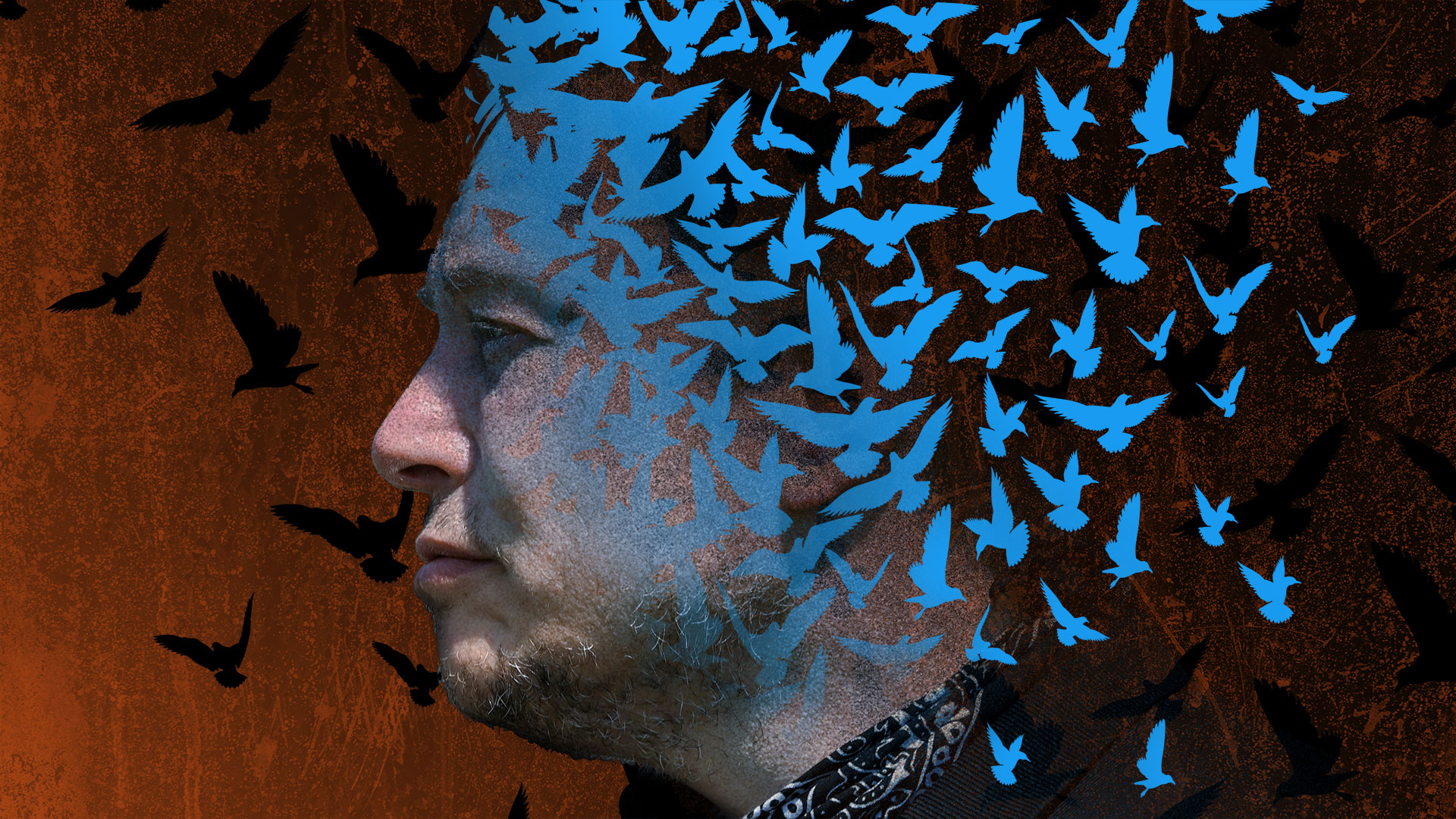
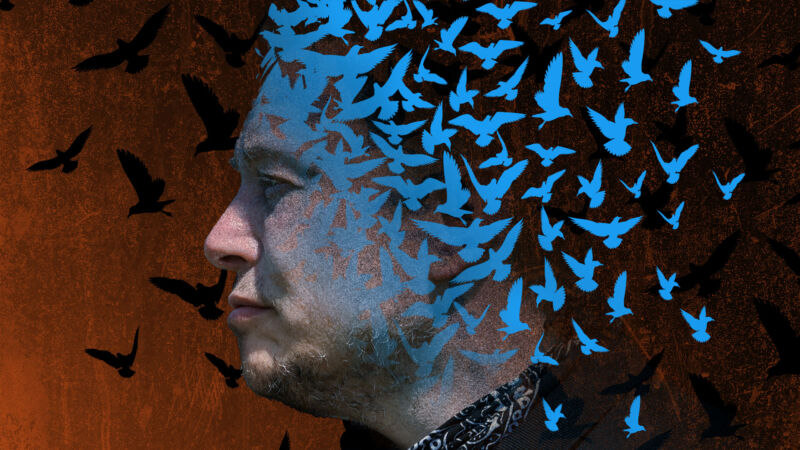
Illustration of Elon Musk surrounded by birds in the shape of Twitter's logo.

Enlarge (credit: Aurich Lawson | Patrick Pleul/dpa-Zentralbild/ZB)

Why did Elon Musk agree to buy Twitter again instead of continuing to argue his claims that Twitter violated the merger agreement by lying about bots? There are a few answers, but "the biggest one of all is that he's almost certain to lose [in Delaware Court of Chancery]. And of course, if he loses, he has to do exactly what he's just agreed to do, which is close the deal at the original price," law professor Robert Miller told Ars in a phone interview yesterday.

Miller is the F. Arnold Daum chair in corporate finance and law at the University of Iowa College of Law. "The Delaware Supreme Court and the Delaware Court of Chancery have cited Professor Miller's articles on material adverse effects, an issue the Court of Chancery has described as 'one of the most difficult issues under Delaware law,' more than forty times," his University of Iowa bio says. Musk's defense against Twitter's lawsuit depended heavily on whether he could prove that Twitter suffered a material adverse effect.

Musk tried to get out of the $44 billion deal by claiming that Twitter lied in its estimate that fewer than 5 percent of its monetizable daily active users (mDAU) are spam or fake. But his claims seemed to have no solid proof, and with the scheduled trial less than two weeks away, Miller says Musk probably finally realized his case likely isn't a winner.

Read 20 remaining paragraphs | Comments

05 Oct 14:18

Stadia Developers Blindsided By Shutdown

by Karl Bode

Last week we noted how Google’s streaming game service, Stadia, is finally being shut down. Google had initially tried deny the obvious last July when rumors began circulating that the company was preparing its exit strategy. This denial apparently resulted in many of the service’s own developers being left in the dark, given they were extremely surprised when the shutdown was actually announced.

Some developers had still been working on game releases for November, and had to find out that the service was being shut down from the news media:

“I woke up getting ready for my workday, and I see on our Discord private chat for the company that one of my employees sent a message saying ‘is this true?,’ with a link,” Rebecca Ann Heineman, CEO of Olde Skuul, said in an interview with The Verge. “I follow the link and it’s like ‘oh, okay.’” Olde Skuul had planned to launch Luxor Evolved on Stadia Pro on November 1st and was even planning to meet with Google on Friday to discuss the release plan.

Several developers say they were having normal conversations with Google as recently as last week, suggesting that the shutdown wasn’t particularly well coordinated. Developers who were working their game for other platforms can recoup costs, but several say they’re dealing with fairly significant losses since their games will only have a few month shelf life (Stadia formally shuts down January 18).

Meanwhile, gamers are also trying to figure out what to do with their soon-to-be paperweights. The Stadia game controllers are going to be useless junk unless Google opens up the Bluetooth functionality and makes them useable on PC. And some gamers with more than 6,000 hours in some titles are begging Google and developers to extend cross-platform cloud save capability.

While it’s great that Google is giving refunds for those who bought the hardware and games through the Google and Google Play stores, that Google couldn’t be bothered to inform its own developers that it was shutting the project down says plenty about why the project is shutting down.

05 Oct 12:38

The CDC Scientist Who Couldn’t Get Monkeypox Treatment

by by Anna Maria Barry-Jester, photography by Braylen Dion, special to ProPublica

by Anna Maria Barry-Jester, photography by Braylen Dion, special to ProPublica

ProPublica is a nonprofit newsroom that investigates abuses of power. Sign up to receive our biggest stories as soon as they’re published.

On a Monday morning in mid-July, William L. Jeffries IV decided it was time to call a colleague for help. Jeffries is a senior health scientist at the Centers for Disease Control and Prevention in Atlanta, where he researches the ways that racism and homophobia impact health in the United States. Jeffries, who describes himself as a same-gender-loving Black man, sees the work as a way to serve his people and, by extension, God.

This call, however, was a personal one. He was sitting on his bed in pain, and he was angry.

Jeffries was angry for the hundreds of people, mainly gay and bisexual men, who were infected with monkeypox. He was angry that the burden was falling particularly hard on Black and Latino communities. He was angry that the federal government had been saying for eight weeks that it had the tools necessary to deal with the growing outbreak yet people were still struggling to find care.

And he was angry because he himself now had monkeypox and couldn’t find anyone to diagnose or treat him.

Jeffries told his colleague, who was helping to lead the CDC’s monkeypox response, about his ordeal. He knew then that he was a victim of the very failures of the American public health system that he studies.

“I myself am a trained disease detective. I have led outbreak investigations for HIV and syphilis. I am a published scientist. And I know a lot about public health and infectious disease transmission,” Jeffries said. “I emphasize my training and my experience because if I had to go to three different places before I got diagnosed, imagine what the average gay man has to do?”

By the end of September, more than three-quarters of people diagnosed with monkeypox in Georgia were Black, and Georgia had the second-highest rate of cases among all U.S. states, trailing New York. As the outbreak has spread, the federal government has been forced to reckon with the disease’s disproportionate burden on Black communities around the country. Black people make up more than half of monkeypox cases nationally, even as they represent less than 14% of the U.S. population. More than 26,000 people have been infected nationwide.

CDC Director Rochelle Walensky recently acknowledged that she and other top public health officials anticipated these inequities; decades of tracking HIV and other infectious diseases made them predictable. Public health officials, who lost the trust of many Americans in the first two years of the COVID-19 pandemic, had a chance to show that they had learned from their mistakes when monkeypox hit. Yet what happened to Jeffries and others in Georgia in the early months of the outbreak shows how federal officials, who suspected that communities of color would get monkeypox at higher rates, failed to intervene in ways that could have prevented — or at least lessened — that suffering.

“A lot of people got hurt,” said Dr. David Holland, the chief clinical officer for the Board of Health in Fulton County, which covers 90% of Atlanta. He too is angry about the first months of the federal response. “You can debate what the right thing to do would have been, but doing nothing is not on that list. And that’s kind of what was done.”

A dozen infectious disease experts told ProPublica that the likely trajectory of the virus in the U.S. was obvious once reports surfaced in May saying that monkeypox had found its way into communities of gay and bisexual men in Europe. They knew then that while it would most likely spread first among wealthier, whiter communities, Black and Latino men would soon bear the brunt of the disease. They knew this because it is the path that many infectious diseases have traveled before.

The reasons why are not a mystery either. Among other things, Black people are less likely than white people to have a regular doctor, less likely to have insurance coverage and more likely to have HIV, diabetes and other diseases that generally put people at greater risk for new infections. White people are more likely to have benefits that can lessen the effects of illness, such as jobs that allow them to take paid sick leave and wealth that can buy them better care.

Federal and state officials nevertheless failed to make testing readily available, slow-walked the rollout of vaccines and didn’t make it clear during the first two months of the outbreak that people of color, like Jeffries, were at elevated risk for harm. Those missteps amplified long-standing health inequities.

“Any time you fumble the response to an epidemic it will cut through the weakest seams in your society,” said Dr. Jay Varma, a professor at Weill Cornell Medical College and former CDC official.

When Jeffries was 9 or 10 years old, his father shared with him a book from 1928 called “Leaders of the Colored Race in Alabama.” Inside was a photo of his great-grandfather and namesake, Dr. William L. Jeffries. Jeffries was blown away that in the early 20th century, a Black man could achieve the level of education — a doctorate in divinity — required to earn him the title of doctor. He said as much to his father, who responded that Jeffries could be a doctor, too. From that moment on, he knew he would follow in his great-grandfather’s footsteps. “I had to be Dr. Somebody,” Jeffries said. “That was just part of my destiny.”

He was interested in the health of communities, and so in 2004 he moved away from his home in Polk County, Florida, for the first time and entered a doctoral program in sociology at the University of Florida. In his first year, he remembers a professor explaining how the CDC responds to infectious disease outbreaks. The professor described disease investigators as the “cream of the crop.” For Jeffries, this was an epiphany: “Immediately, I just knew that was what I was supposed to be.”

Four years later, with a Ph.D. in hand and a Dr. in front of his name, Jeffries entered the CDC’s Epidemic Intelligence Service. There, he trained to be a disease investigator like the ones his professor had told him about. It was the only job he applied for. Jeffries has been with the CDC ever since.

Now 42, Jeffries is a senior health scientist in the Office of Health Equity in the Division of HIV Prevention. He investigates the factors that place vulnerable populations at risk for HIV and other diseases. On average, gay and bisexual Black men have fewer sexual partners than their white counterparts and are more likely to use condoms, and yet Black men have six times the rate of HIV. White people get earlier and better access to new treatments and prevention. Many Southern states have not expanded Medicaid to offer insurance coverage for all impoverished adults, leaving people there less likely to have a doctor and worse off when they do get sick.

“God has had me be here to fight for the oppressed and to be a voice for those who, in many instances in our society, do not have a voice that can be heard by people in positions of power,” Jeffries said. “And my voice is what I use to serve those who Jesus called the least of these among us.”

Jeffries understands that he is in important ways one and the same with the people he researches, and he knows what that means for his vulnerability to disease. So when reports of monkeypox began surfacing, he kept an eye on it. He understood himself to be at risk and wanted to get vaccinated because he knew that, unlike with HIV, condoms do not prevent transmission of monkeypox. He also knew the vaccine wasn’t available in Atlanta yet. At the same time, the risk seemed distant. Government officials said there were only a couple dozen cases in metro Atlanta — a city of over 6 million people — and they made it sound like they had the situation under control.

Jeffries knows when he got monkeypox. It was during a sexual encounter in the early hours of Saturday, July 9. Later that same day, Fulton County Board of Health staff finally held its first monkeypox vaccine clinic.

By Sunday night, Jeffries felt some itching and irritation. A couple days after that, he had a fever, chills and sores around his anus. So on Friday, he went to an LGBTQ-friendly health clinic, told staff that he thought he might have monkeypox and asked for a test and vaccine. They had neither.

Instead, he said they tested him for a range of sexually transmitted diseases and treated him for a suspected case of chlamydia, though results later showed he didn’t have any of those diseases. Jeffries was surprised that in Atlanta, where there were already more than two dozen known monkeypox cases, the clinic couldn’t test him for it. More than eight weeks had passed since the first case was diagnosed in the U.S., and testing was supposed to be widely available.

Frustrated, he went home and isolated from other people. The pain kept growing worse, so late on a Saturday night he sought comfort in an epsom-salt bath and lingered in the warm water until just after midnight. As he was getting out, he noticed a lesion on his chest, close to his left shoulder. Confused, he reached for an itch on his back and felt another bump. He looked down and there was another lower on his torso. They were spreading so fast.

The next morning, Jeffries lay in his bed, uncomfortable and exhausted, and prayed. He knew it was time to go to the emergency room.

He thought his best bet would be a hospital attached to a university, as they tend to have more up-to-date knowledge and connections to public health departments. And he knew just the place: Emory University’s renowned teaching hospital on Clifton Road, a stone’s throw from CDC headquarters. “Atlanta is this hub for Black, gay and bisexual men, and the CDC is right here. Surely, these factors would converge to lead you to have vaccine and treatment available,” Jeffries recalled thinking.

But at Emory it was more of the same. The ER doctor, Jeffries said, knew nothing about monkeypox. Jeffries said he brought a list of the two vaccines and four possible treatments, pulled from the CDC website, but the doctor didn’t know about any of them and, regardless, said they were not available at Emory.

The ER doctor, Jeffries said, swabbed one of his lesions to test it for the monkeypox virus. Jeffries couldn’t understand why the hospital didn’t send in an infectious disease specialist. The hospital, he said, sent him home with prescriptions for ibuprofen and a steroid foam.

And so, the following morning, in severe pain, he called a trusted CDC colleague, Dr. John Brooks. Brooks usually serves as the chief medical officer for HIV prevention but is currently helping to lead the nation’s monkeypox response. Jeffries was desperate to find treatment and thought Brooks could help. He also wanted Brooks to know just how bad the situation was. “I knew that gay and bisexual men in Fulton County, irrespective of their race, were going to be placed at harm because of the overall ignorance, the blundering and the lack of resources,” Jeffries said.

When Jeffries made that call, the U.S. was nearly nine weeks into the monkeypox outbreak. Officials from the White House and the Department of Health and Human Services assured the public that they were responding in full force and had all the necessary tools — a test, a treatment and a vaccine. But they showed little urgency to use them.

Take the vaccine. Concerned that terrorists may use smallpox as a weapon to attack the U.S., federal officials invested nearly $2 billion in the development and manufacturing of the Jynneos vaccine to safeguard against that threat. In 2019, the Food and Drug Administration approved that vaccine for use against both smallpox and monkeypox, which are in the same family of viruses, and health officials keep doses in the Strategic National Stockpile.

But they had a very limited supply when cases first appeared in the U.S. in mid-May. In the preceding years, as hundreds of thousands of doses expired, they waited to order more, holding out for a different preparation of the vaccine with a longer shelf life, as The New York Times previously reported. The 372,000 doses that were ready in vials were mostly in Denmark.

In late May, officials at the Biomedical Advanced Research and Development Authority, the arm of the federal government that develops and procures drugs and vaccines to safeguard against pandemics and other hazards, placed orders for 72,000 doses. “We are prepared with both the vaccines and antivirals needed to protect the American people,” Dawn O’Connell, the HHS assistant secretary for preparedness and response, wrote in a blog post on May 24.

Three weeks later, O’Connell wrote that those 72,000 vaccine doses were in the federal government’s “immediate inventory.” Two more weeks passed, and HHS announced it would make 56,000 doses “available immediately.”

By then, it was the end of June, and Atlanta hadn’t held a single vaccine drive.

That wasn’t for lack of trying. With cases climbing in June and Georgians waiting for their first allotment of vaccines, Holland, the chief clinical officer for Fulton County’s Board of Health, made an official request for ACAM2000, an older vaccine made to ward off smallpox. It’s been available by the millions since 2008, when it was added to the Strategic National Stockpile, before the newer Jynneos vaccine existed. But the older vaccine can cause side effects, making it unsafe to use for many people, including those who are pregnant, have HIV, have weakened immune systems or have various skin conditions.

Federal officials said states could order ACAM2000, but they didn’t exactly endorse it. Holland said Georgia officials turned down his request. He understands the concerns and respects the decision not to use ACAM2000. But he’s frustrated that in the first months, it felt like the answer to every effort at prevention was just “no.”

In a written statement, Nancy Nydam, a spokesperson for the Georgia Department of Public Health, referenced the many potential side effects of ACAM2000 and noted that no other jurisdiction has used that vaccine during the monkeypox outbreak.

When Fulton County finally received its long-awaited shipment of vaccines in July, it included enough for just 200 people. More dribbled in over the weeks that followed.

By comparison, Canadian officials began vaccinating at-risk people in early June. In Montreal alone, officials vaccinated more than 15,300 people through the end of July, according to data provided to ProPublica by the city’s health department. A friend of Jeffries’ was able to get vaccinated at an outdoor walk-up clinic in Montreal’s Gay Village neighborhood on Aug. 1 while he was in the city for the International AIDS Conference. The health workers didn’t care that he wasn’t Canadian.

“We know we live in a global village. We thought making no barriers was the most effective strategy,” said Dr. Genevieve Bergeron of the Montreal public health department.

Georgia currently has more than two and a half times the number of monkeypox cases per capita as Quebec, the province where Montreal is located.

“The thing that is most galling to me is that this was predictable,” said Greg Millett, a former CDC researcher and current vice president and director of public policy at amfAR, a nonprofit dedicated to AIDS research and advocacy. Around the time Jeffries was infected and Atlanta held its first vaccine clinic, there were about 700 known cases in the U.S., nearly all among gay and bisexual men, and the cases were growing exponentially. And yet, Millett said, the U.S. was dragging its feet. To Millett, it’s hard not to see homophobia and racism as an underlying reason. “If this was another population, would they have moved this slowly?”

Within an hour of calling his colleague on July 18, Jeffries got a same-day appointment with Dr. Kimberly Workowski, an infectious diseases specialist at Emory University. She also helps write the treatment guidelines for sexually transmitted diseases at the CDC. In an Emory exam room, Workowski donned protective equipment — goggles, gloves, masks and gowns — to examine Jeffries.

The lesions definitely looked like monkeypox, Workowski told him. She gave him an hourlong work-up, checking his body and talking through his symptoms. He’d had bad experiences with the medical system before, like the time he went in for routine testing and a doctor told him he shouldn’t have sex with other men because that’s how you get sexually transmitted diseases. So he didn’t take it for granted that she was treating him with dignity.

Jeffries said she told him that in the ER, they only swabbed one lesion when they were supposed to swab two or three and that regardless, the sample could not be located. Jeffries was aghast. Workowski counted his lesions and swabbed several of them for a new test, which would ultimately come back as positive.

A spokesperson for Emory Healthcare did not answer questions about Jeffries’ care. (Jeffries signed a privacy waiver to allow Emory to discuss the care he received in the emergency room on July 17.) In a written statement, the spokesperson said Emory Healthcare remains “steadfast in providing excellent and equitable health care to all of our patients.” Emory’s emergency departments follow a standard protocol for suspected monkeypox infections that “includes triage, testing and if necessary, referral to a specialist,” she wrote. “If needed, patients will be admitted to the hospital.”

The day after Jeffries saw Workowski, her office called to tell him that an experimental antiviral drug known as TPOXX was ready for him to pick up.

Once he started on the medicine, the lesions quickly stopped growing and spreading. But the sores and inflammation in the lining of his rectum were causing the worst pain he’s ever experienced, so bad that he couldn’t sleep. Five days after his first trip to the emergency room, he drove himself to a different Emory ER, this one in Midtown, which quickly admitted him. He spent the next four days in the hospital on a cocktail of medications that finally dulled his pain.

He was in isolation but felt less alone than he had in days. The doctor leading his care put her hand on him while they talked and asked how he was doing. Staff chatted with him about his life outside of monkeypox. He knew the hospital was busy, but no one ever seemed rushed. “They took the time to talk to me and make me feel OK,” he said.

At that point, physicians wishing to give TPOXX to patients had to fill out over 100 pages of paperwork. The medication was initially developed by the federal government, and the U.S. holds more than 1.7 million doses in its stockpile. The treatment has been approved for monkeypox in Europe, but it is available only as an experimental drug in the U.S. In August, the CDC slimmed down its paperwork, but even today, it can take more than an hour to fill it out and TPOXX has been hard to get.

Through the end of June, HHS officials had sent out enough medicine to treat 300 people nationally. From around the time of Jeffries’ hospitalization in late July through the end of August, physicians in Georgia handed out just over 600 courses of the treatment, according to data provided to ProPublica by the Georgia Department of Public Health. That would have been enough to cover just half of the people diagnosed during that time.

The Georgia Department of Public Health did not provide data on the race and ethnicity of TPOXX recipients. But nationally, as of Sept. 28, white people make up 28% of cases and have received 34% of the courses of treatment, according to preliminary data released by the CDC. The share that went to white people during the early months of the outbreak was even higher, according to CDC research.

Jeffries feels certain he could have avoided the worst of his pain and his time in the hospital if he had received treatment sooner.

When Jeffries got out of the hospital, he called friends and colleagues. Georgia — especially its Black and queer communities — needed more resources. He wanted people to know how bad it was and that things shouldn’t be this way.

He phoned Justin Smith, his friend who was able to get vaccinated at the AIDS conference in Montreal. The director of the Campaign to End AIDS at a group of HIV clinics in the Atlanta area, Smith had helped organize a virtual town hall with other activists.

There, Joshua O’Neal, the sexual health program director for the Fulton County Board of Health, told attendees that it was OK to be angry about the government’s response so far, that he sure was. O’Neal shared alarming statistics: Cases of monkeypox in Fulton County had nearly doubled in the three days before the event, and more than half of the people there with monkeypox also had HIV. Of the people with both viruses, 80% were Black. “It is our responsibility to ensure that those folks are the ones we’re reaching out to,” he told the group.

O’Neal acknowledged that the scant appointments for the first two vaccine clinics were gone within minutes and that most who got them were white. Going forward, he vowed to partner with community organizations to get them out more equitably.

On Aug. 4, 10 days after Jeffries got out of the hospital, the Biden administration declared a public health emergency. When that happened, as Margo Snipe reported for Capital B, a nonprofit news site for Black communities, officials made no mention of the growing racial and ethnic disparities.

Jeffries was encouraged, though, that the White House appointed Dr. Demetre Daskalakis, the head of the CDC HIV division where Jeffries works, to a top position on its monkeypox response team. Jeffries knows him and says he strongly believes that Daskalakis is committed to getting the disparities in check. The White House declined to make Daskalakis available for an interview and suggested ProPublica contact the CDC instead.

The CDC declined to make Walensky, its director, available for an interview. Walensky’s deputy press secretary referred a reporter to Walensky’s comments at a White House briefing on Sept. 15. “It is critical that education, vaccinations, testing and treatment are equally accessible to all populations, but especially those most affected” by the monkeypox outbreak, Walensky said. “CDC remains committed to collaborating with jurisdictions to reduce health disparities.”

A different CDC spokesperson, Kevin Griffis, followed up and said that the agency appointed an equity officer to its response team in May and did outreach to LGBTQ groups in the weeks that followed. On its website in early June, the CDC first published guidance for ways to avoid getting monkeypox and has been updating it ever since. “This was an issue that Dr. Walensky and Dr. Daskalakis both talked about really as part of essentially every discussion that would be had about the outbreak: ensuring that we were doing everything we can to reach diverse populations,” Griffis said.

By early September, the spread of new cases began slowing in much of the U.S. Experts largely credit that decline to behavior change among queer men. In an August survey, gay and bisexual men reported changing their sexual practices to protect themselves. It’s too soon to say whether vaccine drives, which were ramped up at the end of August, are playing a role, experts say. In an effort to understand potential treatments, federal officials began recruiting monkeypox patients for a clinical trial of TPOXX. And O’Connell, of HHS, told a Senate committee on Sept. 14 that she had made more than 1.1 million vials of Jynneos vaccine available to health departments.

The Fulton County Board of Health made good on its promise and partnered with various community organizations to get the word out to the Black community. As of Sept. 15, more than half of the first doses of the vaccine have gone to Black people, according to a county report. Nydam, the Georgia Department of Public Health spokesperson, wrote that the state worked with federal officials to give out more than 4,000 doses at Atlanta’s Black Pride festival on Labor Day weekend.

“High demand and limited vaccine supply created access challenges for vaccines in general during the early weeks of the response, but the partnerships with community-based organizations greatly helped us with addressing health disparities in our vaccine roll out,” Nydam wrote.

Still, Congress has not designated any money for the monkeypox response. The vaccine and TPOXX are provided for free, but Fulton County has had to use its STD budget to run its vaccine clinics. “We’re spending our entire STD budget for the year and hoping that at some point the federal government will reimburse us,” Holland said. That’s money that also needs to be used for the simultaneous epidemics of HIV and syphilis, both of which disproportionately harm Black men and women.

While the spread of monkeypox is slowing, Black Americans represent a growing share of the overall cases — from 37% on Aug. 28 to 51% of all cases just three weeks later, according to the most recent data available.

Jeffries is still dealing with complications from monkeypox. But his bigger concern, one he shares with many in the HIV prevention community, is that Black LGBTQ people will be left dealing with monkeypox infections even if it largely disappears from the rest of the population. That’s another pattern they have seen many times before.

Thinking about what should have been done differently in those early months, it’s clear to Jeffries that everything the federal government has done since August should have happened much sooner. That could have prevented a lot of harm.

But his work also tells him that stopping these predictable patterns altogether will require dealing with the racism, homophobia and economic inequality at the root of so many health disparities. Lately he’s been thinking about a lesson his grandfather taught him when he was young.

Jeffries’ grandfather worked 12 hours a day, six days a week in Florida’s citrus groves, and he was still poor. He kept a garden to feed the family, and he sometimes took Jeffries with him to teach him how to farm. One day Jeffries was pulling at the weeds, snapping them off at the top. His grandfather stopped him.

“That ain’t how you do it, baby,” his grandfather told him. “You’ve got to get it by the root. Because if you don’t get it by the root, it’ll grow back.”

Do You Have a Tip for ProPublica? Help Us Do Journalism.
04 Oct 18:37

Nest Wifi Pro brings 6E network, removes Assistant and backward compatibility

by Kevin Purdy
Nest Wifi Pro units in four colors (pink, white, blue-gray, light yellow) lined up.

Enlarge / The four Nest Wifi Pro colors you can buy for your bird's-egg-style connectivity. From left: Linen, Snow, Fog, Lemongrass. (credit: Google)

Google's Nest Wifi Pro system, previously seen at the Federal Communications Commission and in accidental retail listings, has been made official. The system expands the wireless powers of a Nest mesh system and adds Thread and Matter support, but it can't work with older Nest Wifi hardware.

The big upgrade in the Pro system is Wi-Fi 6E, which makes use of newer spectrum space in the 6–7 GHz band, along with the common 2.4 and 5 GHz bands. For those living in a crowded Wi-Fi environment, 6E could mean better, faster connections, though at reduced range and with less wall and floor penetration than 2.4 GHz. If you have very new devices that work with Wi-Fi 6E, you'll immediately see the change. For most of us, at the moment, 6E is more future-proofing than signal-boosting, though each device that uses the newer standard takes some load off the network.

Google says that Nest Wifi Pro's router unit ($199) can cover up to 2,200 square feet per piece, which is 200 questionable feet more than the Eero Pro 6E and has a theoretical top speed of 5.4Gbps. Notably, each Wifi Pro piece comes with two 1 Gbps Ethernet ports, not just the router, allowing for both wired backhaul between multiple units and for connecting select devices via Ethernet (likely with the addition of a network switch). That's an improvement over the prior Wi-Fi 5-based Nest Wifi, which was an otherwise all-around decent performer in our benchmark testing.

Read 5 remaining paragraphs | Comments

04 Oct 17:25

The Pixel 4 hits end of life after three years of service

by Ron Amadeo
  • The Pixel 4 XL. [credit: Ron Amadeo ]

The Pixel 4 is officially hitting its end of life this month after three short years of service. We sometimes see these dead Google phones get one more wrap-up update before Google cuts the cord, but the Android October 2022 update is the end of the line here.

The Pixel 4 was a big batch of Google experiments passed off as a consumer product, and we did not take kindly to it. It was the first (and only) Google phone to attempt to copy Apple's FaceID by using a grid of IR dots and extra hardware to scan the user's face. The system was much slower than the fingerprint reader on the Pixel 3, and it oddly worked on sleeping people for several months after launch.

The Pixel 4 was the first and only Google phone to integrate "Project Soli," a tiny Google radar chip that can detect motion. The laboratory versions of Soli promised that the technology could capture "sub millimeter motions of your fingers," but the commercial implementation in the Pixel 4 could only (sometimes) capture giant arm movements. Soli lives on in Google smart displays for sleep tracking, but the phone version is dead. Combine that with very high prices for the two device sizes ($800 and $900) and very small batteries (2800 mAh and 3700 mAh), and you have the makings of a very bad device.

Read 3 remaining paragraphs | Comments

04 Oct 17:24

Musk makes U-turn before trial, tells Twitter he’ll complete merger [Updated]

by Jon Brodkin
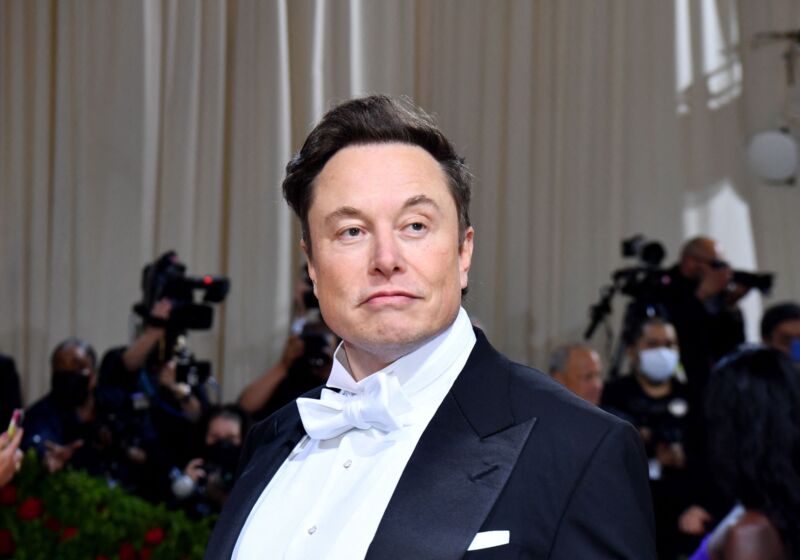
Elon Musk wearing a tuxedo as he arrives at the 2022 Met Gala.

Enlarge / Elon Musk arrives for the 2022 Met Gala at the Metropolitan Museum of Art on May 2, 2022, in New York. (credit: Getty Images | Angela Weiss)

Elon Musk has told Twitter he is once again willing to buy the company at the originally agreed-upon price, according to a Bloomberg News report.

"Elon Musk is proposing to buy Twitter Inc. for the original offer price of $54.20 a share... Musk made the proposal in a letter to Twitter, according to people familiar with the matter, who asked not to be identified discussing confidential information," Bloomberg wrote.

The Wall Street Journal subsequently reported that Musk's "lawyers communicated the proposal to Twitter's lawyers overnight Monday and filed a letter confidentially with the Delaware Chancery Court ahead of an emergency hearing on the matter scheduled for Tuesday."

Read 9 remaining paragraphs | Comments

04 Oct 17:23

The Wharf’s Phase Two Is Opening With Over 20 New Spots

by Mimi Montgomery

After three years, construction of The Wharf’s phase two is coming to a close. The $3.6 billion development, which turned a previously low-key stretch of Southwest waterfront best known for its fish market into a coveted live-work-play destination, initially debuted in 2017. While portions of phase two are still undergoing construction, the area will officially […]

The post The Wharf’s Phase Two Is Opening With Over 20 New Spots first appeared on Washingtonian.

01 Oct 17:57

Ken Paxton keeps running. Will his legal issues ever catch up?

by Nicole Narea
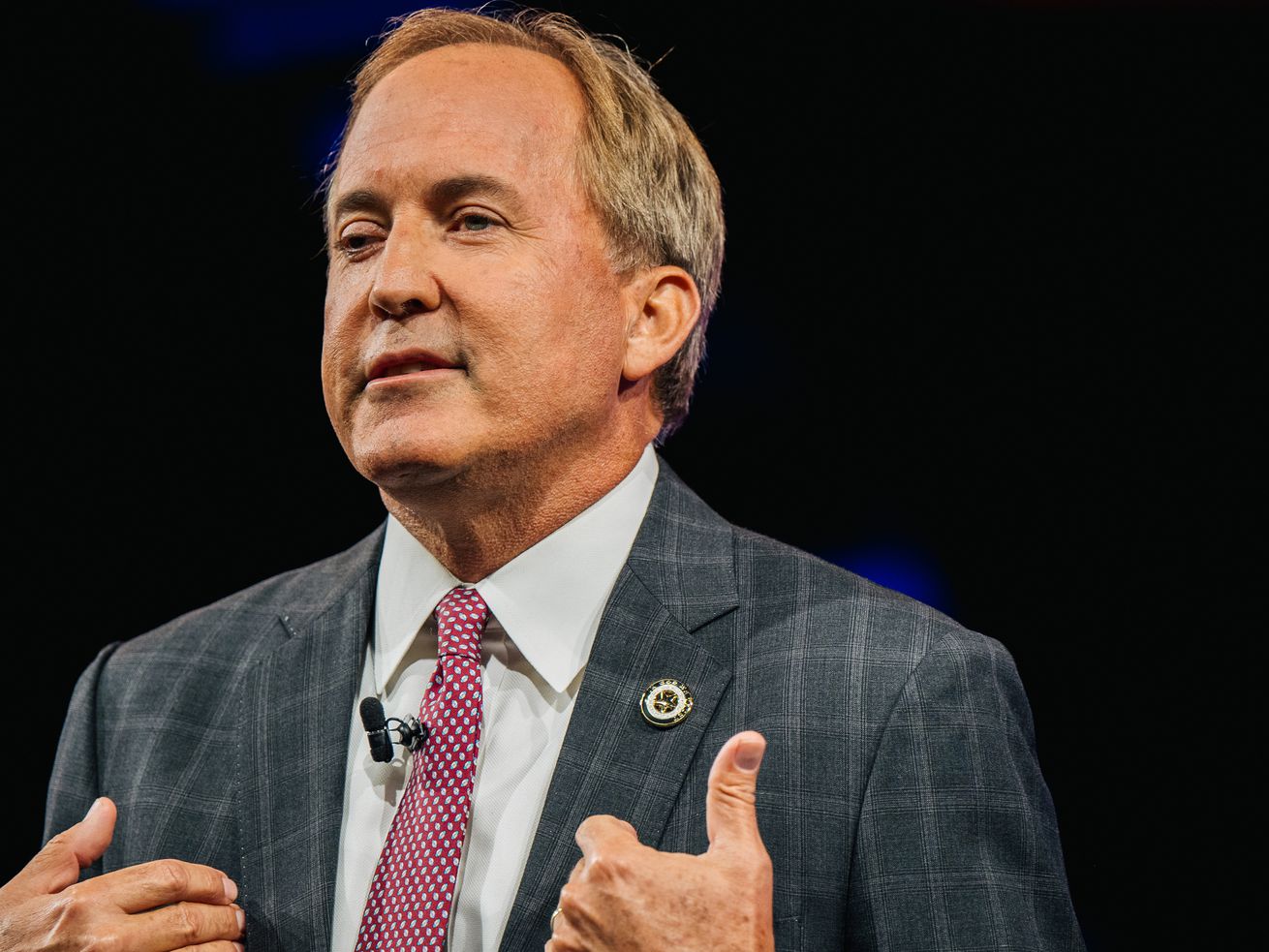
Texas Attorney General Ken Paxton speaks during the Conservative Political Action Conference (CPAC) on July 11, 2021, in Dallas, Texas.  | Brandon Bell/Getty Images

Texas voters will get to render a verdict before the courts do.

On Monday, the top legal authority in the state of Texas reportedly fled his own home rather than allow an official to serve him a subpoena.

According to an account from the man who served the subpoena, reported in the Texas Tribune, Texas Attorney General Ken Paxton appeared to try and wait out a process server with the subpoena for an hour in his home, then later ran away as the server approached him, and finally rode away in a truck driven by his wife as the server laid the documents on the ground.

Paxton’s lawyers have argued that he was simply intimidated and didn’t realize he was being served with a subpoena. And it certainly seems like the least of Paxton’s worries when it comes to legal entanglements. He’s also the subject of an FBI criminal probe into allegations of bribery, and in 2015, he was indicted and arrested on felony securities fraud charges, for which he has yet to go to trial.

No one should be above the law, especially not a state’s top prosecutor, but there’s no law barring him from continuing to serve in his position despite the allegations against him. Texas voters will get to render a verdict before the courts do, as Paxton is up for reelection in the November midterms.

After twice winning reelection, then surviving a primary fight this year despite his legal baggage, it seemed as though Paxton was made of Teflon. He has continued to be an influential figure in the Republican Party, in Texas and nationally, often leading splashy, multi-state lawsuits against policies of the Obama and Biden administrations.

He might be more vulnerable this year, advancing from the Republican primary with only 43 percent of the vote (a tepid showing for an incumbent) despite securing former President Donald Trump’s endorsement. And he’s holding a thin lead over his Democratic challenger Rochelle Garza: 5 percentage points and 2 percentage points, according to recent polls by WFAA/Texas Hispanic Policy Foundation and the Dallas Morning News and the University of Texas at Tyler, respectively. Both polls showed at least 8 percent of voters were undecided.

Should Paxton prevail, it would suggest that, in a red state like Texas, being a Democrat is still a greater transgression than the litany of charges against him.

Here, we recap Paxton’s recent run-ins with, and runs away from, the law.

The securities fraud charges

In 2015, Paxton was accused by Byron Cook, a former Republican state legislator, and Florida businessman Joel Hochberg of encouraging them to invest $100,000 or more in a technology company called Servergy Inc., without notifying them that he would earn a commission if they did so. This is alleged to have happened in 2011, while Paxton was a member of the Texas House.

The indictment alleges that he “intentionally fail[ed] to disclose” that he had been given compensation in the form of 100,000 shares of Servergy stock, charging him with two counts of securities fraud. He was also charged with a failure to register with the state securities board.

Paxton has denied the allegations in the case, which is still making its way through the courts. It’s not clear why it’s taken so long, but disputes over where the case should be tried, compensation for special prosecutors, and pandemic-related delays have all contributed. Paxton’s lawyers have denied that the delays can be attributed to any kind of “improper influence” that he has sought to exert. If convicted, he could face five to 99 years in prison for each of the securities fraud charges and two to 10 years for failing to register, and he would likely lose his law license.

In a separate but related case, an associate of Paxton’s, Charles “Chip” Loper III, accused Cook and Hochberg of a scheme to profit off the investment funds of a mineral assets company Paxton represented before he was elected attorney general. Loper claimed that the scheme hurt him and his father financially.

Cook and Hochberg have argued that the Loper lawsuit was brought in retaliation to their allegations and that Paxton should instead be held accountable for the alleged harm. They successfully sought to have him added to the case as a “responsible third party,” and that means he will have to sit for a deposition scheduled just weeks after the November election in which he can also be asked questions relating to the Servergy case.

After seven years, there might soon be more movement in the securities fraud case — but not soon enough for voters to have answers ahead of the election.

The FBI investigation

In 2020, several of Paxton’s then-top aides requested that federal law enforcement authorities investigate Paxton, claiming he violated federal and state law by intervening to aid one of his top donors, real estate investor Nate Paul. The FBI later opened a criminal investigation examining those claims.

The aides asserted that Paxton tried to get state employees to release government records to Paul that should have been kept confidential, and that he issued a legal opinion that helped Paul avoid foreclosure sales on several of his properties during the pandemic. He also allegedly intervened in a lawsuit between Paul and an Austin-based charity, and hired an outside attorney to review claims from Paul that he had been mistreated during an FBI raid on his property in 2019, complaints Paxton’s staff had already reviewed and dismissed. In return for all this, the aides claim, Paxton got Paul’s help with a home remodel and with finding Paxton’s alleged mistress a job.

Paxton has said that he’s done nothing wrong and has accused the FBI of infiltrating his office. No criminal charges have been filed.

Three of the aides have resigned, and the remaining five were fired. They have since filed a whistleblower lawsuit claiming they were fired in retribution for reporting Paxton to federal authorities. Paxton has claimed that they were terminated for unrelated, legitimate reasons.

The skirted subpoena

Last month, after Texas’s near-total abortion ban went into effect, a group of abortion funds filed a lawsuit asking a federal judge to bar Paxton and other Texas prosecutors from using that law or any other statutes to target them for helping Texans travel out of state to get abortions. They asked him to testify at a hearing in the case on Tuesday.

To ensure that he would show up, they tried to serve him with two subpoenas at his home, one requiring him to testify in his official capacity and another in his personal capacity. But Paxton and his wife fled nearly an hour after a process server showed up at their doorstep on Monday.

His attorneys have said that he didn’t know that he was being served and that the couple left out of concern for their personal safety, since they didn’t know the “strange man” who tried to serve him. But court records indicate that attorneys representing the abortion funds had notified Paxton’s office ahead of time that they would subpoena the attorney general and that the server was at his doorstep.

The judge in the case has since slapped down the subpoena, though the abortion funds have asked the court to reconsider. There is as yet no ruling in the case.

29 Sep 22:18

Musk’s Pledge To Bring Starlink To Iran Didn’t Actually Do Anything. That Didn’t Stop The Hype Machine.

by Karl Bode

Despite Elon Musk’s disdain for the press, his legend wouldn’t exist without the media’s need to hyperventilate over every last thing that comes out of the billionaire’s mouth. We’re at the point where the dumbest offhand comment by Musk becomes its own three week news cycle (see the entire news cycle based on Musk’s comments on a baseless story about somebody cheating at chess with anal beads).

Of course it’s even worse if Musk says something that actually sounds important. Like when Musk recently proclaimed he’d be offering Starlink satellite broadband service in Iran in a heroic bid to help protesting Iranians avoid government surveillance and censorship. It was literally a two word tweet, but the claim, as usual, resulted in lots of ass kissing and a week long news cycle about how Musk was heroically helping Iranians.

But the announcement was hollow. Not that you’d know this by perusing press stories. Only a few outlets, like Al Jazeera and The Intercept, could be bothered to dig behind the claims to discover the announcement didn’t actually accomplish much of anything real.

Iran quickly banned the Starlink website, and the only way actual Iranians would be able to use the service is if somebody smuggled Starlink dishes (aka “terminals”) into the country in the middle of a massive wave of violent unrest, something that’s likely impossible at any real scale. There’s also the issue of no ground stations tying connectivity together in Iran:

Musk’s plan is further complicated by Starlink’s reliance on ground stations: communications facilities that allow the SpaceX satellites to plug into earthbound internet infrastructure from orbit. While upgraded Starlink satellites may no longer need these ground stations in the near future, the network of today still largely requires them to service a country as vast as Iran, said Humphreys, the University of Texas professor. Again, Iran is unlikely to approve the construction within its borders of satellite installations owned by an American defense contractor.

So even if Musk wanted to offer struggling Iranians broadband access they’re extremely unlikely to be able to get dishes. And even if they could get dishes, they probably couldn’t use them because the necessary infrastructure wasn’t in place. Of course Musk knew this. But Musk also knows that any random bullshit that comes out of his mouth creates several weeks of free press because the ad-based U.S. press has steadily devolved into a billionaire-coddling bullshit clickbait and controversy machine.

The Intercept found it didn’t take much for large swaths of the Internet to believe that the billionaire had dramatically changed things in Iran with a tweet. Musk fandom is often a fan fiction based community, where truth is fairly negotiable:

Implausibility hasn’t stopped Musk’s fans, either. One tweet from a senior fellow at the Atlantic Council purporting to document a Starlink dish already successfully secreted into Iran turned out to be a photo from 2020, belonging to an Idaho man who happened to have a Persian rug.

That’s not to say that Starlink can’t help people in countries where emergency connectivity is needed, such as in Ukraine. Or rural Kentucky (assuming they can afford the $710 first month bill). But it is to say that turning your brain off every single time Elon Musk opens his mouth because you’ve convinced yourself he’s some kind of deity is violently annoying to people still living in reality.

And while Musk loves to whine and cry about the unfairness of the press, his legend literally wouldn’t exist without the endless supply of clickbait-seeking editors who are completely uninterested in the actual truth behind any and every claim the man makes, whether it’s the capabilities of “full self driving” or Starlink’s potential.

29 Sep 22:16

Google kills Stadia, will refund game purchases

by Ron Amadeo
Google kills Stadia, will refund game purchases

Enlarge (credit: Aurich Lawson / Getty Images)

The moment everyone saw coming is finally happening. Google officially confirmed that it's killing Stadia, the company's troubled game-streaming service. Phil Harrison announced today in a blog post that Stadia "hasn't gained the traction with users that we expected so we’ve made the difficult decision to begin winding down our Stadia streaming service." Stadia will be laid to rest on January 18, 2023.

The good news is that the true Armageddon situation for Stadia customers is not happening. Google is issuing refunds, which will save dedicated Stadia players from potentially losing hundreds of dollars in unplayable games. The post says: "We will be refunding all Stadia hardware purchases made through the Google Store, and all game and add-on content purchases made through the Stadia store." That notably excludes payments to the "Stadia Pro" subscription service, and you won't get hardware refunds from non-Google Store purchases, but that's a pretty good deal. Existing Pro users will be able to play, free of charge, from now until the shutdown date. The controllers are still useful as wired USB controllers, and a campaign is already starting to get Google to unlock the Bluetooth connection.

Stadia's technology will live on as a Google Cloud product called "Immersive Stream for Games." Google has made some headway pitching the feature as a way to run games on underpowered devices, like Peloton fitness equipment.

Read 3 remaining paragraphs | Comments

28 Sep 17:36

Potential storm surge flooding map

by Nathan Yau

NOAA provides a map of potential flooding due to Hurricane Ian headed towards Florida. Red indicates greater than 9 feet of flooding above ground.

Tags: Florida, forecast, Hurricane Ian, NOAA

28 Sep 17:32

FCC advances plan to require blocking of spam texts from bogus numbers

by Jon Brodkin
A man viewing a text message with a

Enlarge (credit: Getty Images | B4LLS)

The Federal Communications Commission today released a plan to require mobile carriers to block a wide range of illegal text messages.

"In this Notice of Proposed Rulemaking (NPRM), we propose to require mobile wireless providers to block illegal text messages, building on our ongoing work to stop illegal and unwanted robocalls," the FCC order said. "Specifically, we propose to require mobile wireless providers to block texts, at the network level, that purport to be from invalid, unallocated, or unused numbers, and numbers on a Do-Not-Originate (DNO) list." These texts "are highly likely to be illegal," the FCC said.

The NPRM seeks public comment on the plan. Once the NPRM is published in the Federal Register, there will be 30 days for comments and another 15 days for reply comments. After that, the FCC can draft new requirements for mobile carriers and set up a final vote.

Read 15 remaining paragraphs | Comments

28 Sep 02:28

The unlikely allies who sank Joe Manchin’s energy deal

by Li Zhou
Sen. Joe Manchin speaks on energy permitting reform at the US Capitol on September 20. | Kevin Dietsch/Getty Images

Progressives and Republicans came together to shoot down a bill on permitting reforms.

In a surprising team-up, progressives and Republicans banded together to oppose a bill backed by Sen. Joe Manchin (D-WV) that would have loosened oil and gas permitting regulations, forcing lawmakers to drop the measure from a must-pass government funding package.

Following growing pressure from both groups, Manchin called for Senate Majority Leader Chuck Schumer to cut the permitting reforms from a short-term funding bill just before it was scheduled to go up for a vote on Tuesday.

Manchin said in a statement he didn’t want to put government funding at risk and added that “a failed vote on something as critical as comprehensive permitting reform only serves to embolden leaders like Putin who wish to see America fail.”

Because of the collective pushback from progressives and Republicans, the bill wouldn’t have had the 60 votes it needed to advance if permitting reform were left in the package. By removing it, lawmakers cleared the way for the funding bill to pass the Senate as well as the House, where many Democrats had also spoken out against the inclusion of this proposal.

This outcome is ultimately the result of both policy disagreements and personal grudges. While progressives were staunchly against the permitting measure due to environmental concerns, Republicans opposed it because they felt the bill didn’t relax restrictions enough. And in the wake of Manchin’s support for Democrats’ Inflation Reduction Act — which passed along party lines — Republicans were eager to prevent him from getting a win, despite their own interest in the same reforms.

In the end, their collective opposition was enough to remove the policy from consideration for now.

Why progressives opposed Manchin’s bill

Manchin’s permitting reforms were part of an agreement he originally made with Schumer earlier this year. In that deal, Manchin agreed to support the Inflation Reduction Act — a landmark health care and climate bill — and Schumer agreed to hold a vote on permitting reforms, which the West Virginia senator has long pushed for. Because the short-term funding bill must pass for the government to pay its bills, the plan was to attach the permitting reforms to this measure.

Manchin and other Democrats who’ve supported the deal have argued that streamlining the permitting process would mean that projects get completed more quickly and that the US would be able to accelerate its energy production. Additionally, the permitting bill would give the federal government more jurisdiction over electricity transmission projects across state lines, a provision that some Democrats argue would help improve the delivery of renewable energy.

The reforms that Manchin wanted, however, quickly garnered progressive pushback.

In particular, progressives argued that setting a two-year target for the completion of environmental reviews and reducing the time community members have to file legal challenges would have significantly weakened residents’ ability to protect their communities.

Manchin’s measure would have also guaranteed permit approvals for the Mountain Valley Pipeline, a natural gas pipeline running through West Virginia and Virginia, which has been blocked by the courts due to environmental impacts. This provision in particular was concerning for a number of Democrats, who saw the move as circumventing the courts’ decision to slow the development of the pipeline to the benefit of the energy companies involved in the project.

“Allowing a corporation that is unhappy about losing a case to strip jurisdiction away from the entire court that is handled the case is [unprecedented],” Sen. Tim Kaine (D-VA) previously told E&E News. “It would open the door for massive abuse and corruption, so I can’t support it.”

The Democratic senators opposing the plan joined more than 70 House members, led by Rep. Raúl Grijalva, who pushed House leadership to separate the permitting reforms legislation from the CR earlier this month. That message was echoed by Sen. Bernie Sanders (I-VT), who denounced the Manchin deal as a “giveaway to the fossil fuel industry.”

Republicans didn’t like Manchin’s permitting reform for other reasons

Separately, Republicans have expressed their own issues with Manchin’s legislation. Since multiple Democrats in addition to Sanders opposed the bill, Manchin would have needed more than 10 Republicans to support it for it to hit the 60-vote threshold required for passage. The GOP backing he received ultimately fell short, with just Sen. Shelley Moore Capito (R-WV) saying publicly that she would vote for the legislation.

As Politico reported, Senate Minority Leader Mitch McConnell was actively whipping lawmakers against voting for the Manchin bill, even though Republicans have long been eager to advance permitting reforms. Depriving Manchin of a win he’s sought for years, especially after he joined with Democrats for the party-line passage of the IRA, was a central issue at play.

“Given what Senator Manchin did on the reconciliation bill, [it’s] engendered a lot of bad blood,” Sen. John Cornyn (R-TX) previously told Politico.

It’s a dynamic that echoes past instances when legislators have opposed bills whose aims they support because they don’t want the other side to secure a success. Recently, for example, Republicans blocked a bill that helped expand health care access to veterans who were exposed to burn pits, even though they had approved a nearly identical one just weeks earlier. GOP lawmakers argued that they disagreed with the bill because of how the money in it would be allocated, while Democrats contended that it was because they were upset about the passage of the Inflation Reduction Act.

In addition to the personal issues involved, Republicans argued that they want more aggressive permitting legislation, which could further limit the environmental review process and exempt certain projects from scrutiny.

The uncertain future of the permitting reforms

This may not be the end of the fight over permitting reforms.

The current continuing resolution is expected to expire on December 16, and it’s possible that Manchin could push to hitch the measure onto the next funding bill. Congress is also set to consider the National Defense Authorization Act, another must-pass bill that lays out a budget for the US military; he could try to add it to that bill as well.

Progressives and Republicans have also urged consideration of their versions of permitting reforms, and it’s unclear if any future attempt at legislation would incorporate some of their demands.

Grijalva has sponsored the Environmental Justice for All Act, which would make health impacts a bigger consideration in the permitting process, for example. Republicans’ bill, meanwhile, seeks to curb the inspections that energy projects face. And senators like Kaine have said they’d be more open to the Manchin proposal if it did not include the provision greenlighting the Mountain Valley Pipeline.

For now, lawmakers are poised to move forward with a cleaner version of the CR, which would keep the government funded and contain another $12 billion in aid to Ukraine and $20 million to address the water crisis in Jackson, Mississippi. This legislation has bipartisan support and would help avert a government shutdown if passed in the coming days.

27 Sep 18:52

The Roomba j7+ learns to mop with a dramatic swing-arm setup

by Ron Amadeo
  • The Roombo Combo j7+. Sick spoiler, bro! Wait, that's a mop?! [credit: Roomba ]

iRobot—soon to be owned by Amazon—is announcing a flagship Roomba with a new feature: It can vacuum and mop simultaneously. Meet the Roomba Combo j7+, a $1,100 combo cleaning robot that ships on October 4.

iRobot is not doing a ground-up redesign of the j7+ series to add mop functionality. In fact, the update almost looks like a retrofit. The new j7 looks just like the old j7 with a camera in the front, a big dust bin in the back, and a bottom layout that is almost identical to the old bot. There's a new dust bin and... is that a rear spoiler?

The mop functionality lives on the top (yes, the top) of the j7+, which has a big rear cutout now. The top of this cutout is plastic, and the bottom is the wet mop pad, which is connected to the robot by two side arms. When it's time to do some mopping, a dramatic, Transformers-like transition occurs. Two flaps on the side of the Roomba open up, revealing that the top mop cutout is actually connected to the robot by a pair of swing arms. The cutout section on top of the robot is lifted up and swings down and under the robot in a big, 180-degree motion. Now you're dragging a wet mop pad across the floor with minimal changes to the layout of the j7+.

Read 6 remaining paragraphs | Comments

27 Sep 16:37

The universe is a dangerous place. NASA just showed it’s possible to defend Earth against it.

by Bryan Walsh
Asteroid moonlet Dimorphos as seen by the DART spacecraft 11 seconds before impact
The asteroid moonlet Dimorphos as seen by the DART spacecraft 11 seconds before impact. | NASA/Johns Hopkins APL

Humanity now has the beginnings of a true defense against asteroids.

At 7:14 EDT Monday night, something historic happened for the human species — and it took place more than 7 million miles from our planet.

NASA’s Double Asteroid Redirection Test (DART) spacecraft successfully collided with the asteroid moonlet Dimorphos, which circles the larger asteroid Didymos (hence the “double asteroid”). The 1,250-pound DART spacecraft hit the asteroid at approximately 14,760 mph — in the days to come, NASA scientists will pore over data to figure out how much Dimorphos’s momentum was changed by the collision, with initial estimates projecting that it moved 1 percent closer to Didymos.

So why is this a big deal? For one thing, successfully hitting an asteroid that is just 560 feet across — or about half the length of the Eiffel Tower — with a tiny spacecraft that was launched from Earth nearly a year ago is a triumph of extremely difficult astrophysics.

Up to the point of the collision, which was shown worldwide on NASA TV, mission controllers weren’t sure they would hit the target. So kudos to you, steely-eyed missilemen and women of the Johns Hopkins Applied Physics Laboratory (with help from NASA’s Jet Propulsion Laboratory)! You literally moved the sky!

Beyond the honor of our nation’s foremost space geeks, however, the DART mission represents the first time humanity has successfully shown that it might be able to directly protect itself from a major natural existential risk, which is about as consequential as you can get.

What once helped wipe the dinosaurs off the face of the Earth, and which might threaten us with extinction in the future, is now on watch. Humanity has the beginnings of a true planetary defense.

The universe is trying to kill you

Asteroids — should they happen to collide with your planet — can be very, very bad news.

About 66 million years ago, an asteroid that was between 6 and 10 miles wide slammed into the waters off the Yucatán Peninsula, near what is now Chicxulub, Mexico. The energy released by the resulting explosion had the force of 100 trillion tons of TNT, equivalent to 10 billion Hiroshima nuclear bombs. Mega-tsunamis swamped the surrounding coasts, and more than 1,000 cubic miles of vaporized rock were blown into the sky.

Thermal radiation from the hot air started fires around the globe. “It was like being inside an oven with the broiler on,” Brian Toon, an atmospheric researcher at the University of Colorado Boulder, told me for my book End Times: A Brief Guide to the End of the World.

A debris cloud filled with sulfur droplets suffused the atmosphere, blocking much of the sun’s heat and light from reaching the Earth’s surface. Global temperatures dropped by as much as 50 degrees Fahrenheit over land, and photosynthesis all but stopped.

All in all, it was a very, very bad day to be a dinosaur, or, for that matter, just about anything else living on Earth. More than 75 percent of the planet’s species would die out in the final — so far, at least — of the planet’s five great extinction events.

The good news is that asteroid collisions on the size and scale of Chicxulub are incredibly rare, and the chances of one happening in a given year, century, or millennia are very, very, very unlikely.

But they can happen, and even much smaller asteroids could do significant damage, especially if they hit near a heavily populated area. In 1908, a relatively small meteor, perhaps less than 100 feet in diameter, exploded over the Earth’s surface near Tunguska, Siberia. (Asteroids are asteroids when they’re in space orbiting the sun, meteors when they hit the Earth’s atmosphere — where most burn up as shooting stars — and meteorites should they make it to the surface.)

The energy released in the Tunguska explosion was equivalent to 15 megatons of TNT — 1,000 times more powerful than the Hiroshima bomb. The shock wave flattened trees over 830 square miles. Fortunately, then as now, trees are the main occupants of Siberia, but if a Tunguska-size meteor exploded over a city the size of New York, millions could die.

Once the geologists Walter Alvarez and his father Luis W. Alvarez in 1980 discovered the underwater Chicxulub impact crater and identified it as the likely culprit behind the dinosaurs’ extinction, it was clear that space impacts could pose an existential threat to life on Earth. In July 1994, astronomers witnessed the comet Shoemaker-Levy 9 collide with Jupiter, making a visible dent in the gas giant and driving home the danger of space objects.

As the astrophysicist Neil deGrasse Tyson once said, “The universe is a deadly place. At every opportunity, it’s trying to kill us.” Which raises the question: What are we going to do about it?

Watching the skies

Even before the Shoemaker-Levy 9 collision, concern about the threat posed by near-Earth objects (NEOs) like asteroids had begun to mount. In 1991, a House bill directed NASA to study impact risk and defense — how to track them and how to stop them.

But when then-Vice President Dan Quayle endorsed an idea for the federal government to buy telescopes to track potentially hazardous asteroids and use modified Strategic Defense Initiative antimissile weapons in orbit to destroy them, the concept was largely laughed off. (In defense of the critics, Quayle was considered a deeply unserious politician, though by today’s standards he’d basically be George Washington.)

The sight of Shoemaker-Levy 9 blowing a hole in the biggest, baddest planet in the solar system, however, had a sobering effect. In 1998 — not entirely coincidentally, the same year Hollywood went asteroid-wild with Deep Impact and ArmageddonNASA established its NEO Program and dramatically scaled up its participation in the Spaceguard Survey, which was tasked with discovering and tracking at least 90 percent of potentially hazardous NEOs larger than 1 kilometer (0.62 miles).

These were the rocks that could theoretically kill a city or even the human species if they were large enough — and if they hit at the right time and the right place.

Such planetary surveillance has been a resounding success. Scientists believe they have identified 95 percent of potentially dangerous NEOs, and none are on a collision course with Earth. (Because asteroids, like other heavenly bodies, follow predictable paths through space, their movement can be predicted with high accuracy decades into the future.)

But there’s always a small chance that we might miss a big one, and only about an estimated two-thirds of asteroids above 140 meters (459 feet) in size have been identified and tracked. Obviously we can’t move the Earth if one is discovered to be on a collision course. But Newtonian physics says if we could exert enough force on the asteroid, we could nudge it like a pool ball and move it out of the way. We just had to try.

The office of planetary defense

Enter the DART mission. NASA selected Dimorphos — which poses no threat to Earth — as a target because its tiny size made it possible that even a small spacecraft, if it were moving fast enough, could change its orbital trajectory.

(The bigger the asteroid, the more force you would need to exert on it. Which is something Hollywood doesn’t always get quite right — scientists once calculated that the bomb Bruce Willis and his brave band of roughnecks/astronauts used to blow up a Texas-size asteroid in Armageddon would have needed at least 50 billion megatons of kinetic energy, a billion times more powerful than the biggest nuclear bomb ever built. So Armageddon got that one wrong, along with the idea that it would be easier to teach oil drillers to be astronauts than astronauts to be oil drillers, which even Ben Affleck realized was a mistake.)

“We’re embarking on a new era of humankind, an era in which we potentially have the capability to protect ourselves from something like a dangerous, hazardous asteroid impact,” Lori Glaze, director of NASA’s Planetary Science Division, said after the successful mission.

There is a big difference between deflecting a 560-foot asteroid and one big enough to plausibly threaten humanity. DART, though, shows us that this method can work, which takes us one step closer to permanently retiring the risk of asteroids.

Humanity faces a rising number of existential threats, and unfortunately not all of them can be defeated by hitting something really, really hard. But at least we’ve demonstrated that with nothing more than watchfulness, math, and a SpaceX Falcon 9 rocket — oh, thanks, Elon Musk — we can protect ourselves from a universe that often seems to want us dead.

A version of this story was initially published in the Future Perfect newsletter. Sign up here to subscribe!

Correction, 1:50 pm: A previous version of this article misstated who led the DART mission. It was led by the Johns Hopkins Applied Physics Laboratory.

27 Sep 12:09

Elon Musk offers Iranians uncensored Internet access

by Financial Times
The Starlink satellite dish and router pictured next to each other.

Enlarge / The Starlink dish and router. (credit: Starlink)

Elon Musk’s Starlink has activated its satellite broadband service in Iran after the US allowed private companies to offer uncensored Internet access to the country amid protests that have caused more than 40 deaths.

The open Internet access follows Starlink’s activation in Ukraine earlier this year as that country’s communication networks were disrupted by Russia’s invasion.

Starlink is the first in a new generation of satellite networks operating in low Earth orbit that are designed to provide high-bandwidth Internet connections from space directly to individual users. Starlink users are able to bypass a country’s terrestrial communications networks, freeing them from Internet censorship.

Read 15 remaining paragraphs | Comments

27 Sep 12:08

Conservatives Loved Expanding The 1st Amendment To Corporations… Until Last Year. Wonder Why?

by Mike Masnick

Right after the 5th Circuit’s ruling on Texas’ HB 20 law on content moderation came out, I wrote up a long post going through the many, many oddities (and just flat out mistakes) of the ruling.

Since then, one thing that was bothering about this ruling was that it wasn’t just wrong on the law, wrong on the relevant precedents, and wrong on the 1st Amendment… but it literally went against the last few decades of how conservative Federalist Society judges have been expanding the 1st Amendment to cover more and more activity by organizations (which, contrary to popular opinion, I actually think has been mostly correct).

The Daily Beast asked me to write up an analysis of the 5th Circuit ruling, and one thing I focused on was just how blatantly basically the entire Republican ecosystem completely reversed on this issue over the last year and a half since Donald Trump got banned from Twitter. I mean, at a very direct level, Republicans insisted (falsely) that net neutrality was an attack on the “free speech rights” of internet providers, and that the very limited net neutrality rules that the FCC put in place were “the government takeover of the internet.” Yet they suddenly have no problem applying much more aggressive and 1st Amendment violative rules to edge providers that are nothing like internet service providers.

And while I kept hearing people say that the Dobbs ruling showed that the Supreme Court will now ignore precedent to get to the results it wants, there’s something different about the 5th Circuit’s ruling in the NetChoice case:

The cynical will point to things like the Supreme Court’s decision in Dobbs (which overturned Roe v. Wade) and note that we’ve entered an era of Calvinball jurisprudence—in which precedents are no longer an impediment to whatever endgame Federalist Society judges want. (The beloved comic strip Calvin and Hobbes introduced us to the concept of “Calvinball”—a sport in which the participants make up the rules as they go, never using the same rules twice.)

But in some ways this decision is even more ridiculous. There are pockets of the conservative world that have spent 50 years honing arguments to overturn Roe. The opposite is true when it comes to upending the First Amendment.

Indeed, the same forces that worked to overturn Roe spent nearly the same amount of time working to strengthen and expand judicial recognition of the First Amendment rights of companies—from allowing a baker to choose not to decorate a cake, to allowing companies to cite the First Amendment as a reason not to provide contraception as part of a health plan, and deciding that the First Amendment did not allow Congress to bar certain types of expenditures in support of political candidates.

No matter how you feel about Masterpiece Cakeshop, Hobby Lobby or Citizens United, all three were cases driven by conservative arguments that relied heavily on the fundamental position that the First Amendment barred restrictions on corporate expression, including the right to not be forced to endorse, enable, or support certain forms of expression.

I pointed out how Ken White had once noted that there just wasn’t a deep bench of conservative judges looking to take away 1st Amendment rights. And that actually held for a while:

As First Amendment lawyer Ken White noted back in the comparatively innocent days of November 2016, regarding Donald Trump’s call to open up our libel laws, “You can go shopping for judicial candidates whose writings or decisions suggest they will overturn Roe v. Wade, but it would be extremely difficult to find ones who would reliably overturn [key First Amendment precedents.]”

But, as if to just put a spotlight on their lack of actual principles, a huge part of the Republican establishment flipped on this point on a dime, solely to punish tech companies that they feel have become “too woke.” It’s almost as if they only support the 1st Amendment for those who ideologically agree with them.

I mean, Justice Clarence Thomas, who almost certainly will vote to uphold the 5th Circuit, will be doing a complete 180 on his concurrence in Masterpiece Cakeshop. In that one, he argued the Supreme Court should have gone even further to make it clear that forcing a baker to decorate a cake for a gay couple would violate the baker’s free speech, and dismissed the key cases the 5th Circuit relied on in the NetChoice case (FAIR and Pruneyard) as being wholly inapplicable, while highlighting the importance of Miami Herald v. Tornillo (the case that the 5th Circuit says is wholly different) on the 1st Amendment protecting the right for private operators to “exercise control over the messages” they send.

With Dobbs, everyone knew where it was going, because conservatives spent 50 years working up to it. But the 5th Circuit ruling lays bare how there are no principles among an unfortunately large segment of today’s Republicans in both statehouses and courts. It’s not about principles. It is entirely focused on punishing people they don’t like.

There’s a lot more in the Daily Beast piece, but I wanted to highlight that one element that hadn’t received as much attention.

27 Sep 12:00

$100 Monthly Metro Stipends Are One Step Closer to Becoming Reality

by Jessica Ruf

DC residents are one step closer to receiving a $100 Metro stipend each month. This afternoon, the DC Council’s Committee on Transportation and the Environment unanimously voted to advance a bill that would provide residents with $100 in Metro fare each month—essentially making public transit free, or nearly free, for a lot of people. According […]

The post $100 Monthly Metro Stipends Are One Step Closer to Becoming Reality first appeared on Washingtonian.

27 Sep 11:40

Amazon’s robots are getting closer to replacing human hands

by Jason Del Rey
A robot sorts and stacks bins at an Amazon fulfillment center in Eastvale on August 31, 2021. | Watchara Phomicinda/MediaNews Group/The Press-Enterprise via Getty Images

A new Amazon robot handles 1,000 items an hour.

In 2019, Amazon founder Jeff Bezos predicted that within a decade, robotic systems will be advanced enough to grasp items with the dexterity of a human hand. Three years later, Amazon looks to be making progress toward that goal.

A recent video published on the company’s science blog features a new “pinch-grasping” robot system that could one day do a lot of the work that humans in Amazon warehouses do today. Or, potentially, help workers do their jobs more easily.

The topic of warehouse automation is more relevant than ever in the retail and e-commerce industries, especially for Amazon, which is the largest online retailer and the second-largest private sector employer in the US. Recode reported in June that research conducted inside Amazon predicted that the company could run out of workers to hire in the US by 2024 if it did not execute a series of sweeping changes, including increasing automation in its warehouses.

At the same time, the company is facing the prospect of US workers starting to unionize after the victory by the Amazon Labor Union in the historic Staten Island vote, and another upcoming union election in October in Upstate New York. Labor activists have long speculated that Amazon might ramp up automation efforts in response to unionization activity.

In a statement provided by an Amazon spokesman, the company’s director of Robotics AI, Siddhartha Srinivasa, said: [W]e have an incredible opportunity to help advance the science of robotic manipulation in ways that meaningfully benefit our employees and our customers. Our investments in robotics and technology are helping make jobs in our facilities better, easier, and safer, as well as creating new career opportunities for our people.”

The robotic arm in question does not look as futuristic as you might imagine. The proof-of-concept machine uses an off-the-shelf metal pincher rather than some novel grasping device. But it can pick up a new item and deposit it on a metal chute every three seconds. At the rate it’s going in the video, Amazon says the robot could handle more than 1,000 items an hour, meaning it could pick and stow items at rates several times faster than a human worker could. From a box of crayons to a container of what looks like garlic powder to a whisk broom, each item is grasped and moved with no human direction. The robot utilizes multiple cameras to help it “see” the assortment of items in front of it, as well as machine learning to help it decide the best way to pick up a given item, and motion-planning algorithms to help the robot navigate the crowded scene without bumping or damaging any of the goods. Preliminary tests also found that the robot damages certain products at a much lower rate than other manipulation robots Amazon has tested.

The video and the robotic system in it were created late last year in a controlled lab test by Amazon technologists. This robot prototype can only move items weighing less than two pounds. In testing, the robot was asked to handle hundreds of different items in this weight group and successfully grasped and moved around 95 percent of them, according to Amazon spokesman Xavier Van Chau. On a larger scale, the two-pound weight restriction would still allow the robot to grasp a selection of items making up about half of Amazon’s total product assortment. But the company is working on grasping solutions that would be able to handle any and every type of item that could fit inside an Amazon box, perhaps by combining a pincher attachment with a popular suction method, and having the system trained to know which “hand” should be used for which item.

How long it will take for Amazon to create a single robot that can handle the vast majority of products is up for debate, but it’s a question of “when,” not “if.” And when the “when” becomes “now,” we’ll have an answer to one of the great unknowns of this era of automation: Will a new generation of warehouse robots that can grasp goods almost as well as human hands make work better or easier for the people doing these jobs? Or will the technological evolution eliminate the need for these workers and their jobs?

An Amazon spokesperson said the company is betting on the latter, based on the way it has utilized other types of robots in its warehouses up to now. In June, Amazon announced a prototype of a robotic system called Cardinal that lifts and sorts already-packaged orders and, the company claims, “reduces the risk of employee injuries by handling tasks that require lifting and turning of large or heavy packages or complicated packing in a confined space.” The company says it expects to introduce the system into an unspecified number of fulfillment centers in 2023. And last year, the company unveiled another robot arm that it calls Robin, which handles a similar task with lighter packages. Van Chau, the company spokesperson, declined to provide details on the deployment of either the Cardinal or Robin robots.

Amazon’s history in robotics dates back to when it bought a company called Kiva for $775 million. In the decade since, it has rolled out more than 500,000 roaming warehouse robots. During the same period, the company says it has hired more than a million workers and points to this fact to try to dispel the notion that warehouse advancements are leading to worker elimination.

“From the early days of the Kiva acquisition, our vision was never tied to a binary decision of people or technology,” the company said in a recent blog post. “Instead, it was about people and technology working safely and harmoniously together to deliver for our customers. That vision remains today.”

The Kiva robots did make some Amazon warehouse jobs easier. For those workers in picker or stower roles, robots now transport shelves to them at a stationary workstation, where they stand for 10 hours a day with padding beneath their feet. In Amazon’s pre-Kiva days, these workers would walk 10 to 20 miles a day, plucking merchandise from, or adding goods to, aisle after aisle of inventory shelves.

Kiva robots also brought downsides. Before the robots arrived, a picker might have had a goal to handle 100 items an hour; Amazon tripled those expectations when the robots, not the workers, did the traveling. And with the addition of robots, injury rates increased as workers were forced to move faster to keep up with higher quotas.

The tasks being completed by Amazon test robots like the “pinch-grasping” one in the new video potentially have more direct overlap with existing worker tasks. The robot, like an Amazon picker or stower, is retrieving a piece of merchandise from one location and moving it to another, as quickly as possible without damaging it. That said, while the robot prototype is picking items at a rate of more than 1,000 an hour — around triple the typical rate of human pickers in Amazon warehouses — it’s not an apples-to-apples comparison. Amazon pickers in warehouses with robots have to pull each item out of a cluttered shelving unit, and sometimes have to use a step stool to reach merchandise at the top. Similarly, Amazon stowers have to fit each piece of merchandise into an open space on the mobile shelving unit, versus the robot that is simply moving it from one open space to another. Van Chau, the Amazon spokesperson, said the prototype in the video was neither tested nor designed to pick items from shelves as workers do in the company’s current robotic warehouses.

Still, robotics experts are paying attention. Martin Ford, the author of multiple books about robotics including Rule of the Robots, said while it’s unclear how Amazon’s most recent robot prototype would perform in a high-volume warehouse, it still seems to show “remarkable progress.” With advancements like Amazon’s, as well as those of many well-funded startups building robotic systems to try to solve for challenge of grasping with the dexterity of humans, “it’s inevitable that the problem will be solved — perhaps sooner than many of us expect,” Ford told Recode.

“And once that happens,” Ford added, “there’s little doubt that Amazon warehouses, as well as many other environments, are going to become a lot less labor intensive.”

Amazon maintains that robots and people will continue to work together inside its warehouses. But robotics experts say that one day, the company may have a real option to depend on robots to do a lot of the work it currently depends on human employees to do.

24 Sep 01:09

Google will start assimilating Fitbit accounts next year

by Ron Amadeo
The word

Enlarge (credit: Aurich Lawson / Getty Images)

Google's acquisition of Fitbit closed in early 2021, but we haven't seen much in the way of changes yet. 9to5Google spotted a big upcoming change posted on Fitbit's help site: account migrations! A new Fitbit help page has outlined the plan for the coming Google account migration. If this goes anything like the Nest account migrations (done by the same Google Hardware division), Fitbit users are in for a wild ride.

Google's support page says, "We plan to enable use of Fitbit with a Google account sometime in 2023" and that at that point "some uses of Fitbit will require a Google account, including to sign up for Fitbit or activate newly released Fitbit devices and features." That means optional account migrations for existing users in 2023. Google also says, "Support of Fitbit accounts will continue until at least early 2025. After support of Fitbit accounts ends, a Google account will be required to use Fitbit. We'll be transparent with our customers about the timeline for ending Fitbit accounts through notices within the Fitbit app, by email, and in help articles."

The merging of accounts will, of course, mean that Google gets your health data. Google says that "you’ll need to consent to transfer your Fitbit user data from Fitbit to Google" and that "Google will then provide you with Fitbit under Google’s Terms of ServicePrivacy Policy, and binding commitments for Fitbit." Part of those EU commitments, which Google chose to apply to the whole world, is that "Google will not use Fitbit health and wellness data for Google Ads."

Read 5 remaining paragraphs | Comments

22 Sep 19:09

The new Chromecast is official: It’s $30, runs Google TV, and has a remote

by Ron Amadeo
The new HD Chromecast. It only comes in white.

Enlarge / The new HD Chromecast. It only comes in white. (credit: Google)

Google's 4-year-old base-model Chromecast is getting a big upgrade. Today, Google made that rumored Google TV pivot official and introduced the "Chromecast with Google TV (HD)." The original 4K, $49.99 version of the Chromecast with Google TV was announced in 2020, and now when you go to check out in the Google Store, there's a "screen resolution" option for "4K" (still $49.99) or the new "HD" version for $29.99.

So that's one store listing with two different sizes, which communicates that these two devices have only minor differences. They look the same, they have the same remote, and they run the same software. Google TV is Google's new version of Android TV and represents a major upgrade in capabilities for the Chromecast. The initial versions were dead-simple streaming sticks that were only able to receive content from a phone and had no UI themselves. The Chromecast with Google TV is a full TV OS, with a home screen, Play Store access, user accounts, and scrolling lists of apps, games, and content. If you aren't interested in any of that, the Google TV still acts exactly like the Chromecast did when you press a Chromecast button in an app. It can still receive a media stream, turn on the TV, and start playing, all without needing to find the remote.

Just like the 4K version, the HD Chromecast with Google TV supports 802.11ac (aka Wi-Fi 5) and uses a USB-C port for power. Google hasn't posted a full spec sheet but confirms the dongle only has 1.5GB of RAM, while the 4K version has 2GB. Earlier reports of this indicated that it used an Amlogic S805X2 SoC (12 nm, four Cortex A35 cores), which would give it the interesting wrinkle of supporting Google's new AV1 video codec, something that is missing from the 4K version.

Read 2 remaining paragraphs | Comments

22 Sep 11:27

NTSB wants alcohol detection systems installed in all new cars in US

by Jon Brodkin
Interior view of a car driving through a tunnel while the driver holds a beer in his left hand, which rests on the steering wheel.

Enlarge (credit: Getty Images | rolfo)

The US National Transportation Safety Board (NTSB) yesterday recommended that all new vehicles be equipped with alcohol detection systems that can stop people from driving while drunk.

The NTSB can't issue such a regulation on its own but urged the National Highway Traffic Safety Administration (NHTSA) to do so. The NTSB said it "is recommending measures leveraging new in-vehicle technologies that can limit or prohibit impaired drivers from operating their vehicles as well as technologies to prevent speeding."

If adopted, this would require "passive vehicle-integrated alcohol impairment detection systems, advanced driver monitoring systems or a combination of the two that would be capable of preventing or limiting vehicle operation if it detects driver impairment by alcohol," the NTSB said. The agency urged the NHTSA to "require all new vehicles to be equipped with such systems."

Read 17 remaining paragraphs | Comments

21 Sep 17:41

Metro Will Soon Stop at New Silver Line Stations—Without Passengers

by Luke Mullins

More than eight years after the first portion of Metro’s Silver Line opened for service, railcars will finally begin running to new six new stops in early October. One caveat: There won’t be any passengers onboard. The initial rides on the Silver Line’s new stretch are simply a test, designed to ensure the rail system meets safety […]

The post Metro Will Soon Stop at New Silver Line Stations—Without Passengers first appeared on Washingtonian.

21 Sep 16:38

Artist finds private medical record photos in popular AI training data set

by Benj Edwards
Censored medical images found in the LAION-5B data set used to train AI. The black bars and distortion have been added.

Enlarge / Censored medical images found in the LAION-5B data set used to train AI. The black bars and distortion have been added. (credit: Ars Technica)

Late last week, a California-based AI artist who goes by the name Lapine discovered private medical record photos taken by her doctor in 2013 referenced in the LAION-5B image set, which is a scrape of publicly available images on the web. AI researchers download a subset of that data to train AI image synthesis models such as Stable Diffusion and Google Imagen.

Lapine discovered her medical photos on a site called Have I Been Trained, which lets artists see if their work is in the LAION-5B data set. Instead of doing a text search on the site, Lapine uploaded a recent photo of herself using the site's reverse image search feature. She was surprised to discover a set of two before-and-after medical photos of her face, which had only been authorized for private use by her doctor, as reflected in an authorization form Lapine tweeted and also provided to Ars.

Lapine has a genetic condition called Dyskeratosis Congenita. "It affects everything from my skin to my bones and teeth," Lapine told Ars Technica in an interview. "In 2013, I underwent a small set of procedures to restore facial contours after having been through so many rounds of mouth and jaw surgeries. These pictures are from my last set of procedures with this surgeon."

Read 14 remaining paragraphs | Comments

21 Sep 11:40

Set a calendar alert: NASA to broadcast first asteroid redirect on Monday

by John Timmer
Image of a solar-powered spacecraft approaching an asteroid.

Enlarge / An artist's conception of DART's electronics in the last moments before they suffer catastrophic failure. (credit: NASA)

This coming Monday, NASA will broadcast its first attempt to modify the orbit of an asteroid, a capability that will be essential if we detect an asteroid that poses a threat of colliding with Earth. The planetary defense effort is focused on a craft called DART, for Double Asteroid Redirection Test, which will target a small asteroid called Dimorphos that orbits the larger 65803 Didymos, forming a binary system. If all goes according to plan, DART will direct itself to a head-on collision that slows Dimorphos, altering its orbit around Didymos. NASA has repeatedly emphasized that there's no way for either asteroid or any material released by the collision to pose a threat to Earth.

Ars will be at the mission control center in the Johns Hopkins Applied Physics Laboratory (APL) for the planned collision, which will also be broadcast live on NASA's YouTube channels. While we'll know immediately whether the collision occurred as planned, it may take several months before we're certain that Dimorphos' orbit was successfully modified.

To get you ready for Monday's festivities, we've put together a background on the DART mission and the planned follow-up observations.

Read 12 remaining paragraphs | Comments

21 Sep 11:34

Progressives have welcomed migrants. Now they need to house them

by Bryan Walsh
Migrants who crossed the border from Mexico into Texas exit a bus as it arrives into the Port Authority bus station in Manhattan on August 25, 2022 in New York City.
Migrants who crossed the border from Mexico into Texas exit a bus as it arrives into the Port Authority bus station in Manhattan on August 25, 2022 in New York City. | Getty Images

YIMBYism for migrant policy.

I’ll let you in on a dirty secret about journalism: Most of what we write — good, bad, or otherwise — is as evanescent as yesterday’s rain. Readers may get most of their news in digital form rather than paper these days, but the old adage still holds true: Today’s news is tomorrow’s fish wrap.

Every once in a while, though, writers on deadline produce something of lasting value, an insight that illuminates not just today, but the past and the future both, something that helps explain why we are where we are.

Sam Bowman, John Myers, and Ben Southwood’s article “The housing theory of everything,” published a year ago in Works in Progress, is just such a key. “Try listing every problem the Western world has at the moment,” they wrote. From Covid to slow economic growth to climate change to falling fertility, they all had one root cause in common: “A shortage of housing: too few homes being built where people want to live.”

Their argument was as simple as it was true: So long as housing supply remains constrained in the most economically productive cities in the US, so would the country’s potential. Whatever else the US wanted to do — solve climate change, reduce economic inequality, make it easier for people to have as many children as they wanted — fixing the long-running housing problem had to come first. Everything else was just hot air.

Once you begin to understand the housing theory of everything, you start to see it everywhere. Including on a small, well-heeled island off the coast of Massachusetts called Martha’s Vineyard where last week scores of migrants were shipped via jet by Florida Gov. Ron DeSantis in a stunt as inhumane as it was, sadly, likely politically effective for them with many Republican voters.

Passion vs. policy

Make no mistake, what DeSantis and other Republican governors like Greg Abbott of Texas are doing as they send thousands of migrants to Democratic-led cities far from the border — like some Twitter trolling done in real life, with real people — is almost entirely for their own political glory. DeSantis received a standing ovation from GOP voters at a political event in Kansas on Sunday.

If DeSantis thought that the mostly Democratic citizens of Martha’s Vineyard would respond to his stunt by treating the migrants who arrived on their island the way he would, the governor was mistaken. The migrants, who were fleeing Venezuela, received a warm welcome from locals before they were voluntarily sent onward to a military base for humanitarian support.

As the headline of a Jonathan Chait piece in New York magazine put it, “DeSantis tries to prove liberals hate immigrants as much as he does, fails.”

But if it’s clear that the people of Martha’s Vineyard or New York City or Washington, DC, don’t hate immigrants and will mobilize to welcome human beings who are innocent pawns in a political game, that doesn’t mean that they will put their weight behind the policies that are really needed to support the masses of migrants who want to come to the US for a better life.

That’s because perhaps the No. 1 thing that migrants need — and for that matter, lots of American citizens as well — is more housing in the cities that have jobs. And whatever the leaders of those mostly deep blue cities may say when DeSantis or Abbott drops a busload or planeload of migrants on their doorstep, they seem unwilling to deliver it — and too many of their constituents apparently feel the same.

Refugees are welcome here — they’ll just have nowhere to live

In Martha’s Vineyard, the affordable housing problem is so acute that the island’s only emergency-room-equipped hospital has been operating with a quarter of its staff jobs unfilled, according to the Washington Post. When the hospital’s CEO offered 19 jobs to health care workers in January, every one of them was turned down, in large part because even doctors couldn’t afford to find a year-round place to live.

Or take New York City, which I call home and where you can often see “Refugees Are Welcome” signs in the windows of nice brownstones, side by side with fliers decrying a new development. Between 2000 and 2020, New York expanded by more than 800,000 residents, yet fewer than 450,000 new apartment units and single-family homes were built during that time. Not surprisingly, in May the median rent in Manhattan reached a record $4,000 — though if you’re willing to make do in Brooklyn, you could get by with $3,250.

And San Francisco? Well, San Francisco’s leaders seem to treat housing construction like golf, where the idea is to get the lowest score possible; community opposition and restrictive regulations mean that the city is on track to build just 3,000 housing units this year, with an average building cost that is the highest in the world per square foot. (Though somehow, San Francisco still approved more new housing units per 1,000 residents between 2010 and 2019 than New York.)

Even worse than the cities are many of the suburbs that surround them. In suburban counties from Nassau and Westchester outside New York to the commuter towns surrounding Boston, even fewer housing units were added per 1,000 residents in the previous decade than in New York City itself. That in turn pushes low-income residents farther and farther away from jobs, putting further weight on economic growth.

As “The housing theory of everything” put it, even as everything from TVs to cars to refrigerators have become cheaper to buy on an hours-worked basis over the past 50 years, housing in major cities has become much, much more expensive. As a result, people who weren’t lucky or privileged enough to buy at the right moment are forced to spend more and more of their household budget if they want to live in a New York or a Boston or a San Francisco.

Living up to the rhetoric

It’s true that the US does face a border crisis. An average of 8,500 migrants and asylum-seekers are intersecting with officials each day, what Axios termed a “strikingly high number,” and cities along the border are struggling to deal with the flow.

It’s also true that people will keep coming. Between economic factors, the pressure of climate change, and the drive for safety, the flow of migrants from the south is only likely to increase in the years and decades ahead.

Republican officials have their own solution to that challenge: attempt to stop the flow at the border by the harshest methods possible, and make political hay while doing so. If progressives want to live up to their rhetoric, they need to support the policies that will build the housing supply needed to absorb the flow of newcomers — and in doing so, help reduce the extreme costs of living that hamper longtime residents as well.

Otherwise, refugees and migrants may be welcomed — but they won’t be welcome to stay.

A version of this story was initially published in the Future Perfect newsletter. Sign up here to subscribe!

20 Sep 16:30

13 Kid-Friendly Fall Festivals Around DC

by Keely Bastow

This weekend, the temperature will range from a crisp mid-50s to mid-70s due to a cool front from Hurricane Fiona. What better time to start the family-wide fall celebrations? Take in the first taste of DC’s autumnal weather with these family-friendly fall festivals, complete with massive corn mazes, pie-eating contests, and pig races.  Gaver Farm […]

The post 13 Kid-Friendly Fall Festivals Around DC first appeared on Washingtonian.

20 Sep 12:14

Biden calls pandemic “over” despite pathetic booster rates and new variants

by Beth Mole
US President Joe Biden speaks at the Detroit Auto Show, in Detroit on September 14, 2022.

Enlarge / US President Joe Biden speaks at the Detroit Auto Show, in Detroit on September 14, 2022. (credit: Getty | Anadolu Agency)

"The pandemic is over," President Joe Biden said matter-of-factly in a 60 Minutes interview that aired Sunday night. The impromptu comment immediately drew headlines, as well as criticism from health experts. It also likely raised the anxiety levels of administration officials, who have been striving to promote booster uptake this fall. Some officials described the president's comment as surprising.

“We still have a problem with COVID. We’re still doing a lot of work on it," Biden immediately noted in the interview. "But the pandemic is over. If you notice, no one’s wearing masks," he said, referencing the crowds at the auto show in Detroit, where he made the comments. "Everybody seems to be in pretty good shape. And, so I think it’s changing and I think this is a perfect example of it.”

Though many in the public health community will argue that the pandemic is objectively not over, the president's remarks reflect the country's relationship status with the pandemic, which is a resounding: "It's complicated."

Read 10 remaining paragraphs | Comments

20 Sep 12:10

Say Goodbye to Turning Right on Red in DC

by Keely Bastow

Changes are headed to DC roads this fall—the District is expected to soon follow New York City’s lead in banning right turns on red lights.   As the DC Council reconvenes after a summer break, council member Mary Cheh’s proposed Safer Streets Amendment Act of 2022 is scheduled for its first reading tomorrow.  The amendment would […]

The post Say Goodbye to Turning Right on Red in DC first appeared on Washingtonian.

19 Sep 18:39

Google’s Wi-Fi 6E router, the “Nest Wifi Pro,” gets briefly listed for $199

by Ron Amadeo
The current Nest Wifi.

Enlarge / The current Nest Wifi. (credit: Google)

Google's October 6 event is quickly approaching, and a ton of hardware is leaking ahead of time. We already know about the Pixel 7, the Pixel Watch, and the new low-end Chromecast—now, how about the "Nest Wifi Pro"?

Hot off its appearance at the FCC last month, Google's next Wi-Fi router popped up in a retail listing from B&H Photo over the weekend. The listing has been taken down, but 9to5Google, which spotted the listing, has a backup. Emblazoned right in the B&H title is "Wi-Fi 6E" support, which is the big upgrade in this "Pro" model and should lead to a more robust connection. 6E moves Wi-Fi into the 6 GHz range (alongside the existing 2.4 GHz and 5 GHz bands), which will greatly expand the capacity of the shared airwaves all Wi-Fi has to use. If you live in a crowded area like an apartment building, your Wi-Fi performance can be greatly reduced if your neighbors use up all the spectrum. Picking up that new 6 GHz slice of spectrum means more space for everyone.

Including Wi-Fi's latest standard will apparently come with a price increase for the new unit. B&H lists a $199 price for a single unit, while the current Nest Wifi is $169 for a "router" unit. A two-pack of Wifi Pros is $299 (the non-Pro two-pack is $269), while a three-pack is $399 (versus $349 for a non-Pro pack). The "Pro" branding and higher price make it sound like the existing Nest Wifi, which only supports the aging 802.11ac (aka Wi-Fi 5) protocol, will still be for sale.

Read 2 remaining paragraphs | Comments