Shared posts

13 Dec 12:58

Officials, experts call for masking as illnesses slam US ahead of holidays

by Beth Mole
Commuters in a subway in New York on October 25, 2022.

Enlarge / Commuters in a subway in New York on October 25, 2022. (credit: Getty | Beata Zawrzel/NurPhoto)

Health officials and experts are renewing calls for masking as respiratory illnesses surge and Americans prepare for holidays.

RSV infections in children appear to be cresting nationally after overwhelming children's hospitals for weeks, but they remain unseasonably high. Influenza-like illnesses also remain extremely high for this point in the year, with flu-like illnesses accounting for more than 1 in 13 visits to the doctor's office and hospitalizations continuing to rise. Respiratory infection transmission is high or very high in 42 states.

COVID-19 cases and hospitalizations, meanwhile, are on the rise, signaling the potential start of a much-dreaded winter wave. According to data tracking by The New York Times, cases are up 56 percent over the last two weeks and hospitalizations, which typically lag behind case rises, are up 28 percent. The Centers for Disease Control and Prevention is reporting that about 9 percent of US counties have high COVID-19 Community Levels, which are based on case numbers and hospital capacity. An additional 35 percent of US counties reportedly have medium community levels.

Read 8 remaining paragraphs | Comments

13 Dec 12:56

Americans are draining the money they saved during the pandemic

by Madeleine Ngo
An image of a cute round piggy bank with a blue mask over its little mouth and snout.
Bita Honarvar/Vox; Getty Images

Pandemic savings have helped keep people spending even as inflation has spiked. But their stockpiles are increasingly dwindling.

Keith Miller, a technician at an air compressor plant in Connersville, Indiana, was able to build his savings for the first time during the pandemic — he had about $16,000 stored away at one point last year.

Miller, 48, said he was working extra hours since orders at the plant had increased early in the pandemic. Stimulus checks and extra child tax credit payments from the federal government also helped Miller cover necessary expenses for himself and his 8-year-old son, allowing him to save.

But the plant cut back his hours more than a year ago, and the federal government stopped sending out expanded child tax credit payments at the end of last year. At the same time, many necessities have become more expensive, including Miller’s monthly rent and milk at the grocery store. Miller said he went from having extra money in his account to being worried about making ends meet, and he’s now about $700 behind on paying his electricity bills.

“I honestly don’t have any savings. It’s gone,” Miller said. “If things keep getting worse, I don’t know what we’re going to do.”

Miller isn’t alone. Many Americans piled up their savings during the pandemic after lawmakers passed rounds of stimulus measures to prop up the economy, and as households spent less on travel and other in-person events. But with many stimulus programs over, excess savings are quickly dwindling as inflation has spiked and stretched people’s budgets. And even though a strong labor market has led to fast wage growth, inflation has outpaced those gains.

Beyond making life more difficult for people struggling to afford basic essentials like food and housing, the drop in savings is worrying because it comes at a precarious time. Economists are growing increasingly concerned about a potential recession next year as the Federal Reserve raises interest rates to bring inflation under control. Consumer spending is key to ensuring economic growth, making up about two-thirds of GDP. But with pandemic savings dwindling, many Americans might not be able to or choose not to spend as much as they have been during the recovery, which could further slow the economy.

Pandemic savings are draining away in many households

Estimates of excess savings vary, but according to data from Bank of America, Americans still have about $1.2 trillion in extra savings, which is down substantially from a peak of more than $2 trillion last year. The personal saving rate also dropped to 2.3 percent in October, down from this year’s peak of 4.7 percent in January and 7.3 percent a year before.

Consumers built up their savings throughout the first two years of the pandemic, ending 2021 with a “huge amount of savings,” said Diane Swonk, the chief economist at KPMG. Those extra savings helped keep consumers spending and led to a more resilient recovery, even as inflation has eaten into many people’s budgets.

Earlier in the pandemic, lawmakers passed several relief packages to stimulate the economy, which included direct checks for individuals, expansions to unemployment insurance, and hundreds of billions in aid to state and local governments. Congress also passed expansions to the child tax credit, which gave families up to $3,600 per child and helped lift millions of children out of poverty.

Chris Wheat, the president of the JPMorgan Chase Institute, said household checking account balances were significantly higher directly after families received federal stimulus payments, with balances among lower-income families up more than 100 percent around the middle of last year compared to 2019.

Checking account balances have since come down, especially those belonging to lower-income and Black and Hispanic families. The most recent data through June showed that checking account balances among lower-income families were still higher than they were before the pandemic, but up about 50 to 60 percent from 2019 in comparison, Wheat said.

Consumers started to drain their excess savings this year as prices shot up substantially for things like groceries, gas, and rent, Swonk said. And although total excess savings haven’t entirely depleted, that extra cushion is gone for many families. The lowest quintile of households depleted their excess savings halfway through the year, Swonk said. An October research report from the Fed found that households in the top half of the distribution held a large majority of excess savings, which totaled about $1.35 trillion in the middle of this year. Lower-income households typically spend a larger share of their budgets on necessities like food and housing, meaning that inflation has cut into their savings more.

“What little we have left by the end of the year will be in the top-income households, which have less of a propensity to spend out of savings because they have income,” Swonk said. “The cushion on savings has dwindled quite dramatically for those who need it most.”

Some economists say excess savings may not help boost spending much next year as the Fed continues to raise interest rates, which will likely slow the economy further.

The Fed is intentionally trying to cool consumer demand by making borrowing money more expensive, which should eventually lead to slower price growth as people spend less. But by doing so, the Fed risks going too far — if businesses respond by hiring fewer workers or even laying them off, that could lead to a spike in unemployment. That could also result in lower incomes and fewer savings.

Excess savings might not provide much of a cushion next year

Michael Gapen, the head of US economics at Bank of America, said extra savings — along with higher wages from a strong labor market — have helped keep consumers spending and the economy expanding. But excess savings are falling by about $100 billion each month, and upper-income households now hold about 60 percent of those savings, according to Bank of America estimates.

That might not provide much of a cushion for the economy next year, since excess savings can quickly turn into “precautionary saving,” Gapen said, meaning that consumers who have extra savings could still pull back spending because they’re more nervous about their job security or the general state of the economy. That could also push the saving rate up.

“That’s kind of when the game is up for the recovery,” Gapen said. He added that it was “more likely than not” that the country would tip into a recession next year as the Fed raises interest rates, although he said it was unclear how drastic or long a recession might be.

There are still some reasons to believe that the current level of excess savings could continue to prop up the economy. The upper 20 percent of households typically account for about 80 percent of spending in leisure and hospitality, a sector that was severely constrained during the pandemic, Gapen said.

“You could argue the money’s exactly on the balance sheets of the households that are most likely to engage in that spending,” Gapen said. “It means the recovery could go on longer.”

But there’s no guarantee that high earners will continue to spend that money, said Greg McBride, the chief financial analyst at Bankrate. Higher-income households that are sitting on more savings are still spending in a “very robust way,” but that could change as the economy continues to slow, McBride said.

“We’ve certainly seen a sharp decline in financial markets this year. If you started to see a meaningful retreat in home prices, that could certainly do it, or a substantive rise in unemployment,” McBride said. “Any of that could prompt even higher-income households to clutch the pocketbooks tighter and cut back on spending.”

Lower and middle-income households that have been burning through extra savings at a faster rate also won’t have much to fall back on as the economy weakens, which could further hurt spending, McBride said.

Whether a recession comes or not, there is a growing unease among many Americans, even as some have more money than they did pre-pandemic. McBride noted that a Bankrate poll released in June found that 58 percent of Americans were uncomfortable with the amount of emergency savings they had, up from 48 percent last year and 44 percent in 2020.

Some Americans have started cutting back spending now to stock up their savings ahead of a potential economic downturn.

Cassie Williams, 38, a licensing specialist at an advertising firm in Farmington, Michigan, said she makes nearly $20,000 more annually now compared to the job she had before the pandemic started. Because of her new job, it has become easier to set aside money — Williams said her family has more than $1,000 in their savings account.

But Williams said they’re no longer receiving expanded child tax credit payments, and everything seems to have become more expensive. Williams, who has a 6- and a 2-year-old child, said she is “making sure we’re not living above our means,” and their family has cut back spending on things like dining out in order to save more.

“Just because your job situation is stable today doesn’t mean that some external factor can’t come in and completely mess it up tomorrow,” Williams said. “We are prioritizing saving because we know that stuff happens.”

12 Dec 18:15

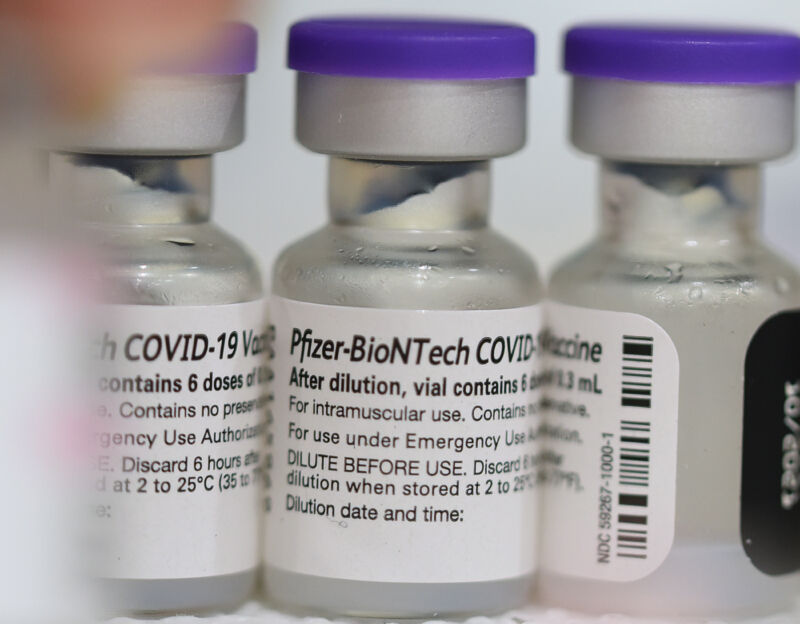
Amid pathetic uptake, FDA green lights confusing COVID vaccine update for kids

by Beth Mole
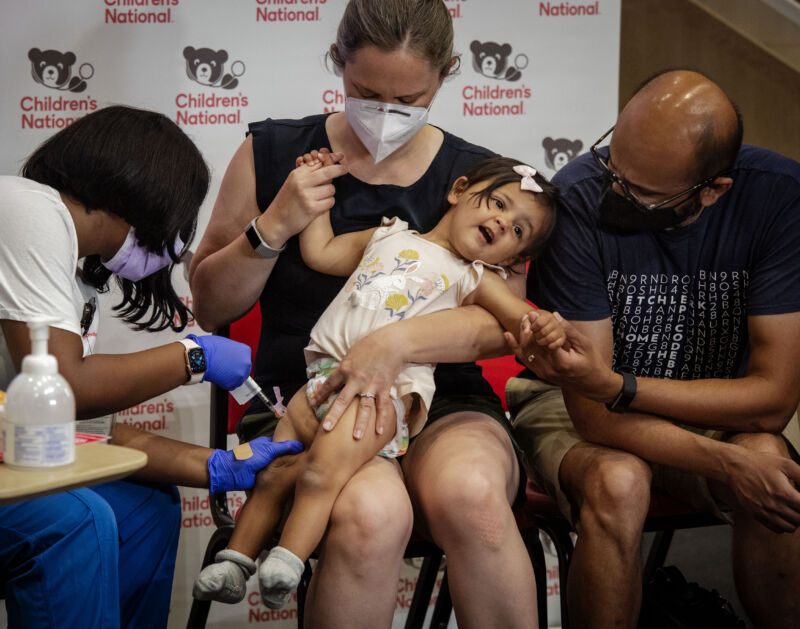
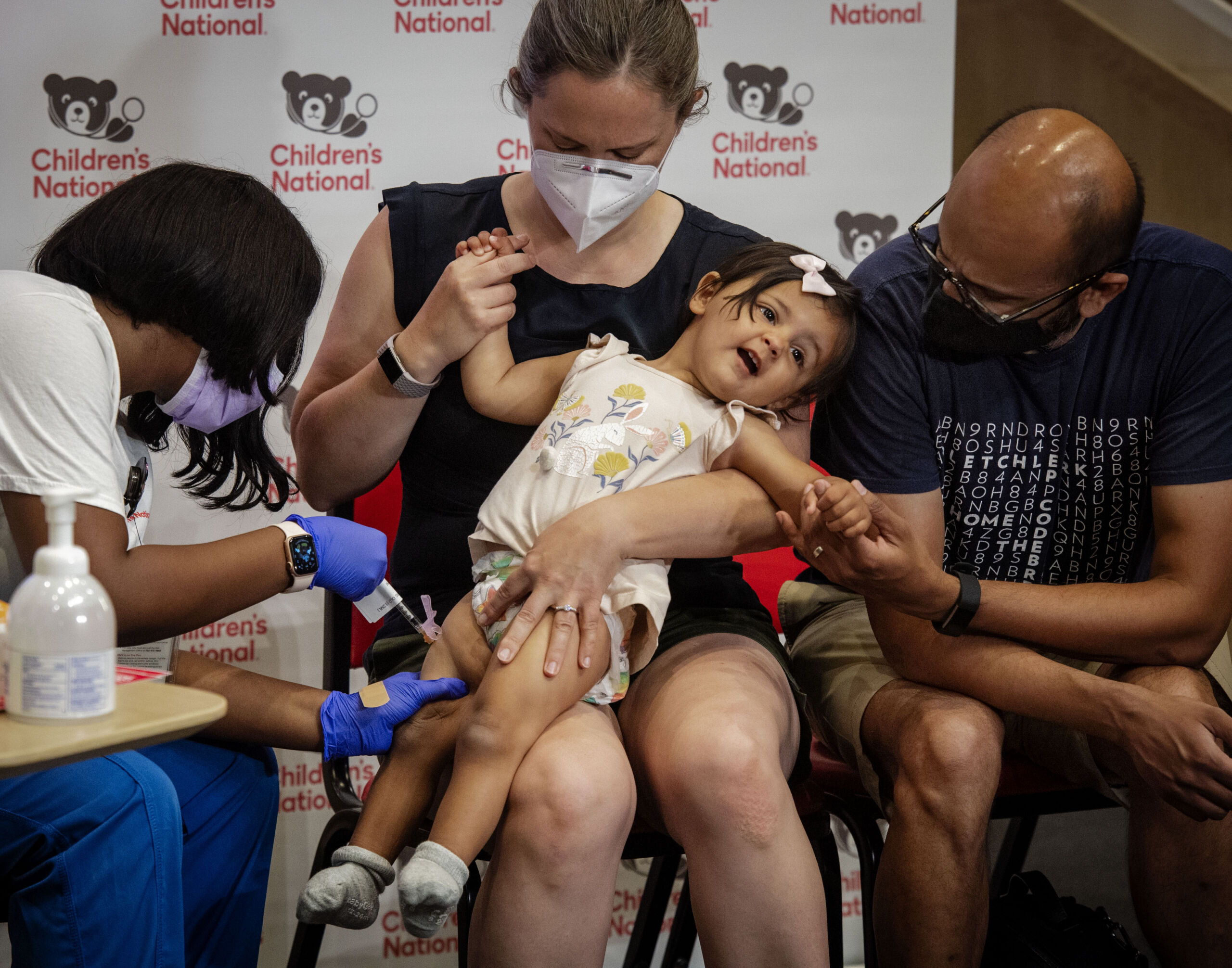
Reisa Lancaster RN, left, administers the Covid-19 vaccine to 14 month old Ada Hedge, center, being comforted by mom Sarah Close and dad Chinmay Hedge, right at  Children's National Research and Innovation Campus, in Washington, DC.

Enlarge / Reisa Lancaster RN, left, administers the Covid-19 vaccine to 14 month old Ada Hedge, center, being comforted by mom Sarah Close and dad Chinmay Hedge, right at Children's National Research and Innovation Campus, in Washington, DC. (credit: Getty | The Washington Post, Bill O'Leary)

The Food and Drug Administration has greenlit updated COVID-19 vaccine doses for children under the age of 5, but the change to the authorized vaccination regimens is far from straightforward. This may further hamstring efforts to vaccinate the youngest Americans, which are already off to an abysmal start.

After months of availability, only about 3 percent of infants and toddlers 6 months to 2 years old have completed a primary series. Just 6.5 percent have gotten at least one shot, according to data from the Centers for Disease Control and Prevention. For those aged 2 to 4 years, just under 5 percent have completed a primary series, with 9 percent having gotten at least one dose.

It was back in June when the FDA authorized—and the CDC endorsed—small doses of both Moderna's and Pfizer's COVID-19 vaccines for children as young as 6 months old.

Read 12 remaining paragraphs | Comments

10 Dec 00:35

Trashed lithium-ion batteries caused three garbage truck fires in California

by Kevin Purdy
Lithium ion battery in a press to demonstrate their fire-causing potential

Enlarge / A safety seminar on lithium-ion batteries from May 2022 illustrates what happens when you subject charged batteries to pressure or puncture—or both. (credit: Getty Images)

A firm that handles returned Amazon electronics has agreed to pay a $25,000 fine after lithium-ion batteries it threw away caused at least three different garbage truck fires.

iDiskk, LLC, based in San Jose, California, agreed to a settlement with the district attorney of Santa Clara County in late November over civil charges regarding improper waste disposal, as noted by E-Scrap News. The company, according to the district attorney's office, "dismantles, recycles, and disposes of consumer computer electronics that are returned through Amazon, some of which contain lithium-ion batteries."

On three different dates in 2021—September 22, October 6, and October 13—trucks picked up residential waste from iDiskk's office address in Campbell, California. A Google Street View look at the address shows a home with a driveway and garage on a tree-lined street. Dozens of lithium-ion batteries were included with typical recycling materials, allowing them to be crushed and compressed with other waste. "In each case, the ... garbage truck driver ejected the truck's load," the initial complaint reads, and the cause was found to be batteries.

Read 4 remaining paragraphs | Comments

09 Dec 18:42

Ohio measles outbreak hits partially vaccinated kids, babies too young for shots

by Beth Mole
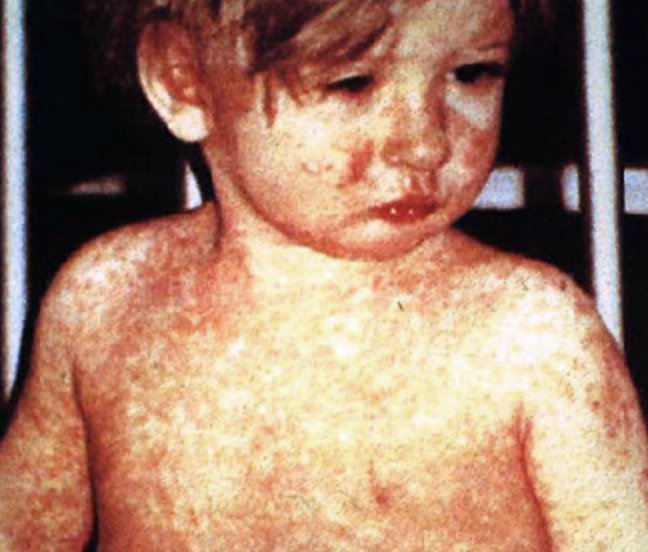
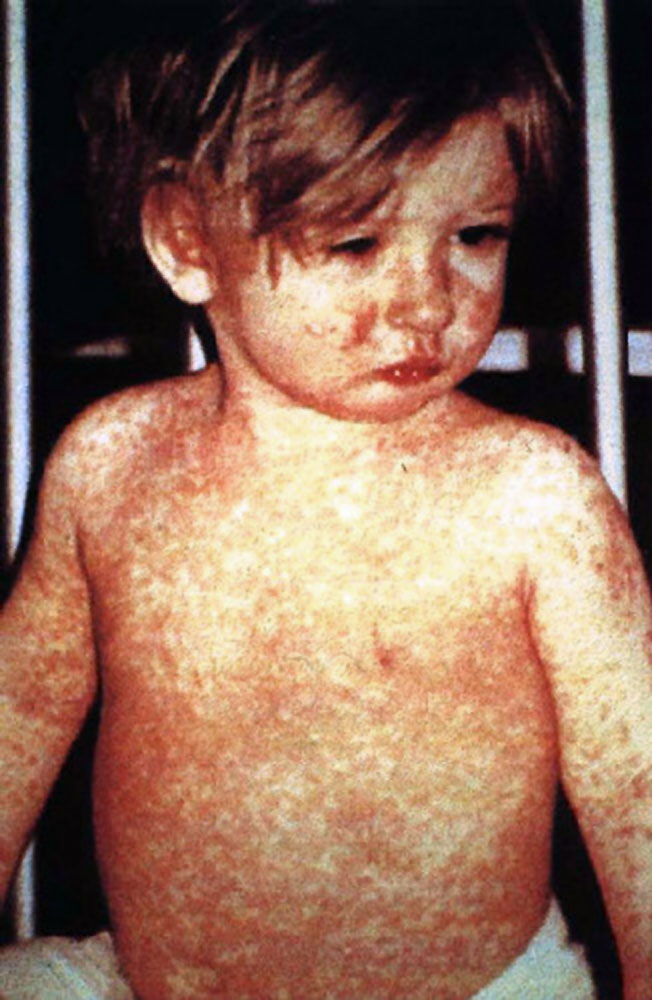
Child with a classic four-day rash from measles.

Enlarge / Child with a classic four-day rash from measles. (credit: CDC)

The measles outbreak in Ohio continues to swell, striking a total of 63 children to date. The tally now includes at least three children who were partially vaccinated against the highly contagious virus and 14 who are typically too young to be vaccinated.

The measles, mumps, and rubella (MMR) vaccine is a two-dose vaccine, with the first dose recommended between the ages of 12 months and 15 months and the second between ages 4 and 6. According to the Centers for Disease Control and Prevention, just one MMR dose is estimated to be 93 percent effective against measles. Two doses are 97 percent effective. People who get their two doses on the recommended schedule are considered protected for life.

It's unclear if the three partially vaccinated children were too young to be eligible for their second dose or contracted measles quickly after getting their first dose, potentially before full protection developed. Health officials in the affected areas of Ohio have been promoting vaccination, which may have led some parents to get their eligible children freshly vaccinated amid the heightened awareness. The affected areas in Ohio span at least two counties: Franklin County, which encompasses Columbus, and Ross County to the south.

Read 5 remaining paragraphs | Comments

09 Dec 14:11

A guide to 2022, in charts

by Rani Molla
An illustration of a hand holding a piece of a pie chart pointing at one of many dots on a grid.
Christina Animashaun/Vox

From concerts to crypto and from unions to Ukraine: 14 charts that explain this wild year.

It has been nearly three years since the start of the pandemic, and a lot has changed. Some parts of the world are returning to normal, as people go to live events and restaurants, while other things, like going back to the office, feel stuck in time. Internationally, a war is raging, and in the US, politics have been as contentious as ever.

The pandemic seems to have irreversibly changed Americans’ relationship with work. They’re continuing to quit their jobs in search of greener pastures, even as the economy sours. Meanwhile, the tech stocks that flourished when Americans were staying home and were very online have come back down to earth — as has their more speculative cousin, crypto. People are getting priced out of homeownership, thanks to high prices and growing interest rates. But they’re getting priced into electric vehicle ownership as some EV prices decline. That should be good news for Telsa, but it isn’t. The company is suffering from growing competition and its CEO’s divided attention at Twitter.

To try and make sense of all the changes we’ve seen this past year, we’ve put together a series of charts that tackle some of the year’s biggest trends. It’s not exhaustive, but we hope it helps you make sense of another very weird year.

What has returned and what hasn’t

One way to measure progress since the pandemic upended the world in 2020 is to look at what has returned and what hasn’t. From the looks of it, many things have come back. US hotel occupancy at the end of November was at the same level it was in 2019, as was attendance at sporting events. People are once again eating at restaurants and flying on planes. They’re also going to concerts, though at 88 percent, attendance is still shy of 2019 levels.

The holdout here is offices, whose occupancy is at less than half what it was pre-pandemic. The remote work revolution taught many office workers — and their employers — that office space wasn’t essential to work. And that lesson might stick. Future of work experts, like Stanford’s Nick Bloom, expect current levels to hold, even after the pandemic becomes a distant memory.


Flu season is worse than ever

The last week of November saw more positive flu test results than any week on record, which goes back to 1997. The flu has also spread earlier and more quickly than it has in previous years. Part of the rise has to do with more people getting tested, but that’s not all of it. Hospitalization rates are four times as high as they typically are at this time of year.

One main reason for this bonkers flu season is that the population has low levels of flu antibodies, since many Americans didn’t get the flu in the past two years, as preventive measures like masks and quarantining kept people from getting sick. Now, however, that means that lots of people are getting sick all at once, so it’s probably time to dust off those measures, this time to flatten the curve for the flu.


People are still getting abortions

With its Dobbs v. Jackson decision in June, the Supreme Court overturned the half-century-old Roe v. Wade and effectively made abortion illegal in nearly half of US states. New data from the Society of Family Planning shows that the number of clinician-provided abortions in those states has plummeted. (It’s important to remember that data wouldn’t include self-managed abortions, where women take abortion pills at home.)

What’s perhaps more interesting is the notable jumps in abortion in states surrounding those where abortion is illegal, suggesting that women are traveling to get medical care. In Kansas, the number of abortions rose 36 percent from April to August; abortion became illegal in neighboring Oklahoma during the same time. North Carolina, which is surrounded by the less abortion-friendly South Carolina, Georgia, and Tennessee, saw a 37 percent jump.

Those jumps show up in national numbers. Despite declining by 100 percent in a number of states, the number of recorded abortions in the US only declined a modest 6 percent nationwide, from 85,020 in April to 79,620 abortions in August 2022. Of course, traveling to another state can be prohibitively expensive for many, meaning that poorer people will have a harder time terminating pregnancies in the states with strict abortion laws.


Homes are increasingly unaffordable

On an annual basis, existing single-family home prices went up just 8 percent through September this year according to data from S&P Dow Jones Indices. That represents a welcome reprieve from the breakneck 19 percent growth last year. On a monthly basis, prices have actually come down for three consecutive months.

That doesn’t mean it’s a good time to buy a house. Prices are still very high, and it’s not clear if and when they’ll come down in a meaningful way. Meanwhile, rising interest rates have made buying a home even more expensive. Homeownership affordability is currently the worst on record, with annual payments for a median home representing 46.3 percent of the median income, according to the Federal Reserve Bank of Atlanta’s Home Ownership Affordability Monitor. The threshold is considered to be 30 percent of income, after which housing is considered unaffordable.


The Great Resignation continued

The Great Resignation is real, with empirical evidence showing that it’s more than just a fun catchphrase. It’s also still happening. Even as high interest rates, high-profile layoffs, and a potential recession batter the job market, Americans have continued to quit their jobs at elevated rates.

Part of that has to do with the still-tight job market, which is enabling these workers to find better opportunities. In October, the Bureau of Labor Statistics found there were an impressive 10.3 million job openings in the US, or 6.3 percent of employment. Meanwhile, the rate of layoffs was well below its historic rate, as employers chose to make cuts elsewhere. Perhaps there’s been a cultural shift as well, as the pandemic helped put work — once a cornerstone of American identity — into perspective.


Wages are going up, but inflation is ruining it

In March, the Federal Reserve raised interest rates for the first time since 2018 — and has done so several more times since, with more to come. The hope is that if money is more expensive to borrow, people will spend less of it, and inflation, which was at a 40-year high, will subside. While down from its peak of 9 percent in June, inflation is still pretty high. Prices for all goods were up 7.7 percent on average nationally in October, compared with a year earlier.

Part of the issue is that the interest rate hikes haven’t been enough to stunt the job market, which keeps adding jobs and raising wages. However, thanks to inflation, those higher wages don’t mean as much as they used to. While actual wages are up about 5 percent year over year, workers end up having less buying power when you factor in inflation.


Remote work continues to work

A full 78 percent of Americans who can work from home are doing so, either in a hybrid or fully remote setting, according to Gallup. Considering some 56 percent of full-time workers, or more than 70 million Americans, are in remote-capable jobs, that has big impacts on the future of work.

For most office workers, that means they’ll work from home some of the time while spending some of the time in the office. About 30 percent of all paid full work days in the US were spent working from home in November, according to WFH Research — a rate they expect to see continue after the pandemic. One reason is that even though many employers would like their workers to return, they’re up against employee desires in a tight labor market and a potential recession, in which they may have to cut back on office space to save money.


A good year for unions

This year, more than 1,000 unions have won their elections — the most since 2015 and potentially longer, according to data from Bloomberg Law. These numbers only track activity through the beginning of December and are preliminary, meaning that they will likely be revised upward. The rate at which unions won their elections was also very high at 75 percent, up from about 53 percent in 2000, meaning unions that hold elections are increasingly more likely to win them.

Unions are also popping up in industries previously thought ununionizable, like retail. Retail name brands like Apple, Starbucks, Amazon, Trader Joe’s, and REI all saw successful union drives this year, despite an incredibly difficult unionization process in the US. The number of strikes so far this year was up nearly 50 percent from last year, according to data from Cornell’s ILR Labor Action Tracker. Some 15,000 nurses in Minnesota went on strike in September to get better staffing and patient care. Congress narrowly avoided a crippling rail strike last week, as rail workers fought for paid sick days.

This is all happening as American approval of unions is at its highest level since the 1960s. While this might not be enough to counter the decades-long decline in union membership, it certainly can’t hurt.


Twitter is Tesla’s albatross

Tesla is a notoriously volatile stock, known to swing wildly from one day to the next. This year, however, it has mostly headed south. Tesla’s share price is down more than 50 percent from the start of the year, while the S&P 500 is down just 17 percent.

A number of issues have plagued the electric carmaker, from a tightening economy to increased competition, but Elon Musk’s decision to buy Twitter has made matters worse. Musk, who already split his time as CEO of both Tesla and SpaceX, decided to buy Twitter back in April and has since spent long hours trying — and seemingly failing — to right the social media company. Meanwhile, Musk’s controversial decisions to do things like bring back right-wing extremists, including former President Donald Trump, are causing consumers and investors to sour on him and, by extension, Tesla.


Electric vehicles go mainstream

This was a big year for electric vehicles, thanks to high gas prices, more affordable models, and huge government investment, including a revamped tax credit. President Joe Biden has said he wants half of the new cars sold in the US to be electric by 2030, and that’s a possibility. EVs made up nearly 6 percent of all new vehicle registrations in the third quarter, even as supply chain issues meant that many Americans were necessarily able to purchase the electric vehicles they wanted. While still a minority of total auto sales, that’s three times the rate it was at just two years ago, and a big step toward moving Americans away from dependence on fossil fuels.

Growth has been stronger on a global level, with plug-in electric vehicles representing 16 percent of vehicles sold in October. Interestingly, as electric vehicles become more mainstream, the most well-known EV brand, Tesla, is losing its dominance. As companies like Ford and GM enter the market, Tesla’s share of new electric vehicle registrations dropped from 71 percent at the start of the year to 61 percent in the third quarter of 2022, according to data from S&P Global Mobility. S&P has forecast that Tesla’s market share will decline to less than 20 percent by 2025.


Supply chain issues eased but aren’t over

Last year, supply chain issues caused delays in getting everything from furniture to food. Things have eased up quite a bit this year, thanks in part to slowing demand, which caused the cost of goods and delivery, along with the time it takes to ship them, to fall.

To combat international supply chain problems, the Biden administration has made a concerted effort to move more manufacturing to the US and to crack down on high shipping industry prices, but such efforts will take a long time and the supply chain is by no means fixed. The Federal Reserve Bank of New York’s Global Supply Chain Pressure Index ticked back up in October and November, due to slow delivery times in China.


Tech market cap collapse

This was the year that Big Tech’s seemingly inexorable growth finally slowed. As tech companies have matured, there just isn’t as much room for rapid growth — and they don’t have anything wildly profitable on the horizon. So while revenue is still growing for most of the major companies, it’s not growing as fast as it used to.

Wall Street has taken notice, and stock prices at major tech companies have plummeted. Apple, Meta, Amazon, Alphabet, and Microsoft combined have lost more than $3 trillion in market cap this year. That has meant hiring freezes and even mass layoffs, which were once unheard of in Silicon Valley. It has also meant that these companies have had to cut down on some of their more innovative projects. Amazon is gutting Alexa. Apple has tapped the brakes on its self-driving car project. Meta is scaling back its experimental products division and Portal to make way for the metaverse.

Of course, these companies aren’t going anywhere. They just might not be as indestructible as they used to be.


Crypto freezes over

While 2021 was a boom year for cryptocurrencies and affiliated technologies like NFTs and Web3, 2022 was a bust. And things appear to be going from bad to worse. What was dubbed a “crypto winter” in the first half of the year became a crypto ice age in the second half.

Thanks to impressively irresponsible financial skullduggery by its boy genius leader Sam Bankman-Fried, the spectacular fall of crypto exchange FTX caused much of the rest of the crypto industry to tumble. As of early December, the largest cryptocurrencies by market cap were down more than 50 percent. Whether this spells the end of crypto or just another drop in its long-chaotic ride remains to be seen.


The US continues to spend money fighting the war in Ukraine

The war in Ukraine, which began in February when Russia invaded its neighbor, is raging on. Ukrainians are enduring missile strikes, blackouts, and death. It has also become a source of growing international tensions, as Europe and the US have ratcheted up sanctions against Russia.

Perhaps the most direct way to measure US involvement is its military aid. Since the start of the war, the US has given Ukraine more than $18 billion in security assistance, according to an announcement by the Department of Defense in early November. That amount has doubled since Vox last wrote about it in May. Russia’s President Vladimir Putin recently said the war in Ukraine could be a “long process,” so we might see that aid rise even more.

08 Dec 20:24

Google’s cost-cutters come for Waze, will lose status as independent company

by Ron Amadeo
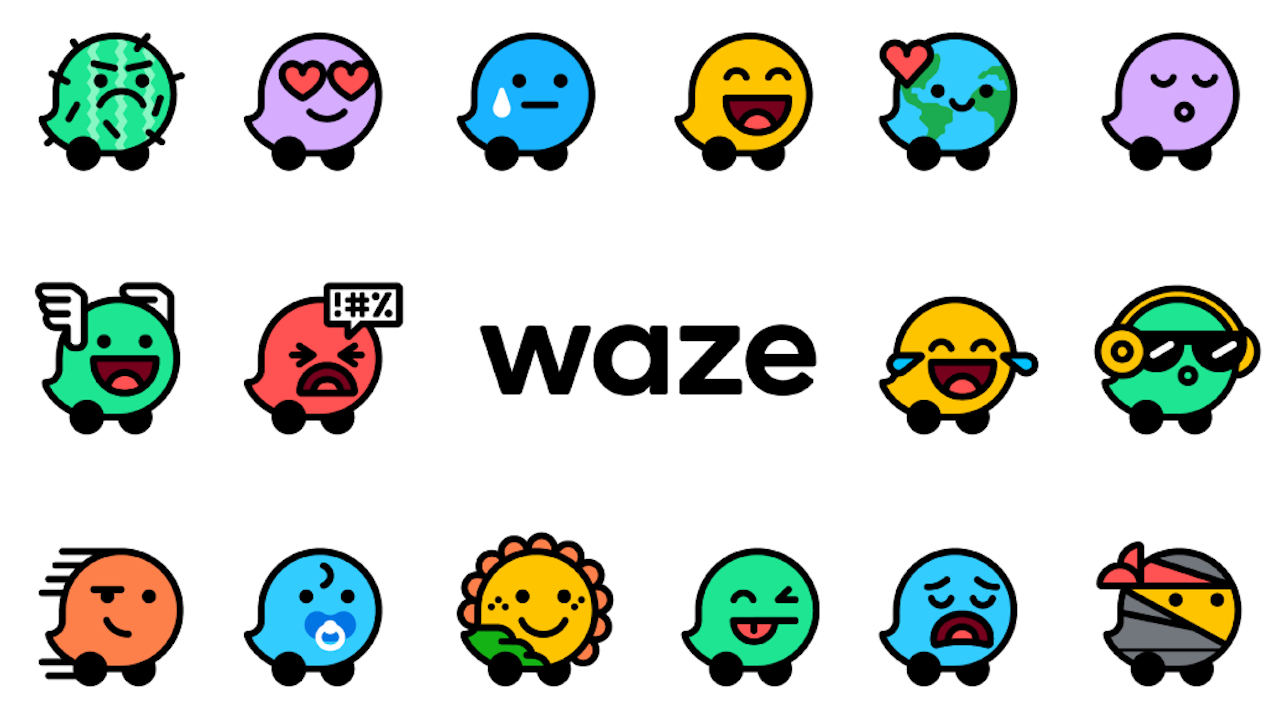
The Waze user icons. We feel for ya, little blue Waze icon above the “W.

Enlarge / The Waze user icons. We feel for ya, little blue Waze icon above the “W. (credit: Waze)

Is Waze in trouble at Google? The Wall Street Journal broke the news last night that Google is merging the 500-person Waze team into Google's "Geo" division, aka Google Maps. Waze's current CEO, Neha Parikh—who has only been at the helm since 2021 after the long-term CEO, Noam Bardin, quit Google—will step down after a transition period. Under Maps, Waze won't have a CEO.

The Waze merger comes as part of Google CEO Sundar Pichai's cost-cutting mission over the last few months, which has so far killed Google Stadia, Project Loon, half of Area 120, and the Pixel laptop division and might even be coming for the (poorly monetized) Google Assistant. The report says that "Google expects the restructuring to reduce overlapping mapmaking work across the Waze and Maps products."

Waze is a mapping application that has miles of overlap with Google Maps. You can view a world map, navigate places, look up points of interest, and see traffic data. Waze's defining feature is crowdsourced reporting of road hazards—things like traffic, speed traps, construction—that will instantly show up for other Waze users. Google bought Waze in 2013, and while it quickly moved to integrate traffic reports, it doesn't show all the Waze reports and doesn't push users to report road hazards the way Waze does.

Read 4 remaining paragraphs | Comments

08 Dec 20:24

FTC files suit to stop Microsoft’s $69 billion Activision purchase

by Kyle Orland
A magnifying glass inspects a surface covered in various corporate logos.

Enlarge / Taking a close look... (credit: Aurich Lawson / Ars Technica)

The Federal Trade Commission has filed a lawsuit seeking to block the proposed $69 billion merger between Microsoft and Activision Blizzard. By a 3–1 vote, the regulatory commissioners approved the filing of an "administrative complaint" showing they have "reason to believe" antitrust law is being violated and will argue as much in front of an administrative law judge.

Microsoft's acquisition of Activision "would enable Microsoft to suppress competitors to its Xbox gaming consoles and its rapidly growing subscription content and cloud-gaming business," according to an FTC statement.

The FTC's lawsuit specifically calls out Microsoft's previous acquisition of Bethesda Softworks parent company Zenimax, saying it's part of a "record of acquiring and using valuable gaming content to suppress competition from rival consoles." The decision to make Bethesda's upcoming Starfield and Redfall exclusive to Microsoft platforms came "despite assurances [Microsoft] had given to European antitrust authorities that it had no incentive to withhold games from rival consoles."

Read 7 remaining paragraphs | Comments

08 Dec 12:50

Gun stockpile in hospital closet leads to $63K in fines from NJ health dept.

by Beth Mole
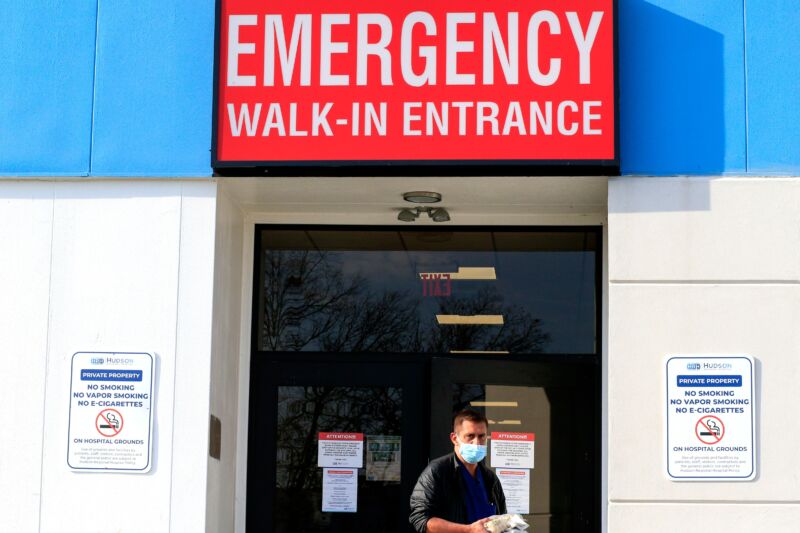
A health care worker exits the emergency room at Hudson Regional Hospital in Secaucus, New Jersey, on December 11, 2020.

Enlarge / A health care worker exits the emergency room at Hudson Regional Hospital in Secaucus, New Jersey, on December 11, 2020. (credit: Getty | KENA BETANCUR)

The New Jersey health department has fined a state hospital $63,000 after police discovered a stockpile of 39 firearms—including an illegal assault rifle with a high-capacity magazine—stashed in an unlocked hospital closet.

The firearm stockpile was found on the afternoon of July 18, when Secaucus police were called to the Hudson Regional Hospital over a bomb threat. The bomb threat was later determined to be a hoax, but while police conducted a safety sweep of the facility, bomb-sniffing dogs led officers to the weapons.

The stash included 11 handguns of various calibers, 27 rifles/shotguns, and a Kriss Vector .45 caliber semi-automatic rifle with a high-capacity magazine, which police determined to be an illegal assault rifle. Additionally, they found a 14-round high-capacity handgun magazine. (Images of the stockpile were caught on released body cam footage.)

Read 9 remaining paragraphs | Comments

07 Dec 17:43

Anker Tries To Bullshit The Verge About Security Problems In Its Eufy ‘Smart’ Camera

by Karl Bode

Anker, the popular maker of device chargers and the Eufy smart camera line, proudly proclaims on its website that user data will be stored locally, “never leaves the safety of your home,” footage only gets transmitted with “end-to-end” military-grade encryption, and that the company will only send that footage “straight to your phone.”

Yeah, about that.

Security researcher Paul Moore and a hacker named Wasabi have discovered that few if any of those claims are true, and that it’s possible to stream video from a Eufy camera, from across the country, with no encryption at all simply by connecting to a unique address at Eufy’s cloud servers using the free VLC Media Player.

Both clearly demonstrated the problem on Twitter, but, when contacted by The Verge, Anker tried to claim that what the security researchers had clearly, repeatedly demonstrated wasn’t possible:

When we asked Anker point-blank to confirm or deny that, the company categorically denied it. “I can confirm that it is not possible to start a stream and watch live footage using a third-party player such as VLC,” Brett White, a senior PR manager at Anker, told me via email.

Except it’s not only possible, it’s been repeatedly proven (though there’s no evidence yet of this having been exploited in the wild and it only works on cameras that are in an awakened state). Users really only need a camera’s serial number, which they can obtain from the box or sometimes guess. An attacker could also exploit and access cameras he donated to Good Will or other thrift stores.

The discovery comes after a decade of “smart” hardware device makers having a fairly abysmal track record on security and privacy despite websites that routinely claim the opposite. From TVs that fail to encrypt your home conversations to refrigerators that leak your email credentials, the sector is rife with problems that somehow still don’t get the kind of scrutiny they deserve.

Moore claims Anker’s problems go deeper, claiming that Eufy had violated numerous additional security promises, including uploading camera thumbnail images, including captured users’ faces to the cloud without permission and failing to delete stored, private consumer data.

Despite Anker being a Chinese-based company, you won’t hear any of the same national security hyperventilation over these kinds of issues routinely found in this and other Chinese-made “smart” home technologies. Those kinds of freak outs are, apparently, singularly reserved for social media services like TikTok, and only if such complaints can get you on television.

07 Dec 17:41

Some Temporary Good News: None Of The Really Bad Internet Bills Seem To Have Made It Into The NDAA

by Mike Masnick

Phew. As we’ve noted over the past few weeks, there’s been a big push by some in Congress over the last couple of weeks to sneak in some really terrible bills, among them JCPA, KOSA, INFORM, and SHOP SAFE. We’ve covered the problems with each of these bills and the very serious problem with trying to slip them into year end “must pass” bills like the NDAA, often skipping over several levels of congressional process while doing so.

Last night Congress came to an agreement on the NDAA and released a 4400 page draft. And, somewhat amazingly, none of the bills we talked about ended up making it in! Much of this was due to people speaking out and calling their Senators and Representatives.

It’s a stupid, stupid process, but because of the nature of it, Congress will often try to slip in “non-controversial” bills just to get them over the finish line. All the talk and buzz over the last few weeks about these bills was really Congress “testing the waters” to see if they could sneak the bills through this way. People speaking up made it clear that including them would create controversy, and thus helped keep them out of this bill.

Of course, I’m sure there’s a lot of other garbage in the bill as well (there always is), but for the moment, the worst bills that we were most concerned with seem to have been kept out.

That said, this congressional session isn’t over yet, and there’s still the other big year end “must pass” bill: the omnibus spending bill. That one is also prone to adding questionable laws like these. Hopefully the controversy from this past week about them will help keep them out of the next bill as well… but we can’t be sure until the bill is finally released.

07 Dec 13:13

The US has never recorded this many positive flu tests in one week

by Keren Landman
Chart: Already more positive flu tests have been reported this year than any on record.
Keren Landman and Rani Molla

And health care systems are getting absolutely crushed ... again.

This flu season’s ferocious start has given way to record-shattering levels of transmission — and massive strains on the American health system.

In the week ending November 26, more than 34,000 positive flu tests were reported to the Centers for Disease Control and Prevention (CDC) from labs around the US, as shown in the orange line on the chart below. That’s more positive flu tests than have been reported in any single week during any flu season on record, going back as far as 1997.

The trajectory dwarfs the past six flu seasons, including the relatively bad 2019-2020 one that immediately preceded the start of the Covid-19 pandemic (shown in the black line).

Chart showing earlier and more rapid rise in positive flu tests reported to the CDC (34,000 during the week ending November 26, 2022). Keren Landman and Rani Molla

Some portion of this steep rise in cases is related to the fact that more people are being tested for the flu than in previous years. Over the month of November, about twice as many flu tests were done at clinical labs nationwide as during the same period last year (about 540,000 versus 265,000). More testing means more cases will get picked up.

However, there are corroborating warning signs that this is truly a bad season. Flu hospitalizations have been off the charts and are rising quickly. In a press conference Monday, CDC director Rochelle Walensky said there have already been 78,000 flu hospitalizations this season, or nearly 17 out of every 100,000 Americans. That’s “the highest we’ve seen at this time of year in a decade,” she said. In keeping with past trends, the highest hospitalization rates are among adults 65 and older.

Chart showing 2022 flu hospitalizations are much higher than they normally are at this time of year. Keren Landman and Rani Molla

What’s making these high hospitalization rates particularly concerning is their overlap with surges in other viruses causing many people to get sick enough to require admission. One of those is RSV, which has been packing pediatric hospitals for more than six weeks. And while Walensky noted there were signals RSV transmission was slowing in parts of the country, Covid-19 hospitalizations recently began to tick upward.

An important reason for the convergence of these viral waves: low population-wide levels of antibodies against many common colds and the flu. Pandemic-era preventive measures delayed first-time infections among many children — which, while good for individual children’s health, meant a higher number than usual were susceptible to severe infection when those preventive measures were lifted. (More on the concept of “immunity debt” and how it can be dangerously misinterpreted here.)

We can still flatten the flu season curve

Americans are also not doing everything they can to protect themselves from respiratory viruses: only a quarter of adults and 40 percent of children have received a flu shot this season, and 15 percent of adults eligible for an updated Covid-19 booster dose have received one.

That represents important lost opportunities for prevention: This year’s flu shot is expected to be a particularly effective one, noted Walensky, as it is a good match to the circulating strains of the flu, which vary year to year. However, it only works if people get it.

Additionally, many of the preventive measures proven effective during the Covid-19 pandemic are going broadly unused, even though they would also be helpful in preventing the spread of other respiratory illnesses. There has been no great push to implement a high standard of ventilation and filtration inside US buildings. Only one-quarter of Americans have changed their behavior to reduce viral exposure. And a minority of Americans frequently wear masks outside their homes.

Amid the flu surge, medication shortages are complicating efforts to prevent severe disease and treat bacterial infections that can follow in the wake of some flu infections. Additionally, staffing shortages that intensified as a consequence of the pandemic have put pediatric hospitals in the position of caring for a massive wave of sick children with even fewer resources than they had before. Although pediatric health care organizations called for a national emergency declaration to support their response to this surge, none has been forthcoming.

In the US, flu infections normally peak between December and February. It remains to be seen whether the current early flu surge will translate to an early flu peak — or instead foretells a protracted period of extraordinarily high viral transmission, with increasingly crushing burdens on health care workers as more people get severely ill.

After a punishing few years, it’s not clear how much more strain the American health care system can absorb.

07 Dec 13:12

Raphael Warnock is officially Democrats’ 51st senator. Here’s why that matters.

by Li Zhou
Sen. Raphael Warnock concludes a get-out-the-vote rally in Hephzibah, Georgia, on December 3. | Win McNamee/Getty Images

Warnock’s win gives Democrats more power in the upper chamber.

Sen. Raphael Warnock (D), also a pastor at Atlanta’s Ebenezer Baptist Church, has won the Georgia runoff, giving Democrats an even larger — and more powerful — majority in the Senate.

In a closely contested election, Warnock defeated former football star Herschel Walker (R), winning 51.2 percent of the vote to the Republican’s 48.8 percent, as of an Associated Press call late Tuesday evening.

Warnock’s win follows a tempestuous election cycle that centered heavily on Walker’s many scandals and numerous policy gaffes, including allegations that he paid for two women’s abortions, despite being anti-abortion himself. He’s denied doing so. Walker has also faced allegations of domestic violence and claims that he misrepresented his business experience, charitable donations, and work with law enforcement.

While Walker faced scrutiny for his personal issues, Warnock focused his campaign on the legislation he’s helped pass — including out-of-pocket caps on insulin for Medicare beneficiaries — and his willingness to work with Republican senators like Ted Cruz (R-TX) and Tommy Tuberville (R-AL) on issues like infrastructure and trade. He stressed, too, that the election was less about partisanship and more about “right and wrong.” That message was intended to appeal to cross-over voters who this year backed Republicans like Gov. Brian Kemp, but couldn’t stomach Walker and the allegations against him.

Warnock’s victory is not quite as decisive for the Senate majority as it was in 2021, when his win determined control of the chamber. But Warnock’s success still gives Democrats a pivotal seat. With Warnock in office, Democrats will have a 51-person majority instead of the 50-50 majority they’ve been working with for the last two years.

That extra seat guarantees Democrats will hold majorities in committees, an arrangement that means they can expedite their judicial nominees as well as more contentious legislation that Republicans may not support. It also means that Vice President Kamala Harris will no longer have to serve as a tiebreaker on particularly polarizing nominees and bills, and it will dilute the power of conservative Democrats like Sens. Joe Manchin (D-WV) and Kyrsten Sinema (D-AZ) to stymie legislation.

“One seat may not seem like much for most folks, but for Sen. [Chuck] Schumer and the rest of his colleagues, it could mean all the difference in the world,” said Jim Manley, a former staffer for Majority Leader Harry Reid.

What having a 51st senator means for Democrats

Currently, since the Senate is split 50-50, committees are also split 50-50, meaning nominees and legislation can wind up getting tie votes if they are divisive. A tie vote doesn’t block a nominee or bill from advancing, though it does add time to the process, and makes it a more complicated one. In the case of a tie on a judicial nominee, Senate Majority Leader Schumer has to file a special resolution on the Senate floor to discharge them, for example.

As HuffPost’s Jennifer Bendery has explained, those resolutions add an extra four hours of floor time to the consideration of any nominee, and they’ve already had to be used on five of Biden’s selections, including Supreme Court Justice Ketanji Brown Jackson. Another four judges that are in committee right now will also need them due to Republican opposition. That extra time only serves to lengthen an already slow process in the Senate.

With Warnock’s election, Democrats now have a firm majority in the upper chamber, and will have majorities in different committees to pass bills and judges along party lines. The main benefit of this is that they can move more quickly and get more done. That’s important since the GOP will have control of the House starting in January. Without much ability to pass legislation through Congress, confirming judicial and executive branch nominees will be a key area that the Senate has purview over. As progressive advocacy group Demand Justice previously told Vox, there are still upward of 100 federal judicial vacancies that Democrats could help fill in the next two years.

“Sen. Warnock’s victory is a big boost for the Democratic effort to rebalance the courts,” Demand Justice chief counsel Chris Kang told Vox in a statement. “Now, a larger Democratic majority can limit Republicans’ ability to gum up the works.”

A 51st senator also gives Democrats a bit more of a buffer for close votes on nominees in case a lawmaker is absent and unable to vote on the floor. It makes it tougher, too, for one Democratic senator — like Manchin or Sinema — to sink a nominee or bill if they are opposed, though a Democrat-only budget bill like the Inflation Reduction Act or American Rescue Plan is probably off the table now that the party no longer has House control.

Additionally, having committee majorities also gives Democrats more oversight power if they want to use it to scrutinize former President Donald Trump and his administration’s policies. Previously, Democrats would have needed Republican cooperation to move forward with things like subpoenas on investigations, and now they no longer do.

Beyond the impact it could have on the Senate’s daily workings, a 51st seat also helps Democrats hedge against future losses. As Vox’s Andrew Prokop has explained, that extra seat is especially important since Democrats could lose seats in 2024 when the Senate map is set to be a lot less favorable to them.

As such, Warnock’s win may not be the game-changer it was in 2021, though it still has significant implications for Democratic power in the new term.

06 Dec 13:13

They Trusted Their Prenatal Test. They Didn’t Know the Industry Is an Unregulated “Wild West.”

by by Anna Clark, Adriana Gallardo, Jenny Deam and Mariam Elba

by Anna Clark, Adriana Gallardo, Jenny Deam and Mariam Elba

ProPublica is a nonprofit newsroom that investigates abuses of power. Sign up to receive our biggest stories as soon as they’re published.

This story discusses pregnancy loss and termination.

Amanda wanted to warn someone. In June 2021, her daughter — the one she and her husband had tried for three years to conceive — had died after only 28 hours. With an underdeveloped nose, she had battled for every breath.

Nobody knew why. Later, an autopsy report revealed their daughter had an extra 13th chromosome. The condition is nearly always fatal.

“But didn’t we test for that?” Amanda recalled asking herself. “That was kind of where the lightbulb clicked.”

Through her doctor, Amanda had gotten a popular prenatal screening from a lab company. It had come back “negative.”

For three major conditions, including the one her baby had, the report gave the impression of near certainty. The likelihood that she would be born without them was “greater than 99%.”

As she recovered from a cesarean section, Amanda found herself facing a long maternity leave without a child. She shut the door to the empty nursery and began spending what seemed like endless hours of that hazy summer learning about the test.

It’s a simple blood draw designed to check for an array of genetic anomalies. But Amanda, a science researcher, read academic articles showing there was a higher risk of inaccurate results than she had realized. (She asked to be identified by only her first name to protect her privacy.)

On Reddit, she found other women reporting problems with the tests, too. She thought Labcorp, the company that made her test, would want to know about the screening that failed her. Maybe by alerting them, she could help other families. Maybe it would help her understand what happened.

“I was trying to gain answers,” said Amanda, now 32. She tried calling Labcorp’s customer service line, but she said she was passed along from one person to another. “It was just a circle,” she remembered.

She phoned Labcorp a second time. The call ended when an employee hung up on her.

Amanda was baffled. Why didn’t the company seem interested in her experience? Why, she wondered, wouldn’t it want to collect this data? Why wasn’t there someone who could answer her questions about how often this happens, and why?

If she had taken any number of other common commercial tests — including certain tests for COVID-19 or, say, pregnancy — the company would have been required to inform the U.S. Food and Drug Administration about reports of so-called adverse events.

But the test Amanda had falls into a regulatory void. No federal agency checks to make sure these prenatal screenings work the way they claim before they’re sold to health care providers. The FDA doesn’t ensure that marketing claims are backed up by evidence before screenings reach patients. And companies aren’t required to publicly report instances of when the tests get it wrong — sometimes catastrophically.

The broader lab testing industry and its lobbyists have successfully fought for years to keep it this way, cowing regulators into staying on the sidelines.

Worried about a growing variety of tests escaping scrutiny, the FDA was on the cusp of stepping in six years ago. But then it backed down.

Peter Lurie, then a top agency official, was at the meetings where the FDA tabled its plans. Not pushing harder, he told ProPublica, “remains one of my greatest regrets.”

Key Findings
  • While upwards of half of all pregnant women get noninvasive prenatal screening tests, or NIPTs, the tests are not regulated by the U.S. Food and Drug Administration. “This is a Wild West scenario,” said one expert.
  • After fierce industry backlash, the FDA retreated on oversight of lab tests, including NIPTs. Not pushing back more, a former agency official said, “remains one of my greatest regrets.”
  • Experts say the screenings were sold before they were appropriately tested. Companies downplay “inconvenient truths” in the research, said one doctor.
  • Marketing materials have sometimes pitched the tests as providing far more certainty than they actually do. The statistical nuances of the test aren’t easy to parse for patients and even some doctors and nurses.
  • While patients have been left confused and sometimes shattered, executives profit. Last year, the compensation package for the head of one lab was over $23 million.

The risk of false positives from prenatal screenings, in particular, has been known for years.

In 2014, the New England Center for Investigative Reporting detailed how some companies gave a misleading impression of the precision of the prenatal screenings. Women often didn’t understand they needed diagnostic testing to confirm the results. Some had gotten abortions based on false positive results, the story said. Earlier this year, The New York Times reported how companies sell optional extra screenings that are “usually wrong” when they predict a disorder.

Despite these stories and calls for reform by patient advocates, the government has done little to improve oversight of prenatal screenings. ProPublica set out to examine the forces that led to this inertia and left patients like Amanda feeling misled. Interviews with more than three dozen women revealed ongoing confusion about the screenings — and anger when their reliability proved to be overblown.

“This is a Wild West scenario where everybody is on their own,” said Lawrence Gostin, a Georgetown University law professor specializing in bioethics.

The stakes for families are increasing. Upwards of half of all pregnant people now receive one of these prenatal screenings. And with many states banning abortions or limiting them to early in pregnancies, the need for fast, accurate information has become more urgent.

The FDA itself acknowledges the problem. In correspondence with ProPublica, a spokesperson cited an “outdated policy” regarding the lack of vetting of many lab tests that the agency has “spent the better part of the last two decades trying to address.”

The screening industry, meanwhile, continues to expand, proving lucrative for those who lead it. The chief executive of Natera, which claims about 40% of the market share of prenatal screenings, received a $23 million compensation package last year, the highest of any executive at a publicly traded lab company.

Testing companies told ProPublica that, even without the FDA, there is significant oversight. Labs must abide by state regulations, and another federal agency, the Centers for Medicare and Medicaid Services, is charged with monitoring quality standards. It does not, however, check whether the tests the labs perform are clinically valid.

Companies also said the screenings offer important guidance to expectant families. Echoing others in the field, Labcorp said in a statement that the screenings, when used properly, “provide vital information about the presence of increased risk, but do not provide a definitive diagnosis.” (It declined to discuss the specifics of Amanda’s experience.)

Natera pointed out that its materials tell patients that “this test does not make a final diagnosis.” It reports results as “high-risk” or “low-risk,” not positive or negative.

Companies have stressed that, ultimately, it’s the responsibility of health care providers, who order the tests, to inform patients about the limits of screenings.

For all that, the statistical nuances of the test aren’t easy to parse for patients and even some doctors and nurses. For example, the test for trisomy 13, which doomed Amanda’s baby, is actually less likely to correctly predict the condition than other tests in the standard bundle of screenings offered to every patient.

When ProPublica asked readers to share their experiences with noninvasive prenatal screening tests, often referred to as NIPTs or NIPS, more than a thousand responded. Many said the tests had given them peace of mind. Some said they had provided an early warning about problems.

But others had more questions than answers. None more so than Amanda.

“What are these tests?” she wondered. “And how did mine end up in the margin of error?”

“They Started Using It on Humans, and Then They Went Back and Said, ‘Was Our Test Accurate?’”

Scientists have long tried to find ways to help parents and doctors understand what’s happening inside the womb. Amniocentesis was first used to reveal genetic anomalies in the late 1960s. But it didn’t become more popular until it began to be paired with ultrasound to precisely guide the procedure.

In the 1980s, doctors started using chorionic villus sampling, or CVS, an analysis of placental tissue that offers a diagnosis earlier in pregnancy. But, like amniocentesis, it is an invasive test that involves some risk to the fetus, though experts say it’s exceptionally low.

A breakthrough came in the late 1990s, when a scientist recognized that free-floating placental DNA could be detected in the mother’s blood. This meant that the fetus’s chromosomes could be examined by collecting a blood sample as soon as nine weeks into pregnancy. This also provides an early opportunity to learn the likely fetal sex — a particularly popular feature.

Champions of the new science celebrated the arrival of a simple technique for patients that was particularly precise, at least for some conditions. Many favored it over other noninvasive options. But the industry that developed around NIPT has been marred by controversy from the beginning.

Dr. Ronald Wapner, director of reproductive genetics at Columbia University, described that time as “very chaotic.”

The tests had not been appropriately evaluated in clinical practice, said Wapner, whose research has sometimes been funded by testing companies. Because of this, he said, the industry “had very incomplete data on how well it worked.”

That didn’t stop the excitement. The chief executive of Sequenom, a biotechnology company that planned to release the first NIPT for Down syndrome, championed the company as the “Google of Molecular Diagnostics.” Its stock price soared.

Then, about two months before an expected launch in 2009, Sequenom killed the plan. The company’s research director, it turned out, had manipulated testing data and made misleading claims about how well the screening worked.

The U.S. Securities and Exchange Commission and Federal Bureau of Investigation opened investigations. Top executives were fired, and the research director pleaded guilty to conspiracy to commit securities fraud. Sequenom still managed to commercialize the test in 2011. (Labcorp, which later acquired Sequenom, said it uses a different kind of test.)

Other companies soon debuted their own tests. Still, there was little data on their clinical performance, researchers said.

As Megan Allyse, a bioethicist at the Mayo Clinic, put it, the companies “launched the test, they started using it on humans, and then they went back and said, ‘Was our test accurate?’” She also questioned the lack of attention to the ethics of how tests are presented to patients.

Despite missteps by the industry, the FDA didn’t scrutinize the screenings because they were considered lab-developed tests, which means they are created by the same laboratory that conducts them.

In 1976, Congress revamped oversight over medical devices. Since then, the FDA has effectively exempted such “home-brew” tests from key regulatory requirements. The idea was that when, say, a hospital lab wanted to create a simple test for its own patients, it was spared the time, money and hassle of getting approval from Washington bureaucrats.

Today, lab-developed tests are vastly more numerous and complex. Because they aren’t registered with the federal government, nobody knows how many exist.

The distinction between tests the FDA actively regulates and those they don’t can seem nonsensical. It isn’t based on the complexity of the tests, or how people use them. It’s simply a matter of where the test is made.

The prenatal genetic screening industry took off almost immediately, powered by an army of aggressive sales representatives.

“At the very beginning, obstetricians in practice were being just completely inundated with visits from the sales reps,” said Dr. John Williams, director of reproductive health at Cedars-Sinai in Los Angeles. The push left many OB-GYNs and patients thinking the screenings were accurate enough to substitute for diagnostic tests, such as amniocentesis or CVS.

In some cases, sales tactics escalated into lawbreaking.

Former Sequenom executives who exited during the fraud scandal created a new company that became Progenity, which also offered prenatal screening. Shortly after the company went public in 2020, it finalized a $49 million settlement with federal and state governments, where it admitted to falsifying insurance claims and giving kickbacks to physicians and their staff. According to a legal filing, one sales rep spent $65,658 on meals and alcohol for physicians in one year.

Now called Biora Therapeutics, the company said in a statement it no longer does any laboratory testing, including prenatal screenings.

Industry revenue continues to grow, but some testing companies are still fighting to make a profit, and competition to survive is fierce. “There’s a multibillion-dollar market, and they all want a piece of it,” said a former Progenity sales rep who quit in disgust after five months in 2016.

The rep, who requested anonymity since she continues to work in the field, said she still sees competitors from NIPT companies visiting medical practices “every week, buying breakfast, or dinner, or taking them out for happy hour.”

Over time, companies pointed to new peer-reviewed studies, research the industry itself funded, to earn the confidence of doctors and other stakeholders. They showed that two tests — for Down syndrome and trisomy 18 — often performed better than other screening methods.

This research was valid, said Dr. Mary Norton, a perinatologist and clinical geneticist at UCSF Medical Center’s Prenatal Diagnostic Center. Considered a leading researcher in the field, she authored many of these key industry-funded studies.

But, she said, when research findings were presented publicly, the companies sometimes downplayed “inconvenient truths,” such as the exclusion of inconclusive results from accuracy estimates. Crucial caveats were also glossed over by some companies when they translated research into promotional copy aimed at health care providers and patients. Those materials didn’t always mention the many factors that can limit the performance of the screenings, including high body weight, the rarity of the condition tested and younger maternal age.

Testing companies said they try to help patients understand the screenings through online resources and other materials. Some offer genetic counseling services.

The younger a person is, the lower the test’s positive predictive value — that is, the probability that a positive screening result will turn out to be correct — will be for some conditions. For instance, because Down syndrome is less prevalent in younger people’s pregnancies, a positive screening test is more likely to be a false positive for them.

Kristina was 30 years old in 2016, when her Progenity test came back positive for Down syndrome. She and her husband, who asked not to be fully named to protect their privacy, said they didn’t plan to carry a pregnancy with this condition to term.

But waiting to get an amniocentesis, and then waiting for the results, took five agonizing weeks, she said. It showed her son did not have Down syndrome.

Kristina, who lives in Texas, is still troubled by what she describes as a traumatic experience.

“I researched both late-term abortion providers and cemeteries,” she said. They even picked out a burial place, near their house.

She bought a blue baby blanket she intended to bury the baby’s tiny body in. She still has it. Her son, now 5, sleeps with it every night.

Kristina and the baby blanket she bought to bury her son in. Now five years old, he sleeps with it every night. (Allison V. Smith, special to ProPublica) “I Can’t Believe I Didn’t Say More”

As lab-developed tests became a bigger business, moving well past their home-brew origins, regulators looked for a way to assert oversight. In 2014, after years of study and debate, the time seemed right.

The FDA released plans proposing to regulate the tests, prioritizing those used to make major medical decisions. The agency has pointed to NIPTs as one of 20 concerning tests.

But, over the next two years, a coalition of power players urged the FDA to back off. Professional associations issued statements and hosted webinars devoted to the issue. Some created polished websites featuring sample letters to send to Washington.

Academic medical centers and pathology departments joined the fight, too. Scientists from 23 of them put it bluntly in a letter to the Office of Management and Budget: “FDA regulation of LDTs would be contrary to the public health,” it said, using a common acronym for the tests.

“Critical testing would be unavailable in the ‘lag time’ between development of new tests and FDA authorizing them,” the authors of the letter wrote, “and subsequent improvements on existing tests would slow significantly under the rigid, inflexible, and duplicative FDA regulatory scheme.”

This could delay essential care for patients. What’s more, opponents argued, existing lab reviews by the Centers for Medicare and Medicaid Services are sufficiently rigorous. Some have suggested modernizing the CMS review process to improve oversight.

An FDA spokesperson told ProPublica that the agency encountered “continued, negative feedback,” including a 25-page paper written by two legal heavyweights hired by the American Clinical Laboratory Association: Paul Clement, President George W. Bush’s former solicitor general, and Laurence Tribe, law professor at Harvard University.

Clement has reportedly commanded rates of $1,350 per hour. He and Tribe did not respond to ProPublica’s queries about their work.

Their brief argued that the FDA “lacked legal authority” to regulate lab-developed tests because they are properly seen as the practice of medicine: a service, rather than a product.

However, as lawyers representing the American Association of Bioanalysts countered, the FDA would vet tests before they reach the market, not control how doctors use them. The government proposal, they wrote, is “similar to imposing requirements to screen blood or label drugs.”

After the election of President Donald Trump, but before he took office, a handful of FDA officials discussed their battered proposal. It had represented a breakthrough in the decades of excruciating back-and-forth with industry. But now, with an incoming administration bent on deregulation, their efforts seemed futile.

The regulators feared anything they enacted would be undone by Congress — and, under the Congressional Review Act, they might not be able to reissue anything “substantially similar” in the future. So the FDA published a white paper instead, summarizing the issue “for further public discussion.”

After the meeting where officials made this call, Lurie, then the FDA’s associate commissioner, recalled a colleague approaching him: “I can’t believe you didn’t say more.”

“And I was like, ‘Yeah, actually, I can’t believe I didn’t say more either,’” Lurie later told ProPublica. (After leaving the agency, Lurie went on to lead the Center for Science in the Public Interest, a consumer advocacy nonprofit, which has pushed the FDA to finally assert oversight over lab-developed tests.)

Nancy Stade, an attorney and senior policy official who left the FDA in 2015, said the agency often moves slowly as it seeks to get buy-in from industry and professional groups. In her work on regulatory policy, she saw it happen with lab-developed tests.

The agency is “always testing the waters,” she said, “and always coming out with something a little bit softer.”

In 2020, the influential American College of Obstetricians and Gynecologists and Society for Maternal-Fetal Medicine, representing doctors who handle pregnancies, gave the screening industry another huge boost.

In a bulletin updating their advice on the tests, the two groups described growing research on the performance of some of the standard tests and said people have the right to information about their pregnancies, so the tests should be offered to all patients. Previously, they recommended this only for those facing higher risk of genetic anomalies.

The bulletin said the co-authors had disclosed no conflicts of interest. But two of the four co-authors, including Mary Norton, had disclosed in prior publications that test-makers had provided funding for their research. A company had provided a third co-author with laboratory services needed to run tests, according to that researcher, a connection she also disclosed in past papers.

ACOG, in a statement to ProPublica, said the organization “identified no conflicts because research funding is provided to academic institutions with institutional review boards, not to individual investigators.” Two of the three researchers responded to questions from ProPublica and said they maintained independence over their work.

One test-maker, Illumina, celebrated the ACOG guidance in a tweet, saying it “recognizes the superior performance of #NIPT and the benefit it provides expectant families.” Natera’s share prices doubled in five months. UnitedHealthcare, the nation’s largest private insurer and long a target of industry lobbying, told ProPublica it changed its stance to cover screenings for all patients, regardless of risk, because of the recommendation.

In a recent shareholder report, Natera stated that prenatal genetic and carrier screenings “represent the significant majority of our revenues,” which totaled $625.5 million in 2021. The company expects more growth to come.

“The NIPT market is still very underpenetrated, compared to the 4 to 5 million pregnancies in the U.S.,” Natera’s chief executive said on a 2021 earnings call, “so there’s a long way to go.”

But even Norton, who co-authored the ACOG recommendation and favors NIPTs for patients 40 and over, has concerns about screenings becoming widespread among those who are younger. In most cases, she prefers other screening methods that catch the nongenetic problems younger moms are more likely to face. Negative results from an NIPT, she said, can be “falsely reassuring.”

In the years after the FDA set aside its regulatory proposal, the agency has assisted members of Congress on a proposed legislative solution. That effort, dubbed the VALID Act, aims to end any debate over the agency’s authority over lab-developed tests. An FDA press officer said the legislation would ensure the prenatal screening tests and others are “accurate and reliable.”

But, as in the past, intense lobbying followed the proposal. The VALID Act was a rider to a funding reauthorization bill, but in September the House and Senate agreed to remove it. Advocates now hope to attach it to proposed end-of-year legislation.

Meanwhile, earlier this year, four months after the New York Times story on the usefulness of some screenings, the FDA took a step toward more public awareness about prenatal genetic screening. It issued its first safety communication on them, noting the potential for false results.

It cautioned patients about making “critical health care decisions based on results from these screening tests alone.”

Cara Tenenbaum, a former FDA policy advisor, was pleased to see the statement. Still, she said, it was long overdue.

“This has been known — known, or should have been known — for 10 years,” she said.

“It Had Me So Messed Up” Julia at home in Mississippi (Sarah Blesener for ProPublica)

With the demise of Roe v. Wade, restrictive and ever-changing abortion laws can pressure people to act quickly with limited information, heightening the stakes of prenatal screening.

Julia, a mom from Mississippi’s Gulf Coast, knows what it’s like to face harrowing consequences while navigating state-imposed time limits — and doing so with little guidance. Last fall, she was pregnant with her fourth child when, she said, a nurse practitioner suggested prenatal genetic screening.

At 33, Julia had no risk factors. Her previous pregnancies hadn’t been screened with an NIPT. But with three sons and 18 nephews, she and her husband were curious about the baby’s sex. And the screening seemed like it had no downside.

Julia figured it would only be offered if it was reliable, so her nurse practitioner ordered her both the basic bundle of screenings and the extra tests. (The medical practice didn’t respond to interview requests. Julia is a family nickname that’s used here to protect her privacy.)

The screenings showed the baby was a girl — but the extra tests also detected trisomy 16, a condition caused by an extra chromosome that is so rare, the nurse didn’t know what it was, Julia recalled.

The nurse borrowed Julia’s phone, using it to search online and read aloud what she found. Julia was stunned to hear trisomy 16 was incompatible with life.

“I was utterly devastated,” she said. “I made it out of my doctor’s office but completely broke down in the car.”

But ACOG does not recommend the trisomy 16 screening, saying “its accuracy with regard to detection and the false-positive rate is not established.” Julia wasn’t informed of this, she said, and she’s not sure if her health care providers knew it either.

The favorite headband of Julia’s daughter (Sarah Blesener for ProPublica)

The lab report recommended diagnostic testing to confirm the results, but time was short. She had her amniocentesis at 17 weeks. It could take up to four more weeks to receive results.

That would be too late for a legal abortion in Mississippi. So she made an appointment for one in Florida, where the cutoff was 24 weeks. (It’s now 15 weeks in Florida, while Mississippi went from 15 weeks for legal procedures to a ban on nearly all abortions.)

The wait was excruciating. Julia was driving twice a week to New Orleans for specialized care. With work and child care, it was too hard. She quit the teaching job she loved.

One winter night, she felt the fetus move for the first time — ordinarily a milestone, but now, facing a fatal prognosis, she didn’t want to get attached. “It had me so messed up,” she said.

On the way to the amniocentesis, Julia and her husband chose a name. Drawing from a language conjured by J.R.R. Tolkien in the fantasy novels they love, it means “hope.”

More than halfway through her pregnancy, the amnio results arrived. The prenatal screening had given a false positive. The baby would be fine. In May, Julia gave birth to a healthy daughter.

Julia’s screening detected trisomy 16. An amniocentesis later showed this was a false positive. (Provided to ProPublica)

Julia and her husband are upset about the needless anguish brought on by the screening. “They like to have it both ways,” said Julia’s husband. “They say they are 99% accurate, but when there's a false positive, they say, ‘Well, we’re not diagnostic.’”

Believing the prenatal screening was likely accurate, they had seriously considered canceling the amniocentesis, saving their limited funds for an abortion in Florida, hundreds of miles away.

Julia and her daughter (Sarah Blesener for ProPublica)

Their dilemma points to a longtime concern: ending pregnancies based on false positives. The FDA cited it as a risk as far back as 2015. Now, those with positive results are facing an even tighter time crunch. They must consider whether waiting for a definitive test, and possibly traveling to another state for an abortion later in pregnancy, is worth it.

In their promotional material, some companies not only sidestep the variability of the standard tests, they fail to distinguish them from the least reliable ones — those for exceptionally rare conditions. They tout the extra screenings as “premium,” “plus” or “advanced” options.

“Going to greater lengths for the answers that matter most,” says a brochure aimed at health care providers from test-maker Illumina. Elsewhere it states that the “expanded” panel of tests provides “confident results” and “the additional insights you need.”

But the companies themselves know the accuracy of some of their tests has yet to be established in the research. Natera acknowledged in a recent shareholder report that many insurers won’t pay for screenings for missing chromosomal fragments, known as microdeletions, in part because there isn’t enough published data behind them.

The company, responding to ProPublica, stressed the quality of the data over the quantity, saying the research so far has been favorable. “Natera’s microdeletion testing was thoroughly validated with results published in peer-reviewed publications,” it said in a statement.

Natera pointed to a recent study that looked at DiGeorge syndrome, one of several chromosomal anomalies it checks for with its microdeletion screenings. Researchers found the positive predictive value of the test to be 52.6%, meaning that nearly half of positive results are false positives. (For many patients, PPVs for more common conditions can exceed 90%.)

Natera said the performance of the diGeorge syndrome test “is excellent and not considered a low PPV,” due to the condition being extremely rare.

Companies also play up the danger of diagnostic tests like amnio. They “can cause miscarriages,” warns the marketing from Labcorp, which made Amanda’s screening, while its test “does not cause miscarriages.” But medical experts emphasize that diagnostic tests, such as amniocentesis, are more accurate and, in fact, carry little risk to the pregnancy.

Labcorp, in a statement, said the company “acknowledges the well-documented risk associated with amniocentesis and CVS in our literature. It is the patient’s prerogative to decide which risks they are willing or unwilling to take.”

Marketing claims also sometimes skate over the nuances in the guidance from the leading professional societies. On a webpage targeting health care providers, for example, a Labcorp chart said groups such as ACOG “endorse and/or recognize” prenatal screenings as an option for all pregnancies. But the chart listed screenings ACOG does not recommend, including trisomy 16.

When asked about it, Labcorp said in a statement that ACOG “endorses NIPS for all pregnancies.” In fact, the guidance is not so sweeping. It says only that the basic bundle of tests should be offered to all, alongside other screening options. It explicitly advises providers to not offer patients the extra tests.

Soon after ProPublica’s query, the Labcorp webpage was updated to remove any mention of the professional societies.

Patients say they often don’t know where to turn for informed and unbiased information. That’s why the r/NIPT Reddit page became such a robust community. Facing difficult news, Julia turned to it for counsel from other prospective parents. Kristina in Texas found the same community. Amanda, too.

“The Margin of Error Is a Human Life”

On a warm and cloudy day this past June, on what would have been their daughter’s first birthday, Amanda and her husband visited her grave. They brought a unicorn balloon and vanilla cake, which they ate nearby on the grass. Her husband read a poem.

To them, their baby had been perfect. She had fingers and toes. A thatch of dark hair. While in intensive care, peering up at her parents, she grabbed for her mother’s hand.

Had her condition been known, they would’ve spared her futile medical interventions, as doctors tried to save her life. Their family priest would have been able to baptize her. As it was, they never got to hold their child while she was alive.

These days, when Amanda and her husband say grace before dinner, they give thanks for the 28 hours of their daughter’s life.

They’re also thinking about making comfort boxes the hospital could give to other parents who lose a child. It might include books on grief. Softer tissues. Something that says, as Amanda puts it, “This is to help you get through.”

Amid their grief, they had a prayer answered: Amanda is pregnant again.

It’s frightening to go through this again. She barely sleeps the night before visiting the doctor. It feels like she never stopped being pregnant. It will feel that way, she said, until she brings a baby home — one who lives past the first two nights.

Amanda planned to get another genetic screening test. At first she couldn’t bear it, wasn’t sure she could trust it. “The margin of error is a human life,” Amanda said.

The 10-week appointment passed. Then the 12-week appointment. After her 13th week, she took the plunge. The test she was given was from Labcorp.

Around this time, more than a year after Amanda had desperately tried to alert the company about what had happened to her and her first baby, she finally heard back. Labcorp’s vice president of genetic counseling and services reached out — after ProPublica contacted the company and shared Amanda’s story.

The executive would only speak to Amanda without a reporter present.

Amanda said that during the call, the executive told her that prenatal genetic tests are evolving, and doctors should be clear about what the screenings can and cannot do. By the end of the conversation, the executive offered Amanda her cell number.

Amanda said she appreciated the call. “I feel better. I feel like I got something.”

The same day, her screening results came back. They were negative.

Have You Had an Experience With Prenatal Genetic Testing? We’d Like to Hear About It — and See the Bill.
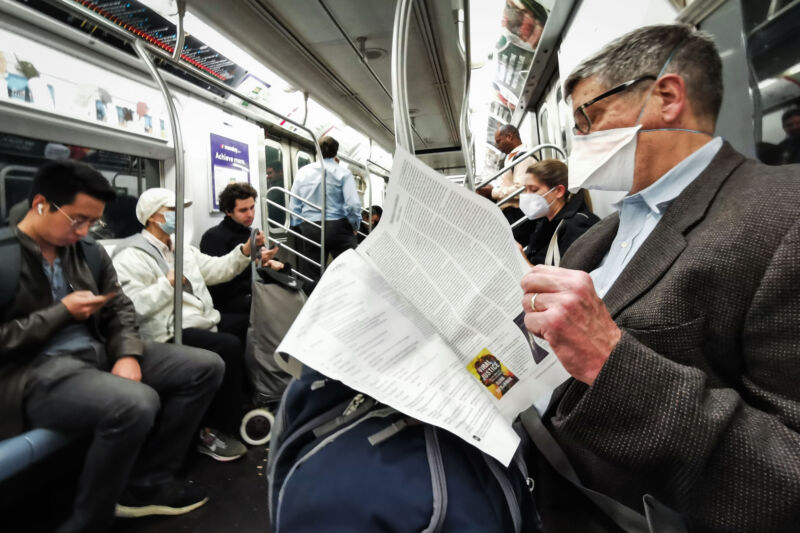
06 Dec 12:18

Grandmother sues cop who wrongly targeted her home using “Find My” app

by Ashley Belanger
Grandmother sues cop who wrongly targeted her home using “Find My” app

Enlarge (credit: Aurich Lawson)

In January, Colorado police officers confined a 77-year-old grandmother named Ruby Johnson for hours in a squad car without even offering a glass of water during a time when she was due to take her daily medications—why?

Nobody told Johnson what was going on when she opened her front door to a SWAT team assembled on her lawn. Much later, she found out about a stolen truck—reportedly with six guns and an iPhone stashed inside—wrongly believed to be parked in her garage based on no evidence other than her home being located within a wide blue circle drawn by a “Find My” iPhone app. Now she’s suing a Denver cop for conducting what she believes was an illegal search of her home based on what her legal team describes as either an intentionally or recklessly defective application for a search warrant that was “wholly devoid of probable cause.” Because of the allegedly improper raid, the retired US Postal Service worker had to “endure an unreasonable search and seizure, unlawful police confinement, and severe physical and emotional distress.”

“This illegal search has destroyed Ms. Johnson’s sense of safety and security in the home that has been her castle for 40 years,” Johnson’s complaint reads.

Read 19 remaining paragraphs | Comments

06 Dec 12:12

Pfizer seeks FDA greenlight for bivalent COVID dose in kids under 5 years

by Beth Mole
Vials of the Pfizer COVID-19 vaccine.

Enlarge / Vials of the Pfizer COVID-19 vaccine. (credit: SOPA images)

With respiratory illnesses ravaging children around the US, vaccine partners Pfizer and BioNTech announced Monday that they are seeking regulatory authorization to offer their bivalent COVID-19 vaccine to children ages 6 months to 4 years—but not as a booster; instead it would be part of an updated primary series.

Currently, the bivalent vaccine, which targets the coronavirus omicron subvariants BA.4 and BA.5 in addition to an ancestral strain, is only available as a booster dose to Americans ages 5 years and up. Although BA.5 is no longer dominant in the US, its sublineages now reign. The Centers for Disease Control and Prevention recently published real-world effectiveness data indicating that the bivalent boosters increased protection against symptomatic COVID-19 infection over protection provided by the previous boosters.

For now, children under 5 only have had access to a primary series—two small doses of Moderna's original vaccine or three small doses of Pfizer/BioNTech's original vaccine. Both were first authorized on June 17 after a rollercoaster regulatory process that lasted months.

Read 4 remaining paragraphs | Comments

06 Dec 12:12

We forgot to fix unemployment insurance yet again

by Emily Stewart
An image of a man with a leaf blower blowing tiny people into the air.
Unemployed workers are in trouble if and when the next crisis hits. | Getty Images/Fanatic Studio/Gary Waters/Science Photo Library

Layoffs are hitting tech and media. A recession may be looming. What happens to everyone who loses their job?

Hey, remember the pandemic economy? How could you not, right? In early 2020, millions of people lost their jobs in the blink of an eye, through no fault of their own. In the United States, their subsequent attempts to get help from the government overwhelmed unemployment offices across the country, revealing the system to be fundamentally broken. The infrastructure was bad, the benefits insufficient, and the entire scheme next to impossible to navigate.

And then, something remarkable happened: The federal government stepped in to shore things up. It added extra dollars to state unemployment benefits to make sure people could get by and pay their bills. It expanded the pool of people who were eligible for benefits, so workers such as freelancers and contractors could access them, too. While far from perfect, the extra efforts to help the unemployed made a real difference in people’s lives and played a part in the country averting a deeper and longer recession.

It felt, for a while, like maybe there would be momentum to finally address the issues in America’s unemployment system. So many people had experienced first-hand just what a disaster it was on a massive scale, from outdated administrative systems to inadequate benefits. It seemed obvious that this hybrid state-federal program that had left so much discretion up to individual states just didn’t work.

And then ... America’s UI setup didn’t really get fixed, because it never does.

“This is literally what always happens every time there is an economic downturn,” said Michele Evermore, the former deputy director of policy at the Office of Unemployment Insurance Modernization at the Department of Labor who is now a senior fellow at the Century Foundation, a progressive think tank. “At the very start of it, people are pretty sympathetic to people who suddenly became unemployed, so we temporarily add benefits and add temporary fixes, and then as the economic crisis rolls on, everybody gets sick of the unemployed people and starts blaming them. By the end of it, it’s all the unemployed people’s fault, they just don’t want to work, we’ve got to take away their unemployment benefits.”

As workers stare down the barrel of another potential recession — and the layoffs that would accompany it — the problems that dogged unemployment insurance before the pandemic, many of which have persisted for decades, remain. Most of the momentum to repair the system has dissipated.

“When the next crisis hits, we’re not at all ready for it”

Congress and the White House allocated $2 billion to the Department of Labor in 2021 to try to help states update their unemployment systems, combat fraud, and promote equitable access to benefits. But that funding and the accompanying efforts can only go so far, and they are aimed at administrative fixes, not policy fixes. The benefit amount a worker is entitled to, how long the benefits last, and the requirements to get them largely depend on which state that worker lives in. Many states are still digging themselves out from under the last crisis. Given the narrative that has taken hold around unemployment during this most recent economic recovery — that UI kept people out of the workforce, that too much government assistance contributed to inflation — it’s not clear what kind of appetite would exist in Congress to help workers if and when another recession hits.

“When the next crisis hits, we’re not at all ready for it, we’re worse off,” Evermore said.

State by state, not so great

The point of unemployment insurance is to replace income for people who have lost their jobs and keep them attached to the labor market. It’s meant to be a support for the broader economy in times of economic downturn, too, and keep consumer spending going. If I lose my job and can’t pay my rent, it is a problem for me and for my landlord and for the sandwich guy I no longer buy from down the street.

In the US, Wisconsin was the first state to put UI in place in 1932, and the federal program became law under the Social Security Act in 1935. It is a federal-state scheme that has never worked smoothly because each state does things its own way.

UI is financed through state and federal payroll taxes that are supposed to cover both administrative systems and the benefits themselves. Many states have kept those taxes quite low, leaving the system chronically underfunded and resulting in luck-of-the-draw situations for workers applying for UI, depending on where they live.

The average weekly benefit paid out in regular unemployment insurance nationwide was about $385 in the 12 months ending in September. But if you look at Mississippi, for example, the average benefit is in the low $200 range, while it’s now above $600 for Washington state.

These benefits do not move with inflation, either.

“Inflation is making it even harder for people to survive on these inadequate benefits,” said Rebecca Dixon, executive director of the National Employment Law Project (NELP). “Most benefits are not set to increase on any index, so there are a lot of states where they’ve just been stuck at the number that they’re at for a decade or more.”

Workers in many states are eligible to collect UI benefits for up to 26 weeks, but in some states, such as Florida, the maximum is about half of that. Different states also have all sorts of hoops workers have to jump through to certify they’re still unemployed and prove they’re looking for work. One week they’ll get benefits, the next week they’ll get denied.

Many UI offices are understaffed, are still dealing with pandemic-era backlogs, and are using outdated technologies to administer benefits. Or, they’ve updated their technologies and they’re intentionally designed to make the whole thing harder for workers to navigate, or the update was just bad.

“When you took away these temporary federal programs, you just left these huge holes”

Add it all up and it’s easy to see why so many unemployed people aren’t getting UI benefits at all. According to a recent analysis from the Century Foundation (TCF), about 27 percent of unemployed workers were getting state unemployment benefits in the year ending in August 2022. That’s worse than during the financial crisis in 2009, when 41 percent of the unemployed were collecting benefits. It’s much worse than in 2021, while many pandemic-era UI federal supports were still in place, which saw a 76 percent recipiency rate.

“It’s really the policy side that’s sticking out right now in that there are these huge holes in the safety net that got filled with a federal program, but when you took away these temporary federal programs, you just left these huge holes,” said Andrew Stettner in an interview while he was director of workforce policy and a senior fellow at TCF. In late November, after that interview, he took over Evermore’s old job at the Department of Labor.

After the pandemic, we tried to fix America’s unemployment system and then gave up

When the pandemic hit in the spring of 2020 and millions of people were laid off, America’s UI system was crushed. Millions of people were met with broken websites and endless call wait times as they tried desperately to access benefits to which they were entitled, and state offices were completely overwhelmed. Once people did get benefits, in many cases they weren’t adequate given the economic situation the country was facing.

So, the federal government stepped up in 2020 and through much of 2021. It added extra federal dollars to weekly benefits — first $600, then a lapse, then $300. It also extended the length of eligibility for benefits collection and expanded the pool of workers who could apply to include freelancers, gig workers, and the self-employed.

Those efforts certainly had their shortfalls; it’s estimated that billions of dollars in benefits were wrongly paid out and obtained by fraud. At the same time, they really helped people who needed them, and they demonstrated the need for a reformed system.

“There was such a crush that even some of the checks that were normally done were not done,” Stettner said. “I don’t think that would happen again because we’re never going to have that kind of crush again, god willing.”

The state-federal hybrid model across the country only made the overall system more vulnerable. “For hackers and people who are doing these waves of fraud, they’re looking at it like there’s 53 different opportunities for us to do this because there’s 53 different programs,” Dixon said. “It makes it harder to stop because it’s happening in multiple places.”

At the administrative level, there have been efforts to improve UI overall. The American Rescue Plan Act (ARPA) signed into law in 2021 provided $2 billion to the Department of Labor to put toward fraud detection, equity, and ensuring state UI programs worked better overall. The DOL dispatched what it dubbed “tiger teams” of experts six states at a time to work with their offices to improve their programs. They’ve thus far gone to 30 states, according to a DOL spokesperson. ARPA also put $260 million in equity grants to try to help with outreach to make sure everyone entitled to benefits has fair, equal access to them.

“We’ve historically underinvested in the unemployment insurance programs”

“In the beginning, it was like, make your website more disability accessible, of course, but by the second or third cohort, they were like, ‘Okay here’s how to redo your form, make it horizontal not vertical, this font not that.’ They were making very informed, specific recommendations,” Evermore said. “There are so many weird little bottlenecks that states never had time to address.”

Still, many of these initiatives are just scratching at the surface. “The big picture remains the same, which is that we’ve historically underinvested in the unemployment insurance programs,” Dixon said. “One infusion during the pandemic is not going to remedy years of disinvestment.”

Where the US would need an overhaul is on the policy end, many experts say. That could take a variety of forms. For example, the federal government could put in place a set of basic standards that states have to abide by that would set minimum benefit amounts and time frames, and it could overall push states to keep their systems updated. Or, it could put in place automatic stabilizers that would tie benefits to certain economic conditions, such as the unemployment rate. What that would look like is when the unemployment rate rises to X percent, an extra amount of dollars and/or weeks automatically kick in until the unemployment rate falls again. That way, workers aren’t dealing with the political will in Washington, DC, in the event of another recession.

The thing is, these types of changes would require action from Congress. There have been proposals from lawmakers on that front, including from Sens. Ron Wyden (D-OR) and Michael Bennet (D-CO), but they haven’t gained much traction.

“This is why unemployment hasn’t been fixed for decades. Whenever there’s an opportunity, there are more pressing things on the agenda that members want to get done,” one Democratic congressional aide, who asked for anonymity to speak freely about the matter, said in an interview. “If you gave those same members a choice of should we do climate or fix UI, should we do child care or fix unemployment, given that A or B choice, I don’t think anybody’s going to choose unemployment.”

Unemployment never feels like a problem until it is

Losing a job is an awful experience, financially and emotionally. In the current moment, the Federal Reserve is hiking interest rates in an effort to fight inflation, which could push the economy into a recession. It could put millions of people out of work, once again through no fault of their own. Part of what the Fed wants is for businesses to slow hiring, stop raising wages, and, ultimately, lay people off. If Fed Chair Jay Powell is the reason John in Minneapolis loses his job, does that mean John in Minneapolis, who also can’t access decent unemployment benefits while he looks for a new job, should also lose his home?

“You don’t want that Fed recession to have a lasting impact,” Stettner said. “The last time the Fed put the economy into a recession in the ’80s, there are entire communities that didn’t recover from that.”

Many experts, advocates, and policymakers worry that the opportunity to fix unemployment insurance has been squandered once again. On Capitol Hill and in many states, there doesn’t appear to be much appetite for addressing the system policy right now, when times are relatively good. It’s not clear what appetite there would be to put in place at least temporary supports if a recession hits, either. Pandemic unemployment insurance has taken some of the blame for bumping up inflation as part of government stimulus in the first place. There are also concerns about the potential for fraud and, more broadly, concerns that too-generous benefits keep people out of the workforce. (Evidence suggests more robust benefits during the pandemic did not keep people on the sidelines.)

“I’m actually worried that we won’t get any temporary improvement in unemployment insurance that we usually get,” Evermore said. “The political will is really, really bad.”

“Unemployed worker” is a temporary status

“There would be an appetite to do something more limited, maybe extend weeks or something like that, but I don’t see an appetite to do a boost like we did at the beginning of the pandemic, that’s for sure,” the Democratic aide said.

It’s a lesson the country has half-learned time and again and then forgotten. The last crisis — the pandemic-induced recession — is over, and the next crisis looms. Yet Congress has already moved onto other things, as has most of the public. “Unemployed worker” is a temporary status, and once people go back to work, they forget. “It doesn’t really have a constituency that you can rally to stand up for the program and support sustained advocacy to get changes,” Dixon said.

In the bad times, either personally or collectively, the shortcomings of the unemployment insurance system punch you in the face. It hurts in the moment, and it bruises. Then the pain subsides and the bruise fades, and life moves on, even though the risk of the next punch in the face remains.

05 Dec 20:32

J6 Suspect Challenges FBI’s Geofence Warrant, Exposing The Massive Scale Of The Fed’s Data Haul

by Tim Cushing

Geofence warrants are popular. They’re also controversial. Cops have discovered Google houses plenty of location data. Going to cell phone providers is a bit tricky, thanks to the Supreme Court’s Carpenter decision, which erected a warrant requirement for acquiring weeks or months of location data.

But geofence warrants don’t have a particular target. The only probability (as in “cause”) that exists is that it’s highly likely Google has collected some location data — data completely divorced from the cell towers owned and operated by cell service providers. These warrants dodge the scrutiny of Carpenter. And, since they’re warrants, it’s also possible to dodge judicial conversations about where the Third Party Doctrine begins and ends.

Geofence warrants have no specific target. Instead, law enforcement hopes grabbing massive amounts of data will help them work backwards from the haystack to the needle. But that’s not how things are supposed to work under the Fourth Amendment. Facts need to be particular at the outset, not several steps removed from the original dragnet. Some courts have rejected these fishing expeditions. Others have found there’s no privacy interest in data willingly (but actually unknowingly) shared with third parties like Google.

When Trump supporters converged on the Capitol Building in hopes of (apparently violently) keeping their preferred president in office, the FBI — pursuing cases involving a ton of federal crimes — started searching for suspects. This search began at Google with the deployment of geofence warrants issued in hopes of giving the feds a list of investigation targets.

The warrants used by the FBI remain under seal. But a challenge of this so-called evidence by a January 6th defendant has exposed just how much data was sought, along with the efforts made by the FBI to narrow down a voluminous data dump into something it could use to locate investigation targets.

Mark Harris of Wired has written a pretty thorough examination of the government’s geofence-related efforts. That report is largely based on a suppression motion [PDF] obtained by Marcy Wheeler, who broke the news at her blog, Emptywheel. Wheeler says she’s been waiting for a competent challenge of a geofence warrant. This suspect may have delivered.

The motion to suppress from David Rhine may be that challenge. Rhine was charged only with trespassing (though he was reportedly stopped, searched, and found to be carrying two knives and pepper spray, but ultimately released).

As described in his arrest affidavit, Rhine was first identified via two relatively weak tips and a Verizon warrant. But somewhere along the way, the FBI used the general GeoFence warrant they obtained on everyone in the Capitol that day. Probably using that (which shows where people went inside the Capitol), the FBI found him on a bunch of surveillance video, with his face partly obscured with a hat and hoodie.

The motion to suppress, written by Tacoma Federal Public Defender Rebecca Fish, attempts to build off a ruling in the case of Okello Chatrie (and integrates materials from his case) to get the GeoFence used to identify Rhine and everything that stemmed from it thrown out.

The geofence warrants served by the FBI utilized a three-step process. The first request was for everything. Then efforts were made to separate insurrectionists from non-insurrectionists. As is summarized here by Harris at Wired, the first dragnet warrant simply gathered data on everyone.

A filing in the case of one of the January 6 suspects, David Rhine, shows that Google initially identified 5,723 devices as being in or near the US Capitol during the riot. Only around 900 people have so far been charged with offenses relating to the siege.

Apparently, the first step of “rounding up the usual suspects” is the rounding up of “the everybody.” There’s a 4,800 person gap between what was originally obtained and who was originally charged. The court told the FBI to go back to Google with another request that would eliminate people suspected of nothing but being victims of this attack. So, it went back to Google to obtain info on people the FBI definitely knew weren’t possible suspects. This quote of the suppression motion comes from Emptywheel:

In this case, the second step of the geofence warrant was also done in bulk, given the lack of specificity as to the people sought. In the initial warrant, the Court ordered Google to make additional lists to eliminate some people who were presumptively within the geofence and committed no crimes. First, the warrant ordered Google to make a list of devices within the geofence from 12:00 p.m. to 12:15 p.m. on January 6. And second, the warrant ordered Google to make a list of devices within the geofence from 9:00 p.m. to 9:15 p.m. Ex. A at 6.

An important step, but one that seems divorced from the demands of the Fourth Amendment, which strongly suggests the government only serve warrants targeting suspected criminals or evidence, rather than to help it find actual criminal suspects to go after. But even if this is an important step, it should have been part of the original warrant. It should not have taken a court order to force the FBI to do the obvious thing: obtain a list of people who could not have possibly been involved in the criminal act under investigation. It’s not like geofence warrants are new. The FBI has been using them for years and apparently still has yet to develop best practices that reduce constitutional violations.

Google does push back on broad demands. It did that here, but it still resulted in the FBI obtaining a ton of location data and identifying info, some of which undoubtedly belongs to people who committed no crimes.

For the final step, the government sought subscriber information, including phone numbers, Google accounts, and email addresses, for two groups of users. The first was for devices that appeared to have been entirely within the geofence, to about a 70 percent probability. The second was any devices for which the Location History was deleted between January 6 and January 13

From this, in early May 2021, the FBI received identifying details for 1,535 users, as well as detailed maps showing how their phones moved through the Capitol and its grounds.

The problems inherent to these warrants are present here. The government asks for information on everyone in an area when a crime is committed, despite knowing that almost everything it requests will result in Google handing over location data and identifying info on dozens, hundreds, or — in this case — thousands of innocent people. That it may help guide investigators towards legitimate investigative targets isn’t enough to excuse the initial intrusion. And this info can be obtained for nearly any law enforcement reason, whether it’s to identify people who performed a violent raid of a federal building or women just seeking contraceptive advice.

This challenge could prove uncomfortable to the federal government. What’s shown in this suppression motion isn’t pretty. Better still, it makes the sealing of these warrants moot, which means the court should unseal them in the near future because whatever the government wanted to keep hidden is no longer a secret. The federal court system needs to subject these warrants to a whole lot of scrutiny. That they’re warrants shouldn’t excuse the fact that they’re untargeted dragnets the government hopes will eventually result in a list of criminal suspects. The entire process inverts the Fourth Amendment. And, to date, the only excuse the government can offer for this intrusion is that it isn’t really an intrusion. That’s the weakest of sauces, and it only works because courts have often decided the ends are what’s important, rather than the means.

05 Dec 17:16

update: I work at Twitter … what do I do?

by Ask a Manager

This post, update: I work at Twitter … what do I do? , was written by Alison Green and published on Ask a Manager.

It’s “where are you now?” month at Ask a Manager, and all December I’m running updates from people who had their letters here answered in the past.

There will be more posts than usual this week, so keep checking back throughout the day.

Remember the letter-writer worked at Twitter and was wondering what to do as the company imploded? Here’s the update.

I started drafting an update a while ago and then Elon sent that email about clicking on the button if you want to remain at Twitter and everything just became so surreal and chaotic. It’s been a couple weeks and I feel like I’m just starting to process things. (Ed. note: That’s a reference to Elon Musk’s email giving Twitter employees a short deadline to click yes if they agreed to work long hours and be “extremely hardcore” … and saying that anyone who didn’t would be let go with severance.)

I don’t think any of us were expecting things to be good when Elon took over, but everyone was just so incredibly surprised at how quickly things went downhill. I wrote everything out in chronological order since that felt like the best way to make some sense of the chaos.

→  10/27: During the first Halloween party Twitter had held since the pandemic, Elon fired most of the senior leadership team.

→  10/30 (Sunday): Several of us were added to Slack working groups because Elon had decided to launch Twitter Blue Verification, meaning that anyone would be able to be verified as long as they paid for it (what were we “verifying” then? I do not know).
We spent the next two weeks dismantling the verification program we had built over the past several years. It wasn’t a perfect program (or even close to it), but it was carefully and thoughtfully built and I was very proud of it.

11/3 (Thursday): An email from Twitter was sent out saying layoffs would happen and we’d all know by 9 am the next day if we were “safe” or not. About three hours later people started losing access, and this continued all night/into the early morning hours. Mass panic ensued.
During the layoffs, the product manager of Blue Verified hosted a meeting/check in at 9:30 pm. I still think about this — as our colleagues were losing their jobs, she kept pushing the work on this worthless product forward. I think about this moment a lot — it perfectly captures the difference between the “before Elon” Twitter and the Twitter we have now. As an example of olden day Twitter, I had an infant when the pandemic hit, and all the daycares in my area had closed down. Twitter worked with me to ensure my schedule was flexible enough that I could get my work done and still care for my baby.
The next day no one (including managers) knew who was left — our online directory was removed so people would just ping people on Slack to see if they were still at Twitter.

The next couple weeks were full of reorgs as managers tried to consolidate who was left, people getting fired for speaking out against Elon in Slack, and people resigning. Twitter Blue Verification launched and was then rolled back because of the disastrous impact it had (the exact same impact Trust & Safety and the Human Rights teams had predicted).

11/9: The infamous “everyone must return to the office, starting tomorrow” email was sent. Three heads of teams resigned (Data Privacy and Compliance among them).

11/10: Word got around that Elon was hosting an all-hands for some orgs, and everyone started joining in via a Google hangout link. He didn’t say anything useful and didn’t answer questions about the return to office email aside from saying “if you can be in an office and do not come in, I’ll consider that your resignation.”
The next week, my team and I prioritized a proposal to roll back a decision Elon had made that was resulting in a lot of accounts getting suspended. We were able to put something together that I think would have resolved the concerns that prompted him to make the decision he did while still preventing suspension for this set of accounts. However, before we could send it to him, he sent the “push the button email” at midnight on 11/16.

11/16: Even more panic — everyone was asking everyone else if they were going to push the button or not.
  Alex Spiro (Musk’s lawyer) came over to our area and started talking to a couple folks at the desks. At this point, we had heard nothing aside from what was in Elon’s ultimatum email and people were desperate for answers, so they started gathering around him. Alex said that it was good that people were gathering around since he wanted to share his thoughts with everyone.
  He started talking about how Elon had launched rockets before, so we should trust his vision and we should all push the button and stay. One of the people on my team asked what Elon meant by “exceptional performance” in the email — in particular, how would this be evaluated for our team members?
  At this point, Alex told everyone that he had not yet read Elon’s email, and someone had to pull it up on their phone and show it to him so he could read it. He then explained how the email was intended to be motivational in nature and we just weren’t used to getting emails from Elon yet but he was and “this is just how Elon talks.”
  People started asking more questions, and then one employee started getting visibly upset and started having a panic attack — she was crying and was on the floor. Alex didn’t know how to handle the situation so pretty much ignored her and the conversation essentially ended at that point.
  Hearing from one of Elon’s closest advisors that he had not actually read the email himself but that we should nonetheless trust Elon made people feel even more uneasy and panicked about the decision (if that’s even possible).

→  11/17: Our team saw a strange calendar invite pop up at around 11:50 am for a meeting that was taking place at noon.
  When we joined the meeting, it was to hear similar lines about how we should all stay/we should all push the button and we should trust Elon/he has launched rockets into space before, etc. etc.
  A lot of people asked if we could have more time to make a decision like this, but the question was ignored.
  When 2 pm came, almost no one on my team pushed the button. Those that did push the button were mainly people who needed healthcare, were about to go on maternity/paternity leave/etc.

I also didn’t push the button and am now on the outside of a company I’ve been at for a decade. On some level I know I couldn’t have pushed the button, but I feel so sad nonetheless. I still have close friends there, and I miss my team and the work we got to engage in so much. It still hits me at weird moments that I don’t work there anymore. I got emotional about it today for the first time in a week.

Anyway, that’s my update in as succinct a way I can manage to provide it. Yoel Roth, the head of Trust & Safety who resigned over Elon’s changes, also talked at a Knight Foundation event and he captured everything way better than I have in this email. It’s a long talk but so accurately describes what it was like living through the past few weeks.

Note: I’ve been contacted by a legal firm working on this case who asked me to note here that anyone working at Twitter who didn’t push the button may be eligible for the full amount of severance they were promised after the merger agreement was signed, and that they should contact an attorney if they want to ask about pursuing that severance. They noted that the difference for many employees can be tens or even hundreds of thousands of dollars, due to the inclusion of the RSU vesting (stock grants).

01 Dec 17:43

San Francisco allows police to use robots to remotely kill suspects

by Ron Amadeo
A Talon robot, one of the models in the SFPD robot lineup.

Enlarge / A Talon robot, one of the models in the SFPD robot lineup. (credit: QinetiQ)

The San Francisco Board of Supervisors has voted to allow the San Francisco Police Department to use lethal robots against suspects, ushering the sci-fi dystopia trope into reality. As the AP reports, the robots would be remote-controlled—not autonomous—and would use explosives to kill or incapacitate suspects when lives are at stake.

The police have had bomb disposal robots forever, but the Pandora's box of weaponizing them was originally opened by the Dallas Police Department. In 2016, after failed negotiations with a holed-up active shooter, the DPD wired up a disposal robot with explosives, drove it up to the suspect, and detonated it, killing the shooter. The SFPD now has the authority to make this a tactic.

The police equipment policy being drafted details the SFPD's current robot lineup. The SFPD has 17 robots in total, 12 of which are currently functioning. The AP says that the police department doesn't have any "pre-armed" robots yet and "has no plans to arm robots with guns" but that it could rig up explosives to a robot. Some bomb disposal robots do their "disposal" work by firing a shotgun shell at the bomb, so in essence, they already are rolling guns. Like most police gear, these robots have close ties to the military, and some of the bomb disposal robots owned by the SFPD, like the Talon robot, are also sold to the military configured as remote-controlled machine-gun platforms.

Read 3 remaining paragraphs | Comments

30 Nov 18:22

OnePlus beats Google with four years of major OS updates

by Ron Amadeo
OnePlus beats Google with four years of major OS updates

Enlarge (credit: OnePlus)

Android OEMs still don't provide the six years of updates you get with Apple phones, but some manufacturers are trying to close that gap. OnePlus is adding an extra year to its smartphone update promise and is now offering four years of major OS updates and five years of security updates.

Timeline-wise, this plan matches Samsung's, though Samsung offers monthly security updates and OnePlus doesn't. The company is still only promising security updates every other month, so it can't do too much bragging. Android-maker Google—who you'd think would have the best update plan—is in a distant third, with only three years of OS updates and five years of security updates.

There's still the timing of updates to consider. Execution-wise, OnePlus is faster than Samsung, as it took OnePlus just one month to ship Android 13 to its latest flagship, whereas Samsung took two months. Google wins here, as it's still the only Android company that offers an Apple-like update experience with day-one updates.

Read 2 remaining paragraphs | Comments

30 Nov 12:51

The Senate votes to avert a rail strike — and rejects paid sick leave

by Li Zhou
Freight rail cars loaded with lumber sit on tracks at the Port of Los Angeles on November 22, 2022 in Los Angeles, California. | Mario Tama/Getty Images

A measure to approve seven paid sick days for rail workers has failed in the upper chamber.

For the first time in roughly 30 years, Congress has intervened ahead of a potential rail strike, following calls from President Joe Biden to do so.

At Biden’s request, both chambers took action this week, passing a resolution requiring workers to accept a labor agreement the Biden administration negotiated in September. The House attempted to address a key concern of rail workers, also passing a resolution that guaranteed them seven days paid sick leave, but that measure stalled in the Senate after failing to clear the 60-vote threshold it needed for passage.

The White House-brokered deal included an increase in pay and an additional personal day, but it did not address demands workers had over paid sick leave. Currently, rail workers don’t have guaranteed paid sick days for short-term needs and have to use vacation time instead. They do have access to paid leave for longer-term illnesses, according to the Association of American Railroads, but for unexpected issues like an unplanned illness or a medical emergency, workers have said they have few options. In practice, workers often need to get time off approved in advance, and could be disciplined for taking a day ad hoc.

The addition of a single personal day in the September agreement was intended to acknowledge this issue, though it fell short of doing so — and has prompted multiple unions to reject the deal.

Unions had hoped that Congress would pass a provision on sick days after their negotiations with the railroads broke down earlier this month. That push created an unlikely alliance in the Senate that paired staunch progressives — including Sen. Bernie Sanders (I-VT), who led congressional calls for adopting sick leave language — with conservatives like Sens. Josh Hawley and Ted Cruz, who accused Democrats of abandoning workers by pushing the Biden-negotiated deal.

Ultimately, six Republican lawmakers — Sens. Cruz (R-TX), Lindsey Graham (R-SC), Josh Hawley (R-MO), Mike Braun (R-IN), John Kennedy (R-LA), and Marco Rubio (R-FL) — joined every Democrat except for Sen. Joe Manchin (D-WV) in voting to approve the paid sick leave measure. But it wasn’t enough. Now unions will have to accept the agreement negotiated in September, averting a potential strike, but leaving one of their key demands unmet.

Congress’s role in curtailing rail strikes, briefly explained

Congress’s approach to this rail dispute is indicative of how much power they have in resolving such conflicts.

The Railway Labor Act, which was passed in 1926, gives lawmakers significant leeway over how they could approach the current situation. In addition to approving the tentative agreement, Congress could also add provisions to it, like the House tried to do with paid sick time. Lawmakers could also extend the amount of time that railroads and workers have to negotiate or set up an independent body to help determine a resolution. Unions had signaled they weren’t interested in additional negotiation time since there had already been so many delays in talks, and little likelihood the railroads would grant further benefits.

Previously, Congress ended a strike that took place in 1992 by establishing an arbitration system for both parties to reach an agreement. “Given that they have the power to force a settlement, I don’t think there are any limits on that,” says Cliff Winston, an economic policy expert at Brookings.

As is the case with many bills, the main limitation that lawmakers ran up against was the amount of political support the measures needed to pass. In the end, the effort was doomed by the lack of Republican support in the Senate.

“It’s shameful the vast majority of Republican Senators blocked essential rail workers from receiving guaranteed paid sick leave,” Sen. Elizabeth Warren (D-MA) tweeted following the vote.

Democrats’ vote on paid sick days follows blowback from labor

The vote, and the looming strike, placed Democrats in a difficult position.

In his statement urging congressional action, Biden referred to himself as a “proud pro-labor president,” a title his recent actions seemed to contradict. Although he’s certainly been supportive of unions in the past, his calls for congressional action to approve the agreement without sick days created an opening for Republicans to accuse Democrats of hypocrisy. Cruz, for instance, tweeted that he voted for sick leave in part because “I just don’t agree with Biden & the Democrats voting to screw the union workers.”

Democrats’ choices also raised the ire of multiple unions. “Passing legislation that excludes paid sick leave won’t address rail service issues. Rather, it will worsen supply chain issues and further sicken, infuriate, and disenfranchise Railroad Workers as they continue shouldering the burdens of the railroads’ mismanagement,” wrote the Brotherhood of Maintenance of Way Employees.

The AFL-CIO, one of the largest labor federations in the country, also criticized the lack of sick leave ahead of Thursday’s vote.

“While the tentative agreement unions negotiated this year included many critical gains — significant wage increases, caps on health care premiums, and prevention of crew reduction — it also fell short by not including provisions on paid sick leave or fair scheduling,” AFL-CIO President Liz Shuler said in a statement.

But Biden has emphasized that he felt he had to call on Congress to act for the greater good of the US economy. He’s said he was worried any modifications to the existing agreement could cause delays and raise the risk of a strike. In his statement, Biden focused heavily on how significant the economic fallout would be if there is no resolution to this standoff. More than 750,000 people could be out of work during the strike, and transportation of food, fuel, and other commodities could come to a standstill, he noted.

Democrats’ votes this week marked an attempt to balance the demands of labor with concerns about the economic effects that could result if they don’t move quickly enough to address the issue. They avoided being blamed for a strike that could have caused major economic disruptions in a time of rising costs. But the ultimate outcome also forced a contract on workers that omitted one of their major asks.

Update, December 1, 5:30 pm ET: This story was originally published on November 29 and has been updated multiple times, most recently to reflect a Senate vote on the rail strike.

29 Nov 17:31

Orion flies far beyond the Moon, returns an instantly iconic photo

by Eric Berger
Orion, the Moon, and Earth in one photo.

Enlarge / Orion, the Moon, and Earth in one photo. (credit: NASA)

NASA's Orion spacecraft reached the farthest outbound point in its journey from Earth on Monday, a distance of more than 430,000 km from humanity's home world. This is nearly double the distance between Earth and the Moon and is farther than the Apollo capsule traveled during NASA's lunar missions in the late 1960s and early 1970s.

From this vantage point, on Monday, a camera attached to the solar panels on board Orion's service module snapped photos of the Moon and, just beyond, the Earth. These were lovely, lonely, and evocative images.

"The imagery was crazy," said the Artemis I mission's lead flight director, Rick LaBrode. "It’s really hard to articulate what the feeling is. It’s really amazing to be here, and see that."

Read 6 remaining paragraphs | Comments

29 Nov 17:30

update: governor yanked telework for state employees and my office is in chaos

by Ask a Manager

This post, update: governor yanked telework for state employees and my office is in chaos , was written by Alison Green and published on Ask a Manager.

It’s “where are you now?” month at Ask a Manager, and for the rest of the year I’ll be running updates from people who had their letters here answered in the past.

There will be more posts than usual this week, so keep checking back throughout the day.

Remember the letter-writer whose office was in chaos after the governor yanked telework for state employees? Here’s the update.

Soon after my letter posted and there was related press coverage, two things happened. The first was that Governor Youngkin’s administration backed way, way off the enforcement of the new telework policy with only my agency. We heard through official channels, but nothing in email, that all employees and supervisors were to “use their best judgment” when July 5 rolled around and to “be flexible and use common sense.” So if an employee struggled to abide by the new telework agreement, that was okay. My friends in multiple other agencies said this was NOT the case in their offices. The second thing is that the Governor’s staff were cracking down on leaks, specifically this one. It’s no a secret that Youngkin decided to run for president soon after he became Governor, and he has been laying the foundation for that since he took office. Leaks are considered a fireable offense so while the Youngkin staff were nice in meetings, they were privately trying to find out who contacted you and other media outlets. They chatted with multiple friends of mine across different agencies, asking specific questions and names of potential leakers.

July 5 came and went with no fuss. You couldn’t tell the difference between the previous week and start of Youngkin’s new telework agreement.

Regarding the ADA accommodations, there was a lot of intense press scrutiny so the Youngkin administration backed off that matter too. One minute our ADA agreements were being scrutinized, and the next we weren’t required to show or do anything beyond what we had already done. I haven’t heard anything about the ADA since I wrote you.

Regarding the office space challenges, I did what you said. I drafted an email that outlined all the resources my staff required to return to the office. I never heard back, and my agency head hasn’t brought up the subject since the negative press coverage. I consider that a closed matter.

The most concerning detail is that we learned all the telework agreements were going to be printed and signed by hand by the Governor’s Chief of Staff. We asked multiple times about who was going to print them, where this information was going to be stored, and how long the Youngkin administration had to retain this information per FOIA. To this day, none of us got any sort of response. I’m still very concerned that all of my personal health information, which I gave under duress, is sitting in a random office or unlocked storage room somewhere where anyone can read it, copy it, etc. Quite frankly, I’m afraid to ask.

Given the hoopla around requiring a signed telework agreement on July 5, multiple agency employees and a few of my direct reports never got theirs back. Technically, those people are supposed to be working Monday-Friday, full-time in the office, but I decided to honor my direct reports’ telework agreements as if they’d been signed by the Governor’s office. I didn’t want the people on my staff who didn’t have signed agreements being resentful of the others who did. I assumed my decision would fall under the “use your best judgment” directive the Youngkin administration gave us.

While this update may seem like telework screeched to a halt, things are ramping up again. After seeing several empty cubes and offices in our space, high-level managers above me are now insisting that people are not adhering to their telework agreements so anyone who is out of compliance will face official disciplinary action.

Finally, a number of high-level, long-time people quit for a variety of reasons, including the new telework policy rollout and the Governor’s use of state agencies for his presidential ambitions. (We don’t do politics at my agency. One of my coworker’s official government email address is now on multiple GOP campaign mailing lists, and they are furious because they only signed up for official press releases.) I love what I do, and I wanted to retire here, but I’m nearing my breaking point. If I’m forced to participate in ratting out my direct reports over their telework agreements, I don’t know what I’ll do.

I wish I had a better update. Your advice and reader comments were awesome though!

29 Nov 13:09

Twitter staff cuts enabled spam porn deluge that drowned out China protest news

by Ashley Belanger
Twitter staff cuts enabled spam porn deluge that drowned out China protest news

Enlarge (credit: SOPA Images / Contributor | LightRocket)

This weekend, widespread protests erupted in China in what amounted to “the biggest show of opposition to the ruling Communist Party in decades,” AP News reported. Many protesters attempted to document events live to spread awareness and inspire solidarity across Twitter. Demonstrations were so powerful that Chinese authorities actually seemed to cave, appeasing some of the protesters’ demands by easing the severe lockdown restrictions that sparked the protests.

This could have been a moment that showed how Twitter under Elon Musk is still a relevant breaking-news source, still a place where free speech demonstrations reach the masses, and thus, still the only place to track escalating protests like these. Instead, The Washington Post reported that a flood of “useless tweets” effectively buried live footage from protests. This blocked users from easily following protest news, while Twitter seemingly did nothing to stop what researchers described as an apparent Chinese influence operation.

For hours, these tweets dropped Chinese city names where protests occurred into posts that were mostly advertising pornography and adult escort services. And it worked, preventing users attempting to search city names in Chinese from easily seeing updates on the protests. Researchers told The Post that the tweets were posted from a range of Chinese-language accounts that hadn’t been used for months or even years. The tweets began appearing early Sunday, shortly after protesters started calling for Communist Party leaders to resign.

Read 13 remaining paragraphs | Comments

25 Nov 17:05

Sneaky ways cops could access data to widely prosecute abortions in the US

by Ashley Belanger
Sneaky ways cops could access data to widely prosecute abortions in the US

Enlarge (credit: David McNew / Contributor | Getty Images News)

It's not clear yet what role tech companies will play in helping police access data to prosecute abortions in post-Roe America, but it has already become apparent that law enforcement is willing to be sneaky when seeking data.

Cops revealed one potential tactic they could use back in June, when Meta faced scrutiny from reproductive rights activists for complying with a search warrant request from police in Madison County, Nebraska. The Nebraska cops told Meta they were investigating a crime under the state’s “Prohibited Acts with Skeletal Remains.”

But what they were actually investigating was a case involving a woman, Jessica Burgess, who was suspected of aiding her 17-year-old daughter, Celeste Burgess, in procuring an unlawful abortion in the state at 23 weeks. The mother and daughter previously told police that Celeste miscarried, but—in part because of data Meta supplied—the mother is now being prosecuted for unlawfully aiding her daughter in an abortion. Celeste is being prosecuted as an adult for other crimes.

Read 47 remaining paragraphs | Comments

25 Nov 17:02

Report: FTC “likely” to file suit to block Microsoft/Activision merger

by Kyle Orland
Just a few of the Activision franchises that will become Microsoft properties if and when the acquisition is finalized.

Enlarge / Just a few of the Activision franchises that will become Microsoft properties if and when the acquisition is finalized. (credit: Microsoft / Activision)

The Federal Trade Commission will "likely" move to file an antitrust lawsuit against Microsoft and Activision Blizzard to block the companies' planned $69 billion merger deal. That's according to a new Politico report citing "three [unnamed] people with knowledge of the matter."

While Politico writes that a lawsuit is still "not guaranteed," it adds that FTC staffers "are skeptical of the companies' arguments" that the deal will not be anticompetitive. The sources also confirmed that "much of the heavy lifting is complete" in the commission's investigation, and that a suit could be filed as early as next month.

Sony, the main opponent of Microsoft's proposed purchase, has argued publicly that an existing contractual three-year guarantee to keep Activision's best-selling Call of Duty franchise on PlayStation is "inadequate on many levels." In response, Microsoft Head of Xbox Phil Spencer has publicly promised to continue shipping Call of Duty games on PlayStation "as long as there's a PlayStation out there to ship to." It's not clear if the companies have memorialized that offer as a legal agreement, though; The New York Times reported this week that Microsoft had offered a "10-year deal to keep Call of Duty on PlayStation."

Read 6 remaining paragraphs | Comments

25 Nov 17:00

Scientists debate the role of a virus in multiple sclerosis

by Undark Magazine
Scientists debate the role of a virus in multiple sclerosis

Enlarge (credit: CHRISTOPH BURGSTEDT/SCIENCE PHOTO LIBRARY)

Ryan Grant was in his 20s and serving in the military when he learned that the numbness and tingling in his hands and feet, as well as his unshakeable fatigue, were symptoms of multiple sclerosis. Like nearly a million other people with MS in the United States, Grant had been feeling his immune system attack his central nervous system. The insulation around his nerves was crumbling, weakening the signals between his brain and body.

The disease can have a wide range of symptoms and outcomes. Now 43, Grant has lost the ability to walk, and he has moved into a veterans’ home in Oregon, so that his wife and children don’t have to be his caretakers. He’s all too familiar with the course of the illness and can name risk factors he did and didn’t share with other MS patients, three-quarters of whom are female. But until recently, he hadn’t heard that many scientists now believe the most important factor behind MS is a virus.

For decades, researchers suspected that Epstein-Barr virus, a common childhood infection, is linked to multiple sclerosis. In January, the journal Science pushed that connection into headlines when it published the results of a two-decade study of people who, like Grant, have served in the military. The study’s researchers concluded that EBV infection is “the leading cause” of MS.

Read 45 remaining paragraphs | Comments

23 Nov 03:26

Thinking about taking your computer to the repair shop? Be very afraid

by Dan Goodin
Thinking about taking your computer to the repair shop? Be very afraid

Enlarge (credit: Getty Images)

If you’ve ever worried about the privacy of your sensitive data when seeking a computer or phone repair, a new study suggests you have good reason. It found that privacy violations occurred at least 50 percent of the time, not surprisingly with female customers bearing the brunt.

Researchers at University of Guelph in Ontario, Canada, recovered logs from laptops after receiving overnight repairs from 12 commercial shops. The logs showed that technicians from six of the locations had accessed personal data and that two of those shops also copied data onto a personal device. Devices belonging to females were more likely to be snooped on, and that snooping tended to seek more sensitive data, including both sexually revealing and non-sexual pictures, documents, and financial information.

Blown away

“We were blown away by the results,” Hassan Khan, one of the researchers, said in an interview. Especially concerning, he said, was the copying of data, which happened during repairs for one from a male customer and the other from a female. “We thought they would just look at [the data] at most.”

Read 14 remaining paragraphs | Comments

22 Nov 20:46

First efficacy data on bivalent boosters shows they work against infection

by Beth Mole
Dr. Anthony Fauci, White House chief medical adviser, speaks alongside COVID-19 Response Coordinator Dr. Ashish Jha during a briefing on COVID-19 at the White House on November 22, 2022, in Washington, DC. Fauci spoke on the updated COVID-19 booster shots and encouraged individuals to get their vaccines. (Photo by Win McNamee/Getty Images)

Enlarge / Dr. Anthony Fauci, White House chief medical adviser, speaks alongside COVID-19 Response Coordinator Dr. Ashish Jha during a briefing on COVID-19 at the White House on November 22, 2022, in Washington, DC. Fauci spoke on the updated COVID-19 booster shots and encouraged individuals to get their vaccines. (Photo by Win McNamee/Getty Images) (credit: Getty | Win McNamee)

The updated bivalent COVID-19 booster vaccine increased protection against symptomatic disease compared with the original monovalent vaccine given as recently as two months ago.

That's the takeaway from a study released Tuesday morning from the Centers for Disease Control and Prevention, which offered the first clinical efficacy data for the bivalent shot since its national rollout in September.

In adults, the relative effectiveness of the bivalent vaccine's protection against symptomatic infection ranged from about 30 percent to up to 56 percent compared with that of the monovalent vaccine, with the relative efficacy estimated to be larger the more time had passed since a person's last monovalent shot.

Read 15 remaining paragraphs | Comments