Eli Lilly announced it would cap the out-of-pocket cost of insulin for virtually all customers at $35 per month. | Daniel Acker/Bloomberg via Getty Images
The price of insulin has skyrocketed, but now one major drug company will limit patients’ costs.
Drug companies are coming under immense pressure over prescription drug prices, particularly essential medicines like insulin — and they are starting to respond more aggressively.
On Wednesday, Eli Lilly, one of the three major US manufacturers of insulin, announced it would cap the out-of-pocket cost for virtually all customers at $35 per month. People who have private insurance will automatically have their out-of-pocket costs limited to $35 per month. People who are uninsured will need to download a savings card created by the company in order to receive the same benefit. The move is an expansion of a previous program that provided a $35 out-of-pocket maximum to only certain eligible patients.
The $35 monthly limit will match the provision passed by Congress in the Inflation Reduction Act that caps the out-of-pocket costs for an insulin prescription for people on Medicare to $35 per month. Democrats in Congress had originally wanted to extend that cap to other forms of insurance as well, but they could not under the special legislative process they used to avoid a Republican filibuster, the rules of which limit their ability to regulate the private sector. Now one manufacturer is taking the step voluntarily.
Eli Lilly also announced it was reducing the list price of its non-branded insulin to $25 per month, and cutting the list price of its brand-name and most commonly prescribed insulin, Humalog, by 70 percent by the end of 2023. (The list price of a 10 milliliter vial is currently about $275.) Many people do not currently pay the list price, but people who are uninsured or who have a high-deductible health plan can have particularly high out-of-pocket costs because of how high the list prices are set.
Drugmakers are under a lot of pressure on insulin costs — and it seems to be working
The company’s move comes amid a sustained storm of scrutiny and hints of dramatic actions by the government to try to rein in costs for insulin. More than 8 million Americans with diabetes rely on insulin; for people with Type 1 diabetes, it is essential, and it becomes a necessity for some people with Type 2 diabetes as well. Yet recent surveys have found that one in six people who use insulin say they ration the drug because of the cost.
That’s because the price of some insulin has grown by 1,000 percent over the past 20 years, far outpacing inflation. Though insulin generally costs less than $10 per dose to produce, some versions of the drug currently have a list price above $200. In the US, a warped market has allowed three companies to dominate the insulin business: Sanofi, Novo Nordisk, and Eli Lilly.
Though the original discovers of insulin sold its patent for $1 a century ago, private companies soon entered the market for this new miracle drug. They developed important improvements, making different versions of the drug that last longer or act quickly in order to meet a patient’s needs. But those innovations have also served to justify price increases and patent protections that have driven the drug’s costs skyward in recent decades, even as the medicine at its heart remains fundamentally the same.
Patients and the public at large are furious, and the companies have also had some embarrassing public episodes — like a case of Twitter impersonation proclaiming free insulin that briefly tanked Eli Lilly stocks and an acknowledgement by its CEO that insulin should “probably” be cheaper — that have only heightened the crisis.
One in 10 Americans has diabetes. The insulin cost crisis seems to have struck the general public as too absurd even for America’s dysfunctional health care system. The sheer number of people potentially affected or who know someone who could be affected, insulin’s life-saving properties for the people who depend on it, and the gross disparity between the cost to produce it and the price these companies charge for it has created sustained pressure for the government to act. Voters of both parties say in overwhelming numbers that they want lawmakers to do something about the cost of insulin and on drug prices more broadly.
Congress took a noteworthy step with the $35 monthly cap for Medicare in the IRA. But states have been moving on even grander plans.
California has authorized $100 million for a public insulin project, putting real money behind the idea of the government production of essential medications like insulin. In the short term, the state plans to partner with an existing enterprise — such as CivicaRx, a nonprofit conglomerate of hospital systems developing cheap generic drugs — to get its hands on a cheaper insulin supply sooner. But in the long term, the idea is to build a publicly owned factory, staffed by civil workers, which would produce its own generic insulin and sell it at roughly the price of the drug’s production. There will likely be legal, regulatory, and scientific obstacles to achieving that goal, but that is the plan.
Other states, such as Washington and Maine, have signaled an interest in similar projects. Michigan Gov. Gretchen Whitmer, with a freshly won Democratic majority in the legislature, recently called for that state to invest $150 million to eventually produce its own insulin.
Advocates advising California’s effort told me that the state’s plan could succeed one of two ways: Either the state builds its own factory and sells cheap insulin, or the current manufacturers decide to drop their own prices in response. Because California also buys a lot of insulin through its Medicaid program (with 15 million enrollees, more than the entire population of most states) and state employee health plan, it wins either way.
“If we can drop the cost of insulin, we don’t have to make money on selling it,” Anthony Wright, executive director of Health Access California, a health care consumer advocacy group, told me. “We get the savings as a purchaser.”
A possible sign that drugmakers are feeling that pressure came on Wednesday, with Eli Lilly’s announcement: Its $35 cap would be effective immediately.
The cherry blossoms surrounding the Tidal Basin will reach peak bloom from March 22 to 25, 2023, the National Park Service announced Wednesday at a National Cherry Blossom Festival press conference. Peak bloom refers to the time period in which 70% of the Yoshino cherry blossoms, the most populous variety around the Tidal Basin, open […]
Based on estimates from CarbonCounter by the MIT Trancik Lab, electric vehicles typically produce less emissions than gas vehicles when you account for battery production and charging. However, when the batteries get bigger, like they do with large electric trucks, you start to see some overlap. Elena Shao, for The New York Times, used a beeswarm chart to compare the vehicle groups.
Enlarge / "Uh, Lambert, am I clear? I wanna get the hell out of here." (credit: Alien)
Did you ever see that movie The Ring? People who watched a cursed, creepy video would all mysteriously die in seven days. Somehow Google seems to have re-created the tech version of that, where the creepy video is this clip of the 1979 movie Alien, and the thing that dies after watching it is a Google Pixel phone.
As noted by the user 'OGPixel5" on the Google Pixel subreddit, watching this specific clip on a Google Pixel 6, 6a, or Pixel 7 will cause the phone to instantly reboot. Something about the clip is disagreeable to the phone, and it hard-crashes before it can even load a frame. Some users in the thread say cell service wouldn't work after the reboot, requiring another reboot to get it back up and running.
The leading theory floating around is that something about the format of the video (it's 4K HDR) is causing the phone to crash. It wouldn't be the first time something like this happened to an Android phone. In 2020, there was a cursed wallpaper that would crash a phone when set as the background due to a color space bug. The affected phones all use Google's Exynos-derived Tensor SoC, so don't expect non-Google phones to be affected by this. Samsung Exynos phones would be the next most-likely candidates, but we haven't seen any reports of that.
Enlarge / A worker prepares a silicon wafer machine in a clean room at the Texas Instruments semiconductor fabrication plant in Dallas, Texas. (credit: Bloomberg via Getty Images)
Chipmakers must agree not to expand capacity in China for a decade if they are to receive money from a $39 billion federal fund designed to build a leading-edge US semiconductor industry, according to new commerce department rules.
The department on Tuesday called for applications for funds from the Chips Act passed by Congress last year, as it launched a landmark industrial policy program designed to counter China.
In announcing the move, Commerce Secretary Gina Raimondo stressed that the department would be implementing safeguards to ensure the program was not abused.
Already smarting from a breach that put partially encrypted login data into a threat actor’s hands, LastPass on Monday said that the same attacker hacked an employee’s home computer and obtained a decrypted vault available to only a handful of company developers.
Although an initial intrusion into LastPass ended on August 12, officials with the leading password manager said the threat actor “was actively engaged in a new series of reconnaissance, enumeration, and exfiltration activity” from August 12 to August 26. In the process, the unknown threat actor was able to steal valid credentials from a senior DevOps engineer and access the contents of a LastPass data vault. Among other things, the vault gave access to a shared cloud-storage environment that contained the encryption keys for customer vault backups stored in Amazon S3 buckets.
Another bombshell drops
“This was accomplished by targeting the DevOps engineer’s home computer and exploiting a vulnerable third-party media software package, which enabled remote code execution capability and allowed the threat actor to implant keylogger malware,” LastPass officials wrote. “The threat actor was able to capture the employee’s master password as it was entered, after the employee authenticated with MFA, and gain access to the DevOps engineer’s LastPass corporate vault.”
A sheriff's office in Illinois said it was initially thwarted from tracking a stolen car with a 2-year-old boy inside when Volkswagen's Car-Net service refused to provide access to the tracking system because the car's subscription had expired.
"While searching for the stolen vehicle and endangered child, sheriff's detectives immediately called Volkswagen Car-Net, in an attempt to track the vehicle," the Lake County sheriff's office said in a statement posted on Facebook about the incident on February 23. "Unfortunately, there was a delay, as Volkswagen Car-Net would not track the vehicle with the abducted child until they received payment to reactivate the tracking device in the stolen Volkswagen."
Volkswagen Car-Net lets owners track and control their vehicles remotely. According to a Chicago Sun-Times article, "the Car-Net trial period had ended, and a representative wanted $150 to restart the service and locate the SUV." The article continued:
Over the past few years, the National Center for Missing and Exploited Children (NCMEC) saw worrying trends indicating that teen sextortion is on the rise online and, in extreme cases, leads to suicides. Between 2019 and 2021, the number of sextortion cases reported on NCMEC’s online tipline more than doubled. At the start of 2022, nearly 80 percent of those cases involved teens suffering financial sextortion—pressured to send cash or gift cards or else see their sexualized images spread online.
NCMEC already manages a database that works to stop the spread of child sexual abuse materials (CSAM), but that tool wouldn't work for confused teens ashamed of struggling with sextortion, because it gathers information with every report that is not anonymized. Teens escaping sextortion needed a different kind of tool, NCMEC realized, one that removed all shame from the reporting process and worked more proactively, allowing minors to anonymously report sextortion before any of their images are ever circulated online.
Today, NCMEC officially launched that tool—Take It Down. Since its soft launch in December, already more than 200 people have used it to block uploads or remove images of minors shared online, NCMEC’s communications and brand vice president, Gavin Portnoy, told Ars.
The US government asked a federal court to sanction Google for allegedly using an auto-delete function on chats to destroy evidence needed in an antitrust lawsuit while falsely telling the government that it suspended its auto-deletion practices.
The US motion to sanction Google seeks a ruling that Google violated the rule against spoliation of evidence and "an evidentiary hearing to assess the appropriate sanctions to remedy Google's spoliation." The US also sought an order forcing "Google to provide further information about custodians' history-off chat practices, through written declarations and oral testimony, in advance of the requested hearing." The motion was filed under seal on February 10 and unsealed yesterday.
"Google consciously failed to preserve relevant evidence. The daily destruction of relevant evidence was inevitable when Google set a company-wide default to delete history-off chat messages every 24 hours, and then elected to maintain that auto-delete setting for custodians subject to a litigation hold," US Department of Justice antitrust lawyers wrote in a memorandum supporting the motion.
Enlarge / Cohasset Police Department found electrical wires, temporary duct work, and numerous computers confirmed to be a cryptomine operating illegally. (credit: Cohasset Police)
After a former town employee of Cohasset, Massachusetts, was accused of stealing thousands of dollars in electricity from a local middle/high school to operate a secret cryptocurrency mine in a seemingly overlooked crawlspace, police grew concerned when the suspect missed a court date and couldn’t be located.
A warrant was then issued for the accused, 39-year-old Nadeam Nahas, who resigned his position at the Town of Cohasset last year, police said. That warrant got quickly pulled, though, after Nahas appeared in court today, Cohasset Police Department (CPD) communications specialist Justin Shrair told Ars.
The department can’t share any other new information at this time, Shrair told Ars. But he confirmed that the possible cryptocurrency mining operation was discovered in December 2021, when the director of Cohasset Middle/High School conducted a routine inspection and “noticed electrical wires, temporary duct work, and numerous computers," which "seemed out of place.”
ProPublica is a nonprofit newsroom that investigates abuses of power. Sign up to receive our biggest stories as soon as they’re published.
Politicians haven’t stopped deleting some of their most cringeworthy tweets, but Politwoops, our project that has tracked and archived more than half a million deleted tweets from candidates and elected officials since 2012, is no longer able to track them.
Since Elon Musk took over Twitter, the platform has disabled the function we used to track deletions — and the new method that Twitter says should identify them appears to be broken. We have been unable to find anyone who can help us, and with Twitter surprising developers by announcing a move to apaid model for gathering tweet data, it’s no longer clear that Twitter is a stable platform on which to maintain this work. It seems fitting to give Politwoops a sendoff, a farewell to not exactly a friend but an odd part of our national political discourse for a decade.
Originally built by the Sunlight Foundation, Politwoops always had a tenuous existence. Born in 2012, it received its first eulogy just three years later after Twitter pulled the plug, only to come back just in time for the 2016 presidential election. (Now-House Speaker Kevin McCarthy welcomed it back, then deleted that tweet.) When Sunlight closed up shop, ProPublica took over the app, which is when I started to maintain it.
Politwoops was built on the idea that what elected officials and candidates said on Twitter mattered, at least a little. Like most users of Twitter, politicians usually tweet pretty mundane stuff: celebrations of victories mixed with jeers for opponents, some local flavor and attempts to jump into trending conversations. Most of the deletions are for mistakes any Twitter user could make: typos, forgotten or incorrect images, bad URLs. The occasional seems-like-a-toddler-grabbed-the-phone posts. Truly forgettable stuff.
But for those politicians who really embraced Twitter as a place where they could be themselves, the deletions sometimes spoke volumes. Some deleted posts are hard to forget, like one from then-President Donald Trump in the early evening of Jan. 6, 2021, not long after a mob invaded the U.S. Capitol and assaulted police officers in an attempt to stop Congress from certifying Joe Biden’s victory in the 2020 presidential election:
Trump had perhaps the most-watched Twitter account during my time running Politwoops. While he was in office, Trump’s tweets got a ton of attention, but they seldom were a departure from other things he said in public. I would often get emails from reporters asking whether he had, in fact, deleted some alleged tweet they had seen, and mostly he had not; other accounts would post images of fake tweets that never appeared on his timeline. Politwoops became an integral resource for checking whether viral (and often poorly photoshopped) tweets were fake.
All the while, other politicians were posting — and deleting — interesting, newsworthy and bizarre things on the platform. Running Politwoops for the past six years has, strangely enough, made many elected officials seem more human to me. They, and not Trump, are what I’ll remember most about the site.
Sometimes deleted messages appear to be offhand remarks that politicians have instantly thought better of: When political scientist Larry Sabato wrote, “You have to admit, Biden is on fire,” referring to then-Vice President Joe Biden’s debate performance against Republican Paul Ryan in October 2012, Texas Republican Sen. John Cornyn retweeted it. And then deleted it 11 seconds later.
Other examples of this genre include Kentucky Republican Rep. Thomas Massie’s deletion of this somewhat cryptic tweet about men and war a minute after posting it, while New York Democratic congressional candidate Nate McMurray did the same for this hot take about The Buffalo News in October 2020.
As Twitter grew in popularity among politicians, its use became more professional, with staffers posting news and pictures. That led to some interesting conversations as staffers who had access to multiple accounts, including their own personal ones, sometimes clicked the wrong button. I’ve gotten more than one email or phone call asking if a tweet posted by mistake to the wrong account and then deleted could be removed entirely from Politiwoops. (Answer: We don’t do that.)
In December 2020, I got an email from someone who worked on the campaign of then-Rep. Sean Patrick Maloney, D-N.Y. The congressman had posted and deleted a tweet that showed up on Politwoops, and would we consider removing it? It’s very rare that we would do that — that’s the whole point of the site — but when I brought up the deleted tweet I saw why he was asking: Maloney had mistakenly sent a public tweet that should have been a direct message, because it included his personal cell phone number. After some conversation, we decided to redact the number.
After the 2016 election, when Twitter became an important part of fundraising for political campaigns, I started to notice a very strange pattern: some accounts, especially long-shot candidates running against high-profile incumbents, dramatically increased the number of their deletions. A good example of this was Kim Mangone, a California Democrat then running against McCarthy for a House seat. Mangone’s deletions consist mostly of her own retweets, which seems like a weird thing to do until you discover that Twitter prevents users from reposting identical tweets or retweets over and over in a short time span. The only way around that restriction is to delete the earlier post and then repost it.
Other senators are famous for their folksier tweets — Grassley excels at this — and there are some lawmakers who can be equally blunt on the platform. But I’d like to believe that I learned something about how Schatz thinks that would be hard for me to know otherwise, given that we’ve never met.
That’s one of the things I’ll miss most about running Politwoops: getting a glimpse behind the carefully crafted images that politicians present to the public. ProPublica would be happy to continue running this service, so if anyone at Twitter wants to help out, please get in touch. That includes you, Elon. politwoops@propublica.org
Correction
March 1, 2023: This story originally misidentified who sent a profane tweet, later deleted, from Rep. Chuy Garcia’s account. After publication, a Garcia spokesperson said the tweet was sent by a staffer who was dismissed the next day, not by the representative himself. The text referring to that tweet has been removed.
Enlarge / These little numbers helped launch a gaming revolution at corporate-focused Microsoft of the early '90s. (credit: Microsoft / Reddit)
Ars Technica Senior Gaming Editor Kyle Orland has written the definitive book on the history of Minesweeper. In this exclusive excerpt, he takes you back to the Microsoft of the early '90s, where the game got its hooks into countless employees (including a certain CEO) and helped convince the company that Windows gaming might be a thing after all...
The early Windows version of Minesweeper became an instant hit on Microsoft's internal network when it released in 1990, according to people who worked there at the time.
“We never had to work very hard to find testers,” said Libby Duzan Nuttall, who served as Microsoft’s lead product manager for entertainment in the '90s. “It was one of those things where you would walk down the hall and you’d see it… on people's computers. At that time at Microsoft, people were staying late into the night, so you’d see people taking breaks, 9 o’clock at night, playing a round of Minesweeper.”
The data are clear on one thing though: it’s pensioners in Western Europe who enjoy the longest, healthy retirement periods. The Americas, by contrast, have some of the shortest.
In the above, the yellow dots represent retirement age, the green dots represent healthy life expectancy, and the purple dots represent regular life expectancy. Starting at the top and going clockwise, countries are ordered by the difference between healthy life expectancy and retirement age.
I like circles, but I think I would’ve gone with a more list-like layout here. The patterns and reference points get lost in all the dots and spokes.
ProPublica is a nonprofit newsroom that investigates abuses of power. Sign up to receive our biggest stories as soon as they’re published.
The Environmental Protection Agency recently gave a Chevron refinery the green light to create fuel from discarded plastics as part of a “climate-friendly” initiative to boost alternatives to petroleum. But, according to agency records obtained by ProPublica and The Guardian, the production of one of the fuels could emit air pollution that is so toxic, 1 out of 4 people exposed to it over a lifetime could get cancer.
“That kind of risk is obscene,” said Linda Birnbaum, former head of the National Institute of Environmental Health Sciences. “You can’t let that get out.”
That risk is 250,000 times greater than the level usually considered acceptable by the EPA division that approves new chemicals. Chevron hasn’t started making this jet fuel yet, the EPA said. When the company does, the cancer burden will disproportionately fall on people who have low incomes and are Black because of the population that lives within 3 miles of the refinery in Pascagoula, Mississippi.
ProPublica and The Guardian asked Maria Doa, a scientist who worked at the EPA for 30 years, to review the document laying out the risk. Doa, who once ran the division that managed the risks posed by chemicals, was so alarmed by the cancer threat that she initially assumed it was a typographical error. “EPA should not allow these risks in Pascagoula or anywhere,” said Doa, who now is the senior director of chemical policy at Environmental Defense Fund.
In response to questions from ProPublica and The Guardian, an EPA spokesperson wrote that the agency’s lifetime cancer risk calculation is “a very conservative estimate with ‘high uncertainty,’” meaning the government erred on the side of caution in calculating such a high risk.
Under federal law, the EPA can’t approve new chemicals with serious health or environmental risks unless it comes up with ways to minimize the dangers. And if the EPA is unsure, the law allows the agency to order lab testing that would clarify the potential health and environmental harms. In the case of these new plastic-based fuels, the agency didn’t do either of those things. In approving the jet fuel, the EPA didn’t require any lab tests, air monitoring or controls that would reduce the release of the cancer-causing pollutants or people’s exposure to them.
In January 2022, the EPA announced the initiative to streamline the approval of petroleum alternatives in what a press release called “part of the Biden-Harris Administration’s actions to confront the climate crisis.” While the program cleared new fuels made from plants, it also signed off on fuels made from plastics even though they themselves are petroleum-based and contribute to the release of planet-warming greenhouse gases.
Although there’s no mention of discarded plastics in the press release or on the EPA website’s description of the program, an agency spokesperson told ProPublica and The Guardian that it allows them because the initiative also covers fuels made from waste. The spokesperson said that 16 of the 34 fuels the program approved so far are made from waste. She would not say how many of those are made from plastic and stated that such information was confidential.
All of the waste-based fuels are the subject of consent orders, documents the EPA issues when it finds that new chemicals or mixtures may pose an “unreasonable risk” to human health or the environment. The documents specify those risks and the agency’s instructions for mitigating them.
But the agency won’t turn over these records or reveal information about the waste-based fuels, even their names and chemical structures. Without those basic details, it’s nearly impossible to determine which of the thousands of consent orders on the EPA website apply to this program. In keeping this information secret, the EPA cited a legal provision that allows companies to claim as confidential any information that would give their competitors an advantage in the marketplace.
Nevertheless, ProPublica and The Guardian did obtain one consent order that covers a dozen Chevron fuels made from plastics that were reviewed under the program. Although the EPA had blacked out sections, including the chemicals’ names, that document showed that the fuels that Chevron plans to make at its Pascagoula refinery present serious health risks, including developmental problems in children and cancer and harm to the nervous system, reproductive system, liver, kidney, blood and spleen.
Aside from the chemical that carries a 25% lifetime risk of cancer from smokestack emissions, another of the Chevron fuels ushered in through the program is expected to cause 1.2 cancers in 10,000 people — also far higher than the agency allows for the general population. The EPA division that screens new chemicals typically limits cancer risk from a single air pollutant to 1 case of cancer in a million people. The agency also calculated that air pollution from one of the fuels is expected to cause 7.1 cancers in every 1,000 workers — more than 70 times the level EPA’s new chemicals division usually considers acceptable for workers.
In addition to the chemicals released through the creation of fuels from plastics, the people living near the Chevron refinery are exposed to an array of other cancer-causing pollutants, as ProPublica reported in 2021. In that series, which mapped excess cancer risk from lifetime exposure to air pollution across the U.S., the highest chance was 1 cancer in 53 people, in Port Arthur, Texas.
The 1-in-4 lifetime cancer risk from breathing the emissions from the Chevron jet fuel is higher even than the lifetime risk of lung cancer for current smokers.
In an email, Chevron spokesperson Ross Allen wrote: “It is incorrect to say there is a 1-in-4 cancer risk from smokestack emissions. I urge you avoid suggesting otherwise.” Asked to clarify what exactly was wrong, Allen wrote that Chevron disagrees with ProPublica and The Guardian’s “characterization of language in the EPA Consent Order.” That document, signed by a Chevron manager at its refinery in Pascagoula, quantified the lifetime cancer risk from the inhalation of smokestack air as 2.5 cancers in 10 people, which can also be stated as 1 in 4.
In a subsequent phone call, Allen said: “We do take care of our communities, our workers and the environment generally. This is job one for Chevron.”
In a separate written statement, Chevron said it followed the EPA’s process under the Toxic Substances Control Act: “The TSCA process is an important first step to identify risks and if EPA identifies unreasonable risk, it can limit or prohibit manufacture, processing or distribution in commerce during applicable review period.”
The Chevron statement also said: “Other environmental regulations and permitting processes govern air, water and handling hazardous materials. Regulations under the Clean Water, Clean Air and Resource Conservation and Recovery Acts also apply and protect the environment and the health and safety of our communities and workers.”
Similarly, the EPA said that other federal laws and requirements might reduce the risk posed by the pollution, including Occupational Safety and Health Administration’s regulations for worker protection, the Clean Water Act, the Clean Air Act and rules that apply to refineries.
But OSHA has warned the public not to rely on its outdated chemical standards. The refinery rule calls for air monitoring only for one pollutant: benzene. The Clean Water Act does not address air pollution. And the new fuels are not regulated under the Clean Air Act, which applies to a specific list of pollutants. Nor can states monitor for the carcinogenic new fuels without knowing their names and chemical structures.
We asked Scott Throwe, an air pollution specialist who worked at the EPA for 30 years, how existing regulations could protect people in this instance. Now an independent environmental consultant, Throwe said the existing testing and monitoring requirements for refineries couldn’t capture the pollution from these new plastic-based fuels because the rules were written before these chemicals existed. There is a chance that equipment designed to limit the release of other pollutants may incidentally capture some of the emissions from the new fuels, he said. But there’s no way to know whether that is happening.
A redacted section of an EPA consent order covering plastic-derived fuels. The agency withheld basic information on the grounds that it is confidential business information.
Under federal law, companies have to apply to the EPA for permission to introduce new chemicals or mixtures. But manufacturers don’t have to supply any data showing their products are safe. So the EPA usually relies on studies of similar chemicals to anticipate health effects. In this case, the EPA used a mixture of chemicals made from crude oil to gauge the risks posed by the new plastic-based fuels. Chevron told the EPA the chemical components of its new fuel but didn’t give the precise proportions. So the EPA had to make some assumptions, for instance that people absorb 100% of the pollution emitted.
Asked why it didn’t require tests to clarify the risks, a spokesperson wrote that the “EPA does not believe these additional test results would change the risks identified nor the unreasonable risks finding.”
In her three decades at the EPA, Doa had never seen a chemical with that high a cancer risk that the agency allowed to be released into a community without restrictions.
“The only requirement seems to be just to use the chemicals as fuel and have the workers wear gloves,” she said.
While companies have made fuels from discarded plastics before, this EPA program gives them the same administrative break that renewable fuels receive: a dedicated EPA team that combines the usual six regulatory assessments into a single report.
The irony is that Congress created the Renewable Fuel Standard Program, which this initiative was meant to support, to reduce greenhouse gas emissions and boost the production of renewable fuels. Truly renewable energy sources can be regenerated in a short period of time, such as plants or algae. While there is significant debate about whether ethanol, which is made from corn, and other plant-based renewable fuels are really better for the environment than fossil fuels, there is no question that plastics are not renewable and that their production and conversion into fuel releases climate-harming pollution.
Under the EPA’s Renewable Fuel Standard, biobased fuels must meet specific criteria related to their biological origin as well as the amount they reduce greenhouse gas emissions compared with petroleum-based fuels. But under this new approach, fuels made from waste don’t have to meet those targets, the agency said.
In its written statement, Chevron said that “plastics are an essential part of modern life and plastic waste should not end up in unintended places in the environment. We are taking steps to address plastic waste and support a circular economy in which post-use plastic is recycled, reused or repurposed.”
But environmentalists say such claims are just greenwashing.
Whatever you call it, the creation of fuel from plastic is in some ways worse for the climate than simply making it directly from fossil fuels. Over 99% of all plastic is derived from fossil fuels, including coal, oil and gas. To produce fuel from plastics, additional fossil fuels are used to generate the heat that converts them into petrochemicals that can be used as fuel.
“It adds an extra step,” said Veena Singla, a senior scientist at NRDC. “They have to burn a lot of stuff to power the process that transforms the plastic.”
Less than 6% of plastic waste is recycled in the U.S. Scientists estimate that more than a million tons of that unrecycled plastic ends up in the environment each year, killing marine mammals and polluting the world. Plastic does not fully decompose; instead it eventually breaks down into tiny bits, some of which wind up inside our bodies. As the public’s awareness of the health and environmental harm grows, the plastics industry has found itself under increasing pressure to find a use for the waste.
The idea of creating fuel from plastic offers the comforting sense that plastics are sustainable. But the release of cancer-causing pollution is just one of several significant problems that have plagued attempts to convert discarded plastic into new things. One recent study by scientists from the Department of Energy found that the economic and environmental costs of turning old plastic into new using a process called pyrolysis were 10 to 100 times higher than those of making new plastics from fossil fuels. The lead author said similar issues plague the use of this process to create fuels from plastics.
Chevron buys oil that another company extracts from discarded plastics through pyrolysis. Though the parts of the consent order that aren’t blacked out don’t mention that this oil came from waste plastics, a related EPA record makes this clear. The cancer risks come from the pollution emitted from Chevron’s smokestacks when the company turns that oil into fuel.
The EPA attributed its decision to embark on the streamlined program in part to its budget, which it says has been “essentially flat for the last six years.” The EPA spokesperson said that the agency “has been working to streamline its new chemicals work wherever possible.”
The New Chemicals Division, which houses the program, has been under particular pressure because updates to the chemicals law gave it additional responsibilities and faster timetables. That division of the agency is also the subject of an ongoing EPA Inspector General investigation into whistleblowers’ allegations of corruption and industry influence over the chemical approval process.
Feb. 23, 2023: This story originally misstated how much plastic ends up in the oceans each year. It is millions of tons, not hundreds of millions of tons.
Correction
March 1, 2023: A corrected version of this story misstated what happens to U.S. unrecycled plastic. Scientists estimate that more than a million tons of it end up in the environment each year. It is not known precisely how much of this plastic from the U.S. winds up in the oceans.
A Supreme Court decision 50 years ago may have been shaped by the claim that poor children of color can’t learn. The case’s impact has reverberated for generations.
Almost exactly 50 years ago, Alex Rodriguez got his 15 minutes of fame when he was in sixth grade.
Now 61, Rodriguez recalls when news media swarmed his family’s small home in west San Antonio in 1973. “There was everybody and their grandma as far as reporters all over the place,” he said. “At the school, at the house, at the neighborhood. They were just going crazy.” The TV crews had cameras, he recalls, that “were bigger than a bazooka.”
In a way, the reporters were there because of him. In 1968, his father, Demetrio, had sued the state of Texas for underfunding his son’s school district, which was predominantly made up of low-income and Mexican American families. Alex recalls the third floor of his elementary school being condemned; when it rained, water would pour down the stairs. Three or four students shared one textbook.
The lawsuit, filed by Rodriguez and a number of other parents, remarkably, had reached the Supreme Court. Civil rights groups were hoping — and some reporters expecting — it to be the “Brown vs. Board of Education of the 1970s,” as a front-page story in the Wall Street Journal put it.
But as the case wound its way through federal court, a nascent counter-idea was blossoming: Maybe, an influential cadre of social scientists claimed, it didn’t matter how much money schools spent. In fact, maybe schools weren’t actually a key factor in what students learned.
Maybe — most insidiously — poor children of color weren’t likely to succeed in school no matter how well-funded their schools. This idea was spreading, appearing in academic journals and publications like the Atlantic and the Washington Post. A New York Times news article from 1970 included this startling line: “In the case of a slum child,” it read, citing supposedly cutting-edge research, “his chances of learning to read were quite limited, even though large amounts of money might be devoted to his education.”
Fifty years ago this year, the Supreme Court cited some of that same research to rule against the Rodriguez family. The racist notion that children in poverty could not benefit from additional or even equal resources may well have influenced the court’s decision.
“The poor people have lost again, not only in Texas but in the United States, because we definitely need changes in the educational system,” Demetrio Rodriguez told one of the reporters that Alex recalls descending on their home. The media soon left, and Alex went back to the same underfunded school. “It was famous for a day or two — then that was it,” he says now.
Admittedly, the legal and practical merits of the Court’s 1973 decision in San Antonio Independent School District v. Rodriguez are complex and up for legitimate debate. In the long run, the ruling was not the devastating blow to funding equality efforts that many advocates feared. Funding gaps due to property taxes have narrowed or fully closed, in part because state courts stepped in after the Supreme Court stepped aside.
But that often took decades, and the decision had a lasting impact. It left multiple generations of low-income children, like Alex Rodriguez, in schools with lesser funding. This is particularly troubling because more recent evidence has found a meaningful link between spending and student success.
Still today, thanks to the Rodriguez case, the Constitution does not protect the right to an education. A recent effort by students in Detroit to garner some federal right to quality, adequately funded schools failed. For half a century, the decision has effectively closed federal courts to students and families seeking a better education.
On a Thursday morning in May 1968, hundreds of students walked out of Edgewood High School on the west side of San Antonio. They held signs: “‘Every student in America deserves a great education. Where is ours?” “We want a gym not a barn.” “Better library, better teachers, better schools.” They marched to the superintendent’s office with a list of demands. It was a sign of the civil rights-infused times — “the era of rising expectations among minority groups like the Mexican American youngsters” of the city, as the local San Antonio Express put it.
A number of parents had joined in the protest, and soon organized the Edgewood Concerned Parents Association. “When I heard kids saying they didn’t think they could make it in college because of their high school education, then that’s when I decided it was time to do something,” one parent said.
Demetrio Rodriguez — a sheet metal worker, military veteran, and then a father of three young boys — was among those frustrated parents. The group initially targeted their ire at district officials, concerned that they were self-dealing or hoarding money. But then they met with a local lawyer, Arthur Gochman, who pointed out that the district got dramatically less funding than others in the area. Maybe the schools’ problems stemmed not from mismanagement of money, but a lack of it.
Since the advent of public education in America, property taxes had been schools’ biggest source of funding. And because property values varied dramatically from place to place, school funding did too. (Today, state funding has eclipsed local dollars for schools, reducing or even eliminating gaps in dollars due to property taxes. But disparities still exist in some places and funding often isn’t targeted to the highest-needs students. )
Nationally, the correlation between property wealth and poverty was not perfect — in some places, especially big cities, expensive property sat next to deep poverty. But the link was strong enough to create large funding gaps between school districts. In 1972, the country’s most affluent districts were spending 40 percent more per student than the highest-poverty districts.
The San Antonio area was a perfect example. Alamo Heights — an affluent northern part of the city, which had kept Black and Hispanic residents out through racially restrictive covenants — had nearly 10 times the taxable property value as the Edgewood school district, which served mostly low-income, Mexican American children.
The consequences, then, were preordained, and state and federal funds couldn’t make up the gap either. When all the funding was added up, in 1968 Edgewood schools received $356 per student compared to $594 in Alamo Heights, just a few miles across town.
That translated into big differences in what the schools could offer. Teachers in Edgewood were paid much less than those in Alamo Heights. Probably because of that, half of them had only substandard credentials, compared to 11 percent in Alamo Heights, which also had more staff per student. Class sizes in Edgewood were an average of 28 kids. Alamo Heights had a counselor for every 650 students; Edgewood had one for every 3,100. Despite being in southern Texas, just one in three Edgewood classrooms had air conditioning.
On July 10, 1968, with the support of Gochman, who took the case pro bono, Demetrio Rodriguez and several other San Antonio families filed suit against Texas’s school funding system, which they claimed violated the equal protection clause of the Constitution by discriminating against low-income, Mexican American families across the state. “I thought, I ain’t got nothing to lose,” Rodriguez said later. “Maybe we could do some good.”
But far from San Antonio, a small group of social scientists had begun to question the importance of money in public education. Instead, some researchers implied — or even stated outright — that blame for low student performance lay mostly with low-income families of color themselves.
The 1964 Civil Rights Act had included a provision requiring the federal Office of Education to produce a study on inequality in education. Many assumed it would show the need for more investment in segregated Black schools. Two years later, the federal government released the results — which stunned many educators and policymakers. The massive analysis of close to 600,000 students showed large gaps in test scores between Black and white students, but didn’t find much evidence that better schools or more funding led to higher test scores. Lagging student achievement, lead researcher James Coleman concluded, was mostly due to “the home” and “the cultural influences immediately surrounding the home,” rather than schools or money.
The study “produced the astounding proposition that the quality of the schools has only a trifling relation to achievement,” wrote politician and Harvard professor Daniel Patrick Moynihan, who evangelized the Coleman report, as it came to be known, in speeches and articles.
Coleman’s data set was unprecedented, but his methods for teasing out the impacts of funding on student outcomes were crude. He couldn’t follow individual students’ progress over time or isolate the effect of an infusion of funding. “Coleman’s analysis was not only wrong but generated misunderstandings that remain sadly pervasive today,” wrote Stanford professor Caroline Hoxby in a 2016 retrospective.
Nevertheless, the report soon picked up widespread attention: discussed at congressional hearings, written about in newspapers and magazines, and pored over by academics. It also drew notice because it came soon after the 1965 passage of Title I, the first major federal education funding stream and a key piece of Lyndon Johnson’s “war on poverty.”
Coleman’s conclusion that families mattered more than schools seemed to bolster another high-profile report of the era: “The Negro Family: The Case for National Action,” written by Moynihan and published in 1965. This controversial analysis claimed that a rise in single parenthood was at the heart of a “tangle of pathology” among Black families. Moynihan said the point of the report was to spur government action to support low-income Black households. But some civil rights leaders condemned the report as shifting the blame for racial inequality onto Black people.
In 1969, this implication became explicit in an academic article published by University of California Berkeley psychologist Arthur Jensen. He claimed that IQ is nearly fixed at birth and that, therefore, extra funding for poor and Black children was doomed to fail because of what he viewed as their genetically low intelligence. This flagrantly racist argument was a sensation, garnering widespread press coverage. “Can Negroes learn the way Whites do?” was the headline in US News. “Born Dumb?” followed Newsweek. “Intelligence: Is there a racial difference?” asked Time magazine. The New York Times Magazine sympathetically profiled Jensen, describing his “severely trying moments” of being accused of racism.
This was a sign of the times, too: The heady optimism that the federal government could quickly end poverty and educational inequality had waned. The liberal coalition that had supported civil rights and Johnson’s war on poverty had splintered, amid white backlash and the Vietnam War. Riots rippled across American cities. White intelligentsia cast about for explanations for the persistent challenges of poverty, urban unrest, and racial inequality. Some landed on a convenient, age-old answer: the deficiencies of poor people of color.
That’s how in 1970, the Times could declare a “slum child” uneducable. Similarly, a 1970 Wall Street Journal news piece said that Title I funding to help students in poverty had produced “negligible” results. Lower test scores among children of color could be explained by either “genetic or cultural” factors, the article claimed.
In the introduction to a 1971 cover story on IQ, the editors of the Atlantic claimed that Moynihan, Coleman, and Jensen’s reports — “three landmark social documents” — had collectively called into question policy efforts to address racial inequity in education and elsewhere. Getting rid of racist laws had not eliminated economic and educational inequalities — “presumably,” they wrote, “because of internal barriers.”
A 1973 front-page Washington Post story opened with this analogy: “The doctors, you might say, keep telling the parents that their child’s case is hopeless, that no amount of money or variety of remedies will add up to a cure.” The piece was accompanied by a picture of a Black student in a remedial reading class.
There were other, legitimate reasons to question the efficacy of school spending, including a 1969 report from the NAACP concluding that Title I dollars were often being misused. The Coleman report, although methodologically flawed, was among the few empirical examinations of whether more money led to better schools. The problem was that some pundits and researchers had leaped from these early results to write off the impact of schools and funding altogether.
A number of Black academics and writers tried to combat this fatalist brand of social science. “Such studies are a throwback to the nineteenth century theorists who adopted Social Darwinism — the survival of the fittest — as a means of bolstering the privileged classes of society,” wrote Vernon Jordan in the Chicago Defender, a Black newspaper. “Now this old and ugly tradition is being revived.”
But this critique got much less attention from journalists and policymakers than the new educational fatalism, which had already migrated up to the White House.
Later serving as an adviser for President Richard Nixon, Moynihan sent the president an excerpt of Jensen’s paper on race and IQ, as well as two later memos that referenced Jensen’s claims. In a 1971 memo prompted by the Atlantic article on IQ, Moynihan claimed that psychologists believed that there was a “ranking of the major races” by intelligence: Asians, Caucasians, and then “Africans.” Moynihan expressed some anguish over this and described the conclusion as “not settled.” He also recommended Nixon not give up on social programs altogether.
Others were more fatalistic. White House adviser Patrick Buchanan, who later mounted bids for president, wrote a memo about the same article, saying it cast doubt on extra education spending. “Every study we have shows blacks 15 IQ points below whites on the average,” he wrote.
During a phone call with Moynihan, Nixon endorsed the idea of a racial hierarchy of intelligence. “What was said earlier by Jensen is probably very close to the truth,” said Nixon — who appointed four of the justices who, in just a few years, would decide Demetrio Rodriguez’s case.
But in 1971, three years after filing the lawsuit, Rodriguez still had good reason to be optimistic. In December, he and the other San Antonio parents won a major victory in federal court. ”The current system of financing public education in Texas discriminates on the basis of wealth,” a three-judge panel concluded unanimously. The question of whether more money could improve schools did not even come up in the decision.
Texas decided to appeal the ruling to the Supreme Court. The stakes were high not just in Texas, but beyond: Numerous other lawsuits had been filed against property tax–driven funding schemes across the country. But they were on a collision course with the new social science about the limits of school funding.
In a column for the New York Times, Moynihan wrote that while he sympathized with the Rodriguez plaintiffs, equal funding would not help schools. “The least promising thing we could do in education would be to spend more money on it,” he declared. The article was cited in the Texas brief before the Supreme Court.
It was possible to argue against the lawsuits based on legitimate questions about funding and outcomes, local control, or the constitutional issues at play. But at least in some cases, arguments lapsed into fatalism.
“In the view of many,” a 1971 Times story about the case claimed, “the true sources of educational deficiencies are rooted in the more basic inequalities among people and no amount of reshuffling of tax dollars, however just, is going to change that.”
“Do we as legislators have the responsibility to compensate for inadequate home life?” wondered an Oklahoma state legislator, as quoted by the Times.
It was easy to miss, but phrases like “inequalities among people,” and “inadequate home life” were suggesting that children of color or children in poverty could not be expected to achieve high levels of academic performance, and so it would be fruitless to make funding more equal.
One civil rights group was so concerned about the schools-don’t-matter narrative that it held a press conference in 1972 to beseech courts not to rely on this research. Such studies amounted to a “sophisticated type of backlash” to efforts to address inequality, said Kenneth Clark, a prominent Black psychologist whose research was cited in Brown v. Board of Education.
No matter. Attorneys defending Texas’s school funding scheme had seized on this research. “Beyond some minimum there is reason to believe that there is no relation between expenditures and quality of education,” lawyers for the state wrote in their brief before the court.
Justice Lewis Powell, whom Nixon had appointed to the Supreme Court in 1971 and who had previously served on the Richmond and Virginia school boards, wrote the majority opinion in San Antonio v. Rodriguez. It was a 5-4 ruling, with the four recent Nixon appointees forming the crucial majority bloc. If it had reached the court a bit earlier, it could have easily gone the other way.
Powell concluded it simply wasn’t the court’s role to meddle with complex funding formulas. Legally, Powell said that poor children and families do not warrant heightened constitutional protection from discrimination and that education is not a fundamental right.
Powell also raised questions about whether money matters — citing Coleman and Moynihan. “One of the major sources of controversy concerns the extent to which there is a demonstrable correlation between educational expenditures and the quality of education,” wrote Powell. The Los Angeles Times later reported that the issue of whether money mattered weighed significantly in the justices’ thinking. Powell did not himself claim that poor children of color could not learn or that schools did not matter, but the growing skepticism about education funding was deeply linked to that very idea.
The shadow of Brown v. Board of Education seemed to loom large in the case, but not in the way many expected. Enforcing desegregation had prompted a furious backlash and a host of practical difficulties that engulfed the court in litigation for decades to come. Deciding for the plaintiffs in the Rodriguez case, Powell wrote, would have led to an “unprecedented upheaval in public education.” Of course, Brown had led to such an upheaval. But Powell seemed to conclude that it simply wasn’t worth it this time.
“Powell felt that it would lead the Supreme Court into morass, like Brown v. the Board,” recalls Mark Yudof, a lawyer who worked on the case for the San Antonio parents. “It was a fear of being dragged into this unknown terrain that probably was the strongest factor.”
To Justice Thurgood Marshall, who had spearheaded the Brown litigation as a lawyer for the NAACP Legal Defense and Education Fund, the majority opinion was a betrayal of Brown. “The majority’s holding can only be seen as a retreat from our historic commitment to equality of educational opportunity,” he wrote in dissent.
But the case was over. There would be no federal right to an education then or now. Dozens of lawsuits in lower courts were suddenly dead.
“I cannot avoid at this moment feeling deep and bitter resentment against the supreme jurists and the persons who nominated them to that high position,” Demetrio Rodriguez told the New York Times after the decision.
The legal fights over school funding were just beginning.
After the loss in 1973, lawyers and advocates shifted their focus to state courts. They sued under state constitutions — which, unlike the federal constitution, typically guarantee some form of education explicitly — and won a string of victories in a number of states. That included Texas, where Demetrio Rodriguez and other parents won a decision in 1989, which eventually resulted in some property taxes from wealthy areas being redistributed to poorer communities, a scheme dubbed by Texas politicians as “Robin Hood.”
“I cried this morning because this is something that has been in my heart,” said Rodriguez at the time. “My children will not benefit from it ... but there is nothing I can do about it now.”
Meanwhile, the debate about money and schools had also shifted. In the decades that followed Rodriguez, many politicians and researchers continued to question whether more dollars bought more learning. But this contention became much less linked to racist and classist assumptions about which children could learn. Instead it focused on whether public schools were functional enough to use money effectively.
More recently, the debate has shifted once again. In a seminal 2016 paper, three economists found that children benefited when their schools got extra money due to a state court order. Other research, examining different funding changes, has generally reached a similar conclusion: Students, particularly low-income students, typically do better when schools get more funding. “The results are very, very consistent,” said Kirabo Jackson, a Northwestern University economist and leading researcher on school funding. “The vast majority of these studies find positive effects on student outcomes.”
Research in the wake of the Coleman report has also shown that while out-of-school factors, like poverty, do affect student learning, schools and teachers matter too. Of course.
The above history might give us pause before too quickly accepting the confident claims of social science. But at the least, the new research has erased any scientific veneer behind the claim that money or schools don’t matter. Still, the Court has not seriously reconsidered the Rodriguez decision; instead, in 2009, it reiterated in even stronger terms that money is unlikely to improve schools.
Admittedly, what the school funding system would have looked like today had the Supreme Court ruled differently in Rodriguez is unknowable.
Jeffrey Sutton, a federal judge and former clerk to Lewis Powell, has argued that state courts proved better equipped to deal with local funding complexities and ended up successfully addressing the funding disparities in Texas and elsewhere. These court decisions really did help chip away at school funding disparities — although it took time. By 1992, the funding gap between poor and non-poor districts was down to 20 percent, as states began making up for property tax differences. Presently the gap, contrary to conventional wisdom, is basically zero on a national level. Edgewood, for instance, receives similar funding as Alamo Heights all these years later.
But other legal scholars take the view that federal courts abdicated their responsibility and could be doing more. They point out that funding gaps still do exist in certain places and that there is a consensus that children in poverty need not simply equal funding for their education, but more.
In 2016, a handful of students in Detroit filed a lawsuit in federal court seeking a “right to read.” After a fleeting victory before an appeals court, the full circuit court vacated the decision. In the end, the plaintiffs managed a meager settlement with the state of Michigan in 2020. Gov. Gretchen Whitmer promised to seek $94 million in extra funding for the city’s schools, but to date, it has not been funded.
It was nearly 50 years after Rodriguez but the decision loomed large. It also has loomed in the background of Alex Rodriguez’s life.
After the decision, his schools, not surprisingly, didn’t change much. In the years that followed, the funding gap between Edgewood and Alamo Heights actually grew larger. Rodriguez graduated from high school in 1979 with little idea of what to do next. No one at the school had suggested he go to college. He doesn’t even recall thinking that was an option. Rodriguez worked for a while at an auto parts store, and then got a job driving a city bus. He did that for 36 years, logging over 2 million miles. He retired just over a year ago.
He lives a busy, fulfilling life now — running errands for his family, working on his truck, spending time with grandkids. He lives in the same house his parents did, the one on which cameras and reporters and lawyers descended 50 years ago. He has what he needs and doesn’t want more than that. He doesn’t live with any regrets. But Alex Rodriguez also understands that he was shortchanged. “I was one of the ones that suffered through the lack of education,” he says.
Matt Barnum is a Spencer fellow in education journalism at Columbia University and a reporter at Chalkbeat, where he’s written about education policy and politics since 2017.
An office at Google headquarters on February 2, 2023, in Mountain View, California. | Justin Sullivan/Getty Images
The justices probably won’t shut down major websites like Google, Twitter, or YouTube.
The Supreme Court heard oral arguments on Tuesday in a case that could potentially break much of the internet — and seemed to realize the risks of heading down that path.
Gonzalez v. Google, the case heard today, could subject social media websites and even search engines to ruinous liability, potentially forcing these companies to abandon their business models or even shut down.
That said, most of the justices appeared sufficiently spooked by the possibility that they could destroy how the modern-day internet operates that they are likely to find a way to prevent that outcome. As Justice Elena Kagan warned at one point during the Gonzalez argument, the justices are “not the nine greatest experts on the internet.” So it makes sense for them to approach a case that could fundamentally change how foundational websites operate with a degree of humility.
Thus, for example, if someone publishes a tweet that unlawfully libels another person, the author of that tweet may be sued for defamation, but Twitter cannot.
But Section 230 is also a very old law, at least by internet standards. While it protects a website like YouTube’s or Facebook’s ability to publish third-party content without being held liable if that content is unlawful, the plaintiffs in Gonzalez essentially argue that Section 230 does not protect a website’s decision to use algorithms to sort through all the content published on that website, and to use those algorithms to recommend certain content to certain users.
Thus, under this theory, though Twitter could not be held liable simply because it allows a user to publish a defamatory tweet, it would lose its legal immunity if its algorithm shows that tweet to users who might otherwise not have seen it.
The potential consequences of this legal theory are breathtaking. If Twitter, YouTube, or Facebook may be held liable for any content that is served to users by one of their algorithms, then these websites may need to dismantle the algorithms that make it possible for users to sort through the billions of videos, tweets, and other content published on these websites.
The Gonzalezcase itself, for example, claims that Google should be liable because YouTube’s algorithm, which Google owns, sometimes served up ISIS recruitment videos to some users — and thus Google is legally responsible for the ISIS-led attacks that killed American citizens and their relatives. This same theory could hamstring search engines too.
In any event, many of the justices appeared bothered by the possibility that their decision could prevent much of the internet from functioning. So it is likely, if not entirely certain, that a majority of the justices will find a way to let Google keep its Section 230 protections — although it is not entirely clear how they will do so.
Several of the justices expressed fears that the Supreme Court could only make things worse if it weakens Section 230
As Justice Brett Kavanaugh noted during Tuesday’s arguments, lower federal appeals courts largely agree (with admittedly some prominent judges dissenting) that websites like YouTube or Twitter should not be held liable if their algorithms surface illegal content — at least assuming that those algorithms aren’t intentionally designed to promote such content.
Moving away from such a rule, Kavanaugh warned, would lead to “economic dislocation” and could do serious harm to companies and their workers who’ve built their businesses on the assumption that their algorithms do not open them up to liability. “Are we really the right body to draw back” from the status quo, Kavanaugh asked, suggesting that, if the law should be changed to abandon the lower courts’ views, that change should come from Congress.
Kavanaugh’s calls for restraint were echoed most vociferously by Justice Kagan, who warned that algorithms are “endemic in the internet” and that a Supreme Court decision holding websites liable for those algorithms could produce massive and unpredictable disruption.
“There is a lot of uncertainty about going the way you would have us go,” Kagan told Eric Schnapper, the plaintiffs’ lawyer.
Schnapper argued that, while Section 230 does protect social media websites from the mere act of publishing users’ illegal content, it does not permit those websites to recommend such content to others. So if Facebook were to, for example, send an email to one of its users recommending that it click on a defamatory Facebook post, the company could be held liable for such a recommendation.
Under this theory, an algorithm that ranks content based upon what it thinks website users wish to see — so, for example, every Facebook user’s home feed — is no different from such an email recommending a particular Facebook post, and thus is beyond Section 230’s protections.
But, as Chief Justice John Roberts suggested, it’s not entirely clear where to draw the line between content that is “recommended” by a website or other company, and content that is merely organized by that company. Suppose, for example, that a bookseller has a table where it places all the books related to sports. By grouping all the sports-related books together, this bookseller has engaged in the same sort of content organizing that an algorithm might engage in for a website.
But how is the Court supposed to draw a line between this benign sort of organization and an organizational system that actively recommends content to others? If YouTube’s algorithm starts flagging ISIS videos for a user who has already demonstrated an interest in terrorist organizations, is the algorithm recommending those videos, or merely organizing the terrorist-related content in the same way that the bookstore organized sports-related books?
If the Court is looking for a way to dispose of this case without having to answer such difficult questions, Justice Amy Coney Barrett raised one possible way that it could do so. On Wednesday, the Court will hear oral arguments in a closely related case that asks whether social media websites can be liable for hosting ISIS content under a federal anti-terrorism statute — assuming, of course, that Section 230 does not immunize these websites from such lawsuits.
Barrett suggested that, if the Court determined that this anti-terrorist statute does not open social media websites up to such liability, then there’s no reason to decide the Section 230 question — and thus it can avoid many of the larger questions about how the internet should operate altogether.
The justices appeared divided on what their opinion should say
Though it seemed likely that at least five of the justices will agree that Google should not face liability every time its algorithms surface content that could lead to a lawsuit, the justices appeared split on what their opinion in Gonzalez should actually say. And at least two justices appeared open to the possibility of reading Section 230 narrowly.
Many of Justice Samuel Alito’s questions were, frankly, bizarre. And they suggested that he either does not understand how Section 230 functions, or that he does understand and wants to neutralize its protections regardless of what the law actually says.
Justice Ketanji Brown Jackson, meanwhile, told Lisa Blatt, the lawyer for Google, that the problem of algorithms “was not what Congress was concerned about when it enacted this statute,” suggesting that she may agree with the plaintiffs that Section 230 does not protect websites if their algorithms serve up illegal content.
It didn’t help that, during her time at the podium, Blatt seemed to overreach, claiming that Google should be immune from lawsuits even if it intentionally designs its algorithms to serve up ISIS content — or to serve up other content that is illegal. Kagan, Barrett, and Jackson all took turns beating up on this theory.
One possible way that the Court could resolve this case was suggested by Justice Clarence Thomas early in the argument. Thomas noted that Google does not have a “focused algorithm with respect to terrorist activities,” and hinted that maybe websites should retain their legal immunity so long as their algorithm is “neutral” — meaning that it applies the same rules to all content rather than specifically trying to promote certain subject matters or viewpoints.
Justice Neil Gorsuch, meanwhile, pointed to a provision of Section 230 that can be read to permit websites to “pick, choose, analyze, or digest content” as a reason to permit algorithms to function unmolested. At the very least, Gorsuch suggested at one point, the Court could send the case back down to the lower courts to consider this language.
There is still a fair amount of mystery, in other words, surrounding just how the Court will write its Gonzalez opinion. But, despite this uncertainty, enough of the justices appeared bothered by the potential impact of a victory for the plaintiffs that such a victory appears unlikely.
The Court seems likely to show some uncharacteristic humility in this case. And that means that the Court’s ultimate decision probably will not light much of the online world on fire.
Enlarge / Can Call of Duty run on the existing Switch? Does Microsoft have inside details on Nintendo's next hardware? Or are we in for some contractually obligated potato skirmishes? (credit: Aurich Lawson)
[Update 3:35pm 02/21: This post has been updated with information about Microsoft's deal with Nvidia's GeForce Now, along with comments from Brad Smith in Brussels regarding both Nintendo and Nvidia deals.]
Microsoft appears to have made good on a promise to offer Call of Duty on Nintendo devices, a move seemingly aimed at calming antitrust concerns about its acquisition of Activision Blizzard.
Microsoft President and Vice-Chair Brad Smith tweeted the news early Tuesday morning, stating that Microsoft had "signed a binding 10-year contract to bring Xbox games to Nintendo's gamers." The contract is "just part of our commitment to bring Xbox games and Activision titles" to "more players on more platforms," Smith wrote.
The National Park Service will build an immersive museum below the Lincoln Memorial that it expects will open in 2026—the 250th anniversary of US independence. The Park Service announced on Presidents Day that it has awarded a contract for the work, which it expects will cost around $69 million. The new exhibition space will be […]
GoDaddy said on Friday that its network suffered a multi-year security compromise that allowed unknown attackers to steal company source code, customer and employee login credentials, and install malware that redirected customer websites to malicious sites.
GoDaddy is one of the world’s largest domain registrars, with nearly 21 million customers and revenue in 2022 of almost $4 billion. In a filing Thursday with the Securities and Exchange Commission, the company said that three serious security events starting in 2020 and lasting through 2022 were carried out by the same intruder.
“Based on our investigation, we believe these incidents are part of a multi-year campaign by a sophisticated threat actor group that, among other things, installed malware on our systems and obtained pieces of code related to some services within GoDaddy,” the company stated. The filing said the company’s investigation is ongoing.
This week, Argentina and Uruguay declared national health emergencies following outbreaks of highly pathogenic avian influenza H5N1, the fast-moving virus that destroys poultry flocks and wild birds and for decades has been feared as a possible spark for a pandemic among people. That makes 10 South American countries that have recently marked their first-ever encounter with the virus, including Peru—where more than 50,000 wild birds died last fall, and more than 600 sea lions in January. Combine the sea-lion infections with the revelation that H5N1 flu invaded a mink farm in Spain in October, and health authorities must now confront the possibility that the unpredictable virus may have adapted to threaten other species.
To be clear, this does not yet include people. Although past decades have witnessed bird flu outbreaks that spread to humans, only two cases have been identified in the past 12 months: a Colorado adult last May, and a 9-year-old girl in Ecuador in January. (Neither died.) And there’s no evidence yet that the virus has been able to jump from newly infected mammals to people. But the fact that it was transmitted from birds to mammals, and then spread among them, indicates a disquieting trend.
Immigrants wait to be processed by the U.S. Border Patrol after crossing the border from Mexico on December 30, 2022 in Yuma, Arizona. | Qian Weizhong/VCG via Getty Images
Arizona v. Mayorkas shows how the Court’s Republican majority can manipulate its own procedures for partisan ends.
The Supreme Court just made a baffling announcement about an equally baffling immigration case, in which the Court appears to have manipulated its own scheduling and procedures to leave a Trump-era border policy in place for as long as possible.
While the announcement is benign at first glance — the Court simply said it would not hear Arizona v. Mayorkas after all, most likely because the case turns on a regulation related to the government’s pandemic-related national emergency, which is set to end in May anyway — the practical effect is much greater. The result of this announcement is that a Trump-appointed judge, who handed down a dubiously reasoned decision last May that effectively seized control of the Biden administration’s power to set an important border policy, will most likely continue to dictate federal policy for another three months.
The Arizona case arises out of a Trump-era border policy, known as “Title 42,” which uses an expedited process to expel numerous immigrants arriving at the Mexican or Canadian borders. This policy has been widely criticized for causing human rights abuses. An April 2021 report “documented at least 492 attacks or kidnappings of asylum seekers expelled under the policy since Biden took office” a few months before the report’s release. And this was likely a gross underestimation of the number of these incidents.
The legal basis for this program is a federal statute permitting the federal government to ban foreign nationals from entering the country to prevent the spread of a “communicable disease.” The Trump administration initially justified the program as a way to fight Covid-19.
Although the Biden administration left this Title 42 policy in place for many months, it eventually announced that the program must be terminated in May of 2022. But before the policy could sunset, a group of Republican state officials ran to a Trump-appointed judge — who swiftly ordered the Biden administration to leave Title 42 in place. The Trump judge’s decision (his name is Robert Summerhays) is obviously wrong. And yet it’s been in effect for most of a year now, effectively transferring the executive branch’s power to set border policy to a single judge.
The Arizona case is stupidly complicated. For starters, it doesn’t even involve a direct appeal of Summerhays’s decision. The Arizona case arises out of an entirely separate lawsuit in which Emmet Sullivan, a Clinton-appointed judge, ruled that the Title 42 program is unlawful and must be terminated regardless of whether the Biden administration also wants to halt it.
But, before Sullivan’s order could terminate the program, the Supreme Court stepped in last December with its own 5-4 decision. That decision blocked Judge Sullivan’s order — effectively forcing the Biden administration to comply with Summerhays’s decision to keep Title 42 in effect — while the justices pondered a minor procedural question about whether a group of states that support Title 42 waited too long to file a particular document.
Then, on Thursday, the Court made its most recent announcement in this case. It reads simply that “The case is REMOVED from the February 2023 argument calendar.” So it appears that the Court will not decide this paperwork question at all. Notably, however, the Court did not lift its order blocking Sullivan’s decision, which means that Title 42 must remain in effect.
It is likely that the Court decided to remove this case from its calendar because the Justice Department informed the Court in its Arizona brief that it plans to terminate the Covid-19 public health emergency on May 11. This termination, DOJ argued, “would render this case moot” because it will cause the Title 42 program to “expire[] by its own terms.”
As a practical matter, by removing this case from its calendar, but leaving its order blocking Judge Sullivan’s decision in place, the Supreme Court has likely ensured that Summerhays will dictate border policy until at least May 11, when the Covid-19 public health emergency ends — although, to be clear, the Court could end Summerhays’s reign as America’s de facto border czar at any point by lifting its stay of Sullivan’s decision.
That means that, absent further action by the Supreme Court, a Trump judge will have dictated federal border policy for nearly an entire year, despite the fact that Summerhays’ decision is poorly reasoned and rests on a rather glaring legal error.
The Title 42 program, briefly explained
The Title 42 program has that name because it arises out of a federal law that appears in Title 42 of the United States Code. That law permits the Centers for Disease Control and Prevention to “prohibit, in whole or in part, the introduction of persons and property from such countries or places as [it] shall designate in order to avert” the spread of a “communicable disease” that is present in a foreign country.
Beginning in 2020, when the Covid pandemic was raging and no vaccines were yet available, the Trump administration used this authority to order large numbers of non-citizens arriving at the Canadian and Mexican borders to be immediately expelled from the United States.
The program has been controversial from the beginning, and has led to truly revolting human rights abuses. As a federal appeals court explained in a 2022 opinion about Title 42, at least some non-citizens expelled by the program were sent “to places where they will be persecuted or tortured.” The Court added that “the record is replete with stomach-churning evidence of death, torture, and rape.”
That decision ultimately concluded that “for now” the program could continue, but that foreign nationals swept up in the program may only be expelled “to places where they will not be persecuted or tortured.”
Nevertheless, the Biden administration chose to leave the policy in place for more than a year after Biden took office, as large numbers of migrants arrived at the United States’ southern border hoping to enter this country.
But, as the country left the acute phase of the Covid pandemic, and as vaccines drastically diminished the public health threat caused by this pandemic, Title 42 became increasingly hard to justify legally. Thus, on April 1 of last year, the CDC concluded that “the cross-border spread of Covid-19 due to covered noncitizens does not present the serious danger to public health that it once did, given the range of mitigation measures now available” — a position that even Gorsuch would later agree with.As part of this announcement, the CDC said that it would terminate the Title 42 policy as of May 23, 2022.
But then Robert Summerhays got involved.
Summerhays’s decision forcing Title 42 to remain in effect is obviously wrong
Judge Summerhays’s decision in Louisiana v. CDC, the case where he ordered the Biden administration to reinstate Title 42, isn’t just wrong. It makes no sense. That decision is currently on appeal to the right-wing United States Court of Appeals for the Fifth Circuit, which is expected to hear arguments in this case in March.
The thrust of Summerhays’s Louisiana decision is that the CDC was required to undergo a lengthy process known as “notice and comment” — a process that allows the public to weigh in on policy changes buttypically takes months or even years to complete — before it could terminate the Title 42 program. But the whole point of the public health statute permitting the CDC to close the border to certain foreign nationals is to allow the government to swiftly issue emergency orders to mitigate a potential public health crisis.
If the CDC had to spend months jumping through procedural hoops before it could invoke its powers under this statute, then the statute may as well not exist. Suppose that a new disease emerged in, say, Finland next month, and the CDC determined that it should close the border to Finish nationals to delay this disease’s arrival in the United States. It would be pointless to issue such an order months from now. The whole point of such an emergency public health order is that it needs to take effect right away, before the disease enters the United States.
And the Supreme Court has said explicitly that, when the government decides to terminate a policy, it need only use the same process it was required to use in order to create that policy. As the Court said in Perez v. Mortgage Bankers Association (2015), “agencies use the same procedures when they amend or repeal a rule as they used to issue the rule in the first instance.”
The Trump administration did not use notice and comment to create the Title 42 policy. (It did use the process for a later immigration regulation governing the scope of CDC’s power to close the border to foreign nationals, but not for Title 42 itself.) The CDC has since issued several other orders, also without notice and comment, that modified or extended the duration of the Title 42 program.
So Summerhays had no basis whatsoever to extend the Title 42 program on his own authority. The program should have terminated last May, when the Biden administration exercised its lawful authority to end it.
The other lawsuit involving Title 42, briefly explained
Again, the Louisiana lawsuit is not currently before the Supreme Court. It matters to the Arizona case, however, because Summerhays’s poorly reasoned decision is the specific thing that prevents the Biden administration from ending Title 42. Summerhays has effectively claimed for himself a power that federal law gives only to the CDC.
But there is also another lawsuit, known as Huisha-Huisha v. Mayorkas, which asks whether the Title 42 program is itself illegal — and therefore it doesn’t matter whether the Biden administration checked all the right procedural boxes when it decided to terminate it.
In Huisha-Huisha, Judge Emmet Sullivan, a Clinton appointee, ruled that the Title 42 program is illegal in large part due to a 2017 regulation that requires the CDC to use the “least restrictive means necessary to prevent the spread of disease.” As Sullivan wrote, the CDC could have used less restrictive methods, such as “masking or testing” to ensure that foreign nationals with Covid did not enter the United States and spread the disease within our borders.
Sullivan’s order was supposed to take effect on December 21, which would have meant that Title 42 would finally sunset seven months after it was supposed to end in May 2022. But then the Supreme Court had to get involved. And that brings us to the Arizona case.
In December, the Supreme Court issued a 5-4 decision suspending Sullivan’s order, so that the justices could weigh a procedural question that is far afield from any of the important questions at the heart of this case.
After Sullivan handed down his decision, the states behind the Louisiana lawsuit asked to “intervene” in the case so that they could ask a higher court to suspend Sullivan’s order — intervention is a process that allows a non-party to a suit to act as if it were a party, and thus challenge a lower court’s decisions on appeal. But a bipartisan panel of the DC Circuit rejected these states’ request to intervene, on the ground that the states waited far too long to do so.
In any event, in case there are any civil procedure nerds out there who were dying to know whether the Supreme Court would permit these states to intervene, those nerds will have to live in ignorance. The Court’s decision to pull the Arizona case from its calendar means that this procedural question will likely remain unresolved.
But, notably, the Court did not lift its order suspending Sullivan’s decision. It could choose to at any time, but unless and until it does, the Biden administration must comply with Summerhays’s unlawful order continuing the Title 42 program.
The Supreme Court’s behavior in the Arizona case is part of a much broader pattern
If the Supreme Court’s decision to effectively extend the Title 42 program for even more months after it lawfully should have ended were an isolated incident, then it would be easier to accept that this decision was motivated by something other than politics. It is much harder to do so, however, because the Arizona case is part of a much broader pattern in which the Court appears to be manipulating its procedures and its scheduling in ways that extend the life of Republican policies, while swiftly quashing Democratic plans.
In August of 2021, for example, an increasingly notorious Trump judge named Matthew Kacsmaryk ordered the Biden administration to reinstate a Trump-era border policy known as “Remain in Mexico,” which required many asylum seekers to stay on the Mexican side of the US southern border while they awaited a hearing. The Supreme Court eventually reversed Kacsmaryk, but it sat on the case for 10 months before doing so.
Similarly, last July, a Trump judge named Drew Tipton effectively seized control of much of the Biden administration’s over Immigration and Customs Enforcement (ICE), the agency that enforces immigration law within US borders. Tipton’s opinion is poorly reasoned and at odds with more than a century of Supreme Court precedents, and a majority of the justices appeared likely to reverse Tipton during oral arguments on the case in November.
But the Court has also sat on this case for months, rejecting the Justice Department’s request to immediately restore the administration’s lawful authority over ICE in July. The Court may not rule on the case, known as United States v. Texas, until June — at which point Tipton will have unlawfully imposed his will on ICE for 11 months.
The Court’s Republican majority did not behave like this when a Republican was in the White House. In Barr v. East Bay Sanctuary(2019), a lower court blocked a Trump administration policy that locked virtually all Central American migrants out of the asylum process. The Trump administration asked the justices to reinstate this policy in late August 2019, and the Court agreed to do so about two weeks later. Similarly, in Wolf v. Cook County(2020), the Court reinstated a Trump administration policy targeting low-income immigrants — and it did so just eight days after Trump’s lawyers asked the Court to do so.
So the Court, which is dominated by Republican appointees, moved with extraordinary alacrity when a Republican president’s policy was in trouble. But when a Democratic administration exercised its lawful authority to abandon GOP policies, the Court slow-walked those cases — leaving dubiously reasoned lower court orders issued by Trump judges in place for months or longer.
The story of the Title 42 cases, then, is all the biggest problems with the federal judiciary in a nutshell. It reveals just how easily the courts can shape national policy by playing around with something as seemingly innocuous as scheduling.
Here's some insight into what Google's problems are like lately, direct from an ex-employee. Praveen Seshadri, a founder whose company was acquired by Google, recently quit and dropped a scathing Medium post on his way out the door, detailing the problems he saw in his time at the company. Seshadri says Google is "trapped in a maze of approvals, launch processes, legal reviews, performance reviews, exec reviews," and other bureaucratic processes, and while the employees are capable, they "get very little done quarter over quarter, year over year."
Seshadri is the founder of AppSheet, a "no-code development platform" that he started in 2014. After several years of development, Seshadri's company was acquired by Google Cloud in 2020, and Seshadri spent the next three years turning the app into Google AppSheet. Seshadri left Google the second his "three year mandatory retention period" was up, saying, "I have left Google understanding how a once-great company has slowly ceased to function."
Seshadri outlines his big problems with the company:
There are ten possible new nicknames for George Washington University, the university announced Wednesday. The contenders are: Ambassadors Blue Fog Catalysts Fireworks Independents Monumentals Revolutionaries Sentinels Squad Truth GWU decided to shed its old moniker, the Colonials, last year after several years of debate. The old nickname, a university official said at the time, “no […]
Enlarge / A woman with diabetes pricks her finger to take a blood sample to measure the glycemia in Paris on March 24, 2020. (credit: Getty | Franck Fife)
The study is just the latest to link the development of diabetes to COVID-19, which pandemic data suggests increases the risk of a range of cardiometabolic conditions, including blood clots, myocarditis, stroke, and diabetes. A study published early last year in Nature Medicine tapped into the medical records of more than 11 million veterans and found that people who had recovered from COVID-19 had a 63 percent higher risk of developing any of 20 cardiovascular diseases, including a 55 percent higher risk of heart attack, stroke, and death.
The data on diabetes is equally worrying. In a systemic meta-analysis published in Scientific Reports last November, researchers compiled data from eight cohort studies involving more than 47 million people and found that COVID-19 infection was linked to a 66 percent increased risk of developing diabetes.
Today, the Biden administration announced new standards for expanding the national electric vehicle (EV) charging network in order to encourage widespread EV adoption by providing a "predictable" user experience. All charging stations will soon be required to adopt the same connector types, payment methods, and data privacy assurances. These new standards have pushed Tesla, for the first time, to make part of its proprietary charging network compatible with non-Tesla EVs in the United States.
Joining other industry stakeholders in supporting Biden’s goal to build 500,000 EV chargers nationwide by 2030, Tesla has pledged to make "at least 7,500 chargers available for all EVs by the end of 2024," Biden’s announcement said. This will include 3,500 new and existing 250 kW "superchargers" along highway corridors and 4,000 slower “destination chargers” at hotels and restaurants in urban and rural areas.
Any EV driver should be able to use the Tesla app or website to access these charging stations, but it’s currently unclear how Tesla will adapt its charging network to comply with new connector-type standards. The most widely used connector type is the Combined Charging System (CCS), and Reuters reported that any company hoping to secure a portion of $7.5 billion in federal funding for Biden’s EV initiative would have to adopt the CCS standard. A White House official said that Tesla would be adopting the CCS standard, already has "a hardware and a software solution" to do so, and could qualify for state funding to retrofit its charger network, Reuters reported. Earlier this year, InsideEVs reported that Tesla’s solution could be a mysterious “Magic Dock” to retrofit Tesla charging stations to charge non-Tesla EVs. No one's sure exactly how the Magic Dock would work yet.
Enlarge / One Ars staffer's Hyundai, as it was found by police after a theft. (credit: Ars Technica)
After months of thefts that have led to at least eight deaths, car makers Hyundai and Kia are offering free software updates to roughly 8.3 million cars that can be stolen with the aid of a USB-A cable.
The National Highway Traffic Safety Administration said Tuesday that the manufacturers' updates make it so affected cars require a key to be in the ignition switch to start. The cars' no-key alarms will also sound for one minute instead of 30 seconds. The updates should start arriving later this month, with phased rollouts over subsequent months for 3.8 million Hyundais and 4.5 million Kias.
According to news reports and at least one class-action lawsuit, the most-affected vehicles are Kias made between 2010 and 2021 and Hyundais produced between 2015 and 2021. Thieves typically break a back window to avoid alarms, expose the steering column, and fit a USB-A cable into a matching plug. Turning the plug with an inserted cable starts the car because the cars lack an engine immobilizer that prevents the engine from starting without a paired key.
DC is shaping up to have one of its top five warmest winters on record, says Capital Weather Gang. Despite December’s historic cold spell, January came in as the area’s third-warmest recorded and the warmest in 73 years. And while February isn’t over yet, it’s seen higher-than-normal average temperatures so far and is on track […]
Hogwarts Legacy is one of the most anticipated video games of all time. Whether or not you play it is a question of morality.
On February 10, Warner Bros. released the video game Hogwarts Legacy, an open-world role-playing game (RPG) set 100 years before the events of Harry Potter. So far, reviews have been solid: The game is by no means groundbreaking, relying heavily on the conventions long perfected by other RPG fantasy franchises like The Witcher, Assassin’s Creed,and The Legend of Zelda, where players control one main person who explores a world full of other characters who can either present them with quests or act as obstacles to defeat.
But whether it is a good, a bad, or even a solidly fine video game is not really what people are talking about when they talk about Hogwarts Legacy. Since the first rumblings of its existence, all the way back in 2017, to its official announcement in 2020, the game has sparked intense fury and speculation over how it would distance itself — or not — from the hateful rhetoric of Harry Potter author J.K. Rowling.
Rowling has, over the past several years, proudly aligned herself with trans-exclusionary radical feminism, or TERFism, which maintains that trans women are actually men who seek to invade women-only spaces and oppress them further. This logic has no basis in reality, and as Katelyn Burns previously noted for Vox, TERFism effectively functions as a hate group targeting one of society’s most vulnerable communities.
Much of Harry Potter’s enormous fan base has spent the intervening years reeling from the realization that its beloved author could harbor such abhorrent views, particularly one whose books explicitly championed progressive values (so much so that terms from the series became synonymous with the anti-Trump “resistance”). But the attention on Rowling’s beliefs about trans people has also reignited conversations around her portrayal of other marginalized groups within the book series. Namely, her tendency to call nonwhite characters stereotypical and offensive names, the most egregious being Cho Chang, whose name is actually two last names of completely separate ethnic origins, and the Black character Kingsley Shacklebolt. She also frequently uses antisemetic dog whistles in her depictions of the greedy, “hook-nosed” goblins who work at the wizard bank.
All of this has made Hogwarts Legacy, one of the most anticipatedvideo games of all time, into a deeply fraught topic. For many fans, the fact that Rowling will profit from the purchases of Hogwarts Legacy is reason enough to boycott it. “If anyone makes a new Harry Potter anything, it will clearly broadcast the message that Rowling’s views aren’t abhorrent. That you can demonize trans people as mentally ill sexual predators and still continue to have a voice, a career, tremendous social influence,” wrote my colleague Aja Romano, after rumors that Warner Bros. was working on a Harry Potter TV show.
Now that there is in fact a new Harry Potter property, professional video game streamers, games websites, and fanshave publicly clashed over their approaches to playing and reviewing it. Some argue that whether or not fans purchase the game, Rowling will continue to be a billionaire, so it shouldn’t matter. Potterheads have waited decades for the ability to explore Hogwarts castle themselves, their logic goes, so what difference will a portion of their $59.99 make to someone with a virtually limitless bank account, even if it ends up funding anti-trans hate groups?
You're afraid about people being mad about you playing Hogwarts Legacy and supporting the transphobic JK Rowling. I'm afraid of being murdered for being trans.
On the other side, many trans people and allies argue that the desire to play a video game and the desire to exist freely as a trans person are hardly comparable. “You’re afraid about people being mad about you playingHogwarts Legacy and supporting the transphobic JK Rowling. I’m afraid of being murdered for being trans. We are not the same,” tweeted writer Alejandra Caraballo.
What seems to be the underlying question, however, is this: Does my choice to play or not to play Hogwarts Legacy make me a bad person or a good person?
Hogwarts Legacy has tried to sidestep the Rowling issue but hasn’t necessarily succeeded
Since 2020, Warner Bros. has attempted to distance itself from Rowling, stating repeatedly that the author was not “directly involved” with the development of the game. Her creative agency, however, “did work with the developers on creative decisions throughout the project,” according to Bloomberg.
It should also be mentioned that Rowling is not the only controversial part of Hogwarts Legacy. In 2021, its lead developer, Troy Leavitt, resigned after videos surfaced of him defending men who had been accused of sexual harassment and Gamergate, the 2014 harassment campaign against women in the games industry. One of its voice actors is Greg Ellis, who publicly supports Rowling and made many anti-Amber Heard videos on his YouTube, where he regularly rails against feminism, cancel culture, and wokeness. Others have criticized Hogwarts Legacy’s decision to focus the main plot on the goblin wars, further impressing upon the veiled antisemitism of the tropes they represent.
Warner Bros. has stressed that it attempted to make the game as diverse as possible. Speaking to IGN, director Alan Tew said, “We know our fans fell in love with the Wizarding World, and we believe they fell in love with it for the right reasons. We know that’s a diverse audience. For us, it’s making sure that the audience, who always dreamed of having this game, had the opportunity to feel welcomed back. That they have a home here and that it’s a good place to tell their story.” Within hours of beginning the main storyline, players will meet characters from Korea, Uganda, and India, as well as a female archeologist who refers to her wife. Players can also ostensibly play as trans characters; the game offers the ability to choose one’s voice, body shape, and whether they want to be referred to as a “witch” or a “wizard” in separate sliders.
Harry Potter Fandom Wiki
Sirona Ryan, the Harry Potter universe’s possibly first trans character.
There is also a character who is (almost) explicitly transgender: Sirona Ryan is the owner of the Hogsmeade pub the Three Broomsticks, and in one scene says the line, “He recognized me instantly. Which is more than I can say for some of my own classmates. Took them a second to realize I was actually a witch, not a wizard.” While it could be assumed that her inclusion was a direct rejection of Rowling’s beliefs, sources familiar with the game’s development have said that the move was “performative bullshit,” and that the character was only added after the initial backlash to the game.
The online reaction to the character, however, has focused mostly on her name — specifically that it seemed to mirror Rowling’s stereotypical naming conventions by beginning with “sir.” “I think the trans community can accept the first trans character in harry potter being named Sirona Ryan if they introduce the first TERF character and name her Dee Vorced,” tweeted @JUNlPER, a podcaster and prominent trans Twitter user named June (she avoids using her last name to prevent doxxing and harassment). “It feels like a lot of this [discourse] is manufactured, because there’s a lot of right-wing TERFs who are like, ‘Wow, look how good this [game] is selling, sticking it to trans people!’ Which is, of course, provoking trans people. It’s just so obviously targeted culture war discourse,” June told me.
i think the trans community can accept the first trans character in harry potter being named Sirona Ryan if they introduce the first TERF character and name her Dee Vorced
Another aspect of the game that contradicts Rowling’s moral logic is that in Hogwarts Legacy, players are free to use one of the three “Unforgivable Curses” — the killing curse, the torture curse, and the spell that allows you to control other people’s actions — without punishment. In the books, casting any one of them results in a lifetime sentence in Azkaban, which is a prison where very often your soul gets sucked out, but as lead designer Kelly Rowland told Games Radar, the decision “comes from a place of non-judgment by the game creators. If you want to be evil, be evil.”
In any other video game, this would seem like a pretty reasonable choice; many of the most popular games, after all, encourage players to murder one another. But in Harry Potter, a book series whose moral code is so central to the story, and where the “evil” people are essentially eugenicists (they believe that wizards should only be of “pure blood” and that wizardkind should be free to subjugate and enslave non-magic people), it feels not only extra icky but like a major break from the franchise’s ethos.
The rest of the game, though, is pretty much what you’d expect: You walk around the castle and the grounds, you learn spells from professors, you befriend your classmates, you find out that you possess a rare bit of magic that becomes the key to defeating the evil goblin rebellion. It’s exactly the Harry Potter video game fans have been hoping for for decades — just in a far more fraught context.
How “there is no ethical consumption under capitalism” became part of Hogwarts Legacy’s legacy
There’s a phrase that has become commonly used in situations where a lot of people want to buy something they know they shouldn’t: “There is no ethical consumption under capitalism.” The phrase’s origins are murky; its earliest internet appearance was a 2013 meme of Clippy, the sentient paperclip on Microsoft Word, but author Malcolm Harris attributes the idea to a 2010 YouTube video of Marxist theorist Slavoj Zizek. The idea is that under a capitalist system in which laborers do not own the means of production, there is no such thing as buying or consuming something that is inherently fair trade, so we should endeavor to reduce harm when possible. But, Harris notes, the line is more often used today to mean its inverse: that there is no unethical consumption under capitalism, therefore nobody should feel bad about the things they buy because it’s all bad anyway.
You can imagine how this sort of copypasta can be used to justify the purchase of Hogwarts Legacy. “Sorry guys but I am forced to buy this game twice and also any DLC released, as well as the new movie and scarves and of course the boxed set in Ravenpuff colors and for recurring entrance to the themed parks and,” tweeted one person, sarcastically.
The “no ethical consumption under capitalism” defense is also almost always a pretense for the real reason someone might willingly give money to a proud transphobe: They just really, really want to play the game, and the consequences of this choice will always be invisible to them.
“On some level, all of us buys something that supports an evil person, right?” says June. “By me using Twitter, I’m supporting Elon Musk in some way, and he’s transphobic.” There is a difference, though, when people who buy the game then need to be told that what they are doing is still virtuous because they personally disagree with Rowling’s beliefs. “Here’s my take on it: Feel free to buy it, but don’t try to get ‘good ally’ points for saying, ‘I really dislike J.K. Rowling, so can you still pat me on the back?’”
Consider the many viral tweets that attempt to work out this logic: “If you buy #HogwartsLegacy because you’re excited to play it, you aren’t transphobic. If you boycott the game, you’re not a bad person. If you call someone transphobic for buying the game, you’re an asshole. If you say you’re buying to ’piss off the libs’ you’re an asshole too.” One person compared the decision to play to the Trolley Problem. The popular games website IGN inserted a lengthy parenthetical regarding Rowling in their otherwise glowing review of the game, seemingly as a way to separate the game from its context — a tempting exercise, but ultimately an illusion.
Warner Bros.
A still from Hogwarts Legacy.
This is the unspoken undercurrent of nearly all Hogwarts Legacydiscourse: the misguided need to be considered a good person even if you buy the game. In some ways, this makes sense; in American culture, where spending money is essentially our greatest form of power, of course we equate consumer choices with morality. And in an economic environment where the value of a dollar is declining alongside the power of working families, it’s easier to unleash our frustrations on each other than it is to try and dismantle the system. Hence, endless infighting among fans who might have extremely similar views at their core.
“Especially in the trans community, there’s a lot of lashing out because there’s a helplessness. When you don’t have any real power at all, people tend to lash out at each other and at people who are, on some level, allies,” June explains. She recently raised $60,000 for the Trevor Project by streaming a video game created by a trans person, writing, “The world has gotten bad and scary for trans people recently and I hope that people become better to each other. Try not to become as vicious to each other and ostensible allies as transphobes are to us. We need everyone we can get to keep fighting back.”
It’s fitting that Hogwarts Legacy has incited so many heightened, emotionally fraught reactions. The Harry Potter universe is one in which there are Death Eaters and the resistance and very little in between, one where 11-year-old students are sorted into houses based on their characters before they’ve really developed them. It is nearly synonymous with an entire generation, the millennials whose worldviews were formed based on the choices Rowling made.
The problem is, the regular world isn’t Harry Potter. By playing or not playing the game, no one is going to brand you with the Dark Mark or induct you into the Order of the Phoenix. As the game’s lead designer said, “If you want to be evil, be evil.” Just don’t expect anyone to congratulate you for it.
This column was first published in The Goods newsletter. Sign up here so you don’t miss the next one, plus get newsletter exclusives.
Towing companies are “pushing lawmakers to raise fees they’re allowed to charge drivers” in Virginia, Ben Paviour reports for VPM. The companies “argue the industry has been hit hard by inflation, and are backing legislation that would allow them to add a $30 fuel surcharge to their fees.” John O’Neill, CEO of Arlington-based Advanced Towing, […]


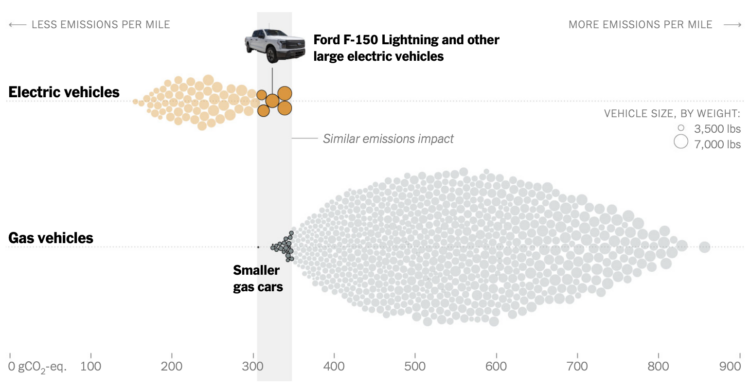








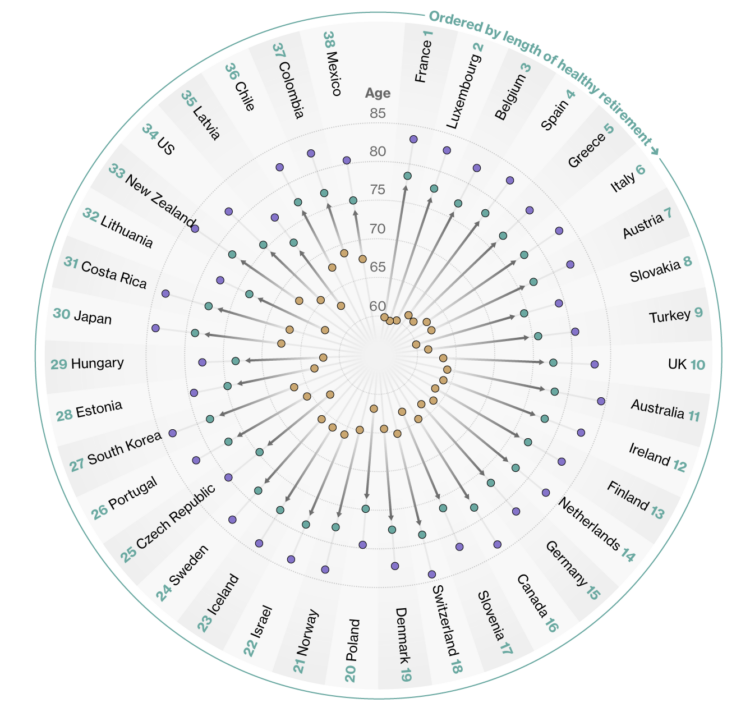



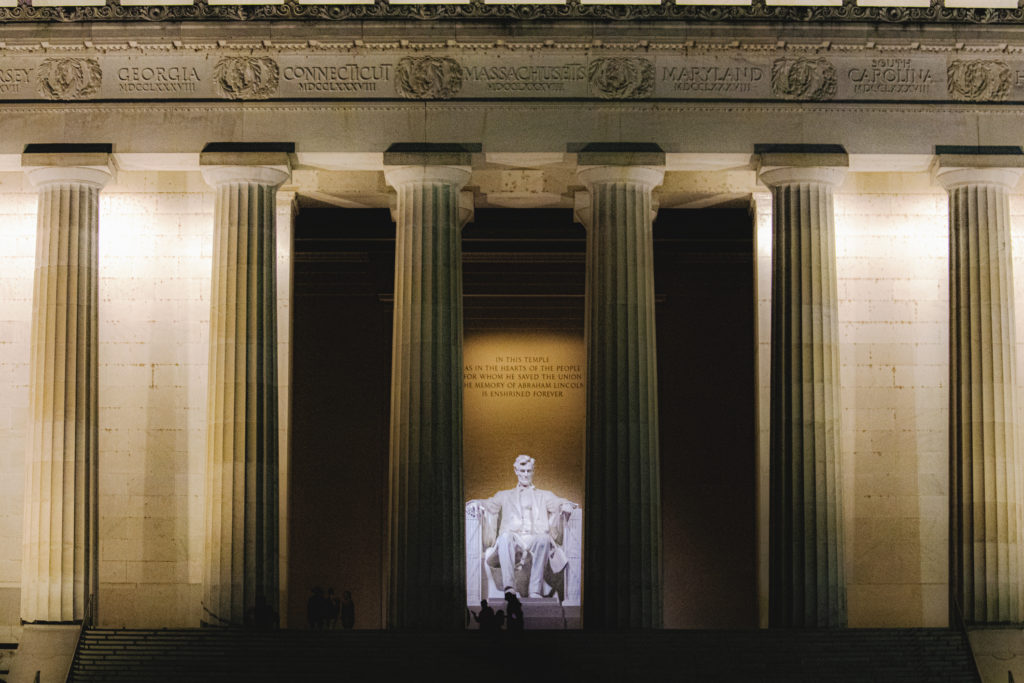







/cdn.vox-cdn.com/uploads/chorus_asset/file/24432745/Screen_Shot_2023_02_14_at_2.31.08_PM.png) Harry Potter Fandom Wiki
Harry Potter Fandom Wiki
/cdn.vox-cdn.com/uploads/chorus_asset/file/24432750/hl2.jpeg) Warner Bros.
Warner Bros.