We’ve noted for a while now how the great TikTok moral panic of 2023 is largely a distraction. It’s a distraction from the fact we’ve refused to meaningfully regulate dodgy data brokers, who traffic in everything from your daily movement habits to your mental health diagnosis. And it’s a distraction from our corrupt failure to pass even a baseline privacy law for the internet era.
Most of the folks crying the loudest about TikTok were the same people that created the policy environment that lets TikTok (and anybody else) play fast and loose with consumer data in the first place.
And they don’t want to actually fix the mess they created. U.S. corporations don’t want to make slightly less money under a policy framework that empowers consumers, and the U.S. government doesn’t want to have to get a warrant for all of that data it buys from brokers.
So you get what we have here: a big dumb performance in which we pretend that banning a single app actually does anything of use. After all, the Chinese, Russian, and U.S. governments can all just buy data from the poorly regulated data broker market. They don’t need TikTok for surveillance and propaganda; they have plenty of data brokers and U.S. tech giants for that.
For a while it was actually kind of hard to see this viewpoint reflected in press coverage of the TikTok fracas, which initially leaned heavily toward patriotic fervor. Fortunately that’s slowly starting to shift as calls for a ban begin to grow in earnest. Case in point: this New York Times piece by Julia Angwin that once again makes it clear that a TikTok ban isn’t thinking broadly enough:
The even deeper problem is that putting TikTok under state control, banning it or selling it to a U.S. company wouldn’t solve the threats that the app is said to pose. If China wants to obtain data about U.S. residents, it can still buy it from one of the many unregulated data brokers that sell granular information about all of us. If China wants to influence the American population with disinformation, it can spread lies across the Big Tech platforms just as easily as other nations can.
Angwin also points out something else I’ve found annoying about the myopic fixation on TikTok: we’ve never seen anything close to the same level of concern about the poorly-secured Chinese-made routers and internet of things devices Americans happily attach to their home networks with reckless abandon:
Not to mention that our national lack of focus on cybersecurity defenses means that it would be much more effective for China to just hack every home’s Wi-Fi router — most of which are manufactured in China and are notoriously insecure — and obtain far more sensitive data than it can get from knowing which videos we swipe on TikTok.
None of this is to say that TikTok is some innocent daisy and doesn’t pose a privacy risk.
Just that myopically fixating on the ban of one app — but doing nothing about the shitty policy environment that created the problem — is more political performance than meaningful solution. A performance that will annoy young voters, make it tougher on researchers and educators, uproot established community, face numerous First Amendment challenges, and not actually fix the core issues.
I still maintain that the most vocal supporters of a TikTok ban understand this perfectly well, and couldn’t actually care less about consumer privacy or national security. They’re eager to deflect blame for decades of failures on consumer protection, to pretend they’re being “tough on China,” to agitate a xenophobic base, and if they’re really lucky, to offload TikTok’s ballooning billions in ad revenues to U.S.-based cronies (as Trump indicated was his intention from the start).
Welcome to Good Burger, home of the Good Burger, can I take your order? Now, we don’t mean to be cheesy, but we’ve been waiting twenty-six years to say that saucy sentence, because it has now been confirmed that Kenan Thompson and Kel Mitchell will be reuniting for a Good Burger 2! The exciting news was confirmed by the stars on The Tonight Show Starring Jimmy Fallon. They also revealed that they would start filming for the second installment of the lovable cult comedy classic in May, with Paramount+ set to stream it later this year.
Speaking of the upcoming film, Kenan later said in a statement to Variety, “I can’t believe it’s been a little over 25 years since great customer service was born at Good Burger!” He continued, “Being a part of something so many generations of people have come to love has made me so proud, and now to be back where it all began working on the sequel is surreal! Love performing with my brother Kel and can’t wait to show the fans what these characters have been up to since we last saw them.”
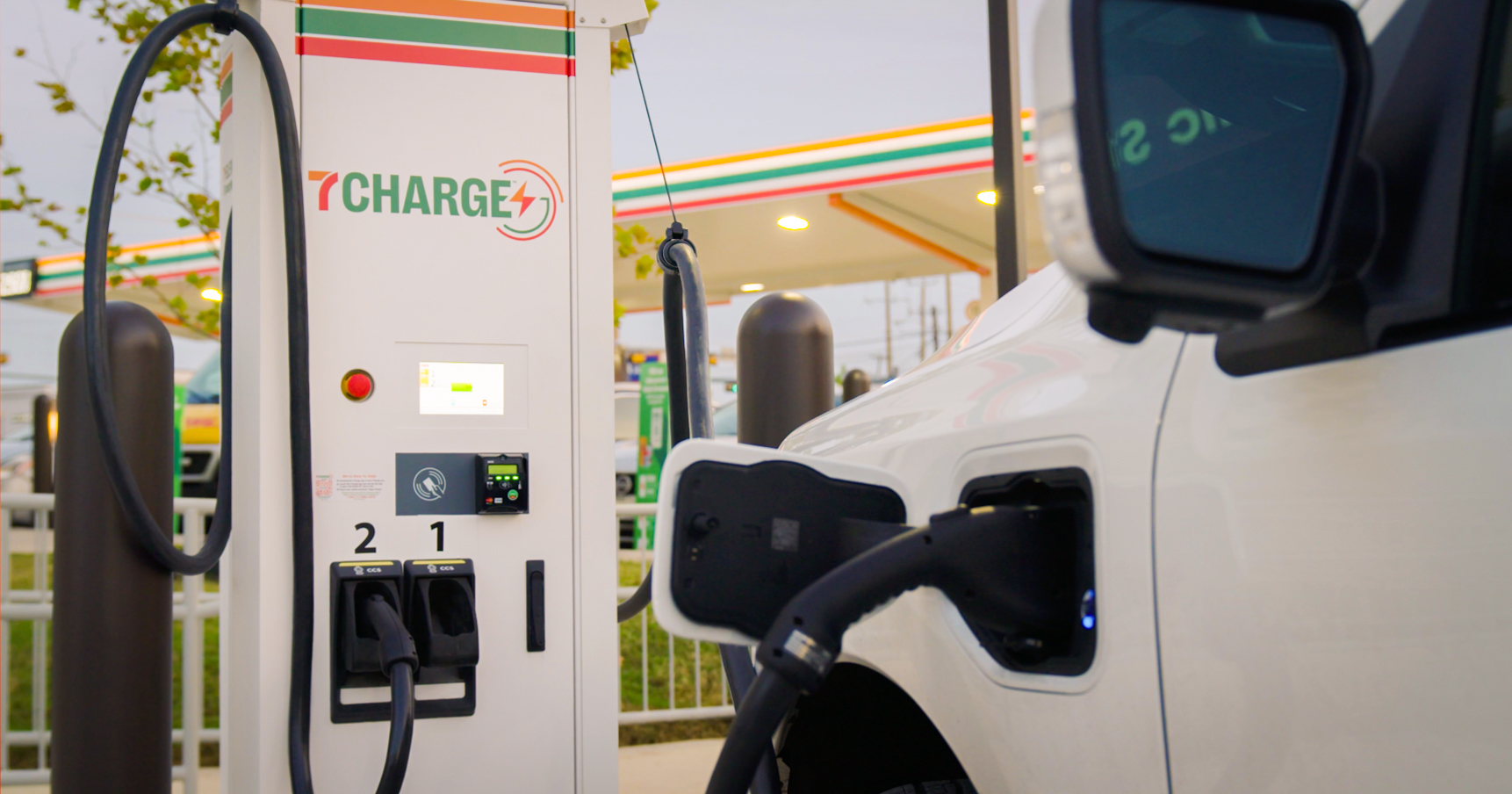
Enlarge / 7Charge is the nation's newest EV charging network, courtesy of 7-Eleven. (credit: 7-Eleven)
7-Eleven is starting its own charging network. The chain of convenience stores has launched 7Charge, which it says "delivers a convenient and reliable fast-charging experience at select 7-Eleven stores in the US, and is coming soon to Canada." There's already a smartphone app in Apple's and Google's stores, but we don't know how many chargers 7-Eleven plans to deploy or a timeline for when that might happen.
"For over 95 years, 7‑Eleven has innovated to meet our customers' needs—delivering convenience where, when and how they want it," said Joe DePinto, president and CEO of 7‑Eleven. "Now, we are innovating once again to meet our customers where they are by expanding our business to provide EV drivers convenience of the future... today."
7-Eleven says its proprietary network will "offer new levels of convenience and coordination to customers looking for a seamless charging and payment experience." That may mean it will include "plug and charge," the ISO 15118 protocol that handles billing after the car handshakes with the charger, but plug and charge is far from universally implemented in new EVs. After playing with the app for a few minutes, it appears you can also pay by scanning a QR code on the charger.
The US is struggling to deploy fast-charging stations as electric cars grow more popular. | Julian Stratenschulte/Picture Alliance via Getty Images
Electric car owners are finding out how hard it can be to charge EVs at public charging stations.
A loud pop echoed through the Walmart parking lot, an alarming sign that something was wrong.
Cass Tippit had plugged his 2017 Chevrolet Bolt into an Electrify America public charging station in Chipley, Florida, and after about 15 minutes, he heard the noise and saw that the screen on the charger had gone dark. “The dashboard of the car lit up like a Christmas tree,” he said.
Tippit unplugged the car, but the Bolt wouldn’t start. It left him stranded for hours and was the start of an ordeal that would last weeks.
Across the country, Anson Long found himself in an eerily similar predicament. He connected his 2022 Rivian R1T truck to an Electrify America charging station at the Fashion Valley Mall in San Diego. As he and his friend started to head to the mall, “We hear a loud boom, an explosive-type sound,” Long said. “We look back and see a black cloud of smoke come out” of the power unit next to the charging station.
Long rushed back to his car and stopped the charging. He tried to remove the plug from the charging port, but it wouldn’t come out. He, too, was stranded for hours and found himself chasing a solution for weeks.
hey @ElectrifyAm i just plugged in my @Rivian r1t and 1 minute later i hear a loud boom and now i have a bunch of error codes and i can’t even unplug my car…. took you guys 7 hours to get a guy out and that even wasn’t help. what’s the deal???? now my car is fried too… pic.twitter.com/6I7RsmZG0S
Both Tippit and Long had fallen into one of the biggest cracks in the United States’ electric vehicle infrastructure. As battery-powered cars and trucks transform from local runabouts to cross-country road-trippers, drivers are becoming increasingly reliant on public charging stations. In many cases, however, they’re pulling up to plugs only to find them inoperable. Even worse, a handful have had their cars bricked. And when something goes wrong, it’s hard to figure out who’s responsible.
According to a 2022 J.D. Power survey, one in five EV drivers didn’t charge their vehicle during a visit to a public charging station last year, mainly due to outages or malfunctions.
“The dirty secret of EV charging is how unreliable public networks can actually be,” said John Lawrence, senior sales manager at SparkCharge, a company developing mobile charging systems.
These gaps are emerging at a critical time for the industry. Electric cars are more popular than ever. Almost 6 percent of cars sold in the US last year were electric, topping 800,000 vehicles.
These vehicles demand more chargers. There are currently more than 148,000 EV charging points across 56,000 stations in the US. The White House wants to nearly triple that number by building a national network of 500,000 EV chargers, and the 2021 Bipartisan Infrastructure Law includes $7.5 billion to fund their construction. Earlier this month, Tesla also announced it would open 7,500 chargers in its proprietary supercharger network to all EVs. This is all a key part of the US strategy for reducing the climate impact from transportation, the largest source of greenhouse gases in the country.
Chip Somodevilla/Getty Images
Vice President Kamala Harris charges up an electric car in Maryland. The White House is aiming to deploy 500,000 EV chargers across the US.
Meanwhile, EVs have moved beyond the realm of tech-savvy early adopters willing to shell out for new Teslas. Plenty of EVs now have six figures on their odometers and are in the hands of second or third owners. And many of those vehicles depend on public charging because the owners don’t have chargers at home.
It’s these owners who will make or break the transition to cleaner vehicles. Most Americans buy cars secondhand, and they’re not looking for a toy. They need a reliable way to get around. So the experiences of EV drivers now, good or bad, will shape public perception and the pace at which more people switch to cleaner vehicles, regardless of whatever subsidies the government offers. Unreliable chargers threaten to drive the transition off course. According to a 2022 survey by Autolist, the top three reasons people decided against buying an EV were cost, concerns about range, and worries about where to charge them.
The clock is ticking for widespread EV adoption, too. States like California and New York have now set 2035 as the final year to sell new fossil fuel-powered vehicles.
There are solutions, however. Companies are working to bridge the gaps in EV charging infrastructure by increasing availability and lowering installation costs. But red tape, competing charging standards, and inadequate consumer protections mean that regulators will likely have to step in as well to smooth the road ahead.
The emerging divide in EV ownership
While Tippit and Long saw their charging problems start in similar ways, they played out differently.
Long spent hours on the phone with Electrify America and Rivian, going through both of their troubleshooting steps. No dice. It was around 8 pm on Saturday. An Electrify America technician finally arrived at midnight. The technician went through the checklist again, then tried to pry out the plug with a crowbar. Nada. Long called it a night, left the truck at the station, and took a two-hour Uber ride home.
The following Monday, he went back to the mall along with four people from Electrify America and three from Rivian. The Rivian team disassembled the front of the car and disabled the power system, while the Electrify America technicians provided mechanical persuasion to the plug.
Finally, the plug relented. The charge port looked burned, and the plug was discolored. “It looked like one of the [charging] pins was welded,” Long said.
Update: Rivian and EA came, both talked and EA was able to rip the charger out. Rivian towed car away and will inspect and replace everything then proceed.But look what happened…. lol. pic.twitter.com/IxTgCmgA2y
Long had purchased his truck new for $100,000 just two months before the incident. Rivian towed the truck to their service center and offered Long a loaner car as well as ride-hail credits while they investigated. The company ended up replacing the battery and charge port, and Long had his truck back three weeks later. “I paid not a dime,” he said.
Tippit wasn’t so lucky. After he found that his car wouldn’t budge, other Walmart customers reported seeing sparks and smoke from the nearby power unit, the gray metal boxes near the charging station that take in electricity from the grid. Then the smell wafted over. “You could smell burning electricals. It just smelled like a fried thing,” Tippit said.
Electrify America told him to tow the car at his own expense to the nearest dealer, where it sat for more than a week. He paid $350 to replace a high-voltage fuse in the car just so the dealer could diagnose it. The battery was toast. It would cost more than $20,000 to fix. He’d bought the car used a month earlier with 25,000 miles on the clock for $23,000.
The 2017 Bolt has an eight-year, 100,000-mile warranty, but General Motors, the parent company of Chevrolet, blamed the charging station for the problem. All the while, no one offered a loaner car or travel reimbursements. Electrify America eventually told Tippit that the company would reimburse him if he fronted the cost of the repair. He ended up totaling it out with the insurance company.
Cass Tippit
Sarah Tippit, wife of Cass Tippit, stands in front of their electric Chevrolet Bolt on the day they bought it.
While manufacturers love to advertise their new EVs, used electric vehicles are poised to become a larger market. In 2021, there were 1.4 million EVs registered in the US, not including plug-in hybrids. Americans buy about 40 million used cars in a year, compared to about 17 million new cars. The average car in the US stays on the road for 12 years.
But as Tippit found out, used EV owners may be on their own if something goes wrong. That could deter more budget-conscious buyers.
“This isn’t 2010,” he said. “Everyone who has an electric vehicle is not some hedge fund manager who has it because it’s a flashy way to show off some sort of status. We bought this car because it was economical and because it’s the way the future is moving.”
A spokesperson for Electrify America said the company is still investigating its charging problems.
The basics of EV charging, explained
Given the ubiquity of cellphones, laptops, and wireless headphones, it’s easy to overlook the fact that charging a battery is actually a sophisticated operation. On the scale of small devices, it’s as simple as plugging a cord into a wall outlet and letting the small bits of electronics in the power brick handle the job. But when it comes to managing the energy needed to propel a 4,500-pound vehicle, the complexity and risk grows.
The fundamental challenge is that the power grid operates on an alternating current (AC) while almost all battery-powered devices run on direct current (DC). Strictly speaking, the electronics that perform this task compose the charger, and when it comes to public charging stations, there are two types of chargers at play: the ones built directly into the EV and the ones in the stations themselves.
Bing Guan/Bloomberg via Getty Images
Electrify America currently operates the largest public charging network in the US.
The on-board charger faces space and weight restrictions. “That is limited in how much power it can realistically convert,” said Matthias Preindl, an associate professor of electrical engineering at Columbia University.
If you’re on the road and only have a few minutes, you need to be able to inject a lot more power into the battery than the on-board charger can handle. That’s where DC fast chargers, like the systems from Electrify America and the Tesla Supercharger network, come in.
In these systems, the task of converting electricity is offboarded to the charging station. The plugs at the charging stalls are just dispensers. The actual DC chargers are in gray metal utility cabinets nearby, which look similar to the pad-mounted transformers you can find scattered across cities near power lines. They provide a huge amount of power directly to the battery, topping it off in as little as 20 minutes. But DC chargers require sophisticated hardware to connect directly to the grid, adding to their cost.
EVs also have different plug shapes to worry about. There are two main fast charging standards in North America: Tesla and Combined Charging System, or CCS, which is used by just about every other manufacturer. (There’s also CHAdeMO, but no new EVs use this standard.)
For Tesla, the workflow is pretty straightforward. The company makes both the fast chargers and the EVs. This helps keep mishaps to a minimum, and drivers know exactly who to call if something goes wrong. This will soon change as Tesla charging stations accommodate other carmakers.
Nate Smallwood/Bloomberg via Getty Images
Tesla now plans to open its supercharger network to other automobile marques.
Electrify America and other public DC chargers, on the other hand, are designed to be able to charge everything from BMW’s tiny i3 to the monstrous Hummer EV. Each manufacturer has different needs, so communication between the car and the charging station is critical. If something is lost in translation, bad things can happen, as Tippit and Long found out. It can also be difficult to figure out whether the problem was due to the car or the charging station, and thus who is accountable.
Preindl said any number of potential hardware or software issues could have caused their chargers to malfunction, but when dealing with the massive amount of electricity in a DC fast charger, something as trivial as leaving a tiny gap between the plug and the charge port on the car can be dangerous.
“If a plug doesn’t make good contact, locally it creates high current and acts effectively like a welder,” Preindl said. “It welds the receiver and the plug together.”
But it’s important to put these public charging stations into context with their competition. Conventional gas stations come with their own risks but rarely get national news coverage. Every year, there are about 4,000 fires at gas stations across the US, leading to as many as 43 injuries, three deaths, and $30 million in damages, according to the National Fire Protection Association.
The road ahead for EV charging
Of course, gas stations have their benefits, too. Since they’re so common, if one pump is out at a gas station, a working pump is usually not too far away. Drivers can also shop around for the cheapest fuel.
EV drivers, on the other hand, have to plan carefully and keep close track of which public fast chargers are operating and have open slots. Otherwise, they could end up waiting a while to recharge or, worse, stranded. They may also need separate apps or accounts with every charging provider, making the process more tedious than it needs to be.
Electrify America currently operates the largest public EV charging network, with more than 800 stations hosting 3,500 individual chargers. The company was formed by Volkswagen in 2016 as part of its punishment for cheating on emissions tests. Drivers have complained of poor maintenance and a high rate of outages across the network. The stations also seem to struggle in the cold.
Other public networks, like ChargePoint and EVgo, have experienced similar reliability issues.
So beyond safety, a nationwide EV charging network — particularly one that offers fast charging — needs to be abundant, reliable, accessible, and cheap in order to compete with gasoline and diesel. Right now there’s progress on all of these fronts: Thousands more charging stations are in the works; new designs are bringing down costs and installation timelines, and plugging in gaps with new types of charging systems. Still, there are some annoying problems that the government will have to step in to resolve as well.
Drew Angerer/Getty Images
Flanked by two electric Ford Mustangs, US Energy Secretary Jennifer Granholm announces new US investments in EV charging infrastructure.
So what comes first, the electric cars or the charging stations?
“What we’ve seen is that there’s a lot of interest to deploy infrastructure ahead of the market as a sort of way to hold real estate on the expectation that EVs will come,” said Scott Shepard, research director at the consulting firm Guidehouse, studying vehicle electrification.
Electrify America is planning to expand to 1,800 stations with 10,000 individual chargers in the US and Canada by 2026. Oil companies like BP are even starting to invest in EV charging. They already own the gas stations, and many are sitting on record profits and looking for places to stash their cash.
DC fast chargers, however, have to climb over additional hurdles. They require specialized equipment to connect since they use so much electricity at once. In particular, they often need medium-voltage transformers that step down voltage from the power grid to a level cars can use. There’s a shortage of these devices that could take up to two years to resolve, according to Shepard. Fast charging stations also require special permits, which can add three to six months to their construction timeline. The building costs can easily amount to millions of dollars.
FreeWire is a company trying to get around this problem by integrating energy storage into fast charging stations. That allows the station to dispatch much more power while charging than it actually draws from the grid at any given moment.
“Our golden ratio is 10 to 1, so we have a 200-kilowatt charger but we use 20 kilowatts of input power, and the battery just acts as a buffer,” said Arcady Sosinov, CEO of FreeWire. “It works just like the hot water tank in your home.”
FreeWire
FreeWire’s fast charging stations integrate energy storage, which allows them to deploy faster and cheaper.
This speeds up the deployment time. Sosinov said his company deployed 30 fast charging sites in British Columbia in 30 days in December.
Mobile charging is another way to close gaps, according to Lawrence at SparkCharge. Rather than driving to a charging station, EV owners can request electricity to be delivered to them while they eat at a restaurant or go to a concert, “almost like the UberEats of EV charging,” Lawrence said. Essentially giant portable batteries, mobile charging sites can serve as waypoints to extend the range of EVs, even when there’s no connection to the grid.
Regulators can also pave over some of the potholes in EV charging. The government could force the charging networks to be interoperable so users don’t have to register separately for each station.
They could also make manufacturers stick to a narrow set of plug standards. While Tesla and CSS represent the two main types of charging ports, CCS is more of a set of guidelines than a binding rulebook. (“It’s super loosey-goosey,” according to Sosinov.)
Regulators could impose tighter standards to make charging more consistent across different cars and charging networks. The government could also establish clear rules about who is liable if a car ends up damaged or bricked at a charging station.
These are important issues to resolve not just for safety reasons, but to ensure that drivers remain confident in electric cars and trucks. The goal is not to prevent every possible problem, but to make sure that a negative experience won’t put an owner off EVs forever.
Long said he comes from a family of EV owners and his R1T truck was the second EV he’s personally owned. His ordeal at the charging station hasn’t dissuaded him at all.
Tippit’s Bolt was his first EV. He grew to appreciate its convenience and fuel savings. But getting his car bricked and totaled made him more skeptical of public charging stations. He replaced it with a used Tesla Model 3, granting him access to the Tesla supercharger network. “So far, so good,” he said.
Newly obtained genetic data from the Chinese Center for Disease Control and Prevention (China CDC) links the pandemic coronavirus SARS-CoV-2 to animals—specifically raccoon dogs—at the Huanan Seafood Wholesale Market in Wuhan, where the earliest COVID-19 cases centered, a group of independent scientists told the World Health Organization this week.
The genetic data came from environmental swabs collected at the market by China CDC in January of 2020. The existence of these swabs was previously known, as was the fact that they were positive for SARS-CoV-2 genetic material. But in late January of this year, scientists at China CDC uploaded—and then later removed—additional genetic data from these swabs to a public genetic database called GISAID, the WHO said. That additional data, which had not been previously disclosed, indicates that the SARS-CoV-2-positive swabs also contained genetic material from humans and animals, particularly large amounts of genetic material that closely matches that of raccoon dogs.
Raccoon dogs—foxlike animals whose faces closely resemble those of raccoons—are known to be susceptible to SARS-CoV-2 infection and were known to be sold at the market.
A public pool in the UK is expected to save £20,000 (about $24,000) and cut carbon emissions by 25.8 tons annually by warming a 25 m and children's pool with waste heat from a data center from startup Deep Green. Data center owners have long tried to limit the impact of heat emanating from their machines, with some going as far as to submerge servers in water and others finding ways to redirect waste heat so it can warm larger areas, like buildings and communities. UK-based Deep Green is a newcomer in the data-center heat game and is making its entrance notable by putting a monetary figure on potential savings, which are fueled by the heat's low, low rate of free.
Deep Green's paying customers are machine-learning and AI firms seeking computing resources. As reported by Datacenter Dynamics on Tuesday, clients can leverage Deep Green's 28 kW system with high-performance computing (HPC) capabilities. The HPC cluster at the Exmouth Leisure Centre swimming pool has 12 four-CPU cards and could eventually be used for cloud services and video rendering, Deep Green CEO Mark Bjornsgaard told the publication. According to the BBC , the server is about the size of a washing machine.
The computers are submerged in mineral oil that captures heat that gets transferred into pool water with a heat exchanger. The pool still has a gas boiler to boost the water's temperature if required. Deep Green claims it's transferring about 96 percent of the energy used by its computers and reducing a pool's gas heat usage by 62 percent. Deep Green is paying the Exmouth Leisure Centre for all the electricity its data center uses, as well as any setup costs, and the Exmouth Leisure Centre gets the heat for free.
It’s not just eggs that have been eye-poppingly expensive due to inflation. The literal bread and butter of the American diet cost much more today than it did just a couple of years ago: The average price of white bread was about 22 percent higher in January than it was two years ago, and flour is up almost 21 percent. Butter cost 31 percent more.
Ordinary Americans have been watching their grocery bills climb to new heights as prices rise on cereals, meat, dairy, fruits, and vegetables — virtually everything we eat. According to the US Department of Agriculture, the price of food for home consumption rose by 11.4 percent last year — the highest yearly percent change since 1974 – and it’s expected to rise by another 8.6 percent in 2023. Compare that to the last two decades, when average year-to-year food price inflation was 2 percent. Consumers are at the limit of what they can afford.
For the most vulnerable families, the squeeze at the grocery store has become that much more dire. A recent survey of American households that receive food stamps conducted by financial software company Propel showed that almost a third were skipping meals, eating less, or relying on food banks as food prices balloon. On March 1, a pandemic boost to the food stamps program ended, and households will now on average have $95 less per month to spend on food.
Food companies say their price increases merely reflect how much their costs have gone up due to “inflationary pressures,” like higher labor costs, transportation delays, and capacity issues, or the higher price of grains and animal feed. Yet inflation in 2022 outpaced the rise in wages in most industries, and the prices of many agricultural commodities have come down.
The eyebrow-raising spikes at the grocery store can only partly be blamed on manufacturers’ higher costs. The inflation narrative offers the perfect jumping-off point for companies to raise prices, and major food manufacturers are taking advantage of the moment to boost their profits.
The proof? Look at just how rich companies have gotten since the start of the pandemic.
Who exactly is making money off your expensive food?
Chances are, you’ve bought a product that the food giant Cargill has had a hand in sourcing or processing, whether it’s wheat, soy, cocoa, feed for livestock, or the meat that ends up in grocery stores and restaurants. In fiscal year 2022, its revenue reached a record $165 billion. A record $6.68 billion of that was profit, double what its profits were in 2020. Its shareholders received $1.21 billion of those profits in dividends — yet another record.
“Corporate profits have hit their highest level ever, and corporate profit margins — how much they’re making on each unit that they’re selling — have hit the highest level in 70 years,” said Chris Becker, senior economist at the Groundwork Collaborative, a progressive economic advocacy organization.
Tyson Foods, the largest meat company in the US, also more than doubled its profits between the first quarter of 2021 and the first quarter of 2022. Packaged foods manufacturer General Mills, which owns a variety of cereal brands as well as food brands like Annie’s, Betty Crocker, Chex, and Bisquick, has raised prices five times since 2021 and indicated another price hike could be coming soon. At the end of last year, its profits were up 97 percent compared to the previous quarter, and up 16 percent annually. Conagra, which owns packaged food brands like Healthy Choice, Duncan Hines, and Reddi-wip, noted a 22 percent profit increase in its last quarterly earnings report. Grocery giant Walmart — the largest US corporation, bar none — has seen its profits grow for the past several years, with a 7 percent jump between 2020 and 2021.
It’s not just companies growing richer. Food billionaires — the people at the top of the food chain at many of these companies — have grown exponentially wealthier, too.
The seven billionaire members of the Walton family, which owns Walmart, have a combined net worth of $238 billion, according to a recent Oxfam report, and their wealth increased by $8.8 billion between 2020 and 2022.
It’s not just companies growing richer. Food billionaires have grown exponentially wealthier, too.
For the past few years, Oxfam’s annual reports on global inequality have emphasized the windfall profits that food corporations and the individuals who run themhave made during the pandemic. The Cargills, some of the food industry’s most powerful players, are a very good example. Almost 90 percent of their namesake food and commodities trading company is owned by family members, who have all been enriched thanks to their stake in the largest privately held company in the US.
Today, there are four more billionaires in the Cargill family than there were in 2020, bringing the tally up to 12 billionaire heirs.
The Mars family, whose company makes candy (3 Musketeers, Skittles, M&M’s, Snickers), packaged food (Ben’s Original, Tasty Bite, MasterFoods), pet food, and more, boast six billionaire members who are together worth about $115 billion. Between 2020 and 2021, they added $21 billion to their fortunes.
“During the pandemic alone, billionaires involved in the food and agribusiness sectors — just those billionaires — increased their wealth by at least $400 billion,” said Nabil Ahmed, director of economic justice at Oxfam America. “We’ve seen 62 new food billionaires created during the pandemic.”
How food monopolies affect prices
Why are corporate profits so high at a time when regular people feel increasingly strapped? Because a small number of players have gobbled up most of the food chain. Cargill and just three other agribusiness companies control about 70 percent of the world’s agriculture market, according to Oxfam. Brands like PepsiCo, Nestle, Mondelez, and Conagra produce and market the vast majority of the offerings found in US grocery stores.
“We look at the supermarket shelf, and we might be buying tea, cereal, whatever it might be, and we think, ‘Oh, I’ve got a real offer of choice here on the product I want to buy,’” Ahmed, of Oxfam, told Vox. “Frankly, it’s an illusion of choice, because so many of those products are actually owned by the same company.”
Grocery retailers, too, have become increasingly consolidated. The ongoing Kroger-Albertsons merger, which could be blocked by the FTC, for example, has raised alarm bells from consumer advocates; if the merger goes through, Kroger-Albertsons and Walmart together would control 70 percent of their industry. In fiscal year 2022, Kroger’s operating profit was $4.1 billion — in 2021, it was $3.5 billion. Since the pandemic began, Kroger has paid billions in dividends to its shareholders.
Companies tend to raise prices when they think they won’t see a huge backlash — like when everyone else is hiking prices, too
Evan Wasner, a University of Massachusetts-Amherst economist who authored a recent paper on companies’ price-setting power with economist Isabella Weber, said that companies tend to raise prices when they think they won’t see a huge backlash — like when everyone else is hiking prices, too. “In a sense, economy-wide cost increases act as a kind of coordinating mechanism which allows firms competing with one another for market share to safely raise prices together,” said Wasner.
Companies are aware that shoppers are seemingly willing to accept the sticker shock at the grocery store — as long as there’s apparent justification for it. In February, General Mills’ CEO noted to analysts that consumers hadn’t pushed back against higher prices in the previous few quarters.
Market dominance makes the supply chain more brittle, too, because it means there are just a few vulnerable points for failure. Last year’s baby formula shortage is an example of how dangerous the results can be. Just two US companies control about 80 percent of the market, which meant that when one manufacturing plant shut down, the entire nation struggled to buy baby formula.
Becker blames the vulnerable state of supply chains in part on market deregulation over the last several decades, which has enabled companies to cut corners. In the 1980s, the growing popularity of “just-in-time” inventory systems, where companies order just the amount of inventory needed right now without a buffer, allowed companies to become more efficient. That has meant lower prices for consumers, usually, and higher profits for companies — until a crisis hits, and suddenly there are shortages and supply bottlenecks.
Food companies can raise prices. Consumers can’t do much about it.
The typical explanation of Covid-19-related inflation goes like this: The pandemic disrupted the flow of the global supply chain. How much it costs companies to make a good or provide a service went up. Other crises piled on; the Russia-Ukraine war, for example, drove up the price of key commodities like oil and wheat. In response to all of this, companies raised prices to offset their higher costs.
Economists agree that supply chain issues are a major driver of the price hikes we’ve been seeing. In the food industry especially, transportation disruptions due to the pandemic and higher grain prices have made a significant impact. But there’s disagreement on whether the higher costs that have resulted from those woes should be passed on to consumers — which is largely what has been happening, according to Becker.
Of course, corporations want to pass on their costs, and consumers would prefer prices didn’t rise. So who should pay? The problem is that there’s a yawning gap in power between these two opposed interests — and the imbalance can grow even wider during an economic shock, such as a pandemic.
This is a sellers’ inflation, explained Wasner. That means the pressure to increase prices comes from companies wanting to raise prices, not from consumers finding it difficult to buy what they want — it’s not inflation primarily caused by too much demand. During normal times, companies are hesitant to raise prices even if there’s higher demand, because if they’re the only one to hike prices, they could lose customers to competitors. During a crisis, it’s a different story, because there’s an implicit understanding that every company is going to raise prices. It’s a tacit agreement, a subtle wink and nod of understanding.
“You just see your price go up and you say, ‘There are these things going on in the economy. I understand that’s just the way it is.”
It can go beyond that, Wasner said. They can not only raise prices to offset costs but to gain profit margin. “If you’re purchasing meat at the grocery store, you don’t actually know how much the cost increase is for a slab of meat,” he said. “You just see your price go up and you say, ‘Okay, well, there are these things going on in the economy. I understand that’s just the way it is.’”
“Many food companies have basically taken advantage of the precarity of this moment,” said Ahmed, of Oxfam. “They’ve exploited but also exacerbated inflation.”
Transcripts of corporations’ recent earnings calls illuminate that they’re well aware of their power right now. Groundwork has been collecting highlights from corporate earnings calls on its website. “They’re saying a lot about cost increases and supply shocks, but they’re also saying it doesn’t matter,” said Becker. “We do have these higher costs that we’re paying, but we have so much pricing power, we’re so capable of passing all these prices on to consumers, that it doesn’t matter.”
In November 2021, Kroger’s chief financial officer said that the company was “very comfortable with our ability to pass on the increases that we’ve seen at this point. And we would expect that to continue to be the case.” Tyson Foods’ CEO said in August 2022 that sales had increased 16 percent year-to-date largely thanks to “higher average sales price in chicken and prepared foods.”
Ahmed points to what Jeffrey Meli, global head of research at Barclays bank, told Bloomberg early last year. “The longer inflation lasts and the more widespread it is, the more air cover it gives companies to raise prices,” Meli said.
The power of inflation narratives
This isn’t to say that companies aren’t sensitive to what consumers think about price hikes. In fact, they’re very sensitive and strategic, said Wasner.
But big corporations with brand recognition and customer loyalty can feel safer about charging more. (PepsiCo’s CEO noted recently, for example, that consumers were “willing to pay more for our brands.”) They believe customers will be more willing to pay higher prices if the hikes are seen as legitimate, according to Weber and Wasner’s paper. This legitimization can take place with the help of the media, and “a narrative of broken supply chains and exploding energy prices can develop understanding for rising prices on the part of customers, who would otherwise feel betrayed by the firms.”
That narrative has limits, of course, as my colleague Emily Stewart recently reported. But it has already worked to ease understanding and acceptance of incredible price hikes for essential goods and services. Once companies raise prices, they don’t tend to lower them even if input costs go down.
How do we prevent that initial price hike from happening in the first place?
One way the media could refocus the inflation narrative is to look at the root causes of initial price increases, Wasner said, and “highlighting the profits that are reaped from these upstream industries” such as oil. Their price increases have rippled down all the way to the consumer; how do we prevent that initial price hike from happening in the first place? Waiting for inflation to subside isn’t really a solution. “In the meantime, prices have gone up and there’s essentially been a transfer of income from workers to firms,” said Wasner.
Becker echoed that the current economic orthodoxy on how to fix inflation — to rein in Americans’ ability to spend money by attempting to raise unemployment levels — should be questioned.
“I would say that we have this really toxic narrative out there that the only way we can get inflation under control is to throw a bunch of people out of work,” said Becker. “Larry Summers recently claimed that we would need 10 percent unemployment [for one year], which is about 11 million jobs lost, to get inflation under control.”
“We’re going to try to solve a cost-of-living crisis by making people poor or losing their jobs? I think that’s crazy,” he continued.
What will break the cycle of not just inflation, but of consumers having to pay ever-higher prices for essential goods while the world’s food producers become richer? Experts offered several potential solutions. One is stronger antitrust laws and improved enforcement of preventing and breaking up monopolies. Anti-price gouging laws are another tool in the arsenal. Oxfam, for one, has been a vocal advocate of a windfall profits tax on food corporations. “It’s a tax on those corporations which are raising prices substantially in excess of costs,” Ahmed explained. The fact that it would raise tax revenue is great. But “fundamentally, it reins in companies’ monopoly power and disincentives corporate greed.” Other countries already have similar measures in place. Spain expects to raise about $6.39 billion from its windfall tax on energy companies and banks.
“Corporations are really making profits on the backs of consumers and households,” said Becker. “Let’s tax those windfall profits — and let’s do something with that money.
“There’s nothing that really stops corporations right now from just doing whatever they want.”
Thanks to a combination of local climates, electricity prices and historical accident, America’s home heating system, like the country’s politics, is deeply divided. In the South, thanks to government funding from almost a century ago and mild climates, many rely on electricity to stay warm. The Midwest is dominated by natural gas and, in rural areas, propane. In the Northeast, despite high prices and inconvenience, fuel oil still heats many homes.
The Federal Communications Commission should be investigated for letting employees own stock in Comcast, Charter, AT&T, and Verizon, nonprofit watchdog group Campaign Legal Center told government officials.
"Federal law specifically bans FCC employees from owning 'any stocks, bonds, or other securities of [any company] significantly regulated by the Commission,'" the nonprofit group said last week in a letter and detailed report sent to FCC Acting Inspector General Sharon Diskin. "Despite this ban, the most recent financial disclosures publicly available show that ethics officials allowed multiple FCC employees to own stock in telecommunications and other companies that appear to fall under the prohibition."
The letter, sent by Campaign Legal Center General Counsel Kedric Payne and two other lawyers at the group, urged the FCC Office of Inspector General (OIG) to "investigate whether the FCC's ethics officials took appropriate action to enforce the ethics laws... The ethics officials responsible for enforcement must explain to OIG and the public why they allowed employees to hold stocks in FCC licensed telecommunications and computer companies in apparent violation of the law."
A list circulated in January by the distributor to Walgreens and CVS underscores the uncertainty surrounding abortion pills in the post-Roe era.
Earlier this month, Politico broke news that Walgreens, the nation’s second-largest pharmacy chain, assured21 Republican attorneys general that it would not dispense abortion pills in their states should the company be approved to dispense them. The decision was met withsharp protestby Walgreens customers, abortion rights activists, and Democrats, who accused the pharmacy of caving needlessly to pressure.
But fear of state prosecution is not the only factor shaping Walgreens’ decision-making. Another previously unreported constraint on the companyis that its sole supplier of Mifeprex — the brand-name drug for the abortion pill mifepristone first approved by the Food and Drug Administration in 2000 — circulated a list to its corporate clientsin January naming 31 states that it would not supply the abortion medication to. Vox spoke with two sources who had reviewed that listrecently.
The sole USdistributor forMifeprex is AmerisourceBergen, one of the largestpharmaceutical distributioncompanies in the world. (The federal government is currently suing AmerisourceBergen forallegedly distributing opioids while knowingthey would later end up on the illegal market. The Pennsylvania-based company has denied this.) Back in January, AmerisourceBergencreated its list of31 states using as a source the website of theGuttmacher Institute, a reproductive research organization that tracks state abortion restrictions, according to sources with knowledge of the list’s origin.
The list’s existence underscores the precarious state of abortion rights in the US in the wake of Dobbs v. Jackson — the 2022 Supreme Court ruling that struck down Roe v. Wade, effectively leaving abortion rights to each state. Walgreens drew condemnation for saying it would not dispense abortion pills, even in states where it’s currently legal to do so. AmerisourceBergen’s list indicates another reason influencing Walgreens’ stance: a distributor — it’s the only one for this drug — had signaled that it would not supply pharmacies with abortion pills.
Walgreens and Danco Laboratories, the manufacturer of Mifeprex, declined to comment. A source with knowledge of the contractual agreement between Walgreens and AmerisourceBergen told Vox that theparties are legally barred from talking publicly about the supplier, but thatadvocates have been trying to persuade AmerisourceBergen to adopt a less risk-averse stance on abortion-pill distribution.
Lauren Esposito, a spokesperson for AmerisourceBergen, told Vox over email that the situation “is dynamic and ever evolving. Any information that you’re referring to from January is certainly out of date by now. Additionally, as I’m sure you can appreciate, for contractual purposes we are not able to discuss specific products.” The company later released an additional statement, emphasizing that AmerisourceBergen does not “independently decide what medications should be available to health care professionals as part of their treatment plans” and does “not make clinical decisions or values-based judgements on which FDA approved products it distributes.”
Vox asked Guttmacher about the supplier’s list and its reported use of the institute’s site as a guide for compiling the list.“We would like to understand what data AmerisourceBergen is basing these claims on, as we are not aware of any policies that would prevent the shipping of mifepristone to such a large number of states,” said Elizabeth Nash, a Guttmacher policy analyst. “Private companies should be extremely careful not to limit access to mifepristone in response to threats from anti-abortion groups or politicians.”
Abortion rights advocates andconsumersresponded with outrage to the Politico report,calling for aboycott of Walgreens until it reverses its stance. At particular issue is the fact that four states on Walgreens’ list — Montana, Kansas, Iowa, and Alaska — have restrictions on pharmaciststhat are blockedin court. California DemocraticGov. Gavin Newsom announced he would not renew a multimillion-dollar contract with the pharmacy chain to signal his disapproval.
Walgreens spokesperson Fraser Engerman maintained the company’s position hasn’tchanged, and that they still intend to dispense mifepristone “in any jurisdiction where it is legally permissible to do so.”
In January, the Food and Drug Administration announced that brick-and-mortar pharmacies could apply for certification to sell abortion medication at their stores, a move hailed as an important step toward expanding access to the safe and effective drug that hasbecome the most common method for ending pregnancies in the United States.
Representatives from CVS and Rite Aid, which like Walgreens said they wouldseekcertification, have remained conspicuously quiet on the issue for the last two weeks, and did not return requests for comment. (No drugstore has yet been certified, and it is not clear how long the process will take.)
The ongoing debate over what pharmacies like Walgreens can and should do when it comes to dispensing mifepristone reflects the political challenge of navigating the patchwork of conflicting stateabortion restrictions in the post-Roe era. With a bevy of new laws and litigation, individuals, abortion providers, and companies are left to make consequential decisions in a highly fraught and confusing legal environment — which, in the case of Walgreens and AmerisourceBergen, means inaction in the face of uncertainty.
Pharmacists are caught in the middle
Caught in the middle of this legal and political tug-of-war are abortion providers. While it’s easy for Democratic governors in states like Illinois and California to tell companies they should dispense medication abortion, it’s harder to insistthat they should put theirpharmacists at risk.
“Violating the has-to-be-done-by-a-physician requirements in some of these states is punishable by jail,”aWalgreens spokesperson told the New York Times. “In other states, it’s punishable by a civil fine, and in a number of them it’s punishable by licensing sanctions. And so these are restrictions that present real risks to pharmacists.”
The 21 states where Walgreens has said it will not dispense mifepristone fall into a few different categories, explained Nash of Guttmacher. Some have banned abortion entirely, while others have laws requiring physicians to dispense drugs in-person, or require in-person counseling and ultrasounds, making the prospect of dispensing mifepristone through a pharmacy impractical. And still others, like Alaska, should feasibly be able to dispense through a pharmacy, Nash said.
“Overall there’s a lot of confusion in the marketplace as pharmacies and pharmacists try and follow all the laws and regulation and litigation,” said Ilisa Bernstein, the interim CEO of the American Pharmacists Association. “It’s unsettled right now.”
Bernstein told Vox that beyond legal risks, members are grappling with new safety issues: “Pharmacy team staff safety is a concern, whether it’s getting into the pharmacy and going through people who may be demonstrating and picketing outside or in the pharmacy, where team members want to be sure they’re in a safe space when they’re working,” she said. Recently anti-abortion activists protested Walgreens’ annual shareholder meeting, casting drugstores as the new abortion clinic.
Next week the American Pharmacists Association is holding its annual meeting where hundreds of delegates from across the country plan to revisit the group’s policies on mifepristone and reproductive health care.
Regardless of what pharmacists want their group’s policies to be, they will remain bounded by the FDA’s Risk Evaluation and Mitigation Strategies (REMS) list, a restrictive designation the federal government places on mifepristone over the objections of groups like the American Congress of Obstetricians and Gynecologists. Pharmacists will also be circumscribed by the lawyers of their companies, and other actors involved in the medication abortion supply chain, like drug distributors and lawmakers.
Esposito, the spokesperson for AmerisourceBergen, told Vox, “We continue to make FDA-approved medications, including reproductive health medications, available to health care facilities and providers in all 50 states and territories that meet local, state, and federal requirements to distribute and dispense.”
But whether AmerisourceBergen willlet Walgreens and other drugstores sell Mifeprex in all the locations pharmacies wouldbe willing to dispense them fromis another question.
Update, March 17, 10:10 am ET: This story was originally published on March 15 and has been updated with an additional statement from AmerisourceBergen on access to reproductive health medication that the company issued after publication.
Ready to wear green this weekend? Here are some St. Patrick’s Day events happening around DC: Irish Cooking Classes at Cookology Culinary School 4238 Wilson Blvd., Suite 3110, Arlington Cookology will host four Irish cooking classes between March 16 and March 19. Attend one of the evening classes to learn how to make classics like […]
One of the life’s certainties is that copyright maximalism will continue to encourage absurd rulings by complaisant courts. Here’s a rather spectacular case from Germany. It involves a “photo wallpaper”. For those of you who – like me – aren’t quite sure what that means, it is the name given to wallpapers that are essentially huge, blown-up images based on photographs. In this particular instance, photo wallpaper was used to decorate a holiday flat. As is normal for such situations, the owner took pictures to entice people to rent the property, including images of the room with the photo wallpaper, which was clearly visible in the online marketing materials. Here’s how things went as a result, reported by Pinsent Masons:
The flat owner had purchased the wallpaper in 2013 at a price of €13.50. In 2020, the flat owner received a cease-and-desist letter: the photographer, who held the copyright to the tulip photos used for the wallpaper, considered that his rights to the images had been infringed and demanded the flat owner to stop reproducing the photographs on the internet. The owner of the holiday flat refused to sign the cease-and-desist declaration and the case went to court.
The photographer explained that he had given permission for his photos – of tulips, apparently – to be used for a wallpaper. But he had only given permission for the use of the photo as wallpaper, and claimed that further permission to display his image was required if a photo of it were put online. Unfortunately the Cologne Regional Court agreed with this interpretation. It’s a ruling that could have important ramifications for anyone taking pictures of furnished rooms, as the Pinsent Masons post explains:
the ruling is not only relevant in relation to photo wallpapers, but could also be extended to other furnishing items that create an atmosphere, such as pictures, sculptures or designer furniture.
This case is yet another example of copyright gone mad, with additional authorization being required for perfectly normal and harmless activities that no rational person would regard as requiring permission or payment.
With the advent of genomic studies, it's become ever more clear that humanity's genetic history is one of churn. Populations migrated, intermingled, and fragmented wherever they went, leaving us with a tangled genetic legacy that we often struggle to understand. The environment—in the form of disease, diet, and technology—also played a critical role in shaping populations.
But this understanding is frequently at odds with the popular understanding, which often views genetics as a determinative factor and, far too often, interprets genetics in terms of race. Worse still, even though race cannot be defined or quantified scientifically, popular thinking creeps back into scientific thought, shaping the sort of research we do and how we interpret the results.
Those are some of the conclusions of a new report produced by the National Academies of Science. Done at the request of the National Institutes of Health (NIH), the report calls for scientists and the agencies that fund them to stop thinking of genetics in terms of race, and instead to focus on things that can be determined scientifically.
Enlarge / The EPA headquarters in Washington, DC. (credit: crbellette)
On Tuesday, the Environmental Protection Agency announced that it had started the process that will see drinking water regulations place severe limits on the levels of several members of the PFAS (perfluoroalkyl and polyfluoroalkyl substances) chemical family. PFAS are widely used but have been associated with a wide range of health issues; their chemical stability has also earned them the term "forever chemicals." The agency is currently soliciting public feedback on rules that will mean that any detectable levels of two chemicals will be too much.
PFAS are a large group of chemicals that have uses in a wide range of products, including non-stick cooking pans, fire control foams, and waterproof clothing. They're primarily useful because of their water-repellant, hydrophobic nature. That nature also tends to keep them from taking part in chemical processes that might otherwise degrade them, so contamination problems tend to stick around long after any PFAS use. And that's bad, given that they seem to have a lot of negative effects on health—the EPA lists cancer risks, immune dysfunction, hormone signaling alterations, liver damage, and reproductive issues.
Back in 2021, the Biden administration announced that it was starting a research and regulatory program focused on PFAS and issued preliminary guidance on acceptable levels last year. Today's announcement is the start of a formal rulemaking process that will see the development of legally binding limits. This process involves the EPA publishing proposed rules to allow the public and interested parties a chance to provide feedback. Once that feedback is addressed, formal rules will be published.
Fed Chair Jerome Powell speaks during a House Financial Services Committee hearing on Wednesday, March 8, 2023, days before Silicon Valley Bank’s collapse. | Samuel Corum/Bloomberg via Getty Images
SVB’s collapse is the price of the Fed’s interest rate gambit.
Over the past year, the Fed has been hiking interest rates at an aggressive, quick clip in an effort to tame high inflation in the United States. The common adage on Wall Street is that the Fed increases rates until something breaks. Until last week, the question was what, if anything, was breaking. Interest rate increases generally take some time to work their way through the economy, but some people were sort of scratching their heads at just how long that lag seemed to be. The job market, which interest rate increases are aimed at cooling, has remained strong. The economy is generally in surprisingly decent shape. Sure, things looked a little ugly in crypto and tech, but maybe the trouble would be contained there.
Now, the landscape looks starkly different, and we know what the Fed broke: Silicon Valley Bank, or SVB. (Disclosure: Vox Media, which owns Vox, banked with SVB before its closure.)
It will be a long time before we completely understand exactly what happened in SVB’s swift, stunning decline, but there’s little doubt interest rate hikes were a contributor. They were also likely in play in the demise of Silvergate and Signature Bank, both of which have been shuttered in March.
“It’s always a surprise. We didn’t know what would break, apparently it was this,” said Alexander Yokum, an analyst at CFRA Research who covers banking. “This would not have happened if the rates hadn’t gone up so quickly and these portfolios hadn’t gone underwater so much.”
If rates continue to go up quickly, it could pose more problems for more banks. That’s got the Fed in a bit of a pinch — it wants to tame inflation, which remains high, and it also wants to ensure financial stability. Both fronts are looking quite tricky.
“We don’t know what risks are lurking around the corner and what institutions are less sound than we might have thought”
“We don’t know what risks are lurking around the corner and what institutions are less sound than we might have thought, particularly if rates continue to go up,” said Morgan Ricks, a professor of banking and finance at Vanderbilt University. “We saw an inflation print [for February] that was a bit higher than expected, and the Fed may end up being between a rock and a hard place here.”
The scenario is also a stark reminder of what’s on the line in the Fed’s efforts to combat high prices and the potential interest rate increases have to wreak on the economy.
“The Fed has wanted to do stuff until something broke, and that something broke. And the next thing that breaks is that 2 million people are going to lose their jobs when the unemployment rate goes up,” said Mike Konczal, director of macroeconomic analysis at the Roosevelt Institute.
SVB’s downfall was the result of a bank run after signs of trouble at the bank began to emerge in the second week of March. The bank — which in SVB’s case caters largely to tech, startups, and venture capital — takes deposits from clients and invests them in generally safe securities, like bonds. As the Fed has increased interest rates, those bonds have become worth less. That wouldn’t normally be an issue — SVB would just wait for those bonds to mature. But because there’s been a slowdown in venture capital and tech more broadly, in part because there’s less free and cheap money floating around, deposit inflows slowed, and clients started withdrawing their money. It became clear SVB was in the midst of a cash crunch, which caused panic and ultimately took the bank under.
The concern is that interest rate increases may pose threats to other banks, too. The more rates go up, the more banks could start to be a problem.
“I think we can confidently say this is interest rates showing their teeth in the economy”
“The Fed’s rapid interest rate hiking cycle is having more of an effect on the US economy than many people at all levels, I think, realized even a few weeks ago,” said Josh Lipsky, senior director of the GeoEconomics Center at the Atlantic Council. “I think we can confidently say this is interest rates showing their teeth in the economy.”
To be sure, SVB had other particularities to it. It catered to a monolithic clientele, meaning it was highly exposed to one industry and if that industry faltered, so would it. It also held a high amount of uninsured deposits. Silvergate and Signature, which have also collapsed, had dipped into crypto, which has also been struggling.
Megan Greene, Kroll’s global chief economist, said the unique nature of these banks is worth considering, especially in light of the suggestion that this is all the result of the Fed tightening monetary conditions too much. “I would have more sympathy with that argument if Silicon Valley Bank and Silvergate weren’t so idiosyncratic,” she said. As central banks change conditions, “we are going to hit more pockets of dislocation.” SVB made some real miscalculations on the potential impact of inflation rate increases as well. “Uniquely, SVB didn’t hedge for interest rate risk at all, which is just mind blowing,” Greene said.
Still, SVB is not a complete outlier, and interest rate hikes pose threats to other banks, too, especially if the Fed keeps at them so aggressively. “When rates go up, that pushes bond prices down, and any institutions that are on the wrong side of that can find themselves in a less sound financial condition than we might want,” Ricks said.
That rate hikes might be a problem for banks now becomes a problem for the Fed, because it doesn’t want to break the banking sector. Before SVB’s meltdown, many investors expected the central bank to keep pace with rate increases when policymakers next meet on March 21 and 22. As the Wall Street Journal notes, last week, people were chatting about whether the Fed would raise rates by a quarter of a percentage point, like they did in February, or a half of a percentage point, like in December. Now, that’s changed — many investors, analysts, and experts think that they will slow down or even put a pause on it altogether.
“They should, absolutely, in part because they have done so much tightening already,” Konczal said. He added that economic activity could cool down a little on its own anyway “because everyone’s just a little spooked and freaked out” over SVB.
“Now, they’re in a position where if they hike [half a percentage point] at the next meeting, that’s gasoline on the fire,” John Fagan, former director of the markets group at the Treasury Department, told Politico.
Gustavo Schwenkler, an associate professor of finance at Santa Clara University Leavey School of Business, said he doesn’t believe the Fed’s overall aims to get inflation down and cool off the economy have changed in light of SVB’s collapse. “The goals that they have right now are much bigger than making sure that the tech sector is fine, but I definitely think that they are very concerned about how investors are going to react to whatever steps they take,” he said. “We might be hearing different ways of communicating from the Fed about what its next actions are going to be…to calm down any uncertainty around this.”
On Sunday, after the FDIC, the Treasury Department, and the Fed announced they would make sure all of SVB’s and Signature Banks’ depositors’ funds would be guaranteed. The Fed also said it was also going to open up a facility to make funding available for other financial institutions in the form of one-year loans. The goal is to try to limit contagion across the banking sector and to stave off other bank runs, like what happened with SVB. It’s an attempt by the Fed to boost confidence so people don’t panic. Greene emphasized that the Fed can both raise interest rates and open up a new facility at the same time. “I don’t think this will change the Fed’s rate path at all,” she said.
Beyond the ins and outs of what rate hikes mean for a handful of regional banks that may or may not be in a pickle, SVB’s quick collapse nods to a bigger issue: the Fed’s actions are going to have plenty of ripple effects across the economy, some of which could do a lot of damage and could catch people by surprise.
“Everyone’s been wondering when something was going to break in the Fed’s rate hiking cycle, and this was the first one,” Konczal said. “This is just the beginning if they want to keep hiking at the rate they’ve been hiking.”
“It’s in the nature of financial events to unfold quickly”
The conventional economic wisdom is that combating inflation necessitates increasing interest rates to slow down the economy which, ultimately, leads people to lose their jobs. The Fed’s been quite open that it’s looking for the unemployment rate to go up. Someone being laid off or fired may not make as many headlines as a bank collapse, but it’s still catastrophic in people’s individual lives and, if it happens on a broader scale, for the economy. Once layoffs start, it’s also hard to stop them, and the Fed can’t step in to boost workers like it has to boost the banks.
The horizon isn’t all doom and gloom. The economy could still see a soft landing without being pushed into a recession, and the labor market could, perhaps, slow down without millions of people being pushed out of work. The SVB crisis could also lead banks to tighten lending terms and standards, meaning the Fed could decide to raise interest rates less than it thinks to accomplish its objectives for bringing down inflation, said Donald Kohn, former vice chair of the Fed, in an email.
“It’s in the nature of financial events to unfold quickly,” Ricks said. “No one can tell you with any certainty, no one can tell anyone with any certainty, that there’s not another shoe to drop here.”
The Federal Reserve Bank of Boston doesn’t insure deposits (that’s the Depositors Insurance Fund), but it does look cool. | Paul Marotta/Getty Images
Don’t want to lose your bank deposits? Simple: Bank in Massachusetts.
In Michael Mann’s 1995 movie masterpiece Heat, bank robber Neil McCauley (Robert De Niro) explains to panicked bank customers that he has no intention of hurting them: “We’re here for the bank’s money, not your money. Your money is insured by the federal government. You’re not gonna lose a dime.”
As clients at Silicon Valley Bank (including my employer, Vox Media) learned last week, McCauley’s promise isn’t quite true. Deposits at banks and credit unions are indeed insured by the federal government, but only in cases of bank insolvency, and only up to $250,000 per person, per bank. If an individual or business deposits more than $250,000, that amount could vanish if the bank fails.
As someone who enjoys getting paychecks from the business that employs him, this concerned me,until the Fed, Treasury, and Federal Deposit Insurance Corporation (FDIC) eventually stepped in to guarantee all Silicon Valley Bank deposits. But while even those with more than $250,000 deposited were made whole this time, uninsured US depositors do, in practice, lose money with some frequency. A 2020 report from economists at the FDIC, which insures deposits at banks, found that a significant share of bank failures from 1980 to 2013 resulted in uninsured depositors losing some funds. From 1980 to 1987, as the savings and loan crisis began, some 24 percent of bank resolutions resulted in losses for depositors; from 2009 to 2013, after the financial crisis and reforms meant to protect deposits, 6 percent did. In the non-crisis period from 1992 to 2007, a staggering 65 percent of bank failures resulted in deposit losses.
But there is one state in America where this is simply not a problem. Since 1934, not a single depositor at an insured bank in Massachusetts has lost a dime. All deposits above the $250,000 federal limit are insured by a private entity — the Depositors Insurance Fund (DIF). Massachusetts law requires banks and credit unions to pay premiums to the DIF, which in turn guarantees depositors in case of bank failure. Such failures are rare in Massachusetts these days; only one bank, Butler Bank in Lowell, failed in the financial crisis. But in the S&L crisis in the ’80s, 44 banks failed in the state, over a quarter of all banks. In each case, depositors were made whole.
How did this come about? What does it mean for banks and consumers? And is something that came out of Massachusetts worth emulating for the rest of the country?
The Massachusetts deposit insurance experience [fireworks erupt, people hoot and holler in excitement]
Generally, when only one state in the US has a particular policy, it means one of two things. Option one is that it’s the only state that’s ever tried that policy, due to its particular, unique history. The Bank of North Dakota, owned and run by the state government and created during a short stint of quasi-socialist control of the state, is one of the former; no other state has ever set up a government bank, despite many attempts by advocates.
Option two is that a bunch of states have tried the policy, but all but one have since abandoned it. Maryland’s health care system, where all insurers pay the same prices, is one example, and Massachusetts’s banking system is another. A number of states tried deposit insurance systems in the wake of the Panic of 1907, but all of them failed due to either rapid deflation after World War I or the Great Depression a few years later. A few decades later, some states tried again to institute private deposit insurance programs; Ohio was the first, in 1956, while California, Iowa, and Kansas were the last, in 1981. But most of these systems wound up collapsing by the early 1990s, unable to pay what they owed.
Walker F. Todd, a lawyer then at the Cleveland Fed, argued in a 1994 paper that the state failures were largely about regulatory capture. The state funds couldn’t supervise banks enough to discourage risk-taking, or charge them enough in premiums so that the fund could cover them in the event that their inevitable risk-taking inevitably led to big losses. He blamed this on the banks’ influence over state political systems, which meant that state legislatures were inclined to allow risk-taking and disinclined to increase premiums.
So how did Massachusetts avoid this in the 1980s? For one thing, it used the FDIC as a backstop. Stone notes that in 1956, the DIF transitioned to only covering deposits in excess of the FDIC limit. That meant that the bulk of the cost of bank failures still fell on the Feds — unlike in, say, Rhode Island, where banks mostly lacked any federal insurance, relying instead on the state program. In 1985, after other state insurers began collapsing, the Massachusetts commissioner of banks required banks in his state to get FDIC insurance, too. The result was an unusually resilient insurance system that withstood even the spree of 1980s bank closures.
The DIF, which in its current form combines a number of predecessor groups that specialized in insuring different types of banks and credit unions, takes pride in the fact that depositors in its institutions have never lost a cent. “Even during the 1980s, when nineteen DIF member banks failed, the DIF insured $250 million in excess deposits,” Anna-Leigh Stone, an economics professor at Samford University who has studied the Massachusetts system, notes in a paper.
Stone’s research finds that the insurance makes people willing to leave more money in Massachusetts banks: Compared to similar banks elsewhere in New England, she finds that Massachusetts banks held 5 to 6 percent more deposits over the FDIC’s limit. Somewhat surprisingly, she finds that the Massachusetts banks did not use these additional deposits to make more loans, perhaps because the additional scrutiny of the DIF discouraged risk-taking.
Another paper by economists Piotr Danisewicz, Chun Hei Lee, and Klaus Schaeck published last year also examines the Massachusetts system. Unlike Stone’s, this paper finds that both deposits and lending are higher in Massachusetts compared to a control group of non-Massachusetts banks with branches in the state. But the increased loans, they find, tend to be prudent and not unduly risky. Stone told me the difference was due to slightly different control groups in each study, but both papers found fairly responsible behavior on the part of covered banks.
The risks of insuring all deposits
Sounds nice! But deposit insurance is not without its problems and critics. If insufficiently funded, or lacking a formal government promise to rescue the fund if it becomes insolvent, private insurers can fall apart, as happened in many states. But the bigger concern many economists have about deposit insurance is that its existence might make bank failures more common.
Charles Calomiris at Columbia University is the most famous exponent of this view, acrossa numberofpapers. Writing in the Wall Street Journal about Silicon Valley Bank this week, he argued that “Virtually every academic study of deposit insurance shows that it promotes, rather than reduces, banking system fragility.”
The key claim here is that people keeping deposits at banks should be watchfully examining those banks, seeing how stable or solvent they appear, and switching between banks based on what they find. This would exert discipline on the banks to behave more responsibly. While it’s unrealistic to expect most people to exert this kind of diligence, Calomiris argues that we could be “free riders on informed discipline” exerted by more watchful depositors, like other big banks.
By contrast, when deposit insurance is generous, clients have little reason to check up on the place where their money is stashed. For instance, I use USAA for checking and savings, my balances are way below $250,000, and I simply do not worry at all about what happens if USAA fails. This problem is known in economics as “moral hazard”: the tendency for actors to take on more risks if they’re insulated from the consequences of those risks. USAA is not a particularly risky bank, but whatever risks come with parking my money there are the FDIC’s problem, not mine. I’m totally insulated from any risk. And because I’m insulated from risks, I’m not going to discipline my bank, which means that bank in turn is going to take bigger risks.
Factors like this are why some systems are moving away from expansive deposit insurance. For instance, Germany, which has long had a byzantine system of voluntary private deposit insurance schemes that amounted to near-full coverage of deposits, is in the process of reducing the coverage those schemes offer, in part to align with other EU members that have less generous systems. The hope is that this will reduce the moral hazard problem going forward.
While Calomiris is right that severalstudies, including hisown, have found evidence that banks generally take more risks when they get deposit insurance, the economists who’ve studied Massachusetts’s system noted that they found little evidence of it in that specific context. “We were kind of surprised that in the Massachusetts setting we don’t find evidence for it,” Schaeck told me. “In fact, what we see in this specific setting is that banks seem to be more prudent.”
The Silicon Valley Bank collapse also presents an interesting challenge to the theory that without insurance, depositors will exercise useful disciplinary oversight over banks. In a way, this is precisely what led to the bank’s failure. The vast majority of its deposits — 89 percent as of the end of last year — were not insured. Depositors had a huge incentive to monitor the bank. And they did. The bank’s failure was precipitated by massive withdrawals, which were in turn precipitated by depositors reading an update on its finances posted on March 8, inferring that it was in trouble, and publicizing this finding on social media. Depositors and tech investors like David Sacks and Jason Calacanis took to Twitter to encourage people to panic:
Where is Powell? Where is Yellen? Stop this crisis NOW. Announce that all depositors will be safe. Place SVB with a Top 4 bank. Do this before Monday open or there will be contagion and the crisis will spread.
Here’s the thing: Calacanis and Sacks were behaving exactly like depositors are supposed to behave in a situation without deposit insurance. They’re supposed to monitor the financial health of the place they’ve put their money and pull out if they sense their money is in danger, in part as a signal to other, less plugged-in depositors to do the same. But this time, that behavior contributed to a run on the bank and its eventual collapse.
The distinction between “responsible depositor oversight” and “starting a massive bank run” turns out to be rather fine in practice.
Should America follow the Massachusetts model?
I asked researchers who’ve looked into the Massachusetts system if they think it could be a potential model for the US as a whole. They were cautiously supportive. “It’s a system that could and probably should be explored,” Stone said. “As we argue in the paper, there are many, many benefits,” Schaeck agreed. He likes that the Massachusetts system is private and effectively managed by a club of bankers, who have an incentive to check up on their competition. But Stone and Schaeck both note that Massachusetts’s banks are rather small, and none of them are large, systemically important institutions like JPMorgan Chase or Bank of America.
Those two, Wells Fargo, and Citigroup each have over $1 trillion in deposits, per last quarter’s FDIC filings. Chase and BoA have over $2 trillion. The FDIC, by contrast, has only $128 billion in its deposit insurance fund. While not all of the big banks’ deposits are insured, it’s safe to say that if JPMorgan Chase failed tomorrow, the FDIC’s deposit insurance fund would be emptied very quickly. Realistically, there’d be a large-scale bailout as in 2008 to prevent further economic fallout, and expectation of those bailouts can and does lead these banks to act recklessly. They’re a true moral hazard.
The FDIC’s fund would have to be significantly bigger if it decided to insure all deposits, especially at those large, systemically important banks. And that could be a political problem. The fund comes from premiums charged to banks; Massachusetts’s DIF charges its own premiums, meaning operating a bank there is more expensive. Banks really hate it when you make them pay more premiums. Just this past October, they cried havoc when the FDIC proposed raising the price of deposit insurance, stating, “banks are in excellent financial condition, so the FDIC’s action is a preemptive strike against a nonexistent threat.” Whoops.
That statement sounds ridiculous now, but the fact remains that banks wield considerable political influence and can often stop things like higher FDIC assessments or push related deregulation. They would argue that an increased premium would be passed on to consumers in the form of lower interest rates, and they might be right about that.
Another option would be to cut out the banks entirely. A proposal known as “FedAccounts,” from three financial regulation specialists — Vanderbilt’s Morgan Ricks, Columbia’s Lev Menand, and UC Law SF’s John Crawford — would let everyday individuals and businesses keep accounts at the Federal Reserve. Unlike a normal bank, the Fed wouldn’t lend out these deposits, so there would be no risk of them being lost in the way Silicon Valley Bank lost its deposits. As Ricks told me back in 2020, when the proposal was going around as a way to deliver stimulus payments, “Virtually every financial crisis in US history and world history has involved runs on money instruments or money substitutes. Runs on this stuff is the preeminent source of acute macroeconomic disasters.”
Indeed, what we just saw at Silicon Valley Bank was a classic run on money. If its clients had been able to keep money at the Fed, earning the normal Fed interest rate, none of this would have happened.
Of course, banks would hate this plan even more than increased FDIC fees. But given the events of the past week, that could be a good reason to try it.
The White House Easter Egg Roll lottery will open this Thursday, March 16, at 10 AM. One of the White House’s most cheerful traditions, the Easter Egg Roll will take place this year on April 10. It’s free to sign up for the lottery, and entries must consist of at least one child (12 or […]
Women and older people are being failed by our crash test dummies, according to the US Government Accountability Office. The GAO has just published a new report on the topic and is concerned that the National Highway Traffic Safety Administration has not done enough to fill knowledge or research gaps that would make our vehicles safer for those more-vulnerable classes of occupants. Consequently, the GAO is recommending that NHTSA create a comprehensive plan to improve that crash test dummy data.
There's no question that cars today are safer than they were even two decades ago. In addition to the crash testing required by the Federal Motor Vehicle Safety Standards (FVMSS), programs like NHTSA's New Car Assessment Program (NCAP) and the Insurance Institute for Highway Safety's Top Safety Picks publicize their test scores, which has forced manufacturers to improve occupant protection to get those all-important safety scores, and now cars have to be designed to deal with offset collisions, side impacts, and rollovers, as well as head-on crashes.
But the benefits of improved in-car safety have been mostly seen by men.
Enlarge / FBI Director Christopher Wray, left, and National Security Agency Director Gen. Paul Nakasone, testify during the Senate Select Intelligence Committee hearing on worldwide threats on Wednesday, March 8, 2023. (credit: Tom Williams / Contributor | CQ-Roll Call, Inc.)
At a Senate Intelligence Committee hearing yesterday, FBI Director Christopher Wray confirmed for the first time that the agency has in the past purchased the location data of US citizens without obtaining a warrant, Wired reported.
This revelation, which has alarmed privacy advocates, came after Sen. Ron Wyden (D–Ore.) asked Wray directly, “Does the FBI purchase US phone-geolocation information?” Wray’s response tiptoed around the question but provided a rare insight into how the FBI has used location data to surveil Americans without any court oversight.
“To my knowledge, we do not currently purchase commercial database information that includes location data derived from Internet advertising,” Wray said. “I understand that we previously—as in the past—purchased some such information for a specific national security pilot project. But that’s not been active for some time.”
The median range of EVs has increased 3.5-fold since 2011. You can see the median increasing as the red line shifts further to the right. The mid-range car in 2011 was the Nissan Leaf, where you could get 73 miles on a single charge. In 2022 this was the Chevrolet Bolt, at 247 miles.
Each line represents a vehicle type, and the red lines indicate the median range. The distributions expand and shift towards longer range.
Bethesda's highly anticipated space exploration game Starfield is now due to release on September 6, the publisher announced in a new trailer video Wednesday morning.
The new launch date announcement trailer intercuts shots of space stations and massive castle-like spires on barren planets. An unseen narrator talks of "another one of those big anomalies" and encourages the player to "uncover the source of it all."
The goal was to keep the FCC without the voting majority to do much of anything deemed controversial by industry (like restoring net neutrality or imposing media consolidation limits). And because the U.S. is a corrupt shitshow, the gambit has been very successful. Sohn has ample experience and is widely popular across both sides of the aisle. She’s actually more qualified than several key recent FCC nominees of note.
It didn’t matter.
After several years of fighting, Sohn today announced she’d be withdrawing as a nominee, pointing directly at the telecom and media industry smear campaign as a major factor:
“It is a sad day for our country and our democracy when dominant industries, with assistance from unlimited dark money, get to choose their regulators. And with the help of their friends in the Senate, the powerful cable and media companies have done just that.”
Sohn’s been in Senate confirmation purgatory for the better part of the last two years thanks to blanket opposition from the GOP (which to a man almost always supports telecom monopolies despite its pretense about loving “antitrust reform”). But Sohn’s fate was also doomed by waffling by key Democratic Senators like Mark Kelly (AZ) , Catherine Cortez Masto (NV), and Joe Manchin (WV), who kept her from getting the 51 votes needed in a Senate confirmation vote (and at times parroted false industry claims).
Manchin finally this week came out in opposition to Sohn after a year of refusing to publicly state his position one way or the other. According to his statement, Manchin claims he opposed Sohn because he’s just super concerned about partisanship at the FCC:
There’s not much that’s coherent or factual here. Sohn’s entire career has been spent advocating for broadband affordability, and there’s really nothing she’s said or done at any hearing that could be construed as problematically partisan. Especially in the context of a modern Trumpist GOP that casually tosses around calls for civil war like they’re party snacks.
Sohn’s major crime appears to have been calling Fox News propaganda in a tweet (undeniably true) and retweeting calls for modest police reform.
It’s worth noting that Manchinvoted in support of Trump FCC pick Ajit Pai, arguably one of the most captured and nakedly partisan telecom regulators I’ve seen in more than two-decades of covering the agency.
You’re to ignore that Comcast has been slowly accumulating Manchin staffers in a bid to influence his vote. Or that the aging coal baron has generally opposed meaningful accountability for numerous industries with very obvious monopolization, safety, and regulatory capture problems.
From my conversations with numerous DC insiders, Manchin has always opposed Sohn’s nomination, he just hasn’t been willing to publicly own it until now. Manchin was a primary reason Sohn’s Senate confirmation vote was scuttled last year, making Manchin the primary reason the FCC currently lacks the voting majority to do most of the things he’s pretending to care about now.
There was briefly some hope that the midterm victory by Rafael Warnock would change the math and make Manchin’s vote less relevant. With Manchin’s vote offset by Warnock, the hope was that Sohn could get the 51-vote-majority needed via support from Senators Mark Kelly (AZ) and Catherine Cortez Masto (NV). But both, like Manchin, proved repeatedly noncommittal and easily influenced by industry.
With Sohn understandably backing away from this corrupt shitshow, the FCC will remain in 2-2 partisan gridlock until Biden nominates somebody the telecom industry deems suitably feckless. At that point, any potential candidate will have virtually no time to do much of anything before the next presidential election, exactly as AT&T, Comcast, and News Corporation planned it.
There will be a lot of press chatter that misses the central point of Sohn’s experience. Namely that a completely manufactured joint propaganda campaign by the telecom lobby and GOP prevented a popular female reformer from being seated at a key regulatory agency because the United States is comically corrupt.
From Sohn’s statement:
Unfortunately, the American people are the real losers here. The FCC deadlock, now over two years long, will remain so for a long time. As someone who has advocated for my entire career for affordable, accessible broadband for every American, it is ironic that the 2-2 FCC will remain sidelined at the most consequential opportunity for broadband in our lifetimes. This means that your broadband will be more expensive for lack of competition, minority and underrepresented voices will be marginalized, and your private information will continue to be used and sold at the whim of your broadband provider. It means that the FCC will not have a majority to adopt strong rules which ensure that everyone has nondiscriminatory access to broadband, regardless of who they are or where they live, and that low income students will continue to be forced to do their school work sitting outside of Taco Bell because universal service funds can’t be used for broadband in their homes. And it means that many rural Americans will continue the long wait for broadband because the FCC can’t fix its Universal Service programs.
While the GOP and telecom industry operated in lockstep during the attack on Sohn, Democrats carry plenty of blame. A belated nomination, a repeated failure to whip votes, repeated decisions to bow to bad-faith industry attempts to hold duplicative hearings, and a comic inability to publicly support Sohn as she faced down a relentless smear campaign alone all contributed to her nomination’s demise.
Sohn’s withdrawn nomination is a new low point for very broken U.S. telecom and media policy. For four years, the agency was a mindless marionette for industry under the Trump FCC. And in the last two years, the FCC has been intentionally mired in partisan gridlock by that same industry. That’s six straight years of total regulatory capture, and another blistering example of normalized U.S. corruption.
Our myopic internet policy fixation on “Big Tech” will ensure this story doesn’t survive for more than a few days in the mainstream press. Still, this one’s going to leave a long lasting and ugly mark on U.S. internet policy and the public trust.
I expect the next FCC nominee will be appropriately feckless, as per industry’s wishes. And the agency will stumble forth behaving precisely as the telecom and media lobby wishes: lots of nebulous chatter about how terrible the digital divide is, but nobody with the political backbone to meaningfully stand up to the massive telecom monopolies directly responsible for the problem.
Enlarge / Gigi Sohn testifies during a Senate Commerce Committee confirmation hearing on Feb. 9, 2022. (credit: Getty Images)
President Biden's nominee to the open seat on the Federal Communications Commission, Gigi Sohn, withdrew her nomination today.
"When I accepted his nomination over sixteen months ago, I could not have imagined that legions of cable and media industry lobbyists, their bought-and-paid-for surrogates, and dark money political groups with bottomless pockets would distort my over 30-year history as a consumer advocate into an absurd caricature of blatant lies," Sohn said in a statement provided to Ars and other media organizations.
Sohn's nomination was "met with homophobic tropes and attacks against herself and her family," a recent letter from advocacy groups to senators said. Sohn's statement said that "unrelenting, dishonest and cruel attacks on my character and my career as an advocate for the public interest have taken an enormous toll on me and my family."
Enlarge / The tattered shell of the first recorded supernova (SN185) was captured by the Dark Energy Camera. This image covers an impressive 45 arcminutes in the sky—a rare view of the entirety of this supernova remnant. (credit: CTIO/NOIRLab/DOE/NSF)
In early December 185 CE, Chinese astronomers recorded a bright "guest star" in the night sky that shone for eight months in the direction of Alpha Centauri before fading away—most likely the earliest recorded supernova in the historical record. The image above gives us a rare glimpse of the entire tattered remnant of that long-ago explosion, as captured by the Dark Energy Camera (DECam), mounted on the 4-meter telescope at the Cerro Tololo Inter-American Observatory in the Andes in Chile. DECam has been operating since 2012, and while it was originally designed to be part of the ongoing Dark Energy Survey, it's also available for other astronomers to use in their research. This new wide-view perspective of the remains of SN185 should help astronomers learn even more about stellar evolution.
As we've written previously, there are two types of known supernovas, depending on the mass of the original star. An iron-core collapse supernova occurs with massive stars (greater than 10 solar masses), which collapse so violently that it causes a huge, catastrophic explosion. The temperatures and pressures become so high that the carbon in the star's core fuses. This halts the core's collapse, at least temporarily, and this process continues, over and over, with progressively heavier atomic nuclei. When the fuel finally runs out entirely, the (by then) iron core collapses into a black hole or a neutron star.
Then there is a Type Ia supernova. Smaller stars (up to about eight solar masses) gradually cool to become dense cores of ash known as white dwarfs. If a white dwarf that has run out of nuclear fuel is part of a binary system, it can siphon off matter from its partner, adding to its mass until its core reaches high enough temperatures for carbon fusion to occur. These are the brightest supernovae, and they also shine with a remarkably consistent peak luminosity, making them invaluable "standard candles" for astronomers to determine cosmic distances.
Last fall, it looked like trouble for Microsoft when the European Union launched an in-depth investigation into its acquisition of Activision, but it now seems that Microsoft will emerge victorious. Three people familiar with the European Commission’s opinion on the matter told Reuters that, by agreeing to make a few more concessions, Microsoft will likely win EU antitrust approval on April 25.
According to Reuters, the European Commission is not expected to ask Microsoft to divest large parts of Activision—like separating out its Call of Duty business—to win approval. Instead, long-term licensing deals of lucrative games that Microsoft has offered to rivals could suffice, in addition to agreeing to “other behavioral remedies to allay concerns of other parties than Sony,” one insider told Reuters.
Microsoft declined Ars' request to comment, but the company told Reuters that it is "committed to offering effective and easily enforceable solutions that address the European Commission's concerns." Microsoft has previously opposed any proposed remedies forcing the merged companies to sell the Call of Duty franchise.
The US House ethics panel has extended its investigation into congresswoman Alexandria Ocasio-Cortez over allegations that she may have violated congressional rules.
A nonpartisan watchdog review found "substantial reason to believe that she accepted impermissible gifts" related to a fashion event.
The probe centres on the payments for the dress she rented to attend the prestigious Met Gala in 2021.
The lawmaker has denied any wrongdoing.
In 2021, Ms Ocasio-Cortez made headlines at the New York City's Metropolitan Museum of Art event wearing a white dress with the words "Tax The Rich" scrawled across the back.
The Office of Congressional Ethics (OCE), a nonpartisan watchdog, issued a report on Thursday that says the Democratic politician was provided with the dress, a handbag, shoes and jewellery for the event. She also received hair, makeup and transportation services as well as the use of a hotel room for the event.
"While Rep. Ocasio-Cortez appears to have now paid for the rental value of the attire she wore to the Met Gala and for the goods and services she and her partner received in connection with this September 2021 event, payment for these goods and services did not occur until after the OCE contacted her in connection with this review," the OCE said in a report released on Thursday.
"If Rep. Ocasio-Cortez accepted impermissible gifts, then she may have violated House rules, standards of conduct, and federal law," the OCE report said.
The OCE board recommended in June 2022 that the House review the allegations against Ms Ocasio-Cortez. The House Ethics Committee announced in December that it was investigating her, though it did not disclose the subject of its inquiry at the time.
Ms Ocasio-Cortez's counsel David Mitrani has said the congresswoman "finds these delays (in payment) unacceptable, and she has taken several steps to ensure nothing of this nature will ever happen again."
"However, while regrettable, this matter definitively does not rise to the level of a violation of House Rules or of federal law," he added.
The Biden administration on Thursday pushed for new mandatory regulations and liabilities to be imposed on software makers and service providers in an attempt to shift the burden of defending US cyberspace away from small organizations and individuals.
"The most capable and best-positioned actors in cyberspace must be better stewards of the digital ecosystem,” administration officials wrote in a highly anticipated updated National Cybersecurity Strategy document. “Today, end users bear too great a burden for mitigating cyber risks. Individuals, small businesses, state and local governments, and infrastructure operators have limited resources and competing priorities, yet these actors’ choices can have a significant impact on our national cybersecurity."
Increasing regulations and liabilities
The 39-page document cited recent ransomware attacks that have disrupted hospitals, schools, government services, pipeline operations, and other critical infrastructure and essential services. One of the most visible such attacks occurred in 2021 with a ransomware attack on the Colonial Pipeline, which delivers gasoline and jet fuel to much of the Southeastern US. The attack shut down the vast pipeline for several days, prompting fuel shortages in some states.
A rather dystopian if somewhat expected use for connected cars started doing the rounds this week with the discovery of a patent, published last month, titled "Systems and methods to repossess a vehicle."
Filed by Ford, the patent describes a system whereby a bank or leasing company could remotely disable specific features—the air conditioning or the radio—or perhaps the car itself in cases where the person leasing the vehicle hasn't kept up with payments.
Perhaps in recognition of the fact that the US has become an extremely car-centric society since the 1950s, the patent describes how "the lockout condition may be lifted momentarily in case of an emergency situation so as to allow the vehicle to travel to a medical facility when the emergency is a medical emergency."
Schools and families are scrambling to feed kids after the end of a program that provided free lunch to millions. | MirageC via Getty Images
A federal program allowed schools to provide free lunch to all children. Why did it have to end?
In 2020, when schools across the country closed to slow the spread of Covid-19, federal lawmakers did something unprecedented: They decided to pay for free lunch for every public school student in America, every day, no questions asked. Millions of children rely on free or reduced price meals at school, and policymakers knew that need would only grow as families faced a devastating pandemic.
The effect of the free meals was dramatic. Parents, many of them facing layoffs, illness, and grief, no longer had to worry about the cost of lunch for their kids — which, at about $2.50 a meal, was a $50 monthly expense per child that stretched many families even in normal times. Instead, they could pick up a free, nutritious meal at their children’s school, or in some cases even have it delivered by school bus. As a result, food insecurity in at-risk households with children declined by about 7 percentage points between the beginning of the pandemic and summer 2021.
Schools, meanwhile, were able to skip the time-consuming paperwork necessary prior to the pandemic to determine which students were eligible for federally subsidized meals. And kids no longer faced lunch “debt” — a running tally kept by schools when students ate but didn’t pay — that too often resulted in humiliation and anxiety for hungry children. Such debts were widespread before the pandemic because the threshold for free lunch was set at a household income of $33,475 for a family of four, leaving out many families who couldn’t afford the meals but made too much to qualify for subsidies. Students in lunch debt could be subjected to humiliating treatment, anything from a stamp on the hand branding them as indebted to having their lunch thrown away by cafeteria workers, according to the Washington Post.
The shift to universal free lunch “worked beautifully,” said Diane Pratt-Heavner, director of media relations for the School Nutrition Association, which represents school food workers. “There were just tremendous benefits.”
As some families struggled to add another daily expense, districts were faced with a choice: Let kids go hungry, or go into debt themselves, potentially sacrificing other necessities from computers to teacher pay. In a November 2022 survey by the School Nutrition Association, 96.3 percent of districts reported that the end of federal waivers have led to an increase in unpaid debt. At East Hampton Public Schools in central Connecticut, for example, debt is going up by $500 every week. At one district, the Washington Post reported,debt for the school year has already reached $1.7 million.
“We had a sixth-grader crying in line, because she had heard her parents talking the night before about how they didn’t have money for lunch,” said Jennifer Bove, director of food and nutrition services for the East Hampton district. Another student asked his teacher if he could borrow money for lunch. “I almost quit my job that first day,” Bove said. “It was so awful.”
96.3 percent of districts reported that the end of federal waivers have led to an increase in unpaid debt
Children and families are generally on their own in America when it comes to policies that would help them lead healthy, thriving lives. But the beginning of the pandemic was a time of unusually broad support for child-friendly programs, including the expanded child tax credit, which kept nearly 4 million children out of poverty and helped countless families afford necessities like utilities and food. After that program expired at the end of 2021, child poverty increased 41 percent. Families are now facing the same kind of whiplash with the expiration of federal waivers for school lunch, as a program many had come to depend on is suddenly ripped out from under them.
But there’s a simple fix, education and nutrition experts agree: make universal free school lunch permanent. Making sure kids are fed is like making sure they have textbooks to learn from, Pratt-Heavner said: “It just makes sense.” But so far, there’s no momentum in Congress to bring the free meals back, leaving families and schools scrambling, and kids, in some places, struggling to learn.
“If a child is hungry,” Bove said, “that is all they think about all day.”
School lunch in America dates back to the late 19th century, when the passage of compulsory education laws and child-labor bans led to more kids in school for more hours per day than ever before, according to A.R. Ruis, a research scientist at the Wisconsin Center for Education Research and the author of Eating to Learn, Learning to Eat: The Origins of School Lunch in the United States. Health screenings in schools gave rise to concerns about malnutrition, which in turn sparked privately funded school meal programs in many cities. The programs were popular, but most were wiped out by the Great Depression, at which point the federal government stepped in with emergency programs. Those programs were so popular that they eventually gave rise to the National School Lunch Act, passed in 1946.
The act created a three-tiered system: Children in poverty received a free lunch, children whose families were above the poverty line but still struggling economically got a price reduction, and everyone else paid full price. The cost of a full-price lunch was set by states and sometimes by districts: in 2014-2015, the last pre-pandemic school year for which data is available, the average was $2.42.
This system was “better than nothing,” Ruis said — millions of children in poverty received free lunch under the program, but it had problems. The income thresholds — set at 130 percent of the federal poverty line for a free lunch — were too low to help all families in need, especially in areas with a high cost of living. For example, “most families in New York are going to be struggling at 200 percent of the poverty line, 250 percent of the poverty line, 300 percent of the poverty line,” said Crystal FitzSimons, who leads work on school meal access at the nonprofit Food Research and Action Center.
News of lunch debt and “lunch-shaming” repeatedly went viral in the late 2010s, sometimes inspiring individuals to pay off the debt of entire schools. But this philanthropy didn’t solve the root problem: School lunches were unaffordable for too many families.
Meanwhile, lunch-shaming revealed another big problem with the three-tiered system: stigma.
When free lunch is only available to kids in poverty, those kids invariably feel singled out, even in the absence of overt lunch-shaming tactics. East Hampton schools don’t identify kids receiving free lunch in any way, Bove said, but “it doesn’t matter. They feel it. They feel that they are different.”
The result is often that kids who can’t afford lunch, especially older ones, just don’t eat lunch at all. “If all your friends are packing their lunch, you’re not going to go into the cafeteria and get your free meal,” Bove said. “You’re going to just sit hungry with them.”
When free lunch is only available to kids in poverty, those kids invariably feel singled out
In March 2020, however, everything about school lunch suddenly changed. Kids weren’t going to the cafeteria anymore, but “everyone was very aware of the millions of kids who rely on free and reduced price school meals,” FitzSimons said. In fact, there was more need than ever as the economy plunged sharply into a recession and food banks became overwhelmed. Schools needed to be able to give students meals quickly and without a lot of face-to-face interaction in a time when vaccines were not yet available. So Congress passed a series of waivers allowing schools to give a free meal to any student, without regard to their family income.
Justin Sullivan/Getty Images
An elementary school worker in California passes out bags of food to families of students on March 19, 2020, days after schools across the country shuttered because of the pandemic.
Besides helping families and relieving schools of the administrative burden of processing free lunch applications, the waivers were also a welcome change for cafeteria workers and other school staff. “People who work in schools are caregivers,” Ruis said. “They care about their kids, and they don’t want to be enforcing debt collection.”
The new system wasn’t perfect. Some districts offered food pickup only during very limited time windows, making it difficult for families to get meals, said GeDá Jones Herbert, education special counsel at the NAACP Legal Defense Fund. At least one district, in Leeds, Alabama, simply shut down its food distribution program when it became overwhelmed by the number of families who needed free meals. Such shutdowns and access barriers disproportionately impacted Black families, who were less likely to live near a meal distribution site.
In many cases, however, the Legal Defense Fund and other advocates were able to improve access — the Leeds district, for example, reinstated meal distribution after the group sued. And overall, experts say the federal waivers were a huge step in the right direction. They allowed school nutrition programs to “operate the way they always should,” FitzSimons said. “Kids are in school for six-and-a-half, seven hours a day. They need to have access to nutrition in order to learn and focus and concentrate.”
After several extensions, Congress allowed the waivers to lapse just as the 2022-23 school year was beginning. Districts notified families that they’d have to apply if they wanted their child to keep receiving free meals. In East Hampton, it didn’t go well. “I was getting calls constantly trying to figure out how to apply,” Bove said. And when the applications were in, those calls turned into questions about why they don’t qualify and why they no longer get free meals.
East Hampton never turns a child down for a meal, Bove said. But when they eat and don’t pay, they rack up debt — and often, they know it. One middle schooler, Bove said, asked the cafeteria cashier every day if his application for free lunch had gone through yet: “He was so worried about the debt.”
East Hampton is on pace to have $13,000 in lunch debt this year, up from a previous high of around $3,000. The problem is even worse now than before the pandemic “because people are so in need right now,” Bove said.
East Hampton never turns a child down for a meal. But when they eat and don’t pay, they rack up debt — and often, they know it.
The district tries to collect the debt from parents, but often, that doesn’t work. “I know the families who have these large balances,” Bove said. “They’re not just choosing not to pay it; they cannot pay it.” So at the end of the year, the debt will have to come out of the district budget. That could mean putting off getting new Chromebooks for students, or not hiring a paraprofessional for one of the classrooms. “I don’t know where it comes from, because we’ve never had to deal with this before,” Bove said.
For many district officials and nutrition advocates, the success of the federal waivers and the mess that schools find themselves in now send a clear message that free meals should be permanent for all children. A bill introduced in 2019 by Sen. Bernie Sanders (I-VT) and Rep. Ilhan Omar (D-MN) would do that, but it gained little traction at the time, and its prospects in the current Congress are slim. That leaves states and districts on their own to figure out how to feed kids.
Stefani Reynolds/Getty Images
Rep. Ilhan Omar (D-MN) speaks at a press conference about the legislation to provide universal school meals in 2019.
Two states, California and Maine, have made universal free meals permanent, while several others are considering such a move. Meanwhile, a growing number of districts across the country are taking advantage of a provision in the 2010 Healthy, Hunger-Free Kids Act, signed by President Barack Obama, that allows schools and districts to offer free meals to all if a certain percentage of students are low-income.
This approach has shown big benefits for schools and districts that can meet the threshold. In New York City, for example, which began offering lunch free to all students in 2017, a recent report found that free meals made students feel safer at school, and improved their perceptions of bullying and fighting. “School cafeterias are particularly salient in shaping school climate,” said Emily Gutierrez, a research associate at the Urban Institute who wrote the report. And “providing universal free meals takes away any visible indicators of kids having less than someone else,” which in turn can reduce bullying. Other research in New York City found that the free meals improved math and reading test scores as well.
In the absence of federal action, though, these benefits are reserved for districts that can qualify — and those that can’t have to go it alone. For Bove, it makes no sense.
“If we don’t prioritize hungry children, I don’t know what we prioritize,” she said. “I don’t know what else is more important than that.”

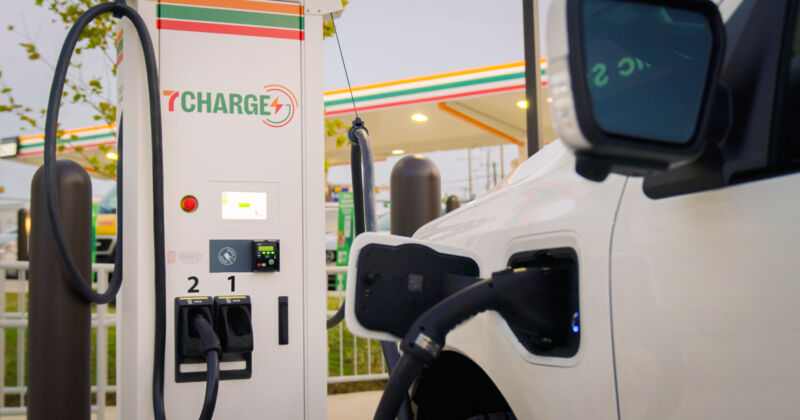

/cdn.vox-cdn.com/uploads/chorus_asset/file/24516012/GettyImages_1358798104.jpeg) Chip Somodevilla/Getty Images
Chip Somodevilla/Getty Images
/cdn.vox-cdn.com/uploads/chorus_asset/file/24516035/messages_0.jpeg) Cass Tippit
Cass Tippit
/cdn.vox-cdn.com/uploads/chorus_asset/file/24516053/GettyImages_1236661666.jpeg) Bing Guan/Bloomberg via Getty Images
Bing Guan/Bloomberg via Getty Images
/cdn.vox-cdn.com/uploads/chorus_asset/file/24516007/GettyImages_1241921496.jpeg) Nate Smallwood/Bloomberg via Getty Images
Nate Smallwood/Bloomberg via Getty Images
/cdn.vox-cdn.com/uploads/chorus_asset/file/24516105/GettyImages_1238357864.jpeg) Drew Angerer/Getty Images
Drew Angerer/Getty Images
/cdn.vox-cdn.com/uploads/chorus_asset/file/24516070/FreeWire_Boost_Charger_Dual_Charging.jpg) FreeWire
FreeWire



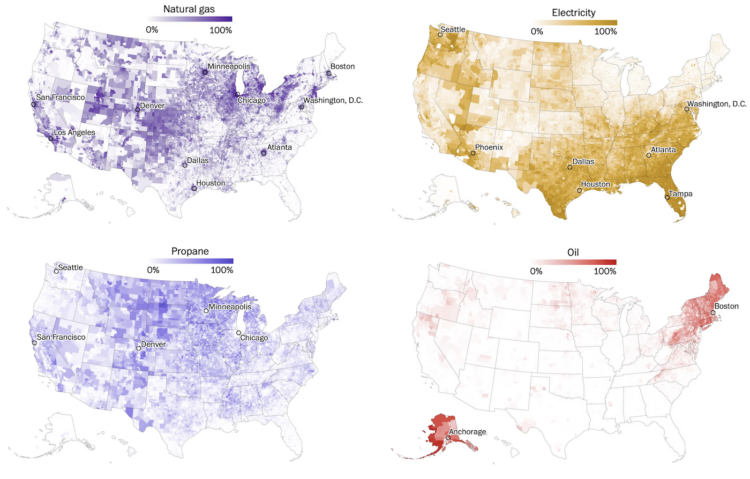

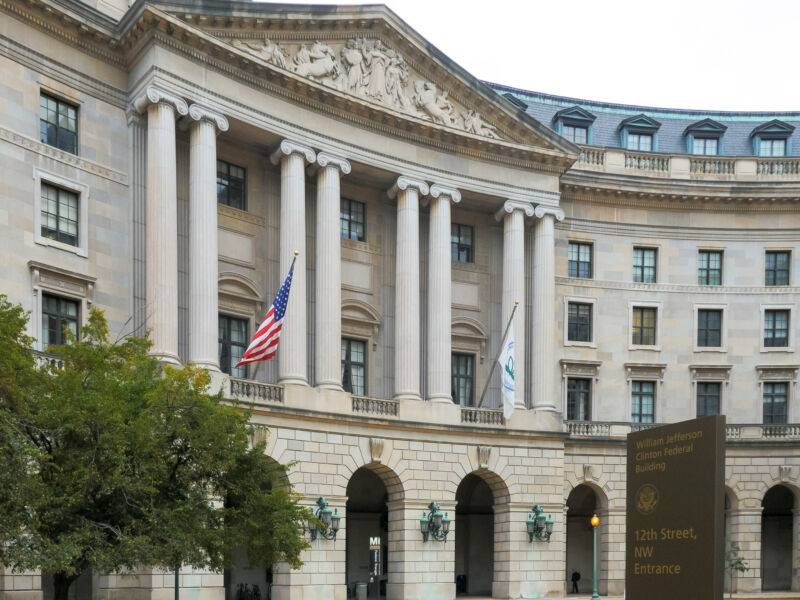




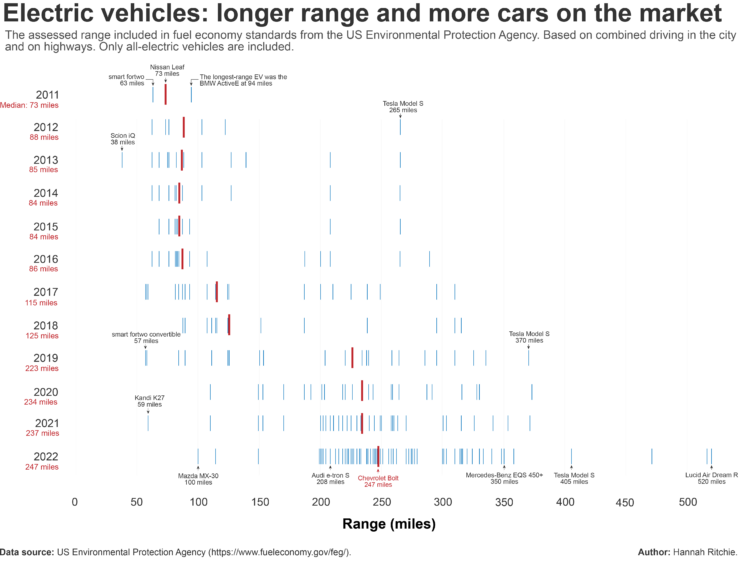




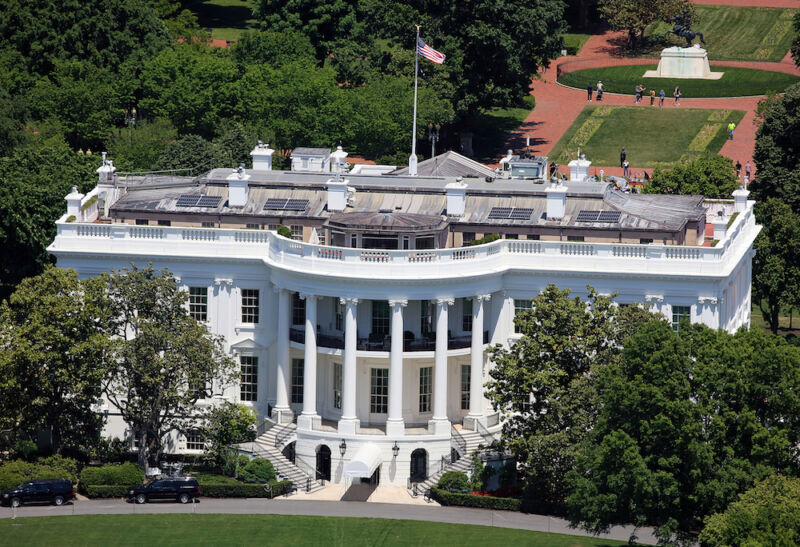
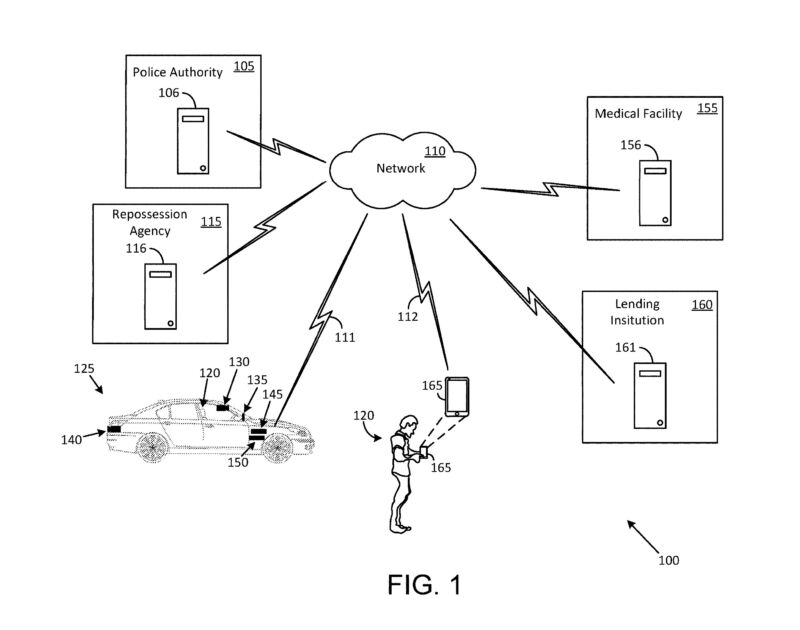

/cdn.vox-cdn.com/uploads/chorus_asset/file/24467175/GettyImages_1213532010.jpg) Justin Sullivan/Getty Images
Justin Sullivan/Getty Images
/cdn.vox-cdn.com/uploads/chorus_asset/file/24467140/GettyImages_1150811016.jpg) Stefani Reynolds/Getty Images
Stefani Reynolds/Getty Images