Office of Management and Budget Director Shalanda Young speaks during a daily news briefing at the White House on March 10, 2023 in Washington, DC. | Alex Wong/Getty Images
The White House’s consequential decision to set a lower “discount rate,” explained.
Last week, the Office of Management and Budget (OMB) — the White House office in charge of implementing the president’s vision — made a little-noticed policy move that could have huge implications.
In a circular that updated previous guidance on regulatory analysis, OMB lowered the “discount rate” for the future.
I know that’s a deeply wonky collection of words, so let me break it down.
The discount rate basically tells us how to value the future versus the present — and thus has tremendous implications for the policies we enact today. That’s essentially what OMB is saying with a lower discount rate: that we, the people of this moment, need to value future generations more when making policy.
Another way to think about it: Say that the government is choosing between two infrastructure policies. One will deliver benefits to the public sooner — it’s expected to be worth $50 to each taxpayer in two years. The other will deliver larger benefits, but take longer to pay out — it’s expected to be worth $100 to each taxpayer, but not for another 10 years.
Which of these is a “better” policy?
Discount rates, explained
Economists attempt to answer this question with the discount rate, which is basically a factor for how to calculate the value of future money in the present day.
If you would rather have $100 now than $110 next year, that money is worth 10 percent more to you in the future, because you’ll take a 10 percent discount rate to have it now.
If it’s generally true of you that you’d pay $100 now for no less than $110 next year, then you’ll prefer the project with the public benefits that will be worth $50 to each taxpayer in two years over the project that’ll be worth $100 to each taxpayer in 10 years.
But if your discount rate is much lower — say, if you would be willing to pay $100 now for $102 next year — then you’d probably prefer the policy that delivers larger benefits in the longer term.
High discount rates mean that we, as a society, are willing to trade off the future for the present: that we’ll generally prefer policies that benefit us now over policies with long-term benefits that won’t be realized immediately. Low discount rates mean that we, as a society, are willing to make investments that won’t be realized for a long time.
So what discount rate to use in public policy analysis is a fairly important question.
Using interest rates to decide how much we care about the future
Financial markets need to answer the question, “How much is money later worth right now?” all the time, because they buy and sell government and corporate bonds with payouts at various points in the future, and which are bought and sold on the open market.
Discount rates aren’t the same thing as market interest rates, but there’s reason to think of market interest rates as the best way we have of answering what would otherwise be a bit of an unanswerable philosophical question.
Buying a 10-year government bond is a way of getting more money in the future in exchange for having less money now, so the interest that people demand on those bonds approximates how much they need to be paid later to give up money right now.
“Discount rates should be based on market prices, specifically interest rates, because those reflect the alternative choices that agents have for moving resources between the present and future,” Harvard economist Jason Furman, former chair of the Council of Economic Advisers under President Obama, argued recently.
Interest rates (that is, the inflation-adjusted return on a 10-year Treasury bond) fluctuate. But a 30-year average of interest rates shows that they’re steadily falling. In 2010, a 30-year average of real interest rates was at about 4 percent. Now, that average is 1.7 percent, and projected to fall further.
When regulators make decisions that require a cost-benefit analysis, they use a discount rate that’s based on these interest rates — a rate that OMB sets. The discount rate they currently use is 3 percent, which was selected 20 years ago, based on a 30-year average of the inflation-adjusted return on a 10-year Treasury at the time.
This week, the White House announced an update that, if finalized after a public comment period, will set the figure at 1.7 percent.
Technicalities that really matter
This may all seem fairly in the weeds. But these small decisions affect how huge amounts of money get spent. Projects get approved, or die, on the basis of cost-benefit analyses that have for the last two decades used a 3 percent interest rate.
There are potentially a lot of future-oriented projects that pass a cost-benefit analysis at a 1.7 percent interest rate and not at a 3 percent interest rate. Three percent might not sound steep, but it adds up.
To take one example of how incremental changes to the discount rate can be hugely consequential: The social cost of carbon is the number policymakers use to estimate the damage caused to the future by carbon emissions today. Under a discount rate of 5 percent, the social cost of one metric ton of emission in 2025 is $17; under a 3 percent discount rate, it’s $56; under a 2.5 percent discount rate, it’s $83. Just a small shift to a lower discount rate significantly changes what trade-offs we are willing to make — because with a lower discount rate, we care more about the effects of carbon on the world our grandchildren live in.
Beyond the discount rate discussion, there’s some really good stuff in the analysis published by the OMB. For the first time, its discussion of how to set discount rates includes a discussion of catastrophic risks — that is, risks that imperil our whole civilization, like a devastating pandemic or nuclear war — and allows regulators to take the effects of disaster on future generations into account while setting policy.
It also allows for regulators to take into account the effects of their policies on people in other countries — a low-key momentous shift. Meanwhile, in the discussion of long-term discounting, OMB cites moral philosopher Derek Parfit’s Reasons and Persons. It’s a degree of consideration of the ethical implications of these regulatory changes which I didn’t expect, and was pleasantly surprised by.
Overall, I think the changes proposed will make it much easier for regulators to consider the full scope, and full stakes, of their choices.
We all have an instinct that it’s worth, sometimes, investing now for a better future, planting trees whose shade we will never sit in, thinking harder about what world we’ll leave our grandchildren.
The details of implementing that can easily get intimidating. Most people don’t have any intuitions about whether to use a 10-year or a 30-year rolling average of real interest rates to set the government’s standards for a cost-benefit analysis.
But it’s in these government standards that many of our society’s real priorities get set — and this OMB’s move on the discount rate amounts to a declaration that we need to value the future even more when making policy today.
A version of this story was initially published in the Future Perfect newsletter. Sign up here to subscribe!
Enlarge / An AI-generated and human composited image of "Wolverine programming on a computer." (credit: Benj Edwards / Midjourney)
Debugging a faulty program can be frustrating, so why not let AI do it for you? That's what a developer that goes by "BioBootloader" did by creating Wolverine, a program that can give Python programs "regenerative healing abilities," reports Hackaday. (Yep, just like the Marvel superhero.)
"Run your scripts with it and when they crash, GPT-4 edits them and explains what went wrong," wrote BioBootloader in a tweet that accompanied a demonstration video. "Even if you have many bugs it'll repeatedly rerun until everything is fixed."
GPT-4 is a multimodal AI language model created by OpenAI and released in March, available to ChatGPT Plus subscribers and in API form to beta testers. It uses its "knowledge" about billions of documents, books, and websites scraped from the web to perform text-processing tasks such as composition, language translation, and programming.
You might recall that the FCC under both Trump and Biden has made a big deal about forcing U.S. telecoms to rip out Huawei gear from their networks, under the allegation that the gear is used to spy on Americans (you’re to ignore, of course, that the United States spies on everyone, constantly, and has broadly supported backdooring all manner of sensitive telecom products globally).
The efforts aren’t going so hot. U.S. ISPs that began yanking cheaper Chinese gear out of the networks say they’re only getting about forty percent of the money they need from the government to actually complete the job, (including destroying the gear so it’s not re-used):
Congress last year allocated about $1.9 billion for its Secure and Trusted Communications Networks Reimbursement Program, widely known in the telecom industry as the “rip and replace” program because participants are charged with ripping out Huawei and ZTE equipment and replacing it with “trusted” equipment from companies such as Ericsson, Nokia and Mavenir. However, dozens of mostly smaller US network operators participating in the effort believe that far more funding is needed – roughly $3.1 billion more – to finish the job.
While bigger ISPs can eat the costs of completely revamping their networks in this fashion, it’s a bigger issue for smaller ISPs already struggling to get by. Only $41 million of this $1.9 billion effort had been doled out as of the beginning of this year, and participants in the program say program administrator’s decision to only answer questions via email has slowed things down further.
Add to this COVID-era supply chain and labor issues, and actually doing what the government planned has proven both costly and cumbersome. Michigan Senator Gary Peters and FCC Commissioner Geoffrey Starks recently penned an editorial begging Congress for the money to complete the job, though this is the same Congress that just let the FCC’s spectrum auction authority lapse for no coherent reason.
While getting Chinese-made gear out of U.S. networks isn’t a terrible idea, you can see how the U.S. government may not be competent enough to actually walk the talk.
Clearly nobody really planned this “rip and replace” effort out well enough to actually fund it. And confirming that ISPs spend money sensibly and ethically also isn’t really the FCC’s strong suit.
This is of course all being overshadowed by the great TikTok moral panic of 2023, which sucked most of the oxygen policy out of the room, despite the fact that a ban of the social media app wouldn’t actually accomplish all that much. FCC Commissioners like Brendan Carr have gotten oodles of cable TV news attention for freaking out about TikTok, yet he’s been relatively quiet on this issue he actually regulates.
Meanwhile these expensive, incomplete efforts to combat Chinese surveillance of Americans still can’t seemingly convince Congress to actually pass a privacy law or regulate data brokers, something Chinese intelligence easily exploits. So yes, an impressive job all around.
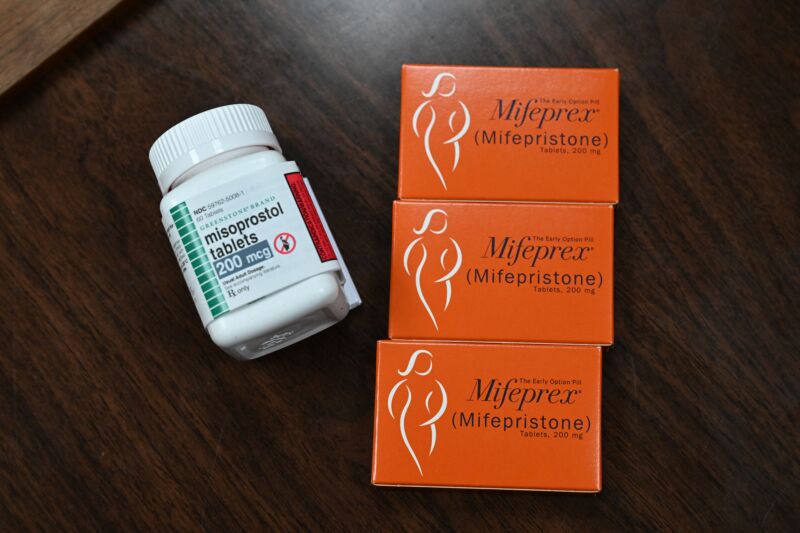
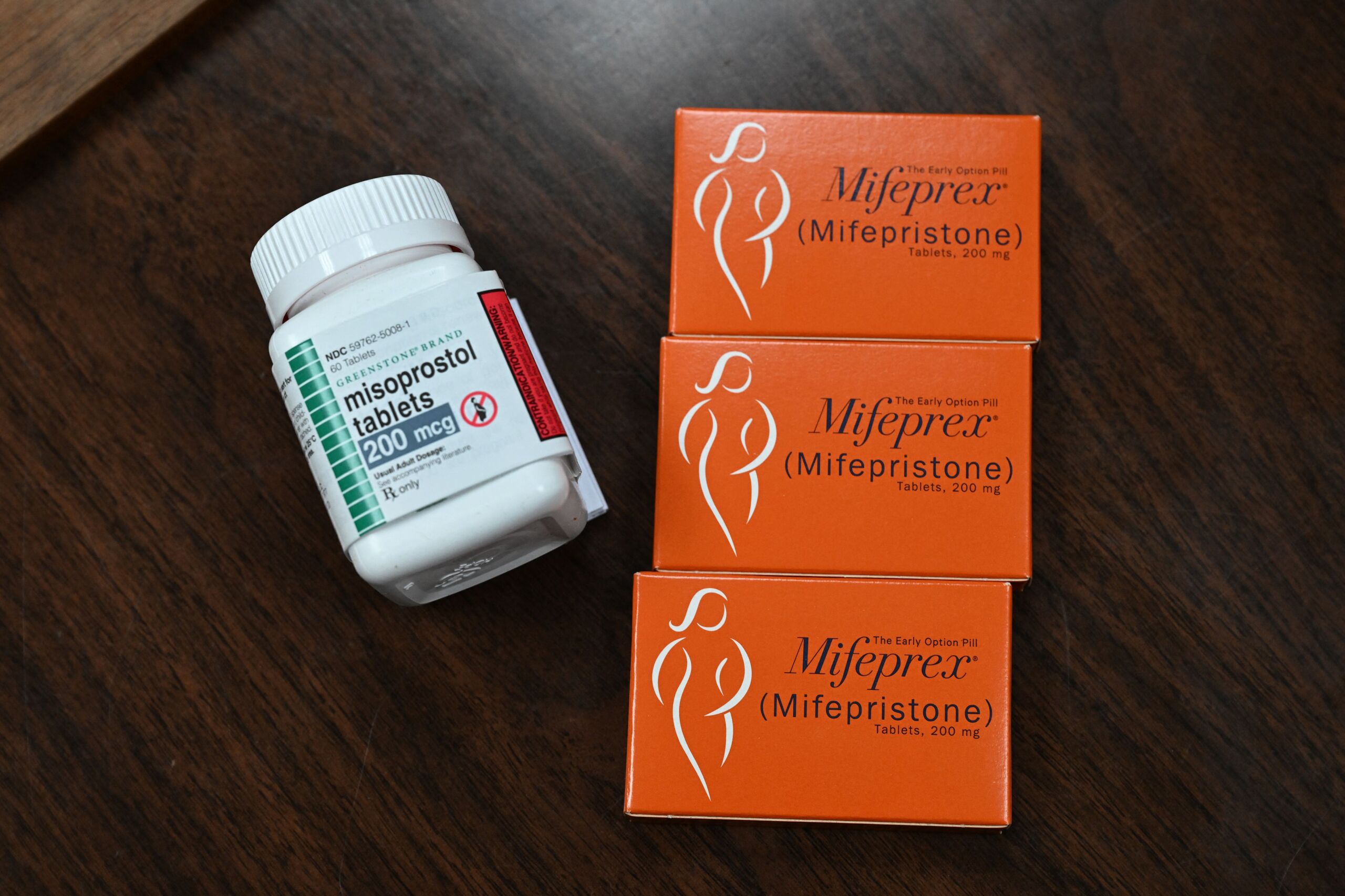
Enlarge / Mifepristone (Mifeprex) and Misoprostol, the two drugs used in a medication abortion, are seen at the Women's Reproductive Clinic, which provides legal medication abortion services, in Santa Teresa, New Mexico, on June 17, 2022. (credit: Getty | Robyn Beck)
A federal judge in Texas issued a ruling Friday to revoke the Food and Drug Administration's nearly 23-year-old approval of the safe and effective abortion and miscarriage medication, mifepristone. Although expected, the ruling throws into question the FDA's authority over all medicines and threatens to weaken the country's premier drug development pipeline, industry leaders and legal experts say.
In a public letter that circulated over the weekend, executives and leaders of the biotechnology and pharmaceutical industries condemned the ruling and called for its reversal along with "appropriate restitution" of the FDA's authority.
As of Monday afternoon, the letter had around 400 signatures and was accumulating more. Among them are big players in the industry, including Pfizer CEO Albert Bourla; Alisha Alaimo, president of Biogen; Christopher Tan, an executive for Merck & Co.; Imran Nasrullah, a vice president for Bayer Pharmaceuticals; and a senior clinical leader at Novartis, Nancy Lewis. But the vast majority are from smaller biotech companies, who stand to lose the most from downstream effects of the ruling, issued by District Judge Matthew Kacsmaryk.
Ever since Tesla first made the news, I had thought it would be a great car to own. The last few years have really disabused me of that notion, given the serious questions raised about the integrity of the company’s CEO. But even so, I’m pretty shocked by this latest Reuters report detailing how Tesla employees regularly would not only view images from Tesla’s built in cameras, but also make jokes and memes out of them and share them around the office.
This is the kind of behavior you’d expect in an late 90s dot com bubble era startup before it got serious, but Tesla is big enough and prominent enough that it is seriously troubling to learn it does not have basic controls to prevent this sort of privacy invasion:
But between 2019 and 2022, groups of Tesla employees privately shared via an internal messaging system sometimes highly invasive videos and images recorded by customers’ car cameras, according to interviews by Reuters with nine former employees.
Some of the recordings caught Tesla customers in embarrassing situations. One ex-employee described a video of a man approaching a vehicle completely naked.
Also shared: crashes and road-rage incidents. One crash video in 2021 showed a Tesla driving at high speed in a residential area hitting a child riding a bike, according to another ex-employee. The child flew in one direction, the bike in another. The video spread around a Tesla office in San Mateo, California, via private one-on-one chats, “like wildfire,” the ex-employee said.
Other images were more mundane, such as pictures of dogs and funny road signs that employees made into memes by embellishing them with amusing captions or commentary, before posting them in private group chats. While some postings were only shared between two employees, others could be seen by scores of them, according to several ex-employees.
Serious, professional companies put in place controls and security systems to prevent this sort of thing, because if they don’t, everyone knows what will happen — which is exactly what appears to have happened in the Elon Musk-led company.
I guess it shouldn’t be a surprise at all that a company run by a guy with the maturity of a insecure 15-year-old would not really give two shits about people’s privacy and make jokes and pass around private videos. Of course, fair play: it looks like the Tesla employees also spied on Elon Musk’s own garage.
The boss’s lax attitude towards anyone else’s rights or concerns seems to have trickled down to his employees:
Two ex-employees said they weren’t bothered by the sharing of images, saying that customers had given their consent or that people long ago had given up any reasonable expectation of keeping personal data private.
Indeed, the Reuters report seems to suggest that the boss’s obsession with memes and stupid, sophomoric jokes was encouraged among the young people at the office:
Tesla staffed its San Mateo office with mostly young workers, in their 20s and early 30s, who brought with them a culture that prized entertaining memes and viral online content. Former staffers described a free-wheeling atmosphere in chat rooms with workers exchanging jokes about images they viewed while labeling.
According to several ex-employees, some labelers shared screenshots, sometimes marked up using Adobe Photoshop, in private group chats on Mattermost, Tesla’s internal messaging system. There they would attract responses from other workers and managers. Participants would also add their own marked-up images, jokes or emojis to keep the conversation going. Some of the emojis were custom-created to reference office inside jokes, several ex-employees said.
One former labeler described sharing images as a way to “break the monotony.” Another described how the sharing won admiration from peers.
“If you saw something cool that would get a reaction, you post it, right, and then later, on break, people would come up to you and say, ‘Oh, I saw what you posted. That was funny,’” said this former labeler. “People who got promoted to lead positions shared a lot of these funny items and gained notoriety for being funny.”
Literally: the privacy of Tesla owners is a joke to Tesla employees. Thankfully, at least some people who worked there had a conscience.
“It was a breach of privacy, to be honest. And I always joked that I would never buy a Tesla after seeing how they treated some of these people,” said one former employee.
Another said: “I’m bothered by it because the people who buy the car, I don’t think they know that their privacy is, like, not respected … We could see them doing laundry and really intimate things. We could see their kids.”
One former employee saw nothing wrong with sharing images, but described a function that allowed data labelers to view the location of recordings on Google Maps as a “massive invasion of privacy.”
Later on in the story, we get at least a few more Tesla employees with a conscience:
In interviews, two former employees said in their normal work duties they were sometimes asked to view images of customers in and around their homes, including inside garages.
“I sometimes wondered if these people know that we’re seeing that,” said one.
“I saw some scandalous stuff sometimes, you know, like I did see scenes of intimacy but not nudity,” said another. “And there was just definitely a lot of stuff that like, I wouldn’t want anybody to see about my life.”
As an example, this person recalled seeing “embarrassing objects,” such as “certain pieces of laundry, certain sexual wellness items … and just private scenes of life that we really were privy to because the car was charging.”
And, clearly, someone who saw all this reported it to the Reuters journalists.
This does raise questions about whether or not this use of the images and videos violates various regulations around data protection and privacy. While the US doesn’t have a federal privacy law, there are some state privacy laws in effect that this might violate, and the FTC usually doesn’t take kindly to the idea that data is used for purposes that the consumer did not realize they were consenting too. And it seems like the head of the FTC is already none too pleased with Elon Musk.
But, of course, there may be more serious problems in the EU where this would likely raise some big GDPR concerns. While I have many issues with the GDPR, at the very least this seems like exactly what that law is supposed to prevent.
Incredibly, the article ends by noting top performing data labelers could win the use of a Tesla for a day or two (it’s not like Tesla paid its data labelers enough to afford its cars themselves), but some of those who won felt uncomfortable claiming the prize, as they worried about invasions of their own privacy.
I often think that many of the privacy concerns people discuss regarding the internet are totally overblown. People don’t mind sharing certain data in exchange for something valuable, but the key elements for dealing with privacy is that users should (1) understand the trade-offs involved, with knowledge of what data they’re giving up and what concrete benefit they’re getting in exchange, and (2) they should have some control and visibility into that data to make sure that the trade-offs remain aligned.
I can’t see how Tesla employees making memes of the images and videos they took inside people’s garages of occasionally intimate and private situations, even when the car is off, meets any of those criteria.
Georgetown Heritage will resume its public boat rides along the C&O Canal on May 5. That’s two years earlier than previously reported last fall, when it was still unclear whether a tentative multi-year restoration project along the canal would have to cancel this entire season. While that project, spearheaded by the National Park Service, is […]
The ADHD drug Adderall is still experiencing a shortage in the US, six months after the FDA first announced the inadequate supply. | Getty Images/iStockphoto
Rising demand has collided with restricted supply — with consequences for millions of patients.
Six months after the Food and Drug Administration first announced a shortage of the ADHD drug Adderall and its generic variations, a steadystream of reports shows patients are still struggling to obtain a medication that can be essential for leading a normal and productive life.
Adderall might seem like just one of many drugs that it’s been increasingly difficult to get. Drug shortages are becoming increasingly common in the United States, and on average, lasting longer. Typically, these shortages are, essentially, a supply chain problem: When one drug company experiences a shortage because of supply problems with raw materials, for example, there is little capacity in the market to make up for that shortfall.
But the explanation for the persistent Adderall shortage is more complicated. While it began with manufacturing problems, the picture has muddied over the past few months. Currently, four different companies are reporting shortages of the drug. Their reasons include a shortage of its active ingredient due in part to the unusual way in which Adderall is regulated, and an increase in demand.
Drug shortages are almost always the result of too little supply, not too much demand. But while artificial limits on supply are undoubtedly contributing to the shortage, the growing demand for Adderall is unique. As the medical science on ADHD has evolved, doctors now better understand how ADHD manifests at different ages and are better able to identify when a patient may be dealing with the disorder and, therefore, when Adderall or another stimulant medication may be an appropriate treatment.
For most medical conditions, an increase in the number of people diagnosed would not create new barriers (other than market constraints) to manufacturing more medications for the people who need treatment. But what’s different about ADHD is that the first-line treatment is a stimulant drug with the potential for misuse or addiction — and so it’s a matter not just for pharmaceutical companies but for law enforcement. The Drug Enforcement Agency has hedged on the side of keeping production of these drugs down to limit the potential for abuse.
The fear is that Adderall would follow the same path as opioid painkillers: careless overprescribing would lead to an epidemic of drug addiction — this time, to stimulants.
The current shortage is the result of rising demand colliding with restricted supply, with consequences for millions of patients.
“People are raising the question, ‘Why is Adderall being put in the same category as the opiates?’” Dr. Max Wiznitzer, who advises the ADHD advocacy group CHADD and practices in the Cleveland area, told me. “It’s not where the science is. They’re so stuck on what it has been, they’re not necessarily asking themselves where the science is pointing now.”
The Adderall shortage could be an opportunity to change how the country at large views this condition and the medication to treat it. But institutional inertia, and the shadow of the opioid crisis, is standing in the way.
How has our understanding of ADHD evolved?
The modern scientific understanding of ADHD is commonly associated with George Still, a British pediatrician who in a series of lectures in 1902 described children who were showing symptoms of hyperactivity, impulsivity, and inattention and referred to their condition as a “defect of moral control.” The children were said to suffer from poor academic performance and other behavioral problems.
In the following decades, medical science’s understanding of the disorder advanced from blaming “moral defects” to brain damage to understanding that a deficit of certain neurotransmitters, particularly dopamine, contributes to the disorder’s telltale symptoms.
“As time went on, we had science tell us, it wasn’t that people were doing something wrong,” Wiznitzer said. “It was a product of how their brains were built.”
As ADHD became more widely accepted as a distinct clinical disorder, rather than a result of poor parenting or a byproduct of another condition, the medical community began investigating more treatments. Ritalin had first been approved by the FDA in the 1950s, but it requires more frequent dosing to have a sustained effect.
Adderall was approved in 1996 and would soon become the most commonly prescribed treatment for ADHD, though Ritalin and several other drugs remain in use. A few years later, an extended-release version of the drug — intended to be less prone to abuse — was put on the market.
According to the Centers for Disease Control and Prevention (CDC), approximately 6 million children ages 3 to 17 (about 9.8 percent of children in the United States) have been diagnosed with ADHD as of 2019. Boys are about twice as likely to be diagnosed with the condition as girls.
National surveys have varied in their estimates of how many US adults have ADHD, with figures ranging from 1 to 4 percent, but the trend is consistent: The share who have been diagnosed is going up. A new estimate published in 2022 by researchers from the Oregon Health and Science University put the percentage of the total US population with ADHD at 3.5 percent.
According to IQVIA, a health care data and analytics company, about 41.4 million prescriptions for Adderall were dispensed in the US in 2021. Not every prescription is for a unique individual, but those data suggest that millions of Americans are relying on the drug to moderate their ADHD symptoms.
But that suddenly became more difficult when, in October 2022, the Adderall shortage began.
How does the federal government limit Adderall production?
The reasons for drug shortages can be difficult to divine. Manufacturers are not mandated to report the reasons for a drug shortage and any public information they do provide can be vague.
That has proven true with the Adderall shortage too. However, experts say that the role of the federal government in regulating one of Adderall’s active ingredients makes this shortage distinct.
One of the active ingredients in Adderall is amphetamine, and therefore the drug is regulated as a controlled substance under federal law. Its potential for abuse has long been recognized, with the cliche example being college students taking the drug to help them study. A 2018 study by federal researchers found that about 5 million Americans misused a prescribed stimulant, of which Adderall is the most common, at least once in the past year; about 400,000 misused stimulant drugs frequently enough to be characterized as having a disorder. (About 2.7 million people in the US report they have an opioid use disorder.)
To mitigate the potential for abuse, the Drug Enforcement Administration sets production limits for Adderall and its generic competitors. In order to produce the drugs legally, pharmaceutical manufacturers must obtain approval from the government and comply with regulations for the medication’s manufacturing, distribution, and dispensing.
The DEA also sets annual production quotas for Adderall, as with other controlled substances that have recognized medical uses, based on estimates of legitimate medical and scientific needs, as well as the potential for diversion and abuse. However, those quotas are not well understood; while the agency announced in 2019 that it was allowing for more production of Adderall, given the apparent growing need in the patient population, we still don’t know exactly how much production has been authorized or the limits set for individual companies.
“The DEA gives the companies a set amount of raw material ‘quota’ to manufacture these products, but we don’t know which company gets how much,” said Erin Fox, a pharmacist at the University of Utah and leading expert on US drug shortages. “Some companies say they’re short, but DEA says that they haven’t used it all, so lots of finger-pointing.”
Indeed, the companies that produce Adderall and its generic version have cited both a shortage of the active ingredients and an increase in demand to explain their ongoing shortages. But another factor, new limits on the dispensing of the drug at US pharmacies, is making the situation worse.
In 2022, drug distributors reached a settlement with most states over their role in the proliferation of prescription opioids that helped create an addiction and overdose epidemic. Bloomberg reported this week that, as part of that settlement, secret limits were placed on the dispensation of controlled substances last July. That has in turn prevented pharmacists from filling the prescription of every patient who comes to their pharmacy with an Adderall order.
According to Bloomberg, in essence, manufacturers are supposed to limit a pharmacy’s supply of drugs covered by the Controlled Substances Act, which includes opioids as well as stimulants. Pharmacists can only fill a certain number of prescriptions over a set period. But there has been widespread confusion over these rules because the pharmacists themselves don’t know what the limits are or when they are approaching them. Sometimes, they won’t know their access to Adderall has been cut off until trying to fill a prescription.
In theory, that information is hidden to prevent anyone from gaming the system. But in practice, it has made it harder for patients to get access to the medicines they need during a six-month shortage.
“I understand the intention of this policy is to have control of controlled substances so they don’t get abused, but it’s not working,” Richard Glotzer, an independent pharmacist in Millwood, New York, told Bloomberg. “There’s no reason I should be cut off from ordering these products to dispense to my legitimate patients that need it.”
Doctors have found workarounds. Certain dosages (such as 7.5mg versus 15) are more plentiful. Some physicians have also opted for immediate-release versions of the drug instead of the extended-release doses that are chiefly in short supply. And for some of those patients, those creative solutions may work. But that may not be true for everybody: Wiznitzer told me that, on the day of our interview, a mother had come into his practice and asked that her child be returned to his older medication, currently still experiencing a shortage, as soon as possible.
Some manufacturers report they expect to have production back on track by the end of April or in May. But the fact that a drug depended upon by millions of Americans could, at best, experience more than half a year of shortages has left experts wondering why more couldn’t be done to provide relief sooner.
How can the government make sure Adderall is available to those who need it?
The ongoing shortage has brought the DEA’s limits on Adderall production under scrutiny. Though the current shortage was officially recognized in October 2022, the agency did not alter its plans for production quotas in 2023 in a December 2022 bulletin, to the bafflement of some outside observers.
Maia Szalavitz, a leading commentator on substance abuse issues, suggested in a column published last month in the New York Times that oversight of the drug should be shifted from the DEA, which approaches the issue through a law-enforcement lens, to the Food and Drug Administration. She advocated specifically for increasing production quotas and for revisiting the opioid settlements that have added to the regulatory red tape that may limit legitimate access to the drug for patients who need it.
These artificial limits on production, however well-intentioned, are at least partly to blame for the persistent shortage of the past six months. Lawmakers are pressing the DEA to do what it can to alleviate the problem. The solution seems simple — allow more of the drug to be produced — though that also has potential downsides.
Illicit use of prescription stimulants is a real problem. Some of the doctors I spoke to did not want to comment on the record about any changes to federal Adderall regulations, given its sensitive nature. There are several hundred thousand people in the US who are abusing stimulants like Adderall habitually. Prescription stimulants can be deadly, though they have historically accounted for a small percentage of all overdose deaths.
Regulations should reflect the relative risks. “Stimulants like Adderall and Ritalin are nowhere near as addictive or lethal as Fentanyl or other opioids,” Linda Schmidt, a child and adolescent psychiatrist at Oregon Health and Science University, told me.
The question is how to calibrate government oversight to balance the risks to public health versus the risks to patients who can’t access the medications they need. Some experts believe the current system is too overloaded toward preventing abuse, and the current shortage is a consequence of that misalignment.
It would certainly be possible to monitor for Adderall diversion without subjecting it to the same restrictions as opioids. Wiznitzer pointed out that, under Ohio laws, physicians are required to check the state’s prescription drug monitoring database once a month for patients who are prescribed opioids, but only once a year for patients who are prescribed stimulants.
Most of the policy discussion during the shortage has focused on questions of how to loosen up the supply of Adderall.
The other factor driving the shortage, the increase in demand, is more complicated. During the pandemic, it became easier for doctors to prescribe controlled substances without an in-person visit. There have been examples, as Vox’s Sara Morrison previously reported, of “sketchy as hell” startups pushing Adderall on social media sites like TikTok. The DEA has proposed new rules to require an in-person consultation before the prescription of a drug like Adderall.
But that plan has been criticized by some as putting patients at risk who may rely on telemedicine for legitimate reasons. Wiznitzer pointed out that a virtual visit, in which a doctor can observe a child in their natural habitat, can be more revealing than an office visit.
This law enforcement mindset is at the heart of the critique from Szalavitz and others. The DEA approaches its role in regulating Adderall as primarily one of law enforcement, with the emphasis being placed on preventing abuse as much as possible. That may be an understandable — if misguided, in the eyes of some — legacy of the opioid epidemic.
“Perhaps in response to its failure to prevent the rise in prescription opioid misuse, the D.E.A. may be trying to avert a repeat crisis by keeping stimulant manufacturing quotas tight,” Szalavitz wrote in the Times.
But the crisis of the past six months has also shown the potential risk of the current approach: In the richest country in the world, desperate patients can’t get a medicine they need.
Enlarge / Tesla Model X SUV at the European Motor Show on January 9, 2020, in Brussels, Belgium. (credit: Getty Images | Sjoerd van der Wal)
From 2019 to at least mid-2022, Tesla employees used an internal messaging system to share "sometimes highly invasive videos and images recorded by customers' car cameras," according to a lengthy Reuters report based on interviews with nine former Tesla employees.
Although Tesla says its in-car cameras are "designed from the ground up to protect your privacy," today's Reuters report described employees as having easy access to the cameras' output and sharing that freely with other employees:
Some of the recordings caught Tesla customers in embarrassing situations. One ex-employee described a video of a man approaching a vehicle completely naked.
Also shared: crashes and road-rage incidents. One crash video in 2021 showed a Tesla driving at high speed in a residential area hitting a child riding a bike, according to another ex-employee. The child flew in one direction, the bike in another. The video spread around a Tesla office in San Mateo, California, via private one-on-one chats, "like wildfire," the ex-employee said.
There were "pictures of dogs and funny road signs that employees made into memes by embellishing them with amusing captions or commentary, before posting them in private group chats." Some posts could be seen by "scores" of employees.
Walt Disney World announced Thursday morning that new annual pass sales are coming back!
The Disney Incredi-Pass, Disney Sorcerer Pass and Disney Pirate Pass will resume new sales and can be purchased online beginning on April 20! The quantity of passes will be limited and passes, or a pass type, may become unavailable for purchase at any time.*
Eligible DVC Members will have the opportunity to purchase the DVC Disney Sorcerer Pass online beginning April 13 as part of their Membership Magic benefits.**
Disney has also announced that along with feedback they’ve received, Passholders will now receive access to select Disney PhotoPass benefits (age restrictions apply) and, beginning April 18, Annual Passholders can visit the theme parks after 2 p.m. without needing a park reservation, except on Saturdays and Sundays at Magic Kingdom Park. Pass blockout dates continue to apply.
OFFICIAL DETAILS FROM DISNEY:
*Passes are subject to the Walt Disney World® Resort Annual Pass Terms and Conditions. All offerings are subject to change or cancellation without notice.
**To purchase the Disney Sorcerer Pass, Disney Vacation Club Members must be eligible for Membership Extras. Membership Extras is an incidental benefit – these offers are subject to availability, change or termination and may require a fee. General terms & conditions of the program are in the Membership Extras Acknowledgement and Disclosure Statement. Program terms and conditions are subject to change without notice.
If there is one aspect of trademark law that should be the most understandable for business leaders and their lawyers, if not for the general public, it’s that you generally cannot get trademarks on purely descriptive terms. Yes, you can name your product Coca-Cola and get a trademark on that term, but you cannot get a trademark on “cola” or “soda” and threaten or sue everyone else who uses it to describe their own products. Simple, right?
In a lawsuit filed Tuesday, Chipotle said that Sweetgreen’s “Chipotle Chicken Burrito Bowl” is being marketed in a “very similar and directly competitive” manner that is similar to Chipotle’s chicken burrito bowl. Sweetgreen released the salad last week, with a press release saying that the new menu item uses “chipotle spices.”
Chipotle argues that the Sweetgreen salad not only has similar ingredients, including chicken, a grain base (i.e. rice) and black beans, but also took issue with Sweetgreen’s marketing because it accuses its rival of “making prominent use of the famous Chipotle trademark” in ads.
I can assure you this is all excessively stupid. First, the recipe conversation is absolutely a non-starter. What Chipotle is describing are the contents of a burrito, but in a bowl. That’s as available for protection under trademark law as the contents of a club sandwich, which is to say not at all.
As for the use of a similar trademarked term, yeah it’s similar, but it’s also purely descriptive. Sweetgreen is advertising a “chipotle chicken burrito bowl,” which consists of chicken in chipotle spices and burrito ingredients in a bowl. That’s as descriptive as it gets. The fact that Chipotle decided to name itself after a flavor doesn’t in any way preclude Sweetgreen from selling and advertising this product. To suggest otherwise would be absurd.
Chipotle also accused Sweetgreen of using a “font nearly identical” to Chipotle’s on its website promoting the new salad. Some of Sweetgreen’s ads, also use color that’s “nearly identical” to Chipotle’s trademarked Adobo Red.
That’s a stretch as well. These are directly from Chipotle’s filing. First, here is an exampe of its own mark.
And now for the filing’s examples of the infringing uses.
And:
In the second example, the colors are similar, but two caveats. First, Sweetgreen’s name is on the sign, which presumably sits just outside a Sweetgreen location, so I’m not sure where the public confusion would occur. Second, both entities chose shades of that color almost certainly for the most obvious reason: a chipotle pepper is a smoked pepper typically kept in adobo sauce. That sauce is roughly the colors that are being used here.
In other words, Chipotle is mostly suing as a result of its own original sin: it chose a name for itself that can be used as well to describe a sort of food or flavor on offer. I don’t expect this suit to get very far, though that may not be the point. Sweetgreen is much smaller than Chipotle and this may simply be a bullying attempt by the latter.
Two months after Rockville’s Regal Cinema was supposed go dark, the show is still going on — and it will continue, apparently, for the foreseeable future. This past January, Regal announced the impending closure of 39 theaters including this one. But the Feb. 15th “last day” came and went… and nothing happened. The Rockville theater is still listed on Regal’s website, and employees tell us they have movies booked through at least the end of summer. Will the curtain come down after that? Or is a second act on the way? Pass the popcorn and stay tuned.
New Asian restaurants on the Pike
Lots of changes happening this spring on the Rockville Pike Asian restaurant scene. Umi Sushi & Seafood Buffet, a New York restaurant making its first move into Maryland, is taking over the former Miller’s Ale House space at Congressional North Shopping Center. Over at Ritchie Center, two neighboring restaurants have re-branded: Live Crawfish & Seafood is now called OC & Crab Seafood Restaurant, while CM Chicken is now Gama Korean Chicken. Meanwhile, Damso Korean BBQ is replacing Saffron Indian Cuisine at Woodmont Station.
Arhaus & more openings at the mall
This week Arhaus debuted its 10,000-square-foot furniture showroom at Westfield Montgomery mall. As we reported a few weeks ago, this is a relocation of the retailer’s longtime store on Rockville Pike. Another store we recently previewed, Melashops, has opened its doors near Nordstrom with a colorful collection of South Asian clothing and jewelry. And this week’s other big mall opening is Jolly Yolly Kids, an indoor playground next door to Cheesecake Factory.
The Store Reporter Guide
A weekly guide sponsored by some of our favorite local businesses
DINING & DELIVERY
BOULANGERIE CHRISTOPHE: Authentic French bakery at Cabin John Village. We have everything you’re craving: sandwiches, salads, quiche, omelettes, crepes, fresh-baked breads, croissants & award-winning baguettes. Finish your meal with beautiful French pastries & Illy coffee. Also: Fresh-baked challah every Friday & Saturday. Follow us on Facebook & Instagram. Delivery via Ubereats. Phone: (301) 298-9878. Website: boulangeriechristophe.com.
DISTRICT FALAFEL: Mohammad Badah’s D.C. food truck is now a brick-and-mortar restaurant for the Rockville/Potomac/Bethesda community. The Bethlehem native cooks authentic Middle Eastern recipes: falafel, shawarma, gyros, zaatar chicken, beef kofta, cauliflower bowls, hummus, baba ghannouj, tzatziki, labneh, pita & more. Take out or dine in at Westlake Crossing, outside Westfield Montgomery mall. Follow on Facebook & Instagram. Phone: (301) 767-3300. Email: info@districtfalafel.com. Website: districtfalafel.com.
FISH TACO: Let’s catch up! We are family-owned and we source our food seasonally, sustainably & locally. We take pride in using the highest quality ingredients to bring our guests delicious, hand-crafted meals & empower them to connect with what’s important in life. We offer our famous fish tacos, as well as an assortment of Baja-inspired favorites. Visit us at multiple area locations, or order online at www.fishtacoonline.com.
GREGORIO’S TRATTORIA, Italian favorites at Cabin John Village, 7745 Tuckerman Lane. Full menu and weekly specials featuring pizzas, pastas, seafood, meats, salads & more. Open indoors & outdoors for lunch & dinner, 11 a.m. to 10 p.m. We also offer curbside pickup, pay by phone & contact-free delivery. Phone: (301) 296-6168. Call for catering: (800) 749-8894. Menu for all locations: gregoriostrattoria.com.
GYROLAND: The sister restaurant to Mykonos Grill, serving up Greek specialties in a fast-casual setting.Gyros, souvlaki, bifteki, sausages, falafel, spanakopita, pizza, hand-cut fries, green beans, our famous mixed grill for two & much more. For dessert: Greek yogurt, rice pudding, baklava & loukoumades. Shops at Congressional Village, 1701 Rockville Pike, Suite B3. Phone: (301) 816-7829. Email: gyrolandgm@gmail.com. Website: gyrolandmd.com.
MYKONOS GRILL: Experience the tranquility of our island, our beautiful colors & our rich heritage, all served to you on a plate. Try our chicken skewers or Greek meatballs with tzatziki; stuffed grape leaves, grilled octopus, Mediterranean branzino, lamb shank, pan-seared scallops, roasted leg of lamb, mousaka, seafood giouvetsi & spanakopita. 121 Congressional Lane, Rockville. Email: manager@mykonosgrill.com. Phone: (301) 770-5999. Website: mykonosgrill.com.
PICCOLI PIATTI PIZZERIA: Authentic. Neapolitan. Greatness. We use high-quality imported Italian flour & tomatoes, locally sourced meats, organic produce & spectacular domestic cheeses to create exceptional, affordable dishes that please the whole family. Our pizza is crafted to order in the classic Neapolitan style & finished in our 900-degree brick oven. Great pastas, small plates & lunch sandwiches too! 10257 Old Georgetown Road in the Wildwood center. Call us: (240) 858-6099. Order online: piccolipiattipizzeria.com.
QUARTERMAINE COFFEE ROASTERS, locally owned & operated. Visit us on Bethesda Row for fresh roasted coffee by the pound, custom-made coffee & tea drinks, fresh-squeezed juices & smoothies. Try any of our drinks with oat milk, almond milk or soy milk. Want coffee shipped to your door? Subscriptions available & $5 flat-rate shipping with $30 minimum. Visit www.quartermaine.com.
QUINCY’S POTOMAC BAR & GRILLE, atPotomac Woods Plaza off Montrose & Seven Locks. Twenty beers on tap & American bar fare: hand-cut sirloins, filets & ribeyes; fried chicken, grilled chicken kabobs, lamb lollipops, fajitas & more. We host trivia night on Mondays, karaoke on Tuesdays, bingo on Wednesdays, Family Feud on Thursdays. Follow us on Facebook & Instagram. Phone: (240) 500-3010. Menu: quincyspotomac.com.
SISTERS THAI POTOMAC, Asian & Thai cuisine + drinks & desserts. Indoor & patio dining with a funky, charming decor at Cabin John Village, 7995 Tuckerman Lane. Try our chicken satay, larb gai, pad thai, drunken noodles, curry dishes & much more. We’re also known for our Instagrammable desserts, cocktails, teas, fruit drinks & specialty lattes. Phone: (301) 299-4157. Menu: sistersthaicabinjohn.com.
THE BOTTLE SHOP WINE & BEER: Exceptional wine, craft beer & artisan snacks — chilled & ready to go — to make your evenings special. You’ll find us at Potomac Woods Plaza, 350 Fortune Terr., around the corner from Park Potomac (Montrose & Seven Locks). Check our weekly wine & beer discounts on Facebook, Twitter & Instagram. Call us: (301) 738-9463. Website: mybottleshop.net.
THE PRETZEL BAKERY: Philly-inspired soft pretzels, hand-rolled & fresh out of the oven all day long. Breakfast sliders, calzones, pretzel dogs, sweet & savory diets, La Colombe coffee, Boylan’s sodas, Carmen’s Italian ices. Find out why we’ve been named “Best Breakfast Sandwich,” “Best Pretzel” & one of the “50 Must-Try Dishes in D.C.” Open till 5 p.m. daily at Cabin John Village, 7961 Tuckerman Lane. Follow us on Facebook & Instagram. Order ahead & pick up a pretzel box: (301) 242-3539 or thepretzelbakery.com.
YEKTA PERSIAN MARKET & KABOB COUNTER: We have all your Persian, Iranian & Middle Eastern favorites: Breads, spreads, yogurt drinks, coffee & tea, spices & herbs, nuts & seeds, pomegranate, sweet lemon, rock candy & much more. We also offer prepared foods and made-to-order kabobs, bowls, stews, veggie platters, sandwiches & Persian desserts. Order online for home delivery, or visit us at 1488 Rockville Pike. Kabob counter: (301) 984-0005. Market: (301) 984-1190. Menu: yektamarket.com.
CELEBRATIONS
FLASHBACK FILMS, photo & video montages for your special occasion — whether in-person or virtual. Professional montages at affordable prices for all your important milestones: birthdays, anniversaries, graduations, mitzvahs & more. We’re a locally based, student-run company and will work within your budget. Send us your photos and we’ll do the rest. Visit us on Instagram. For video samples & pricing, email flashbackfilms123@gmail.com.
JAMIE KRAMER EVENTS is dedicated to crafting authentic, memorable & customized experiencesfor private & corporate events. Celebrations & milestones, conferences & board meetings, team building, corporate retreats, networking & more. Whether you’re ready for an in-person event or still prefer virtual, we promise to make it unforgettable. Check us out on Instagram & Facebook, and email jamie@jamiekramerevents.com to start planning. Website: jamiekramerevents.com.
LILAC, special occasion wear for girls, tweens & teens. We have the perfect outfits for bar & bat mitzvahs (both service & party), recitals, graduations, cotillion & other special occasions. Our clothes are fashionable, well-made, well-priced, age-appropriate — and not typically found in department stores. Now booking private shopping appointments at www.calendly.com/shoplilacgirl. Find us on Instagram (@lilacgirlshop) and Facebook (@shoplilacgirl). For more info, email sales@shoplilacgirl.com.
SHOP LOCAL
BONDAYis a Rockville lifestyle boutique brimming with unique clothing, shoes, purses & gifts that spark joy. Shop our new Felicity T handbag line, made in Italy. Check out our moving sale, as we get ready to relocate to Congressional Plaza. Find us at Federal Plaza on Rockville Pike. Shop Facebook & Instagram. Phone: (240) 249-5908. Website: lebonday.com.
HANNA’S CONNECTIONclothing boutique, upstairs inside the Cabin John mini-mall. Big winter sale going on now! All winter fashions are on clearance. Stop in to see everything in person, schedule a private appointment, or arrange a virtual shopping session. Curbside pickup & shipping available. Shop new arrivals on Facebook and Instagram. Call us: (301) 704-0264. Website: hannasconnection.com.
IBHANA BOUTIQUEis the place to shop your favorite U.S. & Canadian designers: Joseph Ribkoff, IC, Snoskins, Moonlight, Lisette, Lior, Terra, Piccadilly, Habitat & more. Complete your outfit with a beautiful piece of jewelry & matching handbag, & walk out as your best self. New location: Federal Plaza in Rockville, 1776 East Jefferson Street, Suite 116. Open Monday-Saturday 10-5, Sunday 11-4. Phone: (301) 424-0906. Website: ibhana.net.
JOYFUL BATH CO.: We make our own soaps, shower steamers, bath bombs, soy candles, Turkish towels & custom baskets. All our products are vegan & cruelty-free, paraben & phthalate-free, great for sensitive skin, no SLS or detergents, no glittery mess. We ship, we offer curbside pickup, or visit us in person: 10 a.m.-5 p.m. Monday-Friday and 10 a.m.-2 p.m. Saturdays. 5534 Wilkins Ct., North Bethesda. Call (301) 986-5320. Website: joyfulbathco.com.
KAUFMANN JEWELERS: Fine jewelry, custom jewelry, large & small repairs. Father & son George & Corey Kaufmann are carrying on the family tradition: offering an upscale shopping experience while preserving the handshake-generation, family-business mentality. Whether we’re designing your custom piece, showing you our collection or handling your repairs, Kaufmann Jewelers strives to build lifelong clients. Call us: (301) 978-7778. Visit us at Park Potomac, 12500 Park Potomac Avenue. Website: kaufmannjewelers.com.
LEILA JEWELSis the online address for the jewelry, gifts & Judaica shop you used to love at Cabin John Shopping Center. Since closing the shop a few years ago, owner Deb Shalom has gone virtual with a unique & beautiful selection of everything from gemstones & sterling silver to Murano glass from Venice & Judaica from Alef Bet Jewelry & Joy Stember Studios. Every price point, every occasion. Free shipping for all jewelry & hand-delivery for customers in the Potomac area. Website: leilajewels.com.
MOSAIQUE DESIGNS: Bethesda artist Shelley Dane blends traditional mosaic techniques with modern designs & resin finishes. She takes custom orders for beautiful, functional serving trays inspired by what’s meaningful to you: your home, your dog, your favorite spot, your favorite photo. Perfect for wedding gifts, anniversaries & milestone birthdays. Check out recent pieces on Instagram. Email: shelley@mosaiquedesigns.com. Phone: (301) 367-6735. Website: mosaiquedesigns.com.
OUR GIFT BIZ: Administrative Professionals Day is April 26th, and Mother’s Day is May 14th. Show your appreciation for those who take such good care of you! We’ll take this task off your plate & save you time, energy & effort. Shop online at ourgiftbiz.com, or work with our “gift concierges” to create the perfect custom gift. Just let us know your budget and when & where to send the gifts; we’ll take care of the rest. Phone: (240) 406-8701. Website: ourgiftbiz.com.
SHEYLA VIE COLLECTIONS: Designer & luxury women’s fashions at affordable prices. Visit our Friendship Heights boutique for one-of-a-kind special occasion gowns, luxury gifts, holiday party outfits & VIP personal service. We carry everything from Gucci, Balenciaga, Yves Saint Laurent & Sam Edelman to Jovani, Temptation & Redemption — all at 10%-70% off every day. Shop Instagram, shop Facebook, shop online or visit us at 5333 Wisconsin Avenue NW. Phone: (202) 506-7125. Website: sheylaviecollections.com.
JUST JEWELS: Ready to sell your jewelry? Lee Siegel has been buying & selling diamonds, fine jewelry & watches for 25 years. Modern & older cuts, engagement rings, loose diamonds, vintage pieces & brands like Cartier, Tiffany, Van Cleef & Arpels, David Webb, Chopard, Bvlgari, David Yurman, Rolex, Cartier, Patek Philippe & Omega. License #2801. Call our office in Bethesda: (301) 525-7561. Email justjewelsusa@outlook.com. Website: justjewelsusa.com.
STX GOLD: We can help you settle any estate. Get full value for all precious metal items — gold jewelry, sterling silver flatware & silver serving pieces. We’ll do an in-home appointment, no obligation, to evaluate your items. Call (301) 318-9788. Visit our website & check the current price of gold: stxgold.com.
KIDS & TEENS
TIPS ON TRIPS AND CAMPS: What are your kids doing this summer? We’re here to offer ideas, expertise & plenty of options. Tips on Trips and Camps has been around for half a century, guiding families like yours to the best summer options for their students ages 7-18+. All our services are FREE to families. No need to figure this out alone — we are happy to help, with plenty of ideas for summer 2023! To get started on your summer plan, call Lisa Bulman Mullen:(561) 703-6448 or email lisa@tipsontripsandcamps.com.