ProPublica is a nonprofit newsroom that investigates abuses of power. Sign up to receive our biggest stories as soon as they’re published.
One year ago, all 50 states and the District of Columbia announced a $141 million settlement with Intuit, the maker of TurboTax. The investigation, led by New York Attorney General Letitia James, centered on how the company had steered customers into paying for tax preparation even though they qualified for a free government program. The attorney general said the probe was sparked by ProPublica’s reporting in 2019.
About 4.4 million low-income Americans will receive payments under the agreement. On Thursday, James announced that the process of actually mailing checks to all those people will begin next week.
“TurboTax’s predatory and deceptive marketing cheated millions of low-income Americans who were trying to fulfill their legal duties to file their taxes,” she said. “Today we are righting that wrong and putting money back into the pockets of hardworking taxpayers who should have never paid to file their taxes.”
The payments range from $29 to $85, depending on how many years each eligible consumer used TurboTax. (A number of people cited in ProPublica’s articles said they had paid over $100 for what they had thought would be free services.) The agreement covered 2016 through 2018. Those eligible for payments will be contacted by email and will not need to file a claim.
As ProPublica documented in story after story, TurboTax for years lured consumers with the promise of “free” tax filing and then deployed a range of tricks and traps to steer them to paying products.
Meanwhile, Intuit has lobbied for decades to prevent the government from developing a free tax filing system. One result of that fight, 20 years ago, was the IRS Free File program: In exchange for the IRS agreeing not to develop a free filing system, the tax prep industry agreed to offer something similar. On paper, the program allowed 70% of taxpayers to file for free. But only a tiny percentage of people ever used Free File — in part because Intuit, H&R Block and others actively sought to prevent taxpayers from finding out about it while pushing their own “free” products.
In addition to the investigation by the state attorneys general, the Federal Trade Commission also sued Intuit, claiming the company deceived consumers with its “free” marketing. Intuit defended the accuracy of its ads but said it voluntarily ceased broadcasting its “free, free, free” TV ads in a “spirit of cooperation.” That case is ongoing.
Enlarge / Google says the login flow will go something like this, from left to right: type in your username, pick a passkey, scan a finger. Hopefully your device has biometrics. (credit: Google)
Google is taking a big step toward our supposedly passwordless future by enabling passkey-only Google accounts. In the blog post, titled "The beginning of the end of the password," Google says: "We’ve begun rolling out support for passkeys across Google Accounts on all major platforms. They’ll be an additional option that people can use to sign in, alongside passwords, 2-Step Verification (2SV), etc." Previously, you've been able to use a passkey with a Google account as part of two-factor authentication, but that was always in addition to a password. Now it's possible to use a Google account with a passkey instead of a password.
A passkey, if you haven't heard of the new authentication method, is a new way to log in to apps and websites and may someday replace a password. Password entry began as a simple text box for humans, and those text boxes slowly had automation and complication bolted onto them as the desire for higher security arrived. While you used to type a remembered word into a password field, today, the right way to use a password is to have a password manager paste a random string of characters into the password box. Since few of us physically type in our passwords, passkeys remove the password box.
Passkeys have your operating system directly swap public-private keypairs—the "WebAuthn" standard—with a website, and that's how you get authenticated. Google's demo of how this will work on a phone looks great—the usual box asks for your Google username, then instead of a password, it asks for a fingerprint, which unlocks the passkey system, and you're logged in.
Richard Glossip. | Oklahoma Department of Corrections
The murder case against Richard Glossip is so weak that even Oklahoma’s Republican attorney general says he should not be executed.
On Monday, Oklahoma Attorney General Gentner Drummond, a Republican, filed a truly remarkable document in the Supreme Court.
“The State of Oklahoma recently made the difficult decision to confess error and support vacating the conviction of Richard Glossip,” the document reads, referring to a death row inmate scheduled to be executed on May 18. But because other parts of the state government don’t agree, and Oklahoma’s attorney general does not have the power to lift Glossip’s death sentence on his own, Drummond is now begging the Supreme Court of the United States to save Glossip’s life.
It’s a bizarre case, where the state’s top prosecutor, who is also the official empowered to speak on behalf of the state in court, can’t actually stop an execution. But he can use the state’s voice to urge the justices to stop that same state from committing a massive injustice.
The case against Glossip, who was convicted for allegedly hiring a coworker to kill his boss in 1997, now lies in shambles. In 2022, Reed Smith LLP, a law firm commissioned by a committee of state lawmakers, released a 343-page report detailing its investigation into Glossip’s conviction and the many errors that led to Glossip being sentenced to die. Its conclusion is scathing:
The State’s destruction and loss of key evidence before Glossip’s retrial deprived the defense from using the evidence at trial (and has deprived the defense today of the ability to perform forensic testing using DNA and technology advancements), the tunnel‐vision and deficient police investigation, the prosecution’s failure to vet evidence and further distortion of it to fit its flawed narrative, and a cascade of errors and missed opportunities by defense attorneys, fundamentally call into question the fairness of the proceedings and the ultimate reliability of the guilty verdict against Glossip for murder.
Nevertheless, Drummond has struggled to find someone — anyone — with the power to cure this injustice who is willing to do so. Oklahoma’s Court of Criminal Appeals denied his request to toss out Glossip’s execution, claiming that a crucial piece of new evidence undermining Glossip’s conviction “does not create a reasonable probability that the result of the proceeding would have been different.” Then the state parole board split 2-2 on whether to grant clemency to Glossip, with one member recused because his wife was one of the prosecutors at Glossip’s trial.
And so now it is up to the Supreme Court — a Supreme Court dominated by justices with a history of allowing death penalty sentences to proceed despite overwhelming evidence of their innocence — to decide whether Richard Glossip should receive a fair trial before the state is allowed to kill him.
The case against Richard Glossip has completely fallen apart
In 1997, Barry Van Treese was beaten to death with a baseball bat by Justin Sneed, a maintenance man at the motel owned by Van Treese and his wife. At the time, Glossip worked as the manager at the same motel.
Glossip was not present for the murder, but he was nonetheless convicted in 2004 on the theory that he hired Sneed to kill Van Treese. (Glossip was initially convicted in a 1998 trial, but that conviction was tossed out due to ineffective assistance of counsel, and he was tried and convicted again in 2004.)
But, as the Reed Smith report explains, there are considerable reasons to doubt the theory that Glossip was the mastermind behind Van Treese’s death. Glossip was convicted based on Sneed’s testimony against him, but prosecutors struck a deal with Sneed to take the death penalty off the table for him if he agreed to testify against Glossip. Meanwhile, transcripts of a police interrogation of Sneed suggest that detectives planted the idea that Glossip hired Sneed in Sneed’s head during that interrogation, and that they encouraged him to echo this theory.
Additionally, in 1999, between Glossip’s two murder trials, police lost or destroyed several pieces of physical evidence that might have helped exonerate Glossip.
Few of these errors are before the Supreme Court, which has held that federal courts should be reluctant to disturb state convictions, even when there is considerable evidence of innocence, because federal decisions upending convictions override “the State’s sovereign power to enforce ‘societal norms through criminal law,’” and “disturbs the State’s significant interest in repose for concluded litigation.”
Instead, Drummond points to a separate constitutional violation by prosecutors which could form the basis for a Supreme Court decision vacating Glossip’s conviction, because the Supreme Court still sometimes permits an unlawful conviction to be tossed out if it was obtained through a constitutional violation.
Glossip’s lawyers and Oklahoma point to two possible constitutional violations that could undermine his conviction
The prosecution’s entire case against Glossip turned on Sneed’s testimony — it was Sneed who told the jury that Glossip enlisted him to commit the murder. This raises obvious concern, given the interview transcripts’ indication that the investigators may have planted this theory in Sneed’s mind, and given that Sneed ultimately traded his own testimony against Glossip in return for a reduced sentence. The prosecution’s reliance on this one witness, moreover, potentially makes Glossip’s conviction vulnerable to an appellate court’s review if there were any constitutional issues with that one witness’s testimony.
In reality, Sneed was diagnosed with bipolar affective disorder in 1997, while he was in jail for the 1997 murder, and he was prescribed lithium to treat this condition by a psychiatrist named Dr. Lawrence Trombka, who treated prisoners in the Oklahoma County Jail.
Prosecutors withheld evidence of this treatment, which was only recently turned over to Glossip’s attorneys. Specifically, during an interview with Sneed, the convicted murderer revealed to a prosecutor that he’d been treated by a “Dr. Trumpet.” But the prosecutor’s notes from this interview were not turned over to Glossip’s legal team until last January.
In his brief to the Supreme Court, Attorney General Drummond argues that this error by prosecutors should void Glossip’s conviction. The Supreme Court held in Napue v. Illinois (1959), that “a conviction obtained through use of false evidence, known to be such by representatives of the State, must fall under the Fourteenth Amendment.” The same rule applies, moreover, “when the State, although not soliciting false evidence, allows it to go uncorrected when it appears.”
And so the state argues that its own failure to correct Sneed’s false testimony that he never saw a psychiatrist violates the Constitution.
Glossip’s attorneys, for their part, also point to a separate potential constitutional violation that arose from this failure to disclose Sneed’s treatment. Under Brady v. Maryland (1963), prosecutors may not suppress information that is “favorable to an accused” if the “evidence is material either to guilt or to punishment, irrespective of the good faith or bad faith of the prosecution.” So prosecutors had an obligation to turn over their evidence that Sneed received psychiatric treatment before Glossip could be tried for murder.
Had Glossip’s defense lawyers known about Sneed’s diagnosis, they could have seriously undercut the credibility of the state’s crucial witness. For starters, defense attorneys could have caught Sneed in a lie when he claimed to have never been treated by a psychiatrist.
Moreover, the state now argues in its brief that Sneed’s “serious psychiatric condition that combined with his known methamphetamine use would have had an impact on his credibility and memory recall in addition to causing him to become potentially violent or suffer from paranoia.” This claim is bolstered by a statement from Dr. Trombka, who, according to Glossip’s brief, said that Sneed could have experienced a “manic episode” that may have caused him “to be more paranoid or potentially violent,” and that Sneed’s condition was “exacerbated by illicit drug use, such as methamphetamine.”
The mere fact that Sneed has a mental illness of course does not mean that he is either violent or untrustworthy. But the full weight of the evidence in this case raises serious doubts that Sneed was a credible witness. And, to prevail at trial, Glossip should not have needed to prove definitively that Sneed acted alone. To the contrary, the law requires the prosecution to prove, beyond a reasonable doubt, that Glossip hired Sneed to commit murder.
It is difficult to imagine that any jury would have convicted Glossip if they’d known about all of the reasons to doubt Sneed’s testimony.
A few weeks back, we talked about a lawsuit Chipotle filed against Sweetgreen, a restaurant chain dedicated mostly to serving salads and grain bowls. The suit centered on Sweetgreen announcing a new menu item: a “Chipotle Burrito Bowl.” We found the entire suit quite odd, given that Sweetgreen’s menu item is named in a way that makes it purely descriptive. It’s a burrito bowl with chipotle flavoring. That isn’t the sort of thing that equates to trademark infringement and mostly serves to point out that Chipotle, the restaurant, did a terrible job naming itself if it wanted to trademark its business name. I concluded the post thusly:
In other words, Chipotle is mostly suing as a result of its own original sin: it chose a name for itself that can be used as well to describe a sort of food or flavor on offer. I don’t expect this suit to get very far, though that may not be the point. Sweetgreen is much smaller than Chipotle and this may simply be a bullying attempt by the latter.
As we’ve pointed out a zillion times, trademark bullying works far too often. And this appears to be yet another instance of it working. While I’m supremely confident that a fight through a trial over the suit would not yield a victory for Chipotle, we’ll never get to find out if I’m right, since Sweetgreen has already changed the name of its menu item.
Those looking forward to a legal showdown between the two fast casual competitors will be disappointed, however. Within two days of the suit being filed, Sweetgreen agreed to change the name, CNBC confirmed.
According to CNBC, an agreement in principle has been reached between the two rival chains, and Sweetgreen’s newest menu item will henceforth be known as the Chicken + Chipotle Pepper Bowl. The amended moniker has already been added to the Sweetgreen website, where the dish is described as having “an all-grains base, citrusy black beans, and house-made roasted chipotle salsa.”
That this name change would result in the suit being resolved makes even less sense to me. The Chipotle is still in there. The only thing that changed was a swap of terms that are arguably even more descriptive and generic than “chipotle.” Either the damn thing is a burrito bowl or it isn’t. Why changing it to a “pepper” bowl should placate the suits over at Chipotle is completely beyond me, other than my guessing that someone finally took a look at this suit, decided it was a total loser if it went to trial, and decided to opt for getting a pint of blood to declare victory.
Hell, none of this even keeps Sweetgreen from selling burrito bowls generally.
Names aside, both Sweetgreen and Chipotle are now selling burrito bowls, and both offered promotions in conjunction with National Burrito Day on April 6. It looks like the next contentious battle between the two will be fought over sales.
It sure sounds like, on the merits, Sweetgreen ripped up a ticket for a winning horse. Still, as stated in the original post, Chipotle is big and Sweetgreen is not, and so we have yet another annoying instance of trademark bullying working.
Ice is melting at the poles, which makes it seem like a localized problem. However, as NPR shows and describes in a visual series, the large amounts of fresh water melting into the ocean mixes in with currents and changes temperatures, chemistry, and water levels globally.
I’ve been criticizing the EU’s Digital Services Act (DSA) approach to internet regulations, because they’re doing this “wink, wink, nudge, nudge” bit in which they insist that the DSA is not regulating speech, but then they admit that the point of the DSA is to see less “bad” speech on the internet.
But, whether we like it or not, it’s here. And it’s going to have a pretty big impact. Part of the law is that, while it does impact online services of all sizes, there are some categories, based on size, that will lead to more stringent rules, with the most notable one being the “Very Large Online Platforms” or VLOPs. As one friend of mine has noted, it feels kinda like the “Rodents of Unusual Size” or ROUS’s from The Princess Bride.
Even though the DSA went into effect last year, there were still a bunch of things to clarify before it meant anything, and that included who would qualify as a VLOP. There had been some discussion about whether or not Twitter would even qualify (to which one policy person told me that the EU would rewrite the rules until Twitter absolutely qualified, because they were clearly targeting the company).
A bunch of platforms were required to hand over a bunch of info to the EU to make their final determination, and now the EU has declared 17 platforms from 13 different companies to be VLOPs, and yes, Twitter made the cut:
Very Large Online Platforms:
Alibaba AliExpress
Amazon Store
Apple AppStore
Booking.com
Facebook
Google Play
Google Maps
Google Shopping
Instagram
LinkedIn
Pinterest
Snapchat
TikTok
Twitter
Wikipedia
YouTube
Zalando
I don’t think there are really any surprises here, though people outside of the EU may be less familiar with Zalando, a successful online retailer platform in the EU. Potentially Booking.com is a bit surprising? And, personally, I can’t think of anyone who uses Google Shopping, but I guess a bunch of people do.
The very different platforms on the list also make me wonder how some of these platforms are going to deal with the various rules. Google Maps’ content moderation decisions seem… to be in a different category from Wikipedia’s, which would be very, very different from a mobile app store.
Anyway, now that Twitter is on the list, we’ll have to see if Elon still is happy that he vocally endorsed the DSA approach for Twitter a year ago. We noted, at the time, that he’d likely come to regret this, as it seemed to go against a variety of the things he claimed to stand for. Of course, now that he may start to face regulatory burdens from the DSA (and they can be very burdensome), it will not be surprising to see him change his tune on the EU.
The other one that will be interesting to see is Wikipedia. As noted above, there are pretty big differences in many of these platforms, but Wikiepedia’s moderation model is not just different in style, it’s just entirely different as so much of it is done by volunteer editors. It seems like it’s going to be a compliance challenge for Wikipedia to have to set up an appeals board for some of its content choices, as the DSA will require.
The EU also designated Google and Bing as “Very Large Online Search Engines” which also now have some specific rules, but no on else made the cut. That’s not too surprising.
I still fear the way this is going to play out, though we’ll see in the long run. As our recent research indicated, other internet regulations have served to stifle speech and competition, and give more control to the “very large” online providers who have the ability to deal with the compliance costs. One hopes that the end result of the DSA is not the same, but it wouldn’t surprise me if that’s how it ended up.
As you may have noticed, headlines are full of the wonders of chatbots and generative AI these days. Although often presented as huge breakthroughs, in many ways they build on machine learning techniques that have been around for years. These older systems have been deployed in real-life situations for some time, which means they provide valuable information about the possible pitfalls of using AI for serious tasks. Here is a typical example of what has been happening in the world of machine translation when applied to refugee applications for asylum, as reported on the Rest of the World site:
A crisis translator specializing in Afghan languages, Mirkhail was working with a Pashto-speaking refugee who had fled Afghanistan. A U.S. court had denied the refugee’s asylum bid because her written application didn’t match the story told in the initial interviews.
In the interviews, the refugee had first maintained that she’d made it through one particular event alone, but the written statement seemed to reference other people with her at the time — a discrepancy large enough for a judge to reject her asylum claim.
After Mirkhail went over the documents, she saw what had gone wrong: An automated translation tool had swapped the “I” pronouns in the woman’s statement to “we.”
That’s a tiny difference, and one that today’s machine translation programs can easily miss, especially for languages where training materials are still scarce. And yet the consequences of the shift from singular “I” to plural “we” can have life-changing consequences – in the case above, whether asylum was granted to a refugee fleeing Afghanistan. There are other problems too:
Based in New York, the Refugee Translation Project works extensively with Afghan refugees, translating police reports, news clippings, and personal testimonies to bolster claims that asylum seekers have a credible fear of persecution. When machine translation is used to draft these documents, cultural blind spots and failures to understand regional colloquialisms can introduce inaccuracies. These errors can compromise claims in the rigorous review so many Afghan refugees experience.
In the future it is likely that the number of people seeking asylum will increase, not least because of environmental refugees who are fleeing lands made uninhabitable by climate change. Their applications for asylum elsewhere are likely to involve a wider range of lesser-known languages. Turning to machine translation will be a natural move by the authorities, since it takes time and resources to recruit specialist human translators.
The new generation of AI tools and their high-profile abilities will encourage this trend, as well as their use to evaluate applications and to make recommendations about whether they should be accepted. The Rest of the World article points out that OpenAI, the company that is behind ChatGPT, updated its user policies in late March with the following as “Disallowed usage of our models”:
High risk government decision-making, including:
Law enforcement and criminal justice
Migration and asylum
Governments trying to save money will doubtless use them anyway. It will be important for courts and others dealing with asylum claims to bear this in mind when there seem to be serious discrepancies in refugees’ applications. They may be all in the (machine’s) mind.
We’ve been following the entire saga of Microsoft’s proposed acquisition of Activision Blizzard for some time now. The whole thing has been decidedly messy, for various reasons. For starters, there are three main regulatory bodies that most of us have been waiting to hear from: the UK’s CMA, the USA’s FTC, and the EU. And those bodies have been in different places and on different timelines to date. The EU gave its tacit approval to the deal, while the FTC signaled it wanted more information before making any decisions, while the CMA has voiced some very serious concerns about approving the deal. If you’re an American reading this, you may be conditioned to roll your eyes at all of this talk of regulation. The FTC in this country has behaved largely as though it lacks fangs when it comes to antitrust activity.
The final report cites Microsoft’s “strong position” in the cloud-gaming sector, where the company has an estimated 60 to 70 percent market share that makes it “already much stronger than its rivals.” After purchasing Activision, the CMA says Microsoft “would find it commercially beneficial to make Activision’s titles exclusive to its own cloud gaming service.”
As to all of those largely cloud-gaming based deals Microsoft inked to keep AAA titles like Call of Duty on those platforms and the company’s argument that this showed its commitment to robust competition and non-exclusivity in the market, well:
Specifically, the CMA said Microsoft’s proposed remedy doesn’t sufficiently cover “multigame subscription services,” or providers working with “games on PC operating systems other than Windows.” Microsoft’s proposed standardized cloud-gaming licensing terms would also prevent those deals from being “determined by the dynamism and creativity of competition in the market” the CMA said.
“Accepting Microsoft’s remedy would inevitably require some degree of regulatory oversight by the CMA,” the regulator said in a press release. “By contrast, preventing the merger would effectively allow market forces to continue to operate and shape the development of cloud gaming without this regulatory intervention.”
What a breath of fresh air. Whether you agree with the CMA’s assessment or not, it’s quite nice to see a regulatory body show its teeth a bit, particularly when the focus is squarely on which outcome actually benefits the market and consumers more.
Now, all of this comes with the stipulation that Microsoft can, and will, appeal this decision. And, as you might expect, the promise to appeal comes along with Activision and Microsoft throwing all kinds of public temper tantrums over the final report.
“The CMA’s report contradicts the ambitions of the UK to become an attractive country to build technology businesses,” Activision Blizzard’s Joe Christinat said in a statement provided to Ars Technica. “We will work aggressively with Microsoft to reverse this on appeal. The report’s conclusions are a disservice to UK citizens, who face increasingly dire economic prospects. We will reassess our growth plans for the UK. Global innovators large and small will take note that—despite all its rhetoric—the UK is clearly closed for business.”
Trying to read that statement without rolling your eyes takes the kind of fortitude of which I am not made. And, frankly, this only effects the UK market. But, and here’s where this might be more important, the decision does serve as a first-to-plunge rejection with the FTC’s suit to block the deal having not even begun yet, and with the EU’s formal decision not yet in place.
So the real question isn’t solely what happens in the UK, but how this decision might effect the decisions of the EU and American markets, which represent huge risks to this deal.
Colorado has enacted the nation's first state law guaranteeing farmers a right to repair tractors and other equipment themselves or at independent repair shops. Colorado Gov. Jared Polis, a Democrat, signed the bill yesterday.
"I am proud to sign this important bipartisan legislation that saves hardworking farmers and ranchers time and money on repairs, and supports Colorado's thriving agriculture industry... Farmers and ranchers can lose precious weeks and months when equipment repairs are stalled due to long turnaround times by manufacturers and dealers. This bill will change that," Polis said.
The state House voted 46-14 in favor of the bill on April 11, while the Senate voted 21-12 on March 30. "The legislation advanced through long committee hearings, having been propelled forward mostly by Democrats even though a Republican lawmaker co-sponsored the bill," the Associated Press wrote. "The proposal left some GOP lawmakers stuck between their farming constituents pleading for the ability to repair their equipment and the manufacturers who vehemently opposed it."
Enlarge / Google's booth at the Integrated Systems Europe conference on January 31, 2023, in Barcelona, Spain. (credit: Getty Images | Cesc Maymo )
The European Commission will require 19 large online platforms and search engines to comply with new online content regulations starting on August 25, European officials said. The EC specified which companies must comply with the rules for the first time, announcing today that it "adopted the first designation decisions under the Digital Services Act."
Five of the 19 platforms are run by Google, specifically YouTube, Google Search, the Google Play app and digital media store, Google Maps, and Google Shopping. Meta-owned Facebook and Instagram are on the list, as are Amazon's online store, Apple's App Store, Microsoft's Bing search engine, TikTok, Twitter, and Wikipedia.
These platforms were designated because they each reported having over 45 million active users in the EU as of February 17. The other listed platforms are Alibaba AliExpress, Booking.com, LinkedIn, Pinterest, Snapchat, and German online retailer Zalando.
Shortly after US President Joe Biden announced his 2024 presidential run—asking Americans to re-elect him so he can “finish the job!”—the Republican National Committee (RNC) responded with a AI-generated video. The 30-second RNC ad urged voters to “Beat Biden,” or else suffer disastrous consequences that the RNC suggests would likely come to pass if Americans voted to re-elect “the weakest president we’ve ever had.”
The RNC video opens with a fake news announcer calling the 2024 presidency for Biden. On the screen flashes a dark, AI-generated image of Biden and Vice President Kamala Harris, smiling and waving in front of a sea of American flags. From there, a series of AI-generated scenes show the faked future that the RNC imagines that this election result would bring, depicting banks closing, China invading Taiwan, San Francisco crime skyrocketing, and 80,000 “illegals” overwhelming the border.
RNC's "Beat Biden" ad.
“Who’s in charge here?” the RNC’s video asks. “It feels like the train is coming off the tracks.” The video then concludes with an image of Biden bent over his desk, appearing worried as he faces down the RNC’s slogan, “Beat Biden.”
Dark Brandon, as memed across the internet. | Collage by Vox featuring Yang Quan and tweets from @redwoodk8, @josecanyousee_, @SundaeDivine, @tobinjstone.
How “Let’s Go Brandon” and “Dark MAGA” combined to celebrate Joe Biden’s policy wins.
At first, the rise of “Dark Brandon,” President Biden’s cooler, laser-eyed internet alter ego, presented us with a number of complicated questions about memes and their origins.
Who gets to decide what a meme means? Can a meme born in darkness — say, for instance, the racist corners of 4chan — ever come to have lighter meanings? Do we have a responsibility to purge our cultural vocabulary of memes with spurious origins, or does that just lead to the elimination of, well, all internet culture?
But the Dark Brandon meme’s popularity among Biden supporters was so swift and decisive that it has effectively become a positive affirmation, not only of Biden himself, but of the internet’s ability to reclaim and salvage what once was lost.
In the year or so since Democrats — including numerous politicians and White House staffmembers — startedusing it, the “Brandon” meme, which began as an ironic take on an already-ironic meme from the right, has become a triumphant anthem for the Biden campaign. Recently, visitors to Biden’s newly unveiled 2024 campaign website discovered the site’s 404 (page not found) landing page serving a “Dark Brandon” Easter egg and pointing people towards a special “Dark” campaign tee emblazoned with the Brandon image. And at the annual White House Correspondents’ Dinner on April 29, Biden briefly donned sunglasses and referenced the persona, to cheers from the audience.
Not bad work for a meme that originally started out as a right-wing slogan, “Let’s Go Brandon,” that was actually coded to stand in for “Fuck Joe Biden.” Prior attempts to reclaim “Let’s Go Brandon” for the left failed badly — untilthe “Dark Brandon” variant took off.
Dark Brandon typically appears as a laser-eyed Joe Biden, usually presented via ancient lolcats-style image macro, probably with a reference to defeating malarkey somewhere.
The meme first began to catch on in late summer of 2022,trending on Twitter and drawing mockery from right-wing influencers like Ben Shapiro, while other posters complained that the libs ruined their meme. But the origin and potential cringe elements didn’t stopmany Biden supporters from wholeheartedly embracing and running with the imagery. The meme caught the public’s attention at a moment when the real Biden was riding a string of policy wins. Biden’s achievements, combined with the public’s hunger for a refreshing source of leftist inspiration, made the figurative Dark Brandon an irresistible memetic superhero.
The Deep State told Biden he could not withstand The Storm.
On the surface, this may all just look like good, clean superhero fun. But like so much of the internet these days, the wholesome appeal masks a much more shadowy history. The irony that attaches to memes of this nature is often used, especially by the far right, to obscure and distort their underlying point — and can raise confusion about whose aims the memes are ultimately serving. But this is the internet. Is there anything we can do about that? Should we even try?
There’s a lot to unpack in a meme about an old dude with Godzilla eyes, so let’s sally forth.
Joe Biden is a famously innocuous public figure. His memeability is unexpected.
Since the 2015–16 “Deplorables” era of Trump memeing, images produced by his supporters have evoked the former president as a testosterone-fueled Rambo-style warrior, boldly riding tanks or giant bald eagles toward a hyperbolic victory over the libs, flags waving. This kind of imagery has always served far-right agitators well,across levels of online fluency. That’s because so much of their ideology and methodology involves coded language, dog whistles, and a grandiose aesthetic that melds easily with the kind of humor you can never be sure is real. It works whether you read it ironically or not.
By contrast, Joe Biden’s image in internet culture has long been malleable. While serving as vice president during the Obama administration, the internet embraced him as a fun-loving, relatable sidekick. The Onion famously popularized a parodied, souped-up version of Biden colloquially known as “Diamond Joe” — an everyman in a ponytail who liked Dude Things like motorcycles, tinkering with his Trans Am, and cooling his heels in Mexico for a while.
If Obama-era Biden resided somewhere between a neighborly Dad and a driltweet, during his election campaign, Biden’s public persona was so staid and buttoned-up it seemed to do nothing to inspire his supporters to memeify him. His detractors, on the other hand, easily beat them to it by depicting him as “Creepy Uncle Joe.” Although “Sexy Joe Biden” is a whole thing, it never truly reemerged as a meme in the post-Obama era. Not even Saturday Night Live could create a parody of Biden that didn’t sink under the weight of Biden’s own perceived blandness.
The folksy, homespun Biden who calls out “malarkey” and claims to have told Vladimir Putin he has no soul isn’t a persona that easily lends itself to a political meme culture that now, more than ever, relies on layers of irony. Biden’s longest-running pop culture image, that of an older gent enjoying a vanilla cone, barely offers a counter to the hyper-aggressive “America, fuck yeah!” vibes of, for example, the average Trump meme, or Trump’s own digital trading cards. Like Biden himself, it’s everything Trump and his memes are not.
Still, during the Biden administration, the relatively innocuous public image that boosted his relatability with voters seems to have worked in his favor. Biden has committed to staying out of the limelight and getting work done mostly behind the scenes, allowing for the rejuvenation of his public image. Enter: popular memes that turn him into his own polar opposite, e.g., an aggressive, red-eyed, one-man army/supergenius. It was probably inevitable that internet culture weaponized in his favor would originate from — where else? — the far right.
“Dark Brandon” combines two subgenres of pro-Trump memes and attempts to subvert them both. But from there, it’s very, very complicated.
The “Let’s Go Brandon” meme originated from a reporter’s mistaken (or possibly strategic) mishearing of a crowd chant at the Talladega racetrack in October 2021. When cries of “Fuck Joe Biden!” broke out in between races, NBC’s Kelli Stavast was interviewing race winner Brandon Brown after his first career win. Stavast translated the background noise on the spot into “Let’s go, Brandon” — instantly spawning that thing Trump-loving shitposters love most: a code for something they want to say publicly but can’t, disguised as something banal.
From there, the meme took what are by now pedestrian routes into the mainstream. Trumpists used it everywhere, including in Congress, and it was immediately swallowed up in money grabs from conservative merch hawks. Liberals tried to reconfigure it into a sincere “Thank You, Brandon” meme that flopped on arrival. A linguist tried hard to make the meme sound important, like both a victory for the right and a deeper intersection of linguistics and culture than it probably was. Mostly it was predictable: It spawned a typical string of back-and-forth attempts to wrest the meme from its original ironic moorings; each served only to weaken it. In late 2021, Forbes’s Dani Di Placido attempted to argue that “the ‘Let’s go Brandon’ movement is a sad echo of the initial confidence of the Trump movement,” one that had spun off into underwhelming bumper stickers and cringe territory.
But, as always when dealing with Trumpist politics, the argument that none of this stuff is harmful was undermined by the actual harmful stuff it was (sometimes literally) adjacent to:
Separate from “Let’s Go Brandon,” extreme-right memers had been evolving a harder aesthetic from the original testosterone-laced Trump memes. “Dark MAGA” (or “DarkMAGA”) is a subgenre of right-wing memeing that’s aesthetically more nihilistic than even the typical ironic Trumpist meme. It’s like the “gritty” DCU version of a far-right meme ideology; now even edgier and more explicitly tailored for Nazis. Dark MAGA memes typically feature lots of neo-Nazi symbolism and violent, white supremacist and accelerationistmessaging — think: swastika backgrounds, images of Trump as a violent dictator, and fascist rhetoric.
It’s from combining these two styles of right-wing memes that the concept of “Dark Brandon” was born, complete with grimdark Batman references.
That part is easy enough. From here on in, though, there’s no clear navigation through this meme’s history or its original intended purpose. No one is entirely sure how “Dark Brandon” began.
Some sources claim Dark Brandon began as an ironic far-right meme made by extreme conservatives who dislike Biden, molding him in their own aesthetic. Others claim it was the creation of “snarky leftists” repurposing the Dark MAGA memes in order to ironically express their own disdain for Biden. And still others claim that it was the creation of leftists attempting to ironically mock Trump and his supporters by making their own version of the right’s hypermasculine memes. (One rumor that the entire meme was the work of Chinese propagandists briefly flourished thanks to Yang Quan, an artist on the Chinese social app Weibo who drew propaganda art depicting Biden as the Game of Thrones-esque ruler of a horde of undead zombies. Decontextualized, the artwork became popular and joined the ranks of the Dark Biden memes. No other evidence of Chinese propaganda influencing the memes has surfaced.)
Immediately, you can probably see where complexities arise from trying to take an aesthetic linked to neo-Nazi origins and tying it to a public figure whose edgiest memes involve eating ice cream. But that hasn’t stopped Democrats and Biden fans from running with the “Dark Brandon” concept.
To some degree, this is all just a return volley. The Democrats who started to run with “Dark Brandon” clearly hoped to ape the style of the edgy “Dark MAGA” memes, combining their aesthetic with depictions of Biden as a take-no-prisoners badass leader. MAGA supporters used their own over-the-top memes to reframe Trump’s perceived bumbling incompetence as a giant disguise, a foil for the competent strongman that lay beneath. Now Biden supporters are repeating the magic, framing Biden’s perceived bumbling incompetence as a mask for a tough, masculine warrior who gets things done. Turnabout, fair play, etc.
However, since it became a popular part of the culture, Biden has made the meme his own in a way that suggests he understands both the meme’s basic appeal and its usefulness to him as a way of galvanizing his supporters and rejuvenating his once-tired public image.
Internet culture is replete with ideas absorbed from white supremacists. Should we do anything about it?
Thornier questions arise when we consider the origins of the meme. If you’re trying to meme using images that originally may have had a much more sinister context, but the original memes are still being used to sow hate and proliferate violent ideology, are you ever able to fully reclaim them for good?
White House deputy press secretary Andrew Bates ran into that question early on in the meme’s rise, when he shared a “Dark Brandon” meme that many conservatives believed was borrowing the Nazi reichsadler, an eagle that formed part of the German coat of arms. The meme’s creator, Tobin Stone, clarified to the Daily Dot and the Washington Post that the meme was not based in Nazi imagery and that he had used a standard American eagle.
The fact that Republicans no longer recognize one of our country's most patriotic symbols is very telling about the current state of the Republican party. pic.twitter.com/G3WM28Pz3G
This moment underscores the problem with trying to use ironic memes with nebulous and shifting meanings for sincere purposes. Attempting to use the memes without full context can often spread confusion instead of bringing clarity and purpose. And that glum truth points us toward a few larger observations about internet culture as a whole.
At some point, the aims of extremist shitposters at opposite ends of the political spectrum cease being opposed and start becoming aligned. Perhaps that point arrives around the time you’re memeing the US president putting a gun in an older woman’s mouth; perhaps it arrived long before. The inability to distinguish violent neo-Nazi shitposting from snarky leftist shitposting reflects the murky internet waters in which these types of memes arise. It also reflects the murky ideological territory that sees many once-liberalpublic figures ultimately starting to embrace and voice extreme conservative viewpoints. The Venn diagram of ironic hyperbolic trolling and attention-grabbing political opinions that trend toward violence and white supremacy is often a circle.
For a time in the meme’s evolution, then, trying to parse the difference between a “Dark Brandon” post used unironically to further the aims of liberals and one used ironically to further the aims of neo-Nazis arguably felt counterproductive. We had a meme that carried all of this baggage into the mainstream, evolving too fast to be unpacked. But now it seems, with the Biden campaign’s embrace, that despite the ironic origins, it’s unequivocally a symbol of liberal ideals.
That whitewashing of the meme’s original dark originsfurther reflects the ugly and rarely acknowledged truth that at this point in the life of the internet, countless parts of extremist far-right language and ideas have memed their way into the mainstream. This happens organically and easily due to the intersection of the extremist far-right internet with gaming culture, geek culture, and many other cultural crossroads. It’s doubtful the average internet user who picks up language like “simp,” “Chads and Beckys,” “cuck,” “normie,” “wrongthink,” or “redpilled” really understands their deeply misogynistic and extremist origins, or cares that much if they do. Most of the time, this lack of a watchful attitude, if it serves anyone except the garbage-eating deities of the internet, serves the aims of the trolls and the right wing. In this specific instance, however, it seems to have served Biden, and served him well.
At least “Dark Brandon” provides us with something wild and rare: a template for wielding ironic internet humor in the service of progressive values and ideals, rather than letting internet Nazis direct our cultural language and march us all closer to fascism. We may never be able to completely extricate this meme, and others likely to follow in its wake, from the clutches of the far right. It’s less clear that weaponizing ironic humor for positivity and wholesome values is even sustainable. But by reclaiming “Dark Brandon,” Democrats are at least trying. That’s something new and something that’s probably worth celebrating; a win for the internet. For now.
Update, May 1, 2023, 9:45 am ET: This story was originally published in August 2022 and has been updated to reflect the evolution of the meme and the Biden 2024 campaign’s embrace of it.
An eye-opening analysis of common over-the-counter sleep aids finds they contain wildly variable amounts of melatonin, with some packing up to 347 percent of the amount on the label.
The study, published Tuesday in JAMA, found that 22 of 25 melatonin gummy products analyzed—88 percent—were inaccurately labeled. That is, they contained over 10 percent more or less melatonin than what was listed on the packaging. Together, the dietary supplement products contained a range of melatonin that spanned 1.3 mg to 13.1 mg per serving. And those actual quantities represented a range of 74 percent to 347 percent of what they were supposed to contain based on their labeling.
The finding highlights a larger concern over the quality, safety, and effectiveness of dietary supplements, which are not vetted or approved by the Food and Drug Administration like over-the-counter medicines, such as ibuprofen and allergy medicines. The multi-billion dollar industry has long shrugged off substantial concerns over quality control, safety, lack of effectiveness data, and hyped health claims.
Based on the United Nations’ world population report, it is estimated that India’s population will increase past China’s some time this year. For The New York Times, Alex Travelli and Weiyi Cai have charts to show how and why.
A Mexican soldier secures an illegal marijuana plantation in the municipality of Cosala, state of Sinaloa, Mexico, on October 2, 2019. | Rashide Frias/AFP/Getty Images
An astonishingly bad idea that’s gotten popular very quickly.
One of the hottest new ideas in Republican politics is, apparently, launching a war in Mexico.
Three recent articles — in Rolling Stone, Politico, and Semafor — traced the rise of the proposal from obscurity to the party’s highest levels, finding ample evidence of the idea’s popularity in the GOP ranks. Former President Donald Trump, for example, has been asking for a “battle plan” to “attack Mexico,” specifically targeting drug cartel strongholds in the country. Every single declared Republican presidential candidate has endorsed treating cartels like terrorist organizations. And in both the House and the Senate, leading Republicans have proposed authorizing the use of military force in Mexico to fight cartels.
These proposals are typically billed as responses to the fentanyl overdose crisis. Roughly 107,000 Americans died from opioid overdoses in 2021, the last year data was available, a 15 percent increase over the 2020 death total. Of those deaths, a majority were attributable to fentanyl — a synthetic opioid painkiller considerably stronger than heroin. This is a major problem, and coming up with some kind of policy response is as important as it is difficult.
But launching cross-border raids into the territory of the US’s neighbor and third-largest trading partner, a vital partner on many issues, is just about the worst one. The US and Latin American partners have been waging a literal war on drugs for decades; military campaigns like Plan Colombia have repeatedly failed to stop narcotics from entering the United States. Attacks on Mexican soil seem no more promising — and considerably more likely to backfire in dangerous ways.
In reporting this piece, I spoke to four different experts on foreign policy and/or the Mexican border from across the ideological spectrum; not one of them thought these proposals contained anything like a workable idea. “The planning would embarrass Paul Wolfowitz,” quipped Justin Logan, the director of defense and foreign policy studies at the Cato Institute.
What this exposes, more than anything else, is an important way the Republican party hasn’t changed in the Trump era.
As much as Trump billed himself as a kind of isolationist critic of the Republican foreign policy consensus, his actual track record as president shows that he was quite willing to use force aggressively. He used force in somewhat different ways, and for different reasons, than his predecessors — but very clearly accepted that some of America’s big foreign policy problems could be solved by bombing them into oblivion.
The enthusiasm for a new Mexican-American war illustrates the same sort of principle. It marries a longtime idea on the center-right mainstream, the war on drugs, to the Trumpist concerns about illegal immigration and the decline in quality of life for the white working class — and claims that the troops can solve them both.
In one sense, the surge in proposals to use force in Mexico is both a new and extremely dangerous development. But in another sense, it’s old Republican wine in a Trump Vineyards bottle.
What, exactly, are Republicans calling for?
The vogue for war in Mexico seems to date back to the late Trump presidency. In 2019, after the Sinaloa cartel brutally murdered nine US citizens, President Trump announced that he would designate the cartels as foreign terrorist organizations (FTOs). He tweeted that “Mexico, with the help of the United States, [should] wage WAR on the drug cartels and wipe them off the face of the earth.”
Designating a group as an FTO is complicated; it requires that cartels have a political motivation for their violence, which isn’t really the case. Nor is it clear that it would do very much aside from creating a headache for federal counterterrorism agents, who would now have to decide whether a gang member purchasing weed from a cartel was engaging in material support for terrorism (a federal crime).
Perhaps for these reasons, the designation never happened. But Trump still wanted to wage war on the cartels as if they were terrorists. In 2020, the president reportedly asked Defense Secretary Mark Esper twice if the military could “shoot missiles into Mexico to destroy the drug labs.”
Per Esper’s memoir, Trump argued that the Mexican government could not stop the cartels on their own — “they don’t have control of their own country” — and that destroying narcotics manufacturing labs would be a swift and painless operation. “We could just shoot some Patriot missiles and take out the labs, quietly,” the president reportedly said. “No one would know it was us.”
The idea is so outlandish that Esper at first thought Trump was joking. First of all, Patriot missiles can’t do this: they’re surface-to-air missiles designed to shoot down enemy aircraft. Presumably, Trump meant some form of cruise missile, but such a strike would make it exceptionally obvious who hit the laboratories. Most fundamentally, bombing a few drug manufacturing labs would not end trafficking into the United States. Even if the US had good enough intelligence to target most of them, the cartels would simply rebuild them.
It’s worth dwelling on this Trump proposal not only because of its absurdity, but because it helps illustrate why some on the right have moved on to more ambitious war plans.
In their logic, if the cartels are a violent threat to the US homeland akin to ISIS, then it follows that the US should do what it did with ISIS: take away the territory that they control and use it as a base to operate. In the case of ISIS, that meant airstrikes in tandem with local Iraqi and Syrian fighters who could take back the territory held by the terrorist group. But according to Mexico hawks, the Mexican government and its security forces have been corrupted by the cartels — unable or unwilling to wage war on drug and human traffickers.
As a diagnosis, that’s not entirely wrong. Leftist Mexican President Andrés Manuel López Obrador, widely known as AMLO, has been more willing to use force against cartels than his “hugs not bullets” campaign slogan would suggest. But he has failed to address the cartels’ growing clout, which includes significant penetration of the Mexican government. A recent tranche of leaked documents revealed, among other things, that Mexican soldiers ordered to fight cartels were actually selling guns to them.
Mexico’s failure to stop the cartels is a major motivating factor behind an October 2022 policy proposal written by Ken Cuccinelli, an immigration hardliner who served as acting deputy secretary of Homeland Security in the last two years of the Trump administration. In the paper, written for the Trumpy Center for Renewing America think tank, Cuccinelli calls for a “defensive war” against cartels facilitating drug trafficking and undocumented migration.
The proposal is thin on military detail. It proposes that “the President should conduct specific military operations to destroy the cartels,” but does not specify what exactly those operations would look like aside from involving special forces and airstrikes. If that fails, he argues for deploying unspecified “elements of the Marines, Army, Navy, Air Force and Coast Guard” to Mexico.
The proposal fails to answer basic questions. For example: How many troops would an operation require, and where would they be deployed? What would the casualties look like on both sides? How would a US troop presence suppress drug trafficking and production when it failed to do so in Afghanistan? If the cartels start using locations where American troops aren’t, does the war expand to more parts of Mexico or even other countries? And would any gains be sustained after a US withdrawal?
Given allthethingsthathavegonewrong with recent American invasions of foreign countries, you’d think that the proponents of a new one might want to sweat the details.
And make no mistake: This is an invasion plan. While Cuccinelli repeatedly calls for the Mexican government’s cooperation, Cuccinelli explicitly says Mexican refusal shouldn’t block American action. “It is vital that Mexico not be led to believe that they have veto power to prevent the US from taking the actions necessary to secure its borders and people,” he writes.
Cuccinelli’s paper, for all its murkiness, is actually the most developed of the many different proposals for going to war in Mexico floating around. Even actual proposed legislation on the topic is vaguer.
In the Senate, Sens. Lindsey Graham (R-SC) and John Kennedy (R-LA) have proposed designating nine cartels as foreign terrorist groups. The text of the legislation does not provide any explicit permission to use military force or any framework for its use, but Graham said in a press conference that his intent is to authorize it in some unspecified fashion.
“[We will] give the military the authority to go after these organizations wherever they exist. Not to invade Mexico. Not to shoot Mexican airplanes down. But to destroy drug labs that are poisoning Americans,” he said.
Tom Williams/CQ-Roll Call/Getty Images
Sen. Lindsey Graham speaking in Washington in front of posters depicting cartels and terrorist groups.
Reps. Dan Crenshaw (R-TX) and Mike Waltz (R-FL) have written a more specific Authorization for Use of Military Force for the cartels, one modeled on the laws that permitted the use of force against the Taliban and Saddam Hussein’s Iraq. Like Graham, Crenshaw insists that any use of force wouldn’t constitute an invasion — that he primarily envisions the military assisting with surveillance of cartels, and that any bombings or troop deployments would be coordinated with the Mexican government.
But there are no such restrictions in the actual legislation, which authorizes the president to use “all necessary and appropriate force” against cartel targets — specifically permitting its use against “foreign nations” deemed to “have trafficked fentanyl” into the United States. This opens the door to direct attacks on, let’s say, Mexican soldiers who are on the take from Sinaloa.
Nor would Mexico’s president ever cooperate with a US incursion. After these congressional proposals began bubbling in March, AMLO understandably erupted in fury at the thought of US military action inside his country.
“They have the arrogance to say that if we don’t fight crime in Mexico, they’re going to pass an initiative in Congress so the armed forces of the US intervene in our territory,” AMLO said in a press conference. “We won’t allow it. And not only are we not going to allow it, we’re denouncing it.”
So how could “military force” be used “to destroy drug labs” in Mexico without either bombing the country or invading it? Graham and Crenshaw don’t really say.
The bottom line is, very simply, that these are not intellectually serious proposals. At this stage, they’re barely even policy proposals at all. This is something even some of the harshest conservative critics of Biden’s Mexico policy acknowledge.
“[People] just throw this stuff out — ‘Yeah, bomb ’em! Call them all terrorists!’ — without a lot of thought,” says Todd Bensman, a senior national security fellow at the restrictionist Center for Immigration Studies.
The real reasons Republicans are proposing war with Mexico
It’s tempting, given the thinness of these proposals, to simply dismiss them as political nothings: empty gestures of being “strong on crime” and “strong on border security.”
Many of these proposals conflate drug trafficking, undocumented migration, and violence as various different problems caused by cartels that could be solved with sufficient amounts of American ordnance. That makes little sense as a policy matter — each has different contours, even if the cartels have a hand in all of them — but makes perfect sense as a political matter, as it conjures a picture of a lawless border that the Biden administration is failing to secure out of sheer fecklessness.
But dismissing this rhetoric as purely political would be a mistake.
For one thing, ideas like this have a tendency to go from absurdities to policy. When Trump first called for a “total and complete shutdown” on Muslim immigration to the United States in 2015, it was widely rejected by Republicans and Democrats alike. During his presidency, Trump repeatedly tried to do it — at first causing chaos at American airports and, ultimately, successfully implementing a version of it.
Given that the former president is once again the prohibitive favorite in the 2024 race, and that he is reportedly asking for “battle plans” for a war on the cartels, the proposal needs to be taken at least somewhat seriously.
Moreover, the fact that these ideas have gained so much traction in the past month — accelerating after another brutal murder of Americans by cartels — illustrates some profoundly important things about the state of the Republican party.
Dara Lind, a senior fellow at the pro-migration American Immigration Council (and my former Vox colleague), sees the vogue for using force as an outgrowth of broader Republican ideology: “the ongoing conflation of migration with invasion” and “the idea that fentanyl importation is a deliberate plot to weaken America.” On these theories, cartels and the Mexican government (through its inaction) are facilitating nothing less than the broad-based destruction of American communities.
This kind of apocalyptic picture of the United States, a country whose middle class is being destroyed by drugs and undocumented migrants driving down wages, is an archetypical Trump-era Republican theme. Again and again, the populist right mentions drugs and immigration — along with the decline of manufacturing and the rise of “wokeness” — as some of the root causes of terminal American decline.
But as well tailored as “invade Mexico” is to the Trump era, it’s not a wholly new impulse. Waging literal war on drugs outside of America’s borders is a very old idea, one with significant bipartisan support. For Republicans in particular, casting themselves as tough on drugs and crime — in contrast to weak Democrats — predates Trump’s rise by decades.
So too does a willingness to launch a unilateral ground invasion in the name of fighting non-state actors that allegedly threaten American national security.
Trump, in theory, was supposed to be a break with that kind of hawkishness: he ran in part on his (false) claim to have opposed the war in Iraq. Yet time and again in his presidency, we saw that the strangely widespread idea of “Donald the Dove” was essentially false: Trump was no less willing to use force than other post-Cold War presidents, just willing to do it for somewhat different reasons.
A new Mexican-American war would be every bit as reckless as the Iraq war, quite possibly more so, since Mexico is literally America’s neighbor. That it’s become popular again shows both how the focus of the Republican party has changed in the past 20 years — and the ways in which its essential hawkishness has not.
From the outside, Google Bard looks like a rushed product to try to compete with ChatGPT, and some Google employees share those sentiments. A new report from Bloomberg interviews 18 current and former workers and comes away with a pile of damning commentary and concerns about AI ethics teams that were "disempowered and demoralized" so Google could get Bard out the door.
According to the report, Google employees tested Bard pre-release and then were asked for their feedback, which was mostly ignored so Bard could launch quicker. Internal discussions viewed by Bloomberg called Bard “cringe-worthy” and “a pathological liar.” When asked how to land a plane, it gave incorrect instructions that would lead to a crash. One employee asked for scuba instructions and got an answer they said “would likely result in serious injury or death.” One employee wrapped up Bard's problems in a February post titled, “Bard is worse than useless: please do not launch.” Bard launched in March.
You could probably say many of the same things about the AI competitor Google is chasing, OpenAI's ChatGPT. Both can give biased or false information and hallucinate incorrect answers. Google is far behind ChatGPT, and the company is panicked over ChatGPT's ability to answer questions people might otherwise type into Google Search. ChatGPT's creator, OpenAI, has been criticized for having a lax approach to AI safety and ethics. Now Google finds itself in a tough situation. If the company's only concern is placating the stock market and catching up to ChatGPT, it probably isn't going to be able to do that if it slows down to consider ethics issues.
Enlarge / A promotional image of Dialogue Boost. (credit: Amazon)
Amazon has introduced a new feature to Prime Video called Dialogue Boost. It's intended to isolate dialogue and make it louder relative to other sounds in streaming videos on the service.
Dialogue Boost analyzes the original audio in a movie or series and intelligently identifies points where dialogue may be hard to hear above background music and effects. Then, speech patterns are isolated and audio is enhanced to make the dialogue clearer. This AI-based approach delivers a targeted enhancement to portions of spoken dialogue, instead of a general amplification at the center channel in a home theater system.
Not all content will be eligible for the dialogue boost feature, though—at least not yet. Amazon says it "has initially launched on select Amazon Originals worldwide" like The Marvelous Mrs. Maisel and The Big Sick.
Enlarge / Google Fi's new brand and logo. (credit: Google)
Google Fi, Google's cellular service, is getting its third rebrand in eight years. First it was Project Fi, then Google Fi, and now it's "Google Fi Wireless." It also has its third logo, and this one's kind of clever: It's an "F" styled to look like sideways signal bars, in Google's trademark rainbow colors.
There is also now a free trial mode. Google is harnessing the power of remotely configurable eSIMs to give anyone with an eSIM-compatible phone a seven-day/10GB free trial of Google Fi. That makes it easy to run around and test coverage. Google Fi is a mobile virtual network operator (MVNO)—a cellular reseller—of T-Mobile's network, so whatever your T-Mobile coverage is like, that's what Fi is like. Google says that during the trial, "We'll give you a new Fi number to try out on your phone, but your current number will still work. During the trial, you can choose between Fi or your current network whenever you're calling, texting, or using mobile data." You'll need to enter a credit card for the trial, and after seven days, you'll be automatically billed on a $50 "Simply Unlimited" plan. Google notes you can cancel immediately (this is just one or two taps inside the app) and will still get the seven-day trial.
The Fi app is getting a "new family-centric experience" in the form of a big horizontal list of family members across the top. Clicking on a person will show you that person's data usage and a bunch of parental controls. Parents can limit devices to only contacting people in the contact list (Android only), remotely turn on location sharing, or manage data limits.
The exterior of Widener Library at Harvard University in Cambridge, Massachusetts, is pictured on October 5, 2018. | Craig F. Walker/The Boston Globe via Getty Images
The case for leaving some top college applications to chance.
April is the cruelest month — at least for the 54,995 applicants who discovered a couple of weeks ago that they will not be part of Harvard’s class of 2027, to which just 3.41 percent of applicants gained admission. The same goes for the 49,975 applicants who didn’t gain admission to Yale (acceptance rate: 4.35 percent), the 54,883 who missed out on Columbia (3.9 percent), and the 48,693 who won’t be going to Brown (5 percent).
Those raw numbers are a bit misleading, as some applicants were rejected during early decision periods last year, while a few applicants eventuallymake it in off the waitlist. But the reality is that admissions to America’s most elite colleges is more absurdly competitive than ever, with far too many qualified applicants jostling for the same tiny handful of spots.
That admissions process is coming under increasing scrutiny. The Supreme Court will soon rule on two connected cases — one involving Harvard — that could potentially ban the consideration of race as a factor in college admissions. At the same time, the financial cost and emotional stress of the elite college admissions race is increasingly seen as a significant factor in the adolescent mental health crisis. As Surgeon General Vivek Murthy told the Los Angeles Times recently, college admissions has young people “weighed down by tremendous pressure that is affecting their mental health and well-being.”
Add in the fact that, as the Varsity Blues scandal showed a few years ago, the elite admissions race isn’t just about who can craft the perfect application, but who has the means and the connections to sidestep the process altogether. According to a 2019 survey taken in the wake of Varsity Blues, fewer than 1 in 5 Americans think the college admissions process is “generally fair,” with 67 percent of respondents agreeing that the current system “favors the rich and powerful.”
But what if there were a way to sidestep all of this: the application insanity, the corruption of rich parents and the admissions industry, the injustice that no one quite knows why they get in and others don’t? What if, instead of maintaining the fiction that it’s possible for admissions departments to fairly choose from tens of thousands of great applicants, colleges rolled the dice? What if elite college admissions was a literal lottery, rather than the metaphorical one it is today?
The college lottery
Here’s how it might work: Selective colleges could set an academic cutoff point for applicants, like a minimum standardized test score/and or high school GPA. (One 2019 paper from the think tank New America that supports admissions lotteries suggests that schools could use an average of the 25th percentile of accepted students over the past three years.) Any applicant who made the cut would be entered into the lottery for free. And then the makeup of who actually receives, say, the 2,000 or so available spots for Harvard’s freshman class would be up to random chance.
Applicants would have to do well enough in high school and on tests to qualify for the lottery, but there would be no advantage to turning your high school years into a stress-filled, four-year college application grind. Applicants who made the cut for a lottery would truly be judged on more equal terms. There would be no black box admissions formula, no side deals, no advantages or disadvantages based on factors applicants can’t control, like the location of their hometown. Just equal random chance, transparently executed.
Taking the stress out of college applications
The idea of college lotteries isn’t a new one — the late Lani Guinier, a former professor at Harvard Law, raised the possibility in a New York Times op-ed on affirmative action in 1997. And versions of a lottery system are already being used in many charter schools, in New York City’s public magnet schools, and in some international universities.
A 2021 paper zeroed in on a surprising paradox about youth mental health: While adults in rich countries tend to report higher levels of mental well-being than their counterparts in poorer countries, the opposite tends to be true among adolescents. A major reason seems to be the pressure of the college admissions rat race. As Derek Thompson wrote recently in the Atlantic, all things being equal, “the nation with higher test scores and more student competition will have more anxious and depressed teens.”
But if you reform the college admissions process such that there’s no longer any advantage to applicants piling on the AP classes and packing their calendars with extracurriculars, then hopefully much of that stress would disappear as well. Students might have the chance to actually enjoy high school, to choose subjects and pastimes that appeal to their own interests, not what some admissions dean in Cambridge or New Haven may or may not find worthy.
Lottery versus meritocracy
Of course, the very work that so many elite high school students put into their application process might make a lottery system seem the opposite of fair. If the Harvard application process really is the meritocracy it claims to be, why should a talented applicant who puts in extraordinary amounts of work have the same chance of admission in a lottery as one who just barely passes the cutoff?
The current system may be no better at distinguishing between students. For one thing, as elite colleges themselves admit, they receive far more highly qualified applicants than they have room to accept. Thanks to the lawsuit against Harvard that the Supreme Court will rule on soon, we know that in 2017, “more than 8,000 domestic applicants had perfect GPAs; more than 3,400 applicants had perfect SAT math scores; and more than 2,700 applicants had perfect SAT verbal scores” — many more than the 2,000 or so spots Harvard can offer.
In reality, the distinctions among those thousands of highly qualified applicants are so fine that unless admissions officers truly can predict the future, an element of chance is already built into the system. The difference is that a lottery makes that element transparent to all, while eliminating many of the subjective biases that can creep into the admissions process.
A more substantial objection is that a lottery system, depending on how it’s implemented, could damage efforts to further diversify elite colleges. In a study published last year, researchers ran 1,000 simulations of lottery systems for selective schools, and found that enrollment of Black and Hispanic students would likely dip significantly depending on the test score cutoff, while enrollment of male students could drop by as much as a third if GPA alone were the cutoff.
Those findings are a reminder that, given historical and existing discrimination, no admissions system can be perfectly fair, as no two students start with precisely the same advantages and disadvantages. But as the Harvard political philosopher Michael Sandel wrote in his 2021 book The Tyranny of Merit, colleges could make provisions for diversity of all kinds — racial, gender, and class — in the lottery system.
The downside of a diversity-weighted lottery is that its legality would be unclear, especially if the Supreme Court strikes down the use of race in college admissions, though similar effects might be achieved by focusing on class instead, a category where elite schools of all kinds have consistently fallen short. (It’s also worth remembering, as we debate admissions policies at top schools, that these universities only educate a tiny fraction of American students. The great majority of US colleges admit most students who apply, and as the college-age population shrinks in the years ahead, acceptance rates will probably rise.)
Most of all, though,a lottery system for the most prized places in higher education would underscore a basic, if often ignored, fact about American life: Chance rules us all. It’s chance that decides the kind of family we’re born into, chance that decides where we grow up, chance that decides the scope of much that we can achieve.
After all, the 1,942 students admitted into Harvard’s class of 2027 are many things, but they all have this in common: They’re lucky.
A version of this story was initially published in the Future Perfect newsletter. Sign up here to subscribe!
For more than a decade, Netflix has been known primarily as a streaming-video service. But the original version of Netflix was a much slower form of video-on-demand: red envelopes stuffed with physical DVDs, delivered via the postal service.
Netflix announced yesterday that it's finally ending the discs-in-the-mail version of Netflix on September 29, 2023, just over 26 years after the company was founded. DVD returns will be accepted until October 27.
"After an incredible 25 year run, we've made the difficult decision to wind down at the end of September," reads a Netflix FAQ page explaining the decision. "Our goal has always been to provide the best service for our members, but as the DVD business continues to shrink, that's going to become increasingly difficult. Making 2023 our Final Season allows us to maintain our quality of service through the last day and go out on a high note."
Last May, 30 miles east of the Las Vegas Strip, a barrel containing a dead body washed up on the shores of Lake Mead, the country’s largest water reservoir. In the following months, more human remains surfaced, along with a World War II-era boat and dozens of other vessels.
While these discoveries might sound like the opening to a crime thriller, they’re more than just morbid curiosities — they’re flashing warning signs that the Colorado River, which supplies water and hydropower to 40 million Americans, is in crisis.
Along with Lake Powell 300 miles away, Lake Mead stores water for the lower states along the Colorado River: California, Arizona, and Nevada as well as Mexico and around 20 Indigenous reservations. But a climate change-induced “megadrought” has led to higher rates of water evaporation in recent decades and a drastic reduction in water supply, with Lake Mead currently at just 29 percent capacity. The streamflow on the northern part of the river, which supplies Colorado, New Mexico, Utah, Wyoming, and five Indigenous reservations, has fallen 20 percent over the last century.
David McNew/Getty Images
A sunken boat has reemerged as unprecedented drought reduces the Colorado River and Lake Mead to critical water levels, on September 20, 2022.
Heavy snowfall in the Rocky Mountains this winter should give Lake Powell a modest boost as it melts, but not enough to assuage fears over the lakes reaching what’s termed “dead pool” status, when water levels drop too low to flow through the dams. To avoid that fate, the federal government has urged states to cut their water use.
But despite news stories about drought-stricken Americans in the West taking shorter showers and ditching lawns to conserve their water supply, those efforts are unlikely to amount to much — residential water use accounts for just 13 percent of water drawn from the Colorado River. According to research published in Nature Sustainability, the vast majority of water is used by farmers to irrigate crops.
And when you zoom in to look at exactly which crops receive the bulk of the Colorado River’s water, 70 percent goes to alfalfa, hay, corn silage, and other grasses that are used to fatten up cattle for beef and cows for dairy. Some of the other crops, like soy, corn grain, wheat, barley, and even cotton, may also be used for animal feed.
“Meat production is the most environmentally stressful thing people do, and reducing it would make a huge impact on the planet,” said Ben Ruddell, a professor of informatics and computing at Northern Arizona University and co-author of the Nature Sustainability paper, over email to Vox. “We’ve known this for a long time.”
The stress on the West’s water supply due to alfalfa is especially acute in Utah: A staggering 68 percent of the state’s available water is used to grow alfalfa for livestock feed, even though it’s responsible for a tiny 0.2 percent of the state’s income. Last year, the editorial board of the state’s largest newspaper, the Salt Lake Tribune, declared that “it’s time for Utah to buy out alfalfa farmers and let the water flow.”
California takes more water from the Colorado River than any other state, and most of it goes to the Imperial Valley in the southern part of the state. It’s one of the most productive agricultural regions in the US, producing two-thirds of America’s vegetables during winter months. But the majority of the Imperial Valley’s farmland is dedicated to alfalfa and various grasses for livestock.
In Arizona, Phoenix’s backup water supply is being drained to grow alfalfa by Fondomonte, owned by Saudi Arabia’s largest dairy company, which it ships 8,000 miles back to the Middle East to feed its domestic herds. (Water-starved Saudi Arabia banned growing alfalfa and some other animal feed crops within its own borders in 2018.) Across the 17 Western states, at least 10 percent of alfalfa is shipped to Asia and the Middle East where meat and dairy consumption is low compared to the US but on the rise.
Jon G. Fuller/VW Pics/Universal Images Group via Getty Images
Aerial view of a wheel line or sideroll irrigation system watering a field of alfalfa hay near Moab, Utah.
A drought is the product of two interlocking factors: supply and demand. We can point to climate change for the drought that’s drying up the water supply that is the Colorado River, but we have to reckon with the fact that the West’s already limited water is primarily used to grow a low-value crop, alfalfa, while cities are left to spend heavily on water-saving infrastructure to keep the H2O running and ensure reserves. And ironically, all that alfalfa is used to produce beef and dairy — two food groups that themselves contribute significantly to climate change. In other words, we’re using water supplies that have been shrunk in part by climate change to produce food that will in turn worsen climate change.
The West’s water squeeze can be explained by poor planning in its past, but it raises a difficult question for its future: As local and state governments are forced to adapt their water use to a changing climate, do we also need to start thinking about adapting our diets?
Who’s really using up the water in the west?
Why there are so many water-guzzling farms in the desert
When I asked John Matthews, executive director of the Alliance for Global Water Adaptation, why there are so many water-intensive farming operations in the desert ecosystem of the Southwestern US, he had a simple answer: If we could start from scratch, we would not have designed the system we have today.
“I don’t think a farmer would design it this way,” he said.
The West’s water system has its roots in the 1862 federal Homestead Act, which gave Western settlers up to 160 acres of land for free if they agreed to improve it and stay on it for at least five years, and later offered even more land at a reduced price if they agreed to farm it. But because there was so little water and irrigation was shoddy, Congress passed the Reclamation Act in 1902 to “reclaim” arid land in the West for agriculture. The federal government sold tracts of land to fund massive irrigation damming projects to divert rivers and streams to farms. Armed with cheap land and water backed by federal price guarantees — and aided by a warm climate that permitted an expanded growing season — Western settlers began to farm cotton and alfalfa.
National Archives
An irrigation ditch under construction at San Carlos Indian Agency, Arizona, in 1886.
Choosing to put farms on arid land wasn’t the only short-sighted mistake the region made. In 1922, negotiators representing the seven states that share the river’s water grossly overestimated just how much water it could provide, which locked in over-apportionment and thus overuse.
Of course, government officials at the time also couldn’t foresee a historic, climate change-fueled drought, or the growth of sprawling metropolises like Phoenix and Las Vegas in the decades to come that would compete with agriculture for limited resources. (In 1920, Arizona’s total population was just 334,000 people — around 20 percent of Phoenix’s current population — while all of Nevada had only 77,000 people.)
And most importantly — and at the heart of the conflict today between California and its fellow Colorado River users — is how water rights were obtained.
In the Eastern US, water rights are determined using what’s called the riparian doctrine — everyone who lives near a body of water has an equal right to use it, and is entitled to a “reasonable use” of it. The Western US, as is the case in so many other areas, does things differently.
Water rights in the West were determined — under state laws — by what’s called the prior appropriation doctrine, which gives senior water rights to whoever first uses the water, a right they retain so long as they continue to use it. And those rights were mostly snatched up by miners during the Gold Rush era of the mid-1800s and farmers in the following decades who came to the West after the Homestead and Reclamation Acts (and some of that water and land was taken from Indigenous tribes). Even in times of shortage, senior water rights holders — many of them farmers — get priority over latecomers, like those millions of Western urbanites.
That created repeated conflict — as the old Western saying goes, “Whiskey is for drinking, water is for fighting.” Over 150 years after the Gold Rush, fights over the prior appropriation doctrine are as fierce as ever, playing out in communities and between states, like Cochise County, Arizona, residents battling a water-guzzling mega-dairy, or the six Colorado River states that have agreed to slash their use to make up for the shortfall while California refuses to commit to necessary reductions. It’s now the Golden State versus everyone else.
California public officials, like many California farmers, argue that they don’t need to cut their water use so drastically because they hold senior rights. That’s now up in the air. Earlier this month, the Department of the Interior published a draft analysis detailing three options it can take if states fail to reach an agreement: do nothing, make cuts based on existing water rights, or cut water allotments evenly among California, Arizona, and Nevada.
“This is what we have inherited: a very rigid and complex system,” said Nick Hagerty, an assistant professor of agricultural economics at Montana State University, back in February.
Matthews was blunter: “It is a stupid system, but the problem is that people are really heavily invested in that system.”
However, it’s hard to get those who’ve benefited from the system for so long to change. California’s Imperial Valley, home to many alfalfa farms, gets about as much water from the Colorado River as the entire state of Arizona — and farmers in the Valley pay just $20 per acre foot (326,000 gallons). Meanwhile, farmers and residents in nearby San Diego County pay around $1,000 or more per acre-foot.
ManyImperial Valley farmers are reluctant to reduce their use, citing their senior water rights. One farmer who chairs an agricultural water committee for the valley’s water district told Cal Matters that unless the federal government adequately compensates farmers, mandated cuts could be akin to property theft, and blamed water shortages on urban growth and excessive use from junior water rights holders.
The Imperial Irrigation District now conserves around 15 percent of its allocation, though much of that conservation is funded by San Diego County, which receives some water from the district.
Sudden changes to the water supply can hit farmers hard, and assistance has taken various forms in recent years — and experts like Matthews want to see them get the help they need to adapt to a different, drier economy. As the US Bureau of Reclamation has reduced the water supply for several states and Mexico, a patchwork of federal and state initiatives have moved forward to compensate farmers to reduce water use.
Sandy Huffaker/Corbis via Getty Images
Cattle at a feedlot in California’s Imperial Valley.
Late last year, the Biden administration announced it will use some of the $4 billion in drought mitigation from the Inflation Reduction Act to pay farmers — as well as cities and Indigenous tribes — to cut their water use. Utah lawmakers recently proposed spending $200 million on grants for farmers to invest in promising but costly water-saving technologies, while farmers in Southern California have been paid to skip planting some of their fields.
But Hagerty says a lot more could be done: “I think it’s incredibly important there be more flexibility in the system.” He wants to see farmers have more leeway to transfer, sell, or lease their water rights to cities. In California, farmers don’t directly hold their water rights and instead are members of irrigation districts that collectively hold those rights. But California law often impedes the districts from leasing water, leading some farmers to use water even if it may not be critical to their operations because if they don’t use it, they lose it.
One solution he’s proposed is a reverse auction, in which water users make bids to the federal government on how much money they’d accept to forgo a particular amount of water use. But he says any reform will inevitably be incremental because there are so many competing interests at play.
“Policymakers have been hesitant to make any real major changes, and I think that’s partly because this stuff is very politically fraught,” Hagerty said. “There’s a whole lot of different stakeholders to keep happy.”
Adapting to climate change includes changing what we eat
A number of short-term solutions should be enough to help Colorado River states get through the next few years, but in the long term, policymakers and food producers — and us — around the world will need to rethink how we farm and eat in a changing climate. It won’t be enough to simply change farming practices in the Western US, as Ruddell, a co-author of the Nature Sustainability paper, noted to me.
That means altering the demand side of the water supply-demand equation and shifting diets globally to foods that use less H2O, which ultimately means less meat and dairy, as well as fewer water-intensive tree nuts like almonds, pistachios, and cashews (nut milks, however, require much less water to produce than cow’s milk).
Agriculture isn’t just the largest user of water in the Southwestern US, it’s the largest globally, consuming 70 percent of freshwater withdrawals. And what we need in the Southwest and beyond isn’t just climate adaptation, but dietary adaptation.
Just as policymakers made the Western US into the agricultural powerhouse it is today, despite its lack of something that is generally considered key to farming — water — they can also shape water policy and broader agricultural policy to ensure water security for the tens of millions of Americans west of the Mississippi River. But that will require policy changes that go beyond the dinner table.
The federal government, through deregulation, R&D investments, subsidies, and food purchasing (like for public schools and federal cafeterias), heavily favors animal agriculture. Given the meat and dairy lobby’s political influence and farm states’ overrepresentation in the Senate, drastic changes to our food supply in the near term, ones that would favor plant-based agriculture, are out of the realm of political possibility. But change is afoot: In March, the Biden administration announced goals to bolster R&D for plant-based meat and dairy and other animal-free food technologies. Down the road, climate change may force some state and federal government’s hands to turn those goals into comprehensive agriculture policy. Already, American policymakers are mulling and making hard choices about water use, pitting crops for cows against water for people.
There’s no disagreement that if the Colorado River can continue to supply Americans with running water, there will need to be cuts to agricultural use. We can learn from the mistakes made by Western planners in 1922 who overestimated how much water would flow from the Colorado River, and act now to shape food policy to adapt to a warming, drier climate.
Special thanks to Laura Bult and Joss Fong on the Vox video team, whose extensive research for a November 2022 video on this subject contributed to this story.
Enlarge / The Nest 2020 thermostat is getting Matter support, making it (theoretically) easier to control across multiple smart home platforms, including Apple's Home. (credit: Google)
A major piece of the smart home market now supports the Matter standard. The 2020 Nest Thermostat is the first smart thermostat to join in the slow-going wave and, in doing so, now works in an Apple Home system without additional bridges or hubs.
Take note that only the 2020 redesign of the Nest Thermostat will be updated with Matter support, starting today and rolling out "over the next few weeks," according to a Google Nest Community post. Google has said it is investigating Matter support for the more common Nest (3rd generation) Learning Thermostat and Nest Thermostat E (now mainly available in Europe). Let's hope it does, because the Learning Thermostat has the broadest compatibility across HVAC systems and is the one we see installed in most homes, at about a 100-to-zero rate versus the 2020 version.
If you have a newer Nest, your device will quietly absorb an over-the-air update at some point today or in the next few weeks. After that, you can control your Nest from multiple Matter-compliant systems. Nest already worked with Amazon's Alexa, Samsung's SmartThings, and, of course, Google's Home platform. But with Matter support, you can set it up to interact with other Matter-enabled devices, such as non-Nest temperature sensors or motion detectors.
Enlarge / Arriving on the real Protector II. (credit: Dreamworks Pictures)
Never give up, never surrender! That was the mantra of the intrepid crew of the fictional NSEA Protector starship in the 1999 science-fiction action comedy Galaxy Quest. It's also apparently the mantra of Paramount TV, which has been trying to bring a spinoff series to the small screen since 2015. That persistence might finally pay off, as Deadline Hollywood reports that a Galaxy Quest TV series is back in early development for Paramount+. It's early days yet, so there are no details about what this TV series might be about or whether any surviving members of the original cast will be returning, even in cameos. Paramount has thus far declined requests for comment.
As I've written previously, the film is a clear homage to Star Trek, as well as its intensely committed fan base. The premise is deceptively simple: What if aliens watched transmissions of a popular science-fiction TV show from Earth and thought it was real? An alien race called the Thermians models their entire society on the principles of a fictional Galaxy Quest TV show, building real, functional versions of the spaceship and much of the technology from the series. When their existence is threatened by a reptilian humanoid general from another species, named Roth'h'ar Sarris, they travel to Earth to ask their heroes for help—arriving in the middle of a Galaxy Quest fan convention.
Of course, the heroic crew of the NSEA Protector are washed-up actors, eking out a living making personal appearances and selling autographed photos. Suddenly they find themselves aboard an actual spaceship, facing real peril, and must rise to the occasion to save the day—becoming more like the characters they once played.
The changes will need a sign-off from Rochelle Walensky, director of the Centers for Disease Control and Prevention, before they go into effect. The agency will convene its advisory panel of vaccine experts Wednesday to discuss the changes. Walensky is likely to sign off soon after.
With the changes, the only mRNA-based COVID-19 vaccines authorized and in use in the country will be the bivalent formulations from Moderna and Pfizer-BioNTech, which initially rolled out last fall. These vaccines target the ancestral COVID-19 strain and the omicron BA.4/5 subvariants.
By now, regular readers probably know that this year saw a major change to the Internal Revenue Service's Clean Vehicle Tax Credit, the consumer-facing incentive that aims to drive electric vehicle adoption here in the US. The tax credit was reformed by last year's Inflation Reduction Act and now places conditions on where a clean vehicle—a battery EV, a plug-in hybrid EV, or a hydrogen fuel cell EV—is manufactured, as well as the sourcing of its battery pack.
It was feared that these new rules would drastically reduce the number of eligible EVs once the sourcing requirements go into effect on April 18, and now we can confirm that is the case. From tomorrow, only 10 new vehicles will qualify for the full $7,500. Half of the list is made up of vehicles from General Motors but also includes two models from Tesla, Ford's electric pickup truck, and plug-in hybrids belonging to Chrysler and Lincoln.
The full list of vehicles that qualify for the $7,500 clean vehicle tax credit is:
A pre-school class gets excited about their reading. | Kathryn Scott Osler/The Denver Post via Getty Images
Leaders should say what they actually want to fix.
Nearly every daya newstory is published about “the child care crisis” in America. (I’ve written stories referencing itmyself.) President Joe Biden referred to the “acute, immediate child care crisis” and recently prioritized more spending for child care programs in his new presidential budget.
But what exactly is that crisis?A closer look at the various articles, think tank reports, advocacy campaigns, and political speeches reveal that not everyone is talking about the same thing.
Is the crisis the inability of families to afford child care? Thestruggle to land spots in licensed centers, or find care close to home or work? Is it a lack of support for parents who want to stay home with their kids, or the failure to provide support to other informal caregivers? Is it the inability to attract child care workers in the competitive labor market? Is it inequitable enrichment opportunities for children, or the challenges parents, particularly mothers, face when trying to work?Is it all of the above, or only some?
Crises are often multifaceted, and disagreement over what should be prioritized to address them is not unusual. But the “child care crisis” rhetoric, by combining several problems into one, often muddles the picture, and implies there’s more consensus on said crisis than actually exists. This matters because not all proposed child care solutions would address the respective concerns, and some interventions could even make aspects worse.
The first step to solving a crisis is understanding it.And policymakers knowlessabout the child care landscape thanone might expect. For instance, despite many anecdotalstories reporting a shortageof child care staff, researchers admit they do not actually have a good idea of what the supply and demand mismatch for child care actually is — what kind of care do parents actually want for their kids, and would they use center-based care if it was available? Private and informal arrangements — be it through grandparents or nannies from sites like Sittercity and Care.com — remain vastly understudied.
The concept of a “child care desert,” which has been popularized by advocates in recent years, refers to communities that have more than three kids for every licensed slot, and presumes parents would want those official slots if they were available. Experts admit they don’t know this is the case.
“The data is horrible, it’s very, very limited, we’re all trying to stitch things together from multiple incomplete sources,” said Aaron Sojourner, a labor economist who has studied the sector. “And I don’t love the ‘child care desert’ metaphor — it’s a great communications tool, everyone understands immediately that putting children in a desert is dangerous — but as a research tool, it’s fairly arbitrary, and doesn’t take into account who really wants care and under what circumstances.”
Some groups, like the Bipartisan Policy Center, have been trying to gather more precise estimates, and concluded recently that across 35 states, a gap between supply of available care and potential need for it exists for 3.5 million children, or 31.2 percent of kids. But researchers involved acknowledge their data does little to clarify parental demand for care. Those 3.5 million kids might need slots in child care, but they might not.
Separate surveys the Bipartisan Policy Center has led in partnership with the polling firm Morning Consult found that while two-thirds of parents prefer “formal care” — meaning a child care center, a home-based child care business, pre-K, or Head Start — one-third of parents prefer “informal” care — meaning care from relatives, parents, friends, neighbors, and nannies. Indeed most parents currently using informal care told pollsters they’d prefer it, even if a free and convenient formal option were available to them.
This suggests “there’s not one solution for child care needs,” said Morning Consult pollster Claire Taylor.
Leaders should say which problem they are trying to fix
Journalists often report on parents struggling to find child care, or child care businesses struggling to hire and retain staff. But not knowing what the demand really looks like complicates crafting a solution.
Should policymakers look to boost the number of licensed child care businesses run out of homes, or primarily centers? Since 2005, home-based child care businesses — which tend to be cheaper for parents — have declined by almost 50 percent, in part due to increased competition and rising regulatory burdens. Should child care be targeted to traditional working hours, or do parents need more flexible options? How has remote work affected demand?
The number of child care providers backed by private equity has also increased significantly over the last few decades, while the number of children participating in nonprofit child care, like a church-based program, has declined. Patrick Brown, a fellow at the Ethics and Public Policy Center, has argued policy should be designed to better support nonprofit options, which could help address affordability concerns and better align with parent preferences.
Alexander Sayganov/SOPA Images/LightRocket via Getty Images
Is the key crisis of child care the cost families are paying? One fundamental challenge is that an individual’s peak earning potential — in their 40s — doesn’t align with when most families have young children.
Many experts argue the government should increase spending on early childhood — partly to bring expenditures more in line with public spending on older children. But there’s debate over whether the government should subsidize the cost for more affluent households. In late 2022, Arizona State University professor Chris Herbst found that families spent 8.7 percent of their annual income on child care costs in 2019, up from 6.6 percent in 2005. This increase in cost burden, Herbst found, was similar for families regardless of income level and marital status.
Even though not all parents want formal child care, researchers do feel confident in saying the current prices deny many families, particularly low-income families, a real choice between formal optionsand informal ones.
Or is the child care crisis around unequal learning opportunities for children? Some researchers argue that boosting “quality” of programs, even if that makes them more costly to run, is essential. Others argue the trade-offs required to boost quality metrics are unnecessary and unduly expensive, and only serve to impede access to care.
Or is the lack of affordable child care a crisis due to its impact on workforce participation? When costs get too high for care, many parents — and usually moms — decide it makes more sense to reduce their hours or quit altogether.
Or is it the low wages paid to child care workers — which canfuel high turnover and disrupt parents’ work schedules? “The wages are undeniably empirically low,” said Herbst, who found that the median hourly wage ranked 16th lowest out of 753 occupations on a federal labor survey — in between cashiers and sports bookers. To raise staff wages without public subsidy would likely mean raising parent fees. In practice, this would mean fewer families able to afford formal child care at all.
The trade-offs of contemporary child care proposals
This won’t be an exhaustive list, but to illustrate some of the ideas above, it’s perhaps easier to look at concrete ideas people are already talking about.
One idea isincreasing investments in the Child Care and Development Block Grant (CCDBG), a longstanding federal program aimed at reducing child care costs for low-income families. There’s already bipartisan support for this, as right now only a tiny fraction of those families eligible actually receive assistance.
Additional CCDBG funding could help more low-income mothers work in the labor market, and find affordable child care. But many progressive child care advocates argue policymakers should increase public subsidies to all or most families, not just low-income households, and warn increased funding to CCDBG alone would do little to incentivize quality improvements, or address low wages in the sector.
Another idea is increasing immigration. Expanding immigration could bring down the cost of child care for families by increasing the supply of workers and help more moms work in the labor market. Past research has shown that when US communities increase their supply of low-skilled immigrants, the employment of high-skilled women goes up because they can hire more nannies and cleaners. Other research found that tougher US immigration policy decreased the number of immigrants working in child care, and led to reduced employment of college-educated women.
Whether an increasing supply of immigrants would help with wages is unclear. One study found metro areas with increased low-skilled immigration between 1980 and 2000 saw “larger decreases in the median wages of childcare workers” but another found reducing immigrants led to lower wages for immigrant and native child care workers alike. Past research found that the arrival of low-wage immigrants has little to no negative effect on native-born workers’ wages or employment. Matthew Yglesias, author of the pro-immigration book One Billion Americans, noted that expanding the supply of Spanish-speaking child care workers could, for example, create new positions for bilingualchild care workers to work as supervisors.
Yet many child care advocates express ambivalence about immigration as a solution — warning that the workers could be exploited and that it could detract from their broader goal of boosting the status of child care work in the US. “The history of child care in America is that it’s been done by Black women, immigrant women, and unpaid labor of moms, so there are artificially depressed wages based on discrimination,” said Julie Kashen, the director for women’s economic justice at the left-leaning Century Foundation. “Theidea is to fight against the discrimination, not just to play into those kinds of ideas.”
An idea Kashen and many other advocates support instead is increasing public subsidies for licensed “high-quality” child care, as Democrats proposed doing in their failed Build Back Better package in 2021, and which Democrats plan to introduce again soon.
Another basic idea is simply to give parents money with the discretion to spend it as they see fit. This could help more parents afford child care if they want, and potentially allow child care businesses to raise their prices and increase wages. A child allowance, however, wouldn’t necessarily boost the supply of workers, the quality of programs, or maternal labor market participation.
These trade-offs are playing out in real-time right now in Vermont, where Democrats are advancing a proposal to increase subsidies to early childhood programs, paid for in part by repealing a child credit Vermont authorized last year. Vermont’s robust child subsidy was based in part on the success of the federal government’s expanded child tax credit during Covid-19, which helped families buy household essentials and reduced the child poverty rate by 30 percent.
Vermont’s proposed reshuffling of funds would likely raise the wages of child care workers, though take money away from informal caregivers. Josh McCabe, director of social policy at the Niskanen Center, called this a “breathtakingly bad idea” and noted progressives rejected work requirements in the federal child tax credit but are now “pushing for the expansion of subsidies only accessible to households where all parents are in paid employment.”
The bottom line is you’d be hard-pressed to find anyone who says they don’t want to support children, families, and child care workers — and if “tackling the child care crisis” simply means that, then yes, everyone agrees. But figuring out exactly how to do that is where things get tricky, and where the political rubber meets the road. It also helps explain why so little has gotten done, despite seeming consensus on the crisis rhetoric.
Better data would help, particularly more research on parent preferences and informal care arrangements. But so too would speaking in plainer language about what measures we’re fighting for, and which ideas to support parents, kids, and workers we’re not.
Enlarge / The plain-looking IoT grid of icons looks better when it's merged into Google's multi-panel home screen layout. (credit: Google)
Android Auto is getting a new app category. Google has announced that Internet of Things apps (or smart home apps) for cars are now supported by the Play Store. Developers can now build smart home apps, and after an enhanced car safety check by Google, they'll be available for car screens. This has been in early access for a while, but now the feature is hitting general availability.
As usual, the Android for Cars app program covers two different platforms: Android Auto and Android Automotive OS. The redundant branding means people always get these confused, but Android Auto is an app that runs on your phone. Just like Apple's CarPlay, you plug your phone into your car's dashboard (or it wirelessly connects), and the phone software takes over the car's in-dash display, using it like an external monitor. Instead of seeing the car's built-in infotainment system, you see a UI made by Google, along with any compatible Android Auto apps installed on your phone.
Android Automotive OS (AAOS), on the other hand, is the car's infotainment system. Google signs deals with car manufacturers to make the car run Android instead of a basic Linux or QNX or another car system, and that includes killer apps like Google Maps and Google Assistant. The car becomes a computer that runs Android, and you can never remove it. Today, you'll find Android Automotive OS on new cars from Polestar/Volvo, GM, and soon Honda and Ford. While AAOS and Android Auto are totally different platforms, they mostly support the same third-party apps. For Android Auto, you install the app from your phone's Play Store, while for AAOS you use your car's built-in Play Store to install the app directly to your car storage.
Transport to another time or place at these family-friendly immersive exhibits. Pixelbloom: Timeless Butterflies 1238 Maryland Ave., SW Artechouse’s immersive exhibit celebrates cherry blossom season with a virtual world of digital butterflies and blooms. Kids can explore the life cycle of a butterfly in this interactive display. Details: Open through June 11; $25 for adults, $17 for kids […]
A spokesperson says the operator, whose name is not being released, admitted fault, saying he “was curious to see if ATO (Automatic Train Operation) would work.”
Today we're releasing the first Beta of Android 14, building around our core themes of privacy, security, performance, developer productivity, and user customization while continuing to improve the large-screen device experience on tablets, foldables, and more. We've been making steady progress refining the features and stability of Android 14, and it's time to open the experience up to both developers and early-adopters.
Android delivers enhancements and new features year-round, and your feedback on the Android beta program plays a key role in helping Android continuously improve. The Android 14 developer site has lots more information about the beta, including downloads for Pixel and the release timeline. We’re looking forward to hearing what you think, and thank you in advance for your continued help in making Android a platform that works for everyone.
Working across form factors
Android 14 builds on the work done in past releases to support tablets and foldable form factors, and we've been building tools and resources to help polish your app experience, including design inspiration and development guides.
Smarter System UI
In the Android operating system, features are implemented by two separate yet equally important packages: the framework, which provides services, and the System UI, which gives the user control of those services. Each Android release brings new refinements to the system UI, and here are some that you might notice in Beta 1.
New back arrow
The gesture navigation experience includes a more prominent back arrow while interacting with your app to help improve back gesture understanding and usefulness. The back arrow also compliments the user's wallpaper or device theme.
Android 14 adds new graphics features that you can use to make your app really stand out.
Paths are now queryable and interpolatable
Android's Path API is a powerful and flexible mechanism for creating and rendering vector graphics. Starting in Android 14, you can query paths to find out what's inside of them. The API updates include functionality to interpolate between paths whose structures match exactly, enabling morphing effects, and an AndroidX library provides backwards compatibility back to API 21. More details here.
Personalization
Per-app language preferences
Android 14 enhances per-app language preferences, allowing for dynamic customization of the set of languages displayed in the Android Settings per-app language list, and giving IMEs a way to know the UI language of the current app. Starting with Android Studio Giraffe Canary 7 and AGP 8.1.0-alpha07, you can configure your app to support per-app language preferences automatically. Based on your project resources, the Android Gradle plugin generates the LocaleConfig file and adds a reference to it in the generated manifest file, so you no longer have to create or update the file manually when your language support changes. See Automatic per-app language support for more information and leave feedback.
Privacy
Limiting visibility to disability-focused accessibility services
Android 14 introduces the accessibilityDataSensitive attribute to allow apps to limit visibility of specified views only to accessibility services that claim to help users with disabilities. Play Protect ensures apps downloaded from the Play Store are truthful about these claims. TalkBack and other services that claim to help users with disabilities will not be affected by this attribute.
Apps can consider using accessibilityDataSensitive to:
Protect user data (such as personal details or plaintext passwords)
Prevent critical actions from being executed unintentionally (such as transfering money or checking out in a shopping app)
App compatibility
If you haven't yet tested your app for compatibility with Android 14, now is the time to do it! With Android 14 now in beta, we're opening up access to early-adopter users as well as developers. In the weeks ahead, you can expect more users to be trying your app on Android 14 and raising issues they find.
To test for compatibility, install your published app on a device or emulator running Android 14 Beta and work through all of the app’s flows. Review the behavior changes to focus your testing. After you’ve resolved any issues, publish an update as soon as possible.
It’s also a good time to start getting ready for your app to target Android 14, by testing with the app compatibility changes toggles in Developer Options.
App compatibility toggles in Developer Options.
Get started with Android 14
Today's Beta release has everything you need to try the Android 14 features, test your apps, and give us feedback. For testing your app with tablets and foldables, the easiest way to get started is using the Android Emulator in a tablet or foldable configuration in the latest preview of the Android Studio SDK Manager. Now that we've entered the beta phase, you can enroll any supported Pixel device here to get this and future Android 14 Beta and feature drop Beta updates over-the-air. If you don’t have a Pixel device, you can use the 64-bit system images with the Android Emulator in Android Studio.
For the best development experience with Android 14, we recommend that you use the latest preview of Android Studio Giraffe (or more recent Giraffe+ versions). Once you’re set up, here are some of the things you should do:
Try the new features and APIs - your feedback is critical as we finalize the APIs. Report issues in our tracker on the feedback page.
Test your current app for compatibility - learn whether your app is affected by default behavior changes in Android 14. Install your app onto a device or emulator running Android 14 and extensively test it.
Test your app with opt-in changes - Android 14 has opt-in behavior changes that only affect your app when it’s targeting the new platform. It’s important to understand and assess these changes early. To make it easier to test, you can toggle the changes on and off individually.
We’ll update the preview and beta system images and SDK regularly throughout the Android 14 release cycle.
If you are already enrolled in the Android 13 QPR Beta program and your device is supported, Android 14 Beta 1 will be made available to you without taking any additional action.
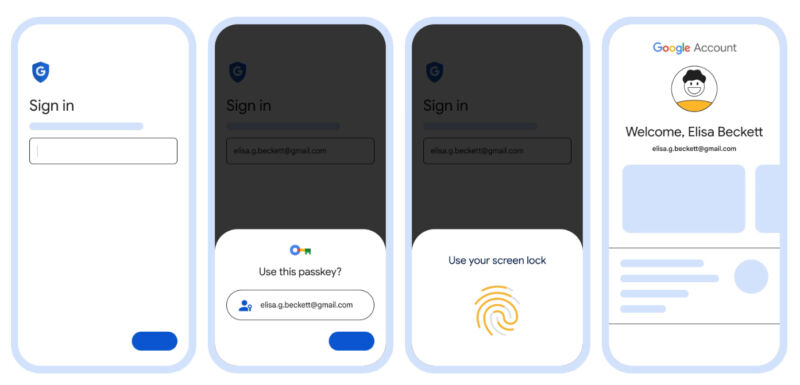

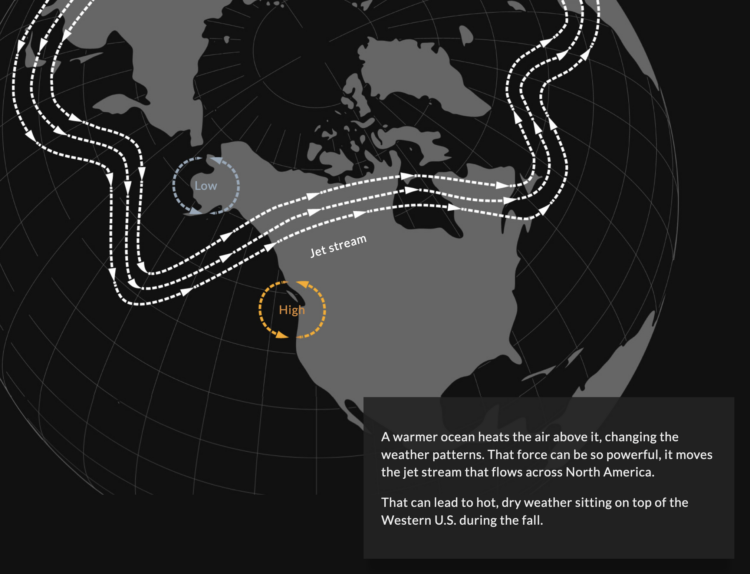




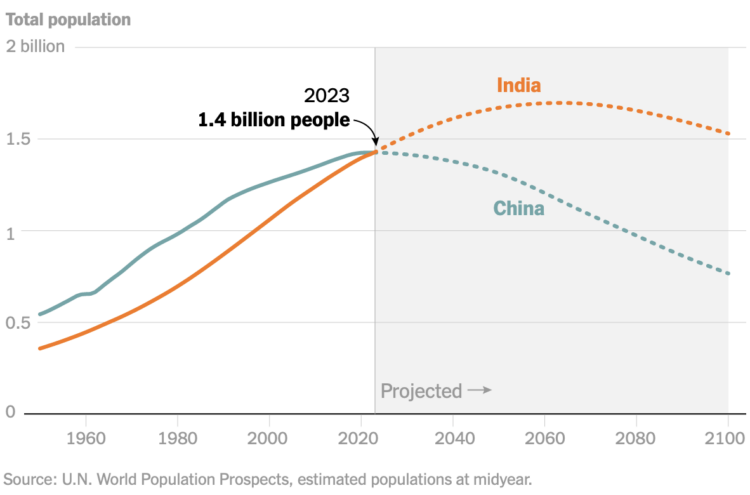

/cdn.vox-cdn.com/uploads/chorus_asset/file/24599215/1247591952.jpg) Tom Williams/CQ-Roll Call/Getty Images
Tom Williams/CQ-Roll Call/Getty Images



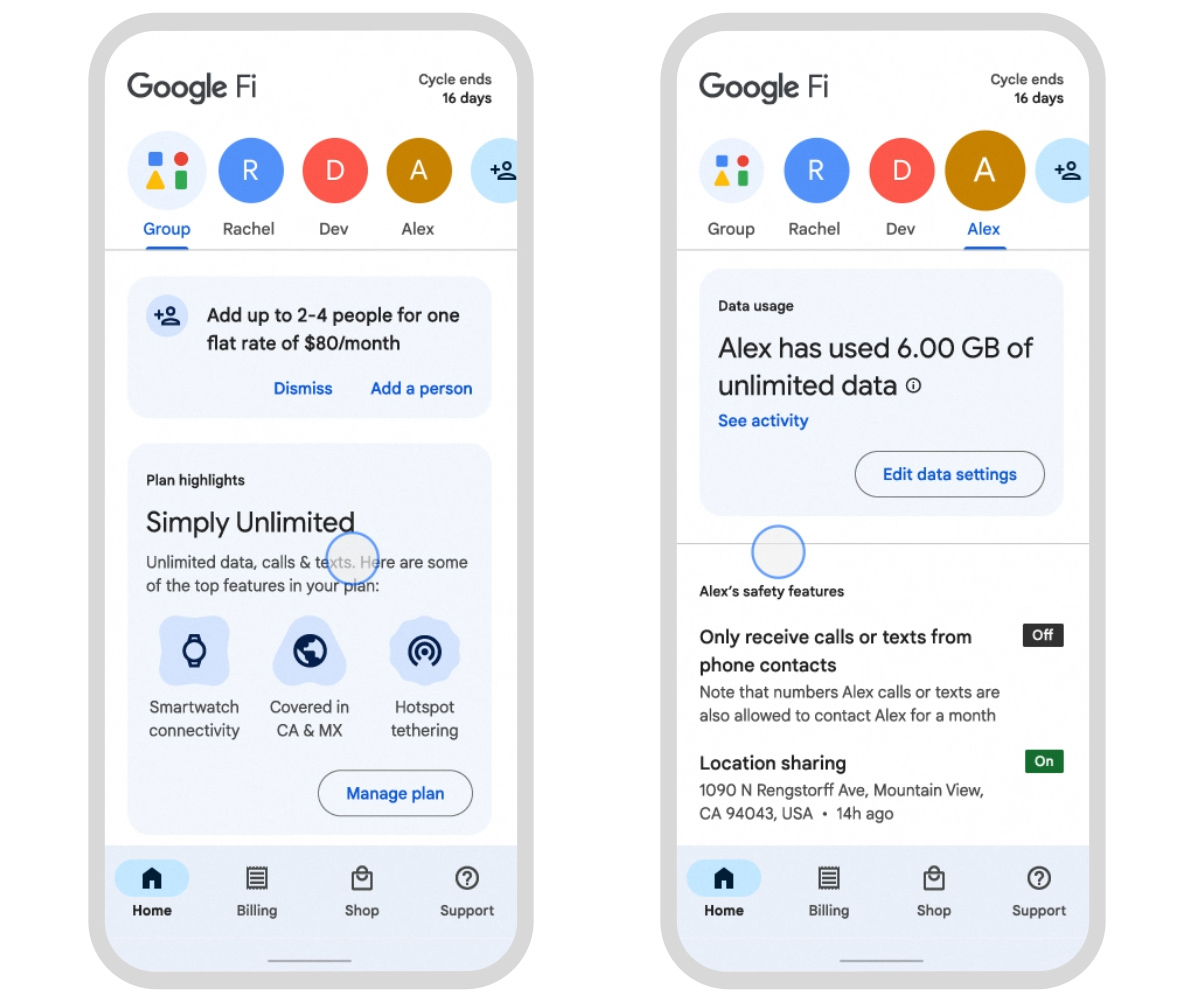



/cdn.vox-cdn.com/uploads/chorus_asset/file/24535003/GettyImages_1243436694.jpg) David McNew/Getty Images
David McNew/Getty Images
/cdn.vox-cdn.com/uploads/chorus_asset/file/24535007/fd55j_where_the_colorado_river_s_water_flows__1_.png)
/cdn.vox-cdn.com/uploads/chorus_asset/file/24535012/CEXtZ_the_colorado_river_is_being_drained_to_produce_beef_and_dairy__4_.png)
/cdn.vox-cdn.com/uploads/chorus_asset/file/24535017/GettyImages_1449910802.jpg) Jon G. Fuller/VW Pics/Universal Images Group via Getty Images
Jon G. Fuller/VW Pics/Universal Images Group via Getty Images
/cdn.vox-cdn.com/uploads/chorus_asset/file/24535033/111_SC_083712_43_0549M.jpg) National Archives
National Archives
/cdn.vox-cdn.com/uploads/chorus_asset/file/24535048/GettyImages_526583478.jpg) Sandy Huffaker/Corbis via Getty Images
Sandy Huffaker/Corbis via Getty Images
/cdn.vox-cdn.com/uploads/chorus_asset/file/24535090/ajjjI_gallons_of_fresh_water_required_per_pound_of_food_product__1_.png)





/cdn.vox-cdn.com/uploads/chorus_asset/file/24565881/1232895315.jpg) Alexander Sayganov/SOPA Images/LightRocket via Getty Images
Alexander Sayganov/SOPA Images/LightRocket via Getty Images
/cdn.vox-cdn.com/uploads/chorus_asset/file/24565883/165456410.jpg) Michael Stuparyk/Toronto Star via Getty Images
Michael Stuparyk/Toronto Star via Getty Images


 Posted by Dave Burke, VP of Engineering