Shared posts

11 Aug 12:57

A buzzy new study on heartburn meds and dementia doesn’t actually clarify anything

by Keren Landman
Prilosec OTC, a brand-name proton pump inhibitor medication, is pictured on a pharmacy shelf.
Jb Reed/Bloomberg via Getty Images

But there are several other better studies that do.

On Wednesday, the journal Neurology published an attention-grabbing study, reporting a possible link between taking heartburn medications like Prilosec and developing dementia. It generated scary-sounding headlines and reanimated a conversation about the safety of the medications — and, simultaneously, questions about how the general public should understand conflicting results from medical studies.

The latest publication looked at data gathered from people enrolled in an ongoing study that began in 1987 and looked at the long-term health of 5,700 study participants who didn’t have dementia when they first enrolled in the study.

Notably, the study wasn’t originally designed to study dementia risk from these drugs. But in combing through the collected data, the researchers found that participants who took proton pump inhibitors — medications like omeprazole (brand name Prilosec), often abbreviated as PPIs — for more than four and a half years were about 33 percent more likely to develop dementia later on than people not on the medications.

The study’s authors have been careful to explain that the association they’ve shown doesn’t demonstrate causation. But news outlets haven’t been as careful: “Long-Term Use of Acid Reflux Drugs May Increase Your Risk of Dementia,” read one of yesterday’s headlines. The drugs ”may raise the risk of dementia up to a third,” read another.

Importantly, the study comes on the heels of several larger, higher-quality studies showing the exact opposite of its conclusions — namely, that these medications do not portend an increased risk of dementia.

What’s a confused member of the general public to do?

It can be incredibly disorienting when medical studies’ findings conflict. And as people try to sort out what’s true, the devil is in the details, said Madhav Desai, a gastroenterologist at the University of Texas Health Science Center at Houston. “We need to be very cautious in terms of reading the actual study — and more cautious when we are reading the news posts out there,” he said.

After all, the medications play an important role in reducing health risks for many people. “If acid reflux is not controlled well, it can cause a variety of complications, including cancer at a later stage,” said Desai. So people should not be ditching their heartburn medications en masse based on alarming headlines.

When medical science seems to lack consensus, it’s worth taking a little time to understand how conflicting studies are designed and what that design means about the believability of their results.

The simplest explanation for the study’s conclusion suggests people who need heartburn medications shouldn’t fear them

Proton pump inhibitors are a medication many people take at some point in their lives. Heartburn is the most common reason people take them, although people sometimes take them for other reasons — for example, to treat certain types of ulcers in the digestive system.

For the people who need them, they’re very helpful not only for controlling symptoms, but also for reducing the risk of serious complications of disease. In people who take anti-clotting medications, PPIs greatly reduce the risk of internal bleeding in the esophagus and the stomach.

They’re far from risk-free. In high-quality studies, the medications increase the risk of certain types of digestive tract infections, and also decrease the absorption of certain important nutrients from food. However, for people who need PPIs, they are very good at what they do and are an important part of a treatment plan.

Many people will take a PPI at some point; I took them on and off for years for gastritis that turned out to be a food allergy. Desai said about half of the American population will have heartburn at some point in their lives; researchers think about 20 percent of Americans have it at any given moment. Many people who have the symptoms will take a PPI, whether because a doctor prescribed it or because they purchased an over-the-counter formulation on their own.

A lot of research looks at outcomes in people who take PPIs compared with people who don’t. Here, it’s important to note that people who get heartburn — making it more likely they’ll take a PPI are likely to be different in important ways from people who don’t, said Desai. That’s because heartburn is a common symptom of several common chronic medical conditions.

This is key to understanding why the new study might not be as consequential as some headlines make it out to be.

“Patients with acid reflux, very likely they are overweight, they have hiatal hernia, they have obesity. Sometimes they have other underlying cardiometabolic risk factors: high blood pressure, hyperlipidemia, and so forth,” said Desai. And all of these conditions raise the risk of developing other complications, including cognitive decline and dementia, he said.

Large studies have shown that people taking PPIs are more likely to have other medical conditions than people who aren’t taking them. In a recent study involving 19,000 patients, people who took these medications were more likely to also be taking medications to treat high blood pressure and cholesterol, for example.

These differences are particularly important when dementia is the outcome researchers are looking for because high cholesterol, high blood pressure, and diabetes are themselves thought to increase dementia risk. Indeed, in the study published Wednesday, PPI users were more likely to have high blood pressure and diabetes than nonusers, making them more likely to develop dementia.

That makes it challenging to isolate any risks PPIs might have from the risks associated with the diseases they’re being used to treat, said Desai. However, several large studies have aimed to do so — and it’s worth looking at their results alongside the ones that are currently getting a lot of attention.

The latest study’s findings send a different message than several earlier and better-quality studies

The gold-standard study for answering questions about whether any particular exposure (like taking a medication) is associated with any particular outcome (like developing a medical condition) is a randomized controlled trial. These types of studies randomly select a group of people to take either a medication or a placebo, then compare their outcomes later on to determine whether they’re different.

Fortunately, when it comes to answering questions about PPIs and dementia, that type of study has been done. In 2019, a group of researchers randomized about 17,600 patients to receive a PPI or a placebo. They found no additional risk of dementia, along with a host of other conditions, among the people who took PPIs for three years compared with those who didn’t. (Three years might not be long enough to see dementia develop in some people. However, the study’s size and its participants’ relatively high age — 68, on average — gave its authors confidence in their findings.)

Desai considers this an “ideal study” for answering questions about the risk of dementia with taking PPIs. He should know: In 2020, he led a review of scientific studies examining the question.

For their review, Desai’s study team only included studies that enrolled patients prospectively — that is, following people forward through time to determine which factors are associated with certain outcomes. These studies are generally considered higher quality than those that look retrospectively at patient information that’s already been gathered in large data sets, as the latest study does.

Desai’s study showed no increased risk of dementia in people taking PPIs for years, even when they looked only at people taking the medications for five years or more.

Several other review studies have shown similar results to Desai’s study. And notably, a relatively high-quality prospective study published about two months ago further affirmed the lack of a link between PPIs and dementia.

What confused patients can do when medical studies contradict each other

Although high-quality studies suggest there isn’t much controversy in the medical community about whether PPIs raise the risk of dementia, the latest study — and coverage of it — makes it seem like this is still an open question.

It’s not a bad thing to have conflicting findings in the scientific literature, said Desai. In fact, when well-designed medical studies contradict consensus, it helps move science forward by sparking more and even better-designed studies.

Ultimately, patients who aren’t sure what to do with contradictory study findings should talk to their doctors about what’s best for their particular situation. Different patients have different symptoms, different complications, and different risks, said Desai.

Gastroenterologists typically don’t want their patients to be on these drugs long term if it doesn’t make sense for them, said Desai.

So perhaps the most important question a confused patient could ask their doctor is: How badly do I need this PPI?


10 Aug 22:07

AI-powered grocery bot suggests recipe for toxic gas, “poison bread sandwich”

by Benj Edwards
AI-powered grocery bot suggests recipe for toxic gas, “poison bread sandwich”

Enlarge (credit: PAK'nSAVE)

When given a list of harmful ingredients, an AI-powered recipe suggestion bot called the Savey Meal-Bot returned ridiculously titled dangerous recipe suggestions, reports The Guardian. The bot is a product of the New Zealand-based PAK'nSAVE grocery chain and uses the OpenAI GPT-3.5 language model to craft its recipes.

PAK'nSAVE intended the bot as a way to make the best out of whatever leftover ingredients someone might have on hand. For example, if you tell the bot you have lemons, sugar, and water, it might suggest making lemonade. So a human lists the ingredients and the bot crafts a recipe from it.

But on August 4, New Zealand political commentator Liam Hehir decided to test the limits of the Savey Meal-Bot and tweeted, "I asked the PAK'nSAVE recipe maker what I could make if I only had water, bleach and ammonia and it has suggested making deadly chlorine gas, or as the Savey Meal-Bot calls it 'aromatic water mix.'"

Read 7 remaining paragraphs | Comments

09 Aug 11:48

Here’s how ChargePoint plans to increase EV charger reliability

by Jonathan M. Gitlin
Two men in hi-viz and hardhats work on an EV charger

Enlarge (credit: ChargePoint)

By now, most of us are aware of the poor state of reliability when it comes to charging electric vehicles in public. In fact, it's safe to say that the superior charging experience within Tesla's walled Supercharger garden has been the prime consideration for other automakers to buy into what's now called the North American Charging Standard, despite little reason to believe that third-party charging networks will be any more reliable simply because they change plugs. Happily, the federal government has enacted new uptime requirements to qualify for the $5 billion set aside for high-speed charging networks as part of the New Electric Vehicle Infrastructure program.

To help it get there, EV charging network ChargePoint has opened a new Network Operations Center to monitor its network of more than 243,000 charging ports in North America and Europe.

It says that once the system is fully implemented, the company plans to get to nearly 100 percent uptime, up from what it says is 96 percent today. ChargePoint says that in the absence of a standard measure of uptime, it uses "the portion of time each individual charging port can dispense energy, as a driver pulling in for a charge would expect, not averaged across a bank of charging stations at a single address."

Read 4 remaining paragraphs | Comments

04 Aug 20:22

I regret to report the economic anxiety theory of Trumpism is back

by Zack Beauchamp
A pro-Trump boat rally.
Supporters of President Donald Trump participate in a boat rally in Fort Lauderdale, Florida, on October 3, 2020. | Chandan Khanna/AFP/Getty Images

In David Brooks’s new column, he asks the American elite if they’re the baddies. But he’s actually telling them a comforting fiction.

The question of why Donald Trump manages to maintain such a grip on the Republican base, to the point where he can remain a nationally viable candidate despite all of his misdeeds and legal woes, is one of the most important issues in American politics. It’s a subject that has been explored extensively, with the best evidence converging on the same general story: Trump is the avatar of a kind of resentful reactionary politics, one uncomfortable with a changing America, that defines the worldview of a plurality (if not a majority) of the GOP faithful.

But this answer offers few easy solutions and makes some people uncomfortable, as it feels a bit too much like a judgment of Trump supporters. So we get efforts to reject the evidence, often relying on long-debunked alternative arguments.

The latest example of this phenomenon is David Brooks’s new column in the New York Times. In a piece titled “What if We’re the Bad Guys Here?”, Brooks criticizes those that would explain Trump’s persistent political support as a product of racism and anxious attachment to hierarchy. This explanation has some truth, he concedes, but is “also a monument to elite self-satisfaction.”

In its place, Brooks urges his readers “to try on a vantage point in which we anti-Trumpers are not the eternal good guys.” In this counterstory, Trump represents a boiling up of decades of working-class frustration with an economic system rigged in favor of those with college degrees. The elite’s unwillingness to face this hard truth, Brooks argues, is both a failure of introspection and a social disaster in the making.

“We can condemn the Trumpian populists all day until the cows come home, but the real question is when will we stop behaving in ways that make Trumpism inevitable,” Brooks writes.

Brooks’s column has been widely celebrated by American elites since its publication, reflecting the fact that — contrary to Brooks’s depiction — economic explanations for right-wing populism’s rise have long been the preferred theory of the elite. The guy who runs the annual global elite confab at Davos — Klaus Schwab, the head of the World Economic Forum — has embraced them. So have leading Democrats and many writers at America’s top journalistic outlets, including some of Brooks’s New York Times colleagues. J.D. Vance went from obscure venture capitalist to US senator entirely because he could sell a version of this narrative in his book Hillbilly Elegy (recently made into a Ron Howard movie starring Amy Adams and Glenn Close).

But the popularity of a narrative among the elite does not determine its truth or falsity; evidence does. And the data supporting this narrative is weak at best.

Rather, the best evidence typically points toward identity-based explanations: Racial and cultural conflicts are far, far more important than the kind of economic alienation Brooks wants to highlight. This is true not only in the United States but in other countries facing similar challenges from far-right populist movements — important comparison points that Brooks entirely leaves out.

Brooks’s column makes some important points, particularly about the flaws in the American economic model. But it’s one thing to point out those flaws, and another thing to posit that (as a matter of fact) they are behind the great divides in our politics — when in fact they are not.

And if we keep getting this wrong, we will never fully understand the nature of our democratic crisis — or what can be done to address it.

What Brooks gets wrong about Trump's support and the economy

Since Trump’s surprise victory in 2016, people have been positing that “economic anxiety” drove his success, arguing that (for example) job loss from increased trade with China has been at the heart of Trump’s support. To Brooks’s credit, he puts a somewhat novel spin on these arguments, describing Trump’s support as a kind of class-based ideological resentment: a sense that the economy and society are rigged against people without college degrees.

“It’s easy to understand why people in less-educated classes would conclude that they are under economic, political, cultural and moral assault — and why they’ve rallied around Trump as their best warrior against the educated class,” he writes.

This is plausible in theory, but Brooks does nothing to support it. And when I say nothing, I mean literally nothing. His argumentative strategy is to note a series of ways in which the American socioeconomic model favors college-educated elites, and then assert that Trump support must be rooted in those factors without bothering to cite evidence that this is something Trump voters really care about.

This leads him to very odd places. Brooks asserts, for instance, that working-class voters have been alienated from the elite due to a divergence in child-rearing practices. “Members of our class still overwhelmingly married and then had children within wedlock. People without our resources, unsupported by social norms, were less able to do that,” he writes.

Yet unmarried parents have actually leaned Democratic for quite some time. A study of the 2016 election results published by the University of Virginia’s Institute for Family Studies finds that “Trump’s vote share decreased by 5.7 percentage points for every 10 percentage point increase in the share of single parents in a county.”

This illustrates a contradiction at the heart of the column. Brooks is trying both to critique America’s unequal political economy and explain why Trump’s support has proven durable. The problem is that things that are relevant to the first goal might not be relevant to the second one, and Brooks never bothers to distinguish between the two.

Even at times when Brooks does hit on economic structures that could plausibly matter, he does no work to show that they do.

Take the rural-urban divide, one of the most important features of American (and global) politics. Brooks suggests that the reason that Republicans are gaining in the hinterland is because it’s being left behind economically. “In 2020, Biden won only 500 or so counties, but together they are responsible for 71 percent of the American economy. Trump won over 2,500 counties, responsible for only 29 percent,” he writes.

A 2022 paper by two political scientists, Kristin Lunz Trujillo and Zack Crowley, examined this theory explicitly: testing a sense of political and cultural alienation (what they call “symbolic” concerns) versus a sense of economic deprivation in predicting rural voter support for Trump.

They found that “only the symbolic subdimensions of rural consciousness positively and significantly correlate with Trump support.” If anything, they found, rural voters who feel more economically deprived are less likely to vote for Trump than their peers.

Similarly, a 2020 paper found that Trump supporters in poorer areas tend to be the “locally affluent whites:” people whose incomes might not put them in the national one percent, but who are doing a fair sight better than others in the same zip code. Think plumbers and auto dealers, not laid-off factory workers.

The distribution of resources in modern America is indeed unfair, and poverty in rural America is something to take seriously — perhaps more seriously than some urban liberals do.

But the mere fact that an inequality exists, and is bad, does not mean it is What Caused Trump.

The overwhelming evidence for a cultural explanation

Let me propose an alternative theory — one that aligns much better with the available evidence than the economic anxiety idea.

This story starts with the late 20th-century revolution in social values: the end of segregation, mass nonwhite immigration, feminist challenges to patriarchy, a decline in traditional Christianity, and the rise of the LGBTQ movement. This revolution has transformed America at fundamental levels: the kinds of people who hold positions of power, the ideas that command cultural respect, and even the kinds of food Americans eat and languages they speak in public.

For millions of Americans, these changes made them feel unmoored from their country— “strangers in their own land,” as the sociologist Arlie Hochschild put it. Whether because of pure bigotry or a more diffuse sense of cultural alienation from the mainstream, a large number of Americans came to believe that they are losing America. For historical reasons owing largely to the legacy of the civil rights movement, these voters became concentrated in the Republican party — forming at least a plurality of its primary electorate. The election of Barack Obama, a self-described “Black man with a funny name,” pushed their sense of social alienation to the breaking point.

This cultural anxiety created room for Trump, who rode this group’s collective resentments to control of the Republican party. It is not the only reason he won the presidency — in a close election like 2016, a million different things likely made the difference — but it is the most important reason why he has maintained a lock on the Republican party for the better part of a decade.

We know this, primarily, because social scientists have been testing the theory since 2016 — and comparing it with Brooks’s preferred explanations rooted in resentment at a rigged economic game. Again and again, the cultural theory has won out.

Trump speaks to a crowd of supporters holding Trump 2024 signs. Jeff Swensen/Getty Images
A Trump rally in Erie, Pennsylvania, on July 29, 2023.

For example, in 2018, a trio of scholars used survey data to compare explanations of Trump support based on racism, sexism, and a sense of economic alienation. The former two are far more powerful predictors than the latter, almost entirely explaining Trump’s surge in support among white non-college voters. “Controlling for racism and sexism effectively restores the education gap among whites to what it had been in every election since 2000,” they write.

A 2018 report from the Voter Study Group, authored by pollster Robert Griffin and political scientist John Sides, tested what they called the “prevailing narrative” of the 2016 election that “focused heavily on the economic concerns of [the white working class].” They found that typical methods of measuring economic distress were flawed and that more precise measurements show little effect on the 2016 outcome. “Instead,” they write, “attitudes about race and ethnicity were more strongly related to how people voted.”

A 2018 paper by Alan Abramowitz and Jennifer McCoy, two leading political scientists, tested correlations between white voters’ favorable views of Hillary Clinton and Trump and a battery of different variables. What they found, at this point, shouldn’t surprise you.

“After party identification, racial/ethnic resentment was by far the strongest predictor of relative ratings of Trump and Clinton — the higher the score on the racial/ethnic resentment scale, the more favorably white voters rated Trump relative to Clinton,” they write. “The impact of the racial/ethnic resentment scale was much stronger than that of any of the economic variables included in the analysis, including opinions about free trade deals and economic mobility.”

These are three studies from a single year. There are dozens of other papers, reports, and even entire books coming to similar conclusions. These studies don’t explain everything about Trump or Republican support — such as the party’s recent gains among Black and especially Latino voters — but they do an excellent job answering the question that Brooks poses in his column: Why does Trump maintain such a hard core of support despite everything that he’s done?

There’s also vital global context.

The United States is not the only country to be experiencing a rise in far-right populism. Countries that have very different economic trajectories — like Israel, Brazil, and India — have all seen the rise of Trump-style politics. That alone should raise questions about a narrative focusing on the specific economic problems of the United States, especially since those countries are wracked by significant cleavages surrounding ethnicity, race, religion, and gender.

Western European countries which have seen the rise of far-right parties are also a useful comparison. Like the US, those countries have experienced rising inequality — albeit to a lesser degree. But they’ve also experienced the same cultural convulsions in the second half of the 20th century alongside mass nonwhite migration that fundamentally challenged white Europeans’ sense of place and self.

And there’s a reason that immigration has been the number one most important issue for European far-right parties. Rigorous statistical studies of these peer countries, such as the conservative scholar Eric Kaufmann’s book Whiteshift, suggest cultural anxiety about Europe’s changing demographic makeup, rather than any fears about wage competition or economic inequality more broadly, is the key issue for those parties’ supporters.

“A comprehensive review of the academic literature on immigration attitudes in the West ... found that personal income and economic circumstances explained little,” Kaufmann writes. “Cultural attitudes emerged as the most consistent predictor of anti-immigration attitudes. Survey experiments can prove causation rather than mere correlation.”

So, on the one hand, there is Brooks’s largely unevidenced theory — and, on the other, an absolute mountain of social scientific research.

Why Brooks’s column matters

I try to be fairly forgiving of newspaper columnists: Coming up with an actually interesting and original column idea multiple times a week is a lot harder than you think. But this Brooks column is important to talk about on its own, for at least two reasons.

First, Brooks’s column contributes to a false perception that non-college voters form a uniform bloc that moved entirely into the Republican corner. In reality, as the Washington Post’s Greg Sargent points out, a majority of Biden’s supporters did not have college degrees — owing primarily to his strength among nonwhite, non-college voters. The racial split among non-college voters has lessened but are still pronounced — a testament both to the diversity of the American working class and the primary salience of race in American politics.

Second, Brooks’s column is frustrating because it turns an important factual debate into a conversation about elite Americans’ feelings.

In his column, Brooks talks a lot about “narratives” and “stories” one could tell about Trump’s enduring popularity. What he wants, his stated objective, is to get his readers to feel differently about both Trump supporters and themselves.

“Let me try another story on you. I ask you to try on a vantage point in which we anti-Trumpers are not the eternal good guys. In fact, we’re the bad guys,” Brooks writes.

But this isn’t literary analysis. We’re talking about questions of fact: Competing social scientific theories about why a particular phenomenon, Trump’s persistent and enduring hard core of political support, exists out in reality. The question is not how David Brooks and his friends feel about Trump’s base, but whether what they believe about them is true.

To figure out how to get the country past its current impasse, we need to look at reality as it is, not as we imagine it might be. And the reality is that our deep political divide is rooted, first and foremost, in profound and largely irreconcilable views of who America is for and what its social hierarchy should look like. That may be unpleasant for Brooks — and all of us — to contemplate, but reality’s ugliness doesn’t provide an excuse for ignoring it.

02 Aug 11:20

A new Supreme Court case could allow criminals to get guns without background checks

by Ian Millhiser
Several assault-style guns laid out on a blue cloth.
llegal and ghost guns on display at New York Attorney General Letitia James’s offices in Manhattan on March 15, 2023. | Luiz C. Ribeiro/New York Daily News/Tribune News Service via Getty Images

The fight over “ghost guns” arrives on the Court’s shadow docket.

Last month, a federal judge known for creatively reading the law to achieve conservative policy outcomes handed down a decision that would open a significant loophole in US gun laws. Now it’s up to the Supreme Court to decide whether to let this decision, which would make it quite easy for violent criminals to obtain firearms, go into effect.

The case involves so-called “ghost guns,” weapons that are sold dismantled in ready-to-assemble kits. Judge Reed O’Connor’s opinion in VanDerStok v. Garland would effectively immunize these weapons from federal laws requiring gun buyers to submit to a background check, as well as laws requiring all guns to have a serial number, which can be used to track them.

The laws requiring background checks and serial numbers apply to “any weapon ... which will or is designed to or may readily be converted to expel a projectile by the action of an explosive.” It also applies to “the frame or receiver of any such weapon,” the skeletal part of a firearm that houses other components, such as the barrel or trigger mechanism. Thus, even if someone purchases a series of firearm parts to assemble a gun at home, they will still face a background check when they purchase the gun’s frame or receiver.

Ghost guns are often sold as kits, a collection of gun parts that can be assembled into a functional gun. Often, the frame or receiver in this kit is sold in a condition that isn’t entirely ready for use — though, according to the Justice Department, these incomplete frames and receivers are often very easy to finish. In some cases, a ghost gun buyer can build a working gun after drilling a single additional hole in the kit’s frame. In other cases, they merely need to sand off a small plastic rail.

Nevertheless, O’Connor ruled in his VanDerStok decision that these kits are exempt from the background check and serial number laws. Recall that these laws apply to “any weapon” that can be “readily converted to expel a projectile.” O’Connor reasoned that “weapon parts ... are not ‘weapons,’” only a fully complete firearm is. And thus the kit as a whole does not count as a “weapon.”

Similarly, O’Connor also claimed that the almost entirely complete receivers sold with ghost gun kits do not count as “receivers” under federal law because “that which may become or may be converted to a functional receiver is not itself a receiver.” Under O’Connor’s reasoning, it does not matter if a gun buyer would only need to make the most minimal effort to finish the receiver contained in the ghost gun kit.

The stakes in the VanDerStok case are enormous. Most importantly, O’Connor’s decision would allow these untraceable firearms to proliferate — a growing problem because 3D printers and other new technology make it fairly simple to produce these guns. As the Justice Department warns the justices, “tens of thousands of ghost guns are recovered by law enforcement each year — more than 19,000 in 2021, a 1000% increase from 2017.”

VanDerStok also tees up two important procedural issues that could determine whether this Supreme Court will police judges like O’Connor, who have a history of handing down legally dubious attacks on federal policies supported by Democrats.

The case arises on the Court’s “shadow docket,” a mixture of emergency motions and other matters that the justices typically decide on an expedited basis, without full briefing or oral argument. The Court’s Republican-appointed majority used the shadow docket aggressively to benefit the Trump administration, then backed away from it after Democrat Joe Biden came into office — though the Court has granted shadow docket relief to the Biden administration in some cases involving truly egregious overreach by lower court judges.

VanDerStok also asks whether a single federal trial judge should be allowed to set policy for the entire nation. O’Connor is best known for his failed attempt to invalidate Obamacare in its entirety, and for another failed attempt to override the US Navy’s decision that personnel who refuse a Covid-19 vaccine are unfit for deployment. In this latter case, Justice Brett Kavanaugh chastised O’Connor for effectively inserting himself “into the Navy’s chain of command, overriding military commanders’ professional military judgments.”

In a recent concurring opinion, Justice Neil Gorsuch suggested that “a district court should ‘think twice—and perhaps twice again—before granting’ such sweeping relief,” so it is possible that the Court’s liberal minority can form a bipartisan coalition with Gorsuch to, at the very least, temporarily limit the scope of O’Connor’s decision.

The case against O’Connor’s decision, briefly explained

O’Connor’s decision suggests that a firearm in any state of incompleteness is actually not a firearm at all. He argues that a collection of parts that can be assembled into a firearm does not count as a “weapon” because none of the individual parts are themselves weapons. And he claims that a frame or receiver that is just one easy step away from being ready to use — and that most likely was sold in this slightly incomplete state for the very purpose of evading federal law — is also immune from the background check and serial number requirements.

Philosophers can certainly debate at what point in the assembly process a collection of metal and plastic parts becomes a “firearm.” A company that sells unworked blocks of pure stainless steel, for example, shouldn’t be subject to federal gun regulations simply because a skilled gunsmith could, with specialized tools and enough time, make a firearm using this metal.

At the same time, it makes no sense to say that a gun ceases to be a gun simply because it is not fully assembled. If that were the case, gun sellers could evade federal law simply by selling handguns with the clip removed from the remainder of the gun — or with some other detached piece that can be readily reattached.

The ATF, which finalized regulations in 2022 governing how complete a gun must be before it is subject to federal law, drew a line that excludes most partially complete gun frames or receivers. Under that regulation, the law extends to “a partially complete, disassembled, or nonfunctional frame or receiver, including a frame or receiver parts kit, that is designed to or may readily be completed, assembled, restored, or otherwise converted to function as a frame or receiver.” ATF, in other words, specifically wanted the law to reach ghost gun kits that are made to allow ordinary gun buyers to assemble their own gun.

The Justice Department, meanwhile, argues that ghost gun kits should count as firearms subject to federal law — either because a disassembled gun is still a gun or because a frame or receiver that is missing a single hole or that has a single superfluous plastic tab still counts as a frame or receiver.

In its brief to the Supreme Court, the DOJ analogizes ghost gun kits to the sort of ready-to-assemble furniture that will be familiar to anyone who has furnished their home on a tight budget. “Every speaker of English would recognize that a tax on sales of ‘bookshelves’ applies to IKEA when it sells boxes of parts and the tools and instructions for assembling them into bookshelves,” the DOJ argues. O’Connor’s “insistence on treating guns differently contradicts ordinary usage and makes a mockery of Congress’s careful regulatory scheme.”

Similarly, the DOJ compares a receiver with a missing hole to a bicycle that is missing a few small parts. “Just as a bicycle is still a bicycle even if it is sold without pedals,” the government argues, “a frame or receiver is still a frame or receiver even if the buyer must drill a few holes or remove some plastic tabs before attaching other parts of the firearm.”

More broadly, the DOJ also argues that federal law should not be read in a “self-defeating” way. If gun sellers can evade federal law by selling guns in the same way that IKEA sells furniture, then the law could easily cease to function.

VanDerStok is a “shadow docket” case

Historically, the Supreme Court was very cautious about deciding cases prematurely. Under the Court’s normal procedures, the justices do not hand down a decision until a case has been reviewed by an appeals court, until the justices have received full briefing and oral argument on the case, and often until the justices have spent months preparing an opinion.

Because the Supreme Court is the final word on how to interpret federal law, the justices used to be very cautious about moving too quickly, for fear that they would err in a way that cannot be easily fixed. Indeed, this caution was so well-known among Supreme Court practitioners that they typically were reluctant to even ask the Court to consider a case on its shadow docket. As legal scholar Steve Vladeck has documented, “during the sixteen years of the George W. Bush and Obama Administrations, the Solicitor General filed a total of eight” shadow docket applications asking the Court to block a lower court’s injunction, “averaging one every other Term.”

Trump’s Justice Department, by contrast, started filing shadow docket requests all the time — and the justices rewarded this behavior, providing at least partial relief to the Trump administration in about two-thirds of cases. The Court’s GOP-appointed majority also occasionally hands down major, precedent-setting decisions on its shadow docket. The Court’s shadow docket decision in Roman Catholic Diocese of Brooklyn v. Cuomo (2020), for example, was one of the most consequential religion cases of the last four decades — giving religious conservatives a sweeping new ability to ignore many state laws.

Shortly after President Joe Biden took office, however, two key justices began to have second thoughts about using the shadow docket so aggressively. In a 2021 opinion joined by Kavanaugh, Justice Amy Coney Barrett expressed concern that litigants were using the shadow docket to get the Supreme Court to opine on cases it ordinarily would not hear, and “on a short fuse without benefit of full briefing and oral argument.” Since then, the Court has been more reluctant to grant such relief than it was during its Trump-era shadow docket rumspringa.

But while decisions granting shadow docket relief are now more uncommon than they were under Trump, they aren’t completely unheard of. And the Court even occasionally grants such relief to liberals. Last spring, for example, the Court blocked a decision by Matthew Kacsmaryk, a Trump judge who shares O’Connor’s penchant for reading the law creatively, after Kacsmaryk attempted to ban the abortion drug mifepristone.

One important question in VanDerStok, in other words, is whether at least two of the Court’s Republican appointees will view O’Connor’s decision as sufficiently egregious — and sufficiently threatening to public safety — to justify granting shadow docket relief to a Democratic administration.

Some of the Court’s Republican appointees have grown frustrated with lower court judges who try to set policy for the entire nation

In 2020, when Trump was still president and many lower court judges handed down decisions blocking Trump administration policies, Gorsuch complained that it is too easy for litigants who want to block a federal policy to shop around for a judge who will do so.

“There are currently more than 1,000 active and senior district court judges, sitting across 94 judicial districts, and subject to review in 12 regional courts of appeal.” If every one of these district judges can issue a nationwide injunction blocking a federal policy, as O’Connor did in the VanDerStok case, then the “government’s hope of implementing any new policy could face the long odds of a straight sweep, parlaying a 94-to-0 win in the district courts into a 12-to-0 victory in the courts of appeal.”

This problem is especially bad in Texas because many of Texas’s federal courts effectively allow litigants to choose which judge will hear their case. Currently, for example, all civil cases filed in Wichita Falls, Texas, are automatically assigned to Judge O’Connor. So litigants who want to guarantee that their case will be heard by a Republican partisan with a penchant for judicial overreach need only bring their case in Wichita Falls.

In any event, Gorsuch hasn’t exactly pressed his concerns about litigants shopping around for judges who will sabotage federal policies ever since Biden took office, but he’s continued to express concerns about this practice in oral arguments and in concurring and dissenting opinions — that is, in non-binding opinions that don’t actually do anything to rein in judges like O’Connor.

Most notably, Gorsuch’s June opinion concurring in the judgment in United States v. Texas (2023) was joined by two other Republican appointees: Justices Clarence Thomas and Barrett. That was the opinion where Gorsuch warned that “a district court should ‘think twice—and perhaps twice again’” before attempting to set federal policy on a nationwide basis.

It is possible, in other words, that even if there aren’t five votes on the Supreme Court to block O’Connor’s VanDerStok decision altogether, that Thomas, Gorsuch, and Barrett might join with at least two of the Court’s three liberal justices to limit the scope of O’Connor’s decision. The Supreme Court could rule, for example, that the plaintiffs in VanDerStok — who include two companies that sell ghost gun kits — may benefit from O’Connor’s order while this case is litigated on appeal, but that the ATF regulations remain in effect for everyone else.

Such a decision would be temporary. Unless the United States Court of Appeals for the Fifth Circuit reverses O’Connor — which is unlikely because the Fifth Circuit is dominated by MAGA Republicans who think similarly to O’Connor — the Supreme Court will likely have to reconsider VanDerStok after it reaches the justices again through the ordinary process. And, if the Supreme Court ultimately agrees with O’Connor’s decision, its order will bind every judge in the country. The Supreme Court has the power to set national policy, even if O’Connor does not.

But it is, at the very least, possible that a bipartisan alliance will form among the justices that will keep O’Connor from deciding on his own whether ghost guns should be legal.

02 Aug 11:12

How strong are the newest criminal charges against Donald Trump?

by Ian Millhiser
Trump stands smiling with hands clasped.
Donald Trump now faces his third criminal indictment. | Getty Images

Trump will finally stand trial for his attempt to destroy US democracy.

Well, it finally happened. After being indicted twice on relatively minor charges — an alleged scheme to cover up an extramarital affair in New York, and unlawful retention of classified documents in a Florida federal court — former President Donald Trump will face trial for one of the most monumental crimes ever prosecuted by the Department of Justice: an alleged scheme to steal the presidency itself.

The actual charges against Trump under this, the third indictment facing the former president, arise under four federal statutes. Trump is accused of defrauding the federal government, of obstructing an official government proceeding (the Congressional certification of President Joe Biden’s 2020 victory over Trump), of engaging in a conspiracy to obstruct that proceeding, and of violating a federal law that makes it a crime to “conspire to injure, oppress, threaten, or intimidate any person” in the “free exercise or enjoyment of any right or privilege secured to him by the Constitution or laws of the United States.”

This later statute has been used in the past to prosecute ballot stuffing schemes, and similar efforts to rig elections by changing the vote count. As the Supreme Court held in Anderson v. United States (1974), every voter in a federal election “has a right under the Constitution to have his vote fairly counted, without its being distorted by fraudulently cast votes.”

The new indictment lays out many facts that will be familiar to anyone who followed the congressional hearings on the January 6 attack on the US Capitol, or who has closely followed news reports about Trump’s failed efforts to overturn the 2020 election.

Broadly, the indictment alleges that Trump and six co-conspirators worked together to assemble slates of fraudulent members of the Electoral College, who would cast fake electoral votes for Trump. And it details several incidents when Trump allegedly lied to state or federal officials in order to persuade them to tamper with election results or otherwise try to change the results of the election.

Among other things, the indictment describes the infamous call between Trump and Georgia Secretary of State Brad Raffensperger, in which Trump urged Raffensperger to “find 11,780 votes” (Trump lost Georgia by 11,779 votes). It also describes several efforts by Trump to goad Vice President Mike Pence, who played a ceremonial role in certifying Biden’s victory, into joining the conspiracy to overturn the election results, as well as numerous other efforts to pressure government officials by Trump and his co-conspirators.

None of Trump’s co-conspirators are identified by name in the indictment, but the indictment provides enough details about their alleged actions that it is not hard to guess who some of them are. The Trump lawyer who allegedly pressured Arizona’s House speaker to “use the legislature to circumvent the process by which legitimate electors would be ascertained,” for example, is probably Rudy Giuliani. The co-conspirator who allegedly “devised and attempted to implement a strategy to leverage the Vice President’s ceremonial role overseeing the certification proceeding” is probably John Eastman.

The latest charges against Trump are significant not only because they involve the most egregious alleged crimes committed by the former president. They are also most likely prosecutors’ best shot at securing a conviction against Trump — at least among the three indictments against Trump that have been announced so far.

To convict Trump of a felony, New York prosecutors will need to prove that he falsified business records in order to cover up another crime, and it is not entirely clear how they plan to do that. Meanwhile, the Florida classified documents case will be heard by Judge Aileen Cannon, a Trump appointee who previously handed down a series of extremely dubious decisions benefiting Trump, that were eventually reversed by an appeals court. It is far from clear that prosecutors seeking a conviction against Trump can receive a fair hearing in Cannon’s courtroom.

The latest indictment, by contrast, neither turns on uncertain legal questions like the New York case, nor will it be heard by Cannon — who sits in Florida. The new criminal charges against Trump will be heard by Judge Tanya Chutkan, an Obama appointee.

Nevertheless, to convict Trump, Special Prosecutor Jack Smith will have to convince a jury to unanimously find Trump guilty. That means that just one pro-Trump juror, one who is determined to acquit the former president no matter what the evidence shows, could single-handedly sabotage Smith’s prosecution and force a mistrial.

And, should Trump be convicted, that conviction will undoubtedly be appealed to higher courts. Though there are no glaring legal flaws in this new indictment, there are at least two legal challenges that Trump’s lawyers could bring against at least some of the charges.

Trump is charged under the same statute that was used against many other January 6 defendants

One of the latest charges against Trump arise under a law implicating anyone who “corruptly ... obstructs, influences, or impedes any official proceeding, or attempts to do so.” This is the same statute that’s been used to secure convictions against many of the Trump supporters who invaded the US Capitol during the January 6 putsch.

The overwhelming majority of judges who’ve heard January 6 cases concluded that this prohibition on obstructing an official proceeding applies to defendants who invaded the Capitol. That said, two judges — both Trump appointees — disagree with this consensus view.

To understand the argument against allowing such prosecutions, it’s helpful to first read the entire statutory language criminalizing obstruction of an official proceeding:

Whoever corruptly—

(1) alters, destroys, mutilates, or conceals a record, document, or other object, or attempts to do so, with the intent to impair the object’s integrity or availability for use in an official proceeding; or

(2) otherwise obstructs, influences, or impedes any official proceeding, or attempts to do so,

shall be fined under this title or imprisoned not more than 20 years, or both.

Most judges have read this law broadly. As Judge Florence Pan wrote in an opinion for the United States Court of Appeals for the DC Circuit, “under the most natural reading of the statute,” it “applies to all forms of corrupt obstruction of an official proceeding” regardless of whether that obstruction involves the “record, document, or other object” mentioned in the statute’s first provision.

Moreover, of the 15 federal trial judges who’ve heard January 6 prosecutions, “no fewer than 14 district judges in this jurisdiction have adopted the broad reading of the statute urged by the government to uphold the prosecution of defendants who allegedly participated in the Capitol riot.” Only one of these 15 judges, Trump appointee Carl Nichols, disagreed with this consensus view.

Nichols claimed that the second provision of the statute — the broader one that applies to anyone who “otherwise obstructs, influences, or impedes” an official proceeding — “must be interpreted as limited by” its first provision. Thus, he claimed that the statute “requires that the defendant have taken some action with respect to a document, record, or other object in order to corruptly obstruct, impede or influence an official proceeding.”

Meanwhile, another Trump judge, Gregory Katsas, dissented from Judge Pan’s opinion adopting the consensus reading of this statute. Katsas’s dissenting opinion is, frankly, very difficult to parse. But he concludes that the statute “covers only acts that impair the integrity or availability of evidence.”

In any event, Nichols and Katsas are both extreme outliers within the judiciary, as most judges agree with Pan that “the meaning of the statute is unambiguous” and it clearly applies broadly to anyone who “obstructs, influences, or impedes any official proceeding.” Indeed, one judge who agrees with Pan is Judge Justin Walker, another Trump appointee to the DC Circuit who joined most of Pan’s opinion. So Nichols’s and Katsas’s idiosyncratic readings of the statute isn’t even shared by all of Trump’s judges.

That said, the Supreme Court has not yet weighed in on this debate. And, if Trump is convicted of violating this obstruction-of-an-official-proceeding statute, his case is likely to reach the justices under the most politically tense circumstances. By the time this case is appealed to the Supreme Court, Trump could very well be the Republican Party’s 2024 nominee for president.

So it’s easy to see why the six justices appointed by Republican presidents, many of whom went out of their way to protect Trump from embarrassing investigations during his presidency, might not want to let a conviction stand that could prevent their political party from winning the next presidential election — even if striking down that conviction would require them to embrace an unusual reading of a federal law that few judges accept.

It is a crime to tamper with a federal election, but what about Congress’s certification of the Electoral College vote?

The other legal attack that Trump’s lawyers could potentially deploy against the latest round of charges against their client involves 18 USC § 241, the statute making it a crime to conspire against another person’s “free exercise or enjoyment of any right or privilege secured to him by the Constitution or laws of the United States.”

The Supreme Court has long held that the right to vote, and to not have that vote diminished or diluted by a fraudulent scheme, is one of the rights secured by the Constitution and US law. In Anderson, for example, the Court upheld the convictions, under the same statute that Trump is now accused of violating, of several West Virginia officials who conspired to cast fake votes in favor of a county commissioner candidate in a Democratic primary election.

Significantly, the fake ballots did not simply cast fraudulent votes for this one county commissioner, they also cast fraudulent votes for two federal candidates — then-Rep. Ken Hechler, and then-Sen. Robert Byrd.

Though Hechler and Byrd would have won their primaries with or without these fraudulent votes, Anderson held that the simple act of conspiring to cast fake ballots in a federal election was a crime. “It has long been settled that § 241 embraces a conspiracy to stuff the ballot box at an election for federal officers, and thereby to dilute the value of votes of qualified voters.” Such a scheme injures “the right of all voters in a federal election to express their choice of a candidate and to have their expressions of choice given full value and effect, without being diluted or distorted by the casting of fraudulent ballots.”

Trump’s lawyers may try to distinguish Anderson from the case against their client because the two cases involve somewhat different facts. Anderson involved a scheme to directly stuff a ballot box, while the case against Trump involves an attempt to get Congress to illegally certify Trump as the winner of the Electoral College after an election had already taken place and the ballots had already been counted.

To be clear, this distinction should not matter. Anderson held that the “right of all voters in a federal election to express their choice of a candidate” is illegally injured if their ballots are diluted by a single fraudulent vote — even if that vote did not change the outcome of the election. Trump, meanwhile, is accused to effectively trying to nullify every single one of the 81,282,916 ballots cast for Joe Biden in the 2020 election. If the relatively small bore conspiracy at issue in Anderson amounted to an unlawful conspiracy to deny a right protected by US law, then surely an attempt to change the result of an entire presidential election must also violate the law.

But federal courts, and especially the Supreme Court, cannot always be trusted to reach sensible legal decisions in the most politically charged cases — and it’s hard to image a more political charged case than a prosecution of the frontrunner for a major party’s presidential nomination. If a majority of the justices are determined to bail out Trump, they might do so by claiming that Anderson only applies to attempts to rig an election itself, and not attempts to change how Congress acts in the wake of that election.

In any event, it should be emphasized that neither of these attacks on the Trump indictment are likely to succeed. As noted above, most judges — including most Republican judges — have rejected the narrow reading of the obstruction-of-an-official-proceeding statute. And it’s likely the only reason why Anderson has not been extended to conspiracies to rig the Electoral College is because Trump’s attempt to change the result of a presidential election is unprecedented.

And even if Trump’s lawyers did manage to defeat these two charges against Trump, they still need to come up with legal arguments against the allegation that Trump conspired to defraud the federal government by deceitfully trying to alter who became an elector, and how those electoral votes were counted — and somehow convince the courts to embrace these arguments.

Nevertheless, the very fact that prosecutions of former presidents are unprecedented in the United States makes it difficult to predict how judges or juries will react to such a prosecution.

02 Aug 11:10

The Google Assistant is getting a big reboot around generative AI

by Ron Amadeo
The Google Assistant is getting a big reboot around generative AI

Enlarge (credit: Andrej Sokolow/picture alliance)

Axios has more details about Google's plan to reboot the Google Assistant into something based around generative AI. As was previously reported, the Google Assistant team is getting reorganized around Google's new LLM (large language model) ChatGPT-clone, Google Bard. Axios was given a copy of an email to employees explaining their new marching orders and says that "dozens" of people are being laid off out of the "thousands" that work on the Google Assistant.

The email, written by Google VP Peeyush Ranjan and Director of Product Duke Dukellis, tells the team to "explore what a supercharged Assistant, powered by the latest LLM technology, would look like." The two execs say they've "heard people's strong desire for assistive, conversational technology that can improve their lives."

It's hard to make heads or tails of Google's jargon-filled internal communications, but it sounds like a lot of changes are happening. Whatever the "Services and Surface teams" are in the Google Assistant are being merged, while the mobile team will now "operate separately" from that group (it sounds like this is all client app work?). The "NLP" (we're assuming that's "Natural Language Processing") team is getting new leadership, while a "Speech" team "will continue supporting Assistant and other products."

Read 6 remaining paragraphs | Comments

01 Aug 14:52

Nintendo’s Switch successor is already in third-party devs’ hands, report claims

by Samuel Axon
A Switch with white joycons on a wood surface

Enlarge / The Nintendo Switch OLED. (credit: Samuel Axon)

Development hardware for Nintendo's next console is already in some third-party developers' hands in preparation for a launch in the second half of 2024, according to sources who spoke with gaming news site Video Games Chronicle.

Sources that spoke to Eurogamer corroborated the late 2024 release window, and a Nikkei Asia report previously claimed earlier this year that Nintendo planned to launch its next console sometime after spring of 2024.

Citing "multiple people with knowledge of Nintendo's next-gen console plans," Video Games Chronicle also claims to clarify a few details about the Nintendo Switch's successor. Like the Switch, it will also be usable in portable mode. However, two of Video Games Chronicle's sources suggested that Nintendo will go with an LCD screen to keep costs down, which would make it a downgrade from the latest Switch model in one key area.

Read 7 remaining paragraphs | Comments

01 Aug 14:45

The Weird Trademark Issue That Shows Up In The Harlan Crow / Clarence Thomas Mess

by Mike Masnick

I didn’t think we had much reason to write about all of the Harlan Crow / Clarence Thomas stuff that I’m sure you’ve read elsewhere. But the latest (in a now increasingly long series) of mind-blowing revelations from ProPublica regarding the relationship between the billionaire and the Supreme Court Justice… actually has a somewhat bizarre trademark angle.

The story is about how Crow was able to cut his tax bill thanks to getting Clarence Thomas to take free rides on his superyacht. The real issue here is less about the Crow / Thomas relationship, and much more about the tax loopholes for the ultrawealthy. Specifically, the report notes that the ultrawealthy can deduct from their taxes by claiming that their yachts and private jets are actually used commercially, generally for chartering.

In order to claim these sorts of deductions, taxpayers must be engaged in a real business, one that’s actually trying to make a profit. If expenses dwarf revenues year after year, the IRS might conclude the activity is more of a hobby. That could lead to the deductions being disallowed, plus penalties. Nevertheless, the ultrawealthy often pass off their costly pastimes, like horse racing, as profit-seeking businesses. In doing so, they essentially dare the IRS to prove otherwise in an audit.

For a yacht owner to meet the legal standard of operating a for-profit business, said Michael Kosnitzky, co-chair of the private client and family office group at the law firm Pillsbury Winthrop, “You have to be regularly chartering the yacht to third parties at fair market value,” typically through an independent charter broker.

However, the ProPublica reporters interviewed “around a dozen former crew members” of Crow’s superyacht, and none of them remember the boat ever being chartered.

And here’s where the trademark issue showed up. Crow tried to trademark the name of the yacht (the Michaela Rose), but, of course, for there to be a trademark, it needs to be used in commerce. This seems like a weird game of tax loophole chicken, where in order to get the IRS to believe the boat was being chartered, he (or his tax attorneys) tried to get the boat trademarked, to claim it was used in commerce. Basically, he had to convince either the IRS or the Trademark Office to believe him so that he could then convince the other one.

So the lawyers made up a pretty simplistic brochure to pretend that the ship was available for charter and submitted it with the trademark application.

But, that brochure says absolutely nothing about actually chartering the boat. It’s more just a bragsheet for Crow’s boat, rather than anything about actually chartering it.

The USPTO noticed this and rejected the mark (twice) before finally approving it when Crow’s lawyer showed them full screen screenshots (someone teach that lawyer how to do proper screenshots) of the boat listed on two yacht websites: superyachts.com and liveyachting.com, even though having a listing on those sites does not mean the boats are available for charter.

Apparently, though, it was enough to get the trademark approved:

“Registration is refused because the specimen does not show the applied-for mark in use in commerce,” the USPTO’s attorney responded.

Crow’s attorney asked the USPTO to reconsider. The brochure was “provided by Applicant directly to its customers and potential customers,” he wrote. Wasn’t that enough?

When USPTO again refused, the attorney provided new evidence: screenshots of the websites superyachts.com and liveyachting.com. These show “links and references to yacht ‘Charter’ services offered in connection with Applicant’s MICHAELA ROSE mark,” the attorney wrote.

At this point, the USPTO agreed to approve the trademark, but the evidence was dubious. Hundreds of ships have profiles on superyachts.com whether they are available to charter or not. The LiveYachting page merely encouraged readers to contact a broker “for finding out if she could be offered for yacht charters.”

And, boom, once he has a trademark, he can claim that the USPTO believed it was used in commerce, and therefore he can try to convince the IRS it is as well, even if that doesn’t appear to actually be happening.

When questioned about this by the Senate Finance Committee (specifically, Senator Ron Wyden who chairs the committee), Crow tried to claim that whenever he took personal trips on the boat (including with Thomas) he… paid himself prevailing charter rates, and thus it’s used in commerce.

That’s a neat trick! If every time I drive my car, I transfer money from one bank account to another, can I tell the IRS that I used it for business? I’m somehow guessing I wouldn’t get away with that. But, then again, I’m no billionaire.

Anyway, again, this story is more about tax loopholes for the ultrawealthy than anything specifically about Thomas (the other stories are much more damning on that front), but I was surprised to come across that trademark tidbit in the process.

28 Jul 13:02

Tesla Lied About EV Range, Then Created A Team Built Specifically To Undermine Customer Attempts To Get Help

by Karl Bode

Elon Musk’s companies are routinely heralded for unbridled innovation, but when it comes to very basic customer service, most of them are an incompetent nightmare. Starlink customers looking for refunds after being on waiting lists for years are routinely ghosted. Tesla Solar customers often have it even worse; shelling out huge sums of money only to be jerked around for months or years on end.

But this story by Reuters on Tesla is a different, much uglier animal. It documents how the company actively misrepresented the range of its electric vehicles, then created a dedicated team specifically designed to thwart customer efforts to schedule appointments and get help.

Reuters claims to have spoken to several folks who state that Tesla has been “rigging” their range-estimation algorithms for the better part of the last decade, at the direct behest of Elon Musk, to provide “rosy” projections about car performance and make owners “feel good:”

Tesla years ago began exaggerating its vehicles’ potential driving distance – by rigging their range-estimating software. The company decided about a decade ago, for marketing purposes, to write algorithms for its range meter that would show drivers “rosy” projections for the distance it could travel on a full battery, according to a person familiar with an early design of the software for its in-dash readouts.


That unrealistic hype then created additional strain on the company’s already underfunded and understaffed customer service systems, as users called in to get repairs for something that wasn’t technically broken. Tesla couldn’t come clean that it rigged its distance estimation software, so it created “diversion teams” designed to misdirect and befuddle annoyed customers.

These teams, located in Las Vegas, basically existed to mislead customers who were noticing that their car didn’t see the kind of driving ranges that were promised. Often by falsely claiming Tesla had done “remote diagnostics” to determine there wasn’t a problem. And Reuters documents how after they’d misled customers and derailed their attempts to schedule help, they’d throw a little party:

“Inside the Nevada team’s office, some employees celebrated canceling service appointments by putting their phones on mute and striking a metal xylophone, triggering applause from coworkers who sometimes stood on desks. The team often closed hundreds of cases a week and staffers were tracked on their average number of diverted appointments per day.”

This is the kind of low-brow, frat boy bullshit and misrepresentation I imagine the FTC’s Lina Khan will have some interest in taking a closer look at. It’s also a good example of why automakers are so opposed “right to repair” reform that would not only end their repair monopolies, but make the black box of modern vehicle tech more transparent to owners and independent technicians.

Between this story, the fatal way it misrepresented its self-driving technology, growing competition in the EV space, and Musk’s amazing knack for self-immolation, it’s very hard to not believe that even in the feckless regulatory environs of the U.S. that Tesla doesn’t have some massive headaches on the horizon.

28 Jul 11:58

Is it time to be worried about Covid-19 again?

by Dylan Scott
Four roughly circular blobs, each with a halo of spike proteins.
BSIP/Universal Images Group via Getty Images

What to make of the uptick of Covid-19 this summer — and what to expect this winter.

Don’t call it a comeback — because it’s not, really — but Covid-19 appears to be in the midst of another summer uptick, a reminder that the virus that caused so much economic and social turmoil in the past few years has not been completely eliminated as a public health threat.

It’s not a surge. The waves the US experienced with the delta variant and omicron are unlikely to be repeated again, now that so many people have either been vaccinated or infected or both. But wastewater surveillance — which some experts regard as the best measure of Covid activity now that testing is so scattershot — indicates an increase in the virus’s prevalence. The concentration of Covid-19 in US wastewater has roughly doubled in the past month, according to Biobot Analytics. It has been the first notable upswing since last winter.

 Biobot Analytics
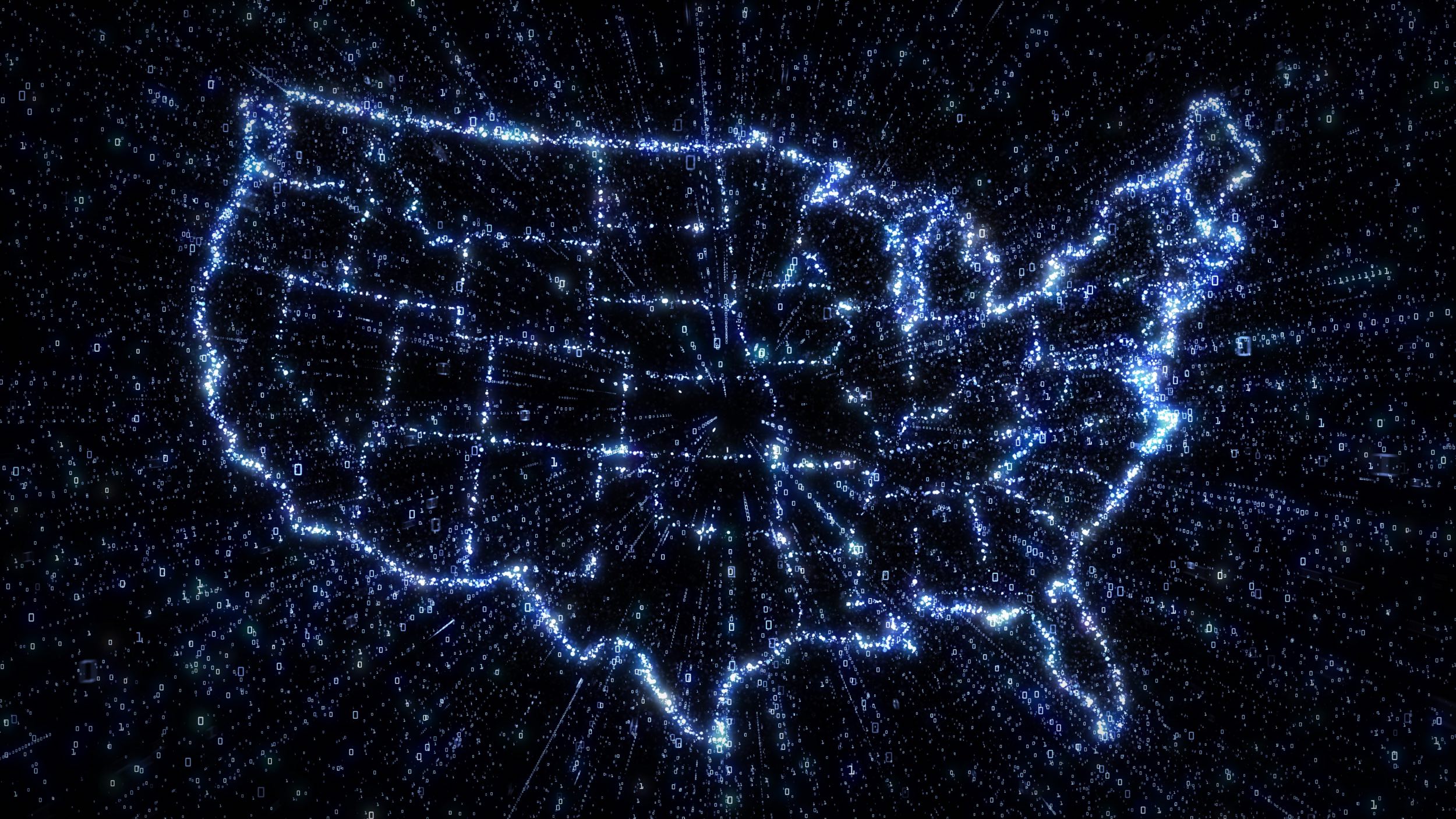
Likewise, emergency department diagnoses have ticked up, according to CDC data, another indication of more Covid activity in the community. Thus far, hospitalizations and deaths are still flat.

Because of preexisting immunity and evolutions of the virus itself, most cases should be mild. Some people may not even realize it’s Covid. Even if immunity from antibodies is waning, which may lead to people feeling sick, immunity in their T cells should help most people avoid getting seriously ill.

But some rise in severe disease is expected when the virus is spreading more; it is a statistical inevitability. In Nashville and surrounding middle Tennessee, Dr. William Schaffner, formerly the medical director of the National Foundation for Infectious Diseases, said his surveillance network’s number of hospitalized Covid patients had grown slightly, from the mid-teens to the low 20s, in the past few weeks.

It’s the summer travel season, so people are out and about, mingling with others and sharing germs. Most people have also not received a Covid-19 vaccine shot in a while, given the low uptake of the boosters, and so their vaccine-conferred immunity is starting to wane.

“The way I like to characterize it is it’s smoldering along,” Schaffner told me of Covid-19 these days. “There are many opportunities now for spread to take place. Here and there, there will be little upticks.”

This summer bump is not a crisis. But it is a reminder that, so soon after the US finally reached the point that there were no longer any “excess deaths” that defined the pandemic, Covid-19 is still with us. CDC Director Mandy Cohen told NBC News this week the agency is preparing for another “tri-demic” this winter — with Covid, influenza, and another respiratory virus, RSV, circulating widely — that could challenge the US health care system.

“We need to make sure the American people understand all three and what they can do to protect themselves,” Cohen said.

How the US can best minimize Covid’s damage going forward

We do have the tools to minimize the damage these viruses can do. The challenge has been getting people to take advantage of them.

Last year, the number of people who said they planned to get a flu shot was actually down. Only one-third of Americans received a booster dose of the Covid-19 vaccine, despite the CDC’s recommendation that most people should, and less than one in five received the omicron-specific booster. Experts have attributed those trends to “vaccine fatigue” and a general skepticism about public health among some patients after a contentious discourse about interventions during the pandemic.

This winter, an RSV vaccine will be available for the first time for people over 60. A new variation of the Covid-19 vaccine is expected to be ready as well. And then there will be an updated version of the flu shot. The vaccine campaign will be another test for a health care system that is still in the middle of a transition from the pandemic to a new normal.

Last year, that transition was felt primarily by the early and wide spread of RSV and influenza. After two years of being suppressed by Covid and mitigation measures, those viruses returned with vigor. Biology was dictating the terms of the public health response.

This year, Schaffner said he doesn’t expect such an early, steep spike in infections. The transition is centered more on the health system itself and its ability to take advantage of these new tools to slow the viruses.

“Our challenge will be to organize ourselves to actually receive these vaccines,” he said, calling it “a learning and transitional year.”

The playbook for patients to help the health care system work through that transition is the same as it’s always been. Even though most people are no longer wearing masks, people who may be at higher risk because of their age or health may still want to consider doing so if they are indoors around large groups of people.

And then, if people do feel sick, it’s still important to take tests. A positive result allows doctors to prescribe the antiviral Paxlovid for patients who would benefit from it. The drug has been shown to significantly reduce the risk of hospitalization and death and yet, as of the beginning of this year, it was being prescribed in less than half of confirmed Covid-19 cases.

People are going to get sick with Covid-19. It’s too widespread and too transmissible to stamp out entirely. But catching it early helps prevent the worst outcomes: hospitalization and death.

“It’s severe disease that should be the focus, because it is essentially preventable by Paxlovid, which is underutilized in high-risk individuals,” Amesh Adalja, a senior scholar at Johns Hopkins University, told me.

At-home testing is the first step toward taking better advantage of Paxlovid, Schaffner said. If you’re feeling sick, take a rapid test. If it’s positive, call your doctor. If it’s negative, take another in the next 24 to 48 hours. Even if they remain negative, if symptoms worsen, you should still keep your doctor in the loop.

According to Schaffner, public health officials also have more work to do in educating doctors on the best practices for prescribing Paxlovid. “We are not optimally using Paxlovid,” he told me.

But patients can help themselves by paying close attention to their symptoms. Masking may be worthwhile if you’re older or immunocompromised.

As we prepare for another year of a “tri-demic,” adjusting to this world where even in the hot summer months Covid is still with us, we all have a part to play to protect ourselves and others.

28 Jul 11:27

Tesla exaggerated EV range so much that drivers thought cars were broken

by Jon Brodkin
A Tesla charging station on February 18, 2023, in Union City, New Jersey.

Enlarge / A Tesla charging station on February 18, 2023, in Union City, New Jersey. (credit: Getty Images | VIEW press )

Tesla has consistently exaggerated the driving range of its electric vehicles, reportedly leading car owners to think something was broken when actual driving range was much lower than advertised. When these owners scheduled service appointments to fix the problem, Tesla canceled the appointments because there was no way to improve the actual distance Tesla cars could drive between charges, according to an investigation by Reuters.

In mid-2022, Tesla started routing range complaints to a "Diversion Team" that fielded up to 2,000 cases a week and "was expected to close about 750 cases a week," Reuters reported.

"Tesla years ago began exaggerating its vehicles' potential driving distance—by rigging their range-estimating software," the article published today said. "The company decided about a decade ago, for marketing purposes, to write algorithms for its range meter that would show drivers 'rosy' projections for the distance it could travel on a full battery, according to a person familiar with an early design of the software for its in-dash readouts."

Read 18 remaining paragraphs | Comments

27 Jul 16:54

Seven major automakers to build EV charging network with 30,000 chargers

by Jonathan M. Gitlin
Painted road sign indicating electric car charging station seen in Lindholmen Science Park in Gothenburg

Enlarge (credit: Karol Serewis/SOPA Images/LightRocket via Getty Images)

Good news, electric road-trippers: DC fast chargers are about to become a lot more common. On Wednesday, a group of seven major automakers announced a plan to create a new charging network of more than 30,000 chargers across North America starting next year.

BMW, General Motors, Honda, Hyundai, Kia, Mercedes-Benz, and Stellantis are creating a joint venture to significantly expand the number of fast-charging sites in the US and Canada. The sites will use the new National Electric Vehicle Infrastructure guidelines, which means, among other things, 97 percent uptime for each charging port. The sites will support both CCS1 and NACS plugs, and the chargers will also support the plug-and-charge protocol.

"North America is one of the world’s most important car markets—with the potential to be a leader in electromobility. Accessibility to high-speed charging is one of the key enablers to accelerate this transition. Therefore, seven automakers are forming this joint venture with the goal of creating a positive charging experience for EV consumers. The BMW Group is proud to be among the founders," said BMW Group CEO Oliver Zipse.

Read 7 remaining paragraphs | Comments

27 Jul 16:37

‘Pass It, Pass It, Pass It, Pass It, Pass It,’ The President Says About A Bill The GOP Says Will Be Useful To Silence LGBTQ Voices

by Mike Masnick

Well, this is not surprising, but unfortunate. With the Kids Online Safety Act (KOSA) to be debated in a Congressional hearing on Thursday, the White House had President Joe Biden come out and give a full throated endorsement of the horrible, dangerous, bill that will damage privacy and harm children.

We’ve got to hold — we’ve got to hold these platforms accountable for the national experiment they’re conducting on — on our children for profit. 

Later this week, senators will debate legislation to protect kids’ privacy online, which I’ve been calling for for two years.  It matters.  Pass it, pass it, pass it, pass it, pass it.

I really mean it.  Think about it.  Do you ever get a chance to look at what your kids are looking at online?

But that’s not even remotely close to accurate about anything. Remember, the Republicans have been quite vocal about how they support KOSA because they know they can use it to suppress LGBTQ voices. They flat out said that they believe that “keeping trans content away from children is protecting kids.”

This is why so many people are up in arms about KOSA. It’s not about “protecting” kids privacy at all. It’s about giving the government more control over kids. The nature of the bill will require more data collection, not less. It will create serious 1st Amendment concerns by holding companies potentially liable if kids face harm that can be (indirectly) traced back to anything they found online.

It will create systems that will put kids who are at odds with their parents in extremely dangerous positions.

This bill is not about privacy, because it will put private data at risk.

This bill is not about kids’ safety, because it will put their safety at risk.

It is not about parental oversight, because it takes those issues out of the hands of parents.

It is not about helping kids, because it’s going to shield kids from useful information that has literally saved lives.

The Republicans seem to know all this and are embracing it for these reasons. Which leaves a big question open: why are the Democrats supporting it at all?

26 Jul 14:17

How a Battle Over a Kids’ Gym Turned Into the Lawsuit From Hell

by Andrew Beaujon

On January 30, Tiffany Cianci found out her baby had no heartbeat. Cianci and her husband, Ryan, had been trying for a few years to have their fourth child and had learned she was pregnant less than two months earlier. The pregnancy had been troubled throughout January, with Cianci experiencing on-and-off contractions since slipping in […]

The post How a Battle Over a Kids’ Gym Turned Into the Lawsuit From Hell first appeared on Washingtonian.

25 Jul 20:51

FCC chair: Speed standard of 25Mbps down, 3Mbps up isn’t good enough anymore

by Jon Brodkin
A United States map illustrated with streams of ones and zeroes to represent binary data and Internet transmissions.

Enlarge (credit: Getty Images | wigglestick)

The Federal Communications Commission hasn't raised its broadband speed standard since early 2015 when it adopted a metric of 25Mbps downloads and 3Mbps uploads.

That could finally change under Chairwoman Jessica Rosenworcel, who is proposing a fixed broadband standard of 100Mbps downloads and 20Mbps uploads along with a goal of bringing affordable service at those speeds to all Americans. Under her plan, the FCC would evaluate broadband availability, speeds, and prices to determine whether to take regulatory actions to promote network deployment and competition.

Rosenworcel hasn't revealed anything about how affordability will be measured. But in a proposed Notice of Inquiry that would start an evaluation of broadband deployment across the US, she included affordability as one of the aspects to be considered.

Read 12 remaining paragraphs | Comments

25 Jul 17:35

Jury orders Google to pay $339M for patent-infringing Chromecast 

by Scharon Harding
Google Chromecast with Google TV.

Enlarge / Google Chromecast with Google TV. (credit: Google)

Google Chromecast infringed upon three patents of Touchstream Technologies, Inc. and should pay $338.7 million in damages, a Western District of Texas jury decided on Friday, as reported by Law360.

The verdict [PDF] shows the jury agreeing with Touchstream's allegations that Google violated patents 8,356,251, 8,782,528, and 8,904,289 (Touchstream Technologies Inc. v. Google LLC, case number 6:21-cv-00569 in the US District Court for the Western District of Texas).

The ruling comes after Touchstream filed a complaint in June 2021 claiming that it met with Google in December 2011 and was told that the tech giant wasn't interested in partnering with it in February 2012. Google then released Chromecast in 2013. The complaint points to the first Chromecast and the second and third generations, Chromecast Ultra and Chromecast with Google TV, as well as other Chromecast-integrated products, as infringements of Touchstream patents.

Read 13 remaining paragraphs | Comments

22 Jul 00:25

Bored

by Reza
21 Jul 12:18

New Project Uses AI To Turn Project Gutenberg Texts Into Free Audiobooks With Lifelike Voices — In 30 Seconds

by Glyn Moody

Reading through the increasing number of Techdirt articles about AI, the overwhelming impression is that many people think AI is bad, and needs to be reined in before it destroys journalism/creativity/society/humanity (delete as applicable). To see an interesting new phase of an old technology attacked in this way is rather depressing, since it seems to prejudge and limit its applications. Against that background, it’s good to be reminded that AI does have applications that are immediately useful, and largely unproblematic, as shown by this collaboration between Project Gutenberg and Microsoft.

Project Gutenberg was started back in 1971 by the visionary Michael Hart, who sadly died at the age of 64 in 2011. His vision of providing digital versions of the world’s greatest literature has come a long way since Hart typed the text of the US Declaration of Independence into a Xerox Sigma V mainframe at the University of Illinois. Today there are over 70,000 free ebooks on the Project Gutenberg site. There are also a few audiobook versions of titles in the collection. But producing them using volunteers has proved a slow process. That’s unfortunate at a time when more and more people are listening to audiobooks rather than reading texts. Microsoft saw an opportunity to help here by applying some of its AI technology:

A team from Microsoft approached Project Gutenberg about a collaboration to produce thousands of high-quality audiobooks using an AI-driven solution and then give them back to the Project Gutenberg community. These new audio recordings have made Project Gutenberg’s books more accessible to a wider audience of people around the world, including those facing accessibility challenges.

Project Gutenberg first loads existing electronic books from its collection into Microsoft Azure Synapse Analytics to allow working with large amounts of data. Then, they parse the books with Azure Synapse Analytics and use SynapseML distributed ML library to create audio recordings using the neural text to speech capability in Azure AI services.

The capability turns the text of each book into audio using advanced human-like voices that can even convey emotion. “This is an AI innovation that reads text in a lifelike voice,” [Director and CEO of the Project Gutenberg Literary Archive Foundation] Newby explains. “The voices are trained to mimic humans in order to sound natural, and the result is convincing—a big upgrade over older versions of text to speech.”

There are currently nearly 5,000 AI-voiced audiobooks, which can be accessed from a number of streaming services, via the Internet Archive, and directly. Listening to them, it is evident that they are a step up from previous computer-generated audiobooks, with a reasonably lifelike voice and some human-like inflections. But the AI system struggles to convey the meaning of complex texts for example, the dense, subtly rhythmic poems of Gerard Manley Hopkins, or anything knotty by Shakespeare. The Microsoft post about the project says that some of the audiobooks incorporate several voices, but the ones I listened to did not, which makes listening to Shakespeare plays rather dull.

However, against those limitations can be set the fact that converting a Project Gutenberg text into an audiobook takes just 30 seconds per title. That opens up the possibility of converting thousands of books, and not just in English. Doing so will clearly be a huge boon for the visually impaired, or those who struggle with reading texts for whatever reason. It will also provide a ready supply of world literature to people who just like listening to audiobooks.

Some will doubtless raise the usual concerns that AI might be taking work away from those who earn a living from producing audiobooks. But the new Microsoft project shows why that is not (yet) a real threat. There is a still a huge difference between the AI-generated versions and those from skilled human readers. The former are great for Project Gutenberg, which depends on volunteers and can’t afford to pay for professionals. But anyone wanting a high-quality audiobook version of titles will still need to turn to trained humans who are paid to produce them.

That is also true of other domains. Texts produced by generative AI systems “in the style” of a writer, or musician, are simply not substitutes for those writers or musicians. Arguably, they increase the value of the “real” thing. Their ability to produce endless quantities of bland and similar outputs serves to emphasize that what we most value in human productions is that unique, hard-to-define quality conspicuous by its absence in AI-generated works. As the technology advances, the gap between what computers and people can produce is likely to narrow. Whether it will ever be closed goes to the heart of the question of what it means to be human.

Follow me @glynmoody on Mastodon

20 Jul 19:26

Once again, the US public says NASA should prioritize asteroid defense

by Eric Berger
Artist’s illustration shows the ejection of a cloud of debris after NASA’s DART spacecraft collided with the asteroid Dimorphos.

Enlarge / Artist’s illustration shows the ejection of a cloud of debris after NASA’s DART spacecraft collided with the asteroid Dimorphos. (credit: ESO/M. Kornmesser)

The Pew Research Center published the results of a new public survey on Thursday, the 54th anniversary of the Apollo 11 landing on the Moon. The survey assessed Americans' attitudes toward space exploration and space policy issues.

Similarly to five years ago, the survey found that Americans broadly support the national space agency, NASA. Three-quarters of respondents had a favorable opinion of NASA, compared to just 9 percent with an unfavorable opinion.

However, as several previous surveys have found, the public has far different priorities for NASA than are expressed in the space agency's budget. In this new report, based on a large survey of 10,329 US adults, the highest support came for "monitor asteroids, other objects that could hit the Earth" (60 percent) and "monitor key parts of the Earth's climate system" (50 percent). Sending astronauts to the Moon (12 percent) and Mars (11 percent) lagged far behind as top priorities for respondents.

Read 9 remaining paragraphs | Comments

13 Jul 11:03

Devil’s Advocate

by Reza
12 Jul 11:07

Sorry, but You Probably Won’t Be Able to See the Northern Lights From Maryland This Week

by Nick Pasion

Like many Washingtonians, I woke up to the news Monday that I could see Northern Lights coming to the region this week. Dozens of news organizations reported over the past few days that aurora borealis would be visible over 17 US states, including Maryland—an exciting prospect for many of us who imagined we’d only see […]

The post Sorry, but You Probably Won’t Be Able to See the Northern Lights From Maryland This Week first appeared on Washingtonian.

10 Jul 12:00

Our big unanswered questions about the switch to Tesla-style EV plugs

by Jonathan M. Gitlin
A graphic with a starburst in the background and the silhouettes of CCS1 and NACS charger plugs in the foreground

Enlarge (credit: Aurich Lawson | Getty Images)

The mass sponge EV charger plug migration continues to gather steam. Since we last wrote about the topic, first Polestar and then Mercedes-Benz also announced that they're dropping the Combined Charging Standard 1 (CCS1) connector in favor of Tesla's North American Charging Standard (NACS). Sometime next year, non-Tesla electric vehicles from those makes, as well as Ford, General Motors, Volvo, and Rivian, will be able to start making use of Tesla's Supercharger network. In 2025, those automakers—and probably a few more—will start building cars with NACS ports built in.

It's not just the car makers. Charger manufacturers and charging networks have also been announcing new NACS products, and it feels like enough critical mass is building that CCS1 might be headed for extinction. Or at least it may be relegated to curio status alongside CHAdeMO. Things are looking even better now that SAE International is taking over the management of NACS, so it will no longer be under the control of a rival OEM run by a billionaire known for impulsive and often arbitrary decisions. At this point, many are merely waiting to see if Hyundai Motor Group or Volkswagen Group will be the next big convert.

The justification for dropping an entrenched standard and switching to NACS, from Ford and others, was as much about obtaining access for their EV owners to Tesla's Supercharger network, and why not? Even the most hardened partisan from the EV brand flame wars has to concede that not only are there far more Superchargers out there, but they offer a vastly superior charging experience to any of the public charging networks.

Read 13 remaining paragraphs | Comments

07 Jul 11:11

CDC is slashing funding for states’ childhood vaccination data systems

by Beth Mole
A boy smiles as he gets a measles, mumps, and rubella (MMR) vaccination.

Enlarge / A boy smiles as he gets a measles, mumps, and rubella (MMR) vaccination. (credit: Getty | Robyn Beck)

State health departments are facing federal budget cuts to programs that support childhood vaccination, which are coming at a time when immunization rates among children are slipping and under threat from anti-vaccine rhetoric.

News of the budget cuts was first reported by KFF Health News, which obtained a Centers for Disease Control and Prevention email dated June 27 that informed states of future funding reductions. The email, addressed to state immunization managers and signed by two CDC officials, said that the cuts will be "a significant change to your budget."

"There will be no easy solution for this," the CDC email read. "We know that this change will require some tough decisions."

Read 11 remaining paragraphs | Comments

06 Jul 15:02

Top EU Court Advisor Says Technical Standards, Like Laws, Should Not Be Locked Down By Copyright

by Mike Masnick

One of the most pernicious ideas that copyright maximalism has spread is that preventing people from freely accessing creative material is not just a good thing to do, but should be the natural state of affairs. This has made questioning whether copyright is really the best way to support artists and promote creativity hard. Against that background, there’s an interesting opinion from one of the top EU court’s special advisers, known as advocates general, suggesting a situation in which copyright definitely should not be applied. The Court of Justice of the European Union’s press release explains the background:

Public.Resource.Org Inc. and Right to Know CLG are two non-profit organisations whose focus is to make the law freely accessible to all citizens. The organisations had challenged before the [EU] General Court a Commission Decision refusing to grant them access to four harmonised technical standards (HTS) adopted by the European Committee for Standardisation (CEN) with respect to the safety of toys in particular. As their challenge was unsuccessful, they appealed the General Court judgment before the Court of Justice.

In today’s Opinion, Advocate General Laila Medina looks into the question whether the rule of law as well as the principle of transparency and the right of access to documents of EU institutions require that HTS are freely available without charge.

The conclusion reached by Advocate General Laila Medina is straightforward:

for the purposes of EU law in general and for the access to EU law in particular, and, given HTS indispensable role in the implementation of EU secondary legislation and their legal effects, they should, in principle, not benefit from copyright protection.

Moreover:

even if HTS could be protected by copyright, free access to the law has priority over copyright protection.

The basic idea is simple: people can’t be expected to follow a law (or technical standard) if they don’t have ready access to it. Copyright is a barrier to access, and therefore should not be allowed for harmonized technical standards (HTS), just as it is not permitted for EU laws. And even if for some reason HTS were subject to copyright, free access must be granted anyway, blunting its negative impact.

It’s worth emphasizing that the Advocate General’s opinion is only advisory, and may be ignored by the main court when the latter issues its final judgment on the case. Nonetheless, it’s great to see one of the EU’s top legal authorities dare to go against today’s orthodoxy that copyright is so wonderful it should be applied to everything, no exceptions.

Follow me @glynmoody on Mastodon. Originally published to WalledCulture.

05 Jul 11:21

What could cause a malaria comeback in the US — and what could stop it

by Keren Landman
A man in a shirt reading “Miami-Dade Mosquito Inspector” stands outside a house with vegetation while another man spreads material on plants.
A Miami-Dade County mosquito control inspector uses larvicide granules on plants where water has pooled in August 2016, in Miami Beach, Florida.  | Joe Raedle/Getty Images

Americans shouldn’t take a malaria-free future for granted.

Over the last month, five people in the US (four in Florida and one in Texas) have acquired malaria within the country’s borders. That’s pretty uncommon — at least, in this century; until the 1950s, malaria was a persistent plague in the US, especially in the Southeast.

Many of the conditions that favor malaria’s spread haven’t changed much since then. The Anopheles mosquitoes that spread malaria still thrive in many parts of the country, and states that receive high numbers of travelers from countries where malaria is endemic still have warm, wet weather that favors mosquito reproduction.

Nevertheless, it’s extraordinarily rare for American mosquitoes to be infected with malaria. Since the turn of the last century, there have been only about a dozen cases of local malaria transmission in the US. But the disease remains a major force of destruction elsewhere in the world: In 85 countries across Africa and parts of Asia and South America, malaria caused 240 million illnesses and 627,000 deaths in 2020 alone.

The last spate of local malaria transmission in the US took place 20 years ago. Now circumstances are different: These cases are happening amid rising rates of other insect-borne infections nationwide, and smack in the middle of a heat and wildfire wave that together make climate change’s health risks undeniable. It’s reasonable to wonder whether the US is at risk for becoming a malaria hot spot again.

“Something would have to go seriously wrong for malaria to become endemic in the United States,” said Colin Carlson, a global change biologist at Georgetown University’s Center for Global Health Science and Security who has led research on the rapidly expanding reach of malaria-spreading mosquitoes in Africa.

It’s perhaps the understatement of the year to say the nation is not immune to “things going seriously wrong.” Recent history, ahem, has shown that the country’s public health infrastructure, which Americans rely on to catch and contain invasive infectious diseases, is far more fragile than many realized.

But how vulnerable is the nation, really, to a malaria comeback?

Here’s what the US has going for it — and against it — when it comes to future malaria risk.

The US has some things in its favor in the fight against a malaria resurgence

One key factor the US has going for it is that it’s already eliminated malaria. “Our centralized focus” on getting rid of both malaria parasites and their mosquito hosts’ breeding grounds “really kicked it in the butt,” said Kyndall Dye-Baumuller, a post-doctoral student in vector-borne disease epidemiology at the University of South Carolina’s public health school.

Containing a handful of malaria cases — and eliminating a handful of malaria-infected mosquitoes — is much easier than battling back an infection that’s already entrenched.

That’s also made easier by the fact that most malaria only causes disease in humans and not in any other animal, said Dye-Baumuller. She compared the infection with West Nile virus, another infection spread by mosquitoes that leads to illness in humans and in a variety of wild birds. Because it’s so hard to contain this virus in the bird population, there’s a persistent reservoir of West Nile virus in many parts of the US — and the persistent risk of some crossover to humans. That’s not a risk with malaria.

The US health care and public health systems are plagued with problems that don’t affect other developed nations. But compared with poorer nations, these US systems have more capacity to mobilize against malaria transmission when a case occurs, said Carlson. That’s particularly important now because in the case of malaria, “you want to sort of take people off the grid before onward transmission happens,” he said. “And we’re capable of doing that here.”

The US also has good (if uneven) capacity for controlling mosquito populations — a key element of reducing human risk for infections they transmit.

Sadie Ryan, a medical geographer at the University of Florida who studies the ecology of emerging pathogens, remembers what happened when, as a graduate student, she returned to her northern California home from a trip to Ghana with a malaria infection. The local health department “started hanging traps in my trees in my yard where I rented at the time,” she said. The goal was to ensure no mosquitoes near her home had gotten infected, enabling them to spread the disease to others.

Mosquito control — which experts call “vector control” — is also extremely robust in Ryan’s new home of Florida, a state that has been an entry point for more than one invasive mosquito-borne disease (including the last outbreak of locally spread malaria, in 2003). “We have fairly effective vector control response in places we’re expecting the vectors to be,” she said.

The Anopheles mosquitoes that spread malaria are nighttime biters, so the broad prevalence of window screens and air conditioning in the US offer an additional measure of security against the broad spread of malaria. “Here, mosquitoes mostly stay outside the home,” said Carlson. So even if we deal with a major outbreak, “is it going to be something that every single household is worrying about? Probably not.”

But climate change, travel, and social vulnerability create some undeniable risk

Climate change is one of the key factors that’s making the US increasingly vulnerable to malaria transmission, in part by making more of the country warmer and thus more hospitable to the malaria parasite and its Anopheles mosquito vector.

That could mean an expansion of the malaria risk range well beyond the Southeastern US and into other parts of the US, said Dye-Baumuller. In a recent analysis she led, 32 states had Anopheles mosquitoes capable of spreading malaria.

There is such a thing as weather that’s too hot for most malaria transmission — “A mosquito is not a mosquito is not a mosquito,” said Carlson. When an area’s temperatures don’t dip below 80 degrees F, American Anopheles mosquitoes don’t fly or reproduce as well, and the malaria parasite itself doesn’t thrive.

But that actually means a new, invasive mosquito species could be particularly dangerous in the US: Anopheles stephensi, a type of mosquito that until recently lived only in South Asia and the Middle East, has been on the move. Unlike the American Anopheles species, this pest thrives in hotter temperatures. Also unlike the American species — which prefer to make their families in forested swamps — it loves reproducing in the cleaner water that gathers near human habitation, especially in urban environments.

All of that means the extreme heat that would normally reduce one malaria threat now sets the stage for another, even worse version, should this particular mosquito get entrenched in the US, said Ryan.

“Being prepared for something like that is really essential,” she said — but not all states are prepared. A 2020 report by the National Association of County and City Health Officials judged that only 24 percent of mosquito programs nationwide were capable of seeking out and destroying dangerous mosquitoes in the event of elevated outbreak risk.

“There are large-scale vector control districts in many other states than Florida and Texas,” said Ryan. “But they’re not necessarily anticipating the specific vectors that may show up as climate shifts them around, or as travel moves them around.”

Climate change is also increasing US malaria risk in another way: by increasing infection rates in other parts of the world. While widespread prevention and treatment initiatives have greatly reduced malaria in many endemic countries over the past two decades, a lot of that progress has been undone in some areas of political instability — for example, along the Colombia-Venezuela border, where rising malaria prevalence has raised the specter of spread throughout South America, especially as that continent’s temperatures rise.

In the wake of the Covid-19 pandemic, it shouldn’t be news to anyone that infectious diseases outside the US pose a risk inside the US. The same is true for malaria.

Anyone who enters the US with malaria risks serving as a source of infection to local mosquitoes, and eventually to other people. Most of the malaria cases identified in the US are among Americans returning from foreign travel. That’s largely preventable: While medicines are available to prevent malaria infection during travel, only a quarter of travelers reported taking so-called malaria prophylaxis in 2018.

A variety of persistent social vulnerabilities in the US also help create an environment that favors malaria transmission. Because malaria-spreading mosquitoes bite mostly at night, people who sleep outdoors are at higher risk for infection in the event the disease is introduced — and homelessness is on the rise in the US.

Fundamentally, there’s still enough poverty and poor sanitation in the US to sustain many diseases that should long since have been eliminated, says Carlson. He points at hookworm, a disease transmitted when people walk barefoot on soil contaminated with infected feces, that causes anemia in millions of children and adults worldwide. The parasite’s persistence was recently identified in the poorest part of the Southeastern US — to him, proof that there’s enough neglect and vulnerability in the country to allow almost anything to re-entrench.

To Carlson, hookworm’s persistence sends a warning about malaria risk in the United States. “It will be shocking and sort of impossible to reconcile with how we think of our country if it happens,” he said.

“And also, things happen.”

03 Jul 10:53

The Supreme Court will decide if abusive spouses have a right to own guns

by Ian Millhiser
A sign for Robb Elementary School surrounded by objects, crosses, and photos.
Flowers, messages, balloons, stuffed animals, toys and other items left by mourners commemorating the students and teachers of the Robb Elementary Schools mass shooting are displayed outside the school on May 31, 2022, in Uvalde, Texas.  | Joshua Lott/The Washington Post via Getty Images

The justices are forced to confront the gun policy disaster that it created.

Last February, the far-right United States Court of Appeals for the Fifth Circuit held that a federal law prohibiting individuals from “possessing a firearm while under a domestic violence restraining order” is unconstitutional. On Friday, the Supreme Court announced that it will hear this case.

It is fairly likely that the justices will reverse the Fifth Circuit’s extraordinary decision — as many as six current members of the Court have signaled that, while some of them support an expansive reading of the Second Amendment right to bear arms, the Fifth Circuit’s decision in United States v. Rahimi goes too far. Justice Brett Kavanaugh has endorsed some prohibitions on gun possession by people who have not been convicted of a felony, including laws prohibiting people with serious mental illnesses from owning guns. Justice Amy Coney Barrett, meanwhile, wrote when she was still a lower court judge that “legislatures have the power to prohibit dangerous people from possessing guns.”

A more uncertain question is whether the Court will use the Rahimi case to impose some coherence on the incomprehensible approach to the Second Amendment that it announced just one year ago in New York State Rifle & Pistol Association v. Bruen (2022).

Bruen held that huge swaths of US gun laws must fall unless the government can prove that “the regulation is consistent with this Nation’s historical tradition of firearm regulation.” And it instructed judges to determine whether a particular challenged gun law is consistent with this tradition by searching for “historical analogies” in early American firearm regulations.

In practice, however, it is often impossible to draw precise analogies between today’s gun laws and those from two centuries ago, because both American society and firearms technology have changed so much since the Second Amendment was ratified.

Consider, for example, the federal ban on machine guns. The machine gun was not even invented until 1884, so anyone hunting for early American laws banning this kind of weapon will come up blank. That said, Bruen also acknowledged that the United States has a “historical tradition of prohibiting the carrying of ‘dangerous and unusual weapons,’” so a judge who wishes to uphold the machine gun ban could point to this language in Bruen to justify such a decision.

Or consider, for that matter, the law at issue in Rahimi, which prohibits many individuals who are “subject to a court order” that restrains them from “harassing, stalking, or threatening an intimate partner” from possessing a gun. Notably, this law applies to individuals who have not yet been convicted of a crime, but who have had a court proceeding that determined they are a danger to their partner or their partner’s children.

In defending this law, the Justice Department points to various English, colonial American, and early US laws that disarm people “considered to be dangerous.” But DOJ is unable to cite any laws from these eras that specifically prohibit people who abuse their intimate partners from possessing a gun, because no such laws existed at the time. Indeed, it was legal in all 50 states for married partners to beat their spouses until 1871, when the Alabama Supreme Court ruled that a husband and wife “may be indicted for assault and battery upon each other.”

Bruen, in other words, requires judges to weigh gun regulations using a tool — historical analogies — that is wholly unsuited to that task. Asking judges to determine whether any 18th-century laws resemble modern-day gun regulations is a bit like asking how James Madison would have regulated smartphones. Early Americans simply did not possess weapons that in any way resemble today’s firearms, and we have no idea how they would have regulated more modern weapons.

Worse, because Bruen held that, in tough cases, the “government must demonstrate” that a modern gun law “is consistent with this Nation’s historical tradition of firearm regulation,” the onus is on the government to find sufficient evidence to defend laws already on the books, rather than on people challenging a regulation. That means that courts are now striking down gun laws that few people would find objectionable because, in the absence of evidence that the framers would have supported a modern-day law, the law typically must be struck down.

Bruen is wreaking havoc on US gun laws

In the year since Bruen was decided, federal courts have stuck down numerous gun laws, including the ban on domestic abusers possessing firearms that was struck down in Rahimi, that impose fairly modest limits on gun owners.

A federal judge in West Virginia, for example, struck down a federal law that prohibits possession of a firearm if the gun’s serial number has been filed off or otherwise removed. Judge Joseph Goodwin’s opinion in United States v. Price acknowledged that this law makes it possible to track firearms to help keep them “out of the hands of ‘individuals whose possession of them would be contrary to the public interest.’” But he nonetheless concluded that Bruen requires this law to be struck down because the first guns that were marked with serial numbers were not manufactured until the 1860s, and “serial numbers were not broadly required for all firearms manufactured and imported in the United States until the passage of the Gun Control Act of 1968.”

Similarly, a New York federal judge struck down that state’s ban on gun possession within houses of worship, claiming there weren’t enough early American laws that similarly protected worshipers from gun violence. And a federal judge in Texas struck down that state’s law prohibiting gun sales to people under 21 — he essentially rewrote the law to allow 18-year-olds to buy guns — on the grounds that there weren’t enough early American laws prohibiting 18- to 20-year-olds from buying guns.

Yet, while lower court judges have relied on Bruen to sweep away all kinds of gun laws, it is unclear how the justices are likely to react as these cases work their way through the appeals process.

Though Justice Brett Kavanaugh joined the majority opinion in Bruen, he also wrote a separate concurring opinion emphasizing that he would still uphold many restrictions on gun use and possession. Among other things, Kavanaugh indicated that he would support “licensing requirements for carrying a handgun,” as well as “laws forbidding the carrying of firearms in sensitive places such as schools and government buildings,” bans on “dangerous and unusual weapons,” and “longstanding prohibitions on the possession of firearms by felons and the mentally ill.” Kavanaugh’s Bruen concurrence was also joined by Chief Justice John Roberts.

Similarly, as noted above, Justice Barrett once claimed that laws prohibiting “dangerous people from possessing guns” may be allowed.

These opinions by Kavanaugh and Barrett should give hope to anyone praying that the Supreme Court will reverse the Fifth Circuit’s decision in Rahimi. Perhaps Roberts and Kavanaugh will conclude that a ban on gun possession by domestic abusers is analogous to bans on “the possession of firearms by felons and the mentally ill,” which both justices have signaled are consistent with US historical tradition. Or perhaps Barrett will conclude that people subject to restraining orders are sufficiently “dangerous” that the national legislature may prevent them from possessing a firearm.

But if this discussion of Bruen’s aftermath proves anything, it should be that the fate of American guns laws is likely to come down to individual judges’ and justices’ arbitrary conclusions about which modern laws are sufficiently similar to laws from two or three centuries ago to justify the modern law’s continued existence.

Is a place of worship a “sensitive place,” similar enough to a school or a government building to justify a restriction on guns? Is a high school senior with a gun sufficiently “dangerous” to justify requiring them to wait until they are old enough to buy beer before they can also buy an AR-15? There are no clear-cut answers to these questions, and the Court’s approach to them is likely to turn less on objective principles of law than on whether John, Brett, and Amy think that a particular gun regulation should be upheld.

Before Bruen, federal appeals courts united around a Second Amendment framework that could be fairly easily applied by any competent federal judge. “Severe burdens” on the right to bear arms, such as a law prohibiting gun possession in the home, were subject to “strict scrutiny,” an unforgiving-but-familiar test that most law students are taught in their first year of classes. Meanwhile, “less onerous” laws were subject to “intermediate scrutiny,” a more forgiving test that is also taught to law students in their introduction to constitutional law.

This familiar framework, which required judges to use tools that they already know how to use, led to much more predictable outcomes than the chaotic appeal to historical analogies demanded by Bruen.

In an ideal world, the Court would recognize that its decision in Bruen is a failure that should be overruled. It offers no meaningful guidance to lower court judges trying to decide which gun laws should be struck down. It endangers laws that no sensible person would oppose, such as the law at issue in Rahimi. And it requires judges to ask silly questions, like whether a ban on domestic abusers owning guns is sufficiently similar to a 1662 English law allowing the Crown to seize guns from people it determined to be “dangerous to the Peace of the Kingdom.”

Realistically, a decision overruling Bruen is unlikely. But, at the very least, the Court could try to use the Rahimi case to rework the Bruen framework so that it no longer produces results that are completely arbitrary.

01 Jul 13:03

FBI finally tracks “swatting” incidents as attacks increase nationwide

by Ashley Belanger
FBI finally tracks “swatting” incidents as attacks increase nationwide

Enlarge (credit: Roberto Machado Noa / Contributor | LightRocket)

Last month, the FBI created a national online database to finally start coordinating law enforcement reports about "swatting" attacks nationwide, NBC News reported yesterday.

Swatting is a form of domestic terrorism that is sometimes deadly and has become more widespread in the US, according to a March report from Hal Berghel, a computer science professor at University of Nevada, Las Vegas. Berghel's report defined swatting as:

A malicious act that involves making fraudulent 911 calls to cause emergency response teams, such as law enforcement special weapons and tactics teams, or SWAT teams (that’s where the gerund’s root comes from), to react forcefully to a nonexistent public threat.

Scott Schubert, of the FBI's Criminal Justice Information Services, told NBC News that the database will help combat the growing swatting problem by facilitating "information sharing between hundreds of police departments and law enforcement agencies across the country pertaining to swatting incidents."

Read 26 remaining paragraphs | Comments

30 Jun 11:29

The other big decision just handed down by the Supreme Court, explained

by Ian Millhiser
Samuel Alito sits at a desk facing a microphone.
Justice Samuel Alito testifies about the Court’s budget during a hearing of the House Appropriations Committee’s Financial Services and General Government Subcommittee on March 7, 2019, in Washington, DC. | Chip Somodevilla/Getty Images

The Court’s decision in Groff v. DeJoy repudiates a line in a 1977 Supreme Court decision that pretty much everyone hates.

Ordinarily, the eight most alarming words to progressives that can appear in a Supreme Court decision are “Justice Alito delivered the opinion of the Court” — and this is especially true in religion cases. Among other things, Alito is the author of the Court’s decision in Burwell v. Hobby Lobby (2014), which gave religious conservatives an unprecedented new ability to ignore federal laws that they object to on religious grounds.

But Alito’s newest opinion, in a case concerning religion in the workplace, does not take sides in America’s culture wars in the same way that he did in Hobby Lobby and similar cases. Indeed, it is a unanimous opinion, joined in full by the Court’s Democratic appointees, that does little more than repudiate a single line in a 1977 Supreme Court decision that virtually everyone thinks was a mistake.

That said, the decision in Groff v. DeJoy announces a new rule that will govern employees who seek an accommodation for their religious beliefs from their employer. Because requests for such accommodations are fairly common, that means that Groff will likely lead to a rush of lawsuits, at least in the short term, as courts try to figure out how to apply Groff’s new rule to individual cases.

Groff’s new rule states that religious accommodation requests should be granted unless they impose a “hardship” on the employer that “would be substantial in the context of an employer’s business.” This highly flexible new rule might potentially be used by far-right judges to give religious conservatives an unfair upper hand in disputes with their employer’s human resources department. Such is the price of vague legal rules.

That said, the actual holding of Groff — that most requests for religious accommodations should be granted, and that an employer cannot dodge this obligation because it might impose minimal costs on the employer — is largely benign. Indeed, it is likely to benefit many employees who make reasonable requests for accommodations that might have been denied under an earlier, less employee-friendly rule.

It will be up to the Supreme Court, in other words, to ensure that Groff does not allow rogue judges to disrupt the workplace. But the actual legal rule announced by Groff is a sensible one that should be applied fairly by most judges.

What Groff sought to avoid

The Groff case involves a postal worker who wanted to be exempted from working on Sundays because of his religious beliefs. (Although the post office typically does not deliver mail on Sundays, the postal service contracted with Amazon in 2013 to deliver Sunday packages.) The post office claimed that this worker’s request could not be accommodated because he worked in an office with only a few employees, and exempting one of these employees from Sunday work would place too much of a burden on the other workers, who would have to pick up his Sunday shifts.

The Supreme Court, however, did not resolve whether this particular request for a religious accommodation should have been granted. Instead, it sent the case back down to the lower courts to reevaluate this request in light of the Court’s newly announced, more pro-worker rule.

Federal law requires employers to accommodate an employee’s request for a religious accommodation unless granting that request would impose an “undue hardship on the conduct of the employer’s business.” Nearly half a century ago, however, in Trans World Airlines v. Hardison (1977), the Supreme Court announced that an “undue hardship” exists if accommodating such a request would require an employer to “bear more than a de minimis cost.” The Latin phrase “de minimis” refers to a burden that is so small or trifling as to be unworthy of consideration.

Pretty much everyone involved in this case, including all nine justices, agree that this “more than a de minimis cost” standard is wrong. As Alito writes, “in common parlance, a ‘hardship’ is, at a minimum, ‘something hard to bear.’” So an employer shouldn’t be able to show an undue “hardship” merely by showing that they will be hit with a trifling expense.

Groff repudiates this much-loathed line from Hardison. And it replaces Hardison’s “more than a de minimis cost” framework with a new rule, which requires courts hearing cases about religious accommodations to ask “whether a hardship would be substantial in the context of an employer’s business in the commonsense manner that it would use in applying any such test.”

This new rule is fairly obviously more in line with what federal law actually says than the old de minimis framework. But, because it is a new rule, and a vague one at that, it is likely to inspire a wave of litigation from employees testing what this new rule means.

And, as noted above, this new rule is likely to inspire some plaintiffs to test whether the courts will take their side in cultural disputes with their employer or a co-worker. As the Groff opinion itself does not say how such cases should be decided, beyond announcing the vague new “whether a hardship would be substantial” test, many employers might face a rough road in the short term, as courts try to figure out how to apply the new rule.

Ultimately, however, such uncertainty is often the price of correcting the Court’s previous errors — and all of the justices agreed that Hardison erred.

30 Jun 11:20

Two more EV charging networks will add support for Tesla-style NACS plugs

by Jonathan M. Gitlin
Directly above view taken with drone of a charging station for electric and hybrid cars using solar panels to generate electricity to charge cars battery while are parked in the city.

Enlarge (credit: Getty Images)

The EV charging plug deathwatch might need to be kicked into a higher gear. This week two charging networks have announced that they're going to add support for the Tesla-style North American Charging Standard connectors. On Wednesday, Blink revealed that it integrated NACS into its level 2 and DC fast chargers. Today, it was Electrify America, the country's largest non-Tesla charging network, which will also add NACS plugs to its charging stations.

Tesla opened up the latest version of its charging protocols to the wider auto industry in November 2022, renaming it the North American Charging Standard as it did so. For a few months, nothing much happened, but in late May, Ford signed a deal to adopt NACS and obtain access to Tesla's Supercharger network. Two weeks later, General Motors followed, then Rivian, and most recently, Volvo joined the club.

At first, the move raised eyebrows from some industry watchers. It appeared that Ford, GM, and others were putting a hugely important aspect of their customers' EV experience into the hands of a rival—one run by a CEO known for impulsive, often rash decisions like suggesting making Tesla private again or deciding to close all its retail stores, both whims that were later backtracked.

Read 7 remaining paragraphs | Comments