Shared posts

29 Jun 17:20

Can college diversity survive the end of affirmative action?

by Kevin Carey
Two women in a crowd holding signs reading “defend diversity.”
Demonstrators supporting Harvard University’s admission process hold signs and gather during a protest in Cambridge, Massachusetts, in 2018. | Adam Glanzman/Bloomberg via Getty Images

The Supreme Court just effectively ended colleges’ ability to consider race in admissions. Here’s what could happen next.

Affirmative action as we know it is gone. In a 6-3 ruling today in the case of Students for Fair Admissions v. Harvard and a companion lawsuit against the University of North Carolina at Chapel Hill, the conservative majority on the Supreme Court discarded decades of legal precedent by ruling that colleges may no longer consider race when admitting students.

The Court was unmoved by the near-unanimous belief among people who run colleges that student diversity is essential for education, or by the many barriers that continue to stand between students of color and college degrees. Because nearly all private colleges, including Harvard, receive federal funding, they are now subject to the court’s brand-new interpretation of the 14th Amendment’s ban on racial discrimination.

That creates an enormous challenge for college leaders and admissions staff. The higher education institutions affected by this ruling will almost certainly not relent on their stated commitment to recruiting a diverse student body. But they’ll need to find new ways of making good on that commitment with methods that (they hope) won’t run afoul of the Supreme Court.

History suggests it will be difficult to fully replace the strategies that the Court just declared illegal, particularly at first. That’s especially true given that many forms of affirmative action for the white and wealthy still stand: The Ivy League crew team recruit with mediocre grades won’t be touched by this decision.

A diverse higher ed landscape is still possible after SFFA v. Harvard, but will colleges, especially of the elite variety, be willing to upend the old ways of doing things and commit to new investments to achieve it?

Who will be affected?

SFFA v. Harvard goes into effect in a few months, when early-decision applications start arriving for the entering Class of 2028. Colleges have already admitted most of the students who will matriculate this fall. The ruling doesn’t affect them or those who are still finalizing their choices.

Here’s another thing to understand: Affirmative action has never been a dominant force in admissions. The college destination of the large majority of students will be unaffected by its demise.

Of the roughly 1,600 colleges that report admissions statistics to the federal government, only 350 admit 60 percent of applicants or less, and those include a dozen large universities in states that have already banned the use of race by public institutions when considering applications. Fewer than 100 colleges have admission rates below 30 percent, and they only enroll about 10 percent of all students. And most students of color who attend selective colleges would likely have been admitted to the same college or somewhere similar without racial preferences.

So we’re really talking about the elite tier of schools in the US — a relatively small swath. But it’s a consequential swath: Elite diplomas are an irreplaceable credential for entry into the halls of influence and wealth.

The corporate leaders who employ us and politicians who represent us are disproportionately selective college graduates, as are the barons of media, finance, and technology. Harvard and Yale educate eight hundredths of 1 percent of American undergraduates and gave us 89 percent of the current Supreme Court.

Black and Hispanic students in particular have historically been denied an equal opportunity to earn valuable college degrees. If history is a guide, SFFA v. Harvard will immediately make that problem worse.

What will happen next?

This isn’t the first time some colleges have been legally prohibited from using race in admissions. Nine states have passed laws or referendums that bar affirmative action in public universities. Often, the results have been the same: a swift decline in admissions rates for Black and Hispanic students, with damaging long-term consequences.

California was the first and largest state to ban affirmative action, in 1996. Black and Hispanic representation at the flagship Berkeley and UCLA campuses immediately dropped.

But as a recent study found, the total damage was much larger and long-lasting. The ban cascaded down through California’s public higher education system, altering admissions at less-exclusive institutions and knocking some students out of the system altogether.

Some affirmative action opponents had theorized that this would actually be a good thing because of the so-called “mismatch hypothesis,” which supposes that students are harmed by admission to colleges where they can’t keep up academically. Ending affirmative action would mean they would end up going to colleges appropriate to their achievement level and would consequently thrive there and beyond, or so the thinking went.

The California study, which examined the entire population of people who applied to the University of California over nearly two decades, totally demolished this idea. Ending racial preferences, it turned out, was nothing but bad for Black and Hispanic students. They were less likely to finish college, major in science and engineering, or go to graduate school. Hispanic students in particular were shut out of high-earning careers.

That’s because selective colleges also tend to be rich colleges, with unmatched resources to help students learn, graduate, and connect to the social and employment networks that determine success. The end of affirmative action in California basically closed off those networks for many students of color.

The results in Michigan, which banned affirmative action in 2006, were similar. Despite extensive recruitment efforts, Black enrollment at the flagship University of Michigan declined from 7 percent in 2006 to less than 4 percent in 2021, even as the Black college-age population in the state increased. Hispanic enrollment grew in Michigan (and California) but that was likely the result of a significant increase in the overall size of the Hispanic population.

The damage will also be felt by students who don’t directly benefit from racial preferences, in the form of increasingly homogenous student bodies and diminished educational experiences. A fragmented nation that provides young people with woefully few opportunities to build authentic relationships with people from different backgrounds will have fewer still. And it’s unclear whether SFFA v. Harvard will ultimately reduce the often-justified sense among many Asian Americans that they are penalized by their racial and ethnic identity when applying to top schools.

What can colleges do?

Fortunately, colleges have options to maintain the racial diversity of their student bodies, even under the strictures of SFFA. Much will depend on their creativity and commitment, and how much they’re willing to back their ideals with cold, hard cash.

To start, colleges will need to communicate what the Supreme Court’s ruling does and doesn’t mean.

Among the many sobering findings in the California study was a decline in highly qualified Black and Hispanic applicants to the UC system. In other words, the publicity surrounding the ban may have mistakenly convinced some students they shouldn’t bother to apply.

The decision may also prompt more colleges to implement “test-optional” policies of not requiring SAT and ACT scores for admission, a practice that was widely adopted during the pandemic and would likely benefit Black and Hispanic students with lower test scores but strong high school grades.

While the Supreme Court has barred the direct consideration of race, colleges can still legally consider other factors that have the effect of increasing racial and ethnic diversity. Texas, for example, enacted a well-known “Top 10 Percent Plan” in 1997 that guarantees the top 10th of every high school’s graduating class admission to the University of Texas.

Since some Texas school districts have very high concentrations of Black and Hispanic students, this effectively increased access to selective universities like UT-Austin, which admits so many students this way that it had to narrow its criteria to the top 6 percent.

Percent plans are a start. But one study found they only bring back a fifth of the students lost to an affirmative action ban. They also depend, ironically, on states having a significant number of racially segregated school districts, many of which have roots in racist “redlining” policies and other forms of discrimination. Colleges will have to do more.

Colleges can also give preference to low-income students. Since centuries of structural racism have left Black and Hispanic households with less income and wealth than their white counterparts, class preferences would increase racial diversity without formally considering race. This is the hoped-for outcome proposed by Richard Kahlenberg, a liberal scholar who nonetheless served as an expert witness for the plaintiffs in SFFA v. Harvard.

Class-based preferences, Kahlenberg notes, are far more popular among the general public than policies centered on race. He believes that wealthy Black and Hispanic students, who compose a significant percentage of students at universities like Harvard, would be replaced by more economically needy students of color.

“I’ve long argued a conservative decision on race will yield a liberal public policy result,” Kahlenberg says.

Colleges could also give a boost to students from certain places. Harvard already does this with an admissions bump for residents of so-called “Sparse Country” states, predominantly rural areas in the West and Great Plains whose residents happen to be overwhelmingly white.

Colleges could target metropolitan areas, cities, or even neighborhoods with large non-white populations. In other words, like the percent plans, such an approach would leverage America’s shameful history of racialized housing discrimination to get around our new, judicially mandated prohibition against helping people who continue to suffer from its effects.

But geographic plans may also cross the line the Supreme Court drew prohibiting policies that act as racial preferences in all but name, which could spur government investigations and more litigation.

In the majority opinion, Chief Justice Roberts wrote, “Universities may not simply establish through application essays or other means the regime we hold unlawful today.” And low-income students recruited through class-based affirmative action have less money to pay tuition. Harvard, with a $51 billion endowment, can afford to pay their bills. The University of North Carolina at Chapel Hill, the other defendant in the SFFA decision, has an endowment one-tenth that size and more than double the student body — and it’s still richer than many selective schools.

A signal moment in the aftermath of SFFA will come next spring, when Harvard announces the racial/ethnic composition of its graduating Class of 2028. Harvard may, through great effort and expense, be able to legally recreate the Class 2027’s mix of 15 percent African American/Black, 11 percent Latinx, and 3 percent Native American and Native Hawaiian students. But Harvard can take on more low-income students and build out the kind of recruitment operation a school needs to diversify the student body in a post-SFFA world. Other selective colleges that lack Harvard’s billions might not be able to do the same.

And even for Harvard, getting there might require heavy expenditure of a currency that’s even more valuable to elite colleges than money: social prestige.

Ending affirmative action for white people

The SFFA decision left a range of admissions preferences that primarily benefit white people untouched. They include legacy admissions, bumps for the children of faculty, athletic recruitment, and the less formal but widely acknowledged preference for the underqualified children of people who are famous, powerful, or make enormous financial contributions, a.k.a. “the Jared Kushner rule.”

For a Kahlenberg-style class-based affirmative action plan to work, Harvard can’t just increase preferences for low-income students. It also has to decrease preferences for legacies and the rich.

Harvard is among a small handful of “need-blind” colleges and universities that don’t penalize students who can’t afford to pay full tuition. It also offers generous aid to those who can’t afford a $59,000 tuition bill. In 2010, Harvard had, by one estimate, 14 times more students from the top 20 percent of household income than from the bottom 20 percent. It is not wealth-, fame-, or status-blind.

Large parts of the American power elite are nominally sympathetic to the virtues of race-conscious college admissions and also deeply committed to the cause of getting their own children into an Ivy League or similar institution. They won’t go down without a fight.

And that’s before addressing the most powerful admissions preference of all: athletics. Harvard found that its preference for top athletes is nearly three times stronger than the boost for legacies and Black applicants, and more than six times the preference for students of low or modest income. Remember the “Operation Varsity Blues” scandal that involved wealthy parents bribing college sports coaches to pretend their children were great athletes? Top colleges will all but ignore their academic standards for people who are good at hitting a ball with a racket.

Duke University economist Peter Arcidiacono did most of the number-crunching for the plaintiffs in SFFA. “Going into this, I thought what I’d find going on with legacies is more disturbing than with athletics, but that’s not the case,” he says. “If you eliminate athletic preferences at Harvard, white admission rates go down, Black admission rates stay the same, and Hispanic and Asian rates go up. Over 16 percent of white admits are athletes at Harvard, which is significantly higher than for Black students.”

To increase racial diversity, colleges could eliminate preferences for expensive niche sports, like fencing and squash, that are mostly played by wealthy white people. Says Arcidiacono, “It seems crazy to me to have such massive advantages for people on the sailing team.”

The Supreme Court has undoubtedly made it more difficult for selective colleges to build undergraduate classes that reflect the whole American community, or to compensate for the structural racism that still keeps many students down. It would be naive to think that the damage wrought by the SFFA decision can be entirely avoided.

But the end of affirmative action doesn’t have to mean the end of campus diversity. There is a big difference between doing nothing to blunt the Court’s decision and adopting the many strategies that some colleges have already pioneered. In the coming years, we’ll find out which colleges are willing to spend what it takes to make good on their lofty ideals.

29 Jun 17:13

FTC prepares “the big one,” a major lawsuit targeting Amazon’s core business

by Jon Brodkin
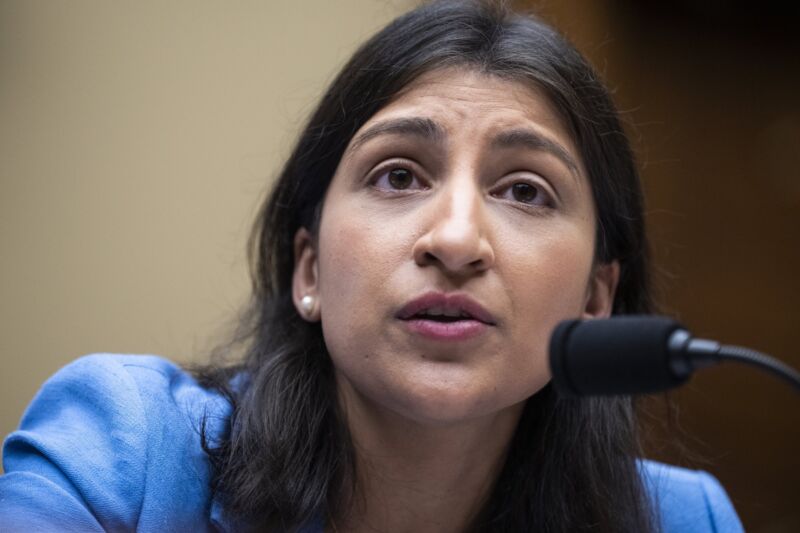
FTC Chair Lina Khan sits at a table and speaks into a microphone during a congressional hearing.

Enlarge / FTC Chair Lina Khan testifies during a House subcommittee hearing on the agency's fiscal 2024 budget on Tuesday, April 18, 2023. (credit: Getty Images | Tom Williams )

The Federal Trade Commission is preparing to file a major antitrust lawsuit accusing Amazon of "leverag[ing] its power to reward online merchants that use its logistics services and punish those who don't," Bloomberg reported today. Bloomberg described the forthcoming lawsuit as "the big one," following several earlier lawsuits filed by the FTC under Chair Lina Khan.

"In the coming weeks, the agency plans to file a far-reaching antitrust suit focused on Amazon's core online marketplace, according to documents reviewed by Bloomberg and three people familiar with the case," the report said.

Khan may try to force Amazon to "restructure" its business. "Based on her public comments, Khan is unlikely to accept compromises from Amazon and could seek to restructure the company—a dramatic outcome that Amazon would surely appeal," Bloomberg wrote.

Read 11 remaining paragraphs | Comments

29 Jun 12:14

US public wants climate change dealt with, but doesn’t like the options

by John Timmer
Image of an orange sky with a bridge and buildings partly obscured in the haze.

Enlarge / The East Coast has gotten the chance to experience something that's become disturbingly familiar out west. (credit: Bloomberg Creative)

After rejoining the Paris Agreement and passing the Inflation Reduction Act, the US has committed to cutting its greenhouse gas emissions in half by the end of the decade and hitting net-zero emissions by the middle of the century. That will require significant changes in everything from household appliances and cars to how electricity is generated. Is the US public up for the challenge?

The answer is a pretty resounding "no," according to new polling data released by the Pew Research Center. While the country generally supports things like renewable energy, there's still strong resistance to taking personal actions like swapping out appliances. And the sizeable partisan gap in support for doing anything has persisted.

We need to do something!

In general, the US public supports action on climate change. Three-quarters of those surveyed said that the US should participate in international efforts to reduce climate change, and two-thirds say the US' top priority should be developing alternative energy sources.

Read 16 remaining paragraphs | Comments

28 Jun 13:36

Woman who went on the lam with untreated TB is now out of the slammer

by Beth Mole
<em>Mycobacterium tuberculosis</em>.

Enlarge / Mycobacterium tuberculosis. (credit: Getty | NIH/NIAID)

A woman in Tacoma, Washington, with an infamous case of tuberculosis is now out of jail—with strings attached.

Law enforcement agents took the woman—identified only as "V.N." in court documents—into custody on June 1. At that point, V.N. had spent a year and half ignoring monthly court orders to have her tuberculosis case treated and/or isolate at home to keep from spreading her infection to others in the community. She also spent about three months on the lam, actively evading law enforcement as they tried to execute a March 2, 2023, civil arrest warrant. During that time, she was seen taking a city bus to a local casino and seemingly hid from law enforcement after that.

She was eventually apprehended at her home without incident on June 1, Pierce County Sheriff’s spokesperson Sgt. Darren Moss told Ars at the time. Deputies booked her into a negative pressure room in the Pierce County Jail, where she would get her court-ordered tuberculosis treatment without risk to others in the facility.

Read 6 remaining paragraphs | Comments

28 Jun 11:42

Noise and health

by Nathan Yau

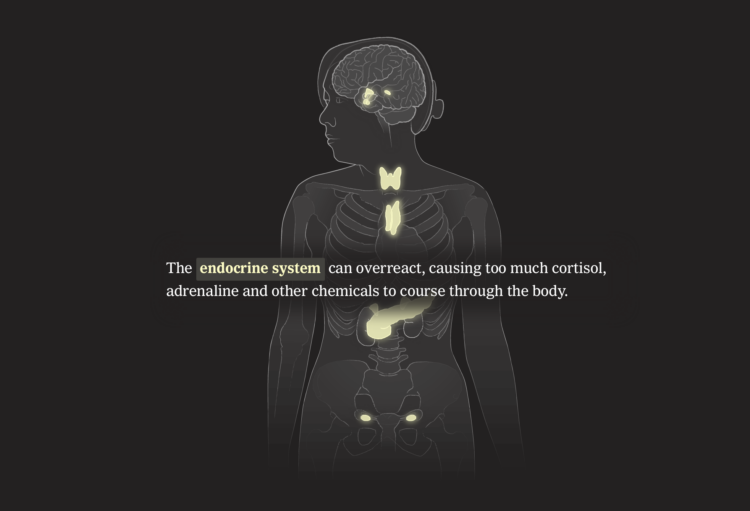
The New York Times explores how noise impacts health:

Anyone who lives in a noisy environment, like the neighborhoods near this Brooklyn highway, may feel they have adapted to the cacophony. But data shows the opposite: Prior noise exposure primes the body to overreact, amplifying the negative effects.

I’m going to use this for the new reason my kids need quiet time.

Tags: health, New York Times, noise

28 Jun 11:20

Password game requires more ridiculous rules as you play

by Nathan Yau

Password rules seem to get more strict and weird over time. Neal Agarwal takes it to a ridiculous level, as Neal Agarwal likes to do. Enter a password that fits the rules, and another rule pops up until you find yourself with a password with a thousand wingdings.

Tags: game, Neal Agarwal, passwords

27 Jun 16:35

The one-shot drug that keeps on dosing

by WIRED
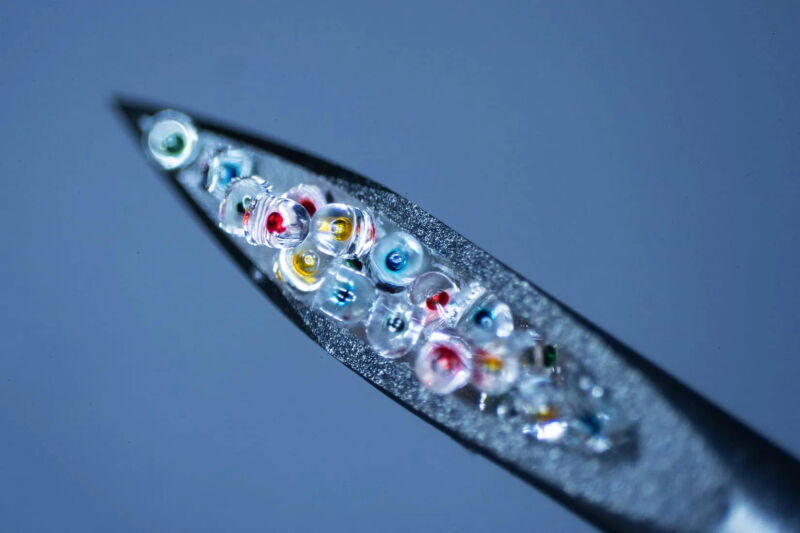
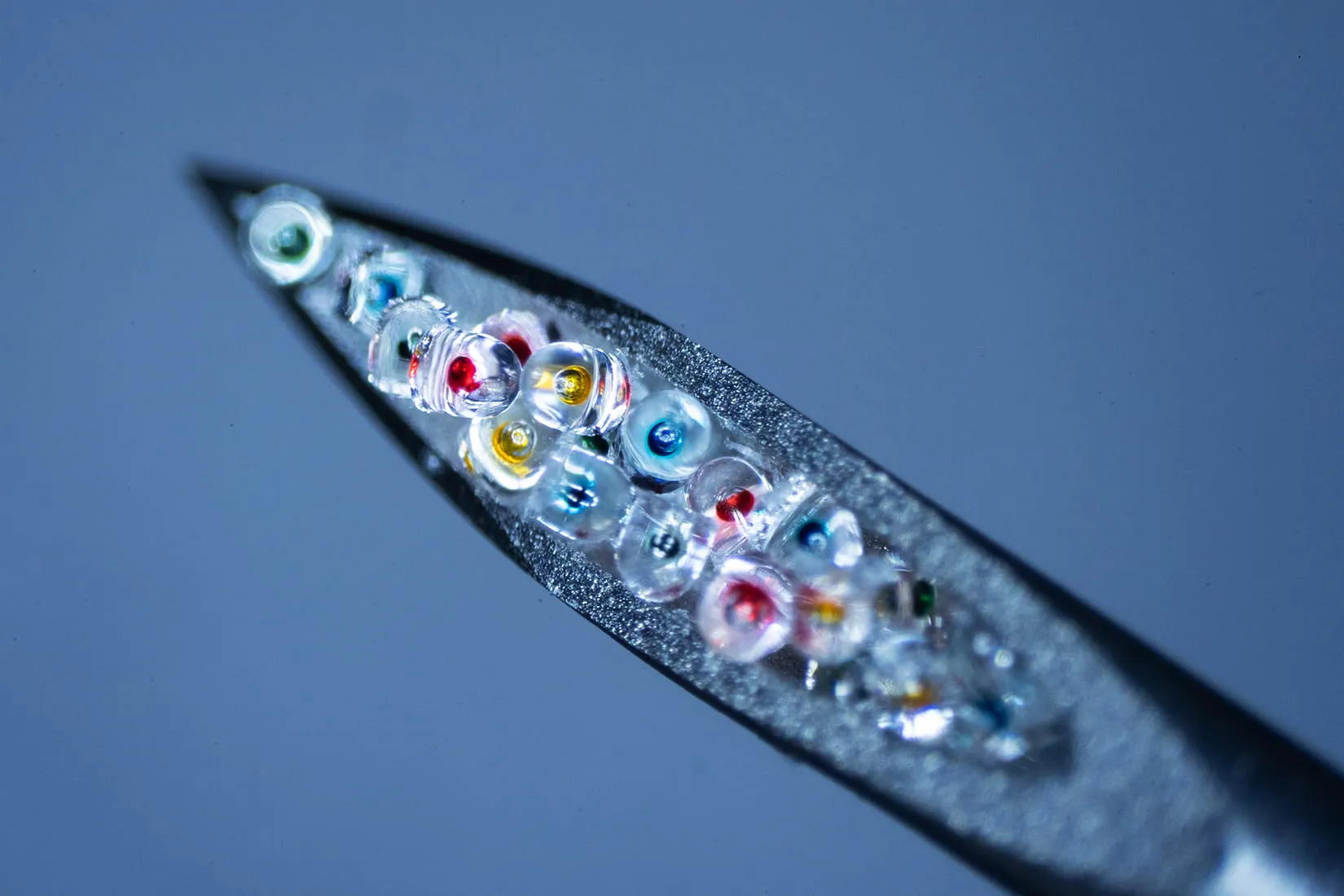
Close up of needle with microparticles

Enlarge (credit: Brandon Martin/Rice University)

On average, patients with chronic illnesses follow their prescribed treatments about 50 percent of the time. That’s a problem. If drugs aren’t taken regularly, on time, and in the right doses, the treatment may not work, and the person’s condition can worsen.

The issue isn’t that people are unwilling to take their prescriptions. It’s that some drugs, like HIV medications, require unwavering commitment. And essential medicines, like insulin, can be brutally expensive. Plus, the Covid pandemic illustrated the difficulties of delivering perishable follow-up vaccine shots to regions with no cold chain. “Are we really squeezing all the utility out of those drugs and vaccines?” asks Kevin McHugh, a bioengineer at Rice University. “The answer is, in general, no. And sometimes we’re missing out on a lot.”

For example, the injectable drug bevacizumab can be used to treat macular degeneration, a leading cause of blindness. But even though it’s effective, dosing adherence is notoriously low. “People hate getting injections into their eyes,” McHugh says. “And I don’t blame them at all—that’s terrible.”

Read 23 remaining paragraphs | Comments

27 Jun 11:25

How do you destroy a forever chemical?

by The Conversation
How do you destroy a forever chemical?

Enlarge (credit: Andrew Brookes)

PFAS chemicals seemed like a good idea at first. As Teflon, they made pots easier to clean starting in the 1940s. They made jackets waterproof and carpets stain-resistant. Food wrappers, firefighting foam, even makeup seemed better with perfluoroalkyl and polyfluoroalkyl substances.

Then tests started detecting PFAS in people’s blood.

Today, PFAS are pervasive in soil, dust, and drinking water around the world. Studies suggest they’re in 98 percent of Americans’ bodies, where they’ve been associated with health problems including thyroid disease, liver damage, and kidney and testicular cancer. There are now over 9,000 types of PFAS. They’re often referred to as “forever chemicals” because the same properties that make them so useful also ensure they don’t break down in nature.

Read 23 remaining paragraphs | Comments

27 Jun 11:24

RIP to my Pixel Fold: Dead after four days

by Ron Amadeo
My dead Pixel Fold display. That huge white gradient should not be there.

Enlarge / My dead Pixel Fold display. That huge white gradient should not be there. (credit: Ron Amadeo)

A flame that burns twice as bright burns half as long. That was my brief experience with the Pixel Fold, which was a wonderful little device until the display died, along with my hopes and dreams. I barely used it, but it was beautiful.

I didn't do anything to deserve this. The phone sat on my desk while I wrote about it, and I would occasionally stop to poke the screen, take a screenshot, or open and close it. It was never dropped or exposed to a significant amount of grit, nor had it gone through the years of normal wear and tear that phones are expected to survive. This was the lightest possible usage of a phone, and it still broke.

The flexible OLED screen died after four days. The bottom 10 pixels of the Pixel Fold went dead first, forming a white line of 100 percent brightness pixels that blazed across the bottom of the screen. The entire left half of the foldable display stopped responding to touch, too, and an hour later, a white gradient started growing upward across the display.

Read 9 remaining paragraphs | Comments

23 Jun 18:53

The search for the lost sub pushed up against the limits of tech and physics

by John Timmer
Image of an organism-encrusted railing in the ocean.

Enlarge (credit: NOAA/Institute for Exploration/University of Rhode Island)

Was that surprisingly fast or excruciatingly slow? The search to discover the fate of the Titan submersible took place against a backdrop of hopes for survival and dwindling oxygen supplies. Given that, the time it took to confirm the fate of those on board may have seemed excruciatingly slow.

At the same time, the extreme depths of the Titanic's wreck posed a lot of challenges, and it's extremely difficult to find anything on the ocean's bottom if you don't know exactly where to look. From that perspective, the successful conclusion of the search can be viewed as happening remarkably quickly.

A complex site

One of the factors that took time was simply getting the right hardware to the right location. There aren't a lot of remotely operated vehicles that are built to withstand the pressures found at over 3,500 meters deep in the ocean. Not all of those vehicles will have the right equipment to handle the search, and some of the ones that do will be in use elsewhere. Any equipment that was appropriate and available would then have to get sent to Canada, put on board an appropriate vessel, and then taken several hundred miles off the coast to the site of the Titanic. And then it would have to descend to the wreck site.

Read 10 remaining paragraphs | Comments

23 Jun 18:47

Why Does a Virginia Court Oversee the Titanic Shipwreck?

by Sylvie McNamara

Earlier this week, in coverage of the doomed OceanGate voyage to the Titanic site, an intriguing tidbit leapt out: The court that “oversees matters having to do with the Titanic” is apparently located in Virginia. Sorry, what? The world’s most famous shipwreck is managed by a judge in Norfolk? How could that possibly be? It’s […]

The post Why Does a Virginia Court Oversee the Titanic Shipwreck? first appeared on Washingtonian.

23 Jun 10:59

The Supreme Court’s latest opinion means innocent people must remain in prison

by Ian Millhiser
A prisoner’s hand hangs out a cell door inside a punishment cell wing at Angola prison in Louisiana.
The Supreme Court decision in Jones v. Hendrix will make it harder for prisoners to challenge their convictions in court. | Giles Clarke/Getty Images

Clarence Thomas’s majority opinion ensures that innocent people will spend years behind bars.

The Supreme Court just ruled that at least some federal prisoners who are completely innocent must serve out their entire sentence, with no meaningful way to challenge their unlawful conviction.

One of the most fundamental principles of criminal law is that no one may be convicted of a crime unless the legislature previously passed a law making their actions illegal. If there is no law on the books that, say, marijuana possession is unlawful, then a judge cannot toss someone in jail because they were found with a joint.

The Supreme Court’s 6-3 decision in Jones v. Hendrix, handed down Thursday, does not directly attack this foundational principle. Instead, it does so indirectly by prohibiting many prisoners from ever challenging their convictions in court.

The case centers on Marcus DeAngelo Jones, a federal prisoner who was convicted in 2000 of possessing a firearm after being convicted of a felony. Nineteen years later, in Rehaif v. United States (2019), the Supreme Court held that no one may be convicted under this felon-in-possession statute unless they knew they had a felony conviction at the time that they possessed the gun.

Jones says that he (incorrectly, but genuinely) believed that his previous felony conviction had been expunged when he purchased a gun, and thus his conviction was invalid under Rehaif. In essence, he claims that no federal law criminalized his possession of a firearm, because he did not know he had a felony conviction.

Thanks to Thomas’s opinion in Jones, however, we will never know if Rehaif invalidates Jones’s conviction — that is, if he is innocent of the crime that caused him to spend nearly a quarter-century in prison — because the Court held that Jones may not challenge his conviction at all.

The reason why is a federal law, known as Section 2255, which ordinarily prevents federal prisoners from challenging their conviction or sentence more than once.

After he was sentenced, but before Rehaif raised a cloud of doubt over whether Jones belonged in prison at all, Jones successfully petitioned a federal court to vacate part of his sentence. Thomas’s opinion holds that Jones’s pre-Rehaif challenge to his sentence blew his only chance to challenge his conviction — even though Jones couldn’t have known before Rehaif was decided that he had a potentially valid claim that he is innocent.

Section 2255 contains several exceptions which allow some federal prisoners to bring a second challenge — one of which provides that Jones may bring a second challenge if § 2255’s usual process “is inadequate or ineffective to test the legality of his detention.”

But Thomas construes this “inadequate or ineffective” language very narrowly — so narrowly, in fact, that Justice Ketanji Brown Jackson mocks Thomas in her dissenting opinion for ruling that someone like Jones may only seek relief “if the courthouse where a § 2255 motion would have otherwise been filed has burned to the ground or been carried away by a mudslide.”

Under Thomas’s majority opinion, it will not just be people like Jones — people convicted under the felon-in-possession gun statute, to whom Rehaif offered new hope — who will be denied second chances at overturning their convictions. Many other people who committed no crime whatsoever will also be denied these rare-but-occasionally-legal second appeals, and will languish in prison.

Thomas’s opinion is “entirely atextual”

To understand Thomas’s reasoning, it’s helpful to understand the history of how § 2255 became law.

Before its enactment in 1948, federal prisoners who wished to challenge their conviction were required to do so in the federal judicial district where they were incarcerated. This system was unworkable, because it placed an extraordinary burden on federal trial courts that happened to be located in the same geographic district as a federal prison.

Additionally, because prisoners are often incarcerated far from where they were tried and convicted, the court that heard a prisoner’s challenge often did not have easy access to records, evidence, and witnesses it needed to weigh the prisoner’s arguments.

Section 2255 fixed this problem by requiring prisoners to challenge their convictions in the same court that originally tried and convicted them. This meant that the burden of hearing these cases, known as “habeas” petitions, would be distributed equitably among the federal district courts. And it also meant that the court most familiar with a prisoner’s case would also hear any habeas suits challenging that prisoner’s confinement.

Ordinarily, § 2255 does not allow a prisoner to bring a second habeas challenge if they were previously denied such relief, but the law permits a second challenge to proceed if § 2255’s ordinary processes are “inadequate or ineffective to test the legality” of a prisoner’s detention.

After the Supreme Court ruled in Bailey v. United States (1995) that a federal law prohibiting the use of a firearm in certain drug crimes should be read more narrowly than many courts had interpreted it, for example, most federal appeals courts permitted prisoners convicted under a broader interpretation of the law to challenge their convictions, even if they’d previously filed another habeas petition.

Thomas, however, characterizes these post-Bailey decisions as an “end-run” around federal law’s limits on habeas petitions. And he construes § 2255’s “inadequate or ineffective” provision so narrowly that there are unlikely to be many cases where it applies at all to a prisoner fighting an unlawful conviction.

In Thomas’s telling, the main purpose of this “inadequate or ineffective” provision is to protect prisoners who are unable to bring a habeas challenge in the court where they were originally convicted — such as if Congress later passed a law eliminating that court. Indeed, in a footnote, Thomas suggests that the “inadequate or ineffective” provision may largely be a relic of an age before the federal interstate highway system was built, when transporting a prisoner to the judicial district where they were convicted “posed difficulties daunting enough to make a § 2255 proceeding practically unavailable.”

One problem with Thomas’s reading of § 2255, as Justice Jackson writes in dissent, is that it is “entirely atextual.” Both Thomas and Jackson agree about the history of why § 2255 was originally enacted in 1948 — to alleviate the burden placed on district courts located near federal prisons. But the statute itself contains no language whatsoever suggesting that its “inadequate or ineffective” provision applies only when the court that would ordinarily hear a § 2255 case is inaccessible or unavailable.

Here is the entire relevant subsection of § 2255, quoted in full:

An application for a writ of habeas corpus in behalf of a prisoner who is authorized to apply for relief by motion pursuant to this section, shall not be entertained if it appears that the applicant has failed to apply for relief, by motion, to the court which sentenced him, or that such court has denied him relief, unless it also appears that the remedy by motion is inadequate or ineffective to test the legality of his detention.

This language does place some burdens on prisoners. It normally precludes habeas relief if a prisoner “failed to apply for relief” in the court that sentenced them, and it also precludes most prisoners from seeking relief from a court that’s already denied it to them. But the “inadequate or ineffective” exception to these general rules is broadly worded, and does not contain any language supporting Thomas’s interpretation of the law.

Justice Jackson’s alternative reading of § 2255, briefly explained

To understand Jackson’s dissent, it’s also helpful to understand the history of another federal law, the Antiterrorism and Effective Death Penalty Act of 1996 (AEDPA), which inserted many of the barriers facing prisoners who wish to file a second habeas petition into federal law.

AEDPA also added two new exceptions to the general rule that second habeas petitions are disfavored. Even after AEDPA, such petitions are permitted if they are grounded in “newly discovered evidence” that strongly indicates the prisoner was not guilty, or if the Supreme Court hands down “a new rule of constitutional law” that applies retroactively to prisoners convicted in violation of that new rule.

Thomas’s opinion places a great deal of weight on the fact that Jones — who argues that his conviction is invalid on statutory grounds and not because it violates the Constitution — cannot fit his case within either of these two new exceptions created by AEDPA.

But AEDPA did not repeal the preexisting “inadequate or ineffective” language in § 2255. Indeed, according to Jackson, Congress reenacted this exception, “using identical language,” when it rewrote much of § 2255 in 1996. And Jackson argues that this longstanding exception should allow Jones to challenge his conviction after Rehaif undermined the statutory basis of that conviction.

As Jackson writes, the real purpose of the “inadequate or ineffective” provision was not simply to permit habeas cases to proceed if a faraway court is inaccessible or shut down. It was also “to ensure that certain pre-existing postconviction claims (say, a claim of statutory innocence) could still be heard even if the statutory language Congress was adopting inadvertently barred them.”

Congress, in other words, wanted to make sure that § 2255 only changed which court would hear a habeas dispute, and that it would not cut off habeas disputes that otherwise could have been brought.

All of this matters because, in Davis v. United States (1974), the Supreme Court held that § 2255 permits prisoners bringing habeas petitions to raise both constitutional and statutory challenges to their conviction. So, if the purpose of the “inadequate or ineffective” provision — which was reenacted by Congress when it passed AEDPA in 1996 — was to preserve prisoners’ rights to bring the sort of suits that they’ve historically been allowed to bring, then Jones should be allowed to challenge his conviction.

This case is really about a philosophical dispute about the purpose of the criminal justice system

If you’ve read this far, you should be forgiven for being a little confused. Federal habeas law is notoriously complicated, and statutes like AEDPA require prisoners to jump through an array of procedural hoops that are often ill-defined in the statute itself.

To understand what’s really going on in the Jones case, one must not only understand this complicated statutory regime, one must also be familiar with a philosophical debate between the Supreme Court’s liberal and conservative factions, which has gone on for at least three decades.

Left-leaning justices have long argued that the criminal justice system should primarily try to determine whether a criminal defendant has actually committed a crime — and that there should be adequate safeguards to ensure that someone who is wrongfully convicted can challenge that conviction.

Meanwhile, justices on the Court’s rightward fringe have long argued that the primary purpose of the criminal justice system is to reach final judgments concerning an individual’s guilt. Under this view, this need for finality can even overcome a claim that a prisoner is innocent.

Thus, in his concurring opinion in Herrera v. Collins (1993), the late Justice Antonin Scalia argued that there is “no basis” in the Constitution for “a right to demand judicial consideration of newly discovered evidence of innocence brought forward after conviction.” At the time, Thomas was the only other justice to join Scalia’s opinion.

As Republican presidents filled more seats on the Supreme Court, however, the finality über alles approach favored by Scalia and Thomas was embraced by a majority of the justices.

Thus in Shinn v. Ramirez (2022), a case involving an innocent man who was later freed after spending 29 years on death row for a crime he did not commit, Thomas complained in the Court’s majority opinion that a federal habeas court’s decision to free a state prisoner “overrides the State’s sovereign power to enforce ‘societal norms through criminal law,’” and “disturbs the State’s significant interest in repose for concluded litigation.”

In Jones, Thomas does not simply repeat his philosophical commitment to finality in criminal convictions, he attributes that commitment to Congress — claiming that, by enacting AEDPA, “Congress has chosen finality over error correction.”

22 Jun 12:35

Cell-cultivated chicken was just approved for sale in the US. But it won’t be on grocery shelves anytime soon.

by Kenny Torrella
Cell-cultivated chicken from startup Eat Just on a grill in Singapore. | Eat Just

In a milestone for the nascent industry, meat grown in a lab will soon land at restaurants in DC and San Francisco.

Today, the United States Department of Agriculture (USDA) granted approval to two California-based startups — Upside Foods and Good Meat — to sell their lab-grown or “cell-cultivated” chicken, a historic first in the US. The green light from the USDA represents the final step in a multi-year regulatory process to bring slaughter-free meat to the dinner table. The FDA, which is also involved in regulating the nascent industry, recently gave approval to both companies as well.

“This is the moment where the science fiction becomes reality,” Amy Chen, chief operating officer of Upside, told Vox. “It’s a watershed moment for us to just rethink the future of food.”

“This announcement that we’re now able to produce and sell cultivated meat in the United States is a major moment for our company, the industry, and the food system,” said Josh Tetrick, CEO of Eat Just, the company that operates Good Meat, in a press release. “We appreciate the rigor and thoughtfulness that both the FDA and USDA have applied during this historic two-agency regulatory process.”

Cell-cultivated meat is produced by feeding animal cells a mix of nutrients — sugars, amino acids, salts, and vitamins and minerals — in large stainless steel tanks to develop them into fat and muscle tissue. If that sounds unappetizing (which it does to many consumers, depending on how they’re asked), take a look at the latest Vox investigation into how chickens are farmed.

Earlier this month, the USDA gave Upside and Eat Just approval to label their products “cell-cultivated,” effectively ending a long-running debate over what to call meat grown from animal cells rather than slaughtered animals. The final product is biologically indistinguishable from the meat of an animal and is wholly different from the plant-based burgers and sausages that have grown in popularity in recent years, like those from Beyond Meat and Impossible Foods, which use only plant ingredients.

Cooked chicken with garnish and a green sauce. Kenny Torrella
Upside Foods chicken prepared for a tasting.

But if cell-cultivated meat has passed a major regulatory bar, it’s still far from ready for mass consumption. Cell-cultivated chicken is much too expensive to compete with conventional boneless chicken breast, which costs as little as $4 per pound.

Upside and Good Meat will start small: Upside estimates that in a few weeks, it will begin selling its chicken filet at Bar Crenn, a high-end restaurant in San Francisco run by three-Michelin-star chef Dominique Crenn, where meals run $300 a pop. Good Meat will launch at a restaurant by chef José Andrés in Washington, DC. Like conventional meat producers, both companies will have USDA inspectors oversee their processing before they can start selling to consumers.

Upside, which was founded in 2015 and is valued at $1 billion, has ambitious plans to partner with more restaurants and create more meat products, from hot dogs to hamburgers to dumplings, over the next few years, Chen said. Eat Just, which also makes plant-based eggs, launched Good Meat, its cell-cultivated division, in 2017.

From 2016 to 2022, over 150 companies sprung up to develop cell-cultivated meat — receiving nearly $3 billion in investment — in the hope of displacing the conventional meat industry due to concerns about meat’s contribution to climate change, water and air pollution, and cruelty to animals on factory farms. With USDA approval, Good Meat and Upside now face the real challenge: scaling up.

Making meat from animal cells is possible. But can it be economical?

In 1931, Winston Churchill — who had a side gig as a futurist when he wasn’t saving Great Britain — predicted that humanity would one day grow meat in a factory rather than raise and slaughter animals. But it wasn’t until nearly 70 years later that anyone demonstrated it was possible. In 2000, scientists at Touro College in New York developed a fish filet made from goldfish cells — really — and soon after, NASA scientists experimented with growing meat from turkey cells.

But the race to make cell-cultivated meat didn’t really take off until 2013, when Dutch scientist Mark Post — a pioneer in the field — debuted a burger that cost $325,000 to produce. Upside launched two years later, and dozens of startups soon followed.

Though it’ll soon land on two US restaurant menus, cell-cultivated meat may not displace conventionally produced meat in the near future — or possibly ever. Skeptics say there are just too many technical and economic challenges in scaling it up, from preventing bacterial contamination, to sourcing cheap ingredients to feed the cells, to making cells grow faster and building enough bioreactors — the large, stainless steel tanks in which it’s grown — to produce it in large quantities at a low price point.

Since late 2020, Eat Just has been selling small quantities of cell-cultivated chicken at a loss in Singapore, the only other country that has granted regulatory approval for the product. “We can make [cell-cultivated meat] on small scales successfully,” Tetrick of Eat Just told the Wall Street Journal in April. “What is uncertain is whether we and other companies will be able to produce this at the largest of scales, at the lowest of costs within the next decade.”

Upside has also struggled to scale up its product, the Wall Street Journal has reported. The Upside chicken sold to Bar Crenn will be grown in small, two-liter plastic bottles rather than its large bioreactors. Upside chicken will also be made using some animal components, Chen said, which the company hopes to phase out.

Lab workers inside a facility lined with steel pipes and other production equipment. Upside Foods
An Upside Foods production facility.

Despite the challenges, cell-cultivated meat startups are plowing ahead and have broken ground on new production plants from Singapore to North Carolina. In late 2021, Upside said it could produce 50,000 pounds of cell-cultivated meat annually at its production facility in Emeryville, California, just outside San Francisco, with plans to increase it to 400,000 pounds in the future (annual global meat production is 350 million metric tons).

When asked if Upside’s chicken sold at Bar Crenn would be sold at a loss, Chen said, “The goal of our current production scales is not optimal output or efficiency or cost. … It’s really about being both a production facility, but also a learning engine for us to try next-generation technologies, for us to continue to iterate.”

Chen said Upside will soon announce the location and further details on a commercial plant that will eventually enable the company to produce millions of pounds of cell-cultivated chicken and beef annually. “At that level, the economics are attractive,” she said. “And you can start seeing the sustainability and viability, from a financial perspective, of the industry playing out. I would say we’re a couple years out from being able to show those unit economics that work.”

Cell-cultivated meat boosters, like the advocacy group the Good Food Institute, argue that while the path to cost competitiveness will be long and arduous, the industry has already made immense progress in under a decade, and other technologies that were once exorbitantly expensive have drastically fallen in price, like solar panels. Even meat from animals, which was once a delicacy, is now consumed in quantities that would shock our ancestors.

Cell-cultivated meat development could be sped up with government investment in R&D, supporters also argue, just like with solar panels, electric vehicles, and other emerging, environmentally beneficial technologies. Countries including the Netherlands, Denmark, Qatar, Singapore, Israel, and the US have committed funding, but experts say that much more is needed to help cultivated meat scale rapidly. In early 2022, China’s agricultural ministry announced it would prioritize developing cell-cultivated meat.

“As we navigate a future with increasing global demand for meat, it is crucial that governments worldwide prioritize cultivated meat as a solution that satisfies consumer preferences, supports climate goals, and ensures food security for generations to come,” said Bruce Friedrich, president of the Good Food Institute, in a press release.

To bypass some of the scaling challenges, some companies have taken a “hybrid” approach by making burgers and bacon that combine primarily plant-based ingredients with a small amount of animal cells to enhance flavor and texture. But even that approach could prove challenging, given cooling consumer interest in plant-based meats like Impossible and Beyond burgers.

Other startups, like California-based Blue Nalu and Wildtype, are focused on creating high-end cuts of meat in order to more easily compete with conventional meat on cost, like bluefin tuna and salmon.

If history is any guide, predictions about the availability and cost of cell-cultivated meat are largely useless. But continued efforts to build and scale it, given skyrocketing global demand for meat, eggs, and dairy, are essential, said Chen of Upside: “We as a planet, and as a society, have no plan B. ... If you look at the current footprint of conventional meat, and combine that with how we expect meat demand to grow over time, the math literally doesn’t work out. And so I think there is a fierce urgency for us to solve and to completely reinvent the way meat makes it to the table.”

If they want to make their products a viable alternative, Upside, Good Meat, and their more than 150 cell-cultivated meat competitors will now have to make their own math work out.

22 Jun 11:05

Beloved Classic Super Mario RPG Gets A Remake Fans Have Wanted For Years

In the lead-up to today’s Nintendo Direct, rumors have swirled that, among whatever else might be announced during the presentation, we’d be seeing a remake of a beloved Super Nintendo classic. Just which game it might be, however, remained unclear, so fans on Twitter took the opportunity to drum up hype around their own favorites potentially getting the remake treatment, with legendary games such as Chrono Trigger, Earthbound, and Super Mario RPG being among the most clamored for. Now, the announcement has been made and it is, in fact, Super Mario RPG, which is slated to launch on November 17.

A SNES Mario Classic For The Modern Era

Nintendo revealed during its 40-minute Direct presentation that the SNES classic Super Mario RPG will soon make its modern-day debut on the handheld-console hybrid. This was after rumors began swirling on June 19 when Twitter user Pyoro_ND, who accurately predicted Everybody 1-2 Switch and Sonic Superstars before they were revealed, posted that “a remake of a SNES classic” would get announced during the Nintendo Direct livestream.

The trailer started with the classic game rendered in its 2D pixel art form before transitioning into full 3D animation. It’s cute and bubbly in the best way. But despite the new coat of paint, this is still Super Mario RPG through and through. The game finds Mario and Peach join forces with Bowser and a few newcomers—Geno and Mallow—to save the Mushroom Kingdom from a new threat, the vile Smithy. Defined by endlessly charming dialogue, involving turn-based combat that incorporates turn-based inputs, and endless touches that bring the world of Mario to life in a whole new way, the game’s reputation as a beloved SNES title and a wonderful RPG is well-earned.

The game launches this November on Nintendo Switch and preorders are now available. But this isn’t the only Mario game Nintendo revealed during its Direct livestream. After styling on Mario in the Super Mario Bros. Movie, the company revealed that Princess Peach will get her own game as well.

21 Jun 16:27

Beyond missing Titanic sub, handheld gamepads are a common military interface

by Kyle Orland
Senior Airman Ryan Hoagland operates an explosive ordnance disposal robot using an Xbox 360 controller.

Enlarge / Senior Airman Ryan Hoagland operates an explosive ordnance disposal robot using an Xbox 360 controller. (credit: US Air Force / Flickr)

This weekend's tragic disappearance of an OceanGate Expeditions tourist submersible has led to a fair share of bemused coverage focused on the company's apparent use of a $30 Logitech F710 wireless PC game controller for its interface. But OceanGate is far from the first outfit to use off-the-shelf or slightly modified gaming control hardware to power expensive heavy machinery well outside of the gaming realm.

MRI analysis firm BodyViz, for instance, told the BBC that an Xbox controller provided a much more intuitive way to “rotate, pan, zoom or fly-through a patient's virtual anatomy” than the previously standard mouse-and-keyboard interface. And NASA has used an Xbox Kinect as an interface to control complex rovers like the six-limbed ATHLETE (All-Terrain Hex-Limbed Extra-Terrestrial Explorer).

But international militaries have shown some of the most avid and continued interest in adapting game-control interfaces for decidedly non-entertainment uses. In 2014, the US Navy was promoting its use of "a video game-like controller" in a laser weapon prototype, for example. And in 2018, the USS Colorado attack submarine was handing Navy sailors an Xbox controller to operate its periscope-like photonic masts.

Read 10 remaining paragraphs | Comments

21 Jun 16:27

Camera review site DPReview finds a buyer, avoids shutdown by Amazon

by Andrew Cunningham
Camera review site DPReview finds a buyer, avoids shutdown by Amazon

Enlarge (credit: Canon)

Back in March, the editor-in-chief of the 25-year-old, Amazon-owned camera review site DPReview.com announced that the site would be closing in April. The site was the casualty of a round of layoffs at Amazon that will affect a total of about 27,000 employees this year; DPReview was meant to stop publishing new pieces on April 10 and to be available in read-only mode for an undetermined period of time after that.

But then, something odd happened: The site simply kept publishing at a fairly regular clip throughout the entire month of April and continuing until now. A no-update update from EIC Scott Everett published in mid-May merely acknowledged that pieces were still going up and that there was "nothing to share," which wasn't much to go on but also didn't make it sound as though the site were in imminent danger of disappearing.

Yesterday, Everett finally had something to share: DPReview.com and its "current core editorial, tech, and business team[s]" were acquired by Gear Patrol, an independently owned consumer technology site founded by Eric Yang in 2007. The deal had already closed as of yesterday, June 20.

Read 4 remaining paragraphs | Comments

20 Jun 18:05

What’s With All the Bears Around DC Lately?

by Andrew Beaujon

Theodore Roosevelt Island was closed Tuesday morning because of yet another bear sighting, according to Fox5 reporter Steve Chenevey: Can confirm another bear sighting in/near DC at Theodore Roosevelt Island (appropriate for the namesake of the Teddy Bear) across the Potomac from the Georgetown Waterfront. Island temporarily closed as trapping activity continues pic.twitter.com/k3xjgDmDdf — Steve […]

The post What’s With All the Bears Around DC Lately? first appeared on Washingtonian.

20 Jun 11:34

The hottest new perk in tech is freedom

by Rani Molla
A miniature model of an office.
Small tech companies are way more likely to let employees work remotely than big ones. | Getty Images/Westend61

How small tech companies are using remote work to compete with the big guys.

It used to be that Big Tech companies like Google, Meta, and Apple led the way when it came to workplace advantages. On top of great pay, they offered freebies like gourmet meals, massages, and on-site laundry. Then, when the pandemic made the office a physical danger, those same companies were among the first to offer the ultimate perk: the ability to work where you wish.

But, as their stock prices have suffered, Big Tech has not only dialed back on many on-site perks, they’ve also called workers back to the office. Facing hard times, they’ve retrenched into what they knew before the pandemic, typically asking workers to come into the office three days a week. Google is even factoring office attendance into performance reviews.

Smaller tech companies have since picked up the mantle of remote work. They are much more likely than their larger peers to allow people to work fully remotely, with 81 percent of those with fewer than 5,000 employees either allowing remote work or only having remote options, according to new data from Scoop Technologies, a software firm that builds tech to help hybrid teams coordinate and also tracks the office policies at major companies. Meanwhile, just 26 percent of companies with more than 25,000 employees are fully flexible.

Tech has the greatest variation in fully remote policy by company size than any other industry. This suggests that remote work is completely possible in the tech industry, but different-sized companies have settled on different policies based on how they think it benefits them or not. And their reasons for doing so might depend, in part, on how they want to portray themselves to the outside world.

Why the so-called “flexibility divide” among tech companies?

Tech companies with fewer employees are using remote work as a way to pull in more talent in what had been a notoriously difficult hiring environment and to signify that they, unlike Big Tech, are where progress is happening. People in the tech industry, especially, are more likely to be lured by remote work, according to Gartner, which has found that better work-life balance and greater flexibility were the top benefits tech employees would choose over 10 percent higher compensation.

That’s a big deal for smaller tech companies, which haven’t always been able to compete with the Googles of the world in terms of salary. Airbnb, which employs more than 6,000 people, has used its work-from-anywhere policy to attract not only more applicants — its career page saw twice the traffic last year as it had the year before — but also more diverse ones, with 21 percent of new hires being under-represented minorities.

“We want to hire the best talent we can all around the world,” Dave Stephenson, Airbnb’s CFO and head of employee experience, told Vox. “If we narrow that definition of getting the best talent around the world to being 50 miles around San Francisco, that’s going to put us at a disadvantage.”

At the same time, Airbnb has cut its office footprint by half, slowed attrition, and marked its first full year of profitability. The company pays to fly in its far-off employees — about 20 percent of its workforce — to be together from time to time. But this only happens if the company’s “ground control” team has deemed that there’s an important project that requires them to be in person.

“If they’re satisfied with their ability to balance their personal lives with their work lives, I think we get more effective performance out of people,” Stephenson said.

The situation is similar at Yelp, which also lets its 5,000 workers choose where they work and notched its sixth straight quarter of record revenue last quarter while also rolling out products like AI-powered search. The company says that remote work hadn’t hurt sales goals or engineering productivity but had caused a huge spike in its talent pipeline.

“I think we saw pretty early on during the pandemic that, wow, this is actually working,” said Carmen Whitney Orr, Yelp’s chief people officer, who joined the company remotely last year. “Happy employees are productive employees and that means happy customers.”

The ability to work remotely is most common among the smallest tech companies.

“If you can demonstrate that you’re able to create a team that is just as productive, if not more, by being remote, then there’s really no reason to not do it,” said Zuhayeer Musa, co-founder of tech compensation comparison platform Levels.fyi, which has nine workers. Levels.fyi was founded as a remote company in 2017, which Musa says makes it easier to continue working remotely.

In turn, remote work has meant the company has had better access to talent than it would if it demanded office attendance.

“If you require someone to move to a certain location, you are inherently limiting the talent pool that you’re going to be working with,” he said.

 Getty Images/Westend61

That could be what Big Tech is doing.

Amid economic uncertainty, flagging stock prices, and years without major innovation, larger tech companies are using their calls back to the office to signify to shareholders that they are grown-up and responsible corporations. Gone are the days of ping-pong-playing engineers and squandered profits. Here are the days of penny-pinching and strict oversight, probably in an office environment.

In other words, what were once considered the most innovative and forward-thinking companies are behaving a lot more like their stodgy non-tech corporate counterparts.

When it comes to allowing fully remote work, policies at big tech companies are closest to their non-tech peers, like Citigroup and Starbucks. Like their non-tech counterparts, many tech companies have quickly shifted to a structured hybrid model, where workers have to come in a set number of days per week. The share of large tech companies that are doing hybrid (65 percent) is nearly the same as large companies overall (60 percent), as is the number of days per week they want people in (2.5 on average), according to Scoop.

“Bigger companies, more complex companies, are more likely to be looking for more professional types of management,” said Kathy Harrigan, a professor of corporate management at Columbia University’s business school. “Investors expect that.”

And professionalism to them means butts in chairs. Harrigan says in-person work is necessary to coordinate the complicated, varied businesses these tech conglomerates now operate. The move to AI has only made in-person coordination more of a necessity, she said.

“They’re working with a more complex kind of product. It means a lot more coordination from a lot of different points of view, where previously these workers were permitted to work in silos,” Harrigan said.

One could argue that companies like Google, Meta, and Apple all ran very complex businesses during the pandemic, when they recorded record profits while their workers toiled from home.

“In the face of volatility and uncertainty, it is human nature to want to revert back to something that is a known quantity,” said Caitlin Duffy, a research director at Gartner, about the push to return to the office. “And so there might be some psychological things happening that may be overriding the evidence in front of them.”

The evidence, she says, shows that offering flexibility in where people work makes them happier and, by extension, more productive and innovative. Accounts to the contrary were “unfounded.” What’s worse, Duffy said, is that arbitrarily calling people back to the office might actually hurt workers’ productivity and innovation by driving fatigue and burnout.

Whether their back-to-office plans ultimately end up harming these companies remains to be seen. Big Tech companies, of course, might be able to sit back on their brand names and giant salaries to attract talent. But to some extent, with their flexible remote policies, small tech companies are expressing their ability to innovate and grow, just like the big guys used to do.

19 Jun 19:59

To make electric vehicle batteries, China must be involved

by Nathan Yau

For The New York Times, Agnes Chang and Keith Bradsher ask if it’s possible for the world to make EV batteries without China. Going over manufacturing and the materials involved, it looks like probably not:

Experts say it is next to impossible for any other country to become self-reliant in the battery supply chain, no matter if it has cheaper labor or finds other global partners. Companies anywhere in the world will look to form partnerships with Chinese manufacturers to enter or expand in the industry.

I appreciate the illustrative nature of these charts.

Tags: battery, China, electric vehicle, supply

17 Jun 12:34

Heat Pump

If I'm not going to upgrade to a powered one, I should at LEAST stop leaving the door open so often.
17 Jun 12:33

Complain

by Reza
14 Jun 19:03

Mass. Begins Enforcing New ‘Right To Repair’ Law After Automakers Lied It Would Aid Sexual Predators

by Karl Bode

In late 2020, Massachusetts lawmakers (with overwhelming public support) passed an expansion of the state’s “right to repair” law. The original law was the first in the nation to be passed in 2013. The update dramatically improved it, requiring that all new vehicles be accessible via a standardized, transparent platform that allows owners and third-party repair shops to access vehicle data via a mobile device.

The goal: reduce repair monopolies, and make it cheaper and easier to get your vehicle repaired (with the added bonus of less environmental harm).

Mass. automakers immediately got to work trying to scare the press, public, and legislators away from the improvements by running ads claiming that the updated legislation would be a boon to sexual predators. They also filed suit under the banner of the inaccurately named Alliance for Automotive Innovation, which stalled the bill from taking effect.

And while that lawsuit still hasn’t been resolved, Massachusetts Attorney general Andrea Campbell has started issuing warnings that the state will finally begin enforcing the bill whether giant car manufacturers like it or not:

“The people of Massachusetts deserve the benefit of the law they approved more than two years ago,” Campbell said. “Consumers and independent repair shops deserve to know whether they will receive access to vehicle repair data in the manner provided by the law. Auto manufacturers and dealers need to understand their obligations under the law and take action to achieve compliance.” 

Automakers aren’t alone in their efforts to try and demonize popular, bipartisan reforms. Giants like Apple and John Deere have also spent years trying to defend their profitable repair monopolies by claiming that making access to less expensive options will result in an absolute parade of security and privacy problems for consumers. A bipartisan 2021 FTC study found the complaints to be empty, self-serving bluster.

14 Jun 19:03

Feds tell automakers not to comply with Mass. “right to repair” law

by Jonathan M. Gitlin
A glowing icon of a car with a crossed screwdriver and wrench floats above a human hand

Enlarge (credit: Getty Images)

In 2020, voters in Massachusetts chose to extend that state's automotive "right to repair" law to include telematics and connected car services. But this week, the National Highway Traffic Safety Administration told automakers that some of the law's requirements create a real safety problem and that they should be ignored since federal law preempts state law when the two conflict.

Almost all new cars in 2023 contain embedded modems and offer some form of telematics or connected car services. And the ballot language that passed in Massachusetts requires "manufacturers that sell vehicles with telematics systems in Massachusetts to equip them with a standardized open data platform beginning with model year 2022 that vehicle owners and independent repair facilities may access to retrieve mechanical data and run diagnostics through a mobile-based application."

There have been attempts by state lawmakers, the auto industry, and NHTSA to tweak the law to create a more reasonable timeline for implementation, but to no avail.

Read 5 remaining paragraphs | Comments

11 Jun 18:15

How the right’s defeats gave us the anti-LGBTQ moment

by Zack Beauchamp
Protestors face off with their opposing opinions as they join crowds gathering outside a Glendale Unified School District meeting where parents and activists differ over teaching sexual identity to kids at Glendale Unified School District
Protestors outside a Glendale Unified School District meeting on teaching sexual identity to kids in Glendale, California on June 6, 2023. | Allen J. Schaben / Los Angeles Times / Getty Images

The American right is returning to its homophobic roots.

Last week, Sen. Ted Cruz (R-TX) sent a tweet criticizing a draconian new anti-LGBTQ law in Uganda. The law imposed strict criminal penalties for same-sex relations — including execution for “serial offenders” who commit “aggravated homosexuality.” Cruz, quite reasonably, condemned Uganda’s law as “grotesque and an abomination.”

Almost immediately, Cruz faced a wave of criticism from prominent conservative accounts with large followings.

“Unlike the lawmakers in Texas, the Uganda government recognizes that if you give an inch, the LGBTQ Mafia will take a mile,” wrote Lauren Witzke, the 2020 GOP Senate candidate in Delaware. “While you guys struggle to stop drag queens from twerking on the laps of toddlers, they stop it before it starts.”

The attacks on Cruz were a sign of the times for American conservatism, which is currently in the grips of a renewed and increasingly vicious anti-LGBTQ fervor.

In January, Donald Trump released a campaign video decrying “the left-wing gender insanity being pushed on our children.” He vowed that, in a second term, his administration would work to ban gender-affirming care for minors “in all 50 states,” officially recognize “male” and “female” as “assigned at birth” as the only genders, and reconfigure school curriculums to teach students “positive education about the nuclear family [and] the roles of mothers and fathers.”

Trump’s leading competitor for the 2024 nomination, Florida Gov. Ron DeSantis, has gone even further, making laws attacking LGBTQ inclusion, especially in schools, into a core plank of his “anti-woke” governing agenda. DeSantis’s campaign is part of a broader trend, with 2023 seeing a fresh wave of anti-trans legislation in Republican-controlled statehouses across the country — with over 530 bills proposed by late May, by one tally. Right-wing activists are leading boycotts against brands that celebrate LGBTQ identity and Pride month, like Target and Bud Light. Just this Tuesday, a school board meeting about teaching gender in Glendale, California, schools devolved into a fistfight.

Politically, the anti-LGBTQ turn may well turn out to be counterproductive for the right. Polling data suggests that the public, and especially younger generations, are becoming increasingly liberal on LGBTQ issues. The fact that conservatives are going after corporations like Disney, Anheuser-Busch, and Target — some of the biggest and most famous icons of mainstream America — indicates just how out of step they are with the country.

Yet it’s this reality, somewhat paradoxically, that might explain the resurgence in anti-LGBTQ politics: The cultural right is lashing out because it’s been losing for so long. Much as the rise of Donald Trump and the panic about “wokeness” began (primarily) in reaction to challenges to America’s racial hierarchy, so too has the return of anti-LGBTQ politics been a reaction to changing norms about sexuality and gender.

To a certain extent, anti-LGBTQ conservative intellectuals openly acknowledge that they are on the defensive. In their worldview, they are standing up for the “ordinary” American against an overwhelmingly progressive elite culture successfully imposing its own values on everyone else — a claim that implicitly rejects the idea that changing attitudes on sex and gender are moving from the bottom up rather than the top down.

But as we’ve seen in the renewed energy behind anti-LGBTQ politics and the raft of anti-trans bills in statehouses across the country, a rearguard backlash politics can still be powerful — mobilizing a committed minority in ways that have significant consequences for real people’s lives.

When liberals won the culture war over gay rights

In 2020, New York University sociologists Delia Baldassarri and Barum Park published an article with a provocative thesis: The “culture war” that once dominated American politics, centering on moral divides between religious conservatives and more secular liberals, was over. The liberals had won.

Using detailed data sets covering the years 1972 to 2016, Baldassarri and Park traced the evolution of public opinion on a large variety of policy questions. On most issues they examined — in areas like economics, race, immigration, and foreign policy — average public opinion stayed relatively static.

But on “moral” issues, like feminism or drug use, the picture was remarkably different. “Among all of the 37 moral issues under study, only for one issue, namely whether extramarital sex is wrong, was the proportion of liberal responses lower in 1972 compared to 2016,” they write. In virtually all of those 36 cases, the public shifted notably in the liberal direction (with the important exception of abortion, where opinion stayed static rather than trending left).

Nowhere was this trend clearer than on gay rights, where the authors found “by far the most pronounced opinion change we observe in the data.” (Note that their study did not include any surveys on trans issues, since there was no reliable data from most of the time period under examination.)

“In only two decades, more than a third of the population has changed its position on gay rights: the approval of gays’ right to adopt children rose by 48.8 percentage points between 1992 and 2016,” they write. “Gay marriage support grew from 12.4 percent in 1988 to 59.4 percent in 2016, a 47 percentage point difference.”

Looking beneath the hood, Baldassarri and Park uncovered an interesting partisan pattern in the moral issues data: On topic after topic, Democrats would become more progressive faster than Republicans, who would eventually start to catch up years later. What at first looked like a persistent partisan gap, akin to views on tax cuts and abortion, would eventually give way to bipartisan consensus.

Notably, the Republican shift on gay rights took off during arguably the most intense recent period of partisan conflict on the issue: the struggle over same-sex marriage in the George W. Bush presidency.

In the 2004 presidential election, legally codifying marriage as something between a man and a woman was a central plank of the Republican Party’s platform. Yet as that was happening, it appears rank-and-file Republicans were already shifting to the left on LGBTQ issues.

Demonstrators hold sign reading, “homosexual marriage is an act of terrorism” as they chant slogans against same-sex marriages at an anti-gay rally on May 18, 2004 in Los Angeles, California. David McNew/Getty Images
A protest against same-sex marriage in Los Angeles on May 18, 2004.

These changes were too fast to be explained by older Republicans dying off and younger, more liberal ones taking their place. Instead, Baldassarri and Park suggest the best explanation is that many Americans genuinely changed their minds.

As the overall cultural environment became more liberal thanks to decades of LGBTQ activism, gays and lesbians around the country felt more comfortable coming out of the closet. The result is that more Republicans had personal contact with gay people, which in turn made them more sympathetic to LGBTQ equality. There is a wide body of literature supporting this so-called “contact hypothesis,” and Baldassarri and Park see it as central to the new bipartisan consensus on issues like same-sex marriage.

“At least in recent years, both Republicans and Democrats have similar probabilities of knowing someone in their close social circles who is gay or lesbian,” they write. “This may explain why Republicans have turned towards more progressive views so easily on these issues.”

How an anti-trans backlash reopened the queer culture war

On the right, the smartest voices have understood the basic contours of the new reality for quite some time.

In 2014, a year before the Supreme Court ruled that same-sex marriage was a constitutional right in Obergefell v. Hodges, the New York Times’s Ross Douthat wrote a column negotiating “the terms of our surrender” on same-sex marriage.

Seeing the debate on the matter as essentially lost, Douthat pleaded for magnanimity from the victorious left, hoping for a world where “religious conservatives would essentially be left to promote their view of wedlock within their own institutions, as a kind of dissenting subculture emphasizing gender differences and procreation, while the wider culture declares that love and commitment are enough to make a marriage.”

This view — we’ve lost the culture war, now let us be conservatives in peace — morphed into something like the mainstream right’s official position on LGBTQ issues after Obergefell. Rallying under the banner of religious liberty, the right championed causes like a Christian baker refusing to bake a cake for a same-sex wedding. What liberals called discrimination was, conservatives argued, actually an exercise of religious freedom.

Around the same time, some on the right even flirted with trying to build a kind of pro-gay conservatism akin to certain European far-right movements. During his 2016 Republican National Convention speech, Donald Trump tried to win over LGBTQ voters by touting his proposed ban on Muslim immigration: “I will do everything in my power to protect our LGBTQ citizens from the violence and oppression of a hateful foreign ideology.”

He also opposed a North Carolina law forcing people to use the bathroom that matches their sex assigned at birth and unfurled a Pride flag on stage at an October rally. The New York Times’s Maggie Haberman declared that “it is his views on gay rights and gay people that most distinguish Mr. Trump from previous Republican standard-bearers.”

Obviously, things have changed — both with Trump and with the right more broadly. The language of religious freedom has been muted, and pro-gay conservatism feels like (at best) a distant dream. Today, the right is defined by calls to stamp out “gender ideology,” panic about drag queen readings at public libraries, and accusations that LGBTQ activists are “grooming” kids for sexual abuse.

The difference between then and now is not that the religious right, the traditional source of anti-LGBTQ sentiment, has gotten more influential. If anything, the conservative base has moved in a slightly more secular direction. Between 2010 and 2020, the percentage of Republicans who belonged to a church declined by 10 points (from 75 to 65 percent).

Nor was this spearheaded by Trump’s presidency. Trump’s policy record on LGBTQ issues was — contrary to his pronouncements as a candidate — fairly hostile. But it wasn’t a major focus of his rhetoric in the way that race and immigration were. In fact, he once again attempted to reach out to LGBTQ voters in the 2020 campaign (with little success).

Understanding the right’s return to anti-LGBTQ politics instead requires understanding two things: the rise of trans identity and the emergence of a broader right-wing war on “wokeness.”

In 2014, Time magazine published a cover story on “the transgender tipping point”: the notion that trans people were finally “emerging from the margins” and demanding rights and public recognition. Today, the article feels quaint — but usefully so, in that it documents just how new the ideas of the trans movement are to many straight cisgender Americans.

In many ways, the notion that 2014 was a “tipping point” for trans equality feels overly optimistic. But there’s no doubt that there’s been significant progress since then as well.

In 2022, the journal Public Opinion Quarterly published an analysis by five scholars examining data on trans people and trans issues in the same way that Baldassarri and Park studied gay issues. Examining “feelings thermometer” data between 2002 and 2020, in which respondents were asked to rate how warmly they feel toward trans people, the researchers document a clear positive trend — with nearly all of the increase happening between 2015 and 2020:

 Lewis et al./Public Opinion Quarterly

Drilling down on that period, they also find a generally pro-trans trend on specific issues. “Support for allowing transgender people to serve openly in the military has increased from 52–54 percent in 2015 to 76 percent in 2020, reflecting a change from a relatively divided public to near consensus by 2020,” they write.

That said, the public is still more divided on trans issues than on gay and lesbian ones. A 2022 Pew survey found that majorities of Americans say that whether one is a man or woman is determined by sex assigned at birth and oppose requiring that health insurance cover gender-affirmation care. A 2023 Washington Post/KFF poll found that a large majority supported anti-discrimination protections for trans individuals, but a (slightly smaller) majority also opposed trans women participating in women’s sports.

This is a climate rife for right-wing backlash.

The overall rapid trend toward trans inclusion and visibility generates the dual sense of vulnerability and threat that powers much of social conservative politics. And the fact that they are specific issues where the public is still seemingly on their side is seen as an opportunity by the anti-LGBTQ right to halt and even reverse the overall trend.

You can’t take the T out of LGBTQ

The backlash against the trans movement’s challenge to traditional ideas has radicalized the right more broadly on sex and gender — making the post-Obergefell “religious liberty” arguments feel almost as quaint as the Time essay. Today, the right has gone on offense against not only trans identity but LGBTQ inclusion more broadly, as seen in policies like Florida’s “Don’t Say Gay” law or attacks on Kohl’s for selling a onesie with a Pride flag on it.

Matt Walsh, a Daily Wire podcast host and a leading advocate of boycotting LGBTQ-friendly companies, made that goal explicit in a recent tweet: “The goal is to make ‘pride’ toxic for brands. If they decide to shove this garbage in our face, they should know that they’ll pay a price. It won’t be worth whatever they think they’ll gain.”

This development grows out of the sense of loss that Douthat gestured at, and not only on LGBTQ issues.

In the past several years, the culture warrior right has developed a narrative of total isolation and cultural besiegement. From their point of view, the left controls the commanding heights of culture: the universities, Hollywood, the media, and even Fortune 500 companies. Increasingly, they claim, these institutions have been captured by a hostile “woke” ideology that won’t be happy with cultural detente — nothing less than stamping out conservative thinking on every cultural issue will do.

The Catholic conservative Sohrab Ahmari put this thinking clearly in a 2019 essay: “Progressives understand that culture war means discrediting their opponents and weakening or destroying their institutions. Conservatives should approach the culture war with a similar realism.”

In this increasingly influential line of right-wing thought, any expression of left-wing cultural values in public life is an example of wokeness’s assault on conservative values. Those conservatives who never really reconciled themselves to defeat in the marriage war now point to the trans campaign for acceptance as proof that the slope was in fact slippery — and that if wokeness as a whole is not defeated, the result will be the destruction of everything conservatives hold dear.

This is why the backlash against the “T” in LGBTQ was bound to consume the other letters as well: Conservatives see the increased visibility of the queer movement in general as a threat to their survival. The LGBTQ movement started this culture war, in the conservative mind; the new backlash against Pride Month and “woke corporations” is simply a defensive action.

“Pride was never such a controversial thing when it was gay men and lesbians,” the prominent right-wing commentator Erick Erickson tweeted. “Sure, there were issues, but no major public backlash till Pride also meant celebrating people with mental health disorders who bully those who disagree with them.”

Erickson’s argument ignores both the right’s history of anti-Pride agitprop and the author’s own long record of homophobia. His tweet was widely mocked by Twitter liberals. But Erickson’s fellow conservatives thought he had a point.

Pride events “were more commonly ignored before the 1-2 punch of pervasive corporate propaganda with transgender politics,” writes National Review’s Dan McLaughlin. “15 years ago, the average American might associate gay pride events with a parade in the Village, not their employer, their church, and the State Department flying the rainbow flag.”

This fear of “woke” conquest of American institutions doesn’t just explain the motivation behind the right’s increasing anti-LGBTQ politics — it also explains their theory of victory.

In their view, left-wing beliefs about sex and gender are not deeply and authentically held by a majority of Americans. Instead, their rise is the result of manipulation by cultural gatekeepers — nefarious woke elites indoctrinating the country into thinking things that are immoral are not. If Middle America can be aroused from its slumber, the anti-woke right believes, America can return to a time where queer identity is rightly consigned to the shadows.

“Regular people care greatly about the society their children are inheriting. That’s a concern that cuts to [the] deepest part of their soul. They are terrified that their children will be destroyed by our degenerate culture,” as Walsh puts it.

Certainly, the boycott campaigns have had startling success in punishing corporations. And the anti-LGBTQ turn on the right has influenced the legislative agenda in Republican-controlled states like Florida, with significant consequences for real people’s lives.

But recent data suggests the broader goal of changing minds, of reversing grassroots support for LGBTQ inclusion, will be a much tougher lift.

An analysis of data on the 2022 midterms by Third Way, a centrist Democratic think tank, found that Republican candidates for statewide office who spent heavily on anti-trans campaign ads in 2022 underperformed those who focused on other issues. This is in part because trans issues were a low priority for the electorate compared to issues like inflation, crime, immigration, and abortion — classic areas of persistent partisan conflict.

And this is because progress on LGBTQ issues is not, at root, an artifact of a handful of progressive elites forcing their ideas on everyone else, but the result of incremental and bottom-up cultural change: individual LGBTQ people changing the minds of people in their own lives. Corporations like Bud Light are not pioneers working to impose “wokeness” on America: They are late movers responding to a new pro-LGBTQ consensus that’s reflected in their sales and marketing research.

A sign reading “Love Wins” at the Queens Pride Parade and Multicultural Festival on June 4, 2023. Theodore Parisienne/NY Daily News/Getty Images
A sign at the Queens Pride Parade and Multicultural Festival on June 4, 2023.

A majority of Americans already believe that Republicans talk too much about “wokeness,” with some of the right’s hobbyhorses — like ESG, a kind of socially conscious investing practice — scarcely registering with the general public. When politicians like Ron DeSantis take up the banner, their language — peppered with anti-woke jargon about “gender ideology” and “ESG” — feels out of step with where the electorate is.

We find ourselves in a strange and worrying political moment, where one of our two political parties has become consumed by anti-LGBTQ fervor, even as signs point to that position’s weakness in our culture and politics. Extremism has become normalized, and not just in Ted Cruz’s comment section. At the March Conservative Political Action Conference (CPAC) in DC, arguably the leading conservative movement event of the year, prominent anti-gay commentator Michael Knowles proclaimed that “transgenderism must be eradicated” — to sustained applause.

But as dangerous as this new anti-LGBTQ right is, there are real political costs to living in a fantasy world — one where LGBTQ inclusion is seen as the result of a plot against America rather than authentic social change. While the backlash has been ugly and troubling, and the harms real and consequential, the long history of public opinion on LGBTQ rights should give some reason to think the bill may come due for the GOP sooner rather than later.

10 Jun 18:08

Here’s a rough estimate of how many people recent SCOTUS rulings might kill

by Beth Mole
Here’s a rough estimate of how many people recent SCOTUS rulings might kill

Enlarge (credit: Zach Gibson/Getty Images)

Three landmark Supreme Court decisions in 2022 have each been widely criticized by health experts as threats to public health, but a study released Thursday in JAMA Network Open modeled their collective toll. The study found that, by conservative estimates, the decisions will lead to thousands of deaths in the coming years, with tens of thousands more being harmed.

The three decisions included: one from January 13, 2022, that invalidated some COVID-19 workplace protections (National Federation of Independent Business v Department of Labor, Occupational Safety and Health Administration (OSHA)); one on June 23, 2022, that voided some state laws restricting handgun carry (New York State Rifle and Pistol Association Inc v Superintendent of New York State Police (Bruen)); and one on June 24, 2022, that revoked the constitutional right to abortion (Dobbs v Jackson Women’s Health Organization).

A group of health researchers, led by Adam Gaffney at Harvard University, modeled how these decisions would impact Americans' morbidity and mortality in the near future.

Read 16 remaining paragraphs | Comments

10 Jun 18:04

What’s up with those claims the US has recovered UFOs?

by Andrew Prokop
Unidentified flying object (UFO), illustration.
KTSDesign/Science Photo Library

The ultimate “whoa, if true.” Especially the “if true” part.

The headline is a bold one. “Intelligence officials say US has retrieved craft of non-human origin,” last month’s story in the publication The Debrief read.

The phrase “whoa, if true” was coined for a situation like this.

Especially the “if true” part.

Here’s what seems true enough at this point: A former government official named David Grusch, who has worked in the National Geospatial-Intelligence Agency and the National Reconnaissance Office, has gone public and is saying some curious things — most recently, in public testimony before a House of Representatives committee Wednesday.

Grusch says that in recent years he worked with the federal government’s Unidentified Aerial Phenomena Task Force — yes, that’s a real thing, set up to investigate reports of strange flying objects.

Grusch says that he’s been told of secret government programs that have “intact and partially intact vehicles” of nonhuman origin. He says he’s been told both the US government and other governments have been engaged in a “publicly unknown Cold War” to try to reverse-engineer technology from these craft.

Grusch says all this information has been illegally withheld from Congress, so, before he left government this April, he filed a whistleblower complaint with the intelligence community’s inspector general, and gave information to Congress too.

And he’s saying some other things, too. “Biologics came with some of these recoveries,” he said at Wednesday’s hearing, adding that, according to people working on the program he talked to, these were “nonhuman.”

“Naturally, when you recover something that’s either landed or crashed, sometimes you uncover dead pilots,” Grusch had previously told NewsNation in an interview. “And believe it or not — as fantastical as that sounds — it’s true.”

But... uh... well... is it true?

Some purported whistleblowers are truth-tellers with solid information, some are kooks, and some fall somewhere between those two poles. Grusch admits he has no firsthand knowledge of these purported programs. He hasn’t seen any craft, or certainly any dead alien pilots. Rather, he says he’s repeating what other people have told him. Who are these people? Does he really know what they are saying is true? What evidence does he have?

He has not publicly released any such specifics. His defenders point out that any such details would be classified, so it would be illegal to release specifics. They also argue that he handed over the classified details he knew to the inspector general and Congress, and point out it would be a crime to lie to either.

Yet skeptics question whether Grusch is just repeating tall tales that have long circulated through the UFO-believing community, suggesting he may be just a gullible sap (if not an outright fabulist). They also point out that prestigious media sources have so far remained wary of Grusch — the New York Times, Washington Post, and Politico were all offered his story but none thought it was publishable. The Debrief, which published it, is a notably UFO-friendly outlet, as are Leslie Kean and Ralph Blumenthal, the two journalists who wrote the story. And purported bombshells like this in the past have tended to fizzle out.

The New York Times and Congress mainstreamed the UFO issue, focusing on weird sky sightings from credible sources

In recent years, the topic of UFOs has gained a surprising amount of mainstream legitimacy due to two institutions: the New York Times and Congress.

Claims of extraterrestrial craft or life forms — and government cover-ups — have long been the province of conspiracy theorists, fringe figures, and supermarket tabloids. But the UFO believers found success in recent years by downplaying wild claims of aliens and focusing on what might be called “weird shit in the sky.”

In 2010, independent journalist Leslie Kean published a book called UFOs: Generals, Pilots, and Government Officials Go on the Record, which compiled claims about strange sky sightings in recent decades from the most credible sources she could find, while remaining agnostic on whether these sightings were aliens or something else. The main point was to make the case that these sightings were really happening, and leave the explanations till later. John Podesta — the former White House chief of staff for President Clinton, who later served as a top White House aide for both President Obama and President Biden, and has been a longtime advocate for UFO disclosure — wrote the book’s foreword.

After writing another book investigating “evidence for an afterlife,” Kean got a scoop. A former Defense official, Christopher Mellon, brought her to meet a man named Luis Elizondo, who’d just left his job at the Pentagon. Elizondo said he’d headed a secret government initiative to investigate military reports of unknown aerial objects — and they had videos of military pilots incredulously reacting to objects making difficult-to-explain movements. The videos were authentic. Kean approached former New York Times journalist Ralph Blumenthal, who pitched the story to the Times, and it ran in December 2017.

For many, the takeaway was that the Pentagon really was taking UFOs seriously. The reality was more complicated. The program was initially foisted on the Pentagon by Congress, at the behest of Senate Democratic Leader Harry Reid. Reid had been persuaded by Robert Bigelow, a wealthy donor obsessed with aliens and the paranormal, to allot money in government funding bills for this purpose. The program then hired Bigelow’s company for a contract and, per the New Yorker’s Gideon Lewis-Kraus, doesn’t seem to have accomplished very much, besides collecting the videos. Skeptics also soon questioned whether Elizondo had exaggerated his role in the program.

The twist, though, was that the Times story pushed the federal government toward making a more serious inquiry into unexplained sightings, under the justification that, sure, these might not be aliens, but perhaps they could be secretive technology from a foreign adversary that the US needs to understand.

Key players in Congress, like Sens. Marco Rubio (R-FL) and Kirsten Gillibrand (D-NY), started to get UFO reporting and disclosure requirements into congressional government funding bills. The Pentagon publicly announced its “Unidentified Aerial Phenomena Task Force” in 2020, It was renamed in 2021 and then again in 2022 due to new congressional legislation expanding it, and it’s currently known as the “All-domain Anomaly Resolution Office” (AARO). This is the office with which Grusch worked.

By 2021, everyone from Barack Obama to Donald Trump’s national intelligence director John Ratcliffe was now openly acknowledging that the government had seen strange objects in the sky that they didn’t fully understand. Obama’s former CIA director, John Brennan, went further, saying these phenomena might “involve some type of activity that some might say constitutes a different form of life.” So, everyone now agrees there’s weird shit in the sky and we don’t know what it is, but it’s still pretty rare for an official to nod directly to the “alien hypothesis.”

The new claims — and I emphasize they are claims — are far more mind-boggling, involving crashed UFOs and a government cover-up.

Yet there was another claim that kept bubbling up in the UFO community — that the government wasn’t just seeing things, but that it actually had things. Either purported material from crashed vehicles, or the vehicles themselves — hard, physical evidence. Versions of this claim have been around for decades, but in recent years it’s popped up from several of Kean’s and Blumenthal’s sources specifically. Luis Elizondo, for instance, told Tucker Carlson in 2019 that he believed the US government did have material from an aircraft, but said he couldn’t go into more detail.

This claim, too, got some mainstream media legitimation when Blumenthal and Kean wrote a follow-up New York Times report in 2020. They quoted Eric Davis, who had worked as a subcontractor and consultant for the Pentagon UFO program, claiming the government had materials from “off-world vehicles not made on this earth.” (Critics questioned the Times’ decision to quote Davis, given that he had previously opined that “psychic teleportation” — the ability to move your location with mind powers — is “quite real and can be controlled.”)

Harry Reid, by then retired, also spoke to the Times. “After looking into this, I came to the conclusion that there were reports — some were substantive, some not so substantive — that there were actual materials that the government and the private sector had in their possession,” he said. “It is extremely important that information about the discovery of physical materials or retrieved craft come out.” Reid elaborated to the New Yorker in 2021 that he was told Lockheed Martin had some materials, but that the Pentagon denied him clearance to review them. Reid also, it should be noted, has a history of making explosive claims that don’t turn out to be true.

Meanwhile, AARO, the expanded Pentagon UFO initiative, was underway, but early reports from it and hearings featuring its officials were underwhelming, not revealing much new of note.

Yet the chatter in the UFO community was that something was coming. On June 3, Politico Magazine published an op-ed by Christopher Mellon, the former Pentagon official who had worked with Leslie Kean and become deeply enmeshed in the UFO community. “Since AARO was established, I have referred four witnesses to them who claim to have knowledge of a secret US government program involving the analysis and exploitation of materials recovered from off-world craft,” Mellon wrote.

Two days later, Kean and Blumenthal dropped their big story for The Debrief, revealing the new whistleblower, David Grusch. In that story, Grusch made three distinct claims:

  1. US has UFOs: That (he’s been told) the US government has possession of intact craft of non-human origin, and that he knows specifics, including the names of the people involved in these programs.
  2. A secret Cold War: That the US has been involved in an “80-year arms race” — a “publicly unknown Cold War” with adversary nations “for recovered and exploited physical material,” to “identify UAP crashes/landings and retrieve the material for exploitation/reverse engineering to garner asymmetric national defense advantages.” In other words, both the US and other countries’ governments have UFO vehicles and have been trying to exploit their technology.
  3. A cover-up: That elements of the intelligence community have illegally withheld information on these programs from Congress.

Kean and Blumenthal claim their anonymous sources vouch for Grusch and his information, and they also include an on-the-record quote from a recently retired colonel named Karl Nell, who they say worked with Grusch. Nell endorsed both his character and his claims of a secret 80-year arms race for technology deriving from “non-human intelligence.”

Then Grusch kept talking. In his interview with NewsNation, he made his even more startling claim that “it’s true” that the government has uncovered “dead pilots” of these craft as well. Curiously, that claim was not present in Kean and Blumenthal’s initial story.

After this, Michael Shellenberger — a former environmental commentator who parachuted into national security reporting as part of Elon Musk’s “Twitter Files” journalist crew, making claims that in my view are conspiratorial and misleading — wrote a post on Substack claiming that various anonymous sources told him the US “has 12 or more alien spacecraft.” (Musk responded to Shellenberger with a skeptical tweet: “Haven’t seen anything & I think I’d know.”)

More prestigious media sources, though, have stayed away from Grusch’s claims. According to Vanity Fair’s Charlotte Klein, Kean and Blumenthal brought the story to the Times, but the paper turned it down in April. They then went to the Washington Post and Politico, neither of which was prepared to publish it. One reason for the Post’s caution, per one of Klein’s sources, is “that it was unclear what members of Congress made of Grusch’s [closed-door] testimony.” (Translation: Do the people who have clearance to review his information think he’s legit, or crazy?)

And the government office Grusch worked with, the AARO, released a statement as follows: “To date, AARO has not discovered any verifiable information to substantiate claims that any programs regarding the possession or reverse-engineering of extraterrestrial materials have existed in the past or exist currently.” They’re saying, in other words, that they haven’t been able to confirm any of this stuff.

But where are the specifics?

UFO skeptics have an alternative narrative for how this discourse has unfolded over the past several years. They think a cabal of grifters, the gullible, and the delusional have effectively managed to hoodwink the New York Times and key members of Congress into believing wild nonsense. They think the supposed UFO videos are not that weird or have alternative explanations.

Some of the claims Grusch has mentioned publicly — alien bodies, claims of an “80-year” arms race — sound very, well, science fiction-y. But even he admits he’s only passing on things others have told him, and his public claims remain noticeably bereft of specifics. He admits he has no firsthand knowledge of any of these things and hasn’t seen anything with his own eyes — he’s just been told things by others. Just like Harry Reid and many others before him.

The journalist Garrett Graff, who’s writing a book on the government’s UFO programs, told Vanity Fair that specifics and evidence always seem to be what’s missing from these claims. Instead, as ever, there’s a lot of people passing on fantastical claims they’ve heard from others, which Graff suggested makes it feel like a “game of telephone.”

The UFO-logists have a ready response here: the specifics are classified, so people can’t talk about them! Yet that’s unsatisfying to me. Classified information leaks all the time. Would every single person over 80 years who could reveal aliens’ existence to the world, changing humanity’s conception of itself forever, really be too chicken due to fear of a little US government prosecution? Would every president be either so deferential to the security state, or kept so ignorant by them? Would other governments have successfully kept this secret too?

For now, both the believers and the skeptics agree about what comes next: Grusch’s classified claims will be reviewed by the intelligence community’s inspector general and Congress.

The skeptics have a prediction for how all this will go: We’ll never get Grusch’s specifics. Congressional investigations of his claims will be inconclusive or outright debunk him. And we’ll move on to a new wild series of claims next time around.

Update, July 26, 1:50 pm ET: This article was originally published on June 10 and has been updated to reflect the congressional hearing on the topic.

10 Jun 12:23

Bothering You

by Reza
09 Jun 18:21

AirNow.gov’s Wild 48 Hours

by Sylvie McNamara

Before Wednesday, I—like many Americans—had never heard of AirNow.gov, an obscure EPA website that maps air quality across the United States. Then Canada caught fire and the winds changed and I woke up one morning with a sore throat and the world looking sepia and I panicked, Googled something along the lines of “smoke map,” […]

The post AirNow.gov’s Wild 48 Hours first appeared on Washingtonian.

08 Jun 17:36

Sweet study finds how to keep gummy bears chewable longer

by Ars Contributors
A row of different colored gummy bears.

Enlarge (credit: mikroman6 / Getty Images)

Those gummy bears from last Halloween might be hard as rocks, but a new study has used physics and chemistry to find out what factors put gummies at risk of becoming almost impossible to chew—and how to keep them gummy for as long as possible.

Keeping a gooey consistency

Gummies are all about texture. They shouldn’t be too hard, soft, or sticky, but they can become any of those things depending on ingredient content or storage (often both). Keeping them fresh means preventing changes to their internal chemistry that would otherwise occur over time. The ingredients that go into gummy candy, and how much of each is used, will inevitably affect the chemical reactions that occur, as will the storage temperature and how long they stay in storage. So a team of researchers experimented with different formulas and storage methods to create the ultimate gummy.

The main ingredients of a gummy are glucose syrup, sucrose, starch, gelatin, and water. Led by Suzan Tireki of Ozyegin University in Turkey, the research team mixed eight batches with varying amounts of those main ingredients (flavor and color were low priorities for this work). The ratio of glucose syrup to sucrose was especially important because it has the most influence on gummy texture. Glucose is also responsible for sweetness and acts as a preservative by absorbing excess water that could otherwise attract microbes. Gelatin and starch are polymers and gelling agents that help give gummies their iconic texture.

Read 9 remaining paragraphs | Comments

08 Jun 17:26

DeSantis ad uses fake AI images of Trump hugging and kissing Fauci, experts say

by Jon Brodkin
Collage shows three fake images of Trump hugging and kissing Anthony Fauci on the cheek, while three real images of the two men standing or sitting near each other are also shown.

Enlarge / Screenshot from Ron DeSantis ad shows a collage of real and fake images.

A Ron DeSantis campaign video shows three pictures of Donald Trump hugging and kissing Anthony Fauci, all of which seem to be fake images generated by artificial intelligence. One professor told Ars today that there is "no doubt" the ad uses fake AI images.

As reported by AFP yesterday, media forensics experts say the images, which the DeSantis ad passed off as photographs taken during Trump's presidency, have telltale signs of AI. Even non-experts may notice oddities, such as incomprehensible text on a sign that should say "White House" and "Washington."

Of course, another giveaway is that then-President Trump and Fauci weren't really on hugging and kissing terms. Trump repeatedly attacked Fauci and resisted measures to slow the spread of the COVID-19 pandemic. Fauci, who is now retired, was the longtime director of the National Institute of Allergy and Infectious Diseases.

Read 16 remaining paragraphs | Comments