YouGov surveyed 2,000 adults asking them when was the best and worst decades for things like movies, fashion, and the economy. For the Washington Post’s Department of Data, Andrew Van Dam noted that there wasn’t so much a strong lean towards a certain decade as there was a tendency towards people’s age.
I think people just want to go back to a time when there was less to worry about and more freedom, which was late childhood and early teens for most.
Commercialization has not dealt kindly with the Mayan Food of the Gods. Modern chocolate products are filled with sugar and calories, contributing to the obesity epidemic in the West. And the cocoa crop is hardly in great shape; climate change is decreasing production, causing prices to rise; farmers in West Africa have responded by clear-cutting rainforests to plant more cocoa plants. However, researchers at ETH Zurich may have found a path to start addressing both problems, making chocolate that has less sugar and calories and makes more efficient use of the cocoa crop. The Swiss perfected chocolate-making over 200 years ago, so if they say the chocolate is good, it is.
Chocolate is traditionally made by mixing dried, roasted, and ground fermented cocoa beans to make cocoa mass. The cocoa mass is then mixed with refined sugar, usually from sugar beets. Instead of sugar, this new Swiss whole fruit chocolate uses the pulp surrounding the cocoa beans along with the inner rind of the cocoa pod husk to make a cocoa gel. When mixed with cocoa mass, this produces chocolate that is higher in fiber and lower in saturated fat than conventional chocolate.
The “whole fruit” on its label is certainly more appealing than the air or fish oil that has previously been substituted for cocoa butter to reduce the saturated fat content of chocolate confections. (Extra cocoa butter, or fat isolated from the cocoa bean, is sometimes added to cocoa mass to make the end product smoother and waxier.) The pulp and the cocoa pods are generally discarded, so upcycling them instead of tossing them could reduce the land use impact and global warming potential of cocoa cultivation.
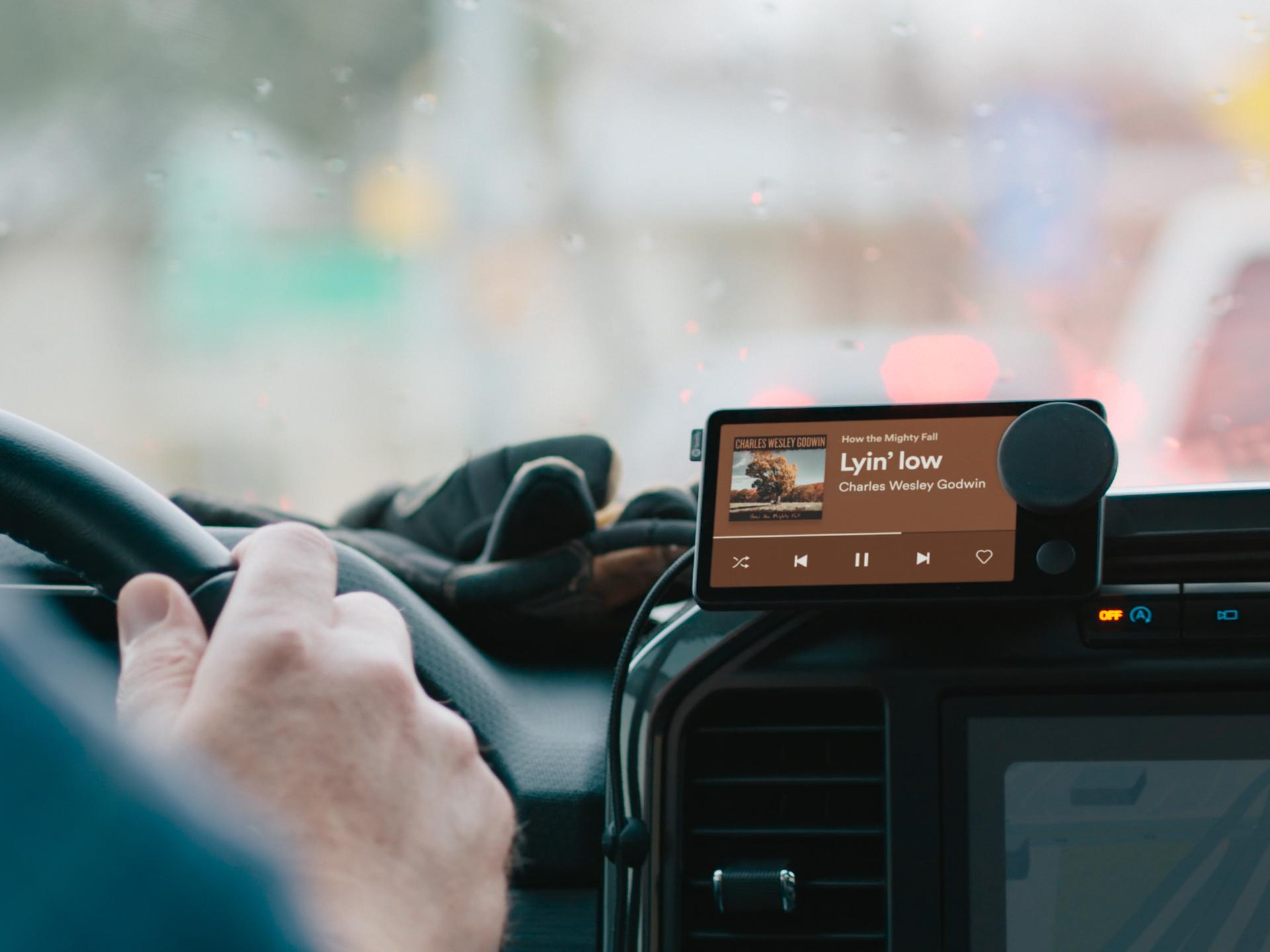
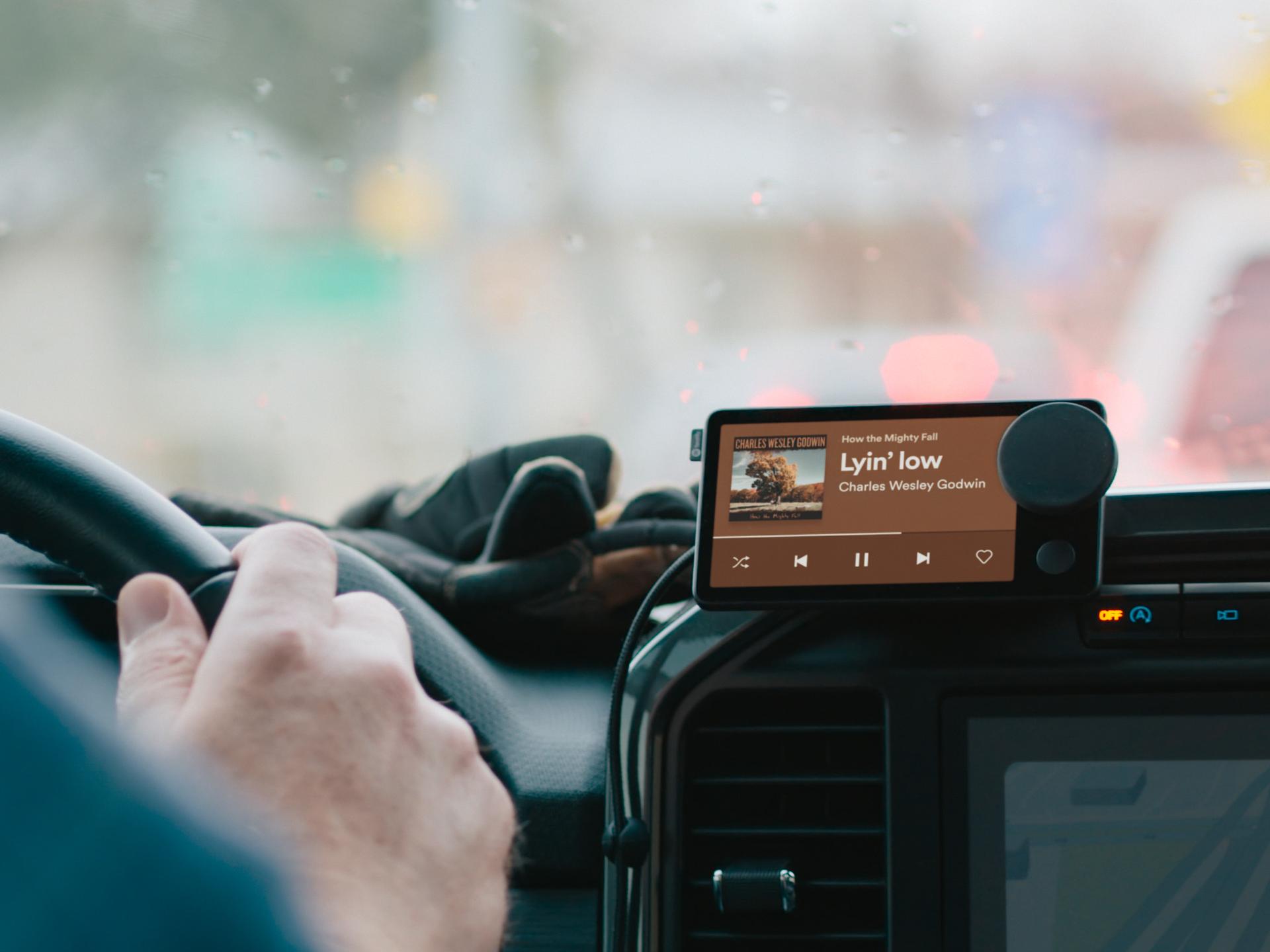
Owners of Spotify's soon-to-be-bricked Car Thing device are begging the company to open-source the gadgets to save some the landfill. Spotify hasn't responded to pleas to salvage the hardware, which was originally intended to connect to car dashboards and auxiliary outlets to enable drivers to listen to and navigate Spotify.
Spotify announced today that it's bricking all purchased Car Things on December 9 and not offering refunds or trade-in options. On a support page, Spotify says:
We're discontinuing Car Thing as part of our ongoing efforts to streamline our product offerings. We understand it may be disappointing, but this decision allows us to focus on developing new features and enhancements that will ultimately provide a better experience to all Spotify users.
Spotify has no further guidance for device owners beyond asking them to reset the device to factory settings and “safely” get rid of the bricked gadget by “following local electronic waste guidelines.”
For the second time in five years, Dawson’s Market has announced that it’s going out of business. At the end of June. For real this time. Dawson’s, which opened in 2012 as an original anchor of Rockville Town Square, had a tough time turning a profit and closed its doors in the fall of 2018. A few months later, longtime manager Bart Yablonsky purchased the store and reopened it. Every year since 2019, Dawson’s has received $400,000 in taxpayer-funded grants to keep itself afloat. But the five-year grant program has run its course — and it looks like Dawson’s has too. This will be the fourth closing at Rockville Town Square since December, following the departures of Town Square Jewelers, Èkó House and Knits Etc.Morguard, the Canadian developer that bought the Square from Federal Realty in 2022, says good news is on the horizon but won’t provide details. In the meantime, rumors are flying that Dawson’s might be replaced by Aldi. But who knows? Stay tuned to Store Reporter for the latest.
Enlarge / Ticketmaster advertisements in the United States v. South Africa women's soccer match at Soldier Field on September 24, 2023 in Chicago, Illinois. (credit: Getty Images | Daniel Bartel/ISI Photos/USSF)
The US government today sued Live Nation and its Ticketmaster subsidiary in a complaint that seeks a breakup of the company that dominates the live music and events market.
The US Department of Justice is seeking "structural relief," including a breakup, "to stop the anticompetitive conduct arising from Live Nation's monopoly power." The DOJ complaint asked a federal court to "order the divestiture of, at minimum, Ticketmaster, along with any additional relief as needed to cure any anticompetitive harm."
The District of Columbia and 29 states joined the DOJ in the lawsuit filed in US District Court for the Southern District of New York. "One monopolist serves as the gatekeeper for the delivery of nearly all live music in America today: Live Nation, including its wholly owned subsidiary Ticketmaster," the complaint said.
As new diabetes and weight-loss drugs help patients curb appetites and shed pounds, food manufacturers are looking for new ways to keep their bottom lines plump.
Millions of Americans have begun taking the pricey new drugs—particularly Mounjaro, Ozempic, Wegovy, and Zepbound—and millions more are expected to go on them in the coming years. As such, food makers are bracing for slimmer sales. In a report earlier this month, Morgan Stanley's tobacco and packaged food analyst Pamela Kaufman said the drugs are expected to affect both the amounts and the types of food people eat, taking a bite out of the food and drink industry's profits.
"In Morgan Stanley Research surveys, people taking weight-loss drugs were found to eat less food in general, while half slashed their consumption of sugary drinks, alcohol, confections and salty snacks, and nearly a quarter stopped drinking alcohol completely," Kaufman said. Restaurants that sell unhealthy foods, particularly chains, may face long-term business risks, the report noted. Around 75 percent of survey respondents taking weight-loss drugs said they had cut back on going to pizza and fast food restaurants.
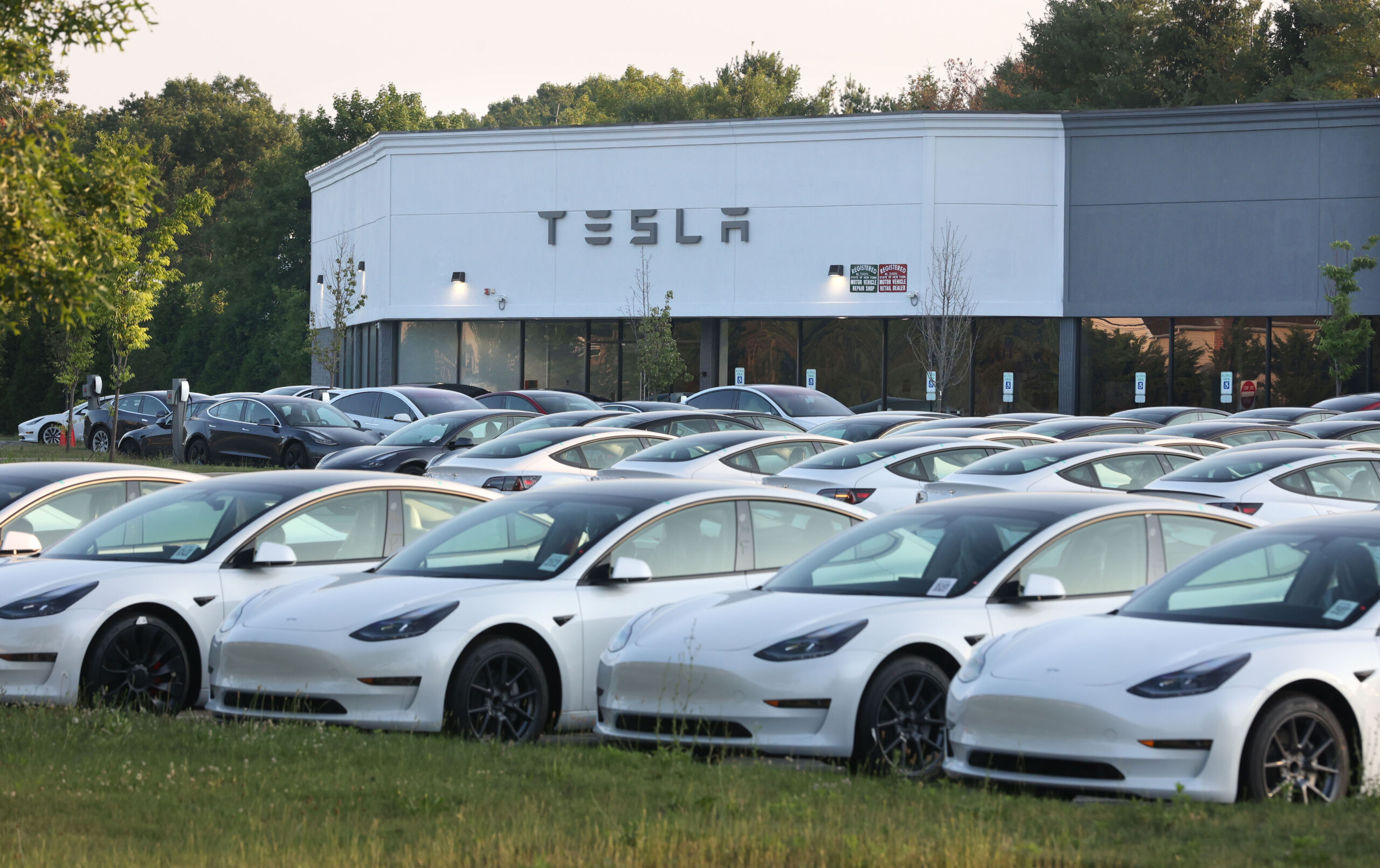
Enlarge / Tesla sold 1.2 million Model Y crossovers last year. (credit: John Paraskevas/Newsday RM via Getty Images)
For at least a decade, a car theft trick known as a “relay attack” has been the modern equivalent of hot-wiring: a cheap and relatively easy technique to steal hundreds of models of vehicles. A more recent upgrade to the radio protocol in cars' keyless entry systems known as ultra-wideband communications, rolled out to some high-end cars including the latest Tesla Model 3, has been heralded as the fix for that ubiquitous form of grand theft auto. But when one group of Chinese researchers actually checked whether it's still possible to perform relay attacks against the latest Tesla and a collection of other cars that support that next-gen radio protocol, they found that they're as stealable as ever.
In a video shared with WIRED, researchers at the Beijing-based automotive cybersecurity firm GoGoByte demonstrated that they could carry out a relay attack against the latest Tesla Model 3 despite its upgrade to an ultra-wideband keyless entry system, instantly unlocking it with less than a hundred dollars worth of radio equipment. Since the Tesla 3's keyless entry system also controls the car's immobilizer feature designed to prevent its theft, that means a radio hacker could start the car and drive it away in seconds—unless the driver has enabled Tesla's optional, off-by-default PIN-to-drive feature that requires the owner to enter a four-digit code before starting the car.
I met Raqib Naik, a journalist who had fled his native India, at a coffee shop in suburban Maryland. We sat at the same metal table where he once discussed the prospect of his assassination with FBI agents.
Naik is a Muslim from Jammu and Kashmir, India’s only Muslim-majority state. In August 2019, Prime Minister Narendra Modi revoked the state’s longstanding self-determination rights and temporarily imposed martial law. Indian officials arbitrarily detained thousands of Kashmiris, including many journalists. Through it all, Naik did his best to convey the reality in Kashmir to the outside world — a firsthand account of what was really going on in what’s often termed “the world’s largest democracy.”
On August 15, 10 days after the crackdown in Kashmir began, Naik received the first of three visits from Indian military intelligence officers who interrogated him about his reporting. The harassment forced him underground; he eventually fled to the United States in the summer of 2020.
But Modi wouldn’t let him go that easily.
In September 2020, an Indian military official sent Naik a message saying “i have invited your father for a cup of tea.” In November 2020, a second intelligence officer said he too had contacted Naik’s father, vowing that he and Naik would “meet in person” even though Naik had moved to America. While traveling in another country in June 2022, Naik received an anonymous text message saying “you are being tracked and will be prosecuted.” He flew back to the US as quickly as possible.
Naik has also received a torrent of hateful messages and threats on social media. When Naik met with the FBI to discuss his safety in October 2023, they told him that they were taking the situation very seriously.
Naik, who continues to track human rights abuses in India, received his green card in February. When he called his family to share the good news, his father revealed that, a few months earlier, he had been summoned to a military camp and interrogated about his son’s activities.
At one point, the officer suggested to Naik’s father that his son should write nicer articles about India.
India’s plot against America
I have spent the past several months investigating stories like Naik’s: critics of India who say the Indian government has reached across the Pacific Ocean to harass them on American soil.
Interviews with political figures, experts, and activists revealed a sustained campaign where Narendra Modi’s government threatens American citizens and permanent residents who dare speak out on the declining state of the country’s democracy. This campaign has not been described publicly until now because many people in the community — even prominent ones — are too afraid to talk about it. (The Indian government did not respond to repeated and detailed requests for comment.)
Why I wrote this
While doing other India reporting, a US-based expert told me they were afraid of speaking too freely about India’s democratic backsliding — lest the government go after their family members in India. This is authoritarian behavior: the kind of thing you’d never expect a purported democracy like India to do. So I wanted to find out if this is something that really happens. It turned out that it very much was — and what I had heard was just the tip of the iceberg.
India’s efforts include a handful of high-profile incidents, most notably an assassination plot against American and Canadian activists. But more commonly, India engages in subtle forms of harassment that fly under the public radar.
An American charity leader who spoke out on Indian human rights violations saw his Indian employees arrested en masse. An American journalist who worked on a documentary about India was put on a travel blacklist and deported. An American historian who studies 17th-century India received so many death threats that she could no longer speak without security. Even a member of Congress — and vocal critic of the Modi regime — said she was concerned about being banned from visiting her Indian parents.
“I’m always thinking about the impact on my family — for example, if there was some attempt to not allow me back into India,” says Rep. Pramila Jayapal (D-WA).
In some ways, the Indian campaign is more brazen than Russia’s meddling in the 2016 election. While no evidence has emerged that Russia threatened harm against American citizens and their family members, India has been caught doing so repeatedly.
And while Russian involvement in the 2016 election swayed few votes, there’s good reason to believe India’s campaign is working as intended — muting stateside criticism of India’s autocratic turn under Modi and his Bharatiya Janata Party (BJP).
An American academic warned me that they couldn’t speak openly about India out of concern for family. An American think tank expert described numerous examples of censorship and self-censorship at prominent US institutions. These two sources, and many others, would only share their personal stories with me anonymously. All were concerned about the consequences for their careers, their loved ones, or even themselves — and they weren’t alone.
“Indian Americans who are against the BJP, or oppose the BJP, have been intimidated and as a result routinely engage in self-censorship. I have heard them say as much to me,” says John Sifton, the Asia advocacy director at Human Rights Watch. “There are prominent Indian American intellectuals, writers, [and] celebrities who simply will not speak out against Modi because they are afraid that by doing so they will subject themselves to a torrent of online abuse and even death threats.”
India’s willingness to go after critics outside its borders — a practice political scientists call “transnational repression” — is a symptom of this democratic decline.
Most sources told me that Indian harassment of Americans began in earnest after Modi took office in 2014, with most reported incidents happening in the past several years (when the prime minister became more aggressively authoritarian at home). Modi, a member of a prominent Hindu supremacist group since he was 8 years old, seems to believe he can act on the world stage in the same way he behaves at home.
Despite the brazenness of India’s campaign — attacking Americans at home in a way that only the world’s worst authoritarian governments would dare — the Biden administration is putting little pressure on Modi to change his ways. Judging New Delhi too important in the fight against China, the US government has adopted its own unstated policy of avoiding fights with India over human rights and democracy.
India has concluded it has a green light to threaten American citizens and conduct violent influence operations on American soil with impunity. And Modi is all but openly bragging about it.
“Today, even India’s enemies know: This is Modi, this is the new India,” the prime minister said at an April rally. “This new India comes into your home to kill you.”
Modi’s “new India”
India was founded in 1947 as a secular democracy, with formal equality of all citizens enshrined in its constitution. But even before then, the Rashtriya Swayamsevak Sangh (RSS) had begun laying the groundwork for an alternative Hindu nationalist state. Narendra Modi has been a part of this fight since 1958, when he first got involved in his town’s RSS branch.
The RSS’s ideology, called Hindutva, holds that India must be a state principally for Hindus. It treats non-Hindus, especially Muslims, as foreign imports at best and invading forces at worst. The BJP is the RSS’s political wing, and it has worked extensively to bring the Indian state in line with Hindutva principles.
Making this dream into reality has been the purpose of Modi’s political career. Since becoming prime minister, he’s proven remarkably adept at it. The revocation of Kashmir’s autonomous status, and the subsequent crackdown that swept up Raqib Naik, is just one of many Hindutva victories during his tenure.
Transforming India into a Hindu state is not easy. Many of the mechanisms of Indian politics, including its protections for political dissent and independent judiciary, gum up the works of Modi’s ideological revolution. For this reason, the Hindutva push has been accompanied by a multi-pronged assault on Indian democracy designed to ensure that the BJP will be able to wield power unmolested.
Modi’s crackdown on the free press and other critics has been especially harsh. Indian police have arrested journalists on charges ranging from terrorism to tax fraud. Foreign journalists are not immune; in February 2023, authorities searched two of the BBC’s India offices after the network aired a documentary critical of Modi (authorities claimed the search was part of an income tax investigation). The government also corrals free speech in more subtle ways, like using state power to consolidate media control in the hands of friendly billionaires.
These policies have placed India’s election on decidedly uneven terrain. While Modi will likely stop short of stuffing the ballot box, the BJP’s undemocratic advantages, paired with the prime minister’s deep popularity among the Hindu majority, leaves little doubt that he will win reelection when all the votes are counted next month.
This is the context for India’s turn toward global repression: A government successfully silencing domestic critics is revealing its authoritarian ambitions extend well beyond India’s borders.
“Most transnational repression is carried out by authoritarian states,” says Tom Carothers, the co-director of the Carnegie Endowment’s program on democracy, conflict, and governance. “If you’re engaging in this kind of systematic repression, where you’re going after families of independent civic or political actors, you’re no longer a government that respects freedom.”
The deported American
In 2022, Angad Singh was finally returning to India. Or so he thought.
An American member of the Sikh religious community, Singh grew up frequently visiting his grandparents in India. As an adult, he began a career reporting on the country; he was in India working on a documentary for Vice in February 2020 when the Covid-19 pandemic forced him to return to America indefinitely. Once travel became safe and legal, he tried to return to visit his grandmother, a cancer patient who had nearly died after contracting the coronavirus.
In theory, Singh should have had no trouble entering India. He held a special legal status called Overseas Citizen of India (OCI), which meant that he had a right to visit India on personal business.
But when Singh landed in New Delhi, he was stopped at customs. A security guard escorted him into a room marked “deportation cell,” where border police interrogated Singh — assuring him that if he cooperated, he’d be able to get through.
This was a lie. Within four hours, Singh was back on a plane to New York. At no point during his ordeal did Indian officials ever explain why he was being deported.
So Singh did what any reporter would do: he started digging. He made phone calls, sent letters and emails to the Indian government, filed a lawsuit — anything to try to understand why he couldn’t see his sick grandmother. In an affidavit filed as part of his court case, an Indian official revealed the truth. Singh had been banned at the request of the Indian consulate in New York, which (falsely) accused him of lying about his reasons for entry to India and of producing “blatant anti national propaganda to defame the country.”
This could only be a reference to the Vice documentary he was working on back in 2020. Titled India Burning, the 15-minute feature reported on the dangerous rise of Hindu nationalism in Modi’s India. Singh had only played a minor role in its production: his name isn’t in the film’s onscreen credits or listed on its IMDB page. The New York consulate decided that even this small fish needed frying, and effectively stripped his OCI status without notification or any semblance of due process.
How India terrifies its American critics
Angad Singh is hardly the only American citizen to experience this kind of targeted repression. In fact, there is an entire playbook — ranging in severity from travel bans to outright murder plots — that the Indian government uses against its American critics. The sheer breadth of India’s efforts amount to strong evidence of a policy: that the BJP government is engaging in a coordinated top-down effort to silence criticism in the States.
“We believe this is systematic,” says David Curry, a former leader of the US government’s nonpartisan Commission on International Religious Freedom. “These are the actions not simply of [an aspiring] dictator, but of a political system that is being used to harass and perhaps harm citizens in another country,”
One plank is an extensive global online network, including both official BJP entities and aligned non-governmental organizations, that engage in persistent and vicious cruelty against Modi’s critics abroad.
Understanding India’s anti-democratic backslide
India is the world’s largest democracy — but that democracy is in peril. Narendra Modi, the sitting prime minister and favorite to win the country’s current national election, has pushed authoritarian measures. Check out these stories for more:
In December, the Washington Post published an investigation into an American group called Disinfo Lab, an allegedly independent organization that “was set up and is run by an Indian intelligence officer to research and discredit foreign critics of the Modi government.” (Disinfo Lab denied any government ties). Disinfo Lab conducts extensive research on its American targets, spinning conspiracy theories that paint them as secret agents of Pakistan or billionaire George Soros. Its posts are amplified by BJP officials and US-based Hindu nationalist advocacy groups, like HinduPACT, that bill themselves as more benign organizing groups for American Hindus.
Falling into this network’s crosshairs can be terrifying.
Audrey Truschke, a historian of South Asia at Rutgers University, came under fire in 2016. Her “offense” was publishing a manuscript on Aurangzeb, a 17th-century Muslim king of India, whom the BJP claims was a vicious persecutor of Hindus. Truschke’s research suggested that Aurangzeb did not target Hindus on the basis of religion, but rather killed people of all religions equally. Such a dispute might seem academic. But it cuts to the core of the BJP’s argument that Muslims in India were historically hostile to Hindus and, as such, deserve to be repressed today.
Since then, she has received death and rape threats — including one sent from a Rutgers phone number. When we spoke, she told me that she has stopped advertising talks she gives on India for fear of “the Hindu right showing up.” More than once, she has required armed security at her public events.
Travel bans are another powerful tool, as losing the ability to visit India can be both personally and professionally devastating to those living abroad.
In February, Indian journalist Vijayta Lalwani found that Angad Singh’s case was one of many where foreigners were blacklisted — documenting over 100 instances of the Modi government revoking OCI status. Her reporting suggested “a pattern of punitive action for criticising Modi, his government or its policies,” one in which “Indian embassies and consulates are increasingly tasked with monitoring and stopping those who criticise or even tweet against Modi.”
American critics without OCI status can simply be denied entry visas. In a March report, Human Rights Watch documented seven cases of foreign critics being denied entrance — some of whom had regularly traveled to India for years.
A third kind of repression involves the type of threats against family members and loved ones in India directed against Raqib Naik.
Stateside members of religious minorities the BJP marginalizes at home, including Muslims like Naik or Sikhs like Singh, are some of the most frequent targets. The Sikh Coalition, an American civil rights advocacy group, told me that they had “confirmed” numerous cases of targeted harassment in India directed against family members of American Sikhs. The Indian government is especially concerned about foreigners who support creating an independent Sikh nation, called Khalistan, in what’s currently the Indian state of Punjab.
According to Harman Singh, the coalition’s executive director, this harassment tends to follow political engagement, like involvement in organizations and protests that criticize the Indian government. Targets were not only journalists and activists, but also ordinary people who had posted something critical of India on Facebook or Twitter/X. None of the victims would agree to speak on the record, for fear that they’d be painting a bullseye on their backs.
“There’s a level of concern that [American Sikhs] have — that, if anything about me comes out in terms of concerns about this, it’s going to lead to ramifications for my family,” Singh told me.
Several years ago, an American leader of a charity who operated in India made some critical comments about India’s human rights record at a public forum in the US. The next day, the leader said, a number of his organization’s Indian employees were arrested on dubious kidnapping charges.
The charity’s leader did not offer direct proof that the arrests were politically motivated, other than the suspicious timing and lack of evidence substantiating the charges. Like many others I spoke with, they insisted on anonymity — fearing more retaliation from the Indian government.
“I don’t really want to draw attention to my organization,” they said, “because we still have a lot of work we do there.”
The final tactic, one even more severe than arresting employees and families, is assassination of critics abroad.
Prior to last year, the idea of India killing American citizens on American soil might have sounded absurd. But in the fall of 2023, both the Canadian government and a US Justice Department indictment alleged that Indian government agents had attempted to assassinate Sikhs living in North America. While federal agents disrupted the American plot, a Canadian citizen was killed by (alleged) Indian agents. The Modi government has denied involvement in both cases, but evidence — including reporting from the Washington Post and the Intercept —suggests they were deeply involved.
Since then, the level of fear has only risen. Several sources said fears of assassination have increased in the Indian diaspora, especially among Sikhs. Both the Canadian and American targets were pro-Khalistan activists; the Justice Department indictment suggested that there may have been more Sikh Americans in India’s crosshairs.
“If Sikhs are not safe on American soil, where are we actually safe to express our views?” Harman Singh asks, summarizing fears in his community.
When you put all of these stories together, a clear picture emerges. The Indian government has developed a repertoire of tactics for repressing criticism abroad, and is currently deploying all of them as part of a campaign of intimidation in the United States. Human rights activists, experts, and Indian American community organizers are aware of India’s efforts and speak of its campaign as an everyday concern for themselves and people they know.
Which means it’s probably working.
“Everyone is absolutely terrified”
Measuring self-censorship is a difficult thing. But there is no doubt that it is happening.
During previous reporting on India, I spoke to a US-based academic who cautioned that they couldn’t be fully open during our conversation. This person, who studies India professionally, was afraid to speak candidly about Modi’s record on human rights and democracy for fear of government retaliation.
“While I am keen to chat, my entire family lives in India. So there might be some questions that will be trickier for me to answer,” the professor told me.
Among the people who shape the American debate on India — like academics and think-tank experts — India’s transnational repression has created a general and widespread climate of fear. This dread shapes the conversation in the media and in Congress, meaning that neither Americans nor their representatives are hearing the full and unvarnished truth about what’s happening in an increasingly important alliance.
Some of this is visible from the outside. Major think tanks, including ones with staff or projects dedicated to India, do strikingly little work on Indian human rights and democracy, focusing instead on Indian foreign policy and economic issues. Even major events like Modi’s crackdown in Kashmir get relatively scant attention in Washington.
It might make sense for US-based think tanks to focus more on India’s foreign policy, which has more direct effects on the United States. But when you talk to people involved, those willing to speak openly say that priorities are determined at least in part by fear of Indian government retaliation.
“I certainly know colleagues who study India who have told me they have become very careful about how they discuss it,” says Jason Klocek, a senior researcher at the US Institute of Peace who writes about religious freedom in India. “It’s self-policing, and that’s the ultimate aim of [Modi’s] repression.”
Irfan Nooruddin, an economist at Georgetown University, experienced this firsthand.
From 2019 to 2023, he ran the South Asia Center at the Atlantic Council, a prominent DC think tank. His concern about India’s direction under Modi led him to repeatedly organize events drawing attention to its record on democracy and human rights. These events mostly failed to get traction, which Nooruddin blames on fear.
“Anything that was on the record — very, very hard to get people to participate, and very, very hard to get people even to attend,” he tells me.
The situation in academia is better, but not much. Truschke, the Rutgers professor targeted by Hindu nationalists, is one of only a few raising the alarm about what India is doing. Her thinking is that it can’t get much worse for her.
“I speak with a lot of academics, a lot of graduate students thinking about their careers. Everyone is absolutely terrified,” she tells me.
For researchers, the threat of travel bans has an especially powerful chilling effect. “Scholarship requires access. And that access being denied can be devastating for somebody’s career,” Nooruddin says.
Angad Singh’s case is a cautionary tale. When we spoke, he told me that his inability to enter India has destroyed his longstanding ambition to make documentaries about the country. “I put so many eggs in one basket. I guess that’s a lesson learned,” he says. No American who aspires to a career studying India wants to end up in a similar situation.
Singh is now trying to salvage something from the wreckage by compiling other stories like his: filming interviews with Indian Americans who have been harassed by the Indian government. It’s been a frustrating climb, because many of the people he’s interviewed are too afraid to talk about it publicly.
“I ask a question and they say, ‘Brother, turn off the camera.’ And then they tell me everything,” Singh says. “Some of the people I’ve talked to, their stories are insane. [But] they cannot speak because of the safety of their own family back home. That is essentially what keeps the truth from coming out.”
The US needs to say no
On March 13, a nonprofit called the US-India Strategic Partnership Forum hosted an off-the-record meeting with officials from the State and Defense departments handling South Asia. The topic was US-India defense cooperation.
During the Q&A, an attendee asked about the connection between this cooperation and India’s declining democracy: Doesn’t Modi’s autocratic behavior call his reliability as a strategic partner into question?
The State Department official took the question, and answered bluntly. “We don’t talk about India’s democracy,” he said, per another attendee’s paraphrase.
This private admission confirms what has long been obvious: The administration has a policy of letting India get away with anti-democratic behavior. It has decided that American leverage on the issue is limited, and that securing India’s help against China is more important than condemning Modi.
After publication, a State Department spokesperson denied that this was its policy: “We regularly engage with Indian government officials at senior levels on human rights concerns and encourage all countries to promote respect for human rights.” They declined to comment on the record about the March 13 meeting.
For years, David Curry and other leaders of the government’s Commission on Religious Freedom pushed for India to be named a “country of particular concern” — meaning a government that has “engaged in or tolerated particularly severe violations of religious freedom.” The designation opens the door to punitive actions, including sanctions and suspensions of military cooperation (though these can be waived).
There’s little doubt that India under Modi meets that definition. But Secretary of State Antony Blinken, who has ultimate authority on designation, has refused to list India.
When Curry pushes State Department officials, he says they tend to deflect — saying things like (in his summary) “conversation and dialogue needs to be kept open on the topic.” The real reason is that India is too important to America’s plan for containing China.
“[A contact said] the top three priorities for the US government at the moment [were] ‘China, China, China.’ You hear these things all the time,” says Klocek. India’s human rights record “is not going to trump security concerns with China.”
There is a realpolitik case for this approach. Modi’s repression of Muslims and antidemocratic drift is at the heart of his party’s political identity, and even the harshest economic sanctions rarely succeed at changing something so fundamental. Given that India is an essential player in any regional anti-China effort, the administration is making a cold-blooded choice to push democracy and human rights down on the priorities list.
But there’s a middle ground between severing ties with Modi and the current Biden policy of letting him get away with murder (both in a metaphorical and allegedly literal sense). The US can push on some specific issues — such as insisting that US citizens, permanent residents, and their family members are off-limits — without risking a complete collapse of cooperation on China. Making progress on these issues, which directly involve US sovereignty and interests, is a lot easier than changing India’s domestic trajectory wholesale.
Any new policy should start with a series of unconditional demands. No more hauling elderly parents of US residents in for military interrogations. No more intelligence-organized trolling that directs death threats at American citizens. No more politically motivated restrictions on the activity of US scholars, experts, and journalists. And absolutely, without question, no more assassination plots on the North American continent.
“It should be a red line,” says Carothers, the comparative democracy expert.
At present, little is being done on these issues. Even the attempted assassination of an American citizen on American soil did not trigger any kind of punitive measures against India or officials in its intelligence wing. In fact, the Biden administration has even worked to shield India from the PR fallout — leaking information to New Delhi about a Washington Post investigation into the murder plot without the Post reporters’ knowledge or consent.
The White House’s silence helps strengthen the taboo on criticizing India’s human rights record in Washington. Much in the way that Chinese human rights concerns got less attention in Washington when policy toward Beijing was more conciliatory, the Biden administration’s strategic alignment with India sets the tone for many others in DC policy circles.
To change things, the US needs to back up its private pleas with concrete threats. It can start with relatively symbolic moves, like threatening to list India as a “country of particular concern” on religious freedom if it doesn’t leave American Sikhs and Muslims alone.
The US can and should waive the accompanying punitive measures at first. But if India continues to target US citizens and residents, the pressure can be ratcheted up. Such moderate pressure would surely anger India, but likely not enough to give up on strategic coordination against China.
There’s no way to be sure how well this more confrontational approach will work until the United States tries it. But one thing is for sure: The White House’s current India strategy is a double betrayal. It betrays American citizens, who have both a right to speak freely and a right to an honest policy discussion about a major issue of public concern. It also betrays something more fundamental: the idea of America itself.
“The first reason for me moving here … was because of the safety that this country would give to the critics, the journalists, the dissidents,” Raqib Naik told me. “That promise feels completely broken.”
Update, May 22, 4:25 pm ET: This story has been updated with a comment from the State Department.
Correction, May 22, 4:25 pm ET: A previous version of this article said that Angad Singh filed right-to-information requests. He did not file RTI requests, but he sent letters and emails to the consulate and government ministries.
The US Department of Justice has started cracking down on the use of AI image generators to produce child sexual abuse materials (CSAM).
On Monday, the DOJ arrested Steven Anderegg, a 42-year-old "extremely technologically savvy" Wisconsin man who allegedly used Stable Diffusion to create "thousands of realistic images of prepubescent minors," which were then distributed on Instagram and Telegram.
The cops were tipped off to Anderegg's alleged activities after Instagram flagged direct messages that were sent on Anderegg's Instagram account to a 15-year-old boy. Instagram reported the messages to the National Center for Missing and Exploited Children (NCMEC), which subsequently alerted law enforcement.
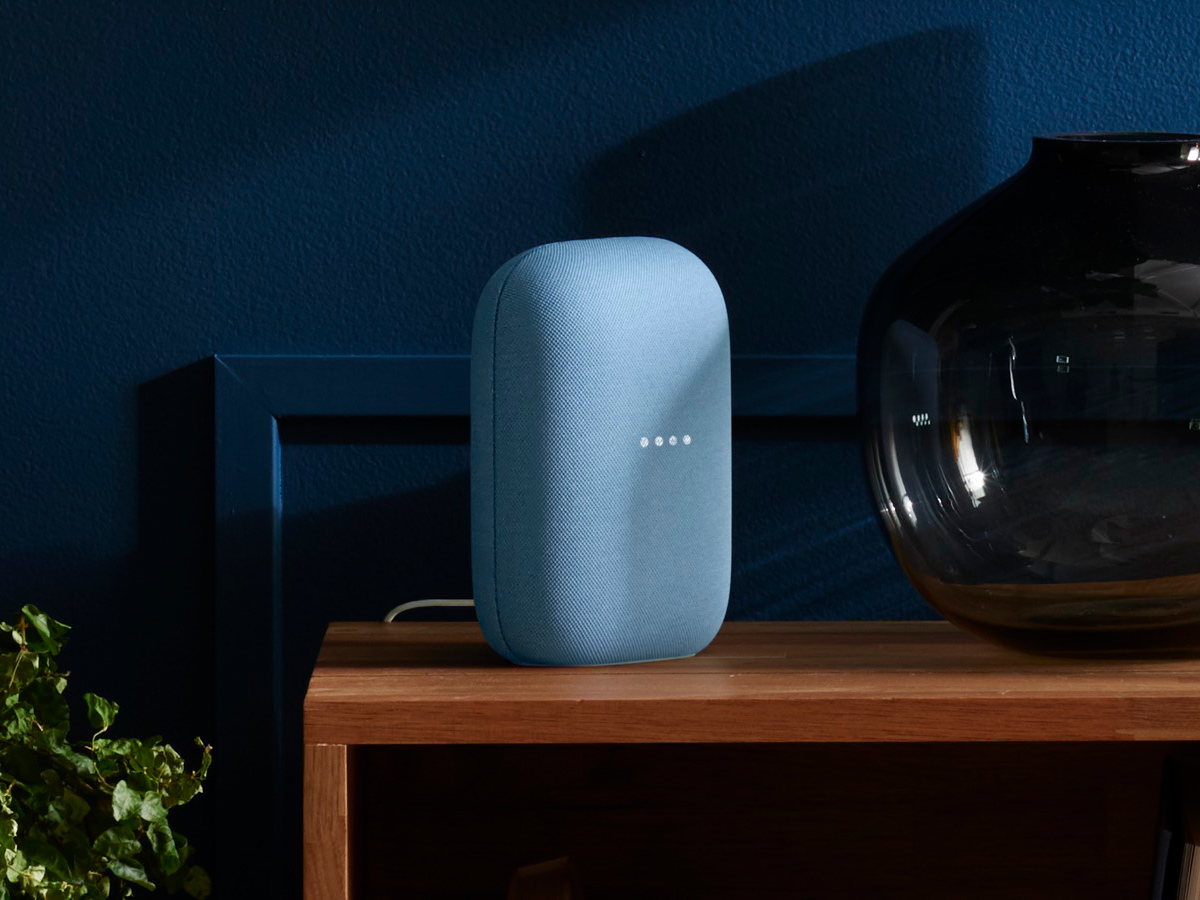
It's unclear how much life is left in the 4-year-old Nest Audio or 8-year-old Google Home speakers, but Google is at least bringing back a feature it stripped away from users after losing a legal case. In 2022, Google lost a patent case brought by Sonos, and rather than pay a licensing fee, Google reached into customer homes and removed the ability to control speaker volume as a group. Some of Sonos' patent wins were thrown out in October 2023, and now Android Authority's Mishaal Rahman reports that the feature is back in Android 15 Beta 2.
Google's "group speaker volume" feature is a fairly simple idea. Several Google Home/Nest Audio speakers can work together to seamlessly play music throughout your entire house, using onboard microphones to fix tricky multi-speaker issues like syncing the audio delay. When you're casting from your phone to a bunch of speakers, it would make sense that you want them all at the same volume instead of one being screaming loud and one being very quiet. While casting, the phone's volume button would control a unified volume bar for all active speakers. When Google killed the feature, the only option for controlling speaker volume from your phone became opening the app and adjusting a slider for each speaker.
Sonos and Google's history with connected speakers has been a contentious one. Sonos' side of the story is that Google got an inside look at its operations in 2013 as part of a sales pitch to bring Google Play Music support to Sonos speakers. Three years later, Google launched its first smart speaker. Sonos claims Google used that access to "blatantly and knowingly" copy Sonos' features for the Google Home speaker line. Google says it developed its smart speaker features independently of Sonos, and for some of Sonos' patents, it had the features shipped to consumers years before Sonos filed for a patent. Some of Sonos' patents were overturned because they were filed in 2019, after everyone had already released all of this smart speaker stuff to market.
WASHINGTON, DC - FEBRUARY 23: U.S. Supreme Court Associate Justice Samuel Alito speaks during the Georgetown University Law Center's third annual Dean's Lecture to the Graduating Class in the Hart Auditorium in McDonough Hall February 23, 2016 in Washington, DC. Moderated by Georgetown Law Dean William M. Treanor, Alito began the conversation talking about his father. (Photo by Chip Somodevilla/Getty Images)
On May 16, the New York Times reported that, during the tense period between the January 6 insurrection and Biden’s inauguration, Justice Samuel Alito’s family displayed an upside-down American flag outside their home. An upside-down flag is a distress signal — a way that soldiers or ships at sea show that they are in extraordinary danger.
Taken in isolation, it’s hard to draw sweeping conclusions from this flag. The Times reports that many supporters of the “Stop the Steal” campaign — former President Donald Trump’s failed effort to overthrow the 2020 presidential election — embraced an inverted American flag to signal their belief that the United States was in grave danger. Alito claims that the flag was raised by his wife “in response to a neighbor’s use of objectionable and personally insulting language on yard signs.”
But this flag is hardly an isolated incident. On the bench, Alito is the Supreme Court’s most unrelenting Republican partisan — a reliable vote for whatever outcome is preferred by the GOP’s right wing, regardless of whether there is any legal support for that position. Alito isn’t simply a bad judge; he is the negation of law, frequently embracing claims that even intellectual leaders within the conservative movement find risible.
The morning before the Times published its flag scoop, for example, Alito published a dissenting opinion claiming that the Consumer Financial Protection Bureau, the brainchild of Democratic Sen. Elizabeth Warren, was unconstitutional. The opinion was so poorly reasoned that Justice Clarence Thomas, ordinarily an ally of far-right causes, mocked Alito’s opinion for “winding its way through English, Colonial, and early American history” without ever connecting that history to anything that’s actually in the Constitution.
Off the bench, meanwhile, Alito has a long history of making partisan statements that are just ambiguous enough that he can deny he was bemoaning a Republican defeat in a recent election. A little more than a week after Democratic President Barack Obama won his 2012 reelection race, Alito spoke to the conservative Federalist Society, where, quoting from one of his least favorite law professors, he warned that America is caught in a “moment of utmost sterility, darkest night, most extreme peril.”
Alito has long been the justice most skeptical of free speech arguments — he was the sole dissenter in two Obama-era decisions establishing that even extraordinarily offensive speech is protected by the First Amendment — but this skepticism evaporates the minute a Republican claims that they are being censored. Among other things, Alito voted to let Texas’s Republican legislature seize control over content moderation at sites like Twitter and YouTube, then tried to prohibit the Biden administration from asking those same sites to voluntarily remove content from anti-vaxxers and election deniers.
Alito frequently mocks his colleagues, even fellow Republicans, when they attribute government policies to anti-Black racism. After Justice Neil Gorsuch wrote in a 2020 opinion that the states of Louisiana and Oregon allowed non-unanimous juries to convict felony defendants more than a century ago to dilute the influence of Black jurors, Alito was livid, ranting in dissent: “To add insult to injury, the Court tars Louisiana and Oregon with the charge of racism.”
Yet while Alito denies that racism might have motivated Louisiana’s Jim Crow lawmakers in the late 19th century, he brims with empathy for white plaintiffs who claim to be victims of racism. When a white firefighter alleged that he was denied a promotion because of his race, Alito was quick to tie this decision to the local mayor’s fear that he “would incur the wrath of … influential leaders of New Haven’s African-American community” if the city didn’t promote more non-white firefighters.
Though Alito, who turned 74 last month, is probably in the twilight of his career, his unapologetically partisan approach to judging could very well be the judiciary’s future, at least if Trump secures another term in the White House.
Today’s headlines are peppered with names like Aileen Cannon, the judge overseeing Trump’s stolen documents trial who has also behaved like a member of Trump’s defense team, or Matthew Kacsmaryk, the former Christian right litigator who’s been willing to rubber stamp virtually any request for a court order filed by a Republican. The United States Court of Appeals for the Fifth Circuit, the powerful federal court that oversees appeals out of Louisiana, Mississippi, and Texas, is now a bastion of Alito-like partisans who treat laws and precedents that undermine the GOP’s policy goals as mere inconveniences to be struck down or ignored.
Alito — a judge with no theory of the Constitution, and no insight into how judges should read ambiguous laws, beyond his driving belief that his team should always win — is the perfect fit, in other words, for what the Republican Party has become in the age of Trump.
Samuel Alito, by the numbers
It’s probably possible to go through any long-serving judge’s record and find opinions that aren’t especially persuasive. So, rather than rely on anecdotal evidence of Alito’s partisanship, let’s start with two empirical analyses of his behavior on the Supreme Court.
Political scientist Lee Epstein examined how often each current justice votes for a defendant’s position in criminal cases. Her data, which was first reported by NBC News, shows a fairly clear partisan divide. All three of the Court’s Democrats voted with criminal defendants in over half of the cases they heard, with former public defender Ketanji Brown Jackson favoring defendants in nearly 4 out of 5 cases. All six of the Court’s Republicans, meanwhile, vote with criminal defendants less than half the time.
But there is also a great deal of variation among the Republicans. Justice Neil Gorsuch, the most libertarian of the Court’s Republican appointees, voted with criminal defendants in 45 percent of cases. Alito, who once served as the top federal prosecutor in the state of New Jersey, is the most pro-prosecution justice, voting with criminal defendants only 20 percent of the time.
Yet Alito’s distrust for criminal defense lawyers seemed to evaporate the minute the leader of his political party became a criminal defendant. At oral arguments in Trump v. United States, the case asking whether Trump is immune from prosecution for his attempt to steal the 2020 election, Alito offered a dizzying argument for why his Court should give presidents broad immunity from criminal consequences.
If an incumbent president who “loses a very close, hotly contested election” knows that they could face prosecution, Alito claimed, “will that not lead us into a cycle that destabilizes the functioning of our country as a democracy?” Alito’s supposed concern was that a losing candidate will not “leave office peacefully” if they could be prosecuted by the incoming administration.
The problem with this argument, of course, is that Trump is a case about a president who refused to leave office peacefully. Trump even incited an insurrection at the US Capitol after he lost his reelection bid.
Similarly, in Fischer v. United States, a case asking whether January 6 insurrectionists can be charged under a statute making it a crime to obstruct an official proceeding, Alito peppered Solicitor General Elizabeth Prelogar with concerns that, if the January 6 defendants can be convicted under this law, that could someday lead to overly aggressive prosecutions of political protesters. At one point, Alito even took the side of a hypothetical heckler who starts screaming in the middle of a Supreme Court argument and is later charged with obstructing the proceeding.
Alito can also set aside his pro-prosecution instincts in cases involving right-wing causes such as gun rights. At oral arguments in United States v. Rahimi, for example, Alito was one of the only justices who appeared open to a lower court’s ruling that people subject to domestic violence restraining orders have a Second Amendment right to own a gun. Indeed, many of Alito’s questions echoed so-called men’s rights advocates, who complain that judges unthinkingly issue these restraining orders without investigating the facts of a particular case.
Consider, as well, a case analysis by Adam Unikowsky, a Supreme Court litigator who previously clerked for conservative Justice Antonin Scalia.
In order to bring a federal lawsuit, a plaintiff must show that they were injured in some way by the defendant they wish to sue — a requirement known as “standing.” Unikowsky looked at 10 years’ worth of Supreme Court standing cases, first classifying each case as one where a “conservative” litigant brought a lawsuit, or as one where a “progressive” litigant filed suit. He then looked at how every current justice voted.
Nearly every justice sometimes voted against their political views — Thomas, for example, voted four times that a conservative litigant lacked standing and twice voted in favor of a progressive litigant. Alito, however, was the exception. In all six cases brought by a conservative, Alito voted for the suit to move forward. Meanwhile, in all 10 cases brought by a progressive, Alito voted to deny standing.
(Unikowsky also found that Justice Jackson, the Court’s newest member, has not yet crossed over in a standing case, but the data includes only one case, where she joined a 6–3 decision by Justice Brett Kavanaugh, a Trump appointee.)
Some of Alito’s standing opinions are genuinely embarrassing. The worst is his dissent in California v. Texas (2021), one of the four cases where Thomas voted to deny standing to a conservative litigant.
Texas was the third of three Supreme Court cases attempting to destroy the Affordable Care Act, President Obama’s signature legislative accomplishment. But even many high-profile Republicans found this lawsuit humiliating. The Wall Street Journal’s editorial board labeled this case the “Texas Obamacare Blunder.” Conservative policy wonk Yuval Levin wrote in the National Review that Texas “doesn’t even merit being called silly. It’s ridiculous.”
As originally drafted, Obamacare required most Americans to pay higher taxes if they did not obtain health insurance. In 2017, however, Congress eliminated this tax by zeroing it out. The Texas plaintiffs claimed that this zero-dollar tax was unconstitutional, and that the proper remedy was that the Affordable Care Act must be repealed in its entirety.
No one is allowed to bring a federal lawsuit unless they can show that they’ve been injured in some way. A zero-dollar tax obviously injures no one, because it doesn’t require anyone to pay anything. And so seven justices concluded that the Texas lawsuit must be tossed out.
Alito dissented. While it is difficult to summarize his convoluted reasoning concisely, he essentially argued that, even if the zero-dollar tax did not injure these plaintiffs, they were injured by various other provisions of Obamacare and thus had standing.
This is simply not how standing works — a litigant cannot manufacture standing to challenge one provision of federal law by claiming they are injured by another, completely different provision of federal law. As Jonathan Adler, one of the architects of a different Supreme Court suit attacking Obamacare, wrote of Alito’s opinion, “standing simply cannot work the way that Justice Alito wants it to” because, if it did, “it would become child’s play to challenge every provision of every major federal law so long as some constitutional infirmity could be located somewhere within the statute’s text.”
Alito’s Texas opinion, in other words, would allow virtually anyone to challenge any major federal law, eviscerating the requirement that someone must actually be injured by a law before they can file a federal lawsuit against it. Needless to say, Alito does not take such a blasé attitude toward standing when left-leaning litigants appear in his Court. But, when handed a lawsuit that could sabotage Obama’s legacy, Alito was willing to waive one of the most well-established checks on judicial power so that he could invalidate the keystone of that legacy.
Alito’s jurisprudence of white racial innocence
In a 2005 speech explaining why he opposed Chief Justice John Roberts’s confirmation to the Supreme Court, then-Sen. Obama explained how he thinks judges actually decide difficult cases. While “95 percent” of cases can be resolved solely by looking at neutral legal principles, Obama said, “adherence to precedent and rules of construction and interpretation will only get you through the 25th mile of the marathon” in the especially challenging cases that come before the Supreme Court.
In those hardest cases, Obama argued, “that last mile can only be determined on the basis of one’s deepest values, one’s core concerns, one’s broader perspectives on how the world works, and the depth and breadth of one’s empathy.”
One might think that empathy, which means the capacity to understand the thoughts, feelings, and experiences of another person, would be an essential quality in anyone tasked with judging other people. But Republicans later latched onto Obama’s statement as evidence that his judicial appointees would decide cases based on feelings and vibes, instead of law. As Sen. Chuck Grassley (R-IA) said in 2016, “the President’s idea of what’s appropriate for justices to consider is totally at odds with our constitutional system. We are a government of laws and not a government of judges.”
Alito’s jurisprudence, however, displays neither the universal empathy touted by Obama nor the kind of mechanical application of legal principles imagined by Grassley. Instead, Alito engages in selective empathy, often mocking the concerns of left-leaning litigants while simultaneously being extraordinarily protective of conservatives. And this selective empathy is most obvious in Alito’s decisions involving race.
Alito lashes out at his colleagues when they accuse white lawmakers — even, in one case, white lawmakers in the Jim Crow South — of racism. Yet he showed tremendous empathy for the firefighter who claimed to be a victim of anti-white discrimination.
Indeed, one of the unifying themes in Alito’s race cases is his desire to write a presumption of white racial innocence into the law — and especially into American voting rights law.
Consider, for example, Alito’s majority opinion in Abbott v. Perez (2018), where the Court’s Republican majority rejected a claim that Texas’s GOP-friendly congressional maps were an illegal racial gerrymander.
In 2011, the Texas legislature drew maps that never took effect, and that were eventually declared an illegal gerrymander by a federal court. Because of the legal challenges to these maps, the state legislature drew alternative maps in 2012 that were supposed to be used only in that year’s election. Though much of these interim 2012 maps closely resembled the illegal 2011 maps, a court allowed Texas to use them in the 2012 election because otherwise the state would not have been able to conduct the election at all.
Then, in 2013, the Texas legislature passed a new law converting the 2012 stopgap maps into permanent maps, meaning that they would be used until the next census in 2020. The state legislature did so, moreover, despite the fact that many of the districts in these new maps were still being challenged as unlawful racial gerrymanders.
Alito’s opinion in Perez, however, cut most of these challenges off. He reasoned that “the 2013 Legislature’s intent was legitimate” because the decision to convert the interim maps into permanent maps was not driven by racism. Rather, it was driven by a desire to “bring the litigation about the State’s districting plans to an end as expeditiously as possible.”
Alito’s argument, in other words, was that the 2013 maps were permissible because they were enacted to shut down a lawsuit challenging a racial gerrymander. It’s as if the school districts that were declared unlawfully segregated in Brown v. Board of Education (1954) had simply passed a new law re-creating the same racially segregated schools that existed before Brown was decided, and then argued that the new law should be upheld because it was enacted to end a lawsuit challenging segregation.
Consider, as well, Alito’s majority opinion in Brnovich v. DNC (2021), a case asking whether two Arizona election laws that allegedly had a disproportionate negative impact on nonwhite voters violated a 1982 amendment to the Voting Rights Act.
In rejecting this claim, Alito simply made up a bunch of new limits on the Voting Rights Act that appear nowhere in the law’s text. He declared, for example, that state laws which purport to fight voter fraud are presumptively legal. He also applied a strong presumption that any voting restriction that was commonplace in 1982 does not violate the 1982 amendment to the Voting Rights Act.
This later presumption is completely ridiculous. The only reason why Congress enacts any law is because it wants to change the status quo. If Congress enacted a new voting rights law in 1982, that means that Congress was unsatisfied with the state of voting rights in 1982 and wanted to change it — not to preserve restrictions that were commonplace at the time.
As Justice Elena Kagan wrote in her Brnovich dissent, Alito’s opinion “mostly inhabits a law-free zone.”
Alito’s selective concern about the First Amendment
Earlier this month, Alito delivered the commencement address at Franciscan University, a Catholic school in Ohio. Much of his speech echoed the sort of anti-“cancel culture” rhetoric that can be heard on any given episode of Sean Hannity’s Fox News show.
“Troubled waters are slamming against some of our most fundamental principles,” Alito told the graduates, echoing similar rhetoric that he used to describe the reelection of President Obama in 2012. “Support for freedom of speech,” Alito claimed, “is declining dangerously, especially where it should find broadest and widest acceptance.”
Alito’s concern about free speech is a little jarring, because he’s long been the justice least likely to back free speech claims by civil rights plaintiffs. In 2010 and 2011, for example, Alito was the sole dissenter in two importantfree speech cases reiterating the Court’s well-established view that speech is protected by the First Amendment even if it is likely to offend most people.
The justice’s more recent free speech decisions, meanwhile, largely turn on whether the party that wishes to shape public discourse is a Democrat or a Republican.
In 2021, for example, Texas’s Republican legislature enacted a law that effectively seizes control over all content moderation at major social media platforms like YouTube, Twitter, or Facebook. The law was an explicit effort to force these platforms to host right-wing content that they would prefer not to publish. “It is now law that conservative viewpoints in Texas cannot be banned on social media,” Texas Gov. Greg Abbott (R) said when he signed the law.
The law is also comically unconstitutional. The Court held inRumsfeld v. Forum for Academic and Institutional Rights (2006), that “freedom of speech prohibits the government from telling people what they must say.” And it held inMiami Herald v. Tornillo(1974), a publication’s choice to publish or not publish certain content is subject only to the outlet’s “editorial control and judgment,” and “it has yet to be demonstrated how governmental regulation of this crucial process can be exercised consistent with First Amendment guarantees of a free press.”
Yet, when a majority of his colleagues voted to temporarily block this Texas law, Alito dissented, suggesting that Texas’s Republican lawmakers should have more leeway to address “the power of dominant social media corporations to shape public discussion of the important issues of the day.”
Not long after Alito wrote this dissent, however, the Court heard another case, known as Murthy v. Missouri, which involved an unusual order handed down by the far-right United States Court of Appeals for the Fifth Circuit. That order effectively forbade the Biden administration from asking social media companies to voluntarily remove harmful content, such as videos seeking to recruit terrorists or tweets that promote false and potentially dangerous medical advice.
Once again, a majority of Alito’s colleagues voted to block this lower court order. Once again, Alito dissented.
It should be obvious that the First Amendment cannot simultaneously empower a Republican government to force media outlets to change their editorial policies, while also forbidding a Democratic government from asking a media outlet to change what it publishes — unless, of course, you believe that there is one First Amendment for Democrats and a different one for Republicans.
Later in his address to Francisan’s graduating class, Alito had a revealing line about why he believes that freedom of religion is threatened in the United States. “Religious liberty is also threatened,” Alito claimed. Then he warned the graduates that “when you venture out into the world, you may well find yourself in a job, or community or a social setting when you will be pressured to endorse ideas you don’t believe, or to abandon core beliefs.”
This warning blurs an important line between the kind of pressure that can plausibly violate “religious liberty,” and the kind of pressure that is just an ordinary part of living in a pluralistic society.
Alito is correct that, under some circumstances, a worker who is pressured because of their religious beliefs at work may have a viable religious liberty claim. That’s because federal law requires employers to accommodate their employee’s religious beliefs unless doing so would impose an “undue hardship on the conduct of the employer’s business.” So, for example, if a worker’s boss pressured a conservative Catholic employee to sign a statement endorsing the right to an abortion, such pressure would likely violate this worker’s civil rights.
But there is no right to be free from pressure, or even social ostracization, because people in your community or social circles find your religious beliefs abhorrent. If freedom of religion means anything, it must include both the right of a conservative evangelical to believe that gay people are sinful, and the right of everyone else to turn up their nose in disgust at anyone who expresses such a viewpoint.
Yet Alito hasn’t simply argued that conservative Christians have a right not to be shunned for their views, he’s argued that the rights of gay Americans must be diminished in order to protect the feelings of people who oppose those rights. Hence Alito’s argument that Obergefell v. Hodges (2015), the Court’s landmark marriage equality decision, was wrongly decided because “it will be used to vilify Americans who are unwilling to assent to the new orthodoxy.”
Thus, in Samuel Alito’s America, Republicans have the power to control media, while Democrats can’t even ask media outlets to change what they publish. Meanwhile, the rights of historically marginalized groups must be diminished to prevent anyone from speaking ill of those who would marginalize them.
Can Alito be defended?
A 2023 essay by attorney Adam White tries to find a larger intellectual project behind Alito’s jurisprudence, beyond an overarching command that the Republican Party should always win. Alito, White claims, is a “Burkean conservative,” a reference to the 18th-century English conservative Edmund Burke, who is wary of the “dangers of concentrating too much power [in] the hands of elites or elite institutions.”
White argues that Alito seeks to preserve traditional ways of organizing society, and to diminish the power of institutions that can cause the United States to depart from such traditions. As White writes, “when government action — especially the swift and sweeping work of agencies, executives, and courts, rather than legislatures — threatens longstanding traditions or the institutions and communities that keep and transmit them, Justice Alito’s instinct has been to begin with a presumption in favor of defending tradition.”
Alito, for what it’s worth, appears to think of himself very much as White describes him. In his Franciscan speech, for example, Alito argued that the Constitution “guards against improvident change,” both because the document itself is almost impossible to amend, and because it makes it very difficult for the federal government to make law. The framers of the Constitution, Alito claims, “knew that times would inevitably come when people would be tempted to make hurried and unwise changes,” and they believed that the “country’s well-being depended on the ability to resist these temptations.”
But if Alito imagines a country that is slow to change its laws, and one where Congress — and not swifter-moving institutions like the courts or executive branch agencies — are the drivers of policy, this vision appears to wax and wane depending on who is in the White House, and whether a new policy benefits liberals or conservatives.
Consider two cases, both of which involve court decisions that sought to shape US policy.
When a Republican administration sought to end a program created by Democrats, Alito behaved exactly as White describes him — warning about concentrating too much power in the judiciary. Shortly after Trump officials tried to end DACA, Alito wrote in dissent, “one of the nearly 700 federal district court judges blocked this rescission, and since then, this issue has been mired in litigation.” He complained that “the federal judiciary” had effectively prevented Trump from implementing one of his policy goals “during an entire presidential term.”
Three years later, however, one of the nearly 700 federal district court judges blocked a different federal policy. Kacsmaryk, the crusader for the religious right that Trump put on the bench, attempted to ban the abortion drug mifepristone nearly a quarter century after the FDA authorized doctors to prescribe it in the United States. Even on Alito’s very conservative, anti-abortion Court, he was one of only two justices who went along with this attempt to remove a widely available medication from the market by judicial decree.
Or consider Alito’s vote in Trump v. Hawaii (2018), the challenge to Trump’s decision to ban citizens of several Muslim-majority nations from entering the United States. Trump did so, moreover, after bragging on the campaign trail about his plan to enact an unconstitutional ban on Muslims entering the United States if elected president.
Before Trump took office, Alito was often the Court’s most outspoken proponent of an expansive concept of religious freedom, especially in cases involving conservative Christians. But Alito abandoned this concern for religious liberty, as well as any concerns about the executive branch setting policy, in the Hawaii case. Instead, Alito joined an opinion claiming that federal law “exudes deference” to President Trump.
Under President Biden, by contrast, Alito’s been one of the Court’s strongest proponents of the so-called major questions doctrine, a judicially created doctrine that’s been used almost exclusively to strike down policies created by Democratic administrations, and that has no basis in either the Constitution’s text or in any statute. Indeed, Alito’s even wielded this doctrine to strike down Biden administration policies that were unambiguously authorized by federal law.
So let’s dispel this fiction that Alito takes a principled, Burkean approach to the law and the Constitution. Alito does often use the sort of rhetoric that is associated with traditionalist forms of conservatism, but that rhetoric only drives his actual decisions when it leads to the outcome he prefers.
Samuel Alito is one of the worst judges of his generation. He rejects the very basic idea that courts must decide cases based on the law, and not based on their partisan views. He routinely embarrasses himself in oral arguments, and in his published opinions, with legal reasoning that no sensible lawyer can take seriously. And he even tries to distort public debate and silence critics.
But most of all, Alito is one of the most uninteresting thinkers in the country. Here he is, in one of the most powerful and intellectually rigorous jobs on the planet — a philosopher king, presiding over the mightiest nation that has ever existed — and his only big idea is “Republicans should win.”
It should come as no shock to anyone when I say that DC Comics and Marvel both behave in a very aggressive manner when it comes to all things intellectual property. These two companies have engaged in all kinds of draconian behavior when it comes to everything from copyright to trademark. But one thing that somehow escaped my attention all the years I’ve been writing for Techdirt is that those two companies also jointly hold a trademark, granted by the USPTO, for the term “Super Hero,” as well as several variants. You can visit that Wikipedia link to get some of the backstory as to how this all came to be, but, suffice it to say, that the term “super hero,” at this point in history, is obviously generic. Hell, it refers to an entire genre of movies, if nothing else.
Scott Richold’s Superbabies Ltd told a USPTO tribunal, opens new tab that “Super Hero” is a generic term that is not entitled to trademark protection, according to a copy of the petition provided by Superbabies’ law firm Reichman Jorgensen Lehman & Feldberg.
Representatives for DC and Marvel did not immediately respond to requests for comment.
“By challenging these trademarks, we seek to ensure that superheroes remain a source of inspiration for all, rather than a trademarked commodity controlled by two corporate giants,” Superbabies’ attorney Adam Adler said in a statement.
Now, this is all coming about because DC Comics accused Superbabies Ltd. of trademark infringement when it caught whiff of the company’s own attempt to trademark its comic book name. But the idea that the term “Superbabies” or “Super Hero” could be monopolized for any market at all via trademark law is, at this point, absurd. And yet both DC and Marvel have wielded their trademarks many times in the past.
“DC and Marvel claim that no one can use the term Super Hero (or superhero, super-hero, or any other version of the term) without their permission,” the petition said. “DC and Marvel are wrong. Trademark law does not permit companies to claim ownership over an entire genre.”
I would argue that the term wasn’t particularly unique as an identifier back when it was first granted over 100 years ago and certainly isn’t now. When you hear the term, you might think of certain super heroes from either Marvel or DC. Or you might think about the many, many super hero characters out there that are not owned by those companies. The point is that the term is ubiquitous at this point.
Will the USPTO give serious consideration to canceling DC and Marvel’s joint trademark? I’m not sure, but it certainly should.
The very least the auto industry can do is make these transactions clear to car owners, but most of the time they can’t even do that.
Now it looks like the FTC might be considering legal action against the auto industry for lax privacy standards. An FTC blog post indicates that the “connected car” industry has been on the agency’s “radar for years,” and hinted at potential future actions:
“Car manufacturers—and all businesses—should take note that the FTC will take action to protect consumers against the illegal collection, use, and disclosure of their personal data.”
The FTC is being prodded into action by the concerns of Senator Ron Wyden, whose office launched an investigation finding that automakers routinely collect not only driver behavior data but data from connected phones, sell access to a myriad of often dodgy third parties and data brokers, and routinely fail to make any of those transactions meaningfully clear to car owners.
Usually customer acceptance for such monetization of data isn’t buried in your car paperwork; it’s buried in the user agreement connected to automakers’ car apps or road-side assistant apps. This is, it should be noted, the same industry that’s fighting tooth and nail against “right to repair” reforms under the pretense that it just cares a whole lot about consumer privacy and security.
Of course the FTC lacks the resources, staff, and authority (quite by lobbying design) to meaningfully police U.S. tech privacy violations at the scale they’re happening. And even should the FTC take action, any fines would likely comprise a tiny fraction of the money made from non-transparently and haphazardly monetizing drivers’ every fart for the better part of the last two decades.
And whatever fines that do get levied are often reduced further (or eliminated entirely) thanks to multi-year legal fights within an increasingly corrupt court system.
Still, it’s important to try to have standards. It’s what separates us from potatoes.
As Wyden’s office has made clear, the stakes for our corrupt failure to pass baseline privacy laws or regulate data brokers continue to rise. Demonstrated pretty clearly by his office’s recent discovery that a data broker had been selling abortion clinic location data to right wing activists, who then took to targeting vulnerable women with health care disinformation.
But between regulators that have been steadily boxed in by thirty-years of lobbying and corrupt court rulings, and a Congress that’s too corrupt to function, it seems like we’ll be waiting a long time to see meaningful reform on this front. And that reform is only likely to come courtesy of a privacy scandal whose scope and impact we probably can’t imagine.
Enlarge / A Neuralink implant. (credit: Neuralink)
Only about 15 percent of the electrode-bearing threads implanted in the brain of Neuralink's first human brain-chip patient continue to work properly, according to a report from The Wall Street Journal. The remaining 85 percent of the threads became displaced, and many of the threads that were left receiving little to no signals have been shut off.
In a May 8 blog post, Neuralink had disclosed that "a number" of the chip's 64 thinner-than-hair threads had retracted. Each thread carries multiple electrodes, totaling 1,024 across the threads, which are surgically implanted near neurons of interest to record signals that can be decoded into intended actions.
Neuralink was quick to note that it was able to adjust the algorithm used for decoding those neuronal signals to compensate for the lost electrode data. The adjustments were effective enough to regain and then exceed performance on at least one metric—the bits-per-second (BPS) rate used to measure how quickly and accurately a patient with an implant can control a computer cursor.
In this visualization of a flight toward a supermassive black hole, labels highlight many of the fascinating features produced by the effects of general relativity along the way. Produced on a NASA supercomputer, the simulation tracks a camera as it approaches, briefly orbits, and then crosses the event horizon — the point of no return — of a monster black hole much like the one at the center of our galaxy.
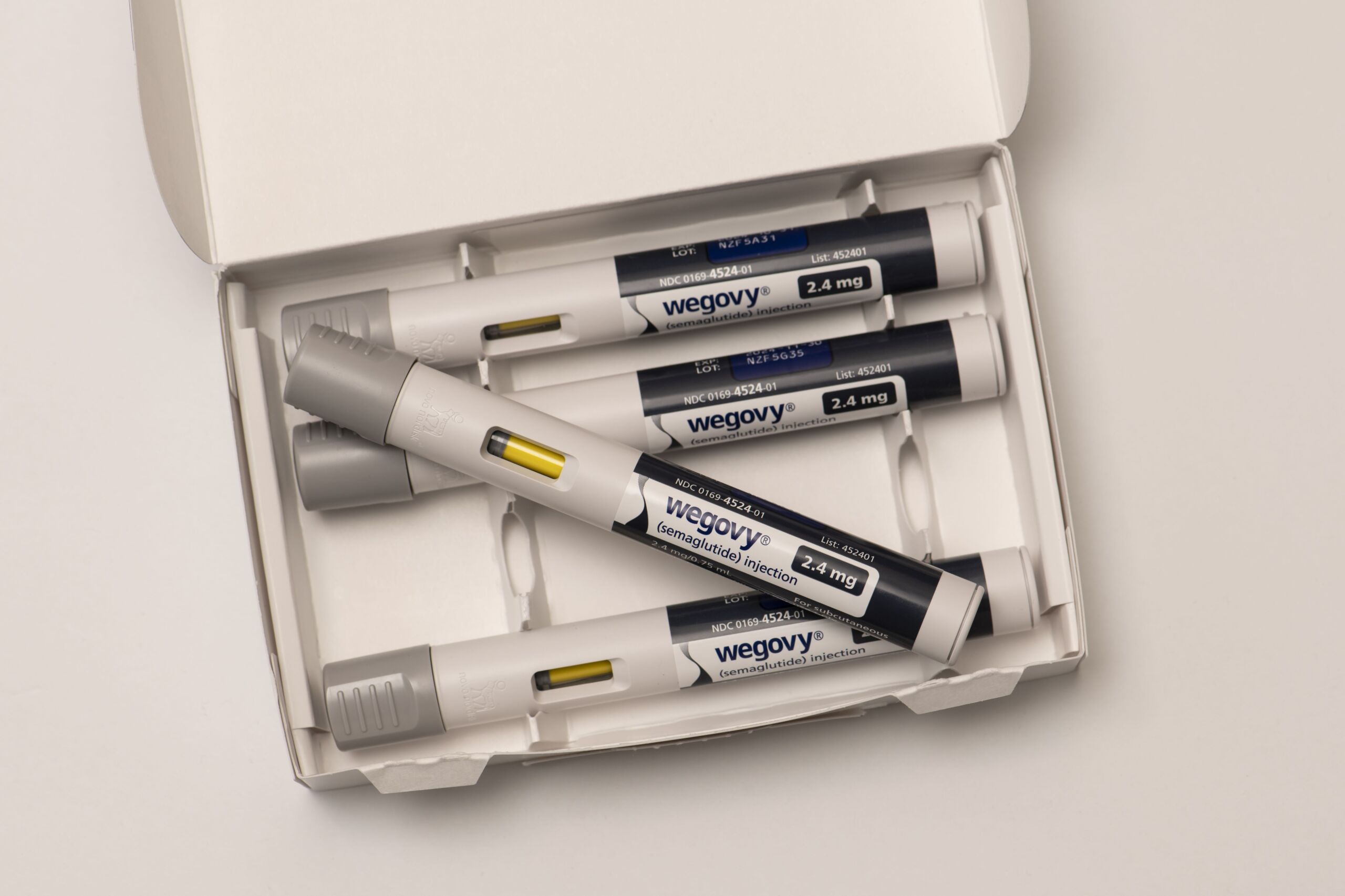
Enlarge / Packaging for Wegovy, manufactured by Novo Nordisk, is seen in this illustration photo. (credit: Getty | Jakub Porzycki)
With the debut of remarkably effective weight-loss drugs, America's high obesity rate and its uniquely astronomical prescription drug pricing appear to be set on a catastrophic collision course—one that threatens to "bankrupt our entire health care system," according to a new Senate report that modeled the economic impact of the drugs in different uptake scenarios.
If just half of the adults in the US with obesity start taking a new weight-loss drug, such as Wegovy, the collective cost would total an estimated $411 billion per year, the analysis found. That's more than the $406 billion Americans spent in 2022 on all prescription drugs combined.
While the bulk of the spending on weight-loss drugs will occur in the commercial market—which could easily lead to spikes in health insurance premiums—taxpayer-funded Medicare and Medicaid programs will also see an extraordinary financial burden. In the scenario that half of adults with obesity go on the drug, the cost to those federal programs would total $166 billion per year, rivaling the programs' total 2022 drug costs of $175 billion.
An Arizona woman has been accused of helping generate millions of dollars for North Korea’s ballistic missile program by helping citizens of that country land IT jobs at US-based Fortune 500 companies.
Christina Marie Chapman, 49, of Litchfield Park, Arizona, raised $6.8 million in the scheme, federal prosecutors said in an indictment unsealed Thursday. Chapman allegedly funneled the money to North Korea’s Munitions Industry Department, which is involved in key aspects of North Korea’s weapons program, including its development of ballistic missiles.
Part of the alleged scheme involved Chapman and co-conspirators compromising the identities of more than 60 people living in the US and using their personal information to get North Koreans IT jobs across more than 300 US companies.
To capture solar energy for use in the evening, batteries have grown in popularity over the last few years, especially in California. For the New York Times, Brad Plumer and Nadja Popovich show the shift with a pair of stacked area charts.
Five years ago, these pair of charts would have been a single animated one.
As the saying goes, “home is where the heart is.” It’s where we spend the most time; it’s your space to be comfortable, where you can truly relax, connect and make memories. Our homes have gotten more helpful with connected products, such as a smart door lock or Nest thermostat. Despite this momentum, it's still too hard to develop for the home.
We are changing all of that. Building on the foundation of Matter, we've re-envisioned Google Home as a platform for developers - all developers, not just those that build smart home devices. Google Home is the destination to create innovative experiences for the home.
Today, we’re announcing the Home APIs and Home runtime. With the Home APIs, app developers can access over 600M devices, Google’s hubs and Matter infrastructure, and an automation engine powered by Google intelligence - all available on both Android and iOS. Here are five things to know:
1. Any developer can now build an experience that works with Google Home.
The home offers a unique opportunity for developers to create seamless and deeper relationships with users, but developing for the smart home is harder than it needs to be. Building for the smart home means integrations with many device makers, operating hubs and Matter fabrics, and operating automations engines driven by intelligent signals.
Whether you build an app specifically for smart home devices or build apps that have nothing to do with the smart home – like a fitness app or delivery app - the Home APIs will let you create app experiences that offer your customers delightful and differentiated experiences on both Android and iOS.
2. Access 600 million connected devices from your app
The new Device and Structure APIs let you access over 600M devices with a single integration. Control and manage the devices already connected to Google Home, such as Matter light bulbs or the Nest Learning Thermostat, whether at home, or on the go. You can build a complex app to manage any aspect of a smart home, or simply integrate with a smart device to solve pain points - like turning on the lights automatically before the food delivery driver arrives.
The Home APIs have been designed with privacy and security in mind, leveraging industry standard best practices. Users are always in control and need to explicitly grant access to their structure and smart home devices before an app can access it. And they can easily revoke access at any time from the Google Home app. To ensure quality experiences, developers who adopt the Home APIs must pass certification before launching their app.
The Device and Structure APIs provide all of the foundational building blocks to create a smart home experience.
The new Commissioning API lets you setup Matter devices in your app or the Home app or directly with Fast Pair on Android, without the need to create a new Matter fabric, saving you time and resources.
The Commissioning API provides all of the customer experience to set up a Matter device.
3. Automate with Google’s unique intelligence about the home
As people add more devices to their home, it becomes challenging to make them all work in unison. Over the past year, we have added new signals and allowed those with advanced skills to script their home using generative AI. With the new Automation API, you can create and manage home automations in your app, using Google Home’s new automation engine and intelligent signals.
Automations can be triggered by device signals from the home such as occupancy events from motion sensors, mode changes from appliances, or media events from a smart TV. For example, Yale is using the Automation API to turn on the foyer lights when the front door is unlocked at night. Automations can also use Google’s intelligence signals like home and away, which fuses together signals from devices across the home to create a more accurate presence detection.
The Automations API provides all of the tools for creating and managing automations.
4. Expanding hubs for Google Home to the TV
A hub for Google Home is a device that enables remote access and local control of their Matter devices across Wifi and Thread. The Home APIs use the network of hubs for Google Home to control Matter devices whether the user is in the home or away.
Later this year, we’re upgrading our hubs and introducing the Home runtime, so other devices, including Chromecast with Google TV, select panel TVs with Google TV running Android 14, or higher and eligible LG brand TVs will also become hubs for Google Home.
Home APIs make controlling lights and switches locally over a hub feel snappy. We are adopting these APIs in the Google Home app, and our early tests show device control operating up to three times faster than before. Developers using the Home APIs can see faster and more responsive local control in their apps as well.
5. Delightful new experiences from a diverse set of apps
We are working with a broad range of brands across lighting, security, automotive, energy, and entertainment to build seamless smart home experiences that help get more usefulness from the smart home.
Partners from every major smart home category are building on the Home APIs.
Here are how some of our first partners are using the Home APIs:
ADT’s new Trusted Neighbor will revolutionize the universal practice of “giving a trusted neighbor a key to your home,” enabling users to easily grant secure and temporary access to their homes for neighbors, friends or helpers.
LG will enable millions of TVs to be hubs for Google Home, allowing seamless control of devices from any app built using Home APIs. You will also be able to use the ThinQ mobile app or the Home Hub on the LG TV to control devices.
Eve Systems will bring their experience to Android for the first time and build helpful automations like lowering the blinds when the temperature drops at night.
Google Pixel is bridging the digital and physical worlds so that bedtime mode can not only dim your screen, but can also automatically dim your bedroom lights, lower the shades and lock the front door.
And this is just the beginning. With the Home APIs, a workout app could keep you cool while you are burning calories by turning on the fan before you begin working out. Or a vacation rental app could make sure that the lights are on and the temperature is just right when a guest arrives. With the Home APIs, now anyone can bridge digital experiences and physical devices.
Sign Up to Build with the Home APIs
Do you have a great idea or feature that you'd like to build into your app with the Home APIs? Tell us about it and join the waitlist for access to the Home APIs or Home runtime. We will expand access on a rolling basis and the first apps built on the Home APIs will come to the Play Store and App Store starting this fall. Learn more about what’s included in the Home APIs from our I/O session on the Google Home Developer Center.
The Federal Trade Commission's Office of Technology has issued a warning to automakers that sell connected cars. Companies that offer such products "do not have the free license to monetize people’s information beyond purposes needed to provide their requested product or service," it wrote in a blog post on Tuesday. Just because executives and investors want recurring revenue streams, that does not "outweigh the need for meaningful privacy safeguards," the FTC wrote.
Based on your feedback, connected cars might be one of the least-popular modern inventions among the Ars readership. And who can blame them? Last January, a security researcher revealed that a vehicle identification number was sufficient to access remote services for multiple different makes, and yet more had APIs that were easily hackable.
Later, in 2023, the Mozilla Foundation published an extensive report examining the various automakers' policies regarding the use of data from connected cars; the report concluded that "cars are the worst product category we have ever reviewed for privacy."
Enlarge / Top: a look through the past 2,000 years of summertime temperatures, showing that 2023 is considerably warmer than anything earlier. Bottom: a bell curve of the typical temperatures, showing that the hot outliers are all recent years. (credit: Esper, Torbenson, and Büntgen)
Starting in June of last year, global temperatures went from very hot to extreme. Every single month since June, the globe has experienced the hottest temperatures for that month on record—that's 11 months in a row now, enough to ensure that 2023 was the hottest year on record, and 2024 will likely be similarly extreme.
There's been nothing like this in the temperature record, and it acts as an unmistakable indication of human-driven warming. But how unusual is that warming compared to what nature has thrown at us in the past? While it's not possible to provide a comprehensive answer to that question, three European researchers (Jan Esper, Max Torbenson, and Ulf Büntgen) have provided a partial answer: the Northern Hemisphere hasn't seen anything like this in over 2,000 years.
Tracking past temperatures
Current temperature records are based on a global network of data-gathering hardware. But, as you move back in time, gaps in that network go from rare to ever more common. Moving backward from 1900, the network shrinks to just a few dozen land-based thermometers, almost all of them in Europe.
North Dakota, South Dakota, Montana, and Minnesota are among the earliest states to receive air quality warnings this week. Those alerts are a signal that it’s unhealthy for people, particularly vulnerable populations like children and the elderly, to go outside due to the pollution in the air.
The greatest hazards of wildfire smoke come from fine particulate matter that it carries, like soot, also known as PM 2.5 for its size. Because they’re so small, these pollutants can travel into people’s lungs and bloodstreams, making breathing more difficult and exacerbating other health conditions from asthma to chronic pulmonary problems. Hazardous gasses and chemicals in the smoke like carbon monoxide and benzene can also endanger people’s health.
Health authorities encourage people to stay indoors if possible when they receive severe air quality warnings and to take serious precautions if they need to go outside. Below are some steps to keep in mind — and ways to protect yourself — while navigating this upcoming wildfire season.
Check the air quality index
The first step is checking the Air Quality Index, or AQI, which is run by the Environmental Protection Agency (EPA). People can visit AirNow.gov, and enter their location in order to see what the air quality is like in their neighborhood.
The AQI rates air quality on a scale of 0 to 500, with 0 being the least hazardous and 500 being the most. It also breaks the rating down into six color categories, with green representing the healthiest level of air quality and maroon representing the most dangerous. These calculations are based on the pollutants the EPA detects in the air, including the concentrations of ozone, particulate matter (PM 2.5), carbon monoxide, sulfur dioxide, and nitrogen dioxide.
Any rating of 50 or below indicates that the air is good quality, while any rating higher than 300 signals that the air poses a risk to everyone, according to the agency. The various categories in between those extremes detail who is more at risk as the air quality worsens: For example, sensitive groups could experience negative health effects once the AQI is higher than 100.
If an area experiences a heavy concentration of wildfire smoke, the state government typically issues an air quality warning to make people aware of the risks. In Minnesota this week, the state issued an air quality alert to signal that the air would reach the red AQI category — which is a rating between 151 to 200 — and be hazardous for all people.
Purchase an indoor air filter and recirculate air
When the local Air Quality Index indicates the outside air could be hazardous, people should stay indoors as much as they can.
“The outdoor levels are reduced by anywhere from 20 percent to 50 percent just coming indoors,” Steven Chillrud, a research professor at Lamont-Doherty Earth Observatory of Columbia University, told NY1 in 2023.
Experts urge people to close doors and windows to keep the smoke out. They should also put their air conditioning unit on the “recirculation” function if possible, so that it doesn’t bring in air from outside. People can even put wet towels under their windows and doors to provide another barrier to smoke coming in.
In addition, scientists say people can purchase portable HEPA air filters for their homes, which will further clean the air of particulate matter that might get inside a house or apartment.
Limit time and activity outside
For people who have to go outside, including for work and other urgent reasons, experts say they should try to limit their time outdoors. (Employers can help by curbing the amount of time employees need to spend outside or reschedule tasks.)
The American Lung Association encourages people to keep outdoor exposures to under 30 minutes if the AQI is high. “The chances of being affected by unhealthy levels of air pollution increase the longer a person is active outdoors and the more strenuous the activity,” the Association notes.
Per a CBS News report, people are safe to go outside if the AQI is 100 or below, but ratings higher than that could require more precautions.
Wear a mask
When the AQI is high, people can protect themselves by wearing a mask like a well-fitted KN95 or N95. Those can filter out some particulate matter, while a P100 mask is seen as the most effective option because it can keep out the finest particles. Cloth and surgical masks, however, won’t be as effective.
Individuals with heart and lung conditions should also be especially careful because they could experience the worst health effects from wildfire smoke.
“People with asthma and people who already have lung disease or underlying lung problems — it can exacerbate that, it can irritate that. And if the air quality is bad enough, it can even cause some symptoms of feeling unwell and respiratory symptoms in people who are healthy,” Stephanie Widmer, a member of ABC News’ Medical Unit, previously said.
Enlarge / Wegovy is an injectable prescription weight-loss medicine that has helped people with obesity. (credit: Getty | Michael Siluk)
A large, long-term trial of the weight-loss medication Wegovy (semaglutide) found that people tended to lose weight over the first 65 weeks on the drug—about one year and three months—but then hit a plateau or "set point." But that early weight loss was generally maintained for up to four years while people continued taking the weekly injections.
The findings, published Monday in Nature Medicine, come from a fresh analysis of data from the SELECT trial, which was designed to look at the drug's effects on cardiovascular health. The trial—a multicenter, double-blind, randomized, placebo-controlled trial—specifically enrolled people with existing cardiovascular disease who also were overweight or obese but did not have diabetes. In all, the trial included 17,604 people from 41 countries. Seventy-two percent of them were male, 84 percent were white, and the average age was about 62 years old.
Last year, researchers published the trial's primary results, which showed that semaglutide reduced participants' risk of heart attack, stroke, and cardiovascular-related deaths by 20 percent over the span of a little over three years.
A study analyzing Apple, Microsoft, and SpaceX suggests that return to office (RTO) mandates can lead to a higher rate of employees, especially senior-level ones, leaving the company, often to work at competitors.
The study (PDF), published this month by University of Chicago and University of Michigan researchers and reported by The Washington Post on Sunday, says:
In this paper, we provide causal evidence that RTO mandates at three large tech companies—Microsoft, SpaceX, and Apple—had a negative effect on the tenure and seniority of their respective workforce. In particular, we find the strongest negative effects at the top of the respective distributions, implying a more pronounced exodus of relatively senior personnel.
The study looked at résumé data from People Data Labs and used "260 million résumés matched to company data." It only examined three companies, but the report's authors noted that Apple, Microsoft, and SpaceX represent 30 percent of the tech industry's revenue and over 2 percent of the technology industry's workforce. The three companies have also been influential in setting RTO standards beyond their own companies. Robert Ployhart, a professor of business administration and management at the University of South Carolina and scholar at the Academy of Management, told the Post that despite the study being limited to three companies, its conclusions are a broader reflection of the effects of RTO policies in the US.
Back in December, at a wine-drenched Christmas party for a moms group in suburban Maryland, Jessica Jackson got vulnerable. It was deep in the night, and the women were discussing their difficulties—toddlers, divorces—when someone quoted a line from Mean Girls. It shook loose a secret. “Do you want to hear something that sounds like a lie but […]
Long before TikTok histrionics took root, you might recall that numerous members of Congress spent numerous years freaking about another Chinese company: Chinese telecom equipment maker Huawei.
The argument, made without much in the way of public evidence, was that Huawei was systematically using its network gear to spy on Americans at a massive scale. Congress then proposed a solution: it would require that U.S. telecom operators (large and small) rip out all Huawei equipment from their networks at great expense, then replace it with usually more expensive alternatives.
So in early 2020 Congress passed the Secure And Trusted Communications Act effectively banning Huawei from U.S. telecom networks. Congress doled out $1.9 billion to rip out and replace Huawei gear, but it’s estimated to cost around $5 billion to actually complete the effort. But instead of finishing the job, the FCC last week politely pointed out that Congress did nothing.
The costs were significant, but especially for smaller telecoms which may now be forced to withdraw from the program, or shut their networks down entirely without additional funding, the FCC wrote:
“Several recipients have recently informed the Commission that they foresee significant consequences that could result from the lack of full funding, including having to shut down their networks or withdraw from the program. Because Reimbursement Program recipients serve many rural and remote areas of the country where they may be the only mobile broadband service provider, a shutdown of all or part of their networks could eliminate the only provider in some regions.”
So basically Congress freaked out about Huawei (without much public evidence), proposed a very expensive solution to address the problem, didn’t fully fund the program, then basically fell asleep. Their apathy and dysfunction now risks putting some smaller ISPs out of business; ISPs that may be the only broadband provider available in some rural markets. Impressive work all around.
In part because the work of actually doing a coherent job doesn’t much interest an ad-engagement chasing press. The actually daily nitty gritty details of coherent governance isn’t sexy, and (usually) doesn’t get you on cable TV.
It all aptly demonstrates the often-performative nature of Congress’ hysteria over China. They’ll thrash and flail over some perceived Chinese threat to grab headlines and make U.S. competitors (like Facebook or Cisco) happy, throw out some barely workable solution (like say the TikTok ban), then consider their job done. Once the cable networks are no longer interested they’ll just forget about the problem entirely.
Beef cattle stand in a barn at a feedlot in Illinois, on April 5, 2011. | Daniel Acker/Bloomberg via Getty Images
Tyson Foods and the federal government refuse to show their math for a new sustainability label.
One species accounts for around 10 percent of all global greenhouse gas emissions: the cow.
Every few months, like clockwork, environmental scientists publish a new report on how we can’t limit planetary warming if people in rich countries don’t eat fewer cows and other animals. But meat giant Tyson Foods, in conjunction with the United States Department of Agriculture (USDA), has a different solution: “climate-friendly” beef.
Tyson claims that its “Climate-Smart Beef” program, launched last year andsupported with taxpayer dollars, has managed to cut 10 percent of the greenhouse gas emissions from a tiny fraction of its cattle herd. Those cattle are then slaughtered and sold under the company’s Brazen Beef brand with a USDA-approved “climate-friendly” label, which is now for sale in limited quantities but could soon land in your local supermarket’s meat aisle.
It sounds nice — Americans could continue to eat nearly 60 pounds of beef annually while the world burns. But it’s just the latest salvo in the meat industry’s escalating war against climate science, and its campaign to greenwash its way out of the fight for a livable planet.
Show me the math
Tyson’s climate-friendly beef website is full of earnest marketing phrases like this one: “If we’re showing up for the climate, then we’ve got to show our work.” Yet that “work” is nowhere to be found.
Despite requests for transparency from scientists and dogged journalists, Tyson and the USDA haven’t opened up their emissions ledgers, so the program remains a black box.
Tyson and consulting firm Deloitte, which worked on Tyson’s program, both declined interview requests for this story. Where Food Comes From, a private company that audits food labels for animal welfare, safety, and sustainability claims — including Tyson’s “climate-friendly” label — did not respond to an interview request.
Last year, when I asked to see Tyson’s environmental accounting model, the USDA said I’d need to submit a Freedom of Information Act (FOIA) request. The nonprofit organization Environmental Working Group did that — but all 106 pages of the documents it received were heavily redacted to, as the USDA put it, protect “trade secrets.”
Tyson’s sole known supplier for Brazen Beef, Adams Land & Cattle Co., is a sprawling cattle feedlot operation in Nebraska.
Google Maps/Environmental Working Group
An aerial shot of Nebraska-based Adams Land & Cattle Co., Tyson’s sole supplier of its Brazen Beef line.
“I’m not surprised, but I’m concerned,” said Scott Faber, senior vice president of government affairs for the Environmental Working Group. “Where’s the evidence? Where are the receipts?”
“If [Tyson’s] Brazen Beef could carry this claim,” Faber added, then “what’s to stop other companies from making similar claims based on science and other data that’s simply unavailable to all of us?”
The USDA didn’t respond to a request for comment about the FOIA documents.
Tyson also worked with environmental nonprofit juggernauts The Nature Conservancy and Environmental Defense Fund to develop its Climate-Smart Beef program, which the company touts on its website and in advertisements. Environmental Defense Fund said in an email that it integrated its nitrogen emissions model into Tyson’s environmental accounting, while The Nature Conservancy noted that it reviewed and provided recommendations on data used in Tyson’s model but wasn’t otherwise involved in its Climate-Smart Beef program.
Both organizations declined an interview request for this story when it was first published last year. Earlier this year, during interviews for a related story, both groups said companies need to be transparent about their climate goals but stood by their collaboration with Tyson Foods.
What makes beef climate-friendly, according to Tyson Foods
So what exactly does Tyson say its ranchers and farmers are doing to achieve a 10 percent emissions reduction? We can look to their website to get a vague sense, but it helps to first understand how cattle pollute the planet.
The 1.5 billion cows farmed worldwide for cheeseburgers and ice cream sundaes each year accelerate climate change in three main ways: they eat grass and/or grain, like corn and soy, causing them to burp out the highly potent greenhouse gas methane; they poop a lot, which releases the even more potent nitrous oxide, as does the synthetic fertilizer used to grow the grain they’re fed; and they take up a lot of land — a quarter of the planet is occupied by grazing livestock, some of which could be used to absorb carbon from the atmosphere if it weren’t deforested for meat production.
Raphael Alves/Washington Post via Getty Images
Cattle are seen along deforested land on highway BR-319, in the rural city of Humaita in Brazil. Cattle ranching is the leading cause of deforestation in the Brazilian Amazon rainforest.
To achieve a 10 percent emissions reduction, Tyson’s website mentions that grain farmers who supply feed to its cows employ practices like planting cover crops and reduced tillage, which are good for soil health but haven’t been proven to cut emissions. There’s also mention of “nutrient management,” which usually means reducing fertilizer over-application, but no details on emissions savings are provided.
Among other practices, Tyson also lists “pasture rotation,” which entails moving cattle around more frequently with the goal of allowing grass to regrow, which can provide a number of environmental benefits, but many climate scientists are skeptical it can meaningfully reduce emissions.
Matthew Hayek, an assistant professor of environmental studies at New York University who’s written about Tyson’s climate-friendly beef label, told me the methods Tyson is talking about are admirable, but that doesn’t mean the 10 percent reduction claim is justified. Some practices may be good for land stewardship but don’t reduce emissions. For those that can reduce emissions, savings will be marginal.
“These are razor-thin distinctions in a country that already produces meat incredibly efficiently, and our tools are not cut out [to measure] these thin margins,” Hayek said. “You can’t call that [climate-friendly], in any good conscience.”
And because emissions from US cattle operations vary widely, “There’s simply no reliable way to estimate a change in greenhouse gas emissions as small as 10 percent on any one farm — let alone a complex network of them,” Hayek and political economist Jan Dutkiewicz wrote in the New Republic last September.
Tyson’s claims are brazen but unsurprising given how the USDA collaborates with industry. When it comes to animal welfare claims on meat packages, for example, the USDA more or less allows meat producers to operate on an honor system.
Just as important as showing its math is knowing where the starting line for emissions reduction begins. Tyson says it has reduced the carbon footprint of some of its beef by 10 percent, but 10 percent relative to what? What’s the benchmark?
Nobody knows. A 2019 study by the USDA’s Agricultural Research Service and the National Cattlemen’s Beef Association found that the average American steer emits 21.3 kilograms of carbon dioxide-equivalent emissions per kilogram of carcass weight. But in 2021, the USDA approved a low-carbon beef program (unrelated to Tyson) that uses a benchmark nearly 25 percent higher than the 2019 study, as noted by Wired last year.
In September, when asked what benchmark the USDA uses to approve a 10 percent emissions reduction claim, the agency again said I would need to file a FOIA request. In the document it sent to Environmental Working Group, the portion on benchmarks was redacted.
But even if we give Tyson and the USDA the benefit of the doubt, there’s a stubborn truth about beef: It’s so high in emissions that it can never really be “climate-friendly.”
Daniel Acker/Bloomberg via Getty Images
Beef cattle at the Texana Feeders feedlot in Floresville, Texas.
To be sure, the US beef industry has reduced its emissions over the years, and it’s much lower than most countries. But relative to every other food product, beef remains the coal of the food sector.
“Beef is always going to be and always will be the worst [food] choice for the climate,” said Faber of Environmental Working Group, which has also petitioned the USDA to prohibit “climate-friendly” claims on beef products altogether. “And no amount of wishful thinking is going to change that.”
What Tyson’s done here is equivalent to making a Hummer 10 percent more fuel-efficient and calling it climate-friendly — it’s greenwashing, and surveys show that most consumers know far too little about food and climate change to navigate this brave new world of so-called “climate-friendly” meat.
Consumers will be deceived by “climate-friendly” meat claims
Meat and dairy production account for 15 to 20 percent of global greenhouse gas emissions, and leading environmental scientists say we must drastically reduce livestock emissions and eat more plant-based meals. That message, however, hasn’t broken through to the general public, nor to policymakers.
In an online survey conducted last yearin partnership with market research consultancy firm Humantel, Vox polled consumers about which parts of the food sector they think contribute most to climate change. Meat and dairy production came in dead last, even though it’s the top contributor in the list.
In another question, “what we eat” was (incorrectly) ranked as a smaller contributor to extreme weather than refrigerant chemicals, single-use plastics, and air travel.
Most respondents did rank plant-based meat alternatives as more climate-friendly than beef by a decent margin. However, plant-based meat and grass-fed beef were almost tied, even though plant-based meat has a drastically smaller carbon footprint (and grass-fed beef is generally worse for the climate than conventional beef).
Othersurveys have found similar results, demonstrating Americans’ limited understanding of emissions from the food system. Throw “climate-friendly” beef into the mix and consumers are sure to be misled and possibly persuaded that beef can indeed be good for the climate.
However, meat companies could face legal consequences over misleading environmental claims. Earlier this year, New York Attorney General Letitia James sued JBS, the world’s largest meat company, over its claim that it will achieve net zero emissions by 2040. James argued that such a goal was unsubstantiated and unachievable.
Cashing in on consumers’ desire to shop more sustainably — and their misunderstanding of what actually makes food sustainable — could lead to more of what Tyson wants: increased beef consumption after decades of decline and stagnation. That would be a disaster for the climate at a time when the window to act is closing.
The USDA and government agencies around the world know what must be done to slash food emissions. Now they just need to follow the science, resist industry greenwashing, and cut back on the burgers.
Update, May 8, 2024, 2:40 pm: This story, originally published September 8, 2023, has been updated to include documents obtained by Environmental Working Group through a Freedom of Information Act request.
A version of this story was initially published in the Future Perfect newsletter. Sign up here to subscribe!
If you hear a low rumble from the skies between noon and 1 PM this Saturday, look up. You may see some of the more than 50 vintage and modern aircraft expected to fly over the National Mall—considered one of DC’s most restricted flight zones—during an event celebrating general aviation, a broad term that encompasses […]
After reversing its position on remote work, Dell is reportedly implementing new tracking techniques on May 13 to ensure its workers are following the company's return-to-office (RTO) policy, The Register reported today, citing anonymous sources.
Dell has allowed people to work remotely for over 10 years. But in February, it issued an RTO mandate, and come May 13, most workers will be classified as either totally remote or hybrid. Starting this month, hybrid workers have to go into a Dell office at least 39 days per quarter. Fully remote workers, meanwhile, are ineligible for promotion, Business Insider reported in March.
Now The Register reports that Dell will track employees' badge swipes and VPN connections to confirm that workers are in the office for a significant amount of time.

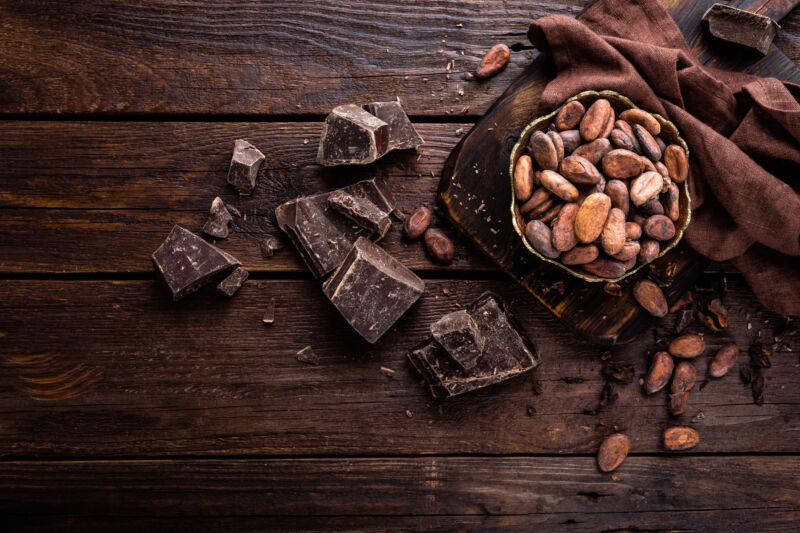
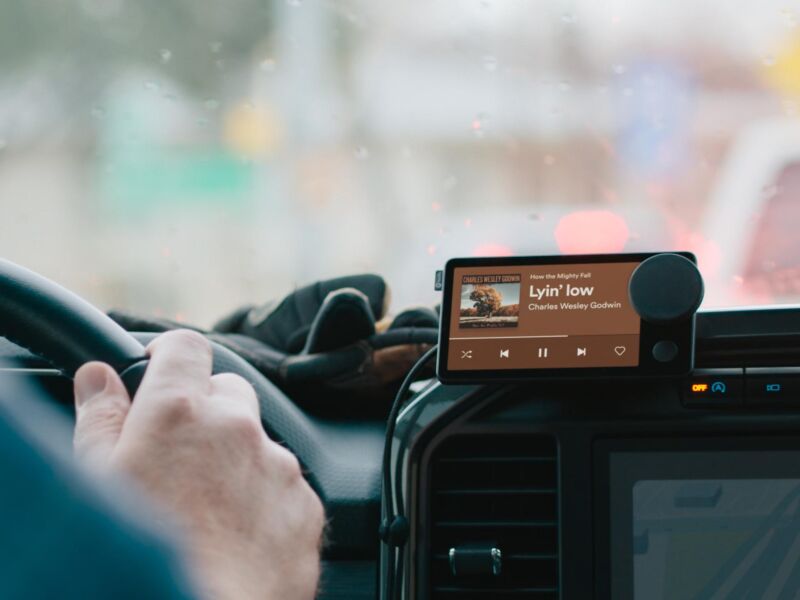


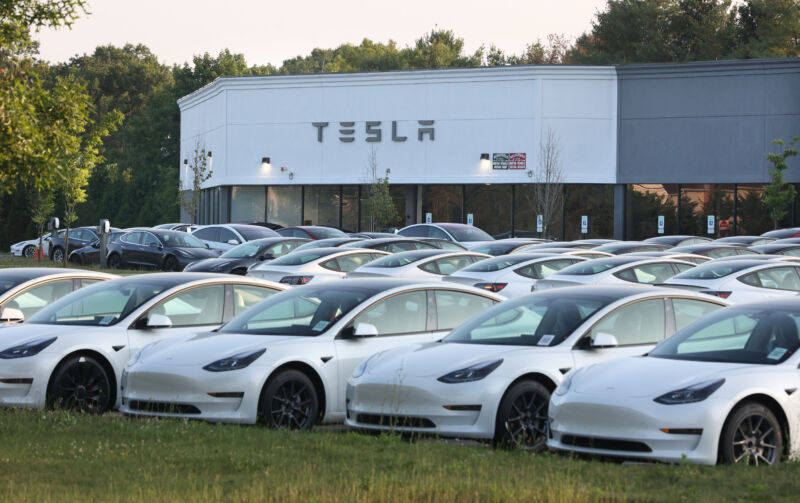









 Posted by Matt Van Der Staay – Engineering Director, Google Home



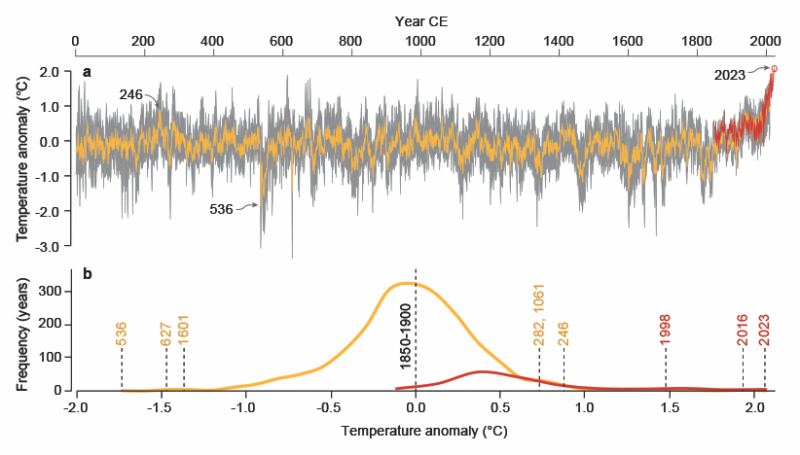

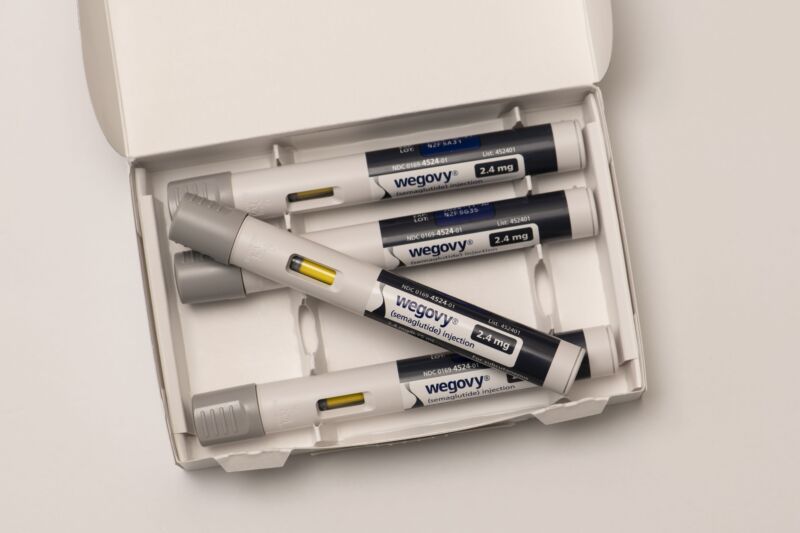



/cdn.vox-cdn.com/uploads/chorus_asset/file/25437170/Untitled.png) Google Maps/Environmental Working Group
Google Maps/Environmental Working Group
/cdn.vox-cdn.com/uploads/chorus_asset/file/24904495/GettyImages_1241296900.jpg) Raphael Alves/Washington Post via Getty Images
Raphael Alves/Washington Post via Getty Images
/cdn.vox-cdn.com/uploads/chorus_asset/file/24904517/GettyImages_1074353738.jpg) Daniel Acker/Bloomberg via Getty Images
Daniel Acker/Bloomberg via Getty Images
/cdn.vox-cdn.com/uploads/chorus_asset/file/24904592/d0lfs_within_the_food_industry_which_of_the_following_contributes_to_worsening_climate_change___1_.png)
/cdn.vox-cdn.com/uploads/chorus_asset/file/24904606/qpapc_how_much_do_you_personally_think_extreme_weather_is_caused_by_the_following___1_.png)
/cdn.vox-cdn.com/uploads/chorus_asset/file/24904602/56z4T_how_much_do_you_think_the_following_foods_are_climate_friendly___1_.png)