Also: Proposed zoning amendment could allow water cremation; public to testify on parking in bikeways
The post County Council to consider ‘unintended consequences’ of gas-powered leaf blower ban enforcement appeared first on Bethesda Magazine.
Also: Proposed zoning amendment could allow water cremation; public to testify on parking in bikeways
The post County Council to consider ‘unintended consequences’ of gas-powered leaf blower ban enforcement appeared first on Bethesda Magazine.
One of the few, small things the US press could do is stop pretending this administration is normal. It isn’t. It’s motivated solely by cruelty and revenge, in service of imposing its will and white Christian nationalist imperatives on the nation, which is nothing less than fascism. So, when President Trump says he’s sending the National Guard to Portland, Oregon to quell an alleged rebellion, the very least the press could do is not bury the lede.
Here’s what Matthew (sorry, that’s all the information I have) pointed out on Bluesky in regards to press coverage of Trump’s latest revenge invasion of a US city:
# of paragraphs for news orgs to mention there’s no discernable need to deploy troops to Portland, Oregon
The Guardian: 1st paragraph
BBC: 4th paragraph
AP: 5th paragraph
Time: 6th paragraph
Politico: 8th paragraph
NPR: 9th paragraph
CNN: 10th paragraph
NBC: 12th paragraph
Fox News: never mentions
That’s why we’re going with the Guardian for more details on Trump’s latest slide down the slippery slope that’s been greased to hell and back by the last bastion of the system of checks and balances: the shadow docket-est Supreme Court to ever hold lifetime positions.
Donald Trump said on Saturday he is deploying troops to Portland, Oregon, “authorizing Full Force, if necessary”, ignoring pleas from local officials and the state’s congressional delegation, who suggested that the president was misinformed or lying about the nature and scale of a single, small protest outside one federal immigration enforcement office.
Trump made the announcement on social media, where he claimed that the deployment was necessary “to protect War ravaged Portland,” and Immigration and Customs Enforcement (Ice) facilities he said were “under siege by antifascists “and other domestic terrorists”.
Oregon’s governor, Tina Kotek, rejected the president’s characterization. “In my conversations directly with president Trump and secretary Noem, I have been abundantly clear that Portland and the State of Oregon believe in the rule of law and can manage our own local public safety needs,” Kotek said at a news conference in Portland on Saturday. “There is no insurrection. There is no threat to national security and there is no need for military troops in our major city.”
Here’s Trump’s nonsensical raving on Truth Social, which seems to pin the responsibility for this latest attempt at martial law on avowed pet killer, Kristi Noem.

At the request of Secretary of Homeland Security, Kristi Noem, I am directing Secretary of War, Pete Hegseth, to provide all necessary Troops to protect War ravaged Portland, and any of our ICE Facilities under siege from attack by Antifa, and other domestic terrorists. I am also authorizing Full Force, if necessary. Thank you for your attention to this matter!
The Secretary of War [SoW] (a.k.a. the day-drinking boss of the US Defense Department) is going to send war troops into “War ravaged Portland” to defend against a “siege” by “Antifa.” Meanwhile, in Portland, this is how things actually look:
A visit by the Guardian to downtown Portland on Saturday morning confirmed that the city is placid, the farmers’ market was packed and the protest against immigration enforcement in an outlying residential neighborhood remained small. There were just four protesters on the sidewalk near the Ice field office Trump claimed was “under siege”. One, wearing a chicken costume and draped in an American flag, held up a sign that read: “Portland Will Outlive Him.” Passing motorists honked in appreciation.
The Trump-loving NY Post claimed “protestors clashed with ICE agents” as Trump’s military/federal officer posse rolled into Portland. And yet, it couldn’t even drum up any photos of the “clash” it declared in its headline, having to settle for pics of the most clash-less protest I’ve ever seen:

The only description of said “clash” involved ICE attacking protesters, rather than the other way around:
An Immigration and Customs Enforcement officer was seen Friday shoving a protester to the ground, according to video footage captured by KATU-TV.
Given all of this, it’s extremely irresponsible for US press outlets to write sentences like this when covering truly alarming government actions, like sending the military into US cities for the sole purpose of stifling dissent. This is CNN doing Trump’s work for him by pretending these martial law-esque efforts are meant to address societal problems, rather than being the politically motivated attacks they actually are:
It’s the latest example of Trump’s willingness to use the military in extraordinary ways as part of his push to reduce crime in American cities.
The New York Times’ coverage is even worse, with this being the second paragraph in the article:
The order was the latest instance of Mr. Trump’s use of the American military on the nation’s streets, after federal troops were sent to Washington last month in an effort to crack down on crime. Federal agents will start arriving in Memphis as early as next week, after the president authorized the use of the National Guard there as part of a similar crackdown.
This has nothing to do with crime and everything to do with Trump expanding his power and taking control of cities simply because they’re run by members of the Democratic party. No similar moves have been made in Republican-run cities, no matter how high their crime rates are.
While I understand some journalists think it’s not their duty to speculate about politicians’ motivations, it doesn’t take much to add sentences into the mix that make it clear there is no factual basis to support this mobilization of the military, while also pointing out that Trump has exclusively targeted Democratic party-run cities with these deployments.
And, for the love of all that is fucking holy, the press could help itself out quite a bit by pointing out that these vengeful acts by the Trump administration target protected First Amendment expression — the ongoing protests of ICE and its actions by residents of cities now swarming with federal officers and National Guard troops. Trump’s going to hate you anyway. The least you can do is fully earn it.
A former NASA astronaut turned US senator has joined with other lawmakers to insist that his two rides to space remain on display in the Smithsonian.
Sen. Mark Kelly (D-Ariz.) has joined fellow Democratic senators Mark Warner and Tim Kaine, both of Virginia, and Dick Durbin of Illinois in an effort to halt the move of space shuttle Discovery to Houston, as enacted into law earlier this year. Kelly flew two of his four missions aboard Discovery.
"Why should hundreds of millions of taxpayer dollars be spent just to jeopardize a piece of American history that's already protected and on display?" wrote Kelly in a social media post on Friday. "Space Shuttle Discovery belongs at the Smithsonian, where millions of people, including students and veterans, go to see it for free."
After years of hyperventilation about TikTok’s impact on privacy, propaganda, and national security, TikTok is likely being sold to a bunch of Trump’s billionaire technofascist buddies who don’t believe in privacy and want to use TikTok to spread right wing propaganda. Bang up job all around, especially to all the befuddled Democrats whose hysteria about the app helped Trump seal the deal.
TikTok’s new owners will include Rupert Murdoch (responsible for creating Fox News, the most effective mass media right wing propaganda platform ever) and Trump bestie Larry Ellison, who is in the process of turning CBS News into basically the same thing via his nepo baby son and Bari Weiss.
Normally you’d want to be a little subtle about the plan to turn TikTok into a pro-Trump and pro-Netanyahu propaganda machine to avoid scaring off customers, but that’s not Trump’s style. So last week he basically just blurted out the whole plan, then insisted he was just “joking”:
“Trump signed an executive order to “save” TikTok, while supposedly joking that he’d like to censor influencers by tweaking the algorithm so that content is “100 percent MAGA.”
“Everyone is going to be treated fairly,” the president added—seemingly covering his tracks as critics warn that TikTok under US ownership could soon carry a right-wing bias, perhaps going the way of Twitter after Elon Musk took over and rebranded it as X.”
Yes, “perhaps.”
From Twitter and the Washington Post to CBS News, the right wing billionaire tendency to buy up major media properties and convert them into right wing propaganda and bullshit machines has not been subtle. Yet, as the framing of this Ars piece makes clear, the press still seems somewhat confused as to whether TikTok will be any sort of reliable source of information (spoiler: it won’t) under far right wing billionaire ownership.
TikTok under Bytedance ownership certainly raised privacy, propaganda, and national security concerns. But under Bytedance the platform at least tried to behave so it could continue operating in the U.S. With Trump having dismantled all our privacy, NatSec, and fraud regulators, the new U.S. ownership of TikTok will see arguably fewer regulatory constraints on their worst impulses than ever.
Murdoch clearly wants a modern media extension of his existing Fox News empire given his core audience is dying off. Ellison, a staunch supporter of Netanyahu and his industrialized mass murder of children, clearly wants to leverage TikTok as a new media extension for whatever fresh hell he and Bari Weiss are building over at CBS. I’d expect ample authoritarian apologia.
To be clear the deal hasn’t been fully finalized yet. It’s still not clear if the deal will meet the legal requirements of the Protecting Americans from Foreign Adversary Controlled Applications Act, especially given there seems to be some ongoing debate over who’ll exactly own the underlying algorithm. There will likely be some opportunities for activists and lawyers to throw sand in the gears.
But make no mistake: if this deal goes through TikTok will absolutely be headed the way of Twitter under Elon Musk. They’ll likely try to leave things much the same for a 6-12 months to pretend that’s not going to be the case, but I suspect that, ultimately, its use for right wing propaganda will be obvious.
Creating an internet full of wall-to-wall racist and corporatist right wing agitprop was always the end game of MAGA’s bogus “Conservative censorship” and “we support antitrust reform now” claims, it was never remotely subtle, and you can’t say you weren’t warned, repeatedly.
You’d like to think that the conversion of TikTok into a far right wing safe space will cause a mass exodus of ethical people off of the platform, but as we’ve seen with Twitter (especially when it comes to journalists’ continued use of a website owned by an overt white supremacist) that’s clearly not really something you can truly rely on.
You’d also like to think that the hijacking of TikTok will create the opportunity for innovators to create a better, more ethical short-form video platform not owned by assholes actively cheering on the destruction of foundational democracy. Here too, time will tell.
Their goal is obvious but as some are quick to point out: their success is far from guaranteed. Remember what happened with Rupert Murdoch and MySpace? AT&T’s attempted domination of video? These sorts of domination plays, especially in mass modern media, never quite go the way rich brunchlords planned, and it’s not like Oracle executives have any sort of serious experience with consumer-facing product success, much less any understanding of modern media.
That said, you’d need to define “success.” The billionaire right wing architects of this new modern era right wing propaganda bullhorn (that may soon be comprised of Fox, CNN, Sinclair, TikTok, Twitter, and countless other media properties) have no limit of money to burn on profit-losing propaganda ventures in a country that just took a hatchet to any remaining financial or consumer protection regulators.
They may never have the competency to actually execute, but given the already extremely shaky status of journalism, the media, and informed consensus, I think emphatic alarmism remains the right response to the grand, unsubtle mass media plans of our shittiest billionaires.
Natalie ShermanBusiness reporter

 Getty Images
Tech billionaire Larry Ellison and his son, Hollywood producer David, have long walked the halls of the world's elite.
But this year, their power has taken on a new dimension, as they pursue deals involving names from TikTok to CNN that would give them control over some of the biggest media companies on the planet.
If the Murdoch name is already known the world over, it may not be long before the Ellisons join them.
Paving the way for the family's ascent is Larry Ellison's relationship with US President Donald Trump, who has blessed the dealings, praising the elder Ellison earlier this year as "an amazing man and amazing business person".
"It's well beyond technology," he said, describing him as "sort of CEO of everything".
In some ways, it's an unlikely path for the Ellisons.
Larry Ellison, 81, made his name mastering the arcane realm of databases and cloud computing, co-founding the software and database company Oracle in 1977.
A giant of the tech world, his fortune, which rests in part on his roughly 40% stake in Oracle, has doubled over the last 12 months, to about $370bn, as the firm takes on a key role building up infrastructure for artificial intelligence.
For a moment this month, he even ranked as the world's richest person, taking the top spot from Elon Musk.
Ellison's extracurricular activity to date has tended to skew toward yachting, tennis, anti-ageing research and buying an island in Hawaii.
But it's his relationship with the president that has drawn the most attention recently.
Known as a Republican megadonor, he hosted a fundraiser for Trump in 2020, though he reportedly did not attend the event and federal records show no public contributions to the president.
Oracle became involved with TikTok during Trump's first term, acting as a host for the app's user data in the US.
Under a deal brokered by the White House, it is now poised to become an investor with an even greater role, in charge of retraining the algorithm that serves up what we see. (Trump has said the Murdochs, a long established media dynasty, could be involved in the deal as well).
Those ties with the administration have also proved useful for his 42-year-old son, David, as he makes moves to become a major media power player.
His first foray into Hollywood, a 2006 movie about World War I pilots that he financed and co-starred in, was a flop.
 Wireimage via Getty
But since founding his own studio, Skydance, in 2010, he has earned a name beyond his dad's billions, producing hit movies such as True Grit, Mission Impossible and World War Z. In 2011, his sister, Megan Ellison, also founded her own production studio Annapurna Pictures, which went on to produce films American Hustle, Her, and Zero Dark Thirty.
Meanwhile, David Ellison pushed Skydance into television, gaming and sports.
But his takeover last month of Paramount, which was backed by his father, marked a significant leap into new territory. Now he's the boss of a sprawling operation with more than 18,000 employees and new challenges, including overseeing one of America's biggest news outlets, CBS.
The acquisition required a blessing from the Federal Communications Commission (FCC), which regulates broadcasting in the US and is led by Trump loyalist Brendan Carr.
The Ellisons are also said to be preparing a bid for Warner Brothers Discovery, home to Looney Tunes, Harry Potter and Superman, as well as HBO and CNN, a combination that would create one of the biggest media giants in the US.
That deal would require sign-off from the government, in the form of clearance from competition regulators.
Larry Ellison and David Ellison did not respond to requests for comment, made via their companies.
 Bloomberg via Getty
But against the backdrop of wider White House pressure on the media, the Ellisons' growing power and ties to Trump have stoked alarm on the left, where critics fear the president's ability to influence news coverage of his administration.
"The Ellison duo taking over both CBS and CNN, as well as controlling a major social media network like TikTok, would be dangerous for democracy. And given their closeness to the Trump regime, that seems to be the point," the media watch group FAIR warned recently.
Senator Elizabeth Warren has called for any Paramount-Warner Brothers tie-up to be blocked, as a "dangerous concentration of power". Other groups have criticised the TikTok deal as a giveaway to allies of the president.
House Democrats last month also said they were launching an investigation to see if Paramount-Skydance had made any commitments to Trump to secure approval, a potential violation of anti-bribery laws.
They noted that just weeks before the deal was approved, Paramount agreed to pay $16m to settle a lawsuit with Trump, who had accused CBS of deceptively editing a Kamala Harris interview to help Democrats.
Trump has also said "the new owners" had promised him millions worth of free advertising or programming.
David Ellison has said Skydance was not involved in the Paramount settlement and his firm is in compliance with anti-bribery laws. But he has ducked questions about a side deal, telling reporters last month: "We're not going to politicise anything today."
He has also already made some changes at CBS, some of which were conditions announced by the FCC when it signed off on the deal.
Those have included appointing Kenneth Weinstein, the former boss of a conservative think tank, as ombudsman to review complaints of bias. The company has also said CBS's political show, Face the Nation, will only air live or unedited interviews, a break with long-established journalistic practice.
"These actions are in line with what the White House has made clear that they want so I think this is really concerning," said Rodney Benson, a media professor at New York University and lead author of the book How Media Ownership Matters.
Speaking to reporters after the merger, David Ellison, whose track record of political giving shows contributions to Democrats last year, said he wanted to avoid being associated with either the left or the right.
"We're an entertainment company first, and I genuinely believe if you're breathing, you're our audience," he said, according to the LA Times. "We want to be in the business of speaking to everybody."
Other executives pushed back on the notion the firm's owners would seek to sway news coverage, with Gerry Cardinale, one of Skydance's partners and the other major investor in the deal with Paramount, calling the idea "bad business".
"The kernel of the entire investment thesis is independence and objectivity. If you can't get your head around that, don't buy it," he said, according to Variety.
"There's no way we're going to try to influence it."
On Wall Street, Paramount's potential tie-up with Warner Brothers Discovery has plenty of fans, as investors see an opportunity to create a studio with the distribution power and library to rival Disney and Netflix.
Analysts noted that David Ellison's background in movie-making and role as chief executive sets him apart from some other tech titans, like Jeff Bezos, who have purchased media publications as a kind of hobby.
But while Ellison has expressed love for the movies - holding on to his mother's collection of VHS tapes as recently as 2022 - he has said little about the news industry.
Analysts said they would be surprised if it were a priority, given its relatively small financial contribution to the overall business. Ellison has also said he is looking to make $2bn in cuts at Paramount.
"I don't view this as something that says 'I want to get bigger into news'," said Ric Prentiss, managing director at Raymond James. "I think this is something that says 'I want to create content'. I don't think news is a strong part of it."
Paul Hardart, director of the entertainment, media and technology programme at New York University's Stern School of Business, said the push to grow suggested the Ellisons were looking to seize the moment.
"Who knows how long they will have the administration's ear?" he said.
After all, when Elon Musk, another mega billionaire and would-be media mogul, tied himself to the Trump administration, that relationship ended up going up in flames.
The Supreme Court pulled off another shadow docket masterpiece this week, granting Trump’s request to keep FTC Commissioner Rebecca Kelly Slaughter fired while simultaneously pretending they haven’t already made up their minds about whether presidents can ignore 90-year-old Supreme Court precedent. What makes this particularly brazen is that the Court is allowing Trump to violate existing law while his challenge to that law is still pending—exactly the opposite of how preliminary relief is supposed to work. It’s a neat trick: use the emergency docket to give Trump exactly what he wants, then schedule oral arguments in December to maintain the fiction that this is all very serious legal deliberation.
As we covered earlier this month, the DC Circuit had the audacity to follow binding Supreme Court precedent when it reinstated Slaughter to her position. The court’s mistake was apparently believing that Humphrey’s Executor v. United States from 1935—where a unanimous Supreme Court told FDR he couldn’t fire FTC commissioners at will—remained good law until explicitly overturned.
Silly lower courts, thinking precedent means something.
The Supreme Court wasted no time correcting this error in judgment, issuing a stay Monday morning with zero explanation, effectively telling Rebecca Slaughter she’s out of a job until the Court gets around to formally trashing nearly a century of precedent sometime after December oral arguments.
Justice Elena Kagan, joined by Justices Sotomayor and Jackson, wasn’t having it. Her dissent cuts right to the heart of what makes this so legally absurd:
On top of granting certiorari before judgment in this case, the Court today issues a stay enabling the President to immediately discharge, without any cause, a member of the Federal Trade Commission (FTC). That stay, granted on our emergency docket, is just the latest in a series. Earlier this year, the same majority, by the same mechanism, permitted the President to fire without cause members of the National Labor Relations Board, the Merits Systems Protection Board, and the Consumer Product Safety Commission.
Kagan points out that Congress explicitly prohibited each of these removals. The FTC Act bars the President from firing commissioners “except for inefficiency, neglect of duty, or malfeasance in office.” Trump fired Slaughter because she’s a Democrat, not because of any of those reasons. Under current law, that’s illegal. Full stop.
But the majority doesn’t care about current law when Trump wants something:
Yet the majority, stay order by stay order, has handed full control of all those agencies to the President. He may now remove—so says the majority, though Congress said differently—any member he wishes, for any reason or no reason at all. And he may thereby extinguish the agencies’ bipartisanship and independence.
The legal principle at stake here is pretty basic: when you’re challenging existing law, you don’t get to ignore that law while your challenge is pending. That’s the whole point of courts being able to issue stays. You maintain the status quo until the court decides whether the law is constitutional.
But apparently that principle doesn’t apply when Donald Trump really, really wants to fire someone:
I dissented from the majority’s prior stay orders, and today do so again. Under existing law, what Congress said goes—as this Court unanimously decided nearly a century ago. In Humphrey’s Executor v. United States, 295 U.S. 602 (1935), we rejected a claim of presidential prerogative identical to the one made in this case. (Indeed, the suit emerged from a discharge at the very same agency.) Congress, we held, may restrict the President’s power to remove members of the FTC, as well as other agencies performing “quasi-legislative or quasi-judicial” functions, without violating the Constitution. Id., at 629. So the President cannot, as he concededly did here, fire an FTC Commissioner without any reason. To reach a different result requires reversing the rule stated in Humphrey’s: It entails overriding rather than accepting Congress’s judgment about agency design. The majority may be raring to take that action, as its grant of certiorari before judgment suggests. But until the deed is done, Humphrey’s controls, and prevents the majority from giving the President the unlimited removal power Congress denied him.
The only thing that’s different from when Humphrey’s Executor was decided is that this Supreme Court apparently thinks Trump should get whatever Trump wants.
The most damning part of Kagan’s dissent is how she calls out the majority for using the emergency docket to reshape constitutional law:
Our emergency docket should never be used, as it has been this year, to permit what our own precedent bars. Still more, it should not be used, as it also has been, to transfer government authority from Congress to the President, and thus to reshape the Nation’s separation of powers.
This gets to something we’ve been tracking all year: the Court’s systematic use of the shadow docket since the inauguration to hand Trump unprecedented power over the federal government. They’re not just breaking precedent—they’re breaking the normal process for breaking precedent.
As Madiba Dennie at Balls and Strikes puts it:
In more and more decisions, the Supreme Court is overruling judges who are literally just applying the law as it is written, and has long been interpreted; Justices Neil Gorsuch and Brett Kavanaugh are even scolding judges for failing to anticipate which precedent the Court will stuff in the garbage next. The justices’ handling of Slaughter is again telling lower court judges not to do as the Court has said, but to do what everyone knows the Court wants to say. And increasingly, what the Court wants to say is, “Whatever Trump wants goes.”
Mark Joseph Stern at Slate captures the broader implications nicely:
It is bad enough that the court is clearly planning to let Trump construct the most submissive executive branch in history by purging his opponents from federal agencies. What’s worse, though, is that the supermajority has ushered in this new era of autocratic presidency over the shadow docket, offering almost no public explanation for its radical moves.
Here’s the thing that’s particularly galling: the Court could have easily said “we’re taking this case and we’ll decide it quickly, but in the meantime, existing law applies.” That would have meant Slaughter keeps her job until they rule (as both lower courts said, following the precedent). Instead, they chose to give Trump exactly what he wants while the case is pending, effectively deciding the case before they’ve heard arguments.
The stay also raises another troubling question. The Court asked the parties to brief whether federal courts can even “prevent a person’s removal from public office” at all. If they rule that courts lack this power entirely, then Trump could fire anyone from any agency and the judiciary would be powerless to stop him, even when the firing clearly violates federal law as per Congress.
As Stern writes, this would complete Trump’s takeover of the administrative state:
Should the supermajority strip courts of this authority, then the Fed’s independence will vanish completely: Even if Trump fires its members illegally, the judiciary will have no ability to put them back in office. It is increasingly difficult to avoid the conclusion that the Supreme Court is dismantling every guardrail that separates democracy from dictatorship.
The DC Circuit got this right in their ruling two weeks ago. They followed binding precedent and put Slaughter back in her job, while acknowledging that the Supreme Court would probably reverse them soon. They did their job—applying the law as it exists, not as they think it might exist after Trump’s Court gets done with it.
But apparently following binding Supreme Court precedent is now grounds for immediate reversal by… the Supreme Court.
The Court will hear arguments in December, and everyone knows how this ends. They’ll almost certainly overturn Humphrey’s Executor, give Trump the power to fire any federal official he wants, and pretend this was all a very serious exercise in constitutional interpretation rather than a predetermined outcome delivered through procedural gamesmanship.
Until then, Rebecca Slaughter remains illegally fired, and the Court’s emergency docket continues to serve as Trump’s personal fast-track to unlimited executive power.
Precedent was nice while it lasted.
The most disturbing part isn’t even that they’re planning to overturn Humphrey’s Executor—it’s that they’re so eager to help Trump that they can’t even wait for the formality of actually doing it.

This is quite a visual story from Reuters. In a comic format, they illustrate and describe the story of travelers tricked at the airport in Thailand. The travelers are abducted and forced into scamming others out of savings, or face consequences.
Tags: comic, illustration, Reuters, scam
The Supreme Court yesterday allowed President Trump to fire a Democratic member of the Federal Trade Commission and will decide whether to overturn a 90-year-old precedent that says the president cannot fire an FTC commissioner without cause.
Trump fired Commissioner Rebecca Kelly Slaughter in March with a notice that said her "continued service on the FTC is inconsistent with my administration's priorities." Trump did so despite the 1935 ruling in Humphrey's Executor v. United States, in which the Supreme Court unanimously held that the president can only remove FTC commissioners for inefficiency, neglect of duty, or malfeasance in office.
An appeals court reinstated Slaughter three weeks ago, with judges finding that "the government has no likelihood of success on appeal given controlling and directly on point Supreme Court precedent." But on September 8, Supreme Court Chief Justice John Roberts granted a stay that temporarily blocked the lower-court ruling against Trump.
On Monday, a judge blocked the Trump administration's latest attempt to stifle the US's nascent offshore wind industry. The ruling allows construction to restart on Revolution Wind, which the Danish company Orsted is building in the waters off Rhode Island and Connecticut. While the preliminary injunction can still be appealed, the project is already 80 percent complete, so construction could potentially wrap up while the case is still pending.
The Trump administration has made no secret of its animosity toward renewable power and issued early executive orders that blocked further offshore leases and re-evaluated the permitting process for others. But it has also gone beyond that and issued stop-work orders for sites that had already been through the permitting process and were under construction. Its reasons for doing so have been remarkably vague, with suggestions of unspecified flaws to the permitting process that involve everything from environmental impacts to detail-free national security concerns.
But those reasons could apparently be ignored under the right circumstances. After blocking further construction of New York's Empire Wind, the administration lifted the block without explaining why its supposed reasons for instituting it no longer applied.
The US Secret Service announced this morning that it has located and seized a cache of telecom devices large enough to "shut down the cellular network in New York City." And it believes a nation-state is responsible.
According to the agency, "more than 300 co-located SIM servers and 100,000 SIM cards" were discovered at multiple locations within the New York City area. Photos of the seized gear show what appear to be "SIM boxes" bristling with antennas and stuffed with SIM cards, then stacked on six-shelf racks. (SIM boxes are often used for fraud.) One photo even shows neatly stacked towers of punched-out SIM card packaging, suggesting that whoever assembled the system invested some quality time in just getting the whole thing set up.
The gear was identified as part of a Secret Service investigation into "anonymous telephonic threats" made against several high-ranking US government officials, but the setup seems designed for something larger than just making a few threats. The Secret Service believes that the system could have been capable of activities like "disabling cell phone towers, enabling denial of services attacks, and facilitating anonymous, encrypted communication between potential threat actors and criminal enterprises."
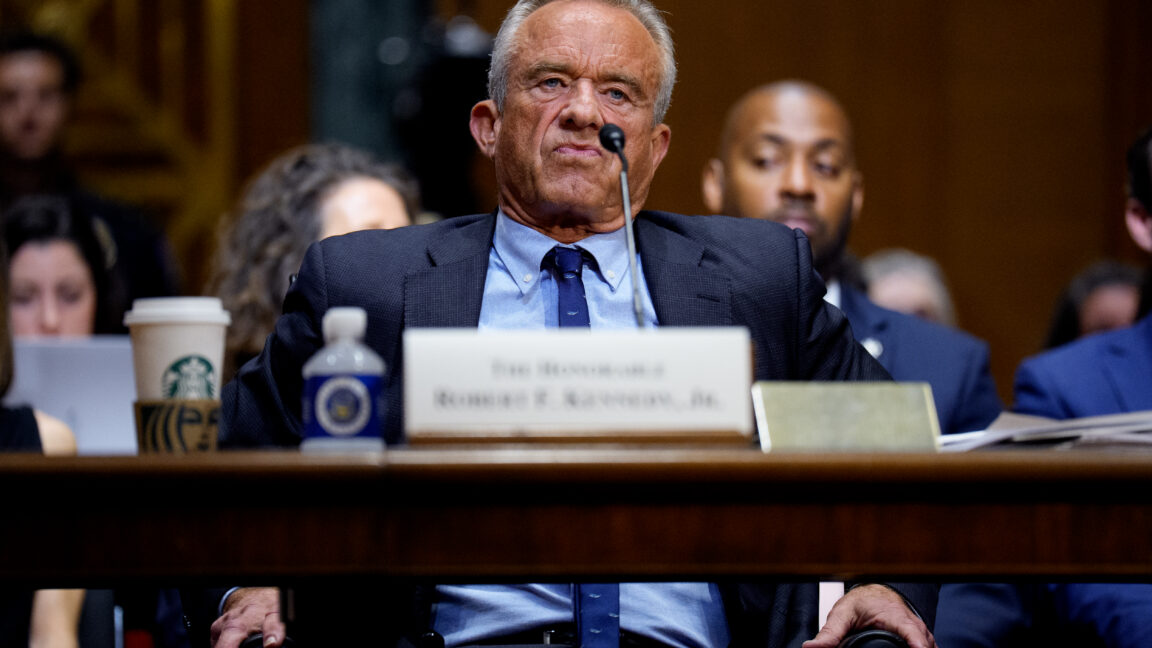
Health Secretary and anti-vaccine activist Robert F. Kennedy Jr. on Monday evening announced that the use of Tylenol (aka acetaminophen, paracetamol) during pregnancy is linked to autism—an unproven assertion that had previously sent Kennedy's anti-vaccine allies into a rage.
In a press event alongside Trump, Kennedy said that the Food and Drug Administration will work to update the drug's safety label and notify physicians of the concerns. At the same time, the administration also touted leucovorin (folinic acid) as a potential treatment for autism, though there is scant evidence behind its use for autism.
Before the announcement, news reports revealing Kennedy's plan angered his anti-vaccine followers.
Leading Internet companies and publishers—including Reddit, Yahoo, Quora, Medium, The Daily Beast, Fastly, and more—think there may finally be a solution to end AI crawlers hammering websites to scrape content without permission or compensation.
Announced Wednesday morning, the "Really Simple Licensing" (RSL) standard evolves robots.txt instructions by adding an automated licensing layer that's designed to block bots that don't fairly compensate creators for content.
Free for any publisher to use starting today, the RSL standard is an open, decentralized protocol that makes clear to AI crawlers and agents the terms for licensing, usage, and compensation of any content used to train AI, a press release noted.
NASA's interim administrator, Sean Duffy, was fired up on Wednesday when he joined a teleconference to talk about new scientific findings that concerned the potential for life to have once existed on Mars.
"This is exciting news," said Duffy about an arrow-shaped rock on Mars found by NASA's Perseverance rover. The rock contained chemical signatures and structures that could have been formed by ancient microbial life. The findings were intriguing, but not conclusive. Further study of the rocks in an advanced lab on Earth might prove more definitive.
Duffy was ready, he said, to discuss the scientific results along with NASA experts on the call with reporters. However, the very first question—and for any space reporter, the obvious one—concerned NASA's on-again, off-again plan to return rocks from the surface of Mars for study on Earth. This mission, called Mars Sample Return, has been on hold for nearly two years after an independent analysis found that NASA's bloated plan would cost at least $8 billion to $11 billion. President Trump has sought to cancel it outright.
As Air Force One journeyed from the US to the UK this week, it came within eight lateral miles of a Spirit Airlines flight heading up the East Coast from Fort Lauderdale to Boston. An alert air traffic controller in the New York control center reached out to the Spirit flight, telling it to execute an immediate right turn to avoid any possibility of colliding with Air Force One.
But the Spirit pilots did not respond immediately, leading the testy air traffic controller to scold them repeatedly. (You can listen to the audio archive on LiveATC.net; it begins at around the 23:15 mark.)
"Pay attention!" said the controller after his first instruction was not acknowledged. "Spirit 1300, turn 20 degrees right."
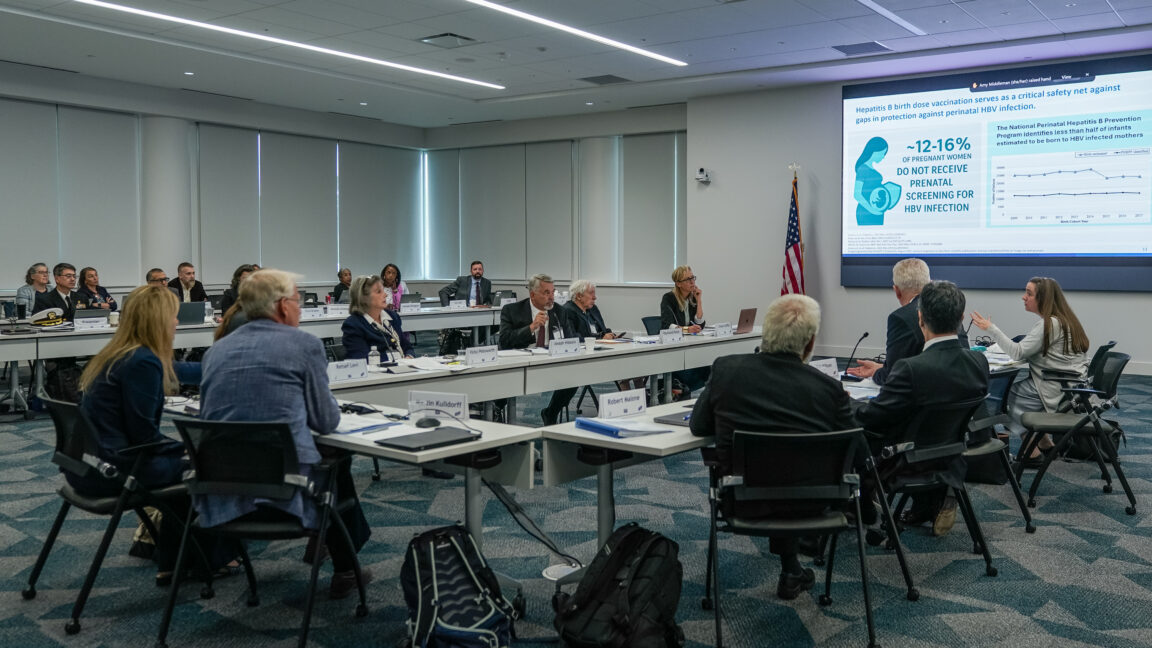
The second day of a two-day meeting of the Advisory Committee on Immunization Practices—a panel currently made up of federal vaccine advisors hand-selected by anti-vaccine activist Robert F. Kennedy, Jr.—is off to a dramatic start, with the advisors seemingly realizing they have no idea what they're doing.
The inexperienced, questionably qualified group that has espoused anti-vaccine rhetoric started its second day of deliberations by reversing a vote taken the previous day on federal coverage for the measles, mumps, rubella, and varicella (MMRV) vaccine. Yesterday, the group voted to restrict access to MMRV, stripping recommendations for its use in children under age 4. While that decision was based on no new data, it passed with majority support of 8–3 (with one abstention). (For an explanation of that, see our coverage of yesterday's part of the meeting here.)
But puzzlingly, they then voted to uphold access and coverage of MMRV vaccines for children under age 4 if they receive free vaccines through the federal Vaccines for Children program, which covers about half of American children, mostly low-income. The discrepancy projected the idea that the alleged safety concerns that led the panel to rescind the recommendation for MMRV generally, somehow did not apply to low-income, vulnerable children. The vote also created significant confusion for VFC coverage, which typically aligns with recommendations made by the panel.
Summarizing complex scientific findings for a non-expert audience is one of the most important things a science journalist does from day to day. Generating summaries of complex writing has also been frequently mentioned as one of the best use cases for large language models (despite some prominent counterexamples).
With all that in mind, the team at the American Association for the Advancement of Science (AAAS) ran an informal year-long study to determine whether ChatGPT could produce the kind of "news brief" paper summaries that its "SciPak" team routinely writes for the journal Science and services like EurekAlert. These SciPak articles are designed to follow a specific and simplified format that conveys crucial information, such as the study's premise, methods, and context, to other journalists who might want to write about it.
Now, in a new blog post and white paper discussing their findings, the AAAS journalists have concluded that ChatGPT can "passably emulate the structure of a SciPak-style brief," but with prose that "tended to sacrifice accuracy for simplicity" and which "required rigorous fact-checking by SciPak writers."
A two-day federal vaccine advisory meeting crammed with chaos, confusion, inept debate, bizarre comments, and a hot mic catching someone saying "you're an idiot," ended with an unexpected twist: The advisors unanimously voted—possibly unintentionally—to maintain broad access to COVID-19 vaccines.
In the 12–0 vote, the committee of advisors selected by anti-vaccine activist Robert F. Kennedy Jr. adopted a recommendation for adults 65 and older and people aged 6 months to 64 years to get a COVID-19 vaccine based on shared clinical decision-making. After this story was published, the Centers for Disease Control and Prevention adopted the recommendation, which will broadly maintain requirements that federal and private health insurance plans cover COVID-19 vaccines at no cost. While the shared clinical decision-making is a new requirement, the CDC noted in adopting the recommendation that such decision making can be done in consultation with providers, "including physicians, nurses, and pharmacists". Most people receive COVID-19 vaccines from their local pharmacists.
Earlier this year, the FDA limited the approvals of this year's shots, which have previously been available to anyone 6 months of age or older. The FDA's new restriction limits them to adults aged 65 and up and for people between the ages of 6 months and 64 years who have an underlying medical condition that puts them at high risk of severe COVID-19.
This story was originally published by ProPublica. Republished under a CC BY-NC-ND 3.0 license.
The Trump administration has vowed to go after anyone who got lower mortgage rates by claiming more than one primary residence on their loan papers.
President Donald Trump has used it as a justification to target political foes, including a governor on the Federal Reserve Board, a Democratic U.S. senator, and a state attorney general.
Real estate experts say claiming primary residences on different mortgages at the same time is often legal and rarely prosecuted.
But if administration officials continue the campaign, mortgage records show there’s another place they could look: Trump’s own Cabinet.
Underscoring how common the practice is, ProPublica found that at least three of Trump’s Cabinet members call multiple homes their primary residences on mortgages. We discovered the loans while examining financial disclosure forms, county real estate records and publicly available mortgage data provided by Hunterbrook Media.
Labor Secretary Lori Chavez-DeRemer entered into two primary-residence mortgages in quick succession, including for a second home near a country club in Arizona, where she’s known to vacation. Transportation Secretary Sean Duffy has primary-residence mortgages in New Jersey and Washington, D.C. Lee Zeldin, the Environmental Protection Agency administrator, has one primary-residence mortgage in Long Island and another in Washington, D.C., according to loan records.
In a flurry of interviews and rapid-fire posts on X, Bill Pulte, the Federal Housing Finance Agency director, has led the charge in accusing Trump opponents of mortgage fraud. “If somebody is claiming two primary residences, that is not appropriate, and we will refer it for criminal investigation,” Pulte said last month.
A political donor to the president and heir to a housing company fortune, Pulte’s posts online tease big developments and criminal referrals, drawing reposts from Trump himself and promises of swift consequences. “Fraud will not be tolerated in President Trump’s housing market,” Pulte has warned.
Real estate experts told ProPublica that, in its bid to wrest control of the historically independent Fed and go after political enemies, the Trump administration has mischaracterized mortgage rules. Its justification for launching criminal investigations, they said, could also apply to the Trump Cabinet members.
All three Cabinet members denied wrongdoing. In a statement, a White House spokesperson said: “This is just another hit piece from a left-wing dark money group that constantly attempts to smear President Trump’s incredible Cabinet members. Unlike [Fed Gov.] Lisa ‘Corrupt’ Cook who blatantly and intentionally committed mortgage fraud, Secretary DeRemer, Secretary Duffy, and Administrator Zeldin own multiple residences, and they have followed the law and they are fully compliant with all ethical obligations.”
Mortgages for a person’s main home tend to receive more favorable terms than for a second home or an investment property. That includes better interest rates and the ability to borrow more money.
The idea is that borrowers are more likely to pay back — and less likely to default on — a loan attached to the home they actually live in. That makes those loans less risky for lenders. Interest rates are typically a quarter- to a half-point lower for primary mortgages, according to Pulte. On the low end, that could save around $75 each month over the life of a 30-year, 5% interest, half-million-dollar loan — or a total of around $25,000.
Standard mortgage documents commonly include an occupancy clause that requires the borrower to use the property as their principal residence for at least a year. They also include a section where borrowers can check a box when the mortgage is for a second home.
Misrepresenting occupancy status is not rare, according to a widely cited 2023 study from the Federal Reserve Bank of Philadelphia. In interviews, real estate lawyers said that mortgage lenders are typically well aware of their clients’ other loans and sometimes even encourage the primary-residence language for second homes.
They also pointed to a mundane reason that innocent mistakes are common: Homebuyers simply sign stacks of forms without reading them.
“Few consumers understand this issue, and if there is someone at fault here, it is likely the loan officer who likely advised them to sign up for this loan that obviously wasn’t for their primary residence,” said real estate lawyer Doug Miller. “Loan officers who are competing for business will often quote lower rates in order to get a customer’s business.”
Mortgage fraud is rarely prosecuted, according to real estate lawyers and federal sentencing data. Pulte has pointed to a case from 2016 in which a California woman was found guilty of obtaining multiple loans for condos that she falsely stated would be her primary residence. But that case had an added layer of fraud: The woman never intended to live in the homes. She was secretly being paid because she had good credit to act as a front for the true buyer of the properties, to whom they were later transferred. She later defaulted on the loans, causing more than half a million dollars in losses for the lenders.
Lawyers told ProPublica that determining ill intent would be key to prosecute. “Fraud requires the borrower to be aware that the borrower was making a false representation,” said Jon Goodman, an attorney focused on real estate at Frascona, Joiner, Goodman and Greenstein.
But Pulte has framed the issue in black-and-white terms: “Your second home is not your primary home,” he warned in one recent post on X.
By that standard, Trump’s labor secretary, Chavez-DeRemer, could be in the wrong.
In her financial disclosure form, she listed two mortgages on personal residences, both obtained in 2021. Mortgage records show her home is in Happy Valley, a city near Portland where Chavez-DeRemer served as mayor before being elected to represent the area in the U.S. House.
She and her husband, Shawn DeRemer, who leads an anesthesia company in Portland, refinanced their longtime Oregon home in January 2021. Two months later, the couple bought a newly built house near a golf course in Fountain Hills, Arizona.
The pair had previously enjoyed vacationing in Arizona, according to news reports and social media posts. (In one incident that made the news, Chavez-DeRemer was briefly hospitalized after a golf cart accident on her way back from watching a Sonoran Desert sunset.)
The mortgage agreement for the Arizona property required them to occupy the home as their “principal residence” for at least a year, barring “extenuating circumstances” or the lender allowing them to violate the stipulation.
A spokesperson for Chavez-DeRemer said that the couple bought the Arizona home with the intent to retire there, but then Chavez-DeRemer decided to run for Congress representing her Oregon district and did not move.
“This is nothing more than a left-wing rag inventing a story just to attack the Trump Administration. It’s common for families to refinance then buy a home with future plans in mind — trying to spin that as some type of scandal is pure nonsense,” said spokesperson Courtney Parella.
In response to questions from ProPublica, a White House official said that although DeRemer opted to stay in Oregon, her husband “continued to move forward with the process of becoming” an Arizona resident. Political donation records list his home in Oregon as recently as late 2023.
Duffy, Trump’s transportation secretary, and his wife also have two primary-residence mortgages, obtained a few years apart.
In August 2021, the Duffys, who have nine children, purchased a large $2 million home in Far Hills, New Jersey, about an hour’s drive from Manhattan, where Rachel Campos-Duffy works as a Fox News host.
They got a $1.6 million mortgage to purchase the property, and documents show it was a “principal residence” loan.
In February, after Duffy took the job in Trump’s cabinet, the couple bought another home, in Washington, D.C. Again, they got a principal-residence mortgage, this time for $1.76 million. Both Duffy and his wife are listed as borrowers on both mortgages, which came from the same bank.
It’s not clear where Sean Duffy lives most of the time, and a Department of Transportation spokesperson declined to answer questions about where Duffy and his wife each make their primary home. In late May, several months after they purchased the Washington home, “Fox & Friends Weekend” ran a segment in which Rachel Campos-Duffy cooked a “Make America Healthy Again” breakfast for host Steve Doocy. Sean Duffy and some of the couple’s children were also in the segment, and it was filmed in the New Jersey home.
Duffy’s spokesperson said in a statement that after being confirmed, “Sean purchased a home in Washington D.C. where he works full-time. The home in DC is not a rental, investment or vacation property. The same bank holds both mortgages and was fully informed of Secretary Duffy’s new employment location and need for a DC residence.”
A White House spokesperson said, “The bank, not the Secretary, determined and classified both mortgages as primary residences.”
Like the Duffys, Lee Zeldin, the EPA administrator, and his wife also have two concurrent primary-residence mortgages.
One, obtained in 2007, is on a home in Shirley, New York, on Long Island, which Zeldin represented in Congress for several years. Last year, Zeldin and his wife obtained a second mortgage, for $712,500, on a property in Washington, D.C., a short walk from the EPA’s headquarters. Both are primary-residence mortgages.
An EPA spokesperson said in a statement that Zeldin’s primary residence was previously on Long Island but is now in Washington. The spokesperson didn’t respond to questions about where his wife lives. “Administrator Zeldin followed ALL steps to complete the move in accordance with all laws, rules, and contracts, notifying his mortgage company, insurance company, and local government,” the spokesperson said. “EVERY ‘I’ was dotted and ‘t’ was crossed 1000% by the book without exception.”
The dual mortgages identified by ProPublica among Trump’s cabinet secretaries resemble the loans obtained by U.S. Sen. Adam Schiff, whom Trump accused of mortgage fraud.
In May, Pulte referred Schiff to the Justice Department for taking out a primary-residence mortgage in Maryland, for a home he purchased in 2003 after being elected to the House, while also claiming his primary home was in Burbank, California, in the district he represented. Schiff and his wife refinanced the Maryland home several times as a primary residence, Pulte noted, until a 2020 refinance in which they reclassified it as a secondary home.
“Schiff appears to have falsified records in order to receive favorable loan terms,” Pulte concluded in a letter to Attorney General Pam Bondi.
Representatives for Schiff called the allegations “transparently false” and said his lenders had “full knowledge of the senator’s year-round bicoastal work obligations” and “his use of two homes for that reason.” Schiff, according to his office, navigated the two mortgages in consultation with a House lawyer.
Pulte made similar allegations in a criminal referral about New York Attorney General Letitia James, alleging she may have committed fraud by getting a primary-residence mortgage for a home in Virginia, even though her position required her to live in New York. Her lawyer has said James helped a family member buy the property and notified the mortgage broker at the time that it would not be her primary residence. James became one of Trump’s top political enemies after she brought a fraud lawsuit against the president and his company in 2022. Representatives for James have called the fraud claims made against her politically motivated and false. (Pulte did not respond to a request for comment from ProPublica.)
Pulte’s most consequential allegations thus far were made against Cook, a Federal Reserve governor. Trump has been going after Fed Chair Jerome Powell for months for not lowering interest rates, even raising the specter that he would take the unprecedented step of attempting to fire the chair. Pulte’s criminal referral against Cook presented Trump with another avenue for bending the traditionally independent Fed to his will, securing a majority of the Fed’s board by firing Cook, a move that Cook has sued to block.
Pulte pointed to mortgage records that show that within just a couple of weeks, Cook signed primary-residence mortgages for homes in Michigan and Georgia. Legal experts said the close proximity was a red flag but that much was still unknown, including Cook’s intent and what her lenders were told. Pulte also flagged a third property, in Massachusetts, that Cook represented as a second home in mortgage documents but as an investment property in subsequent financial disclosures. Investment properties can be hit with higher mortgage rates than second homes.
“3 strikes and you’re out,” he posted on X.
Cook’s lawyers have denied that she committed mortgage fraud but have not provided a detailed explanation of the context for the various mortgages. They argued in court this week that her loans cannot be legally used as grounds to terminate her.
The Justice Department has begun investigating all three Trump foes singled out in Pulte’s referrals, according to news reports. The department has issued subpoenas in Cook’s case, The Wall Street Journal reported Thursday.
ProPublica’s review of mortgage agreements by Trump cabinet officials shows that some made clear to lenders they were purchasing second homes.
When Health and Human Services Secretary Robert F. Kennedy Jr., for example, got a mortgage for his home near the Kennedy Compound in Hyannis Port, Massachusetts, the agreement included a rider making it clear he would be using it as a second home.
Among the attempts to create hagiographic eulogies of Charlie Kirk, I’ve seen more than a few people suggest that Kirk should be respected for being willing to talk to “those who disagree with him” as a sign that he was engaging in good faith. Perhaps the perfect example of this is Ezra Klein’s silly eulogy claiming that Kirk was “practicing politics the right way” because he would debate students who disagreed with him.
Kirk was practicing politics in exactly the right way. He was showing up to campuses and talking with anyone who would talk to him. He was one of the era’s most effective practitioners of persuasion.
There are many problems with this statement, but Klein’s fundamental error reveals something much more dangerous: he’s mistaking performance for discourse, spectacle for persuasion. Kirk wasn’t showing up to campuses to “talk with anyone who would talk to him.” He was showing up armed with a string of logical fallacies, nonsense talking points, and gotcha questions specifically designed to enrage inexperienced college students so he could generate viral social media clips of himself “owning the libs.”
Klein is eulogizing not a practitioner of good-faith political discourse, but one of the most successful architects of “debate me bro” culture—a particularly toxic form of intellectual harassment that has become endemic to our political discourse. And by praising Kirk as practicing “politics the right way,” Klein is inadvertently endorsing a grift that actively undermines the kind of thoughtful engagement our democracy desperately needs.
The “debate me bro” playbook is simple and effective: demand that serious people engage with your conspiracy theories or extremist talking points. If they decline, cry “censorship!” and claim they’re “afraid of the truth.” If they accept, turn the interaction into a performance designed to generate viral clips and false legitimacy. It’s a heads-I-win-tails-you-lose proposition that has nothing to do with genuine intellectual discourse.
The fundamental issue with “debate me bro” culture isn’t just that it’s obnoxious, it’s that it creates a false equivalence between good-faith expertise and bad-faith trolling. When you agree to debate someone pushing long-debunked conspiracy theories or openly hateful ideologies, you’re implicitly suggesting that their position deserves equal consideration alongside established facts and expert analysis.
This is exactly backwards from how the actual “marketplace of ideas” is supposed to work. Ideas don’t deserve platforms simply because someone is willing to argue for them loudly. They earn legitimacy through evidence, peer review, and sustained engagement with reality. Many of the ideas promoted in these viral “debates” have already been thoroughly debunked and rejected by that marketplace—but the “debate me bro” format resurrects them as if they’re still worth serious consideration.
Perhaps most insidiously, these aren’t actually debates at all. They’re performances designed to generate specific emotional reactions for viral distribution. Participants aren’t trying to persuade anyone or genuinely engage with opposing viewpoints. They’re trying to create moments that will get clipped, shared, and monetized across social media.
Kirk perfected this grift. As a recent detailed analysis of one of Kirk’s debates demonstrates, when a student showed up prepared with nuanced, well-researched arguments, Kirk immediately tried pivoting to culture war talking points and deflection tactics. When debaters tried to use Kirk’s own standards against him, he shifted subjects entirely. The goal was never understanding or persuasion—it was generating content for social media distribution.
And, of course, this broader “debate me bro” culture has become so commonplace and expected online that it has now been fully industrialized into content farming.
The most toxic evolution of this grift is Jubilee Media’s “Surrounded” series on YouTube (on which Kirk once appeared, because of course he did), which The New Yorker’s Brady Brickner-Wood aptly describes as an attempt to “anthropomorphize the internet, turning incendiary discourse into live-action role-play.” The format is simple: put one public figure in a room with 20 ideologically opposed people and let them duke it out in rapid-fire rounds designed for maximum conflict and viral potential.
As Brickner-Wood notes, these aren’t actual debates in the classical sense of trying to persuade, they’re spectacles designed to set up bad faith dipshits with the opportunity to dunk on others for social media clout.
“Surrounded” videos are a dizzying and bewildering watch, as gruelling as they are compelling. The participants who fare best seem to be familiar with the conventions of interscholastic debate, spouting off statistics and logic puzzles with the alacrity of an extemporaneous-speaking champion. To win an argument in such a condensed amount of time, debaters attempt to short-circuit their opponent’s claim as swiftly and harshly as possible, treating their few minutes of airtime as a domination game rather than, say, a path toward truth or understanding. The goal here is not to inform or educate, to listen or process, to build or intellectualize but to win, to own, to dunk on, to break the opponent’s brain, to spawn an argument of such devastating definitiveness that the matter can be considered, once and for all, closed. Wave the flag, run the clock out—next.
But Surrounded is just the most recent manifestation of a much older problem. We’ve seen multiple bad faith trolls, beyond just Kirk, turn the “debate me bro” model into large media empires. When people point out their bad faith nonsense, we’re told “what are you complaining about, they’re doing things the ‘right way’ by debating with those they disagree with.”
There are, of course, times and places where actual debates can be valuable. I’ve been involved in many debates over the years with people who vehemently disagreed with me. But I think it’s important for people to recognize that, in the same way not all information is equally valuable, not all debates are equally productive.
There’s nothing in how Charlie Kirk “debated” that aimed to get at nuances or understanding. They were entirely designed to seek to humiliate his opponent. They’re full of red herrings, lies, and attempts to deflect from any actual logic, as the video link above showed.
The point is not about getting to any level of understanding. It’s to try to quip and dunk in the manner most likely to go viral when shared on social media in 20-second snippets.
The format actively discourages the kind of thoughtful, nuanced discussion that might actually change minds—the kind actually designed for persuasion. Instead, it rewards the most inflammatory takes, the most emotionally manipulative tactics, and the most viral-ready soundbites. Anyone going into these situations with good faith gets steamrolled by participants who understand they’re playing a different game entirely.
When trolls demand debates, they’re not interested in having their minds changed or genuinely testing their ideas. They want one of two outcomes: either you decline and they get to claim victory by default, or you accept and they get to use your credibility to legitimize their nonsense while farming viral moments.
None of this means we should avoid authentically engaging with different viewpoints or challenging ideas. But there’s a crucial difference between good-faith intellectual engagement and feeding trolls who are just looking for their next viral moment.
Real intellectual discourse happens in contexts where participants are genuinely interested in truth-seeking rather than performance. It requires shared standards of evidence, mutual respect, and actual expertise on the topics being discussed. It takes time, nuance, and careful consideration—all things that are antithetical to the “debate me bro” format.
Klein’s eulogy of Kirk represents a broader failure to understand what’s happening to our discourse. When we praise bad-faith performers for “engaging” with their critics, we’re not celebrating democratic norms—we’re rewarding those who exploit them.
Plans also call for relocation of bus loop, bus bays, Kiss & Ride facilities
The post WMATA proposing residential, commercial development at Twinbrook Metro station appeared first on Bethesda Magazine.
I recently learned of a rather interesting pilot study undertaken by Nissan together with the Contra Costa Transportation Authority and UC Berkeley that leverages the automaker's partially automated driving system, ProPilot Assist, to ease traffic congestion. The idea is called "Cooperative Congestion Management," which works by letting a car in traffic inform vehicles behind it.
Researchers from Nissan's advanced technology center in Silicon Valley have trialed CCM on I-680 in the Bay Area, logging about 600 miles. Starting with Nissan vehicles equipped with ProPilot Assist, which combines adaptive cruise control and lane keeping, they added the ability for those cars to communicate with each other, informing other cars about their speed and any hazards. On the road, they were able to show that the system reduced hard-braking events by 85 percent and cut time spent stationary in traffic by 70 percent.
But we're not talking about platooning—the idea of having road trains of autonomously driven semitrucks networked together and driving in convoy was all the rage a decade ago, but mostly fell from favor once people realized the human truck drivers were needed for more than just the steering, accelerating, and braking bits of the job.
Plus: Purple Line construction continues to impact Silver Spring businesses; A Kosher bakery, market opens in Rockville
The post Right on red no more: Hundreds of signs added to county intersections appeared first on Bethesda Magazine.
Congressional Democrats are threatening to withhold their votes on a forthcoming measure to keep federal agencies open and funded, demanding Republicans first negotiate with them over upcoming changes to health care benefits that impact millions of Americans.
With just three weeks until the government shuts down, Republican leaders in the House and Senate are preparing to put forward a stopgap spending bill that would keep agencies afloat past the current Sept. 30 deadline. Such a measure would require Democratic support in the Senate, however, and the minority party is seeking to exploit that leverage to avoid health care cuts scheduled to hit in the coming months.
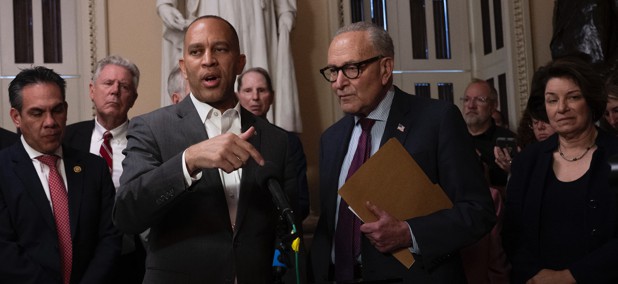
“We will not support a partisan spending agreement that continues to rip away health care from the American people, period full stop,” House Minority Leader Hakeem Jeffries, D-N.Y., said on Thursday after meeting with top Democratic appropriators and his counterpart in the Senate.
Senate Minority Leader Chuck Schumer, D-N.Y., emerged from that meeting suggesting he and Jeffries were in “total agreement” on the path forward.
“What the Republicans are proposing is not good enough for the American people and not good enough to get our votes,” Schumer said. “The Republicans have to come to meet with us in a true bipartisan fashion to satisfy the American people’s needs on health care or they won’t get our votes, plain and simple.”
Around 22 million people who receive health care through the Affordable Care Act marketplace are slated to see the enhanced subsidies expire at the end of 2025 unless Congress intervenes. Those higher-level subsidies have been in place since 2021. Some Republicans have indicated they are open to extending the subsidies, but want to address the issue separately from the funding process.
Democrats are also looking to address changes to Medicare made in the One Big Beautiful Bill Act, which the Congressional Budget Office has estimated will result in around 10 million people losing their access to care over the next decade.
The government has been operating under a continuing resolution for all of fiscal 2025, meaning agencies are still funded at their fiscal 2024 levels. The proposed length of the next CR remains unclear, though Republicans are looking to bring a bill up for a vote as soon as next week.
Both the House and Senate have begun passing full year funding measures for fiscal 2026, though only the Senate has done so with broad, bipartisan support. Lawmakers could seek to fund some parts of government with full-year appropriations bills and the rest with a stopgap, though the current time crunch would make such an approach difficult to execute.
Further complicating the funding talks are the Trump administration’s efforts to unilaterally withhold previously approved spending through a process known as “pocket recissions.” Schumer previously suggested that the White House following through on such an approach would increase the likelihood of a shutdown.
This story has been updated to reflect the most up-to-date CBO estimate of the Big Beautiful Bill’s impact on Medicare coverage.
]]>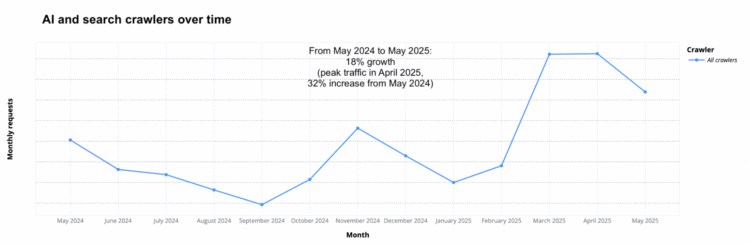
Bots have crawled the web for a long time, but the past couple years has been something different as companies release their AI crawlers to scrape as much as possible. Cloudflare broke it down by type of bot and source.
Not all crawlers are the same. Bots, automated scripts that perform tasks across the Internet, come in many forms: those considered non-threatening or “good” (such as API clients, search indexing bots like Googlebot, or health checkers) and those considered malicious or “bad” (like those used for credential stuffing, spam, or scraping content without permission). In fact, around 30% of global web traffic today, according to Cloudflare Radar data, comes from bots, and even exceeds human Internet traffic in some locations.
A new category, AI crawlers, has emerged in recent years. These bots collect data from across the web to train AI models, improving tools and experiences, but also raising issues around content rights, unauthorized use, and infrastructure overload. We aimed to confirm the growth of both search and AI crawlers, examine specific AI crawlers, and understand broader crawler usage.
Every now and then I glance at traffic sources, and AI bots seem increasingly common. I wonder if or when bot traffic outnumbers human visits.
Tags: bot, Cloudflare, traffic
Miami-based chain restaurant to replace eatery in Cabin John Village
The post Cuban café Colada Shop to close Potomac location at end of September appeared first on Bethesda Magazine.
Google is one of the most ardent proponents of generative AI technology, as evidenced by the recent launch of the Pixel 10 series. The phones were announced with more than 20 new AI experiences, according to Google. However, one of them is already being pulled from the company's phones. If you go looking for your Daily Hub, you may be disappointed. Not that disappointed, though, as it has been pulled because it didn't do very much.
Many of Google's new AI features only make themselves known in specific circumstances, for example when Magic Cue finds an opportunity to suggest an address or calendar appointment based on your screen context. The Daily Hub, on the other hand, asserted itself multiple times throughout the day. It appeared at the top of the Google Discover feed, as well as in the At a Glance widget right at the top of the home screen.
Just a few weeks after release, Google has pulled the Daily Hub preview from Pixel 10 devices. You will no longer see it in Google Discover nor in the home screen widget. After being spotted by 9to5Google, the company has issued a statement explaining its plans.
Last year, the federal government was poised to ban non-compete agreements for most U.S. workers, saying they stifle wages. However, right before that change in the law was supposed to take effect in September 2023, a judge in Texas blocked the rule, saying the agency lacked the authority to issue it, and it’s been in limbo ever since.
Last Friday, the FTC announced it will end its appeals of the case, which ends all the remaining litigation over the rule … and means the proposed noncompete rule is null and void.
Non-competes still remain banned in California, North Dakota, and Oklahoma, and 11 more states and Washington, D.C. prohibit them for hourly wage workers or workers below a salary threshold. Targeted cases could also challenge specific noncompetes — but the federal protection a lot of people were excited to get is now dead.
The post non-compete agreements aren’t illegal after all appeared first on Ask a Manager.
One person was taken to the hospital after being shot overnight in Montgomery County, authorities detailed.
The Montgomery County Department of Police (MCPD) said it responded to a shooting just before 1 a.m. in the 12900 block of Twinbrook Parkway on Sept. 7.
Details remain limited, however, MCPD said one person had been shot and was taken to the hospital with non-life-threatening injuries.
As of the early morning hours on Sunday, the investigation was still active and ongoing.