
Shared posts

10 Sep 20:50

Are Democrats and Republicans Colluding to Preserve Congress' Obamacare Exemption?

by Michael F. Cannon

Michael F. Cannon

I have written about the special (and illegal) Obamacare exemption the president has granted Congress.

It turns out, this exemption polls poorly. Opposition is north of 90 percent, unites Obamacare opponents and supporters, and has the potential to oust incumbents members of Congress who accept an special exemption that other Americans don’t get.

You might think that Republican and Democratic party committees would be salivating at the prospect of using this issue to oust incumbents of the other party. At a minimum, you would think that Obamacare opponents (i.e., Republicans) would drive a wedge between the law’s supporters (i.e., Democrats) and the public by forcing supporters to vote on a measure eliminating the exemption. Doing so could elect more new Republicans in 2014 by allowing them attack incumbent Democrats thus: “My opponent voted for Obamacare, and then voted to give himself and his well-paid friends in Congress a special exemption that the people of this state/district don’t get. That’s just wrong.”

Yet it appears the National Republican Senatorial Committee and the Democratic Senatorial Campaign Committee have negotiated a truce on this issue. If true, both parties have agreed not to give voice to the will of the people by attacking members of the other party who consent to this special privilege granted to members of Congress. If true, it would confirm what I have written previously: “America has a two-party system. But it’s not Republicans versus Democrats. It’s the ruling class — Republicans and Democrats — against everyone else.”

I can hardly imagine a more powerful argument for allowing unlimited spending by independent groups to advocate the election or defeat of political candidates. That is, I can hardly imagine a more powerful argument against “campaign finance reform.”

09 Sep 14:52

WaPo fact check on Obama’s denial of drawing a ‘red line’: Yeah, he drew it, but wishes he hadn’t, so it’s not a lie

by Doug Powers

**Written by Doug Powers

null
Image credit: FreakingNews.com

This is one of the more comical “fact checks” in recent memory. At question is whether President Obama drew a “red line” on Syria’s movement and use of chemical weapons even though recently Obama claimed that he didn’t draw that line, but rather “the world” did.

The shorter version of the Washington Post’s “fact check” to discern if Obama is lying when he denied drawing a “red line” is this:

–Obama did in fact draw the red line.

–However, it was an “ill-considered rhetorical statement” that his staff wishes he hadn’t made and Obama was never comfortable with his own words.

–If he’d have said it more like John Kerry it would have been better.

–Obama kept bungling the corrective talking points he was issued.

Conclusion: Can’t rate Obama’s denial of drawing a “red line” as a lie given these forced hypotheticals and the fact that he now might regret saying it.

That’s a “fact check” should run in the “comics” section.

Update: Politifact took a similar approach.

**Written by Doug Powers

Twitter @ThePowersThatBe


09 Sep 03:12

Take out one outlier month, and the ‘stunning growth’ in part-time employment falls from 59% to 19% of jobs added

by Mark J. Perry

A blog post by John Lott titled “Numbers continue to be Stunning. 96 percent of net jobs added this year have been part-time jobs,” has received a lot of attention and was featured by Greg Mankiw, Don Boudreaux, and Tyler Cowen and “critiqued” (I think) by Brad DeLong.

First of all, it turns out that the 96 percent figure was actually wildly inaccurate, and was later corrected by John Lott – only 59.4 percent of the jobs added from January to August were part-time jobs (497,000 of 837,000 total jobs, see chart above, BLS data here for full-time employment and here for part-time employment). Fair enough, it was a huge, but honest mistake that should probably be corrected by Greg and Don on their blogs – they are still both reporting the original and inaccurate 96% figure. Here are some other issues:

1. Much of the 59% part-time figure for jobs added during the 8-month period from January to August period was driven by some pretty wild numbers in the month of March. It’s widely known that the BLS jobs data from the Household Survey are extremely volatile in certain months, and March was a perfect example. According to the BLS, there was a loss of 240,000 full-time jobs in the month of March and an increase of 360,000 part-time jobs, and both of those monthly job numbers deviated significantly from the averages over the last 12 months for those two job categories of 143,000 new full-time jobs and 24,000 new part-time jobs per month.

If you omit the month of March as an outlier, and consider the other seven months of 2013, part-time jobs represented only 19.1 percent of the total jobs created so far this year (see chart above).

2. The chart above shows what percentage of total new jobs created were part-time jobs over various periods from the last eight months to the last 24 months. For example, if we add two more months, and consider the last 10-month period from November 2012 to August 2013, we find that only 14.96% of the total jobs created were part-time (130,000 out of 869,000). Likewise, over the last 12 months through August 2013, only 14.37 percent of the total jobs created were part-time positions (288,000 out of 2,004,000 total new jobs).  Adding just one more month illustrates the extreme volatility of the Household Survey jobs data. In September of last year, the BLS estimated that 767,000 full-time jobs were added in just one month, compared to a loss of 19,000 part-time jobs, and both of those figures deviated significantly from averages over longer periods of time, and brought the share of part-time jobs down to only 5.9 percent for the last 13 months.

3. Over longer periods of time that help smooth out the volatility of the monthly data (e.g. 12, 18, and 24 months), we see that a large majority of the jobs that have been created have been full-time (almost 86 percent over the last 12 and 24 months periods) and part-time employment has accounted for only about 14% of the new jobs added during those periods.

Bottom Line: Although it’s certainly possible that part-time jobs are increasing relative to full-time jobs, that trend can’t yet be confirmed. Therefore, the 96 percent 59 percent figure for part-time jobs created over the last 8 months really doesn’t deserve much attention, given the facts that: a) it’s being driven by one outlier month (March), b) monthly jobs data from the Household Survey are so extremely volatile, and c) the 59 percent figure for part-time jobs declines significantly over longer periods of time that include more data, e.g. adding just two months brings the part-time percentage below 15%.

Update: To further illustrate the extreme volatility of the BLS Household Survey data, consider that for the most recent month available – August 2013 – the number of full-time jobs increased by 118,000 while the number of part-time jobs fell by 234,000. So based on the most recent labor market data, part-time jobs are falling relative to full-time jobs; but the extreme volatility of these monthly data makes that finding relatively meaningless, which further illustrates the main point of this post.    

08 Sep 21:02

Bush Administration Reaches Through Time To Mind-Control Obama Into Setting the NSA Loose

by J.D. Tuccille

Reason 24/7Will the perfidy of the Bush administration never cease? Even from beyond the political grave, the former president reaches out with his civil liberties-violating will to mind-control the current chief executive into loosening restrictions on the National Security Agency. That must be what happened, anyway. How else to explain why the oh-so constitutionally respectful President Barack Obama would successfully prevail upon the Foreign Intelligence Surveillance Court in 2011 to reverse restrictions on the NSA imposed under the previous administration?

From the Washington Post:

The Obama administration secretly won permission from a surveillance court in 2011 to reverse restrictions on the National Security Agency’s use of intercepted phone calls and e-mails, permitting the agency to search deliberately for Americans’ communications in its massive databases, according to interviews with government officials and recently declassified material.

In addition, the court extended the length of time that the NSA is allowed to retain intercepted U.S. communications from five years to six years — and more under special circumstances, according to the documents, which include a recently released 2011 opinion by U.S. District Judge John D. Bates, then chief judge of the Foreign Intelligence Surveillance Court.

The restrictions were imposed in 2008 at the Bush administration's request. That's an interesting point, considering that more than a few defenders of the current regime have told us how much more legally reasonable the NSA's practices are now than they were under Bush. "There is a crucial difference between the Obama administration’s phone call data-mining program, which is constitutional under current law, and the Bush administration’s NSA surveillance program, which was clearly unconstitutional," wrote Geoffrey R. Stone, a law professor at the university of Chicago. "it is unfortunate," he continued, "that President Obama has not done a better job of explaining the distinction, and why his administration’s program does not violate the constitutional 'right of privacy.'"

Really? The Post's Ellen Nakashima adds:

Together the permission to search and to keep data longer expanded the NSA’s authority in significant ways without public debate or any specific authority from Congress. The administration’s assurances rely on legalistic definitions of the term “target” that can be at odds with ordinary English usage. The enlarged authority is part of a fundamental shift in the government’s approach to surveillance: collecting first, and protecting Americans’ privacy later.

So it's all about parsing what "legal" means, and not so much about the consequences to privacy. Got it. Such constitutional respect.

None of this means the Bush administration was especially respectful of Americans' privacy and liberty. The last administration was pretty loose with its use of surveillance and former President Bush has defended President Obama's practices. What it does mean is that, to the extent that you can see daylight between snooping policies under the two presidents, the current officeholder is at least as intrusive, and rather less honest about what he does.

Follow this story and more at Reason 24/7.

Spice up your blog or Website with Reason 24/7 news and Reason articles. You can get the widgets here. If you have a story that would be of interest to Reason's readers please let us know by emailing the 24/7 crew at 24_7@reason.com, or tweet us stories at @reason247.

08 Sep 04:56

Who’d a-Thunk It?

by Don Boudreaux
07 Sep 04:23

President Obama Says He Learns What NSA Is Doing From The Press, Then Goes To NSA For Details

by Mike Masnick
Jts5665

Confessions of inadequacy.

Ewan MacAskill calls out a rather astounding statement by President Obama during his most recent press conference in St. Petersburg at the G20 summit. The very last question, which I believe is asked by AFP reporter Tangi Quemener, asks President Obama to respond to some of the recent NSA leaks, in particular the spying on Brazilian and Mexican officials. The President gives the usual long and winding answer about doing what intelligence agencies do, and various costs and benefits, but then there's this:
Now, just more specifically, then, on Brazil and Mexico. I said that I would look into the allegations. I mean, part of the problem here is we get these through the press and then I've got to go back and find out what’s going on with respect to these particular allegations -- I don’t subscribe to all these newspapers, although I think the NSA does -- now at least. (Laughter.)
Leaving aside the "joke" at the end, the admission is rather startling. Here is the President of the US admitting two astounding things. First, it appears that he and the NSA really have no clue at all what information Ed Snowden walked away with, and second (and worse), it appears that the President is admitting that he doesn't know what the NSA is doing and is similarly learning these facts from the press. This comes from the same President who has repeatedly insisted that there is plenty of oversight over these programs. If that's true, then he shouldn't be taken by surprise when the press reveals what the NSA is doing, and shouldn't have to "go back and find out what's going on." He's more or less admitting that there's no oversight and the NSA is a rogue agency making its own rules, only checked on when the press reveals something.

Permalink | Comments | Email This Story


06 Sep 20:00

Quotation of the Day…

by Don Boudreaux
Jts5665

See: Economic Fascism.

… is from page 291 of Tom Bethell’s important 1998 book, The Noblest Triumph:

Nationalization has been discredited, but it has been replaced by a more insidious philosophy.  The owner retains title, but is saddled with taxes, impositions, and regulations that might in some cases have seemed excessive to feudal tenants.  Contract is here and their yielding it crucial gains to status.  Individual rights are threatened by the privileges associated with group membership.

06 Sep 04:05

Climate Groundhog Day

by admin

I discuss in a bit more detail at my climate blog why I feel like climate blogging has become boring and repetitious.  To prove it, I predict in advance the stories that skeptics will run about the upcoming IPCC report.

I had a reader write to ask how I could be bored when there were still hilarious stories out there of climate alarmists trying to row through the Arctic and finding to their surprise it is full of ice.  But even this story repeats itself.  There have been such stories almost every year in the past five.

06 Sep 01:19

WH to spend another $12m promoting Obamacare...


WH to spend another $12m promoting Obamacare...


(Third column, 8th story, link)
Related stories:
05 Sep 17:57

Insanity: PayPal Freezes Mailpile's Account, Demands Excessive Info To Get Access

by Mike Masnick
A few weeks ago, we wrote about Mailpile, a new attempt to create a webmail client that is built with both security and usability in mind -- think Gmail/Outlook-type interface, but which you can control and with built in security. The project looks awesome and is greatly needed these days, as we learn more and more about government intrusions into hosted webmail accounts. Their IndieGoGo campaign has been a huge success, going past their $100,000 target, and is currently at around $137,000, which will allow the three person team to focus on it full time.

Except... as the team announced this morning, PayPal, for reasons known only to PayPal, has decided to freeze their funds and won't let Mailpile access the money that people donated:
Saturday August 31st I woke to two emails from PayPal. The first notified me they had cancelled the debit card associated with my sole proprietor business account, the second was informing me they placed a block on my account barring me from withdrawing or sending any money out of my PayPal account.
Assuming this would get sorted out after a little explaining/security check, the team has been trying to get PayPal to unfreeze the account, with no luck. PayPal is demanding an insane level of detail into Mailpile's personal finances and business:
Afer 4 phone calls, the last of which I spoke to a supervisor, the understanding I have come to is, unless Mailpile provides PayPal with a detailed budgetary breakdown of how we plan to use the donations from our crowd funding campaign they will not release the block on my account for 1 year until we have shipped a 1.0 version of our product. A final email communication from PayPal reaffirmed us of their stance by stating:
"Please provide an itemized budget and your development goal dates for your project"
This puts us in an incredibly uncomfortable position as we do not feel that it's remotely in their jurisdiction to ask for a detailed budget of our business, any more than it is within our right to ask for theirs.
Even worse, it seems that the folks at PayPal recognize that it holds power over Mailpile, and seems almost to be lording that power over them:
Communications with PayPal have implied that they would use any excuse available to them to delay delivering as much of our cash as possible for as long as possible. Asking us to give them justification for such behavior is obviously not in our best interests. PayPal's position particularly ridiculous when contrasted with IndieGoGo's policy of transferring all funds to successful campaigns within 15 days of their conclusion. If IndieGoGo can do it, so can PayPal.
This isn't all of the money raised -- it's about $45,000 of the $137,000, but it's still a huge pain. Mailpile has now had the Software Freedom Law Center look into their legal options for obtaining the money that people donated to the project.

Yes, PayPal has a long history of similar things, but that doesn't make it okay.

Permalink | Comments | Email This Story


05 Sep 14:13

Court Tells Journalist Barrett Brown He And His Lawyers Can't Talk To The Press Any More

by Mike Masnick
We just wrote about the ridiculousness of Barrett Brown's case, in which he's been in jail and facing a very long sentence mainly for copying a URL from one place to another, but also because the feds have been seeking a media gag. Tragically, the court has now granted that gag order. Neither Brown nor his legal team is allowed to speak to the media:
No person covered by this order shall make any statement to members of any television, radio, newspaper, magazine, internet (including, but not limited to, bloggers), or other media organization about this case, other than matters of public record, that could interfere with a fair trial or otherwise prejudice Defendant, the Government, or the administration of justice....
This gag order seems somewhat ridiculous. The idea that having Brown or his legal team talking to the press would somehow unfairly bias the jury in his case is ridiculous. It's perfectly reasonable to expect Brown and his legal team to try to draw attention to the ridiculousness of the case, and the only purpose of this sort of gag order is to silence the press and keep the story from getting the kind of attention it deserves, as yet another example of prosecutorial overreach by the DOJ.

Permalink | Comments | Email This Story


05 Sep 13:43

Quotation of the Day…

by Don Boudreaux
Jts5665

Not sure what a better alternative would be, though.

… is from page 186 of George Stigler‘s 1971 essay “Can Regulatory Agencies Protect the Consumer?” – which is reprinted as Chapter 11 of Stigler’s 1975 collection, The Citizen and the State: Essays on Regulation:

The ultimate, inescapable fact of life for the consumer is that he must beware – as much today as in the past….  [U]nder the earlier regime of caveat emptor, the consumer was protected basically by his own care and intelligence, and by the most powerful of allies, competition.  Public regulation weakens and sometimes destroys these defenses against fraud and negligence, without replacing the protections they used to afford.

Back in the late 1970s, as an undergraduate, I read an essay from the Wall Street Journal that my old and great teacher and mentor Bill Field posted on his office door in Powell Hall at Nicholls State University.  That essay was by Herbert Stein.  Stein said something there to the effect that a peculiar modern belief is that the same ordinary man or woman believed in the voting booth to be unquestionably capable of wisely choosing government officials is believed outside of the voting booth to be incapable of wisely choosing a refrigerator.

This peculiar, incongruous set of presumptions has ever since then struck me as being especially strange – which likely is one reason that I’m so taken with Bryan Caplan’s Myth of the Rational Voter.  I do indeed generally trust each adult man and woman to make choices that are for each of them sound – or, at least, I trust each adult man and woman to make such choices more consistently for themselves than I trust other men and women to make those choices for them.  That is, I trust you to generally know better what is best for you than I trust me to generally know better what is best for you.  And vice-versa.

But in the voting booth – as in most political settings – not only does each chooser not bear any direct material costs, or receive any direct material benefits, from his or her actions, but each of us gets to have a say, for free, in the way that other people (most of whom are strangers to us) lead their lives.  It’s a crazy system, one that survives in large part because people have romantic delusions about the nature of voting and collective choice.

04 Sep 20:05

How To Beautify a Fountain

by Walter Olson
Jts5665

If the bureaucrats had their way we'd all be locked into padded rooms and the keys thrown away. We'd all be safe then. Well, at least until someone had to eat...

Walter Olson

FHFountain1

All it takes are a few warnings for the benefit of visitors who might not otherwise realize watery surfaces are wet – not to mention helping you fend off the lawsuit if they slip anyway. [Chevy Chase, Maryland; courtesy Carter Wood; cross-posted from Overlawyered]

04 Sep 15:01

Monday night links

by Mark J. Perry

Myths and Religion

1. You must have heard the line at least 77 times that “women make 77 cents to every man’s dollar”? Well, it’s a lie and simply not true, as Hana Rosin explains in Slate.

2. You must have heard this warning a thousand times: Too few young people study scientific or technical subjects (STEM), businesses can’t find enough workers in those fields, and the country’s competitive edge is threatened. Well, according to Robert Charette, the STEM crisis Is a myth and he says we should forget about the dire predictions of a looming shortfall of scientists, technologists, engineers, and math.

3. Throughout history, governments have twisted science to suit a political agenda. Global warming is no different, according to Dr. Richard Lindzen of the Massachusetts Institute of Technology.  “Global Warming has become a religion,” writes Lindzen in the fall 2013 issue of the Journal of American Physicians and Surgeons. “A surprisingly large number of people seem to have concluded that all that gives meaning to their lives is the belief that they are saving the planet by paying attention to their carbon footprint.”

Dispatches from the North Dakota oil patch:

4. A low unemployment rate and competition from North Dakota’s Oil Patch region has Grand Forks employers struggling to fill thousands of open jobs.

5. North Dakota’s oil and natural gas tax windfall has grown to $1.3 billion in just two years, and could swell to $3 billion by the time state lawmakers can start spending it in 2017.

Miscellaneous

6. Dr. Ben Carson says that Martin Luther King, Jr. would be alarmed by: a) the fact that 73 percent of black babies are born out of wedlock and b) the wholesale adoption by the black community of a victim mentality that makes people feel that they are entitled to being cared for by others rather than working tirelessly to create wealth and opportunities for their progeny.

7. Scott Grannis provides 20 charts that highlight optimistic developments in the economy and financial markets which he believes are under-appreciated.

8. The Oregon Department of Transportation set up a sting operation last week and used a “decoy home” to try and get unlicensed movers in the Portland area to show up by responding to a variety of online advertisements. During Tuesday’s sting, two Portland Community College students who said they work for Northwest Student Movers were detained when they showed up to the decoy house for a moving job. They said they had no idea they were violating any laws.

9. Thanks to ongoing, rampant college grade inflation, employers no longer trust grades as an evaluation tool because GPAs have become so saturated at the high end that their value has become limited. Solution? There’s now a post-college SAT-like assessment test called the Collegiate Learning Assessment, which “provides an objective, benchmarked report card for critical thinking skills.”

10. Alabama At Texas A&M Is Most Expensive College Football Ticket Of 2013 At An Average Price of $744.

04 Sep 13:17

Dietary Fiber Is Bad for Sex – That’s the Only Claim About It That Isn’t a Myth

by Guest
Jts5665

I wonder if the USDA and cereal marketers will be seen in the same light as snake oil salesmen in the not too distant future.

brancerealToday’s article is a guest post from Konstantin Monastyrsky of GutSense.org. In keeping with the mission statement of Mark’s Daily Apple to investigate, discuss, and critically rethink everything we’ve assumed to be true about health and wellness, I like to periodically give credible researchers who are challenging conventional wisdom the opportunity to share their insights and findings here. It’s a great way to open a dialogue on topics that deserve challenging. Like fiber, for instance. Everyone knows that fiber is good for you, right? Well, let’s find out what Konstantin—a guy who’s spent an incredible amount of time researching this topic—thinks about this truism. Enter Konstantin…

Does dietary fiber contain anything of nutritional value? No, it doesn’t. Zero vitamins… Zero minerals… Zero protein… Zero fat… Nothing, zilch, not even digestible carbohydrates. Why, then, is it considered a healthy nutrient? As the story goes, you can thank Dr. John Harvey Kellogg for that:

“Dr. Kellogg was obsessed with chastity and constipation. True to principle, he never made love to his wife. To “remedy” the sin of masturbation, he advocated circumcision without anesthetic for boys, and mutilation of the clitoris with carbolic acid for girls. He blamed constipation for “nymphomania” in women, and lust in men, because, according to Kellogg, impacted stools inside one’s rectum were stimulating the prostate gland and the female vagina into sexual proclivity.” [link]

To fix these “ailments,” Dr. Kellogg was prescribing a coarse vegetarian diet along with 1 to 3 ounces of bran daily, and mineral oil with every meal. As any nutritionist will tell you, the decline of libido and infertility are among the very first symptoms of malnutrition prevalent among ardent vegans. And in this particular case, extra bran and mineral oil were “enhancing” damage by blocking the assimilation of nutrients from an already meager diet.

And what was Dr. Kellogg’s rationale for prescribing mineral oil? Well, because so much fiber was enlarging stools, intense straining was required to expel them. The oil was used as a lubricant to reduce pain caused by straining, and to prevent bloody anal fissures inside the anal canal.

However, the ultimate fame and money came to Dr. Kellogg not from crusading against sex, but from ready-to-eat morning cereals after he found that baking bran into cereals proved to be incredibly profitable for Kellogg Company. From that point on, it took another sixty years or so of relentless brainwashing to turn what once used to be a dirt-cheap livestock feed into a premium health food.

Well, that’s an old story, and I can understand if you doubt it—it sounds too incredulous to be true! So, let’s debunk fiber’s mythology with facts and science. Here we go, one myth at a time:

Myth #1: For maximum health, obtain 30 to 40 g of fiber daily from fresh fruits and vegetables.

Reality: Here is how many fresh fruits you’ll need to eat throughout the day in order to obtain those 30 to 40 grams (1-1.4 oz.) of daily fiber:

fruit

As you can see, that comes to five apples, three pears, and two oranges. A small apple contains 3.6 g of fiber and 15.5 g of sugars. A small pear—4.6 g and 14.5 g; and a small orange—2.3 g and 11.3 g, respectively (USDA National Nutrient Database; NDB #s: 09003; 09200; 09252 [link]).

These ten small (not medium or large) fruits will provide you with 36.4 g of indigestible fiber and a whopping 143.6 g of digestible sugars, or an equivalent of that many (ten) tablespoons of plain table sugar!
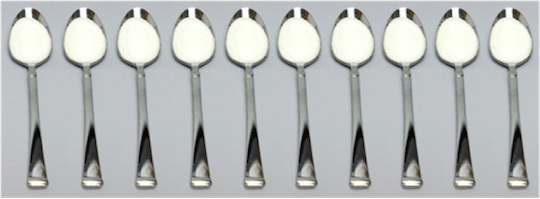
spoons

And that‘s before accounting for all the other carbs consumed throughout the day for breakfast, lunch, dinner, and from snacks and beverages.

So ask yourself this question: even if you are a 100% healthy 25-year-old muscle-bound athlete, would you ever ingest that much sugar willingly? Well, maybe under the influence of a controlled substance or torture…

But that’s exactly what’s being recommended for “health purposes” to children and adults. It‘s not surprising that so many Americans are suffering from the ravages of diabetes and obesity—a moderately active adult can utilize no more than about 200 grams of carbohydrates per day without encountering a scourge of the inevitable obesity, prediabetes, or diabetes.

The ratio of digestible carbohydrates (sugars) to fiber in vegetables, cereals, breads, beans, and legumes is, on average, similar to fruits. Thus, no matter how hard you try to mix’n’match, you’ll be getting harmed all the same.

Please do note that if you are healthy, active, and normal weight, there is nothing wrong with consuming fruits and vegetables in moderation. The point of this section is to impress on you that it is NOT OK to binge on fruits to ingest recommended daily intake of fiber.

This myth—that fruits and vegetables are the best source of dietary fiber—is probably the most pervasive and damaging of all. If 30 grams of fiber is what you’re really after, you’re better off getting it from supplements. These, after all, have almost no digestible carbs. But, then, of course, you run into those other persistent falsehoods…

Myth #2: Fiber reduces blood sugar levels and prevents diabetes, metabolic disorders, and weight gain.

Reality: That’s a blatant deception. If you consume 100 g of plain table sugar at once, the blood absorbs all 100 g of sugar almost as soon as it reaches the small intestine, where the assimilation takes place. If you add 30 g of fiber into the mix, the fiber may extend the rate of sugar assimilation into the blood, from, let‘s say, one hour to three.

But at the end of those extra three hours the blood will still absorb exactly the same 100 g of sugar—not an iota more, not an iota less. If you are a diabetic, the only difference will be that you‘ll require more extended (long-acting) insulin for type 1 diabetes, or larger doses of medication for type 2 diabetes in order to deal with slow-digesting sugars, and your blood glucose test will not spike as high after the meal.

But you‘re fooling no one but a glucose meter. In all other respects, the damage will be all the same, or even worse. And that‘s even before taking into account the negative impact of fiber on the digestive organs, or hyperinsulinemia and triglycerides on the heart, blood vessels, and blood pressure.

Myth #3: Fiber-rich foods improve digestion by slowing down the digestive process.

Reality: Fiber indeed slows down the “digestive process,” because it interferes with digestion in the stomach and, later, clogs the intestines the “whole nine yards.” The myth is that it can be good for health and the digestive process.

Here is what you get from delayed digestion: indigestion (dyspepsia), heartburn (GERD), gastritis (the inflammation of the stomach‘s mucosal membrane), peptic ulcers, enteritis (the inflammation of the intestinal mucosal membrane), and further down the chain, constipation, irritable bowel syndrome, ulcerative colitis, and Crohn‘s disease.

All this, in fact, is the core message of Fiber Menace: fiber slows down the digestive process! And slow digestion is ruinous for your health. Don‘t mess with fiber unless your gut is made of steel!

Myth #4: Fiber speeds food through the digestive tract, helping to protect it against cancer.

Reality: Not true. In fact, this claim directly contradicts the claim that fiber-rich foods slow down the digestive process. For a reality check, here’s an excerpt from a college-level physiology textbook that reveals the truth:

“Colonic Motility: Energy-rich meals with a high fat content increase motility [the rate of intestinal propulsion]; carbohydrates and proteins have no effect.”

R.F. Schmidt, G. Thews; Human Physiology, 2nd edition. 29.7:730 [link]

This, incidentally, is why low-fat diets and constipation commonly accompany each other. And don’t count on getting any cancer protection from fiber, either. That‘s yet another oft-repeated deception.

Myth #5: Fiber promotes a healthy digestive tract and reduces cancer risk.

Reality: Not true. Here’s what doctors-in-the-know have to say on the subject of the colon cancer/fiber connection:

Lack of Effect of a Low-Fat, High-Fiber Diet on the Recurrence of Colorectal Adenomas

“Adopting a diet that is low in fat and high in fiber, fruits, and vegetables does not influence the risk of recurrence of colorectal adenomas.”

Arthur Schatzkin, M.D et al. The New England Journal of Medicine; [link]

The excerpt below comes, of all places, from the Harvard School of Public Health:

Fiber and colon cancer

“For years, Americans have been told to consume a high-fiber diet to lower the risk of colon cancer—mainly on the basis of results from relatively small studies. Larger and better-designed studies have failed to show a link between fiber and colon cancer.”

Fiber: Start Roughing It [link]

Not convinced yet? Well, here is even more damning evidence from the U.S. Food and Drug Administration:

Letter Regarding Dietary Supplement Health Claim for Fiber With Respect to Colorectal Cancer

“Based on its review of the scientific evidence, FDA finds that (1) the most directly relevant, scientifically probative, and therefore most persuasive evidence (i.e., randomized, controlled clinical trials with fiber as a test substance) consistently finds that dietary fiber has no [preventive] effect on incidence of adenomatous polyps, a precursor of and surrogate marker for colorectal cancer; and (2) other available human evidence does not adequately differentiate dietary fiber from other components of diets rich in foods of plant origin, and thus is inconclusive as to whether diet-disease associations can be directly attributed to dietary fiber. FDA has concluded from this review that the totality of the publicly available scientific evidence not only demonstrates lack of significant scientific agreement as to the validity of a [preventive] relationship between dietary fiber and colorectal cancer, but also provides strong evidence that such a relationship does not exist.”

U. S. Food and Drug Administration – Center for Food Safety and Applied Nutrition Office of Nutritional Products, Labeling, and Dietary Supplements; [link]

Alas, the story doesn’t end there. Adding insult to injury, Chapter 10 of my book entitled Fiber Menace, “Colon Cancer” cites studies that demonstrate the connection between increased fiber consumption and colon cancer. Also, countries with the highest and lowest consumption of meat are compared. Not surprisingly, the countries with the lowest consumption of meat and, correspondingly, the highest consumption of carbohydrates, including fiber, have the highest rate of digestive cancers, particularly of the stomach.

Myth #6: Fiber offers protection from breast cancer.

Reality: A blatant, preposterous lie. According to the recent massive study jointly conducted by the U.S. Center for Disease Control and Prevention, the Ministry of Health of Mexico, and the American Institute for Cancer Research, it’s the opposite: women with the highest consumption of carbohydrates, and, correspondingly, of fiber, had the highest rates of breast cancer:

Carbohydrates and the Risk of Breast Cancer among Mexican Women

“In this population, a high percentage of calories from carbohydrate, but not from fat, was associated with increased breast cancer risk.”

Isabelle Romieu, et al; Cancer, Epidemiology, Biomarkers & Prevention; 2004 13: 1283–1289. [link]

Although this study has singled out carbohydrates as the culprit behind various cancers, where there’s smoke, there’s also fire: carbs and fiber are as inseparable as Siamese twins, as I have already explained in Myth #1.

Myth #7: Fiber lowers blood cholesterol levels, triglycerides, and prevents heart disease.

The myths about fiber’s role in coronary heart disease (CHD) and the management of elevated cholesterol have their roots in some dubious research, which culminated in “reduced mineral absorption and myriad of gastrointestinal disturbances” after the study participants were given supplements containing a mixture of guar gum, pectin, soy fiber, pea fiber, and corn bran along with a low-fat and reduced cholesterol diet.

The total reduction of LDL cholesterol after 15 weeks was from “7% to 8%”. As any cardiologist will tell you, the reduction of “bad” cholesterol from, let’s say, 180 to 166 mg/dL (-8%) is completely meaningless. Besides, if you cause someone to have a “myriad of gastrointestinal disturbances” in the process, that person is more likely to die prematurely from malnutrition and cancer than of stroke or heart attack.

Even then, this marginal reduction of cholesterol had little to do with fiber, and everything to do with the reduction of dietary fats. LDL cholesterol happens to be a major precursor to bile. The moment a person is placed on a low-fat diet, their cholesterol level drops because their liver no longer needs to produce as much bile.

In addition, intestinal inflammation caused by soluble fiber blocks the ability of bile components to get absorbed back into the bloodstream, further lowering the cholesterol level. This is as basic as the physiology of nutrition gets, and it makes the whole claim of a fiber-cholesterol connection a deliberate con.

There is another dimension to the con used to “prove” fiber‘s role in reducing cholesterol. Most of the studies on fiber’s cholesterol-lowering effect—particularly psyllium—used The American Heart Association’s (AHA) Step 1 diet.

The Step 1 diet is high in carbohydrates and low in fat by design, with less than 10% of total energy derived from saturated fat. During clinical studies among people using the Step 1 diet without added fiber, their total cholesterol fell by 8%, LDL cholesterol fell by 6%, and HDL cholesterol fell by 16%.

In other words, the Step 1 diet on its own, without any extra fiber and/or digestive side effects, demonstrates an almost identical drop in cholesterol as with added fiber. In legalese, this particular “coincidence” is called fraud, plain and simple.

So one fraud more, one fraud less…what‘s the worry, if my cholesterol goes down?

Well, there is a legitimate worry, at least, according to this respected source:

Problem with American Heart Association “Step 1″ diet

“Although the AHA Step 1 diet decreased total and LDL cholesterol levels in this group of women, it decreased HDL cholesterol by an even greater proportion. In women, a low HDL cholesterol concentration is a stronger independent predictor of cardiovascular disease risk than is elevated total cholesterol or LDL cholesterol. Therefore, women who follow AHA guidelines for lowering their serum cholesterol may actually be increasing their risk of heart disease”

Alan R. Gaby, M.D. Townsend Letter for Doctors and Patients [link]

Amazingly, back in 2001, the AHA replaced the Step 1 diet with the Step II, TLC, and ATP III diets [link], which are even more restrictive in terms of fat, and even more permissive in terms of carbohydrates.

And don’t get me started on triglycerides… First, nothing raises triglycerides as profoundly as a high-fiber diet does, because, paraphrasing the smoke-fire cliché, where there’s fiber, there’re carbohydrates, usually eight to ten times as much.

This fact—the more fiber you consume, particularly from natural sources, the higher your level of triglycerides from carbohydrates intake—has been dodging Dr. Dean Ornish [link] one of the most prominent proponents of a high-carb/high-fiber diet.

Second, once inside the colon, fiber itself gets fermented by intestinal bacteria. Among the byproducts of bacterial fermentation are short-chain fatty acids—butyrate, acetate, and propionate. Most of these fatty acids get assimilated directly into the bloodstream to provide energy.

According to the Dietary Reference Intakes manual “current data indicate that the [energy] yield is in the range of 1.5 to 2.5” calories per each gram of consumed fiber [link]. If you aren’t starving, the absorbed fatty acids unused for energy get metabolized by the liver into triglycerides for further storage as body fat.

Granted, a few calories here, a few calories there, may not seem like a lot. Still, if you are consuming 30 to 40 grams of fiber daily plus whatever “hidden” carbohydrates you are ingesting unknowingly along with processed food, it all adds up to epidemics of obesity, diabetes, and heart disease.

Myth #8: Fiber satisfies hunger and reduces appetite.

Reality: When the scientists from the Human Nutrition Research Center on Aging at Tufts University decided to look at this dubious claim, here is what they have found out:

Fermentable and Nonfermentable Fiber Supplements Did Not Alter Hunger, Satiety or Body Weight in a Pilot Study of Men and Women Consuming Self-Selected Diets

“Despite the large total intakes of FF [fermentable fiber - ed.] and NFF [non-fermetable fiber - ed.] supplements, there were no significant changes in body weight or fat during consumption of either type of fiber, even among the subjects with higher BMI.”

The Journal of Nutrition [link]

And as you keep digging deeper, you soon realize that consuming too much fiber may actually contribute to obesity. Because fiber rapidly absorbs water and expands in the stomach up to five times its original size and weight, it indeed pacifies the appetite for a short while.

Unfortunately, while faking satiety, expanded fiber also stretches out the stomach‘s chamber, and each new fill-up requires progressively more and more fiber to accomplish the same trick. Lo and behold, in order to reduce its capacity and “speed up” satiety, surgeons suture the stretched-out stomachs of obese individuals or squeeze them with a bridle (LAP-BAND©). A complete opposite of what fiber does.

Myth #9: Fiber prevents gallstones and kidney stones.

Reality: I‘ve seen several observational studies that claim fiber can prevent gallstones. It isn‘t true. It‘s common knowledge that diabetes and obesity are consistently associated with higher risk for gallstones, and both of these conditions are the direct outcome of excessive consumption of carbohydrates, and correspondingly, of fiber. Beyond these few studies, there isn‘t a shred of physiological, anatomical, clinical, or nutritional evidence that connects gallstone formation with fiber consumption.

Here‘s an excerpt from Fiber Menace that sheds further light on the gallstone-fiber connection:

Fiber’s affect on the small intestine: Not welcome at any price

Gallstones are formed from concentrated bile salts when the outflow of bile from the gallbladder is blocked. […] before they can form, something else must first obstruct the biliary ducts. Just like with pancreatitis, that “something” is either inflammatory disease or obstruction caused by fiber.

Women (in the West) are affected by gallstones far more than men, because they are more likely to maintain a “healthy” diet, which nowadays means a diet that is low in fat and high in fiber. Since the gallbladder concentrates bile pending a fatty meal, no fat in the meal means no release of bile. The longer the concentrated bile remains in the gallbladder, the higher the chance for gallstones to form (from bile salts).

Fiber Menace, page 25 [link]

Just as with gallstones, kidney stones are also common among people who suffer from diabetes and obesity, because excessive consumption of carbohydrates increases the excretion of urine, changes its chemistry, and predisposes to kidney stones.

To investigate this myth further, I consulted PubMed, a service of the National Library of Medicine, which is the most thorough compendium of medical research. I reviewed eighty-one articles published between 1972 and 2005 (the year I was researching my book) that mention the words “fiber” and “kidney stones”. Not a single one of them connected kidney stones to fiber consumption, while several specifically pointed out that an increased consumption of carbohydrates is one of the major contributing factors.

One article suggested that a diet free of digestible carbs, but containing fiber, makes urine composition less stones-prone. You don‘t have to be Dr. Watson to deduce that fiber—an indigestible substance—can‘t materially affect urine chemistry, because what can‘t get digested also can‘t reach the kidneys. Besides, it wasn’t the presence of fiber that did the “trick,” for those investigators, but the reduction in digestible carbohydrates.

Myth #10: Fiber prevents diverticular disease.

For a while, it was difficult to disprove this absurdity by appealing to common sense. So I devoted a whole chapter in Fiber Menace to explaining why fiber CAUSES diverticular disease. Thank God, I am no longer alone in this thinking:

Fiber Not Protective Against Diverticulosis

Contrary to popular medical wisdom, following a high-fiber diet has no protective effect against developing asymptomatic diverticulosis, according to a colonoscopy-based study presented at the 2011 Digestive Disease Week (DDW) meeting (abstract 275). In fact, the study showed that patients who ate more fiber actually had higher prevalence of the disease.

Gastroenterology and Endoscopy News, July 2011, Volume: 62:07 [link]

Fiber May Not Prevent Diverticular Disease

For decades, doctors have recommended high-fiber diets to patients at risk for developing the intestinal pouches, known as diverticula. The thinking has been that by keeping patients regular, a high-fiber diet can keep diverticula from forming. But the new study suggests the opposite may be true.

WebMD, January 23, 2012 [link]

A High-Fiber Diet Does Not Protect Against Asymptomatic Diverticulosis

A high-fiber diet and increased frequency of bowel movements are associated with greater, rather than lower, prevalence of diverticulosis. Hypotheses regarding risk factors for asymptomatic diverticulosis should be reconsidered.

Gastroenterology; Volume 142, Issue 2, Pages 266-272.e1, Feb. 2012 [link]

The only problem with all of the above research is that it may take another six to eight years to tell people what I was telling them eight years ago: if you wish to protect your gut from diverticular disease, keep fiber out of it.

Myth #11: Fiber is safe and effective for the treatment and prevention of diarrhea.

Reality: Actually, it’s the complete opposite—fiber, particularly soluble, is the most common cause of diarrhea in children and adults. That’s why it’s recommended as a laxative to begin with. The idea of fiber as a preventive treatment for diarrhea is one of the most preposterous and harmful fiber-related frauds.

Soluble fiber is widely present in fruits, vegetables, laxatives, and processed foods, such as yogurt, ice cream, sour cream, cream cheese, soy milk, non-dairy creamers, preserves, jellies, candies, cakes, snack bars, canned soups, frozen dinners, sauces, dressings, and endless others.

It’s always expertly concealed from scrutiny behind obscure names such as agar-agar, algae, alginate, β-glucan, cellulose gum, carrageen, fructooligosaccharides, guaran, guar gum, hemicellulose, Irish moss, kelp, lignin, mucilage, pectin, oligofructose, polydextrose, polylos, resistant dextrin, resistant starch, red algae, and others.

These inexpensive industrial fillers are added as stabilizers and volumizers to practically all processed foods, because they hold water, maintain shape, and fake “fattiness.” Besides, they are cheaply bought by the ton, and are resold retail by the gram for immense profit.

Once inside the body, these fiber fillers remain indigestible, hold onto water just as tight, and prevent absorption. This property—the malabsorption of fluids—lies behind soluble fiber‘s laxative effect: under normal circumstances a very limited amount of fluids enter the large intestine. When their amount exceeds the colon’s holding capacity, you get hit with diarrhea.

In other words, the term “laxative” is just a euphemism for a “diarrheal” agent. If you overdose on a fiber laxative, you’ll end up with diarrhea. If you “overdose” on fiber from food, you’ll end up with exactly the same diarrhea. But since fiber in food can’t be measured as reliably as fiber in capsules, wafers, or powders, it’s much easier to “overdose” the latter fiber and cause severe diarrhea.

Besides, fiber is even more offensive than synthetic laxatives, because the byproducts of its fermentation cause intestinal inflammation, flatulence, bloating, and cramping—just as described in medical references:

Malabsorption Syndromes

Colonic bacteria ferment unabsorbed carbohydrates into CO2, methane, H2, and short-chain fatty acids (butyrate, propionate, acetate, and lactate). These fatty acids cause diarrhea. The gases cause abdominal distention and bloating.

Gastrointestinal Disorders; The Merck Manual of Diagnosis and Therapy [link]

The diarrheal effect of soluble fiber is particularly harmful for children, because their smaller intestines need lesser amounts to provoke diarrhea. According to the Centers for Disease Control and Prevention:

The Management of Acute Diarrhea in Children

…diarrhea remains one of the most common pediatric illnesses. Each year, children less than 5 years of age experience 20-35 million episodes of diarrhea, which result in 2-3.5 million doctor visits, greater than 200,000 hospitalizations, and 325-425 deaths.

Centers for Disease Control and Prevention [link]

These figures are from 1992, the latest statistic I could find. It must be much worse today because fiber is so much more prevalent. And if you analyze the most basic facts, you’ll understand immediately why this travesty is taking place. Consider this:

A single adult dose of Metamucil®—a popular fiber laxative made from psyllium seed husks—contains 2 g of soluble fiber in 6 capsules [link]. One apple, one orange, and one banana—not an unusual number of fruits a child may eat throughout the day—contain a total 4 g of soluble fiber, or an equivalent of 12 capsules of Metamucil for a much larger adult.

And that’s on top of all the juices, cereals, yogurts, ice creams, candies, cakes, and all other processed food consumed on the same day, all loaded with fiber as well. No wonder that “diarrhea remains one of the most common pediatric illnesses” in the United States, and there is an acute shortage of pediatricians nationwide.

Myth #12: Fiber relieves chronic constipation.

I left this myth for last because it is the most pervasive. For the same false reasons that people believe in the cleansing prowess of fiber, everyone and their uncle also believes that fiber relieves constipation.

Not quite true. According to the experts from the American College of Gastroenterology’s Functional Gastrointestinal Disorders Task Force, all legitimate clinical trials “…did not demonstrate a significant improvement in stool frequency or consistency when compared with placebo.” [link]

In plain English, it means fiber is no better at relieving constipation than a sugar pill. Indeed, how could it be, when fiber causes constipation in the first place! Again, I describe the exact reasons behind the fiber-constipation connection in Fiber Menace.

Even The Merck Manual of Diagnosis and Therapy, the very first book your doctor consults when needing up-to-date medical advice, has recently changed their tune regarding fiber, clearly the outcome of my work.

“Fiber supplementation is particularly effective in treating normal-transit constipation but is not very effective for slow-transit constipation or defecatory disorders” [link]

In plain English, it means the following: “Fiber supplements will catapult healthy people into a loo because of their laxative effect. But for anyone with a history of chronic constipation, they don’t work.”

Finally, consider the stern warnings, that accompany Metamucil, a fiber supplement made from psyllium:

riteaid

So not only do fiber supplements not work for most people with chronic constipation, but they may also make them ill. Probably not ill enough to kill their libido as Dr. Kellogg originally intended, but imagine enjoying sex with your partner while being bloated and flatulent courtesy of extra fiber in your morning cereals.

That doesn’t describe a health food, does it?

Learn More About Fiber Menace at GutSense.org

03 Sep 20:42

“The Incredible Shrinking Tumor”

by Squatchy

Written by: Christine Moretti

Dear Robb:  I recently read an article in which you were prominently featured on the Indian Country  Today website.  I simply was inspired to write to you to share my story.

Last spring I tragically and suddenly lost my sister.  Thirteen days later I suffered a seizure that caused total paralysis of my left leg from my waist down lasting approximately 15 minutes until feeling began to return.  I was subsequently diagnosed with a Menningioma brain tumor.  I was told at the time of my diagnosis that my tumor was approximately the size of a large green grape and that it was in a dangerous location for removal.  The tumor was also pressing on my motor pathway, which is why I experienced the type of seizure I had.  My neurosurgeon was certain that the shock of my sister’s passing had a lot to do with the tumor suddenly taking off in size but that the tumor had been there for quite some time.  I am fortunate to have as my doctor a nationally recognized neurosurgeon/neuro oncologist from Thomas Jefferson University Hospital in my hometown of Philadelphia, PA.

Not long after this first visit with the neurosurgeon, my youngest son, Jeremy,   who has always been interested in health and fitness, researched and found your website and book, The Paleo Solution.  With enthusiasm, Jeremy urged me to try this new way of eating.  I have to admit I was skeptical at first, but I really wanted to make a change and I wanted to do all I could to boost my health in light of the life altering loss of my sister and brain tumor diagnosis.  Jeremy and I both began to follow paleo in the early fall of last year.  Immediately, we began to lose weight and to feel so much better.  Our cravings for grains and sugar decreased dramatically.  I was truly amazed at how I didn’t crave them as soon as I cut them out of my daily food intake.  The weight just fell off us.  I read your book and saw early on that you mentioned brain tumors specifically.  I was even more determined to continue with this new way of eating.

My six month follow up with the neurosurgeon was scheduled for November.  (I have had three MRI brain scans and three visits in total my since my diagnosis in May 2012.)  The most recent scan was this June.

On my first visit, the doctor ended the consult with the words, “If anything happens to you, go to the ER first and call me second”.  I was also put on anti-seizure medication at the first visit.

At my second visit and scan in November 2012, the doctor pulled up side by side images of my brain from May to November and you could visibly see the reduction in size.  I asked him if that ever happened and he turned to me and said, “No!” with a look of total shock and amazement on his face.  These types of tumors are not known to shrink on their own without benefit of radiation or other type of non-surgical intervention.  I was happy to share with my neurosurgeon that I had begun eating the paleo way and he definitely approved.

This past June, I had another follow up MRI and visit with my doctor.   This time the tumor had shrunk even further and he told me I had “the incredible shrinking tumor”!  Not only have I lost approximately 70 pounds – going from a size 18 to a size 6-8, my tumor is also shrinking right along with me.  I am beyond thankful and happy that all of this has happened.  My son, Jeremy, has also lost about 40 pounds and we are both in the best shape of our lives – thanks to this way of eating.  We also cook at home now six out of seven nights a week. It is my goal to make each meal we eat as bright and colorful and as fresh, organic and as healthy as possible.  My whole family has benefited from this new way of eating.  I won’t say I never have a bowl of ice cream now and again, but I know for certain I will never return to our old way of eating.  Thank you for being such an advocate of this lifestyle.  I just wish I had known about it years ago, but I firmly believe it is never too late to make a healthy change.

Thank you for letting me share my story.

Best regards,

Christine Moretti


ChristineM


03 Sep 18:28

New York City tax economics (by Russ Roberts)

by Russ Roberts

Fabulous article by Nicole Gelinas in the New York Post on the NYC Mayoral candidate’s proposal to increase tax rates on the rich to fund a longer school day for pre-K children. Read the whole thing but here are a couple of interesting facts:

De Blasio’s scheme is this: Hike income taxes by 13.8 percent on New Yorkers making above half a million dollars annually.

He’d use this bounty — $530 million a year — to pay for 38,177 pre-kindergarten students to go to school all day instead a half-day. He’d create 10,000 new pre-K slots, too.

The rest, $188 million, he’d spend on older kids’ after-school activities. After five years, de Blasio would let this tax surcharge lapse, and — he says — find another way to pay.

De Blasio’s plan has pushed him to frontrunner status in the Democratic primary.

But many voters don’t realize: We already spend $24.6 billion a year on education — 52.7 percent more, adjusted for inflation, than we did when Mayor Bloomberg took office nearly 12 years ago.

Wow. A 53% real increase. Those New York kids must be really smart now. And as Gelinas wisely points out. Obviously that increase wasn’t nearly enough. There appear to be about 1.1 million kids in NYC’s public schools. That’s about $22,000 per pupil. I’m sure every penny is wisely spent. So clearly, if you want to fund a longer pre-K day, you have to raise taxes, right?

And this:

In 2009, the top 1 percent of taxpayers (the 34,598 households making above $493,439 annually) paid 43.2 percent of city income taxes (they made 33.9 percent of income), according to the city’s Independent Budget Office. Each of these families paid an average $75,477.

The top 1% made 34% of the income but paid 43% of the taxes. If you listen to EconTalk you know that I think that the salaries in the financial sector (and for economists outside the financial sector) have been distorted by implicit subsidies. That’s part of the reason a mere 1% make 34% of the income. But note that they do pay 43% of the taxes. You’ll often hear how the rich have used their political power to lower their tax burden. Yes, some of the rich have a disproportionate share of political power. But their power must be pretty limited if they still pay 43% of the income taxes collected in New York City.

Read the whole article. Lots of good microeconomics.


03 Sep 18:24

DNC: U.S. has 'dozens' of allies against Syria but they are secret...

Jts5665

Amongst them, the Elven, dwarven, pixie and unicorn alliances...


DNC: U.S. has 'dozens' of allies against Syria but they are secret...


(Third column, 1st story, link)
Related stories:
31 Aug 06:07

Meet the Person Who Wants to Run Your Life -- And Obama Wants to Help Her

by admin
Jts5665

Wow

I am a bit late on this, but like most libertarians I was horrified by this article in the Mail Online about Obama Administration efforts to nudge us all into "good" behavior.  This is the person, Maya Shankar, who wants to substitute her decision-making priorities for your own

article-2381478-1B11DB61000005DC-332_308x425


If the notion -- that a 20-something person who has apparently never held a job in the productive economy is  telling you she knows better what is good for you -- is not absurd on its face, here are a few other reasons to distrust this plan.

  • Proponents first, second, and third argument for doing this kind of thing is that it is all based on "science".  But a lot of the so-called science is total crap.  Medical literature is filled with false panics that are eventually retracted.  And most social science findings are frankly garbage.  If you have some behavior you want to nudge, and you give a university a nice grant, I can guarantee you that you can get a study supporting whatever behavior you want to foster or curtail.  Just look at the number of public universities in corn-growing states that manage to find justifications for ethanol subsidies.  Recycling is a great example, mentioned several times in the article.  Research supports the sensibility of recycling aluminum and steel, but says that recycling glass and plastic and paper are either worthless or cost more in resources than they save.  But nudgers never-the-less push for recycling of all this stuff.  Nudging quickly starts looking more like religion than science.
  • The 300 million people in this country have 300 million different sets of priorities and personal circumstances.  It is the worst hubris to think that one can make one decision that is correct for everyone.  Name any supposedly short-sighted behavior -- say, not getting health insurance when one is young -- and I can name numerous circumstances where this is a perfectly valid choice and risk to take.
  • The justification for this effort is social science research about how people manage decisions that involve short-term and long-term consequences

Some behavioral scientists believe they can improve people's self-control by understanding the relationship between short term memory, intelligence and delay discounting.

This has mostly been used to counter compulsive gambling and substance abuse, but Shankar's entry into government science circles may indicate that health insurance objectors and lapsed recyclers could soon fall into a similar category

I am sure there is a grain of truth in this -- all of us likely have examples of where we made a decision to avoid short term pain that we regretted.  But it is hilarious to think that government officials will somehow do better.  As I have written before, the discount rate on pain applied by most legislators is infinite.  They will do any crazy ridiculous thing that has horrible implications five or ten years from now if they can just get through today.  Why else do government bodies run massive sustained deficits and give away unsustainable pension and retirement packages except that they take no consideration of future consequences.  And it is these people Maya wants to put in charge of teaching me about delay discounting?

  • It probably goes without saying, but nudging quickly becomes politicized.  Is nudging 20-something health men to buy health insurance really in their best interests, or does it help keep an important Obama program from failing?

Postscript:  Here is a great example of just how poorly the government manages delay discounting.  In these cases, municipalities are saddling taxpayers with almost certainly bankrupting future debt to avoid paying any short-term costs.

Texas school districts have made use of another controversial financing technique: capital appreciation bonds. Used to finance construction, these bonds defer interest payments, often for decades. The extension saves the borrower from spending on repayment right now, but it burdens a future generation with significantly higher costs. Some capital appreciation bonds wind up costing a municipality ten times what it originally borrowed. From 2007 through 2011 alone, research by the Texas legislature shows, the state’s municipalities and school districts issued 700 of these bonds, raising $2.3 billion—but with a price tag of $23 billion in future interest payments. To build new schools, one fast-growing school district, Leander, has accumulated $773 million in outstanding debt through capital appreciation bonds.

Capital appreciation bonds have also ignited controversy in California, where school districts facing stagnant tax revenues and higher costs have used them to borrow money without any immediate budget impact. One school district in San Diego County, Poway Unified, won voter approval to borrow $100 million by promising that the move wouldn’t raise local taxes. To live up to that promise, Poway used bonds that postponed interest payments for 20 years. But future Poway residents will be paying off the debt—nearly $1 billion, all told—until 2051. After revelations that a handful of other districts were also using capital appreciation bonds, the California legislature outlawed them earlier this year. Other states, including Texas, are considering similar bans.

Or here is another example, of New York (the state that is home to the mayor who tries to nudge his residents on everything from soft drinks to salt)  using trickery to consume 25 years of revenue in one year.

Other New York deals engineered without voter say-so include a $2.7 billion bond offering in 2003, backed by 25 years’ worth of revenues from the state’s gigantic settlement with tobacco companies. To circumvent borrowing limits, the state created an independent corporation to issue the bonds and then used the money from the bond sale to close a budget deficit—instantly consuming most of the tobacco settlement, which now had to be used to pay off the debt.

By the way, I recommend the whole linked article.  It is a pretty broad survey of how state and local governments are building up so much debt, both on and off the books, and how politicians bend every law just to be able to spend a few more dollars today.

31 Aug 06:04

Spiegel: Scientists Hopelessly Stumped By Present Ocean Cooling, Still Insist They Are Certain About The Future!

by P Gosselin

Right now we have over 65% more Arctic sea ice area, a record high sea ice area around Antarctica, a record low tornado season, record late start start hurricane season, 15 years of no global warming, a cooling tropical Pacific and a “strongly cooling Southern Ocean”.

Bojanowski

At Twitter Axel Bojanowski links to his Spiegel article describing a climate science that is more confused and uncertain than ever.

The above are just some examples illustrating just how embarrassingly wrong climate science has been. But hey! The PIK says Munich had a record warm Christmas day last year!

Just breaking is the study that blames a cooling tropical Pacific for the stall in global warming, and it is hitting the climate science community like a meteor. If anything, it confirms that natural climate cycles do dominate after all.

Meteorologist Joe Bastardi commented: “You gotta love these guys ‘discovering’ what all of us have been saying.”

Spiegel: Hockey Stick “has lost its weight”

Reaction is now coming from Spiegel. Axel Bojanowski starts by reminding readers: “The climate has not warmed further in 15 years” despite rising atmospheric CO2 concentrations. The temperature hockey stick is also broken. Here Bojanowski writes that “the recent climate development means that it has lost its weight” and that 98% of the climate models had made false forecasts, citing a new study by German scientists.”

Bojanowski explains how the oceans appear to be absorbing heat and keeping the global atmospheric temperature stable, saying that most of the energy ends up in the oceans; “They absorb about 90% of the heat.” But this is not a discovery, and is something the skeptics have been saying for years. It’s actually one of Fritz Vahrenholt’s and Sebastian Lüning’s central themes in their book THE NEGLECTED SUN, for which they were viciously attacked and ridiculed by the German science and media establishment just last year. Now we see they were right.

Recall that the strong El Nino events of the 1980s and 1990s were ominous signs of global warming as heat trapped by CO2 was warming the ocean surface. Now, suddenly when things are cooling, it’s the other way around: the oceans are cooling the atmosphere!

Bojanowski explains that although the tropical East Pacific covers only a twelfth of the Earth’s surface, the cool surface waters there have kept the global temperature from rising over the last years. Spiegel writes that leading climatologists such as Stefan Brönnimann of the University of Bern, Doug Smith of the Met Office, and Gerald Meehl of the National Center for Atmospheric Research say that the explanation has considerable merit.

Bojanowski explains that it’s a mystery to scientists as to why the Pacific would cool in the first place. But not everyone is convinced that this is the explanation for the recent global warming stop. Kevin Trenberth for example still hasn’t found his missing heat. Spiegel writes:

The study does not explain in any way the unusual temperature development,” says Kevin Trenberth of the National Center for Atmospheric Research in the USA (NOAA). An explanation is missing as to where the heat may have gone. A team led by Trenberth recently were able to show that the deep ocean may have swallowed up a third of the global warming.”

Quadruple whammy

Bojanowski then looks at other possible explanations for the “missing heat”, writing that there may have been “changes in the Earth’s radiation budget.”

For example upper atmospheric layers have dried out over the past years. The water vapor there acts as a heat buffer. The aridity of the stratosphere has contributed to the pause in the warming, scientists report.”

Bojanoski also brings up that volcanoes or Chinese aerosols may have dimmed out the warming. The whole thing is an increasingly baffling mystery to the scientists.

On stratosphere, is Spiegel describing the 4th component of a quadruple whammy? Already we have: 1) low solar activity, 2) a negative PDO, 3) a starting negative AMO and now 4) a dried out stratosphere that lets massive amounts of heat radiate out into space. Sounds like the potent ingredients of a nasty mini ice age.

Burgeoning confusion taking over climate science

To add to the ever burgeoning climate science confusion and uncertainty, Spiegel also quotes Mojib Latif of the Helmholtz-Center for Ocean Sciences in Kiel, Germany (Latif correctly predicted that the oceans would stop the warming in 2008).

The Southern Ocean has cooled strongly over the last decades; it must have contributed to the pause in global warming.”

With all the uncertainty and surprises, you’d think the alarmists would start reconsidering their positions. But you’d be wrong. They still remain devout CO2 believers, desperately clinging to their CO2 and models. Expect them to go into total spin mode to salvage what they can. But no matter what they do, one thing is now clearer than ever: The models have been dead wrong, and the scientists are more confused than ever about the climate. They are hopelessly stumped. Spiegel writes at the end:

Also the British Met Office believes that the global warming pause, will continue for a few more years. However, the temperature buffer of the oceans is only temporary, Brönnimann believes. The greenhouse gases will unleash their warming impacts, postulates the UN climate report, which will soon be released. It’s quite possible that even an accelerated warming phase is coming.”

Now I am laughing myself to near death…not at Spiegel, but at the devout alarmists. In a nutshell: At present the alarmists are more perplexed than ever, yet they want us to believe they are totally certain about the future? The climate charlatans are now looking more and more like obstinate fools.


31 Aug 05:53

New Study Finds That State Crime Labs Are Paid Per Conviction

by Radley Balko
I've previously written about the cognitive bias problem in state crime labs. This is the bias that can creep into the work of crime lab analysts when they report to, say, a state police agency, or the state attorney general. If they're considered part of the state's "team" -- if performance reviews and job assessments are done by police or prosecutors -- even the most honest and conscientious of analysts are at risk of cognitive bias. Hence, the countless and continuing crime lab scandals we've seen over the last couple decades. And this of course doesn't even touch on the more blatant examples of outright corruption.

In a new paper for the journal Criminal Justice Ethics, Roger Koppl and Meghan Sacks look at how the criminal justice system actually incentivizes wrongful convictions. In their section on state crime labs, they discover some astonishing new information about how many of these labs are funded.


Funding crime labs through court-assessed fees creates another channel for bias to enter crime lab analyses. In jurisdictions with this practice the crime lab receives a sum of money for each conviction of a given type. Ray Wickenheiser says, ‘‘Collection of court costs is the only stable source of funding for the Acadiana Crime Lab. $10 is received for each guilty plea or verdict from each speeding ticket, and $50 from each DWI (Driving While Impaired) and drug offense.’’

In Broward County, Florida, ‘‘Monies deposited in the Trust Fund are principally court costs assessed upon conviction of driving or boating under the influence ($50) or selling, manufacturing, delivery, or possession of a controlled substance ($100).’’

Several state statutory schemes require defendants to pay crime laboratory fees upon conviction. North Carolina General Statutes require, ‘‘[f]or the services of’’ the state or local crime lab, that judges in criminal cases assess a $600 fee to be charged ‘‘upon conviction’’ and remitted to the law enforcement agency containing the lab whenever that lab ‘‘performed DNA analysis of the crime, tests of bodily fluids of the defendant for the presence of alcohol or controlled substances, or analysis of any controlled substance possessed by the defendant or the defendant’s agent.’’

Illinois crime labs receive fees upon convictions for sex offenses, controlled substance offenses, and those involving driving under the influence. Mississippi crime labs require crime laboratory fees for various conviction types, including arson, aiding suicide, and driving while intoxicated.

Similar provisions exist in Alabama, New Mexico, Kentucky, New Jersey, Virginia, and, until recently, Michigan. Other states have broadened the scope even further. Washington statutes require a $100 crime lab fee for any conviction that involves lab analysis. Kansas statutes require offenders ‘‘to pay a separate court cost of $400 for every individual offense if forensic science or laboratory services or forensic computer examination services are provided in connection with the investigation.’’
In addition to those already listed, the following states also require crime lab fees in connection with various conviction types: Arizona, California, Missouri, Tennessee, and Wisconsin.


Think about how these fee structures play out in the day-to-day work in these labs. Every analyst knows that a test result implicating a suspect will result in a fee paid to the lab. Every result that clears a suspect means no fee. They're literally being paid to provide the analysis to win convictions. Their findings are then presented to juries as the careful, meticulous work of an objective scientist.

No wonder there have been so many scandals. I'm sure we'll continue to see more.

(Disclosure: In 2008, Koppl and I co-wrote an article for Slate on how to fix some of these problems.)
30 Aug 18:43

Court Says Feds Don't Have To Reveal Secret Evidence It Gathered Against 'Terror' Suspect Using FISA

by Mike Masnick
Adel Daoud is an American teen who was arrested last year in one of the FBI's many infamous home grown plots, in which FBI agents entice people into claiming they want to take part in a terror plot, plan the whole thing, give the person a fake bomb, and then arrest them. In this case, the "plot" which only involved Daoud and a bunch of FBI agents, was supposedly to bomb a Chicago bar. Daoud had no actual way of doing this until the FBI showed up and "helped." And then arrested him and celebrated, while admitting the public was "never at risk." Well, duh.

However, the case has been taking some interesting turns. Late last year, when the Senate was "debating" the renewal of the FISA Amendments Act (a key part of the NSA's surveillance program), Senator (and Senate Intelligence Commission boss) Dianne Feinstein pointed to the Daoud case as evidence for why the FAA needed to be renewed, claiming directly that the FISA Amendments Act was used to stop "a plot to bomb a downtown Chicago bar."

Given that, Daoud's lawyers sought access to the evidence that was obtained via the FISA Amendments Act. This is basic due process. Someone who is accused of a crime is supposed to have access to all of the evidence that was used against him. That was back in May, before the Snowden leaks, and before the revelations that the NSA and other agencies have used questionable surveillance methods to tip off other agencies of people to target, and then had them "launder" the evidence by trying to recreate evidence obtained in a more legal fashion to use against them -- also known as "parallel construction."

Back on August 9th, Daoud's lawyers made a much more thorough request for the evidence obtained via the FAA. As they note, there may be significant problems with the FISA information, including, but not limited to the FISA application for electronic surveillance may fail to establish probable cause that Dauoud was "an agent of a foreign power." As they note, he was an American citizen and high school student in suburban Chicago. They also suggest the FISA application may have contained material falsehoods or omissions and might violate the 4th Amendment. The surveillance also may have violated the FISA law. There are many other reasons they bring up as well.

The Justice Department (of course) argued that it shouldn't have to hand over any of this info, in part because it's classified and in part because they're not going to use that evidence against Daoud.

Unfortunately, the court wasted little time in agreeing with the feds that they don't need to turn over the evidence collected under FISA.

This is troublesome on a variety of levels. First of all, it seems like a clear due process violation, in which you're supposed to be able to see the evidence used against you. Second, it's a victory for "parallel construction," effectively giving the feds a green light to launder illegally obtained evidence, using it to "construct" legitimately obtained evidence. But, more directly, this issue was raised a few months ago, because the US Solicitor General had told the Supreme Court that any defendant who had FISA-collected evidence used in their arrest would have standing to challenge FISA because the government would have to disclose it. And, after it came out that the government wasn't disclosing it, the DOJ promised that, going forward it would provide such information.

Except that it's not doing so here. This is tremendously sketchy. As others are noting, if the evidence was legally obtained and really showed potential threats, why would they hide it?
The government’s successful attempt to keep the surveillance secret in the Daoud trial suggests that it either lacks confidence in the constitutionality of the spying or the Justice Department is still struggling to embrace the greater transparency on surveillance recently promised by the Obama administration—or both.
And, on top of that, the court has now sanctified this whole practice of abusing surveillance to spy on people, and then laundering the evidence so no one can challenge it. This is terrible, and hopefully an appeal on this particular issue is forthcoming.

Permalink | Comments | Email This Story


30 Aug 04:12

Video: Family Farmers Fight Michigan Township For Their Animals

by Tracy Oppenheimer
Jts5665

Fighting the mini-dictators...

"Family Farmers Fight Michigan Township For Their Animals" is the latest video from ReasonTV. Watch above or click on the link below for video, full text, supporting links, downloadable versions, and more ReasonTV clips.

View this article.

28 Aug 21:24

A Dream on Hold

by Brink Lindsey

Brink Lindsey

Matt Yglesias today cites data to the effect that, while the gap between blacks and whites in completing high school has been steadily closing in recent decades, racial gaps in income and wealth have remained stubbornly large. This discrepancy suggests that blacks have made real progress in raising their relative skill levels but for some reason they aren’t reaping the rewards of that progress in the workplace.

Alas, the solution to this puzzle is that the purported racial progress in the classroom is in fact a statistical mirage. The big problem is that the official stats on high school completion rates count GED holders as high school completers, despite the fact that both economic and social outcomes for GED holders much more closely resemble those for high school dropouts than those for people who actually earn a high school diploma. And it turns out that the GED program is used disproportionately by blacks – to a significant extent because black inmates are earning them in prison. So a big increase in GED certifications for blacks is portrayed as educational progress when in fact it is a byproduct of socially catastrophic mass incarceration.

Nobel Prize-winning economist James Heckman from the University of Chicago and coauthor Paul LaFontaine have found that only about 65 percent of blacks finish high school with a diploma, far below the level indicated by the official stats on high school completion. Furthermore, they find no evidence of black-white convergence in high school graduation rates over the past 35 years. Along similar lines, a study by Derek Neal of the University of Chicago found that the black-white gap in educational attainment stopped shrinking around 1990. Neal also looked at test scores and reached similar conclusions: convergence in black-white test score gaps came to a halt in the late 1980s.

The sad fact is that, after great progress through much of the 20th century, racial disparities in human capital levels have remained stuck for decades. The problem isn’t that the marketplace is shortchanging blacks for their rising job skills; the problem is that blacks’ job skills are still so low. This, in turn, is part of a much larger slowdown in human capital accumulation that I talk about in my most recent book.

28 Aug 16:37

MN Judge Refuses To Throw Out Case Against Citizen Recording Police, EMS

by Timothy Geigner
Back in January, I wrote about an exceptionally odd case in Minnesota in which a private citizen had his recording device liberated from his person by police after he recorded them patting down a bloodied man before putting him in an ambulance. What made it odd wasn’t what the police did initially, as that happens far too often these days, but in that Andrew Henderson was then charged with disorderly conduct and obstruction, with the paperwork describing what he’d done as a HIPAA violation. In case your common-sense-o-meter isn’t functioning today, that claim is bullshit, since HIPAA covers actions by healthcare providers in how they deal with patient information. In addition, the claim is at odds with another recording Henderson made of the officer that took his property, in which deputy Jacqueline Muellner claimed she was taking the device in as “evidence.” This “evidence” was subsequently deleted before Henderson’s recording device was given back to him, leading me to wonder when the case against Henderson would be tossed out to make room for one against deputy Muellner.

The answer, unfortunately, might be never. Ramsey County Judge Edward Wilson has denied Henderson’s attempt to get the case thrown out, saying that the first amendment doesn’t apply. He also refused to throw out the obstruction charge, despite the fact that the bench Henderson had been sitting on is roughly thirty feet from where the ambulance was parked.
Wilson, the judge, wrote in his order that "it is not necessary that one engage in a physical act to interfere or obstruct. It is sufficient if the defendant's actions or conduct had the effect of physically obstructing or interfering with a member of an ambulance crew."
Got it now? Obstruction doesn’t actually mean obstruction, it means either obstruction or doing something that makes professional police and EMS folk not able to do their jobs properly. This, apparently, includes recording them from thirty feet away, which puts into question exactly how many Minnesota police and EMS workers suffer from the kind of ADD my dog has when I take her on walks. I can imagine it now: EMS worker kneels in front of patient, EMS worker begins wiping away blood on patient’s face, EMS worker asks patient if he remembers his name, EMS worker cannot hear response because he’s run into heavy traffic chasing a squirrel.

And, while the disorderly conduct charge absolutely reeks of the police throwing feces at the wall to see what sticks, deputy Muellner ran away and retired to become former-deputy Muellner, with all of her benefits in place and without any formal inquiry into why she destroyed evidence so important that it was worth seizing private property.

However, while the news is all bad thus far, Henderson’s lawyers are promising to take this to trial, so we’ll just have to see if the judicial process has a bit more sense than judicial officers of the court.

Permalink | Comments | Email This Story


28 Aug 15:51

Fordham Study Shows "Common Core" Unnecessary

by Andrew J. Coulson

Andrew J. Coulson

The Fordham Institute released today a (“groundbreaking”) study titled “What Parents Want,” which finds that:

nearly all parents seek schools with a solid core curriculum in reading and math; an emphasis on science, technology, engineering, and math (STEM) education; and the development in students of good study habits, strong critical thinking skills, and excellent verbal and written communication skills. But some parents also prefer specializations and emphases that are only possible in a system of school choice.

That summary could just as easily describe chapter 1 of my 1999 book Market Education, which reviewed 20 years of public opinion research on people’s educational goals and came to the same conclusion. So far so good.

Upon (re-)discovering that parents already share a “solid core” of educational expectations, do Fordham’s Michael Petrilli and Checker Finn reluctantly abandon their erstwhile attachment to the government-backed standards and testing known as “Common Core”? After all, in a free marketplace with lots of overlap in consumer demands, there will be substantial overlap in what providers deliver—all voluntarily; no need for government nudging. [I am shocked, shocked, to discover that Apple puts a web browser on its iPhone, similar to the one on my Android phone!?! Even without a government mandate!]

Strangely, but not unexpectedly, that is not what Petrilli and Finn elect to do. On the contrary, they conclude that the freely-occurring commonality among parents’ demands “bodes well for policy initiatives such as the Common Core State Standards, which are designed to deliver much of that.”

Translation: families would pursue—and educators would thus provide—a common core of studies voluntarily, therefore, governments should compel educators to adhere to a particular set of standards cooked up by a group of bureaucrats and arm-twisted into place by the federal government. Because, really, when has anything pursued voluntarily not been improved by the addition of government compulsion?

For those who want to believe that the state must control what goes on in classrooms, no amount of evidence will ever convince them otherwise. But for the rest of the population, Fordham’s study will go a long way toward showing that efforts like “Common Core” are, at best, superfluous. And it is certainly not the only evidence of this fact. That same message is driven home by decades of modern scientific research and by millennia of education history. Indeed in the birthplace of Western civilization, the government played no role in education and yet a common core of studies evolved naturally in its free educational marketplace, in response to shared parental demand. The results were remarkable. As I wrote in Market Education: The Unknown History:

Athenian social and political life was plagued at times by many of the same flaws that confront us today and that we have battled against in our own recent past: slavery, sexism, and belligerent foreign policy among them…, but we can say this: Athenian parents had complete discretion over the content and manner of their children’s education, and these children went on to create a culture responsible for some of the greatest advances in art, science, and human liberty in history. —p. 49 

28 Aug 15:18

Bonus Quotation of the Day…

by Don Boudreaux

is brought to you by EconLog’s Art Carden; it’s from page 44 of Deirdre McCloskey’s 2006 volume, The Bourgeois Virtues; I had marked this quotation to be used as an eventual entry in my own “Q.o.D.” series here at the Cafe, but why wait?  It’s splendid!

The tempting shortcut of taxing the rich has not worked, for two reasons.  First, I repeat, taxation is taking, and as the philosopher Edward Feser puts it, “Respecting another’s self-ownership … [reflects] one’s recognition that that other person does not exist for you …  The socialist or liberal egalitarian … rather than the Nozickian libertarian … is … more plausibly accused of ‘selfishness.’”  No left egalitarian has explained how such takings square with Kant’s second formulation of the categorical imperative: “So act as to use humanity, both in your own person and in the person of every other, always at the same time as an end, never simply as a means.”  Taxing Peter to pay Paul is using Peter for Paul.  It is corrupting.  Modern governments have been encouraged to think that any abuse of Peter is just fine, that Peter is a slave available for any duty that the ruler has in mind.  A little like nonmodern governments.

27 Aug 01:19

LINDSEY'S TURN: Senator's Challengers Line Up on the Right...


LINDSEY'S TURN: Senator's Challengers Line Up on the Right...


(Third column, 18th story, link)

26 Aug 20:22

Cover All the Bases

by Harvey

Chris Christie has signed legislation that orders the installation of signs throughout New Jersey to remind drivers not to text and drive.

Next: sending out texts telling people not to get distracted by road signs while driving.

Send to Kindle
26 Aug 13:40

NSA Admits: Okay, Okay, There Have Been A Bunch Of Intentional Abuses, Including Spying On Love Interests

by Mike Masnick
So, this week, we wrote about the NSA quietly admitting that there had been intentional abuses of its surveillance infrastructure, despite earlier claims by NSA boss Keith Alexander and various folks in Congress that there had been absolutely no "intentional" abuses. Late on Friday (of course) the NSA finally put out an official statement admitting to an average of one intentional abuser per year over the past ten years. The AP is reporting that at least one of the abuses involved an NSA employee spying on a former spouse. Meanwhile, the Wall Street Journal suggests that spying on love interests happens somewhat more often:
The practice isn’t frequent — one official estimated a handful of cases in the last decade — but it’s common enough to garner its own spycraft label: LOVEINT.
A handful is still significantly more than once. And it's a lot more than the "zero" times we'd been told about repeatedly by defenders of the program.

While the NSA says it takes these abuses seriously, there's no indication that the analyst was fired.

Much more troubling is that it appears that the NSA only told its oversight committee in the Senate about all of this a few days ago:
The Senate Intelligence Committee was briefed this week on the willful violations by the NSA's inspector general's office, as first reported by Bloomberg.

"The committee has learned that in isolated cases over the past decade, a very small number of NSA personnel have violated NSA procedures — in roughly one case per year," Sen. Dianne Feinstein, the California Democrat who chairs the committee, said in a statement Friday.
Of course, this is the same Dianne Feinstein who, exactly a week ago, said the following:
As I have said previously, the committee has never identified an instance in which the NSA has intentionally abused its authority to conduct surveillance for inappropriate purposes.
Yeah. Because apparently the NSA chose not to tell the committee until a few days later, despite it happening for years.

And, of course, they release this all on a Friday night, hoping that it'll avoid the news cycle...

In the meantime, the NSA just made Senator Feinstein look like a complete fool. She's been its strongest defender in Congress for years, and has stood up for it time and time again, despite all of this questionable activity. Then, last week, it lets her tell lies about it without telling her beforehand that there had been such abuses. At this point, it's abundantly clear that Feinstein's "oversight" of the NSA is a joke. She's either incompetent or lying. Either way, it appears that the NSA is running circles around her, and isn't subject to any real Congressional oversight. At some point, you'd think that maybe she'd stop defending it and actually start doing her job when it comes to oversight. You'd think the fact that it let her make a complete fool of herself by claiming there had been no intentional abuses should make Feinstein realize that the NSA situation is out of control. But, tragically, this seems unlikely. Even her statement seems to want to minimize the seriousness of the fact that she -- the person in charge of oversight -- was completely kept in the dark about very serious intentional abuses. Senator Feinstein just got hung out to dry by the NSA. You'd think she'd stop going to bat for it and its lies.

Either way, we've now gone from General Keith Alexander and Feinstein claiming "no abuses," to them saying no "intentional" abuses, to this latest admission of plenty of intentional abuses, including spying on lovers. Perhaps, instead of lying, it's time for the NSA to come clean and to get some real oversight.

Permalink | Comments | Email This Story