Shared posts

06 Sep 03:58

Penny Arcade, Geek Culture, and Hegel’s “Beautiful Soul”

by Three Fingered Fox
John Costello

Must-read.

I’m assuming you already know about Penny Arcade (PA), PAX, and the dickwolves. If you don’t, here is a summary, and here is a chronology. As you can see, this is one of those internet social-justice kerfluffles that was bottled in vintage.

They’re at it again. Just to be clear, before we get into the dry philosophy, I think Krahulik is behaving like a pig. A very pointed and intelligent denunciation of his conduct can be found here [Penny Arcade and the Slow Murder of Satire, by MammonMachine].

I want to talk about something a little different. I’ve long been uncomfortable with geek culture, despite arguably being a geek, and I’ve been trying to understand why I feel that way. Geek culture has pathologies that are not wholly different from what infects most American male youth culture, but they appear in a peculiar way. I think Hegel can help us understand what’s going on.

There’s a section in Hegel’s Phenomenology of Spirit in which Hegel is describing how we develop our consciences by encountering other people.

Say you’ve done something wrong. You did something dumb; you should have known better; you hurt people. What do you do? You apologize.

But an apology is a strange sort of act. An apology isn’t a recompense; it’s merely a statement of recognition. “I realize I fucked up.” Why is such a small thing so important? Because it’s supposed to be universal. We are all sinners, and in an apology, we recognize that we too have much to be sorry for; we see ourselves in the apologetic wrongdoer. It’s a moment of human equality.

Yet it often doesn’t work out that way. Other people can be recalcitrant. There’s no rule that they have to accept our apology just because we offer it. Sometimes they don’t, and they stay mad. They even say that we “still don’t get it.” Maybe we don’t! They refuse the moment of equality implicit in our apology. We don’t get what we wanted. Hegel says:

…seeing this identity and giving this expression, he openly confesses himself to the other, and expects in like manner that the other, having in point of fact put itself on the same level, will respond in the same language, will therein give voice to this identity, and that thus the state of mutual recognition will be brought about.

…But the admission on the part of the one who is wicked, “I am so”, is not followed by a reply making a similar confession. This was not what that way of judging meant at all: far from it!

…By so doing the scene is changed. The one who made the confession sees himself thrust off, and takes the other to be in the wrong…

Now what? Rage and resentment. The one who confessed now feels they are the one who has really been wronged. “Ok, what I did may not have been strictly the best, but where do they get off still flaming me after I said I was sorry! They aren’t really any different from me! Who do they think they are?

Sound familiar? It may even be that the one who now feels themselves wronged, after their apology was rejected, will retreat into feeling their original act was not even bad. Why? Because in the encounter with another person, a void opened up, a failure of understanding and forgiveness – that wasn’t what was supposed to happen. Instead, the other wronged me in return for my confession. There was no mutual expression of humility, no expression of common humanity, showing that our consciences were hardly the same to begin with. But that difference means theirs must have been broken all along! So other people are not the source of my moral development. Mutual understanding of conscience is not important for me to attempt.

The conscience, our own subjective feeling for morality, then changes its mind about the importance of listening to other people, and arrogates to itself the right to be the final authority:

Conscience, then, in its majestic sublimity above any specific law and every content of duty, puts whatever content it pleases into its knowledge and willing. It is moral genius and originality, which knows the inner voice of its immediate knowledge to be a voice divine.

For Hegel, conscience, when it reaches this stage, is uneducable. It has turned its back on others. It does not feel it has anything to learn from them.

I think you can see where I think Krahulik stands in this dialectic. He took his apology back, and said he was never wrong to begin with. He said he just should have kept quiet, not engaged. He said, in effect, that he never had anything to learn, that there was no point in his ever having listened.

Hegel calls this state “the beautiful consciousness.” Obviously, he doesn’t think much of it.

Why “beautiful”? That’s a little bit of a joke. It’s meant to evoke something like the narcissistic boho spirit of self-cultivation, to the exclusion of real-world engagement with others. The beautiful consciousness is sealed off from others. It’s not interested in, as Twitter and Tumblr social justice folks put it, shutting up and listening. All that would show is how dumb other people are. Instead, it gets all it needs from within. The beautiful soul’s own desire to express itself is its own law. (c.f. Amanda Palmer.)

But – here’s the big problem. There isn’t anything in there. The beautiful consciousness has sealed itself off from the very people that would provide its sensibilities with content other than itself:

We see then, here, self-consciousness withdrawn into the inmost retreats of its being, with all externality, as such, gone and vanished from it […] an intuition where this ego is all that is essential, and all that exists.

The result is a mind that is, in a profound way, empty – empty of engagement with others, of what one gains from engagement with others. It’s like…a beautiful snowflake. Crystalline and pure and inhuman and small. Beautiful, in a way, but utterly impoverished.

Even if it wanted more, to know more, to understand what it is about other people it has failed to understand, the beautiful soul has cut itself off and therefore no longer knows where to look. Even when it looks outside itself, it begins to see only versions of itself: objects that are as cold, inhuman, hollow, and empty as it itself is. Even in a crowd of such empty, identical beings, it must be desperately lonely.

Its activity consists in yearning, which merely loses itself in becoming an unsubstantial shadowy object, and, rising above this loss and falling back on itself, finds itself merely as lost. In this transparent purity of its moments it becomes a sorrow-laden “beautiful soul”, as it is called; its light dims and dies within it, and it vanishes as a shapeless vapour dissolving into thin air.

Because its own self-assertion is the whole of its own law, when criticized, the beautiful soul retreats immediately into non-sequitur, abstract defenses of its right to speak. Obviously, it isn’t really invoking the majesty of the First Amendment (as everyone points out, free speech isn’t a claim against criticism, it’s a claim only against prior restraint) or any other political ideal; it’s invoking its own endless need for pouring out the depths of its empty self. Indeed, because the principle of its activity is its own right to scream out its lack of interiority, it becomes deranged:

Thus the “beautiful soul”, being conscious of this contradiction in its unreconciled immediacy, is unhinged, disordered, and runs to madness, wastes itself in yearning, and pines away in consumption.

The beautiful soul, it turns out, is kind of a dick. Not a sociopath or an antisocial; those people actively enjoy causing pain and chaos. Just a dick. Someone who just isn’t interested in “getting it.” Someone who probably wants to see themselves as principled and justified, but whose principles are nothing more than assertions of their need to gratify themselves with their own forms of self-expression. That’s all that’s left for them.

I think this whole dialectic, this regression from a more mature conscience and consciousness to the “beautiful soul”, is emblematic of geek culture; I think it’s something that young male geeks in their “geekness” tend to do a lot (I mean, this is the smart kid’s version of being a dick; wordily, by being a snot). And I think it’s a repetition of something that happened before, in the life of many young male geeks, and in the ur-narrative of geekness itself.

What is the ursprung of masculine geekness, besides being smart and good at fiddly tasks? Being bullied in school. And having girls turn you down – either in a moment of humiliating explicitness, or implicitly, in the regular order of things. Well, I was there myself, and it’s frustrating. It’s frustrating in a way that warps minds.

The beautiful soul exposes itself and expects to find commonality. Consciousness seeks for its fellows in others; it expects to hear, in response to the admission that it is itself unworthy, the answering assertion that we are all unworthy. When it does not get it, but receives continued denunciation, it retreats into an angry, yet sterile, self-enclosure, in which the its own desire for self-expression at any price becomes the principle of its existence. Yet there is so very little to express, when the interior is empty of the voices of others.

Similarly. The young geek soul exposes itself in what it is already convinced is its brokenness. It assumes even in this brokenness it is still no less than human. But the reaction is not one of welcome, but revulsion – the riposte that other people are not broken at all, that it is just the geek who is unacceptable. Social and sexual life are withheld. The geek soul turns inward. Wasting itself in yearning, it turns inward.

And it gets angry.

Because what it wanted was only what it assumed was due any human insofar as they are seen to be human. Things one is owed simply because one is alive. Sociality. Sexuality. Belonging.

Owed. Sound like “the nice guy“? The nice guy is the beautiful soul in its sexual moment.

What do you do when you aren’t given what you are owed? Act out.

At last, our chance to be that asshole 16-year-old we couldn’t be the first time around because we were too busy getting jock locks and swirlies. Even if we really weren’t, we remember it that way, because that’s what it is to be a geek, and that’s why the world owes us an endless, consequence-free adolescence. Here’s to the crazy ones. Fuck you if you can’t take a joke.

This is such a nasty dialectic because, of course, the geek soul is right. It should have access to things like sociality and belonging and a sexual life. Humans need those things. To be denied them is as painful an experience as a human being can have. Geek youth is cruel. The geek ur-story is a tragic story. The turning-inward, the evolution of the geek soul into the beautiful soul, is not surprising. Probably it is inevitable.

But at the same time, it’s maddening and terrible. The older geek’s beautiful soul is one that feels violated by others’ righteous claims of conscience in the same way that the younger geek’s soul felt wounded by others’ cruelty and rejection. But those aren’t the same. The older geek’s soul hasn’t advanced enough to make the distinction that the rejection experienced in high school is not the same as the judgment it receives now. The geek soul retreated inward and so did not allow itself the experiences, the openness, needed to become the mature consciousness that could make such a distinction. The beautiful geek soul is stuck in a repetition compulsion. This repetition is what makes it such a dick.

Stop being a dick, geek culture. Grow up and stop being a dick.

03 Sep 21:22

THE GREAT LANGUAGE GAME.

by languagehat

Ben Zimmer sent me a link to The Great Language Game, a creation of Lars Yencken, and as I told Ben, it is officially more fun than a barrel of monkeys. You hear an audio clip of a language being spoken, and you have to choose from a number of possible languages that rises from two to (at least) ten; you have three lives (after the third failed identification, game over); and you are not penalized for taking a long time or listening to the clip repeatedly (you get 50 points for each correct answer, no matter what). I coasted for the first six, and then hit my first "uh-oh, I have no idea" clip. One important thing to know is that always sometimes the same clip is used for a given language, so pay attention even if you're at a loss as to what it is—after having missed Tigrinya the first time, I got it when it came up again because I recognized the clip. Also, it's slow, at least on my computer; don't keep hitting the button impatiently, just relax while it does its thing. My final score: 1300. Enjoy!

03 Sep 14:16

Offworld Glaciology

by Geoff Manaugh
[Image: Photo by Gerco de Ruijter, via but does it float].

A short article by Sam Kean for the Chemical Heritage Foundation in Philadelphia explores the world of "bizarro ice—ice that burns, ice that sinks instead of floating, ice literally out of this world." For the most part, these are ices that have formed under extraordinary pressure, whether naturally or artificially applied, which "forc[es] H2O molecules into rhombuses, tetragons, and other alternative geometries."

In some cases, the pressure is so great that the resulting ice "can stay solid at temperatures of thousands of degrees—a true freezer burn. If you could somehow plop chunks of these ices into a glass of liquid water, they’d vaporize it." Incredibly, we read that, "at super-high pressures, some chemists predict that ice transforms into a metal."

There is an ice "that’s structurally similar to diamonds," Kean explains, that "probably exists in the upper atmosphere." And there are exotic ices on other planets: "The dense, hot interiors of Neptune and Uranus probably contain chunks of nonhexagonal ices, as do exoplanets around distant stars, a potentially important consideration as we search for life beyond our solar system."

[Image: The Sea of Ice by Caspar David Friedrich].

This latter remark brings to mind a book I downloaded in my recent PDF binge called The Science of Solar System Ices, edited by Murthy S. Gudipati and Julie Castillo-Rogez. It's a mammoth book—more than 650 pages—that explores exotic ices found in comets, on exoplanets, on moons, and elsewhere in our solar system.

"The largest deposits of carbon dioxide ice," we learn, "is on Mars. Sulfur dioxide ice is found in the Jupiter system. Nitrogen and methane ices are common beyond the Uranian system. Saturn’s moon Titan probably has the most complex active chemistry involving ices, with benzene and many tentative or inferred compounds," including a long list of chemicals I can't even pronounce let alone recognize or describe, forming ices with "unusual colors and spectral shapes." There are even "organic" ices made of hydrocarbons.

[Image: The Monk by the Sea by Caspar David Friedrich].

How these ices produce landscapes is by far the most interesting aspect here, at least from the point of view of BLDGBLOG: how they glaciate, experience gravitational tides and weathering, melt from below due to volcanoes, reflect the alien skies shining down on them in distorted shapes and angled echoes, and even how they tectonically fracture into karst-like networks of sinkholes and caves.

Imagining snow storms of frozen methane on other planets while thinking about, for example, human artistic traditions of landscape representation, from the Hudson Valley School to Caspar David Friedrich—picturing massive and extraordinary widescreen scenes of glacial hills and valleys steaming in the outer darkness of the solar system and the paintings or photographs or even animated GIFs that might result—would extend the idea of the sublime to non-terrestrial landscapes and the sights they might someday reveal to human explorers.

[Image: Walking into a glacier: "Grindelwald Grotto, Bernese Oberland, Switzerland," courtesy of the Library of Congress Prints & Photographs Division].

Art historians would gaze in awe at offworld glaciers of carbon dioxide ice and howling massifs of frozen nitrogen, where volcanoes erupt not with liquid rock but with "ice slurries" and groundwater exploding onto the landscape with the force of a Kilauea.

Perhaps someday you'll be able to get a degree in the field of exploratory xenoglaciology, the study of rare and incredible landforms made of frozen chemicals in space.

("Wild Ice" story spotted via @nicolatwilley).
02 Sep 15:11

Daddy, what’s Syria?

by Nat

Steve Rattner (@SteveRattner), a former Obama adviser and rapacious Wall Street demogorgon, tweeted today that it’s wrong of Obama to seek Congressional approval for “strikes” in Syria because, well, I’m not sure why, except that it’s not decisive. “The President is our CEO,”* he tweeted.

As Doug Henwood (@DougHenwood) replied, “the elite is so done with democracy.”*

What’s amusing is that, while the Congressional Republicans have just as big an erection for war, if not a bigger one, nothing gets their loins pulsing like a chance to trip Obama, so they’ve declined to come back into session during recess so Obama can get their approval. So, no strikes for at least a little while. That’s an ironic reason.

Rattner also tweeted that the precedent of the Iraq war has “paralyzed”* the West. That sounds like today’s go-go, hyperlinked version of the old “Vietnam Syndrome.” (That was an awful disease in which both moral and prudential considerations were allowed to be brought to bear on the decision to go to war. It was horribly debilitating, and caused our National Resolve to bleed out.) Then we kicked Saddam Hussein’s ass – in 1991 – and we were cured. Yay!

But then Saddam gave us another dose after 2003. He was tricky that way.

Maybe it’s like Looney Tunes, in which you have to get hit on the head an even number of times to avoid amnesia. (Except, yeah, it’s an odd number of times in this case: the first touch of Saddam cured us, like removal of a case of the King’s Evil. Whatever.)

I miss the days of Vietnam Syndrome, actually. I’m nostalgic. Let’s bring back some of those moments.

TV Commercial (sorry, Youtube interstitial):

A father and his young son, standing in front of the National Iraq War Memorial, which doesn’t yet exist, but one day will have to. I favor an Ozymandias-style pair of vast and trunkless legs: Bush’s legs, from the “mission accomplished” aircraft carrier landing, complete with the big, stuffed crotch bulge in the flight-suit pants. Just nothing above that.

Child: “Daddy, what’s Iraq?” (Daddy looks nonplussed.)

Narrator: A question a child might ask, but not a childish question.

Child: Daddy, did we win the war in Iraq? (Daddy looks troubled.)

Narrator: With your payment, Time Life Books will rush you your first book in The Iraq Experience: “What the Fuck Were Bush and Cheney Thinking?” Another book will follow about every other month, including “The TV War Douchebags”, “Images of the War by the Journalists Who Were There” (that’s a blank book), and “The Mysterious Koans of Donald Rumsfeld”.

…I’d buy that.

30 Aug 15:39

queermuseum: This Egyptian rock painting was found inside the...


queermuseum:

This Egyptian rock painting was found inside the tomb of Khnumhotep and Niankhkhnum, and dates to some time around 2400 BCE. It depicts the two men holding hands, surrounded by their children - the traditional pose of a married couple. It may well be the oldest piece of art shown depicting a male-male relationship.

According to Wikipedia, “the men’s chosen names (both theophorics to the creator-god Khnum) form a linguistic reference to their closeness: Niankhkhnum means “joined to life” and Khnumhotep means “joined to the blessed state of the dead’”, and together the names can be translated as “joined in life and joined in death.”

And just as a kicker: the two both held the title of Overseer of the Manicurists in the Palace of King Niuserre. 

29 Aug 14:18

Nothing in that drawer. [repetitive poem that does not repeat itself.]

by cryptoforest
Nothing in that drawer.

Ron Padgett (1975 or earlier)
Now this is a remarkable clever find: it is the same sentence 14 times over, yet each time it speaks of a unique event. And also: everybody knows that the sensation of opening drawers in some forgotten cupboard in an old house. I would have found the poem more realistic of furniture design if it has less drawers. 

Found this on the CD that accompanies "All Poets welcome", a book on the poetry scene of the Lower East Side in 1960ties written by Daniel Kane. The book itself is sometimes interesting but mostly drowns the good bits in academic hyperjargon that fails to explain.  
27 Aug 16:05

A Cloud and Azure Glossary for the Confused

by Scott Hanselman
Cloud by Karen Ka Ying Wong used under CC via Flicker

A parody Twitter account called Confused .NET Dev last week tweeted:

For a web hoster Azure has a crazy learning curve: Blob, Table, Queue, Service Bus, Access Control, Drive, CDN, etc @ http://t.co/20Dmz4SoNB

— confused .net dev (@ConfusedDotNet) August 14, 2013

A "crazy" learning curve? CDN? Table? Drive? OK, if you say so, but still, point taken, there's maybe some terms in there that may not be immediately obvious. Here's a few things you should remember when developing for the cloud as well as a small glossary that I hope helps this "confused .net dev" and his or her mixed case Twitter account.

Cloud Concepts

IAAS

Infrastructure as a Service. This means I want the computers in my closet to go away. All that infrastructure, the boxes, network switches, even software licenses are a maintenance headache. I want to put them somewhere where I can't see them (we'll call it, The Cloud) and I'll pay pennies per hour. Worst case, it costs me about the same but it's less trouble. Best case, it can scale (get bigger) if my company gets popular and the whole thing will cost less than it does now.

IAAS is Infrastructure like Virtual Machines, Networking and Storage in the cloud. Software you wrote that runs locally now will run the same up there. If you want to scale it, you'll usually scale up.

PAAS

Platform as a Service. This means Web Servers and Web Frameworks in the cloud, SQL Servers in the cloud, and more. If you like Ruby on Rails, for example, you might write software against Engine Yard's platform and run it on Azure. Or you might write iOS apps and have them talk to back end Mobile Services. Those services are your platform and will scale as you grow. Platform as a service usually hides the underlying OS from you. Lower level infrastructure and networking, load balancing and some aspects of security is abstracted away.

SAAS

Software as a Service. Like Office 365, SharePoint, Google Docs or Adobe Creative Cloud, you pay a subscription and you always get the latest and greatest.

Scale Up

Get more CPUs, more memory, more power. Same computer, but bigger. Like, one 8-processor machine with 128 gigs of RAM, big. Gulliver.

Scale Out

More computers, perhaps lots of them. Maybe eight 1-processor machine with 2 gigs of RAM. No, maybe 32. More little machines, like Lilliputians working as a team to move Gulliver.

Compute

If a computer is working for you, its CPU is working and that's compute. If it's a Virtual Machine or a Web Server it doesn't matter. You get charged pennies per hour, more for larger CPUs.

IOPs

Input/Output Operations Per Second, pronounced "eye-ops." This is unit of measurement used to describe the maximum number of reads and writes to a disk or storage area.

Queue

Just like a Queue in computer science, it's a holding place that lets you store messages and read them back asynchronously.

Content Delivery Network (CDN)

Taking binary blobs within storage and caching them nearest where the content is request. If your customers are in Asia, serve the file from a data center in Asia.

Azure Specific Glossary

Web Sites

Web Sites are "PAAS," that's platform as a service. It's the IIS Web Server in the sky. This is the "Easy Button" as Jon Galloway says. You can take virtually any website and move them up to Azure using Azure Web Sites. You can run ASP.NET, PHP, node.js and lots more.

Azure Table vs SQL Azure

Azure Tables are similar to a document database or NoSQL store. Then there's SQL Azure, which is SQL Server in the sky. Great for SQL-like data with relationships and indexes, etc. There's Azure Storage Tables which is nice when you have a huge pile of records that maybe doesn't have a lot of interrelationships, but there's a LOT of it.

Access Control

Controls Access. Just kidding. No, actually I'm not. Also know as ACS, it's a hosted service that integrates with Microsoft ID, Google, Facebook, Yahoo and other identity providers as well as Active Directory. It supports .NET, PHP, Python, Java, Ruby, etc and you can use it as a centralized authorization store. You can call it with web services from any app and manage users and identities from the portal.

Notification Hubs

Push notification services for any mobile platform. Windows Store, Windows Phone, iOS and Android. Broadcast messages to a user across apps or send single notifications to a user,  a platform or any combination.

AppFabric Caching

In memory caching for apps that run on Azure. You can use existing memory on web roles or dedicate all of a worker roles memory to in-memory caching.

Mobile Services

This is a complete Backend in a Box for apps. This isn’t a great name because it’s not just for mobile devices. It’s a complete backend-as-a-service including authentication and CRUD data access with a dynamic schema in the backend. The services are server-side JavaScript and totally managed for you. Supports iOS, HTML, Windows Phone, Win8, Android, and more. 

Media Service

Media squishing and delivery in the cloud. Production and transcoding workflow, secure delivery to any device, scale up and down elastically.

Service Bus

Secure messaging across firewalls and NAT gateways. It also offers relayed messaging services. Most large hosted and reliable systems need messaging services, sometimes request/response, sometimes peer-to-peer, and sometimes one-way.

X-Plat CLI

An open source JavaScript-written command line tool for Azure management. With node.js and npm installed go "npm install azure-cli --g" and get a complete management console for Azure that runs on Linux, Mac and Windows.

Big Data and HDInsight

Apache Hadoop in the Sky, running on Azure. Hadoop is a giant Java-based MapReduce system for creating data-intensive distributed apps. Azure adds lots to augment with .NET support, LINQ, reporting and more.

Blob

Binary Large Object...it's any binary blob you've put in Azure storage. Throw them in, get them back.

VHD

Virtual Hard Drive. Just like a VHD in Hyper-V or Virtual PC, this binary file represents a complete virtual disk.

Adding more than one disk to a Virtual Machine is a quick and easy way to get more speed for free. For example, if you've got a Virtual Machine running Windows AND a Database like MySQL, you'll have the database application and the Operating System competing for the maximum number of IOPs supported by the disk. Instead, make a new disk and mount it, putting the database on its own drive. This way you've doubled your IOPs with the OS on one drive and the database gets the maximum from its down drive.

Drive

You can mount an single Azure VHD as a disk drive within a Virtual Machine or you can mount Blob Storage as a virtual drive of its own.

Related Links

Did I miss anything major? I'm sure I did, but I wanted to show folks that it's a glossary, sure, but it's not rocket surgery.


Sponsor: A huge thank you to my friends at Red Gate for their support of the site this week. Check out Deployment Manager! Easy release management - Deploy your .NET apps, services and SQL Server databases in a single, repeatable process with Red Gate’s Deployment Manager. There’s a free Starter edition, so get started now!


© 2013 Scott Hanselman. All rights reserved.
     
24 Aug 03:04

How classical music was covertly dumbed down

by Pliable
Classical audiences would never accept a star soloist playing a Bach Partita on a poor quality factory-made violin. So why does the same audience accept a similar degradation in sound quality away from the concert hall? Here is a spectogram of bell percussion - concert hall sound quality.


Now here is the same bell percussion after standard 44.1 kHz sampling for digital reproduction - poor quality factory-made sound quality.


Both spectograms come from published research into the high frequency content of recordings and the second one shows how the savage cut at 22.05 kHz does very nasty things to the music. Below is the spectrum analysis of a trumpet which plots the ultrasound output extending to above 100 kHz, which is five times higher than the generally accepted upper limit of human hearing. But, as was pointed out in the first part of this post, medical research has now identified that the brain is receptive to frequencies considerably above 20 kHz. Ultrasound, which stimulates electrical activity on the surface of the brain, is transmitted both through the eyes and by bone conduction, with measurements showing that both paths handle signals to above 50 kHz (see references below).


The graph of a trumpet's sound spectrum is reproduced from a research paper titled 'There's Life Above 20 Kilohertz! A Survey of Musical Instrument Spectra to 102.4 KHz' by James Boyk of the California Institute of Technology. In the paper Boyk reports that "at least one member of each instrument family (strings, woodwinds, brass and percussion) produces energy to 40 kHz or above, and the spectra of some instruments reach this work's measurement limit of 102.4 kHz" with a muted trumpet producing 2% of its energy above 20 kHz and a cymbal 40%. (Note that acoustic energy is a poor measure of importance as high energy sounds require less energy than low sounds).

At this point let's pull together four unimpeachable facts. First, frequencies considerably above 20 kHz reach the human brain and enter the cognitive system. Secondly, the frequency range and power bandwidth of musical instruments extends considerably above 20 kHz. Thirdly, the standard sampling rate of 44.1 kHz used in CD and other digital formats blocks all frequencies above 22.05 kHz and creates a sonic 'black hole' - see diagram 2 above - that is quite unlike the gentle frequency roll off found in the human ear and analogue sources. And fourthly, CD, MP3 and other digital formats are now the de facto standard not only for listening to recorded music, but also for listening to music period. At which point it can safely be said, Houston we have a problem.

Classical music has been covertly dumbed down by transparently commercial agendas through the imposition of digital recording and reproduction standards that detrimentally reshape the music. But it need not be so, because high-sampling rate recording technology and lossless digital file formats provide viable alternatives. In many ways the dumbing down of recorded sound is more damaging than the often discussed dumbing down of concert peripherals. Classical music is about sound, and when you dilute the sound you dilute the very essence of the music.

Abandoning compromised digital formats and instead exploiting recent research into ultrasound could help new audiences feel the music as well hear it. Bone conduction of sound, the process which allows the profoundly deaf to 'hear' music, is fast becoming the new acoustic frontier. Not only does bone conduction transmit ultrasound but it also transmits low frequencies, and bass is one of the hot buttons for engaging new classical audiences. A reader jokingly tweeted in response to my first post on ultrasound "So I need headphones for my eyes apparently". But that is not a joke, because headphones for the eyes are already reality. Google - an organisation not to be underestimated - recently filed a patent for bone conducted technology linked to their Google Glasses project. Which is good because it shows this little-understood phenomenom is being taken seriously, but is bad as it raises the real possibility of Google gaining proprietary ownership of a technology that may provide the missing link between portable audio devices and classical music. Bone conduction is also used in specialist hearing aids and in the Finis Neptune waterproof MP3 player which dispenses with ear buds and instead transmits sound through the cheekbone to the inner ear, see diagram below.


This post can only hint at the little-explored paths that connect ultrasound, digital standards and classical music's inability to gain traction with younger audiences. In fact the interconnectedness is daunting, because this strand links via synaptic paths to the whole area of meta content and neuroplasticity. When I wrote about meta content recently I explained how research has shown that classical music needs to be a deep and content rich experience, yet dumbed down digital formats are the enemy of deep and rich sound content. My post on neuroplasticity was headed 'Research proves audiences become what they listen to' and we know that audiences now listen to compromised MP3 and iPod sound for much of the time. So, unless things change, not only will classical audiences become the music they listen to, but they will also become the sound they listen to. Which means that poor quality factory-made violins really will become the concert hall standard.

Sources include:
- Eyes as Fenestrations to the Ears: A Novel Mechanism for High-Frequency and Ultrasonic Hearing: Author Martin L. Lenhardt, published in The International Tinnitus Journal
- Response of Human Skull to Bone-Conducted Sound in the Audiometric-Ultrasonic Range: Authors Zhi Cai; Douglas G. Richards; Martin L. Lenhardt; Alan G. Madsen, published in The International Tinnitus Journal
- Analysis of Vinyl LP High-Frequency Content: Author anonymous, published in Channel D

Also on Facebook and Twitter. Any copyrighted material on these pages is included as "fair use", for the purpose of study, review or critical analysis only, and will be removed at the request of copyright owner(s).
23 Aug 23:15

Do we need to broaden our definition of classical music?

by Pliable
The Oud was introduced into western Europe by the Knights Templar returning from the Holy Land and by the Troubadours (from the Arabic root TRB - meaning lutanist) from Provence. Having reached the Troubadors from Muslim Spain, this instrument was to play a crucial role in the establishment of the Romantic Courts. The poetry, music and ideals that ensued from this great endeavor became the infrastructure upon which the Renaissance was built. Brought into the British Isles, the Oud was transformed in the Elizabethan period into the western European lute.
That passsage is from the sleeve notes for Hamza El Din's CD Lily of the Nile. Hamza El Din (1929-2006) was born in the Nubian territory of Upper Egypt and studied Arabic music in Cairo and Western music at the Academy of Santa Celia in Rome. Like Bartók and Vaughan-Williams, he was part of the great folkloric tradition and collected Nubian songs from the villages that were to be submerged by the Aswan Dam. He played at the 1964 Newport Folk Festival, recorded two albums for Vanguard, jammed with the Grateful Dead and collaborated with the Kronos Quartet who he was introduced to by Terry Riley. A long-term resident of Oakland, California, Hamza El Din taught at the legendary Mills College and Lily of the Nile was recorded in the Unitarian Church, Santa Barbara in 1989 with a minimalist ORTF microphone array feeding analogue valve (tube) equipment. The lineage of the oud stretching from the Middle East to northern Europe via Egypt means that Eastern culture is a stakeholder in Western classical music. Can we learn something from the migration of the oud and from the diversity of Hamza El Din's music making. Are today's classical music revisionists, who have considerable vested interests in maintaining a rejuvenated status quo, simply plucking the low-hanging fruit of concert conventions such as dress code and lighting, while leaving unchallenged the far more repressive convention of the mono-culturalism of the music itself? Is the established definition of 'classical music' inhibiting engagement with new and increasingly diverse audiences? Is classical music making the mistake of trying to convert 'new' audiences into 'old' audiences?

Also on Facebook and Twitter. No freebies involved in this post. Any copyrighted material is included as "fair use", for the purpose of study, review or critical analysis only, and will be removed at the request of copyright owner(s).
23 Aug 17:28

Benchmarking mistakes, part four

by Eric Lippert

Part four of my Tech.pro beginner-level series on how to write bad benchmarking code can be found here.


I'm back from my summer vacation and getting caught up on a mountain of accumulated email. As I mentioned last time, I'm taking the rest of August off of blogging; see you in September!

22 Aug 17:43

August 21, 2013


GLONK
21 Aug 17:51

The Suits of James Bond

by John Gruber

Matt Spaiser, aptly chronicling the sartorial details of the James Bond franchise. So great.

16 Aug 16:04

The Human Body

by Jason Kottke

My friends at Tinybop have released their first app, The Human Body, in which "curious kids ages 4+ can see what we're made of and how we work, from the beating heart to gurgling guts". Kelli Anderson did the illustrations for the app and they look amazing. Can't wait to try this out with Ollie and Minna.

Tags: biology   iPad apps   iPhone apps   Kelli Anderson   science   Tinybop
15 Aug 00:46

The economic and cultural dominance of Filipino sailors

by Sarah Pavis

In what might be the oddest article you read today, Ryan Jacobs at The Atlantic makes a compelling case that the practice of penis augmentation by Filipino sailors is part of the culture that keeps them the dominant group in the competitive shipping industry.

Many Filipino sailors make small incisions in their penises and slide tiny plastic or stone balls -- the size of M&M's -- underneath the skin in order to enhance sexual pleasure for prostitutes and other women they encounter in port cities, especially in Rio de Janeiro. "This 'secret weapon of the Filipinos,' as a second mate phrased it, has therefore obviously something to do," Lamvik wrote in his thesis, "'with the fact that 'the Filipinos are so small, and the Brazilian women are so big' as another second mate put it."

According to University of California, Santa Cruz labor sociologist Steve McKay, who traveled extensively on container ships with Filipino crews in 2005 for his research on the masculine identity in the shipping market, raw materials for the bolitas can range from tiles to plastic chopsticks or toothbrushes. A designated crew member boils them in hot water to sterilize them, and then performs the procedure. There are also different preferred locations for insertion. Some have one on top or bottom, and others have both. One shipmate told McKay that others have four, one on top and bottom and on both sides, "like the sign of the cross." Another said: "I have a friend at home, you know what his nickname is?" McKay recalled. "Seven."

(via ★ekstasis)
14 Aug 18:30

The suits of James Bond

by Sarah Pavis

Whether you're into movies, fashion, or history, this site by Matt Spaiser cataloging the outfits worn by James Bond and his contemporaries is a great read.

the_suits_of_james_bond.jpg

This outfit from The Man with the Golden Gun may be the one most to blame for Roger Moore's undeserved reputation for always wearing a leisure suit as James Bond. This safari jacket, made of cream-coloured silk or a linen and silk blend, is really the only one that's a 100 percent product of the 1970s. Unlike Moore's traditional safari shirts, this one is a structured jacket. It has natural--but structured--shoulders, set-in sleeves and a tailored waist. It has most of the traditional details of a classic safari jacket: shoulder straps and four flapped patch pockets with inverted box pleats. The sleeves have buttoned straps around the cuffs as well as a vent. The front has a dart that extends to the bottom hem. The front of the jacket has four buttons, and Moore leaves the top button open. It has a long, single rear vent.

What takes this jacket, more than any of Moore's other safari jackets, into the 1970s are two things: the collar and the stitching. A safari jacket should have a shirt-type collar, but this jacket has a a long, dog-ear style, leisure-suit collar. The other really fashionable aspect of this jacket is the dark, contrast stitching that's found all over the jacket. It's on the collar, lapels, shoulder straps, cuff straps and pockets. And Moore wears the jacket with medium brown, slightly-flared-leg trousers, so it's not a suit.
(via ★murtaugh)
14 Aug 15:47

The Pioneer Detectives

by Jason Kottke

If you're at all interested in the Pioneer Anomaly (and you really should be, it's fascinating), The Pioneer Detectives ebook by Konstantin Kakaes looks interesting.

Explore one of the greatest scientific mysteries of our time, the Pioneer Anomaly: in the 1980s, NASA scientists detected an unknown force acting on the spacecraft Pioneer 10, the first man-made object to journey through the asteroid belt and study Jupiter, eventually leaving the solar system. No one seemed able to agree on a cause. (Dark matter? Tensor-vector-scalar gravity? Collisions with gravitons?) What did seem clear to those who became obsessed with it was that the Pioneer Anomaly had the potential to upend Einstein and Newton -- to change everything we know about the universe.

Kakaes was a science writer for The Economist and studied physics at Harvard, so this topic seems right up his alley. Available for $2.99 for the Kindle and for iBooks on iOS.

Tags: books   Konstantin Kakaes   NASA   physics   Pioneer Anomaly   science   space
13 Aug 21:14

Vintage vice

by Jason Kottke

On Soundcloud, TheMusicalOdyssey put together an hour-long mix of old blues, folk, and jazz tunes that are full of references to sex, drugs, and crime. The track listing is available on the SC page.

Lucille Bogan & Walter Roland's rendition of Shave Em Dry from 1935 is as nasty as anything 2 Live Crew put out. The lyrics are at the bottom of this page; this is the only verse printable in a family publication:

I will turn back my mattress and let you oil my springs,
I want you to grind me daddy till the bells do ring,
Ooh daddy, want you to shave 'em dry.,
Oh pray God daddy, shave 'em baby, won't you try?

(via hero squad)

Tags: music
12 Aug 15:13

Medical research explains why dumbing-down sucks

by Pliable

This Turnabout LP was bought in New York in 1978. It then travelled - together with a still-treasured 590 page MOMA catalogue! - in my baggage to Los Angeles and on to Mexico, before returning with me to the UK via Houston. As can be seen from my photo the vinyl disc remains in mint condition and Howard Hanson's overlooked Sixth Symphony resounds in all its analogue glory as I write. I treasure this record not just for the music but also for the rich additional content that supplements the abstract music. This meta content extends beyond the stylish artwork and informative sleeve notes, to memories of where and when I bought it and the journey it made with me half-way round the world, and these in turn trigger a complex and infinite network of synaptic linkages.

Meta content held in my long-term memory makes this music particularly important to me, and medical research has identified important links between memory and deep cultural experiences. Yet classical music's strategy of choice for engaging new audiences is to decrease demands on human memory by dumbing-down. Understanding that disconnect is an important step towards understanding why classical music is struggling to gain traction in the digital age, and, as a contribution to that understanding, this article explores how authoritative research supports the widely held intuitive view that dumbing-down is counterproductive.

In his book The Shallows Nicholas Carr cites research which shows that much of what we absorb from rapidly assimilated digital sources is not transferred from our brain's short-term working memory - the human equivalent of a memory stick - to our long-term memory store - the human equivalent of a hard drive - from where it populates our cognitive processes - the human equivalent of the all-important computer operating system. Which means, to quote Nicholas Carr, "the information lasts only as long as the neurons that hold it maintain their electric charge - a few seconds at best... then it's gone, leaving little or no trace in the mind." Deep cultural experiences such as the appreciation of classical music depend on cognitive knowledge gathering and processing. Yet in the obsessive search for short term audience gains classical music is being marketed as a shallow experience shorn of meta content and designed specifically to appeal to short-term, not long-term, memory. Which may provide a much needed quick bums on seats fix, but overlooks the crucial point that audiences attracted by shallow experiences are, like short-term memory, transitory.

The link between long-term memory and cognitive processes - see diagram below and background article here - is an established scientific fact. Medical research provides objective confirmation of what intuition and audience data has been telling us for a long time, namely that meta-lite formats such as BBC Radio 3's 'Breakfast' programme, Sinfini Music's 'Cutting through the classics' and Classic FM's 'Smooth Classics' are the wrong way to engage and retain new audiences. Instead of targeting the short-term working memory by eliminating meta content, classical music should be making its content richer, deeper and more attractive to long-term memory. We need look no further than the enduring appeal of Wagner for proof of the power of meta content. His music dramas are self-sufficient if viewed as abstract music. But they are infinitely enriched by their complex layers of meta-content - mythology, symbolism, phenomenology, allegory, religiosity etc - which trigger the crucial cognitive processes and produce the deep cultural experience that is the essence of classical music.

Earlier this year I discussed how sticky meta content is the key to engaging new audiences and how its elimination, as practised by fashionable revisionists, has the opposite of the desired effect. I then went on to suggest that classical music needs to create new and more relevant meta content, because this is the essential glue that sticks the music and audience together. Medical research supports this hypothesis; which means that the key to reaching and retaining new audiences is populating long-term memory by making classical music more - not less - sticky. There is discussion of how this can be achieved in Why Classical music needs to be sticky.


Also on Facebook and Twitter. Any copyrighted material on these pages is included as "fair use", for the purpose of study, review or critical analysis only, and will be removed at the request of copyright owner(s).
10 Aug 18:22

Rowing across the ocean

by Jason Kottke

The team is rowing in a wild nighttime sea when a rogue wave the size of a small house hoists their boat, tosses it into a valley and crashes over it. The force of the water snaps one of the oars in Kreek's hand.

What happens when four guys try to cross the Atlantic...in a rowboat.

Tags: rowing   sports
10 Aug 16:59

The world's best worst smartphone app

by Jason Kottke

The Send Me to Heaven app is simple: it tracks how high you can throw your phone.

You install the app (on your android, obviously). You then throw your phone as high as you can. Go on, throw it. Catching the phone is entirely optional, of course, but if you're anything like me, your phone is carrying all kinds of incriminating evidence, so if it breaks, you're in the clear.

And that's it. Well, there's more to it than that: what the app actually does is register how high it's been thrown, then it uploads that height to a leaderboard. Effectively, it turns throwing your phone into a sport akin to Russian Roullette; do you want to be the best? Then you should risk your expensive phone to do so.

A bit of evil genius, that.

10 Aug 16:54

The trees of Chernobyl

by Jason Kottke

This is what the trees look like near Chernobyl when you cut them down. It's a biiiit tricky but see if you can spot when the nuclear plant disaster happened...

Chernobyl trees

Not surprisingly, researchers have found evidence that the radiation has affected the growth of trees near the accident site. From the paper:

Mean growth rate was severely depressed and more variable in 1987-1989 and several other subsequent years, following the nuclear accident in April 1986 compared to the situation before 1986. The higher frequency of years with poor growth after 1986 was not caused by elevated temperature, drought or their interactions with background radiation. Elevated temperatures suppressed individual growth rates in particular years. Finally, the negative effects of radioactive contaminants were particularly pronounced in smaller trees. These findings suggest that radiation has suppressed growth rates of pines in Chernobyl, and that radiation interacts with other environmental factors and phenotypic traits of plants to influence their growth trajectories in complex ways.

Tags: biology   Chernobyl   science
10 Aug 01:43

No chickens were harmed while making this album

by Pliable
No chickens were harmed during the making of this album and no entities from alternate dimensions manifested during the recording process. All rights of the producer and owner of the recorded work reserved. Illegal file sharing and unscrupulous downloading, will, on the balance of probability, enrage the Sudani spirits that reside in the Rango gourd resonators. Do so at your own risk. We did warn you.
How could On An Overgrown Path resist a recently released CD that comes with the above disclaimer? Michael Whitewood's production company and record label 30 IPS was familiar to me from their work with the Tashi Lhunpo Buddhist monks, which has featured here several times. Recently I followed a personal path to Upper Egypt into the heartland of the Nubian people close to the border with the Sudan. At which point paths crossed as 30 IPS has made several important recordings of ethnic music from Egypt, including Bride of the Zar from the Sudanese Nubian collective Rango who feature in the accompanying photos. And another path emerges: social engagement is a continuing theme On An Overgrown Path, and the music of Rango has a direct relevance to the current political turmoil in Egypt.

In the 19th century many Sudanese migrated to Egypt either as slaves or as workers in the burgeoning cotton industry. These migrants continued to practise outlawed zar rituals which used music to manifest invisible spirits known as djinn. These Sudanese spirits are believed to cross the threshold into this world - as did other spirits during the recent Aldeburgh performance of a Jonathan Harvey quartet - through the huge gourd resonators hanging under the wooden keys of the Sudanese xylophone called a rango, and through the vibrations - as explained by Hazrat Inayat Khan - of the strings of the ritual lyre called a tanbura.


Zar rituals are part of 'folk Islam' and they also incorporate Christian, Pharaonic, shamanic and animistic influences, with the traditional zar ceremony climaxing in the sacrifice of a chicken which is then eaten as part of the healing ceremony. Because of the sacrificial element zar rituals were wrongly associated with black magic rites. This association, together with their heretical polytheistic and mystical nature which was anathema to religious fundamentalists, meant that the rituals were eventually outlawed in Egypt. This prohibition coupled with the increasing popularity of Egyptian pop music with its ubiquitous guitars and keyboards meant that zar music with its fragile gourd resonator rango xylophones became almost extinct in the decades following the Second World War. But research for a Nile TV documentary in the 1970s not only uncovered musician Hassan Bergamon who is part of the zar lineage, but also two rangos complete with original gourd resonators.

Bride of the Zar on the 30 IPS label is the debut album of Rango led by Hassan Bergamon - video samples here. There is much to commend this music apart from the obvious ethnomusicological importance. Moroccan gnawa music is almost mainstream these days, and there are many similarities between zar and gnawa: the sound of the tanbura is similar to the Moroccan ginbri, there are similarities in vocal style between the two traditions, and both originate from trance-inducing healing ceremonies; so zar could just be world music's next big thing. But there is a more sobering reason to commend zar music. Egypt - particularly Cairo where Rango are based - is currently in political turmoil due to conflict between liberal elements and religious fundamentalists led by the Muslim Brotherhood. Mystical traditions such as zar ceremonies and Sufism are regarded as heretical by fundamentalists; so music as well as politics currently hangs in the balance in Egypt.

But returning to lighter matters, the disclaimer notwithstanding, there is a short bonus track at the end of Bride of the Zar with a rather realistic sonic portrayal of a chicken being decapitated. But despite no chickens being harmed during the writing of this post it appears I did enrage the Sudani spirits. When I came to add the photos of Rango the images absolutely refused to upload. Other pictures from the same file uploaded without a problem, but any image of Rango refused to work and all the usual fixes of renaming, resizing etc failed. Finally I had to reboot my computer, after which the photos appeared on the article without a problem. How strange is that?


Also on Facebook and Twitter. Michael Whitewood's support for this post is appreciated, particularly the supply of review samples. Any copyrighted material on these pages is included as "fair use", for the purpose of study, review or critical analysis only, and will be removed at the request of copyright owner(s).
10 Aug 01:42

Why multi-channel music is a commercial conspiracy

by Pliable

Our ears tell us that multiple microphone set-ups compromise sound quality in classical recordings, and that, conversely, simple microphone arrays enhance sound quality. So, extrapolating that finding to the extreme, the best sound quality will come from a single microphone, which means, of course, mono sound. In a recent post David Derrick celebrates the sound of Thibaud, Casals and Cortot playing Beethoven’s Archduke Trio captured in mono by EMI in 1928, while the 1955 Decca recording of Blochs magnificent and neglected string quartets by the Grillers seen above provides further proof of the sheer musicality of mono sound.

What is striking listening to those Decca discs of the Bloch quartets is the solidity of the sound. It is ironic that the word 'stereo' comes from a Greek root meaning 'solid', yet today stereo and other multi-channel formats all too often trade solidity of sound for technical complexity. Stereo and multi-channel sound - multi-channel defined as more than two channels - crafted by a first-rate engineer and producer brings tangible benefits; these include the illusion of being present at the live performance by creating a plausible sound stage and untangling complex musical strands. But the opportunity cost of the mediocre sound so often heard in contemporary classical recordings and broadcasts is ignored. It is not just the solidity and presence of the sound that is compromised: the importance of bass and the associated 'slam', and of perceived loudness in attracting new and younger audiences has been discussed here many times, and phase errors and other nasties created by multiple microphone set-ups and by multiple speaker reproduction are the enemy of bass, slam and loudness.

Recently I quoted Sir Adrian Boult as saying "It isn't at all necessary to sit in front; in fact I prefer the back..." At the back in a concert hall, where young listeners sit, there is no discernible sound stage, so you do not need more than one channel to create the illusion of the orchestra being in front of you. Yes, there is hall ambience, but that can still be reproduced by a mono system. As can that much sought after low frequency slam which is non-directional - that is why the new generation of multi-channel home cinema systems have only one low frequency sub-woofer.

Nobody talks about mono today, but it wasn't always like that. In my days at the BBC, radio mixing desks had a mono switch which allowed the stereo balance to be checked for compatibility with mono receivers. Some of the earliest - and best - stereo microphone set-ups such as the legendary ORTF array were specifically designed for mono compatibility. Many very early stereo recordings sound better than their contemporary counterparts not only because they used just a few microphones, but also because they were mixed to sound good in mono as well. But as stereo systems replaced mono record players in the 1960s, mono compatibility was forgotten. Then in the 1970s quadraphonic multi-channel sound arrived, and the rot really set in.


History shows that multi-channel sound is a commercial conspiracy. Above is the inner liner for an LP encoded in the abortive multi-channel SQ quadraphonic format developed by CBS and EMI to compete with JVC's misleadingly titled CD-4 multi-channel LP format and Sansui's QS format in the 1970s. Below is the sleeve for the notorious 1974 CBS SQ LP of Bernstein conducting The Rite of Spring that placed the listener in the middle of the orchestra. Predictably the BBC jumped on the quadraphonic bandwagon in 1974 with an experimental broadcast using their Quadrimono system. This, quite unbelievably, required listeners to have two stereo receivers in addition to a four channel system. Topically a Proms performance of Stravinsky' Oedipus Rex was one of the recordings used in the experimental BBC broadcast; the results were judged as "absolutely dreadful...scrappy, scratchy violins and feeble percussion... image very unstable, with positive localisation only at the corners – a moving image jumped alarmingly from one speaker to the next with no progression".

Despite the commercial backing of global electronics manufacturers and leading record labels multi-channel sound was a dismal failure in the 1970s. Confused consumers resisted investing in the required decoder and an additional amplifier and speakers. The competing systems were the brainchildren of a misguided alliance of backroom boffins and smooth salesman, while the vital people in the middle, the record producers and engineers were deeply cynical - while I was at EMI quadraphonic sessions were monitored and balanced in stereo only, with the rear channel information captured on tape for a later quad remix by studio staff, not the producer. Then there was the small problem that matrix four channel sound did not really work: the separation between front and rear channels was as low as 3dB meaning that the results sounded like double stereo. There is more on EMI's involvement with SQ Quadraphonic sound in More maestros, myths and madness.

The popular perception of mono sound is moulded by the technical compromises - restricted frequency range etc - of vintage recordings. But hearing a high quality mono recording such as the Decca Bloch quartets played on a high end audio system is a revelation. (Note the recording must come from a mono master; combining the two stereo channels of a CD player to give a mono source simply introduces phase cancellation at an earlier stage). There is a dawning understanding that technical complexity is a mixed blessing, which means 'retro' technologies such as vinyl are making a comeback. I am not seriously suggesting a return to mono. But it is worth reflecting on how much the development of multichannel music has been driven by an altruistic quest for better sound, and how much by commercial interests in the form of audio manufacturers trying to sell yet more complex and costly equipment and record companies trying to sell yet another 'improved' music format.

This has been very much a personal view of stereo and multi-channel music. While my personal listening ranges from mono to the latest stereo recordings I have had less exposure to contemporary multi-channel formats such as SACD 5.1, although my main replay system does use the excellent Arcam two channel SACD CD 37 player. Contemporary multi-channel systems with their discreet audio channels avoid the phasing and separation problems that bedevilled the matrix systems of the 1970s. But in an email discussion about the benefits, or otherwise, of SACD - yet another 'improved' music format - Andy Moore, one of the senior engineers at Arcam who developed the CD 37 made this telling comment: "Again unless properly control SACD may sound less than overwhelming, and I learnt many years ago that the technical prowess of SACD and DVDA does not make up for poor mastering or production/recording techniques".

Despite complexity being the enemy of fidelity mono is unlikely to make a comeback. But there is still a lot we can learn from it: today's technically contrived classical recordings and broadcasts lack the immediacy and impact of their mono and early stereo counterparts such as the legendary 1959 Mercury recording of Antal Dorati conducting The Firebird. And adding that elusive immediacy and impact back into new recordings may generate much needed sales and win a new classical audience. As an example of the power of mono, Glenn Gould's mono 1955 Goldberg Variations sold more than forty thousand copies in its first four years in the catalogue and more than one hundred thousand during Gould's lifetime - sales that today's technology empowered record companies would die for. There is a more detailed discussion of sound reproduction in Music to listener of listener to music?. The superb Griller recording was produced for Decca by the late Peter Andry who later moved to EMI; my memories of him are in No flowers please for Herbert von Karjan.


* I may believe that multi-channel music is a commercial conspiracy and my main listening room contains just two Bowers & Wilkins Nautilus 803 speakers. But our den retains a two channel four speaker system that I built in the 1970s using the now forgotten Hafler 'sum and difference' matrix to extract out-of-phase ambient information from stereo recordings. And very good it sounds too on the increasingly rare broadcasts and recordings that are not close-miked.

** The tribute website to multi-channel audio pioneer Michael Gerzon is one of the best sources on this subject.

Also on Facebook and Twitter. Any copyrighted material on these pages is included as "fair use", for the purpose of study, review or critical analysis only, and will be removed at the request of copyright owner(s).
10 Aug 00:47

Incredible footage from a WWII prison camp

by Sarah Pavis

nazi_prison_film.png

An incredibly brave and cunning group of French prisoners of war were able to construct a camera inside the Nazi prison camp they were being held at and film their conditions.

Their rarely seen footage is called Sous Le Manteau (Clandestinely). So professional is it that on first viewing you would be forgiven for thinking it is a post-war reconstruction.

Prisoners filmed the camp secretly with a camera inside a hollowed-out dictionary. It is in fact a 30-minute documentary, shot in secret by the prisoners themselves. Risking death, they recorded it on a secret camera built from parts that were smuggled into the camp in sausages.

The prisoners had discovered that German soldiers would only check food sent in by cutting it down the middle. The parts were hidden in the ends.

The camera they built was concealed in a hollowed-out dictionary from the camp library. The spine of the book opened like a shutter. The 8mm reels on which the film was stored were then nailed into the heels of their makeshift shoes.

It gives an incredible insight into living conditions within the camp. The scant food they were given, the searches conducted without warning by the German soldiers. They filmed it all, even the searches, right under the noses of their guards.

A minute of the film is viewable on the BBC's website. (via @DavidGrann)

Tags: World War II
10 Aug 00:34

Catfishing in the 1800s

by Sarah Pavis

Clive Thompson takes a look at a novel written in 1880 called "Wired Love: A Romance of Dots and Dashes", the story of a telegraph operator flirting with a man across the country which has all the drama of an episode of Catfish.

Miss Nattie Rogers, telegraph operator, lived, as it were, in two worlds. The one her office, dingy and curtailed as to proportions, but from whence she could wander away through the medium of that slender telegraph wire, on a sort of electric wings, to distant cities and towns; where, although alone all day, she did not lack social intercourse, and where she could amuse herself if she chose, by listening to and speculating upon the many messages of joy or of sorrow, of business and of pleasure, constantly going over the wire. [...]

"It must be very romantic and fascinating to talk with some one so far away, a mysterious stranger too, that one has never seen," Miss Archer said, her black eyes sparkling. "I should get up a nice little sentimental affair immediately, I know I should, there is something so nice about anything with a mystery to it."

"Yes, telegraphy has its romantic side--it would be dreadfully dull if it did not," Nattie answered.

"But--now really," said Quimby, who sat on the extreme edge of the chair, with his feet some two yards apart from each other; "really, you know, now suppose--just suppose, your mysterious invisible shouldn't be--just what you think, you know. You see, I remember one or two young men in telegraph offices, whose collars and cuffs are always soiled, you know!"

"I have great faith in my 'C,'" laughed Nattie.

"It would be dreadfully unromantic to fall in love with a soiled invisible, wouldn't it," said Miss Archer, with an expressive shrug of her shoulders.

Clive's discussion of the book is here on Collision Detection and the novel itself is available here as a free ebook.

09 Aug 18:45

Your luxury car's noises may be fake

by Sarah Pavis

Tim Maly spoke to a vibration performance engineer with GM and found that the sounds you you think are engine or mechanical noses might not actually be sounds your car is making.

Strangely, to give people the impression that the Impala's engine was working as intended, GM had to partially mask its real sound.

In general, to improve fuel economy in a car, you want to reduce the engine's RPM. Over the past few decades, the auto industry has been doing that. In the 90s, says Gordon, a 4c engine might be cruising at 3,400 RPM. Today, it's below 2,000.

But as you reduce the speed that the drive shaft is rotating, you lower the frequency of the sound it's making. There comes a lower limit where the engine is making what Gordon calls "groan-y and moan-y" noises which people find unpleasant. The car sounds broken.[...]

Some sounds in the car are completely artificial. The telltale clicking of a turn signal was once an artifact of the mechanical process that turned the light on and off. But that mechanism has long since been replaced by an electronic circuit that operates silently. Still, audible feedback is valuable so the car plays an MP3 file of a turn signal over the speakers.

We're made to hear what we expect to hear. If you'd like to learn a little more about this, Roman Mars' 99% Invisible has a great episode on the manufactured sounds that go into sports.
05 Aug 21:52

The kvetching order

by Sarah Pavis

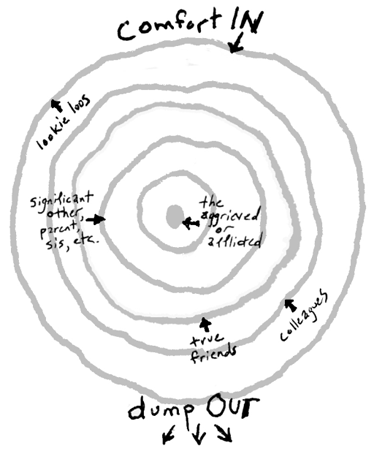
comfort_in_dump_out.gif

If you have a friend going through something painful that affects you too, can you complain about it and to who? Clinical psychologist Susan Silk has developed a mnemonic to let you know who it's appropriate to dump your worries on.

It works for all kinds of crises: medical, legal, financial, romantic, even existential. She calls it the Ring Theory.

Draw a circle. This is the center ring. In it, put the name of the person at the center of the current trauma. For Katie's aneurysm, that's Katie. Now draw a larger circle around the first one. In that ring put the name of the person next closest to the trauma. In the case of Katie's aneurysm, that was Katie's husband, Pat. Repeat the process as many times as you need to. In each larger ring put the next closest people. Parents and children before more distant relatives. Intimate friends in smaller rings, less intimate friends in larger ones. When you are done you have a Kvetching Order. [...]

If you want to scream or cry or complain, if you want to tell someone how shocked you are or how icky you feel, or whine about how it reminds you of all the terrible things that have happened to you lately, that's fine. It's a perfectly normal response. Just do it to someone in a bigger ring.

Comfort IN, dump OUT.

Next time someone says the wrong thing to you, it'll be a lot easier to forward them this than get in a fight about it. (via @kissane)

Tags: Susan Silk
29 Jul 21:02

In America, the cheese is dead

by Jason Kottke

Market researcher Clotaire Rapaille was interviewed for an episode of Frontline on advertising and marketing back in 2003. I like what he had to say about the differences in how the French and Americans think about cheese.

For example, if I know that in America the cheese is dead, which means is pasteurized, which means legally dead and scientifically dead, and we don't want any cheese that is alive, then I have to put that up front. I have to say this cheese is safe, is pasteurized, is wrapped up in plastic. I know that plastic is a body bag. You can put it in the fridge. I know the fridge is the morgue; that's where you put the dead bodies. And so once you know that, this is the way you market cheese in America.

I started working with a French company in America, and they were trying to sell French cheese to the Americans. And they didn't understand, because in France the cheese is alive, which means that you can buy it young, mature or old, and that's why you have to read the age of the cheese when you go to buy the cheese. So you smell, you touch, you poke. If you need cheese for today, you want to buy a mature cheese. If you want cheese for next week, you buy a young cheese. And when you buy young cheese for next week, you go home, [but] you never put the cheese in the refrigerator, because you don't put your cat in the refrigerator. It's the same; it's alive. We are very afraid of getting sick with cheese. By the way, more French people die eating cheese than Americans die. But the priority is different; the logic of emotion is different. The French like the taste before safety. Americans want safety before the taste.

(via @pieratt)

Tags: cheese   Clotaire Rapaille   food
26 Jul 21:09

Medieval pet names

by Aaron Cohen

Did they even keep pets in Medieval times? Of course they did, we've all seen Game of Thrones (what). Anyway, yes, and not only were dogs and cats domesticated in the Middle Ages, they were even given names! So crazy. Dogs had names like Bo, Nameles, and Hemmerli (Little Hammer). Cats had Tibert and Gyb.

Other names for cats included Mite, who prowled around Beaulieu Abbey in the 13th century, and Belaud, a grey cat belonging to Joachim du Bellay in the 16th century. Isabella d'Este also owned a cat named Martino. Old Irish legal texts refer to several individual cats and names them: Meone (little meow); Cruibne (little paws); Breone (little flame, perhaps an orange cat), and Glas nenta (nettle grey). An Irish poem from the ninth century describes how a monk owned a cat named Pangur Bán, which meant 'fuller white'.

Tags: Medieval
26 Jul 21:03

Use of Calculators

by Ken
[I've been asked by one or two left publications for a piece about Iain's politics. I've told them I was going to write a blog post on the subject, which they were welcome to use. Here it is. (Update: the Morning Star and the IS Network have reprinted it.) If anyone else wants to use it, please ask.]

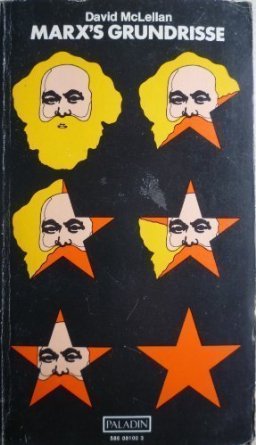
When Iain Banks and I were students back in the early 1970s, I was one of the first readers of Use of Weapons. I seem to recall reading the first draft in weekly instalments as the pages flew from the typewriter, and discussing the unfolding content almost as often. Iain explained that the Culture was his idea of utopia, in which advanced technology, inexhaustible resources and friendly artificial intelligence made possible a society in which nobody had to work and there was no need for money or a separate state apparatus. At the time I was reading with some excitement a slim paperback edited by David McLellan and titled Marx's Grundrisse, a collection of extracts from Marx's notebooks, in which he allowed himself some bolder speculations than he ever saw into print. I explained to Iain that the Culture was very similar to Marx's conception of communism: a stateless and classless society based on automation and abundance.

Iain was interested and I think persuaded. But, I went on, the Culture on his telling didn't seem to have come about through class struggle, revolution, and the rest. How, then, could it have come about, given that Iain was as sceptical as I was about the likelihood of such a society being handed down by benevolent rulers from above? By way of answer, Iain pointed to his pocket calculator. He said that on his last vacation job, on a construction site, one of the full-time workers had borrowed it and worked his way through a stack of wage slips, to discover that he and his mates weren't getting all the pay they were due. The site workers had taken the result to the management, who duly if perhaps reluctantly shelled out the back pay that was owed. That, Iain said, was how he'd envisaged the Culture coming about. Conflicts of interest between classes and other groups there would be, but the sheer availability of information and computing power would arm the majority with facts and arguments that would enable them to prove, as well as enforce, their claims. The consequent advance in consciousness would allow the opportunities offered by automation and abundance to be grasped, first in imagination then in reality, and make opposition to their realisation irrational, futile, and weak.

This projection of a democratic, deliberative, and peaceful transition to a co-operative commonwealth wasn't as far removed from Marx's own later views as I thought at the time. I saw Marx through Lenin, Lenin through Trotsky, and -- for that matter --Trotsky through the Trotskyists, and each successive prism lost something of the one before, let alone the original image. Iain respected them all as thinkers, but remained sceptical of any attempt to emulate their practice. He was quite willing to stick his neck out when necessary: he came down to London in 1977 to join the mobilization against the fascist National Front's attempt to march through Lewisham, took his place in a small squad of comrades none of whom he knew but me, and thoroughly enjoyed the fight that ensued. On a later visit he joined me when it was my turn to guard our group's bookshop and offices, which had recently been targeted in an amateurish arson attempt by the fascists. As Iain and I checked the locks on the building's back door, two policemen loomed behind us and tapped our shoulders. It took us some minutes to convince the coppers that we really were there to protect rather than attack the shop. Iain ribbed me about it afterwards:

'I bet that's the first time you've ever had to say, "Honestly, officer, I really am a left-wing extremist ..."'

However friendly he was to the radical left, Iain had little interest in relating the long-range possibility of utopia to radical politics in the here and now. As he saw it, what mattered was to keep the utopian possibility open by continuing technological progress, especially space development, and in the meantime to support whatever policies and politics in the real world were rational and humane. For Iain that meant voting Labour. After the party mutated into New Labour he switched his practical vote to the Scottish National Party and his protest vote to the Scottish Socialists and (I think) the Greens. Even before then, in the early to mid 1990s, he'd come around to the view that Scotland would never be safe from the ravages of Tory governments it hadn't voted for unless it separated from England. This support for independence didn't come from nationalism but from reformism, and from a life-long, heart-felt hatred for the Conservative and Unionist Party.

In Iain's view, popular access to information was decisive to any hope of progress, and control of information was central to the power of the ruling class. One of his few intellectual heroes was Noam Chomsky, who has for decades argued and documented this over and over. Iain made a point of being well-informed himself, and seemed to have read the Guardian from cover to cover every day. The most radical writings -- Chomsky's apart -- that he ever enthused about to me were those of John Kenneth Galbraith, George Monbiot and Will Hutton. Iain valued the far left mainly as a source of information that even the Guardian was likely to gloss over. He followed my own adventures and misadventures in Marxism with a sort of sympathetic scepticism, always keen to read whatever rag I was flogging at any given time, and to listen to my explanations of why which paper I was selling sometimes changed over the years. It was my later explorations of libertarian thought that most sorely tried his patience. I could never persuade him that libertarianism was anything but a shill for corporate interests: a common misconception, and one that many libertarians have worked hard to confirm.

In his view, the left's most stupid and repeated mistake was to accept that 'my enemy's enemy is my friend,' which he saw as at the bottom of most of the left's disasters. He had no illusions in existing socialism, and no hopes for the better in its collapse. He opposed every war the British state waged in his lifetime, with the one exception of NATO's war over Kosovo, which he argued for before it happened and never repudiated. Fortunately, this wasn't the first step on a slippery slope. He was even more vehemently opposed than I was to the attack on Iraq -- I tried to at least see a certain logic to it from the imperialist point of view, whereas he saw it as utter folly and madness from the moment it was mooted, an adventure that would sow destruction, multiply terrorism, and do incalculable harm to the interests and security of the UK and US.

He blamed Blair absolutely for the Iraq war, and never forgave or forgot the crime. Anger over what was going on in the Middle East impelled him to his two best-known political gestures: cutting up his passport and sending it to 10 Downing Street, and refusing to have his own books published in Israel. The former action was mocked, the latter attacked. Iain took not a blind bit of notice.

In summary, Iain's political views were, by and large, what you'd expect from an Old Labour supporter and Guardian reader with an informed interest in the analyses of the radical left. What was perhaps more unusual than his views was the consistency and tenacity with which he held them, and his confidence that they must in the long run prevail if civilization was to survive. He saw quite clearly that events weren't going the way he would have liked them to, but never saw any reason to revise his reckoning that neoliberalism just didn't add up.