Didier “Ice” Iceman
Shared posts
Vu du Canada. Polémique autour de Médine : l’habituelle réaction épidermique au rap
Didier “Ice” IcemanIntéressant de voir la différence chez nos cousins quebecois

Un programme de sauvegarde pour les derniers visons d'Europe
Didier “Ice” Icemancar trop souvent ils sont dans des élevages pour leur fourrure...

Colère de la rue contre des décisions gouvernementales
Didier “Ice” IcemanLe gouvernement vietnamien va lâcher du lest...

1 Français sur 2 pense que boissons végétales et lait sont équivalents
Didier “Ice” IcemanLe problème est que ce n'est ni équivalent ni le contraire puisque le lait animal n'est pas adapté non plus !

HP Chromebook X2 is the first Detachable Chromebook with Linux app support
Didier “Ice” Icemanle début de la fin?
We first heard of Chrome OS gaining Linux app support back in February. Google officially confirmed during Google I/O 2018 that the Pixelbook would be the first Chromebook with Linux app support, but since then the Samsung Chromebook Plus has joined in on the fun. Tonight, a device that we expected to eventually gain Linux app support finally got support for it: the HP Chromebook X2.
Linux app support is primarily for developers to encourage them to transition over to a Chromebook. GPU acceleration isn’t yet available until later this year, so don’t expect to be running Steam games anytime soon. To get started with Linux app support on your HP Chromebook X2, you’ll need to enable Developer Mode and then switch to the Canary channel. Once you’ve updated to the latest nightly build, you can enable Linux apps by going to Settings. After you’ve enabled the Linux Terminal, check out the wiki on Reddit’s /r/Crostini subreddit for some great guides on software you can set up.

The HP Chromebook X2 has the honor of being the first detachable Chromebook. It attaches to a keyboard base and detaches to act as a tablet. While it’s not the first device that acts as a tablet to run Chrome OS, it did beat the Acer Chromebook Tab 10 to market (seriously when is that thing becoming available, Acer?) Unfortunately, only the 4GB RAM/32GB storage/Intel Core m3-7Y30 model is available for purchase right now, so Linux app support won’t be too useful for those of you who are looking to use it as a machine for development. The Google Pixelbook is better suited for that task, and it’s poised to get even better thanks to native support for dual-booting Windows 10. There’s evidence that the upcoming Acer Chromebook 13 and Acer Chromebook Spin 13 will support Linux apps, too, if you’re looking for a high-end alternative to the Pixelbook.
If you would rather not buy a new Chromebook, Linux app support may come to older Chrome OS devices if the Chromium developers opt to backport some of the required kernel modules. The necessary kernel module, vsock, is present in Linux kernel 4.4, which is why we’ve seen all devices that so far support Project Crostini (Google’s codename for Linux app support on Chrome OS) run that kernel version. Linux app support is very much a work-in-progress, though. Expect lots to change in the coming weeks. We’ve already caught wind of Google’s plans to revamp the Files app to accommodate Linux files, and there’s bound to be more changes made to Chrome OS that we have yet to discover. Stay tuned for more of our coverage on Linux apps running on Chromebooks!
Emmanuel Macron est bien mal placé pour critiquer la politique migratoire de l’Italie
Didier “Ice” IcemanEt c'est peu de le dire...

The Internet Is Finally Going To Be Bigger Than TV Worldwide
Didier “Ice” IcemanLa télé c'est has been


Read more of this story at Slashdot.
Les maladies dont les vaccins nous protègent
Didier “Ice” Icemantoujours bon à prendre
Le youtubeur Primum Non Nocere a réalisé une vidéo assez longue mais passionnante si vous vous intéressez un peu aux sciences et à la médecine.
Il a pris comme point de départ le sujet « chaud » de la vaccination obligatoire, pour faire un rappel nécessaire sur les maladies contre lesquelles ces vaccins protègent.

C’est bien expliqué, et bien illustré avec des photos et des vidéos bien hardcore qui pourraient choquer certaines personnes.
Donc âmes sensibles et hypocondriaques s’abstenir.
Si vous voulez en savoir plus sans voir les images des malades, vous pouvez écouter simplement le son, ce sera tout aussi bien.
Comment l’épidémie de virus Nipah semble avoir été contenue en Inde en un mois
Didier “Ice” IcemanOn en a peu parlé

More restrictive U.S. policy on Chinese graduate student visas raises alarm
Didier “Ice” Icemanla guerre est partout

Lawrence Lessig Criticizes Proposed 140-Year Copyright Protections
Didier “Ice” Icemanles droits d'auteurs et leur abus
Read more of this story at Slashdot.
A Single Photo Captured President Trump’s Approach to the G7 Summit
Didier “Ice” Icemanl'image et la politique
This is not the first time an image of German Chancellor Angela Merkel literally talking down to an American president has made the rounds online.
Recall back in 2015, almost three years ago to the day, when Merkel, with outstretched arms, stood before President Obama, seated on a bench at that year’s Group of 7 summit.

The picture went viral, but appeared to draw more chatter about looking like a scene from “The Sound of Music” than about actual relations between the two friends.
Fast forward to June 9, the second day of this year’s G-7 summit in Canada, when a photographer captured a striking image of President Trump surrounded by a host of world leaders.
Let’s start with Merkel. With both hands down on the table in front of her, she’s leaning in during what appears to be a tense discussion, staring straight at her American counterpart and cast in a light that presents her as the central figure, the power. Jesco Denzel, an official German government photographer at the summit, did his job here: the image was released by the Germans with a caption that referred to the scene as a “spontaneous meeting between two working sessions.”
Also pictured are Japanese Prime Minister Shinzo Abe, with arms crossed and an uncertain look on his face; John Bolton, the U.S. National Security Adviser, staring blankly; British Prime Minister Theresa May, who is identifiable here only by her hair; and French President Emmanuel Macron, with one hand on the table. (A day earlier, a different image involving Trump and Macron picked up steam: one that showed Trump’s hand, squeezed so hard by Macron that one of his finger’s left an imprint.)

And then there is Trump, who has locked eyes with the trio of American allies who, on the second day of this summit, are not pleased with his presence and performance, past and present.
He arrived to the gathering with the suggestion that Russia should, again, have a seat at the table, following its ouster in 2014 over Vladimir Putin’s annexation of Crimea. Trump, who before and after his election in 2016 faced a wave of allegations of inappropriate sexual behavior, scored no points for a late arrival to a gender equality breakfast. Canadian Prime Minister Justin Trudeau, with whom he was already publicly spatting, had already delivered his opening remarks when Trump made it to his seat, next to a visibly concerned Christine Lagarde.

Trump talked tough on trade upon arrival and left the same way. During a news conference later, he likened the U.S. to “the piggy bank that everybody’s robbing.” He pressed other leaders to eliminate tariffs and dramatically threatened to “stop trading with them” if practices he sees as unfair were not changed to his liking.
He left the summit for Singapore, where he is scheduled to meet with North Korean Leader Kim Jong Un on June 12. In the afternoon, Trudeau announced that the leaders had signed a joint statement, and later said he would impose retaliatory measures in July following Trump’s steel and aluminum tariffs. In two tweets sent from his flight, Trump railed against what he said were “Justin’s false statements,” said he refused to endorse the joint communiqué and called Trudeau “weak.”
It’s easy to cast the president as weak and defensive in this photograph. His arms are crossed and he’s seated when everyone else is standing. He looks like he’s getting grilled, taken to task for not acting like his predecessor.
Merkel’s office wasn’t the only government to release an image from the meeting. Italy’s populist Prime Minister, Giuseppe Conte, tweeted a version that shows him holding papers with Macron and Merkel. Trump is barely visible, if not for his hair.
Seconda giornata qui al #G7 in Canada dove sto continuando a lavorare per rappresentare e difendere gli interessi degli italiani. Ecco un breve aggiornamento dal #G7Charlevoix: https://t.co/sGXpHhFPFt pic.twitter.com/bPQACttkkU
— GiuseppeConte (@GiuseppeConteIT) June 9, 2018
Macron shared a version that focuses on himself, gesticulating as he talks to Trump.
#G7Charlevoix, deuxième jour : une nouvelle étape est franchie.
Après une longue journée de travail et de dialogue très direct, nous recherchons activement un accord ambitieux. pic.twitter.com/tBy2ZUg2v8— Emmanuel Macron (@EmmanuelMacron) June 9, 2018
And, noting the laughter, here’s what the U.S. distributed:
A look at negotiations, from behind the scenes at the #G7Charlevoix Summit. pic.twitter.com/2LdJAgt6fE
— Dan Scavino Jr. (@Scavino45) June 9, 2018
But for a man who is all about image control, this is his power play. Bolton himself tweeted the Germans’ image with Trump’s “bank” line: “The President made it clear today. No more.”
Trump will see this picture as one that shows him firm and unwilling to budge when it comes to certain issues, even with allies. It’s how he wants to be seen: America against the world, a Trump against the world.

Vu du Portugal. Macron contre les “fake news”, une “idiotie” politique
Didier “Ice” IcemanCe n'est pas moi qui le.dit

En Jordanie, la contestation touche désormais la sphère politique
Didier “Ice” IcemanDoit on aussi lire une déstabilisation due au changement dans la population (25% de syriens)

Daimler’s Freightliner unveils Tesla-fighter electric trucks
Didier “Ice” Icemanl'avenir s'assombrit nettement pour Tesla qui est bien parti pour rejoindre... Tucker
Filed under: Green,Tesla,Truck,Commercial Vehicles,Electric
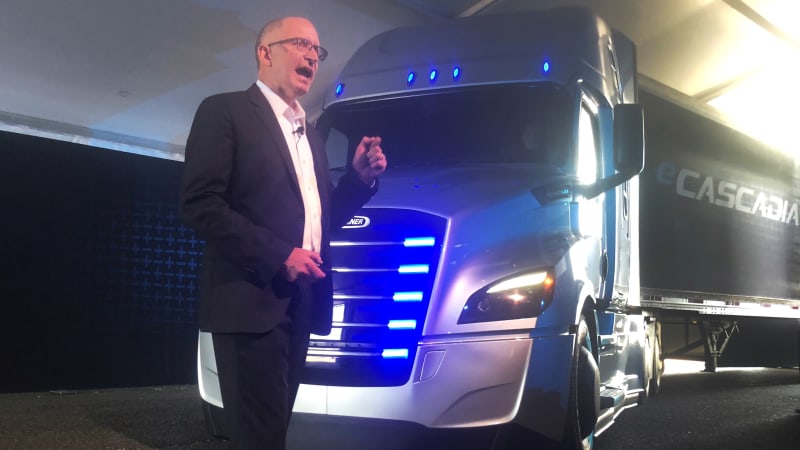 30 will go to customers for field testing this year
Continue reading Daimler’s Freightliner unveils Tesla-fighter electric trucks
Daimler’s Freightliner unveils Tesla-fighter electric trucks originally appeared on Autoblog on Wed, 06 Jun 2018 19:00:00 EDT. Please see our terms for use of feeds.
Permalink | Email this | CommentsAvis de tempête sur la politique d’asile européenne
Didier “Ice” IcemanLe manque de leadership dans la diplomatie devient criant

Corruption. Falsification de documents officiels : une crise de la démocratie au Japon
Didier “Ice” IcemanLe retour du parti conservateur au pouvoir refait plonger le Japon dans ses vieux démons

Allemagne. Accusé d’ingérence, l’ambassadeur américain fait scandale à Berlin
Didier “Ice” IcemanMais ça n'ira pas plus loin...

Côte d'Ivoire : l’hypothèse “malsaine” d’un troisième mandat de Ouattara
Didier “Ice” Icemangageons qu'il aura des soutiens... économiques

Edward Snowden: 'The People Are Still Powerless, But Now They're Aware'
Didier “Ice” IcemanJe retiens surtout le powerless...a quand une solution mobile libre et viable
Read more of this story at Slashdot.
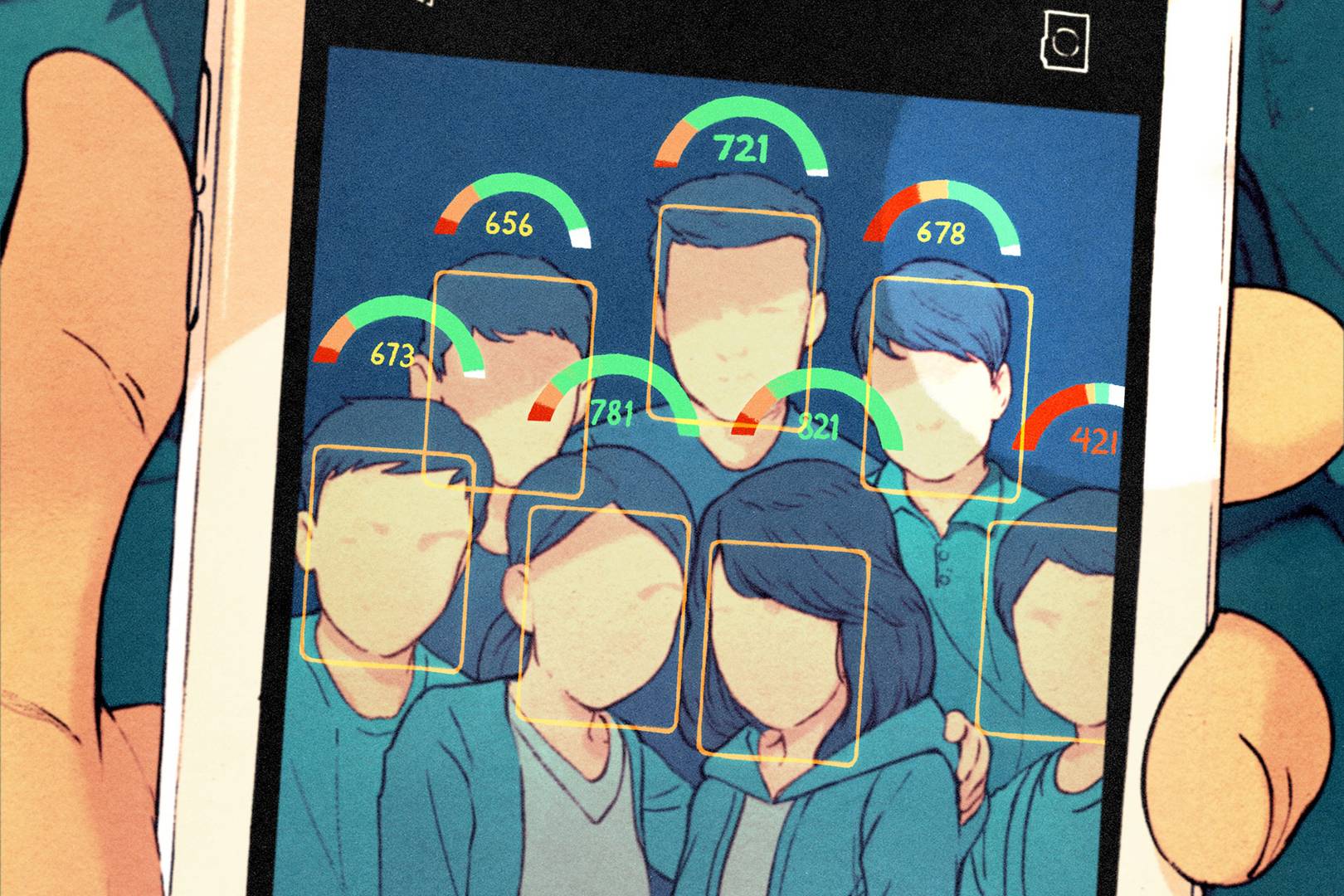
The odd reality of life under China's all-seeing credit score system
Didier “Ice” IcemanOrwell sort de ce corp !
Nucléaire. L'Iran va accroître sa capacité d'enrichissement d'uranium
Didier “Ice” IcemanLa décision de Trump aura l'effet inverse de ce qu'il souhaite.

International Energy Agency: 220M Electrified Cars Could Be on Roads by 2030
Didier “Ice” IcemanReste plus qu'à les alimenter...
The Responsibility of Immortality: Welcome to the New Transhumanism
Didier “Ice” IcemanGourou a la silicon valley ca doit payer
En Slovénie, une fausse victoire pour la droite pro-Orbán
Didier “Ice” IcemanInquietant quand même. ..

Petit point sur le rachat de Github par Microsoft
Didier “Ice” IcemanA peu près ce que je pense...

J’ai écris ce matin un super long article sur le rachat de Github par Microsoft, prenant bien le temps de développer tous mes arguments. Malheureusement, suite à un crash de ma machine + auto-sauvegarde non fonctionnelle (ce que je n’avais pas vu) et bien j’ai tout perdu comme un couillon. Erreur de noob. Ouin.
Donc, comme ça m’a un peu dégouté, mais je vais quand même vous faire un résumé qui sera un peu plus brut de décoffrage, moins bien tourné, moins sourcé et argumenté mais tant pis.
Microsoft rachète Github. Ca fait hurler dans les chaumières parce que c’est « Microsoft ».

Je comprends l’émoi mais il ne faut pas oublier le contexte :
- Que Github est aussi une boite commerciale
- Que Github est centralisé
- Que Microsoft finance très fortement le logiciel open source depuis des années que ça n’a pas l’air de trop stresser la majorité des contributeurs open source
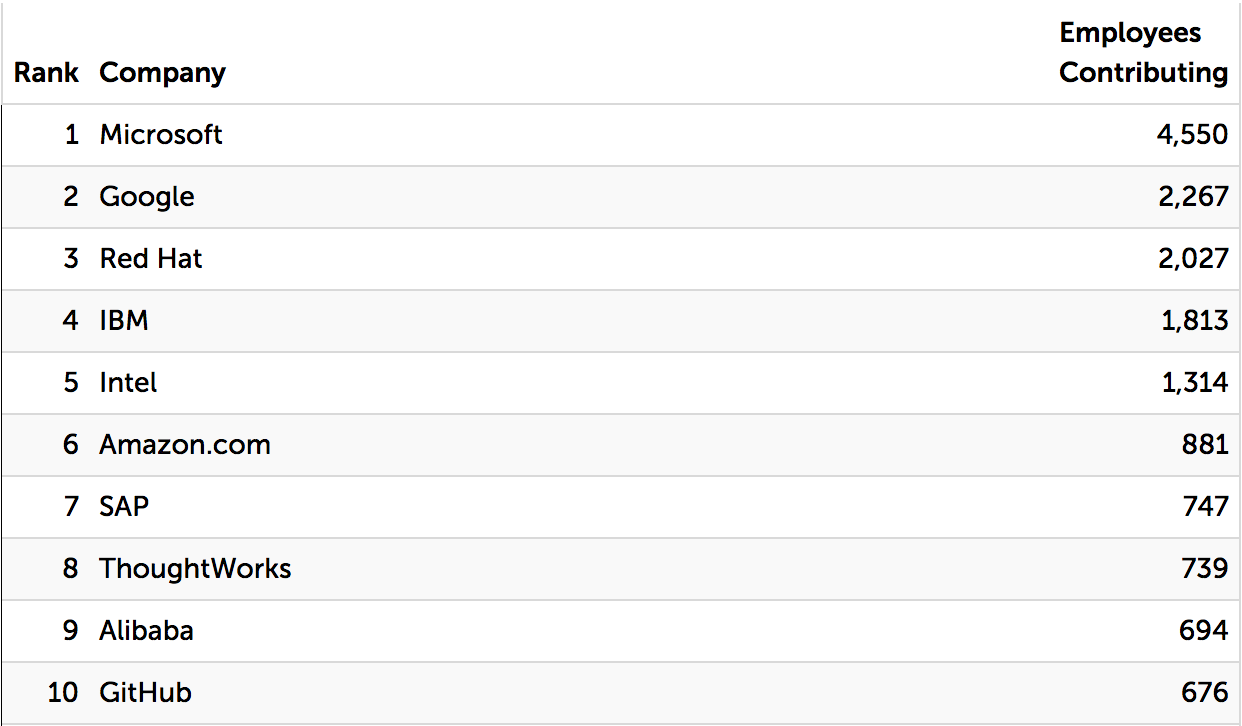
- Que les employés de Microsoft sont les plus gros contributeurs sur Github, loin devant Google
- Que Microsoft est avant tout une boite de dev qui conçoit des outils et des services pour les dev. (Azure, Visual Studio, et une tonne de SDK…)
- Que Microsoft aussi publie masse d’outils open source
Alors que va faire Microsoft ?
- Laisser Github en l’état (peu probable) ?
- Reproduire le drame Sourceforge avec Github (possible) ?
- Intégrer Github (en conservant la marque ou pas) dans son panel de services pour les dev (fort probable) ?
Après si quelques développeurs se barrent du service, je pense que ça ne va pas trop inquiéter Microsoft qui de toute façon va pouvoir continuer à adresser un marché de professionnels qui ont des gros besoins techniques pour leurs équipes de devs.
Sur le coup, on peut dire que Microsoft a bien joué car ils récupèrent un outil aux fonctionnalités incontournables pour compléter leur gamme de services, tout en mettant la main sur une communauté ultra riche de développeurs, et une bibliothèque de codes tout aussi riche.

Maintenant les options qu’ont les développeurs qui utilisent Github :
- Ne pas migrer et voir ce qui va se passer. (ce que la majorité va faire je pense)
- Migrer sur un autre service commercial comme Gitlab ou équivalent (ce qui est en train de se passer…) mais je trouve ça un peu dommage car c’est tout aussi centralisé. Donc si Gitlab se fait racheter dans 2 mois, rebelote.
- Passer sur un gitlab géré en mode associatif comme Framagit. C’est cool mais ça n’empêchera pas la centralisation.
- S’auto-héberger avec un script open source comme celui de Gitlab, ce qui est cool mais on aura alors de la fragmentation et on perdra ainsi le côté « bibliothèque de codes » de Github
Enfin, la dernière option serait qu’émerge un Mastodon du Git qui offrira à la fois de la décentralisation mais aussi la possibilité de retrouver les contenus via des moteurs de recherches ou des sites. Cela pourrait par exemple se faire sur une base de Mango, un git décentralisé utilisant IPFS…
Ce serait l’idéal, c’est sûr.
Disons donc que les options pour ceux qui veulent fuir Microsoft restent pour le moment assez standards.
Heureusement, la résilience est une chose magnifique et je suis certain que dans quelques mois, tout le monde se sera un peu calmé sur le sujet à part une poignée d’anti-microsoftiens bloqués et en boucle depuis 1998.

Voilà pour le résumé express avec pas mal de listes à la place de jolies phrases et moins de pincettes. Mais globalement, ça résume bien ma pensée sur tout ça. Je comprends parfaitement les inquiétudes de certains utilisateurs de Github mais on reste dans une configuration assez simple d’une boite privée qui achète une autre boite privée.
Heureusement, Internet est grand et chacun trouvera rapidement son bonheur.
En tout cas, j’ai hâte de voir comment tout ceci va évoluer.
Telegram victime d’une vague de piratage : Comment protéger votre compte ?

Kaspersky protège vos comptes et vos informations personnelles … gratuitement
Comment les comptes Telegram sont piratés et volés ?
La réponse est courte : grâce à l’hameçonnage. L’utilisateur reçoit un message d’un compte Telegram avec un pseudonyme qui ressemble à un nom officiel, par exemple TelegramAdmin, indiquant qu’une activité suspecte a été détectée et que l’utilisateur doit confirmer son compte ou il sera bloqué. Un lien est fourni pour confirmer le compte.
Bien sûr, le lien renvoie à un site d’hameçonnage qui a une adresse qui semble digne de confiance. Ce peut être telegram-antispam.org, telegram-verification.site ou une adresse similaire.
Jordanie : face à la contestation sociale, le roi nomme un nouveau Premier ministre
Didier “Ice” IcemanCela changera-t-il aussi le positionnement international du royaume?

Richard Stallman Asks: Should Big Tech Be Taxed For Hurting Society?
Didier “Ice” IcemanOn peut légitimement se poser la question....
Read more of this story at Slashdot.
'Why I'm Switching From Chrome To Firefox and You Should Too'
Didier “Ice” Icemanun pladoyer de plus...mais est-ce que ça suffira
Read more of this story at Slashdot.
Why No One Answers Their Phone Anymore
Didier “Ice” IcemanLa robotisation tue l'appel téléphonique
Read more of this story at Slashdot.