

Axiom & Simulation, Mark Dorf
An entire county’s worth of schools were put on secure lockdown yesterday in Pennsylvania when a eye doctor’s receptionist misheard the lyrics to the theme song of The Fresh Prince of Bel-Air. This actually happened. As the Beaver County Times reports, 19-year-old Travis Clawson had an appointment with his optometrist scheduled for the afternoon, but when the office called he failed to pick up. His voicemail, however, said plenty.
Clawson couldn’t come to the phone because he was “all shooting some b-ball outside of the school.” Pop-culture participants and aficionados of corny ’90s rap music would of course recognize that as a line from the aforementioned made-for-TV DJ Jazzy Jeff and the Fresh Prince collabo. But our dear, easily spooked receptionist heard something along the lines of “shooting some people” and hence called the police, who called the schools.
”


Read more of this story at Slashdot.

Mark Hurst:
The key experiential question of Google Glass isn’t what it’s like to wear them, it’s what it’s like to be around someone else who’s wearing them. I’ll give an easy example. Your one-on-one conversation with someone wearing Google Glass is likely to be annoying, because you’ll suspect that you don’t have their undivided attention. And you can’t comfortably ask them to take the glasses off (especially when, inevitably, the device is integrated into prescription lenses). Finally — here’s where the problems really start — you don’t know if they’re taking a video of you.
My hope is that restaurants and bars will ban them.
★firehosereality is always less glam than fiction
The Inspiration Mars Foundation's audacious plan for a private manned mission to Mars has more than a few challenges to overcome before its 2018 launch date, and it turns out the solution to one problem — dangerous cosmic rays — comes in the form of feces. The current plan calls for the two astronauts aboard the 1166-cubic-foot spacecraft to defecate into bags which would be used to line the walls of the ship (after extracting as much water as possible from the waste for reuse). At launch, the ship would be lined with bags containing food and water, and as the 501-day mission progressed they would be swapped out for bags containing solid waste as resources are used up. Inspiration Mars' Taber MacCallum told New Scientist about the plan, saying that "it's a little queasy sounding, but there's no place for that material to go, and it makes great radiation shielding." In addition to lining the ship with solid waste, food, and water, the upper stage of the launch rocket and an aluminum shell would help shield the astronauts from radiation.

why do women’s clothing designers believe that girls do not need pockets


Sega issued this amazing Dreamcast wristwatch, with a timepiece inside a little silver console, back in 2006 – when the Dreamcast was already good and dead.
Now, amazingly, after its even deader, Sega has reissued the watch, and I find myself interested in wearing a wristwatch for the first time in years.
The only problem is that it’s $168.90, which is quite a bit more than a full-size Dreamcast. If that’s not a problem for you, NCSX has the hookup.
firehoseAs usual, actually having to work with a Mini for the last five months has dampened my love for it significantly--the i7 randomly throws black windows of death on Lion, refuses to shut down on Snow Leopard, Lion, or Mountain Lion, and OS X's built-in VNC server is godawfully persnickety--but still, it's Apple's best computer these days.
Read more of this story at Slashdot.

Read more of this story at Slashdot.

Read more of this story at Slashdot.

Pingdom has posted a series of charts that look at the demographics of the top 100 blogs (as listed by Technorati). Laughing Squid is among the top 100, so it’s possible to compare the demographics our readers to those of our fellow blogs. Some interesting demographic notes about Laughing Squid readers:
As a side note, we use Pingdom’s uptime monitoring service over at Laughing Squid Web Hosting. And now, the charts:


firehoseetc.
Eric Calderone has created a metal version of the theme song from Sherlock as the popular BBC miniseries ramps up production for its highly-anticipated third season. Calderone has made numerous metal versions of popular songs like the themes from Star Wars, Doctor Who, Zelda, and Super Mario Brothers.
Thanks Sara Harris!
firehosethis fucking white house

“We must bring balance to the Force.”
On Twitter, the White House has generated a meme for President Obama’s plan to avert the sequester and reduce the deficit (the “Jedi Mind Meld”). Yes, sci-fi metaphors seem to have been mixed, as Jedi were in Star Wars and ‘mind meld’ refers to Star Trek. Still, this is a cool way for the White House to reach out to the internet savvy.
UPDATE: The Atlantic Wire has the full story on the “Jedi Mind Meld” reference. Thanks David Connell!
We must bring balance to the Force. #Sequester #JediMindMeld twitter.com/whitehouse/sta…
— The White House (@whitehouse) March 1, 2013
via Xeni Jardin
 It's Black History Month, that time of year when people look at exceptional achievements and moments having to do with African Americans and black culture. What does that have to do with video games? Sadly, not a whole lot. There's such a paucity of black characters and creators in video games that it's difficult to discuss the same sort of exceptional achievements and moments. Because there aren't very many.
I decided to start up one such conversation anyway, pulling in David Brothers of The 4th Letter. I only know Brothers online but have always enjoyed his writing about comics and video games, especially when he touches on race. What follows is a back-and-forth between he and I, where we talk about how to possibly increase the ranks of African-Americans in video games, on the screen and behind the scenes.
***David,
I wanted to talk to you because I've been thinking about Black History Month. Actually, I've been thinking about how to think about Black History Month, and race and diversity as it concerns video games. You've done a lot of great writing about racial realities as they've been rendered in comics and lived by its creators throughout history. Reading through that work over the years, I think we agree on why talking about this stuff matters. Games—like movies and books and music—reflect what their creators see in the world, where they find their escape and what they think is worth talking about. Whenever I write about race and games, I inevitably get the, "Why does it matter? Why can't we move past this stuff?" And the answer is that racism still exists and the attitudes and stereotypes that sprang out of practices and institutions like Jim Crow still live on in society. Acting like it doesn't exist doesn't defuse it.
The truth about the video game industry is that, relatively speaking, there aren't a lot of black people. The vast majority of forward-facing game-makers are white or Japanese guys, as are most of the main characters. That isn't a bad thing, and I certainly don't think it's any kind of conspiracy making it so. But it's hella boring to look at. Moreover, this state of affairs makes the games medium feel strangely walled off, like it's surrounded by a force field that repels the real world.
That's why I wrote my piece about black characters in video games last year. I feel like better portrayals of race could help the medium on its way to feeling more well-rounded and more grounded. I would hope that more women making video games means you don't get a tasteless bikini torso as a promo item. And I would hope that more black people making video games means you don't get NPCs like Letitia from Deus Ex: Human Revolution. None of these assertions are givens, but at the very least, it helps to lower the chances that we do.
It's not any more automatic that a more diverse game industry would produce more progressive games than it is that a mostly male white and Japanese industry would never produce progressive content. But I nevertheless am a believer that diversity always produces more ideas, more creativity, more conversation and, overall, a more vibrant and interesting creative medium. And I've seen that in every other artform and would like to see games blessed with that same good fortune.
Conversations need to be had. But they're not happening because the talking will be awkward, heated or uncomfortable. So, stupid me, I've been thinking about ways to start these dialogues. It seems to me that there's a continuum of ways to talk about race, gender, class and other hot-button subjects. On one end, you have a sort of emphatic sincerity and on the other, you've got the sharp blade of satire.
This state of affairs makes the games medium feel strangely walled off, like it's surrounded by a force field that repels the real world.The sincerity paradigm has manifested in things like Imitation of Life, Guess Who's Coming to Dinner or Menace II Society. Works in this tradition try to authentically highlight aspects of real life to create an enlightening melodrama. There's an assumption of good faith that's key to the success of this kind of work. Satirical creations throw good faith out the window. Things like The White Boy Shuffle, Bamboozled or Chappelle's Show throw darts at the polite silence of mainstream culture's inequalities. You may laugh, sure, but it's always nervous chuckles that come with engaging with work like this. To some degree, the audience is a target of the joke, too.
What about games? One game that gets the sincerity angle right is Assassin's Creed III: Liberation. It doubles as an earnest look at a moment in history and a game that draws on real-world racial dynamics to shape its mechanics. So there's something on the sincerity end of the spectrum. But I think the issues swirling around sincerity are stifling increased diversity in game creators and characters. People don't want to be taken the wrong way, especially if they want to make games that somehow touch on race.
That's why satire—and its ability to lower defense with laughter—seems like a much more attractive option. What I really want is a video game equivalent to Blazing Saddles. Mel Brooks' classic Western comedy homes in on the anxieties of its time—a post-segregation moment when black and white people are still warily integrating in various social spheres—to fuel its jokes. There are tropes in black arts traditions that game designers can use, too. Cleavon Little's sheriff in Blazing Saddles has a bit of the trickster in him; he reorders society by going against the grain. The whole movie runs up and tongue-kisses every stereotype it can find. It's entirely possible that people watching can use them to reinforce really nasty world views but that's clearly not the film's aim.
And, yeah, Blazing Saddles is absurd slapstick. But so is the root of most prejudices, right?
I want a game that pokes fun at the fact that 99.9% of game protagonists look like cousins. I want a game that clowns the thinking that noble savages are still a good plot point in 2012. I want a game that doesn't feel the need to turn its black characters into thuggish stereotypes just because it's an easy shorthand for being a bad-ass. The Walking Dead was many people's Game of the Year in 2012 and it had a black lead that felt more human than any of his predecessors.
Here's where I throw it to you, David. How often are you thinking of how race shows up in video games? What encourages or discourages you? Is there a creative work from other media that you feel like games can pull some tricks from?
***Oh man, Evan,
If I said that I'm constantly aware of race in video games, I'd be understating things. It's one of those things that you can't stop noticing once you start noticing it, you know? I was a kid when someone pointed out how many black boxers there were in video games at the time (TJ Combo, Balrog, Dudley, Heavy D!, Boman Delgado). That led to me trying to figure out how many other black characters there were in games (Lucky Glauber, Dee Jay, Barret, the DARPA chief from Metal Gear Solid), how many black women there were (Elena, Storm), and how many of the non-boxer characters were something other than poorly-researched stereotypes or embarrassing (basically the DARPA chief, Elena, and Storm). Black boxers are the FedEx arrow for how race is approached in video games.
Black boxers are the FedEx arrow for how race is approached in video games.Final Fantasy VII was one of the first non-sports games I played with a playable black character, and I remember being bugged that he was written the way he was. Where'd he even pick that dialogue up, considering that he's living in a fantasy land? Anyway, it's been a fair few years since then, and I can't say as I've seen a lot of improvement. The pickings are so slim that I was straight-up floored when Sleeping Dogs not only featured a wide variety of Asian actors in its cast, but actually included something similar to the culturally sensitive conversations I've had with my Chinese-American and Chinese friends.
There are more black characters in games now than there were then, which is cool. But at the same time, the types of characters that we see still leave a lot to be desired. Shinobu from No More Heroes is very cool, and I thought Emmett Graves from Starhawk was solid. But black characters are still basically limited to playing the sidekick (Sheva Alomar, Cole Train) or being some type of weird joke (Sazh, Drebin, though I love him regardless). I've seen a few games that have really good character customization options, up until you get to the point where you want to go brown, rather than pale, and then you're out of luck.
It sucks. It's a bummer. We're in a better place than we were when I was a kid and thirsty for brown faces on my TV, but it's like Malcolm X said: "You don't stick a knife in a man's back nine inches and then pull it out six inches and say you're making progress." Being the sidekick and comic relief (and sex object, let's not forget) is never going to be enough. I don't want the video game hero demographic to perfectly match the cultural make-up of the United States, because that's silly. But I feel like throwing me a couple bones a few times a year isn't that tall an order, you know?
"You don't stick a knife in a man's back nine inches and then pull it out six inches and say you're making progress."But as down as I am on that side of things, you know what was the most encouraging thing I saw last year? Minority's Papa & Yo, which I believe you told me about. That was the one game that affected me more than any other last year, often to the point that I had to put it down and stop playing. Part of it is that the central metaphor is powerful and one that I'm particularly susceptible to, but it was really the total package. Playing as a young brown boy trying to come to grips with his father, discovering the world, and escaping from life absolutely murdered me. There's a moment in the demo, the part when Quico is walking inside a pipe and you see the shadow and hear the footsteps of Monster, that was the most chilling thing I'd seen in a game since the first Silent Hill.
It works so well because it isn't about being black, or how sad it is to be black... It's just about being a little boy.It works so well because it isn't about being black, or how sad it is to be black, which is usually the first thing people go to when trying to incorporate cultural diversity into their work. It's just about being a little boy. It's about living, right? And it's treated in the game and in the PR material as being perfectly normal. It's not a sermon. It's just a new and incredibly executed experience, like Red Dead Redemption or Devil May Cry or Uncharted.
That right there is what I want to see more of: new experiences with new faces that are treated the same as the old faces. I want to see a game of DmC's caliber and quality with a black protagonist and multicultural cast. I want video games to look at Fast Five for inspiration. That movie made something like a jillion dollars and there are exactly two white dudes in the cast. Conventional wisdom says that appealing to the broadest possible audience means a white hero, a non-white sidekick, and a white or latina lady for a love interest is the key to success, but guess what? It's 2013. People are ready for more.
It's 2013. People are ready for more.I want to see some bravery, basically. A willingness to step outside of the lines and turn mainstream games into something the mainstream, all of the mainstream, is into. Maybe it'll take a new twist on the Rooney Rule, where developers have to at least take a look at how their game would look and feel with a non-white protagonist. But my hope is that someone out there looks up and realizes how much more money they could make by broadening their target audience.
What works for you in games right now, in terms of race? Have any characters in games made you sit back and clap your hands because they were so dead-on and familiar? Have you hit any of those moments that make you breathe in real fast and half-laugh in shock, like The Boondocks does to me at least once an episode, lately? Do you even like those moments?
Being the first one to take the leap, especially with nothing else on the horizon, makes you into a lightning rod.Here's something else to think about: You mention Blazing Saddles being a good goal for games. I agree, and would actually include Friday, the near-perfect 1995 film starring Ice Cube and Chris Tucker, in that category. But Blazing Saddles had Cleavon Little in front of the camera, Richard Pryor on the script, and a booming black presence in Hollywood to balance it out. Friday had black culture exploding into the mainstream, rap beginning the process of absorbing every other genre, and a string of realistic black condition-type movies like Rosewood, New Jack City, Boyz n the Hood, and Menace II Society to play off of. If you weren't into Blazing Saddles or Friday, if they offended you or just weren't your bag, you could easily find an alternative.
Video games, right now, has what, Starhawk, which is so sci-fi as to be abstracted from the wide-ranging black experience, and... Resident Evil 5? Being the first one to take the leap, especially with nothing else on the horizon, makes you into a lightning rod. People will expect your game to reflect their values and ideas of what it means to be black, or how black people should behave, especially if a game features a white writer, producer, director, and development team. What do you think about that?
I'll have an answer for David next week. Until then, please offer up your own answers to the issues and ideas raised here.
David Brothers can be found sitting by the dock of the bay, writing about comics for ComicsAlliance, everything for 4thletter!, and nothing @hermanos.
 The odds should've been against Assassin's Creed III: Liberation. It starred a woman—specifically the half-black, half-French heroine Aveline du Grandpre. And it was an exclusive on the PlayStation Vita, a system that many people see as a sadly under-supported platform.
But Liberation shipped a very strong 600,000 units, according to Ubisoft CEO Yves Guillemot. Sure, that number doesn't amount to much when compared to the Call of Dutys or Halos of the world. But it puts the lie to the corporate reasoning given for the inexhaustible supply of square-jawed Central Casting white guys who wind up starring in most video games.
But, to me, Liberation's biggest success isn't sales. Right now, it's the best example of how to craft a character descended from African heritage in a video game. The game takes the historical moment where the action happens and finds ways to integrate the experience of being a mixed-race woman in 18th Century New Orleans into a playable adventure. Tricky but very well-done.
Curious about what went into making Aveline so great, I e-mailed Jill Murray, who worked with the Bulgaria-based Ubisoft Sofia dev studio as a writer on the portable Assassin's Creed. It's not just me who thinks Aveline's story was memorable. Murray, along with co-writer Richard Fareze, just won an award for Outstanding Achievement in Videogame Writing from the Writer's Guild of America. (It's got an award-winning soundtrack too.) In the interview below, she talks about the research that went into the game, why the attitudes keeping more games from having more diverse characters suck and how she wants to write herself out of a job.
Kotaku: At what point in the game's development was the decision made about Aveline's ethnic make-up? From the very beginning of design, or was it when the story was being fleshed out, presumably a bit later?
Jill Murray: Who Aveline is and where she was from were important to the team in Sofia from the very beginning, long before I or even Richard joined the project. They did their research and decided from the beginning that a woman Assassin of French and Haitian descent would be a compelling character. They were right!
Kotaku: I pointed out some of the historical tropes that show up in Liberation, like the tragic mulatto, slave revenge and the Back-to-Africa movement. Was it coincidence or was it a conscious decision by you and the other developers to work those elements in there? Did you and the team do any kind of research in the name of authenticity?
Jill Murray: Personally, I am unevenly read, and my academic background is in Theatre Production, not English or cultural studies. In theatre, our approach to text was with an eye for how to bring worlds and characters to life, rather than for the sake of analysis itself. Consequently I don't have a strong vocabulary of tropes and conventions, and continue to approach everything from a practical standpoint, looking for the best way to learn about people and understand life by making things.
 It would have been a mistake to attempt to reflect the entire eighteenth century black experience in Aveline all by herself; she's an individual, not a people or an issue. So, we looked for other opportunities to represent different points of view through the characters she meets. The result is an array of men and women trying to survive and carve out their own destinies in diverse ways. The story of Jeanne's kidnapping and life as a placée is recounted in diary entries. Aveline helps abused slaves, meets a man who has no territory he feels he can call home, locks horns with a soldier who has opted to fight for the English in exchange for his freedom. Each of these characters speaks for him or herself.
The formal research Richard and I did was primarily into the official documents of the era that directly impacted life for our characters— particularly the Code Noir, the French legal document that lays out the rules of slavery in French territories at that time. I also read a lot of slave narratives from different eras to get a sense of the variety of experiences and reactions people had, as well as their use of written language.
 Often, people will ask me "did you interview any actual black people?" This is a more complicated question than it seems on the surface. I think that people really want to know if we actually care what black people would think, or what their real experiences are, or what their ancestors went through, compared to how history is recorded. The simple answer is yes. We are aware that colonial history was recorded by colonizers, and that it is inadequate to the task of representing the genuine experience of slaves, native people, and a host of others denied a voice in recorded history. The more complicated reality is that there is no one living today who knows what it felt like, in their own body, to live in the eighteenth century. If you want to really delve into authenticity, we also don't have ready access to young women political Assassins. At some point, a character must be invented—a responsibility we approached with enthusiasm, curiosity and, I hope, compassion.
That said, of course we talk to people informally all the time! At work, at school, over drinks, as one does as an alert and social writer, friend and colleague, personally interested and professionally nosy about the lives of others. I also have people in my family of Haitian and French Canadian descent, and I cannot look into the eyes of these toddlers I love and do anything but try create something that in some small way might help build a world in which they can grow up not feeling like they need to stab something. All I can do is try to be an ally. I hope it's working.
Kotaku: If people were intrigued by what they experienced in Liberation's plot and characters, where would you direct them to get similar stories?
Jill Murray: Aveline's story is first and foremost an Assassin's Creed story, so I would invite them to play not only the other Assassin's Creed games, but also have a look at some of our other media, in particular the excellent comic books by Karl Kerschl and Cameron Stewart, The Chain and The Fall.
…The concept that we don't need to try to create diverse characters—that if it's right for the story, it will just happen. Of course it's not going to just happen.Kotaku: There's been a lot of talk about diversifying the protagonists of video games along gender and racial lines. You've been part of a lot of such threads on Twitter. What frustrates you about the current state of racial and gender representation in the medium?
Jill Murray: Two things frustrate me, and together they frustrate me doubly by existing in parallel, when they should cancel each other out. I'm glad you asked this because I'll be addressing it in detail in my Twitter-frustration-inspired GDC talk, DIVERSE GAME CHARACTERS: WRITE THEM NOW!
Essential Frustration #1: The fear that "diverse" characters are risky and might offend or alienate players by their simple inclusion—that including them requires a magic touch, special bravery, a trembling sensitivity, or a mandate to ignore sales. (Liberation is selling very well, thanks for asking!) In fact, creating "diverse" characters is no different than creating any character, and I believe that those who struggle with it need to address deeper issues within their own creative process. A writer or designer needs to be able to dig deep, research, and find the humanity of the people they invent. It should be exactly the same process whether the character is white, black, comes from planet Krypton, lives in the future, or is a sea creature. (Sure, sea creatures aren't people, but they'd still need to be relatable.) I strongly believe that if an audience can't connect to such a character, it's not because women, brown people, old people, queer people, or any type of character at all doesn't belong at the helm of a game; it's because the creator didn't dig deep enough to find a way to connect with that character. A good writer should be able to make you weep for, laugh with, even aspire to be an amoeba if necessary. Blaming a character for failure is like blaming a hockey stick for losing the game—a hockey stick you made with your own hands, to use in a game of your own invention. I call shenanigans.
 Essential Frustration #2: The concept that we don't need to try to create diverse characters—that if it's right for the story, it will just happen. Of course it's not going to just happen. If it did, we wouldn't be having this discussion. The reason it doesn't just happen is contained in my first frustration. It's necessary to fight these assumptions, and stand up for our characters. If we believe in them, we have to rise to the occasion and show ourselves and the people we work with how to bring them to life successfully. But this does not require magic, scary effort—it's effort anyone can put in. It's fun, it adds variety, and it makes a lot of players feel good. It's more than worthwhile and we should definitely try to do more of it.
Kotaku: What's your big takeaway from the experience? What do you wish there were more of?
Jill Murray: What I always want more of, are actual game mechanics used to communicate point of view and experience. I want to strip everything down to its mechanical essence and add back only the words necessary to round out the experience. This is the "show, don't tell" of video games—put as much of experience as possible in the hands of the player. Basically, I want to run myself out of business.
firehoseI missed Evan Narcisse joining Kotaku's staff.
 When I traded correspondence with writer David Brothers last week, I made the argument that video games needs its equivalent to Blazing Saddles. This time, I'm saying that it could use its own version of Milestone Media, the groundbreaking comics company started by a crew of black professionals.
In the previous piece, we spent much of our letters talking about increasing the diversity of playable characters and offered up examples of other media that show how video games could do that. This time, our attention turns to the people making games and the way possibilities could change when a black game designer attains the renown of a Cliff Bleszinski or a Shigeru Miyamoto.
David,
I think those expectations that you name and the prospect of being a lightning rod is what scares people off. And I can't begrudge anyone the stakes or feelings that would make them want to back away from that. But Kill Screen co-founder Jamin Warren eloquently describes what the motivations should be in this great piece:
When the time comes for a child to ask "Who am I?," games, like all great art forms, should have an answer. The worry is that the response, more often than not, is nothing at all.
That "nothing at all"… that's jumping into the void with nothing to catch your fall. The point is, if game-makers take this risk—and I balk at even calling it that—of putting more black/Asian/diverse/whatever characters in their work, you might move your audience and attention needle in meaningful ways. As far as stuff that's gotten me excited, I gasped when I played through the moment in Assassin's Creed III: Liberation when Aveline snatches an overseer's whip. And I got choked up at that character's separation from her mother, knowing full well that it paralleled something that happened a lot during slavery. I've beaten the drum for Assassin's Creed III: Liberation a lot, mostly because it feels like a lot of thought went and intent into the character construction.
There's a smattering of other examples. Valve's Left 4 Dead did a great job with its two games. I always got a kick out of Louis' saying "Do I look like one of them?" when another Survivor shoots him in L4D1. Never was able to confirm it but it felt like a "one of these things looks different from the other" joke. And then having two black characters in L4D2 just felt exponentially better. What, a brother AND a sister?! Be still, my beating heart.
In Telltale's Walking Dead game last year, those moments in the first few episodes where Lee went back to his hometown really, really resonated with me. Having him look back at a bucolic family life from a present where it's been shattered was incredibly effective. Was race baked into that? Not necessarily. And—here's my own predilections filling out the story—a black family starting a business in the South is a symbol of either overcoming institutional barriers or of those barriers not really being a factor at all. Either way, the fact that the Everetts' pharmacy lies in ruins is a really powerful symbol of loss.
That's the thing: when you're a black person engaging with a video game and stuff like this pops up, there's the every possibility that you're going to view it differently.
One predictable response is to be called "sensitive" when you look at media this way. I saw a lot of that on Twitter after the Onion's awful tweet about Quvenzhane Wallis, the nine-year-old actress nominated for an Oscar for her work in Beasts of the Southern Wild. I really liked this conversation that Joel Anderson from PostBourgie had about it on Twitter:
Dwayne McDuffie was one of the founders of Milestone Media, a guy who turned out amazing work in comics, TV, film and games. I interviewed him a few years back and he said this:@dascruggs And to act as if people were out of pocket for feeling insulted and disrespected. This policing of our "outrage" is ... privilege
— Joel D. Anderson (@blackink12) February 26, 2013
I'm conscious of race whenever I'm writing, just as I'm conscious of class, religion, human psychology, politics-everything that makes up the human experience. I don't think I can do a good job if I'm not paying attention to what's meaningful to people, and in American culture, there isn't anything that informs human interaction more than the idea of race.
That point about human interaction is too important. Being confidently able to present different walks of life, different faces, places and viewpoints are part of how video games are going to move forward. And if the catalyst for that progress doesn't come from within the current ranks of developers, I can only hope that, somehow, it comes from without.
***True story: That stretch of The Walking Dead game you're talking about actually took place in my old stomping grounds. I feel like they countrified it up some and made Macon more of a Mayberry than it's been since I was a kid, but getting to play a game set in a place that's near and dear to my heart was a lot of fun. There's a thrill in there, right? You sit up. You pay more attention. You start looking closer, seeking out things that only a local would recognize or neat shout-outs to things you know.
I live in Oakland now (it's Atlanta Hawks 'til the death of me, but the Golden State Warriors are still cool), and I still get the same thrill when I watch a movie set in the area. Dirty Harry and Book of Eli both end up or take place in the Bay, and it's a treat to get a chance to be like "I know that corner!" or "Ahh, I've been there!"
Everyone does that, right? Makes those connections? I feel like we instinctively seek out representation in the media that we consume, usually without even thinking too deeply about it. It's not a race thing, though race is definitely a part of the equation. It's an us thing, a human thing. We like to see things that remind us of us, things that we know, or things that we wish we could do. I connected in a major way to Malcolm X, Richard Pryor, and Muhammad Ali as a kid, and for different, but related, reasons for each one. I never thought, "Oh, I need some black heroes. Who's on deck?" I just gravitated toward them.
 A lot of the opposition on the fan side comes down to this weird Manichean machine we're trapped in. We're all about the either/or in America, no matter how asinine the argument. Republicans vs Democrats, right vs left... black vs white. Which makes people think that everything is a zero-sum game. Either you get yours or she gets hers, so you better gets yours and hang onto it for dear life, yeah?
It's stupid. No reasonable person who is talking about diversity in games wants to take anything away from anyone else. You can even make Grand Wizard Theft Auto if you wanted. Who cares? We just want more. We want to add to the experience, not take away from it. We want a wider variety of stories, casts, and developers, not to kick out all the straight white dudes and colonize their Halos and Call of Dutys. It's not us vs them. It's (take a breath, you knew this was coming) just us (pow!). We're all in this together. We grew up playing the same video games, and frankly, we probably grew up playing with and against each other, too. Increasing diversity benefits everyone. Anyone who says otherwise hasn't thought it through yet.
The developer side of things, as you mention, is complicated. It's a Catch-22. There aren't a lot of black developers, so people—black, white, and everything else—assume that black people aren't into it. Which in turn leads companies to refrain from performing the outreach to schools and communities who would be all about it, if they knew they had a chance.
Biggie's line about the only way out of the hood being a wicked jump shot or selling crack rock isn't just a hot line in a hot song. It's a... a time capsule, right? 'cause when you look at what visibly successful blacks were doing when I was a kid, it was basically sports, entertainment, and dope dealing. Denzel Washington was around, but he wasn't DENZEL yet. Will Smith was still the Fresh Prince. That wasn't the full breadth of black culture, but it reflects a certain mindset that isn't uncommon.
As a kid, I didn't know that black people were doing punk music before punk was even fully formed. Nobody told me about the band Death, and they were left in obscurity until like 2006 or something ridiculous like that. So, I just assumed that punk music was a white thing, so I put it in a box. If I knew different, I would've tried it out. What was it, 1997 when Tupac said that the world ain't ready for a black president? It was true then. It isn't now. All it took was one person stepping into those shoes and providing an example to kill that noise real quick.
Not to knock or disrespect the valiant efforts (and stubborn staying power, like all devs who have to deal with crunch) of the black devs that do exist, but if you had a black rock star game dev on the level of Cliffy B or Jade Raymond? Someone the press routinely calls attention to, someone that companies trust to lead their titles? That would change the conversation. Some kid could google up Jacqueline Robinson, the first black lady to write and direct a AAA game, and be like "Oh, dang. I like video games. I'm pretty good at programming. That could be me."
Increasing diversity provides options for everyone. It provides role models and it lets you feel that electric shock of recognizing something that's you in a work of art.
All it took was one person stepping into those shoes and providing an example to kill that noise real quick.That's what makes "You're just being sensitive" and basically every other opposition to increasing diversity in games (and elsewhere) such a poisonous sentiment to me. Every time I see someone say that, I hear them saying, "I've got mine. You don't get to get yours." And I mean, I can look up to people who aren't black. Most of my favorite authors are not black guys, actually, and I can't understate how much I enjoy Robert Frost and Katsuhiro Otomo's work. But there's nothing like that moment when you hear that a black dude is running the Justice League cartoon, or has the #1 bestseller, or wrote a movie that racked up all the awards. There's a communal pride there, and the knowledge that a door you didn't even know existed is open and ready for you to walk through it.
I write about comic books and video games for a living. I was big into both as a kid, just like everyone else, but I didn't even know this was an option. I could go back to 1993 and tell my ten year old self what I do for a living and he'd tell me "You a lie" and keep on playing Star Fox. But my cousins have asked me about my job and they're getting ready to graduate high school. Strangers have told me that it's cool to see my name on sites, which is flattering but scary. My granddad still wants me to get a real job, but he still gets it. I'm nobody, but I'm an example to somebody. Now, imagine someone with millions of dollars at their back and a killer concept for a game. Imagine how worthwhile supporting her would be, how much it would pay off in terms of both profits and culture.
 In the end, it's going to come down to money, just like everything else. This industry wants hits, and more than that, it wants massive profits off those hits, so progress will happen in fits and starts until we reach the tipping point. Starhawk, The Walking Dead, and Assassins Creed III: Liberation are good starts, and make me feel real good about the last year or so of video games, but it's going to take more than that. Someone out there is going to take the risk and come up with a bonafide hit title either starring a black person or somehow produced by a significant number of black people, and it's going to be treated like someone breaking the color barrier in the press and amongst fans. It's going to blow up big, and then everyone else is going to jump on the bandwagon. It'll be rough at first, as we navigate through melanin-covered shovelware in search of the new hotness, but it'll normalize eventually. A plucky black hero will feel as natural as Nate Drake, and a gruff black lady is going to feel as natural as FemShep. (My Shep is a black guy, by the way. I couldn't resist.).
I hope it'll be sooner rather than later, but as long as the industry maintains its focus on blockbusters over everything, it'll be a long time coming. Which means that what video games needs is not just Blazing Saddles, but Tyler Perry. The only thing Tyler Perry did was look at what Hollywood wasn't doing and then pander to black grandmas just as hard as Hollywood panders to hormonal teenage white dudes. He gets laughed at, but he sleeps on a mattress stuffed with thousand dollar bills.
One day someone'll realize that there's an opportunity here, just like they did with hip-hop, hood movies, blaxploitation, and more besides, and then it's gonna be on and popping.
A change is going to come, but nobody ever changed anything by shutting up and taking what they're given. Until then, we're going to keep having this conversation and praying we spark a thought in the brain of the person who's going to finally pull it off.
David Brothers can be found sitting by the dock of the bay, writing about comics for ComicsAlliance, everything for 4thletter!, and nothing @hermanos.

It's Black History Month, that time of year when people look at exceptional achievements and moments having to do with African Americans and black culture. More »

Designer Tobias van Schneider has created a brutally honest weather app called Authentic Weather. The app tells you whether it’s “cold as fuck” or just “damn chilly” outside, and will let you know if there are “clear fucking skies” or if “it’s fucking raining right now.” It’s currently only available for BlackBerry users, but van Schneider has submitted it to Apple’s iTunes App Store for approval.


images via Tobias van Schneider
via Lost at E Minor
 X-bit Labs |
X-bit Labs Samsung Electronics gets approximately $450 million payment relief in its obligations to Apple. The federal judge Lucy Koh ruled out on Friday that Samsung did not infringe a number of patent rights that belong to Apple. The federal judge slashed a $1.05 ... Apple vs. Samsung Lawsuit: $1.05 Billion Verdict for Apple Reduced in Patent ...Latinos Post Apple Patent Judge Orders New Trial on Some Samsung ProductsBloomberg Judge almost halves Apple's $1billion compensation feeTapscape IBNLive -San Jose Mercury News -Los Angeles Times all 156 news articles » |
firehosehmm
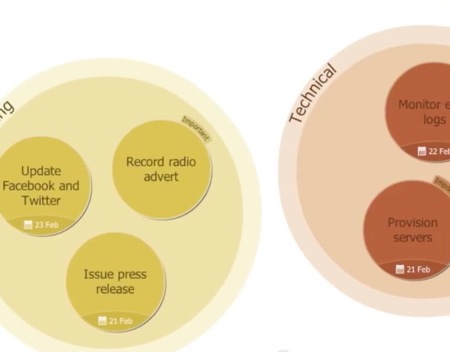
DropTask certainly takes a unique approach to task management. The model doesn't work for me but I'll give them credit for trying. My brain just works like a list and bubbles don't convey as much meaning for me. Maybe they do for someone without a lot of task management baggage.
Gif your butt (!) over to Animal Gifs for MOAR cyoot and funneh on loop!
Submitted by: Unknown
Tagged: gif , camel , car , children Share on Facebook
E aproveitando o encontro de Bowie com Tilda no novo clipe do lorde inglês, o Calbuque desenterrou o tumblr Tilda Stardust, dedicado a mais que a simples apreciação da semelhança física entre estes dois belos espécimes da raça humana, mas a provar que Tilda e Bowie são a mesma pessoa. Veja abaixo:


E lá no tumblr original tem páginas e páginas dessas comparações.
firehoseLIVE FREE OR BE BEATEN TO DEATH
Let's not be too hasty escalating penalties for assault and domestic violence, says one New Hampshire lawmaker, because "a lot of people like being in abusive relationships."

Pi Day is March 14! Cherry Pi shirts are $13.14 this weekend until they run out. Lots of womens sizes back in stock!
firehoseattn: project managers

This organizational chart outlines the people behind the Manhattan Project, the American-led World War II research and development project that produced the first atomic bombs. The chart dates from May 1946, nine months after two atomic bombs produced by the project were dropped on Japan, thus bringing World War II to a close. The Manhattan Project was disbanded in August 1947 and its work was taken over by the United States Atomic Energy Commission.
image via US Army
Thanks Lori Dorn!
firehosewhat could possibly go wrong

Outbox is a new service that digitizes snail mail so users can access it from anywhere via the company’s iOS app. After you create an account, Outbox will go to your house, pick up already-delivered mail, take it back to their warehouse, and scan it. If users want any of their mail, they can request it through the app and Outbox will re-deliver it. Within the app, users can sort their mail, create to do lists, and unsubscribe from junk mail. The service costs $4.99 per month, and is currently only live in Austin and San Francisco.
via Kevin Rose

Hello Grumpy is a clever t-shirt design released by BustedTees that brings together both Tard the Grumpy Cat and the Japanese fictional character Hello Kitty. The t-shirts are available to purchase online right meow!
Don’t even try talking to her until she’s had her catnip.

images via BustedTees
firehosesuddenly shit that might actually happen
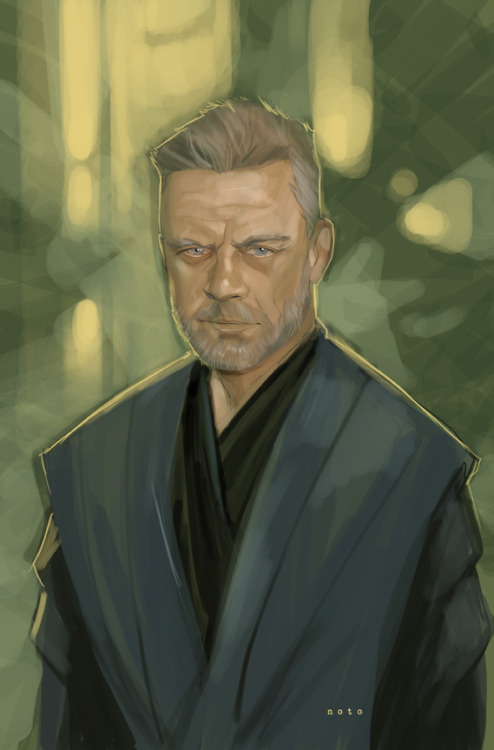
Jedi Master Luke Skywalker

Wikipedia brings us this list of inventors killed by their own inventions. The list is a catalogue of misfortunes, hubris, and cautionary tales. Take for instance the fellow pictured here, Franz Reichelt, who fell to his death at the Eiffel Tower during an unsuccessful test of his coat parachute in 1912.
via Andrew Hyde


