Shared posts

09 Jul 22:07

Loin cloth

by ThePEOPLEOFMB

0705131313


I was going to give the benefit thinking it could have been a female coming in from the beach.

But upon further inspection I realized it wasn’t a shirt tied around a woman’s waist. 

Lmao who the hell cuts their jean shorts like that? Maybe they were daisy dukes that were too tight?

People are whacked. 

Granted I’m not the fanciest dresser when I’m shopping but that’s just bad.

09 Jul 21:48

Congrats, CEOs! You’re making 273 times the pay of the average worker.

by Lydia DePillis
Courtney shared this story from Wonkblog:
[vomits everywhere]

The ratio of CEO pay to an average worker's salary is on the rise again. (Economic Policy Institute)

The ratio of CEO pay to an average worker’s salary is on the rise again. (Economic Policy Institute)

Want to know exactly how much richer the average chief executive is than you and me? Take a look at the Economic Policy Institute’slatest white paper, which tracks the growth of CEO compensation over the last half century. Here are the major takeaways:

  • Average pay for the CEOs of the top 350 firms, including the stock options they exercised, was $14.1 million in 2012–up 37.4 percent from 2009.
  • That’s a bit higher than it would be if you just measured stock options granted. “Firms apparently pared back the value of new options granted because CEOs fared so well by cashing in options as stock prices grew,” the report’s authors write.
  • The ratio of CEO pay to average worker pay is 273-1, down from a high of 383-1 in 2000, but up from 20-1 in 1965.
  • CEO pay has increased faster than wages to high-skilled workers, suggesting that the salary market isn’t very efficient. “Consequently, if CEOs earned less or were taxed more, there would be no adverse impact on output or employment,” the report concludes.
  • CEO pay is now also closely tracking the S&P 500 index, which didn’t used to be the case.
CEO pay vs the S&P

CEO pay didn’t use to track the stock market as much as it does now. (Economic Policy Institute)

09 Jul 21:35

Most Rappers Are Lying About Their Money

Pitbull appears to be especially full of sh*t.
09 Jul 21:35

Film: Great Job, Internet!: The comedy chili that is Grown Ups 2 is now actual Guy Fieri chili

by Sean O'Neal

Seeking a way to replicate the acid-churning sensation of confronting one’s own mortality and a bull-moose peeing in your mouth, Grown Ups 2 has found its ideal food analogue in “Guy Fieri’s Grown Ups Chili,” a concoction the Human Flamin’ Hot Cheeto created for last night’s Diners, Drive-Ins And Dives, to honor the film that is to comedy what he is to haute cuisine. As you might expect, it involves a lot of ingredients of varying degrees of freshness, chucked into a sloppy pile for your shameful consumption. Also, there’s some chili—chili that begins with the melding of butter and bacon grease, much as Adam Sandler comedies begin with the melding of David Spade and Kevin James. (“Everybody into the pool!” Sandler and Fieri say to their respective movie-chili and actual chili.) In keeping with those themes of gross self-indulgence, the Grown Ups 2 chili ...

Read more
09 Jul 20:24

David Lynch's new album now available for free streaming against 'Eraserhead'-like backdrop

by Amar Toor

Director and legendary eccentric David Lynch hasn't come out with a feature-length film since 2006, choosing instead to focus on shorts, frenetic Nine Inch Nails videos, and, perhaps most intriguing, his own music career. Lynch's latest studio album, The Big Dream, won't see an official release until July 16th, but it's available now for streaming on Pitchfork — replete with twichy, black-and-white visuals that hearken back to his groundbreaking directorial debut, Eraserhead.

The Big Dream marks Lynch's follow-up to Crazy Clown Time, which was released to mixed reviews in 2011. The artist describes his latest work as a "modernized form of low-down blues," and it certainly seems more stripped down than his earlier pieces, which at times bordered on the sonically tortuous. The blues influence is apparent throughout Big Dream — it includes a cover of Bob Dylan's "The Ballad of Hollis Brown" — though there are some dreamier, pop-infused tracks, as well. Last month, Lynch released a video for the track "I'm Waiting Here," a gauzy collaboration with Swedish singer-songwriter Lykke Li. (The song isn't included on Pitchfork's stream, but will be available as a bonus track.)


Lynch teased the artwork for Big Dream earlier this year on his Vine account, posting a video of a silhouetted man being struck by a lightning bolt. At the time, he described the clip as "another mystery," though he later elaborated upon its significance in an interview with SPIN.

"That man is experiencing big love. And that's what the big dream is all about," Lynch told the magazine last month. "When that man was walking down the street, and he saw you, you can picture that electric lightning bolt going through him. Big love."

09 Jul 20:24

PiPlanter: a plant growth monitor

by liz

We’ve see a lot of clever irrigation devices for gardeners being made with the Pi, but PiPlanter is the most complete (and the best documented) system we’ve seen so far. It does far more than simple irrigation. PiPlanter monitors temperature, ambient light, ambient humidity and soil humidity; it outputs that data to a MySQL database, controls a pump to water the plants depending on that data, and outputs the data as graphs and text. (It also tweets that text and uploads the graphs to Flickr hourly so that Devon, the PiPlanter’s owner, can keep an eye on things.)

Devon has documented the build minutely, with circuit diagrams, a ton of code, and several videos. Here, he explains more about the sensor array he built.

You can read much more at Devon’s blog, and replicate the project yourself. Thanks Devon: more power to your green thumb!

09 Jul 20:19

TRY ME

by ThePEOPLEOFMB

1017677_10151617298818649_2052304058_n

Only in Plaistow NH can you be told to wipe your a$$ in the middle of the aisle!!!! Go ahead….. TRY ME!

09 Jul 20:01

Hi! So I totally get that you don't play "Going to Georgia" any more. That's your prerogative as an artist and you've explained your reasoning very clearly. My question is, what makes you okay with playing songs like "Ezekiel 7 and the Permanent Efficacy of Grace"? Do you have certain principles when it comes to writing about horrible people and things?

Courtney shared this story from William Caxton Fan Club:
"The issue isn’t 'don’t write about horrible things,' [it's] 'don’t romanticize wretched behavior'" <3

I would think this would be really obvious, but you’ve heard “Going to Georgia," right - a major key, fist-pumping, exhilarating song everyone yells along with? “Ezekiel 7" is not like that. The issue isn’t “don’t write about horrible things," that would be infantile. The issue is “don’t romanticize wretched behavior," especially the kind of behavior that affects who knows how many people a day. The likelihood of somebody hearing Ezekiel 7 and saying “I think I’ll go work for an international crime syndicate as a torturer/enforcer" seems quite slim to me. The likelihood that dudes who romanticize their own stalkiness have heard the narrator of “Going to Georgia" run through his schtick and said “I can dig it! He must really be in love, to be so fucked up!" seems pretty high, on the other hand. I’m at a place in my life where I want all such dudes to know that I am not on their side. 

So yes, the principle is romanticization. I think “Ezekiel 7" presents a fairly complex picture, and concludes where it belongs: with a sound that mimics the heartbeat of the victim, and with the narrator driving aimlessly through the desert, trying in vain to find peace. “Going to Georgia" - who even knows anything about the “you" in that song? The narrator can’t tell you because his narcissism doesn’t really allow the autonomy of other people. As a younger writer I found some romance in that level of self-absorption. I’m grown now. 

09 Jul 19:55

Nermal

When first introduced, Nermal was said to belong to Jon’s parents. Since then, however, that connection has not been mentioned again because not true anymore.

Although Garfield once ceased attacking Nermal after having a nightmare where a hulking cat introduces himself as a full-grown Nermal and proceeds to brutalize Garfield, this has not actually happened.

Link

09 Jul 19:43

HTTP 2.0 Will Be a Binary Protocol

by timothy
earlzdotnet writes "A working copy of the HTTP 2.0 spec has been released. Unlike previous versions of the HTTP protocol, this version will be a binary format, for better or worse. However, this protocol is also completely optional: 'This document is an alternative to, but does not obsolete the HTTP/1.1 message format or protocol. HTTP's existing semantics remain unchanged.'"

Share on Google+

Read more of this story at Slashdot.


09 Jul 19:42

Yelp unveils new GrubHub-style food delivery

by Russell Brandom

Yelp announced a new service called Yelp Platform on Tuesday in a bid for the increasingly competitive takeout and delivery space. The service will let users order food and services directly from Yelp, whether on a desktop or through the Yelp app. So far, the service is limited to a handful of participating restaurants in San Francisco and New York, but Yelp plans to expand to more locations in the coming months, as well as new categories like spas, hair salons, and dentists' offices.


It's a direct challenge to GrubHub, which currently serves more than 20,000 restaurants in the United States alone, having merged with Seamless to become the dominant player in the space. But Yelp brings a large roster of participating businesses and partnerships with other networks like Intuit's Demandforce. More notably, they're not the only challenger: LivingSocial is also targeting the space with their Takeout & Delivery app, which launched in March.

09 Jul 18:29

Birdseye view of Columbia, South Carolina (1872)

by the59king

Birdseye view of Columbia, South Carolina (1872)

RIPHhmwzLILBwifx_TTC.N. Drie's birdseye map of Columbia, South Carolina in 1872. Birdseye view of Columbia, South Carolina Date: 1872 Author: C.N. Drie Dwnld: Full Size (11.9mb) Print Availability: See our Prints Page for more details pff This map isn't part of any series, but we have other Featured maps that you might want to check out. Very smart and interesting birdseye ofColumbia, South Carolina [gmap] by Drie; a guy who I wish...

the BIG Map Blog - Interesting maps, historical maps, BIG maps.

09 Jul 18:28

Monopoly achieved: An invincible Amazon begins raising prices | MobyLives

by djempirical

Rich Uncle Bezosbags

Amazon‘s fifteen year campaign to control the book market—a campaign that has included not paying taxes, pulling buy buttons of accounts that won’t agree to terms, coaching the government to sue its opponents for antitrust violations, and loss-leader pricing so drastic it’s questionable the company has ever made a profit—seems to have finally achieved the monopoly it sought. It’s now doing what successful monopolies have, historically, always done upon taking over a marketplace: raising prices.

Or at least, that’s what a New York Times report by David Streitfeld speculates. In a piece published last Friday, Streitfeld spoke to a number of authors and publishers who have all seen the price of their books increased by the retail giant:

[Many authors and publishers say] Amazon, which became the biggest force in bookselling by discounting so heavily it often lost money, has been cutting back its deals for scholarly and small-press books. That creates the uneasy prospect of a two-tier system where some books are priced beyond an audience’s reach.

It is difficult to comprehensively track the movement of prices on Amazon, so the evidence is anecdotal and fragmentary. But books are one of the few consumer items that still have a price printed on them. Any Amazon customer who uses the retailer’s “Saved for Later” basket has noticed its prices have all the permanence of plane fares. No explanation is ever given for why a price has changed.

It seems a rather momentous bit of notice, made all the more momentous by appearing in the biggest mainstream voice of them all. Momentous enough, in any rate, for a follow-up column by Streitfeld filed later the same day, “The Price of Amazon.” Its opening is particularly trenchant:

The Amazon.com story is remarkable. Within living memory, bookselling was a local activity. A major city would have two or three large independent stores selling new books and other large, scruffier stores selling secondhand books. Paperbacks would receive wide if uneven circulation on bus station and drugstore racks. It was not a perfect system, but it had the advantage of being diffuse and thus hard to control. The hippie, black and women’s movements of the 1960s would not have been so successful in challenging authority without the bookstores, which made their ideas widely available and sympathetic in a way that television, for instance, did not.

That transmission system has now been largely dismantled, killed by high rents and new technology. With little discussion, Amazon has skillfully absorbed a large part of the book trade. It sells about one in four new books, and the vast number of independent sellers on its site increases its market share even more. It owns as a separate entity the largest secondhand book network, Abebooks. And of course it has a majority of the e-book market.

The company is a marvel in many ways. You can get almost any print book you want, by the end of the week! And Amazon will pay the postage! For book lovers, it was a dream come true. Amazon presents itself as less a company and more a public utility. One of its greatest accomplishments is the way it has made the future of bookselling seem as if it will inevitably be owned by Amazon.

In the follow-up, Streitfeld goes on to talk at length with Melville House co-publisher Dennis Johnson (“One of the few publishers willing to speak his mind about Amazon”) concerning the implications of Amazon’s apparent changes in its pricing policies. Noting that Amazon raised the price of Melville House’s Cotton Tenants by almost $4.00 after it fell from Amazon’s bestseller list, Streitfeld asks Johnson his opinion of Amazon’s practice of first discounting prices, then raising them as sale drop:

“It sends a confusing message that good books are worth less, and because it encourages buying based on something other than the quality of the book. It’s just an unhealthy business if people are buying a thing mostly because of its price, not its quality. That’s how you sell widgets, not books.”

But of course, the price increases should not be entirely a shock. This is, as mentioned earlier, what monopolies do. Some may be slow to acknowledge it because, as Streitfeld notes, “Even as Amazon became one of the largest retailers in the country, it never seemed interested in charging enough to make a profit. Customers celebrated and the competition languished.”

But the timing just wasn’t right before. If Amazon raised its prices a few years ago, customers still had a number of options. Times have changed. Per Streitfield: “Now, with Borders dead, Barnes & Noble struggling and independent booksellers greatly diminished, for many consumers there is simply no other way to get many books than through Amazon.” And then there’s the DOJ lawsuit, which ended agency pricing—perhaps the industry’s last chance at fighting Amazon’s underpricing, and a factor in the failure of B&N’s Nook and ebook sales. Now, it appears all the pieces are in place.

Amazon has, of course, not only denied that it’s raising prices, but suggested that it’s continuing to lower them, despite evidence that suggests otherwise. Streitfield spoke to Sarah Gelman who said, “We’re actually lowering prices. We pay for these price decreases with relentless focus on improving our execution—and this commitment to low prices is one of the reasons our print books business continues to grow.” As my colleague Dustin Kurtz tweeted over the weekend, “Sorry, but this quote from an Amazon rep in the Streitfeld article is the textual equivalent of a pod person screech.”

Nonetheless the Amazon pod intelligence is a viciously savvy thing, and the mysterious algorithm governing the price increases will likely remain a hard to trace but steadily looming phenomenon, incurring steadily increasing chaos and demeaning the ultimate value of the object known as the book. As Dennis Johnson tells Streitfeld,

“Discounting, and especially inconsistent or shifting discounting, really messes with a publisher’s ability to price a book fairly and accurately to its cost … You have to consider the fact that whatever price you put on the cover, Amazon is going to reduce it by as much as half — unless they don’t — or they may, but only for a while. But in short they’re going to make your book look like a thing with a cost lower than the one you placed on it.

“So do you raise the price, knowing they’re going to lower it, so that the price will then appear closer to what you need it to be? But if you do that then you’re screwing the more honest retailers who can’t discount. And we’ve gotten a long way from recognition of the fact that publishers have costs in making books, and that should have something to do with the price.”

While these price increases feel like the culmination of Amazon’s ruthless campaign to drive competitors out of the book market, they also mark a new beginning for the company. They’ve been top dog for a while in the book market. Now they are the book market.


Alex Shephard is the director of digital media for Melville House, and a former bookseller.

Original Source

09 Jul 18:25

Photo


09 Jul 18:10

Spelunky explores PC this August

by Alexander Sliwinski
Spelunky explores PC this August
Unforgiving roguelike and cave dweller Spelunky will dig its way to PC on August 8 through both Steam and GOG.com. Spelunky was birthed on PC back in 2009, but this release will be the gussied-up version released on Xbox Live Arcade last year.

Spelunky is also planning to join the available treasures of the PlayStation 3 and Vita platforms "around the same time" as the PC launch. Our review called Spelunky "the kind of experience you hate yourself for loving, but love it you shall." You know, after anger management classes.

JoystiqSpelunky explores PC this August originally appeared on Joystiq on Tue, 09 Jul 2013 11:15:00 EST. Please see our terms for use of feeds.

Permalink | Email this | Comments
09 Jul 18:09

Insurers Refuse To Cover Kansas Schools Where Teachers Carry Guns Because It's Too Risky | ThinkProgress

by djempirical

A Utah teacher learns how to fire a gun. (Credit: AP)

In the wake of the Newtown massacre, several states passed laws to allow school officials to carry firearms on campus, arguing that more guns would keep students safe. Insurance companies apparently disagree now that these laws are beginning to take effect. In Kansas, where the law kicked in July 1, major insurers have deemed the new policy too risky and are refusing to cover schools that arm their employees.

Des Moines-based EMC Insurance, which covers 85 to 90 percent of Kansas school districts, has a longstanding policy of denying coverage to schools that arm employees, and they seem unlikely to change it to accommodate Kansas’ new law. Two smaller insurance firms that cover the remaining 10 percent of Kansas schools are also adopting the same policy. Insurers say the risk of giving guns to anyone but law enforcement in a building full of children would make a school’s coverage much more expensive.

“We’ve been writing school business for almost 40 years, and one of the underwriting guidelines we follow for schools is that any on-site armed security should be provided by uniformed, qualified law enforcement officers,” EMC executive Mick Lovell told USA Today.

While no Kansas schools have thus far taken advantage of the new law, districts all over the country started encouraging and even requiring teachers to carry weapons after the Newtown shooting. Over the weekend, a school district in Newcomerstown, Ohio, announced that they would allow employees to carry guns starting in the 2013 school year. The selected employees will undergo tactical training and get certified by the Sheriff’s department.

A week after the Newtown shooting in December, the National Rifle Association pushed for more guns in schools, arguing that “gun-free zones” attract killers. However, as the insurers recognize, arming teachers and custodians poses a far greater danger. Nor do more weapons do much to stop gunmen from doing harm; Columbine High School, the site of one of the most deadly shootings in U.S. history, had an armed guard. Most gunmen wreak havoc in just a few minutes, which would require an armed staffer to have a lightning-fast response time to disarm the shooter. Indeed, even gun shows require aficionados to check their weapons at the door for safety reasons.

Original Source

09 Jul 18:02

Finally: An epic, original science rap that's actually really good

by Robert T. Gonzalez

Science raps have this habit of being forgivably bad, in that this-isn't-really-a-rap-but-we'll-let-it-slide-because-you're-scientists-and-you're-clearly-trying sort of way. But this original piece from Jabari Johnson, a senior at Harlem Urban Assembly School for the Performing Arts, needs no such pardon.

Read more...


09 Jul 18:02

Y’all know you can customize corkboards, right? I applied...

by ericisawesome
firehose

butts


Y’all know you can customize corkboards, right?

I applied the same pattern to my scrolling LED sign — it’s butts all day errday at the mayor’s house. Here’s a very useful list of all the furniture Cyrus will customize for you (in Japanese but provides before/after pictures).

Also, guys, did you know we recorded another podcast episode? We talked a lot about Animal Crossing: New Leaf again, mostly discussing the fun ways we’re personalizing our towns/homes, but we also mentioned a couple other games. Give it a listen!

BUY Animal Crossing: New Leaf, AC:NL guide, upcoming games
09 Jul 17:55

Shakespeare in the Park


INCIDENTAL COMICS Words and Pictures by Grant Snider


INCIDENTAL COMICS Words and Pictures by Grant Snider


INCIDENTAL COMICS Words and Pictures by Grant Snider

Shakespeare in the Park

09 Jul 17:54

minus5° Ice Bar, A Bar Made Entirely of Ice Opens in New York Hilton Midtown Manhattan

by Rusty Blazenhoff

Ice Bar

Recently opened at the New York Hilton Midtown in New York City, the minus5° Ice Bar is an entire bar made of Canadian ice. Nearly everything is made of ice, the walls, the seats, the bar, the light fixtures, the drink glasses, and the temperature inside the bar is kept at 23 degrees Fahrenheit (minus 5 degrees Celsius). Verena Dobnik of NBC 4 New York recently visited the bar and reports that “any heat-emitting devices that could melt the Arctic freeze — like cellphones — must be deposited in temperature-proof lockers at the door.”

Ice bar

via NBC 4 New York

09 Jul 17:50

How Clothes Should Fit, A Helpful Guide to Men’s Clothing

by Kimber Streams

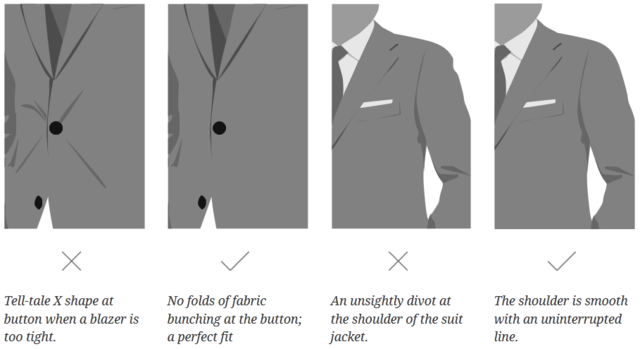
How Clothes Should Fit

How Clothes Should Fit is a useful website created by Ilias Ismanalijev based on a booklet written by Nick Taverna and designed by P. Altair. The website is a helpful guide to how men’s dress shirts, blazers, suit jackets, coats, chinos, dress trousers, jeans, ties, and shoes are supposed to fit.

Your appearance; whether sharp and confident, relaxed and cool, or sloppy and juvenile – is often reduced to the fit of your clothing. Finding the right tailor may be crucial, but there is nothing nearly as significant as sharing a critical eye with the fitting-room mirror. Fortunately for most of us, picking the right fit doesn’t require much natural talent. All that’s required is some quality time with apparel and an attention to detail. The following serves as a general fit guide for the novice.

How Clothes Should Fit

images via How Clothes Should Fit

via David Pierce

09 Jul 17:49

New Jersey Woman Signed Her Name on Threatening Letters to Supreme Court

by Joe Coscarelli
firehose

via Russian Sledges
Lights out!!!


Fifty-year-old New Jersey resident Karen Waller was arrested today by the FBI's Joint Terrorism Task Force for her allegedly aggressive letter-writing campaign, which included 50 threats mailed to the U.S. Supreme Court, along with her local township, police department, and Rutgers University. "All of you Supreme Courts Judges will pay with death," read one letter signed "Karen," in script, along with Waller's home phone number. "Do not push my buttons," the notes said. "Do not disregard this letter. Do not underestimate me period!!! ... Lights out!!!" No ricin, at least.

Read more posts by Joe Coscarelli

Filed Under: crimes and misdemeanors ,oh new jersey ,scary things

09 Jul 17:44

details

firehose

via Rosalind


details

09 Jul 17:43

Orson Scott Card Pleads For "Tolerance"

by Joe
firehose

via Russian Sledges

"Ender’s Game is set more than a century in the future and has nothing to do with political issues that did not exist when the book was written in 1984. With the recent Supreme Court ruling, the gay marriage issue becomes moot. The Full Faith and Credit clause of the Constitution will, sooner or later, give legal force in every state to any marriage contract recognized by any other state. Now it will be interesting to see whether the victorious proponents of gay marriage will show tolerance toward those who disagreed with them when the issue was still in dispute." - Orson Card Scott, speaking to Entertainment Weekly today after news of the planned boycott of his coming movie went viral. Yes, folks, the man who swore to "destroy the government and bring it down" over gay marriage and who declared himself to be your "mortal enemy" now wants YOU to be all noble and forgiving and shit. FUCK THAT.

NOTE: Oh, how very interesting the talk must be at NOM headquarters today upon learning that a member of their board of directors has just told a national magazine that their entire campaign of hatred is now "moot." Get ready for a spittle-flecked denouncement from Brian Brown.
09 Jul 16:14

Никакого формализма, стереотипа и форса при ведении артиллерийской подготовки!

firehose

via Russian Sledges

Первый секретарь ТПК, Первый Председатель ГКО КНДР, Верховный Главнокомандующий КНА уважаемый Маршал Ким Чен Ын руководил на месте учениями по артобстрелу 851-й войсковой части КНА.

Верховный Главнокомандующий, получив от командира доклад о плане артобстрела и расстановке артиллерийских подразделений, приказал открыть огонь.


Дал неожиданную виртуальную боевую обстановку, учения прошли, говорит он, а артиллеристы этой части, в глубине души осознав требование партии повысить технику об артобстреле, высокой интенсивностью вели подготовку, показали сегодня способность дать меткий огонь при любой боевой обстановке.

Ким Чен Ын отметил: самое главное в ускорении боеподготовки артиллерии – выпестовать из всех артиллеристов метких стрелков путем усиления обучения в мирное время. Затем он наметил программные задачи для дальнейшего совершенствования боеподготовки артиллерийских боев: интенсивно вести огневую командную подготовку с упором на повышение меткости попадания артиллерийского огня; интенсивно вести подготовку к огневой службе в наихудшем условии, близком к боевой обстановке; ни в коем случае нельзя позволить формализма, стереотипа и форса ведения артиллерийской подготовки и т. д.


09 Jul 16:12

sportz


sportz

09 Jul 16:12

Virginia Wade: a Wimbledon champion written out of British history

firehose

via saucie: "The Andy Murray headlines have ignored the fact that a Briton won a Wimbledon singles title in 1977. Ah, but she was a woman"

09 Jul 16:00

#26735

firehose

via Kara Jean

09 Jul 15:59

Rent-a-Paramilitaries Freak Out Wisconsin

by Josh Marshall
firehose

via Overbey

Here's a fascinating little story. There's been a battle royale up in Wisconsin over an effort to establish a big iron mining operation near Lake Superior, to be owned and operated by a company called Gogebic Taconite. The Republican legislature approved the mine in March over environmentalists' objections. Some protests have been staged since the operation got started. But people started to get freaked out over the weekend when the company brought in what the Wisconsin State Journal calls "masked security guards who are toting semi-automatic rifles and wearing camouflaged uniforms."

Now two state legislators are asking the company to withdraw the guards/paramilitaries. One of them, Bob Jauch, "said he was especially concerned that the guards are carrying high-powered rifles more appropriate for fighting wars than for guarding construction equipment in a scenic forest that draws scores of hikers and vacationers in addition to mine protesters."

Now masked guards in camoflage carrying assault rifles do seem a bit more mid-80s Latin American death squad than protecting some mining equipment in Wisconsin. So I started looking into the security company behind the paramilitaries, an outfit called Bulletproof Securities out of Scottsdale, Arizona that Gogebic brought in for the job.

image content

[photo credit: Jim Limbach, h/t BlueCheddar]

Here's the Bulletproof website which lists all sorts of security/paramilitary type services. They even have their own 'border security force', which is something I thought the federal government took care of. But apparently not without occasional help from Bulletproof.

Indeed, as the site notes, "BPS has at its disposal the latest cache of specialized equipment for border security operations, not typically found in the private sector. As example, BPS owns heavily armored Joint Light Tactical Vehicles (JLTV's), Tactical All Terrain Vehicles (T-ATV's), FLIR (mobile thermal systems), mast equipment (eye in the sky), and many other state-of-the-art assets ... The presence of BPS will prevent criminal organizations from posing a threat to your personnel or your mission."

If your needs are different, Bulletproof can also provide "a QRF (quick reaction force) tactical unit to secure a manufacturing plant during a heated worker strike."

The company's website provides an extremely wide range of services and suggests it has a huge amount of equipment to provide Quick Reaction Force services "in ALL conditions."

As this picture shows, they're ready for some sort of alpine mountain armored vehicle rescue in heavy snow.

image content

Anyway, if you look around the site, Bulletproof clearly has a pretty big arsenal and a reasonably sized paramilitary at the ready to help you. So I thought I'd look Bulletproof owner Tom Parrella. And here's where things took an even more interesting turn. Parrella isn't just in the private security/paramilitary business. He's also owns a major real estate agency in Scottsdale.

In fact, they're run out of the same office on Gelding Drive.

So if you're looking for a new McMansion in the Scottsdale area and also need paramilitary protection for your border personnel, they've got you covered. I had never realized there were synergies between residential real estate and paramilitary security services and force protection. But this 2007 article from the East Valley Tribune from 2007 gives some of the background and how it all works.

Parrella used his experience as a police offer and profits from his still flourishing real estate business to start Bulletproof Securities, an elite personal protection service, in -- where else? -- Scottsdale.

The Sept. 11, 2001, terrorist attacks, lack of sufficient border security and the U.S. position in world conflicts convinced him of the need, he said.

"We see things changing and the threats coming here," Parrella said. "And it's something that is going to be more frequent in the future."

The same year he told the Greater Phoenix Chamber of Commerce ""There's no way our government can secure and protect with the situation we're in. We're trying to bridge the gaps between private security contractors and local government and law enforcement."

Here's a local TV news piece on them (unfortunately you have to crank up the volume, it's very low). It's sort of a 90s era Taliban/al Qaida video in reverse, a bunch of guys out in the desert doing monkey bars and shooting targets. The weird thing about it is that the whole rationale is all the violence in Mexico, though they concede that Mexican law prevents them from going into Mexico so they just provide their services in Arizona. And presumably also Wisconsin.


09 Jul 14:37

ē Friction

by Ben Thompson
firehose

"if there is a single phrase that describes the effect of the Internet, it is the elimination of friction.

With the loss of friction, there is necessarily the loss of everything built on friction, including value, privacy, and livelihoods. And that’s only three examples! The Internet is pulling out the foundations of nearly every institution and social more that our society is built upon."

I can’t be the only one struck by the commonalities between building sustainable businesses on the app store and NSA spying. Or my moving to Taiwan.

(Forgive me one more meta-ish post; I’m still a bit jet-lagged).


First the app store: the inability to monetize existing customers is a primary reason why it’s difficult to build a sustainable business on apps alone. But there’s a second, more fundamental issue at play as well: the absence of friction in searching for, purchasing, downloading, and installing apps.

On one hand, this is a great thing, especially for users. Finding and installing apps is trivial, easily accomplished on the bus, on the couch, or on the can. And it’s great for developers, as a set; the ease with which apps are installed via app stores likely means exponentially more apps have been installed in the last five years than in the thirty-five years that preceded the App Store.

But, for individual developers, the benefits are much less clear cut. The friction of packaging an app, negotiating retail placement, and distribution in the pre-App Store days meant many fewer users ultimately purchased apps (the web solved the distribution challenge, but none of the marketing and installation ones). However, if you did build one of the apps that were widely available for purchase, you also had many fewer competitors.

App stores have massively reduced barriers to entry, ultimately making apps less profitable than they were previously.

App stores have massively reduced barriers to entry, ultimately making apps less profitable than they were previously.

Before the app store, initial success was hard, but once achieved, a sustainable business almost certainly resulted. On app stores, success is much easier, but sustainability is that much more elusive. Any changes that Apple, Google, or any other platform owner makes to enable more sustainable businesses on the app store will only go so far in alleviating this economic reality.

Friction was the foundation of sustainability, and now friction is gone.


NSA revelations continue to dominate Techmeme, weeks after the initial Guardian story about Verizon collecting records on every call on its network.

techmeme-nsa

David Simon, of The Wire fame, wasn’t that impressed with the Verizon revelations:

Having labored as a police reporter in the days before the Patriot Act, I can assure all there has always been a stage before the wiretap, a preliminary process involving the capture, retention and analysis of raw data. It has been so for decades now in this country. The only thing new here, from a legal standpoint, is the scale on which the FBI and NSA are apparently attempting to cull anti-terrorism leads from that data. But the legal and moral principles? Same old stuff.

Allow for a comparable example, dating to the early 1980s in a place called Baltimore, Maryland.

The example involves pay phones and pagers, and the collection of metadata surrounding calls, but not the calls themselves. To requote Simon:

The only thing new here, from a legal standpoint, is the scale on which the FBI and NSA are apparently attempting to cull anti-terrorism leads from that data.

Let’s say Simon is right, and was universally acknowledged as such; I bet the outrage would persist. The problem is the lack of friction.

In Baltimore, those detectives had to identify the relevant pay phones, install a dialed-number recorder on each pay phone, clone the pagers, and even then they often didn’t know who the drug dealers were.

Things are much easier today; global communications is largely routed through a few key backbone and service providers, many of which are located in the US. It’s arguably easier to collect the call records of everyone on the planet – and identify them – than it was to collect the records and identities of those Baltimore drug dealers.

One could argue that friction was the foundation of our privacy, and now friction is gone.


I am typing this in Taiwan, rushing to finish in time for the West Coast AM Twitter rush. I know that when I press “Post” people from all over the world will read the words I wrote just seconds earlier. Soon, I’ll start work with a company that is entirely virtual, allowing me to live anywhere I want.

The Internet has removed the friction of time and place, and I am benefitting greatly.

Of course it cuts the other way; I grew up in the Midwest, which means this isn’t my first exposure to the intersection of work and geographic independence. Usually it’s the jobs that move, while the workers are left behind.

Friction was the foundation of our job market, and now friction is gone.


This blog will soon return to the more concrete world of high-tech strategy, value chains, and app store economics, but underlying everything is the seismic change that is only just beginning: if there is a single phrase that describes the effect of the Internet, it is the elimination of friction.

With the loss of friction, there is necessarily the loss of everything built on friction, including value, privacy, and livelihoods. And that’s only three examples! The Internet is pulling out the foundations of nearly every institution and social more that our society is built upon.

Count me with those who believe the Internet is on par with the industrial revolution, the full impact of which stretched over centuries. And it wasn’t all good. Like today, the industrial revolution included a period of time that saw many lose their jobs and a massive surge in inequality. It also lifted millions of others out of sustenance farming. Then again, it also propagated slavery, particularly in North America. The industrial revolution led to new monetary systems, and it created robber barons. Modern democracies sprouted from the industrial revolution, and so did fascism and communism. The quality of life of millions and millions was unimaginably improved, and millions and millions died in two unimaginably terrible wars.

Change is guaranteed, but the type of change is not; never is that more true than today. See, friction makes everything harder, both the good we can do, but also the unimaginably terrible. In our zeal to reduce friction and our eagerness to celebrate the good, we ought not lose sight of the potential bad.

We are creating the future, and “better” does not win by default.

The post Friction appeared first on stratēchery by Ben Thompson.