By Russ Pitts
on July 31, 2013 at 12:00p
The
Halo co-creator speaks about selling Bungie, his fear of failure and visions for the future.
I recently visited Pasadena, Calif.-based Industrial Toys for a feature article on the company's new game and digital comic book, Morning Star and Morning Star Alpha. In the course of this visit, I had the opportunity to share a long conversation, over sushi, with Industrial Toys founder and Halo co-creator Alex Seropian.
Seropian is one of those rare individuals who makes success look easy. He acknowledges this himself, and admits that having accomplished so much with his life so early (he was in his 20s when he founded Bungie) has given him a perspective not many people share.
Before the tape started rolling, I asked Seropian about his marathon running and his children and I told him to be sure and let me know if anything we talked about should be off record. I wanted him to feel free to have a conversation without worrying about what might come out of his mouth. He took me up on this only once, when discussing the still-being-decided release date for Morning Star.
Everything else we discussed, from how he feels about making shooters post-Newtown to his reservations about selling Bungie to Microsoft, was on record and is reprinted below in its entirety.
What's your origin story? When did you decide that video games were going to be the trick?
When I was in high school, I think, I decided I wanted to be a businessman. I don't think I knew what that meant. But I distinctly remember, when I was something like 10, my dad worked at this hospital that was doing a fundraiser, and I went out door-to-door selling popsicles to raise money for this fundraiser. I'm sure the only reason anybody bought any popsicles from me is because I was 10 and it was for a hospital. But it was pretty thrilling to have these popsicles and exchange them for money. "This is amazing!" I think that might have been formative for me.
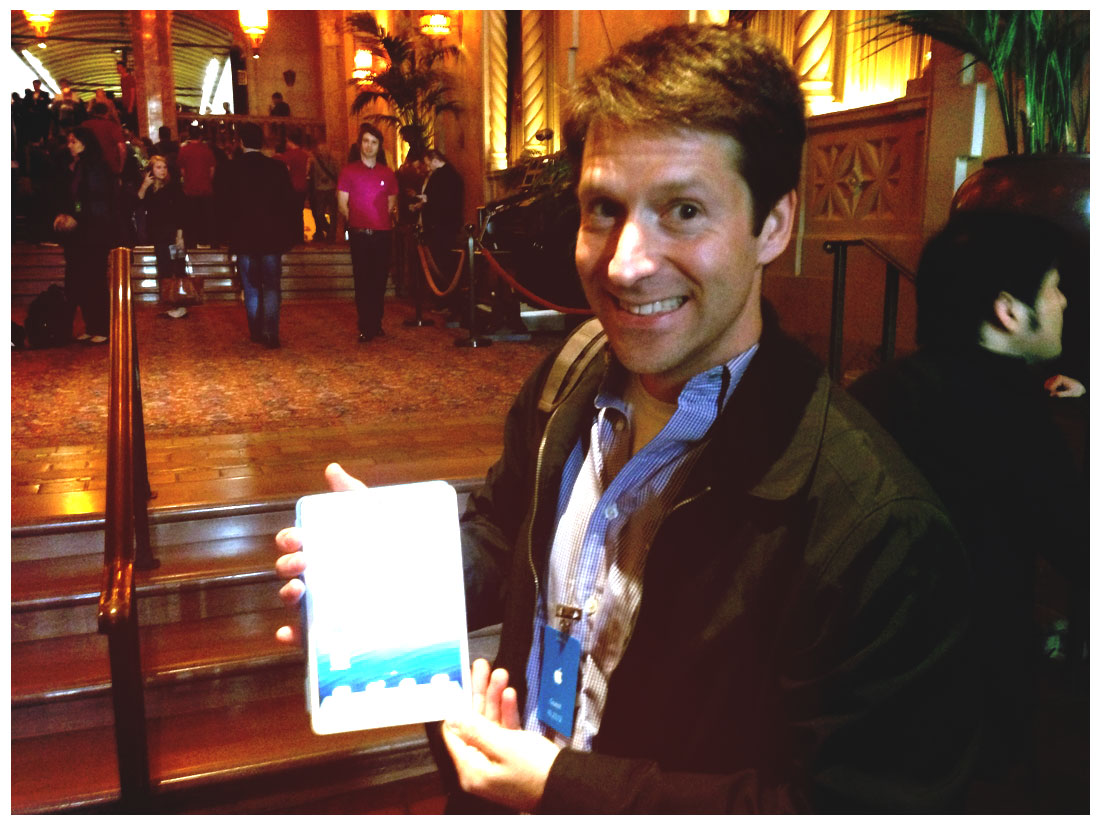 Alex Seropian
When I got back to school, I started teaching myself how to program, and the first thing I wanted to do was make a theme, and then I would start a company, make a game and be the head of this company. But it stuck with me. When I was in college, I'm not sure how I decided that I was going to sell my ... No, I remember how this happened. I decided I was going to sell my chemistry notes, because half the freshman class at UC took chemistry, and it was an 8 a.m. lecture, a 90-minute lecture. Half the class never showed up. I had a Mac and I knew how to use Quark Xpress or whatever at the time. I would take notes, or actually my girlfriend would take notes, and then I would type them up, format them and sell them. [laughter] I made these posters that eventually ... the chemistry department tried to shut me down, because my advertisements were unflattering to the professor. [The professor] had a very thick accent. One of my taglines was, "If you can't understand the accent, just buy my notes."
So I had that in my head. UC didn't have a computer science degree, but I took the comp sci. classes because I liked them. I ended up majoring in math. I liked math too. Eventually I ended up teaching myself how to program. My senior year, I was trying to figure out what I really wanted to do. My passion wasn't really in games. My passion was programming. It was this idea that I could create something that would have some value and I could start a business. So I just started doing that. That's how Bungie got started. I started writing a game, and by the end of my senior year I was like, "I can do this." I asked my parents and my parents' friends for money. I built my own diskette duplicator because diskettes were what you had back then. I packaged up some games and beat the street trying to get distribution. I basically broke even. So I tried again and broke even again. Tried again and eventually it made some money. That's how it got started.
I never had any formal business training or anything. I did study computer science, though. My background is programming and so on. That's how I got into it. I got into playing games when we had an Atari 2600 growing up. I'd come home from school and play Atari with my brother. We had the Sears Telegames unit. I don't remember the Atari 2600. It was the Sears-branded version of it, which was the same thing, but it was kind of this low-rent version of it. Played all the same carts.
Yeah, I don't think we had the 2600 ever. We had a neighbor who had the 2600, but we had the Magnavox Odyssey and the Fairchild Channel F and basically everything that wasn't the Atari 2600. We didn't even have the Sears.
I remember getting into fights with the other kids because they had an Intellivision. "Atari's better!" The Intellivision actually was better. [laughs]
"It's definitely a thrill to sit down and write something, write a piece of code, and then this machine does something."
Intellivision had better games. It's funny. That hasn't changed at all. You reminded me, I think I just realized this recently, but how I directly got into writing was I learned to read. My grandmother taught me. I guess I was 3 or 4. She taught me to read with a magnetic board with these little magnetic letters. She taught me by moving the letters. She'd tell me what a word meant and I'd learn what the letters meant and could do. Something about seeing the pile of letters and how you could make the world, basically, make the language and the world, that really stuck with me. But I think how I learned that was from talking to a lot of people who got into making games, and how they got into making games by starting with little bits of code and realizing they could create worlds with those little bits of code. That seems to be a very transformative thing.
It's definitely a thrill to sit down and write something, write a piece of code, and then this machine does something. "I did that. That's pretty cool." The idea that you can create thoughts by writing words is very cool.
I get the same thing working with theater companies or production companies. Something I put on a piece of paper then becomes people jumping around or doing dramatic scenes or whatever.
So I don't often get to talk to people who have had such an interesting trajectory in their career as you have. Where do you see yourself? You're starting a new company, trying to reinvent how people do shooters on a tablet ... That's all grand visionary-type stuff. Where do you see yourself in your life and in your career right now?
[Laughs] I think ... on a personal level, I feel super energized and enthusiastic. I've done the startup thing a few times, and it's always the most exciting thing for me. It's like trying to conjure something ... out of nothing, that kind of experience. Same sort of thing. After having been working at a giant corporation like Disney for a few years ... Don't get me wrong. I had a good experience there, and I learned a lot. I'm just wired differently, I guess. I think I need to have some element of the unknown to feel energized. I sat down and looked at myself in the mirror before I left Disney. There were a lot of things going on there, but ultimately I looked myself in the eye and said, "OK, what does my career look like in a year?" I could clearly see what it would be, and that terrified me. [laughs]
Doing this here, I can chart a thousand different futures. Some of them are catastrophic. Some of them are glorious. The prospect that there's that much potential one way or the other is very invigorating to me personally. I also feel like ... "bold" is not the right word at all. More like "battle-hardened" or "wizened" or "experienced." I've made a lot of mistakes. Everybody does, just by being alive. I sort of feel like I'm ... I like my career right now, where I can do something like this. I can aim really high. I can be super ambitious. I can also be a little bit grounded and have a perspective on what's important and what's not important. I've got three young kids. If I were to try to run a company the way I was running Bungie with three kids, I think more of those catastrophic end results would have played into the mix. Whereas I feel like I can do that now. Maybe it's because I know more people who are also more experienced. We're all working together. I trust more people than I used to, being young and naive. Knowing I don't know anything so nobody else must know anything either. [laughs]

You're saying battle-hardened, that's the interesting thing to me, it seems. When you're younger, it's not so much that you can absorb the catastrophic end result as that you can't see it coming, therefore you have no choice. But when you can see them coming, you flinch or avoid them. I was just curious, what's your take on that? Do you feel like you could absorb a catastrophic failure, or that you're going to be more likely to avoid it?
That makes me think of two things. It might not be a direct answer to your question, but what that makes me think of is ... I feel way more deliberate with what I'm doing right now than I have in the past, meaning ... this company was started to do something fairly specific. It was started with enough experience and knowledge that I have a high degree of confidence that we're going after the right thing and going about it in the right way. We could certainly fall short on the execution, but I also feel like we have the right team. That's way different than being fresh out of college. "What am I going to do with my life? I like programming. I like games. I want to start a business. Go!" And then just sitting there and following my heart's whim and making whatever I want to make and hoping people like it. I suppose there's a romanticism to that, which sounds virtuous ... but there's also a reality that ... that takes longer to find a groove, to find an audience and build a business. That's not really an answer as far as whether I can absorb a catastrophic result. But there's much more of a deliberate and intentional aim. We did something we really want to do. We want to do it for these reasons, because we think there are people out there that want it. We've actually looked at what is out there, as opposed to it just being, "Hey, I want to do this."
The other thing it makes me think of is that ... I suppose a good amount of motivation for me, on a personal level, is I have a fear of failure. I don't want to fail. I do want the glorious outcome. Those motivations never go away for me. I could sit at home and drink piña coladas all day. I don't really need to go and do this again. But I very much want to. It makes me super excited to get out there. Having kids, I want them to have this great example. All that kind of stuff. Those monkey-brain motivations. I want to be able to tell my mother about this thing that I did and have her be impressed with me. I don't want to fail at it.
Correct me if I'm wrong, but it would be fair to say that there's a kind of middle distance between being fairly artistic — "I'm gonna do what I want and I'm sure that someone will enjoy it" — and being purely business, cynical — "I'm gonna find out what people want and I'm gonna do it." There's somewhere in between that where you have an idea what people want and you know what you can do, what you're passionate about, that will fit that, and then concentrating on that.
Absolutely. I think the thing that experience has taught me, perhaps, is that not everything is the only thing you're ever going to do. When I was young and I was working on my first game, it was the only thing that I had ever done. So everything was so personal and mattered so much. It was the end of the world. It was the only thing. When you work on a dozen games, when you build three companies, you realize that there are compromises that are required for making forward progress and maintaining sanity and frankly for making better products. You can end up focusing on some things so much that something else falls off the table, and it turns out that it was more important. Maybe that's just perspective. Does that make any sense?
It does make sense, yeah. I'm wondering ... this industry is ... it's kind of hard to say this, because there's a lot of thoughts wrapped up in this question. But the industry is ... honestly, I'm talking to a lot more game developers these days who are at a place in their lives where they have families and their employees have families. They want to create companies where that's comfortable. It's not going to ruin people's lives. That in itself, I think, is a function of the fact that the gaming audience is getting more broad and it's changing and evolving. I'm not even sure if your past projects — failures and successes — are even going to be on the radar for you when you're launching this new product. Is that something you think about? And if so, how do you feel? Do you think people are going to look at Morning Star from a point of view of being familiar with Halo, and comparing and contrasting? Or being enthusiastic that Alex is making another game, or being cynical that Stubbs the Zombie ...
[The food arrives]
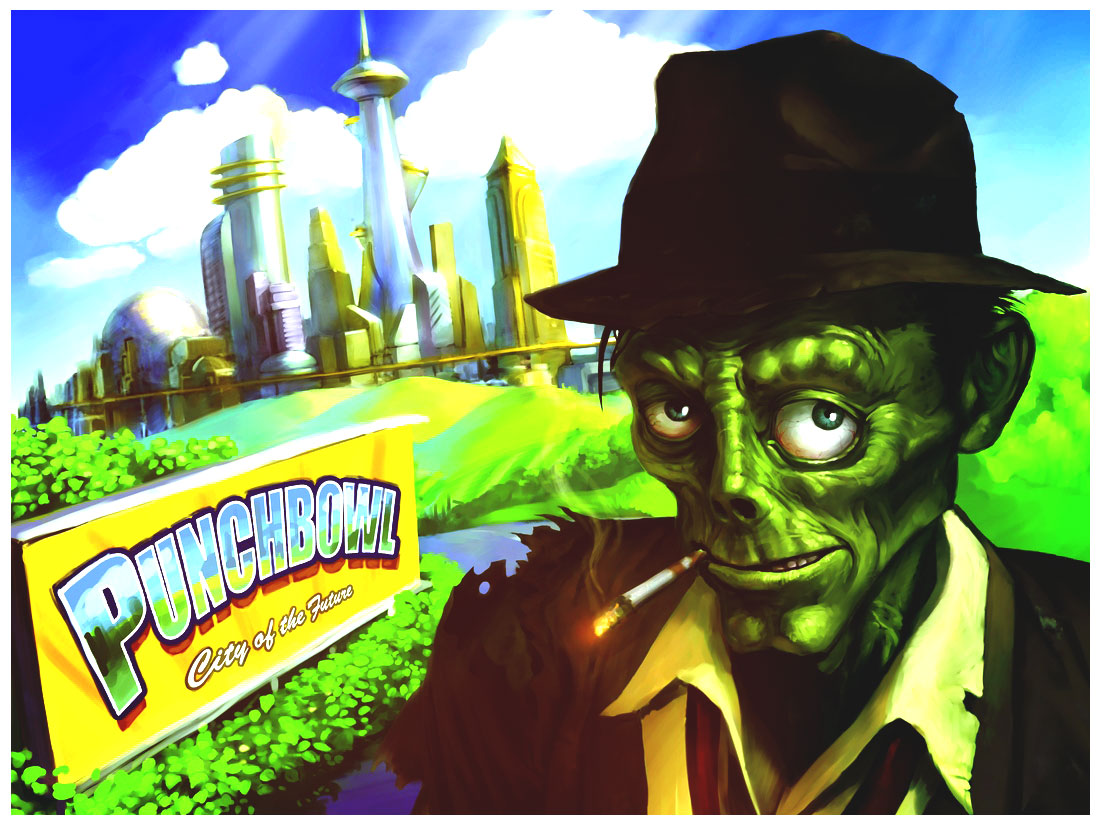 Stubbs the Zombie in Rebel Without a Pulse
Is that something that's even on your mind at this point?
Not really. I guess for me, looking back from my current standpoint, I'm happy that I have a lot of real good people I've worked with before that ... we all want to work together again. It just makes for a great work experience, because we've known each other. We trust each other. I think it gives us ... maybe saying a sense of manifest destiny would be a little too bold, but we know what we're capable of. We've done things together that we're proud of. We have a high bar, so we're able to challenge each other and understand why something that may seem silly at first — like, "No, we have to do it like this!" — is actually important. I guess that's just the trust that it takes a group of people a long time to develop. The fact that we're able to start a project is very useful.
As far as what the public or our customers may think before getting the game, just based on our history ... we're making a game. If the fact that we've done stuff before that people like gets people to check it out, that's great. But ultimately, it's the same with any creative sector. People are going to make judgments based on what they think of the product. I think they're going to like the game. [laughs] It is interesting, though. There's definitely ... we're talking about Atari and Intellivision. People being possessive of their platform. We had the same thing with the Mac versus the PC, and then when we got bought by Microsoft. We got the most amazing hate mail from our Mac fans. I totally can understand that. But ultimately it resulted in more and better and bigger and ambitious projects. So I see a lot of ... when you look at the core gaming press, the way they tend to cover mobile games ... often there's a big degree of skepticism from the core gaming press. But certainly from the enthusiastic posters that frequent those sites, there's a tremendous amount of possessive nature over consoles. Which is interesting. I guess it's good. It shows the passion for games.

It's very similar to ... I think I was at TechTV during the launch period of Halo. I was never a Mac fan, but I worked with a lot of people who were, so I was having to catch up with the history of why people were aggrieved. But I think you see a lot of the same tenor in what you're seeing with regards to how core gamers are skeptical of the mobile platform. It's very similar. It doesn't seem new in any way. Now that the console audience is among ... there's a new core, basically. There's still a PC core. I don't know if there's a Mac core anymore. But I don't think it does — you will have a better perspective on this than I will — but I don't think it does, or should, frighten anyone on the creative side. It's just people being people.
Yeah. I would say that a bunch of the motivation for why I wanted to do what we're doing was to make a better product for mobile. It's where I am playing the majority of my game time. There are some elements to that argument, I suppose, that I kind of agree with. [laughs]
Having now worked inside, to a degree, two of the largest companies in gaming — or in the world, arguably — are there any direct comparisons there that you're willing to share? Other than your feelings on how much nicer it is to be in a smaller environment.
You mean between Microsoft and Disney?
 Disney Guilty Party
Yeah.
Well, yes, there's lots of interesting takeaways there. I'd start by saying that they're both fantastic companies. If you gotta work for a big company, I would recommend either. For different reasons, too. Microsoft very much cares about the people that work there. They very much care about the product. They may not always get the product right, but they very much care about it. In my experience, the leading decision factor in trying to figure out what direction to go, what products to work on, what changes to make, all of that was framed around the product.
Disney is a very different company. Also a great company, an amazing company. I realized very quickly that I was in an organization surrounded by other organizations at Disney that were all the best in class. You would turn your head one way and there's Pixar, which is just phenomenal. You turn your head the other direction and here's the guys that make Phineas and Ferb, and they're just killing it. You turn your head the other way and, oh my gosh, the Imagineers are down the hall ... it was very interesting, because the games business was not anywhere near the pinnacle of mastery that the organizations we were surrounded by had reached. There were lots of amazing inspirations. Microsoft was a little different, because we'd get a lot of our inspiration from other people making games, but they weren't Microsoft people. They were our competitors. You could derive a lot of internal inspiration from other people at Disney.
The thing I found most interesting about Disney is that if you were to ask a hundred people which is the more creative company — Microsoft or Disney — most people would say Disney. The vast majority. I found the decision-making there to be less product-focused and more financial-focused. Microsoft, granted, that might have just been a factor of the point in time and the point in the organization where I was operating. Microsoft was launching a new console. It was a new division. They weren't expected to make any money. The bottom line on the P&L was not necessarily the most relevant factor. Things may be different now. But in terms of my experience, it was interesting ending up at a creative company that was more financially oriented than the giant business software company that was solely focused on product.
From what I'm hearing and people I'm talking to ... I reached the preliminary conclusion, at least, that that environment has changed somewhat at Microsoft.
I'm sure. I've been out for a while. [laughs]
What you're saying about Disney jives with everything I've heard so far, at least insofar as it being a company full of first-class talent in a lot of different disciplines. It seems very ... considering everything they've been acquiring recently, there would seem to be no limit to what they could do.
Yep.
I'm curious to know, if you think about it at all ... you co-founded Bungie and that's obviously become huge, to the point where people are now splintering off from Bungie and forming their own things and starting up their own legacies. ... I'm just wondering how it feels to personally sort of be at a point in your career where you have a legacy that not only extends to the games you made, but to the people you've worked with and directly inspired to go on and start their own companies.
It's awesome. The fact that Bungie's still kicking and thriving, and the same with Wideload ... there's a diaspora of game makers out there that grew up through that culture and that process that we started. That's very satisfying.
"We entertained a lot of acquisition offers back then. There were some clearly ... [bad] choices. It certainly wasn't an easy choice."
Anything you'd do differently?
I need to come up with a good pithy, funny answer to that question. [laughs] I'm not sure. I don't think so. I mean ... it's easy for one to sort of fantasize about what-ifs, but the reality of Halo, at least, is that we were at a point in time and a point where Bungie was and where Microsoft was that I don't think either of us could have done what we did without each other. I think it's fair to say that if Halo wasn't part of the Xbox launch, the Xbox would have had a different trajectory. Halo certainly wouldn't have been the game it was if we had continued on our trajectory with the PC focus and working with Take-Two. That part of my past, I think, worked out pretty good. It's hard to practically look back and second-guess those decisions to look for a better outcome or a different outcome.
That you say that suggests that you may have considered at some point that selling to Microsoft was a bad thing?
Well ... we entertained a lot of acquisition offers back then. There were some clearly ... [bad] choices. It certainly wasn't an easy choice, but we were ... it was the choice we made. I think it was a good choice. Were you asking if I ever thought it was a bad choice?
Yeah.
I don't think so. There were moments where we had some real challenges, after the acquisition. But everything has challenges.
I talked to [former Microsoft executive and FASA founder] Jordan Weisman years ago. He was talking to me about his role at Microsoft, after the acquisition of FASA, and how he thought one of his major achievements was helping to rectify some of the issues he ran into, so that you guys — not specifically, but it turned out that you guys didn't run into some of the exact same challenges. Does that jive with your understanding?
"It was fascinating to me [in 2001]," Weisman told The Escapist in 2006, "when we were involved in the Bungie acquisition. ... It was kind of eye-opening. We spent a bunch of time talking about how, if indeed we were going to go through with this acquisition, the best case was to leave [Bungie] in Chicago. If that fails, we have to create an isolated situation: They're not a part of Microsoft HR; they're not in the way of that part of the org chart; they're in a totally separate, isolated room. There's that locked box that you leave them in. Because otherwise the same thing will happen to their team that happened to mine.
"While I couldn't convince them to keep it in Chicago, I did convince them to give them a private office and leave them totally alone, which is why I think the Bungie team survived in a much better state and was able to keep a lot of its own development culture rather than get absorbed into the Borg."
I'm not sure I have exact firsthand knowledge of what Jordan was doing back at the time. But I do know that we had lots of conversations with Microsoft about how we were going to integrate, and they would typically start with, "Hey, what we did with FASA was this, and it ended up being a disaster, so we don't want to do that." [laughs] So I think there's probably some truth to that. When Microsoft was spending a lot of money getting ready for Xbox — and they were buying other stuff too ... FASA and I think ... I think they did this with Ensemble. But there were a couple of companies in a row where basically what they did was, they bought the company, picked them up, brought them to Redmond and squished them into the existing organization. Basically you had what used to be a game team that all reported to a project manager or a game director or whatever, and it was turned into, "Here's five engineers who are now reporting to a guy at Microsoft, a director of engineering. Here's five artists who are now reporting to a Microsoft art director." And then there would be a project manager who was trying to get this game done with that group of people, that were all reporting to this matrix organization ... and for some reason it didn't work. [laughs]
Shocking.
After figuring that out, I think they decided not to do that. I suppose we were lucky in the sense that there were some that went before us that made it easier to maintain our culture. We had our own wing, our own area of the building where we built it out into an open space. We were the only people at the whole Microsoft corporation that were not in single offices. That was part of the Microsoft programmer culture. Everyone gets an office, and you can close the door and sit in front of your computer by yourself and you can go! That has its advantages, but we'd always worked in an open environment. Over there, people would turn around and say, "Hey, this shit's broken, can you fix it?" "Oh, what's going on?" "Oh, you're trying to use it like that, OK. Let me turn this thing around." You don't get that with everybody working in their own office. So yeah, Jordan's probably right. Thank you, Jordan. [laughs]

Yeah, he talked about it ... this was many years ago. But he was definitely talking about in a way that ... actually, what you were just talking about, and what I wanted to ask you about. Not necessarily that selling FASA was a mistake, but that he wished that he had the experience of integrating with Microsoft before he sold to Microsoft. That ended up being pretty catastrophic to FASA.
Going through that process for the first time ... you don't know. You're now in this position of being part of the giant billion-dollar corporation that's got 40,000 employees.
[Waitress interrupts briefly ... ]
You're in that position where the prospect of telling a gorilla how to do things is ... It's intimidating. You figure they've done this before, they know how it should work.
You said earlier there were some really bad offers you guys entertained. Not necessarily asking you to tell me who they were from, but what would a bad offer have looked like for Bungie?
[Laughs] Well ... there were a range of ... I hesitate to call them contemplated partnerships. But a few of them we took seriously. The things that smelled bad at the time, and in hindsight ... there were companies and publishers that we talked to sort of on their way out of business. We could kind of tell that they hadn't done ... they weren't doing anything interesting and they didn't have much of a future. They didn't have an idea for what could be successful, other than, "Hey, you guys are doing something." That just didn't seem like a good idea.
 Morning Star Alpha
Almost vampirical.
Yeah. Like, why should we partner up with you guys if ... ? We didn't have that sort of conceited viewpoint of, "We're doing something interesting and you're not doing anything. Why should we partner with you?" But it felt that way. And there were companies that basically wanted to pay us with an IOU. "Hey, we'll buy you guys, and then if the game makes money we'll give you some!" "Really? Does that work?" We had a long conversation ... actually, it wasn't a very long conversation, but we had a conversation with this company that was ... this was back in 1999 or 2000 or whatever, when the internet was exploding. Everyone was gonna get rich on the internet! "We're going to start an internet media company and do games and movies and comics and all this stuff! You guys can be part of the company and we'll be worth $10 billion!" Yeah. Right. Sure. That actually never happened. [laughs] I don't know. There were a lot of people like that. And we had some serious conversations with real publishers, but we weren't really looking to sell the company.
It wasn't until we had this conversation with Microsoft, which basically started with ... they were doing this road show, showing off this console they were going to make — "here's what it is; look at the tech demo." When we realized that it was basically a PC with a controller, we called them up to say, "Hey, we can probably make Halo for the Xbox. That might be cool. Can we?" They said, "We need games. We should talk." And in the process of that conversation ... it was really the only conversation we had with anybody where it was a company that had an idea that was cool. They were looking for somebody to be a part of that big plan. They had the stability and the financial perspective to make it real, whereas everybody else we'd ever talked to, it was more of a dream or a promise or just a bad idea. [laughs] That was exciting. It was very exciting. It was very validating to have a company like that be so supportive and interested in backing that up. The deal that I did with Disney was very similar from that perspective. It was a really good, solid company that had some big ideas and the ability to make them real. It wasn't just all talk.
Considering all the ... I don't know what adjective I'm looking for. But considering that studying to become a game designer wasn't necessarily an option for you when you were coming up, and you had to find your own path, what do you hope for your own children? If you could change the world in some way to make it easier for them to realize their dreams, how would that work?
That sounds like a big question. [laughs]
It is kind of a big question, and I'm sorry.
I suppose that question could be answered in a few ways. As a parent, my hope is to equip my kids with enough of a framework that they can figure out what they are passionate about, what they want to do, and [have] enough self-confidence that they don't have any hesitation going after it. I'm not sure where I got my self-confidence from. Perhaps it's just naivete. I don't know. But I was a senior in college and I thought I could start a video game business, to compete with everybody else that was selling real games. I'm sort of hopeful that my kids will have a little bit of that. So that might be genetics. That might just be walking the walk and hoping they pay attention. That's one answer. I suppose another answer is ... if I can make the world a better place, but that sounds kind of vague. I don't know. That sounds very virtuous. I'm not sure if I'm there yet. I would very much like to be there, but I'm not sure if I'm there. What's another perspective I can answer that question from ... [laughs]

What does making the world a better place mean for you?
At some point, I always used to think that all the complaining that went on in the world was just noise. It was just complaining. Every generation complains about shit and it's fine. It's just a new generation, a new bag of shit to complain about. At some point ... it might have been when I had kids. My perspective changed a bit, and I decided that yes, there are some problems here. Stuff like what's going on with our climate. What's going on with politics around the world. Things that maybe I just didn't really care about when I was younger. I started to get a little bit more aware of that when I started to think about what it would be like when my kids grow up. I do think there are some big-ticket things that we should all try to think about and not fuck up. I haven't devoted myself to that. It makes me feel shitty to say it, but I've had a more narrow focus, I have to admit. I've been doing what makes me happy and I try to provide for my family and those that work for me. But I'm aware of that. I give money to stuff, but I'm not ... off investing in making the world a better place. That would be nice to do, in some way.
I'm not sure ... it's an interesting question. I'm not sure necessarily why I asked, but I think there are people who are potentially in a position to do or start things that could potentially change the world. Then the vast majority of us can't imagine what that would even mean.
When the shooting happened in Newtown, I was out to dinner with some friends. One of my friends turned to me and said, "You're probably in a spot where you can be a [voice about] games industry gun violence ... and you're making a shooter. Have you thought about that?" It made me think. It made me think that ... if you're thinking about the world that your kids are going to grow up in, yeah, that's the kind of thing that I would like to do. I don't feel like I'm ready or ... I feel like I need to learn some more stuff. It might be just being lazy. I don't know. But at some point I'd like to do something like that.
"It was a summer class that took the kids that were most interested in game making and we set out to make a project that we could enter into the IGF."
That would be interesting. How would you ... ? As a shooter maker, what would you do other than not make shooters? [laughter]
Well ... I do think that when you look at games and film and try to equate that to creating violence in society, I do think that perspective is incorrect. Entertainment and storytelling is fundamental to human nature. We've been playing games longer than we've been speaking words. So the notion that role-playing and fantasies are inherently bad ... I just can't get to that perspective. Can I get to the perspective that there's a lot of violence in our society and that one can take a position on guns? Yeah, I can get there. [laughs] I don't know. I don't have a gun. I don't want a gun. Do I care if you have a gun? No. Do I care if you shoot somebody with a gun? Yeah. Am I going to go shoot an alien in a made-up world with a fancy gun for fun? Yeah, I'm gonna do that. That's fun. That's OK. Is that line of logic incompatible? I don't think so. Do you buy that?
I do buy that. I buy that you buy it. [laughs]
You helped build Bungie. You were at Microsoft with the Xbox. You were at Disney. It seems to me you've been in positions of great visibility and authority in this industry. What are your thoughts on your position or your potential position as a leader of the industry, not just of a specific company? Have you given any thought to starting or taking over one of the many troubled industry associations?
[Laughs] I have been active in the IGDA in the past. I was faculty at DePaul University in their game program. One of the things that I very much enjoyed about that and got out of it was being able to influence or inspire the kids that were going through the program. Basically, one of the classes that I taught there was ... it was a summer class that took the kids that were most interested in game making and we set out to make a project that we could enter into the [Independent Games Festival]. They ended up winning. [Editor's note: That game was Devil's Tuning Fork. Read up on DePaul sister project Octodad from some of the same team members here.] The thing that I was most thrilled about was ... here's a group of kids who very much remind me of me, when I was in college. We set out with the notion of, "Hey, we're going to do this thing." Everybody believed it, and so we did it. Sometimes that's all somebody needs to hear. "Hey, we're going to go do this." You don't always win, but whatever, at least you tried. I wouldn't necessarily say that I'm super motivated to go and run the IGDA or whatever. I'm perhaps still a little bit too interested in building my own companies. But I very much like the idea of doing a community around teaching kids that are coming up. That's very much ... I like that a lot.

It's interesting, the way you said that, because to me it reflects back on what you were saying earlier about your children, and how you hope that they have the drive that you had. To say to yourself, "Hey, I can go do this. I should go do it." Where do you think that comes from?
I got that from my parents. My dad was a doctor. But I think he really wanted to be an engineer or an architect. Right before I was born, he bought this house in Westchester County that was a total fixer-upper. It was an amazing house. It used to be the guest house for the Douglas estate. The Douglas family were copper miners that owned most of upstate New York or whatever. This house had these old dilapidated stables, a greenhouse, all this shit that was totally rotted. My whole upbringing was basically rebuilding this house with my dad. As far as I knew, he had no real carpentry training. But he wanted to do it, so he did it. My mom really liked writing. She'd write pieces and submit them to the New York Times Magazine or whatever. She had this wall of rejection letters in her office, until eventually she self-published something she had written. The generation before them were entrepreneurs as well. So maybe there's a little bit of a genetic component to that. But I think I got my sense of "just go do it" from watching other people go and do things they had no right to do. [laughs] It gave them some satisfaction, so they were going to do it.
Are they still around, your parents?
My dad is. My mother passed away a few years ago. But dad's still in that house. [laughs]
What does he think of your career?
You know ... he's very proud. ... He has game boxes for the games that I've made up on the walls, that kind of stuff. He was a big ... it's ironic that I tell you that story, about how I get my self-starting from my parents, because the catalyst that got me to start Bungie was a conversation I had with my dad. I was graduating from college and I had written this game. I had also been interviewing for computer jobs at places like Microsoft and all these other companies. I had this conversation with my dad where I was asking him what I should do. I wanted to start this company and make this game, but I had these job offers. His advice was to take a job and learn some stuff and then, once I knew some stuff, I could go start the company. I started the company the next day. [laughs] I guess that had some sort of reverse psychology wizardry going on there. I don't know.
Do you remember what your thinking was at the time? "If the old man says I should do one thing, I should do the other?"
I think there was definitely a component of, "If somebody tells me I can't do something, well, darn it, I'm gonna go do it." [laughs] I didn't ask the question right, because I really wanted to do it. I was just looking for validation.
Right. It seemed to turn out all right.
It's gone OK. [laughs]
What, if anything, concerns you at this point? Is there anything that keeps you up at night?
Oh, yeah, lots of things. It's interesting. That's a very good question, because I went through a period of time when I was sleeping great. But when I'm really into something and it's something that's really important and I'm trying to build against that ... I wish there was a better phrase for it, other than the fear of failure. But whenever I feel like I'm under this pressure to perform, I think about it. I think about how long it's actually gonna take to get this frickin' game done. Do I think that this particular character is too goofy? Because we want him to have a little sense of humor, but ... Is our monetization plan right? Is the interface for this thing too confusing? Where are we going to do our soft rollout?
So you're saying you slept pretty well at Disney?
I slept great. [laughs] But you know, I think there is a healthy element of stress. If you have no stress in your life ... I don't know. I suppose it's nice. But for me, I find that there's a degree of motivation there. There's something that ... Those stresses exist because I care about something. I want to do a particular thing. I want to do well. I want to spend time on it. I want to think about the details. I'm going to want to debate the details with people who I trust and who I think are smart. All that stuff is very exciting. It's a big part of my personal motivation. So without that stress, I think it's less interesting.
How do you think it's going to go, honestly?
What, with the game?
Yeah.
I think it's going to take us ... it's already taken us longer than we wanted, but I think it's going to take a little extra longer, and I think it's going to be huge. But I really believe that. I'm very bullish on what we're doing. It's a lot of fun. I think the setup for it is pretty unique, and it's mobile. It's going to stress me out getting it done, because we should have been done like two months ago.
It's big. We set out to not make a big game at first. We structured it and designed it to not be a big game. There are a lot of bits and details, though, and for better or worse, we do debate the details. You probably witnessed some conversations in there when you were talking to Paul [Bertrone, Industrial Toys lead game designer], where [we] were talking about one of the shotguns that's going into the game and exactly where the left-hand grip should be and how many of the details actually show on the screen and the cool bits where the shells eject when you fire the gun. Are those things super interesting to the majority of players? Whether an extra quarter-inch of those details is on screen or not, will it matter? Zero. But we spent 30 minutes times four people, so we spent two hours on that conversation, which will cascade into somebody doing some extra work, which will delay the release of that gray-box model to the modeler. You multiply that times a thousand of those decisions and OK, now you have a glimpse into why triple-A game development is complicated, if you're going to actually care about all that stuff.
Do you feel like you're competing against yourself at this point? Is there any pressure for you ... If you're going to start something new and try to redesign this experience for mobile, do you have to be as transformative as you were before?
I guess I haven't really thought about it that way. But I suppose yes. When you're trying to do something new and different, it almost seems to me like there's fewer success cases than failure cases. There's lots of ways to fail. [laughs] How can you really know? You can look at what others have done and learn some stuff. Like we were talking about Horn earlier. Just from looking at that, it was pretty apparent to me that traditional console-style linear storytelling is a non-starter on mobile, because you can't make the user wait 12 minutes to make a decision about your game. That's a nice learning right there, but there are a gazillion trajectories like that. You're in a space where experience helps a bunch, but it doesn't solve everything.
If you can imagine a point in the future where you could decide — if you had the option and you were in a position to do so again — to start another company, start another big project, design an experience for holographic eyeglasses or whatever's next ... What would be the thing that would tell you maybe it's time to not do that again?
Like, what makes me second-guess an idea, or ... ?
I guess where I'm coming from with this is, the normal trajectory you see with people — if there's anything normal in the game industry — is that someone will start a company, make a huge game, go work at Disney and then retire. So it's interesting for me to talk to somebody who really, genuinely wants to experience the thrill of starting things and building things. A lot of people get sick of that.
But what might change my mind?
Yeah. What would be the thing that would make you not want to do that anymore?
Well, I would say I'm really enjoying what I'm doing. I really like this. I would like to be doing it forever. I can imagine that ... I was reading something Stephen King wrote about how [fate] runs around and smacks you around and once in a while changes your perspective on life. I've had maybe a few of those. I can imagine getting smacked around by life a little bit and my perspective changing. But other than that ... I'm not looking to sit around drinking a piña colada. This is more fun. There's a time when you want to sit down and drink a piña colada. I like to do that. But I can't imagine making a vocation out of it.
"I definitely know what it means to try hard. I've tried hard at many things. And some things I haven't succeeded at."
It seems like you're the kind of person who would take a lot of smacking around to not want to do what it is that you want to do.
Yeah, I think so. Maybe my perspective would be different if I wasn't lucky enough to have some successes early, which was very helpful. I was handed a better set of cards, I guess. Taking a risk and starting a company is a risk, but it's harder if you don't have something to fall back on.
Do you feel like having the experience of having to work for it, though, means that you're going to hang in longer?
Yeah. I was just thinking about this the other day. I definitely know what it means to try hard. I've tried hard at many things. And some things I haven't succeeded at. You were asking about my kids. I was actually thinking of this the other day. I'm not convinced that the generation of kids growing up right now, in the U.S., knows what it means to try hard, to really work hard at something, to learn something, to try to be great at something, to hurt yourself doing it. Which is often what it takes. But I've done that. I know what tests might be down the road for us, and what it might take to pass those tests and be successful.
You never did tell me what happened [when you went to the doctor before this interview]. Are you still running? Did you decide to ...
Oh, I'm still running. Well, I have worked other routines in. I lift weights a couple of times a week. I still run three or four days a week. I ice therapeutically every time I run. I'm doing some knee-strengthening exercises. So I feel like I've got it steady. I'll be doing [a] 5K this Friday with the kids.
What's your time on a 5K these days?
These days? These days I'm probably running around an eight-minute mile.
That's pretty good.
Yeah. I definitely feel older. [laughs] Things creak, and when something hurts it takes longer to not hurt. Things go a little slower. But like you were saying, I get a ton of enjoyment out of getting out on the street and having some solitary alone time in here. That's something, like the trying hard thing. ... When I was in shape to run a marathon, I would train for it, and that could be really painful, physically painful. I found that to be a very good experience for running a business. You end up, running a business, where you're faced with having to make decisions and none of the choices are good. There isn't a good choice in there. But some are less bad than others. [laughs] So it's painful. Managing through that is very important.
So it's painful. People are telling you not to do it. It hurts afterwards. But you're still doing it.
Well, eventually you get to the finish line, and that's where the glory is. [laughs] One of the happiest experiences of my life was running this 5K last year with my 7-year-old. The gun went off and he just took off. I was hanging back and basically keeping pace with him, so he wouldn't get lost, except that he just never stopped running. He just never stopped running. He ran an eight-minute mile. It was glorious. Like, "Yes!"
I can relate to the running. I ran Sunday and my ankle hurt. Then I had a free moment on Tuesday and I ran anyway, because I knew I wouldn't get another chance, and if I didn't I'd feel bad. And it hurt like hell. It still hurts. I'm still glad I did it.
You know what's good? Advil.
Advil.
Yeah. [laughs] Ice and Advil is good. 
Images: Alex Seropian, Industrial Toys, Bungie, Wideload, Microsoft, Disney
Editing: Matt Leone, Charlie Hall
Design / Layout: Warren Schultheis, Matthew Sullivan



 Don't Mind Me...:



















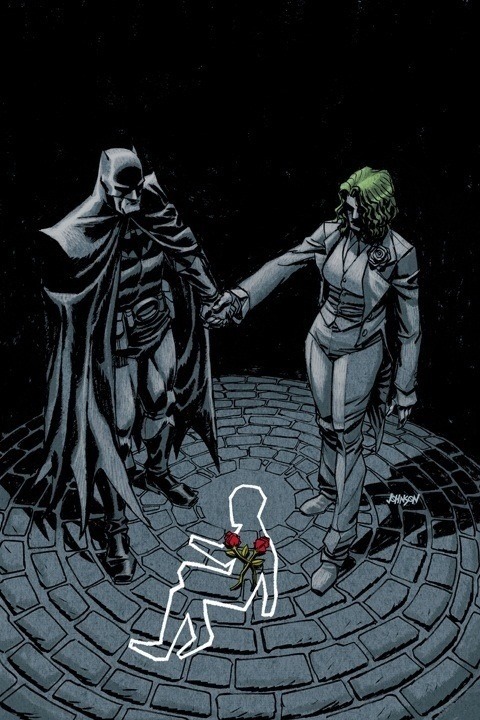


 Today’s strange tale goes by the title of “The Hunter and the Hunted,” and it originally appeared in the pages of World’s Finest #181 during Cary Bates’s tenure as one of DC’s top writers. I love Cary Bates. Like Jim Shooter before him, he was one of the teenage wunderkinds that DC, submitting (and selling!) cover ideas to the company starting at the age of 13, and getting hired for full scripts before he was old enough to vote. He’s probably best known for a tenure on The Flash and Barry Allen’s exhaustingly long murder trial, but he was all over those books throughout the ’70s and ’80s, introducing plenty of bizarre concepts like Terra Man, a time-lost cowboy who was abducted by aliens and came back to Earth to fight Superman. You know, as one does.


