It’s easy to criticize Jujutsu Kaisen for its rushed plot, incomplete worldbuilding, or for shifting the focus away from its main characters too often. However, there’s something undeniably special about this series, a je ne sais quoi that’s hard to pinpoint. The final episode of season 3 of the anime, “Sendai Colony,” isn’t just another showcase of MAPPA’s talent at elevating the source material into visual spectacle, it’s also the best way to understand everything you need to know about Jujutsu Kaisen in less than 30 minutes.
Having apparently gotten a taste for Los Angeles-based comedians with last year’s inclusion of Jason Mantzoukas on its roster, British panel show Taskmaster has now reportedly cast comic/actor/reformed Kingo Kumail Nanjiani for its upcoming 21st season. Nanjiani (who’s fresh off a two-episode stint on Prime Video’s Fallout TV show) will appear on the season with a pretty stacked cast of talent, too: His fellow contestants, per Radio Times, will be comedian Amy Gledhill, TV presenter Joel Dommett, Gavin & Stacey star Joanna Page, and, perhaps oddest of all, Armando Iannucci, the legendary Scottish comedy writer and director best known, Stateside, for creating Veep. (But who will always, in our mean little hearts, be the guy who brought us Malcolm Tucker and The Thick Of It.)
Among other things, that means this is the first Taskmaster season to feature not just one, but two Oscar nominees, with Iannucci and Nanjiani having both scored nods for their writing work on In The Loopand The Big Sick, respectively. None of which will presumably help them in preserving their dignity as they run through the tasks set for them by series creator/lackey Alex Horne, all to be judged by the Taskmaster himself, comedian Greg Davies. Part prank show, part panel show, and part high-impact lateral thinking challenge, Taskmaster has become a British (and Australian, and New Zealand) institution by steering hard into the belief that if you put funny people in extreme circumstances, and then dangle a bunch of ultimately meaningless points over their head, something pretty funny is bound to happen.
News of the latest casting comes just as the series is gearing up for its latest, possibly Quixotic attempt to convince Americans that one of the planet’s most consistently funny TV shows is exactly that, with Horne and Davies embarking on a United States tour that kicks off in Chicago on January 15. Meanwhile, if you just want to get caught up on the series—including Mantzoukas’ episodes, where he gleefully embraced his role as the show’s latest engine of chaos—you can check them out on YouTube, where the series’ whole run remains readily available in the U.S.
Tchéky Karyo has died. The actor—who had early breakout roles in French-language films like The Bear, and as a shadowy trainer of assassins in Luc Besson’s La Femme Nikita—had a prolific and varied career, including stints as a go-to bad guy for Hollywood films like Michael Bay’s Bad Boys, and a late-life turn as a haunted detective in BBC’s The Missing. Per Variety, Karyo died on October 31, from cancer. He was 72.
Born in Istanbul, Karyo moved with his family to Paris at a young age, initially pursuing a career as a stage actor. With early credits in films like Gérard Depardieu’s The Return Of Martin Guerre and Jacque Deray’s Le Marginal, Karyo got his first taste of international fame when he was cast as one of the human antagonists of Jean-Jacques Annaud’s 1988 film The Bear. Critically lauded, and widely seen (even if Karyo himself was given third billing behind his ursine co-stars), the film formed a one-two punch with Besson’s La Femme Nikita, which saw Karyo whiplash between apparent warmth and the cold, casual cruelty of a spymaster with fascinating aplomb that saw him labeled as both a rising sex symbol and a prominent young actor. Sensing opportunities, Karyo decamped France for Los Angeles, where he quickly became a fixture of ’90s film.
The next few years would see Karyo lend his character actor talents to some of the biggest action movies of a generation, including memorable parts as the French villain pursued by Martin Lawrence and Will Smith in Bad Boys, and as a Russian defense minister in 1995 Bond revival Goldeneye. He also embraced more lighthearted roles, if not always to the same degree of success: His filmography from the period includes turns in Operation Dumbo Drop, Addicted To Love, and ill-fated sci-fi film The Core. (A memorable turn in Mel Gibson’s 2000 Revolutionary War flick The Patriot allowed Karyo to briefly merge his harder and softer sides as French soldier Jean Villeneuve, who achieves a certain unlikely, but charismatic, buddy cop energy with Gibson’s Benjamin Martin.) As the 2000s gave way to the 2010s, Karyo began working more often again in his native French, but continued to be a presence on both sides of the Atlantic.
Karyo gained a new jolt of international prominence in 2014, when he was cast as retired French detective Julien Baptiste in BBC One series The Missing. Despite Karyo’s own misgivings about taking the incredibly heavy role—not least of which over doubts about his English—Baptiste essentially became the face of the series, eventually getting his own spin-off in 2019. (In interviews, Karyo would talk about the Baptiste role—which allowed him to employ his gifts for projecting warmth and stability to serve as a calm in the storm of the emotions surrounding him—as a “gift.”) Karyo continued to work up through this year; his most recent film role was in the 2025 racing drama Faster.
What about the hockey team? It’s the season opener tonight! Rick Tocchet’s debut! Trevor Zegras in a real game! It’s the Fly Guys vs. the defending champion Florida Panthers, who are on the second night of a home/home back-to-back after beating the Blackhawks 3-2 on Wednesday night.
The proper setup here has to be Phillies on the big TV at 6:08 p.m., and they stay there. Then it’s Flyers on the tablet at 7 p.m. When the Eagles begin, the Flyers shift to the laptop or the cellphone or whatever screen #3 is in your house. Then the Eagles go on screen #2 and eventually take over the big TV when the Phillies are done.
That’s the casual four for four fan approach. Of course, you adjust based on your preference. Maybe you hate baseball and you bleed orange and black, so the Flyers get the big screen. To each their own.
But the bottom line is that the Flyers are out of the conversation for now. Nobody is really thinking about this team for obvious reasons, because they haven’t been to the postseason in five years and they’re in the middle of a full rebuild. We’re keeping them on the periphery with cautious optimism, until they give us a reason to demand more of our attention. That’s pretty much it. Nobody can be surprised at their omission from tweets like the ones above. If they continue this rebuild and begin to show some promise, they find themselves back in the Philadelphia sporting conversation in the same way the Sixers did upon their exit from the Process era. Even the Phillies were out of favor until Bryce Harper signed, putting an end to the dark ages of Pete Mackanin, Gabe Kapler, and the late Ryne Sandberg (RIP).
This is all cyclical, and while the Flyers will never be as popular as the Eagles, they’ll get their due consideration once they’ve earned it on the ice.
Vin Diesel’s 2015 film The Last Witch Hunter is currently popping on Netflix — currently the 5th most-viewed movie across the entire streaming platform, as of publication. And while many consider it a flop, the madcap fantasy film, the star’s ode to Dungeons & Dragons in many ways, is truly the only Diesel joint that deserves a sequel.
The story follows warrior Kaulder (Diesel), who avenges his fallen family by slaying an all-powerful Witch Queen, who then curses him with immortality moments before her death. Now in present-day New York, Kaulder serves as an enforcer of the fragile truce between witches and humanity through a secret organization known as the Axe and Cross, supported by a line of priestly chroniclers called the Dolans. When Kaulder’s older Dolan (Michael Caine) is attacked, Kaulder teams with a new Dolan (Elijah Wood) and a rogue witch, Chloe (Rose Leslie), to unravel a dark conspiracy to resurrect the Witch Queen and release a catastrophic plague.
Almost every Vin Diesel-led film eventually spawns a franchise — Pitch Black, xXx, The Fast and the Furious — but The Last Witch Hunter is the rare exception of a wannabe blockbuster that actually deserved sequels. Despite being a standalone film, it teases a rich world full of untapped lore: an eternal war between witches and humans, Kaulder’s centuries of immortal existence, and mystical forces that hint at deeper, darker magic. There’s genuine potential here for multiple timelines or spin-offs that expand the universe.
Compare that to Pitch Black, which constantly hits the reset button on Riddick, returning him to a lone-wolf survivalist. Or xXx, which eventually starts feeling like a rebranded Fast and Furious—a high-octane crew on wild government missions. The Last Witch Hunter, on the other hand, offers a mythos that could grow into something far more unique and compelling.
If Diesel ever convinced Hollywood to take a chance at a sequel of a 10-year-old movie (there were 16 years between xXx and Return of Xander Cage), it should definitely take place in the future, with a new threat that involves science intertwining with a new magical threat. Maybe a mad scientist teams with or becomes a Dolan, and Kaulder has to team with a new cast of characters to take them down. With all the magic in The Last Witch Hunt, it’s never explored how advanced science figures into their world. Maybe some new AI was the final key for science to become a threat to the magical realm.
I wouldn’t mind seeing Kaulder return in an entirely different film, like a surprise crossover with Dungeons & Dragons: Honor Among Thieves, another movie in desperate need of a sequel. Whether it’s a straight-up multiverse-style cameo or Diesel playing a near-identical character under a different name as a wink to fans, the idea has real potential. After all, Kaulder was inspired by Diesel’s actual D&D character, and the fantasy vibes of both films line up perfectly. Imagine Kaulder in Baldur’s Gate!
Considering Diesel’s track record for turning niche projects into blockbuster franchises, his involvement might be the best shot at getting a sequel to Honor Among Thieves—a movie that, much like The Last Witch Hunter, has quietly built a cult following with legs for a sequel.
A new series of Taskmaster is always an event worth celebrating, but series 19 is a special occasion for the rapidly growing American fan base of the British comedy panel game show: American comedian and nexus of chaos Jason Mantzoukas is officially joining the action.
The show has had North American contestants before (Desiree Burch, Katherine Ryan, Mae Martin), but Mantzoukas is the first contestant to be based professionally in the U.S. Mantzoukas, a big fan of Taskmaster, directly reached out to be on the show, series creator Alex Horne told Polygon, and the Channel 4 program was more than happy to add the Brooklyn Nine-Nine and The League star.
The first episode of series 19 was screened to a private audience in New York January 21, marking the second straight year Taskmaster has visited the Big Apple ahead of a series drop, as the show’s American audience continues to grow. Shortly after the event, Polygon caught up with Horne and the Taskmaster himself, Greg Davies, about dealing with “more intense” American fans, how Mantzoukas could “power a city,” getting a second wind of motivation 19 series in, and what they’ve learned from the franchise’s expansion.
Taskmaster series 19 debuts May 1 on Channel 4 and May 2 on YouTube, with new episodes each week through early July.
This interview is edited for clarity and length.
Polygon: Are you still in the U.S. or are you back home?
Alex Horne: We are still in the U.S. We’re doing a show tonight at the New York Town Hall.
Greg Davies: We’re in NYC, baby. [to Alex, demandingly] Say it.
Horne: We’re in NYC, baby Pete.
What’s been your highlight of this U.S. tour?
Horne: We had our portraits done in Central Park.
Davies: Tick. [pantoming checking a box] They were terrible. Tick. [pantoming checking another box] We’ve met lots of nice people.
Horne: That’s probably the highlight.
Davies: We’ve been confounded by being recognized by people in this incredible city. We went on Seth Meyers, we had a lovely old time.
Horne: And we went to the Harry Met Sally restaurant, Katz[’s Deli].
Davies: And Alex faked an orgasm.
Horne: Wasn’t faked.
Davies: We’ve done a lot in the time we’ve been here. We’ve done a lot. There’s lots more to go.
Horne: But we’re mainly just two tourists having a lovely time.
Davies: We really are.
Now that you’re on your second promotional visit to the U.S., what differences have you noticed in terms of the fan reaction in the U.K. versus here?
Horne: Well, I think people here discovered it themselves — you have to go looking for it on YouTube, rather than it being on your terrestrial telly. So the people who know it here seem to know it really well. It’s their thing, and they’re quite proud of telling us. We always meet people and they say, “Oh, I’ve told my sister and she’s told her kids.” So that’s a really lovely thing. And we met people last night who showed us pictures of their family playing it at Christmas and all that.
Davies: Yeah, which is wonderful.
Horne: They’re slightly more intense.
Davies: I think that there’s an interesting dynamic at play. If fans of the show were to meet us in the street in the U.K., they would be sort of slightly thrown and not quite know what to say. And I think it’s the other way round here. People come up and go, “Hey!” but they expected to see us, and Alex and I go, “Whoa, you know us!” It’s a strange reversal of excitement.
Last time we spoke, Alex, I asked you who you wanted to add to the show as a contestant, and you said you wanted to get an American comedian on the show. Now you’ve gone and done it. What drew you to Jason Mantzoukas, and what did you see and like him in before?
Horne: Well, it’s interesting. For one of the first times, we didn’t ask him, he asked us. He got in touch and I knew him from Brooklyn Nine-Nine and The Good Place and also every other program, because he’s in everything. But yeah, Brooklyn Nine-Nine I liked, and that same intenseness of that character, he brought that to the show in spades. So yeah, I just wanted to see the energy of a fully full-blooded American. He didn’t disappoint. He knew the show inside and out.
Davies: He hit the ground running. You may not know this about Jason, but he has a bag, and in that bag are tools, tools I think would mean that he would survive any global event. That’s very useful for a series of Taskmaster.
Was it the same for you, Greg?
Davies: Yeah, yeah. I’ve worked with Andy Samberg before [on the comedy show Cuckoo], so I watched [Brooklyn Nine-Nine] obsessively, and I think Jason’s fabulous. We couldn’t believe that he asked us to be on.
When you’re thinking of the right mix of contestants for a Taskmaster series, they all have to bring a different element to the table. Where were you thinking Jason would slot in? What did that leave on the table that you needed to supplement that with?
Horne: We don’t really plan it too carefully. It is kind of done on gut instinct, really. But he was very much the unknown. We didn’t know how that would fit in and how the people would react to him. But I was a bit worried he might be all Hollywood. I didn’t know him personally at all, but he wasn’t that at all. He was very gentlemanly, but also chaotic.
Davies: And also a lot of energy. I think if we’d known Jason before he arrived, I think probably we could have just had four sleepy people. He could power a city.
Last time, we did a quick word association game, and I’d like to do that again with you two. I’m going to run through the contestants from the series as well as a few other words. And I’d like each of you to just say the first word that comes to mind, or a short phrase. We can start with Rosie Ramsey.
Horne: I’m going to say “motherly.” And that’s not necessarily in a caring way, sometimes in a strict way.
Davies: I’m going to use two words and I’m going to say “deceptively strong.” And I don’t mean necessarily physically. Gravity, gravitas, something…
Horne: How’s this one-word association game going?
Davies: I should be doing this internally. She just seems like a lovely mom on the surface, but there’s more going on.
Next up: Stevie Martin.
Horne: Scatty. I’m sticking to the rules, by the way.
Davies: Meerkat.
Mathew Baynton.
Horne: Lithe [somehow pronounced as a three-syllable word]. Lovely body, hasn’t he?
Davies: But does that relate to the show, “lithe”?
Horne: Lithe of mind as well, I think.
Davies: It sounds more like you’re designing a calendar with him on, “lithe.”
Horne: I might do that.
Davies: Lithe of mind?
Horne: Lithe of mind.
Davies: [incredulously] You think he’s got a thin mind.
Horne: I think he’s got a trim mind.
Davies: Mathew Baynton, for me: Unsettling.
Fatiha El-Ghorri.
Horne: I’d quite like to steal “unsettling” for her.
Davies: I’m going to use two words. I’m going to say “terrifyingly warm.”
Jason Mantzoukas.
Horne: I’ll go for “explosive,” please.
Davies: Yeah. Deceptively explosive. I sort of want to add “deceptively.” He just seems in control, but there is a real danger there I think. Like you find an old World War II bomb and then you go, Oh God, it’s still live!
How about the whole of Taskmaster series 19?
Horne: Well actually Ed Gamble does a podcast about the show and he gets to see it first and he just sent me one word, which was “chaotic,” which I really liked. It’s a chaotic series, and I think it is a lot down to Jason, but all five of them add to that.
Davies: Oh, definitely. Chaos all round. It was real cat wrangling.
Now we’re going to turn it on the two of you and I’m going to ask you each for word association for the other. So Alex, going to start with you: Greg Davies.
Horne: Wow. Well, I’m not going with “lithe.” Well, I think this is a good one. I’m going to go for “masterful” because you’ve got the Taskmaster bit in that word. And I think he is very masterful in terms of he’s very funny and he’s very good at his job. So I’m going to go with “masterful.” There’s no one better.
Now Greg, Alex Horne, what comes to mind?
Davies: Egomaniacal dweeb.
And Alex, how does that make you feel?
Horne: Pretty good.
That fits the bill, then. So, I’m curious. Between doing these U.S. tours, you’re doing U.S. events, you have the VR game — there’s been lots of Taskmaster expansion recently. What have you learned from these expansions of the Taskmaster banner, and has anything surprised you?
Horne: It constantly surprises us, nothing more than this trip to America. We do have to pinch ourselves a lot when we see a picture of us — our manager took a picture of us on the sofa with Seth — and you do go, This is ridiculous, the places that you can go. But I think we have an attitude of, well, we’ll just see what happens, take each thing as it comes.
Davies: I think it’s pretty refreshing, because Alex and I have been doing comedy in the U.K. for a long time, and our road to the things that we’ve ended up doing has been long. And I can’t speak for Alex, but I think there’s a childish excitement that’s been rekindled in me for sure. Being in the dressing room at Seth Meyers, we were pretty giddy. I’m a 56-year-old man and I’m looking at Alex going [very excited eyes], so it’s quite refreshing
I imagine that must be nice, 19 series in on a program, to have that second wind.
Horne: We had that conversation yesterday. We were walking through the snow in Central Park going, “It is really cool that we are still excited.”
Davies: We’re still excited by this city and the chance to come over here and people just coming up to you and knowing you in this faraway land is so exciting, honestly.
Horne: And we’re quite shallow.
With the international expansions like New Zealand, Australia, Norway, etc. around the world, has there been anything that either of you have learned, watching or discovering that they do, that you then try to take in, either Alex when constructing the show, or Greg in your performance as the Taskmaster?
Davies: Well, no, I don’t really watch much of them. I’ve had a look for novelty, and I’ve been lucky enough to meet some of the other assistants and Taskmasters, but I don’t watch it. When I’m writing comedy, I don’t watch other comedy. I have a sponge-like brain and I’ll just start talking in a New Zealand accent if I watch it.
Horne: I feel the same. I don’t really watch them either, because once the first episode’s up and running. I let ’em go on with it. But I would say the only thing it’s taught me is that it makes you remember that it’s a really funny, silly show, and not to take it too seriously. When you see people in Norway doing these stupid things, I just find it refreshing. Oh yeah, I remember why we do this show. If I look at the English one, I’m mainly looking at myself, because that’s only natural. It’s just reminded me that the process of setting these five people up with the same thing and seeing what happens, that’s the bit.
Something I’ve always wondered about with the show is how you construct an episode with the tasks. You obviously don’t air them in the order that the tasks were filmed. So what factors play into your decision of which tasks go into which episode?
Horne: That’s a good question. There’s a spreadsheet which me and the director and the producer constantly play with as we’re recording ’em, thinking, OK, that could be an opener for the series, that could be a closer for the series. And then you sort of slot them in thinking, Well, we’ve got one in the garden, so we should have one inside next. So it is boring location stuff and then thinking, Well, this is really high-energy, good to have a low-energy one next, or This one’s artistic, it should be followed by something physical. It’s no more than that. It’s sort of putting a jigsaw into place, but they pick themselves after a bit.
What I was wondering is, if there are people who are struggling, do you ever try and give them an episode where they win?
Horne: No. It’s never based on points or even if somebody is dominating each of the tasks. Sometimes there’s a clear sort of the funniest person in a task, but if that happens three times in a row in an episode, then that’s just how it falls.
Davies: And the tasks are genuinely judged in-studio. We don’t have an idea of how we’re going to score. So it’s almost impossible to plan in those terms, I would imagine.
Horne: We could probably try to make it so it’s a thrilling finale in terms of points, but that has never come near the thought process. And sometimes it’s all over by the last episode, and that’s just what it is. Which is the same in the Premier League, as well. It doesn’t always come down to the last weekend.
Is there a question that you’re tired of being asked in these press days?
PR representative: Hey, sorry, we actually have to wrap.
[everyone laughs]
Well, that’s fitting!
Davies: I have one: “What’s your favorite task?”
Taskmaster series 19will be premiering in early 2025 on YouTube. Previous seasons are available to watch on YouTube.
The Righteous Gemstones is coming to an end with its fourth season, according to Variety. In a statement, series creator and star Danny McBride joked, "The Lord spoke to me and said it’s time to wrap this sucker up." He went on, "The story this season made the themes, ideas, and characters in The Righteous Gemstones feel whole and complete. I have loved every second of working with this team for the past eight years, and there are some incredible payoffs, twists, and turns in store over the course of this wild final season."
Gemstones has become an HBO fan favorite over its last three seasons. The comedy follows a family of wealthy televangelists, played by John Goodman, Adam Devine, Edi Patterson, and McBride. The show satirizes the excessive culture of American megachurches as the dysfunctional family squabbles for power within the empire they've built. Over the years, the ensemble cast has included an impressive roster of guest stars, including Dermot Mulroney, Jennifer Nettles, Jason Schwartzman, Eric Roberts, Eric André, Kristen Johnson, Steve Zahn, Stephen Dorff, Casey Wilson, and of course Walton Goggins as the beloved Uncle Baby Billy. Earlier this week, it was announced that Megan Mullally and Seann William Scott would join the cast for the fourth season.
Speaking with GQ, McBride said he followed his instincts as a writer in bringing The Righteous Gemstones to a conclusion with the upcoming episodes. He recalled the "awesome feeling" of finishing Vice Principals and having time to think and dream up the world of Gemstones. "And I'm really looking forward to that now, as this show wraps up—to clearing the desk and then just figuring out, what do I want to talk about next? Who do I want to get to know and who do I want the world to meet?" He said. "And it's exciting. It's the most rewarding thing about writing anything. I feel so lucky that I've been able to work with people like HBO and be given the latitude to make all this crazy shit and to build these worlds out with all these characters, and to do it with friends and trusted collaborators. I'm excited to see where it goes from here."
There’s been an outpouring of grief following the announcement of David Lynch’s death on Jan. 15 at the age of 78. Among the assorted tributes online were several posts from prominent developers from the gaming industry, including Remedy Entertainment’s Sam Lake, Hidetaka “Swery” Suehiro, and Pacific Drive developer Ironwood Studios. A few of these aren’t that surprising; for many both in gaming and in the wider world of pop culture, Twin Peakslooms large as a cultural milestone and point of influence. The third season of the series, Twin Peaks: The Return, exposed a wider generation to Lynch’s world when it first premiered in 2017, drawing them into his unique universe across 18 staggering episodes of television.
Cataloging Twin Peaks’ influence alone on gaming would be daunting. Not only are there the obvious examples of the creepy Pacific Northwest setting of Alan Wake and the aggressively Twin Peaks-inspired premise of Deadly Premonition, there are several other games indebted to the dream logic of Lynch’s work, from well-known titles like The Legend of Zelda: Link’s Awakening to more obscure Japanese games like 1998’s Mizzurna Falls and 1995’s D. But to boil Lynch down to Twin Peaks — as revelatory and important as that series is — misses quite a lot of his artistry. David Lynch was more than just “damn good cups of coffee” and girls wrapped in plastic: through canny, droning audio and menacing cinematography, he created worlds wholly unlike anything seen in reality, so totally his own that his name became synonymous for the dark surrealism of everyday life that so many other artists to this day have attempted to pull off.
Perhaps no other games have pulled off the tone of David Lynch’s work quite as successfully as the first three entries in the Silent Hill series. On the surface, of course, there’s the soundtrack: industrial clangs and whirrs, deep droning bass tones, the crackle of static and electricity from a radio. But the most Lynchian of all is the series’ defining concept of the Otherworld. There’s the depiction of dank, industrial environments, of course (likely inspired by Lynch’s feature debut Eraserhead), but more than that. It’s the idea of there being alternate realities or even alternate people.
Silent Hill 2director Masashi Tsuboyama detailed how Lynch’s film Lost Highway inspired the creation of dual characters Mary and Maria. That film follows a man named Fred Madison, played by Bill Pullman, who kills his wife, only to suddenly become a completely different person, encountering a version of her that seems to be the complete opposite of the woman we saw in the beginning. If that sounds familiar, well, it should. Silent Hill 2’s protagonist James Sunderland essentially becomes two people over the course of the game: his guilt-ridden self, and the sexually violent punisher known as Pyramid Head. This doubling of narrative is also present most famously in Mulholland Drive, where Naomi Watts’ character’s Betty appears as both a naive ingénue at the start and as a worn down, tortured woman by the end, while the idea of mirrored characters is arguably present in Blue Velvet as well.
It’s not just these more explicit references that make Silent Hill so Lynchian, though. The first game especially has the same stilted quality to its dialogue that is present in Lynch’s films like Eraserhead and Lost Highway. Harry Mason often sounds like he’s wandering through a dream, unsure of how even to react to the strange events occurring in front of him. More than any other game series, Silent Hill especially is drenched in symbolism throughout its first few entries, whether it be the layered sexual references and female-coded monsters of Silent Hill 2 or the scary bits of blossoming womanhood present throughout Silent Hill 3. Throughout the Silent Hill series, The Otherworld is essentially built out of the psyche of a specific person within the world of each game, much like how Mulholland Drive or Lost Highway are built in part around the psyches of their characters, whether they be actively dreaming or simply attempting to ignore the darker parts of themselves.
And then there’s the town of it all. Twin Peaks may get all the attention for exposing the dark heart of suburbia, but Lynch arguably got there much earlier with Blue Velvet’s signature opening scene, in which a placid and idyllic small town first encounters a medical emergency — along with a distinctly phallic spray of water — as the camera dives beneath the soil to reveal the insects crawling amongst the rot. Even more than Silent Hill, Alan Wake is almost directly inspired by Lynch, with the second entry pushing the comparisons even further through direct structural similarities to The Return (and of course, the Pacific Northwest of it all). Alan Wake 2 co-writer and co-director Sam Lake isn’t content to just rip off the quirk and the location, however; the character Alan Wake himself gets what’s essentially a “tulpa” — an otherworldly doppelganger reminiscent of Dale Cooper’s in Twin Peaks: The Return — on top of the FBI coming to town and blending in, to various degrees.
But Alan Wake 2, much like Silent Hill, understands that the hallmark of Lynch’s work comes in its ability to suddenly shift tones from the goofy to the uncanny, whether it be the darkness that falls over the town, or the shifts the player causes that transform a benign hotel room into a bloody crime scene. Of course, there’s also the use of negative space and silence, lulling the player into a sense of unease, with the architecture of the false New York seen in Alan Wake 2’s Dark Place giving the feeling of a place one’s been before but isn’t quite right. More than anything, although Lynchian works often feature distinct blaring soundscapes, just as important are the things that aren’t there: an empty hallway; a camera panning over a spare room; the dark of the highway strip. In a David Lynch movie, the sound often blends into the background, becoming another part of a sense of unease you can’t shake.
This is something that games like Controlor Gone Home understand intimately, even though they may not be horror, or even explicitly pulling from Lynch as clearly save a few references like the FBI or the Pacific Northwest. For the latter especially, there’s the stray sounds of static or thunder, the completely silent and empty house you wander through as you uncover the cracks within a seemingly “normal” American family, including the suggestion of sexual abuse. The former creates that unease through the use of darkness and lighting, often featuring deserted rooms with people hovering suspended in air. Even something like Limbo carries shades of Eraserhead, with its muted color scheme, eventually shifting to an industrial wasteland, and a story heavy in symbolism that refuses to give clean answers as to what you’re doing or why.
Video games owe a lot to the influence of David Lynch, whether it be something as simple as being able to perceive that which sight cannot see or a snakeskin jacket that symbolizes one’s individuality and belief in personal freedom. With an ever-increasing focus on more cinematic experiences and inspiration from film and TV, it’s possible we might even get a truly Lynchian game whether it be survival horror or something completely unexpected. Twin Peaks and The Return may have garnered more attention for obvious reasons (it wouldn’t be very fun to simulate the experience of a Victorian man with a severe facial deformity, and there isn’t yet an open-world tractor driving game à la The Straight Story) but Lynch’s aesthetic and thematic concerns nonetheless trickle down thanks to the indelible impact his work has left on the very genre of horror itself. That gum you like has always been in style, and as long these roads keeping looping forever, so too will the memory of David Lynch.
Twin Peaks is available to stream on Paramount Plus. Twin Peaks: The Return is available to stream on Showtime. Lost Highway, Mulholland Drive, and Eraserhead are available to stream on Criterion Channel. Blue Velvet is available to stream on Max. The Straight Story is available to stream on Disney Plus.
The end of the year draws near, which means it’s time for the annual ritual of celebrating how far we’ve come and sharing good tidings for the future—all while battling the fear that we’re too inadequate to make a mark with our ruthlessly linear life. (There’s nothing stopping you verbalizing your existential dread at a New Year’s party but, from experience, we wouldn’t recommend it.) The tension between uncomfortable introspection and enforced social positivity is what makes New Year’s Eve such a dramatically rich holiday: joviality can be undercut with psychological torment, the fear of running out of time can be counteracted with a sudden great change, and the reset calendar allows everyone to cosplay a miniature rebirth and collectively believe that a fresh start is possible.
Often, the countdown to New Year is not the sole concern of a film (unless you are the late Garry Marshall, whose final films were more about their chosen holiday than any works of art made previously, schmaltz and empty sentiment included). The holiday is usually a backdrop, sometimes only featuring in a single scene, that thematically compliments the tense, spiraling, or cathartic journey of the characters. But some movies take the energetic promise of the unknown to chaotic extremes, imbuing their characters with a rush of agency and disorientation that triggers a near-catastrophic start to the year—either by threatening the livelihoods of others or doubling down on one’s own destructive trajectory.
Released earlier this year, Saturday Night Live alum Kyle Mooney’s Y2K cast a bunch of people who weren’t alive for Y2K in a speculative disaster-comedy where the machines actually turn on humanity when it strikes midnight in the year 2000. The film follows a fine tradition of movies that use New Year’s Eve to heighten what it feels like to realize that you may have horrifically dropped the ball the minute the ball drops. Here are 10 films that almost ruin the New Year on day one.
1. Sunset Boulevard
First, some classics. Joe Gillis (William Holden) is a screenwriter grifting on Norma Desmond (Gloria Swanson), a reclusive silent era star who uses Joe’s middling talent to fuel her comeback. He’s happy using her as a meal ticket. Joe is one of the only guests attending Norma’s New Year’s Eve party, where she confesses her desire for him in her uniquely condescending and self-loathing manner. It’s a more promising turning point for Joe than the image that opened the film—his corpse, facedown in Norma’s pool, attended by cops—but the way that he tries to deflect Norma’s NYE advances triggers a chain reaction of delusion that claims his life. Of all the parties on this list, Sunset Boulevard’s has some of the worst vibes: a band plays for no dancers, the inebriated host lists all the material signifiers of her vast wealth, and there’s a palpable sense of being marooned within the ornate but artificial halls.
2. The Poseidon Adventure
Yes, an entire luxury liner sinks in this film, but the vibes of the New Year’s party are tangibly better than those in Sunset Boulevard, despite the eventual difference in body count. Everyone seems to be having a good time before the tsunami! In perfectly '70s fashion, this crowd-pleasing disaster film is full of world-class talents struggling through sets that can look both hokey and genuinely hazardous (sometimes in the same scene), amping up the sense of disaster after the ship is completely overturned by the rogue wave. Gene Hackman is a dashing preacher leading a band of willing survivors out of the lavish dining room where celebrations were getting underway. After leaving the dining room, all traces of New Year’s cheer evaporate as the chamber begins to fill with water—a swift, violent indication from director Ronald Neame that the rules of conventional social hierarchy will be replaced with pure, urgent survival.
3. The Godfather Part II
Should auld acquaintance be forgot, and never brought to mind? If you are Michael Corleone, absolutely! In the most pivotal moment in one of the most famous films ever made, crime boss Michael (Al Pacino) realizes his own brother Fredo (John Cazale) is a traitor to the Corleone family at a New Year’s party in Havana. His jacket adorned with confetti, Michael grips his brother in a tight embrace before planting “Il bacio della morte” (the kiss of death) on his lips: “I know it was you, Fredo. You broke my heart. You broke my heart!” The Godfather series prides itself on contrasting the pageantry of public events with violent, internalized conflict, and as Fredo rushes off, the blank stare of the “Feliz Año Nuevo” banner behind the party crowd hammers home the emptiness of Michael’s consolidation of power. In a film that parallels epochs between father (Robert De Niro) and son, that this devastating turning point happens at a celebration of time’s unwavering progression (which is immediately undercut by the arrival of Cuban rebels) is further proof that the only outcome for Michael’s pursuit of era-defining power is total alienation.
4. Terror Train
And thus concludes the discussion of canonized classics—time for some trash. A disposable slasher produced in the wake of Halloween (and even starring Jamie Lee Curtis) that ultimately suffered from a quickly saturated market, Canadian murder-mystery Terror Train sees a costumed killer picking off pre-med students having a New Year’s bash on a moving train. Murder is a surefire way to start the New Year on a bad foot, and a claustrophobic, narrow party location that nobody can leave makes things much worse for the victims. Despite the stagey, tedious stretches of Terror Train, it’s hard to deny that it’s an effectively grim use of the New Year setting. Everyone there is far more likely to prioritize celebrating rather than concede to the threat of a stalking killer, which worsens the isolation of the victims and gives ample room for a murderer to roam free. Plus, this party has David Copperfield doing a magic act!
5. The Hudsucker Proxy
Thirty years after the Coen brothers’ uneven but underrated Big Business screwball satire, it’s clear that Hollywood is sorely lacking in movies about rich people thinking up high-concept scams that end up backfiring for reasons outside their control—in this case, because Tim Robbins is dumb in real but unforeseen ways. The grim portent of the New Year is hammered home from the opening scene, an in media res framing device of Norville Barnes (Robbins), a mailroom-clerk-cum-proxy-president standing on the edge of a skyscraper, ready to end it all. The events of the film unfold over a single month, December 1958, meaning the acceleration of misadventures in the lead up to New Year’s is dialed up at chaotic speeds. But despite Barnes’ suicidal urge when the clock tolls midnight, the film should probably be excluded from this list because of a time-stopping angelic intervention that stops any year-ruining stuff actually taking place on January 1st.
6. Strange Days
A maximalist cyberpunk noir that goes for the jugular on a plethora of cerebral and social issues, Kathryn Bigelow’s Strange Days is set on the same night as Y2K and is equally concerned about our dangerous relationship with technology. Lenny (Ralph Fiennes) is a black marketeer who sells the recorded memories and sensations of other people using illicit brain-scanning tech (a “SQUID”) who becomes ensnared in a corrupt cop scandal with bodyguard Mace (Angela Bassett) as the 20th century draws to a close. In Bigelow’s film, the symbolic significance of New Year’s is heightened (doubly so considering it takes place at the dawn of a new millennium), as our characters near an existential cliff edge: How will the future begin, with technology completely absorbed into the fabric of abusive systems, or used as a tool to expose its corrupt hegemony?
7. Boogie Nights
A roving camera oner? In a Paul Thomas Anderson movie? It’s more likely than you think. The '70s come to an explosive close with a different type of firework in Anderson’s chronicle of Californian porn, as performer Little Bill (William H. Macy) decides he has been emasculated one time too many times by his adulterous wife and performs a murder-suicide that smash cuts to the title-on-black: “'80s.” It’s a funny, shocking, and morbid use of the Kuleshov effect that indicates the wellbeing of our characters and the conditions of their work will now deteriorate. Anderson mirrors the anticipatory buildup and sharp release of the New Year’s countdown with camera blocking that largely trails behind Little Bill as he roams the party, switching to his cold, pained face after he discovers his wife mid-coitus, and trailing behind him again as he retrieves his gun and reenters the fray. When Bill is pushed to action, we feel the pressing need to catch up to clarity before the ball drops. When Bill bloodily takes back control, he supersedes the holiday as the focal point of the party; his to-camera suicide is far more memorable and personal than chants of “Happy New Year!”
8. Assault On Precinct 13
John Carpenter had a bad (but personally lucrative) run of films getting remade from 2005 to 2011, and while this update directed by Jean-François Richet (Mesrine, Plane) does itself no favors by adding half an hour to Carpenter’s lean, Western-tinged siege, the excellent cast (Ethan Hawke, Laurence Fishburne, Maria Bello, Gabriel Byrne, and more) does a lot to redeem the misguided project. The remake takes place on the New Year’s Eve graveyard shift, where corrupt cops surround a police station to eliminate a crime boss who could prove they were in business together. Like Strange Days, this genre film uses the language of pulp to inject the long night of New Year’s with anticipation and danger—and the unsteady union between cops and criminals lends the film an ironic sense of unity to mirror the chummy holiday.
9. Snowpiercer
An unorthodox pick, but one that illuminates the arbitrary design of the holiday and the narrative it tries to impose upon us. The setting for Snowpiercer is a perpetually moving train circling a frozen Earth after an icy apocalypse. The train maintains a rigid front-to-back class hierarchy and an undeniable authority as humanity’s sole survival option—but the impoverished, starving tail passengers organize a final revolt to take control of the train’s Sacred Engine. On the Snowpiercer, New Year’s is marked by a complete circumnavigation of the globe, meaning the train is the ultimate arbiter of time, its progression, and its meaning. It’s fitting that the ruling classes deal our revolutionaries a severe, violent blow when the train passes over Yekaterina Bridge and a new year begins—each passing year consolidates the train’s power over reality and reinforces the dependency of its passengers.
10. Happy New Year, Colin Burstead
Closing out the list is its most mundane and grounded New Year’s Eve celebration, but writer-director Ben Wheatley sacrifices none of the interpersonal disaster that characterizes many of these films. A loose reworking of William Shakespeare’s Coriolanus, Colin Burstead (frequent Wheatley collaborator Neil Maskell) likes to imagine himself as an authority in his extended family, and to prove it, he hires a country manor for a New Year’s party. When Colin’s exiled brother (Sam Riley) makes an appearance, the thorny theatrics of the Bard unfold with freewheeling, naturalistic tension and skirmishes. As the dynamics of dependency and woundedness flare up inside the manor walls, the hollowness of the celebration is laid bare. This is not about New Year’s Eve, but rather a performance of imbalanced family unity. One by one, the players drop the guise of good cheer in favor of embittered and scathing reproach. The seasonal greeting in the title takes on a grim irony when it becomes clear how little feeling is behind it.
Prop Hunt, the beloved hide-and-seek game mode of Call of Duty’s past, returns to Black Ops 6 during Season 1.
The party mode will play similarly to previous Call of Duty titles, but now you’ll be playing on new maps, and with them, new props to hide as.
The mode will be joined by the addition of Stakeout 24/7, Hardcore Stakeout 24/7, and an early Double XP weekend to “celebrate” a record-breaking Black Ops 6 launch.
Read on to find out when Prop Hunt and the Double XP weekend starts in Black Ops 6 in your time zone, and how Prop Hunt works.
Black Ops 6 Double XP weekend and Prop Hunt release time estimate in your time zone
The next Double XP weekend and Prop Hunt in Black Ops 6 will arrive on Wednesday, Nov. 27.
Though no official time has been provided, based on the daily reset time — and when the likes of Nuketown was added to the game earlier in the month — it’s looking to be in the following window:
9-11 a.m. PST for the West Coast of North America
12-2 p.m. EST for the East Coast of North America
5-7 p.m. GMT for the U.K.
6-8 p.m. CET for west mainland Europe
2-4 a.m. JST on Nov. 28 in Japan
Both will also be joined by Stackout 24/7 and Hardcore Stakeout 24/7 modes, plus double Gobblegum in Zombies.
Thanks for the support, everyone! How about an early 2XP Weekend to celebrate, starting Wednesday?
Oh… and Prop Hunt, Stakeout 24/7, and Hardcore Stakeout 24/7 starting Wednesday, too? 🫡 https://t.co/p9CxHxFHdm
As for when the Double XP event ends, since it’s described as a “weekend” event — likely to line up with Thanksgiving — we have to assume it’ll run until the end of Sunday.
What is Prop Hunt in Black Ops 6?
Originally a mod from Modern Warfare 2, Prop Hunt made its first official appearance in Call of Duty: Modern Warfare Remastered as a limited time mode in Weekend Warfare before it was voted to become a permanent game mode.
Since then, Prop Hunt has appeared in each subsequent Call of Duty title until 2020’s Black Ops Cold War, where it made its last appearance.
For a look at how Prop Hunt was in previous Call of Duty titles, check out this chaotic, yet hilarious video from oldtime101:
Prop Hunt follows the rules of hide-and-seek, and you’ll be given the role of Prop or Hunter. As a Prop, your job is to disguise yourself as an object found around the map and avoid elimination by blending into your surroundings until the time is up. If you’ve been spotted, you can run, disguise yourself as a new object, drop decoy props, and throw stun grenades at the Hunters. However, be careful as you’ll let out a loud whistle every 30 seconds to lure in the Hunters.
As a Hunter, your job is to track down the Props by looking for anything out of the ordinary. Search for misplaced objects, running objects, or even whistling objects and take them out by any means necessary. Whether you become Prop or Hunter, take some time out of the ranked and skin grind and enjoy the silly side of Call of Duty.
Looking for other modes to try out in Black Ops 6? Test out the competitive Ranked Play, but make sure to equip the best guns in your loadout. If competitive modes aren’t your thing, check out the campaign and use our safehouse puzzles and safe code locations guides.
So many hours with Max Kellerman, Jay Mariotti, and Woody Harrelson (I can't remember his real last name) but I am bummed I won't be watching this at a hotel room anymore
ESPN plans to hit the mute button on “Around the Horn.”
The show’s legendary run of more than two decades will conclude in the summer of 2025, sources told The Post.
The Post previously reported that the show’s cancellation was under consideration by company brass.
Around the Horn was must-watch television when it launched back in the day. We crammed into my college dorm room, about 7-8 degenerates with spit cups, and watched Around the Horn and Pardon the Interruption for an hour straight, then went down to the dining hall to fill our bodies with trash. This was 2003 or so, and back then there was no social media, humans were still trying to figure out the internet, and shows like First Take were in an embryonic state. Cold Pizza came around at some point in the mid-2000s, and then Facebook, and the smartphone, and it was all downhill from there.
But back then you got your sports debate in the form of Max Kellerman and then Tony Reali dishing out questions and muting hosts like Woody Paige when they said something dumb. There were so many OGs on there who became household sports names, like Bob Ryan, J.A. Adande, Jackie MacMullan, Michael Smith, Jay Mariotti, Kevin Blackistone, Tim Cowlishaw, and Bill Plaschke. There was humor and opinion without the manufactured debate, and back then it was one of the best sports shows out there. It really was unique when it came out. There wasn’t anything else like it on ESPN or any channel, really.
The show lost some luster in the contemporary hot take world. You can find opinions anywhere these days. James Kratch of Access Media thinks that ESPN got away from having local columnists and started putting network talent on there, which made it just another ESPN show. I agree with that. It just felt like another regular program in a larger catalogue. There wasn’t anything special or unique about ATH over the last 5-10 years, and perhaps oversaturation of sports content played a role as well. Around the Horn used to stick out because back then you watched ESPN. That’s just what you did. Stuart Scott, Tony Kornheiser, Mike Wilbon, etc. Now you have 400 social media networks, podcasts, YouTube shows, websites, all of that. For ATH to last as long as it did is a big success. Two decades+ of sports television with the same format and little-to-no tweaks is supremely impressive. RIP to Around the Horn.
You ever have something taken away from you in an instant and you realize you never appreciated it enough? That’s what I’m going through right now with a god damn sandwich. Fridays are always handled as a day I treat myself for lunch. It’s something to look forward to. Enough of the ham and cheese sandwiches my fiance makes me Monday-Thursday (yes I still eat lunch like a six year old). We look forward to Fridays and the kale caesar chicken cutlet from Liberty Kitchen. It’s the little things that get you through the week. Some people have their friends and family or a fun event. I have the kale caesar chicken cutlet. I mean look at this thing! Have you ever seen something so beautiful?
But now that is all ruined because everyone with a phone won’t stop making TikToks about it. My beloved sandwich is all over the Internet like Jay Cutler’s mugshot right now. People are coming from all over the country to enjoy it. This is what it must feel like when your favorite band reaches superstardom. You don’t want to share them with anyone else. You were here first when nobody was. You knew the greatness before anyone else did. You remember when they were selling like 20 kale caesars a day and now they’re selling 2,000 in a weekend and they’re running out of bread and closing early. It’s madness. There are no signs of slowing down.
You know how hard it is to get people to agree this much on one thing in an election year?
And don’t get me wrong, I love that a small business is getting its due. But I’ve been going to this place since it was a little rinky-dink shop underneath the El that had nowhere to sit. Now it’s in a place quadruple the size and they have a full-on kitchen operation.
I think what I’m most mad at is myself. I never understood that I had the holy grail of sandwiches in my possession all this time. It’s gotta be like when the cheesesteak first became popular in Philadelphia. Could you imagine living in South Philly back then and going to Pat’s every Friday with no line? Then one day a guy tells another guy who tells another guy that there’s this great meat and cheese sandwich place right around the corner you should check out. Now there’s a line around the block, they’re ornery because they’re swamped, and they institute rules to make ordering quicker. That’s what I feel like what might happen to my beloved sandwich shop. I’m over here calculating time like I’m Isaac fucking Newton trying to determine the best time to head over there and miss the lunch rush. It’s crazy. So crazy they’ve got us ordering like it’s the 1800s now:
If you’re out there reading this and you have a spot that hasn’t been discovered yet, hold your sandwich tight. Because you never know when it’s going to end up on some TikToker’s page and you’re now fighting people tooth and nail for some grub.
VANCOUVER -- Jett Luchanko and Matvei Michkov were about an inch away from winning the game for the Philadelphia Flyers, and simultaneously turning Friday into the easiest night a sports columnist can have.
The NHL debut of Luchanko and Michkov was the story of the night for the Flyers: the potential superstar and the shiny new toy, both here long ahead of schedule. And now, with less than ten minutes remaining in a tie game, there was Luchanko on the doorstep, pouncing on a Michkov-created rebound and poised to pop it into a wide-open net.
Kevin Lankinen, unfortunately, cared little for the importance of The Narrative.
It’s poetic, really; Kevin Costner staged a multi-million dollar, self-funded epic meant specifically to engender a huge theatrical event, only for it to get unceremoniously dumped on Max two months later. Maybe the arc of history really does bend toward streaming.Horizon: An American Saga—Chapter 1 will trot on over to Max on August 23, after making the box office equivalent of a bad harvest during its brief theatrical run. The film, which follows the lives of several characters during and after the Civil War, brought in only $11 million in its opening weekend, according to Variety, which makes up just a teeny fraction of its approximately $100 million budget. It’s currently sitting at a measly $34 million international haul (via Box Office Mojo).Maybe it was the unwieldy title, which will now somehow have to fit in one of those tiny boxes on the platform’s homepage, or it could have been the fact that Costner, by his own admission, only makes movies for 50% of the population. Either way, both are bad signs for the success of Horizon: An American Saga—Chapter 2, the second installment in Costner’s planned four-part, 11-hour film. After the failure of Chapter 1, Chapter 2 was bumped from its original release date of today (August 16) because hardly anyone would have gone to see it, er, to “give audiences a greater opportunity to discover the first installment of Horizon over the coming weeks, including on PVOD and Max,” as a New Line Cinema spokesperson recently told Variety. That does make sense. Movies aren’t TV and shouldn’t function like it. There’s a reason, in Costner’s own words, that a major back-to-back release like this has “never been done,” and probably won’t be attempted again.That’s not to say that Chapter 2 (or Chapter(s) 3 and 4, which have yet to be filmed) will never land in theaters. Audiences just need some time to re-acclimate to Costner the way many of them probably discovered him in the first place; on their couch, in front of a much smaller screen.
It's a lot like The Wire, but it's also like seven seasons and only on Peacock and there's commercials so I'm recommending it but totally understand nobody will watch it
With TV Club 10, we point you toward the 10 episodes that best represent a TV series, classic or modern. They might not be the 10 best episodes, but they’re the 10 episodes that’ll help you understand what the show’s all about.
One of the greatest mysteries of the streaming era was why NBC’s Homicide: Life On The Street wasn’t a part of it. When the show’s breakout star Andre Braugher passed suddenly in 2023, almost every story about his death noted the tragedy of being unable to see his work, a performance with an impact that still ripples through the industry. Braugher anchored a drama that didn’t just directly spawn other influential shows like Oz and The Wire, but also took an ensemble approach to hot-button issues in a manner that never spoke down to viewers like so much TV of the ’90s. How great was Homicide? Anyone old enough to watch it when it originally ran can vividly recount details of its best mysteries and traits of its most fascinating characters. The blend of procedural storytelling and character-driven ensemble work made it anything but disposable, a program that was impossible to forget. And now we can all revisit it on Peacock.
Homicide: Life On The Street started as a nonfiction book by future The Wire creator David Simon, which he sent to the Oscar-winning director Barry Levinson in the hope of adapting it into a film. The Rain Man director saw more potential in episodic storytelling, pulling some cases directly from real life in the first couple of seasons. Eschewing the typical copaganda of the day, Homicide dealt directly with controversial topics and the impact of violence on the people who investigate it. Filmed almost entirely on location in Baltimore with handheld 16-millimeter cameras, Homicide didn’t look or sound like anything else on TV, and that’s probably why it faced the threat of cancellation for its entire seven-season run.
The ensemble of Homicide would change radically over those seasons, with only four regulars surviving the all of them: new guy Tim Bayliss (Kyle Secor), Lieutenant Al “Gee” Giardello (Yaphet Kotto), and Detectives Meldrick Lewis (Clark Johnson) and John Munch (Richard Belzer). They were joined in the first season by an incredible crew of performers, including Melissa Leo as Kay Howard, Daniel Baldwin as Beau Felton, Jon Polito as Steve Crosetti, and Ned Beatty as Stanley Bolander. The entire ensemble rocked, but the instant breakout was Andre Braugher, whose Frank Pembleton made it onto the Mount Rushmore of fictional TV cops before the end of the first season. Braugher’s performance is alternately subtle and explosive, one that shifts seamlessly from nuanced internal monologues to intense interrogations in "The Box."
Over the years, other notable performers would clock in to the BPD, including Michelle Forbes, Reed Diamond, and even Giancarlo Esposito, and the show would become well-known for guest performances, a common practice in network cop shows that the writers of Homicide usually found a way to elevate above stunt casting. And with more than 100 episodes and even a movie to close it out, where does one even start? It’s incredibly difficult to narrow a show this memorable down to 10 episodes, but these offer a great sampler pack of what Homicide did better than anyone at the time—and arguably ever since.
It's worth noting that NBC often aired episodes out of production order—sometimes creating truly weird continuity errors, especially in the second season—but Peacock has restored the intended order, so those are the episode numbers reflected below.
“Three Men And Adena” (season 1, episode 6)
The series premiere of Homicide ended with Pembleton and his new partner Bayliss responding to the case that would really shape the entire series: the vicious murder of Adena Watson, an 11-year-old girl. It would particularly haunt Bayliss through the run of the Homicide, and this is the episode that defined the first season and the ambition of the program as a whole. Almost a bottle episode, the majority of “Three Men And Adena” depicts an interrogation conducted by Bayliss and Pembleton of a man named Risley Tucker (Moses Gunn), their No.1 suspect. With only 12 hours to go before they have to release Tucker, Bayliss and Pembleton keep turning up the heat on their suspect, resorting to some techniques that could politely be called questionable.
A winner of the Emmy for Outstanding Writing for a Drama Series (for Tom Fontana)—a prize that helped get the low-rated show a renewal—“Three Men And Adena” is arguably the definitive Homicide episode. Braugher, Secor, and Gunn are all completely present in their heated interactions, giving viewers the feeling that they’re eavesdropping more than watching a manufactured mystery. And the fact that they don’t get their man would haunt the rest of the series.
“Black And Blue” (season 2, episode 2)
Photo: NBCUniversal
The first season of Homicide was such a disappointment to NBC that they only gave the show a four-episode sophomore run, which aired in its entirety in January 1994. Each installment is really good, especially this masterpiece, which producer/writer James Yoshimura said is his favorite episode of the show. It picks up the case of the previous hour, “See No Evil”: the homicide of Charle Courtland Cox, a dealer who Pembleton suspects was killed by Baltimore police officers when a raid went wrong. Braugher breathtakingly balances issues of police corruption and racial dynamics in Baltimore in his performance, which culminates in one of the show’s greatest scenes, the interrogation that shouldn’t really be an interrogation.
When a woman reveals that her grandson Lane (Isaiah Washington) witnessed the shooting, Gee insists that he is confronted more as a suspect, clearly trying to sweep away a case that could look bad for the BPD. Pembleton plays along, leaning into Lane’s interrogation so hard that he gets what is obviously a false confession. Gee ultimately does what’s right, but confronting how easily a talented detective like Pembleton could use his skill for evil this early in the show was daring. You didn’t see the guys on Hill Street Blues do that kind of thing. There’s also a fun subplot in here in which Beatty gets to shine even if the age gap between him and a new love interest played by Juliana Margulies would be the talk of social media today.
“Bop Gun” (season 2, episode 4)
While it now sits in the fourth spot, this was actually the first episode aired in the second season, an attempt by NBC to woo viewers with a major guest star, a buddy of Levinson's from Good Morning, Vietnam: Robin Williams. The legendary performer plays a tourist who watches his wife get shot to death in front of him and their two kids when they stumble into the wrong neighborhood. Directed by Stephen Gyllenhaal, it also features one of the first turns by his son Jake as one of the traumatized children.
Rather than just underlining the melodrama of this kind of unimaginable trauma, “Bop Gun” unpacks how easy it can be for police officers to dehumanize their victims. Williams is emotionally raw, an open well of grief, but the officers around the BPD are just going about solving another case. It’s a reminder that victims aren’t just names in black or red on a board. They’re people with families that will never be the same. And this is also a reminder of how much we lost when we lost Robin Williams, a truly gifted human being.
“Crosetti” (season 3, episode 4)
The story goes that NBC insisted on pushing aside Jon Polito, who so memorably portrayed the Lincoln-obsessed Steve Crosetti in the first two seasons, but that Fontana wanted to find a way to bring him back until the actor openly criticized the Powers That Be, leading to Crosetti’s off-screen death. While losing Polito was a blow to the series in terms of quality, the decision to off his character led to one of the best hours of TV in the '90s, an episode that addresses the epidemic of suicide in law enforcement and also allows its characters to reflect on grief in a manner that doesn’t feel like traditional TV melodrama.
The key to this episode’s brilliance is in how it recognizes how pain is personal. While Bolander channels his into an investigation of what is an obvious suicide, Lewis convinces himself it’s a homicide. Meanwhile, Gee fights his superiors to get Crosetti the honored by the city, and Pembleton struggles with faith to such a degree that he won’t attend the church service. It’s a different series of emotional chords that play in harmony, rising to a note in the final scene that’s one of the most memorable of the series: Pembleton doing what he thinks is right for the occasion. It’s all he can do.
“End Game” (season 3, episode 15)
Guest stars became a prominent part of the Homicide brand. And it makes sense. Back then, it was common for shows like Law & Order and ER to bring out familiar faces during sweeps season, and Homicide was a show struggling to make an impact in the ratings. Some of the best episodes of Homicide are defined by their special guests, including memorable chapters with David Morse, Charles Durning, J.K. Simmons, Dean Winters, and others.
In this case, it’s the amazing Steve Buscemi as Gordon Pratt, a racist POS who tries to go head-to-head with Pembleton and loses badly. “End Game” is actually the culmination of a sharp three-episode arc (another big trend in the '90s) that starts with a stunning ambush in “The City That Bleeds.” While serving a warrant on a suspected pedophile, gunfire erupts on Bolander, Howard, Felton, and Munch, who is the only one of the four who ends up uninjured. As three detectives cling to life and Russert tries to figure out how this could have happened, Pembleton eventually fingers the shooter, a walking time bomb played by Buscemi. The way Braugher breaks down his suspect’s manufactured superiority makes for one of the most riveting interrogations on the show.
“Fire: Part 2” (season 4, episodes 2)
Homicide underwent a major overhaul to start the 1995 season with the departures of Daniel Baldwin and Ned Beatty, which required some new blood in the BPD. So why not start with a two-part season premiere? “Fire” introduces arguably the best performer on the show who wasn’t there from the beginning in Reed Diamond as the morally questionable arson investigator Mike Kellerman, who is dragged into an unforgettable case with the Homicide division when it appears fires are being used to cover up murders. The resolution of the investigation in this case is one of the show’s most dispiriting, one that’s so evil it leaves even Pembleton shaken.
And then Braugher reminds everyone what he can do with a great script. It turns out that impending fatherhood has shifted Pembleton’s view of the cruel world. He knows more about actual malevolence than most people, seeing it every day on his job. What would that do to a father? How could you let your kid out of the house when you know what people are capable of doing to one another? Almost directly to camera, Braugher gives one of TV’s great monologues, asking, “How am I gonna protect my baby, Tim?” It’s an impossible question without a reasonable answer.
“A Doll’s Eyes” (season 4, episode 4)
The fourth season featured some of the most unexpected guest stars on Homicide, including Chris Rock, Lily Tomlin, Jeffrey Donovan, and even Jay Leno. The best of the year, and maybe the entire show, was Oscar winner Marcia Gay Harden in this moving hour. Harden plays Joan Garbarek, wife to Paul (Gary Basaraba) and mother to Patrick (Stephen Francis Quinn). The trio are out at the mall on an ordinary day when shots ring out, one of them hitting the 10-year-old boy. As he clings to life, Pembleton and Bayliss try to find the random shooter as Patrick’s parents have to face the unfathomable.
Basaraba is also very good here, especially in early scenes in which he questions why Homicide is even there if doctors are trying to keep his son alive, but it slowly becomes Harden’s episode as Joan is forced to decide what to do regarding Patrick’s life support. They could possibly keep him on it for years, but they could also use his organs to save other lives. If you don’t cry during the scene in which Harden says goodbye to her baby boy, there’s something wrong with you.
“Blood Ties, Part 3” (season 6, episode 3)
Once again, NBC pulled out the big guns to try and drum up ratings for one of its most struggling shows, giving Homicide a three-part season premiere with a famous face at its center: James Earl Jones. The prospect of watching Vader himself go toe-to-toe with Braugher in the box is thrilling enough, but add in a young Jeffrey Wright and you have some must-see TV. It’s also an episode that once again deals with race and power in a manner that most network television in the '90s was afraid to confront. The plotting here is a bit more inconsistent than some of the show’s best episodes, but it’s a showcase for three phenomenal Black actors—four, really, given how good Kotto is in this trifecta too—at a time when that wasn’t exactly common on network TV.
The three-parter opens with the death of a housekeeper for a prominent Black family in Baltimore, led by Jones. Gee and Pembleton’s defensiveness regarding an investigation into such a beloved figure impacts how they approach the case, even as evidence starts to point to the patriarch or his son, played by Wright. The Jones/Wright material over these three episodes sometimes feels incongruent with the developing investigation into the Mahoney shooting that ended the fifth season, and a case involving a Yankees fan being shot at Camden Yards in the middle episode is kinda silly, but it’s on this list because of its closing scenes in this final episode of the arc, which display some truly powerhouse acting.
“The Subway” (season 6, episode 4)
Arguably the most famous episode of Homicide: Life On The Street, this is the one that has cemented itself in the brain stem of anyone who has to ride the subway on a regular basis. Terrifying and tragic in equal measure, it’s almost a two-man show between Braugher and Vincent D’Onofrio as a guy who either trips or is pushed into an oncoming train, pinning him between the vehicle and the platform. Turning his legs around “like a rubber band,” the poor soul is basically being kept alive by his predicament. In other words, as soon as they move the train, he’s done.
What unfolds is a terrifying study in something that’s both unimaginable but also easy to comprehend for subway riders. As Bayliss tries to figure out exactly what happened and if there’s a homicide here to investigate at all, a man comes to terms with his final minutes on Earth. D’Onofrio is spectacular, ping-ponging through anger, denial, and pain as Braugher brilliantly cedes most of the big emotional beats to him. Pembleton is often remembered for being larger than life in loud interrogation scenes, but this is one of Braugher’s subtlest episodes. This was the only season for which Homicide won an acting Emmy for Braugher, and “The Subway” makes it easy to see why he was finally too undeniable to snub again.
“Lines Of Fire” (season 7, episode 20)
There were a lot of cool directors over the run of Homicide, including Levinson, Mark Pellington, Mary Harron, and Alan Taylor, but one of its best was a future Oscar winner: Kathryn Bigelow. She took the directorial reins on the standout episode of what could be called the lost season of Homicide. By this point, most of the original cast, including Braugher, had left the show, and the producers were desperately trying to fill roles with new faces, most notably Giancarlo Esposito as Gee’s son. In this one, Esposito goes against a fantastic Ron Eldard as a man who has taken his two children hostage and turned on the gas. Taking place almost entirely in the stairwell outside the hostage situation, it’s a tense hour of television, pumped up by its lead performances and Bigelow’s undeniable skill with pacing.
The rails had pretty much come off what Homicide used to be, and one could argue that it’s just not the same show without Braugher (who would return for the closure of Homicide: The Movie, along with almost everyone else), but the truth is that this hour of TV would be one of the best of 2024 if it aired today. It’s evidence of how far ahead of its time Homicide was when it came to storytelling, character, and world-building, packing more into even a past-its-prime episode than a lot of modern shows do into an entire season.
There are things in this world that should never be mixed. Ammonia and bleach. Liquor and beer. Fish and cheese.
It’s time to add one more pairing to that list, gang, as the WORST social event of the Philadelphia calendar is taking place during one of the most insufferable years we all have to slog through in this grand country of ours.
Yes, folks, Philadelphia’s Diner en Blanc is BACK…and this time it’s being held during an ELECTION YEAR. May god have mercy on all our souls.
I’ve been warning all of you about the dangers of Diner en Blanc for the past four years, and nobody seems to understand what we’re facing here. The mass pretentiousness from this one event could plunge the city into alarming territory. A horde of pompous, clammy blowhards dressed all in white toasting each other for their “fine taste” as they stuff pommes frites down their gullets, gridlocking this wonderful city of regular joes who just want to get home from work and huff glue in peace.
It’s a powder keg of arrogance threatening to go off at any moment, to cover this city in a thick ash of overly simplistic platitudes about politics, life, and the best beanies to cover up middle-aged bald spots.
Ahh but nobody ever listens, do they? I’ve been writing this columnsince2019 and Diner en Blanc isn’t going anywhere. I’m like Apollo Creed landing haymaker after haymaker, only for Diner en Blanc to just not STAY DOWN, getting up time and time again, urging me on to keep swinging because it’s not going to make a difference.
The dampest event in Philadelphia isn’t going anywhere.
Thousands tonight will flock to a “historic” Philadelphia back alley where Ben Franklin once drunkenly fist fought Thomas Paine over a prostitute to enjoy a bottle of warm Spumante champagne and a handful of nuts they bought in the “ethnic” aisle at Wegmans. They’ll talk politics amidst the thick, pungent aroma of un-ironic handlebar mustache wax while eating store-bought onion jam and goat cheese rugelach that’s been marinating in leaking dumpster juice for the last two hours.
Close your eyes; you can picture it, can’t you? A guy named Atticus with mutton chop sideburns passing off as his own an anecdote he heard on Tik Tok about Joe Biden to a girl named Willow, who titters at the story despite not knowing Biden has long dropped out of the race, unaware that she currently has a tape worm burrowing into her large intestines after eating rancid ceviche she bought from a Market Street bodega.
What mirth!
A quick reminder for the uninitiated –
Diner en Blanc is a “high class” social event invented by the French in 1988 as a way to make smoking in public socially acceptable for at least one night. You know the rest at this point…everyone dresses in white, lugs their own food and drink to an unnamed location in the city to ensure they’re covered in a thin sheen of grime before everything begins, and then desperately try to convince themselves that they’re NOT falling for yet another cult when someone passes them a cup of “kool-aid” at the end of the dinner with the promise of moving on to the next realm.
And what does the event benefit? Why, nothing of course! I’ve been told that there’s SOME charitable functionality of Diner en Blanc, but lord knows I’ve never seen it. Is the charitable portion of Diner en Blanc HERE in the room with us? There’s no mention of charity or anything it supports outside of funneling the money back to France to keep them flush in berets and Jerry Lewis film festivals.
Good news, though! I hear for this year’s event the French founders are sending over a few boxes of chocolate nut logs left over from the Seine River for all to enjoy. How generous!
For years the event also specifically included the following on its website to deny ANYONE hoping to dedicate the event to something worthwhile. You want to raise some money to help repair our shoddy roads or do something for the kids? Get the FUCK out of here with that bullshit and go back to enjoying your tepid ACME-bought bruschetta on Ritz crackers:
This year it’s nowhere to be found on any of the websites…yet, there still isn’t any mention of charity or anything that Diner en Blanc contributes to the city other than a marked increase in body odor.
I wonder why it was taken down? Surely not because someone has been harping on this particular embarrassing aspect for YEARS and they were hoping to avoid the bad press in 2024?
Good luck with that.
But hey, back to the event, right? Because this year is different, friends. This year’s event is taking place just months before a pivotal election that will set the course of this nation for the next four years. There are going to be IMPORTANT political discussions and topics to bandy about as gentlemen ride Penny Farthings in fanciful patterns to the delight of all involved.
A veritable Parisian salon, if you will, for the enlightened to realize they’ve wasted $67 a ticket to sweat through their finest white Croft & Barrow polo shirts and talk politics with swampy asses.
I can hear the discussions now:
“Oh my, did you hear what Donald Trump recently said? What a brute! You know, if I were speaking with him, I’d say, ‘Hey Donald, you’re fired!'”
“Yes, but Kamala’s not much better, mind you! I’m not sure I can trust her, and those power suits! 1989 called, sweetie, and they want their wardrobe back!”
“How delightful…did I tell you I’ve been getting into coffee enemas recently? Instagram says they’re very beneficial My anus feels 15 years younger!”
::Accidentally eats toenail clippings a homeless gentleman has been throwing onto their charcuterie board all night::
“These corn chips are just delish!”
Look, do you really want to experience Diner en Blanc for yourself? Put on a white t-shirt, turn off the air conditioning, log onto that Facebook account you haven’t visited in ages, and read through your aunt’s posts while intermittently dropping $5 bills into a paper shredder for the next several hours.
It will be the exact same experience, I assure you. You’ll hear about all the latest political half truths floating around the internet, how pasteurized milk is actually an invention by BIG GOVERNMENT to keep us all docile and sick, and how the earth is really flat so the ELITE can profit off our hard work.
WHY IS THIS STILL A THING?! WHY? The only consolation I can take from any of this is the knowledge that at least one couple in attendance will completely break down into a drag-out public fight when they realize how much money they’ve spent to engage in such a colossal waste of time.
If just one couple in attendance at Diner en Blanc can get divorced as a direct result of attending the event than it will all be worth it. Brings a smile to my face thinking about it.
But again, and I’m just throwing this out there like I did for the last three years, the solution to all of this is Diner en Heights at my house. $10 gets you a red solo cup with keg access and at least two slices of pizza from Ralph’s on Station Avenue. Judging from the popularity of the idea last time, we’ll move it out from the backyard to the street. Don’t worry about the neighbors, they’ll be as piss-drunk as the rest of the us.
See everyone there. If you wear white you will not be admitted.
If yesterday's revelation that someone involved in the messaging of the Kamala Harris/Tim Walz presidential campaign was way into dril tweets had you thinking it was going to be the most obscure intrusion of nerd-ery likely to occur during the 2024 election, that's only because you hadn't prepared yourself for today. I.e., the day the New York Times revealed that Walz, back before he was a governor, was apparently so obsessed with the Sega Dreamcast video game console that his wife once had to take it away from him.In case the previous sentence made no sense to you, you have to understand the unique position that the Dreamcast holds in gaming culture: Released in 1999, when it soldiered along grimly for a year before Sony's PlayStation 2 arrived to start putting it out of its misery, the Dreamcast was one of gaming's great non-success stories, ultimately driving Sega completely out of the hardware business. This is despite having a small but potent library of cult games, of the kind that people who actually bought the damn thing will never stop telling you were great. Walz being obsessed with the console ("He regaled players with stories they found unusually relatable, like the time his wife had seized his Dreamcast, the Sega video game console, because he had been playing to excess", The Times writes of the man's high school football coaching career) is kind of like if Obama released one of his yearly round-ups of the year's best books, and there were a ton of the sort of semi-obscure manga titles your one manga friend is always telling you "You gotta read" on there.All of which has led many people on the internet to ask: Which Dreamcast games had their hooks in Walz? (It can't be Madden, despite the football associations; EA Sports ditched the console before it was even released, infamously contributing to its downfall.) Was the almost stereotypically Midwestern Walz catching lunkers in Sega Bass Fishing? Grooving out on the space-based dance moves of Space Channel 5? Issuing voice commands to Seaman, the video game where you had to keep a terrifying fish-human hybrid alive through regular feeding and good mic technique? (Potentially good training for fostering and nurturing American democracy, a horrifying hybrid monster all its own.) Getting constituents to the Pizza Hut as quickly as possible in Crazy Taxi? And, look: We probably know it was something boring like football also-ran NFL 2K2, but we can dare to dream: Does Tim Walz know the high score strats in Ikaruga? If you sing Sonic Adventure 2's "Escape From The City" at him, will he visibly wince? Will he get our Shenmue "Sailors?" jokes? We understand (dimly) that there's an election going on, but we really need someone to ask him about this.
George Harrison and Ravi Shankar’s legendary Concert For Bangladesh is now streaming for the first time ever. Described as “the first major music benefit of its kind,” Harrison and Shankar put on two sold-out shows at Madison Square Garden in August 1971 to help raise awareness around the Bangladesh Liberation War and raise funds with UNICEF for refugees of the conflict. They were joined on stage by a group of heavy-hitter freinds and artists, including Bob Dylan, Eric Clapton, Ringo Starr, Leon Russell, and Billy Preston. According to a press release, the triple album box set and concert film have generated “millions of dollars” for UNICEF over the years, but on Friday the album became available to stream for the first time ever (on Spotify, Tidal, Apple Music, and elsewhere). The streaming version of the album also features an additional bonus track, the original studio version of Harrison’s benefit track “Bangla Desh,” released as a single in July 1971. All net proceeds from streaming the album continue to be donated to the George Harrison Fund for UNICEF, which supports UNICEF programs in Bangladesh as well as “anywhere children are in need.” Concert For Bangladesh is still seen not only as a seminal moment in music but as the blueprint for the other great altruistic and collaborative events that came afterward, such as Live Aid. “The musicians were great,” Harrison later said of the experience. “I mean they completely put down their own egos to play together and to do something because the whole vibe of that concert was that it was something bigger than the lot of us.” You can check out the full tracklist for the album below. Introduction by George Harrison & Ravi—George Harrison & Ravi Shankar Bangla Dhun—Ravi Shankar & Ali Akbar Khan & Ali Rakha & Kamala Chakravarti Wah-Wah—George Harrison My Sweet Lord—George Harrison Awaiting On You All—George Harrison That’s The Way God Planned It—Billy Preston It Don’t Come Easy—Ringo Starr Beware Of Darkness—George Harrison & Leaon Russell Band Introduction—George Harrison While My Guitar Gently Weeps—George Harrison Jumpin’ Jack Flash / Young Blood—Leon Russell Here Comes The Sun—George Harrison A Hard Rain’s A-Gonna Fall—Bob Dylan It Takes A Lot To Laugh, It Takes A Train To Cry—Bob Dylan Blowin’ In The Wind—Bob Dylan Mr. Tambourine Man—Bob Dylan Just Like A Woman—Bob Dylan Something—George Harrison Bangla Desh—George Harrison Love Minus Zero / No Limit—Bob Dylan Bangla Desh (Studio Version)—George Harrison
I absolutely hate this. I need a week between this insane stress
It’s been noted, on more than one occasion, that FX and Hulu don’t afford their critical darling The Bear the same level of prestige that many of its fellow so-called “prestige show” colleagues get on a regular basis—at least, not when it comes to its release schedule. For what’s soon to be three seasons and counting,…
The image alone made me scared to read this article
Hey, Chicagoans—we say this with all the love in our heart, but... are you okay? Do you need to talk to someone? Do you know that there are better ways to let off steam than by taking shots of bug-infused gasoline? There are so many other options! You don’t have to do this to yourselves, Chicago! There’s only a month…
Forthright Entertainment and Soma Games released a couple of small video games this week based on Redwall, the beloved children’s fantasy series written by the late Brian Jacques. They are, effectively, the first time the franchise has been touched in over a decade, when Jacques’ final book in the series—2011’s The…
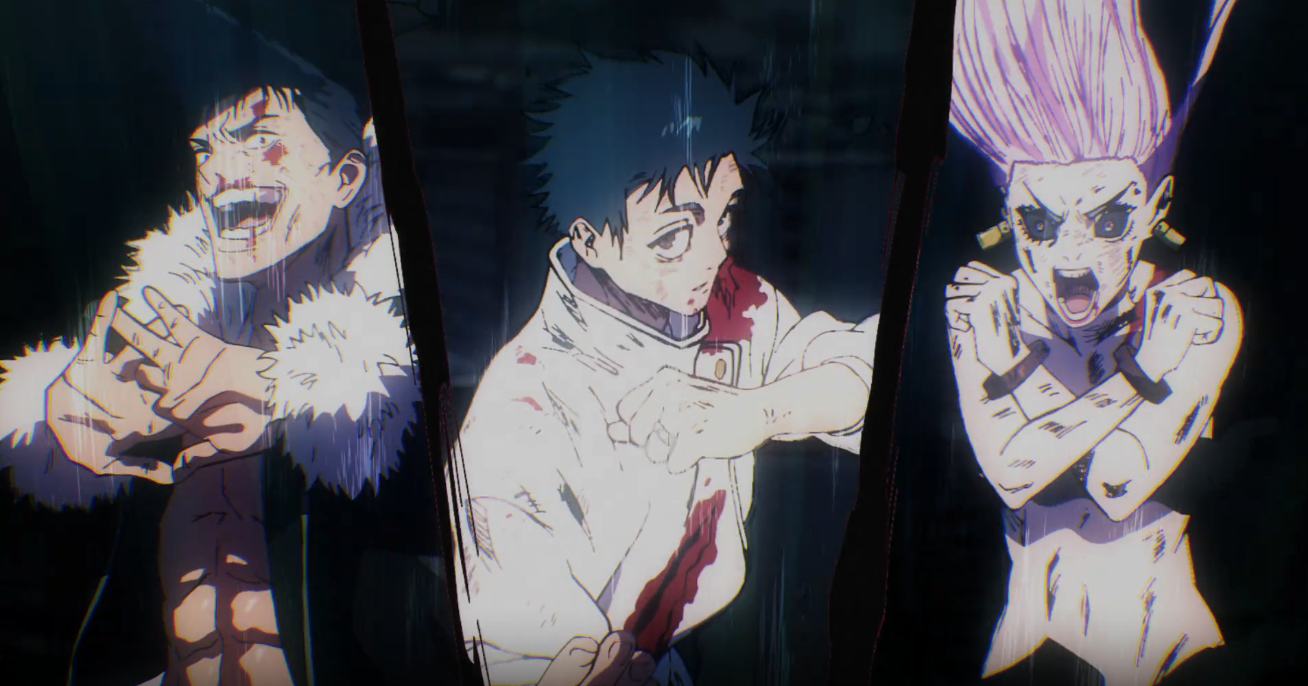
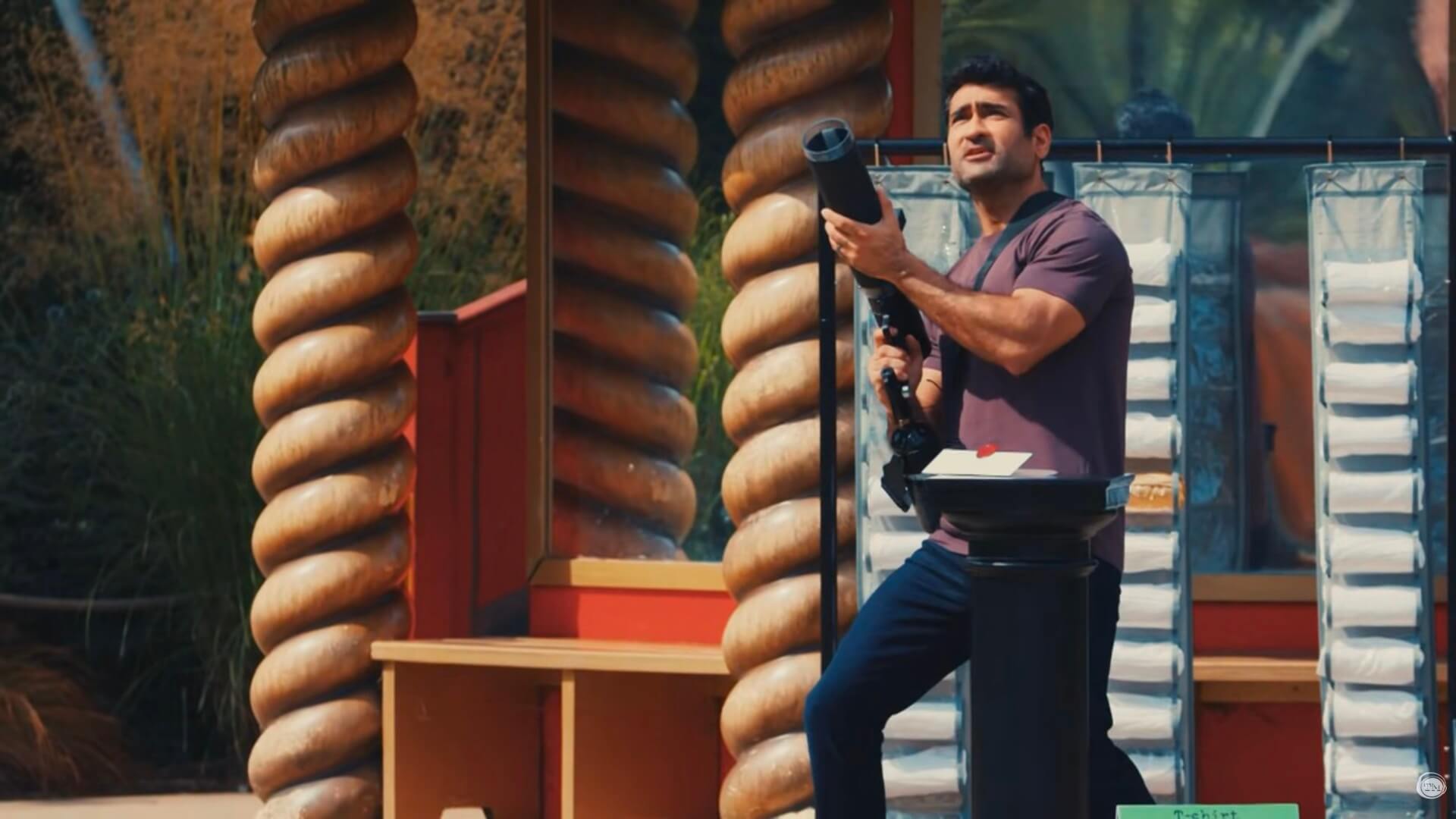
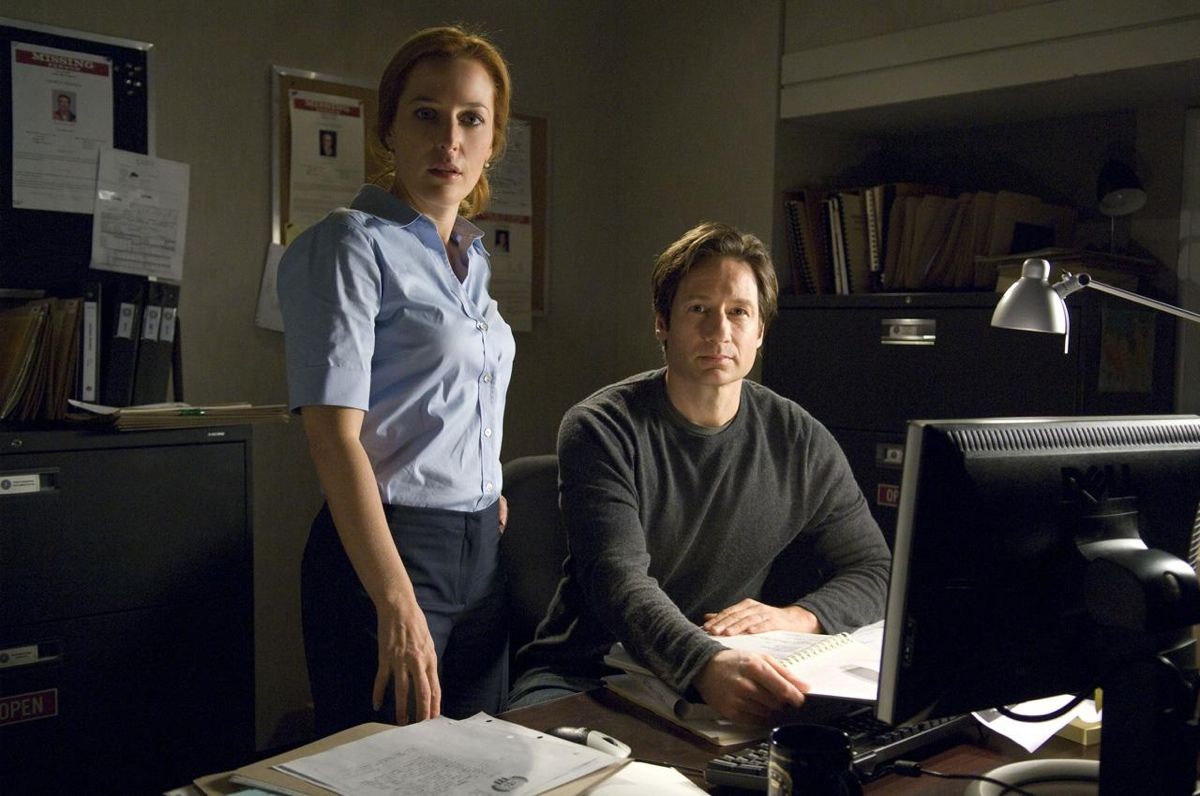
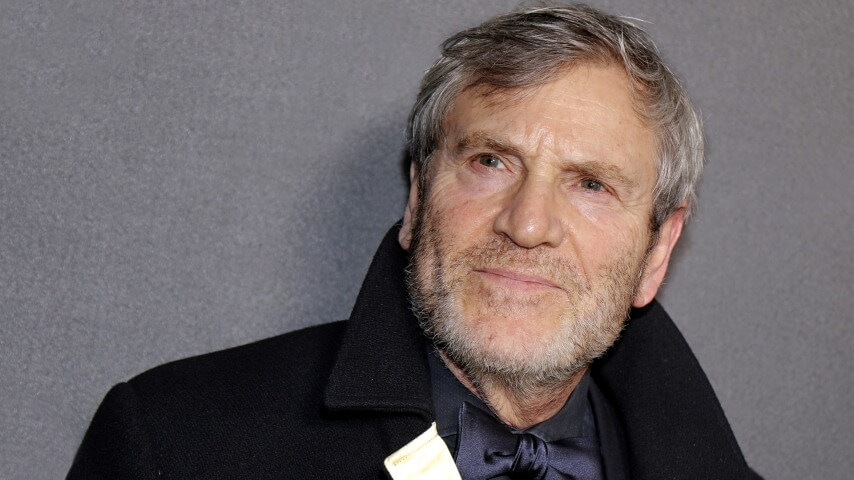
pic.twitter.com/t8A6YZos9O


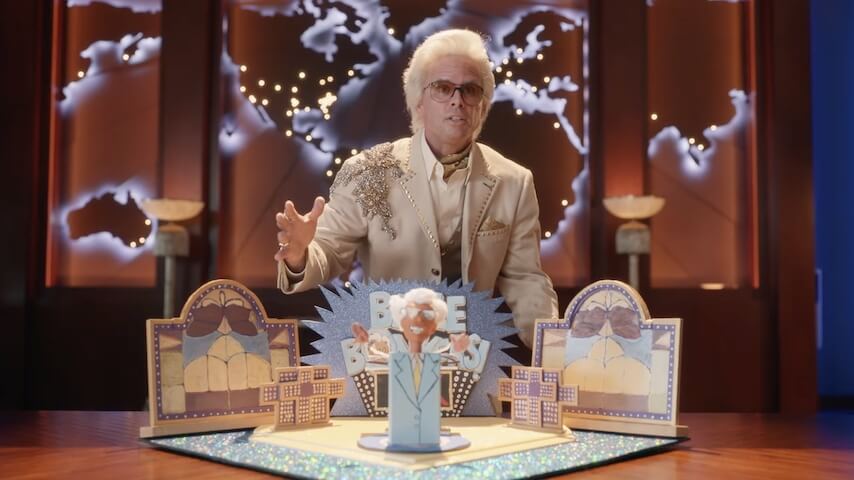


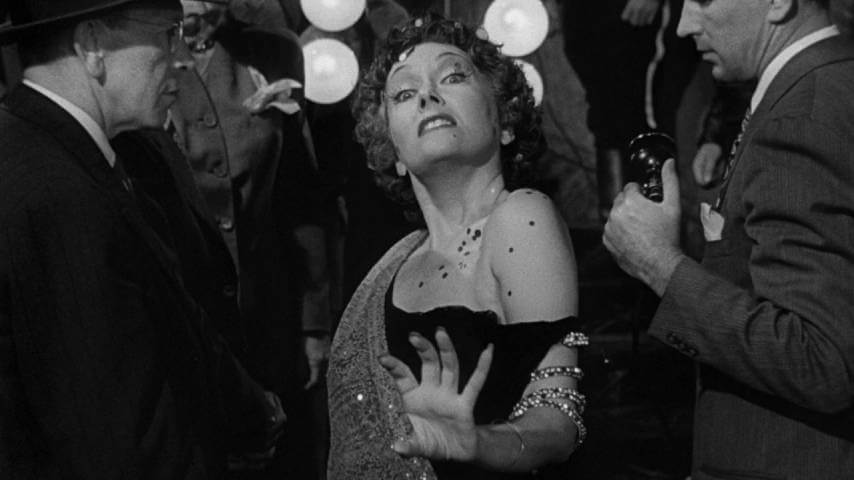






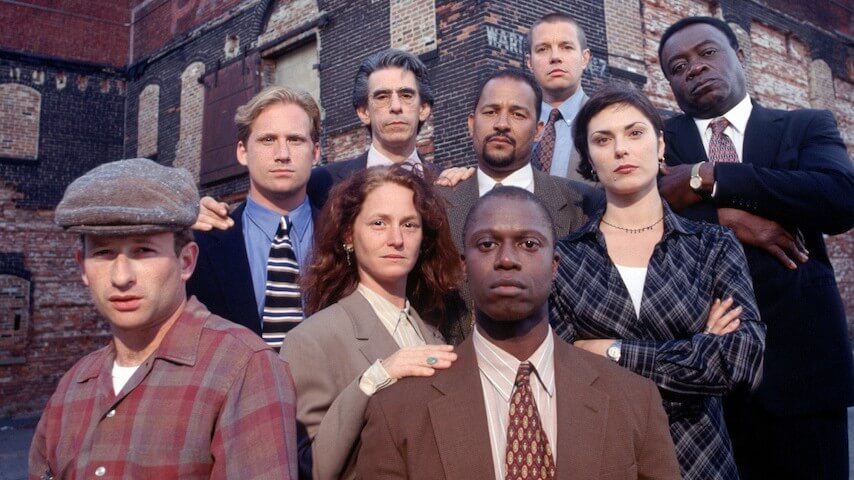
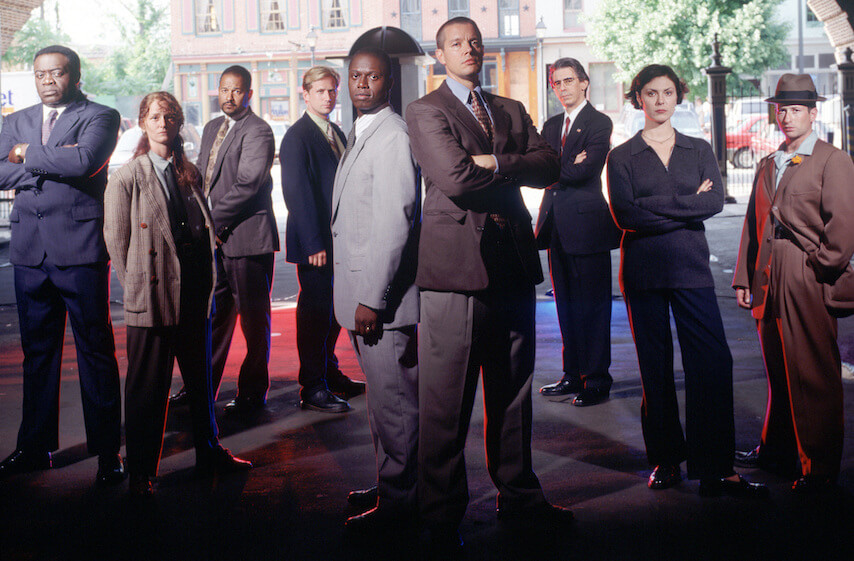 Photo: NBCUniversal