firehose
Shared posts
Police: Yale campus safe, no gunman found - Yahoo News
Hearts on Fryer: 1942
firehosevia multitasksuicide
would eat

meagan-marie: SDCC Showcase: Warrior Wonder Woman! Had an...
firehosefuck the fuck yeah


SDCC Showcase: Warrior Wonder Woman!
Had an absolute blast wearing Warrior Wonder Woman at SDCC. Surprisingly, I made it all day hauling around the incredibly heavy shield, proving that the dedicated lifting these past few months has yielded some results!
For anyone who hasn’t seen this costume before, it’s an original collaboration between artist Tess Fowler and I. I’ve always adored Diana’s Amazon roots, and wanted to pay tribute to that aspect of her legacy. Tess helped me flesh out the design, and then I went to work on the costume!
More photos coming soon - Ljinto and I worked some magic together! :D
- Photo by Estrada Photography
- Photo by Estrada Photography
- Photo by White Darryl Photography
- Photo by Shutterfoo
- Photo by Shutterfoo
- Phone shapshot!
- Photo by Eurobeat Kasumi
- Photo by League of Hot Geeks
- Photo by Chris Fink
- Photo by Chris Fink
MM.com | Facebook | Twitter | Instagram | YouTube | DeviantArt
Always reblog Warrior Wonder Woman.
2D or Not 2D, Photos of Faces Painted With Colorful Designs That Look 2-Dimensional
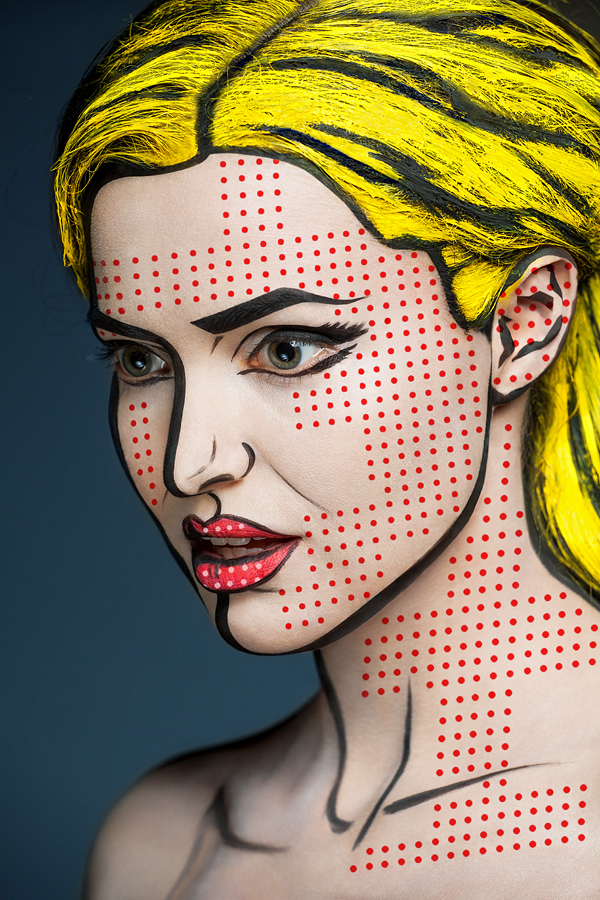
In the photo series “2D or not 2D,” the faces of models are transformed with strikingly colorful face paint designs that are intended to appear two-dimensional. The series is a collaborative project by photographer Alexander Khokhlov, make-up artist Valeriya Kutsan, and photo retoucher Veronica Ershova. Last year we posted about Khokhlov and Kutsan’s collaborative series of black and white face paint designs. Khokhlov talks about his work with Kutsan in this 2012 interview with Thrash Lab.

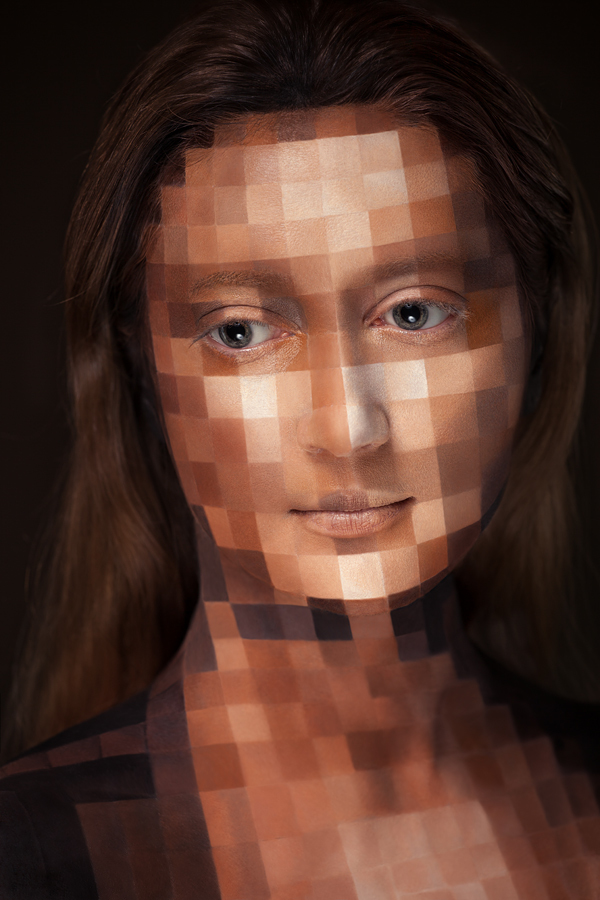

via Visual News
My deadly genetic disease was just a bug

Earlier today, the FDA sent a warning letter to gene-testing company 23andme. And then Spacedeck co-founder Lukas Hartmann, aka @mntmn, decided to publish the following story about the pitfalls of genetic testing — the time 23andme claimed to have diagnosed him with a deadly disease.

    
|
HPV Vaccine May Not Be As Effective for African-American Women | Women's Health Magazine
 OnlyMrGodKnowsWhy
Missed this one from a few weeks ago. Ugh.

Disheartening news on the HPV vaccine front: The vaccines currently available on the market may be less effective at preventing HPV for African-American women than they are for white women, according to new research presented yesterday at the 12th annual International Conference on Frontiers in Cancer Prevention Research.
For the study, researchers from Duke University School of Medicine looked at 572 adult women with abnormal Pap smears who agreed to come in for a follow-up evaluation. After analyzing cervical cells from each of the participants, researchers discovered that African-American women tend to get different subtypes of HPV than white women do. Why this matters? HPV 16 and HPV 18, the two subtypes of HPV currently prevented by vaccines, are half as likely to be found in African-American women as they are in white women—which makes the vaccines way less effective for them. HPV 58, however, was more than twice as common in African Americans, as was HPV 35.
Previous research indicates that HPV 16 and HPV 18 may be responsible for about 70 percent of cervical cancers—which is why vaccines were created to target them—but this new study suggests that they might not be the only HPV subtypes we need to worry about. "When I went back and looked at the analysis that came up with the HPV 16 and 18 [as the primary causes of cervical cancer], the majority of participants were not women of African-American descent," says senior study author Cathrine Hoyo, Ph.D., division chief of epidemiology in the department of obstetrics and gynecology at Duke University School of Medicine. Scary side note: HPV 16 and HPV 18 are also the subtypes most commonly screened for during Pap smears, which may help explain why there's a higher incidence of African Americans dying from cervical cancer, says Hoyo.
Granted, many women have multiple subtypes of HPV (there are more than 40), and researchers can't be sure which ones are actually responsible for cervical cancer until more research is conducted, says Hoyo.
The good news? A new vaccine is in the works that would target more subtypes of HPV, including some that are more prevalent in African-American women. In the meantime, getting vaccinated can still significantly decrease your odds of getting cervical cancer, even if you're not white (36 percent of African-American women in Hoyo's study had HPV 16 or 18, so it's not like it was non-existant in that group). To protect yourself even more, make sure to wear a condom whenever you're with a new or untested partner—regardless of your ethnicity and whether or not you've been vaccinated.
Factory-Farm-To-Table Restaurant Proudly Serves Locally Tortured Animals

|
|
Frustrated Iranian Scientist Forced To Shut Down Project He Spent 12 Goddamn Years Of His Life On

|
|
Blue Screen of Insomnia.
 Blue Screen of Insomnia. Designers Chris Noessel and Nathan Shedroff analyzed screen colors in tons of science fiction movies, and concluded that future computer screens would be tinted blue. Which is bad news, since our eyes are hypersensitive to blue light, and it keeps us from sleeping.

|
|
One Truth and a Lie About Obamacare
firehose" It turns out that Speaker Boehner lied about his struggles to sign up for Obamacare. The Speaker wasn’t having trouble with the website. He put the ACA rep on hold for 35 minutes."
Truth: In Kentucky, where Obamacare is up and running, people are very pleased. They're pleased enough that some of them are rethinking the whole Republican idea that any government is bad government, according to the Washington Post's Stephanie McCrummen:
He’d never had insurance before and said his hospital bills were up to $23,000 at this point.
“Good night,” Lively said, tapping in his information.
Kids: five. Salary: about $14,000 before taxes.
“You’re going to qualify for a medical card,” she told Hudson.
“Well, thank God,” Hudson said, laughing. “I believe I’m going to be a Democrat.”
Remember, this is Rand Paul country. This is a huge deal.
(Via Daily Kos.)
Lie: John Boehner did not have the hellacious time of signing up for Obamacare that he claimed to have:
It turns out that Speaker Boehner lied about his struggles to sign up for Obamacare. The Speaker wasn’t having trouble with the website. He put the ACA rep on hold for 35 minutes.
Christ, what an asshole.
It's Every Fan's Job to Police FIFA and the Olympics Committee
Neither World Cup nor Olympics authorities seem to mind Qatar’s and Russia’s human rights violations, so it’s up to consumers, players, and sponsors to take action themselves.
Yes. This. Call them out.
All the time.
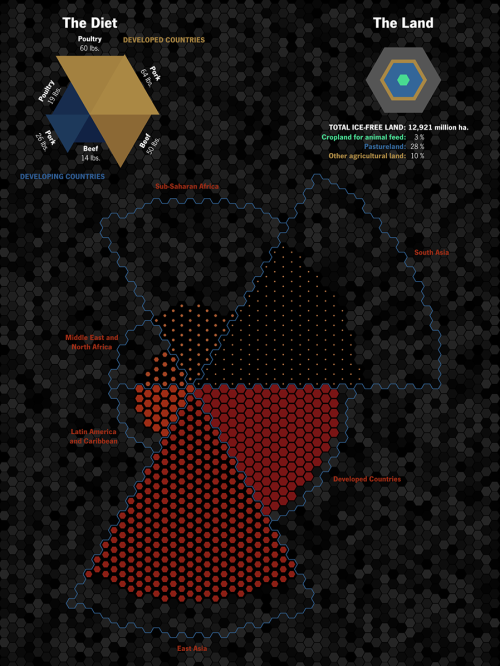

Face-o-mat, A Portable Booth for Hand-Drawn Portraits by Tobias Gutmann
Back in 2012 artist Tobias Gutmann created Face-o-mat, a portable portrait-drawing booth that he has used to make more than 700 whimsical hand-drawn portraits of people around the world. The booth includes analog controls that allow the portrait subject to select options and pay for their drawing. After launching Face-o-mat in Sweden, Gutman has taken the booth on tour in Europe, Asia, and Africa.


photos and video via Tobias Gutmann
via Think Faest!, Colossal
Alternate Universe | f07.jpg
firehosevia Osiasjota
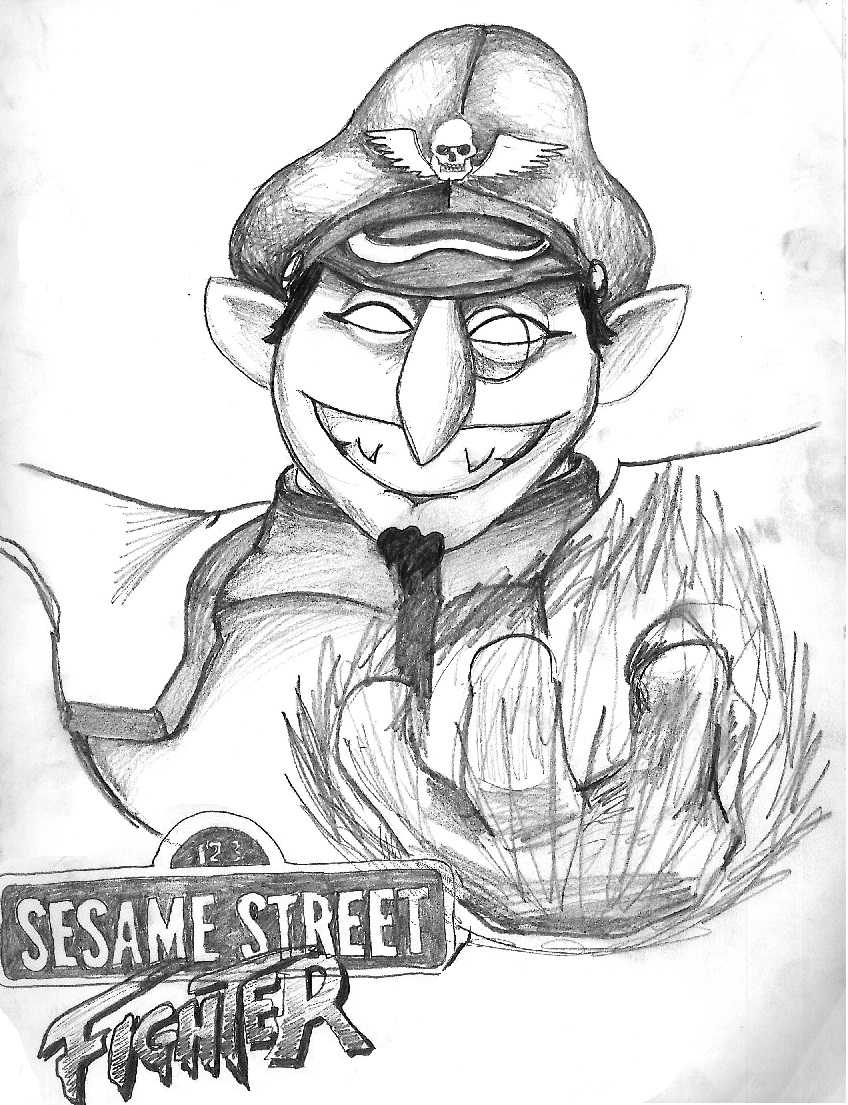
FORTY-TWO! FORTY-THREE! FORTY-FOUR HIT COMBO! AH AH AH
Batkid Battles The Joker On 'Good Morning America,' Stars In New Digital Comic [Video]
firehose"The new digital Batkid comic, put together by ad agency AKQA"
 ScreenCrush
The Make-a-Wish Foundation teamed with the city of San Francisco earlier this month to to give five-year-old Miles “Batkid” Scott his chance to protect “Gotham City” from criminals, but the young hero’s mission continues.
This morning, the Batkid appeared on Good Morning America to protect rapper Pitbull from the Joker, and a group of artists from SF has even produced a digital comic about his heroic story. Batkid’s starting to give Bruce Wayne a run for his money.
Scott, who was diagnosed with leukemia at 18 months old, underwent chemotherapy treatment and has been in remission since June of this year. So far he seems to have a bright future as a crimefighter ahead of him. Not a lot of folks can put “saved a pop star from the Joker” on a job resume.
Check out a video of Batkid’s appearance on GMA below.

The new digital Batkid comic, put together by ad agency AKQA, uses photos from Scott’s big day to tell his story as a cancer survivor and, now, superhero. A message at the end of the special comic invites readers to donate to the Make-a-Wish Foundation.
The digital comic follows The San Francisco Chronicle’s special edition print publication of roughly 1,000 “Gotham City Chronicle” newspapers distributed in SF’s Union Square during Batkid’s adventure.

Historical Map: Homeward Passenger Movement During the Evening...

Historical Map: Homeward Passenger Movement During the Evening Rush Period, Toronto, 1915
Beautiful diagram indicating the patterns of homeward peak-hour travel via public transportation (at this time, mainly streetcar) in Toronto. By my rough count, the collection of yellow dots in the downtown area represents some 49,500 people.
Of particular interest are the red-and-white hatched dots, which represent a point where passengers transfer from the privately-run Toronto Railway Company’s (TRC) streetcars to those of the city-owned Toronto Civic Railways. Due to a disagreement over the terms of the franchise, the TRC refused to offer streetcar service in newly-annexed portions of Toronto, forcing the city to create its own service in those areas. In 1921, the TRC’s franchise expired and all transit was consolidated under the new Toronto Transportation Commission, the forerunner to today’s Toronto Transit Commission.
If you look closely (click on the image to be taken to a much larger version of the map), you can see that ridership totals are also shown for the civic railways, just in a fine black hatching instead of the more prominent blue used for the services branching out of the downtown area.
Visually quite similar to this map of the morning peak flow on the New York City subway in 1954.
(Source: Toronto Transit Alliance)
Celebrate the other scifi classic that had an anniversary this weekend
 Mystery Science Theater 3000 had its 25th anniversary on Sunday, and Shout Factory is celebrating it with a brand-new special edition that includes six classic episodes. Plus there's wolf children, knights on motorcycles, and more, all in This week's DVDs!

|
|

Minnesota uses 'Dramatic Chipmunk' to distract opposing kickers
firehosefollowup; "Wisconsin's kicker is named Jack Russell"

The really distracting thing should be the hazy Gopher/Chipmunk taxonomy issue at stake here.
2015 update: This is still going, and it's still good.
Kicking field goals in Minnesota ain’t easy… http://t.co/epLxPzh0nX pic.twitter.com/yjHMQGdDK8
— Fancred (@Fancred) September 4, 2015
2013: The art of distracting free-throw shooters at college basketball games is well practiced. But the art of distracting field goal kickers at college football games, well, isn't: many teams' stadiums have big open spaces behind their end zone, and even those with seats back there often don't do their best to shake the guy who has to focus all his effort on a single, difficult, technique-heavy task.
Enter the Minnesota Golden Gophers, who happen to have a handy Jumbotron at one side of TCF Bank Stadium.
Minnesota's come up with greatest way to distract FG kicker EVER: http://t.co/Na1qH3WoEB pic.twitter.com/bIP6VeoOB7
— LostLettermen.com (@LostLettermen) November 25, 2013
That's the chipmunk from the famous YouTube video:
Thoughts:
A) Some will take issue with the fact that the rodent in the video is a "chipmunk," while the team is in fact the Golden Gophers. Well, problems with both. First off, the chipmunk in the video is in fact, a prairie dog. Second off, one of my pet peeves in life is the fact that Minnesota claims gophers -- ugly lil burrowing things -- while their mascot is an adorable chipmunk. This is actually a match made in heaven.
B) Wisconsin's kicker is named Jack Russell. A very edible small mammal should have been good distraction, but they should have showed a chew toy or squeezy ball.
C) The gambit worked pretty well, as Russell missed a 38-yarder, although he hit the 20-yarder here. Per the BTN, they've been ready to do this since the start of conference play, but Saturday was the first time an opponent had kicked facing the board.
Keep being dramatic, Gophers. Or, um, chipmunks or prairie dogs or whatever.


Blizzard dev apologizes for remarks on sexualized designs
firehoseroflcry
Heroes of the Storm game director Dustin Browder has issued an apology for comments he made in a press interview, during which he appeared to dismiss concerns about hyper-sexualized designs of female game characters.
"In a recent interview with Rock, Paper, Shotgun, I responded poorly to a statement the interviewer made about over-sexualized character designs in games," he wrote on the Heroes of the Storm blog. "I want to apologize for that. This is a serious topic and I don't want anyone to think that I, or anyone else at Blizzard, is insensitive about how we portray our characters."
Heroes of the Storm is a multiplayer online battle arena (MOBA) game based on characters from developer Blizzard's roster of games, including World of Warcraft, Diablo and Starcraft.
During an interview with Rock, Paper, Shotgun, published last week, Browder responded to a question on female character design by saying that "we're not sending a message to anybody. We're just making characters who look cool." He added that some of the characters were already sexualized before they appeared in Heroes of the Storm. "I mean, Kerrigan is wearing heels, right?"
When pressed on the matter, he added that "we're not running for President. We're not sending a message. No one should look to our game for that."
In his statement today, Browder said that he wanted to ensure that players are not alienated by hyper-sexualized designs. "We have an amazing roster of heroes and we will always strive to make sure that everyone can have a hero that they identify with and feel powerful using. And at the end of the day, we all want the same thing. A great game where we can all have fun battling for glory and maybe some bragging rights."
Demon: The Descent Prestige Edition
firehoseburied lede: There will be a World of Darkness-setting Seattle sourcebook because of this kickstarter
if it's half as awful as the New Orleans one, congratulations Seattle
Angels are everywhere. They are under the everyday world, behind it, beyond it. They are sent by the God-Machine to enact its will through time and space, delivering messages, building infrastructure, protecting some people, killing others. And you were one of those angels…
But not anymore.
In Demon: The Descent, you play one of the fallen agents of the God-Machine, a former angel who defected to the human race. Now you are Unchained, and search for a place that you can be free, all the while avoiding the notice of the still-loyal agents. You cannot go back to the shining, sterile Heaven.
All you can do is reign in Hell.
Image:

An inside look at the construction of London's massive new railway system
firehosetrains~
It's been billed as the biggest infrastructure project in Europe, will cost more to complete than the London Olympics, and promises to drastically boost the speed and capacity of mass transit in that city and its surrounding area. Already, the half-finished construction of Crossrail — a mammoth railway system that will add 26 miles of underground tunnels to London — is yielding both disruption and development in affected communities.
In a sweeping overview of the construction efforts and their end game — a railway whose trains each transport 1,500 passengers between 24 and 30 times an hour — The Guardian examines how Crossrail is already having an impact. Above ground, the railway system is causing road closures and detours, and has the potential to drastically change property values and commercial development patterns. But below ground, at least for now, the massive project is running remarkably smoothly. "The atmosphere is calm and methodical, of routinely performing tasks that have been done thousands of times before, and with the fundamentally simple aim of getting from A to B," the piece reads. "If engineering is sometimes called an adventure, down here every effort seems to be made to neutralise it."
- Via The Guardian
- Image Credit Ed Webster (Flickr)
- Related Items science crossrail transportation infrastructure
Body blow: How 23andMe brought down the FDA's wrath
firehosefollowup
"The agency’s public letter to 23andMe takes an unusually frustrated tone, detailing the hundreds of emails and 14 face-to-face meetings that led up to the block. As of January, the company still had not completed the studies it would need to make a marketing submission, despite operating for more than five years. It’s unclear whether it was startup arrogance, bad test results, or simple naiveté that led 23andMe to ignore the warnings, but the company’s marketing push only increased. A recent surge of television ads seems to have been the final straw."
From the very beginning, 23andMe was the stuff TED talks are made of, promising to harness the staggering quantity of information in the human genome with big data and user-friendly web savvy. Now, it’s all but shut down. This morning, the FDA ordered an immediate halt on sales of 23andMe’s saliva test kit, the company’s only product. Until the company passes the FDA’s marketing approval process, it will be forbidden from shipping anything to users. All of the company’s ambitious plans are officially on hold.
Can the dream of the personal genome survive?
It’s very bad news for 23andMe. And for anyone who bought into the dream of personally managed genetic data, the FDA’s move is bewildering. For all the site's problems, including occasionally threadbare scientific data, giving users access to their genome was a potentially industry-changing idea. Now, the abrupt halt has left more questions than answers. After six years on the market, why is 23andMe's sole product being barred from sale now? And without the company that pioneered it, can the dream of the personal genome survive?
23andMe, for its part, seems to be remaining optimistic. In an official response to the FDA's letter, the company came off as penitent. "We recognize that we have not met the FDA's expectations regarding timeline and communication regarding our submission," the statement reads. "Our relationship with the FDA is extremely important to us and we are committed to fully engaging with them to address their concerns." In short, they're working on it.
23andme is way behind in doing the necessary studies to back up their claims
The FDA’s marketing requirements put 23andMe in a particularly tricky spot. The requirements are designed to make sure that anyone marketing a medical product isn’t lying about what their product can do. If I want to start advertising Cholesterol-Lowering Pills, I have to prove to the FDA that the pills really do lower patients’ cholesterol — usually with a battery of scientific studies that takes years and costs millions. 23andMe’s claims are even trickier to prove. The website bills the service as a "first step in prevention," to help users in "mitigating serious diseases." They may not seem like it, but those are medical claims — and 23andMe is way behind in doing the necessary studies to back up their claims.
"The FDA and 23andme have done a sort of strange frenemy dance."
To make matters worse, the FDA seems furious. The agency’s public letter to 23andMe takes an unusually frustrated tone, detailing the hundreds of emails and 14 face-to-face meetings that led up to the block. As of January, the company still had not completed the studies it would need to make a marketing submission, despite operating for more than five years. It’s unclear whether it was startup arrogance, bad test results, or simple naiveté that led 23andMe to ignore the warnings, but the company’s marketing push only increased. A recent surge of television ads seems to have been the final straw.
Finally, the agency seems to have run out of patience
For many observers, the FDA’s rebuke has been a long time coming. As geneticist Misha Angrist puts it, "The FDA and the company have done a sort of strange frenemy dance since the beginning." The mere fact that 23andMe was able to operate for six years without marketing approval speaks to how much leeway the FDA was willing to extend at first, especially while many doctor's groups were skeptical of personal genetics from the beginning. As early as 2008, the New York State Department of Health had banned 23andMe from operating within the state, requiring laborious workarounds for New York-based users. But federal agencies were more patient. The FDA dispatched its Office of In Vitro Diagnostics and Radiological Health to work with 23andMe on approvals, but according to the letter, the company kept stalling. "I think the FDA was antagonized by what it perceived to be 23andMe's inattention to its demands and the company's simultaneous ramp-up of its marketing campaign," Angrist says. Finally, the agency seems to have run out of patience.
"There's always the potential for results to be misused or misinterpreted."
Some medical groups have already eagerly seized on the letter as a chance to point out the failings of any genetic testing outside the medical sphere. Speaking to The Verge this morning, the president of the National Society of Genetic Counselors, Rebecca Nagy, said the ruling highlights the questions consumers should be asking about personal genomics services. "Is a genetics professional involved in ordering or interpreting the test? If not, there's always the potential for results to be misused or misinterpreted," says Nagy. That's a larger issue than just 23andMe's failure to work with the FDA — but after this morning's order, everything seems to be on the table.
"It's simply gotten too cheap and too easy to do."
And in a sense, they're right. Many of the FDA's complaints are aimed at the core idea of personal genomics: that a delicate and expensive medical test could become as simple as an iPhone app. 23andMe didn't invent the saliva test, after all. All it did was bring such testing outside the doctor's office and make it available without the headaches of the health-insurance system. It was a consumer-grade version of a professional service: cheaper, easier, and not quite as good. And because the testing could be done in bulk, the service added a lot of genes that would never be tested in a medical lab, from the gene responsible for "asparagus pee" to the markers used to track a person’s Neanderthal ancestors. But that same fast-and-loose approach can cause problems if a faulty test turns up in an area with real medical complications, as vividly recounted here. And when the bad news does arrive, whether it’s an increased risk of Parkinson’s or a higher chance of heart disease, 23andMe didn’t have any counselors on hand to guide users to the medical options available or provide the proper context for understanding the results. Even if the service solves its marketing problems, those issues are likely to remain.
Still, you shouldn't count out personal genetics just yet. "I think the cow is a fair ways out of the barn," Angrist says. "Ultimately, I don't think the FDA can keep people from learning about the content of their own cells. It's simply gotten too cheap and too easy to do." But in the future, companies might need to be more modest in their goals. They might steer clear of high-stakes tests like BRCA, which is so strongly linked to breast cancer that it often spurs preventative surgery, and is currently included in the 23andMe pack. Instead, companies could focus on genomics as a hobby or a deep dive for geneology buffs. It would mean less world-changing ambition, and less startup bravado, but that might not be a bad thing. Mostly, it would mean less of a challenge to the medical industry.
- Related Items medicine fda 23andme anne wojcicki personal genetics
The Whisky Advent Calendar (2013 Edition) Whisky - Master of Malt
 djempirical
i’d ask for a bourbon variety, but i don’t need to mix religion with my bourbon.
First came sliced bread. It was the best thing. Nothing could touch it. Nothing, that is, until Drinks By The Dram created The Whisky Advent Calendar! Now returning for a second outing, it still laughs in the face of chocolate advent calendars. "Ha!"
Feeling Cagey?, A Website That Adds Nicolas Cage’s Face To Instagram Selfies in Real Time

London-based web developer Josh McMilan has created Feeling Cagey?, a fun website that adds Nicolas Cage’s face to people’s Instagram selfies in real time. It’s a completely random stream of Nic Cage madness that may just suck you in and keep you occupied all day.


images via Feeling Cagey?
via reddit, The Daily Dot
Sandy Hook report profiles shooter, finds no link between games and motive
firehose'Lanza "liked to play a game called Dance Dance Revolution, which is a music video game in which the player stands on a platform, watches a video screen and moves his feet as directed by the video. A home version of this was seen and photographed in the shooter's home. Several videos of him playing DDR were found on digital media taken from the home." ... "One person described the shooter as spending the majority of his time playing non-violent video games all day, with his favorite at one point being Super Mario Brothers." '
A report published today on last year's Sandy Hook massacre, in which a gunman killed 20 children and six adults in Newtown, Conn. has detailed the killer's relationship with games. The report lists his game collection but draws no conclusions about their impact on his state of mind. It does not include games in its conclusions as to his motives.
The summary report was filed by Connecticut State's Attorney Stephen Sedensky III, and details the events of Dec. 21, 2012, when 20-year-old Adam Lanza entered Sandy Hook Elementary School and, using a military-style assault rifle, murdered the children and teachers before turning the gun on himself. A more detailed report from state police is due to be released at a later date.
In the aftermath of the tragedy, Lanza's interest in video games became a focal point for media, politicians and investigators. According to reports at the time, Lanza owned a large collection of violent video games, and kept a meticulously researched spreadsheet of past massacres, that was compared by law-enforcement officers to a video game score sheet.
The report shows various games owned by Lanza and collected from his house, by police. It shows that his interest in games included violent and non-violent games. The list mentions brands including Left for Dead, Metal Gear Solid, Dead Rising, Half Life, Battlefield, Call of Duty, Grand Theft Auto, Shin Megami Tensei, Dynasty Warriors, Vice City, Team Fortress and Doom.
According to the report Lanza "liked to play a game called Dance Dance Revolution, which is a music video game in which the player stands on a platform, watches a video screen and moves his feet as directed by the video. A home version of this was seen and photographed in the shooter's home. Several videos of him playing DDR were found on digital media taken from the home."
Investigators said he owned an "Xbox" and that his gaming history included titles including Call of Duty 2: Big Red One, Halo 2, Lego Star Wars, Panzer Dragoon Orta, Splinter Cell 2, Star Wars Battlefront and Worms: Forts Under Seige.
It also added the he owned a PlayStation 2 with a collection including Dynasty Tactics, Kingdom Hearts, Kingdom Hearts 2, Onimusha and Dynasty Warriors.
A section on his social history said that he was often a loner, but that he had hosted a LAN party at his house in 2008. The reported added that, "he played video games often, both solo at home and online. They could be described as both violent and non-violent. One person described the shooter as spending the majority of his time playing non-violent video games all day, with his favorite at one point being Super Mario Brothers."
In its conclusion, the report made no mention of games. It states, "What we do know is that the shooter had significant mental health issues that, while not affecting the criminality of the shooter's mental state for the crimes or his criminal responsibility for them, did affect his ability to live a normal life and to interact with others, even those to whom he should have been close. Whether this contributed in any way is unknown. The shooter did not recognize or help himself deal with these issues. He had a familiarity with and access to firearms and ammunition and an obsession with mass murders, in particular the Columbine shootings."
Following the massacre, The National Rifle Association issued a statement blaming video games for real-world violence. "There exists in this country, sadly, a callous, corrupt and corrupting shadow industry that sells and sows violence against its own people," said NRA head Wayne LaPierre. "Isn't fantasizing about killing people to get your kicks really the filthiest form of pornography?" he added.
President Obama met with video game industry executives at the White House in January as part of a fact-finding mission, before making a recommendation that the Centers for Disease Control and Prevention conduct further research into the relationship between video games, media images and violence.
"If there's even one thing we can do to reduce this violence, if there's even one life that can be saved, then we have an obligation to try it," said President Obama. "I will put everything I've got into this, and so will Joe [Biden], but I tell you the only way we can change is if the American people demand it." At the time, vice president Joe Biden said that the Government was making "no judgment" on the alleged link between violence and video games.
Jay Rockefeller, a Democratic Senator from West Virginia, introduced a bill to the Senate three days after the massacre, calling for the National Academy of Sciences to study the impact of violent video games and violent video programming on children. "In today's world, where kids can access content across a variety of devices often without parental supervision, it is unrealistic to assume that overworked and stressed parents can prevent their kids from viewing inappropriate content," he said. Rockefeller has long been critical of violence in entertainment and the media. Polygon has sent a request for comment on today's report to his office.
At the Game Developers Conference in February, a panel of speakers including author Ian Bogost and former Epic boss Mike Capps argued that the public perception of gaming is overwhelmingly one that is tied to violence and violent games.
Polygon's coverage of video game issues related to the Sandy Hook massacre can be found here.
Dating app Tinder is still exposing personal information

When the purpose of your app is to connect total strangers, maybe privacy is beside the point. Still, mobile dating app Tinder has a particular knack for revealing sensitive information.
Earlier this year, we reported that Tinder had exposed the physical location of its users for at least two weeks, perhaps months. The company initially downplayed the issue, and still hasn’t told its users what happened. But the controversy, such as it was, barely registered in the technology industry.
Tinder actually continues to reveal personal information about people who use the app in ways that seem unnecessary and invasive. For instance, the app’s data files include Facebook ID numbers that make it possible, in many instances, to identify and contact users who would otherwise remain quasi-anonymous.
Shaked Klein Orbach, a web developer in the Netherlands, has just documented a few other privacy holes in Tinder. Most alarmingly, it appears possible to fool Tinder into making a match with someone who hasn’t expressed interest—and in doing so, reveal that user’s email address.
Tinder works by showing you photos of people it thinks you might take a liking to. (The app is mostly used for dating and hooking up, but would like to make platonic connections, too.) Users swipe right or left to indicate if they’re keen. Tinder then connects users who have expressed mutual interest.
But it turns out that Tinder’s API, the protocol that makes the app work, leaves open a way to connect with someone who hasn’t expressed interest. That would be like Facebook approving friend requests without the permission of both sides. Orbach’s post explains how he was able to do it. In the process, he also noticed that Tinder reveals the email address of each person to whom the app connects you.
Like a lot of Tinder’s privacy flaws, the ones discovered by Orbach don’t seem necessary to make the app function. Instead, they appear to be the result of sloppy API design. Orbach, in an email, said he has contacted Tinder about the issues. He also provided documentation of his work to Quartz.
Tinder is part of internet conglomerate IAC, which also owns dating sites Match.com and OkCupid. Like many mobile apps with popular buzz, Tinder won’t say how many users it has. Rad said a few days ago that Tinder processes 400 million swipes and 4 million matches a day, and those figures are rising.
Reached by phone today, Tinder CEO Sean Rad said he was heading into a meeting and referred questions to a spokeswoman. The spokeswoman, Rosette Pambakian, didn’t have an immediate response.
Update (5:58pm ET): Rad provided this statement:
We want to thank Mr. Orbach for pointing out a way to create a match with another user through manipulating certain API calls. This issue is now resolved and to our knowledge no one was affected outside of Mr. Orbach’s test. We are committed to taking all necessary steps to ensure the privacy of our users and we appreciate the help and support of great engineers like Mr. Orbach.
