Oakland police say 7 shot and wounded near park KTVN OAKLAND, Calif. (AP) - Police say seven people have been shot and wounded near a park in Oakland. Police spokeswoman Johnna Watson says a report came in shortly after 6 p.m. Monday of a shooting at 96th and Olive St. in East Oakland. Watson says ... and more » |
firehose
Shared posts
26 Nov 18:08
Oakland police say 7 shot and wounded near park - KTVN

26 Nov 16:24
There Are Now More Gay People In America Than Adult Virgins
You heard that right – adult virgins are now more of a minority than gay people.
firehose likes this

26 Nov 16:19
26p71
by Christopher Hastings

26p71 is a post from: The Adventures of Dr. McNinja
| Ads by Project Wonderful! Your ad could be here, right now. |
firehose likes this
26 Nov 16:14
Futuremark Delists Samsung and HTC Android Devices for Cheating 3DMark
by Unknown Lamer
MojoKid writes "Benchmarks are serious business. Buying decisions are often made based on how well a product scores, which is why the press and analysts spend so much time putting new gadgets through their paces. However, benchmarks are only meaningful when there's a level playing field, and when companies try to 'game' the business of benchmarking, it's not only a form of cheating, it also bamboozles potential buyers who (rightfully) assume the numbers are supposed mean something. 3D graphics benchmark software developer Futuremark just 'delisted' a bunch of devices from its 3DMark benchmark results database because it suspects foul play is at hand. Of the devices listed, it appears Samsung and HTC in particular are indirectly being accused of cheating 3DMark for mobile devices. Delisted devices are stripped of their rank and scores. Futuremark didn't elaborate on which specific rule(s) these devices broke, but a look at the company's benchmarking policies reveals that hardware makers aren't allowed to make optimizations specific to 3DMark, nor are platforms allowed to detect the launch of the benchmark executable unless it's needed to enable multi-GPU and/or there's a known conflict that would prevent it from running." 


Read more of this story at Slashdot.
firehose likes this
26 Nov 16:13

Visual effects artists use Obama's trip to DreamWorks to protest 'bleeding' industry
by Rich McCormick
As Barack Obama visits DreamWorks Animation today to celebrate the strength and financial clout of the American movie industry, a group of visual effects artists will be taking to a south Californian park to protest against unfair treatment and wages. Speaking to Deadline, anonymous protest organizer 'VFX Soldier' clarified that the protest was not intended to "embarrass DreamWorks Animation," but instead planned to raise awareness of the "the absolute collapse of VFX employment."
Subsidies force VFX artists to move around the world to chase contracts
Visual effects work takes place primarily in post-production, away from the film set itself, meaning contract jobs can be farmed out to studios away from Hollywood. Increasingly, US states and other countries are offering subsidies for this form of work in the hope of attracting their own burgeoning film and digital industries, forcing studios — who have to pitch and compete against each other for work — to shift their offices around the globe and chase short term contract work. An internet campaign against the use of such subsidies spearheaded by VFX Soldier raised $16,345 earlier this year. The money will be used to challenge subsidies that "violate international trade agreements."
This ecosystem has seen multiple award-winning studios close. Rhythm & Hues — the creators of Life of Pi's Oscar-winning visual effects — went bankrupt earlier this year, its 238 employees forced to sue to reclaim $1 million in owed back pay. Digital Domain, who provided the VFX for Titanic and counted James Cameron among its founders, was declared bankrupt and sold in late 2012. Even DreamWorks itself, dependent on VFX artists to create all of its movies and insulated somewhat from many of the issues that plague smaller VFX studios, was forced to lay off 350 employees earlier this year when Rise of the Guardians under-performed at the box office.
Oscar-winning VFX studio Rhythm & Hues went bankrupt earlier this year
The protest is one of many orchestrated by disgruntled VFX artists. Dave Rand, senior effects artist for Life of Pi, arranged for a plane to fly over the award ceremony bearing the words "BOXOFFICE + BANKRUPT = VISUAL EFFECTS VFXUNION.COM." Inside, his colleague Bill Westerhofer, on stage to accept the award for best visual effects, had his mic cut off as he tried to speak to the troubles the industry was facing. Another protest of 500 VFX workers continued during the ceremony.
Deadline reports that unionizing has been difficult for VFX artists, as subsidies and protectionist policies have dragged studios to new homes around the world. For now, unionizing has to wait for the weakened effects industry to become as strong as President Obama will today say the rest of the entertainment industry is. As VFX Soldier tells Deadline: "right now there are just no jobs to protect. We have to stop the bleeding first."
- Source Deadline
- Related Items life of pi vfx visual effects dreamworks obama president protest hollywood movies film subsidies
26 Nov 16:13
Pikmin designer working on new IP for Nintendo
by Emily Gera
Veteran game designer Masamichi Abe, known best for his work as director on Pikmin and Pikmin 2, as well as his work on Tekken 2, is developing a new IP for Nintendo according to a post on Twitter by current Tekken lead Katsuhiro Harada.
Abe is working at Nintendo Kyoto on the new original title, wrote Harada in response to a fan question asking if the designer is now retired. The game director had previously left Japan following his work on the sequel to Pikmin 2, moving to Seattle, Washington where he helped develop Metroid Prime: Hunters and Mario vs. Donkey Kong: Minis March Again on Nintendo DS.
Polygon has reached out to Nintendo for additional details on this new project.
firehose likes this
26 Nov 16:12


Giant Eyeball costume
by OnlyMrGodKnowsWhy

Ingredients:
1 Regolit Shade Lamp + tape + paint
1) Make the top hole bigger, so your head fits in it, but don’t cut near the metalic ‘loopies’; you still need them to keep the metal structure in place and stretch the lamp open.
2) Reinforce with some tape.
3) Cut a little spyhole.
4) Paint a pupil & iris around it.
5) Put the sphere on your head, then stretch it open by introducing the metal structure.
6) And remember to bring a straw if you want to drink at the party!
firehose likes this
26 Nov 16:12

Photo
firehosetouchdown jesus: http://stupidevilbastard.com/2010/06/touchdown-jesus-statue-torched-by-god/
firehose likes this

26 Nov 16:08
iPhone Thief Sends Victim Handwritten List Of Almost 1,000 Contacts
A Chinese iPhone thief may have atoned somewhat for his crime, sending his victim a handwritten list of nearly 1,000 contact numbers.
26 Nov 16:04
meanplastic: "i’m so full…. do you want these nuggets?”
firehosegpoy/ifapom
"i’m so full…. do you want these nuggets?”

firehose likes this
26 Nov 16:03
The FBI Might Do More Domestic Surveillance than the NSA
by Bruce Schneier
This is a long article about the FBI's Data Intercept Technology Unit (DITU), which is basically its own internal NSA.
It carries out its own signals intelligence operations and is trying to collect huge amounts of email and Internet data from U.S. companies -- an operation that the NSA once conducted, was reprimanded for, and says it abandoned.[...]
The unit works closely with the "big three" U.S. telecommunications companies -- AT&T, Verizon, and Sprint -- to ensure its ability to intercept the telephone and Internet communications of its domestic targets, as well as the NSA's ability to intercept electronic communications transiting through the United States on fiber-optic cables.
[...]
After Prism was disclosed in the Washington Post and the Guardian, some technology company executives claimed they knew nothing about a collection program run by the NSA. And that may have been true. The companies would likely have interacted only with officials from the DITU and others in the FBI and the Justice Department, said sources who have worked with the unit to implement surveillance orders.
[...]
Recently, the DITU has helped construct data-filtering software that the FBI wants telecom carriers and Internet service providers to install on their networks so that the government can collect large volumes of data about emails and Internet traffic.
The software, known as a port reader, makes copies of emails as they flow through a network. Then, in practically an instant, the port reader dissects them, removing only the metadata that has been approved by a court.
The FBI has built metadata collection systems before. In the late 1990s, it deployed the Carnivore system, which the DITU helped manage, to pull header information out of emails. But the FBI today is after much more than just traditional metadata -- who sent a message and who received it. The FBI wants as many as 13 individual fields of information, according to the industry representative. The data include the route a message took over a network, Internet protocol addresses, and port numbers, which are used to handle different kinds of incoming and outgoing communications. Those last two pieces of information can reveal where a computer is physically located -- perhaps along with its user -- as well as what types of applications and operating system it's running. That information could be useful for government hackers who want to install spyware on a suspect's computer -- a secret task that the DITU also helps carry out.
[...]
Some federal prosecutors have gone to court to compel port reader adoption, the industry representative said. If a company failed to comply with a court order, it could be held in contempt.
[...]
It's not clear how many companies have installed the port reader, but at least two firms are pushing back, arguing that because it captures an entire email, including content, the government needs a warrant to get the information. The government counters that the emails are only copied for a fraction of a second and that no content is passed along to the government, only metadata. The port reader is designed also to collect information about the size of communications packets and traffic flows, which can help analysts better understand how communications are moving on a network. It's unclear whether this data is considered metadata or content; it appears to fall within a legal gray zone, experts said.
[...]
The Operational Technology Division also specializes in so-called black-bag jobs to install surveillance equipment, as well as computer hacking, referred to on the website as "covert entry/search capability," which is carried out under law enforcement and intelligence warrants.
[...]
But having the DITU act as a conduit provides a useful public relations benefit: Technology companies can claim -- correctly -- that they do not provide any information about their customers directly to the NSA, because they give it to the DITU, which in turn passes it to the NSA.
There is an enormous amount of information in the article, which exposes yet another piece of the vast US government surveillance infrastructure. It's good to read that "at least two" companies are fighting at least a part of this. Any legislation aimed at restoring security and trust in US Internet companies needs to address the whole problem, and not just a piece of it.
26 Nov 16:03


Is a fan favorite character being recast for the new Star Wars?
by Katharine Trendacosta
firehoseburied lede: "Mark Tonderai, director of House at the End of the Street, has been hired by Millennium Films to remake George Romero's Day of the Dead. Yeah."

Steven Moffat tells how much of Doctor Who will revolve around the Doctor's new quest, Francis Lawrence says some controversial moments from Mockingjay are in the movies, and someone's in mortal peril in Teen Wolf. Plus, casting news from the Doctor Who Christmas special and The Walking Dead. Spoilers now!
    
|
26 Nov 16:00
Even When You're Right, You Lose in Texas
by Gabe
firehosenever go
In spite of having logic, precedent and world experts on their side, NewEgg just lost to the patent troll TQP. Texas is a blight on our legal system. For all of the very smart people I know that are eager to tout the virtues of Austin: Go fix the rest of your broken state.
26 Nov 16:00
and
Pretty Table for Python [Link]
by Gabe
Holy cow this is awesome! Pretty Table is a Python library for creating plain text formatted tables from HTML, CSV, SQL or even row by row insertions.
Take an HTML table with
tags:
from prettytable import from_html
pts = from_html(html_string)
And output it in plain text +-----------+------+------------+-----------------+ | City name | Area | Population | Annual Rainfall | +-----------+------+------------+-----------------+ | Adelaide | 1295 | 1158259 | 600.5 | | Brisbane | 5905 | 1857594 | 1146.4 | | Darwin | 112 | 120900 | 1714.7 | | Hobart | 1357 | 205556 | 619.5 | | Sydney | 2058 | 4336374 | 1214.8 | | Melbourne | 1566 | 3806092 | 646.9 | | Perth | 5386 | 1554769 | 869.4 | +-----------+------+------------+-----------------+ I'd love to see it offer output as a Multimarkdown table too. By way of Tim Hopper |
firehose and -1 others like this
26 Nov 15:59
A Compilation Video of Cats Giving High Fives
by Kimber Streams
Cats give their owners — and occasionally other cats — high fives in this great compilation video. High five!
video via funnyplox
firehose likes this
26 Nov 15:58


Birdseye view of Waukesha County, Wisconsin (1890)
by the59king
Birdseye view of Waukesha County, Wisconsin (1890)
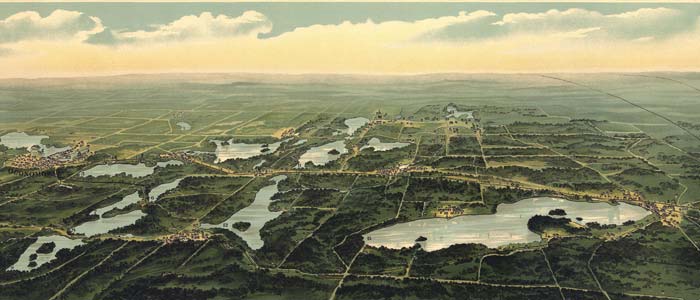 Marr and Richards' birdseye map of Waukesha, Wisconsin in 1890. Birdseye view of Waukesha, Wisconsin Date: 1890 Author: Marr and Richards Dwnld: Full Size (7.4mb) Print Availability: See our Prints Page for more details pff This map isn't part of any series, but we have other Featured maps that you might want to check out. Marr and Richards' birdseye map of Waukesha, Wisconsin [gmap] in 1890. For more maps and images...
the BIG Map Blog - Interesting maps, historical maps, BIG maps.
firehose and -1 others like this

26 Nov 15:56


River Otter Delivers Her Second Pup at Oregon Zoo
by OnlyMrGodKnowsWhy
firehoseautoreshare
meanwhile, in Portland
Tilly, a North American River Otter at the Oregon Zoo, gave birth to a pup on November 8 —her second this year. The new arrival weighed just shy of 5 ounces (28.3 g) at birth and has nearly tripled that thanks to mom’s naturally high-fat milk.
“We’re pretty sure this pup’s a male,” said Julie Christie, the zoo’s senior North America keeper. “But Tilly is very protective, so we can’t be positive until our vets conduct a more thorough exam.”
Tilly and her pup are currently in a private maternity den, and it will be another month or two before visitors can see them in their Cascade Stream and Pond habitat. Young River Otters usually open their eyes after three to six weeks, and begin walking at about five weeks.
“Young River Otters are very dependent on their moms, and Tilly has been very nurturing,” said Christie. “She did a great job with her first pup, Mo, earlier this year. She raised him up from this tiny, helpless creature into the sleek, agile, full-grown otter he is today. We’re confident Tilly will be a great mom to her new pup as well.”
Photo credits: Oregon Zoo
Surprisingly, swimming does not come naturally to River Otters; pups must be taught to swim by their moms. Earlier this year, this video of Tilly teaching Mo to swim drew more than half a million views on the zoo’s YouTube channel.
Take a peek behind the scenes as the newborn pup is weighed:
Keepers have yet to decide on a name for the new pup, though it is likely he will be named after a local river or waterway. (Mo is short for Molalla, after the Molalla River.)
North American River Otters typically give birth from late winter to spring, but Tilly seems to be on her own schedule, keepers say. The breeding season for River Otters is December through April, and actual gestation only lasts a couple of months. Unlike their European cousins however, North American River Otters usually delay implantation so that the time between conception and birth can stretch to as much as a year. That hasn’t been the case with Tilly.
Christie said it is also unusual — though not unheard of — for an otter to give birth to a single pup, as Tilly has now done twice. Litters usually consist of two or three pups, though the range is anywhere from one to six. Family groups typically consist of an adult female otter and her pups, with males moving away once they reach adulthood.
Since both Tilly and the pup’s father, B.C., were born in the wild, they and their offspring are considered genetically important for the breeding otter population in North American zoos. Both parents are rescued animals who had a rough start to life.
Tilly, named after the Tillamook River, was found orphaned near Johnson Creek in 2009. She was about four months old, had been wounded by an animal attack and was seriously malnourished. Once her health had stabilized, Tilly came to the Oregon Zoo in a transfer facilitated by the Oregon Department of Fish and Wildlife, which oversees the species’ protection.
The pup’s father, B.C. (short for Buttercup), was found orphaned near Star City, Ark., also in 2009. He was initially taken in by the Little Rock Zoo, but transferred to Oregon the following year as a companion for Tilly. The two otters hit it off quickly and have been playful visitor favorites ever since.
Now that the threat from fur trappers has declined, North American River Otters are once again relatively abundant in healthy river systems of the Pacific Northwest and the lakes and tributaries that feed them. Good populations exist in suitable habitat in northeast and southeast Oregon, but they are scarce in heavily settled areas, especially if waterways are compromised. Because of habitat destruction and water pollution, River Otters are considered rare outside the Pacific Northwest.
Metro, the regional government that manages the Oregon Zoo, has preserved and restored more than 90 miles of river and stream banks in the region through its voter-supported natural area programs. By protecting water quality and habitat, these programs are helping to provide the healthy ecosystems needed for otters, fish and other wildlife to thrive. River Otters are frequently observed in Metro region waterways.
Russian Sledges, firehose and -1 others like this
26 Nov 15:52
jellifysh: lifehack: treat service workers like human beings Oh God yes.
firehose likes this
26 Nov 15:51
Go to youtube.com and do a search for "doge meme"
by OnlyMrGodKnowsWhy
firehosebut don't put it in quotes
TW: Comic Sans
@jhw
Adam Victor Brandizzi and -1 others like this
26 Nov 15:50


This exquisite fossil of a baby dino is absolutely heartbreaking
by George Dvorsky

Paleontologists working in Alberta have unearthed a nearly complete fossilized skeleton of a tiny rhinoceros-like dinosaur. The little guy was only about 3-years-old when it died — and its pristine condition is providing scientists with important clues as to how it met such an untimely death.
|
|
firehose likes this
26 Nov 15:39


Pope Francis: “We can no longer trust in the unseen forces and the invisible hand of the market”
by Zachary M. Seward
firehose'Just as the commandment “Thou shalt not kill” sets a clear limit in order to safeguard the value of human life, today we also have to say “thou shalt not” to an economy of exclusion and inequality. Such an economy kills.
...
The poor and the poorer peoples are accused of violence, yet without equal opportunities the different forms of aggression and conflict will find a fertile terrain for growth and eventually explode. When a society – whether local, national or global – is willing to leave a part of itself on the fringes, no political programmes or resources spent on law enforcement or surveillance systems can indefinitely guarantee tranquility. This is not the case simply because inequality provokes a violent reaction from those excluded from the system, but because the socioeconomic system is unjust at its root. Just as goodness tends to spread, the toleration of evil, which is injustice, tends to expand its baneful influence and quietly to undermine any political and social system, no matter how solid it may appear.
...
Economy, as the very word indicates, should be the art of achieving a fitting management of our common home, which is the world as a whole. Each meaningful economic decision made in one part of the world has repercussions everywhere else; consequently, no government can act without regard for shared responsibility.Indeed, it is becoming increasingly difficult to find local solutions for enormous global problems which overwhelm local politics with difficulties to resolve. If we really want to achieve a healthy world economy, what is needed at this juncture of history is a more efficient way of interacting which, with due regard for the sovereignty of each nation, ensures the economic well-being of all countries, not just of a few.'
Pope Francis has issued his first apostolic exhortation (a lower-ranking document than an encyclical), entitled Evangelii Gaudium—an 84-page document that serves, in a sense, as the official platform of his papacy. You can read the whole thing in English here.
The exhortation covers a lot of ground, but we honed in on the pope’s critique of capitalism, a common theme of the Catholic Church. “How can it be that it is not a news item when an elderly homeless person dies of exposure, but it is news when the stock market loses two points?” Francis wrote. Below are relevant excerpts.
No to an economy of exclusion
53. Just as the commandment “Thou shalt not kill” sets a clear limit in order to safeguard the value of human life, today we also have to say “thou shalt not” to an economy of exclusion and inequality. Such an economy kills. How can it be that it is not a news item when an elderly homeless person dies of exposure, but it is news when the stock market loses two points? This is a case of exclusion. Can we continue to stand by when food is thrown away while people are starving? This is a case of inequality. Today everything comes under the laws of competition and the survival of the fittest, where the powerful feed upon the powerless. As a consequence, masses of people find themselves excluded and marginalized: without work, without possibilities, without any means of escape.
Human beings are themselves considered consumer goods to be used and then discarded. We have created a “disposable” culture which is now spreading. It is no longer simply about exploitation and oppression, but something new. Exclusion ultimately has to do with what it means to be a part of the society in which we live; those excluded are no longer society’s underside or its fringes or its disenfranchised – they are no longer even a part of it. The excluded are not the “exploited” but the outcast, the “leftovers”.
54. In this context, some people continue to defend trickle-down theories which assume that economic growth, encouraged by a free market, will inevitably succeed in bringing about greater justice and inclusiveness in the world. This opinion, which has never been confirmed by the facts, expresses a crude and naïve trust in the goodness of those wielding economic power and in the sacralized workings of the prevailing economic system. Meanwhile, the excluded are still waiting. To sustain a lifestyle which excludes others, or to sustain enthusiasm for that selfish ideal, a globalization of indifference has developed. Almost without being aware of it, we end up being incapable of feeling compassion at the outcry of the poor, weeping for other people’s pain, and feeling a need to help them, as though all this were someone else’s responsibility and not our own. The culture of prosperity deadens us; we are thrilled if the market offers us something new to purchase; and in the meantime all those lives stunted for lack of opportunity seem a mere spectacle; they fail to move us.
No to the new idolatry of money
55. One cause of this situation is found in our relationship with money, since we calmly accept its dominion over ourselves and our societies. The current financial crisis can make us overlook the fact that it originated in a profound human crisis: the denial of the primacy of the human person! We have created new idols. The worship of the ancient golden calf (cf. Ex 32:1-35) has returned in a new and ruthless guise in the idolatry of money and the dictatorship of an impersonal economy lacking a truly human purpose. The worldwide crisis affecting finance and the economy lays bare their imbalances and, above all, their lack of real concern for human beings; man is reduced to one of his needs alone: consumption.
56. While the earnings of a minority are growing exponentially, so too is the gap separating the majority from the prosperity enjoyed by those happy few. This imbalance is the result of ideologies which defend the absolute autonomy of the marketplace and financial speculation. Consequently, they reject the right of states, charged with vigilance for the common good, to exercise any form of control. A new tyranny is thus born, invisible and often virtual, which unilaterally and relentlessly imposes its own laws and rules. Debt and the accumulation of interest also make it difficult for countries to realize the potential of their own economies and keep citizens from enjoying their real purchasing power. To all this we can add widespread corruption and self-serving tax evasion, which have taken on worldwide dimensions. The thirst for power and possessions knows no limits. In this system, which tends to devour everything which stands in the way of increased profits, whatever is fragile, like the environment, is defenseless before the interests of a deified market, which become the only rule.
No to a financial system which rules rather than serves
57. Behind this attitude lurks a rejection of ethics and a rejection of God. Ethics has come to be viewed with a certain scornful derision. It is seen as counterproductive, too human, because it makes money and power relative. It is felt to be a threat, since it condemns the manipulation and debasement of the person. In effect, ethics leads to a God who calls for a committed response which is outside of the categories of the marketplace. When these latter are absolutized, God can only be seen as uncontrollable, unmanageable, even dangerous, since he calls human beings to their full realization and to freedom from all forms of enslavement. Ethics – a non-ideological ethics – would make it possible to bring about balance and a more humane social order. With this in mind, I encourage financial experts and political leaders to ponder the words of one of the sages of antiquity: “Not to share one’s wealth with the poor is to steal from them and to take away their livelihood. It is not our own goods which we hold, but theirs”.
58. A financial reform open to such ethical considerations would require a vigorous change of approach on the part of political leaders. I urge them to face this challenge with determination and an eye to the future, while not ignoring, of course, the specifics of each case. Money must serve, not rule! The Pope loves everyone, rich and poor alike, but he is obliged in the name of Christ to remind all that the rich must help, respect and promote the poor. I exhort you to generous solidarity and a return of economics and finance to an ethical approach which favours human beings.
No to the inequality which spawns violence
59. Today in many places we hear a call for greater security. But until exclusion and inequality in society and between peoples is reversed, it will be impossible to eliminate violence. The poor and the poorer peoples are accused of violence, yet without equal opportunities the different forms of aggression and conflict will find a fertile terrain for growth and eventually explode. When a society – whether local, national or global – is willing to leave a part of itself on the fringes, no political programmes or resources spent on law enforcement or surveillance systems can indefinitely guarantee tranquility. This is not the case simply because inequality provokes a violent reaction from those excluded from the system, but because the socioeconomic system is unjust at its root. Just as goodness tends to spread, the toleration of evil, which is injustice, tends to expand its baneful influence and quietly to undermine any political and social system, no matter how solid it may appear. If every action has its consequences, an evil embedded in the structures of a society has a constant potential for disintegration and death. It is evil crystallized in unjust social structures, which cannot be the basis of hope for a better future. We are far from the so-called “end of history”, since the conditions for a sustainable and peaceful development have not yet been adequately articulated and realized.
60. Today’s economic mechanisms promote inordinate consumption, yet it is evident that unbridled consumerism combined with inequality proves doubly damaging to the social fabric. Inequality eventually engenders a violence which recourse to arms cannot and never will be able to resolve. This serves only to offer false hopes to those clamouring for heightened security, even though nowadays we know that weapons and violence, rather than providing solutions, create new and more serious conflicts. Some simply content themselves with blaming the poor and the poorer countries themselves for their troubles; indulging in unwarranted generalizations, they claim that the solution is an “education” that would tranquilize them, making them tame and harmless. All this becomes even more exasperating for the marginalized in the light of the widespread and deeply rooted corruption found in many countries – in their governments, businesses and institutions – whatever the political ideology of their leaders.
[...]
The economy and the distribution of income
202. The need to resolve the structural causes of poverty cannot be delayed, not only for the pragmatic reason of its urgency for the good order of society, but because society needs to be cured of a sickness which is weakening and frustrating it, and which can only lead to new crises. Welfare projects, which meet certain urgent needs, should be considered merely temporary responses. As long as the problems of the poor are not radically resolved by rejecting the absolute autonomy of markets and financial speculation and by attacking the structural causes of inequality,[173]no solution will be found for the world’s problems or, for that matter, to any problems. Inequality is the root of social ills.
203. The dignity of each human person and the pursuit of the common good are concerns which ought to shape all economic policies. At times, however, they seem to be a mere addendum imported from without in order to fill out a political discourse lacking in perspectives or plans for true and integral development. How many words prove irksome to this system! It is irksome when the question of ethics is raised, when global solidarity is invoked, when the distribution of goods is mentioned, when reference in made to protecting labour and defending the dignity of the powerless, when allusion is made to a God who demands a commitment to justice. At other times these issues are exploited by a rhetoric which cheapens them. Casual indifference in the face of such questions empties our lives and our words of all meaning. Business is a vocation, and a noble vocation, provided that those engaged in it see themselves challenged by a greater meaning in life; this will enable them truly to serve the common good by striving to increase the goods of this world and to make them more accessible to all.
204. We can no longer trust in the unseen forces and the invisible hand of the market. Growth in justice requires more than economic growth, while presupposing such growth: it requires decisions, programmes, mechanisms and processes specifically geared to a better distribution of income, the creation of sources of employment and an integral promotion of the poor which goes beyond a simple welfare mentality. I am far from proposing an irresponsible populism, but the economy can no longer turn to remedies that are a new poison, such as attempting to increase profits by reducing the work force and thereby adding to the ranks of the excluded.
205. I ask God to give us more politicians capable of sincere and effective dialogue aimed at healing the deepest roots – and not simply the appearances – of the evils in our world! Politics, though often denigrated, remains a lofty vocation and one of the highest forms of charity, inasmuch as it seeks the common good.[174] We need to be convinced that charity “is the principle not only of micro-relationships (with friends, with family members or within small groups) but also of macro-relationships (social, economic and political ones)”.[175] I beg the Lord to grant us more politicians who are genuinely disturbed by the state of society, the people, the lives of the poor! It is vital that government leaders and financial leaders take heed and broaden their horizons, working to ensure that all citizens have dignified work, education and healthcare. Why not turn to God and ask him to inspire their plans? I am firmly convinced that openness to the transcendent can bring about a new political and economic mindset which would help to break down the wall of separation between the economy and the common good of society.
206. Economy, as the very word indicates, should be the art of achieving a fitting management of our common home, which is the world as a whole. Each meaningful economic decision made in one part of the world has repercussions everywhere else; consequently, no government can act without regard for shared responsibility.Indeed, it is becoming increasingly difficult to find local solutions for enormous global problems which overwhelm local politics with difficulties to resolve. If we really want to achieve a healthy world economy, what is needed at this juncture of history is a more efficient way of interacting which, with due regard for the sovereignty of each nation, ensures the economic well-being of all countries, not just of a few.
207. Any Church community, if it thinks it can comfortably go its own way without creative concern and effective cooperation in helping the poor to live with dignity and reaching out to everyone, will also risk breaking down, however much it may talk about social issues or criticize governments. It will easily drift into a spiritual worldliness camouflaged by religious practices, unproductive meetings and empty talk.
208. If anyone feels offended by my words, I would respond that I speak them with affection and with the best of intentions, quite apart from any personal interest or political ideology. My words are not those of a foe or an opponent. I am interested only in helping those who are in thrall to an individualistic, indifferent and self-centred mentality to be freed from those unworthy chains and to attain a way of living and thinking which is more humane, noble and fruitful, and which will bring dignity to their presence on this earth.
filhodoraio, Tertiarymatt likes this
26 Nov 15:26
Making Cocktails with “Maximum Flavor”
by Camper English
firehose"The Fall Cobbler paired savory sherry with apple cider and housemade toasted allspice liqueur. All three are strong ingredients, yet a light touch and plenty of crushed ice kept the flavors from becoming overwhelming.
The Fall Ol'fashion became my instant favorite. Here, the smoked bourbon (smoked with applewood chips while resting over an ice bath for 14-15 minutes) were cut by a toasted cinnamon tincture (vacuum-infused for one week) and intensified with bourbon barrel-aged Maple Syrup."
Writer Kevin Liu attended the Maximum Flavor event in Richmond, VA. Here he reports on the food and drink amplified with a touch of science. Crafting "Maximum Flavor" into Food and Cocktails at Heritage Restaurant, Richmond, VA Kevin Liu likes to drink science and study cocktails. Wait, that's backward. He's the author of Craft Cocktails at Home and his writing has also appeared on Serious Eats, The SweetHome, and Popular Science. I recently had the chance to attend a special dinner put on as a collaboration between Chef Joe Sparatta of Heritage Restaurant and Alex Talbot, author of the just-released Maximum Flavor. Talbot is best known for the Ideas in Food, the innovative culinary blog he runs with wife Aki Kamozawa. The headline of the evening might have been the food, but I paid careful attention to the cocktails as well. Bar manager and owner Mattias Hagglund teamed up with Thomas "T" Leggett of The Roosevelt to offer up six custom drinks designed to suit any palette and to perfectly complement the five courses of the dinner. Leggett and Hagglund, respectively Whereas the trend in modernist cooking tends toward fantastic presentations and unexpected textures, the Ideas in Food team focuses...
[Visit Alcademics.com for the full post.]
[Visit Alcademics.com for the full post.]
26 Nov 15:25
NewsDaily: US regulators to propose use of cell phones in flight
firehoseaughhhhhh never ever fly
NewsDaily: US regulators to propose use of cell phones in flight:
US telecommunications regulators will consider next month allowing people to use cell phones and other broadband services during flights, officials said Thursday.The proposal would allow people to make phone calls and surf the Internet on their phones, tablets and computers when aircraft are above 10,000 feet (3,048 meters).But bans would still be in place during takeoff and landing.Federal Communications Commission Chairman Tom Wheeler said the agency had just circulated a proposal on allowing…
This is such a bad idea. That loud guy on his phone next to you at Starbucks? He’s now in the seat next to you.
For three or four or six or eight hours.
26 Nov 15:23
Silicon Valley Isn't a Meritocracy — And It's Dangerous to Hero-Worship Entrepreneurs
by Alice Marwick
firehosevia Osiasjota
'Sharon Vosmek, CEO of the nonprofit Astia that helps fund women entrepreneurs, identified “systematic and hidden biases” in technology funding:
"VCs hold clear stereotypes of successful CEOs (they call it pattern recognition, but in other industries they call it profiling or stereotyping.) John Doerr publicly stated that his most successful investments — and the no-brainer pattern for future investments — were in founders who were white, male, under 30, nerds, with no social life who dropped out of Harvard or Stanford."
This formula certainly filters out enormous numbers of people who may be equally skilled.
The myth of meritocracy also ignores the level of privilege that participation in the tech scene involves, as i09 editor Annalee Newitz points out:
"Let’s say that most people can have access to computers sometimes but only some people can have access to computers all the time, and then an even smaller group can have access to the net while they’re just out wandering around doing Twitter, right? They’re like, I have my phone and I can say things while I’m walking around where somebody else has to actually go home, to their one computer that they own. So the more that you want to participate in this network of wealth and entrepreneurialism, the more stuff you have to have to participate in it. So there [are] these levels of participation that are enabled by either being wealthier or having the free time to participate."
Certainly, a level of material wealth is necessary to participate in San Francisco tech culture. Very few pointed to the elephant in the room of assumed wealth: “People behave as if we all make kind of the same.” To forge the type of social connections necessary to move into the upper echelons of the tech scene requires being able to take part in group activities, travel to conferences, and work on personal projects. This requires middle- to upper-class wealth, which filters out most people.
The result of this mythology is that it denies the role of personal connections, wealth, background, gender, race, or education in an individual’s success. If, for example, women (or people of color, or gay people) are not getting venture-capital funding at the same rate as men, the myth maintains, it is due to their lack of ability rather than institutional sexism. It also justifies immense wealth as the worthy spoils of the smartest and best.
Meritocracy and entrepreneurialism reinforce a closed system of privilege. It also reveals the threadbare nature of digital exceptionalism, which incorporates social consciousness and intellectual discussion and positions tech as a solution to an array of difficult problems.


|
|
firehose likes this
26 Nov 15:18
Xmon by harebrained - $11
by layne@teefury.com (Layne Hunter)
firehosevia Osiasjota
Mens: Royal Blue Womens: Royal Blue


firehose and -1 others like this