Shared posts

09 Apr 23:31

Newswire: It looks like Joan Jett may front Nirvana at the Rock And Roll Hall Of Fame

by Marah Eakin

The hottest and/or saddest speculation in music this week has been centered on a potential Nirvana performance at Thursday’s Rock And Roll Hall Of Fame induction—and namely, on who would front the group in Kurt Cobain’s absence. And if a picture posted to the Foo Fighters Instagram account is any indication, it might be Joan Jett. The photo posted yesterday shows Jett’s Melody Maker guitar alongside Krist Novoselic’s bass, Pat Smear’s guitar, and Dave Grohl’s drums in some sort of recording or rehearsal studio. While a mere photo doesn’t mean definitively that Jett is going to take over for Cobain, it seems like a pretty good sign that some sort of collaboration is in the works. And given the timing, it makes sense to assume it’s Rock Hall-related. At least it’s Joan Jett and not, say, Adam Levine.


09 Apr 23:30

T-Mobile announces $40 'Simple Starter' plan with unlimited talk, text, and 500MB of data

by Chris Welch

T-Mobile CEO John Legere has promised that a number of new Uncarrier initiatives will be revealed this week, and the first of those is a $40 "Smart Starter" plan. Set to launch on April 12th, Simple Starter bundles unlimited talk, unlimited text, and 500MB of wireless LTE data at a monthly rate that's $10 cheaper than T-Mobile's baseline Simple Choice plan. It also qualifies for T-Mobile's promotion where the carrier will cover your early termination fee from a rival provider so long as you trade in your current smartphone.

And T-Mobile is quick to point out that customers won't be throttled or dealt unexpected overage charges in the event they exceed 500MB. Instead, they'll simply be prompted to purchase a temporary data pass — covering either 24 hours or a week — or switch over to a regular Simple Choice plan.

Moving up to Simple Choice carries some legitimate benefits; the Simple Starter plan doesn't include any of the international coverage perks that T-Mobile has rolled out in recent months. Still, Legere thinks it's a better choice for many customers compared to the "bait-and-switch" services they'd find at AT&T, Verizon, and Sprint. As we've come to expect, Legere didn't mince words when discussing the competition. "It’s been fascinating  to watch the big, fat, old-guard carriers stumble as they try to respond and slow the change we are driving into this industry," he said in a statement. "I don’t know whether to laugh or cringe as they try to present themselves as anything other than the merciless greedy utilities they are." T-Mobile will unveil more news that stays true to its Uncarrier credo in the coming days, Legere promised. "We aren't done. We will never be done. We’ve hardly gotten started."

09 Apr 23:28

Republicans Get .gop Domain

Republicans hope they've made a big leap toward closing the digital gap against Democrats, after getting their own ".gop" Internet address ending — a change they say will improve their brand and provide members with “a street address in the Republican neighborhood.”
09 Apr 23:27

Latest evidence the party is over in China? Chinese are drinking less wine

by Gwynn Guilford
DATE IMPORTED:June 09, 2013Police officers check bottles of confiscated fake wines before destroying them in Xi'an, Shaanxi province January 4, 2012. Liquor stores, restaurants and supermarkets in China, the world's most populous nation and fifth-largest wine consumer, wage a constant battle against fake wines. The amount of knock-offs on the market may increase as Beijing investigates wine imports from the European Union, threatening anti-dumping tariffs or import curbs. Picture taken January 4, 2012. REUTERS/Stringe

These austerity-stricken years have been tough on the world’s winemakers. In the oenophile hubs of France and Italy, consumption of red wine has fallen 18% and 5.8%, respectively, since 2007.

That’s why China’s emergence as a wine-buying powerhouse has been a godsend for the industry. For each year of the last decade, Chinese wine consumption by volume surged roughly 25%, according to Vinexpo, a wine intelligence research company. (Its “China” data includes Hong Kong.)

Except, that is, last year. Chinese wine consumption dropped 2.2% annually in 2013, says Vinexpo. The main culprits? Importers cite president Xi Jinping’s anti-graft crackdown, says Vinexpo’s Anne Cusson, as well the slowing of the Chinese economy.

The crackdown theory seems to makes sense; after all, it’s done a number on the sales of Swiss watches and other fancy things. But Xi’s campaign is also the authoritarian regime equivalent of the weather phenomenon El Niño—a conveniently abstract catchall to blame for everything from weakening GDP to ebbing inflation (paywall). And a closer look at the data suggests Xi’s crackdown probably wasn’t to blame for China’s wine decline.

In 2013, Chinese consumption of domestic wines fell 4.9% from the previous year. Vinexpo said that import volumes were unaffected by that consumption slump, though it offered no data. But since imported wines make up 18.8% of the 155.4 million cases China consumed in 2013, wine imports should actually have increased in 2013—and by a healthy 12.7% to boot.

China-s-wine-consumption-hit-by-Xi-Jinping-s-luxury-crackdown-2012-2013_chartbuilder

That’s still a drop. But if the ban on gift-giving and fancy banquets is behind it, a big dent in Bordeaux imports would be more likely than falling Great Wall sales. That’s because, as symbols of conspicuous consumption, domestic wines don’t pass muster.

That’s not for want of trying. China is now the fifth-biggest producer on the planet, ahead of Australia, Chile ,and South Africa. The biggest Chinese winemaker is China Great Wall Wine Company, a state-owned firm that’s been producing ganhong, or “dry red,” since the early 1980s (for various reasons, white wine’s unpopular.) The government made it the official wine of the Beijing Olympics, serves it to foreign presidents, and christened Great Wall and it biggest competitor, Dynasty Wines, state-recognized “famous brands.

China's now in the top 5.​

But though government taste tests find domestic brands equal in quality (link in Chinese) to imported vintages, others rank them just below “very cheap” French vin de pays. And since the overwhelming majority of these domestic wines sell for between 20 yuan and 80 yuan ($3-$12)—and import duties are around 15%—importers tend to market only premium vintages, with high-end bottles ranging from 255 yuan to 1,400 yuan.

That’s why China’s increasingly cosmopolitan consumers would spring for foreign brands, particularly French wines, when they want to impress potential business partners—and why you’d expect imported wines to have taken a bigger thrashing from the anti-graft crackdown than domestic sales.

But if Quartz’s calculation of Vinexpo data is right (we asked Vinexpo about it and haven’t heard back), Chinese consumers drank 362 million more bottles of fancy foreign wine last year than in 2012, while domestic sales volumes fell. That finding seems to square with the South China Morning Post’s report (paywall) that Chinese consumers now trail only Americans as the second-most willing to spend $10-plus per bottle.

True, the anti-graft crackdown probably contributed something to the drop in annual growth of Chinese wine consumption below its previous 25% rate. But the fact that domestic wine sales took a much bigger hit suggests either that Chinese wines have made huge strides in boosting their luxury bona fides—or that there’s a larger consumption trend at play.

09 Apr 23:27

Chinese citizens need a passport to visit parts of their own country. Here’s why…

by Joey White

CGP Grey has a knack for making complicated geopolitical situations easy for the rest of us to understand. If you’ve ever wondered why Hong Kong had its own Olympic team separate from China in 2008 or why a Chinese citizen needs a passport to visit both Macau and Hong Kong, your answers are here…

(via Laughing Squid)

09 Apr 23:25

Because Björk

09 Apr 23:25

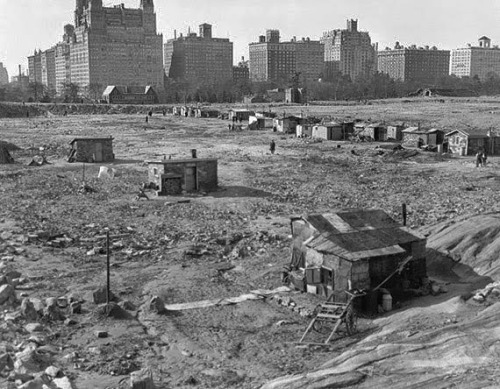
Central Park, 1930

09 Apr 23:25

Hold me, Giant Carrot Body Pillow

09 Apr 23:24

Body swap appearances in media

09 Apr 23:18

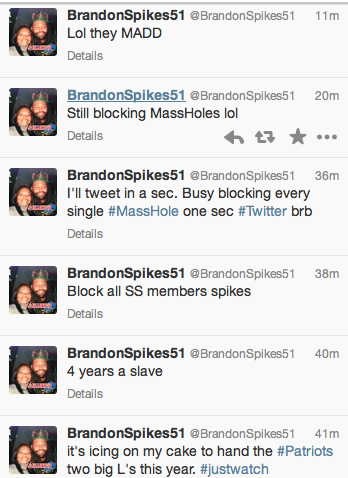
Brandon Spikes hurls insults at Patriots and fans

by James Dator

Here's one linebacker with a lot of pent up aggression against his former team.

Spikes_medium

Brandon Spikes got to experience the fabled "Patriot way" over four seasons and it sure doesn't seem like it had a good effect on him. On Wednesday he took to Twitter to spit HOT FIRE at his former organization, while throwing in a healthy dose of "MassHoles" at fans to finish his insult cake.

There's probably a lot behind the scenes we don't know, but Spike did Tweet this earlier. It may be relevant.

This me !! 👌👌👌👌👌 pic.twitter.com/liwM4XRhwE

— BrandonSpikes51 (@BrandonSpikes51) April 9, 2014

09 Apr 23:17

The female gaze: how being watched affects your morality in adventure games

by Alexa Ray Corriea

Telltale's The Wolf Among Us makes me nervous. Not because, as Bigby Wolf, I'm under scrutiny from my fellow Fables and constantly tensed for a fight. I just don't want to piss off the girl I like.

Bigby charges his way through The Wolf Among Us, busting into taverns and apartments like a wrecking ball of angst and determination. Another character describes him as having "a hot head and a big heart," and she notes that this is a rather dangerous combination.

Other characters tell him to man up and fix things — or stop getting involved and go away — in varying degrees, and they may change their mind as the story progresses. Bigby juggles these conflicts alongside a potential romance with a pragmatic and willful version of Snow White that could very easily fail.

At the rate I'm going, failure is likely.

Enhanced interrogation

I'm interrogating someone who may have murdered a girl. I have three options: gently prod him for details, threaten him, or break his nose. I've been trying to coax information out of him for ten minutes now as the dialogue trees repeatedly cycle back to this decision. The controller is warm in my hands and my thumb nearly slides off the button; my palms are sweating.

I go with threatening him and this doesn't work. We're getting nowhere. The people in the room with me, Snow White among them, are getting anxious. Her brow is furrowed and she looks sad, disappointed. Disappointed in me? The man I am interrogating won't answer. I'm losing him and the confidence of my audience. I have no choice. I have to beat it out of him.

At the rate I'm going, failure is likely

I clock him in the jaw and almost immediately Snow is reprimanding me, scowling that pretty scowl that means I done fucked up. But then the subject relents, I get the information I need, and I proceed with my case — at the cost of Snow's anger. She glares at me with those perfect eyebrows of hers, turns and saunters away, not even remotely pleased I have found a lead.

This is hard!

Telltale has created this dynamic before. In The Walking Dead, players control Lee as he struggles to keep young Clementine safe in the ever-worsening zombie apocalypse. As we play, we are consciously aware of this orphaned little girl, dependent on us for her well being. But in order to survive we sometimes have to be cruel to others, and these actions don't pass her notice. "Clementine will remember" was a declaration that often felt like a threat.

Snowwolfamongus

Telltale's games are a balancing act — we view ourselves, the character we are controlling, through the eyes of the nearest female character. In The Walking Dead we want a little girl to trust us, and in The Wolf Among Us we want a woman we admire to love us. Our actions are dictated by the female character we are trying to protect, even if she doesn't always need it.

Bigby is offered increasingly difficult choices that place his humanity on the line as the episodes continue. How much of himself, of his human self, will Bigby have to give up to earn respect from his fellow Fables? To solve the crimes and set things straight? And as we struggle with Bigby to retain his humanity despite dealing with some truly despicable characters, we measure his success in keeping it against Snow's reactions. She is our moral compass, our barometer for how much of Bigby is left. We see ourselves through her eyes.

I play this game like an anxious new boyfriend in a freshly-minted relationship, horrified that any move at an time could disappoint Snow. My real-life significant other tells me constantly that he's afraid of screwing up and I usually laugh it off — but now I get it, and it sucks. I overthink every move, every choice, and more often than not I miss my window of opportunity to do something and end up selecting the silence option by default.

If I say nothing, she won't get mad. I don't agree with the actions she wants to take, but if I try and make it work out for everyone, maybe she will be okay with my decision. Nope, as it turns out, that's not good enough for her. She's scowling. She's yelling at me!

Broken people in a pretend world

This relationship elevates The Wolf Among Us past just being a game with dialogue trees that change the way your story unfolds. When a non-playable character is this invested in you, and vice-versa, it's hard not to care about them. And if we really care about what they think of us, it will affect how we act within the game. We become attached and begin calculating our every step, wanting this person's approval and praise. A smile from them begins to feel like unlocking an achievement.

I can't do this. Not while she's watching

In my own game, Snow fluctuates between being glad I'm there with her to showering me with disdain. I give her reasons to adore me and reasons to loathe me all within the span of 20 minutes. I am attempting to restore rights to Fabletown at the cost of her affection, business and pleasure all wrapped up into one anxiety-inducing ball. This isn't a role-playing game where enough experience points placed in our relationship will pay off, it feels much closer to a real relationship between two fully realized characters. The world around us constantly makes me choose between what will get results and what will keep Snow happy with me.

I have a hundred other Fables to worry about as well. But that smile of hers makes my heart slide down my ribcage like butter on hot toast and I want more than anything to help her nurture this fractured community back to health. And then suddenly I explode and someone pays.

In one scene, I have the choice to kill an enemy plaguing my world with grief or beating him within an inch of his life, letting him go and praying he doesn't return. Snow is watching me, over there, with her hands over her mouth. I can't do this. Not while she's watching. I just want her to like me. I'm not all bad...

Or am I, and this is all futile? Telltale has crafted situations that lead neither one way nor the other. I care about Snow, she cares about me, I think, and it should be clear that the game will never offer an ending where everyone is safe and happy. It's not about being a good person, it's about living with the gaze of someone you care about.

The views expressed in this article are those of the author and do not necessarily represent the views of, and should not be attributed to, Polygon as an organization.

09 Apr 23:08

Braves celebrate opening day by burning the American flag

by James Dator

This is the second worst thing than can happen to a pyrotechnics operator after losing a hand.

If you happened to be at Turner Field on Tuesday night you were treated to a good old fashioned flag burning, courtesy of the Atlanta Braves.

A mishap with the team's pyrotechnics caused the flag to ignite when they were launched from the "Braves Vision" screen. The Braves are said to be adjusting their fireworks so this won't happen again and will install a new flag.

The season is off to a great start!

h/t Deadspin

09 Apr 20:22

Snow can be cruel, Snow in Tokyo

by djempirical

20140208_175132

It’s snowed in Tokyo.

It’s snowed a lot in Tokyo.

It’s snowed a lot in Tokyo for two  weekends in a row.

It sucked.

Tokyo is located in a sub-tropical climate, which is defined as a climate with “hot and humid summers and cool winters where cold is seldom seen.” So basically, the fact that the city has gotten, like, 30+ centimeters of snow in two weeks is some rich motherfucking bullshit. (Although, despite my anxiety and paranoia about climate change, such storms are not entirely unheard of, and should only become something to fret about if they become the new normal here.)

20140208_170508

Tokyo is ill-suited to deal with winter storms, which makes sense. The city typically only gets about 11 cm of snow a year, which is a third of what it’s gotten in a month this year. With such a deluge of icy hell, I’m surprised it hasn’t just devolved into widespread anarchy on the street. Actually, maybe it would if people knew how to walk in the snow here.

You see, when I say that Tokyo is ill-suited to deal with extreme winter weather, I mean that in every way you could possibly imagine. I don’t just mean the city doesn’t own salt trucks or plows, I mean the people don’t own shovels or ice scrapers. They look at a substantial accumulation of snow the same way a small child reacts to seeing Santa for the first time – with a combination of awe, fear and confusion.

20140208_174541

On more than one occasion, I’ve seen a Tokyoite run on the snow only to slip and fall, and then be surprised at the fact that heavy snow is a little slippery. Of course, that’s nothing to the number of…let’s just say…innovative ways I’ve seen various people try to remove snow for the sidewalks in lieu of winter shovels. These include garden shovels, trowels, rakes, plywood boards, dustpans, indoor brooms, trashcan lids and (my personal favorite) spraying the sidewalk with water to make the snow go away.

I want you to think about that last one for a second.

20140216_203325

As bad as the snow was two weeks ago (something like a 40 year record) the storm we had last week was even worse. Although it didn’t snow as much, about halfway through the 12+ hour downpour, it slowly got warmer and the snow turned to sleet, and then rain. That meant that the roads and sidewalks were all completely covered with a thick, disgusting layer of icy, messy slushy sludgy hell.

And you know what’s worse than having to walk in a slushy mess? Having to work in a slushy mess while wearing a suit and dress shoes. The bottom of my street was basically one giant puddle, a freezing cold, ankle-deep puddle. I thought my feet were going to fall off by the time I made it to work. And, of course, nearly half of my clients cancelled because of the weather, so my insane commute was mostly for naught in the first place (at least I got paid).

Although these past two weeks have been hell on the roads, the sidewalks, and my poor feet, I will say that I am at least a little glad that I got to see it. Because Tokyo sure looks beautiful in the snow. And the beauty is made even more impressive by the number of incredible snow sculptures that the people of Tokyo made during both storms. For a people who don’t see snow a lot, they sure know how to make the most of it.

20140208_170647

I saw more snowmen the day after that first storm than I think I ever have in my entire life. Funnily, Japanese snowpeople are only two snowballs tall, as opposed to us westerners and our giant three snowball people. I don’t know the reasoning behind this, but it sure made them cuter.

20140210_205224

They weren’t always smaller though, this nearly went up to my neck, and since I’m about 2 meters (6’6″) that’s pretty damned impressive. But, Japan being Japan, most people here focused on making their snow creations as small and adorable as possible.

20140211_081015

I MEAN C’MON.

There were a few scary ones out there though…


20140216_075403

I’m glad I didn’t see that in the middle of the night.


20140215_222314

WHY DOES IT HAVE A CHICKEN IN ITS MOUTH IS IT GOING TO EAT ME NEXT?!

From now on, when people ask me “What’s the weirdest thing about Japan?” I’m just going to show them that picture and give no explanation.

Snow in Tokyo, when it happens it’s a mess, but at least it’s never boring.

Original Source

09 Apr 20:16

Masonic Register, Lithograph by Strobridge & Co., 1876


Masonic Register, Lithograph by Strobridge & Co., 1876

09 Apr 17:59

You've GOAT to be KIDDING!

firehose

via Christopher Lantz
meanwhile, in Oregon

09 Apr 17:58

caitmonster42: greasercreatures: All new Patron Saint candles...

firehose

via Matthew Koch


caitmonster42:

greasercreatures:

All new Patron Saint candles now available in my Etsy shop!
Only $6.99 each!

www.etsy.com/shop/GreaserCreatures

The Tom Waits one is fantastic.

09 Apr 17:28

Where The White Women At?

by Erik Henriksen
firehose

what

09 Apr 17:27

Programming lessons probably won't solve homelessness

by Cassandra Khaw
firehose

' “The first thing you should do before you start to live in a car is go read Walden by Thoreau, because living in a car isn’t just a way to save a ton of money on rent (which it is),” wrote one brave soul who spent three months in his car and then wrote a post entitled “Turning Living in a Car into a Lifehack.” “It’s a chance to live in a completely different way, and to be happy with a whole lot less.”

“The worst thing you can do is spend a lot of time around other homeless people,” wrote another. “There are several reasons, some psychological; but the big one is that, as bad off as you are, you’re probably well off by contrast to most of the others, and . . . things level.”
...
High-tech civilizing missions, like Patrick McConlogue’s adoption of Leo, rely on two common assumptions. The first is an unwavering belief in the virtues of self-help over just being helpful. The second is the idea that technology can solve almost anything. By this logic, the onus is on the homeless person to hack the system—to gain entry into polite society and adapt to its ways. Such a worldview cannot acknowledge that polite society may have played a large part in contributing to the homeless person’s plight. Nor does this philosophy hold that humans deserve homes. It’s worth noting that during the tenure of New York City mayor Michael Bloomberg—a data-crazy technocrat if there ever was one—homelessness shot up by 73 percent, according to the Coalition for the Homeless, in part because he tried to remove incentives for people to use public assistance and, instead of making it easier to find housing, made New Yorkers jump through hoops to secure a temporary and often crumbling roof over their heads.'

Since 2012, the American tech industry has demonstrated a strange and often controversial fascination with homelessness. A Seattle businessman, for example, was charging people $2,000 to see how homeless people live last October. In New York, a software engineer offered a homeless man a choice between $100 and daily, hour-long programming classes. At Dissent Magazine, Atossa Araxia Abrahamian discusses how these anecdotes "position homeless people as stand-ins for pre-societal savages" and why this can be a problem. The full story provides a measured takedown of Silicon Valley's "high-tech civilizing missions" and a reminder that teaching homeless people how to code doesn't liberate society from its responsibilities.

09 Apr 17:27

Democrat-backed gender pay gap bill fails on test vote - Fox News


Democrat-backed gender pay gap bill fails on test vote
Fox News
A Democrat-backed bill aimed at curbing paycheck discrimination against women failed to clear a key Senate hurdle on Wednesday, as Republicans blocked the measure amid concerns from business groups. The bill fell short on a 53-44 vote. It needed 60 to ...

and more »
09 Apr 17:27

House panel refers ex-IRS official to Justice Dept - Washington Post


House panel refers ex-IRS official to Justice Dept
Washington Post
WASHINGTON — The House Ways and Means Committee has voted to refer a former Internal Revenue Service official to the Justice Department for possible criminal prosecution in the agency's tea party controversy. Committee investigators say they have ...

and more »
09 Apr 17:26

So That's Why The Wall Decoration Fell Down

firehose

via Kellygo

birds,gifs,fight,Cats,fall

Submitted by: (via Bing)

Tagged: birds , gifs , fight , Cats , fall
09 Apr 17:08

The secret time-saving trick hidden inside every New York City taxicab

by Zachary M. Seward
firehose

LIFEHACK: LEARN TO USE PAYMENT SYSTEMS

Traffic we can't help you with.

Next time you’re riding in a New York City taxicab, try this hack: Even before reaching your destination, you can tap the fare on the television screen and swipe your credit card ahead of time. No need to conduct the transaction if you’re in a rush at the end of the ride.

It’s not quite Uber-level convenience, but it will save a little time and make you feel like a champion New Yorker. The feature, for some odd reason, is completely hidden. Here’s how it works.

1. At any point in the ride, tap the fare on screen

Tap Fare

Try to ignore the food on the cab’s floor.

2. Swipe your credit card

Swipe

It doesn’t say you can swipe your card, but you can.

3. Select a percentage tip

Tip

You can enter an amount instead of a percentage, if you must.

4. Say if you want a receipt

Receipt

5. Sit back, and enjoy the rest of your ride

Done

You can cancel the swipe before you arrive at your destination. At the end of the ride, you’ll simply be asked to confirm the fare and process the transaction.

Hat tip to Jon Steinbeck for revealing this magic.

09 Apr 16:36

Compatible Products from Other Publishers: [JBE Blog] Why I'm Having More Fun These Days

by Dale McCoy Jr (President, Jon Brazer Enterprises)
firehose

ooooooh shit

Originally Posted Here

Recently I commented that JBE is stepping away from developing for Pathfinder on a regular basis. Sure, we will be doing a Pathfinder release when we believe that there's a significant contribution to be made, but we are not going to release a Pathfinder product every two weeks just to keep our place in the market. But the single biggest reason I personally am stepping back from the game is because Pathfinder is no longer fun for me. I do this after I get home from the day job so this is what I do for fun. And when it is as enjoyable as the day job, I have to reevaluate what I am doing.

So most of my time lately has been involved in some 13th Age but mostly Traveller. JBE started out with Traveller and it is great to get back to the company's roots. But I am having far more fun these days then I have been for a long time with Pathfinder for one simple reason: I am devoting much of my Traveller design work these days to Foreven Worlds as an unofficial part of the Third Imperium setting. It is just SOOOOOO NIIIIIIICE to be able to have a Zhodani bad guy or a Vargr thief or to just say the The Third Imperium.

More than anything else, Jon Brazer Enterprises is known for the Book of the River Nations. Why did we call it the River Nations? Because we couldn't call it the River Kingdoms. We had to get as close as possible so that most people would figure that it was *nudge, nudge, wink, wink* the same place. But then we had to explain to others over and over again that we "cannot legally call it the River Kingdoms so this is as close as we could get," "are not lazy designers, are aware that it is really called the River Kingdoms but we can't call it that legally," "designed it this way on purpose so that you would know it would work in your game," and on and on. It really was a tiring, never ending battle of explaining that every product that had "River Nations" on the cover was not a mistake, not us being lazy or underhanded, or outright malicious before a person will consider looking at the release. Mind you, that is after the tiring effort of making sure there is not a single other reference to any other Pathfinder setting location is in the product to begin with.

This is not just limited to Pathfinder, mind you. We are experiencing the same issue with 13th Age. The idea of icons is OGL but the icons themselves are not. So I can't say, the High Druid. Instead I have to say the Great Druid. And again, we got called "lazy designers" for "messing up the name of the icon." As such, our releases with 13th Age have been limited.

Now, compare that with the Foreven license for Traveller. I can define the area all I want and make all the adventures in that section of space as I desire, calling a Vargr a Vargr instead of an "Uplifted Canine Alien" without getting in legal trouble. And no one has yet to call me a single name for doing so. Infact the two reviews for our first release have been glowing. The less glowing review, his chief complaint boils down to him wanting more because he really enjoyed what was there so much. Plus, setting development is just more enjoyable then system development. All of this translates to me having MUCH MORE FUN designing for this then just about anything else I have worked on for Pathfinder.

Take the Forgotten Realms Map for a moment (click on the link for a image). You see several continents with nothing defined on them and others with not everything defined. Even Faerun isn't fully detailed. It was first published in 1987 and is arguably the most developed RPG campaign setting in the world. Can anyone give me a single competent reason why a continent that has nothing defined on it to date cannot be opened up to other publishers on an unofficial basis? Or even just one country in the undefined parts of Faerun? Or take the Pathfinder Campaign Setting. Paizo didn't start defining the setting in a major way until 7 years ago when Rise of the Runelords was released. Even if you ignore all the D&D 4E Forgotten Realms material, that setting has 21 years of development to Pathfinder's 7. So if the Pathfinder Campaign Setting is still going strong 14 years from now (2028), will it be as defined as the Forgotten Realms is today? If you take a look at the FR map, that still leaves lots of room for Paizo to grow the Pathfinder CS if they reserve one country or even one continent for other publishers.

Now the real question would be: why on earth would a publisher want to open up part of their campaign setting, even on an unofficial basis, to other publishers? Easy answer is this: money. Lets say Paizo allowed other publishers to make material for the area just south of Geb. No country is defined there so odds are Paizo hasn't even considered planning a single product there. So it costs Paizo nothing to release if another publisher created an adventure path set there (we'll call it South of Geb to make life easy). Now compare that with someone playing in the Cross of Fire Adventure Path from LPJ Design (which I am looking forward to reading, btw). What does Paizo sell to a GM running in the two APs? Cross of Fire: more PFRPG hardcovers and that's it; South of Geb: same PFRPG hardcovers, Inner Sea Gods, if Paizo released a Geb campaign setting book, that would probably would be bought as well, plus a number of other campaign setting books/players guides to help the GM get a full understanding of the surrounding region and the organizations involved, plus some stand alone adventures of Paizo's incase the players go off the rails (since they take place in Paizo's world, they are easier to move to a different country then to a different setting). How about players? Cross of Fire: a few copies of the player focused hard covers (so no Bestiaries) that the player didn't already own and that's it. South of Geb: those same player focused hard covers plus Inner Sea Gods (possibly the full campaign setting as well), a players guide for the race the player is playing, another player's guide that covers the class, and several more. So for both players and GMs, Paizo sells more products to them.

If all of this sounds familiar, it is because it is the basic ideas behind the OGL to begin with. This, however, takes it to its next level. The campaign setting material is not invalidated because the group did not change settings. There's a reason why Wizards stopped supporting all their 2e campaign settings once they were bought by Wizards and went to 3e. If it had a Forgotten Realms label on it, gamers didn't feel it was useful in their Greyhawk game. So those gamers didn't buy it. So Wizards consolidated the number of campaign settings they supported during their 3e days: Forgotten Realms and Eberron. Paizo took that same idea and made a single setting that could encompass just about every possible style of d20 play. But now the areas that are not being developed much (like Psionics) are getting support from other publishers who, because they can't touch Paizo's setting, are making their own setting, with a corresponding adventure path (also really enjoyable and highly recommended). So a desire maintain a tight control on the number of campaign settings has actually resulted in more campaign settings, a kind-of return to the 2e days.

Now I'm sure that Wizards is not going to do this and I wonder if Paizo will. But what about 13th Age? Can Pelgrane Press honestly say that they will have the world beyond the Dragon Empire detailed as much as Golarion is today in 7 years? Or how about other settings? If we all took a lesson from Traveller and opened up part of our campaign settings for unofficial development, maybe the setting would get more development and more players.

And designers like me would have more fun.

Be sure to check out all of Jon Brazer Enterprises' downloads for Pathfinder, Traveller, and 13th Age at the d20PFSRD store today. Be sure to visit the JBE blog at d20PFSRD.com for more musings and ramblings.

Share your thoughts below.

09 Apr 16:25

For the first time, Indian voters can register as transgendered

by Commentary
28-314-

The number of transgender persons in India who are registered with the Election Commission under the category of “others.” The Election Commission introduced this category in 2012, but this will be the first national elections where transgenders can use this option.

Source: How India Lives, a company founded by journalists, which seeks to increase the access and search of public data in India.

09 Apr 16:16

Ask Slashdot: Which NoSQL Database For New Project?

by Soulskill
firehose

two best recommendations:

"By the time you need a NoSQL database, you'll be successful enough to have a well-organized team to manage the transition to a different backend."

and

"PostgreSQL"

DorianGre writes: "I'm working on a new independent project. It involves iPhones and Android phones talking to PHP (Symfony) or Ruby/Rails. Each incoming call will be a data element POST, and I would like to simply write that into the database for later use. I'll need to be able to pull by date or by a number of key fields, as well as do trend reporting over time on the totals of a few fields. I would like to start with a NoSQL solution for scaling, and ideally it would be dead simple if possible. I've been looking at MongoDB, Couchbase, Cassandra/Hadoop and others. What do you recommend? What problems have you run into with the ones you've tried?"

Share on Google+

Read more of this story at Slashdot.


09 Apr 16:11

Meet Jasper: open-source voice computing

by Liz Upton
firehose

going with the WarGames voice

Meet Jasper. He’s like Siri, but much better, in that it’s open-source and completely customisable. All you need to set up your own is a microphone, a speaker, and a Raspberry Pi.

Jasper already comes with modules to deal with things like time, weather, Gmail, playing your Spotify music, news (and what’s on Hacker News)…and knock knock jokes. You can build your own modules to add more functionality. We’re really impressed by how well-documented Jasper is; new developers should be able to get to grips with building on the platform very easily, and we’re looking forward to watching what you guys get up to with it.

09 Apr 16:09

Land Rover's new concept can make a car transparent | The Verge

by djempirical

Land Rover is showcasing a new concept that would give drivers a better view of the road through augmented reality. The Transparent Bonnet Concept utilizes cameras mounted in the car's grille to capture a view of the road that's usually obscured by the hood. This data is then fed to a heads-up display that shows the video in real-time at the bottom of the windscreen, overlaying where a driver sees their car's bonnet and effectively giving the impression that it — and the engine — are transparent.

Land Rover's development of the concept is clearly at an early stage, but the company envisions the system being a big help with climbing steep inclines and uneven terrain. The technology could also prove useful with visibility in tight urban environments, helping drivers to notice otherwise invisible obstacles. The Transparent Bonnet Concept will form part of a larger "design vision" to be unveiled later this month at the New York International Auto Show that Land Rover says will define the next generation of its popular Discovery (named LR in the US) SUVs.

Original Source

09 Apr 16:06

Japanese game show in which contestants have to find which pieces of furniture are chocolate. - Imgur

by djempirical
firehose

autoreshare

09 Apr 16:05

My Kind of Neighborhood

by Tobias Frere-Jones
firehose

Tobias Frere-Jones is blogging again

Two of my favorite things — typography and New York City’s history — rarely intersect. But the first post on a blog (hello!) is a special moment, so grab a composing stick and a knish!

Title pages from the specimen books of James Conner’s Sons United States Type Foundry (1891) and Farmer, Little & Co Type Founders (1882)

I love old type specimen books. Any foundry, any period, it doesn’t matter. They will have me hypnotized. But I don’t usually linger at the title pages. Who would, really? All the fun and exciting stuff comes after that: the impossibly small text faces, the spectacular display faces, all the sample uses variously dowdy and natty. So a long time went by before I noticed a trend in specimens from New York foundries, particularly through the nineteenth century:

Addresses from specimens by the Bruce, Conner, and Farmer foundries

These addresses are pretty close together. No — they’re really close. Wait, some of these are less than a block apart. OK, hang on, stop. I need to figure this out.


I re-read Maurice Annenberg’s “Type Foundries of America and their Catalogs”, tracked down business directories of the period, and spent too much time in Google Earth. But I was able to plot out the locations for every foundry that had been active in New York between 1828 (the earliest records I could find with addresses) to 1909 (see below). All of the buildings have been demolished, and in some cases the entire street has since been erased. But a startling picture still emerged: New York once had a neighborhood for typography.

Type foundries in New York, 1828-1909

But why were they concentrated here, and not scattered throughout the city like the warehouses, the breweries, the stables and the rest? This wasn’t the old Dutch colony of New Amsterdam, all packed together at the end of the island. The city was two and a half miles long by the middle of the nineteenth century, with full development extending to 14th Street. Land would likely have been cheaper up north, and the business directories show other kinds of factories operating well uptown. But even as type foundries expanded or merged, they remained in this small area. What did they find so vital about this one neighborhood?

A. D. Farmer & Son Type Foundry, circa 1897

My guess — needing more research — is that they were following the newspapers. New York had dozens of newspapers back then, with most headquartered around Park Row, later nicknamed “Newspaper Row”. Crews composed and recomposed dozens of pages for every issue, with some papers publishing multiple editions throughout the day.

Hand-set type was cast in “type metal”, an alloy of lead, tin, and antimony. Lead’s low melting point made it easy to cast, while the other metals added hardness and stability. But despite all the precise chemistry, type would still wear out. And delicate Victorian letterforms at tiny sizes (six and seven point were common sizes for text) could not have resisted fatigue for very long. Each paper would have placed large and frequent orders to keep their composing rooms running and their issues printing. So the foundries would have been staying close to their best customers.

Newspaper Row and City Hall, circa 1900 [photographer unknown]

The newspapers were, in turn, huddled around their most frequent subject and adversary, City Hall. And for its part, City Hall had been built at the start of the century on “The Commons”, an open area then at the northern edge of the city. But that frontier was moving outwards so rapidly that City Hall was well inside the developed city when construction finished after nine years.

The foundries, with City Hall and New York’s major newspapers

So it seems that New York’s “Type Ward” was placed here by the blind arithmetic of history. If the local government had sought its permanent home ten or thirty or fifty years later, City Hall would be somewhere else, with the newspapers and type foundries following.


Postscript

Roughly half of New York’s foundries joined the American Type Founders conglomerate (ATF) when it formed in 1892, and the remaining companies were bought out by 1909. ATF soon consolidated all of its operations in Jersey City, and the old Type Ward vanished. At the center of the upheaval was a young and rapidly growing foundry, across the river in Brooklyn.

But that’s for another post.

09 Apr 16:05

The ugly side of making beautiful fonts

by Vlad Savov

Tobias Frere-Jones and Jonathan Hoefler are two of the world's most renowned typeface designers. Until recently, they were also friends and close collaborators. Earlier this year, however, their longstanding relationship ruptured with the filing of a lawsuit by Frere-Jones, demanding that he be compensated for his share of the Hoefler & Frere-Jones partnership. Having been promised an equal share of the company, the designer alleges, he was conned out of it by Hoefler who instead designated him as an employee in company documents. Hoefler has since filed a counterclaim against his once-collaborator, who he had initially invited to join him with the charming idea of setting up a company called Tobias and Jonathan's Excellent Adventure. In a summary of the history between the two men, Businessweek sets out the development of their joint work and the way they've helped drive the growing importance of lettering in all aspects of life.