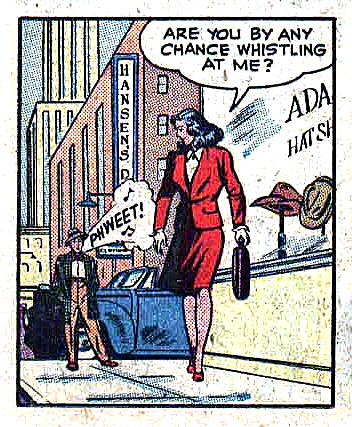


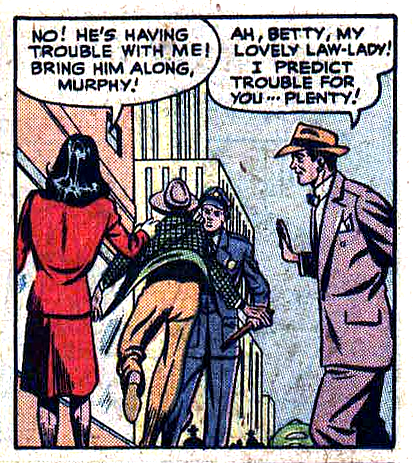


In one of the greatest stories ever told, district attorney Betty Bates, “Lady-at-Law,” arrests a guy for whistling at her because he’s breaking public nuisance laws.
This is in 1947!!!
(From Hit Comics #47, 1947)
In one of the greatest stories ever told, district attorney Betty Bates, “Lady-at-Law,” arrests a guy for whistling at her because he’s breaking public nuisance laws.
This is in 1947!!!
(From Hit Comics #47, 1947)








SithelThis makes me sad... I feel like the knee-jerk reaction to shut down this system is not a good sign of a healthy system... it's a complicated issue but... still... sad.
News of a lawn-rental pilot program at Dolores Park quickly attracted controversy and political debate on Monday and by Tuesday, Supervisor Scott Wiener announced he had worked out a deal with the Recreation and Parks Department to end the rental of lawn space.
“Despite this program being consistent with long-standing policy in Dolores Park, I do share concerns about reserving lawn areas in the park, given that green space is extremely limited on weekends due to large crowds,” Wiener wrote on Medium. “To address this concern, I worked with Rec & Park to change its reservation policy by limiting reservations to picnic tables.”
Joey Kahn, a spokesperson for the parks department, confirmed in a statement that the lawn reservations would be suspended.
“We want to take a step back to have more open public dialogue regarding our long-standing reservation policies at Dolores Park that are designed to provide accountability for the use of our public parks by larger gatherings,” Kahn wrote.
Both Kahn and Wiener emphasized that a reservation system has existed for a long time in the parks, that permit fees help offset the cost of cleaning up trash ($750,000 in Dolores Park alone last year), and that even lawn reservations already exist in many other city parks.
Wiener’s statement came after Supervisor Jane Kim called publicly for an end to the program, citing concerns that it would exclude lower income users from enjoying public space.
“We could well be on a slippery slope where the very wealthy are the only ones who can fully enjoy public spaces in San Francisco,” she wrote. “We already have a growing income gap between the ultra-wealthy and everyone else. We shouldn’t have a park gap too.”
Wiener chastised Kim for lashing out against the Dolores Park program when similar policies have long been in place in parks in Kim’s district.
SithelAAAhhh!! I MUST make these for Adam!
One of the primary pieces of advice my grandmother imparted on me — besides the fact that she thought I should be a writer, an absurd idea I promptly ignored — was that one should always leave the house looking the best they can. I realize this might sound a little old-fashioned and possibly even oppressive — I Exist As More Than A Decorative Object, thankyouverymuch — but I took it to heart nonetheless because I know she didn’t mean high heels and rollers, but mostly that looking more with it than you might actually feel sometimes can trick you too.

I apply it in the kitchen as well. Thus, while if we’re being completely honest, life is currently a swarm of getting recipes ready for the next book (eee!), a to-do list for this month as long as the remainder of this year, kids waking up way too early, mama going to bed too late, an apartment that has yet to clean itself and let’s not even talk about what’s going on in the produce drawer — i.e. real life, and not even a bad one — rather than dwelling on the chaos, I think we should cook for the life we want, not for the life we have. Thus: I choose picnic bars.




Because when the opportunity to spend a weekend picnic-ing or basically doing anything that involves blankets, lawns, hammocks, iced tea or naps and laziness, I’m going to be so ready for it. Also, statistically speaking, having picnic bars ready immensely increases the chance that one will find or create a picnic to take them to. [Caveat: Not confirmed by actual statistician but I just know it’s going to work out for us.]

One year ago: Fake Shack Burger
Two years ago: Soft Pretzel Buns and Knots
Three years ago: Greek Salad with Lemon and Oregano
Four years ago: Vidalia Onion Soup with Wild Rice
Five years ago: Rhubarb Streusel Muffins
Six years ago: Pecan Cornmeal Butter Cake and Mushroom Crepe Cake
Seven years ago: Rhubarb Cobbler and Broccoli Slaw
Eight years ago: Cherry Cornmeal Upside-Down Cake and Mushroom Streudel
Nine years ago: Homemade Oreos and Celophane Noodle Salad with Roast Pork
And for the other side of the world:
Six Months Ago: Roasted Leek and White Bean Galettes and Date Breakfast Squares
1.5 Years Ago: Pumpkin Pie with Pecan Prailine Sauce
2.5 Years Ago: Green Bean Casserole with Crispy Onions and Apple-Herb Stuffing For All Seasons
3.5 Years Ago: Spinach Salad with Warm Bacon Vinaigrette
4.5 Years Ago: Gingersnaps and Sweet Potato and Marshmallow Biscuits
Almond Rhubarb Picnic Bars
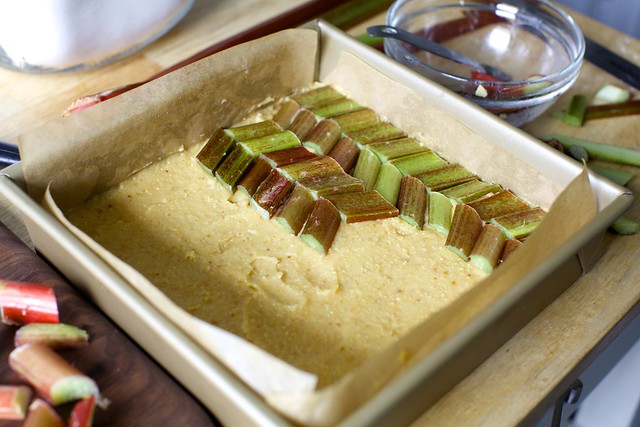
Consider these a spring riff on 2014’s apricot pistachio squares; here we make a more classic frangipane with toasted almonds and extract and the rhubarb, well, I know ombré and chevron are totally out these days (grandma would not approve) but this was honestly accidental, a thing that happens almost naturally when you bias-cut a great pile of rhubarb and try to puzzle-piece it into a pattern. If all of your rhubarb are pointing in the same direction when you cut them, that is, the greener bases on one side and the pinker tops on the other, and you work through the pieces from one side of the board to the other, a gentle transition of color happens on its own. Or, you know, you could just scatter pieces all over and it will all taste the same in the end.
You can double this recipe and make them in a 9×13-inch pan.
Yield: I cut these into 16 2×2-inch squares
Crust
1 cup (125 grams) all-purpose flour
1/4 teaspoon fine sea or salt
1/4 cup (50 grams) granulated sugar
1/2 cup (4 ounces or 115 grams) unsalted butter, cold is fine
Filling
3/4 cup (75 grams or 2 1/2 to 2 3/4 ounces) sliced almonds, ideally toasted and cooled
1 tablespoon (10 grams) all purpose flour
A few pinches of sea salt
6 tablespoons (75 grams) plus 1 teaspoon (5 grams) granulated sugar
5 tablespoons (70 grams) unsalted butter, cold is fine
1 large egg
1/2 teaspoon almond extract, 2 teaspoons brandy or another flavoring of your choice (totally optional)
1/2 pound rhubarb
To finish
Powdered sugar or 1/4 cup jam of your choice
Heat oven to 350 degrees F. Cut two 12-inch lengths of parchment paper and trim each to fit the 8-inch width of an 8×8-inch square baking pan. Press it into the bottom and sides of your pan in one direction, then use the second sheet to line the rest of the pan, perpendicular to the first sheet. This is going to make it very easy to remove the bars.
Make the crust: Combine the flour, salt and sugar in the bowl of a food processor. Cut the butter into chunks, and add it to the bowl, then run the machine until the mixture forms large clumps — that’s right, just keep running it; it might take 30 seconds to 1 minute for it to come together, but it will. [No food processor? Get the butter to room temperature and beat it with the sugar, then the flour and salt and mix until combined. Chilling it for 15 minutes or so will make it easier to press in.]
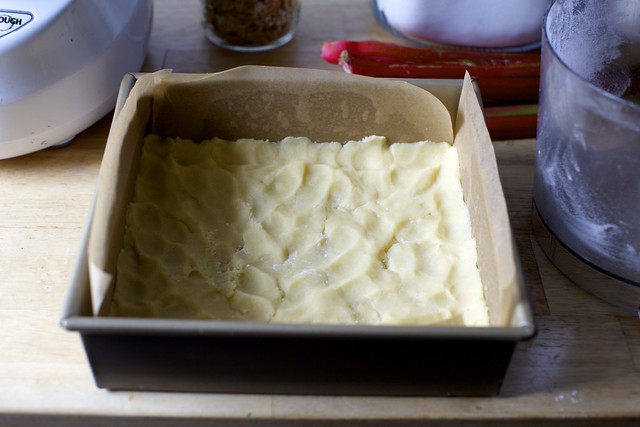
Transfer the dough to your prepared baking pan and press it evenly across the bottom and 1/4-inch up the sides. Bake for 15 minutes, until very pale golden. For the sake of speed, transfer to a cooling rack in your freezer for 10 to 15 minutes while you prepare the filing.
Make the filling: In your food processor bowl (which I never bother cleaning between these steps), grind almonds, 6 tablespoons sugar, flour and salt together until the nuts are powdery. Cut the butter into chunks and add it to the machine. Run the machine until no buttery bits are visible. Add any flavorings and egg, blending until just combined. Spread filling over mostly cooled (warmth is okay but it’s hoped that the freezer will have firmed the base enough that you can spread something over it) crust.
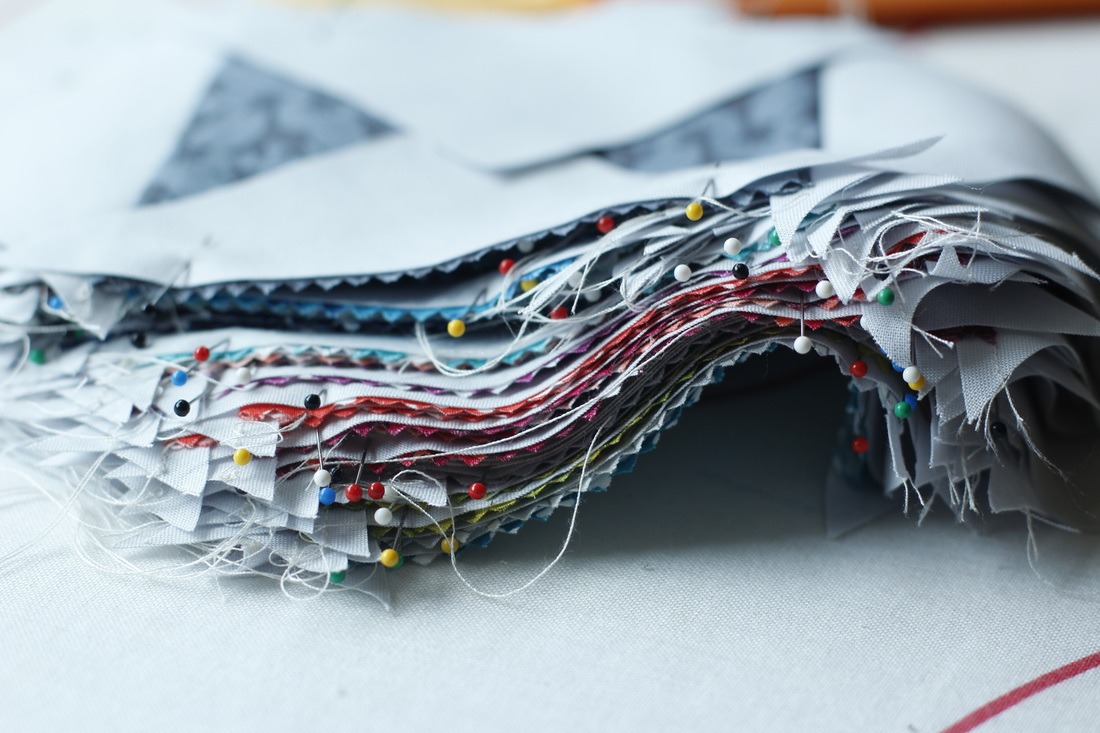
Arrange the fruit: Trim rhubarb and cut it half horizontally top to bottom, i.e. like splitting a hamburger bun, with the flatter part on the bottom. [Update: Does this diagram help?] Keep tops and bottoms matched/stacked and cut stalks on the diagonal into about 1 1/4-inch lengths. The top and bottom of each segment should nicely “V” together, color side up, in a chevron pattern. If you mostly reach for the more green segments first and the pink-er segments second, you’ll end up with an ombré look on top. Sprinkle fruit with 1 teaspoon granulated sugar.
Bake the bars: For 45 to 55 minutes, until they’re golden on top and a toothpick inserted into the almond cream underneath comes out cream-free. The rhubarb pieces are going to move around a little as it bakes so don’t be surprised if the pattern looks a little different when it’s done.
Let cool in pan on a rack, or in the fridge, or even in the freezer. You can decorate the bars with a little powdered sugar, or warm some jam and brush it over for a glossier finish. I find it easiest to get very clean cuts when the bars are very cold. A serrated knife, used gently, can ensure the rhubarb stays perfectly put if it’s not cold enough. While bars do not need to be refrigerated if it will just be a day or so, they keep longer and (I think) more nicely chilled.

As you might expect, in running a letter writing organization, I have acquired a large amount of pen pals. This is great! It also means that my address book can be a messy place, and can be tricky to keep up-to-date.
First, I keep a paper address book. I like the physicality of it. Sure, it takes a little teeny bit longer to find an address than it would if I kept a digital book, but that is not enough to get me to switch. I use pencil for the entries. It makes it easy to update. I had a previous book in my college years which swiftly ran out of room where I'd have to cross out inked addresses and write in a new one. (Mind you, I enjoyed seeing the record of places people had been, but it wasn't really helpful as a reference tool after a while.) I keep small Post-It notes of the address on top of the address entry. That way, if I finish and seal a letter, I can stick the Post-It note on it until I'm ready to properly address and mail art-ify the envelope.
Because I do get a lot of mail, entry into my address book is not immediate. I don't add anyone until the third letter I've received from them. No one (until now) knows that I do that, but I consider it something pretty special, to get added to book. The act of writing things in is very important to me.
I also erase entries. Don't be shocked. I'll tell you why. When I do my holiday cards, I make a point to write to everyone who has an entry in the book. After I've finished a card, I place a rubber stamp next to the entry with a FriXion stamp. As the months go by, when I get a letter back, I erase the stamp. (That's the magic of the FriXion stamps. They are erasable.) If, by June, I haven't gotten a letter in return, then the whole entry gets erased. You have to write a letter to get a letter. It works both ways. Plus, there's only so much room in my book.
This is the system I've developed that works for me. I'd love to hear about your system in our comments!
 When Marlboro Man, the kids, and I were in Colorado last month, we ordered Twice-Baked Potatoes one night. Instead of the traditional twice-baked potatoes our souls were used to—the hollowed-out potato halves stuffed with luscious filling and baked—they brought plates of curious potato rounds, each with a layer of melted cheese on top. We all looked at one other with panicked expressions. What were these frightening little discs? Who would mess with the simple beauty of a traditional twice-baked potato? What has happened here in Colorado? When did everything go so horribly wrong?
(I suggested under my breath that it was all the marywanna. But Marlboro Man and the kids didn’t hear me.)
After closer examination—i.e., after we all got over our initial trauma and took a bite—we discovered that they were simply reconstructed little twice-baked potatoes; but instead of potato halves, they used potato slices. A simple and clever twist on the twice-baked theme!
I’d been meaning to recreate these once we returned from our ski trip and I could move my limbs again, and yesterday I finally got around to it.
Deliciousness ensued!
 First, scrub a bunch of russet potatoes till they’re really clean.
 Dry them, set them on a baking sheet, and bake them at 375 for 30 minutes, or until they’re super tender.
 While the taters are a-bakin’, fry up some bacon…
 Until it’s nice and crisp but not burned but not chewy but perfectly crisp.
You got all that?
Good. Will you please explain it to me?
 After the bacon is cooked, violently throw it onto a cutting board in a neat pile…
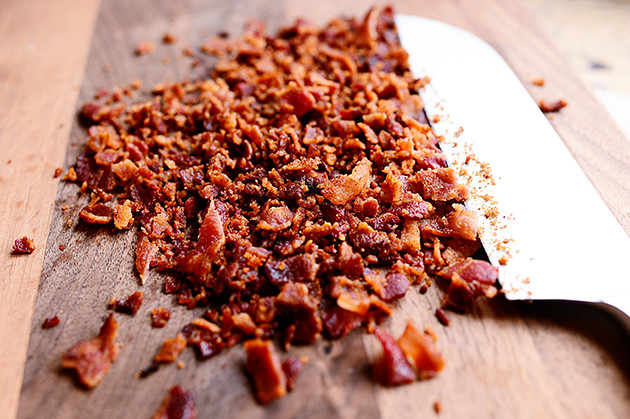 Then chop it up into small pieces. Then go hide it somewhere until you need it so you won’t accidentally eat it all with a spoon.
(That may or may not have happened in my kitchen once or dozens of times.)
 The taters! They’re done!
 So now the fun begins. Transfer the taters to a cutting board.
 Then lop off the ends…
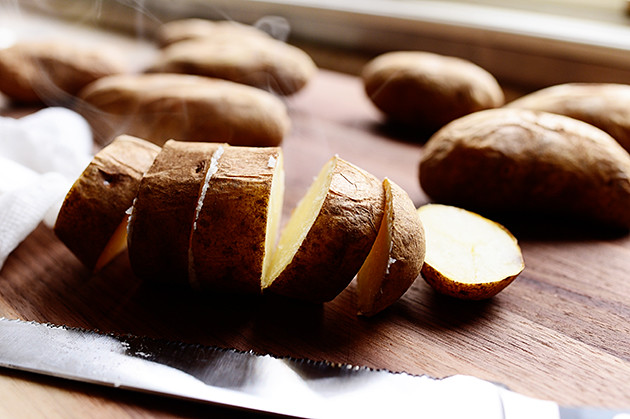 And slice them into nice, chunky slices. If I had any sense of measurement, I would at this time tell you to slice “half-inch” slices or “1-inch slices” or “three-fourths inch slices.”
But I’m not that kind of girl.
 Keep going until they’re all sliced up. Throw the little annoying end pieces into a pile; you can decide later whether to work them into the mix or whether to kick them to the curb.
(I kicked them to the curb.)
 Throw softened butter into a mixing bowl.
 Then grab some sour cream (or Greek yogurt if you’re trying to be a good kid) and throw it into the bowl.
 Now, this isn’t 100% required, but if you have them it makes the next step really easy: Grab some different biscuit cutters approximately the same size as the potato slices.
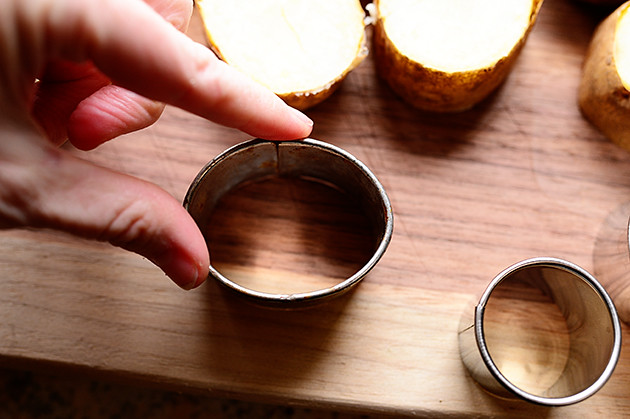 Now, since the potato slices are oblong in shape, you can slightly bend a round cutter to fit. (It’ll bend back, man!)
 Then place it over one of the slices of potatoes, making sure the cutter fits inside the edge.
 Then just press down…
 And lift it out!
 And that’s what you’ve got left! A nice little potato ring.
 If you don’t want to bend your cutter, just squeeze the potato slice to conform!
 Or, if you don’t have one that perfectly fits, just make one cut over to one side…
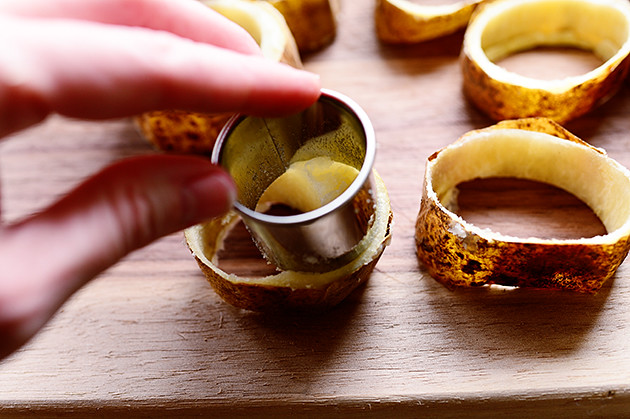 And a second cut over on the other side.
 Keep on going…
 And drop the potato rounds into the mixing bowl as you go. They’ll be nice and warm, so they’ll start melting the butter and warming the sour cream.
 When you’ve finished cutting holes in all the potato slices, you’ll have a bunch of potato innards in the bowl. So add some milk…
 Some salt…
 Some pepper…
 And the bacon…
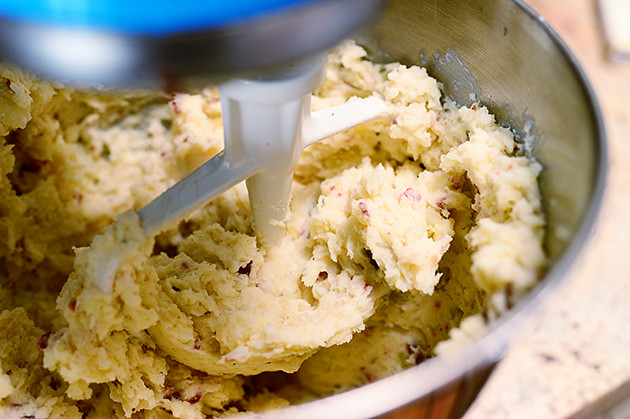 Mix it on low using the paddle attachment until it’s all combined.
*Note: I’m using the mixer so the potato mixture will be really smooth, but you can just use a potato masher if that’s easier! Either one will work fine.
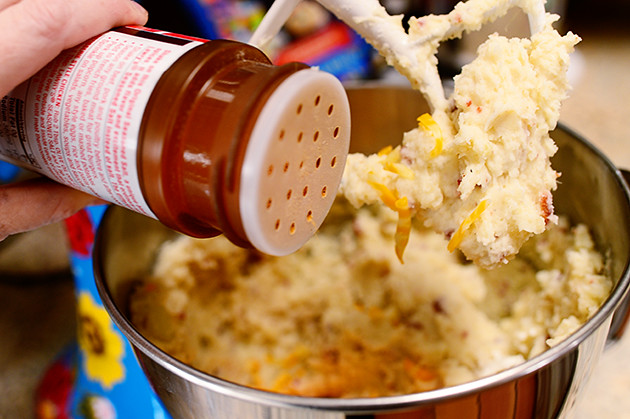 Then I added some grated cheese and, for a little more flavor because I tasted it and thought it was lacking in zip, a little seasoned salt.
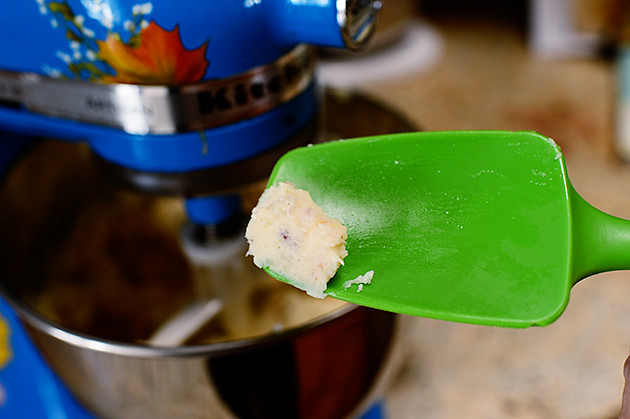 Be sure to taste it when you’re finished mixing to make sure it’s absolutely perfect.
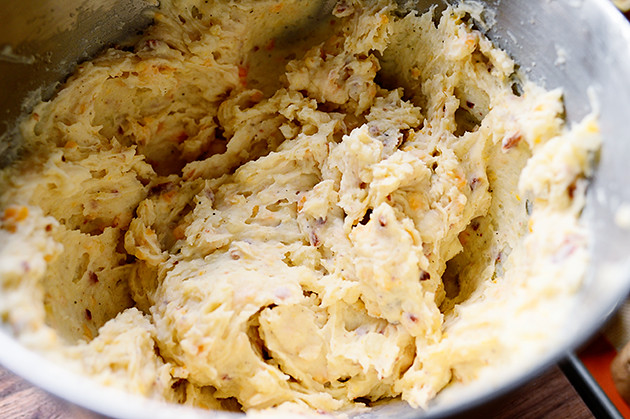 And…it’s perfect!
 Now it’s time to fill the potato slices. Originally, I was going to use a piping bag, but decided a scoop would be easier.
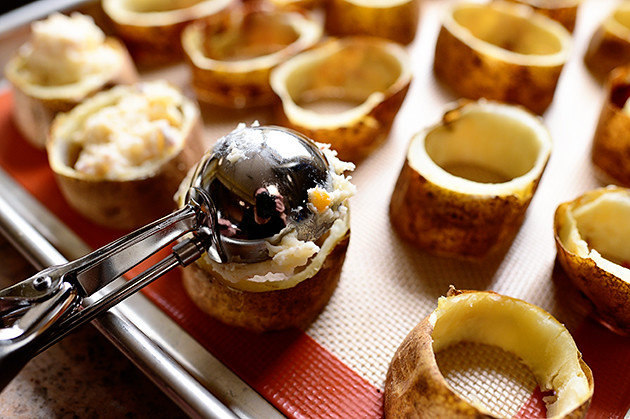 As with the cutters, just find a scoop (or spoon!) that’s approximately the same size…
(You can see me there. Hi! *Waving*)
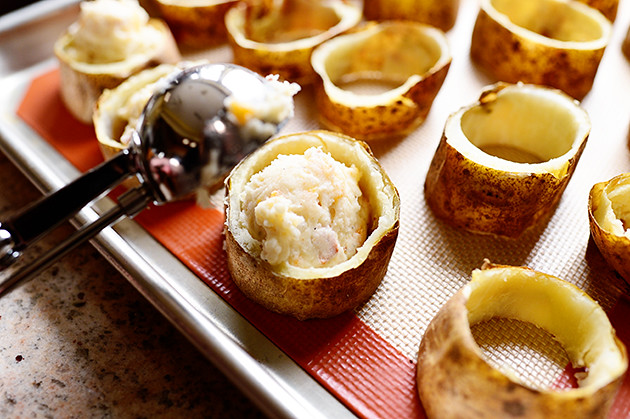 And fill the hole with potato filling.
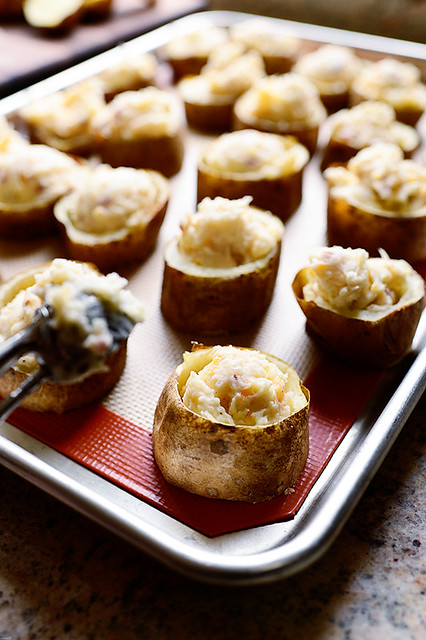 And keep going until you’ve got them all filled. (You should have a little filling left over, which you can now eat as an appetizer.)
(You’re welcome.)
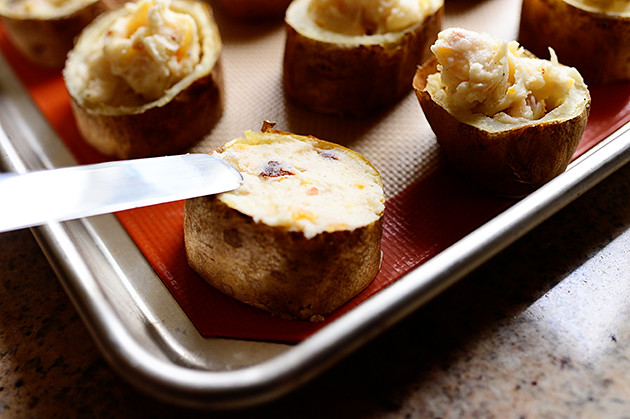 Next, use a spatula or knife to smooth out the surface.
*Note: I smoothed these out to be flush/even with the top of the peel, but I found out after baking them that it would actually have been better to overfill them a little. (They slightly sink after baking.) So mounding the filling is fine.
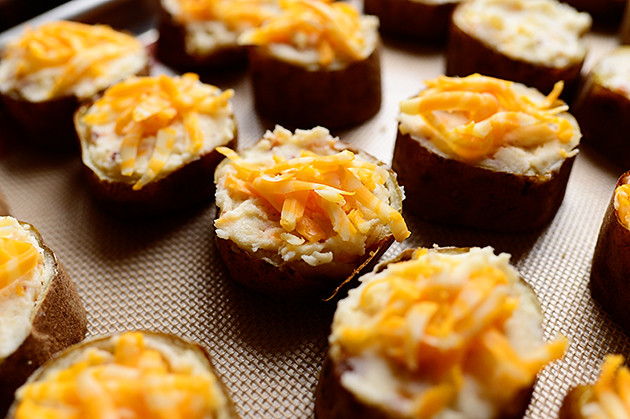 I wasn’t sure whether I’d prefer them plain or cheesy, so I did half with and half without.
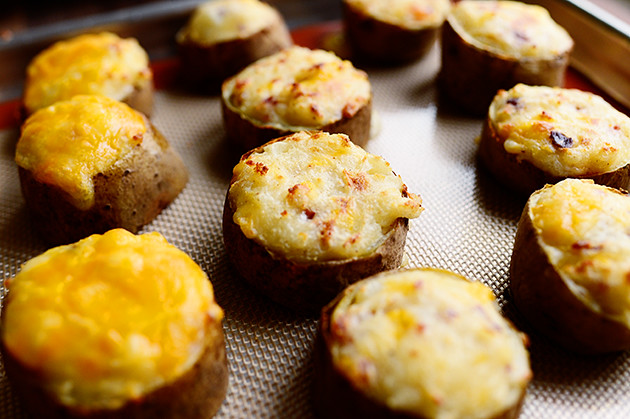 Then I just baked them at 375 for about 8 minutes, then broiled them for about 4.
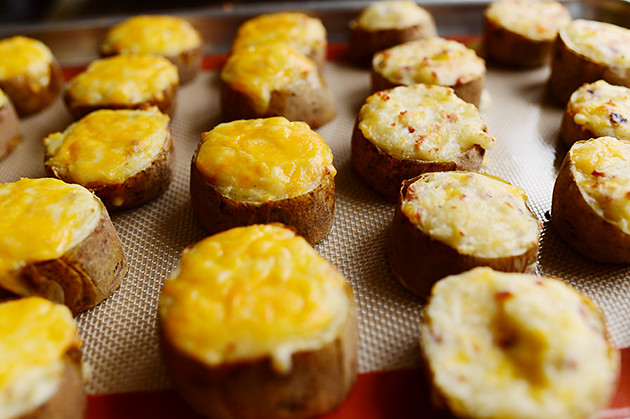 I stood watch while the broiler was on, because I didn’t want the cheese to burn—I just wanted it to go a little past that soft melted cheese stage and into the firmer melted cheese stage without going into the burned melted cheese stage.
GOSH DANG, I’M PICKY SOMETIMES!
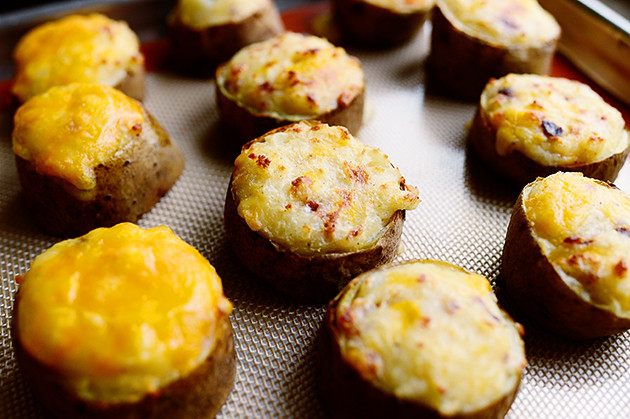 Aren’t these fun? What I love about them is that they’re as perfect for a weeknight dinner as they would be for an elegant dinner party! And you can make them well in advance, keep them in the fridge, then just bake them off right before. Or even freeze them, unbaked!
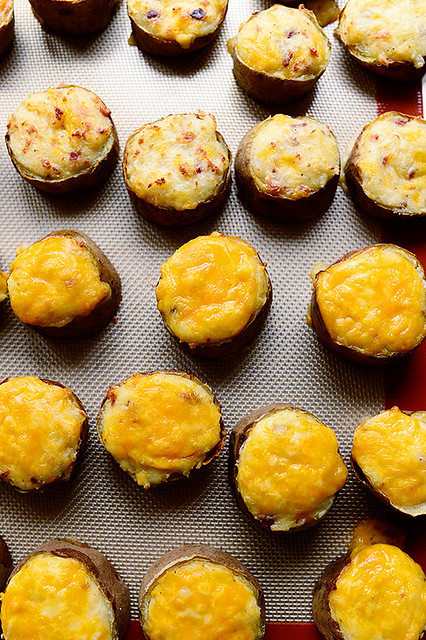 The only tricky part is that if you try to remove them from the pan right away, the soft potato filling tends to stick/stay behind a little. So the remedy is to let them sit on the pan for a good 10 minutes before serving them. This actually is best anyway, because it gives the potatoes a chance to calm down and cool slightly.
 A sprinkling of sliced green onions at the end is just what it needs to finish the job.
Hope you enjoy these, guys! They’re lots of fun…
And they have butter, sour cream, and cheese in them.
And that’s pretty much all that needs to be said.
Here’s the handy dandy printable!
Preheat the oven to 375 degrees. Place the potatoes on a baking sheet and bake for 30 to 35 minutes, or until the potatoes are tender and the skins are slightly crisp.
On a cutting board, cut off the very end pieces of each potato, then slice the potato into 3 to 4 equal slices. Lay the slices flat and use a round cutter or a spoon to remove most of the insides. Leave a very thin rim of potato around the edge for structure. As you go, dump the insides into a mixing bowl with the butter and sour cream.
Add milk and mix the potato mixture together until smooth. Add bacon, salt, pepper, seasoned salt, and cheese, and mix together. Taste and make sure the mixture is seasoned adequately.
Use a scoop or spoon to fill the potato slices with the potato mixture. Slightly mound the mixture in the slices, as it will settle after baking. Top with additional cheese if desired, and bake at 375 for 8 minutes, or until the cheese is melted. Turn on the broiler and broil for 3 to 4 minutes, watching very carefully so you won't burn them.
Remove from oven and let sit on the baking sheet for at least 10 minutes before removing with a spatula and serving. (Note: Filling will be soft, so the longer they sit after baking, the easier they'll be to remove.)
Can make these well in advance and keep in the fridge or freezer, unbaked!
Posted by Ree | The Pioneer Woman on March 6 2014
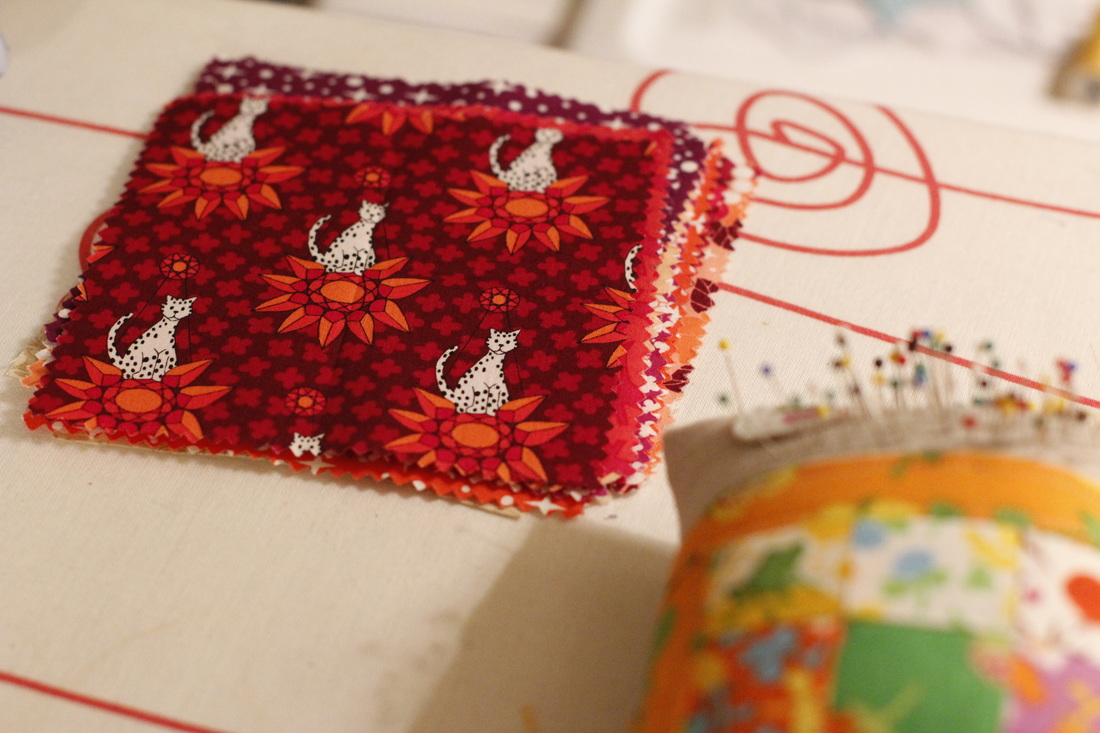
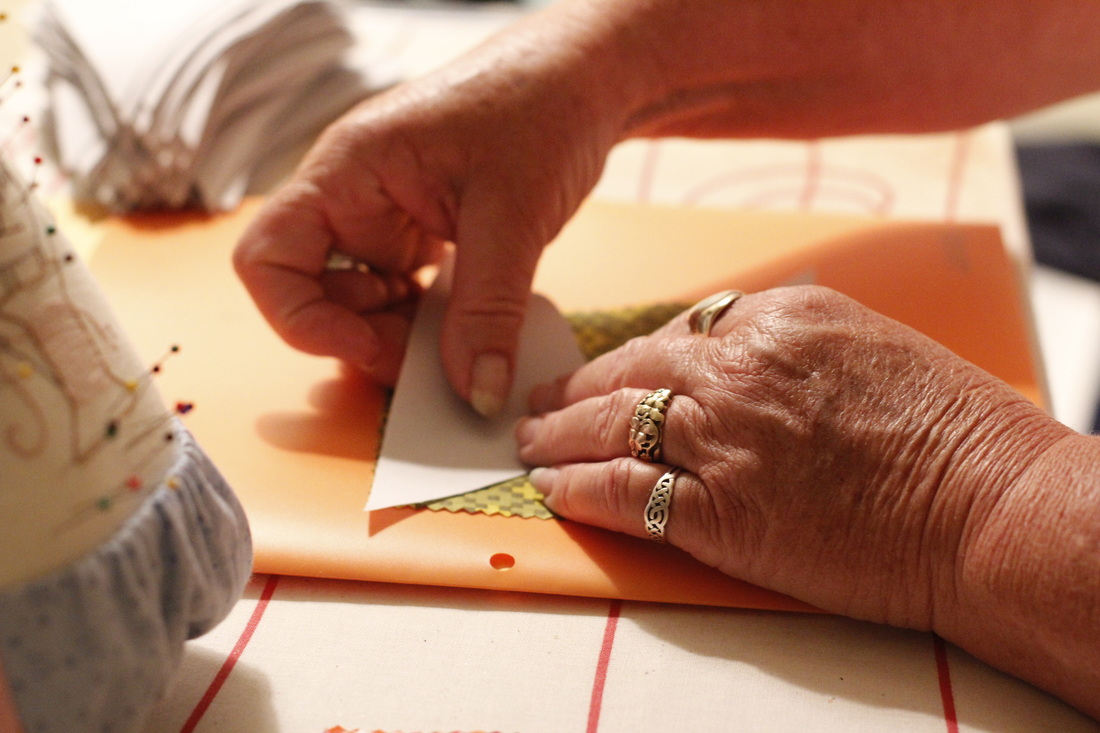
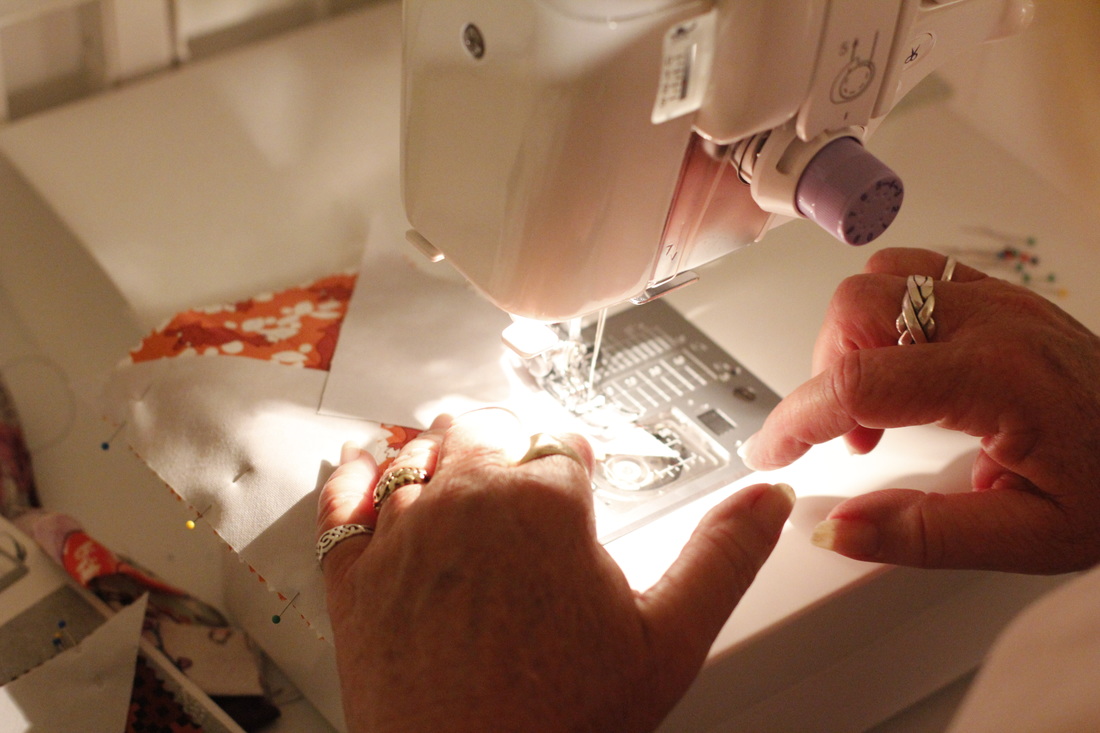
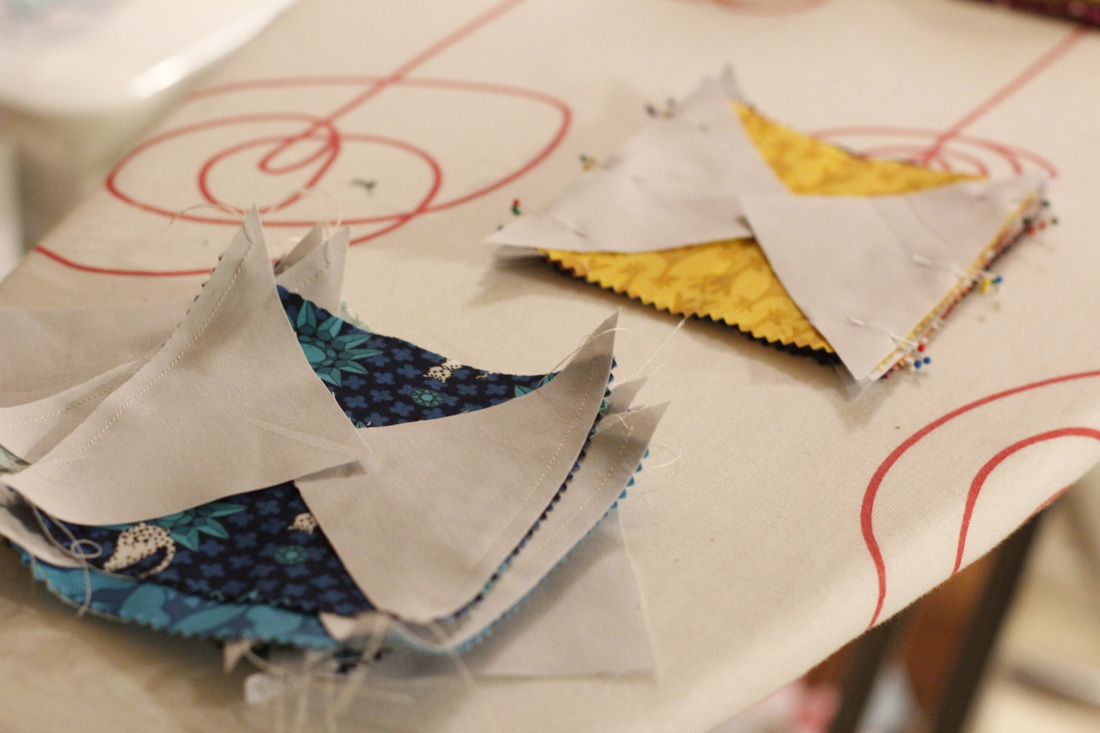

At the end of the Civil War, the Dead Letter Office had 4.5 million undelivered letters. Thousands of people swept away from their families in war time tried to connect through the mail, but many had extremely limited literacy and virtually no knowledge of the postal service. This Photo Sleuth article on Slate goes into the details of how the Dead Letter Office tracked down the recipients of many of those lonely letters. They even talked to one of our own, long-time L.W.A. member Ashley Bowen-Murphy, about the fate of letters which could never be identified and delivered.
One thing the Dead Letter Office did was establish a museum for some of the more particular or poignant artifacts they had been unable to forward.Among those items were thousands of cartes de visite, photographic portrait postcards, of Civil War soldiers. The museum displayed them at various times over the years and even send the cards on exhibit to other cities in hopes they would be identified and claimed. A purported 2,000 of cards were identified in this fashion. However, as time went by, fewer and fewer had any hope of finding their recipients. When the DLO closed in 1911, the cards were sold into private collections. One ended up with the author of the article and prompted this research. I encourage you to all read the full article and Ashley's article from the citation. It's fascinating stuff.
It's been a few years since I've posted here, but as long as Blogger still exists it seems as reasonable a place as any to post these things. SFIFF kicked off last Thursday, and I've been attending at least one film a day. Below are my thoughts on the first four days of the festival (now a week ago).
Love & FriendshipWhit Stillman brings his unique brand of dialogue-heavy comedy ("heavy" seems too weak an adjective) to an adaptation of a Jane Austen novella, featuring Kate Beckinsale as a caustic aristocratic widow. Hilarious, delightful, and biting, it delivers, with apparent effortlessness.
Hunt for the WilderpeopleA surprisingly sad buddy/coming-of-age comedy from Taika Waititi. The tragedy and lightheartedness play off each other well, keeping the sweetness from becoming too strong while depression never gets a chance to settle in. The plot drags in the final act, and an over-the-top car chase scene feels tacked on from another movie, but overall this is that rare example of a "family" movie that doesn't feel dumbed-down.
Author: The JT LeRoy StoryAuthor documents the complex saga of JT LeRoy, who gained a literary following in the late 90s and early 00s before being unmasked as a "hoax". Investigating whether that word applies here is, in large part, the film's preoccupation. Nearly all of what's shown to the audience is direct from the mouth of Laura Albert, the woman who penned JT's literary output and embodied him in countless telephone calls with psychiatrists, authors, film makers, and musicians. Under normal circumstances, such an unreliable subject would doom a project like this, but given the nature of the underlying story it only enhances the resulting film. What we get is a dive into questions of what constitutes authenticity, authorship, and above all, identity.
Paths of the SoulFeaturing non-actors engaged in a religious pilgrimage, this Chinese-made, filmed-in-Tibet feature is at its best when it evokes the sense of overwhelming devotion its subjects seem to be experiencing. They travel 1200km from their homes (where they are subsistence farmers or builders) to the religious center of Lhasa. Not content merely to walk that long distance, they only take a few steps at a time before kowtowing, falling to the ground and touching their forehead to it (they equip themselves with leather aprons and wooden mitts to make this at all possible over such a long distance). Only when the action becomes more scripted, such as in an encounter with another pilgrim along the road, does the film flag a bit (though one could argue that the entire point of such scenes is to bring a sense of normalcy to the matter at hand).
Five Nights in MaineA drama about grief, featuring an ideal cast and a restrained script: David Oyelowo is flawless, and and Diane Wiest presents a multi-layered performance that could have been a cardboard cutout of a mother-in-law. Yet the end result is strangely inert.
ChevalierThe biggest disappointment on my schedule so far, what promises to be an insightful comedy of manners (six friends on a boating vacation decide to compete to see who's "the best in general") degenerates quickly into improvised, poorly-edited not-much-happening.
Very Big ShotBilled as a comedy, the story follows three brothers in Beirut as they try to make it in the world. The youngest plays it straight, running their family's pizza shop. But the eldest has bigger plans, first as a criminal and then, improbably, as a film producer. This is where the comedy element properly kicks in, after a rather violent first act. Unlike Wilderpeople, the elements aren't tightly woven together, but the structure still works, building the film into a proper satire by its climax.
Blood of My BloodA story told in two intertwined parts, set hundreds of years apart, this is one of those international films for which I'm lacking the proper cultural context (in this case, Roman Catholic Italy), yet which I nevertheless found enthralling. The first part is a detective story of sorts, where the mystery is whether one character is in cahoots with Satan. The second part involves a "vampire" (whether that designation is literally accurate remains up in the air) now inhabiting the same chambers explored in the first. Altogether enjoyable, and something I'd see again at my earliest opportunity.
CountingA documentary not about anything in particular, separated into 15 parts that, more than anything else, documents the filmmaker's home town of New York and his travels to attend film festivals around the world. But this is not a travelogue, but instead a piece of extended observation. The thing that impressed me most was that I was never bored, despite the relative formlessness of the endeavor, and the shots are not only engrossing but frequently beautiful.
All These Sleepless NightsBilled as a documentary/fiction crossover, "documentary" here mostly seems to mean using real locations, and the actors' names, but the extent to which the story matches reality is of course impossible for a viewer to derive. Krzysztof and Michal wander from party to party, club to club, often until the morning light. There's a *Jules and Jim*-esque interlude in which Krzysztof enters into a relationship with Eva, an ex of Michal, but the narrative, such as it is, is not the focal point of the endeavor. This hit the same sweet spot of post-adolescent reminiscence (and late night electronic music) that Eden touched last year, and was a great way to close out the opening weekend.
SithelBeautiful... looks like a classic painting...

Light falls on the tools It is clear what I must do Practicing the way #kannondo
 3
3
 0
0
location : Kannon Do Zen Meditation Center
SithelAmusing that an hour before I read this I read an article about fan-fiction and the Hamilton musical talking about similar things... sort of reaching the same conclusions?: http://www.vox.com/2016/4/14/11418672/hamilton-is-fanfic-not-historically-inaccurate
As a Tumblr user though, I feel "canon" is an interesting, useful, and worth-talking-about thing... given that I can see waves of different AU takes on a narrative universe wash over the feeds. The different flavors obeying a tidal like cycle. I'm someone who has consumed multiple stories entirely/exclusively through the lens of other fans and enjoyed it, but lets me honest- there is an official source since we live in dystopian corporate future variant. It is at least interesting to know the "official word" on a narrative, even if the official word changes as much as the fads.
(In which I attempt to blow your mind.)
Yesterday I read this article on why fans of various media need to stop being so fanatical about an arbitrary notion of 'Canon'. I'm unfairly summarizing, but the article basically states that canon is simply a way to create a clique and exclude people, and that these fictional environments are vulnerable to being changed by new creators so get over it.
And, essentially, I agree. But for different reasons.
The first thing I did when thinking about this was write a blog post (rahter poorly) illustrating what I'm going to attempt to describe here. Specifically:
It hurts me when people talk about 'canon', especially when the term 'headcanon' exists describing literally what everyone has: a different interpretation of a given representation of a narrative. There is no one, true, objective source. By even suggesting that a given representation is one hundred percent accurate and precise flies in the face of reason. Bladerunner, a science fiction classic is proof of this, as is Brazil. Even Peter Mayhew came out with proof that Star Wars had a very different original script.
It's hard to talk about the 'true' story. As a creator, I know it's hard to realize - to represent - the story as you intend. Some things come off unintended. Sometimes you have to not do something or leave something out of the story because it distracts and is bad design. But that nebulous story you're trying to realize still exists outside of represented terms.
Worse, by insisting the representation is the story, you are literally taking the dumbest, most straightforward, braindead approach to consuming the story. Unreliable narrators are often used to suggest to the audience that they should take the step of considering the story as in some ways more inaccurate than presented: but the thing you should realize is that all narrators are unreliable. It's like saying that the King James Bible is the literal word of God. We know it's not. It's maybe the word of God as translated by King James (and a dozen other people in between). The inherent contradictions are rife: and if that sort of basic skepticism, forcing you to consider the narrative in broader terms, is necessary for a religious text - why would you not apply it to someone's fictional story?
(Full disclosure: I'm agnostic so I don't really see a difference between religious text and novels.)
But I get it. If we all agree on definitions - even ones that are movie-length, or the collected works of the Marvel Universe - it is easier to communicate our enthusiasm and thoughts. Darmok and Jalad at Tanagra. Communication is so much easier when people just grok what you're saying.
The key to communication, though, is that you don't need to grok it. I'm bablinquering utting you. You'll get it, and enforcing a single, shared, hyperprecise definition (also known as dogma) reduces you to a computer - and a dumb one at that. Make up words. Make up stories! Tell them and retell them and enjoy the fact those representations will change. Enjoy the fact someone else's understanding of that representation shows you a new side, broadens and deepens you.
Because, in the end, it's all headcanon, and a story's worth is not any more cheapened by being slightly different in someone else's head than a great song is cheapened by being in someone else's mp3 collection rather than your vinyl collection, or by being remixed, or by being sung a cappella. In fact, this just underscores and proves the strength of the story. That's not a very mind-blowing thought, though, is it?
SithelFuck yes, this is great.
Thank you!
In the story one man said, "It's all true." Which is a lie. None of it's true. Even what I'm telling you now - well, what I'm telling you is true. From a certain point of view. At least, it's as true as that version was. The important part, though, is that the story is essentially the same.
The thing I always found staggering was the sheer numbers, and the mobility of it all. The thing no one ever credited that now-dead empire for was their sheer logistical capability - it was a force to be reckoned with in and of itself. The shipyard was the size of a planet, and could be disassembled and reassembled in pieces. This was important because all the major factories, munitoriums, fabricators, training centers and supporting infrastructure could all be independently moved, built or replaced. Completely extensible. It was a hive world without the world.
And it's funny, too, because little things matter. One of the basic pieces of technology they had to master was air conditioning. In space, without a star to warm the surface, but with all sorts of machinery burning energy and spilling a little bit everywhere, constantly, air conditioning became really important. So there was this one company that happened come up with the design - Boath Air Machinery - their implementation was widely regarded as excellent. A little too excellent, really: the shipyard was always a little bit on the chill side. It got a real reputation for being an ice locker.
All of that, times a thousand. A million. There were probably billions of workers in that shipyard, a masterpiece constructed by an empire covering trillions of souls. Because of that logistical mastery I was telling you about this thing could move around - which was good, because, in turn, it was so efficient at converting raw material into fully-armed, fully-crewed ships of war that it was easier to bring it to the raw material than vice versa.
People were raw material, too. More than one star system saw complete population collapse after the ship yard moved through. That's always tricky: you have to feed the appetite for war, but ideally you want to distribute that. Overdo it, even a little, deplete an age or gender demographic and boom. Not enough breeders for the next generation. The base had a reputation for that, too: decimation on both ends of the process. Lots of nicknames for that reason.
The other was the real 'war' end. A constant flow of ships, streaming out into the galaxy to whatever hotspot the empire was looking to take over. There are a lot of stars out there, you know, and ships don't really come back that often. Sure, you could retrofit the countless cruisers and troop transports, but it's easier to send them and leave whatever survives as garrison. Makes for better top-down order. Supposedly there was one command room where you could see the outgoing fleets. Rumor has it that, at the height, something like six fleets went out a week. A target star system stood no chance against numbers like that: even a densely populated world couldn't re-tool fast enough to field a trained fleet that could withstand an assault. You have to understand that base converted entire systems into warfleets: a defending system would have to do the same thing, destroy their own worlds to put up a fight, and people, just no race does that. Well, a few tried. The galaxy was aghast when they were annihilated.
Naturally, such a threat had to be countered.
It took a broad resistance. Lots of people had to infiltrate the yards, and in the end it was logistics that brought it down. Real war is just an engine of logistics. A network of insurgents, dedicated to sabotage - things like that air conditioning I was talking about. Criminals were broken out of jail, not because their freedom was meaningful but because it disrupted the factories: security had to lock everything down and capture fugitives. Force the expenditure of energy on things not making war. Frustrate the engine.
Of course, there was the war of hearts and minds. Subtle, targeted, direct, attempts to expose the higher level leaders to the truth of what they were doing. What worked was showing them the decimation of the worlds they left behind. It's hard to talk about, the cult-like aspect of it all. Many hardened their hearts against their former lives, trying to forget about them entirely in the pursuit of this great, if somewhat abstract work embodied all too tangibly in this factory of war. Those that saw what they'd done didn't last long in that cult.
It bled them. It bled them of able lower-level workers whose day to day was too disrupted to keep the machine going in perpetuity. It bled the leadership of the focus needed to address the lower level problems. Some say the various assaults and fleets of hot-shot pilots attempting to break the yard's defenses is what did the yard in. But really it was it's own weight. The air too cold and then too hot. Criminals running around. Leaders losing their focus and doing horrible things to their friends and family that, eventually, lost the loyalty such an industry requires.
In the end the resistance worked because they didn't have to collaborate with each other. It was easier to fray the rope of the larger, more coordination-reliant empire. Sure, some of those assaults eventually did some damage, but by then the accounting ledgers told the real story: it just wasn't worth it anymore. Once it started to shrink, it just accelerated. One factory left behind. A few munitoriums made redundant. A thousand fabrication facilities left idle, to drift into the path of scavenger and reclamation fleets. The whole thing, from a business perspective, just imploded.
History remembers it slightly differently, as it should. All those countless billions killed or, worse, consumed. It was necessary to cast it in the most foul light available. Make it as unappealing as possible so it wasn't tried again. The problem with stories is that they warp the facts until you forget what the actual problem was. No, it wasn't a planet-sized laser gun run by space sorcerers. Starkiller Base was the largest single embodiment of the military industrial complex the galaxy has yet seen. It rose and fell because of the efforts of countless people we only later gave names and personalities to, merging and winnowing down the individual stories into one generally well known epic. It's hard enough to tell a good story about a handful of people, nevermind a trillion.
But the story itself is a lie. Remember that when you watch one of these re-enactments. Your eyes deceive you. Don't trust them. Reach out with your feelings, and some common sense, for what you know to be true.
SithelYesssssss!!
I don't post a lot of mail art calls on the blog because there are so many other blogs out there which are dedicated to that creative outlet. However, the organizer of this one is a longtime L.W.A. member, personal pen pal and friend of mine. Plus, I like the logo. Plus, I'm writing this blog and I can put what I want on it. Plus, I've eaten a lot of cake this morning. But the biggest plus of all is that I'd love it if the exhibit was full of art by Letter Writers Alliance members!
Sunday Streets will kick off its 2016 season along Valencia Street on Sunday from 11 a.m. to 4 p.m and representatives from the Golden State Warriors will be there — but without any of the players themselves.
This will be Sunday Street’s ninth year of hosting booths and activities on different San Francisco streets and will run on eight Sundays from April 10 through November 13.
On Valencia Street, there will be free demos from Bay Area Bike Share and its extended bike share network, basketball courtesy of the Warriors, dance classes, and free blood pressure screening. The SFMTA is also presenting a new 60 foot bus to showcase the latest bus innovation.
New this year are two “activity hubs” where Sunday Streets will bring organizations and businesses together to feature collaborations across art, music, dance, health, fitness, cycling, and animal groups.
From a press release:
“Sunday Streets is a great way for families and neighbors to share healthy activities in our beautiful city,” said Barbara Garcia, San Francisco Director of Health. “Nothing tops exercise, fresh air and laughter when it comes to being healthy.”
Sunday Streets is a free event and does not allow vending or sales on the street for the day. The program relies entirely on support from a group of private sponsors, individual donors, and the city.
Check out a map of the different activities here.
Mail service has been reinstated between the United States and the nearby island nation of Cuba. Last week saw the posting of the first batch of mail between the U.S.A. and Cuba since 1963. It's been over fifty years since any mail has passed between the two countries without a gross amount of hassle and regulations involved. It may seem like a small step, but I think the ability for friends and family members to speak to one another for the mere price of postage can have a huge impact to our cultural relations.
Sithel(for me though it's sketch, not write...)

SithelI want a person sized one of these...


Sithel"Don't believe anything else; the end is not arbitrary. The end comes when the last decision was made. That is when the story was over."
It always starts the same way: a not-sound, the collapse of nothingness, forcing air into air. A 'pop'. Then there is a whistle and the nauseating, violet, violent light-flashes. The green look up, but the veterans look for cover. The mortars are falling, and change is coming.
Stories are told from beginnings to ends. Sometimes, amidst the explosions, those two get confused. Sometimes it seems like some divine hand guides it. A lot of the time it's arbitrary where one thing is named for the first time, and it's equally arbitrary who catches that final, fatal bullet. And, you know, it's human to want something more, to know what happens next, to yearn for knowledge of the after. After the shell chews up earth. After concussion fades to unconsciousness. After the beating heart's blood slows to a pool of crimson and mud. Why does it have to always end in that? Why is this still misery the last stop?
I have always loved trains. You buy a ticket, commit. You choose a line to travel along. You board a train with people; people going your way - at least for a time. You leave a little token or two behind. Your story is the enumeration of these things.
And then the train whisks you through dark tunnels and past indiscernible lights. Wheels screech, straining with and against rails. You are inside a sweaty, metal belly. The beast speeds up, turns, twists, groans, and finally slows to a crawl, sliding to a rest in the destination station. The doors open on the result of all your decisions. They call that the future. I have always loved the future.
But the thing to know about the future... is that it's just the epilogue. Don't believe anything else; the end is not arbitrary. The end comes when the last decision was made. That is when the story was over. When you hear that sound - maybe it is the door-closing klaxon, maybe it is the nothing-pop of a mortar appearing in the air above you - that is the sound of the coming end. The sound of blood flowing and running feet. Of mechanized, incomprehensible warnings and of urgent, human shouting. Of time boards flip-flip-flipping over and bullets hiss-hiss-hissing past. After that, the door closes.
I heard a poem, once upon a time - or maybe it was a saying - about where the shadow falls. It falls between the end and the terminus. I always think about that when I hear the klaxon, or the mortar. I always think about picking up my feet a little, about letting my heart race. That's the best time, you see - maybe the only real time - before that long shadow. It's the last chance to be alive before the doors close and you are alone with whomever happens to be going your way. After this, the story is over.
Maybe, after the end, you'll be left smiling. Perhaps relieved, or frustrated, or with a keening sense of loss. Some feel nausea, some disorientation, some are simply breathless. Me, I always try and find a seat. There are no more stops before Terminus.
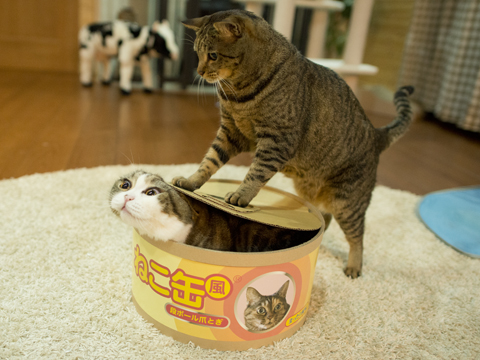
SithelI feel you, Maru. Some days I wish I had a narrow plastic container I could curl up in.

SithelSounds like something that would appeal to "some folks" I know...
I have become a big fan of the cycling training videos from The Sufferfest. They provide high-intensity workouts with a nifty backstory: you are a citizen of the nation of Sufferlandria, a cycling-obsessed country with a completely unique culture. The videos present various entertaining scenarios, such as riding high-power intervals for an hour and forty minutes or trying out for the Giant-Shimano cycling team. The videos are well-produced, feature great music, and are damn challenging.
One feature of Sufferlandrian culture is their titled nobility: Knights of Sufferlandria earn that title by completing 10 of the videos, back to back with no more than a 10-minute break in between. This totals out to between 10 and 13 hours of riding, depending on which videos you choose. There are some other rules, explained at the link above, but the bottom line is that you have to Suffer, ideally while raising money for charity, in order to earn the coveted title. Only about 600 people worldwide have done so… so naturally, when Alex Viada suggested that we do a group Knighthood attempt at CHP, I was all over it.
On Saturday, March 19, I will undertake to earn my Knighthood (along with Alex, Kelly, my lifting buds Derek and Rafe, and about a dozen coaches and athletes). Our team is spread all over the US and UK, and we’ll all be riding at the same time. As a team, we chose two charities: Oxfam and Puppies Behind Bars. “Who?” you ask. Here’s what PBB does:
Puppies Behind Bars (PBB) trains prison inmates to raise service dogs for wounded war veterans and explosive detection canines for law enforcement. Puppies enter prison at the age of eight weeks and live with their inmate puppy-raisers for approximately 24 months. As the puppies mature into well-loved, well-behaved dogs, their raisers learn what it means to contribute to society rather than take from it. PBB programs bring the love and healing of dogs to hundreds of individuals every year. The dogs bring hope and pride to their raisers, and independence and security to those they serve.
I am excited by this opportunity and look forward to Suffering for a good cause. Hopefully we’ll be able to get a live stream put together, too. I invite you to consider donating– 100% of the proceeds are going 50/50 to our two target charities.
For more details on the event, and to donate, please visit this page.


SithelI'm skeptical about putting Caffeine & Marijuana on the same Reward level. I think this study calls for finer gradations!
Also, the "Lots of Judgement" on food... only depends on your social circle, yes?
Seems like Video Games or Gaming should be on the list as well...
Alcohol: Low, Medium, Some, Stories
Caffeine: Low, Medium, Little, No Judgment
Cocaine:  Medium, High, Little, 'Hans, Bubby!'*
Facebook: Low, None, Lots, 'Friends'
Food: Low, Low, Some, Lots of Judgment
Marijuana: Low, Medium, Some, Aroma
Meditation: None, Medium, Lots, Namaste
Methamphetamines: Medium, Medium, Little, Dentistry
Nicotine: Medium, Low, Some, All the Judgment
I had an idea for a post regarding all the things we do to modify the subjective experience of our not-optimal brains** as mediated by a chemical process. That list is effectively infinite, though, and I'm not sure how insightful my words would be - but I hope I captured the general gist of the idea above.
Note that I have not actually tried all the above, and this should not be construed as a recommendation or indictment of any of them***.
* Die Hard reference
** No one's brain is optimal. They're all hacked together piles of spaghetti code. God doesn't roll dice, and he doesn't write documentation, either.
*** Except Facebook. Free yourself!
Sithel> Will I run this game? Who knows! But in the interest of writing things down, I figured I'd drop the hook
More! More!
Informed more by my knowing of Nate than anything particular about the text, it makes me think of a one shot set in Draegaran...
The host was too large to house all the nobles in one tent, nevermind each and all of their officers, squires, cupbearers, yeomen, henchmen, yesmen and in a few cases, spouses. Further complicating the matter was the speed by which the host was progressing to the capital: with the lynchpin battle south of Fell won, all that stood between the Republic and the end of the war was the removal of the rebel lords and rescue of the besieged Empress in Makris. With winter coming on, time was of the essence, and so no matter the hour some part of the host was on the march.
It follows, then, that some part of the host was eating and taking it's rest, and at some time the part doing so was, if not the dregs of the army, not the part likely to go down in song and history as the most renown heroes of the war. Lord Ulrich happened to be the ranking man in this particular tent: known for hating gods and overmuch loving his books, he was so without kith or kin some said he was birthed by a dusty and droll library somewhere. He had lost his wagons before Fell, and so had no book tonight. Instead, he had a particularly sour look on his face when the Lord Commander entered the tent - one that morphed to strangled surprise.
The Lord Commander was flanked on one side by Darius of the Arcane Soldiery, in practical reds and silvers. Of Darius too much has already been said. On the other side was Interlocutor Sa'id, in a black cloak over black armor, no doubt with black underthings. Of him, the less said the better.
Neither of these men talked, of course. They were just there to make sure the gathered nobles, their men at arms, their sergeants, their baggage boys, their whipping boys and in at least one case, their spouse, knew this was serious business without anyone needing to waste any breath declaring, underscoring or reminding anyone.
"Lord Ulrich, you will take your marcharrum, along with three or four knights of your retinue and march south by south east until you find the coast. Your goal is the Mont. Take it and hold it until relieved. For this vital service to the campaign you will receive land and titles to the Mont and surrounding fief, etc. etc." The Lord Commanders voice was compelling, crisply enunciated and eminently bored.
"The Mont? There is nothing there but a village and monastery." Lord Ulrich hadn't been to court much, as was obvious by his belated, "My Lord Commander."
The Interlocutor loomed a shade blacker.
But the Lord Commander simply gave his bored reply, "It also is walled. I will leave no redoubt uncaptured that might allow the southrons to harrass our rear. Rebel or invader, you will keep the area secured. Lord Ulrich."
And with that, perfunctorily, the three swept from the tent (followed, perforce, by rumor, whisper and scuttlebutt). Everyone in the tent sat for a moment in silence, considering the Lord Commander's orders, considering Lord Ulrich's fate, considering the mixed and often dark stories of the Mont. Lordlings wondered if they would be brought to the Mont to find their fortune or destiny, and with the lordlings so did wonder knights, soldiers, yeomen, camp cooks and in at least one case, a spouse.
Of course, that is when you realized Ulrich was looking at you.
Will I run this game? Who knows! But in the interest of writing things down, I figured I'd drop the hook.
SithelI love the whirring sound Boston Dynamic robots make... very distinctive.
Boston Dynamics, creator of the Big Dog prancing robot, has upgraded their Atlas robot, which can walk on two legs, open doors, stack boxes, walk on slippery terrain, recover from being shoved, etc. And everyone's all HA HA HA TERMINATOR but soon enough the HA HAs will become less hearty and more nervous. It took human ancestors hundreds of thousands of years to evolve from quadrupeds to bipeds and Boston Dynamics has done the same in just a few years.
Mark my words: no good will come of playing box keep-away with robots and treating them like, well, machines. It's already started...did you notice Atlas didn't even look behind itself to see if it needed to hold the door for anyone? And you think manspreading on the subway is a problem...wait until we have to deal with robotspreading by robots whose ancestors we shoved with hockey sticks.
Tags: Boston Dynamics robots video