
Shared posts
18 Feb 06:50
以前、前足だけ入っていた箱に無理やり入ってみるとこうなる。
Maru succeeded to getting into the box somehow.

まる:「身が引き締まる思いです。」
Maru:[My body is tightened.]
まるです。
by mugumogu
以前、前足だけ入っていた箱に無理やり入ってみるとこうなる。
Maru succeeded to getting into the box somehow.
まる:「身が引き締まる思いです。」
Maru:[My body is tightened.]
17 Feb 06:51

SNAP: At least I got one thing right
by Cristiano Valli
Nathaniel Ford, Sithel likes this

12 Feb 16:30

Sketchbook Found in SF!
by Michael Johnson
SithelI'd like to think the artist intentionally left it as a sort of gift to be found... the idea of losing one's sketch book by accident is hooooooorrifying to me.
I feel like I've see sketches done in the style of the lower right figure but cannot place the memory... nice art though! Good use of 3 minimal greys.
A friend of a friend found this sketch book in downtown SF. The sketches are signed “YHO” with no other identifying i.d.
If the sketch book belongs to you, please send us an e-mail at info@missionlocal.com and we will make sure that you get it back.
Another page from the sketchbook.
Sithel likes this
11 Feb 07:39


Sketching human frailty at the Mütter Museum Philadelphia
by marctaro

I waited many years to get to the Mütter Museum in Philadelphia. it’s the sort of place where I can lose myself for hours. I love sketching a museum full of fascinating artifacts.
I actually managed a quick trip last year, but have debated a while before posting the drawings. You may want to skip this post if it’s not your kind of subject matter. That would be perfectly understandable.
In this case, the sketches aren’t just history. Mayan culture or Samurai armor. But rather, a look at the fascinating machine that is a human body – and the things that might go terribly wrong with it.

The Mütter is a museum of medical oddities. Antique anatomical wet-specimens, plaster casts, wax models, osteological (bone) collections, and rare medical instruments.
There’s a bit of a Dr. Frankenstein feeling about the place. The collection was originally assembled by a Dr. Thomas Dent Mütter (1811-1859). Initially begin as a means of teaching his private students, Mütter later donated his specimens to the College of Physicians – backed up by a sizable monetary endowment to launch the museum, and a demand for an on-going commitment to public access and education.


Dr. Mütter must have been an interesting man. He is described as an “exceptionally gifted ambidextrous surgeon”. Which is strangely specific praise. How did he demonstrate this ambidexterity? Removing a burst appendix with one hand while stitching a perforated bowel with the other?
He is known to have been a very successful surgeon, training in Europe before establishing a practice assisting Dr. Thomas Harris in Philadelphia. (No relation to Hannibal Lector-Thomas Harris. I don’t think?) Mütter is said to have been a handsome man, with a confident bedside manner. He was also a pioneer in reconstructive surgery. One of the first nip and tuck artists. I can see him played by Robert Downey Jr or Daniel Day Lewis depending on the kind of bio pic you might want to make.
But I don’t mean to make light. His work was apparently ground-breaking. He was restoring club feet and cleft palates – not injecting botox. These were surgeries that could give a patient a productive life, or just allow them to walk down the street without drawing stares and mockery. This was a time before anesthetic – something he introduced to America. It was also before doctors had a real understanding of anatomy or awareness about the spread of disease. He’s credited as an early advocate of Aseptic Technique – which we take for granted in this age of hand sanitizer at the Walmart.
I can see his passion for teaching. Working as he was, with all manner of medical quackery going on around him, he must have felt a great drive to show the world the science behind the surgery. This was knowledge that could truly improve people’s lives, if it only could be better known. Only a small percentage of the collection is on display at any one time. To be honest, what began as a teaching collection is now a kind of educational haunted house with annual attendance exceeding 130 thousand visitors.
I don’t suppose there’s anything too wrong with that. But the display is biased towards the grotesque over the simply factual. (As are my sketches, I admit).
Besides the mesmerizing examples of non-viable fetuses in jars, and a variety of conjoined twins, there are skeletons of the smallest dwarf and largest man on record. Amazing to see how the body tries to adapt our basic pattern. The dwarf and the giant have the same bones, just squeezed together or stretched apart. You might also see the skeleton of a man whose bones never stopped growing – all fused together in a jumble. Or an exhibit of Anthropological CSI – skulls of pre-humans demonstrating various kinds of historic murder.
The most disturbing for me was the example of a perfectly normal child’s skeleton labeled ‘Healthy Youth”. Apparently not that healthy. It seems unfair that a lad would beat the odds of all these birth defects, abnormalities and murders, yet still end up as bones in a cabinet.
It’s certainly an informative collection. And if it sparks a youthful interest in medicine or just sends you away with an appreciation for your own good health – or how recently we’ve invented modern medicine – well that’s probably enough learning for a day.


If you’re not passing through town any time soon, you might be interested in the late curator Gretchen Worden’s excellent book: The Mutter Museum: Of the College of Physicians of Philadelphia.

Nathaniel Ford, Sithel likes this
03 Feb 16:55
The Graceful Envelope Contest
by Donovan Beeson
SithelOooo! Am totes going to do this but have no hope of winning.... need to pass this onto Katie...
Announcing the 22nd Graceful Envelope Contest hosted by the Washington Calligraphers Guild and National Association of Letter Carriers. The contest is open to all ages, with separate categories for children.
This year's theme: Communication
Ever since Benjamin Franklin became America’s first Postmaster General, many of our most important messages arrived inside an envelope. Now your challenge is to design the outside of an envelope to highlight this—or any other—mode of communication. Your Graceful Envelope could honor the mail or the internet; the telegraph, telephone or television; person-to-person conversation or whatever kind of communication inspires your imagination. Address it artistically to:
The Graceful Envelope
100 Indiana Ave. NW
Washington, DC 20001
POSTMARK DEADLINE: Monday, March 28, 2016
There is no entry fee. Winners will be chosen based on artistic hand lettering, creative interpretation of the theme and effective use of color and design, including incorporation of postage stamp(s). Check out past winners here! The envelope at the top is last year's Best in Show piece by Hannah Holder.
02 Feb 06:49
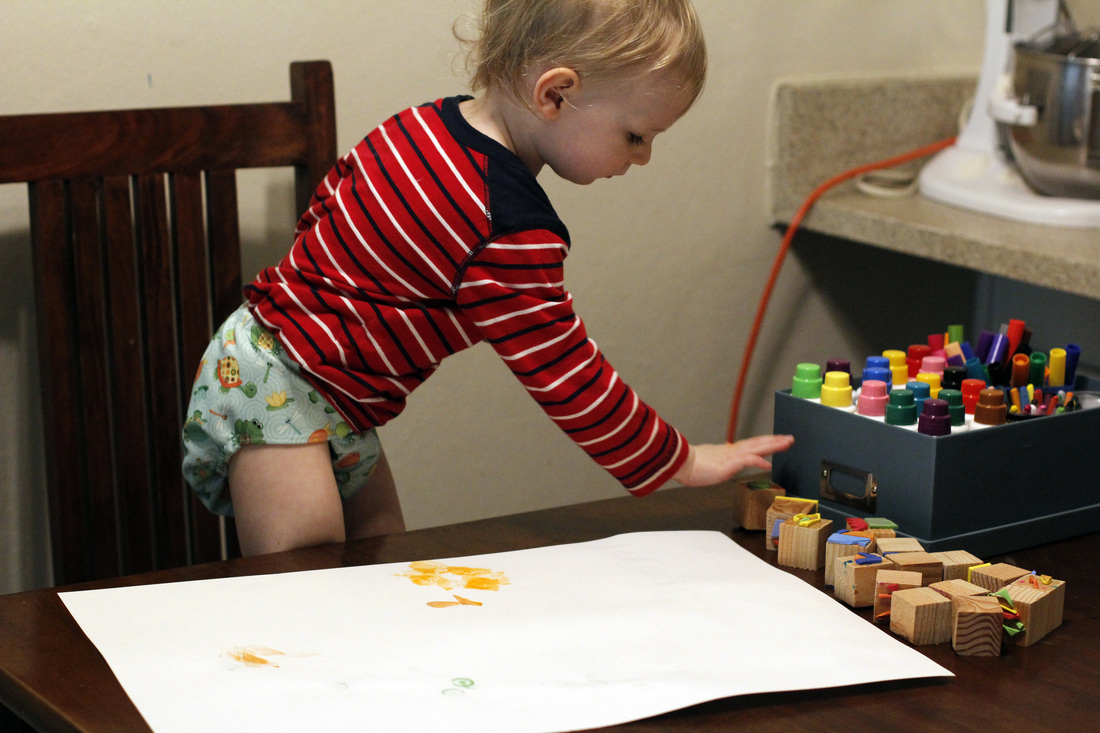
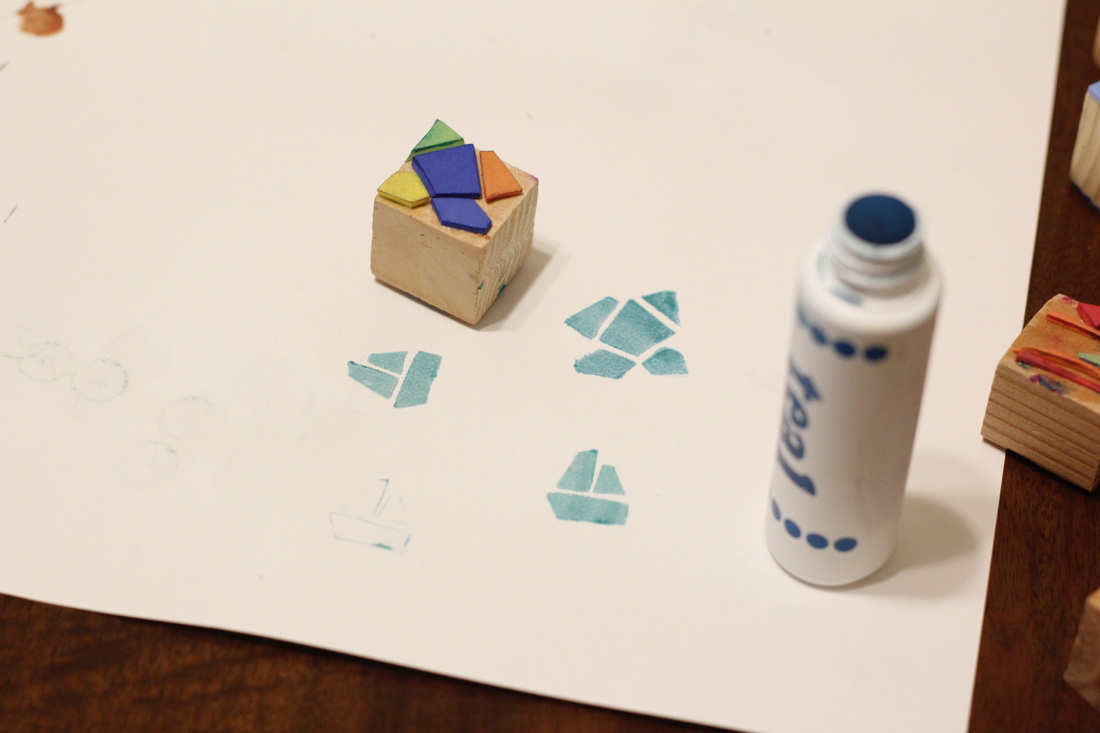
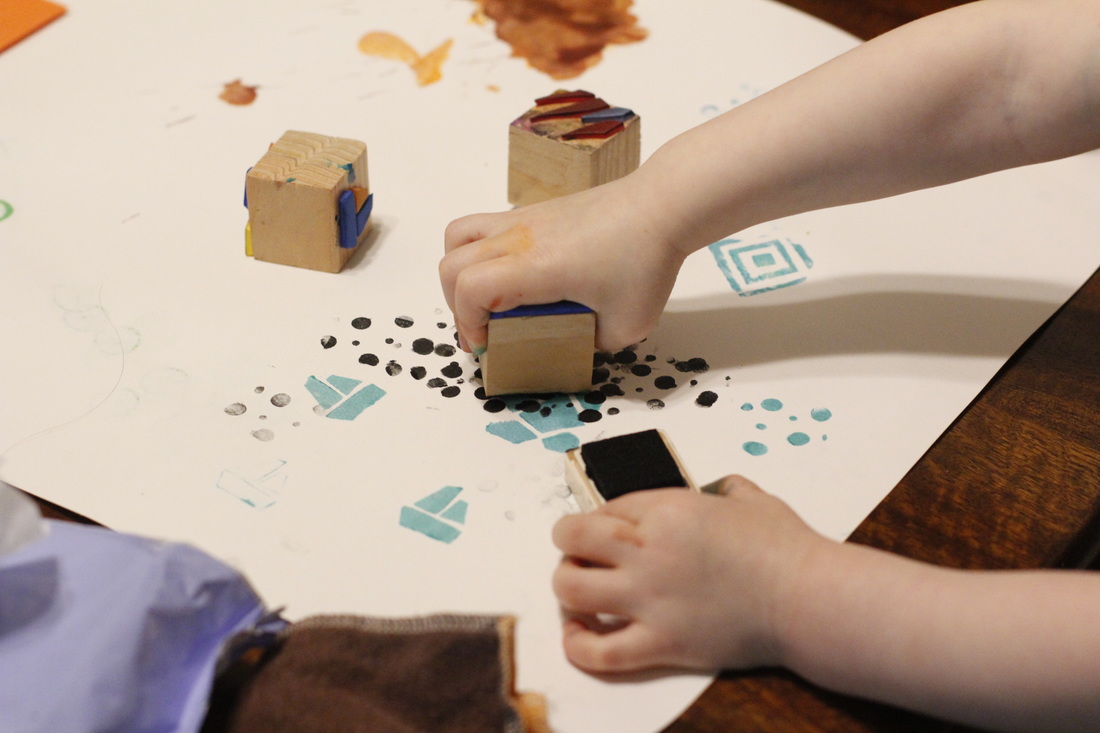
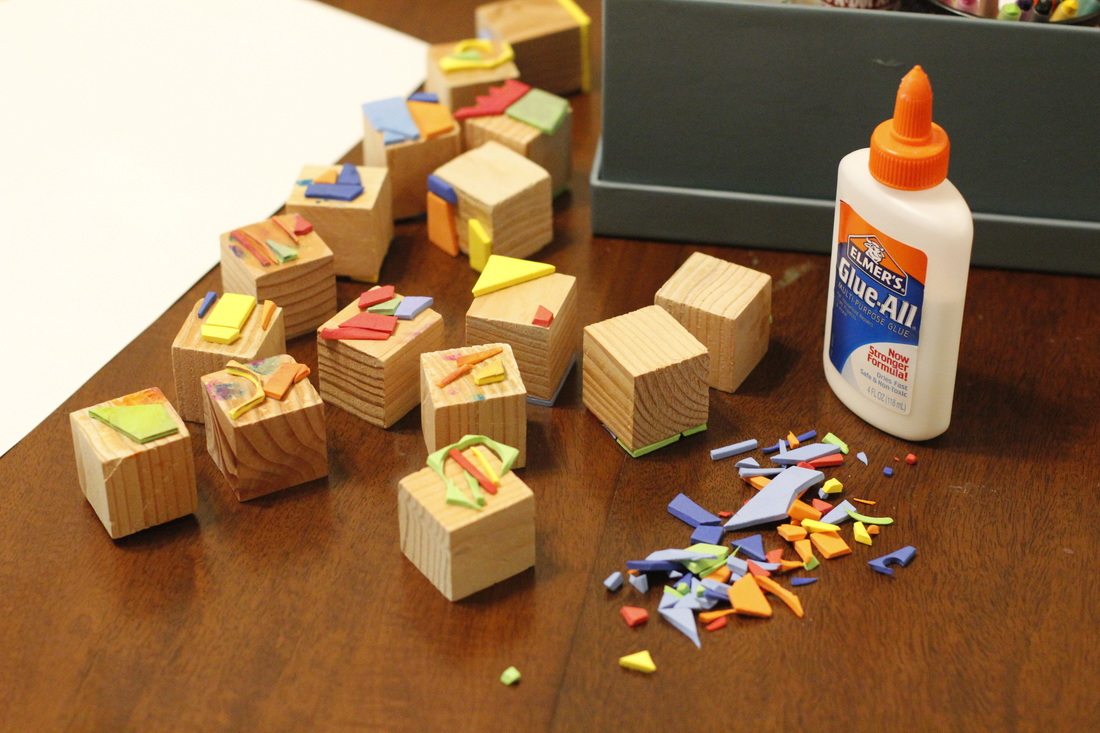
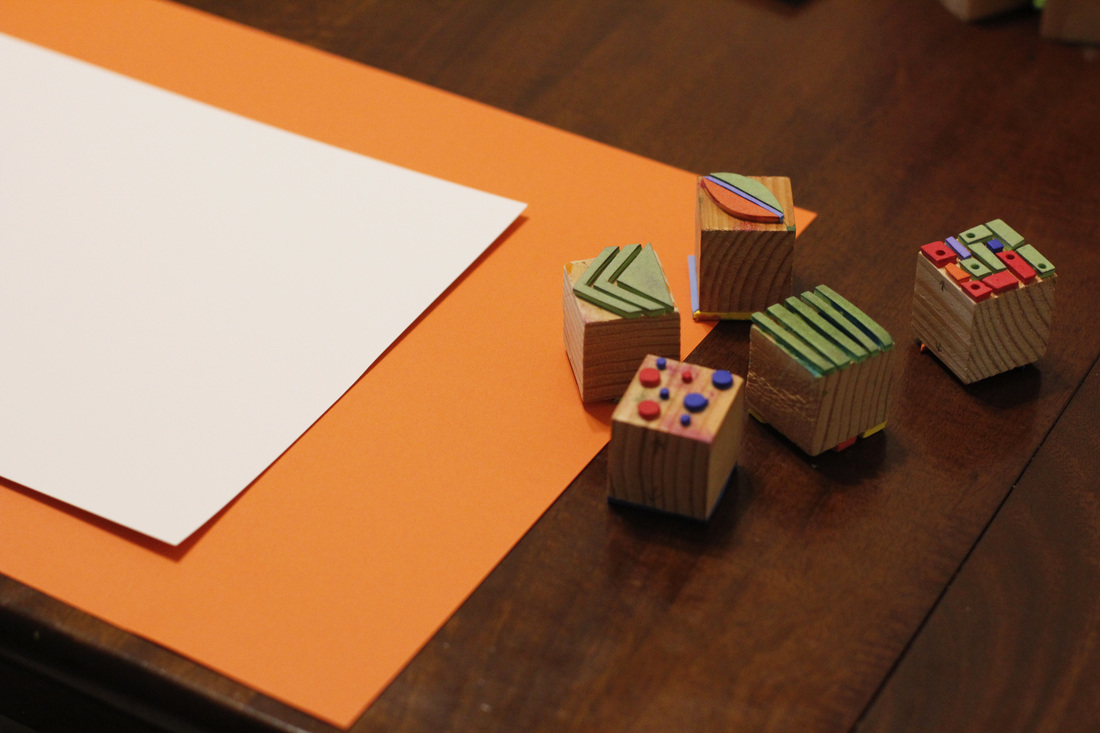
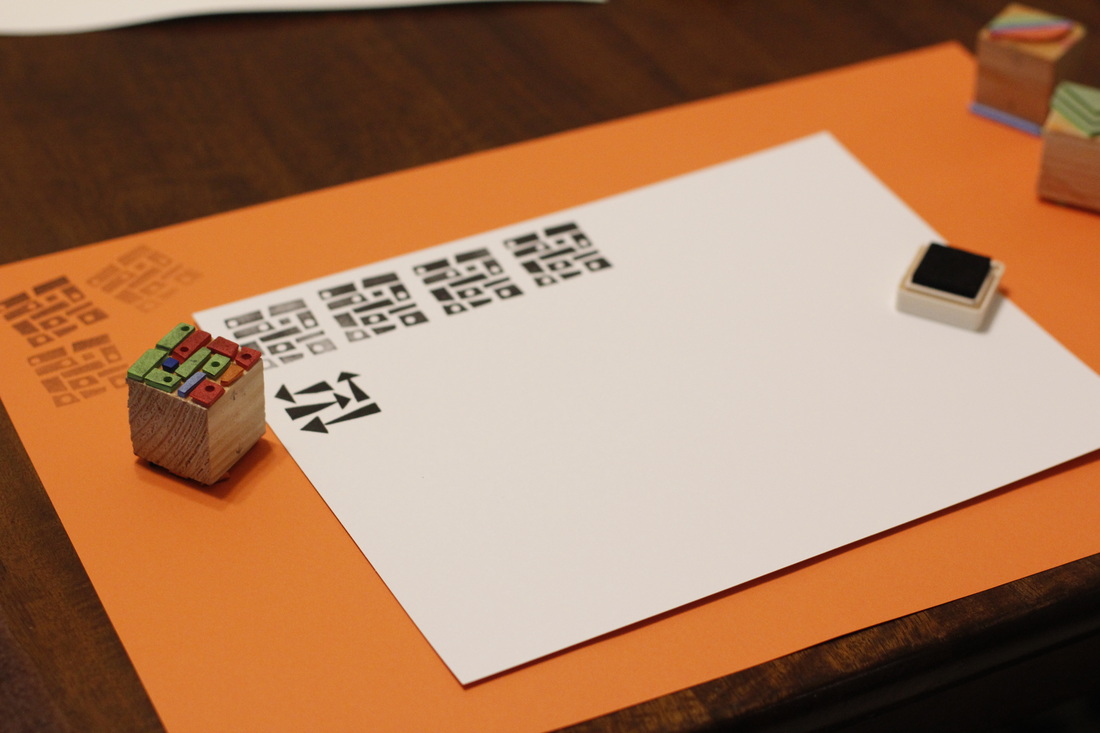
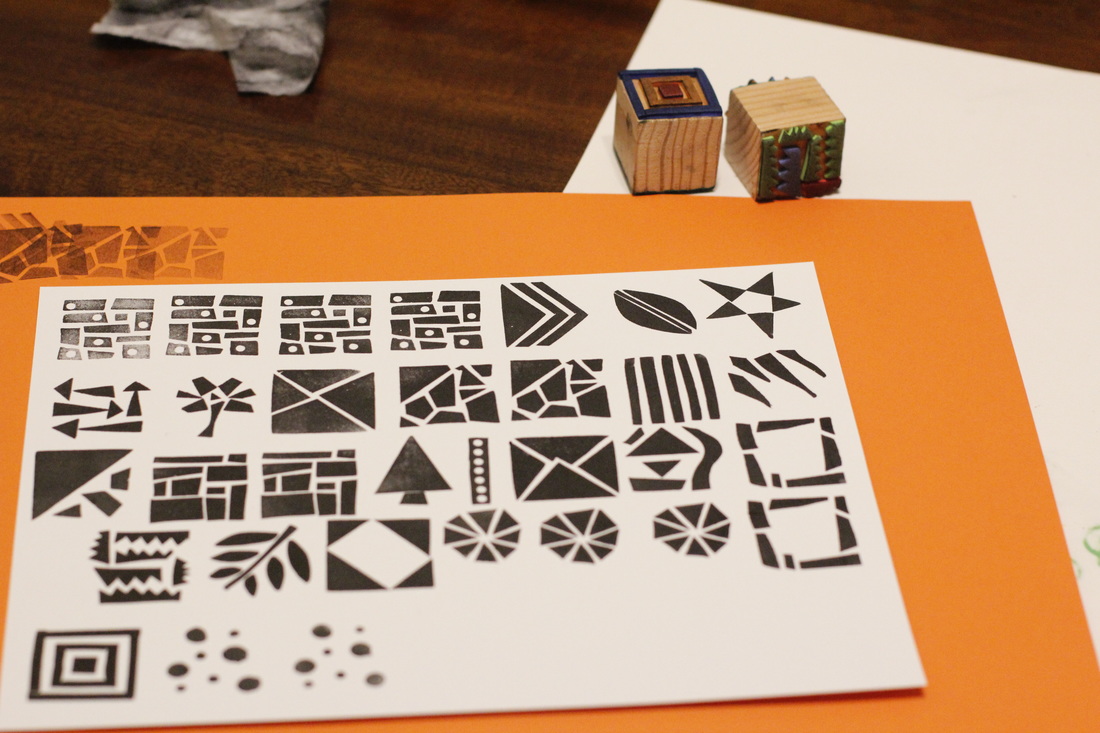
I did two stamps on each block to maximize the number we could make, though you could probably do them on more sides if you don't go all the way to the edges like I did on many of them. There were so many foam pieces that it actually took us several days to glue them all (in fact, we ran out of blocks before we used all the foam). By the third day of stamp-making, Goen was actually gluing pieces right alongside me. After the glue was dry, we used do-a-dot paint markers to ink the stamps. There are pros and cons to the paint markers, of course. Lots of paint comes out so it inks the foam quicker than an ink pad, but it can also glob around the edges and prevent perfect impressions. Also, rubbing the paint marker across the foam shapes roughed up the sponge tip quite a bit. However, considering that I was doing this as a kid-friendly craft, I think I would still go with paint markers and get out the ink pads when the kid is in bed.
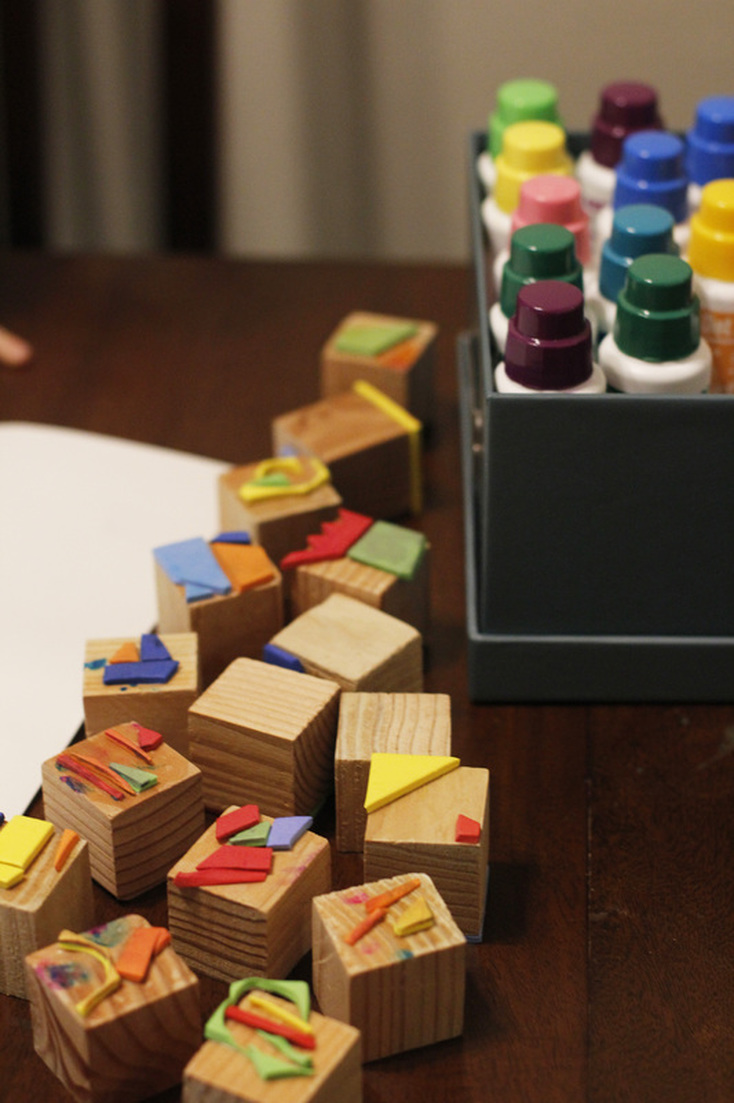
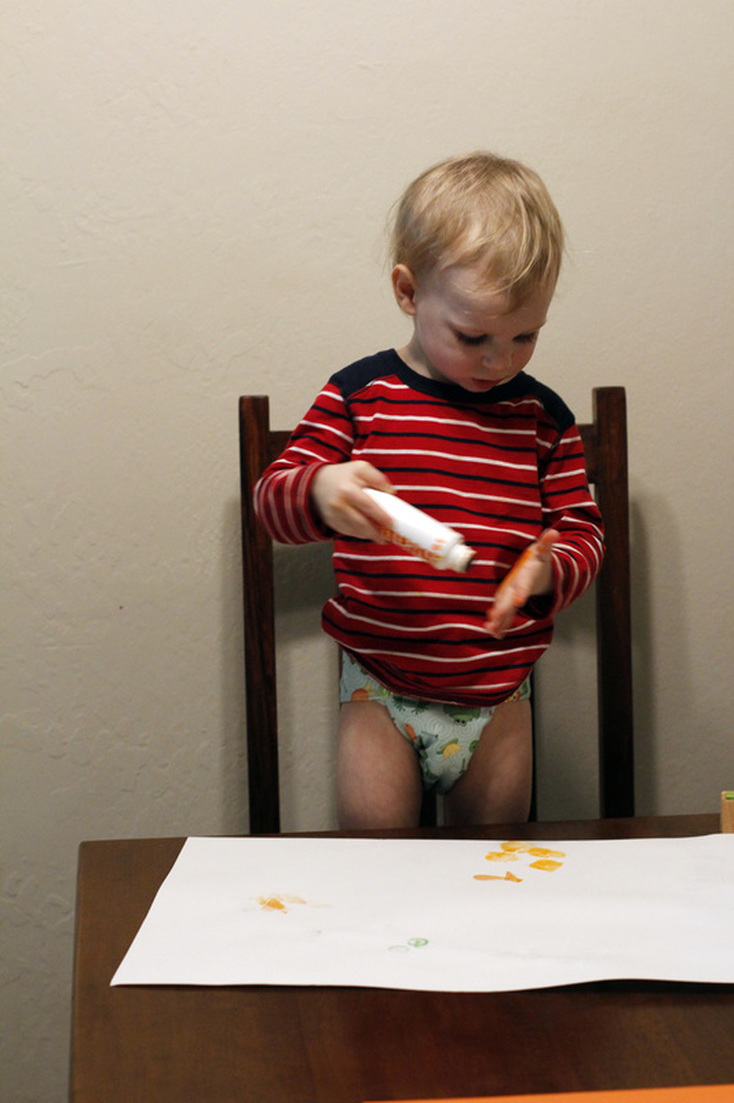
The toughest part for me was staying "hands off" and letting him do the inking and stamping (and gluing) by himself. It's not about making it "perfect." Lay a sheet or towel down if you're worried about a mess. But, really, the best thing is to just make sure you use washable paint or ink. Oh, and one other tip. Don't tell your kid not to paint on themselves. I tried that and it just caused him to "hide" on the carpet next to his chair where he was far more likely to make a mess on the floor and walls than if he was at the table painting his hands. Tables are easy to clean, walls and carpet are not.
I had so much fun making and using these stamps. I made repeating patterns by rotating the blocks to see how they would look. Some of them were so interesting that I want to digitize them and design some fabric through Spoonflower. I've already got my impressions made. I'll let you know how it turns out. In the meantime, get stamping!
Making Stamps with Kids
You know how there are some projects that your kid likes to do, but that you find boring, and vice versa? Well, I found an art activity that my 2 1/2-year-old and I can do together and both enjoy. Stamp-making! It's nothing fancy, just some wood blocks, glue, and foam pieces, but it made for hours of fun and art.
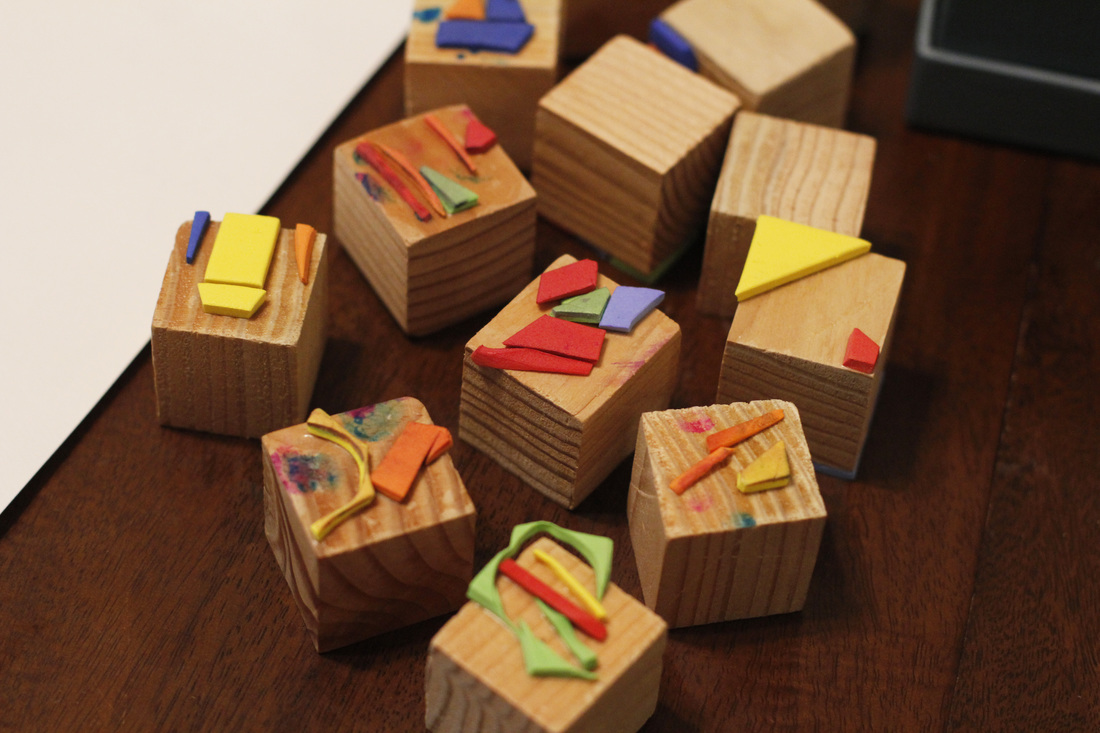
One of the benefits of being married to a teacher is that fellow teachers are always getting rid of interesting things. One of those was a bag of 2 x 2 blocks that had been cut from a strip of lumber (yay for free stuff!). None of them were exactly square, but that didn't matter much. In fact, almost any wood scraps will work, so check your garage or the scrap bin at your local hardware store. Then I bought a package of large foam tangrams from the dollar bin at Target. I like the smaller pieces rather than a sheet of foam since they can be held and cut more easily. After opening the package, I let Goen loose on the shapes with a pair of scissors (setting aside a couple for myself to cut more specific designs). He happily cut away while I used plain white glue to attach the shapes he cut onto the wood blocks. Most of the pieces he cut were completely random triangles and quadrilaterals, but I placed them on the blocks to make interesting patterns. I even pulled out my hole punches and punched holes in the foam to make dots and "negative space" dots. Cutting stripes and curves created interesting designs, but my favorite was cutting spikes and chevrons. I will say that the foam is hard to cut in a curve with regular scissors, so don't expect to make intricate designs. Another fun thing is to use a pointed tool to etch into the surface of the foam. You can get way more detailed here than with cutting.
One of the benefits of being married to a teacher is that fellow teachers are always getting rid of interesting things. One of those was a bag of 2 x 2 blocks that had been cut from a strip of lumber (yay for free stuff!). None of them were exactly square, but that didn't matter much. In fact, almost any wood scraps will work, so check your garage or the scrap bin at your local hardware store. Then I bought a package of large foam tangrams from the dollar bin at Target. I like the smaller pieces rather than a sheet of foam since they can be held and cut more easily. After opening the package, I let Goen loose on the shapes with a pair of scissors (setting aside a couple for myself to cut more specific designs). He happily cut away while I used plain white glue to attach the shapes he cut onto the wood blocks. Most of the pieces he cut were completely random triangles and quadrilaterals, but I placed them on the blocks to make interesting patterns. I even pulled out my hole punches and punched holes in the foam to make dots and "negative space" dots. Cutting stripes and curves created interesting designs, but my favorite was cutting spikes and chevrons. I will say that the foam is hard to cut in a curve with regular scissors, so don't expect to make intricate designs. Another fun thing is to use a pointed tool to etch into the surface of the foam. You can get way more detailed here than with cutting.
I did two stamps on each block to maximize the number we could make, though you could probably do them on more sides if you don't go all the way to the edges like I did on many of them. There were so many foam pieces that it actually took us several days to glue them all (in fact, we ran out of blocks before we used all the foam). By the third day of stamp-making, Goen was actually gluing pieces right alongside me. After the glue was dry, we used do-a-dot paint markers to ink the stamps. There are pros and cons to the paint markers, of course. Lots of paint comes out so it inks the foam quicker than an ink pad, but it can also glob around the edges and prevent perfect impressions. Also, rubbing the paint marker across the foam shapes roughed up the sponge tip quite a bit. However, considering that I was doing this as a kid-friendly craft, I think I would still go with paint markers and get out the ink pads when the kid is in bed.
The toughest part for me was staying "hands off" and letting him do the inking and stamping (and gluing) by himself. It's not about making it "perfect." Lay a sheet or towel down if you're worried about a mess. But, really, the best thing is to just make sure you use washable paint or ink. Oh, and one other tip. Don't tell your kid not to paint on themselves. I tried that and it just caused him to "hide" on the carpet next to his chair where he was far more likely to make a mess on the floor and walls than if he was at the table painting his hands. Tables are easy to clean, walls and carpet are not.
I had so much fun making and using these stamps. I made repeating patterns by rotating the blocks to see how they would look. Some of them were so interesting that I want to digitize them and design some fabric through Spoonflower. I've already got my impressions made. I'll let you know how it turns out. In the meantime, get stamping!
28 Jan 16:16
Month of Letters/InCoWriMo
by Kathy Zadrozny
February is nearly here. It brings with it so many ways to write more letters. Between Valentines, InCoWriMo and Month of Letters, I expect to see some very full mailboxes!
First up is Month of Letters. This annual challenge is one where I think every L.W.A. member should participate. The rules are simple.
1. Write a letter every day.
2. Return every letter you receive.
That's it. The creator of Month of Letters is my pen pal and L.W.A. member Mary Robinette Kowal. She says you don't have to write on Sundays or Presidents Day, but I think you should anyway. You can get invovled by signing up over at Month of Letters. They have a fun things section and an active blog for letter projects. As a bonus, this is a Leap Year. One extra day of letter writing! To help you out, we've produced an L.W.A. Member Month of Letters Survival Kit. It has 25 different mailable pieces: 5 full sheets, 10 half sheets, 10 assorted postcards, and 15 envelopes (5 air mail and 10 Letter Writers Alliance envelopes). It all comes in a portfolio envelope so that you can take it on the go.
Next, InCoWriMo as the cool kids call it. That's International Correspondence Writing Month. If LetterMo (so many nicknames!) isn't enough for you, why not take on this project as well. It's a similar concept. Write one letter, everyday of the month. You can take a picture of your letter and submit to the InCoWriMo site. It might be their "Letter du Jour" on their blog.
Time to get offline and get busy! Write more letters!
Sithel likes this
23 Jan 02:42


Christian Dior | “Junon” | 1949HAPPY BIRTHDAY CHRISTIAN DIOR!
Christian Dior | “Junon” | 1949
HAPPY BIRTHDAY CHRISTIAN DIOR!
23 Jan 02:37


(I couldn't find this exact book on Amazon, but here's a similar, more expensive version that appears to have the same stickers.)


DIY: Turn Any Shaped Stickers Into Reusable Resin Pins!
by Jen
SithelThis "doming stickers" thing is interesting... makes me want to try it with some custom pins... no idea what those might be. Nope. None at all. Not the faintest of ideas....
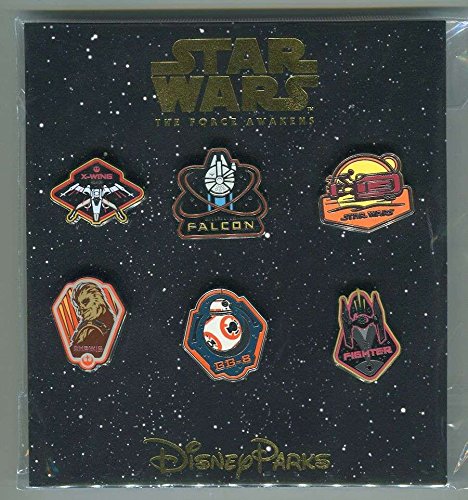
I'm not a big pin collector, but I recently fell for this new Star Wars set at Disney:

Trouble is, it's $30. THIRTY DOLLARS. Nope nope nope.
In fact, there are a lot of new Star Wars pins with awesome designs:


Single pins start around $8 each.

pics via Disney Pin Blog
So imagine my delight when, just a few days later, I spotted this $3 sticker book at Big Lots (yes, Big Lots) with stickers of every single new pin design:


Jackpot!!
(I couldn't find this exact book on Amazon, but here's a similar, more expensive version
that appears to have the same stickers.)So I bought the stickers, broke out some old resin from Little Windows, and made my OWN pins:

Ta-daa!
The process is surprisingly easy, and yields sturdy plastic pins with a beautiful, pillowy dome on top:

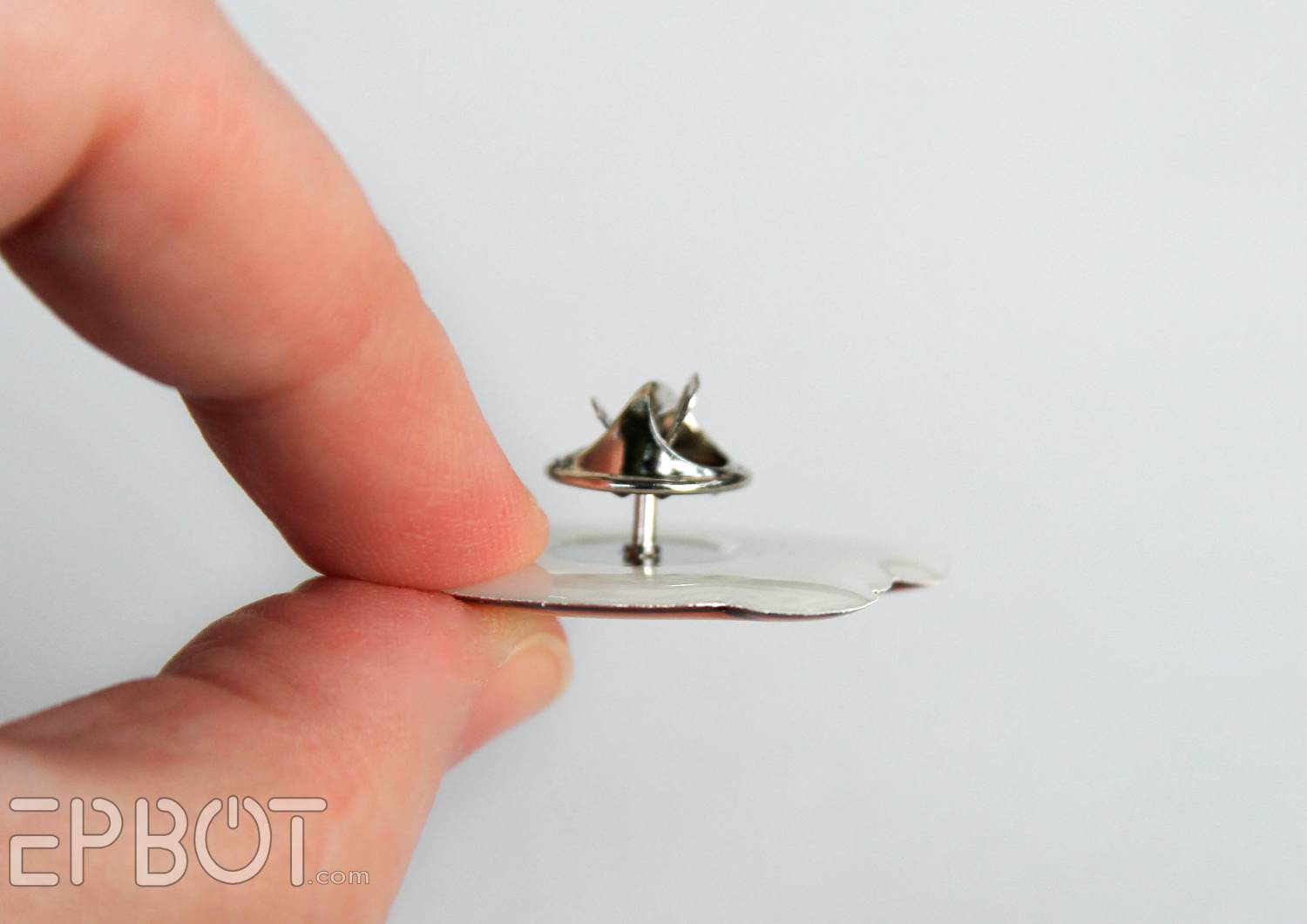
Now, you KNOW you have stickers laying around the house that you want to turn into re-usable pins, right?
RIGHT.
So here's what you'll need:
» Read MoreRIGHT.
So here's what you'll need:
22 Jan 19:55
Scenario: Cinncinati Grey Variant One
by Nathaniel Ford
Sithel!!! This was fun to wake up to. Are we looking at the first fragments of 4T fan fiction? (Suko's epic volumes of text are too "official" to count as fan fiction... but you're the GM, can it therefor not be "fan" fiction?)
Clearly what we have on our hands here is the beginning of a glorious tale recounting the passionate love affair of Siobhan/Victor.
Remember your training
I don't know what a rolodex is, but I have one full of scenarios in my head. This one is Cinncinati Grey. Societal collapse, slow enough to initiate durable asset allocation, with a 'finishing move' that prevented proper recording of circumstance and go-forward standing orders. Reconstruction by unknown elements accomplished. Therefore, fall back to general orders. Ensure survival. Evade capture. Identify friendly descendent governments. Re-establish governmental primacy.
Simple.
I can't handle this.
Societal displacement is traumatic. Remember your training.
I fucked up not getting captured. Nothing in the record indicates anyone else survived. Except... well. I don't know if he did. These bastards took me down fast enough. Remember your training. They took me down because I was slow and weak, probably as a result of an abnormally long pod sleep. I would have mopped up the tatted one. All knuckles and bone, no brain. That grizzled bastard with the gun: he might have taken me with him if I'd given him a centimeter, but I outclass him. The only thing he had was raw nuts. Which he almost lost.
Remember your training. Trace it back.
I was slow and weak. Abnormally long sleep. Weak available records, no wake-up dump. Base defense systems offline or erratic. Partial intra-network connectivity. Variant One: Hack.
They fucking hacked us. They didn't root, they just got in. Just enough to killshot us. I wonder how it happened. I wonder if anyone else is alive. I wonder how the hell I'm alive. The engineer who planned the redundant system with the right cryptographic protocol to ensure partition, fallback, sealing and my survival is dead of old age - at the least. Dead, and I'm alive. And locked in a cage and alone and fuck.
Remember your training. Stay calm.
My cell is small. Nothing I can use as a weapon. There is no network here. There is a cot, and it's too short. Standard prison-model door, with a slot for food and a small window. They mostly keep it open, but I think the mirror also has a camera. Watching me sleep, pace, stretch, dress, undress, use the fucking toilet. I don't get claustrophobic. I don't get claustrophobic and I'm not precious.
Sometimes I write things. And then I forget where I was going with them. Pretty sure this was shout out from an alternative perspective to the Fourth Terminus players. I offer it up as tribute to the gods, for managing to revive the blog after a disastrous update crippled it a while back.
21 Jan 16:22
Dolores Park Glow-in-the-Dark Reopening Rescheduled
by Laura Wenus
Mark your calendars, park lovers: Dolores Park’s long-awaited south side reopening has been officially rescheduled for Wednesday, January 27 from 4 to 7 p.m. after rain delayed the date, originally set for last Thursday.
The northern side’s reopening in the summer was marked by a silent disco – the southern side will get a glow-in-the-dark bash. Attendees are asked to arrive decked out in bright lights. And of course to leave no garbage in the park after the festivities.
The Recreation and Parks department has also put together a video to get you excited for the reopening:
20 Jan 06:44
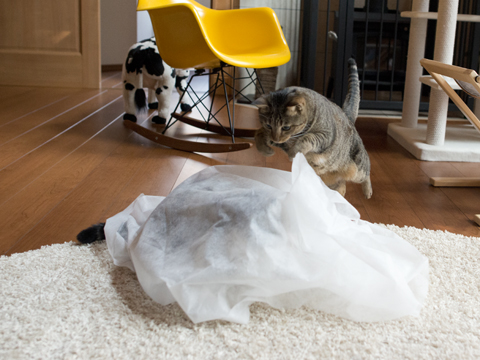
白いベールに包まれたまるを襲うはな。
Maru's under the white cloth.
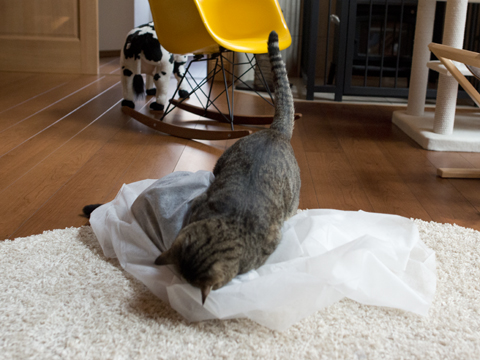
はな:「とーうっ!」
Hana:[Yes, I caught it!!]
選手交代。
Hana is under the white cloth this time.

はな:「わくわく。」
Hana:[When will he come?]
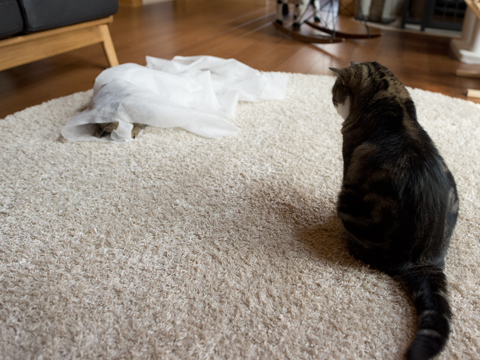
はな:「わくわくわく。」
Hana:[Right now???]
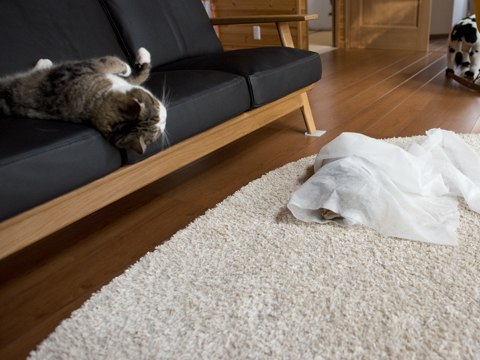
まる:「さてと、昼寝でもするか。」
Maru:[I am sleepy. I take a nap.]
まるです。
by mugumogu
白いベールに包まれたまるを襲うはな。
Maru's under the white cloth.
はな:「とーうっ!」
Hana:[Yes, I caught it!!]
選手交代。
Hana is under the white cloth this time.
はな:「わくわく。」
Hana:[When will he come?]
はな:「わくわくわく。」
Hana:[Right now???]
まる:「さてと、昼寝でもするか。」
Maru:[I am sleepy. I take a nap.]
Sithel likes this
15 Jan 04:04
まる:「ヨーグルトをいただきます。」
Maru:[I like eating yogurt in morning.]
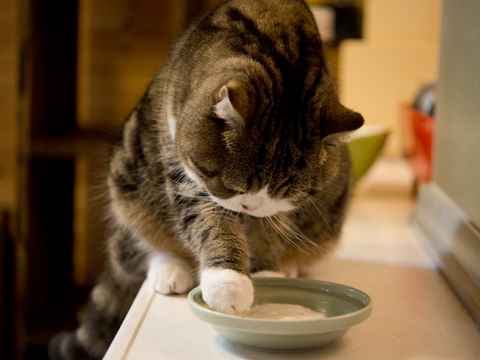
まる:「ちょいちょい。」
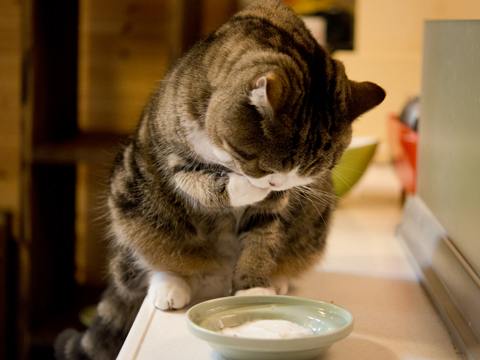
まる:「ぺろぺろ。」
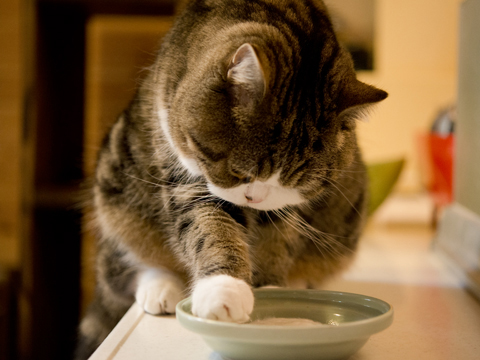
まる:「ちょいちょい。」
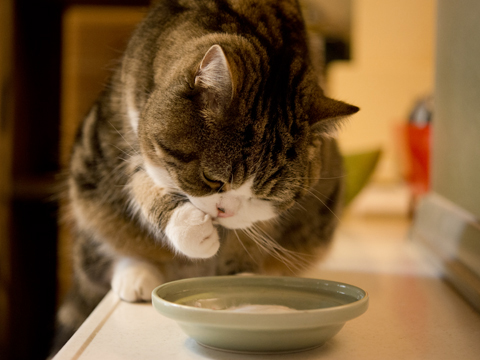
まる:「ぺろぺろ。」
ヨーグルトを手で食べるとべちょべちょになりますよ!
Hey Maru, if you eat yogurt by paw, your paw will become dirty very much.
まるです。
by mugumogu
まる:「ヨーグルトをいただきます。」
Maru:[I like eating yogurt in morning.]
まる:「ちょいちょい。」
まる:「ぺろぺろ。」
まる:「ちょいちょい。」
まる:「ぺろぺろ。」
ヨーグルトを手で食べるとべちょべちょになりますよ!
Hey Maru, if you eat yogurt by paw, your paw will become dirty very much.
15 Jan 04:04
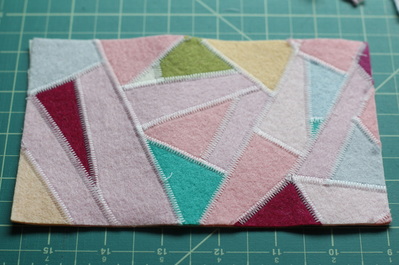
Your felt patchwork is now ready to be sewn into your next project. This here was made into a cute little pouch for business cards, but you could also use it for softies, bunting, ornaments, quiet books, and more. Happy scrap-busting!
Patchwork Felt Tutorial
If you have bits of scrap wool felt hanging around your craft room that you just can't throw away (it's expensive stuff, after all) but don't know what to do with, today's tutorial is for you. I'll show you a fun way to use those leftover bits to create a scrappy felt patchwork that can be used to make softies, accessories, or other projects that call for felt.
Patchwork Felt Tutorial
Materials:
- Scraps of wool or wool blend felt
- Ruler
- Rotary cutter and matt
- Sewing machine
- Thread
- Fusible web (optional)
- Cotton fabric (optional)
Instructions:
Patchwork Felt Tutorial
Materials:
- Scraps of wool or wool blend felt
- Ruler
- Rotary cutter and matt
- Sewing machine
- Thread
- Fusible web (optional)
- Cotton fabric (optional)
Instructions:
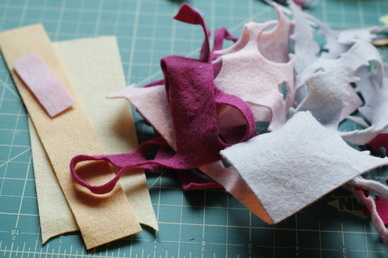
Gather all your felt scraps. They can be larger pieces, smaller pieces, pieces with straight sides, or pieces with funky shapes cut out of them. With the right tool, even tiny bits can be used here.
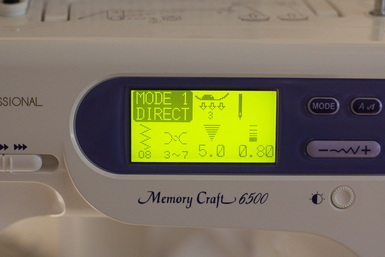
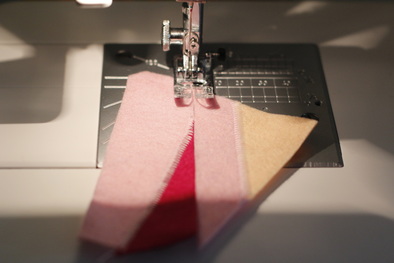
Set your sewing machine to the widest zig zag stitch with a short stitch length. I chose 0.8 for my stitch length, but you can experiment to find what you like best.
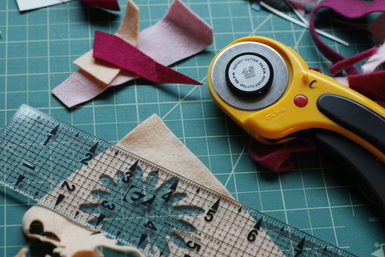
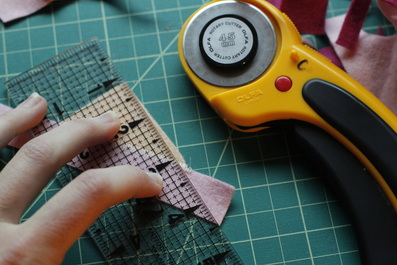
Select a piece of felt to start with. Use a rotary cutter and straight edge to cut it to the size and shape you want. It helps if this first piece is large enough to easily hold with your fingers as you sew. You can add tiny bits later or cut it down after you sew.
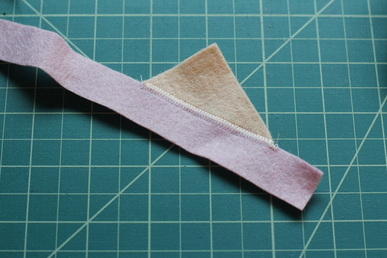
Select a second piece with a side at least as long as the side you are joining it to (or the length you want the piece to be after cutting it down). Longer is fine since you will trim it down. You have the option of cutting the second piece to the right size either before or after sewing. Lay the pieces on your sewing machine and arrange them so that the edges meet but do not overlap. Place the felt pieces under your presser foot so that the line where they join falls about at the center of the zig zag stitch. Lower the presser foot and secure the thread with a backstitch or two. Continue sewing until the end of the line, then backstitch to secure.
Use your rotary cutter and matt to trim the uneven edges of the resulting patchwork piece. All edges should be straight to make joining the next scraps easier. Don't worry if you cut off your securing stitches. They will be stitched over later when you add more scraps.
Continue trimming and adding scraps to the patchwork. You can keep building onto the original piece only or you can create patchwork sections that will be joined together (as I have done here).
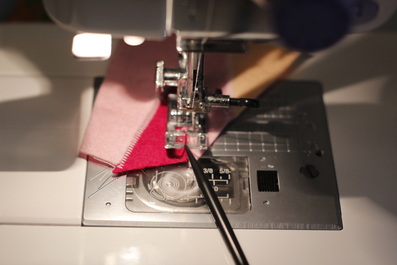
To keep sharp corners and small pieces in place while you sew, it helps to have a stiletto or other pointed tool. My tool here came from a craft kit for kids. You could also use a sharpened pencil that has been dipped in glue and dried
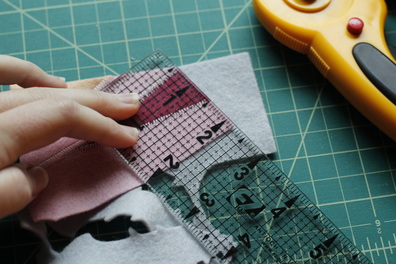
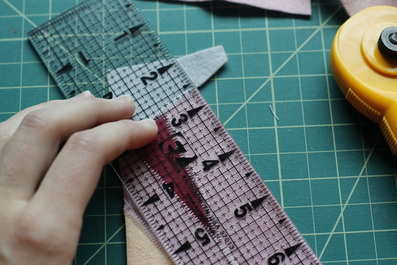
If you want to cut a specific angle from a scrap of felt, simply lay the patchwork on top of the scrap until only the portion you want to fill in the space is sticking out. Lay your ruler over the patchwork so that it meets up with the edge, then cut the scrap piece along that edge.
After sewing the scrap to the patchwork, trim any sides that are not straight.
Continue adding scraps and segments until the felt patchwork is the size you want.
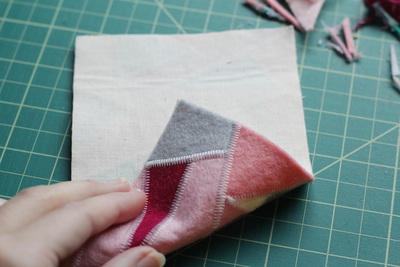
Once you patchwork is complete, you can leave it as is or line it with fabric to hide the stitching on the back side. To line it, iron fusible web to the back side of a piece of cotton fabric. Trim the fabric to size then iron it to the back of the patchwork felt. Trim any loose threads.
Your felt patchwork is now ready to be sewn into your next project. This here was made into a cute little pouch for business cards, but you could also use it for softies, bunting, ornaments, quiet books, and more. Happy scrap-busting!
Sithel likes this
12 Jan 05:20


I watched the latest Star Wars and produced this sketchdump...
I watched the latest Star Wars and produced this sketchdump >w>
Nathaniel Ford, Sithel likes this
07 Jan 17:24
Labelling
by Nathaniel Ford
SithelThe bankruptcy info is news to me! Good to know. Also good to see "Yellow Cab has no plans to close if it can successfully restructure" since FlyWheel (cab) is my preference far above Uber or Lyft. I pay more but am happy with the constant rates, safety of regulation, more professional drivers, and more serious drivers.
"a broad range of specific signals that can be interpretted as-needed by proximal entities" an excellent idea... usually only made possible via standards committees that take years to iron out all the details. Standardizing a schema beyond a single corporation's walls is hard.
Apparently, the biggest taxi service in San Francisco is getting ready to file for bankruptcy, in part due to the competition from ride-sharing services (L/Uber), and in part due to legal settlement obligations it can't keep up with.
I hate riding in taxis. Apart from feeling that the price point is too high (4x the bus instead of 2x that ride sharing tends to work out to) and that getting the service is not-guaranteed (either when you call or when you try to get one on the street), I feel chronically unsafe. Cab drivers seem to delight in driving in unsafe ways: after all, speed of turnover is, effectively, how much they get paid.
It does bring up the question of whether sharing services are better. Intuitively I want to think so (and my biased experience bears this out): ride sharing drivers have more personal investment on the line. They own the car. Their insurance and daily cost of life will be impacted. I can actually rate them, affecting their ability to work. They have incentives to drive well.
The insurance bit is interesting, though: Uber has claimed in the past that drivers in accidents while 'off-duty' are not their responsibility. In this case the driver was apparently 'between rides'.
Now, many ride-sharing services are required to carry insignia on their windows. There are a number of reasons for this: places like the airport control who can perform what services where, and require labelling. It also helps passengers not get into the wrong car.
These labels are static, though, and we are moving quickly to an economy wherein a vehicle could be truly multi-purpose. UberEats is utilizing Uber drivers to deliver food. A given driver might be driving for themselves, for Uber, for Lyft or for another service. Generally, this is good because it provides flexibility for the given resource (driver + car). The economics of it are lovely.
But, as in the above-noted accident, it also means labels are sometimes wrong, and herein I think there is a real opportunity. Being able to identify a vehicle's current purpose has a number of benefits:
- Branding means people can identify what they're looking for in the river of things moving by them.
- A singular dynamic label means a vehicle only needs to signal what it is doing now, not all the things it could be tasked for, reducing confusion.
- External institutions/agencies/systems can identify current vehicle use when it passes into their domain. Use charges can be more easily identified. (Combining visual with non-visual broadcast would help here.)
- Airports, car-pool lanes, bridges, etc.
- Police, when they see a violation, are aware there is a third party involved.
- Vehicles can 'turn off' commericial uses and become anonymous private vehicles again.
- Public-interest needs can be broadcast, such as when a vehicle is being used for emergency transport out of need, or when occupants are in distress.
Autos are starting to be used in a more flexible capacity, and integrate more advanced technology. Is there a reason we aren't including labelling in the set of things a car should be able to do? The ability to clearly broadcast a broad range of specific signals that can be interpretted as-needed by proximal entities is a very good characteristic of a healthy network node - and what are cars if not a dynamic node moving quickly and flexibly through a large network? Without even plugging into the direct working of a car, this sort of functionality would be a solid addition commerically, and arguably privately as well.
07 Jan 17:22

Community Meeting on New SF Mission Housing Turns Ugly
by Joe Rivano Barros
SithelSo fucked up.
"...they would be against a six-story affordable housing building because its height would not fit the character of the neighborhood" is such bullshit.
These days I feel actively hostile to "local residents" of the neighborhood. Fuck it all. Knock the old buildings over and build 6+ sky scrapers.
In a testy community meeting Wednesday night that saw homophobic remarks shouted across the room and frequent interruptions of speakers, a new 55-unit market-rate building planned for Mission and 25th Streets drew ire from a crowd that voiced a central theme: Build 100 percent affordable housing on the site.
The meeting concerned a planned development at 2918 Mission St., a site next to the Childhood Development Center and currently occupied by a laundromat and parking lot. Robert Tillman has owned the laundromat there since 1998 and bought the land in 2006 after an eviction attempt by the previous landlord.
The six-story complex would include seven below-market-rate units in accordance with city law — and may be bumped up to 68 units overall if Tillman uses a state density bonus law that rewards him for including those below-market-rate units. During the meeting he expressed an openness to selling the building to the city to build affordable housing, but at what he called a fair price.
Because the laundry business took a hit in the last decade, Tillman sought to build housing on a spot that would only displace his own business, a no-brainer in his eyes.
“If you can’t build housing in San Francisco at that spot, then you can’t build it anywhere,” he said.
The community meeting tested that statement.
In one of many tense moments, Noemi Sohn, an organizer with the Alliance of Californians for Community Empowerment, was interrupted in an exchange that led a woman to tell a man to “go back to the Castro” because he did “not belong in the Mission.”
“I am tired of these meetings,” Sohn began, saying community meetings never had good resolutions. “I’m sorry, [but] poor and working class people are no longer —”
“Basically we’re telling you San Francisco is not for sale, the Mission District is not for sale. Let’s do the right thing,” interrupted Rafael Picazo, a Mission resident who easily drowned out Sohn’s attempts to finish her thought.
“The right thing would be to let that lady finish talking,” said a man in the back. “That’s the right thing.”
“You don’t know what the hell you’re talking about,” countered Picazo.
“Yeah I do,” the man shot back. “It’s very rude of you, she was trying to speak, let her finish.”
“I don’t care what you say, I ain’t even tripping,” said Picazo before a woman named Esther addressed the man in the back.
“That doesn’t matter to us, gay man back there,” Esther said. “Go back to the Castro where you belong. You don’t belong in the Mission.”
The crowd immediately hissed and shouted down the comment, and Picazo distanced himself from Esther by saying “it had nothing to do with that.”
The development from the back, bordering Osage Alley.
But the exchange revealed the irascibility of a crowd that bounced between pertinent comments and high-volume dissent centered on a wide-range of topics: too much parking, too little parking, the height of the building, the loss of a laundromat, a lack of community outreach, and the project’s effects on the school next door.
“Their privacy is going to be at risk when you have balconies overlooking the school,” said Zoila Manzan, a parent with a child at the school next door. She also pointed to the sound and pollution dangers that construction might bring, and said the project would be a major disruption. “I should feel safe where my child is at.”
Tillman agreed, and said he was also concerned about having parking for the building go through Osage Alley where children might be at risk, but that the city would not permit him to have an entrance on Mission Street.
But beneath the various back-and-forths lay the meat of the issue: The crowd wanted the project to be fully affordable and feared the contribution such housing would make to displacing existing residents.
“We are opposing this project as is,” said Erick Arguello, a member of the merchants’ association Calle 24. “It’s not meeting any of the needs of this neighborhood. We need this to be 100 percent affordable housing.”
Though it was unclear if opposition would vanish even if the project were fully affordable, leading Tillman to ask: “Do all these objections still apply if it’s 100 percent affordable?” People seemed split on the issue.
Marie Sorenson from Calle 24 and Lou Dematteis, a photographer and activist who lives nearby, said they would still be against a six-story affordable housing building because its height would not fit the character of the neighborhood. Sorenson said high-rises create wind tunnels and was adamant that the Mission is a “two to three story community,” while Dematteis said housing is often used as an investment and doubted that denser buildings would necessarily ease housing pressures.
Arguello too decried the Manhattanization of San Francisco and the height of the building, among other complaints, but did say it would be a step forward to have the project become fully affordable.
“The best thing to do is to sell the property to the city,” he said.
Something the property owner said he is willing to do, under one condition: The city must buy the land from him, entitlements and all, for $250,000 a unit — the same price it recently paid to transform a 72-unit market-rate building at 490 South Van Ness Ave. into affordable housing.
“I agree it would be an absolutely good place for [affordable housing],” said Tillman, the property owner. “Where do I sign? If not, can you please let me build [my building], so that I can build some housing in the Mission?”
But for the project to be fully affordable, the city would need to become involved to raise the funds necessary to buy the land and develop the property.
Tillman is meeting with Supervisor David Campos on Thursday and said he is open to selling, but not for “less than it’s worth.”
Dairo Romero, for one, is unconvinced. A community planning manager at the Mission Economic Development Agency and nearby resident, Romero said he did not want developers to think they should be able to get $250,000 per unit as with 490 South Van Ness Ave., a sale that was controversial because developers originally purchased the site for $2.5 million but sold it to the city for $18.5 million.
“We shouldn’t be giving this profit to these people,” said Romero, speaking in his capacity as a resident. “We don’t want property owners to start to think that they can ask for a lot.”
Tillman said he would not sell it for less because he’s already sunk a chunk of his money into beginning the entitlement process.
Whether the project goes fully affordable or not, the meeting, just the first in a long application process, revealed the heated opposition — some on-point, some not — developers face to the idea of another mostly market-rate development in the Mission District.
“There’s a lot of anger, a lot of pain,” said Arguello about comments during the meeting. “When we look at it, what are the benefits [this project] is getting for us?”
Correction: A previous version of this article did not specify that Dairo Romero was speaking as a nearby resident and not as a representative of the Mission Economic Development Agency.
Sithel likes this

01 Jan 21:56


2015: the books I read
by robichaux
SithelI worked with Paul once, long long ago. Amazing that he read so many books in such a short time. With what little overlap I have with him, I am amused/agree with his blurbs. Might grab some ideas from this list.
I read a lot. This is both a feature and a bug. At any given time, I’ll usually be reading 3-4 different books, in a mix of electronic and physical formats. Inspired by my mom’s example, about this time in 2014 I decided to keep a book journal. Below you’ll find my list of all the books I finished in 2015, more or less in the order in which I finished them. I omitted any book that I gave up on before finishing, as well as those that I’m still working on. I didn’t think to jot down a short review for each book as I finished it, and I’m not about to take the time to do so now. I have embedded a few notes for books that I thought were particularly good. Or not.
- F5: Devastation, Survival, and the Most Violent Tornado Outbreak of the 20th Century: riveting tale of the 1973 tornado superoutbreak, set just a few miles from where I now live.
- American Sniper
- Defending Jacob: unsettling chronicle of a good kid gone bad.
- Hardwired (Walter Williams): original cyberpunk that didn’t age well.
- Girls of Atomic City (audio): historical recounting of women’s work at Oak Ridge during WW II. Incredibly annoying narRAtion.
- Lockstep
- The Counterfeit Agent: reread this to get ready for Twelve Days
- Twelve Days: might need to re-read this soon to get ready for The Wolves
- The Racketeer: meh. Not my favorite Grisham, but not bad.
- Afterparty (audio): unexpectedly moving tale of chicanery and redemption, with superb narration
- From Gym Lifter to Competitive Powerlifter: very informative, with an easy conversational style
- Daughter of the Sword (Bein): terrific mix of modern and feudal Japan, with a complex intertwined storyline that moves along swiftly.
- Year of the Demon (Bein): just as good as its predecessor.
- When Penguins Flew and Water Burned: thoroughly enjoyed this memoir of a USAF B-52 navigator. Very educational too.
- Station Eleven: as good as its reputation suggested
- Whisper of Stars: enjoyable, if implausible, novel set in a near-future dystopia
- Building the H Bomb: memoir of one of the original Los Alamos H-bomb team.
- The Heist: predictably good Daniel Silva novel.
- The Hope: I may have accidentally learned something about the formation of the State of Israel from this.
- Avogadro Corp: The Singularity: an email system becomes superintelligent. I sure hope my friends in Redmond don’t read this and get ideas.
- Stiff (audio): I love Mary Roach and this book is a great example of why.
- The Glory
- The Jakarta Pandemic
- The Park Service
- Pirates of Pensacola
- Black Flagged Alpha
- Trident Deception (audio): completely implausible. Don’t bother.
- Season in Hell
- The God Hunter: like Ghostbusters but for grown-ups.
- Flowers for Algernon
- Allan Quatermain: surprisingly entertaining relic from a long-gone era.
- Already Gone
- Angles of Attack: love all of Marko Kloos’ writing. One of the best science-fiction writers currently working IMHO.
- Robert A. Heinlein: In Dialogue with his Century, vol 1: superbly readable biography of an incredibly influential man.
- Song of Kali: read this and you’ll never want to visit India. Gross, borderline racist, and not all that interesting. Far from Simmons’ best work.
- Robert A. Heinlein: In Dialogue with his Century, vol 2: just as good as volume 1.
- Bagmen
- The Martian (audio): excellent audio treatment of one of my favorite recent books. The characters actually have distinct voices and accents thanks to the narrator’s excellent work.
- Nuclear Family Vacation: a husband-and-wife team tour major nuclear installations around the globe (including Huntsville). Interesting but dated.
- Cadillac Jukebox
- Draw Blood: second in a series of books by my friend Jason Bovberg. Cracking good zombie/post-apocalypse novel.
- To Honor You Call Us, For Honor We Stand, Brothers in Valor: excellent old-style space opera featuring a naval officer named (wait for it) Robichaux from (better yet) Nouvelle Acadie.
- On Hallowed Ground: The Story of Arlington National Cemetery: compelling story of how we got the Arlington of today. Crisply written and fast moving; full of historical trivia.
- All the Light We Cannot See: meh.
- Year’s Best Science Fiction, 32nd Annual Edition
- Mongoliad, Book 1 (audio): Awful, confused mess.
- The Devil’s Waters: Terrific novel centering on USAF pararescue jumpers.
- The Player of Games and Consider Phlebas: why have I waited this long to read Iain Banks’ Culture novels?
- Three-Body Problem: didn’t deserve the critical acclaim heaped on it. Scientifically ridiculous, culturally interesting.
- The Empty Quarter
- The Red: First Light: superb emergence-of-AI story set in the near future.
- The Red: Trials
- The Colonel’s Mistake: arresting novel set in Azerbijan and surroundings, featuring a burnt-out CIA officer. Dan Mayland is a hell of a thriller writer.
- Telefon
- The Leveling, Spy for Hire, and Death of a Spy: the next three of Mayland’s books featuring the characters from The Colonel’s Mistake.
- Prince of Tides
- The Silkworm: excellent noirish mystery by J.K. Rowling. A grown-up book, written for grown-ups.
- Zero History: can’t go wrong with William Gibson.
- The Annihilation Score: more enjoyable than Stross’ other Laundry novels because it has much less Bob Howard in it.
- Ruthless
- Chasing the Phoenix: another of my top five for the year. Sly, sly, and more sly.
- Scrum: a Breathtakingly Brief and Agile Introduction
- The Library at Mount Char: surprising, depressing, and exhilirating. Another of my year’s top five. Thanks to Tim for pointing it out.
- Exo: another solid Steven Gould novel.
- Seveneves (audio): This might be the book that cures me of reading Neal Stephenson.
- Guaranteed Heroes: see above but for William Lashner.
- The Short Drop: superb debut thriller.
- The Devil’s Horn: the third of Robbins’ series featuring USAF rescue jumpers, and by far the worst. Tedious.
- Red Cell: another excellent debut, this one by a former CIA analyst.
- Two Hours: the Quest for the Impossible Marathon: one of my top 5 books for the year.
- The Grove
- Time Loves a Hero
- Man in the High Castle: typical Philip K. Dick: weird.
- The Teller
- Curious Incident of the Dog in the Night Time (audio): I kept expecting this to get better. It didn’t.
- Tipping Point: The War With China – The First Salvo: I love David Poyer’s writing and I sure hope he writes the missing half of this book.
- Cold Shot: sequel to Red Cell. Equally good.
- Invasive Species: truly scared me. Why do humans always assume that we’re the highest product of evolution? Evolution doesn’t stop, y’know.
- Fallen Angel: needs much, much better proofreading, but Chuck Logan still writes a mighty taut book, with ringing dialog and relatable characters.
- The Cairo Affair: ever read a book and find that you’re rooting against the protagonist? Yep, me too.
- Echopraxia: intellectually dense writing that doesn’t stop to explain anything. Keep up or else.
- Every Clime and Place: Marines! In space! Some of them are women! Thoroughly enjoyable if uninventive.
- Iron Gate: clunky tale of American intervention in South Africa. Maybe the author’s other books are better?
That’s it. Time to start working on my 2016 list.
Sithel likes this
30 Dec 17:43

2015 was a pretty exciting year with lots of changes for me and my family and great things pushing me towards earning an income from my crafting and sewing. Here's a quick recap of the year:
- I joined my first-ever swap and had such a great experience that I have done several more since then
- I learned how to use some of the settings on our "fancy" camera, which made the pictures posted here so much better
- I wrote my first paid tutorial for Sew Mama Sew (my first ever in fact)
- My little guy turned two
- I stitched a beautiful doll with locks of hand-embroidered hair
- We moved to a new apartment and I set up a more official sewing studio/makery in the second bedroom
- I received my first sewing commission, graduation sashes for the Nursing department at a local college
- I Bought a great EPP sewing book that saved me from boredom at the park and led to...
- Another tutorial for Sew Mama Sew where I created a method for designing EPP patterns
- I came to the realization that zippers are not the enemy and are, in fact, wonderful things
- An unexpected stitching session with my toddler turned into an idea for stitch kits for kids
- I submitted my third tutorial to Sew Mama Sew showing a technique I created for 3D fabric ornaments
- I attended my first craft fair as a vendor and learned a lot from the experience
- I finished a long-overdue quilt
- I started learning a new skill: block printing on fabric
There's so much I'd like to do moving forward into 2016. Mostly I'd like to build on what I did in 2015 and expand on it in interesting ways. Here are a few goals that I think are reachable over the next twelve months:
- Publish more tutorials on blogs that pay for content
- Finish at least two major projects that have been sitting on my shelf for too long
- Get rid of projects that no longer interest me
- Add listings to my Etsy shop until I have at least twenty different items
- Learn how to take great product photos
- Learn how to block print a proper pattern repeat
- Submit something to a magazine
- Apply to and sell at local Holiday craft fairs
- Restart the stitching group I began in the Summer
- Make new connections to local artists and makers
- Take another workshop to learn or reinforce a skill
- Develop another kit ( or series of kits) for kids
- Streamline my sewing studio by getting rid of unused or unwanted tools and materials and organizing what's left
Okay, it seems like a lot looking at it all in a list like that, but I'll break it up into doable pieces. There is so much else I want to do, but I want to make sure the goals I set move me toward earning money, building my skill set, and carving out a niche for myself in my chosen community. I know I can do it. Follow along with me in the new year to see how it goes.
Goals for 2016
2015 was a pretty exciting year with lots of changes for me and my family and great things pushing me towards earning an income from my crafting and sewing. Here's a quick recap of the year:
- I joined my first-ever swap and had such a great experience that I have done several more since then
- I learned how to use some of the settings on our "fancy" camera, which made the pictures posted here so much better
- I wrote my first paid tutorial for Sew Mama Sew (my first ever in fact)
- My little guy turned two
- I stitched a beautiful doll with locks of hand-embroidered hair
- We moved to a new apartment and I set up a more official sewing studio/makery in the second bedroom
- I received my first sewing commission, graduation sashes for the Nursing department at a local college
- I Bought a great EPP sewing book that saved me from boredom at the park and led to...
- Another tutorial for Sew Mama Sew where I created a method for designing EPP patterns
- I came to the realization that zippers are not the enemy and are, in fact, wonderful things
- An unexpected stitching session with my toddler turned into an idea for stitch kits for kids
- I submitted my third tutorial to Sew Mama Sew showing a technique I created for 3D fabric ornaments
- I attended my first craft fair as a vendor and learned a lot from the experience
- I finished a long-overdue quilt
- I started learning a new skill: block printing on fabric
There's so much I'd like to do moving forward into 2016. Mostly I'd like to build on what I did in 2015 and expand on it in interesting ways. Here are a few goals that I think are reachable over the next twelve months:
- Publish more tutorials on blogs that pay for content
- Finish at least two major projects that have been sitting on my shelf for too long
- Get rid of projects that no longer interest me
- Add listings to my Etsy shop until I have at least twenty different items
- Learn how to take great product photos
- Learn how to block print a proper pattern repeat
- Submit something to a magazine
- Apply to and sell at local Holiday craft fairs
- Restart the stitching group I began in the Summer
- Make new connections to local artists and makers
- Take another workshop to learn or reinforce a skill
- Develop another kit ( or series of kits) for kids
- Streamline my sewing studio by getting rid of unused or unwanted tools and materials and organizing what's left
Okay, it seems like a lot looking at it all in a list like that, but I'll break it up into doable pieces. There is so much else I want to do, but I want to make sure the goals I set move me toward earning money, building my skill set, and carving out a niche for myself in my chosen community. I know I can do it. Follow along with me in the new year to see how it goes.
Sithel likes this
22 Dec 06:17
キッチンで使おうと買った収納ケースを、しばし貸し出し。
I bought the new storing box to use it in the kitchen.
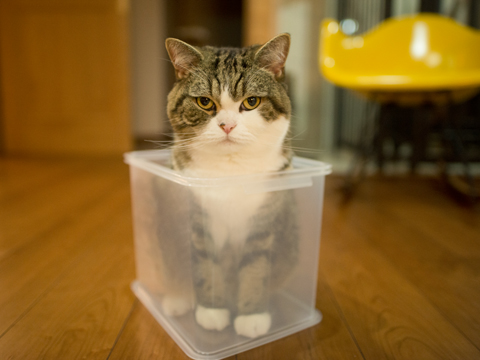
まる:「まあ、当然入りますよね。」
Maru:[I check this before you use.]
でも――
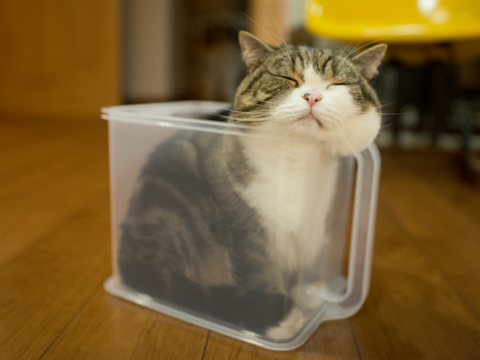
まる:「あごを乗せるには高すぎるし」
Maru:[This is too high for my chin.]
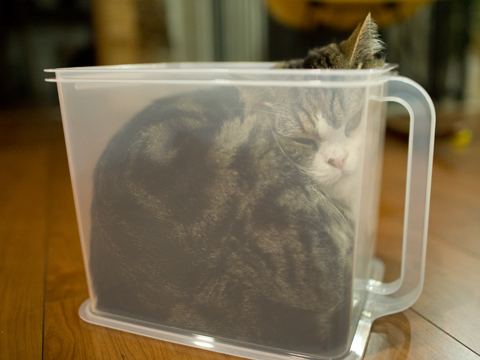
まる:「丸くなるには深すぎる。」
Maru:[This is too deep for me to become round.]
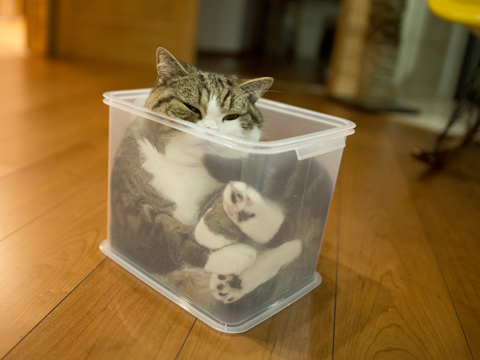
まる:「これでは真の安らぎは得られませんよ。」
Maru:[Unfortunately I cannot relax in this.]
まるです。
by mugumogu
Sithel<3
キッチンで使おうと買った収納ケースを、しばし貸し出し。
I bought the new storing box to use it in the kitchen.
まる:「まあ、当然入りますよね。」
Maru:[I check this before you use.]
でも――
まる:「あごを乗せるには高すぎるし」
Maru:[This is too high for my chin.]
まる:「丸くなるには深すぎる。」
Maru:[This is too deep for me to become round.]
まる:「これでは真の安らぎは得られませんよ。」
Maru:[Unfortunately I cannot relax in this.]


10 Dec 07:04


Some thoughts about fictional detectives
by lauramichet
Sithel#TDOS thoughts?
"I think this genre has largely become about what it is like to be various kinds of lonely sad person"
Detective stories aren’t really about solving mysteries.
Very few detective stories are Encyclopedia Brown-style “solvable murder puzzles” where the reader can find every clue necessary to discover The Truth. Even most of Doyle’s classic Sherlock Holmes stories are not solvable puzzles; Sherlock has insights and background knowledge the reader does not. Most mystery stories play with hunches and suspicions, but almost never with full, fair data. This is because most mystery stories are not as much about the mystery as they are about the mystery-solver.
Mystery novels featuring a private eye or a detective are almost always primarily character studies. We are likely to spend a lot of time watching smart people struggle with difficult problems. We are going to spend a lot of time ‘in’ their brains, following their patterns of thought and learning about how they think. Their personalities become the entire organizing logic through which we see a world. Though the mystery may change every novel or every week, the window we see the world through– the detective– does not.
It is therefore necessary that the detective’s brain be a fun place for the audience to hang out. The detective must look at the world in a fresh, fascinating way. If the story has long-term character development, he or she must have secrets, or drama, or something fraught and tense that they can think about all the time– some problem that lives wholly or largely in the brain. An interesting nut for the detective to crack. Our shared fantasy of fictional detectivehood is generally a fantasy of an incredibly smart, troubled person whose brain is so mysterious and cool that we must spend many books or many episodes of television unriddling it.
And despite the fact that they have no ongoing character development whatsoever, the Sherlock Holmes stories are, of course, the ultimate example of this. Most modern-day adaptations of the story add significant character development to Holmes in order to make his brain even more interesting. It is fitting that the “fandom” for the Sherlock TV show fixates so heavily upon Benedict Cumberbatch and his character as an object of (often sexual) fantasy: Sherlock Holmes stories were always about ordinary people fixating on and obsessing over and worrying about the much-more-interesting life and brain of the famed detective, and fans replicate those patterns in the real world. They adopt Watson’s worshipful awe as their own. Sherlock Holmes stories have always been about ordinary people describing and marveling over the fascinating brain of a much more interesting and important person, and this very much par for the course for detective stories in general.
It is true even when the detectives in question are not tremendous, wonderful, sexy, pedestal-standing people. The Wallander books by Swedish author Henning Mankell– who died, actually, in October of this year– are a character study of an incredibly ordinary person with extremely typical problems. But Kurt Wallander’s problems have interesting stakes, and his brain becomes interesting because we care about it and because its contents are familiar enough that we sympathize with them. He may remind us of people we know, dads and grandads we know.

This weird frisson between his highly unusual problem-solving detective brain and the difficult familiarity of his problems is even more effective in the three excellent seasons of the Swedish TV show starring Krister Henriksson. Henriksson’s Wallander is the ultimate cranky old community misfit, uncomfortably occupying both a position of power and a position somehow outside the normal functioning of the community. He is always both exactly where he needs to be and terribly out-of-sorts. We watch with fixed attention as he experiences a variety of absolutely tragic miseries and stumbles over them with his sad, fraught detective brain. I, personally, would watch an episode consisting entirely of Wallander crankily trying and failing to board a flight at an airport. Though he’s no Holmes, this is exactly the kind of fascinating broken loner detective brain we all expect and crave from the genre.
Of course, the loner identity is the other side of the detective-brain coin. Because they think so differently from other characters in their fictional worlds, our detectives are very often major loners. they run the full gamut from ‘amusing and eccentric aloneness’ to ‘apocalyptic aloneness.’ They may have a partner, and they may have a family, but there is usually something about them and their precious brain and precious problems which makes it hard for them to fit in with the rest of their community. Holmes is a loner. Wallander is a loner. Rust Cohle and Sarah Linden and Alec Hardy and John Luther and Stella Gibson and Will Graham and, reaching back, Hercule Poirot and Miss Marple are all loners, to greater or lesser degrees. Here in the US, Netflix has just released a BBC TV show called ‘River’ where Stellan Skarsgaard, trying very hard (and failing) to not sound as Swedish as he actually is, acts the part of a completely bonkers detective who is so alone and miserable that he hallucinates the presence of his murdered partner almost 100% of the time. Our logic goes: if we are going to spend this much time in a stranger’s brain, it better be interesting. And ‘interesting’ usually means ‘broken’– so ‘interesting’ and so ‘broken’ that this person must be totally, astonishingly alone.
Of course, this is not all innocent drama. It is political that one of our major entertainment genres is primarily concerned with telling elaborate melodramatic stories about the precious brains and precious problems of imaginary good-guy policemen. And it is also wierd that we are glorifying and idolizing a bunch of imaginary people whose behavior nevertheless conforms pretty closely in many cases to untreated depression and other serious untreated mental illnesses, especially when these problems are credited with giving them their “appeal” and “charm” and “mystery.”

And these imaginary people are all so elaborately broken! Now, I don’t actually know any detectives personally, but I hear tell that the vast majority of them are fairly ordinary people whose lives feature no extraordinary, melodramatic level of brokenness or aloneness. Most people, I think, are aware of this. The Sad Lonely Detective Man is very obviously a trope that we use because it is fun, not because it tells any great truth about detectiving or detectivehood. I think the point of detective stories is to give us a place where we can do outrageously melodramatic character studies, where we can feel free to stretch out and roll around in the misery-mud with a bunch of wan-faced wasting men and women. The framing fiction of a ‘detective story’ has built-in goals and built-in villains and provides excellent structure upon which we can hang the frail, tortured skins of our imaginary brain-dudes.
I think this genre has largely become about what it is like to be various kinds of lonely sad person. We may not really have any idea what it is like to detect shit, but we all know exactly what it is like to be sad. The detectives are all establishment figures, System People, and that makes it easy and uncomplicated for the average person to empathize with their complicated sadness. We definitely need this place in fiction where loads and loads of imaginary sad characters can putter over fairly-formulaic problems while the story really focuses on how sad and interesting their brains are. I am not being facetious! There are so many of these stories, and they are all so similar, that there really must be something in them that we want. They aren’t filling a niche; they are filling in a gigantic crater of lonely sadness. They’re doing a good job.
Of course, I am not being entirely fair to the genre. The formula is much more varied than I have described it. You have shows like The Blacklist, where ‘the detective personality’ has been displaced from the actual detectives onto their criminal consultant; you have the US version of The Killing, which features loners but gives them absolutely no hint of abnormal brilliance. Broadchurch has one drama detective and one relentlessly ordinary detective, then partially swaps their roles at various points in the story. You have stuff like Columbo, which turns the misery-brain trope on its head, featuring instead a very down-to-earth detective who is interesting for his common friendliness. You have anti-detective stories, like Twin Peaks, where the detective’s smart-man expertise makes absolutely zero sense to the audience. The genre is so big that I cannot ever cover it comprehensively. There are endless twists on the formula. You can probably name many yourself.

But we do cleave to the formula a little too tightly. For example, we will even stretch it to include baffling examples of “anti-establishment” policemen. On The X Files we followed the adventures of two rebellious FBI agents who, over the course of the show, somehow managed to shed almost 100% of their institutional qualities and become entirely anti-system rebels while inexplicably retaining their jobs– and even when they lost their jobs, we received two replacement agents who began an identical journey from scratch. We’d apparently rather jump through those bizarre hoops than deviate even slightly from the time-tested detective-man plan!
I’ve been spending a lot of time thinking about this lately because I am halfway (well, slightly more than halfway) through writing an interactive mystery story myself. In some ways, it is extremely formulaic: it features a very alone adult man who has a melodramatic past and who is trying very hard to solve a murder case. But it also deviates from the formula in a few ways I think are important. I have been taking absolutely for-fucking-ever to write this story, but I am making consistent progress, and that’s giving me a good environment to slowly mull over what I think of these tropes and whether they are useful or good for me. It is important to think about what you are supporting or buying into through the tropes and stereotypes you use in your work. I have a better idea of what I like, now.
But: I would recommend staying far, far away from TV Tropes when doing this kind of thing. Losing yourself in TV Tropes has never been better than simply marathoning a TV show or chain-reading an entire book series and just allowing yourself to get lost in someone else’s story. A writer reading TV Tropes is like an alien trying to learn what a cake tastes like from a cookbook. The best solution is to simply go eat the cake.
—
A final story: since first or second grade, I have been repeatedly and relentlessly informed by all my peers and many of my elders that I am extremely weird, and that I have an unusual way of putting things and of looking at the world. I can’t disagree. As a child I had an encyclopedic command of large numbers of useless facts, an aggressive, double-barreled stare, a complete lack of interest in all gendered social activities, and a habit of constantly trying to get and hold other people’s attention. Though this stopped being a problem for me over a decade ago, when I was very small I derived enormous amounts of angst from my defective personality. But in third grade, after a life-changing classroom reading of The Red-Headed League (that I still remember with bizarre detail), I ended up absolutely inhaling Sherlock Holmes. I read almost all of the original canon without stopping and later re-read it all on a yearly basis, novels and all, all the way up through high school. I found the stories soothing, not least because they were about a weird person whom everyone seemed to worship.

As a child I took Sherlock Holmes as proof that someone could be weird and smart and alone, but nevertheless fulfilled. I sort of idolized the Holmes-Watson pair as an example of complete and ultimate friendship, and I took it as proof that if I could only do one or two things extremely well, then someone would admire me for it and be my friend. It did not occur to me until much later that the Holmes-Watson friendship is actually rather shitty, and that Watson is constantly trying to get away from it by marrying people and having a career. I also sort of glossed over the fact that Holmes is a sexist and that he probably would have despised me if he were real. For quite a long time, my secret role model and idol was a caricature of a grouchy fictional British detective, and I can tell you: it didn’t do me much good.
In high school I changed my behavior dramatically and became rather decent at making friends. My opinion of Sherlock Holmes changed too, and although I still think those stories are the finest short stories ever written, I no longer treat glorified miserable smartass aloneness as a thing to aspire to. As a result, my relationship to the entire goddamn mystery genre has changed. I don’t necessarily laugh at these stories, but I do a lot of laughing with them, with their melodramatic mud-rolling misery, and I think I enjoy them in a more genuine way now that I can treat them as inherently absurd.
I think the true sign of real comfort with a genre or style of writing is the ability to treat it as completely ridiculous. Not necessarily all the time, but some of the time, certainly. I would give a lot to be a fly on the wall in some of my favorite detective shows’ writers’ rooms. I would like to see whether they laugh at themselves, and how much. I think I can guess which writers’ rooms are relentlessly po-faced.
Hint: it’s probably not the best ones.
Nathaniel Ford, Suko and one other like this
05 Dec 03:22
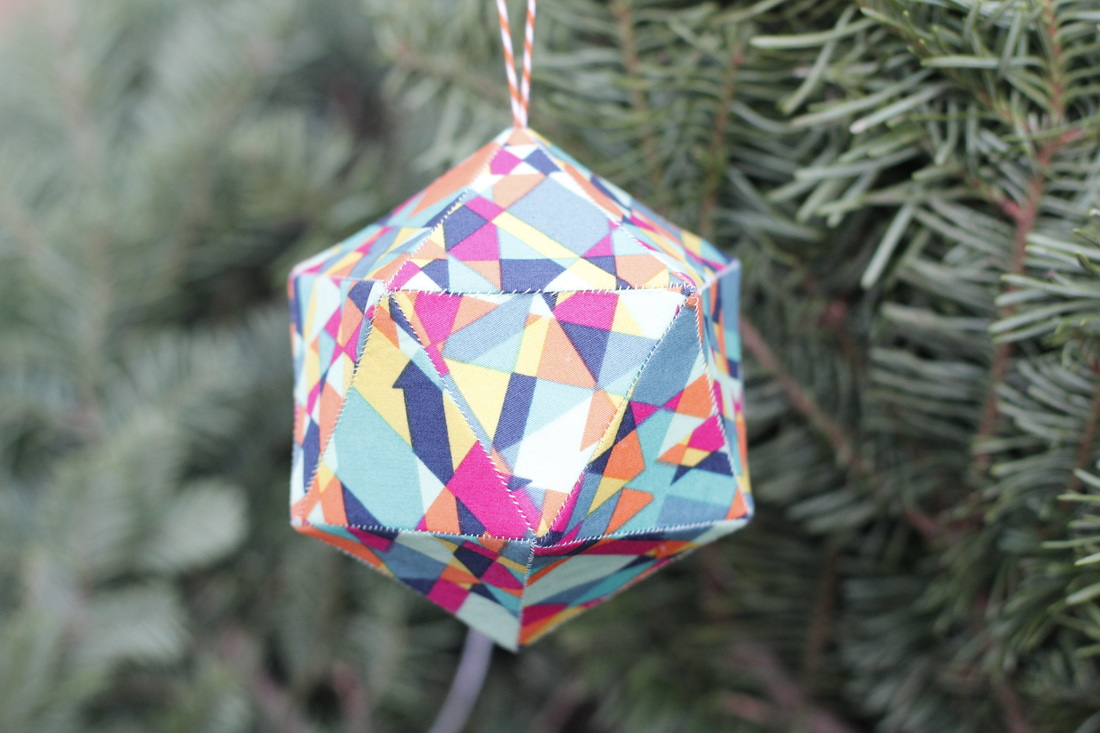

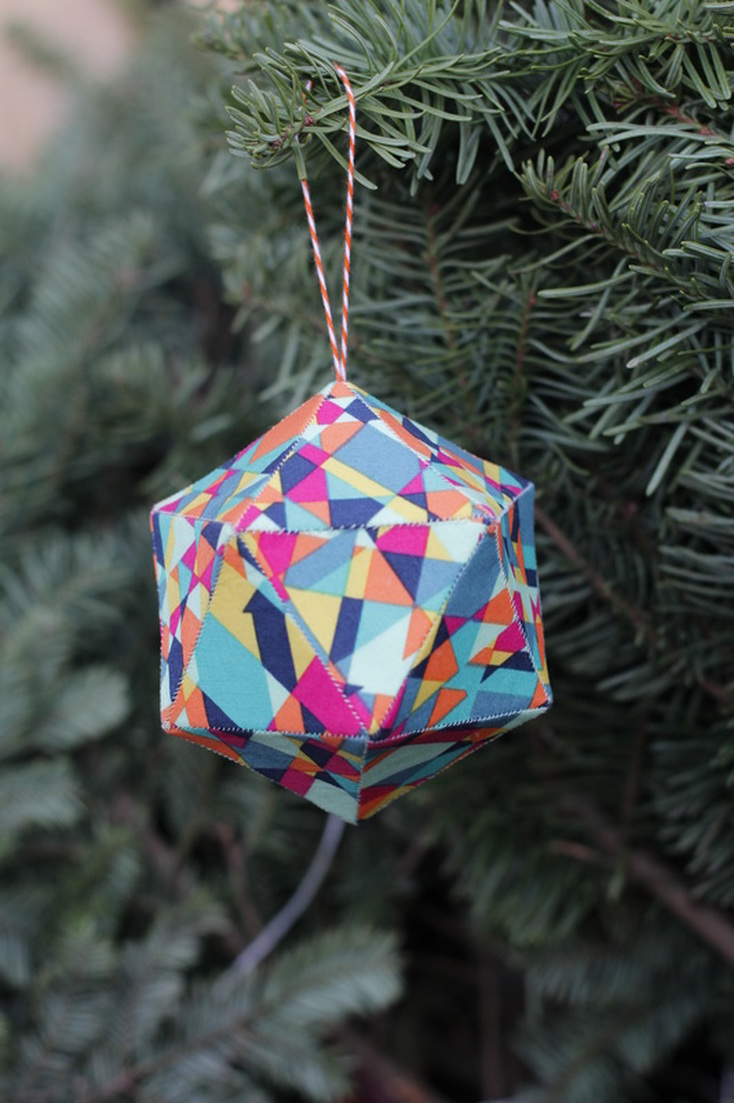
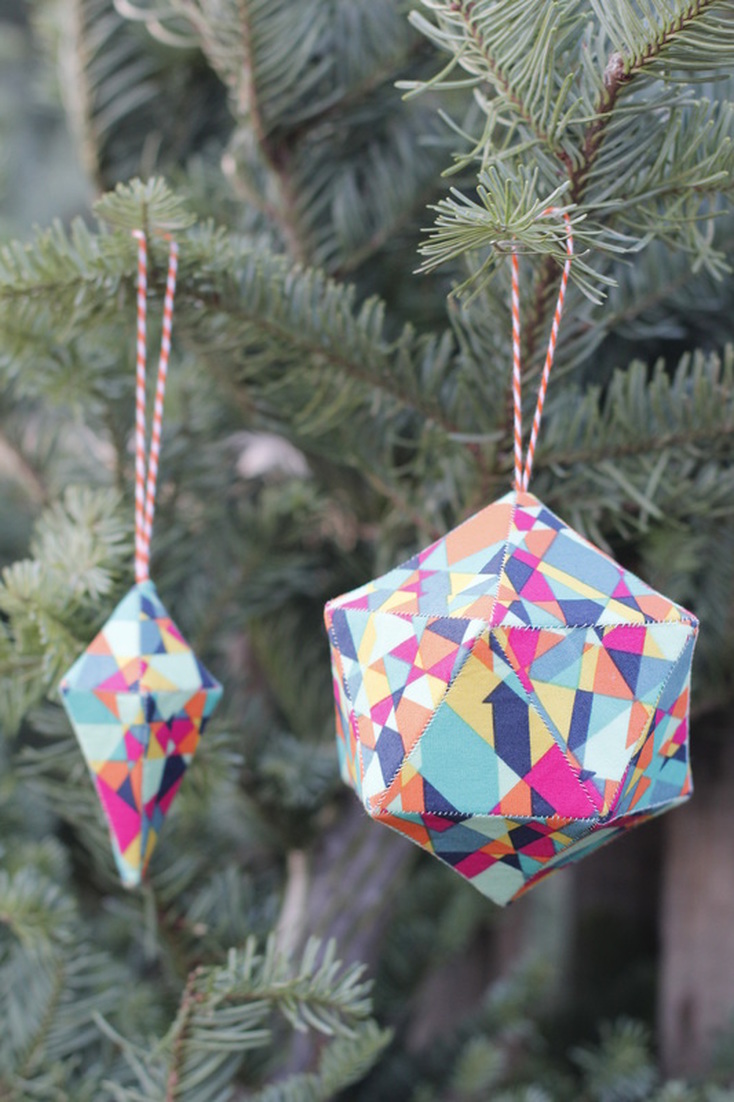
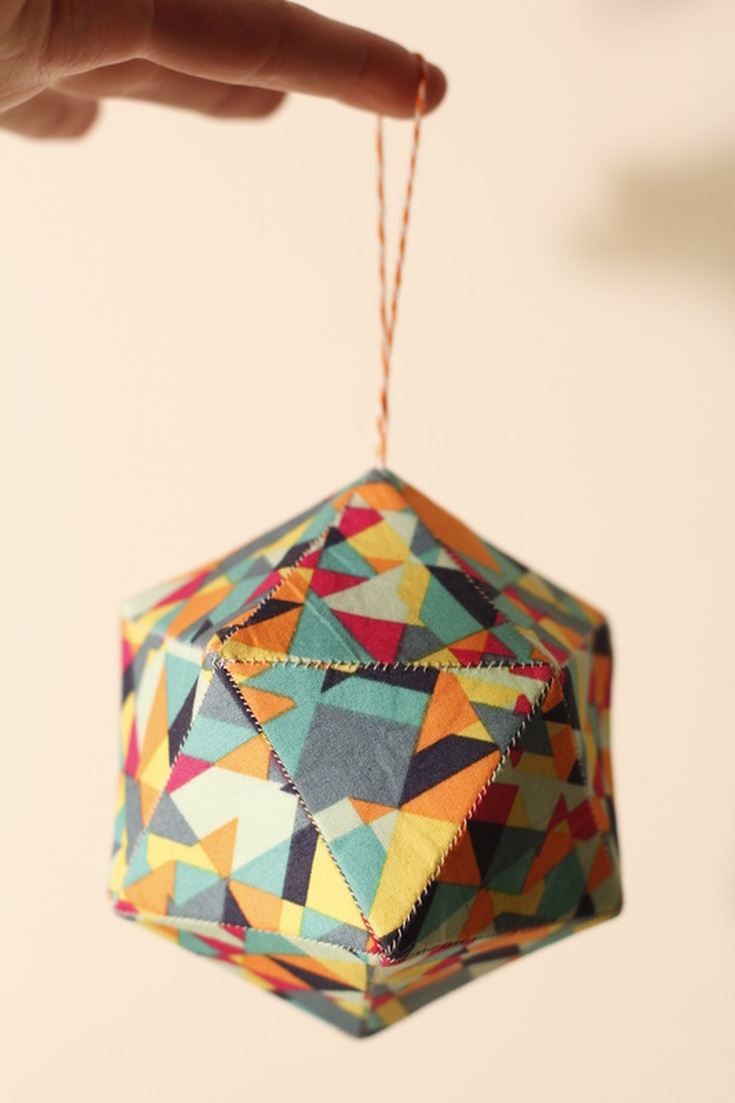
A 3D EPP Ornament
SithelShe's my kinda' crafter! I love how she finds new things and then just attacks them with new takes/ideas...
(alas, she failed to link to her post correctly, here's the working link: http://www.sewmamasew.com/2015/12/geometric-epp-ornament-tutorial/)
I've got a neat project I've been working on for several months. While experimenting with EPP ideas, I decided to try making a 3D geometric shape. For my first attempt, I used equilateral triangles. At first, I thought about making it into a small display bowl, but it morphed into an ornament. I wrote a tutorial for it, which you can find over on Sew Mama Sew today. The materials are pretty basic, and inexpensive since you need such small amounts. After my success with this fairly basic design, I started trying out more complicated shapes. You can see one of them in a picture below, but there are endless variations. Have you ever tried 3D EPP before? If you do, I'd love if you'd link to your project so I can check it out.
Sithel likes this
30 Nov 16:42
Tonight's project: full-scale mockup #copticbinding #bookarts
by info@websta.me (Websta)
SithelMy book binding mentor's crazy project idea of his own is nearing completion!


Tonight's project: full-scale mockup #copticbinding #bookarts
 6
6
 0
0


30 Nov 16:41
The Importance of Being Ironic
by noreply@blogger.com (Ian Gilman)
Hipsters and their irony, amirite? What even is the deal?
In the 20th century, the world got way smaller than ever before, but now in the 21st we've taken it to a whole new level with almost instant access from anyone to anyone on the planet. 100 years ago you could easily go months or even years without your worldview being challenged. Not so much anymore, even with the filter bubble effect.
This is actually a good thing… The world has been filled with different ideas and viewpoints for all of history, and it's about time we as a species get around to accepting this fact. It's about time we learned to use our differences to the benefit of all. Just as in natural ecosystems, diversity creates strength, but it also has its challenges.
One of these challenges is holding conflicting ideas in mind simultaneously without feeling the need to pick sides. Sometimes the only way through a complex situation lies on the road to seeming paradox. Becoming comfortable with this cognitive dissonance, so you can freely navigate the multilayered thoughtspace of the world, is a key skill of the 21st century.
And irony, our old friend, is a handy steppingstone to mastery of that skill. What is irony, after all, but the binding together of conflicting ideas? Whether they know it or not, irony aficionados are doing exactly what they must in order to thrive in the hyper-connected world of today and tomorrow.
In the 20th century, the world got way smaller than ever before, but now in the 21st we've taken it to a whole new level with almost instant access from anyone to anyone on the planet. 100 years ago you could easily go months or even years without your worldview being challenged. Not so much anymore, even with the filter bubble effect.
This is actually a good thing… The world has been filled with different ideas and viewpoints for all of history, and it's about time we as a species get around to accepting this fact. It's about time we learned to use our differences to the benefit of all. Just as in natural ecosystems, diversity creates strength, but it also has its challenges.
One of these challenges is holding conflicting ideas in mind simultaneously without feeling the need to pick sides. Sometimes the only way through a complex situation lies on the road to seeming paradox. Becoming comfortable with this cognitive dissonance, so you can freely navigate the multilayered thoughtspace of the world, is a key skill of the 21st century.
And irony, our old friend, is a handy steppingstone to mastery of that skill. What is irony, after all, but the binding together of conflicting ideas? Whether they know it or not, irony aficionados are doing exactly what they must in order to thrive in the hyper-connected world of today and tomorrow.
26 Nov 18:38


Announcing: James Richards: Sketching the Energy of Places
by marctaro

Fellow Urban Sketcher James Richards recently released his first Craftsy.com course titled: Sketching the Energy of Places.
As a Craftsy instructor myself, we get free access to all their classes, and I was excited to see his name pop up on the list.
I’ve drawn alongside James at Urban Sketchers workshops around the world, and have always been impressed by his ability to swiftly capture an urban environment bustling with street life. He’s from Texas, and has that big warm personality that seems part of the culture there.

His sketches are full of the color and activity of people in open air markets, squares, and public spaces – in large part due to his experience as a location-sketcher, his successful career as a concept designer in architecture and urban planning, and his current work as an associate professor of landscape architecture at the University of Texas at Arlington. He’s also the author of Freehand Drawing and Discovery: Urban Sketching and Concept Drawing for Designers, and is an urban sketchers.org correspondent for Dallas/Fort Worth.

The Craftsy course itself follows the format of 7 lessons, where he covers topics such as drawing people and places together – establishing the proportions of people, how to draw crowds, how to set a correct eye line for groups, and how they diminish in size as they go down the street.
The meat of the class is a demo drawing of a train station, which he draws from start to finish, taking side jaunts to explain composition, sight measuring techniques, and plenty of great information on how to capture the important details.
Along the way he gives some great lessons on specific concepts – like how to add trees and cars to your scene – the details that set the drawing into the urban space.
You get to see him finish the demonstration sketch with watercolor, introducing many useful tricks along the way – such as using white pencils to put window panes back over darks.

The lessons culminate with a trip on location where you’ll see James sketching thumbnails and sitting down to do another demo of a finished piece. He includes information on his tools throughout- (we like the same portable easel!).
I can highly recommend James Richard’s new course. If you were to combine it with Stephanie Bower’s class Perspective for Sketchers, and Shari Blaukopf’s more painterly Landscapes in Pen, Ink and Watercolor, Paul Heaston’s Pen and ink Classes; Drawing Everyday and Pen and Ink Essentials – and of course my own offerings – Craftsy is building quite a strong program in sketching! These online courses are frankly giving my art school education a run for its money.
26 Nov 05:35


Knockout 3.2.0 released
SithelKnockout still remains my favoritest of JS libraries
This one has been slow-cooking since February and it’s good. For the first time in a while, this release focuses on adding some significant new features to Knockout. Almost any developer using KO should seriously consider making use of these, as they can greatly streamline your code.
So what’s new?
Components
Components bring a new and hugely more scalable way of structuring a large application. They:
- Combine a viewmodel and template in an encapsulated package
- Can represent either small reusable widgets or entire sections/pages in a larger app
- Can be preloaded, or loaded on demand
- Can be nested or inherited
- Can work with custom conventions for configuration or loading.
I’ve built a few apps with KO components recently (including the KO triage site, and an iOS/Android game called Blockpick (not open source)) and can confidently say this is how I’ll be structuring my KO apps from now on.
See: components overview documentation and explore from there. Or if you’re in the mood to get a hot drink and settle in for a demo, see this video from NDC Oslo 2014.
Custom elements
Custom elements provide many of the benefits of the emerging Web Components spec, but cleanly integrated with KO’s new components feature described above. Plus, they’re ready to use in production today – compatible all the way back to IE6!
See: custom elements documentation
Pure computeds
ko.computed has always been the powerhouse behind KO, underpinning just about all of its features. It makes your code reactive without you having to declare any dependencies explicitly.
ko.pureComputed is a new specialisation of ko.computed with better performance and memory management in many cases. It automatically pauses/resumes evalution, and automatically releases/reclaims references to dependencies, according to whether any other part of your app is watching it at the time. This can be extremely valuable for large single-page applications, where you may be tearing down and rebuilding different parts of your UI over long periods of time, and need to ensure your memory/CPU use is as streamlined as possible.
See: pure computed documentation
The textInput binding
This new binding transparently resolves numerious browser event quirks related to text entry. You might not believe how many different types of events are raised (or worse: not raised) by different browsers when a user types, cuts, pastes, drags, or autocompletes text in an <input> or <textarea>. Or if you’ve been a web developer for a while, you probably would believe it, and have the battle scars to show.
Well, textInput is something of an expert on the subject, so hopefully you don’t have to be.
More
Of course, there are smaller bugfixes in there too. You can find the exact set of changes on GitHub.
Hopefully these enhancements will prove valuable for your projects. I’ve been using most of them for a while and have certainly found them useful. Big thanks to everyone who’s participated in implementing and discussing these changes!
Sithel likes this