29 Oct 12:58
by James A. Bull, Rosemary A. Croft, Owen A. Davis, Robert Doran and Kate F. Morgan

Chemical Reviews
DOI: 10.1021/acs.chemrev.6b00274

lxw, Tuo and 4 others like this
23 Sep 19:19
by Justin T. Mohr, Jared T. Moore and Brian M. Stoltz
Abstract
An enantioconvergent catalytic process has the potential to convert a racemic starting material to a single highly enantioenriched product with a maximum yield of 100%. Three mechanistically distinct approaches to effecting enantioconvergent catalysis are identified, and recent examples of each are highlighted. These processes are compared to related, non-enantioconvergent methods.
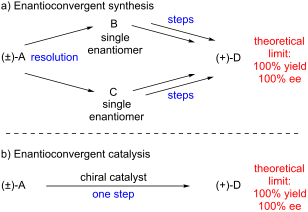
Beilstein J. Org. Chem. 2016, 12, 2038–2045. doi:10.3762/bjoc.12.192
18 Sep 13:31
by Salvatore G. Pistorio, Swati S. Nigudkar, Keith J. Stine and Alexei V. Demchenko

The Journal of Organic Chemistry
DOI: 10.1021/acs.joc.6b01439

18 Sep 13:30
by Tuo Xi and Zhan Lu

The Journal of Organic Chemistry
DOI: 10.1021/acs.joc.6b01555

18 Sep 13:28
by Scott Horowitz
Determining crystal structures through crowdsourcing and coursework
Nature Communications, Published online: 16 September 2016; doi:10.1038/ncomms12549
Building crystal structures into the electron density is an important step in protein structure solution. Here, the authors recruit online game players, students, and experienced crystallographers to compete in a competition to solve a new structure, and find that crowdsourcing model-building works.

25 Aug 18:25
Chem. Commun., 2016, 52,10301-10304
DOI: 10.1039/C6CC05440D, Communication
Timothy J. Zerk, Peter W. Moore, Craig M. Williams, Paul V. Bernhardt
Electrochemistry of tetrapropylammonium perruthenate (TPAP) reveals that an unstable Ru(V) complex is reoxidised by amine N-oxides in catalytic Griffith-Ley alcohol oxidations.
The content of this RSS Feed (c) The Royal Society of Chemistry

18 Aug 21:22
by Chiaki Yamamoto, Kazutaka Takamatsu, Koji Hirano and Masahiro Miura

The Journal of Organic Chemistry
DOI: 10.1021/acs.joc.6b01393

cxl, XJ and one other like this
18 Aug 10:59
by Sandra Medina, Matthew J. Harper, Edward I. Balmond, Silvia Miranda, Giacomo E. M. Crisenza, Diane M. Coe, Eoghan M. McGarrigle and M. Carmen Galan

Organic Letters
DOI: 10.1021/acs.orglett.6b01962

16 Aug 07:26
by Michael E. Kopach, Kevin P. Cole, Patrick M. Pollock, Martin D. Johnson, Timothy M. Braden, Luke P. Webster, Jennifer McClary Groh, Adam D. McFarland, John P. Schafer, Jonathan J. Adler and Morgan Rosemeyer

Organic Process Research & Development
DOI: 10.1021/acs.oprd.6b00131

12 Aug 07:46
by Alvin Kung, Ying-Chu Chen, Marianne Schimpl, Feng Ni, Jianfa Zhu, Maurice Turner, Henrik Molina, Ross Overman and Chao Zhang

Journal of the American Chemical Society
DOI: 10.1021/jacs.6b05483

11 Aug 08:57
by Alexandre de Saint Germain

Nature Chemical Biology.
doi:10.1038/nchembio.2147
Authors: Alexandre de Saint Germain, Guillaume Clavé, Marie-Ange Badet-Denisot, Jean-Paul Pillot, David Cornu, Jean-Pierre Le Caer, Marco Burger, Frank Pelissier, Pascal Retailleau, Colin Turnbull, Sandrine Bonhomme, Joanne Chory, Catherine Rameau & François-Didier Boyer

11 Aug 07:16
by Daniel R. Wallach and John D. Chisholm

The Journal of Organic Chemistry
DOI: 10.1021/acs.joc.6b01421

09 Aug 07:29
by Kai Yang, Fei Zhou, Zhijie Kuang, Guoliang Gao, Tom G. Driver and Qiuling Song

Organic Letters
DOI: 10.1021/acs.orglett.6b01934

05 Aug 11:52
by Finn Burg, Julian Egger, Johannes Deutsch and Nicolas Guimond

Organic Process Research & Development
DOI: 10.1021/acs.oprd.6b00229

XJ, cxl and one other like this
04 Aug 08:14
by Xu-Xian He, Yinwu Li, Bei-Bei Ma, Zhuofeng Ke and Feng-Shou Liu

Organometallics
DOI: 10.1021/acs.organomet.6b00391

04 Aug 08:02
by Jian Ren, Xin Shi, Xiao-Nian Li, Lai-Wei Li, Jia Su, Li-Dong Shao and Qin-Shi Zhao

Organic Letters
DOI: 10.1021/acs.orglett.6b01654

02 Aug 07:33
by Yang Yang, Ian B. Perry and Stephen L. Buchwald

Journal of the American Chemical Society
DOI: 10.1021/jacs.6b06299

Tuo, XJ and 4 others like this
01 Aug 13:48
by Augustin Amour, Nick Barton, Anthony W. J. Cooper, Graham Inglis, Craig Jamieson, Christopher N. Luscombe, Josie Morrell, Simon Peace, David Perez, Paul Rowland, Chris Tame, Sorif Uddin, Giovanni Vitulli and Natalie Wellaway

Journal of Medicinal Chemistry
DOI: 10.1021/acs.jmedchem.6b00799

01 Aug 10:10
by Ehsan Masood
Resilient British science will withstand Brexit
Nature 535, 7613 (2016). http://www.nature.com/doifinder/10.1038/535467a
Author: Ehsan Masood
UK scientists have had to fight to stay international before, and they must not stop now, says Ehsan Masood.

28 Jul 13:58
by Steven W. M. Crossley, Carla Obradors, Ruben M. Martinez and Ryan A. Shenvi

Chemical Reviews
DOI: 10.1021/acs.chemrev.6b00334

28 Jul 13:56
by Lotfi Benmekhbi, Fadila Louafi, Thierry Roisnel and Jean-Pierre Hurvois

The Journal of Organic Chemistry
DOI: 10.1021/acs.joc.6b01419

26 Jul 20:57
by Artiom Cernijenko, Rune Risgaard and Phil S. Baran

Journal of the American Chemical Society
DOI: 10.1021/jacs.6b06623

ay, xubo and 4 others like this
26 Jul 14:21
by Jorge A. Gonzalez

Nature Chemistry.
doi:10.1038/nchem.2571
Authors: Jorge A. Gonzalez, O. Maduka Ogba, Gregory F. Morehouse, Nicholas Rosson, Kendall N. Houk, Andrew G. Leach, Paul H.-Y. Cheong, Martin D. Burke & Guy C. Lloyd-Jones
The staged hydrolysis of N-methylimidodiacetic (MIDA) boronates is a prerequisite for their application in small-molecule constructions. Mechanistic studies now show that two distinct hydrolysis mechanisms operate in parallel, the partitioning — which is dependent on the pH, water activity and homogeneity of the medium — can be readily quantified by 18O incorporation.
26 Jul 13:35
by Felix Gonzalez-Lopez de Turiso, Xiaolin Hao, Youngsook Shin, Minna Bui, Iain D. G. Campuzano, Mario Cardozo, Michelle C. Dunn, Jason Duquette, Benjamin Fisher, Robert S. Foti, Kirk Henne, Xiao He, Yi-Ling Hu, Ron C. Kelly, Michael G. Johnson, Brian S. Lucas, John McCarter, Lawrence R. McGee, Julio C. Medina, Daniela Metz, Tisha San Miguel, Deanna Mohn, Thuy Tran, Christine Vissinga, Sharon Wannberg, Douglas A. Whittington, John Whoriskey, Gang Yu, Leeanne Zalameda, Xuxia Zhang and Timothy D. Cushing

Journal of Medicinal Chemistry
DOI: 10.1021/acs.jmedchem.6b00827

26 Jul 08:48
by Abraham J. Jordan, Gojko Lalic and Joseph P. Sadighi

Chemical Reviews
DOI: 10.1021/acs.chemrev.6b00366

25 Jul 10:47
by Changlong Wang, Dong Wang, Shilin Yu, Thomas Cornilleau, Jaime Ruiz, Lionel Salmon and Didier Astruc

ACS Catalysis
DOI: 10.1021/acscatal.6b01389

25 Jul 09:44
by Attoor Chandrasekhar, Venkatachalam Ramkumar, Sethuraman Sankararaman
A modular method for the synthesis of 3-aryl-4-(arylethynyl)-2H-chromen-2-ones from 2-iodoaryl 2-arylacetates and arylacetylenes has been developed. The carbonylative Sonogashira coupling–intramolecular aldol casade reaction was carried out in the presence of Pd(PPh3)2(Cl)2 as the catalyst. The one-pot approach that involves the in situ formation of the 2-iodoaryl 2-arylacetates from the corresponding 2-iodophenols and 2-arylacetyl chlorides followed by the palladium-catalyzed carbonylative annulation in the presence of the arylacetylene has also been described for the formation of the 3-aryl-4-(arylethynyl)-2H-chromen-2-ones.

A modular approach for the synthesis of 3-aryl-4-(arylethynyl)-2H-chromen-2-ones from iodoaryl 2-arylacetates and arylacetylenes has been developed. This highly selective general method was used to prepare 24 different 3,4-disubstitued 2H-chromen-2-one derivatives in good to excellent yields.
25 Jul 08:57
by Duddu S. Sharada, Anand H. Shinde, Srilaxmi M. Patel and Shinde Vidyacharan

The Journal of Organic Chemistry
DOI: 10.1021/acs.joc.6b01096

22 Jul 06:59
by Kohsuke Aikawa, Hiroki Serizawa, Koki Ishii and Koichi Mikami

Organic Letters
DOI: 10.1021/acs.orglett.6b01734

22 Jul 06:59
by Hiroki Serizawa, Koki Ishii, Kohsuke Aikawa and Koichi Mikami

Organic Letters
DOI: 10.1021/acs.orglett.6b01733


