×You need to sign in to continue.

Shared posts

15 Apr 16:40

Navy: using seawater for fuel

by Jason Kottke
Ben Wolf

Is this for real?

The US Navy is working on technology to convert seawater into fuel to power unmodified combustion engines. They recently tested the fuel (successfully!) in a replica P-51 and hope to make it commerically viable.

Navy researchers at the U.S. Naval Research Laboratory (NRL), Materials Science and Technology Division, demonstrated proof-of-concept of novel NRL technologies developed for the recovery of carbon dioxide (CO2) and hydrogen (H2) from seawater and conversion to a liquid hydrocarbon fuel.

Fueled by a liquid hydrocarbon -- a component of NRL's novel gas-to-liquid (GTL) process that uses CO2 and H2 as feedstock -- the research team demonstrated sustained flight of a radio-controlled (RC) P-51 replica of the legendary Red Tail Squadron, powered by an off-the-shelf (OTS) and unmodified two-stroke internal combustion engine.

Using an innovative and proprietary NRL electrolytic cation exchange module (E-CEM), both dissolved and bound CO2 are removed from seawater at 92 percent efficiency by re-equilibrating carbonate and bicarbonate to CO2 and simultaneously producing H2. The gases are then converted to liquid hydrocarbons by a metal catalyst in a reactor system.

"In close collaboration with the Office of Naval Research P38 Naval Reserve program, NRL has developed a game-changing technology for extracting, simultaneously, CO2 and H2 from seawater," said Dr. Heather Willauer, NRL research chemist. "This is the first time technology of this nature has been demonstrated with the potential for transition, from the laboratory, to full-scale commercial implementation."

Discover has more, in slightly more accessible language.

Tags: physics   science   US Navy   water
29 Mar 21:22

Not even one note

by Seth Godin

Starting at the age of nine, I played the clarinet for eight years.

Actually, that's not true. I took clarinet lessons for eight years when I was a kid, but I'm not sure I ever actually played it.

Eventually, I heard a symphony orchestra member play a clarinet solo. It began with a sustained middle C, and I am 100% certain that never once did I play a note that sounded even close to the way his sounded.

And yet...

And yet the lessons I was given were all about fingerings and songs and techniques. They were about playing higher or lower or longer notes, or playing more complex rhythms. At no point did someone sit me down and say, "wait, none of this matters if you can't play a single note that actually sounds good."

Instead, the restaurant makes the menu longer instead of figuring out how to make even one dish worth traveling across town for. We add many slides to our presentation before figuring out how to utter a single sentence that will give the people in the room chills or make them think. We confuse variety and range with quality.

Practice is not the answer here. Practice, the 10,000 hours thing, practice alone doesn't produce work that matters. No, that only comes from caring. From caring enough to leap, to bleed for the art, to go out on the ledge, where it's dangerous. When we care enough, we raise the bar, not just for ourselves, but for our customer, our audience and our partners.

It's obvious, then, why I don't play the clarinet any more. I don't care enough, can't work hard enough, don't have the guts to put that work into the world. This is the best reason to stop playing, and it opens the door to go find an art you care enough to make matter instead. Find and make your own music.

The cop-out would be to play the clarinet just a little, to add one more thing to my list of mediocre.

As Jony Ive said, "We did it because we cared, because when you realize how well you can make something, falling short, whether seen or not, feels like failure."

It's much easier to add some features, increase your network, get some itemized tasks done. Who wants to feel failure?

We opt for more instead of better.

Better is better than more.

       
18 Mar 14:55

Would you buy an 84 mpg car for $6,800?

by Sami Grover
Elio Motors is offering extremely high gas mileage for an absurdly low price. Will it take off?
16 Mar 18:02

So, what exactly does pi mean?

by Jason Kottke

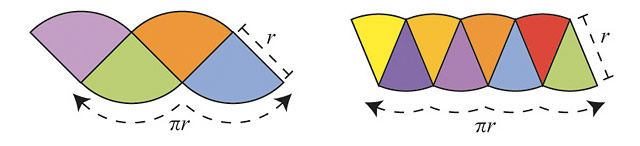
As Pi Day approaches, it time for a refresher course, courtesy of Steven Strogatz, on what pi actually means and how you can visualize calculating it. It's all about rearranging the pieces of a circle in a calculus-ish sort of way:

Pi Calc

Tags: mathematics   pi   Steven Strogatz
11 Mar 01:24

Will they switch for cheaper?

by Seth Godin

In fact, most people switch for better.

Without a doubt, there's a slot in every market for the cheap enough, good enough alternative.

But rapid growth and long-term loyalty come from being better instead.

When your product or your service doesn't measure up, the answer probably isn't to lower your price or offer a refund to the disappointed customer. Instead, the alternative is to invest in making it better. So much better that people can't help but talk about it—and so much better that they would truly miss it if it were gone.

       
05 Mar 17:36

The Internet is ready for a new cultural shift. Discuss.

by Hugh MacLeod

motivational posters erroneous

["Erroneous Belief": the very first cartoon I ever published online, back in 1999. Seems like a couple of lifetimes ago etc.]

1. One of the early inventors of blogging, my old friend Dave Winer is trying to reclaim that thing that blogging was first designed for. Blogging needs our help, he tells us.

The mission of blogging is to empower all of us to go directly to each other with our expertise. So if you know something as well as anyone else, or you learn something or know something that should be shared, then you should share it on your blog.

Like a lot of the early adaptors, I discovered blogging during a long, post-Dotcom/9-11 period of unemployment and general career nosediving.

It seemed back then to a lot of us, that the world had changed forever.

Even though history would prove us right eventually, we had no way of knowing this. All we knew was that the rules had changed somehow, and that we desperatelly wanted to know how this new Internet-enabled world of ours was going to work.

So we all started blogging to share information and to share ourselves, trying to make sense of it all. Real visionairies and trail blazers like Joi Ito or Loic Le Meur or Nick Denton were all part of the conversation; it was a really interesting, exciting time to be alive. Not only did it feel really personal, it felt really empowering. We really felt like we were on the cusp of something huge.

This cultural shift eventually adapted the popular moniker, “Web 2.0″. It basically meant personal websites, designed to enable converation and the sharing of information and ideas between fellow amateurs. As opposed to “Web 1.0″, which  implied commerical sites, more interested in selling stuff or broadcasting their “content”, their corporate agenda, than any meaningful contact between real individuals.

Eventually all this became what’s now known as “Social Media”. And like all things online, it degraded as the mainstream caught up with it eventually, with Facebook, Twitter et al moving in and taking over. Goodbye, Cluetrain. Hello, Cat Photos.

2. It seems we’re all getting sick of the noise.

We’re sick of checking our email forty seven times a day. We’re sick of of all the endless crap we see online, the never-ending content blizzard. We’re sick of spending most of our free time staring into our phones. Our lives are being devoured by all these billions of carnivorous Web 2.0 pixels, and we’ve grown weary of it.

3. Blogging came about because a decade ago, the Internet was ready for a new cultural shift. I think it’s ready for another one.

As this Internet-malaise that Dave is fighting against reaches critical mass, I predict we’re going to see a backlash, a rebellion, similar to what blogging was originally, back in the day.

A shift.  A movement. A reaction against the mainsteam Internet, against the noise.

A new quiet, as it were.

This movement doesn’t appear to have a name yet. For now, I’ll give it the hashtag, #TheNewQuiet and see what happens, whatever, the name really doesn’t matter. Not yet.

5. Kudos to Dave for taking a stand. I wish more people would do the same.

[Bonus: "Motivational Art For Smart People." Daily cartoon newsletter.]

03 Mar 02:46

Harold Ramis's advice to young artists

via Mother Jones > @janetpierson:

You have to live your life with a certain blind confidence that if it’s your destiny to succeed at these things, it will happen, if you just continue to follow a straight path, to do you work as conscientiously and as creatively as you can, and to just stay open to all opportunity and experience. There’s a performing motto at Second City…to say yes instead of no. It’s actually an improvisational rule…It’s about supporting the other person. And the corollary to that is if you concentrate on making other people look good, then we all have the potential to look good. If you’re just worried about yourself—How am I doing? How am I doing?—which is kind of a refrain in Hollywood, you know, people are desperately trying to make their careers in isolation, independent of everyone around them.

And I’ve always found that my career happened as a result of a tremendous synergy of all the talented people I’ve worked with, all helping each other, all connecting, and reconnecting in different combinations. So…identify talented people around you and then instead of going into competition with them, or trying to wipe them out, make alliances, make creative friendships that allow you and your friends to grow together, because someday your friend is going to be sitting across a desk from you running a movie studio.

Ramis is quoted in the “Stand Next To The Talent” section of Steal Like An Artist.

19 Feb 22:26

Giving less advice

by Jason Fried
Ben Wolf

Irony

I’m often asked for advice. I’ve decided it’s time I give less of it. There are things I used to know that I just don’t know anymore. I should stop talking about those things – it’s unfair to anyone who’s listening.

If you want advice on product design, copywriting, reducing complexity, business strategy for a well-established small business, or building a team – happy to help. I know I can be valuable there because those are things I’m thinking about and working on every day. I’m current.

But if you want advice on how to start a new business, how to get your first customer, how to hire your first employee, or anything related to starting something brand new, I’m not your man. It’s been 15 years since I started my company. I just don’t remember what it’s like anymore. I’m out of touch.

Advice, like fruit, is best when it’s fresh. But advice quickly decays, and 15 year-old advice is bound to be radioactive. Sharing a life experience is one thing (grandparents are great at this – listen to them!), but advice is another thing. Don’t give advice about things you used to know. Just because you did something a long time ago doesn’t mean you’re qualified to talk about it today.

Think you’ll get a good answer from a 30 year old telling you what it’s like to be 15? Or a 20 year old remembering what it’s like to be 5? Shit, I’m about to turn 40, and all I remember about being 25 is that I wasn’t 26. How clearly do you really remember anything from 15 years ago? And how many of those memories are actually marred by time and current experiences? How many of those things really happened the way you recall them today?

If you want to know what it’s like to start a business, talk to someone who just successfully started one. If you want to know what it’s like to hire your first employee, talk to someone who just successfully hired theirs. If you want to know what it’s like to make an investment, talk to someone who just made a successful one.

While distance from the event itself can provide broader perspective, the closer you get to the event, the fresher the experience. If I want to know what something’s really like, I’d take a fresh recollection over a fuzzy memory. I think the same is true for advice.

03 Dec 20:43

What Makes You So Smart, Peter Attia?

by Noah Davis
Peter-Attia

In high school, Peter Attia planned to be a professional boxer. He trained for six hours a day, meticulously tracking his progress on a daily basis. A teacher altered his trajectory, and the Canadian ended up with undergraduate degrees in math and engineering, an M.D. from Stanford, a stint at McKinsey, and his current position as president and co-founder of the Nutrition Science Initiative. He still works out like crazy, too. Attia spoke with Pacific Standard about the value of intense exercise, the path from screw up to success, and why he doesn't read fiction.

Was there a time when you realized you were one of the smartest people in the room?
I'm probably different from most of the people you interview. I actually was not a great student in the traditional sense until my very last year of high school. In fact, I was pretty much a screw-up and really had no plans to go to college. My ambition was to become a professional boxer, and that was all I pursued. Most of my teachers varied somewhere between thinking I was a complete idiot and, on the positive side, someone who had potential but wasn't living up to it.

That changed for me in grade 12 when I had a really great teacher who got me to reconsider my decision to not go to university. I had a complete 180 and set all these outrageous goals about graduating first in my class and graduating first in my class at university. Even though I went on to do all those things, I never actually had the feeling that I was the smartest guy in the room. I always had the feeling that I was going to outwork everybody two-to-one. In undergrad, I did two degrees—math and mechanical engineering—simultaneously. The summer before my freshman year, I bought all the textbooks for math and physics and did them on my own. When we were in class, I got to do it for the second time. I did the same thing the next summer. I felt like I was really lucky because I got to do every course in college twice and, therefore, I got to do it at a much deeper level than my classmates.

You must have some innate ability, though. Math and mechanical engineering aren't the easiest disciplines. Did you think of yourself as a smart person?
I think I was really lucky in that despite all of my flails growing up, my parents just consistently told me how smart I was. When I was a kid, I had an IQ test, and I tested very high. For a year when I was seven or eight, I was put into a program for gifted kids. I think two kids from every school in Toronto were pulled out one day a week to go to this special school. My mother described it as the most wonderful educational experience I had in school. I don't remember it much to be honest with you, but when the program folded and I was put back into regular school, it sounds like I got a little bored.

But I remember that my mom and dad always made it clear to me that I was really smart and that I was my own worst enemy. You're probably right in that I had whatever innate tools anybody needed, but for whatever reason—probably insecurity—I actually gravitated toward this belief that I could outwork anybody. That really stemmed from boxing. That's where the desire to always outwork the opponent came in.

How close to becoming a professional boxer did you get?
I grew up in Canada, and we don't have a Golden Gloves tournament, so your typical path is being a top amateur, which is the Olympics, and then turning pro from there. My style of boxing was not suited to the amateur style. I was much more interested in being a professional boxer, so I trained much more as a professional. I trained with pros. I could have turned pro at any time, certainly by the time I was 18. Would I have been successful? Statistically speaking, no. I think I would have ended up pumping gas for the rest of my life. Becoming the middleweight champion of the world is akin to winning a lottery ticket. I would argue that I made the right choice by going to college instead.

Why did you choose mechanical engineering and math?
I was a little bit conflicted when I was leaving high school. I loved math just immensely, and I knew that engineering was basically an applied form of science. Those two things appealed to me, but I wanted to preserve the optionality. I suspected at the time that I wanted to do a Ph.D. in aerospace engineering, so I thought that the best path to get there would be to study mechanical engineering and applied mathematics. That way I could do a Ph.D. in applied math, a Ph.D. in any engineering discipline, or pursue aerospace. It was a really good fit for me. If I had just done engineering, I think I would have felt really unfulfilled. In engineering, you're not concerned with the theory of how the math came to be. You're just concerned with the answer. It's very practical. I think if I had just done mathematics, I would have been a little bit unfulfilled because I would have wanted to apply the theory to making a robot do x or y. In many ways, it was one of those rare experiences where the stars aligned and I couldn't have picked a better couple of subjects to study in my life.

Are you a planner? It sounds like you have very specific long-term goals and set smaller ones along the way to get there.
I think that was the only thing that allowed me to make the transition from wanting to be a professional boxer to wanting to be an engineering student. Even while I was training six hours a day, which is what I did in high school, I was relentless with my goals. I have no idea why—it's not something I observed in my parents—but starting about when I was 13, I would write down my goals on a piece of paper every day.

Back then, they were only physical goals. I broke the world of fitness into five categories: power, anaerobic fitness, aerobic fitness, flexibility, and muscular endurance. I had specific goals under each of those. I wrote them down every day on a large post-it and stuck it on my dresser. Each day, I would re-evaluate them. Some days I would write them out verbatim, but it was this process of always re-evaluating them. As new information became available, I would start to adjust the goals. I didn't realize it at the time, but that was Bayesian. In the Myers-Briggs scale, I'm pretty strong on all four of the dimensions that I choose, but I would say that none is stronger than my tendency toward being a J versus a P.

Do you still have very specific goals?
Yeah, I do. I'm still rubric-list about that kind of thing with myself. It's weird for people around me because you don't normally get a 40-year-old who is a normal, irrelevant guy pursuing something like he's training for the Olympics. It's sort of laughable. Nobody actually cares, but yet my coach and I email each other every day with my results from my workouts. What can I do better? It's kind of amazing.

"It actually wouldn't surprise me if the way that I exercise is doing more harm than good to me personally in the long term. It's quite likely. Maybe it's neutral. I don't know that it's healthy, but it's very difficult for me to go a day without doing that."

How about in your professional life?
It's less about me as a person and more about what I do now. Definitely for Nutrition Science Initiative, we're just incredibly metric driven. Even though we are a non-profit, we function more like a for-profit does in the sense that we ask our board to hold us accountable for things. We have very short-term goals that are largely not that interesting but something like in this quarter we want to raise this much money. Obviously, we have a major goal, an overarching goal, which is the reason I do what I do. That is returning the United States to a level of health and wellness that we believe is achievable, given that it was once achieved, if we could just figure out what people should be eating.

I've talked to a couple other people for this column who worked at McKinsey. They didn't love it. In some of your posts, you've written about what a positive experience it was. Can you talk a little bit about working there?
The McKinsey alums I talk to fall into three categories. Some alums say it was a horrible experience. I don't think there are too many of those. I think there are a lot of people in the middle bucket who didn't like it too much when they were there but are really glad they did it. I think there are people like me who are glad they did it and enjoyed every moment of it. I would say it was the professional highlight of my life. Certainly, it was the most amazing experience I've been a part of in terms of there being clarity about it being a meritocracy and a great system of values. For me, above all else, it was the most amazing mentorship experience you could have outside of a traditional apprenticeship. I left surgery to go to McKinsey. I loved my residency. There were many elements I didn't love or I wouldn't have left, but one of the things I did love was the feeling of mentorship. There were all these amazing surgeons at Johns Hopkins, which is the best hospital in the world, and this was my playground. I got to be trained by these people who mentored me. When I was leaving that, I was really worried that I wouldn't thrive in an environment where I didn't have that.

At McKinsey, I got to be a part of two practices, which was pretty usual for an M.D. Typically, M.D.s get absorbed into the health care practice, but I had the math background so I also got absorbed more heavily into the credit risk modeling practice. I'm working for banking clients. I'm the only doctor in the room, but that's irrelevant. What's relevant is that I can model Basel II credit risks well enough. And I'm getting mentored on both fronts. To this day, I'm still close with the two people who mentored me the most. One of them is a member of our board of directors at NuSI.

What do you read?
I read a lot, but I'm embarrassed to say that I haven't read a work of fiction since 1999.

What was it?
Fight Club. I made a conscious decision in medical school that I didn't have enough time to read fiction anymore. There were too many things I wanted to know, and I had to devote myself to non-fiction. It makes me sound like a heathen, but I am constantly cycling through non-fiction. Some of it is like textbook reading. The current book on my nightstand is by Dr. Richard Bernstein about diabetes. There are those kind of books where I'm trying to learn something very technical. Other books I tend to read are things that help me in life. Before that book, I read Delivering Happiness, which is written by Tony Hsieh, the Zappos founder.

Do you use fitness to clear your mind and help you think?
This might sound crazy, but I don't think there's any scientific evidence to suggest that the level of and intensity at which I go about doing exercise is healthy. It actually wouldn't surprise me if the way that I exercise is doing more harm than good to me personally in the long term. It's quite likely. Maybe it's neutral. I don't know that it's healthy, but it's very difficult for me to go a day without doing that.

I think there are three reasons why I have to be doing what I'm doing exercise-wise. The first is that being an introvert, I really crave silence and solitude. Even if it's two hours on my bike with my heart beating out of my throat, the fact that that's the only sound I hear is an amazing solace for me. The second is that it's another way for me to play this ridiculous game I play with myself of goals. It's a place where I can set goals and try to chase them down. I'm actually more obsessed with the process than I am the outcome. If you asked me for the last 10 goals I set and met, I would have a hard time remembering them, but I could certainly describe the processes. The third one is a neurochemical one. I do believe that there are some people, myself included, who really depend heavily on the endorphins and other neurotransmitters that are released when you exercise at a certain intensity. I think I'm a better person when I'm exposed to those endorphins than when I'm not.

Even if it's slowly killing you?
Yeah, probably. It's a cliché but I think it's more about the quality of our life than the length of our years. You could make the argument that maybe I could be smoking and get the same endorphins. [Laughs] I'll pick my poison. And I guess the poison I'm picking is intense exercise.

Who should I talk to next?
I can’t think of one “smartest” person I know. It’s sort of like, “best athlete” or something else. In the case of latter, it’s very sport specific. No one would attempt to compare Muhammad Ali to Babe Ruth to Michael Jordan to Wayne Gretzky to Eddy Merckcx, though each were arguably the best at what they did. But it I were to list out the smartest people I know, Denis Calabrese would be on the list. He's one of my closest friends, greatest mentors, and main provocateur.


What Makes You So Smart, Peter Attia? was first posted on December 3, 2013 at 10:00 am.
©2013 "Pacific Standard". Use of this feed is for personal non-commercial use only. If you are not reading this article in your feed reader, then the site is guilty of copyright infringement. Please contact me at njackson@psmag.com
15 Nov 00:09

We're hiring!

For those of you that don’t follow us on Twitter, we’d like to pass along the news that our development team at Levee Labs is hiring.  Let us know if you or anybody you know might be interested!

Rails Engineer - https://weworkremotely.com/jobs/30

Web Designer - https://weworkremotely.com/jobs/32

07 Nov 15:18

Kareem's advice for boys

by Jason Kottke

Kareem Abdul-Jabbar has written a list of 20 things boys can do to become men.

6. Fight your fear of the unknown.

We all have a tendency to hate what we don't understand, whether it comes in the form of different food, different cultures, or different ideas. There was a Yale study in which researchers examined the brains of people as they were presented with proof that an opinion they held was wrong. MRIs showed that when those people immediately rejected the new evidence, their brains released an addictive chemical that made them feel good. In that way our own bodies are actually encouraging our ignorance and fear. Fight that impulse. Becoming a man means growing, learning, and understanding-not cowering under a blanket with a handful of comforting notions.

(By the way, don't confuse physical bravery with intellectual bravery. It's easier to jump out of a plane-hopefully with a parachute-than it is to change your mind about an opinion. Acts of physical bravado will give you an initial rush, but exploring a new culture or examining a new idea will mature you and make you the kind of person others will be interested in.)

Tags: Kareem Abdul-Jabbar   lists
02 Nov 17:22

Review: Jason Isbell at The Belmont, Austin, Texas

by Clay Stevens
Review: Jason Isbell at The Belmont, Austin, Texas

jason-isbell-1 A native Texan whose first handshake with Willie Nelson came backstage at the Cactus Moon in Abilene my freshman year in high school (and after an hour long delay because Willie was laid up on the latest incarnation of The Honeysuckle Rose getting stoned with another Texas outlaw of a different sort, my grandfather, Billie Sol Estes), I admit it takes a lot to get me out of the house these days. In fact it takes a hell of a lot. To get me out to 6th Street on a Friday night takes damn near a miracle. Or Jason Isbell and the 400 Unit. There was, however, a bit of a problem. During a rare lull in the cock and bull session in which I was engrossed at the Hill Country Humidor in San Marcos, I was disinterestedly perusing a weekend funtime rag when something caught my eye: Jason Isbell and company were indeed coming to Austin town, but would be taking the stage at The Belmont about the same time Steve Earle was going to be holding court with The Dukes at The Paramount. For all the love I have for Townes' one time understudy and for all my golden, Reagan Era memories of riding around Abilene in my mother’s jet black ’82 Stingray with "Guitar Town" blaring off the tape deck, ditching the Archduke for Isbell, by comparison a young, upstart poet, would be a tough call. Above anything else, I am a philologist, a lover of language and letters, and Earle has penned more than a few lines of genuine literary quality, to say the least. However, with the vivid defiance and honest expressions of his latest album, Southeastern, still ringing in my ears since its June release, I could not miss the opportunity to hear a generational contemporary let fly lines of considerable insight and poetic weight while being backed by the insanely talented lineup in the 400 Unit, which includes Drivin’ N’ Cryin’ guitarist Sadler Vaden, former Son Volt keyboardist Derry DeBorja, Jimbo Hart on bass, and Chad Gamble on drums. With all due respect to the old guard, I need to see the ones to whom the torch is being passed and find out who is listening. I arrived early at The Belmont, a tony 6th street joint done up in early 60's Rat Pack chic that has an excellent outdoor venue with good acoustics. I like the place all the more because I hate crowds and here an audience can move and breathe in its open, multi-level set up. There really isn’t a bad vantage in the house. Half of an hour before the opening act, I slipped onto one of the long, white couches that line the wall opposite the inside bar and to kill a little time I struck up a conversation with a group of baby boomers. It turns out they were in town from California on vacation to celebrate an anniversary, the Beringers and the Neureithers were matter of fact: “heard he was here, had to come.” Good enough – a reason as straight as the music itself. Outside I found that others had come from Arkansas, insistent that I make my way to the Whitewater Tavern in Little Rock as soon as possible and touting the independent label Last Chance Records, who have recently put out some damn fine vinyl including In the Throes, the latest from opening act John Moreland which was released the same day as Southeastern. Others had come from as far away as Chicago by way of Florida, which surprised me a little, but then again, we are a transient generation and this is Austin. Soon, the stage lights came on and out strolled John Moreland with nothing but his gimme cap and Martin OM series acoustic. After taking his seat, the Tulsa Oklahoma native proceeded to silence, and then enrapture the usually cagey Austin crowd for a solid hour that I wished did not have to end. With the ability to fire off phrases that could easily reside in the songbooks of old country lore (“It’s times like these, I forget why I quit loving you” from “God’s Medicine” and “Don’t give yourself away to settle someone else’s score,” from “3:59 AM”), Moreland sings in the gritty, emotive style of the new greats and with the wit and force of the old veterans. With four albums already under his belt and a career that spans many genres, including metal, Moreland is part of the new gang from Oklahoma who are writing magic and making it count – think John Fullbright and Samantha Crain. Too soon, however, his set ended and I promised myself that as soon as possible I will see this man again. After making my way to the front and killing time again, I asked an Austin girl standing near the stage, Emma it turns out, why she had come. “It’s the one of the places to be,” she said, and for a moment I was about to think the worst of the comment, but she challenged me straight away as if I was on trial, “Did you see the opening act?” “I did indeed.” For all the diversity I find in Austin crowds, I was not surprised to discover that the common thread between them on this night was the understated intelligence of workaday people who go about their business, unimpressed by the pervasive fluff and nonsense of canned music, moved only by talent that speaks directly and plainly to the truths that are so often treated merely as subject fodder for the superficial-addicted machines of industry. As a writer, Isbell’s approach to songwriting seems to be born of a penetrating and discerning eye turned cold toward a world that talks so much, but says so little – a sentiment that should be familiar to anyone whose head is screwed on half-way straight. The power of sparse narration combined with uncontrived melodies is precisely why there is so much reason to give thanks for modern American music. Without much delay after Moreland’s impressive set, Isbell and company took the stage and opened with a pounding version of “Flying Over Water” before tearing into the old Drive-By Trucker’s standard “Decoration Day,” with Vaden blistering the fingerboard of his Gibson over an exceptionally tight rhythm section. Two songs later, “Goddamn Lonely Love” brought out the first full-blooded howls from the audience, at which point it was obvious that the Texas night was now definitely in the hands of the songwriter from Alabama and his gang. Two more songs and with “Cover Me Up,” the audience was singing along with Isbell, who was now pushing each line with a brawling energy that resonated with the depth of his commitment to the art he is now creating. “Live Oak” followed by “Stockholm” into “Different Days” into “Traveling Alone” and then a turn into the heartbreaking imagery of “Elephant” was one of the most impressive runs of lyrical narrative I have encountered in a single show. They then rounded out the set with another Drive-by Truckers number, “Outfit,” before taking a few seconds off stage, before returning in short order to rip into a version of “Super 8” that would make any fan of the Rolling Stones proud to be in the audience. One final barn burner had the audience bouncing as much as a Texas crowd is likely going to bounce and Jason Isbell and the 400 Unit closed the show with a gentleman’s bow. I tipped my hat to the savvy Austin girl and bolted. As much as I would have liked to have stepped on backstage to shake the hands of some profoundly talented musicians and one of the finest songwriters of any generation working today, I decided to walk this one off and let the language and sounds of the night carry me on home. Not once did I think of the magic that must certainly have lit up the air over at The Paramount. My head was too full of second gears and rough timber and I was reminded why occasionally I still get out and why I love outlaws and why I love this town.

The post Review: Jason Isbell at The Belmont, Austin, Texas appeared first on American Songwriter.

30 Oct 18:28

The Broker Bodega

by Jason Kottke

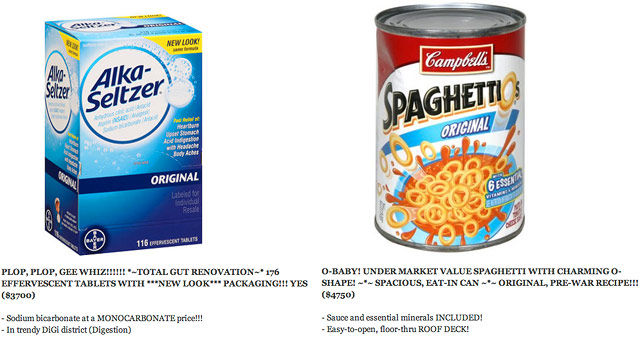
Tumblr of the day: ads for bodega items if they were written by NYC real estate brokers.

Broker Bodega

*~TOTAL GUT RENOVATION~* (via @akuban)

Tags: advertising   real estate
16 Oct 00:16

NHL goal of the year?

by Jason Kottke

The NHL season is only a few days old, but Sharks rookie Tomas Hertl may have already scored the goal of the year. This is crazy:

Also, that was his fourth goal of the game. (via grantland)

Tags: hockey   sports   Tomas Hertl   video
16 Oct 00:14

The myth of NASA's expensive space pens

by Jason Kottke

Space Pen

There's a story about NASA's incredibly expensive space pen and Russia's simpler solution that gets trotted out every time some large organization introduces some complex, bloated, over-engineered product or process. The story goes like this:

During the space race back in the 1960's, NASA was faced with a major problem. The astronaut needed a pen that would write in the vacuum of space. NASA went to work. At a cost of $1.5 million they developed the "Astronaut Pen". Some of you may remember. It enjoyed minor success on the commercial market.

The Russians were faced with the same dilemma.

They used a pencil.

Fantastic story, right? Except that's not what happened. NASA originally used pencils in space but pencils tend to give off things that float in zero-g (broken leads, graphite dust, shavings) and are flammable. So they looked for another solution. Independent of NASA, the Fisher Pen Company began development of a pen that could be used under extreme conditions:

Paul C. Fisher and his company, the Fisher Pen Company, reportedly invested $1 million to create what is now commonly known as the space pen. None of this investment money came from NASA's coffers -- the agency only became involved after the pen was dreamed into existence. In 1965 Fisher patented a pen that could write upside-down, in frigid or roasting conditions (down to minus 50 degrees Fahrenheit or up to 400 degrees F), and even underwater or in other liquids. If too hot, though, the ink turned green instead of its normal blue.

After testing, NASA ordered 400 Fisher pens for use on space missions at a cost of under $1000. Russia switched to using the pens a year later. Fisher still sells the original Space Pen and you can get it on Amazon for about $32.

Tags: NASA
03 Oct 21:25

Michael Jordan returning to the NBA for one game?

by Jason Kottke
Ben Wolf

I'd watch it.

In talking to Bill Simmons for a Grantland NBA preview show, former NBA star Jalen Rose predicts that Michael Jordan will play one game for the Charlotte Bobcats this season.

Per Betteridge's law of headlines, Jordan will not play in the NBA this season, but it's an intriguing possibility. Jordan's 50 years old but he owns the team so you never know.

Tags: basketball   Bill Simmons   Jalen Rose   Michael Jordan   NBA   sports
03 Oct 00:03

What makes Nacho Cheese Doritos so appealing?

by Jason Kottke

The NY Times on how Nacho Cheese Doritos are engineered to get people to eat as many of them as possible.

Despite the powerful tastes in Nacho Cheese, the Doritos formula balances them so well that no single flavor lingers in the mind after you've eaten a chip. This avoids what food scientists call "sensory specific satiety," or the feeling of fullness caused by a dominant flavor. Would you eat a whole bag of rosemary chips? With Doritos, you go back for more.

I rarely eat Doritos (and when I do, it's Cool Ranch), but my mouth was watering just from reading this.

Tags: food
24 Sep 23:42

Watch Ramblin’ Jack Elliott Surprise Beck During The Newport Folk Festival

by Andrianna Yeatts
Watch Ramblin' Jack Elliott Surprise Beck During The Newport Folk Festival

beck ramblin' jack elliott newport folk During his closing set at Newport Folk Festival 2013, Beck was surprised on stage by Ramblin' Jack Elliott. The influential folk legend joined Beck, members of Black Prairie and Andrew Bird during their performance of Jimmie Rodgers' "Waiting For A Train," (which a hobo sang on Beck's 1994 lo-fi masterpiece Stereopathic Soulmanure), and they finished the song together. Following a hearty round of applause and Elliott's exit from the stage, Beck said, "Well that was an honor. I think I'm done now." Check out Beck's impromptu performance with Ramblin' Jack Elliott below.

The post Watch Ramblin’ Jack Elliott Surprise Beck During The Newport Folk Festival appeared first on American Songwriter.

19 Sep 14:43

John McCain Strikes Back With Pravda Op-Ed, Slams Putin, Says "Russians Deserve Better"

by Tyler Durden

Hopefully this latest garbled and meandering Op-Ed, written by warhawk #1 John MaCain and posted in Russian Pravda, will put the entire Putin-Obama media-centered troll-fest to bed. And yes, the comments after the Op-Ed in Pravda are priceless.

Russians deserve better than Putin, first published in Pravda.ru

When Pravda.ru editor, Dmitry Sudakov, offered to publish my commentary, he referred to me as "an active anti-Russian politician for many years." I'm sure that isn't the first time Russians have heard me characterized as their antagonist. Since my purpose here is to dispel falsehoods used by Russia's rulers to perpetuate their power and excuse their corruption, let me begin with that untruth. I am not anti-Russian. I am pro-Russian, more pro-Russian than the regime that misrules you today.

I make that claim because I respect your dignity and your right to self-determination. I believe you should live according to the dictates of your conscience, not your government. I believe you deserve the opportunity to improve your lives in an economy that is built to last and benefits the many, not just the powerful few. You should be governed by a rule of law that is clear, consistently and impartially enforced and just. I make that claim because I believe the Russian people, no less than Americans, are endowed by our Creator with inalienable rights to life, liberty and the pursuit of happiness.

A Russian citizen could not publish a testament like the one I just offered. President Putin and his associates do not believe in these values. They don't respect your dignity or accept your authority over them. They punish dissent and imprison opponents. They rig your elections. They control your media. They harass, threaten, and banish organizations that defend your right to self-governance. To perpetuate their power they foster rampant corruption in your courts and your economy and terrorize and even assassinate journalists who try to expose their corruption.

They write laws to codify bigotry against people whose sexual orientation they condemn. They throw the members of a punk rock band in jail for the crime of being provocative and vulgar and for having the audacity to protest President Putin's rule.

Sergei Magnistky wasn't a human rights activist. He was an accountant at a Moscow law firm. He was an ordinary Russian who did an extraordinary thing. He exposed one of the largest state thefts of private assets in Russian history. He cared about the rule of law and believed no one should be above it. For his beliefs and his courage, he was held in Butyrka prison without trial, where he was beaten, became ill and died. After his death, he was given a show trial reminiscent of the Stalin-era and was, of course, found guilty. That wasn't only a crime against Sergei Magnitsky. It was a crime against the Russian people and your right to an honest government - a government worthy of Sergei Magnistky and of you.

President Putin claims his purpose is to restore Russia to greatness at home and among the nations of the world. But by what measure has he restored your greatness? He has given you an economy that is based almost entirely on a few natural resources that will rise and fall with those commodities. Its riches will not last. And, while they do, they will be mostly in the possession of the corrupt and powerful few. Capital is fleeing Russia, which - lacking rule of law and a broad-based economy - is considered too risky for investment and entrepreneurism. He has given you a political system that is sustained by corruption and repression and isn't strong enough to tolerate dissent.

How has he strengthened Russia's international stature? By allying Russia with some of the world's most offensive and threatening tyrannies. By supporting a Syrian regime that is murdering tens of thousands of its own people to remain in power and by blocking the United Nations from even condemning its atrocities. By refusing to consider the massacre of innocents, the plight of millions of refugees, the growing prospect of a conflagration that engulfs other countries in its flames an appropriate subject for the world's attention. He is not enhancing Russia's global reputation. He is destroying it. He has made her a friend to tyrants and an enemy to the oppressed, and untrusted by nations that seek to build a safer, more peaceful and prosperous world.

President Putin doesn't believe in these values because he doesn't believe in you. He doesn't believe that human nature at liberty can rise above its weaknesses and build just, peaceful, prosperous societies. Or, at least, he doesn't believe Russians can. So he rules by using those weaknesses, by corruption, repression and violence. He rules for himself, not you.

I do believe in you. I believe in your capacity for self-government and your desire for justice and opportunity. I believe in the greatness of the Russian people, who suffered enormously and fought bravely against terrible adversity to save your nation. I believe in your right to make a civilization worthy of your dreams and sacrifices. When I criticize your government, it is not because I am anti-Russian. It is because I believe you deserve a government that believes in you and answers to you. And, I long for the day when you have it.

18 Sep 22:43

Tesla wants to sell electric cars with "auto-pilot" within 3 years, says Elon Musk

by Michael Graham Richard
Ben Wolf

Finally I'll be able to text and eat while driving without anybody giving me bad looks.

Self-driving cars are more associated with Google at this point, and that's fair because they were ahead of the competition and their technology is very impressive
17 Sep 19:08

Star Wars opening crawl done with HTML/CSS

by Jason Kottke

Tim Pietrusky made an HTML/CSS version of the opening text crawl from Star Wars.

Tags: CSS   HTML   movies   Star Wars   Tim Pietrusky   web development
16 Sep 17:56

The magic of a spec

by Seth Godin
Ben Wolf

This is really off base. What about the fact that 9/10 the spec doesn't translate?

“If I build this, will it delight you?”

Time spent building a spec that gets a ‘yes’ to this question is always time well spent. The spec describes what victory feels like, not necessarily every element of what's to be built.

A spec is an agreement before the agreement, it moves the difficult job of getting in sync with your client from the end of the process to the beginning.

Creatives of every stripe are so happy to get the assignment, so eager to get to work that we often forget to agree on what we’re setting out to do in the first place. It's fun to nod your head and say, "I understand," but even something as simple as cooking dinner deserves a few more moments of interaction before the knives are sharpened and the oven is turned on.

“I’ll know it when I see it,” is reserved for crown princes, government agencies and well-funded startups. People who can afford to do it twice. Everyone else should use a spec.

I’m not suggesting that there’s no room for exploratory work. Of course there is. But even exploratory work deserves a spec. Don’t tell me the answers in advance, but I certainly want to know the questions.

Writing a spec is a kind of mind reading, which is why it’s so difficult. One half of the partnership has to take the time to not only specifically and precisely write down what’s expected and what the measurements and boundaries are, but then must do the challenging and risky work of engaging with the other half of the team to agree on that spec. Disagreements here are cheap, disagreements later cost a fortune.

The fear, of course, is that the spec will end the project, that without a lot of sunk costs on the table, a spec alone is too easy to renege on. In my experience, the most successful freelancers are also the most successful spec writers. Yes, there's some risk in clearly and vividly making your promises while the client/partner/boss still has time to back out. But professionals take that risk every day.

I have no doubt that one could have boiled down the spec for the Taj Mahal to, “a big white marble house” but somehow, I don’t think it would have ended as well.

       
16 Sep 14:30

The Fallacy Of Zero Sum Game Thinking

by Fred

We invest in a lot of marketplaces. When they scale, we often hear complaints from early adopters, amplified by the media, that the early adopters are getting hurt by the "mainstreaming" of the marketplace. You hear that kind of argument with other kinds of networks as well. When Twitter went mainstream, a lot of the early adopters complained that it had lost its soul.

I think most of this thinking is emotional, but not rational. A rising tide lifts all boats, or at least most of them. Kickstarter has published some data on this issue. I like this part from that post:

Spike Lee brought three decades of fans to Kickstarter when he launched his project. He introduced many of them to this new way of funding creative works, and to the thousands of other projects that are funding on Kickstarter. Of Spike’s backers, 47% had never backed a Kickstarter project before.

The Veronica Mars and Zach Braff film projects were similarly criticized for hurting other projects, but in reality were a windfall for creators. Those projects brought thousands of new people to Kickstarter who have since pledged more than $1 million to 6,000 other projects (film projects have received most of those pledges).

In the past 90 days alone, more than $21 million has been pledged to filmmakers on Kickstarter not named Rob Thomas, Zach Braff, or Spike Lee. Even without counting these projects, it’s been the biggest three months for film ever on Kickstarter!

Almost five million people have backed a project on Kickstarter, and more than a million have backed two or more projects. These repeat backers are responsible for 59% of the total money pledged to Kickstarter projects — a whopping $444 million. On average, 2,130 people a dayhave become new repeat backers this year. This is huge! Future creators will benefit from more and more people using Kickstarter.

We have seen a similar effect at Etsy. When a wave of new sellers came to Etsy as it became a mainstream marketplace a few years ago, the early sellers were concerned about the competition these new sellers would create for them. But Etsy has grown its gross transactions at between 70-100% per year for the past five years, a rate that is roughly the same as the rate of new sellers joining the service. For every new seller that joins Etsy, it seems that there is  a new buyer waiting to consider buying from them.

The cool thing about these marketplaces is that the sellers (or project creators in Kickstarter's case) are the primary marketing engine. Sellers bring the first time buyers. And then many of them stick around and transact again and again, often with sellers other than the one that brought them in the first place. It is a commons where everyone (or most everyone) benefits from the expansion of the marketplace.

I felt like explaining this because I read this opinion piece in the NY Times today about Kickstarter. While the title of the piece is awful (nobody has their "hands out" on Kickstarter), I like how they ended it:

The gentrification of Kickstarter doesn’t seem to be hurting its original inhabitants. It may even be helping them.

The only quibble I have with that line is the use of the word "may". I am certain it is helping them.

16 Sep 14:24

What works?

by Seth Godin

We are capable of abandoning, bullying, raping, murdering, belittling, undermining, objectifying, cheating, stealing, ignoring, maligning, spamming, excoriating and arguing.

And the very same people can support, trust, connect, lead, inspire, invent, illuminate and wait patiently.

The extraordinary thing is that we've built a society where the second category pays off more than it ever has before. The media would prefer the former, of course. It's more fun to cover a fight than it is to report on progress. And the fast-twitch world prefers the caveman stuff as well. Tweet your first impression, better hurry. That's what our lizard brain evolved to do, it's our first instinct.

In the connection economy, though, the thoughtful, patient, mature and modern approach wins out.

Because connection is built on trust and generosity, not on snark and short-term wins.

Day trading isn't nearly as valuable as building something that lasts.

When your inner caveman shows up, the question you might ask him is, "will this juicy, satisfying, visceral action in the moment build my connection and weave a platform for my future, or is the price I'm paying for pleasing the crowd the fact that I'm tearing my platform down?"

       
16 Sep 13:43

When Teams Lose, Fans Tackle Fatty Foods

by By JAN HOFFMAN
Ben Wolf

Hot pockets are selling well in SF today.

Football fans’ saturated-fat consumption increased by as much as 28 percent following defeats and decreased by 16 percent following victories, a new study reports.
10 Sep 22:23

Portrait of the child as an old person

by Jason Kottke

Anthony Cerniello took photos of similar-looking family members at a reunion, from the youngest to the oldest, and edited them together in a video to create a nearly seamless portrait of a person aging in only a few minutes.

The effect is as if you sat a child down in front of a camera and filmed them continuously for 65 years and then compressed that down into a 5-minute time lapse. Colossal has an explanation:

Last Thanksgiving, Cerniello traveled to his friend Danielle's family reunion and with still photographer Keith Sirchio shot portraits of her youngest cousins through to her oldest relatives with a Hasselblad medium format camera. Then began the process of scanning each photo with a drum scanner at the U.N. in New York, at which point he carefully edited the photos to select the family members that had the most similar bone structure. Next he brought on animators Nathan Meier and Edmund Earle who worked in After Effects and 3D Studio Max to morph and animate the still photos to make them lifelike as possible. Finally, Nuke (a kind of 3D visual effects software) artist George Cuddy was brought on to smooth out some small details like the eyes and hair.

Fantastic.

Tags: Anthony Cerniello   time lapse   video
06 Sep 01:06

Vocals-only Abbey Road

by Jason Kottke

Here's a medley of isolated vocals from the Beatles' Abbey Road:

Many more isolated vocal tracks are available on this subreddit. Here are the instructions for making your own isolated vocal tracks with Audacity, the same open source audio processing app that Tim used to make his slow jams. (thx, tim)

Tags: Audacity   music   The Beatles   video
05 Sep 19:10

Bootstrapping with Hunter Hillenmeyer of OverDog

31 Aug 13:58

Bits Blog: Troubles Ahead for Internet Advertising

by By QUENTIN HARDY
Much of the commercial Web relies on advertising, but increasing use of ad-blocking software is just one of the problems that advertisers face.
28 Aug 13:02

Tesla Model S gets highest safety score of any car ever tested by NHTSA (5.4 stars)

by Michael Graham Richard
While 5 stars is the maximum score given by the National Highway Traffic Safety Administration (NHTSA) in each testing category, the safety agency's equipment does capture results in a much more granular fashion.