Shared posts

27 Mar 00:50

Not Just Civil Rights; Civil Responsibilities

by Andrew Sullivan

1364310174639.cached

More than a decade or so ago, in the Weekly Standard, David Frum warned that if we gay activists kept up the campaign for marriage equality, he would favor putting more police power behind enforcing sodomy laws. Today, he stood in front of the Supreme Court and gave a speech. Money quote:

Marriage is a source of great joy. But – and I speak as one who’ll celebrate a 25th anniversary this summer – it’s also a solemn undertaking: an undertaking to care for another person, to nurse that person when ill, to sustain her or him in time of trouble, to raise children together, to provide for those children, to mourn when it comes time to mourn.

No agency of government can ever begin to do for anyone what loving spouses do for each other. The stronger our families are, of every kind of family, the less government we’ll need.

Today your families gather before this house of the law to claim the right to live as others do, without shame and without fear. The mind of a nation is changing. It’s an awesome thing to see – and to be part of. Your words – your actions -and your example have power. And will overcome.

And with David’s help – along with increasing numbers of principled conservatives – we will. And in many ways already have.


24 Mar 17:44

March 23, 2013

Brian Stouffer

For Mike


Hey geeks! If you're at PAX, head to Tin Man Games at the Indie Booth for something awesome.
23 Mar 22:21

"Train Thankfully Unharmed in Crash that Killed One Man"

Brian Stouffer

In case you're wondering about the reference: http://www.youtube.com/watch?v=yAOhBBEQwE8

"Train Thankfully Unharmed in Crash that Killed One Man":

Even Greece Exports Rise in Europe’s 11% Jobless Recovery

By Simon Kennedy - Mar 21, 2013 6:59 AM CT

At the price of a doubling in unemployment and near-10 percent plunge in labor costs, the so-called peripheral euro nations are reviving manufacturing and trade. In Spain, exports reached a record 222.6 billion euros ($287 billion) in 2012. PSA Peugeot Citroen (UG) is hiring there and in Portugal.

22 Mar 00:22

Mission Unaccomplished: The Iraq Invasion's Legacy | We Meant Well - Peter Van Buren

22 Mar 00:20

Photo


21 Mar 23:01

Cyprus: The Sum of All FUBAR

by By PAUL KRUGMAN
Brian Stouffer

Seems like a no-brainer to devalue. Maybe I'll take the family there next summer?

At this point the Cyprus situation is pretty clear — and clarity does not bring reassurance. In fact, it looks as if Cyprus has managed to combine in one place everything that has gone wrong elsewhere.

1. Runaway banking. Cyprus has a huge banking system — assets around 8 times GDP — based on a business model of attracting offshore money with high rates and good opportunities for tax avoidance/evasion.

I’ve done some asking around, and cleared up something that was puzzling me. Officially, only about 40 percent of the deposits in Cypriot banks are from nonresidents, which would imply resident deposits of almost 500 percent of GDP, which is crazy. But the answer is that I do not think that word “resident” means what you think it means. Some of the money is from wealthy expats living in Cyprus; much of it is from rich people who have resident status without, you know, actually living there. So we should think of Cypriot deposits as mainly coming from non-Cypriots, attracted by that business model.

And the business model only works until there’s a big loss somewhere; since Cypriot banks were investing in Greece and in their own domestic real estate bubble, doom was inevitable. Which brings me to:

2. Big domestic real estate bubble, Spain or Ireland-sized. Not yet fully deflated, which means lots more losses to come. And the combination of the real estate bubble and the income from dodgy banking also led to:

3. Massive overvaluation, with Cypriot prices and costs having risen much more than in the rest of the euro area. In 2008 the current account deficit was more than 15 percent of GDP!

What can be done? First off, Cypriot banks cannot honor their debts, which unfortunately overwhelmingly take the form of deposits. So a default on deposits is inevitable.

As I now understand it, the initial screwup was a joint error of the Europeans and the Cypriots. Europe didn’t want an explicit bank resolution, which would among other things have given clear seniority to small insured deposits; instead, it wanted this essentially fictitious tax scheme. Meanwhile, the Cypriot government still has the illusion that its banking model can survive, and wanted to limit the hit to the big overseas depositors. Hence the debacle of the small-deposit tax.

In the end this probably comes, in some version, to what it should have been from the start — a big haircut on deposits over 100,000.

But even then the situation is by no means under control. There’s still a real estate bubble to implode, there’s still a huge problem of competitiveness (made worse because one major export industry, banking, has just gone to meet its maker), and the bailout will leave Cyprus with Greek-level sovereign debt.

So then what? As a number of people have pointed out, Cyprus is arguably better positioned than Iceland to do an Iceland, because devaluing a reintroduced Cypriot currency could bring in a lot of tourism. But will the Cypriots — who haven’t even reconciled themselves to the end of their round-tripping business — be willing to go there?

Truly awesome stuff.

This entry passed through the Full-Text RSS service — if this is your content and you're reading it on someone else's site, please read the FAQ at fivefilters.org/content-only/faq.php#publishers. Five Filters recommends: Jousting With Toothpicks - The Case For Challenging Corporate Journalism http://www.medialens.org/index.php/alerts/alert-archive/alerts-2013/719-jousting-with-toothpicks-the-case-for-challenging-corporate-journalism.html.

21 Mar 22:01

Are Corporations Amoral?

by Erik Loomis
Brian Stouffer

Corporations are people, my friend. Shitty, shitty people.

It’s rare that I disagree with Rob Neyer. But I have to push back on his column about Major League Baseball owners deciding to eliminate the pensions of their non-player employees, despite being quadzillionaires who could obviously afford it. One thing I like about covering labor issues in professional sports is that it’s the only field that grabs the attention of enough people that the little things like this get into the spotlight. Employers around the country are destroying pensions, but when NFL owners lockout referees over it or MLB owners try it, it opens space to talk about it.

Anyway, Neyer argues that corporations are amoral rather than immoral:

But with just a few exceptions, big companies aren’t in the business of respecting people; they’re in the business of sucking as money from their customers and as much labor from their employees as possible, while exacting the maximum amount of profits. They are not generally immoral; they are intrinsically amoral. Eliminating pensions isn’t evil, and perhaps not even shameful.

Corporations have made such inroads into our consciousness that this kind of formulation is common, even among people generally politically progressive like Neyer. Corporations are not some disembodied beast. They are made up of human beings with human values. We as a society allow these wealthy humans who make up a corporation to exercise power up to a given limit, depending on our own values. In times like today, or in the first Gilded Age, when corporations exercise relatively maximum power over society, to create philosophical justifications for their existence that free them of responsibility to larger society. Profit taking becomes naturalized, rather than a socio-economic-political choice. Whether this is the Social Darwinism or Gospel of Wealth of the late 19th century or the weird corporation-as-human creation of the modern Supreme Court, these ideas give corporations room to make very human choices without suffering consequences or even criticism.

It doesn’t matter what big companies are in the business of doing. They are controlled by people who are seeking to maximize wealth at the top of society. It matters to what extent we allow those rich people to do this. Today, we allow them to do about whatever we want, a consequence of a sixty-year pushback against the New Deal that has convinced lots of Americans that business knows all. This attitude allows Bill Gates to shape education policy for no other reason than he is rich. It allows for immoral fallbacks on “fiduciary responsibility” to shareholders to justify any policy, no matter how antisocial. It allows for a Supreme Court to declare that corporations can openly buy elections.

Corporate dumping of toxic chemicals into rivers is in fact evil and shameful. That’s because doing so is a decision made by human beings to maximize profit at the cost of hurting nature and people. The same goes for union-busting, for pension-slashing, and for race to the bottom politics. So long as we apologize away the behavior of corporate leaders by naturalizing their behavior, the things that upset us about corporate control over society will continue to occur. Only by pushing back against corporate ideology do we make society more equal. And that includes for the employees of Major League Baseball.

21 Mar 21:57

Dynamic bass player available

by Paul Campos
Brian Stouffer

Rock and roll.

Is “Big Bottom” in G?

dynamic bass player

21 Mar 21:52

“Unmitigated Codswallop”

by Andrew Sullivan
Brian Stouffer

What an amazing vocabulary word. Per Webster:
cods·wal·lop noun \ˈkȯdz-ˌwä-ləp, ˈkädz-\
British
: nonsense

Now that’s some writing I can relate to. It’s Charles Pierce’s high-spirited rant against Ezra Klein’s hymn to Kenneth Pollack. Money quote:

Let Pollack go to Walter Reed and avoid those pesky moralistic arguments.

“‘We’ll never know,’ Pollack replied. ‘History doesn’t reveal its alternatives. But I think the evidence out there is that we could have handled this much better than we did, and that it didn’t have to be this bad. The best evidence for that is the surge. In 18 months, we shut down the civil war and reversed the direction of Iraqi politics.’”

In brief, fuck you. History “revealed its alternatives” at the time. You did your damndest to make a buck while shutting them down, and 65 people died in car bombings this week as a demonstration of how the surge reversed the direction of Iraqi politics. As for Ezra, well, he should go and sin no more. It is encouraging that he no longer believes in fairy tales.


21 Mar 16:04

Answer Of The Day

by Andrew Sullivan
Brian Stouffer

In other words, "You can't handle the truth!!"

It comes (via David Corn) from Richard Perle on NPR:

Montagne: Ten years later, nearly 5000 American troops dead, thousands more with wounds, hundreds of thousands of Iraqis dead or wounded. When you think about this, was it worth it?

Perle: I’ve got to say I think that is not a reasonable question. What we did at the time was done with the belief that it was necessary to protect this nation. You can’t a decade later go back and say we shouldn’t have done that.

Neoconservatism: never look back; never question; never take responsibility; always avoid accountability. Just seek power. Then wage war.


20 Mar 22:05

Calvin and Hobbes for March 19, 2013

20 Mar 21:48

The Iraq War Still Has Supporters

by Andrew Sullivan
Brian Stouffer

Ye-gads. 42%.

Iraq Mistake

Gallup found that 53% of Americans think the war was a mistake and 42% percent do not. Kevin Drum is puzzled:

How is it, ten years after the fact and with the benefit of hindsight, that 42 percent of the country still believes that invading Iraq wasn’t a mistake? What would it take to convince these people?

A HuffPost/YouGov poll asked a slightly different question: “All in all, considering the costs to the United States versus the benefits to the United States, do you think the war with Iraq was worth fighting, or not?” The response:

Only 24 percent of respondents to the new poll said they thought the war had been worth fighting, while 54 percent said it had not been. Another 22 percent said they were not sure. Three-quarters of Democrats and 55 percent of independents said the Iraq War was not worth fighting. But Republicans were more likely to say that it was worth the cost than it was not — by a 47 to 30 percent margin.


19 Mar 03:57

Mans

badkidsjokes:

man: you are evil
other man: i am not
man:yes
no
yes
no
yes
no
yes
no
yes
no
[both mans die]

From a blog of rejected submissions to Kids Jokes website. Not so much a joke as the summation of the human experience.

17 Mar 15:44

Calvin and Hobbes for March 17, 2013

17 Mar 01:19

Chrysler Firing Worker Activists

by Erik Loomis

In case anyone thinks that companies aren’t very excited about the evisceration of unions and labor regulations so that they can go back to pre-1935 ways of dealing with workers, let’s take a quick look at Chrysler. The recently bailed out auto company has instituted a 10-hour day that includes Saturday work and the switching of workers from day to evening shift and back. This cuts back on lunch breaks and eliminates overtime pay on Saturdays. This is a pretty awful way to work. UAW Local 869 has fought back. Alex Wassell has led the fight against this, including writing articles publicizing it and leading a picking line.

Chrysler has now fired Wassell, a man with a 20 year record of unblemished work. Why?

The company claimed Wassell had violated one of its “standards of conduct”: “engaging in, participating in, aiding or approving conduct constituting or appearing to constitute a conflict with the interests of the Company.”

In other words, we fire you because we can and who’s going to stop us?

It’s possible of course that the National Labor Relations Board could step in. But with the recess appointments declared unconstitutional by a conservative hack judge, who knows if the NLRB will remain functional long enough to decide this. Even if it does decide in Wassell’s favor, we are looking at months if not over a year. What is he to do during that time?

Chrysler is clearly intimidating its labor force.

16 Mar 15:36

I have turned my child into a meme. I think I’m a bad...


I have turned my child into a meme. I think I’m a bad parent.

16 Mar 04:42

magnificentruin: via son I’ll be playing you very...


magnificentruin:

via

son I’ll be playing you very special lullaby tonight so listen up

16 Mar 04:26

Re: Portman


Re: Portman

15 Mar 19:16

Saudi swordsman unconcerned about country's transition away from beheadings

Brian Stouffer

Job-killing government at work

Last week, the Saudi daily Al-Youm reported that Saudi Arabia is considering transitioning away from the state's institutionalized method of executing convicts: beheading by sword. Beheading -- the approach to carrying out death sentences in the Arabian Peninsula in the seventh century -- has long been practiced in the kingdom in observance of its strict interpretation of Islamic law, which seeks to mimic practices at the time of Mohammed. But a committee of Saudi government officials recently ruled that execution by firing squad would also be permissible under the national brand of sharia.

"This solution seems practical, especially in light of shortages of official swordsmen," the committee explained in a statement quoted by the Egyptian newspaper Al-Ahram. The committee also complained that official swordsmen have been known to show up late to executions.

Does this mean those few remaining swordsmen will be out of a job soon? It turns out the Saudi newspaper Okaz asked one of them: Mecca-based executioner Mohammad Saad al-Biishi. He says he's not concerned, citing the fact that he's already received firearms training. In the meantime, he'll keep on with the beheadings.

"I just returned from Ranyah governorate, where one of the judgments was implemented with a blow from a sword," he told the paper.

Even if the transition to firing squad occurs, al-Biishi is optimistic about the future of his profession, and has been apprenticing his son in beheadings. He acknowledges, though, that the government's concerns about a shortage of qualified swordsmen are justified. "This profession is not desired by many," he told Okaz, "despite the salary and personal reward we gain from it."

The execution business in Saudi Arabia is booming. Human rights groups estimate that approximately 70 people were beheaded in the kingdom last year, and 14 so far this year. The January execution of a Sri Lankan national, who was accused of the murder of a 4-year-old in her care as a maid while still a 17-year-old minor, prompted Sri Lanka to recall their ambassador from Riyadh last month.

Marya Hannun contributed to this post.

10 Feb 05:50

Photo

Brian Stouffer

Cat-catfishing.


29 Jan 22:44

Mental Health Break

by Andrew Sullivan

Risk-averse millennials get their anthem:

28 Jan 23:56

Argument

The misguided search for a perpetual motion machine has run substantially longer than any attempted perpetual motion machine.
25 Jan 05:12

Said al-Shihri, AQAP's #2, is supposedly dead (again)

Brian Stouffer

Obligatory "drummer from Spinal Tap" joke...

Said al-Shihri is dead again, maybe this time for good. As the deputy emir of al Qaeda in the Arabian Peninsula, he is the highest ranking official in AQAP to be killed since the organization emerged in January 2009. He's had some near misses since then, and sources in the Yemeni military have been known to jump the gun in claiming his death. This time the news has been issued by the Yemeni government and its state news agency, and been confirmed by Mohammed Albasha, a spokesman for the Yemeni embassy in Washington.

Shihri was last reported killed in September 2011. We wrote about him at the time:

Shihri, who went by the pseudonym Abu Sufyan al-Azdi, had fought in Afghanistan and Chechnya before being captured by U.S. forces in December 2001, soon after returning to Afghanistan. After several years of detention at Guantanamo Bay, Shihri went through a rehabilitation program in Saudi Arabia and was released in September, 2008. Four months later, he appeared in a video announcing the formation of al Qaeda in the Arabian Peninsula, an aggressive offshoot led by a former bin Laden aide Nasir al-Wuhayshi, which quickly gained the attention of Western journalists and the intelligence community with a series of high-profile attempted attacks and flashy online periodicals.

Shihri is believed to have helped plan a 2009 assassination attempt against Saudi prince Muhammad bin Nayif, then-head of Saudi Arabia's counterterrorism program and a proponent of the jihadi rehabilitation program Shihri underwent. He also worked to raise funds and recruits from Saudi Arabia. Some of his efforts were met with criticism from within the al Qaeda network. Documents recovered from bin Laden's safehouse in Abottabad include a letter from bin Laden criticizing Shihri's communiqués demanding the release of a Saudi fundraiser for AQAP, and suggesting that the al Qaeda franchise clear their press releases with al Qaeda Central.

AQAP, though, seems to have made it a point to assert its independence from al Qaeda central command. In the same letter, bin Laden also advised against trying to hold territory in Yemen to establish an Islamic emirate -- a suggestion the AQAP leadership pointedly disregarded. Bin Laden's reasoning that it would leave AQAP tied to targets and exposed proved true.

AQAP disregarded those instructions and -- in concert with a more locally-focused affiliate organization -- briefly occupied portions of Jaar and Abyan provinces, including the town of Zinjibar. They were driven out by a joint U.S.-Yemeni campaign in the spring of last year. Since then, the organization has been scattered. Airstrikes have targeted suspected AQAP members in Hadramawt, a large, sparsely populated province east of AQAP's former stronghold. Shihri was reportedly wounded in Yemen's northern Saada governorate, where AQAP has engaged in sectarian clashes with the Houthis, a tribal-religious group agitating for government autonomy.

Unconfirmed rumors of Shihri's death have been circulating for several days, and the circumstances of his death remain murky. According to the Yemeni government, Shihri was seriously wounded in Saada on November 28. The Yemeni government did not comment on the nature of the attack, and refrains from discussing clandestine U.S. operations on Yemeni soil. After the strike, Shihri then slipped into a coma and later died and was buried by AQAP. As with previous reports of Shihri's death, it should probably be taken with a grain of salt until confirmed by AQAP. Or denied by Shihri himself, as he has done before.

25 Jan 05:11

Photo

Brian Stouffer

Soooon.


25 Jan 04:53

Tim Geithner Is Wrong

by By PAUL KRUGMAN

But he’s right, too.

He has a very interesting interview with Liaquat Ahamed; I was struck by what he says about the fiscal outlook:

TG: There’s something strange about the debate today. The magnitude of additional deficit reduction – revenue increases or spending cuts – that you need to lock in in order to achieve fiscal sustainability is pretty modest. By most accounting, because of what we’ve already done on the spending side and tax side, we have to find another ¾ of 1 percent of GDP of policy measures. And if we did that, that would achieve the economist test of sustainability, meaning it would get the deficit down to a modest primary surplus so the debt would start falling as a share of GDP.

That’s basically consistent with the CBPP analysis: 3/4 of a percent over the next decade is around $1.5 trillion. It’s important to note that this same analysis suggests that it’s not a disaster if we don’t take any more deficit-reduction steps: instead of stabilizing the debt at around 73 percent of GDP, it rises to around 80 percent, which isn’t great but isn’t cause for panic.

Where Geithner goes wrong is in suggesting that since what should be done over the next decade is fairly modest, we ought to be able to get bipartisan agreement. I don’t know if he really believes this or just feels that it’s what he has to say, but nobody who has actually been paying attention can take this seriously.

To say what should be obvious: Republicans don’t care about the deficit. They care about exploiting the deficit to pursue their goal of dismantling the social insurance system. They want a fiscal crisis; they need it; they’re enjoying it. I mean, how is “starve the beast” supposed to work? Precisely by creating a fiscal crisis, giving you an excuse to slash Social Security and Medicare.

The idea that they’re going to cheerfully accept a deal that will take the current deficit off the table as a scare story without doing major damage to the key social insurance programs, and then have a philosophical discussion about how we might change those programs over the longer term, is pure fantasy. That would amount to an admission of defeat on their part.

Now, maybe we will get that admission of defeat. But that’s what it will be — not a Grand Bargain between the parties, acting together in the nation’s interest.

This entry passed through the Full-Text RSS service — if this is your content and you're reading it on someone else's site, please read the FAQ at fivefilters.org/content-only/faq.php#publishers. Five Filters recommends: Gaza Blitz - Turmoil And Tragicomedy At The BBC.

25 Jan 02:29

Photo


22 Jan 19:40

Calvin and Hobbes for January 22, 2013

21 Jan 21:26

tips for your 30s

tips for your 30s

Follow @drewtoothpaste on Twitter or join the TFD Facebook Page.

(NEW!) Drew's blog is The Worst Things For Sale.
18 Jan 22:32

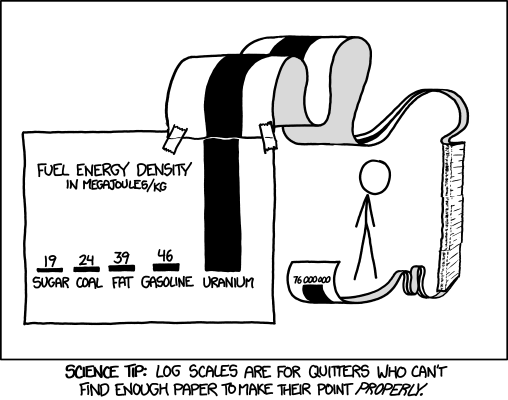
Log Scale

Knuth Paper-Stack Notation: Write down the number on pages. Stack them. If the stack is too tall to fit in the room, write down the number of pages it would take to write down the number. THAT number won't fit in the room? Repeat. When a stack fits, write the number of iterations on a card. Pin it to the stack.
18 Jan 22:32

Photo

Brian Stouffer

Friday motherfuckers