Shared posts

18 Jan 22:30

The Brothers Bluth

by Andrew Sullivan


Character by character, Helen Rittelmeyer compares the soon-to-be-relaunched Arrested Development to Dostoevsky's The Brothers Karamazov:

Michael is Ivan. He is the smartest and most self-aware Bluth, a decidedly mixed blessing considering that it makes him the only one able to grasp just how awful everyone is. Most people think of Michael as the nice brother, but that’s only half right, since on an intellectual level he believes the ethical rules he lives by are idiotic. You shouldn’t put so much work into keeping together a family that isn’t worth it, his brain keeps telling him, just as Ivan keeps telling himself that he shouldn’t love a God who doesn’t deserve it.

But both of them do the right thing in the end. As Ivan’s devil predicted, "You’re going to perform an act of great virtue, and you don’t even believe in virtue—that’s what keeps eating away at you." This internal contradiction drives Michael to exasperation; if he were Russian, it would have driven him mad.

18 Jan 05:11

Calvin and Hobbes for January 17, 2013

12 Jan 04:17

Photo


10 Jan 03:36

January 08, 2013


Only a few weeks till the new book launch!
09 Jan 20:31

Barbarous Relics

by By PAUL KRUGMAN
Brian Stouffer

This, forever.

I feel comfortable in my understanding of the economics of the platinum coin, but don’t claim any legal expertise. However, Laurence Tribe knows whereof he speaks — and he says that it’s quite legal. And so there you have it: if we have a crisis over the debt ceiling, it will be only because the Treasury department would rather see economic devastation than look silly for a couple of minutes.

There will, of course, be howls from the usual suspects if that’s how it goes. Some of these will be howls of frustration because their hostage-taking plan was frustrated. But some will reflect sincere horror over a policy turn that their cosmology says must be utterly disastrous.

Ed Kilgore says, in a somewhat different way, much the same thing I and people like Joe Weisenthal have been saying: what we’re looking at here is a collision of worldviews, one might even say of epistemology.

For many people on the right, value is something handed down from on high It should be measured in terms of eternal standards, mainly gold; I have, for example, often seen people claiming that stocks are actually down, not up, over the past couple of generations because the Dow hasn’t kept up with the gold price, never mind what it buys in terms of the goods and services people actually consume.

And given that the laws of value are basically divine, not human, any human meddling in the process is not just foolish but immoral. Printing money that isn’t tied to gold is a kind of theft, not to mention blasphemy.

For people like me, on the other hand, the economy is a social system, created by and for people. Money is a social contrivance and convenience that makes this social system work better — and should be adjusted, both in quantity and in characteristics, whenever there is compelling evidence that this would lead to better outcomes. It often makes sense to put constraints on our actions, e.g. by pegging to another currency or granting the central bank a high degree of independence, but these are things done for operational convenience or to improve policy credibility, not moral commitments — and they are always up for reconsideration when circumstances change.

Now, the money morality types try to have it both ways; they want us to believe that monetary blasphemy will produce disastrous results in practical terms too. But events have proved them wrong.

And I do find myself thinking a lot about Keynes’s description of the gold standard as a “barbarous relic”; it applies perfectly to this discussion. The money morality people are basically adopting a pre-Enlightenment attitude toward monetary and fiscal policy — and why not? After all, they hate the Enlightenment on all fronts.

The bottom line is that we aren’t really having a rational argument here. Nor can we: rationality has a well-known liberal bias.

This entry passed through the Full-Text RSS service — if this is your content and you're reading it on someone else's site, please read the FAQ at fivefilters.org/content-only/faq.php#publishers. Five Filters recommends: Gaza Blitz - Turmoil And Tragicomedy At The BBC.

09 Jan 03:55

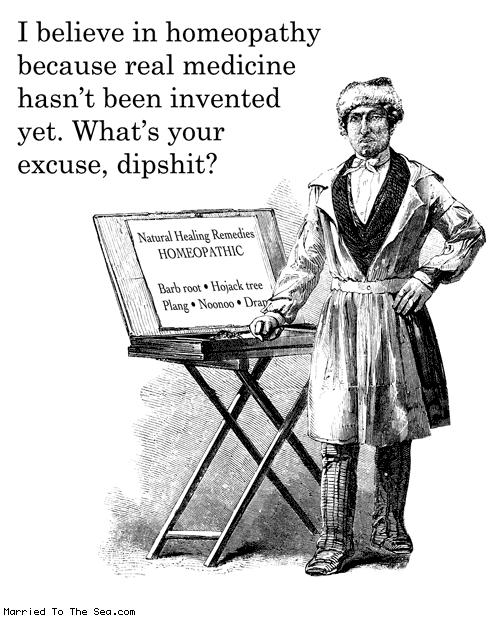
homeopathic excuse

07 Jan 22:00

New Year, New Dish, New Media, New Update

by Andrew Sullivan
Brian Stouffer

Of course it died down after $400,000. Dish readers clearly don't want Andrew to have to pay higher marginal tax rates on their contribution.

We promised to keep you informed about progress. Over the weekend, we passed the critical, symbolic figure of $420,000. At last count this afternoon, we're at $440,000 in pre-subscriptions. That's a staggering number in less than a week.

It has died down, of course, after an initial rush. But we know there are serious Dish-lovers out there reading this who have not yet subscribed. We're only half-way up our fiscal cliff for the year - so we still badly need your support. If you want to keep this blog alive and well and making trouble for the indefinite future, you can get your pre-subscription here. My post explaining the whole ad-free, reader-based model is here.

Become a member for only a nickel a day in under two minutes here.

07 Jan 21:57

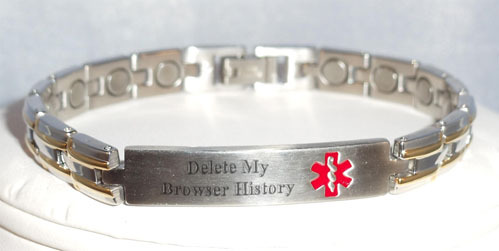
i shall wear it with honor.

by meagainstthem

Photobucket


04 Jan 05:12

Photo


31 Dec 04:48

my friend texted me the other night

scottfriday:

informing me that “dog food lid” backwards was “dildo of god”, and i just wanted to share it with you ‘uns here as well.

28 Dec 23:23

The Broken American Polity

by Andrew Sullivan

Senator Ben Nelson said recently that many Republicans have yet to accept the presidential election of 2008, let alone the re-election of 2012. I see no real evidence to the contrary. Whether this is due to race, or culture, or fanaticism (they regarded Georges_DantonBill Clinton as illegitimate as well) I do not pretend to know. We know also, of course, that the corrupt gerrymandering of House districts allows those with power to rig the system so they can retain power - even when they have no broad public support. And we know that the whitest, rightest part of the Republican base controls the primaries and is determined to destroy any member of Congress who votes against the religion of permanent insolvency - which is what "no-revenue-increases-ever" means as we near a demographic wave of older folks. What a perverse cause: a party dedicated above all to the permanent, chronic insolvency of the American government. The cuts they need without any new revenues would simply end the welfare state in America and would never be tolerated by the middle classes in practice. And tax reform will only get us so far.

This, then, remains a country in a Cold Civil War - not far off the geographical contours of the first, but with the inheritors of the Confederacy concentrated in the South and now also with serious pockets of absolutists in the more rural parts of the country as a whole. Maybe it was precisely because Barack Obama campaigned against partisan polarization that the GOP has decided to ratchet it up. The right-wing media-industrial complex - from Limbaugh to Hannity to Drudge - earns money from conflict, not compromise. And these lucrative media institutions have taken over from what's left of the conservative intelligentsia (three decades ago a flourishing, growing and open group, now shrinking fast into calcified, partisan hacks).

None of this is news to Dish readers. We've been covering this Republican meltdown for years. It feels like I've been watching it for much of my adult life. And it's true that if they simply retain total unity and resist any compromise on anything, they can help destroy this country's economy - and the world's. The Constitution gives them that power, even though the founders warned precisely against the kind of purism and factionalism that now threatens the stability of the entire country. Since their ideology is all about creative destruction ("Il nous faut de l'audace, et encore de l'audace, et toujours de l'audace!" is the fanatic Bill Kristol's rallying cry, proudly citing Georges Danton, a fellow revolutionary), what do they have to lose by wreaking havoc?

We can hope that public opinion exerts its pressure. But when the popular will is exactly what the gerrymandering is supposed to inhibit, there are limits to controlling this rogue faction, refusing to accept the legitimacy of a re-elected president or the urgency of compromise for the sake of the country as a whole. All to protect the very wealthy and successful from providing an ounce of extra sacrifice in tackling the debt, even as they demand everyone else, especially the poor and vulnerable, take a hit.

Jeff Weintraub has some typically sober reflections on all this:

Is it purely a coincidence that I just happened to run across the following passage from J.R.R. Tolkien?  A film based on The Hobbit is coming out, and at one point the review in the New Yorker quotes directly from Tolkien's book.  When the dragon Smaug discovers that one cup has been removed from his vast golden hoard, how does he respond?  He falls into

"the sort of rage that is only seen when rich folk that have more than they can enjoy suddenly lose something that they have long had but never used or wanted."

It is one thing to sacrifice the general good on the altar of ideological purism, but to do it solely so that the very rich can keep their toys? I'm reminded of Robert Bolt's words put in the mouth of Thomas More (my confirmation saint), upbraiding his betrayer:

Why Richard, it profits a man nothing to give his soul for the whole world... but for Wales?

26 Dec 18:08

do i look

26 Dec 17:59

Morons

by Erik Loomis

All of our favorite conservative writers are up in arms because David Gregory brought a high-powered ammunition magazine onto Meet the Press yesterday in order to discuss gun violence.

William Jacobson is calling for Gregory’s prosecution and wants more of this kind of thing (Legal Insurrection!!!!32131!!!!) Glenn Reynolds of course agrees, etc.

There’s only one logical solution to this problem.

We need to arrest George H.W. Bush for possession of crack cocaine.*

If the problem is really going on television with a proper visual to demonstrate a political problem despite technically breaking the law, consistency demands Bush’s arrest. After all, we all know that crack went to W after the press conference so I feel an intent to distribute charge may be in order……

*Since some in the conservative world are too uneducated to understand metaphor, let me introduce them to another part of the English language. This is called sarcasm.

26 Dec 17:58

Coup d’FreedomWorks

by Erik Loomis
Brian Stouffer

The only way to stop a bad think tanker with a gun is with a good think tanker with a gun?

What the what?

Until this year, the partnership between Kibbe and Armey worked well. Armey’s renown as a former House member drew media attention and crowds of conservative activists — most of them old enough to remember Armey’s role in the Republican revolution in Congress in 1994. And Kibbe’s youthful intellectualism drew a new generation of libertarian soldiers into the FreedomWorks fold. In 2010, the two co-wrote a book, “Give Us Liberty: A Tea Party Manifesto,” that became a New York Times bestseller and a successful marketing tool for FreedomWorks, which collected the book’s proceeds and used it to attract donations.

The partnership came to a crashing end when Armey marched into FreedomWorks’s office Sept. 4 with his wife, Susan, executive assistant Jean Campbell and the unidentified man with the gun at his waist — who promptly escorted Kibbe and Brandon out of the building.

“This was two weeks after there had been a shooting at the Family Research Council,” said one junior staff member who spoke on the condition of anonymity because he was not authorized to talk to the media. “So when a man with a gun who didn’t identify himself to me or other people on staff, and a woman I’d never seen before said there was an announcement, my first gut was, ‘Is FreedomWorks in danger?’ It was bizarre.’ ”

By nearly all accounts, including from those loyal to him, Armey handled his attempted coup badly. Armey says he was stepping in because of ethical breaches by Kibbe and Brandon, accusing them of improperly using FreedomWorks staff resources to produce a book — ironically, named “Hostile Takeover” — for which Kibbe claimed sole credit and was collecting royalties. The use of internal resources for Kibbe’s benefit could jeopardize the group’s nonprofit tax status; the group denies any impropriety.

“This is not only about this one incident,” Armey said. “But that one incident was a matter of grievous concern.”

Armey also accused Brandon, Kibbe and other staff members loyal to them of squeezing him out of media appearances and management decisions while using his name to market the group.

Armey appeared out of touch and unsure of how FreedomWorks operated when he took over that Tuesday morning, according to interviews with more than a dozen employees on both sides who witnessed the takeover. Sitting in a glass-walled conference room visible to much of the staff, he placed three young female employees on administrative leave, then reversed himself when they burst into tears; his wife lamented aloud that maybe they had “jumped the gun.”

Jumped the gun indeed. Of course, given the reality of gun-nut power-hungry conservatives, the idea that Dick Armey would lead an armed rebellion against the leadership of his own organization makes sense. Unfortunately for him, he seems to have read the Guidebook to Overthrowing Mikhail Gorbachev before doing so.

26 Dec 05:43

Shorter NRA: We Demand the Freedom to Live In a Permanent Police State

by Scott Lemieux

This Tom Scocca piece is pretty much brilliant from soup to cappuccino — I’m not even sure where to start excerpting. Here’s a couple of teasers:

Guns kill people. More guns kill more people. What the NRA gets wrong—intentionally or delusionally or, in the psychologically and financially profitable zone where intention and delusion overlap—is its bedrock premise: that gun killings are the work of Bad Guys, predators whose drive to hurt and steal and kill cannot be stopped by anything but a brave Good Guy armed with a powerful firearm and, not at all incidentally, trained through an NRA-backed firearms-training program.

And the NRA insists that these people—”the monsters and the predators,” as LaPierre put it—will not be thwarted by gun control, except in the funny T-shirt both-hands-on-my-weapon sense. The next Adam Lanza is already picking out his target, LaPierre said.

That’s because the next Adam Lanza is almost certainly able to get his hands on a weapon to point at that target. The original Adam Lanza was apparently too confused and low-functioning to navigate Connecticut’s simple waiting period and buy one for himself. But his mother, a gun enthusiast in good standing, had a stock of her own. She reportedly had wanted to feel safe.

[...]

This is the most extraordinary thing about the NRA’s ideology and the climate it’s created. By the time you read this, there will almost certainly be someone who has jumped to the comments to denounce gun regulations as an infringement of fundamental liberties. It is only the presence of uncounted millions of guns, in the hands of uncounted millions of Americans—whether pointy-headed liberals recognize this as a “well-regulated militia” or not—that secures our freedom against the encroachment of a totalitarian police state.

Yet today, LaPierre got up and described the gun lobby’s vision of our future: “A police officer in every single school.” “Armed security … building design … access control … information technology.” “An active national database of the mentally ill.”

This is the NRA’s idea of a free country. Kindergarteners on lockdown. Federal monitoring of everyone’s mental-health status. Cops in every hallway.

But, really, it’s all that good. The equation of guns and liberty is a conservertarian reductio ad absurdum on a par with Robert Bork’s argument that liberty requires giving public accommodations the right to deny African-Americans service based on their race (although, oddly, similar common law rights that applied to white people posed much less of a threat to liberty.) As Scocca says, it’s no coincidence that as the scope of the Second Amendment has been enlarged, the scope of the much more important Fourth Amendment (which actually does protect rights crucial to individual liberty) has been shrinking.

26 Dec 05:32

The .223 Used Again

by Erik Loomis
Brian Stouffer

Obviously we need to have all firefighters carry guns so they can shoot back. Problem solved.

Another horrible massacre, another high-powered rifle supported by the NRA used for the killing.

Chief Pickering also said that it was likely that the gunman used a semi-automatic rifle, one of three weapons recovered from the shooting scene, to kill the firefighters. He identifed the semi-automatic as a .223 Bushmaster rifle, the same weapon used in the school massacre in Newtown, Conn.

At the very least, can we make the ownership of this gun illegal?

26 Dec 05:29

A pony for Christmas

23 Dec 17:58

Guess Who Still Believes in Invisible Vigilantes

by By PAUL KRUGMAN

Lots of chatter about the WSJ’s account of how the deficit negotiations broke down, although — a few fun quotes aside — most of it is what we already pretty much knew. But here’s a passage that bothered me:

On Dec. 13, Mr. Boehner went to the White House at the president’s request, joking he was going to the woodshed.

The president told him he could choose one of two doors. The first represented a big deal. If Mr. Boehner chose it, the president said, the country and financial markets would cheer. Door No. 2 represented a spike in interest rates and a global recession.

Oh, dear — does the president still believe that failure to reach a Grand Bargain will cause an attack by the invisible bond vigilantes, and that this is the reason we should fear the fiscal cliff? How many times do we have to show that this notion is wrong both in theory and empirically? America can’t run out of cash (except politically, if Congress refuses to raise the debt ceiling); it basically can’t experience an interest rate spike unless people see an increased chance of economic recovery and hence a rise in short-term rates. And the people who have been predicting an interest rate spike any day now for four years shouldn’t have any credibility at this point.

Oh yeah, and a global recession would surely mean lower, not higher, interest rates.

If Obama is still confused about this, it has real-world consequences — in particular, it makes him too eager to reach a deal now now now, and hence too willing to concede on fundamental priorities.

Now, this wasn’t a direct quote, and we can hope that whoever was talking to the WSJ got it a bit wrong. But not what I wanted to hear about administration thinking at this point.

This entry passed through the Full-Text RSS service — if this is your content and you're reading it on someone else's site, please read the FAQ at fivefilters.org/content-only/faq.php#publishers. Five Filters recommends: Gaza Blitz - Turmoil And Tragicomedy At The BBC.

21 Dec 07:24

Photo


21 Dec 01:36

Photo

Brian Stouffer

I have to work late today?


20 Dec 22:42

There is no fiscal crisis. And macroeconomics is not a morality play.

by Neil Irwin
Brian Stouffer

Here you go.

Two separate events from the last few days, on two different continents: In the United States, a messy series of negotiations over how to avert the fiscal cliff and bring down the nation's large budget deficits seemed to be heading nowhere. In Japan, a land of the largest public debt in the world relative to the size of its economy, a new government was elected pledging to pressure the nation's central bank to inflate the money supply much more.

Here are two numbers to know about  the United States and Japan: 1.79 percent and 0.77 percent. Those are the yields on 10-year bonds in those two nations as of Thursday morning, the price their governments must pay to borrow money for a decade. In other words, investors are willing to fling their savings at those two seemingly dysfunctional governments for next to nothing.

But it's not just the United States and Japan. Name a country with three elements—a stable political system, a credible central bank to call its own, and a free flow of capital across its borders—and it has, right now, extraordinarily low interest rates. That's true for Canada and Australia (10 year yields of 1.85 percent and 3.36 percent), of Switzerland and Sweden (0.55 percent and 1.6 percent). Britain, certainly (1.94 percent), but even some countries that don't technically fit our classification because they lack their own central bank (Germany at 1.42 percent and France at 1.99 percent. That would be the same France that The Economist, in a cover story last month, called "the ticking time bomb at the heart of Europe.").

So what is going on? Interest rates  are, essentially, the relative price of money today versus its value in the future. And investors are saying that they don't need very much compensation to delay their spending for the future, as long as they can feel secure that they will get their money back and that the money they get back will be worth roughly what they put in.

To put it a different way, around the world there are all sorts of savers—pension funds, wealthy individuals in emerging nations, governments that want to ensure they have reserves put aside in case there were to be a run on their currency—for whom the goal is not so much to get a big yield on their savings, but rather to ensure that they will get their money back when they need it.

One of America's greatest exports, then, is not any physical good, but offering the world a deep, liquid, secure bond market. We may have dysfunction in Congress and large deficits as far as the eye can see, but as long as investors are confident that the Treasury will honor its debt obligations and the Federal Reserve won't allow out-of-control inflation, the United States looks like a terrific place to park money.

There are three points to draw from that.

One is that as the United States looks to reduce budget deficits, it should do so on its own terms. We should figure out what path of deficit reduction would be best for our economy, leaving us with more sustainable finances in the longer run without sucking the wind out of growth. We are not Greece, a nation that found itself unable to pay its debts and had austerity forced upon it by the outsiders offering bailout cash. We have time, and we should use it wisely.

Second, if there are things we can do with the cheap money the world is flinging at us that would make the U.S. economy more competitive in the longer run, we should take advantage. There are reasonable arguments to have on what that might be—infrastructure versus education spending, for example. But if there is spending we could do that would increase our economic potential over the generation ahead, we are fools not to do it.

The third point to draw from the low global interest rates is this: There is an unfortunate tendency to treat the size of budget deficits and the level of inflation or unemployment in moral terms. Surely when a nation sins through fiscal irresponsibility and tempts the devil inflation, it ought to receive the wrath of a vengeful god. But that's not how it is. Macroeconomics is not a morality play. Macroeconomics is like the weather. Sometimes the weather is nice and sometimes there is a mighty hurricane. It just is. What we all need to do is adjust to the reality as it is, not pretend the weather is as we think it ought to be.


20 Dec 22:20

Choose your own fiscal cliff adventure!

by Dylan Matthews

If the United States goes over the so-called "fiscal cliff," allowing a wave of scheduled tax hikes and spending cuts to take effect Jan. 1, the nation would likely enter a recession as the deficit falls too far, too fast. How would you avert the cliff, though?

Your job, should you choose to accept it, is to figure out a path forward using this calculator. First, identify which aspects of the fiscal cliff's tax increases and spending cuts you would allow to go forward, and which you would cancel. Then, pair it with other deficit-reduction policies you want to enact to start bringing deficits down even without the pain of an immediate austerity crisis. Then, add in any stimulus measures you might want to cushion the blow of deficit reduction and try to get the economy on track.

Once you have your plan for resolving the fiscal cliff, be sure to share it with your friends on Facebook and Twitter. Who knows, maybe Boehner and Obama are listening.

SOURCE: Congressional Budget Office, Committee for a Responsible Federal Budget, and the Economic Policy Insititute. GRAPHIC: Dylan Matthews and Andrew Metcalf The Washington Post. Published Dec. 20, 2012.

See our data here.


20 Dec 21:47

When is Obama gonna try on foreign policy?

by Daniel W. Drezner
Brian Stouffer

Yeah, why doesn't Obama spend more precious time and political capital trying to achieve things that are manifestly impossible?? (i.e., whipping up 66 votes in a Senate where the median senator wears a tinfoil hat to bed to keep the UN from stealing their brainwaves)

Pop quiz:  which administration has been more enthusiastic about joining international treaties, George W. Bush or Barack Obama? 

The Obama administration has been slow to submit new treaties to the Senate, and only nine have been approved so far. In contrast, the George W. Bush administration secured Senate approval of 163 treaties over eight years. These included not only bilateral treaties but also multilateral agreements on many important subjects, including human rights, atmospheric and marine environmental protection, the laws of war and arms control.

That paragraph comes from John Bellinger III, Bush 43's former State Department legal adviser.  Now, one obvious pushback to this is that Obama has had to deal with a sovereigntist caucus in the Senate that is even more rabid than it was under Bush.  Bellinger acknowledges the obvious, but then goes on to argue that fault also lies with the Obama administration: 

 It isn’t enough to blame Republican opposition to international agreements, which certainly has risen among the party’s senators in recent years. That trend only makes it more important that President Obama work harder to gain Senate support for treaties in his second term....

President Obama must devote more energy to securing Senate approval for pending treaties, both by using the presidency’s bully pulpit to explain the benefits and by directing administration officials to pay more attention to the concerns of individual senators. Despite increasing Republican hostility toward treaties, the president should still be able to persuade between 12 and 15 pragmatic Republican senators to support treaties that give concrete rights to Americans and American businesses or that promote important American interests.

The president should begin with the Law of the Sea Convention, which enjoys strong support from all branches of the United States military and from the American business community. He almost certainly could have gained Senate approval of this important treaty during his first three years in office but inexplicably waited until the maelstrom of the 2012 election year to push for it.

Over at the Monkey Cage, Erik Voeten looks at the political science of this and concludes that Bellinger has a valid point.  The reason that Obama has been lethargic on treaties?  The opportunity cost of the effort: 

The idea that it is indeed hard work to pass treaties is supported by a recent working paper by Judith Kelley and Jon Pevehouse. Passing a treaty isn’t a simple matter of tallying the votes. The Senate’s agree and consent process takes away legislative time and political capital that could be used for other, perhaps more valuable, legislation. This opportunity cost theory yields some interesting and counterintuitive hypotheses. Presidents should become less likely to advance treaties when their approval ratings are high and when their party controls the Senate because that is the time when they can pass more valuable legislation on domestic issues. Kelley and Pevehouse find strong support for these patterns in their analysis with data from 1967-2008.

I suspect that Bellinger is correct that the Obama Administration could have persuaded a few Republicans to switch sides on the United Nations Convention on the Rights of Persons with Disabilities if it had expended more time and capital on the treaty. This is not just about Republican opposition but also about priorities in the Obama Administration, which have, rightly or wrongly, been more on the domestic side.

One could argue that this logic also applies to Obama's cabinet selection process on foreign affairs.  With Susan Rice, Chuck Hagel and John Kerry, the White House strategy appears to be, "hey, let's float the name, see if anyone gets upset, and see if the nominee can push back effectively before bothering to actually nominate the person." 

Now from a pure logic of politics, this strategy makes some sense on some foreign policy matters.  As embarrassing as it was that the Convention on the Rights of Persons with Disabilities did not get ratified by the Senate, it doesn't change much.  There is no effect on domestic law and the U.S. takes a marginal hit on the global stage.  Even on cabinet appointments, one could be truly bloodless and argue that Susan Rice's Value Over Replacement-Level Policy Principal wasn't that high.  The fiscal cliff negotiations matter a lot more. 

Still, politics is art as well as science, and there's something just a little bit chickens**t about the Obama White House's tactics.  Politics isn't only about winning -- sometimes it's just about making the effort.  And the truth of the matter is that when it comes to dealing with Congress, this administration hasn't made the effort.  By my recollection, during its entire first term, the only international relations piece of legislation that got the full court Obama White House press was the New START treaty with Russia.  Now given what was going on with the economy, one could argue that the administration had the right set of priorities.  But one way to help jumpstart the global economy would be a series of potentially significant foreign economic policy moves -- including the ratification of the Law of the Sea Convention, by the way.  And I'd feel safer about my bet with Phil Levy if I knew that the Obama administration was willing to get some skin in the game when it came to foreign policy and Congress. 

Letting peple like Susan Rice or Chuck Hagel twist in the political wind is, well, cruel.  So I hope that in its second term, the White House cares enough about foreign policy to actually engage Congress rather than throw up their hands and say, "crazy Republicans, what can you do?"  Actually, President Obama, you could do one whole hell of a lot if you made an effort. 

20 Dec 21:43

The first North Korean English-language video game is the best indie game of the year

Brian Stouffer

This reads like a Yakov Smirnoff bit. In North Korea, video game plays you!

Pyongyang Racer is the first game made in North Korea for Western consumption, and it is a brilliant critique of the tropes of overblown AAA racing games. It's not fun at all. It's like the game Bennett Foddy has been working towards his entire life. Instead of a decadent supply of unlimited fuel, you have to collect barrels of the black stuff to avoid getting stuck. Instead of weaving your way through hideously neon cosmopolitan backgrounds, you slowly crawl your way through a desperate Soviet skeleton city. Instead of slatternly card girls spilling out of their bikinis, there are stern-looking, schoolmarmish road guards. Instead of alternating between the thrill of the straightaway and the agony of the slowly-taken or crashed-upon turn, you just basically go the same midldling speed the entire time. Instead of licensed top-40 electro the game serenades you with the finest revolutionary marches. Pyongyang Racer will make you question your love for games. Avant garde!

16 Dec 02:42

The Mininum Wage Machine

by JacobSloan

Via Andrew Fishman’s Art, minimum wage machine is a sculpture installation by Blake Fall-Conroy, allowing anyone to work for minimum wage for as long as they wish:

Turning the crank on the side releases one penny every 4.97 seconds, for a total of $7.25 per hour. This corresponds to minimum wage for a person in New York.

This piece is brilliant on multiple levels, particularly as social commentary.  Without a doubt, most people who started operating the machine for fun would quickly grow disheartened and stop when realizing just how little they’re earning by turning this mindless crank. A person would then conceivably realize that this is what nearly two million people in the United States do every day…at much harder jobs than turning a crank. This turns the piece into a simple, yet effective argument for raising the minimum wage.

15 Dec 17:42

Reconciliation

by Brad Plumer
Brian Stouffer

We spend $1,000 to prevent terrorism for every $1 we spend preventing gun violence.

How Japan has virtually eliminated gun deaths.

We spend $1,000 to prevent terrorism for every $1 we spend preventing gun violence.

"It's currently easier for a poor person to get a gun than it is for them to get treatment for mental health issues."

The man who inspired Omar from ‘The Wire' has died.

And a non-gun-related link: What an early leak of the IPCC's big climate report tells us about the state of climate science.


15 Dec 17:37

Further Notes on ONE TRILLION DOLLARS

by By PAUL KRUGMAN

Yesterday I noted that the preoccupation with the size of the current deficit — which, as everyone reminds us, is ONE TRILLION DOLLARS — is completely misguided. Since then I’ve done some more arithmetic, which solidifies the point.

So, in fiscal 2012 (which ended September 30) we did in fact have a federal deficit of $1.1 trillion (pdf). The question is, however, whether this deficit represents, as everyone claims, a fundamental mismatch between what we want and what we’re willing to pay for — or whether it’s mainly just a reflection of the depressed state of the economy.

For starters, we need to be aware that we don’t need a balanced budget to have a stable fiscal situation; all we need is for debt to grow no faster than GDP. At the beginning of fiscal 2012, federal debt in the hands of the public was $10 trillion. Meanwhile, most estimates of long-run growth and inflation put them at a bit more than 2 and 2 respectively; so we can reasonably say that nominal GDP growth can be expected to be more than 4 percent per year. If debt grew at 4 percent, it would grow by $400 billion. So the deficit should be scaled down by that much.

That still leaves $700 billion. Where’s that coming from?

OK, revenues were $2.45 trillion, which was 15.7 percent of GDP, at $15.5 trillion. The CBO estimates, however, that potential GDP — what the economy would have produced at full employment — was $16.5 trillion over the same period. And if the economy had been at more or less full employment, we wouldn’t just have collected taxes on the additional income; historically, the tax share of GDP varies strongly with the business cycle. If the economy had been at potential and revenue had been a historically normal 18 percent of GDP, revenue would have been more than $500 billion more than it was; even if revenue had been only 17.5 percent, it would have been almost $450 billion more than it was.

Meanwhile, on the spending side, a large part of the rise in spending came from “income security” payments — in this case, basically unemployment insurance and food stamps — which surged due to high unemployment, but are already coming down. Here’s what happened:

You don’t want to attribute all of the $250 billion rise since 2007 to the state of the economy, but a large fraction surely is slump-related. Also, the slump had impacts elsewhere too — for example on Medicaid spending, probably on more people taking disability, and so on. So a conservative figure for slump effects on spending would be at least $150 billion.

Put these together: $400 billion that doesn’t increase the debt-GDP ratio; $450 billion or so in slump-related revenue loss; $150 billion or more in slump-related expenses; and guess what: the ONE TRILLION DOLLARS is basically just a depressed-economy story, having nothing to do with any fundamental mismatch between what we want and what we’re willing to pay.

And this makes a lot of sense! The budget wasn’t deep in the red in 2007, and there have been no fundamental increases in government responsibilities or cuts in taxes since then (Obamacare won’t kick in until 2014, and it’s paid for in any case).

Let me say once again that this doesn’t mean all is well in the longer term. Baby boomers are retiring and health costs are still rising, so the budget prospect for 2020 or 2025 is troubling. But the current deficit has nothing to do with those troubles — which means that anyone who invokes ONE TRILLION DOLLARS to make a point about the budget thereby demonstrates that he has no idea what he’s talking about.

This entry passed through the Full-Text RSS service — if this is your content and you're reading it on someone else's site, please read the FAQ at fivefilters.org/content-only/faq.php#publishers. Five Filters recommends: Gaza Blitz - Turmoil And Tragicomedy At The BBC.

15 Dec 17:33

Party of No Ideas

by By PAUL KRUGMAN

Greg Sargent writes:

I spoke this morning to an official familiar with the fiscal cliff talks. He tells me that ever since Republicans rejected the first White House fiscal offer, White House negotiators have been asking Republicans to detail both the spending cuts they want and the loopholes and deductions they would close to raise revenues while avoiding a hike in tax rates for the rich.

According to the official, Republicans continue to refuse to answer.

“No answer ever since the Geithner meeting,” the official said. “To date they have been unwilling or able to identify a list of specific cuts or changes they would like or a single loophole they are willing to close.”

I think everyone has been hearing the same thing. This is not a negotiation in the normal sense, in which each side makes proposals and they dicker over the details; instead, Republicans are demanding that Obama read their minds and produce a proposal they’ll like. And Obama won’t do that, for good reason: he knows that they’ll just pronounce themselves unsatisfied with whatever he comes up with, and are indeed very likely to campaign in 2014 attacking him for whatever cuts take place.

But then, should we be surprised? Remember that all the Republican budget “plans” of recent years — very much including the Ryan plan — have been built largely out of magic asterisks. Even the one real budget cut they’ve been willing to endorse specifically, savage cuts to Medicaid, involved block-granting and turning it over to states, so that they don’t have to specify who, exactly, will be denied medical care. And with Obama dead set against that kind of cut, they have nothing.

We are at a strange and dangerous place in American political life.

This entry passed through the Full-Text RSS service — if this is your content and you're reading it on someone else's site, please read the FAQ at fivefilters.org/content-only/faq.php#publishers. Five Filters recommends: Gaza Blitz - Turmoil And Tragicomedy At The BBC.

14 Dec 03:22

▲∴⦿∴▲

by eternaltv
14 Dec 02:42

Divorce?

by Robert Farley
Brian Stouffer

"There is, to my mind, no natural relationship between the group of people on the left side of American politics who are deeply interested in policy detail and believe that such detail (and the elections that modify this detail) is consequential, and those who believe preferences between the policies of Romney and Obama amount to rearranging deckchairs on the Titanic of Late American Imperial Capitalism."

So, it seems like there was a hippie punching party and nobody invited me.  Two thoughts:

1. The term “hippie punching,” while satisfying in an @OldHossRadbourn “Beat the Irish” kind of way, does not accurately describe the dynamic of internecine strife in Left Blogistan.  Freddie gives as good as he gets; for every “I’m still pissed about Nader” post you see at LGM, you’ll see a similar 1500 word anti-liberal rant from Freddie, or from folks with very similar political attitudes as Freddie. Liberals (if we shall call them such) undoubtedly still see some value in harsh critiques of the Left (if we shall refer to it as such), just as the Left often finds liberals to be easier targets of opportunity than conservatives. The “hippie punching” terminology suggests a passivity that does not capture the relationship. It’s for this reason that I find questions like “why can’t liberals make peace with Ace Cockburn?” almost entirely useless; Cockburn hated liberals, targeted them regularly with nasty invective, and didn’t give a damn what they thought about him.

2. Maybe it’s time to drop the pretense that Freddie and Erik (or Freddie and myself) are on the same side of anything. As we know, the institutional structure of American politics makes the persistence and dominance of two large, broad-coalition political parties extremely likely, and given that the development of Left Blogistan during the Bush administration was characterized by accidental coincidence between liberals and leftists, it’s perhaps not surprising that an inappropriate sense of community would take hold. Let’s be frank, though; while I’m certainly on the left of any kind of linear scale of American politics (and probably in the left-most quartile), I don’t give a damn about Freddie’s “socialist pacifism.” It’s not my kind of politics, it doesn’t interest me, and given my druthers I wouldn’t engage in much of any kind of political action to further whatever program Freddie thought necessary to realize his goals.

If we abandon the idea of a Left Blogistan community, then these arguments stop being about strength of ideological commitment (on the one side) or poor strategic decision making (on the other side) and become simple policy arguments. Pluralism is great; people think all kinds of different things, but intra-group dynamics in groups that probably shouldn’t be groups in the first place probably make conflict a good deal more bloody than it needs to be. There is, to my mind, no natural relationship between the group of people on the left side of American politics who are deeply interested in policy detail and believe that such detail (and the elections that modify this detail) is consequential, and those who believe preferences between the policies of Romney and Obama amount to rearranging deckchairs on the Titanic of Late American Imperial Capitalism.

Phrased differently, a world in which Freddie doesn’t have to pretend that he cares about the public option, the Medicare retirement age, or the specifics of the drone campaign and in which I don’t have to pretend that I can about Freddie might be a much better world than the one we have now.  Of course, whenever you have borders there’ll be borderline cases, but it seems to me that the intra-group dynamic of Left Blogistan is kinda ugly right now, and might be better served by Partition. There is precedent; the political Blogosphere that existed in 2004 resolved itself into two distinct ideological groups by 2008, with not much conversation taking place between them. If you really valued the blog wars of 2004 this was a sad development, but it seems that almost no one really wants to relieve those days.