On Friday we shared some breaking scuttlebutt about a Taco Bell Cantina coming to Columbia Heights. Mark that as confirmed!! WTOP follows up with the goods: “The new Cantina will be in Columbia Heights and is set to open this spring.”
STAY TUNED for more details as they become available. And thank you GOD(s).
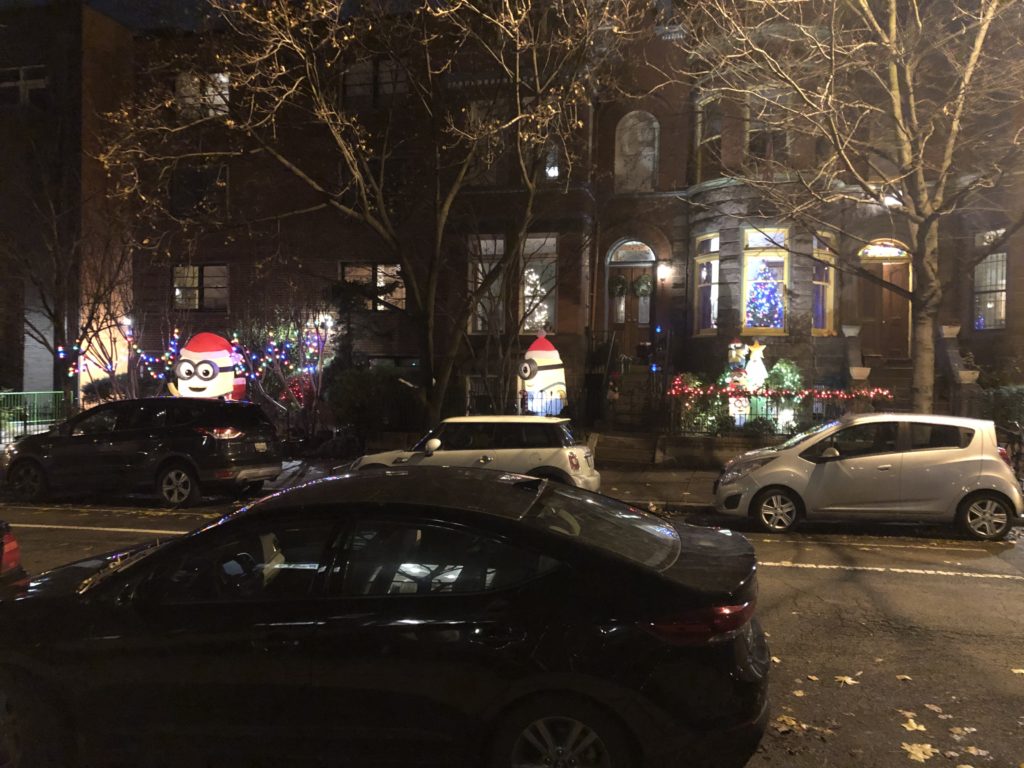
Thanks to Ted for sending: “Raccoon looking for breakfast in Shaw.”
If you spot a hawk or any interesting wildlife around town, lunching or otherwise, and get a good photo please send where you spotted it to princeofpetworth@gmail.com and I’ll add it to the queue. Hawks around Town is made possible by a generous grant from the Ben and Sylvia Gardner foundation.
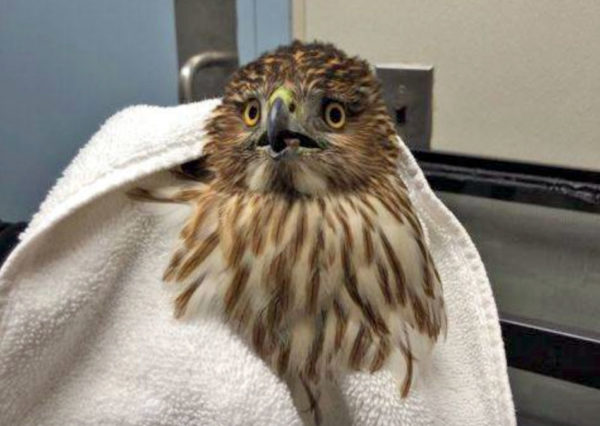
A young red-tailed hawk that fell out of a tree “like a sack potatoes” near the Virginia Square Metro entrance is being nursed back to health.
The Animal Welfare League of Arlington said one of its animal control officers was able to safely capture the ailing hawk, and it’s now on the road to recovery at a “local bird of prey rehabber.”
Thanks to our community working together, this juvenile Red-Tailed Hawk is now safe and sound! Earlier this week, our officers received a call about a bird that “fell out of a tree like a sack of potatoes” in front of the Virginia Square metro station. Officer Rose was dispatched to the scene, and was able to safely capture him and bring him to one of our local bird of prey rehabbers. They determined that the hawk was young and underweight, and so will care for him until he is back at a healthy weight and can be released back into the wild.
Thank you to everyone who helped get this hawk on the road to recovery!
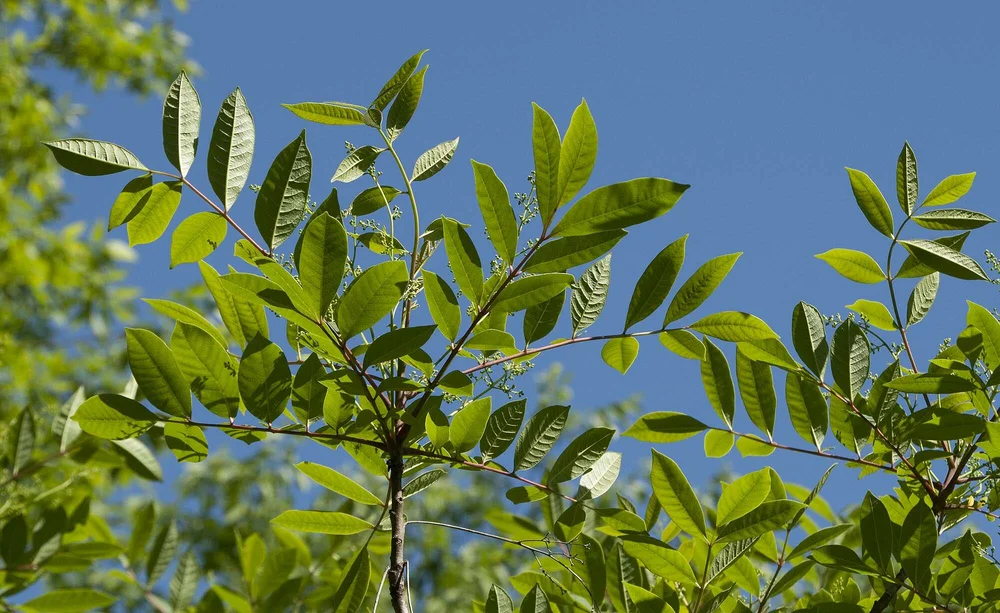
Poison sumac (Toxicodendron vernix). The very name is enough to send chills down the spine. At least where I live, this small tree is a bit of a unicorn, often heard of but never seen. That is, unless you know where to look.
A denizen of high quality wetlands, this species is not often encountered by your average hiker. It has a rather spotty distribution in eastern North America as well. I have heard it been said that the best way to find a poison sumac tree is to trip and fall in a bog. The first branch you grab onto will be that of a poison sumac.
All jokes aside, coming across one in the wild can be fun. They are a beautiful tree. A member of the family Anacardiaceae, it resembles North America's other sumacs (Rhus sp.), which often gives those innocuous trees a bad reputation. Like its other cousin, poison ivy (Toxicodendron radicans), poison sumac does produce urushiol. Interestingly enough, humans are said to be one of only a small handful of mammals that are susceptible to this compound. The reaction we have to it is not an inherent property of urushiol. Its effects on humans are the result of an allergic reaction. It is said that poison sumac can produce a much harsher reaction than poison ivy. I am one of the lucky ones who does not seem to be allergic to it, which is good news for me as my first encounter with this plant involved most of my face.
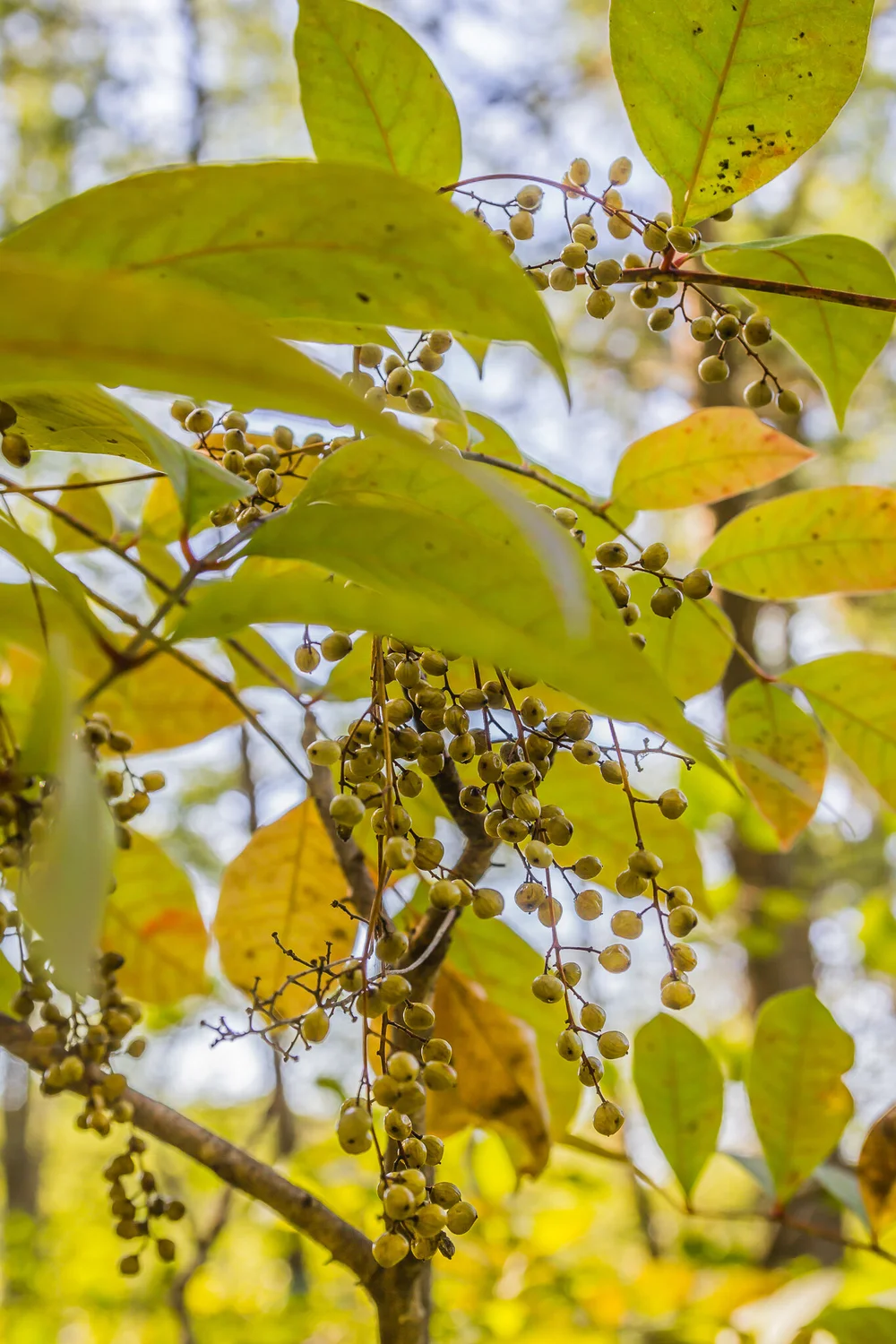
Poison sumac fruits are an easy way to tell this tree apart from other sumacs because they produce white-ish fruits, rather than red.
Also like poison ivy, poison sumac produces nutritious fruits that birds are particularly fond of. Migratory song birds, especially those that live and breed in wetlands, are the main seed dispersal agents for this species. All in all, the ecological value of species like poison sumac far outweigh the anxieties we feel about them. It is important not to live in fear of species like this. With a little attention to detail, contact can be avoided. Moreover, because it lives in high quality wetlands, the odds of the average person coming into contact with this tree are relatively small compared to other plants. I can only speak highly of a species like this. I just wish we had more high quality wetlands around where they could grow.
(Updated at 12:30 p.m.) The name “National Landing” is becoming official.
The Board of Directors of the Crystal City Business Improvement District voted yesterday to change the organization’s name to the National Landing Business Improvement District. The new name will now be voted on by the BID’s general membership and the Arlington County Board.
The name change follows the September approval of the BID’s boundary expansion to serve portions of the Pentagon City and Potomac Yard neighborhoods.
Tracy Sayegh Gabriel, president and executive director of the to-be-renamed BID, emphasized in a statement (below) that National Landing is an umbrella term and that the names of the individual neighborhoods are not changing.
We are pleased to report that on January 23 our Board of Directors approved a resolution to change our organizational name to the National Landing Business Improvement District. The Board opted for the new name in recognition of the BID’s upcoming geographic expansion and as a reflection of the increasingly interconnected character of the Crystal City, Pentagon City and Potomac Yard communities. This resolution marks the culmination of a robust public process in which the BID sought and received broad support from area residents and local civic organizations.
Pending approval by the Arlington County Board and a formal vote by the BID’s full members at our Annual Meeting this spring, the National Landing name will be utilized as an umbrella term for Virginia’s most vibrant and largest walkable downtown. It will not replace the existing neighborhood names of Crystal City, Pentagon City and Potomac Yard, which each maintain their own unique identities and distinct characteristics.
The BID is also seeking to change the term those in economic development and commercial real estate use to refer to the area — from the “Jefferson Davis Corridor,” after the former name of Route 1, to National Landing. Gabriel said the Confederate president’s name “did not represent a desirable monicker for the area.”
In an phone interview with ARLnow this morning, Gabriel acknowledged that the initial rollout of the National Landing name — when Amazon arbitrarily announced that HQ2 was coming to “National Landing” before members of the public had heard of the name — was “not ideal.” She noted, however, that the name was actually created by Arlington and Alexandria officials as part of the local governments’ joint effort to woo Amazon and the Virginia Tech Innovation Campus.
The BID, meanwhile, has been working to change its name since before Amazon’s announcement.
“We’ve been thinking about finding a collective name for our downtown since 2018, even before the arrival of Amazon and the expansion of the BID,” Gabriel said. “With the expansion of the BID we’ve had a renewed effort to have a public conversation about the name.”
“Since the name has come out, we’ve done extensive public outreach. We put out 18,000 flyers, 16,000 of which were mailed to all of the households in the 22202 zip code,” she noted. Other outreach included “numerous open houses about the vision for the neighborhood, as well as focus groups and open office hours.”
There were other possible names floated, we’re told, but none garnered more public support than National Landing. Among the alternative names considered were “Future Cities,” “Lower Arlington” and “Penn-Crystal.”
Gabriel said having support for “National Landing” from the area’s civic associations was key to moving forward with the name.
“The real tipping point of adoption was seeing its use among the local civic associations,” she said.
In addition to the name change and the rebranding effort that will follow it, the BID is now working to expand its staff as it gears up to start serving the expanded portions of its boundaries on July 1. It is concurrently working to “better understand the needs and priorities of those areas,” Gabriel said.
The area, meanwhile, is in the midst of an HQ2-fueled transformation that will include thousands of new residential units, as well as the retail space along Crystal Drive nearly quadrupling (including the planned addition of an Alamo Drafthouse movie theater).
While some have suggested that Crystal City is transforming from an office canyon to a more desirable live-work-play neighborhood, Gabriel pushed back on that “misconception.” Crystal City already has 15,000 residential units, one of the county’s most-visited parks, a theater, an art gallery, and numerous restaurants and bars, she noted, and that’s not to mention extensive transit and trail connectivity.
Of course, there’s now a lot more on the way, including the under-construction Long Bridge Park aquatics center.
“I think the area has been a hidden gem, with great bones,” said Gabriel. “The big transformation is just in terms of public perception and [Amazon] putting the area on the map.”
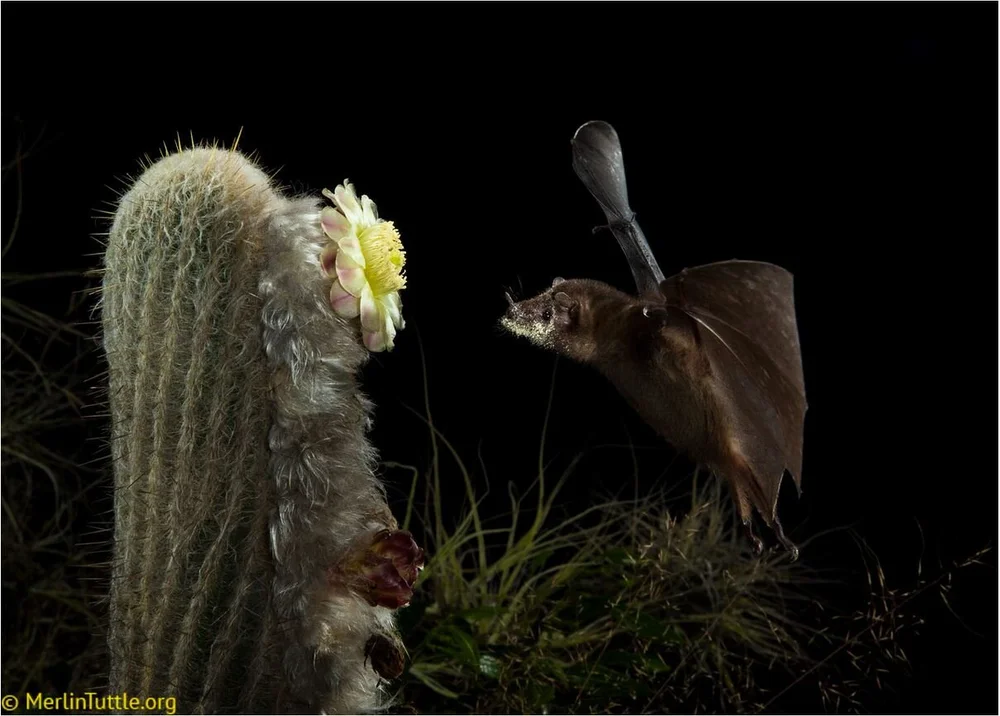
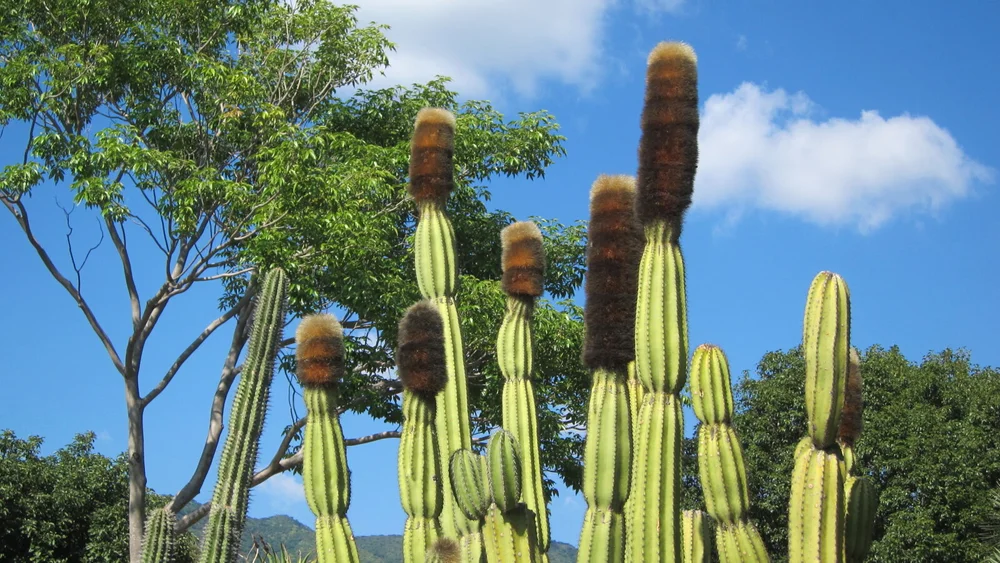
Plants go to great lengths to attract pollinators. From brightly colored flowers to alluring scents and even some sexual deception, there seems to be no end to what plants will do for sex. Recently, research on the pollination of a species of cactus endemic to the Ecuadorian Andes suggests that even plant hairs can be co-opted for pollinator attraction.
Espostoa frutescens is a wonderful columnar cactus that grows from 1,600 ft (487 m) to 6,600 ft (2011 m) in the Ecuadorean Andes. Like many other high elevation cacti, this species is covered in a dense layer of hairy trichomes. These hairs serve an important function in these mountains by protecting the body of the plant from excessive heat, cold, wind, and UV radiation. Espostoa frutescens takes this a step further when it comes time to flower. It is one of those species that produces a dense layer of hairs around its floral buds called a cephalium. Cacti cephalia are thought to have evolved as a means of protecting developing flowers and fruits from the outside elements. What scientists have now discovered is that, at least for some cacti, the cephalium may also serve an important role in attracting bats.
Bats are famous for their use of echolocation. Because they mainly fly at night, bats rely on sound and scent, rather than sight to find food. More and more we are realizing that a lot of plants have taken advantage of this by producing structures that reflect bat sonar in such a way that makes them more appealing to bats. Some plants, like Mucuna holtoniiand Marcgravia evenia, do this for pollination. Others, like Nepenthes hemsleyana, do this to obtain a nitrogen-rich meal.
Espostoa frutescens apparently differs from these examples in that its not about reflecting bat sonar, but rather absorbing it at specific frequencies. Close examination of the hairs that comprise the E. frutescens cephalium revealed that they were extremely well adapted for absorbing ultrasonic frequencies in the 90 kHz range. This may seem arbitrary until you look at who exactly pollinates this cactus.
The main pollinator for E. frutescens is a species of bat known as Geoffroy’s tailless bat (Anoura geoffroyi). It turns out that Geoffroy’s tailless bat happens to echolocate at a frequencies right around that 90 kHz range. Whereas the rest of the body of the cactus reflects plenty of sound, bat calls reaching the cephalium of E. frutescens bounced back an average of 14 decibels quieter.
Essentially, the area of floral reward on this species of cactus presents a much quieter surface than the rest of the plant itself. It is very possible that this functions as a sort of calling card for Geoffroy’s tailless bats looking for their next meal. This makes sense from a communication standpoint in that it not only saves the bats valuable foraging time, it also increases the chances of cross pollination for the cactus. To obtain enough energy from flowers, bats must travel great distances. Anything that helps them locate a meal faster will increase visitation to that flower. By changing the way in which the flowers “appear” to echolocating bats, the cacti thus increase the amount of visitation from bats, which brings pollen in from cacti located over the bats feeding range.
It is important to note that, at this point in time, research has only been able to demonstrate that the hairs surrounding E. frutescens flowers are more absorbent to the ultrasonic frequencies used by Geoffroy’s tailless bat. We still have no idea whether bats are more likely to visit flowers borne from cephalia or not. Still, this research paves the way for even more experiments on how plants like E. frutescens may be “communicating” with pollinators like bats.
Meet Arlington’s newest Pet of the Week, Archimedes, a rescue that has just mastered the command ‘sit’ and is working on learning more.
Here is what Archie’s owner told us that he has to say about his life in Arlington:
Hi my name is Archimedes, after the Greek Mathematician, but you can call me Archie. My litter-mates and I were rescued from a kill shelter and my new mom and dad got me before Christmas. I was the unique pup of the bunch, being the only brindle with blue-green eyes
Currently I love my cookie monster, blankies, meeting new people, and being told I have the prettiest eyes and coat. I’ve totally mastered ‘sit’, but most everything else is gibberish. Hopefully I’ll grow smarter each day to live up to my namesake, but for now I’ll eat every leaf in sight.
Want your pet to be considered for the Arlington Pet of the Week? Emailarlingtonnews@gmail.com with a 2-3 paragraph bio and at least 3-4 horizontally-oriented photos of your pet. Please don’t send vertical photos, they don’t fit in our photo galleries!
Each week’s winner receives a sample of dog or cat treats from our sponsor, Becky’s Pet Care, along with $100 in Becky’s Bucks. Becky’s Pet Care is the winner of eight consecutive Angie’s List Super Service Awards, the National Association of Professional Pet Sitters’ 2013 Business of the Year and a proud supporter of the Arlington County Pawsitively Prepared Campaign.
Becky’s Pet Care provides professional dog walking and pet sitting in Arlington and all of Northern Virginia, as well as PetPrep training courses for Pet Care, CPR and emergency preparedness.
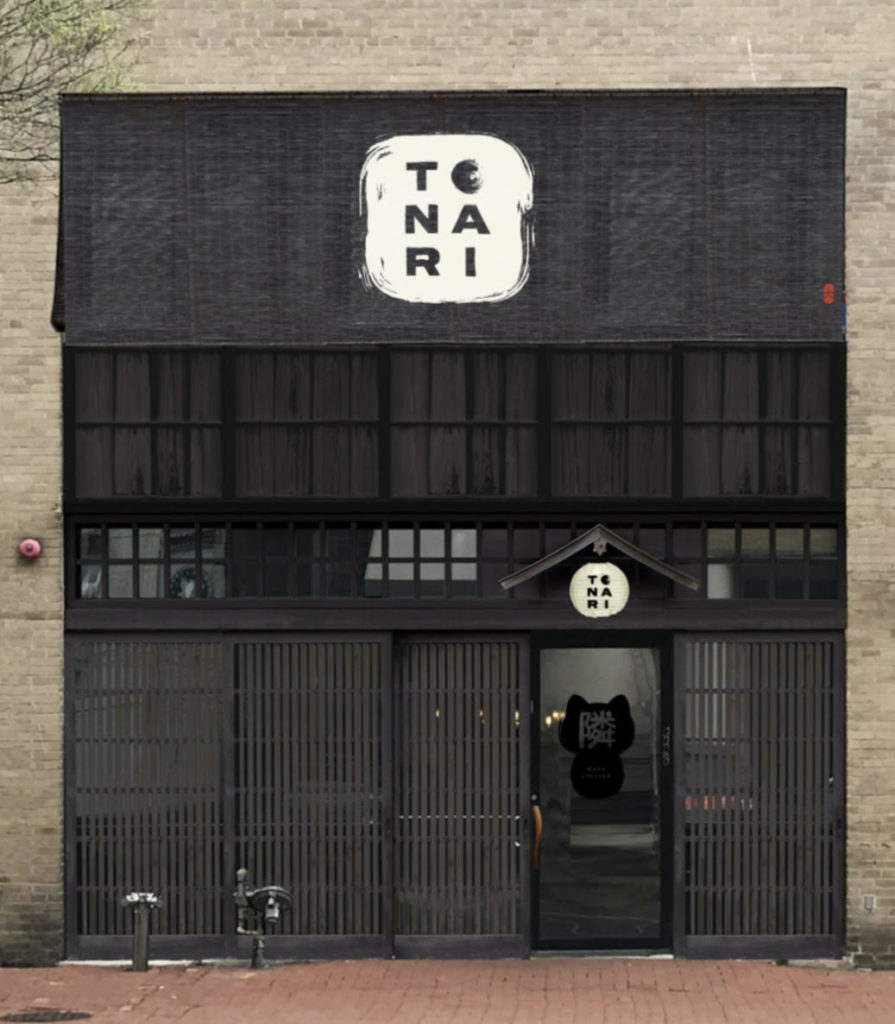
“Celebrated Daikaya Group partners Yama Jewayni, Katsuya Fukushima, and Daisuke Utagawa are thrilled to announce the upcoming opening of their fifth restaurant in the District – ‘Tonari’ – meaning ‘next door’ or ‘neighbor’. Scheduled to open in Winter 2020, Tonari will serve as the first restaurant in Washington D.C. to showcase Japanese-style or ‘Wafu’ pasta and pizza located within the former Graffiato space directly next to Daikaya in Chinatown at 707 6th St NW, Washington, DC 20001.
“At first we were a bit hesitant in taking over the space next door but we were also concerned about who might become our neighbor”, said Yama Jewayni, partner at Daikaya Group. “In a sense, we really wanted to repurpose and recycle the restaurant and that’s how we arrived at Wafu Italian pasta and pizza.”
“When the space ‘next door’ became available the immediate and exciting concept that came to mind was Japanese Wafu pasta and pizza”, said Katsuya Fukushima, Executive Chef and Partner at Daikaya Group. “Then the challenge of conveying what Wafu is kicked in. But for me Wafu cuisine has very much been a part of Japanese culture so I’m excited to have the opportunity to be able to share this special piece of Japan with diners in DC. Ganbarimasu!”
Wafu pasta, meaning Japanese-style pasta (dishes) is a widely loved and well-established cuisine in Japan today. The origin of Wafu pasta dates back to 1953 at a tiny restaurant in Tokyo called Kabenoana (Hole in the Wall). At the time there were only three restaurants serving pasta in Tokyo, one of which was at Imperial Hotel. Kabenoana was serving a plate of pasta at 100 yen, Imperial Hotel’s was 960 yen. From the start Kabenoana aimed to serve wider audiences. As such, the chef of Kabenoana was open to ideas from his regular clients and started using Japanese ingredients to create new pasta dishes. Now classic Wafu pasta ingredients such as Tarako (cod roe) Uni (sea urchin), Shitake, Nori, and dashi emerged as a result of many dialogues and trials between the chef and the customers. In Japan today, there are many Wafu pasta restaurants and the menu items are still evolving incorporating Japanese sensibilities in creating new pasta dishes.
Pizza is also an extremely popular dish in Japan, and there are a wide range of pizza styles and options to choose from. Some pizzerias in Japan have even been known to rival traditional pizzas from Napoli. Some even began to create their own versions with pizza Kaiseki-like service. At Tonari, the team began their journey by working to create a pizza that had a distinctive Japanese flair. The team specifically sought inspiration from Japanese bread, which features a distinct sweet smelling, soft, fluffy, and chewy texture.
To ensure top-notch quality in all of Tonari’s signature pasta and pizza options, Daikaya Group partners called on Yokoyama Seifun, a flour mill in Sapporo which supplies flour to Nishiyama Seimen Co., Ltd. to make their exclusive custom ramen noodles, to assist them in developing their Japanese style pizza dough mix. Yokoyama separates wheat grain in to 70 different components, and they are also extremely passionate about bread making, so Jewayni, Utagawa, and Fukushima realized that partnering with Yokoyama would be the perfect collaboration in developing their Japanese pizza dough. During one of the team’s R&D visits to Yokoyama’s test kitchen, one of the pizzas they tested was a pan pizza using 100% Hokkaido flour and rice oil. The flour helped the dough to rise to that fluffy Japanese bread texture they were looking for, and the combination of the pan and the rice oil shortening created a toasty, almost tempura-like crust. When they tasted it, everyone at the test kitchen thought that it was extremely Japanese and distinctive, and they unanimously agreed it would be their official signature pizza dough and that making their pizzas in a pan was the way to go.
The pasta selections at Tonari are slated to feature both classics such as Spaghetti Napolitan with a sweet tomato-based sauce more similar to ketchup rather than a traditional marinara, and for more creative Japanese-inspired pasta options Chef Fukushima and team have plans to offer an Uni pasta, Natto Bolognese, and Mentaiko Spaghetti, just to highlight a few. Traditional and Japanese-centric ingredients will be also be showcased on some of the signature pizzas such as Corn and Crab Pizza, Tuna Sashimi Pizza, and a Clam and Miso Pizza, to name a few. Daikaya Group’s mission is to utilize Tonari to continue to experiment with Wafu pasta and pizza in Washington D.C.
Following multiple in-depth R&D trips to Japan, Daikaya Group partners teamed up with prolific DC-based design guru Brian Miller of edit lab at Streetsense once again to bring the one-of-a-kind design for Tonari to life. The two-level space will feature 3,600 square feet – 1,800 on the ground floor, and another 1,800 on the 2nd floor, with seating for around 110 total, including seats for 50 in the main dining room and bar area on the ground floor, as well as horigotatsu seating for about 60 on the 2nd floor.
“Inspired by the contrast of eating pizza alongside the Philospher’s Path and pasta in Kyoto’s train station, we wanted the design to lean as traditionally Japanese as the food leans Italian”, said Brian Miller, Senior Design Director at edit lab at Streetsense. “We stripped out the old acoustic ceiling to uncover the building’s wooden roof structure, and added handmade Japanese wallpaper sheets, horigotatsu seating on the 2nd floor, and a moss garden to slow things down to Kyoto’s pace. The music is the most typical Japanese restaurant soundtrack we could construct – a collection of American jazz.”
There are 42,500,000 people in the United States living in poverty. Economic instability is now a matter of course for many Americans. In fact 40% of Americans would be unable to come up with $400 in an emergency. Microsoft News has partnered with Spotlight on Poverty and Opportunity to explore the economic hardship which is now confronting millions of Americans.
As part of this series on
Flowers are costly structures for plants to produce. In the flowering plant world, there is always a trade-off between growth and reproduction. Flowers are produced from tiny structures called axillary buds, and many plants can only produce one flush of flowers per bud. Cacti are no exception to this rule and their amazing morphological adaptations to harsh climates has forced them into quite a conundrum when it comes to reproduction.
The axillary buds of cacti are located at the base of their spines in little structures called areoles. This is where the flowers will eventually emerge. However, unlike plants that can produce cheap stems and branches, cacti must produce a whole new chunk of stem or internode before they can produce more axillary buds. Think of it this way, if a cactus wants to produce 10 flowers, it must produce ten internodes to do so. This means producing all of the expensive cortex and epidermis along with it. Their harsh environments have forced most cacti into an extremely tight relationship between growth, water storage, photosynthesis, and flowering that is potentially very limiting from a reproductive standpoint.
Micranthocereus estevesii with lateral cephalium
Amazingly, some cacti have managed to break from this evolutionary relationship and they have done so in a bizarre way. Take a look at all of the cacti pictured here. Each has developed a strange looking structure called a cephalium. Essentially, you can think of the cephalium of a cactus as its “adult” reproductive form whereas the rest of the body consists of non-reproductive, photosynthetic “juvenile” form.
The cephalium is a unique and fascinating structure. It differs from the rest of the cactus body in that it is not photosynthetic. It also produces no chlorophyll and no stomata. In fact, it does not form anything like the epidermis of the rest of the plant. Instead, the cephalium produces dense clusters of short spines and trichomes. Most importantly, it produces tightly packed axillary buds in high abundance. These are the buds that will produce the flowers. The end result is a wacky looking structure that has the ability to produce far more flowers than that of cacti that do not grow a cephalium.
Facheiroa tenebrosa with lateral cephalium
Obviously not all cacti produce cephalia but it is common in genera such as Melocactus, Backebergia, Espostoa, Discocactus, and Facheiroa (this is not a complete list). What the cephalium has done for genera like these is decouple the afore mentioned relationships between growth and reproduction. For a period of time (often many years) following germination, these cacti grow the typical succulent, photosynthetic stems we are accustomed to seeing.
At some point in their development, something triggers these plants to switch to their adult forms. Axillary buds within either lateral or apical meristems switch their growth habit and begin forming the cephalium. It is worth mentioning that no one yet knows what triggers this switch. If the cephalium is produced from axillary buds in the apical meristem like we see in Melocactus, the plant will no longer produce photosynthetic tissues. This represents another major trade-off for these cacti. Such species must rely on the photosynthetic juvenile tissues for all of their photosynthetic needs for the rest of their lives (unless the cephalium is damaged or lost). Backebergia have managed to get around this trade-off by not only growing multiple stems, they will also shed their apical cephalia after a few years, thus re-initiating photosynthetic juvenile growth.
Backebergia militaris with bizarre apical cephalia reminiscent of the bearskin hats of the Queen’s guard.
Things are a bit different for cacti that produce lateral cephalia. Genera such as Espostoa, Facheiroa, and Buiningia are less limited by their cephalia because they are produced along the ribs of the stem, thus leaving the apical meristem free to continue more typical photosynthetic growth. Nonetheless, the process is much the same. Dense clusters of spines, trichomes, and most importantly, axillary buds are produced along the rib, giving each stem a lovely, lopsided appearance.
There are other benefits to growing cephalia in addition to simply being able to produce more flowers. The densely packed spines and trichomes offer the developing flowers and fruits ample protection from both the elements and herbivores. Floral buds are free to develop deep within the interior of the cephalium until they are mature. At that point, the cells will begin to swell with water, pushing the flower outward from the cephalium where it will be exposed to pollinators. As the petals curl back, they offer a safe spot for visiting pollinators that is free from menacing spines. Once pollination has been achieved, the flower wilts and the deeply inferior ovaries are then free to develop within the safety of the cephalium. Once the fruits are mature, they too will begin to swell with water and be pushed out from the cephalium where they will attract potential seed dispersers.
Melocactus violaceus with fruits emerging from the cephalium
I hope that I have convinced you of just how awesome this growth form can be. I will never forget the first time I saw a cactus topped with a cephalium. It was a mature Melocactus growing in a cactus house. Sticking out of the odd “cap” on top was a ring of bright pink fruits. I knew nothing of the structure at that time but it was incredible to see. Now that I know what it is and how it functions, I am all the more appreciative of these cacti.
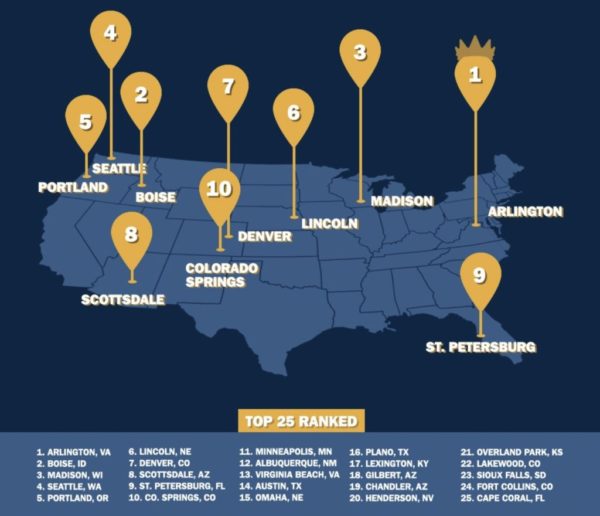
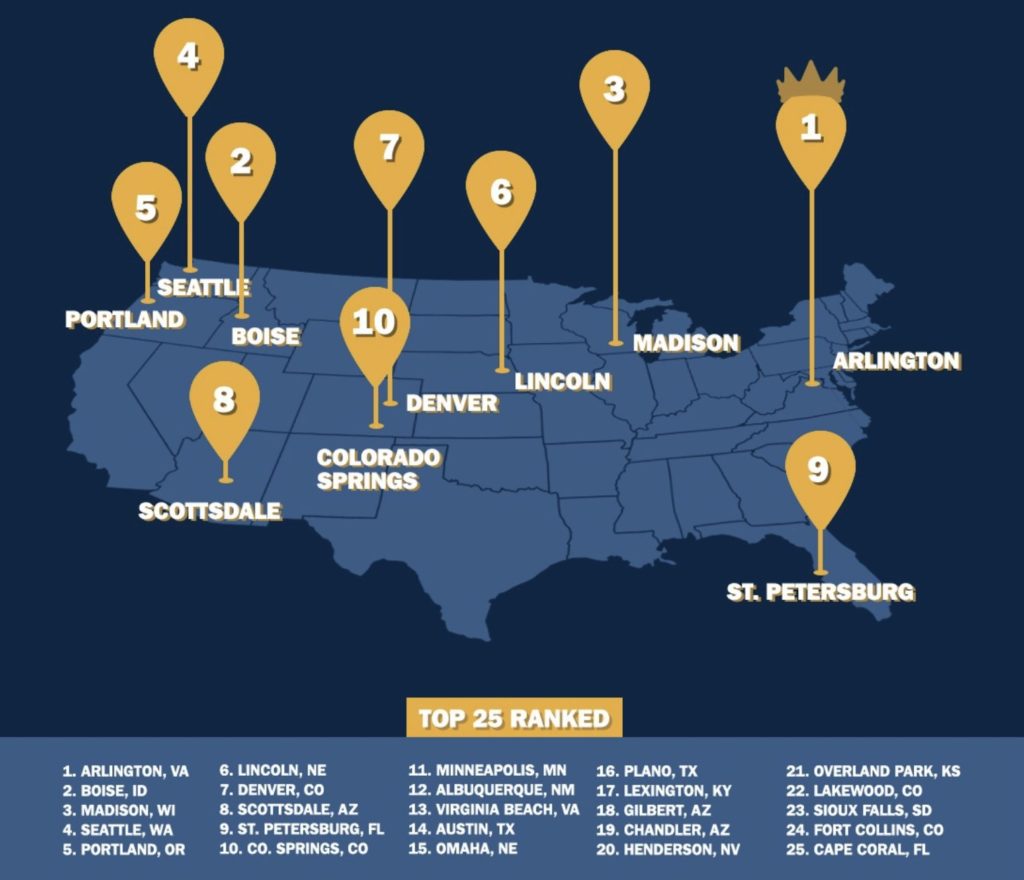
D.C.-based barber shop and grooming products company Grooming Lounge says Arlington is No. 1 on its list, besting runners up Boise (Idaho), Madison (Wisconsin) and Seattle. D.C., which placed in the top 25 in 2017, fell off the list this year.
The study ranked locales based on the “amount spent on personal care services per man, spend on personal care products per man, spend on shaving needs per man, spend on apparel per man and the fittest cities in the nation,” per the Grooming Lounge.
Men in Scottsdale, Arizona — No. 8 on the list — spent a bit more than men in Arlington on personal care items ($498) and clothes ($387) annually, according to the study, but Arlington shot to the top of the list thanks to its status as the fittest place in the country.
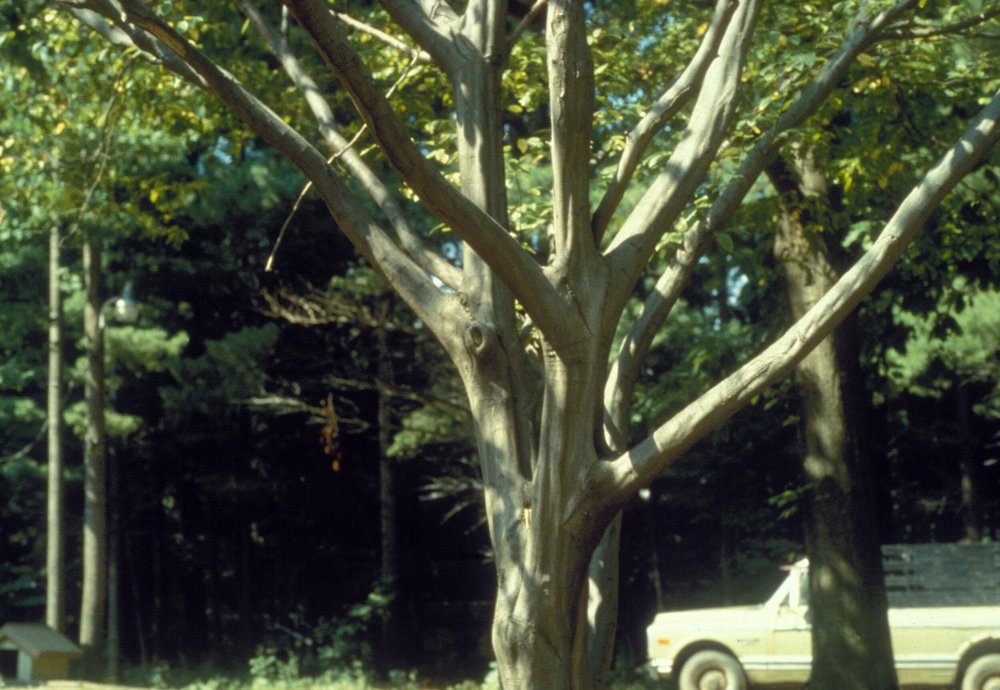
Winter is when I really start to notice trees. Admittedly, I am pretty poor when it comes to tree ID and taxonomy but there are a few species that really stand out. One of my all time favorite trees is Carpinus caroliniana.
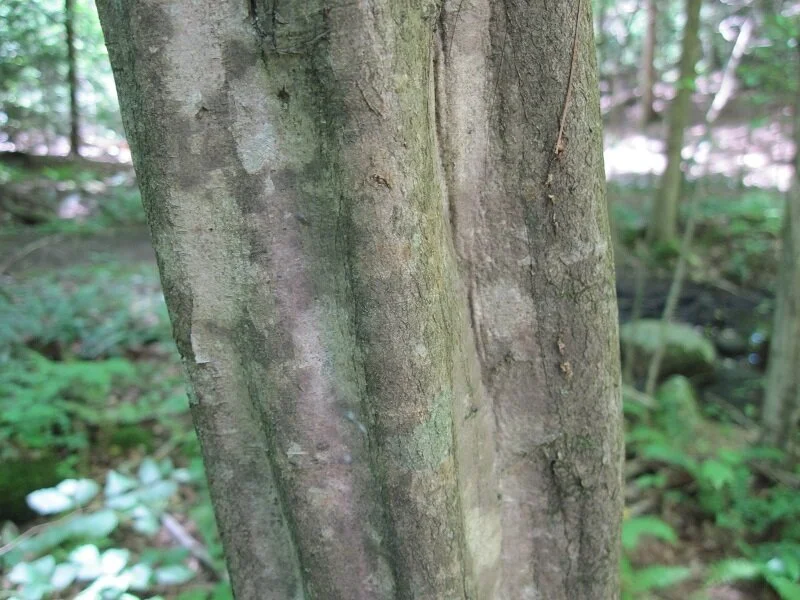
Carpinus caroliniana goes by a handful of common names including ironwood, musclewood, and American hornbeam. All of these names have been applied to other trees so I'll stick with its scientific name. Finding C. caroliniana is rather easy. All you have to do is look for its unmistakable bark.
With smooth, sinewy striations and ridges, it is no wonder how this tree got the name "musclewood." The wood is extremely close-grained and is therefore very hard, earning it another nickname of "ironwood."They are generally small trees, rarely exceeding a few meters in height, though records have shown that some individuals can grow to upwards of 20 meters in rare circumstances. I hope that someday I will be able to meet one of these rare giants.
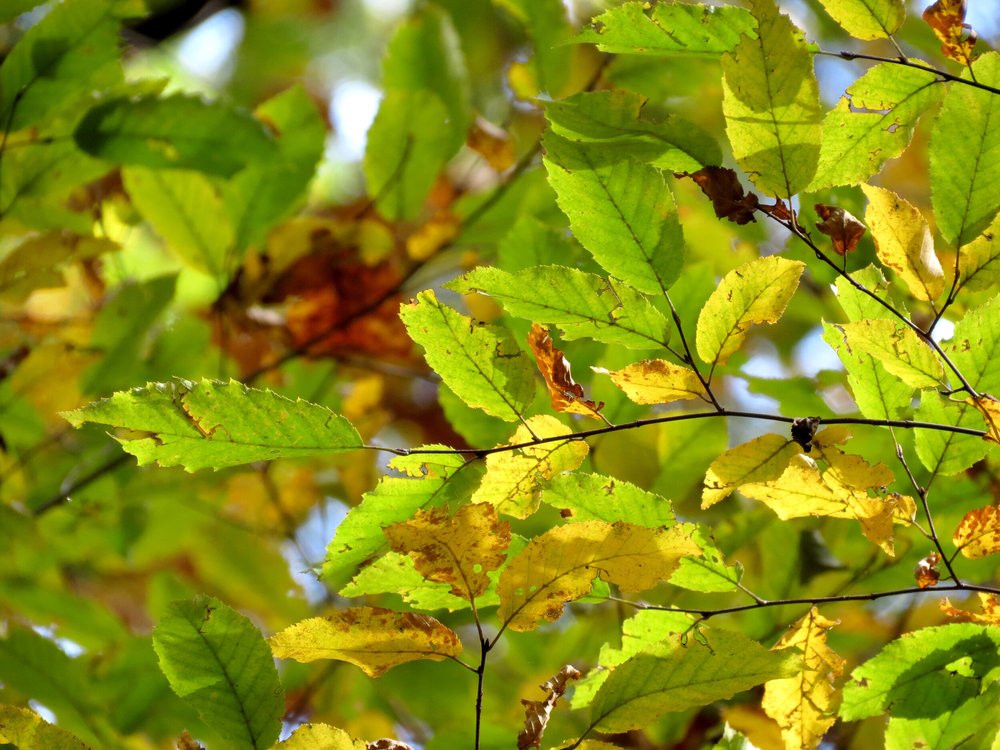
Carpinus caroliniana is also an indicator of fairly rich soils. Due to their high tolerance for shade, they are often a tree of the mixed hardwood understory. Their foliage resembles that of the family in which they belong, the birch family (Betulaceae).
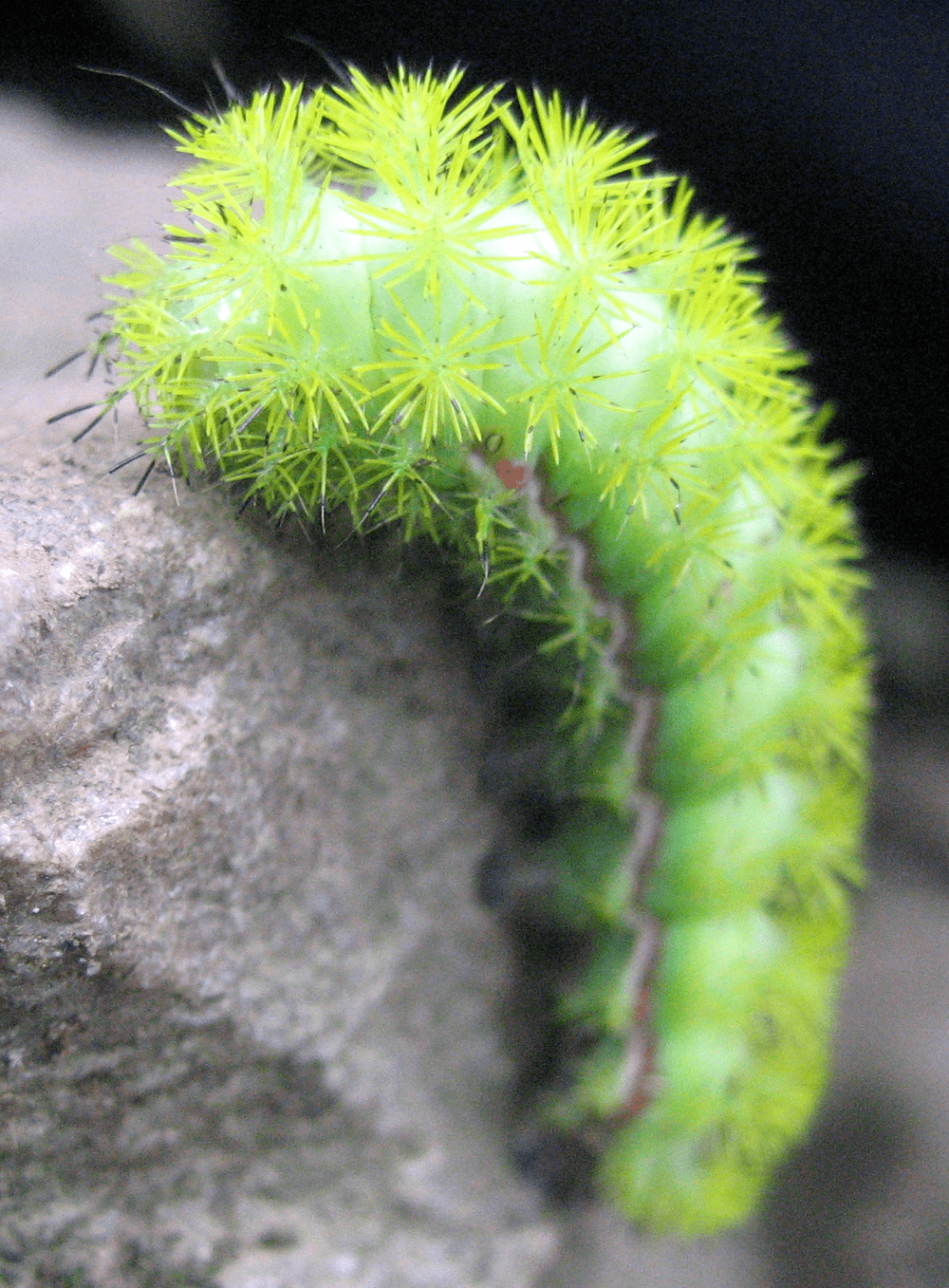
The caterpillar of the io moth (Automeris io)
An adult io moth (Automeris io)
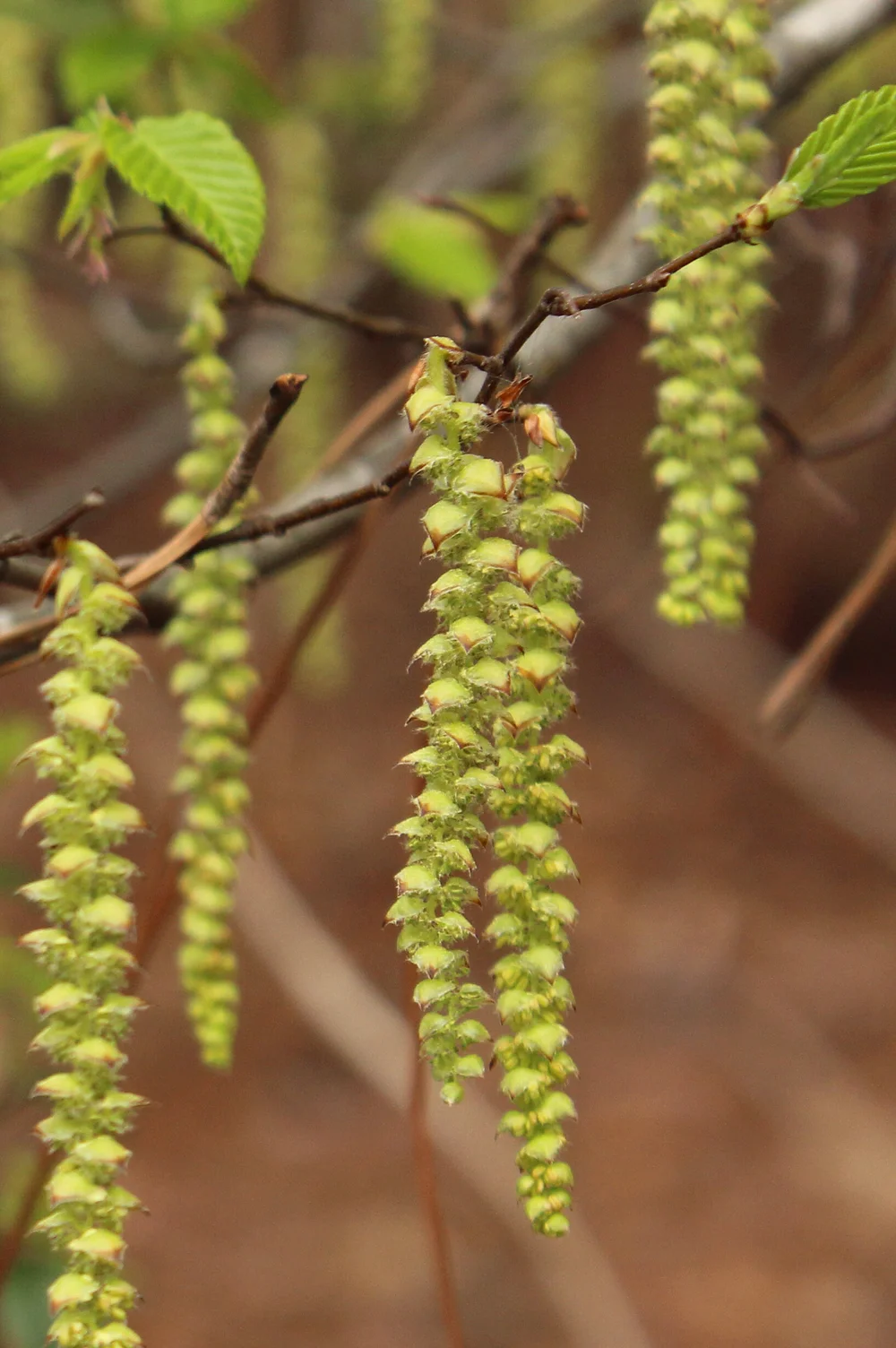
A multitude of insect species utilize C. caroliniana as a larval food source including the famed io moth. In the spring, male and female catkins are born on the same tree and, after fertilization, they are replaced by interesting looking nutlets covered by leaf-like involucres. The seeds are an important food source for a variety of birds, mammals, and insects alike.
The male flowers of Carpinus caroliniana.
The female flowers of Carpinus caroliniana.
Carpinus caroliniana is a tree I could never get bored with. Not only does it have immense ecological value, it is aesthetically pleasing too. Its small size and shade tolerance also makes it a great landscape tree in areas too cramped for something larger. Why this species isn't more popular in native landscaping is beyond me.
Meet Arlington’s newest Pet of the Week Molly, who was rescued as a small puppy and now enjoys nothing more than a game of fetch.
Here is what Molly’s owner has to say about their life together in Arlington:
This is Molly, also known as @adventurousmolly on Instagram! She is a Georgia native that was found in a ditch during a rain storm as a smol puppo, and her life was completely turned around that day thanks to some kind strangers! After several years, she decided to leave her small town behind and take on the big city.
It is widely believed that Molly is a person in a dog disguise. Molly is fluent in the English language and seems to know what you mean, no matter what you say. If you are sad or mad, she will come lay by you, reach her paw out and put it on your arm, and stare up at you with her ears back until you can’t help but forget what was wrong because she is so cute. 10/10 smart girl.
Her favorite game in the whole wide world is fetch. It is her mission, her civic duty, her responsibility, to go rescue that ball and bring it back to you. She can play for hours and never get tired of it. Her second favorite activity is snuggling with her peoples and getting heckin’ good pets. She loves other animals, including her kitty friends. She loves to come everywhere with you, which is why she is very glad that there are so many dog-friendly restaurants in Arlington.
Molly will be turning 9 in January, and we hope there will be 29 more years with her. She is an absolute angel and we love her very much.
Want your pet to be considered for the Arlington Pet of the Week? Emailarlingtonnews@gmail.com with a 2-3 paragraph bio and at least 3-4 horizontally-oriented photos of your pet. Please don’t send vertical photos, they don’t fit in our photo galleries!
Each week’s winner receives a sample of dog or cat treats from our sponsor, Becky’s Pet Care, along with $100 in Becky’s Bucks. Becky’s Pet Care is the winner of eight consecutive Angie’s List Super Service Awards, the National Association of Professional Pet Sitters’ 2013 Business of the Year and a proud supporter of the Arlington County Pawsitively Prepared Campaign.
Becky’s Pet Care provides professional dog walking and pet sitting in Arlington and all of Northern Virginia, as well as PetPrep training courses for Pet Care, CPR and emergency
“Attorney General Karl A. Racine today announced that notorious landlord Sanford Capital, LLC, and its owner will return over $1.1 million in rent payments to 155 tenants forced to live in uninhabitable conditions. The joint settlement agreement resolves three consumer protection lawsuits the Office of the Attorney General (OAG) brought against Sanford for charging rent but failing to maintain its properties and endangering its tenants. It also resolves 32 claims filed by the Legal Aid Society of the District of Columbia on behalf of individual tenants relating to housing conditions at one Sanford property. Under the terms of the joint agreement, Sanford will be required to return rent paid by tenants at three properties located in Wards 5, 7, and 8, pay the District a penalty, and continue divesting from all their properties in the District as required by a previous settlement.
“The Office of the Attorney General fought Sanford Capital’s shocking abuses for years alongside tenants and their advocates,” said AG Racine. “I am pleased that this settlement will provide long-overdue monetary relief to vulnerable residents who were forced to endure inhumane living conditions. Today’s settlement sends a message to slumlords that business practices that put profit ahead of the safety and wellbeing of their tenants will not be tolerated in the District.”
Sanford Capital, LLC, formerly operated residential apartment buildings in the District of Columbia. The Bethesda-based company and its principal, Aubrey Carter Nowell, allegedly engaged in a pattern of neglect and forced hundreds of vulnerable low-income tenants to live in unsafe and inhumane conditions. The District’s Consumer Protection Procedures Act prohibits a wide variety of deceptive and unlawful businesses practices and protects consumers, including tenants.
Since 2016, Sanford Capital and Nowell have faced lawsuits filed by AG Racine over dangerous living conditions and flagrant violations of the District’s housing laws at multiple properties. Two of Sanford’s properties, the Terrace Manor apartment complex in Ward 8 and the Congress Heights Apartments in Ward 7, were placed under receivership by the Superior Court due to their terrible condition. As part of a 2018 settlement of the case involving the Terrace Manor complex, Sanford Capital and Nowell were required to pay $325,000 in restitution to tenants at that building and stop doing business in the District.
Litigation involving three properties located at 1309 Alabama Avenue, 315 and 325 Franklin Street NE, and 4951 G Street SE continued. The original housing conditions lawsuit involving the Alabama Ave SE property (also known as the Congress Heights Apartments) was filed in 2016, and OAG later added consumer protection claims. The lawsuits involving the Franklin Ave NE and G St SE properties were filed in 2018. According to OAG’s filings in these lawsuits, Sanford collected rent from tenants but refused to maintain apartments as required by law and failed to make necessary repairs. Tenants suffered for years with problems including infestations of vermin, inconsistent heat, broken plumbing, and dangerous fire code violations.
Specifically, OAG alleged that Sanford Capital and Nowell violated the District’s Consumer Protection Procedures Act at these properties by:
Failing to provide habitable living conditions for tenants: Sanford neglected its properties and ignored tenants’ reports of problems it was responsible for fixing. Tenants endured water leaks, sewage backups, mold, and infestations of rats and bugs in their apartments. Many tenants lacked heat in the winter, and some did not have access to working toilets, stoves, or refrigerators. At some buildings, Sanford refused to take simple security measures like fixing broken locks and allowing drug and gun activity to go unchecked.
Violating the District’s housing and fire codes: OAG documented numerous housing and fire code violations that threatened the health and safety of tenants. Sanford failed to maintain fire extinguishing equipment, and smoke detectors were often broken or missing, creating serious fire risks.
Misrepresenting apartment rentals as safe and habitable: When Sanford Capital offered apartments for rent, it represented that properties would be maintained according to District law. Tenants agreed to pay rent in exchange for what they believed would be safe, habitable apartments–but Sanford failed to uphold its end of the bargain.
Settlement Agreement
The settlement agreement resolves OAG’s allegations that Sanford Capital violated the District’s Consumer Protection Procedures Act at three properties. It also resolves claims brought by the Legal Aid Society for the District of Columbia on behalf of 32 tenants at one of the properties. As part of the settlement, Sanford Capital and Carter Nowell will:
Pay over $1.1 million in restitution to harmed tenants: Sanford will be required to return a total of over $1.1 million in rent paid by 155 tenants at the Alabama Ave SE, G St SE and Franklin St NE properties. For those tenants not represented by Legal Aid, a claims process will be finalized separately and OAG will notify eligible tenants.
Pay a penalty and continue to divest ownership in all properties in the District: Under the settlement, the District will receive $755,000 from Sanford Capital, with up to $738,000 to be returned to tenants as restitution. Any remaining funds will be returned to the District as a penalty for violating consumer protection law. The company was also required to pay over $27,000 to the Department and Consumer and Regulatory Affairs in connection with housing code violations. Further, Sanford Capital and Nowell must continue to divest from their properties in the District, in accordance with the previous settlement of the Terrace Manor Case.
“Thanks to the advocates, organizers, and attorneys who have worked tirelessly to seek justice for these harmed tenants and have kept up the fight for years,” added AG Racine. “This resolution would not have been possible without the efforts of the Legal Aid Society of the District of Columbia, the Washington Legal Clinic for the Homeless, Housing Counselling Services, and Arnold & Porter.”
Rachel Rintelmann, Supervising Attorney in the Housing Unit at the Legal Aid Society of the District of Columbia, said: “Legal Aid was happy to once again partner with OAG as we fought to enforce our clients’ rights to safe and habitable housing. Our clients lived for many years with serious housing code violations and a landlord that ignored their repeated requests for much-needed repairs. It is our hope that the financial recovery will both compensate our clients–in part–for their losses, and also send a message to landlords that they cannot violate the law with impunity.”
William Merrifield, Staff Attorney at the Washington Legal Clinic for the Homeless, said: “The Alabama Ave/13th Street Tenant’s Coalition has been fighting Sanford Capital and their various business partners for the past six years. In that time, the Office of the Attorney General has been an indispensable partner in making certain that Sanford Capital be held accountable for attempting to illegally empty the buildings above the Congress Heights metro in order to deprive Coalition members of their rights under the Tenant Opportunity to Purchase Act. The AG’s office understands that it is not only necessary to obtain injunctive relief for the tenants in order to protect their tenancies, but also that the tenants have monetary redress for Sanford Capital’s bad acts. We look forward to continuing to work with OAG and greatly appreciate their efforts on behalf of the Coalition.”
Resources for Tenants
In response to the District’s affordable housing crisis, AG Racine is using the law to protect tenants, hold abusive landlords accountable, and preserve existing affordable housing. OAG has won court orders forcing building owners to fix issues including mold, vermin infestations, and fire code violations at properties across the District and secured hundreds of thousands of dollars in restitution for residents who were forced to live in unsafe conditions. OAG has also sued landlords who refused to take basic security measures to keep tenants safe, stopped landlords who illegally converted rent-controlled apartments into short-term rentals, and took action against landlords who discriminated against District residents who use housing vouchers.
Learn more about OAG’s work to preserve affordable housing and find resources to help renters on OAG’s Tenant Resources page. Learn more about OAG’s efforts to fight discrimination, including housing discrimination, from OAG’s Civil Rights Brochure.”



















 Each week’s winner receives a sample of dog or cat treats from our sponsor, Becky’s Pet Care, along with $100 in Becky’s Bucks. Becky’s Pet Care is the winner of eight consecutive Angie’s List Super Service Awards, the National Association of Professional Pet Sitters’ 2013 Business of the Year and a proud supporter of the Arlington County Pawsitively Prepared Campaign.




















![[1]](https://commons.wikimedia.org/wiki/File:Toxicodendron_vernix_1120446.jpg)
![[2]](https://commons.wikimedia.org/wiki/File:Poison_sumac_June2013.jpg)
![[1]](https://commons.wikimedia.org/wiki/File:Melocactus_intortus_Saint_Martin_FWI_5.JPG)
![[2]](https://commons.wikimedia.org/wiki/File:Micranthocereus_estevesii_(Diers_%26_Esteves)_P.J._Braun_%26_Esteves.jpg)
![[3]](https://commons.wikimedia.org/wiki/File:Facheiroa_tenebrosa_P.J.Braun_%26_Esteves_Bahia_Brasil.jpg)
![[5]](https://uk.m.wikipedia.org/wiki/%D0%A4%D0%B0%D0%B9%D0%BB:Melocactus_violaceus,_Jard%C3%ADn_Bot%C3%A1nico,_M%C3%BAnich,_Alemania,_2013-09-08,_DD_01.JPG)
![[2]](https://nv.wikipedia.org/wiki/E%CA%BCelyaa%C3%ADg%C3%AD%C3%AD:Carpinus_caroliniana_trunk.jpg)
![[3]](https://commons.wikimedia.org/wiki/File:Carpinus_caroliniana_bark.jpg)
![[5]](https://commons.wikimedia.org/wiki/File:Io_moth_caterpillar.png)
![[6]](https://commons.wikimedia.org/wiki/File:-_7746_%E2%80%93_Automeris_io_%E2%80%93_Io_Moth_(27522144420).jpg)