Mugshot of a teenage girl arrested for protesting segregation, Mississippi, 1961.
Her name is Joan Trumpauer Mulholland. Her family disowned her for her activism. After her first arrest, she was tested for mental illness, because Virginia law enforcement couldn’t think of any other reason why a white Virginian girl would want to fight for civil rights.
She also created the Joan Trumpauer Mullholland Foundation. Most recently, she was interviewed on Samatha Bee’s Full Frontal on February 15 for their segment on Black History Month.
Don’t reduce civil rights heroes to “teenage girl”.
Her great-grandparents were slave owners in Georgia, and after the United States Civil War, they became sharecroppers. Trumpauer later recalled an occasion that forever changed her perspective, when visiting her family in Georgia during summer. Joan and her childhood friend Mary, dared each other to walk into “n*gger” town, which was located on the other side of the train tracks. Mulholland stated her eyes were opened by the experience: “No one said anything to me, but the way they shrunk back and became invisible, showed me that they believed that they weren’t as good as me. At the age of 10, Joan Trumpauer began to recognize the economic divide between the races. At that moment she vowed to herself that if she could do anything, to help be a part of the Civil Rights Movement and change the world, she would.
In the spring of 1960, Mulholland participated in her first of many sit-ins. Being a white, southern woman, her civil rights activism was not understood. She was branded as mentally ill and was taken in for testing after her first arrest. Out of fear of shakedowns, Mulholland wore a skirt with a deep, ruffled hem where she would hide paper that she had crumpled until it was soft and then folded neatly. With this paper, Mulholland was able to write a diary about her experiences that still exists today. In this diary, she explains what they were given to eat, and how they sang almost all night long. She even mentioned the segregation in the jail cells and stated, “I think all the girls in here are gems but I feel more in common with the Negro girls & wish I was locked in with them instead of these atheist Yankees.
Soon after Mulholland’s release, Charlayne Hunter-Gault and Hamilton E. Holmes became the first African American students to enroll at the University of Georgia. Mulholland thought, “Now if whites were going to riot when black students were going to white schools, what were they going to do if a white student went to a black school?” She then became the first white student to enroll in Tougaloo College in Jackson, where she met Medgar Evers, Dr. Martin Luther King Jr., Reverend Ed King, and Anne Moody.
She received many letters scolding or threatening her while she was attending Tougaloo. Her parents later tried to reconcile with their daughter, and they tried to bribe her with a trip to Europe. She accepted their offer and went with them during summer vacation. Shortly after they returned, however, she went straight back to Tougaloo College.
She ultimately retired after teaching English as a Second Language for 40 years and started the Joan Trumpauer Mulholland Foundation, dedicated to educating the youth about the Civil Rights Movement and how to become activists in their own communities.
I watched a YouTube video once (by a guy who’s name escapes me) about the importance of making sure the stories of white activists are told. His point was that it’s not about lavishing praise on them just because they were white and “woke”, it’s about letting other white allies see that others have come before them who were willing to sacrifice and do the hard work. This way they can see themselves in someone and realize that destroying inequality isn’t a fringe interest or just an “us vs. them” issue. It has to be ALL OF US.
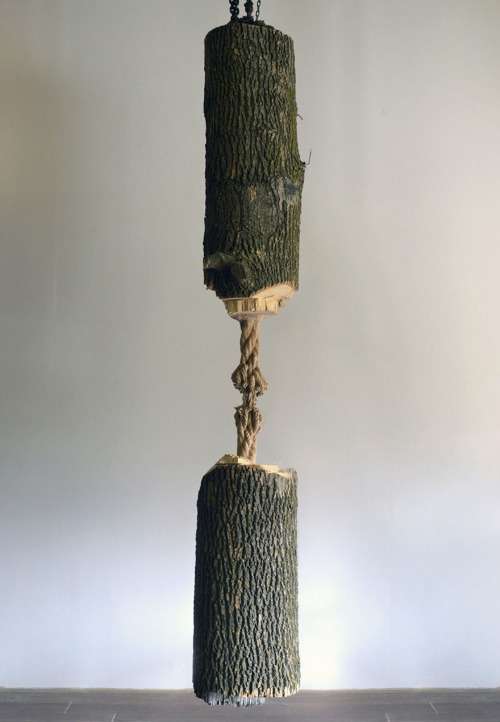
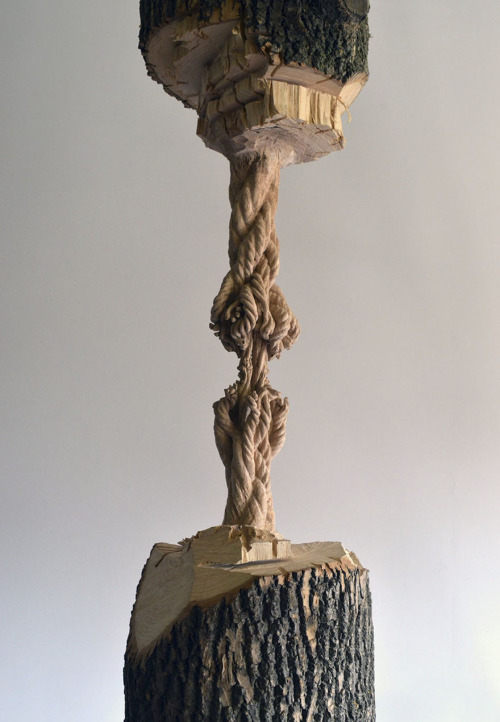
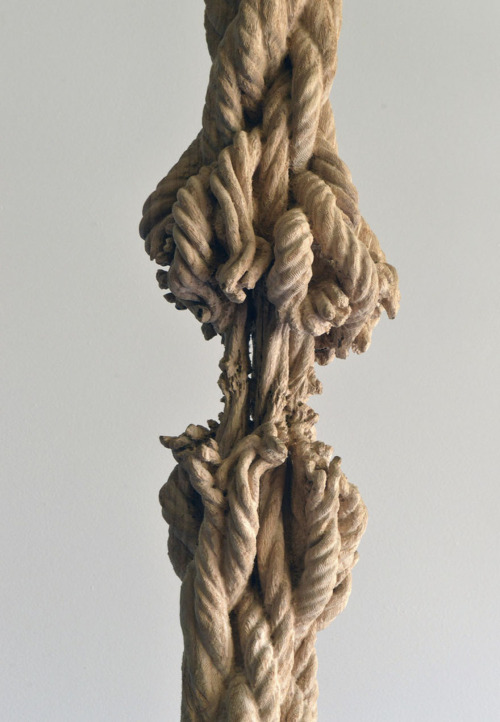
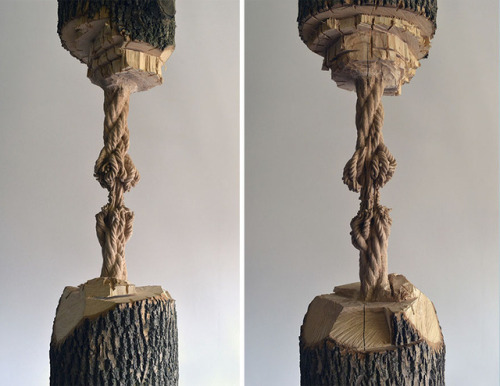
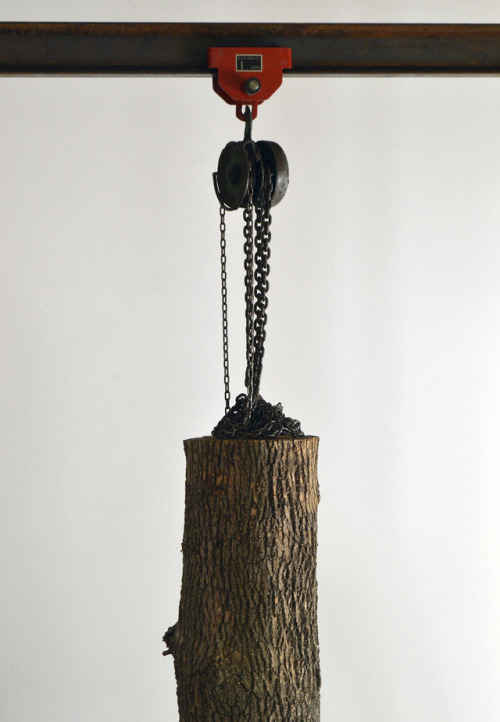
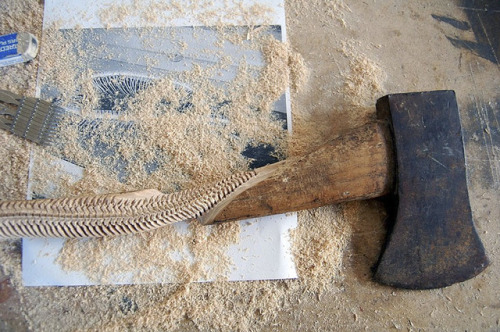
Artist Carves Wooden Rope Sculpture From a Tree Trunk
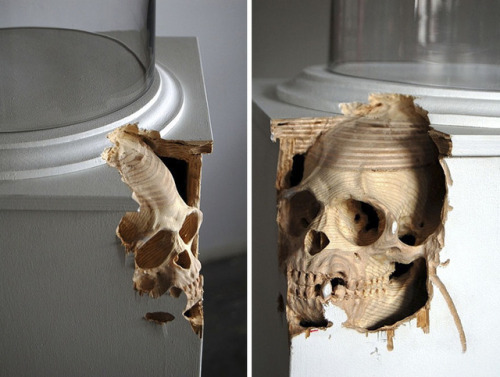
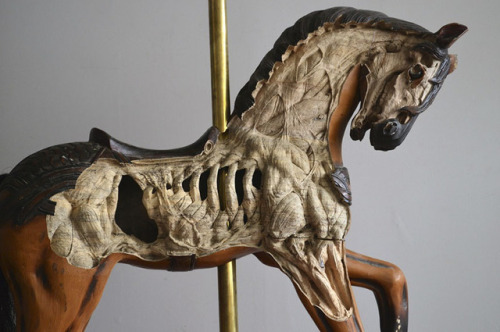
Artist Maskull Lasserre indulges in sculptural practice that strikes a delicate balance between hard-edged industrial media and a delicately poetic resolve, blending the two beautifully.
“I was severely punished by a board cut full of holes to raise the blisters, then I was whipped with a strap to burst the blisters, which were then salted and peppered,” Thomas Brown said. “This burned me very badly.”
The South Carolina slave had escaped and hidden in nearby woods but had been found by bloodhounds and brought back.
“And I never tried to run away again.”
His very words. His story.
Brown’s powerful telling of his treatment as a slave, along with that of more than 200 other former slaves, can be found online because of the work of John B. Cade Sr. and Southern University.
When Cade was on the faculties of two historically black universities in the first half of the 20th century, he sent students to collect stories from former slaves. The narratives are in the Southern University library that is in Cade’s name.
For all practical purposes, though, the stories could have been locked in a vault.
“The collection has been sitting in the library for years, and no one attempted to do anything about it,” said Angela V. Proctor, university archivist and digital librarian at the John B. Cade Library.
That changed three years ago when Southern posted the narratives online. Now, anyone with internet access can read what the slaves had to say.
That’s prompted calls to Proctor from researchers in several countries interested in learning what former American slaves said about their lives.
Cade began collecting the stories after he arrived at Southern in 1929 as registrar and as principal at Southern University Lab School. He continued while on the faculty at Prairie View A&M from 1931-39 and after returning to Southern in 1939 as dean and director of extension services, Proctor said. Cade retired in 1961 and died in 1970. The collection at Southern includes interviews Cade collected while at Prairie View, Proctor said.
Part of Cade’s motivation was to counter white historians’ suggestions that slaves had not minded their status, Proctor said. Few narratives in Southern’s collection support the idea that slavery was a benign institution.
Cruelty, particularly from the overseers hired to manage slaves, is a frequent theme.
South Carolina slave Louis Bishop said that to maximize productivity, punishment for infractions would be delayed until rainy days, when the slaves wouldn’t be working.
“My master was so cruel to his slaves that they were almost crazy at times,” said Bill Collins, an Alabama slave born in 1846. “He would buckle us across a log and whip us until we were unable to walk for three days. On Sunday, we would go to the barn and pray to God to fix some way for us to be freed from our mean masters.”
The slaves made clear they had virtually no control over the most basic decisions. They needed permission to marry, a permission that some owners declined to give. In some cases, owners decided which slaves could wed and to whom. It was common for families to be broken up as some members were sold to other owners.
“My mother was sold away from me,” said Collins. “I was so lonesome without her that I would often go about my work and cry and look for her return, as I was told by some of the slaves that she would be brought back to me, but she never came back.”
Jourden Luper, born in Charleston, South Carolina, ended up in Texas with no memory of a mother or father, who were sold separately before he turned 2, his grandmother told him.
“The worst thing about slavery was selling the slaves on the auction block like they were cattle,” said William Haynes, a Virginia-born slave who was moved to Texas.
Common themes from the narratives are that most slaves lived in simple, dirt-floor cabins, wore homespun clothing and were forced to work hard — especially field slaves. They would rise well before dawn, eat, feed and milk cows, then report to the fields so they could begin work as soon as it was light enough to see.
“The women, as well as the men, had to work in the fields chopping and picking cotton,” Haynes said. “The only pay was a whipping.”
Some masters forbade any religious practice, forcing slaves to sneak into the woods to pray and sing or risk being caught in their quarters. Other masters took slaves with them to church.
“They would pray saying, ‘O Lord, lift the yoke of bondage of us that we may serve God under our own vine and fig tree. And, O Lord, control Ole Master’s temper so he will not be so mean to us,’” wrote Esther Lane-Thompson of her interview with Mark Slater, an Alabama-born slave who was taken to Washington County, Texas.
Word of emancipation arrived, with tragic results for a slave named Klora, who was told of it by a white boy.
Klora’s master saw her talking to the boy and asked if he’d said anything about emancipation. She denied it.
“Then, her master tied her across a barrel and whipped her until she died,” said Luper, the South Carolina slave who ended up in Texas. “The master’s girls begged for Klora, but it did no good. He then whipped the boy until he died. The white boy’s mother cried and begged for her son’s life, but it did no good. That was a very miserable crime.”
Slaves who had kind masters celebrated their emancipation.
“We were not cruelly treated,” said Jake Delaney. “But after freedom, I could see that slavery was the worst thing that a race could experience.”
Thanks to Southern University for digitizing and saving this piece of history.
It’s heartbreaking the evil that can follow the acceptance of the idea that some people are beneath the dignity of being considered equal/human.
no u dont. You dont want to have to drive an hour just to get some McDonalds. There is nothing to do here and everyone is racist. My neighbour’s chickens got stolen last week
Sometimes I wonder if being too gay affects whether or not I get a job and other times I wonder if it’s going to get me murdered. I’ve been thinking about this a lot.
I don’t mean to impose a personal favour on you guys, but I really would like to ask that everyone who follows me reblog this.
I don’t think I made it very clear but last month I was sexually assaulted by someone who I thought was my friend (I don’t want to talk about it don’t ask), and it’s… really fucked with my head.
Had I known this a month ago I would have been able to get away.
So, essentially, I’m really pleading with you to reblog this so everyone who follows you doesn’t get stuck in the same position I was with no way out.
I mean again I don’t want the point of this to be my sob story or whatever but if you could reblog this it would seriously mean a lot
Protecting our sisters
Could help prevent an attack of any sort. Must watch and pass along.
“Pyrosomes, genus Pyrosoma, are free-floating colonial tunicates that live usually in the upper layers of the open ocean in warm seas, although some may be found at greater depths. Pyrosomes are cylindrical- or conical-shaped colonies made up of hundreds to thousands of individuals, known as zooids. Colonies range in size from less than one centimeter to several metres in length.
Each zooid is only a few millimetres in size, but is embedded in a common gelatinous tunic that joins all of the individuals. Each zooid opens both to the inside and outside of the “tube”, drawing in ocean water from the outside to its internal filtering mesh called the branchial basket, extracting the microscopic plant cells on which it feeds, and then expelling the filtered water to the inside of the cylinder of the colony. The colony is bumpy on the outside, each bump representing a single zooid, but nearly smooth, though perforated with holes for each zooid, on the inside.
Pyrosomes are planktonic, which means their movements are largely controlled by currents, tides, and waves in the oceans. On a smaller scale, however, each colony can move itself slowly by the process of jet propulsion, created by the coordinated beating of cilia in the branchial baskets of all the zooids, which also create feeding currents.
Pyrosomes are brightly bioluminescent, flashing a pale blue-green light that can be seen for many tens of metres. The name Pyrosoma comes from the Greek (pyro = “fire”, soma = “body”). Pyrosomes are closely related to salps, and are sometimes called “fire salps”.
Sailors on the ocean are occasionally treated to calm seas containing many pyrosomes, all luminescing on a dark night.” (x)
Fun History Fact: The overwhelming majority of cowboys in the U.S. were Indigenous, Black, and/or Mexican persons. The omnipresent white cowboy is a Hollywood studio concoction meant to uphold the mythology of white masculinity.
Thank you.
I will always re-blog this
I think it was high school when i overheard some white girl put on her best semi-disgusted and confused voice and go “why do so many Mexicans dress up like cowboys?” and I had to be the person to tell her.
Why do you think the whites say buckero? Cause they couldn’t say vaquero.
I dunno if I reblogged this before but fuck it, y'all gon learn today.
Teach the children.
also, cowboy culture was hella gay. like, write-poems-about-your-cowboy-partner gay.
IF people acknowledge it, they play the necessity card– there weren’t any women out on the range, so they had to “resort to men.” this claim completely erases 1) the romantic (not just sexual) writings of actual cowboys, 2) the acknowledgement of cowboys’ potential homosexual activity by writers at the time, and 3) the possibility that some men would deliberately become cowboys with the intent to seek out homosexual encounters.
no one wants to admit it, but cowboy culture was just. so inherently gay.
why are dog lovers so hateful??? like you meet a cat lover and they’re like “oh i love dogs a lot too! i just prefer cats!” but dog lovers are always like “my ENTIRE FAMILY was MURDERED by a CAT, a cat STOLE MY GIRLFRIEND, BURNED MY HOUSE DOWN, TOOK MY JOB AND KEYED UP MY CAR"
Copypasting something I wrote on Facebook a couple years ago (thanks JJ for reminding me of it):
I didn’t really grow up with dogs, so I’m learning about dog behavior as an adult and the more I learn, the more creeped-out I am by a specific subset of “dog people” who usually also “hate cats,” because it’s becoming obvious that these people don’t actually know their dogs’ avoidance/anxiety signals, so they’re just stomping all over these animals’ boundaries. It comes across less as “I love dogs and hate cats” and more “I like animals that can’t say ‘no’ to me in a clear, direct way.”
So, today, a woman came into our shop. It was a woman I’ve only heard my parents refer to as ‘the Deaf Lady’. My mum had told her about me, explained that I was doing Sign Language, and come to find me on a day she knew I was working.
But today, she didn’t need her lawnmower repaired. In fact, she hadn’t touched it since it had been, and as far as she knew everything was fine.
She’d come in to sign to me.
She waved hello, and instantly explained that my mum had told her I would be in today. I asked her how she was, and the smile that she had on her face was the biggest I’ve ever seen.
And we spent about an hour in my family’s little shop, talking about everything. She told me about her life, about how she’d lived in the same house for 60 years.
She’d been born deaf, and been a Brownie, but never a Guide, because of the War… she’s now 86.
She had some amazing stories to tell, and twice she cried. One of those times was remembering her youth, and the other was when she was explaining to me that her husband had died around 20 years ago, and how he’d been the last person she’d known that could communicate with her.
She’s been alone for 20 years, living in a silent world, unable to communicate with anyone for the most part. The most interaction she has is when she writes things down for people, but she’s struggled to make any recent friends, and her family is long gone.
Now someone explain to me what’s wrong with every school teaching a certain amount of Sign Language, and for colleges to offer it more freely and frequently. People should be encouraged to learn BSL, because otherwise we’re cutting ourselves off from talking to around 8 million people or so (in the UK alone).
That’s millions of people who are no less important than you are, who have their own stories to tell, and the same need for communication as anyone else on this tiny little planet.
J. cried today because it was the first time for a long time that anyone has asked her for her name, or listened to her stories.
She’s also coming back into work tomorrow, to sign with me, and help me practice. But also - because we’re only human - for the company.
Charlottesville, VA — A local black farmer’s response to recent white nationalist activity in Charlottesville is going viral on Facebook for drawing attention to a less blatant — but still rampant — form of racism. His post on Sylvanaqua Farms’ Facebook page called out the hypocrisy of local liberal residents who were patting themselves on the back for opposing the overtly racist white nationalists while remaining blind to their own constant, covert, racism.
A message to Charlottesville about Lee Park from your local Black farmer:
I know some folks are really feeling themselves about this whole Love Trumps Hate counter-rally to Richard Spencer’s punch-worthy shenanigans in Lee Park. I’d like to appreciate it, but frankly I just don’t.
I’ve lived in several cities and visited many more before Charlottesville. I like this town for its natural beauty, it’s [sic] small size, the friendliness of its people, and its food. But folks, here’s something else: Charlottesville is by far the most aggressively segregated place I’ve ever lived in or visited. And that seems a strange thing to have to say about a town that hosts a public university.
I say “aggressively” for two reasons. One, because of how assertive police (and the citizens who summon them) are here with racial profiling. It got so bad in 2014 – 2015 that I stopped renting farmland on estates where I could be easily seen from the road, and I stopped making food deliveries into wealthier neighborhoods because of how often police would “happen by” and sometimes even question me five or ten minutes after I got a strange look from a passerby (usually someone jogging, but occasionally someone in a car). I’m not a paranoid kinda guy, but this happened way too often to be a coincidence.
It isn’t Richard Spencer calling the cops on me for farming while Black. It’s nervous White women in yoga pants with “I’m with Her” and “Coexist” stickers on their German SUVs.
Second is the sheer degree of cultural appropriation going on with businesses in the city proper. It’s little things – e.g. shops and other businesses incorporating wide swaths of hiphop culture into their branding while having not a single Black owner, partner, employee, or vendor. And those businesses are KILLING IT here. This is a town where Blackness advances White-owned brands and subjects Black-owned businesses to inspection by law enforcement.
Do you really think that problem comes from people like Richard Spencer?
Check out C’Ville Weekly’s Instagram feed when you get a moment, and try not to notice that the few depictions of Black people are limited to sports, singing, criminal justice, or single parenthood. White people, meanwhile, are represented as political activists, chefs, cogs in the gig economy, musicians, dancers, people who get married, visual artists, songwriters, architects, landscapers, thespians, artistic directors, wedge-heel-wearing rugby players, dog lovers, farmers, firefighters, and people who play with their kids in cul de sacs.
Richard Spencer is not the editor of C’Ville Weekly.
Truth is, as a Black dude, I’m far less bothered by the flag wavers in this picture than this town’s progressives assuming its race problem has nothing to do with them. The former is a visual inconvenience. The latter could leave my daughters without a father.
So please, put down the candles and instead ask yourself: why is my city like this? Why is life like this for Black people in my wonderful city? The answer is a lot closer to home than Richard Spencer or Lee Park.
The post exposes a much larger problem than the outward (though admittedly small in number) white supremacists: African-Americans face a barrage of not-so-apparent racism every single day — and many people are unknowingly participating in it. Hopefully, this viral post will help spread awareness about institutionalized and ingrained racism — and help heal this cancer in our society.
yesterday my first table at work was 4 complete shitholes who yelled at me twice before i even took their food order and almost made me cry. before they ate, they all bowed their heads to pray.
so on the top of their receipt i wrote “hebrews 13:2″ and they went WILD. they LOVED IT. they tipped me over 20% for my “education fund”.
hebrews 13:2 is “do not forget to show hospitality to strangers, for by so doing some people have shown hospitality to angels without knowing it”, and i really hope they got home and looked it up and realized that i am, in fact, a petty fucking bitch
file this under “Things-I-find-late-at-night-when-my-insomnia-kicks-in-and-I-have-to-stop-myself-from-slamming-my-head-against-a-wall-repeatedly-in-hopes-of-knocking-myself-out”
My lesbian co-worker will be moving to a farm in rural Maryland in the next couple years. When she visited the land with her wife a couple years ago, the guy across the street was flying a Confederate flag. Rush shouldn't worry though, even though they are an inter-racial lesbian couple, they still voted for Trump. None of us can figure that one out.
Never saw so many happy people at an airport as the time when I had a kitten with me... I think that she got passed around to about 30 different people in the waiting area with the most common comment "I miss my cats".
im bouta get on theplane I CANT WAIT TO SEE MY CATS