21 Mar 13:53
by Jiaqiang Li, Ziqian Xie, Yan Xiong, Zhenzhu Li, Qunxing Huang, Shuqing Zhang, Jingyuan Zhou, Rong Liu, Xin Gao, Changguo Chen, Lianming Tong, Jin Zhang, Zhongfan Liu
β-Graphdiyne (β-GDY) is a member of 2D graphyne family with zero band gap, and is a promising material with potential applications in energy storage, organic electronics, etc. However, the synthesis of β-GDY has not been realized yet, and the measurement of its intrinsic properties remains elusive. In this work, β-GDY-containing thin film is successfully synthesized on copper foil using modified Glaser–Hay coupling reaction with tetraethynylethene as precursor. The as-grown carbon film has a smooth surface and is continuous and uniform. Electrical measurements reveal the conductivity of 3.47 × 10⁻⁶ S m−1 and the work function of 5.22 eV. TiO2@β-GDY nanocomposite is then prepared and presented with an enhancement of photocatalytic ability compared to pure TiO2.

A modified Glaser–Hay coupling reaction is used to synthesize β-graphdiyne-containing thin film. Copper foil plays the role of both a substrate and the source of catalyst. The as-grown film is with conductivity property and can be applied to enhance the photocatalytic property of TiO2.
21 Mar 13:52
by Catherine R. Rajamathi, Uttam Gupta, Nitesh Kumar, Hao Yang, Yan Sun, Vicky Süß, Chandra Shekhar, Marcus Schmidt, Horst Blumtritt, Peter Werner, Binghai Yan, Stuart Parkin, Claudia Felser, C. N. R. Rao
The search for highly efficient and low-cost catalysts is one of the main driving forces in catalytic chemistry. Current strategies for the catalyst design focus on increasing the number and activity of local catalytic sites, such as the edge sites of molybdenum disulfides in the hydrogen evolution reaction (HER). Here, the study proposes and demonstrates a different principle that goes beyond local site optimization by utilizing topological electronic states to spur catalytic activity. For HER, excellent catalysts have been found among the transition-metal monopnictides—NbP, TaP, NbAs, and TaAs—which are recently discovered to be topological Weyl semimetals. Here the study shows that the combination of robust topological surface states and large room temperature carrier mobility, both of which originate from bulk Dirac bands of the Weyl semimetal, is a recipe for high activity HER catalysts. This approach has the potential to go beyond graphene based composite photocatalysts where graphene simply provides a high mobility medium without any active catalytic sites that have been found in these topological materials. Thus, the work provides a guiding principle for the discovery of novel catalysts from the emerging field of topological materials.

For the first time, Weyl semimetals are used as catalysts for highly effective hydrogen evolution reactions. The high mobility of carriers because of linear band crossings near the Fermi level is the major factor for their high activity. Unlike other catalysts, effect of the disorder at the surface is not a concern due to the topologically protected robust surface states.
21 Mar 13:48
by Hui Zhu, Qingxiao Wang, Chenxi Zhang, Rafik Addou, Kyeongjae Cho, Robert M. Wallace, Moon J. Kim
A novel phase transition, from multilayered 2H-MoTe2 to a parallel bundle of sub-nanometer-diameter metallic Mo6Te6 nanowires (NWs) driven by catalyzer-free thermal-activation (400–500 °C) under vacuum, is demonstrated. The NWs form along the 〈11–20〉 2H-MoTe2 crystallographic directions with lengths in the micrometer range. The metallic NWs can act as an efficient hole injection layer on top of 2H-MoTe2 due to favorable band-alignment. In particular, an atomically sharp MoTe2/Mo6Te6 interface and van der Waals gap with the 2H layers are preserved. The work highlights an alternative pathway for forming a new transition metal dichalcogenide phase and will enable future exploration of its intrinsic transportation properties.

A novel phase transition, from multilayered 2H-MoTe2 to a parallel bundle of metallic Mo6Te6 sub-nanometer-diameter nanowires, with lengths in the micrometer range driven by catalyzer-free thermal-activation (400–500 °C) under vacuum, is demonstrated. This work highlights an alternative pathway for forming a new transition metal dichalcogenide phase, and enables future exploration of its intrinsic transportation properties.
21 Mar 13:43
by Zhenyi Zhang, Jindou Huang, Yurui Fang, Mingyi Zhang, Kuichao Liu, Bin Dong
Ultrabroad-spectrum absorption and highly efficient generation of available charge carriers are two essential requirements for promising semiconductor-based photocatalysts, towards achieving the ultimate goal of solar-to-fuel conversion. Here, a fascinating nonmetal plasmonic Z-scheme photocatalyst with the W18O49/g-C3N4 heterostructure is reported, which can effectively harvest photon energies spanning from the UV to the nearinfrared region and simultaneously possesses improved charge-carrier dynamics to boost the generation of long-lived active electrons for the photocatalytic reduction of protons into H2. By combining with theoretical simulations, a unique synergistic photocatalysis effect between the semiconductive Z-scheme charge-carrier separation and metal-like localized-surface-plasmon-resonance-induced “hot electrons” injection process is demonstrated within this binary heterostructure.

Almost a full-solar-spectrum-driven photocatalytic H2 evolution is achieved over the nonmetal plasmonic Z-Scheme photocatalyst of the W18O49/g-C3N4 heterostructure based on the unique synergetic photocatalysis effect between semiconductive Z-scheme charge-carriers separation and metal-like localized-surface-plasmon-resonance.
21 Mar 13:31
by Zhicheng Zhong and Philipp Hansmann
Author(s): Zhicheng Zhong and Philipp Hansmann
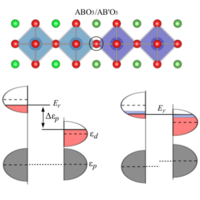
Intrinsic limitations of semiconductors have spurred a search for new materials that can be used in next generation electronics, and transition-metal oxides (TMOs) are attractive candidates. A new scheme for predicting the electrical and magnetic behavior of TMOs shows promise for helping design future components.
[Phys. Rev. X 7, 011023] Published Fri Mar 03, 2017
21 Mar 05:16
by Jiangfeng Ni, Wencong Wang, Chao Wu, Haichen Liang, Joachim Maier, Yan Yu, Liang Li

In article number 1605607, Yan Yu, Liang Li, and co-workers present amorphous, hydrogenated, and selfordered nanoporous Nb2O5 films as excellent electrodes for sodium batteries, affording a sustainable capacity delivery and robust high-rate capability. This collaborative material engineering of structural order, composition, and architecture opens up new possibilities to developing more accessible, sustainable, and producible energy-storage solutions.
21 Mar 05:13
by Nengjie Huo, Shuchi Gupta, Gerasimos Konstantatos
Mercury telluride (HgTe) colloidal quantum dots (CQDs) have been developed as promising materials for the short and mid-wave infrared photodetection applications because of their low cost, solution processing, and size tunable absorption in the short wave and mid-infrared spectrum. However, the low mobility and poor photogain have limited the responsivity of HgTe CQD-based photodetectors to only tens of mA W−1. Here, HgTe CQDs are integrated on a TiO2 encapsulated MoS2 transistor channel to form hybrid phototransistors with high responsivity of ≈106 A W−1, the highest reported to date for HgTe QDs. By operating the phototransistor in the depletion regime enabled by the gate modulated current of MoS2, the noise current is significantly suppressed, leading to an experimentally measured specific detectivity D* of ≈1012 Jones at a wavelength of 2 µm. This work demonstrates for the first time the potential of the hybrid 2D/QD detector technology in reaching out to wavelengths beyond 2 µm with compelling sensitivity.

High-performance hybrid MoS2/TiO2/HgTe photodetectors with a responsivity of 106 A W−1, sensitivity of 1012 Jones, temporal response of <4 ms, and spectral coverage beyond 2 µm, which benefit from the long wavelength light absorption of HgTe quantum dots, huge photogain mechanism, and low noise current, can provide a new platform for mid and long-wave infrared photodetector applications.
21 Mar 05:13
by Simone Bertolazzi, Sara Bonacchi, Guangjun Nan, Anton Pershin, David Beljonne, Paolo Samorì
Irradiation of 2D sheets of transition metal dichalcogenides with ion beams has emerged as an effective approach to engineer chemically active defects in 2D materials. In this context, argon-ion bombardment has been utilized to introduce sulfur vacancies in monolayer molybdenum disulfide (MoS2). However, a detailed understanding of the effects of generated defects on the functional properties of 2D MoS2 is still lacking. In this work, the correlation between critical electronic device parameters and the density of sulfur vacancies is systematically investigated through the fabrication and characterization of back-gated monolayer MoS2 field-effect transistors (FETs) exposed to a variable fluence of low-energy argon ions. The electrical properties of pristine and ion-irradiated FETs can be largely improved/recovered by exposing the devices to vapors of short linear thiolated molecules. Such a solvent-free chemical treatment—carried out strictly under inert atmosphere—rules out secondary healing effects induced by oxygen or oxygen-containing molecules. The results provide a guideline to design monolayer MoS2 optoelectronic devices with a controlled density of sulfur vacancies, which can be further exploited to introduce ad hoc molecular functionalities by means of thiol chemistry approaches.

Ion irradiation is used to controllably introduce sulfur vacancies in monolayer MoS2 sheets, which serve as channel material in field-effect transistors. The evolution of critical device parameters is systematically investigated as a function of sulfur-vacancy density. A vapor-phase treatment, based on short linear thiolated molecules, enables a remarkable recovery of the functional properties of defective 2D MoS2.
21 Mar 05:09
by Siwei Yang, Wei Li, Caichao Ye, Gang Wang, He Tian, Chong Zhu, Peng He, Guqiao Ding, Xiaoming Xie, Yang Liu, Yeshayahu Lifshitz, Shuit-Tong Lee, Zhenhui Kang, Mianheng Jiang
Graphene has initiated intensive research efforts on 2D crystalline materials due to its extraordinary set of properties and the resulting host of possible applications. Here the authors report on the controllable large-scale synthesis of C3N, a 2D crystalline, hole-free extension of graphene, its structural characterization, and some of its unique properties. C3N is fabricated by polymerization of 2,3-diaminophenazine. It consists of a 2D honeycomb lattice with a homogeneous distribution of nitrogen atoms, where both N and C atoms show a D6h-symmetry. C3N is a semiconductor with an indirect bandgap of 0.39 eV that can be tuned to cover the entire visible range by fabrication of quantum dots with different diameters. Back-gated field-effect transistors made of single-layer C3N display an on–off current ratio reaching 5.5 × 10¹⁰. Surprisingly, C3N exhibits a ferromagnetic order at low temperatures (<96 K) when doped with hydrogen. This new member of the graphene family opens the door for both fundamental basic research and possible future applications.

C3N consists of a 2D honeycomb lattice with a homogeneous distribution of nitrogen atoms, where both N and C atoms show D6h-symmetry. It is a semiconductor with an indirect bandgap of 0.39 eV. Back-gated field-effect transistors made of single-layer C3N display an on–off current ratio reaching 5.5 × 10¹⁰. Surprisingly, C3N exhibits ferromagnetic order when doped with hydrogen.
21 Mar 04:39
by Oriol Lopez-Sanchez
Nature Nanotechnology.
doi:10.1038/nnano.2013.100
Authors: Oriol Lopez-Sanchez, Dominik Lembke, Metin Kayci, Aleksandra Radenovic & Andras Kis

20 Mar 13:54
by Xianzhong Zhou, Wang Ye, Xiaoli Li, Wei Zheng, Richeng Lin, Feng Huang and Dingyong Zhong
In this work, the mixed bromide iodide lead
perovskites CH3NH3Pb(I1–
xBrx)3 (0 ≤ x ≤ 0.67) thin films were prepared by co-evaporation of CH3NH3I, PbI2, and PbBr2. The electronic properties of CH3NH3Pb(I1–
xBrx)3 thin films were investigated by X-ray and ultraviolet photoelectron spectroscopy in-situ. The results of core level binding energy show that there is no chemical shift of the C1s, N1s, Br3d5, and I3d5 when the Br composition changes, while there is an approximately linear chemical shift of Pb4f7 to higher binding energy as the Br composition increases. The density functional theory calculation reveals that there is more charge transfer from Pb to Br than I, which results in the chemical shift of Pb4f states. On the other hand, the valence band maximum increases as the Br composition increases, while the work function shows no obvious change, because the conduction band is dominated by Pb 6p orbitals while the valence band is dominated by halide p orbitals. Our work demonstrates the adjustability of the energy level alignment of MAPb(I1–
xBrx)3 by the Br composition.
19 Mar 13:32
by Z. Wang, Z. Zhong, S. McKeown Walker, Z. Ristic, J.-Z. Ma, F. Y. Bruno, S. Riccò, G. Sangiovanni, G. Eres, N. C. Plumb, L. Patthey, M. Shi, J. Mesot, F. Baumberger and M. Radovic

Nano Letters
DOI: 10.1021/acs.nanolett.7b00317

19 Mar 13:18
Publication date: 15 July 2017
Source:Applied Catalysis B: Environmental, Volume 209
Author(s): Xin Liu, Rui Dang, Wenjun Dong, Xiubing Huang, Jia Tang, Hongyi Gao, Ge Wang
Hierarchical heterostructures with specific compositions, morphology and functionalities are important for applications in many fields such as catalysis, energy storage and conversion. Herein, hierarchical sandwich-like heterostructures were prepared by a self-assembly method of growing MIL-100(Fe) on host two dimensional (2D) TiO2 nanosheets (TiO2NS). The introduction of porous MIL-100(Fe) on TiO2NS improves the adsorption ability of nanocomposites owing to the porous tunnel adsorbing organic molecules and high surface area. In addition, the interfaces of TiO2NS and MIL-100(Fe) provide platforms for rapid photoexcited electrons transfer and enhance the photocatalytic activity of TiO2NS@MIL-100(Fe) nanocomposites. The resulting sandwich-like TiO2NS@MIL-100(Fe) nanocomposites with enhanced adsorption ability and superior separation of photogenerated electron-hole pairs exhibited improved photoactivity toward degradation of methylene blue dye (MB) under visible light (λ ≥420nm). TiO2NS@MIL-100(Fe) nanocomposites offer an useful platform to integrate photocatalytic semiconductor and porous MOFs into hierarchical nanostructures with high surface areas and efficient electrons transfer for enhanced photocatalytic performance.
16 Mar 07:01
by Matthew V. Sheridan, David J. Hill, Benjamin D. Sherman, Degao Wang, Seth L. Marquard, Kyung-Ryang Wee, James F. Cahoon and Thomas J. Meyer

Nano Letters
DOI: 10.1021/acs.nanolett.7b00105

16 Mar 06:52
by Yuki Sakai, Junye Yang, Runze Yu, Hajime Hojo, Ikuya Yamada, Ping Miao, Sanghyun Lee, Shuki Torii, Takashi Kamiyama, Marjana Ležaić, Gustav Bihlmayer, Masaichiro Mizumaki, Jun Komiyama, Takashi Mizokawa, Hajime Yamamoto, Takumi Nishikubo, Yuichiro Hattori, Kengo Oka, Yunyu Yin, Jianhong Dai, Wenmin Li, Shigenori Ueda, Akihisa Aimi, Daisuke Mori, Yoshiyuki Inaguma, Zhiwei Hu, Takayuki Uozumi, Changqing Jin, Youwen Long and Masaki Azuma

Journal of the American Chemical Society
DOI: 10.1021/jacs.7b01851

16 Mar 06:45
by John P. Perdew, Weitao Yang, Kieron Burke, Zenghui Yang, Eberhard K. U. Gross, Matthias Scheffler, Gustavo E. Scuseria, Thomas M. Henderson, Igor Ying Zhang, Adrienn Ruzsinszky, Haowei Peng, Jianwei Sun, Egor Trushin, Andreas Gorling
The fundamental energy gap of a periodic solid distinguishes insulators from metals and characterizes low-energy single-electron excitations. However, the gap in the band structure of the exact multiplicative Kohn–Sham (KS) potential substantially underestimates the fundamental gap, a major limitation of KS density-functional theory. Here, we give a simple proof of...

12 Mar 02:36
by Hao Li, Feng Qin, Zhiping Yang, Ximin Cui, Jianfang Wang and Lizhi Zhang

Journal of the American Chemical Society
DOI: 10.1021/jacs.6b12850

12 Mar 02:30
by Yun-Xiang Pan, Ya You, Sen Xin, Yutao Li, Gengtao Fu, Zhiming Cui, Yu-Long Men, Fei-Fei Cao, Shu-Hong Yu and John B. Goodenough

Journal of the American Chemical Society
DOI: 10.1021/jacs.7b00266

12 Mar 02:29
by Mengye Wang, Lejuan Cai, Yi Wang, Feichi Zhou, Kang Xu, Xiaoming Tao and Yang Chai

Journal of the American Chemical Society
DOI: 10.1021/jacs.7b00341

12 Mar 02:15
by Jan Hermann, Robert A. DiStasio and Alexandre Tkatchenko

Chemical Reviews
DOI: 10.1021/acs.chemrev.6b00446

潘峰, JKY and 4 others like this
12 Mar 02:13
by T. Ideue
Nature Physics.
doi:10.1038/nphys4056
Authors: T. Ideue, K. Hamamoto, S. Koshikawa, M. Ezawa, S. Shimizu, Y. Kaneko, Y. Tokura, N. Nagaosa & Y. Iwasa
Noncentrosymmetric conductors are an interesting material platform, with rich spintronic functionalities and exotic superconducting properties typically produced in polar systems with Rashba-type spin–orbit interactions. Polar conductors should also exhibit inherent nonreciprocal transport, in which the rightward and leftward currents differ from each other. But such a rectification is difficult to achieve in bulk materials because, unlike the translationally asymmetric p–n junctions, bulk materials are translationally symmetric, making this phenomenon highly nontrivial. Here we report a bulk rectification effect in a three-dimensional Rashba-type polar semiconductor BiTeBr. Experimentally observed nonreciprocal electric signals are quantitatively explained by theoretical calculations based on the Boltzmann equation considering the giant Rashba spin–orbit coupling. The present result offers a microscopic understanding of the bulk rectification effect intrinsic to polar conductors as well as a simple electrical means to estimate the spin–orbit parameter in a variety of noncentrosymmetric systems.

12 Mar 02:06
by J.-C. Blancon
12 Mar 02:03
by Guoliang Liu

Nature Chemistry.
doi:10.1038/nchem.2740
Authors: Guoliang Liu, Alex W. Robertson, Molly Meng-Jung Li, Winson C. H. Kuo, Matthew T. Darby, Mohamad H. Muhieddine, Yung-Chang Lin, Kazu Suenaga, Michail Stamatakis, Jamie H. Warner & Shik Chi Edman Tsang
Converting oxygen-rich biomass into fuels requires the removal of oxygen groups through hydrodeoxygenation. MoS2 monolayer sheets decorated with isolated Co atoms bound to sulfur vacancies in the basal plane have now been synthesized that exhibit superior catalytic activity, selectivity and stability for the hydrodeoxygenation of 4-methylphenol to toluene when compared to conventionally prepared materials.
No more posts. Check out what's trending.


