
The Journal of Physical Chemistry C
DOI: 10.1021/acs.jpcc.5b07644
Nature Physics. doi:10.1038/nphys3460
Authors: Gil-Ho Lee, Geon-Hyoung Park & Hu-Jong Lee
Half a century ago, Veselago proposed ‘left-handed’ materials with negative permittivity and permeability, in which waves propagate with phase and group velocities in opposite directions. Significant work has been undertaken to attain this left-handed response, such as establishing a negative refractive index in so-called metamaterials, which consist of periodic sub-wavelength structures. However, an electronic counterpart has not been demonstrated owing to difficulties in creating repeated structures smaller than the electronic Fermi wavelength of the order ∼10 nm. Here, without needing to engineer sub-wavelength structures, we demonstrate negative refractive behaviour of Dirac fermions in graphene, exploiting its unique relativistic band structure. Analysis of both electron focusing through an n–p–n flat lens and negative refraction across n–p junctions confirms left-handed behaviour in the electronic system. This approach to electronic optics is of particular relevance to the on-going efforts to develop novel quantum devices with emerging layered materials.
Nature Physics. doi:10.1038/nphys3465
Authors: L. J. Cornelissen, J. Liu, R. A. Duine, J. Ben Youssef & B. J. van Wees
The transport of spin information has been studied in various materials, such as metals, semiconductors and graphene. In these materials, spin is transported by the diffusion of conduction electrons. Here we study the diffusion and relaxation of spin in a magnetic insulator, where the large bandgap prohibits the motion of electrons. Spin can still be transported, however, through the diffusion of non-equilibrium magnons, the quanta of spin-wave excitations in magnetically ordered materials. Here we show experimentally that these magnons can be excited and detected fully electrically in a linear response, and can transport spin angular momentum through the magnetic insulator yttrium iron garnet (YIG) over distances as large as 40 μm. We identify two transport regimes: the diffusion-limited regime for distances shorter than the magnon spin diffusion length, and the relaxation-limited regime for larger distances. With a model similar to the diffusion–relaxation model for electron spin transport in (semi)conducting materials, we extract the magnon spin diffusion length λ = 9.4 ± 0.6 μm in a thin 200 nm YIG film at room temperature.
Author(s): M. D. Watson, T. K. Kim, A. A. Haghighirad, S. F. Blake, N. R. Davies, M. Hoesch, T. Wolf, and A. I. Coldea
We report a high-resolution angle-resolved photoemission spectroscopy study of the evolution of the electronic structure of FeSe1−xSx single crystals. Isovalent S substitution onto the Se site constitutes a chemical pressure which subtly modifies the electronic structure of FeSe at high temperatures…
[Phys. Rev. B 92, 121108(R)] Published Tue Sep 15, 2015

Graphene-covered copper surfaces have been exposed to borazine, (BH)3(NH)3, with the resulting surfaces characterized by low-energy electron microscopy. Although the intent of the experiment was to form hexagonal boron nitride (h-BN) on top of the graphene, such layers were not obtained. Rather, in isolated surface areas, h-BN is found to form micrometer-size islands that substitute for the graphene. Additionally, over nearly the entire surface, the properties of the layer that was originally graphene is observed to change in a manner that is consistent with the formation of a mixed h-BN/graphene alloy, i.e. h-BNC alloy. Furthermore, following the deposition of the borazine, a small fraction of the surface is found to consist of bare copper, indicating etching of the overlying graphene. The inability to form h-BN layers on top of graphene is discussed in terms of the catalytic behavior of the underlying copper surface and the decomposition of the borazine on top of the graphene.
The topographic and electronic structure of cleaved SrTiO3(001) surfaces were studied, employing samples that either had or had not been coated with Ti on their outer surfaces prior to fracture. In both cases, SrO- and TiO2-terminated terraces were present on the cleavage surface, enabling in situ studies on either termination. However, the samples coated with Ti prior to fracture were found to yield a rougher morphology on TiO2-terminated terraces as well as a higher density of oxygen vacancies during an annealing (outgassing) step following the coating. The higher density of oxygen vacancies in the bulk of the Ti-coated samples also provides higher conductivity which, in turn, improves a sensitivity of the spectroscopy and reduces the effect of tip-induced band bending. Nonetheless, similar spectral features, unique to each termination, were observed for samples both with and without the Ti coating. Notably, with moderate-temperature annealing following fracture, a strong discrete peak in the conductance spectra, arising from oxygen vacancies, was observed on the SrO-terminated terraces. This peak appears at slightly different voltages for coated and uncoated samples, signifying a possible effect of tip-induced band bending.

A molecular wire containing an emitting molecular center is controllably suspended between the plasmonic electrodes of a cryogenic scanning tunneling microscope. Passing current through this circuit generates an ultra narrow-line emission at an energy of ? 1.5 eV which is assigned to the fluorescence of the molecular center. Control over the linewidth is obtained by progressively detaching the emitting unit from the surface. The recorded spectra also reveal several vibronic peaks of low intensities that can be viewed as a fingerprint of the emitter. Surface-plasmon localized at the tip-sample interface are shown to play a major role on both excitation and emission of the molecular excitons.


Author(s): M. Waśniowska, M. Sikora, M. Dobrzański, T. Eelbo, M. M. Soares, M. Rams, I. Miotkowski, R. Wiesendanger, R. Berndt, Z. Kąkol, and A. Kozłowski
We report on the electronic and magnetic properties of Co atoms adsorbed on topological insulator (TI) surfaces, such as Bi2Se3, Bi2Te3, and on magnetically doped Bi1.9Mn0.1Te3 and Bi1.98Fe0.02Se3 in comparison to a nontopological insulator surface, Bi2S3. Co atoms are used as probes of impurity aff…
[Phys. Rev. B 92, 115412] Published Fri Sep 11, 2015
Author(s): Keita Hamamoto, Motohiko Ezawa, and Naoto Nagaosa
We theoretically study the quantized topological Hall effect (QTHE) in skyrmion crystal (SkX) without external magnetic field. The emergent magnetic field in SkX could be gigantic, as much as 4000T, when its lattice constant is 1nm. The band structure is not flat but has a finite gap in the low elec…
[Phys. Rev. B 92, 115417] Published Fri Sep 11, 2015
Author(s): Filipp N. Rybakov, Aleksandr B. Borisov, Stefan Blügel, and Nikolai S. Kiselev
We present a new type of thermodynamically stable magnetic state at interfaces and surfaces of chiral magnets. The state is a soliton solution of micromagnetic equations localized in all three dimensions near a boundary, and it contains a singularity but nevertheless has finite energy. Both features…
[Phys. Rev. Lett. 115, 117201] Published Fri Sep 11, 2015
Article
Combining the electronic properties of topological materials and superconductivity is predicted to yield exotic new transport phenomena. Here, the authors evidence surface superconductivity in the topological insulator Sb 2 Te 3 below 9 K induced by Te vapour over-pressuring during crystal growth.
Nature Communications doi: 10.1038/ncomms9279
Authors: Lukas Zhao, Haiming Deng, Inna Korzhovska, Milan Begliarbekov, Zhiyi Chen, Erick Andrade, Ethan Rosenthal, Abhay Pasupathy, Vadim Oganesyan, Lia Krusin-Elbaum
Article
The interface between SrTiO 3 and LaAlO 3 has the properties of a superconducting two-dimensional electron gas. Here, the authors study the band structure of the interface and found that the population of the mobile band and its density of states are non-monotonic functions of the chemical potential.
Nature Communications doi: 10.1038/ncomms9239
Authors: E. Maniv, M. Ben Shalom, A. Ron, M. Mograbi, A. Palevski, M. Goldstein, Y. Dagan
Article
The incorporation of single-molecule magnets into spintronic devices is often hindered by electronic or structural modifications. Here, the authors demonstrate how confinement of Fe 4 molecules in junctions between a Cu 2 N substrate and a scanning microscope tip enhances intra-molecular exchange interaction.
Nature Communications doi: 10.1038/ncomms9216
Authors: Jacob A.J. Burgess, Luigi Malavolti, Valeria Lanzilotto, Matteo Mannini, Shichao Yan, Silviya Ninova, Federico Totti, Steffen Rolf-Pissarczyk, Andrea Cornia, Roberta Sessoli, Sebastian Loth
Author(s): Petra Högl, Alex Matos-Abiague, Igor Žutić, and Jaroslav Fabian
Andreev reflection spectroscopy of ferromagnet-superconductor (FS) junctions is an important probe of spin polarization. We theoretically investigate spin-polarized transport in FS junctions in the presence of Rashba and Dresselhaus interfacial spin-orbit fields and show that Andreev reflection can …
[Phys. Rev. Lett. 115, 116601] Published Thu Sep 10, 2015
Germany claims success for elite universities drive
Nature 525, 7568 (2015). http://www.nature.com/doifinder/10.1038/nature.2015.18312
Authors: Quirin Schiermeier & Richard Van Noorden
Report praises US$5-billion scheme for making leading universities more competitive — but some smaller institutions have done just as well.
Author(s): Madhab Neupane, Su-Yang Xu, Yukiaki Ishida, Shuang Jia, Benjamin M. Fregoso, Chang Liu, Ilya Belopolski, Guang Bian, Nasser Alidoust, Tomasz Durakiewicz, Victor Galitski, Shik Shin, Robert J. Cava, and M. Zahid Hasan
Exceptionally long-lived excited surface states are found in the topological insulator Bi2Te2Se, with the state persisting for microseconds.
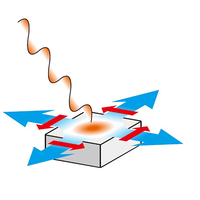
[Phys. Rev. Lett. 115, 116801] Published Wed Sep 09, 2015
Article
Magnetic skyrmions are particle-like spin textures with non-trivial topology which are stabilized by local magnetic interactions. Here, the authors demonstrate theoretically a class of skyrmions which are stabilized dynamically in the absence of interactions in a nanocontact spin-torque oscillator.
Nature Communications doi: 10.1038/ncomms9193
Authors: Y. Zhou, E. Iacocca, A. A. Awad, R. K. Dumas, F. C. Zhang, H. B. Braun, J. Åkerman
Dr.jens.bredeGood introduction for students.
This course-based primer provides newcomers to the field with a concise introduction to some of the core topics in the emerging field of topological band insulators in one and two dimensions. The aim is to provide a basic understanding of edge states, bulk topological invariants, and of the bulk--boundary correspondence with as simple mathematical tools as possible. We use noninteracting lattice models of topological insulators, building gradually on these to arrive from the simplest one-dimensional case (the Su-Schrieffer-Heeger model for polyacetylene) to two-dimensional time-reversal invariant topological insulators (the Bernevig-Hughes-Zhang model for HgTe). In each case the model is introduced first and then its properties are discussed and subsequently generalized. The only prerequisite for the reader is a working knowledge in quantum mechanics, the relevant solid state physics background is provided as part of this self-contained text, which is complemented by end-of-chapter problems.
Article
A topological superconductor is an exotic state of matter that is gapped in the bulk but possesses gapless surface states, but its identification has been so far elusive. Here, the authors develop a theory for scanning tunnelling microscopy which would allow to resolve topological superconductor states.
Nature Communications doi: 10.1038/ncomms9232
Authors: Lars Elster, Christian Platt, Ronny Thomale, Werner Hanke, Ewelina M. Hankiewicz

Article
In the proximity of noncollinear magnetization, the Cooper-paired electrons of a superconductor may exist in a spin-triplet state. Here, the authors use scanning tunnel methods to directly observe this effect in Niobium as an adjacent film of Holmium is driven between helical and ferromagnetic order.
Nature Communications doi: 10.1038/ncomms9053
Authors: A. Di Bernardo, S. Diesch, Y. Gu, J. Linder, G. Divitini, C. Ducati, E. Scheer, M.G. Blamire, J.W.A. Robinson
Author(s): I. Leonov, S. L. Skornyakov, V. I. Anisimov, and D. Vollhardt
The electronic structure and phase stability of paramagnetic FeSe is computed by using a combination of ab initio methods for calculating band structure and dynamical mean-field theory. Our results reveal a topological change (Lifshitz transition) of the Fermi surface upon a moderate expansion of th…
[Phys. Rev. Lett. 115, 106402] Published Tue Sep 01, 2015
The remarkable electronic properties of graphene have fueled the vision of a graphene-based platform for lighter, faster and smarter electronics and computing applications. One of the challenges is to devise ways to tailor its electronic properties and to control its charge carriers. Here we show that a single atom vacancy in graphene can stably host a local charge and that this charge can be gradually built up by applying voltage pulses with the tip of a scanning tunneling microscope (STM). The response of the conduction electrons in graphene to the local charge is monitored with scanning tunneling and Landau level spectroscopy, and compared to numerical simulations. As the charge is increased, its interaction with the conduction electrons undergoes a transition into a supercritical regime 6-11 where itinerant electrons are trapped in a sequence of quasi-bound states which resemble an artificial atom. The quasi-bound electron states are detected by a strong enhancement of the density of states (DOS) within a disc centered on the vacancy site which is surrounded by halo of hole states. We further show that the quasi-bound states at the vacancy site are gate tunable and that the trapping mechanism can be turned on and off, providing a new mechanism to control and guide electrons in graphene
Nature Physics. doi:10.1038/nphys3450
Authors: Q. Fan, W. H. Zhang, X. Liu, Y. J. Yan, M. Q. Ren, R. Peng, H. C. Xu, B. P. Xie, J. P. Hu, T. Zhang & D. L. Feng
Author(s): Emi Minamitani, Ying-Shuang Fu, Qi-Kun Xue, Yousoo Kim, and Satoshi Watanabe
The magnetic state and the Kondo effect in Mn phthalocyanine (MnPc) molecules on Pb(111) were investigated using low-temperature scanning tunneling microscopy (STM), density-functional theory, and numerical renormalization group calculations. We found that a unique spin state induced by the strong π…
[Phys. Rev. B 92, 075144] Published Mon Aug 31, 2015
