
The Journal of Physical Chemistry C
DOI: 10.1021/acs.jpcc.5b07999

Author(s): S. Moser, S. Fatale, P. Krüger, H. Berger, P. Bugnon, A. Magrez, H. Niwa, J. Miyawaki, Y. Harada, and M. Grioni
We investigate the polaronic ground state of anatase TiO2 by bulk-sensitive resonant inelastic x-ray spectroscopy (RIXS) at the Ti L3 edge. We find that the formation of the polaron cloud involves a single 95 meV phonon along the c axis, in addition to the 108 meV ab-plane mode previously identified…
[Phys. Rev. Lett. 115, 096404] Published Thu Aug 27, 2015

Magnetic domain structure and spin-dependent reflectivity measurements on cobalt thin films intercalated at the graphene / Ir(111) interface are investigated using spin-polarised low-energy electron microscopy. We find that graphene-covered cobalt films have surprising magnetic properties. Vectorial imaging of magnetic domains reveals an unusually gradual thickness-dependent spin reorientation transition, in which magnetisation rotates from out-of-the-film plane to the in-plane direction by less than 10$^\circ$ per cobalt monolayer. During this transition, cobalt films have a meandering spin texture, characterised by a complex, three-dimensional, wavy magnetisation pattern. In addition, spectroscopy measurements indicate that the electronic band structure of the unoccupied states is essentially spin-independent already a few electron-Volts above the vacuum level. These properties strikingly differ from those of pristine cobalt films and could open new prospects in surface magnetism.
We theoretically study, through combining the density functional theory and an unfolding technique, the electronic band structure and the charge doping effects for the deposition of potassium (K) on multilayer FeSe films grown on SrTiO3 (001) surface. These results form a theoretical base line for further detailed studies of low-temperature electronic properties and their multiway quantum engineering of FeSe thin films. We explain the Fermi surface topology observed in experiment and formulate the amount of doped electrons as a function of atomic K coverage. We show that the atomic K deposition efficiently dopes electrons to top layer FeSe. Both checkerboard and pair-checkerboard antiferromagnetic (AFM) FeSe layers show electron pockets at M point and no Fermi pocket at $\Gamma$ point with moderate atomic K coverage. The electron transfer from K adsorbate to FeSe film introduces a strong electric field, which leads to a double-Weyl cone structure at M point in the Brillouin zone of checkerboard-AFM FeSe. We demonstrate that with experimentally accessible heavy electron doping, an electron-like Fermi pocket will emerge at $\Gamma$ point, which should manifest itself in modulating the high-temperature superconductivity of FeSe thin films.
Multimetallic catalysed cross-coupling of aryl bromides with aryl triflates
Nature 524, 7566 (2015). doi:10.1038/nature14676
Authors: Laura K. G. Ackerman, Matthew M. Lovell & Daniel J. Weix
The advent of transition-metal catalysed strategies for forming new carbon-carbon bonds has revolutionized the field of organic chemistry, enabling the efficient synthesis of ligands, materials, and biologically active molecules. In cases where a single metal fails to promote a selective or efficient transformation, the synergistic cooperation of two distinct catalysts—multimetallic catalysis—can be used instead. Many important reactions rely on multimetallic catalysis, such as the Wacker oxidation of olefins and the Sonogashira coupling of alkynes with aryl halides, but this approach has largely been limited to the use of metals with distinct reactivities, with only one metal catalyst undergoing oxidative addition. Here, we demonstrate that cooperativity between two group 10 metal catalysts—(bipyridine)nickel and (1,3-bis(diphenylphosphino)propane)palladium—enables a general cross-Ullmann reaction (the cross-coupling of two different aryl electrophiles). Our method couples aryl bromides with aryl triflates directly, eliminating the use of arylmetal reagents and avoiding the challenge of differentiating between multiple carbon–hydrogen bonds that is required for direct arylation methods. Selectivity can be achieved without an excess of either substrate and originates from the orthogonal reactivity of the two catalysts and the relative stability of the two arylmetal intermediates. While (1,3-bis(diphenylphosphino)propane)palladium reacts preferentially with aryl triflates to afford a persistent intermediate, (bipyridine)nickel reacts preferentially with aryl bromides to form a transient, reactive intermediate. Although each catalyst forms less than 5 per cent cross-coupled product in isolation, together they are able to achieve a yield of up to 94 per cent. Our results reveal a new method for the synthesis of biaryls, heteroaryls, and dienes, as well as a general mechanism for the selective transfer of ligands between two metal catalysts. We anticipate that this reaction will simplify the synthesis of pharmaceuticals, many of which are currently made with pre-formed organometallic reagents, and lead to the discovery of new multimetallic reactions.
The interaction between light and novel two-dimensional electronic states holds promise to realize new fundamental physics and optical devices. Here, we use pump-probe photoemission spectroscopy to study the optically-excited Dirac surface states in the bulk-insulating topological insulator Bi2Te2Se, and reveal optical properties that are in sharp contrast to those of bulk-metallic topological insulators. We observe a gigantic optical life-time exceeding 4 micro-sec for the surface states in Bi2Te2Se, whereas the life-time in most topological insulators such as Bi2Se3 has been limited to a few picoseconds. Moreover, we discover a surface photo-voltage in topological materials, a shift of the chemical potential of the Dirac surface states, as large as 100 mV. Our results demonstrate a rare platform to study charge excitation and relaxation in energy and momentum space in a two dimensional quantum system.
Article
Incorporation of boron atoms into an aromatic carbon framework offers a wide variety of functionality. Here, the authors present boron-doped graphene nanoribbons by on-surface chemical reaction and characterize the structures and properties using scanning probe microscopy at the atomic-scale.
Nature Communications doi: 10.1038/ncomms9098
Authors: Shigeki Kawai, Shohei Saito, Shinichiro Osumi, Shigehiro Yamaguchi, Adam S. Foster, Peter Spijker, Ernst Meyer
Author(s): Xiaochun Huang, Lingxiao Zhao, Yujia Long, Peipei Wang, Dong Chen, Zhanhai Yang, Hui Liang, Mianqi Xue, Hongming Weng, Zhong Fang, Xi Dai, and Genfu Chen
Weyl points can be thought of as magnetic monopoles in momentum space that always appear in pairs. Magnetoresistance measurements indicate the existence of the long-anticipated chiral anomaly in Weyl semimetal TaAs single crystals.
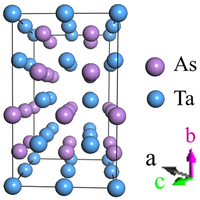
[Phys. Rev. X 5, 031023] Published Mon Aug 24, 2015
Nature Physics. doi:10.1038/nphys3434
Authors: J. K. Glasbrenner, I. I. Mazin, Harald O. Jeschke, P. J. Hirschfeld, R. M. Fernandes & Roser Valentí
Author(s): Keiji Doi, Emi Minamitani, Shunji Yamamoto, Ryuichi Arafune, Yasuo Yoshida, Satoshi Watanabe, and Yukio Hasegawa
By utilizing spin-polarized scanning tunneling microscopy (STM) and spectroscopy, we observe the coexistence of perpendicularly and in-plane magnetized cobalt nanoscale islands on an Ag(111) surface. The magnetization direction has the relationship with the observed moiré-corrugation amplitude on th…
[Phys. Rev. B 92, 064421] Published Mon Aug 24, 2015

Author(s): T. Watashige, Y. Tsutsumi, T. Hanaguri, Y. Kohsaka, S. Kasahara, A. Furusaki, M. Sigrist, C. Meingast, T. Wolf, H. v. Löhneysen, T. Shibauchi, and Y. Matsuda
Advanced imaging and spectroscopy techniques make it possible to investigate electronic states in superconductors. Scanning tunneling microscopy shows that time-reversal symmetry is broken at the crystallographic boundaries of superconducting FeSe.
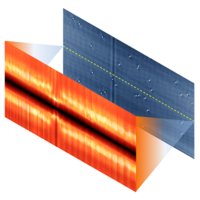
[Phys. Rev. X 5, 031022] Published Fri Aug 21, 2015
Author(s): Youngkuk Kim, C. L. Kane, E. J. Mele, and Andrew M. Rappe
Topological crystalline insulators (TCIs) are insulating materials whose topological property relies on generic crystalline symmetries. Based on first-principles calculations, we study a three-dimensional (3D) crystal constructed by stacking two-dimensional TCI layers. Depending on the interlayer in…
[Phys. Rev. Lett. 115, 086802] Published Thu Aug 20, 2015
Author(s): Pengcheng Dai
In contrast to conventional BCS superconductors, the observation that superconductivity in unconventional high-temperature materials appears in close proximity to a static antiferromagnetic phase suggests that magnetism plays a fundamental role in the microscopic origins of superconductivity. This review provides an overview of how elastic and inelastic neutron scattering is used to determine the magnetic structures and the doping evolution of spin excitations in iron-based superconductors. The interplay between magnetism and superconductivity is contrasted with related behavior in the copper oxide and heavy fermion superconductors and is important to future theoretical efforts.
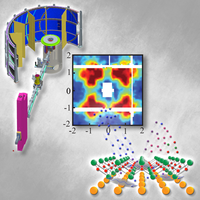
[Rev. Mod. Phys. 87, 855] Published Thu Aug 20, 2015

Author(s): Michael Ruby, Falko Pientka, Yang Peng, Felix von Oppen, Benjamin W. Heinrich, and Katharina J. Franke
We combine scanning-tunneling-spectroscopy experiments probing magnetic impurities on a superconducting surface with a theoretical analysis of the tunneling processes between (superconducting) tip and substrate. We show that the current through impurity-induced Shiba bound states is carried by singl…
[Phys. Rev. Lett. 115, 087001] Published Thu Aug 20, 2015


Nature Physics. doi:10.1038/nphys3425
Authors: L. X. Yang, Z. K. Liu, Y. Sun, H. Peng, H. F. Yang, T. Zhang, B. Zhou, Y. Zhang, Y. F. Guo, M. Rahn, D. Prabhakaran, Z. Hussain, S.-K. Mo, C. Felser, B. Yan & Y. L. Chen
Three-dimensional (3D) topological Weyl semimetals (TWSs) represent a state of quantum matter with unusual electronic structures that resemble both a ‘3D graphene’ and a topological insulator. Their electronic structure displays pairs of Weyl points (through which the electronic bands disperse linearly along all three momentum directions) connected by topological surface states, forming a unique ark-like Fermi surface (FS). Each Weyl point is chiral and contains half the degrees of freedom of a Dirac point, and can be viewed as a magnetic monopole in momentum space. By performing angle-resolved photoemission spectroscopy on the non-centrosymmetric compound TaAs, here we report its complete band structure, including the unique Fermi-arc FS and linear bulk band dispersion across the Weyl points, in agreement with the theoretical calculations. This discovery not only confirms TaAs as a 3D TWS, but also provides an ideal platform for realizing exotic physical phenomena (for example, negative magnetoresistance, chiral magnetic effects and the quantum anomalous Hall effect) which may also lead to novel future applications.
Nature Physics. doi:10.1038/nphys3426
Authors: B. Q. Lv, N. Xu, H. M. Weng, J. Z. Ma, P. Richard, X. C. Huang, L. X. Zhao, G. F. Chen, C. E. Matt, F. Bisti, V. N. Strocov, J. Mesot, Z. Fang, X. Dai, T. Qian, M. Shi & H. Ding
In 1929, H. Weyl proposed that the massless solution of the Dirac equation represents a pair of a new type of particles, the so-called Weyl fermions. However, their existence in particle physics remains elusive after more than eight decades. Recently, significant advances in both topological insulators and topological semimetals have provided an alternative way to realize Weyl fermions in condensed matter, as an emergent phenomenon: when two non-degenerate bands in the three-dimensional momentum space cross in the vicinity of the Fermi energy (called Weyl nodes), the low-energy excitations behave exactly as Weyl fermions. Here we report the direct observation in TaAs of the long-sought-after Weyl nodes by performing bulk-sensitive soft X-ray angle-resolved photoemission spectroscopy measurements. The projected locations at the nodes on the (001) surface match well to the Fermi arcs, providing undisputable experimental evidence for the existence of Weyl fermionic quasiparticles in TaAs.
Nature advance online publication 17 August 2015. doi:10.1038/nature14964
Authors: A. P. Drozdov, M. I. Eremets, I. A. Troyan, V. Ksenofontov & S. I. Shylin
A superconductor is a material that can conduct electricity without resistance below a superconducting transition temperature, Tc. The highest Tc that has been achieved to date is in the copper oxide system: 133 kelvin at ambient pressure and 164 kelvin at high pressures. As the nature of superconductivity in these materials is still not fully understood (they are not conventional superconductors), the prospects for achieving still higher transition temperatures by this route are not clear. In contrast, the Bardeen–Cooper–Schrieffer theory of conventional superconductivity gives a guide for achieving high Tc with no theoretical upper bound—all that is needed is a favourable combination of high-frequency phonons, strong electron–phonon coupling, and a high density of states. These conditions can in principle be fulfilled for metallic hydrogen and covalent compounds dominated by hydrogen, as hydrogen atoms provide the necessary high-frequency phonon modes as well as the strong electron–phonon coupling. Numerous calculations support this idea and have predicted transition temperatures in the range 50–235 kelvin for many hydrides, but only a moderate Tc of 17 kelvin has been observed experimentally. Here we investigate sulfur hydride, where a Tc of 80 kelvin has been predicted. We find that this system transforms to a metal at a pressure of approximately 90 gigapascals. On cooling, we see signatures of superconductivity: a sharp drop of the resistivity to zero and a decrease of the transition temperature with magnetic field, with magnetic susceptibility measurements confirming a Tc of 203 kelvin. Moreover, a pronounced isotope shift of Tc in sulfur deuteride is suggestive of an electron–phonon mechanism of superconductivity that is consistent with the Bardeen–Cooper–Schrieffer scenario. We argue that the phase responsible for high-Tc superconductivity in this system is likely to be H3S, formed from H2S by decomposition under pressure. These findings raise hope for the prospects for achieving room-temperature superconductivity in other hydrogen-based materials.

Author(s): Yi Pan, Jianshu Yang, Steven C. Erwin, Kiyoshi Kanisawa, and Stefan Fölsch
Quantum-dot molecules were constructed on a semiconductor surface using atom manipulation by scanning tunneling microscopy (STM) at 5 K. The molecules consist of several coupled quantum dots, each of which comprises a chain of charged adatoms that electrostatically confines intrinsic surface-state e…
[Phys. Rev. Lett. 115, 076803] Published Fri Aug 14, 2015

Weyl semimetals are expected to open up new horizons in physics and materials science because they provide the first realization of Weyl fermions and exhibit protected Fermi arc surface states. However, they had been found to be extremely rare in nature. Recently, a family of compounds, consisting of TaAs, TaP, NbAs and NbP was predicted as Weyl semimetal candidates. Here, we experimentally realize a Weyl semimetal state in TaP. Using photoemission spectroscopy, we directly observe the Weyl fermion cones and nodes in the bulk and the Fermi arcs on the surface. Moreover, we find that the surface states show an unexpectedly rich structure, including both topological Fermi arcs and several topologically-trivial closed contours in the vicinity of the Weyl points, which provides a promising platform to study the interplay between topological and trivial surface states on a Weyl semimetal's surface. We directly demonstrate the bulk-boundary correspondence and hence establish the topologically nontrivial nature of the Weyl semimetal state in TaP, by resolving the net number of chiral edge modes on a closed path that encloses the Weyl node. This also provides, for the first time, an experimentally practical approach to demonstrating a bulk Weyl fermion from a surface state dispersion measured in photoemission.
Using X-ray photoelectron spectroscopy, thermal desorption spectroscopy, and scanning tunneling microscopy we show that upon keV Xe + irradiation of graphene on Ir(111), Xe atoms are trapped under the graphene. Upon annealing, aggregation of Xe leads to graphene bulges and blisters. The efficient trapping is an unexpected and remarkable phenomenon, given the absence of chemical binding of Xe to Ir and to graphene, the weak interaction of a perfect graphene layer with Ir(111), as well as the substantial damage to graphene due to irradiation. By combining molecular dynamics simulations and density functional theory calculations with our experiments, we uncover the mechanism of trapping. We describe ways to avoid blister formation during graphene growth, and also demonstrate how ion implantation can be used to intentionally create blisters without introducing damage to the graphene layer. Our approach may provide a pathway to synthesize new materials at a substrate - 2D material interface or to enable confined reactions at high pressures and temperatures.
Article
Semiconducting armchair graphene nanoribbons with sub-10 nm width are of great technological importance but yet to realize. Here, the authors report growth of such nanoribbons on germanium and controlled crystallographic orientation and well-defined armchair edges are obtained.
Nature Communications doi: 10.1038/ncomms9006
Authors: Robert M. Jacobberger, Brian Kiraly, Matthieu Fortin-Deschenes, Pierre L. Levesque, Kyle M. McElhinny, Gerald J. Brady, Richard Rojas Delgado, Susmit Singha Roy, Andrew Mannix, Max G. Lagally, Paul G. Evans, Patrick Desjardins, Richard Martel, Mark C. Hersam, Nathan P. Guisinger, Michael S. Arnold