02 Jun 17:17
by E. S. Tikhonov, V. S. Khrapai
arXiv:2505.23490v1 Announce Type: new
Abstract: We argue that the interpretation of the experiment [Nature Physics 21, 708-715 (2025)] is misleading in two respects. First, the bias voltages impact the non-local differential conductance randomly, rather than systematically, and the bias symmetry of the non-local conductance in Fig. 3 can be explained by a fine tuned self-gating effect. Second, the full knowledge of the conductance matrix is insufficient to conclude on the relative values of the crossed-Andreev and elastic cotunneling probabilities, in particular on the dominance of one of them.
28 Apr 09:51
by Jian-Xiang Qiu
Nature, Published online: 16 April 2025; doi:10.1038/s41586-025-08862-x
The dynamical axion quasiparticle, which is directly analogous to the hypothetical fundamental axion particle, is observed in two-dimensional MnBi2Te4, and has implications for quantum chromodynamics, cosmology and string theory.
15 Apr 10:37
by Lorenz Meyer, Jose L. Lado, Nicolas Néel, and Jörg Kröger
Author(s): Lorenz Meyer, Jose L. Lado, Nicolas Néel, and Jörg Kröger
A single molecule provides a controllable connection between a normal metal and a superconductor.

[Phys. Rev. Lett. 134, 146201] Published Wed Apr 09, 2025
02 Apr 09:25
by Lingyuan Kong
Nature, Published online: 19 March 2025; doi:10.1038/s41586-025-08703-x
Pair density modulation, an unusual superconducting state whose superconducting gap is modulated by the wavelength corresponding to the lattice periodicity, is described and observed in exfoliated thin flakes of the iron-based superconductor FeTe0.55Se0.45.
17 Mar 11:48
by Beatrice Matilde Ferrari, Cameron James Richard Duncan, Michael Yannai, Raphael Dahan, Paolo Rosi, Irene Ostroman, Maria Giulia Bravi, Arthur Niedermayr, Tom Lenkiewicz Abudi, Yuval Adiv, Tal Fishman, Sang Tae Park, Dan Masiel, Thomas Lagrange, Fabrizio Carbone, Vincenzo Grillo, F. Javier Garc\'ia de Abajo, Ido Kaminer, Giovanni Maria Vanacore
arXiv:2503.11313v1 Announce Type: new
Abstract: Spatial and temporal light modulation is a well-established technology that enables dynamic shaping of the phase and amplitude of optical fields, significantly enhancing the resolution and sensitivity of imaging methods. Translating this capability to electron beams is highly desirable within the framework of a transmission electron microscope (TEM) to benefit from the nanometer spatial resolution of these instruments. In this work, we report on the experimental realization of a photonic-based free-electron modulator integrated into the column of two ultrafast TEMs for pre-sample electron-beam shaping. Electron-photon interaction is employed to coherently modulate both the transverse and longitudinal components of the electron wave function, while leveraging dynamically controlled optical fields and tailored design of electron-laser-sample interaction geometry. Using energy- and momentum-resolved electron detection, we successfully reconstruct the shaped electron wave function at the TEM sample plane. These results demonstrate the ability to manipulate the electron wave function before probing the sample, paving the way for the future development of innovative imaging methods in ultrafast electron microscopy.
04 Feb 09:51
by V. A. Zakharov, I. C. Fulga, G. Lemut, J. Tworzydlo, C. W. J. Beenakker
arXiv:2410.17076v2 Announce Type: replace
Abstract: Most superconductors are thermal insulators. A disordered chiral $\textit{p}$-wave superconductor, however, can make a transition to a thermal metal phase. Because heat is then transported by Majorana fermions, this phase is referred to as a Majorana metal. Here we present numerical evidence that the mechanism for the phase transition with increasing electrostatic disorder is the percolation of boundaries separating domains of different Chern number. We construct the network of domain walls using the spectral localizer as a ``topological landscape function'', and obtain the thermal metal--insulator phase diagram from the percolation transition.
17 Jan 12:29
by Ilse S. Kuijf, Willem O. Tromp, Tjerk Benschop, Niño Philip Ramones, Miguel Antonio Sulangi, Evert P. L. van Nieuwenburg, and Milan P. Allan
Author(s): Ilse S. Kuijf, Willem O. Tromp, Tjerk Benschop, Niño Philip Ramones, Miguel Antonio Sulangi, Evert P. L. van Nieuwenburg, and Milan P. Allan
Tunneling spectroscopy is an important tool for the study of both real- and momentum-space electronic structure of correlated electron systems. However, such measurements often yield noisy data. Machine learning provides techniques to reduce the noise in postprocessing, but traditionally requires no…
[Phys. Rev. B 111, 035136] Published Thu Jan 16, 2025
03 Dec 11:04
by Kevin A. Pimbblet, Lesley J. Morrell
arXiv:2412.01312v1 Announce Type: new
Abstract: The emergence of conversational natural language processing models presents a significant challenge for Higher Education. In this work, we use the entirety of a UK physics undergraduate (BSc with Honours) degree including all examinations and coursework to test if ChatGPT (GPT-4) can pass a degree. We adopt a "maximal cheating" approach wherein we permit ourselves to modify questions for clarity, split questions up into smaller sub-components, expand on answers given - especially for long form written responses, obtaining references, and use of advanced coaching, plug-ins and custom instructions to optimize outputs. In general, there are only certain parts of the degree in question where GPT-4 fails. Explicitly these include compulsory laboratory elements, and the final project which is assessed by a viva. If these were no issue, then GPT-4 would pass with a grade of an upper second class overall. In general, coding tasks are performed exceptionally well, along with simple single-step solution problems. Multiple step problems and longer prose are generally poorer along with interdisciplinary problems. We strongly suggest that there is now a necessity to urgently re-think and revise assessment practice in physics - and other disciplines - due to the existence of AI such as GPT-4. We recommend close scrutiny of assessment tasks: only invigilated in-person examinations, vivas, laboratory skills testing (or "performances" in other disciplines), and presentations are not vulnerable to GPT-4, and urge consideration of how AI can be embedded within the disciplinary context.
29 Nov 11:20
by Zhehao Ge
Nature, Published online: 27 November 2024; doi:10.1038/s41586-024-08190-6
Using a graphene quantum dot creation and a wavefunction mapping technique, quantum scars are directly visualized for Dirac electrons with a scanning tunnelling microscope.
15 Nov 14:25
by Shaoxiong Brian Xu
Nature, Published online: 12 November 2024; doi:10.1038/d41586-024-03704-8
Worryingly high prevalence of retraction among top-cited researchers
15 Nov 14:22
by C. W. J. Beenakker
arXiv:2402.13862v4 Announce Type: replace
Abstract: Fu and Kane have taught us that a Majorana zero-mode appears on the quantum spin Hall edge at the interface with a superconductor. If a magnetic scatterer is placed on the edge, the zero-point energy of massless edge excitations exerts a force on the scatterer. This is the fermionic analogue of the electromagnetic Casimir effect. We show that the Majorana zero-mode produces a repulsive Casimir force, pushing the scatterer away from the superconductor. Unlike some other signatures of Majorana zero-modes, the repulsive Casimir force is directly tied to the topological invariant of the system (the sign of the determinant of the reflection matrix from the superconductor).
01 Nov 08:09
by Miuko Tanaka, Joel \^I-j. Wang, Thao H. Dinh, Daniel Rodan-Legrain, Sameia Zaman, Max Hays, Bharath Kannan, Aziza Almanakly, David K. Kim, Bethany M. Niedzielski, Kyle Serniak, Mollie E. Schwartz, Kenji Watanabe, Takashi Taniguchi, Jeffrey A. Grover, Terry P. Orlando, Simon Gustavsson, Pablo Jarillo-Herrero, William D. Oliver
arXiv:2406.13740v2 Announce Type: replace-cross
Abstract: The physics of superconductivity in magic-angle twisted bilayer graphene (MATBG) is a topic of keen interest in moir\'e systems research, and it may provide insight into the pairing mechanism of other strongly correlated materials such as high-$T_{\mathrm{c}}$ superconductors. Here, we use DC-transport and microwave circuit quantum electrodynamics (cQED) to measure directly the superfluid stiffness of superconducting MATBG via its kinetic inductance. We find the superfluid stiffness to be much larger than expected from conventional Fermi liquid theory; rather, it is comparable to theoretical predictions involving quantum geometric effects that are dominant at the magic angle. The temperature dependence of the superfluid stiffness follows a power-law, which contraindicates an isotropic BCS model; instead, the extracted power-law exponents indicate an anisotropic superconducting gap, whether interpreted within the Fermi liquid framework or by considering quantum geometry of flat-band superconductivity. Moreover, a quadratic dependence of the superfluid stiffness on both DC and microwave current is observed, which is consistent with Ginzburg-Landau theory. Taken together, our findings indicate that MATBG is an unconventional superconductor with an anisotropic gap and strongly suggest a connection between quantum geometry, superfluid stiffness, and unconventional superconductivity in MATBG. The combined DC-microwave measurement platform used here is applicable to the investigation of other atomically thin superconductors.
31 Oct 07:11
by Hongbin Yang
Nature, Published online: 30 October 2024; doi:10.1038/s41586-024-08118-0
Phonons at the FeSe/STO interface are imaged at atomic scale, uncovering new optical phonon modes that couple strongly with electrons, shedding light on the microscopic origin of the interfacial EPC and providing insights into achieving superconducting transition temperature enhancement.
31 Oct 07:06
by Adrian Reich, Dmitriy S. Shapiro, Alexander Shnirman
arXiv:2410.22514v1 Announce Type: new
Abstract: We study quantum phase transitions in a long and narrow topological Josephson junction. The low-energy excitations comprise Majorana fermions propagating along the junction, coupled to magnons in an embedded ferromagnetic layer. Based on mean-field and renormalization group arguments, we predict the existence of Berezinskii-Kosterlitz-Thouless transitions in this system, both in the case of a magnetic easy-plane and easy-axis anisotropy. In the easy-axis regime, this is based on an emerging effective easy-plane, spanned by the easy-axis and the component of the magnetization which couples to the Majoranas. We conclude by presenting a conjecture for the full phase diagram of the model.
30 Oct 19:17
by Ilan T. Rosen
Nature Physics, Published online: 30 October 2024; doi:10.1038/s41567-024-02661-3
Arrays of superconducting transmon qubits can be used to study the Bose–Hubbard model. Synthetic electromagnetic fields have now been added to this analogue quantum simulation platform.
29 Oct 07:07
by Roberto Lo Conte (Zernike Institute for Advanced Materials, University of Groningen, Groningen, The Netherlands), Jens Wiebe (Department of Physics, University of Hamburg, Hamburg, Germany), Stephan Rachel (School of Physics, University of Melbourne, Parkville, VIC, Australia), Dirk K. Morr (Department of Physics, University of Illinois at Chicago, Chicago, IL, USA), Roland Wiesendanger (Department of Physics, University of Hamburg, Hamburg, Germany)
arXiv:2410.20177v1 Announce Type: cross
Abstract: Magnet-superconductor hybrid (MSH) systems have recently emerged as one of the most significant developments in condensed matter physics. This has generated, in the last decade, a steadily rising interest in the understanding of their unique properties. They have been proposed as one of the most promising platforms for the establishment of topological superconductivity, which holds high potential for application in future quantum information technologies. Scanning tunneling microscopy (STM) and spectroscopy (STS) plays a crucial role in the race to unveil the fundamental origin of the unique properties of MSH systems, with the aim to discover new hybrid quantum materials capable of hosting topologically non-trivial unconventional superconducting phases. In particular, the combination of STM studies with tight-binding model calculations have represented, so far, the most successful approach to unveil and explain the emergent electronic properties of MSHs. The scope of this review is to offer a broad perspective on the field of MSHs from an atomic-level investigation point-of-view. The focus is on discussing the link between the magnetic ground state hosted by the hybrid system and the corresponding emergent superconducting phase. This is done for MSHs with both one-dimensional (atomic chains) and two-dimensional (atomic lattices and thin films) magnetic systems proximitized to conventional s-wave superconductors. We present a systematic categorization of the experimentally investigated systems with respect to defined experimentally accessible criteria to verify or falsify the presence of topological superconductivity and Majorana edge modes. Given the vast number of publications on the topic, we limit ourselves to discuss works which are most relevant to the search for topological superconductivity.
26 Oct 07:10
by Y. Kohsaka, S. Akutagawa, S. Omachi, Y. Iwamichi, T. Ono, I. Tanaka, S. Tateishi, H. Murayama, S. Suetsugu, K. Hashimoto, T. Shibauchi, M. O. Takahashi, S. Nikolaev, T. Mizushima, S. Fujimoto, T. Terashima, T. Asaba, Y. Kasahara, and Y. Matsuda
Author(s): Y. Kohsaka, S. Akutagawa, S. Omachi, Y. Iwamichi, T. Ono, I. Tanaka, S. Tateishi, H. Murayama, S. Suetsugu, K. Hashimoto, T. Shibauchi, M. O. Takahashi, S. Nikolaev, T. Mizushima, S. Fujimoto, T. Terashima, T. Asaba, Y. Kasahara, and Y. Matsuda
Imaging of never-before-seen concentric patterns around atomic-scale defects in the quantum spin liquid candidate α-RuCl3 opens a new avenue for probing the electronic behavior of this exotic quantum state.
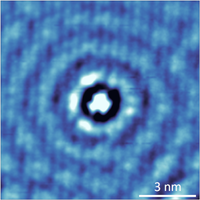
[Phys. Rev. X 14, 041026] Published Fri Oct 25, 2024
17 Oct 17:23
by Cheng-Li Chiu, Taige Wang, Ruihua Fan, Kenji Watanabe, Takashi Taniguchi, Xiaomeng Liu, Michael P. Zaletel, Ali Yazdani
arXiv:2410.10961v1 Announce Type: new
Abstract: Charge distribution offers a unique fingerprint of important properties of electronic systems, including dielectric response, charge ordering and charge fractionalization. We develop a new architecture for charge sensing in two-dimensional electronic systems in a strong magnetic field. We probe local change of the chemical potential in a proximitized detector layer using scanning tunneling microscopy (STS), allowing us to infer the chemical potential and the charge profile in the sample. Our technique has both high energy (<0.3 meV) and spatial (<10 nm) resolution exceeding that of previous studies by an order of magnitude. We apply our technique to study the chemical potential of quantum Hall liquids in monolayer graphene under high magnetic fields and their responses to charge impurities. The chemical potential measurement provides a local probe of the thermodynamic gap of quantum Hall ferromagnets and fractional quantum Hall states. The screening charge profile reveals spatially oscillatory response of the quantum Hall liquids to charge impurities, and is consistent with the composite Fermi liquid picture close to the half-filling. Our technique also paves the way to map moir\'e potentials, probe Wigner crystals, and investigate fractional charges in quantum Hall and Chern insulators.
17 Oct 17:14
by Yong-Jie Xie, Ang Qian, Bin He, Yu-Biao Wu, Sheng Wang, Bing Xu, Guoqiang Yu, Xiufeng Han, and X. G. Qiu
Author(s): Yong-Jie Xie, Ang Qian, Bin He, Yu-Biao Wu, Sheng Wang, Bing Xu, Guoqiang Yu, Xiufeng Han, and X. G. Qiu
Skyrmion-superconducting vortex pairs in chiral magnet-superconductor heterostructures have been directly observed.
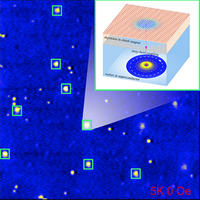
[Phys. Rev. Lett. 133, 166706] Published Thu Oct 17, 2024
14 Oct 12:10
by Jabir Ali Ouassou
arXiv:2410.08758v1 Announce Type: cross
Abstract: Bodge is a free and open-source Python package for constructing large-scale real-space tight-binding models for calculations in condensed matter physics. "Large-scale" means that it should remain performant even for lattices with millions of atoms, and "real-space" means that the model is formulated in terms of individual lattice sites and not in momentum space, for example.
Although general tight-binding models can be constructed with this package, the main focus is on the Bogoliubov-De Gennes ("BoDGe") Hamiltonian used to model superconductivity in the clean limit. The package is designed to be easy to use, flexible, and extensible - and very few lines of code are required to model heterostructures containing, e.g., conventional and unconventional superconductors, ferromagnets and antiferromagnets, altermagnetism, and spin-orbit coupling.
In other words: If you want a lattice model for superconducting nanostructures, and want something that is computationally efficient yet easy to use, Bodge should be a good choice.
07 Oct 09:08
by Margaret A. Fortman, David C. Harrison, Ramiro H. Rodriguez, Zachary J. Krebs, Sangjun Han, Min Seok Jang, Robert McDermott, Caglar O. Girit, Victor W. Brar
arXiv:2410.03009v1 Announce Type: cross
Abstract: Josephson junction spectroscopy is a powerful local microwave spectroscopy technique that has promising potential as a diagnostic tool to probe the microscopic origins of noise in superconducting qubits. We present advancements toward realizing Josephson junction spectroscopy in a scanning geometry, where the Josephson junction is formed between a superconducting sample and a high capacitance superconducting STM tip. Data from planar Nb-based Josephson junction devices first demonstrate the benefits of including a high capacitance shunt across the junction, which decreases linewidth and improves performance at elevated temperatures. We show how an equivalent circuit can be implemented by utilizing a planarized STM tip with local prominences, which are fabricated via electron beam lithography and reactive ion etching, followed by coating with a superconducting layer. Differential conductance measurements on a superconducting NbN surface demonstrate the ability of these high capacitance tips to decrease both thermal noise and P(E)-broadening in comparison to typical wire tips.
02 Oct 11:27
by M. Uldemolins
Nature Communications, Published online: 02 October 2024; doi:10.1038/s41467-024-52847-9
Sub-gap states generated by single spins in a superconductor can be used as building blocks for quantum devices. In this work, it is shown that the sub-gap states of multi-spin impurities are intimately linked, leading to unexpected behavior.
02 Oct 09:25
by Ambikesh Gupta, Pranab Kumar Nag, Shai Kiriati, Samuel D. Escribano, Man Suk Song, Hadas Shtrikman, Yuval Oreg, Nurit Avraham, Haim Beidenkopf
arXiv:2409.19736v1 Announce Type: new
Abstract: Following significant progress in the visualization and characterization of hybrid superconducting-semiconducting systems, greatly propelled by reports of Majorana zero modes in nanowire devices, considerable attention has been devoted to investigating the electronic structure at the buried superconducting-semiconducting interface and the nature of the induced superconducting correlations. The properties of that interface and the structure of the electronic wave functions that occupy it determine the functionality and the topological nature of the induced superconducting state. Here, we introduce a novel hybrid platform for proximity-inducing superconductivity in InAs$_{0.6}$Sb$_{0.4}$ nanowires, leveraging a unique architecture and material combination. By dispersing these nanowires over a superconducting Indium film we exploit Indium's high critical temperature of 3.7~K and the anticipated high spin-orbit and Zeeman couplings of InAs$_{0.6}$Sb$_{0.4}$. This design preserves the pristine top facet of the nanowires, making it highly compatible with scanning tunneling spectroscopy. Using this architecture we demonstrate that the mechanical contact supports Cooper-pair transparency as high as 90\%, comparable with epitaxial interfaces. The anisotropic angular response to an applied magnetic field shows the quasi-two-dimensional nature of the parent superconductivity in the Indium film and the quasi-one-dimensional nature of the induced superconductivity in the nanowires. Our platform offers robust and advantageous foundations for studying the emergence of topological superconductivity and the interplay of superconductivity and magnetism using atomic-scale spectroscopic tools.
01 Oct 17:53
by Johanne Bratland Tjernshaugen, Morten Amundsen, Jacob Linder
arXiv:2409.18191v1 Announce Type: new
Abstract: Crossed Andreev reflection (CAR) is a process that creates entanglement between spatially separated electrons and holes. Such entangled pairs have potential applications in quantum information processing, and it is therefore relevant to determine how the probability for CAR can be increased. CAR competes with another non-local process called elastic cotunneling (EC), which does not create entanglement. In conventional normal metal/superconductor/normal metal heterostructures, earlier theoretical work predicted that EC dominates over CAR. Nevertheless, we show numerically that when the Keldysh-Usadel equations are solved self-consistently in the superconductor, CAR can dominate over EC. Self-consistency is necessary both for the conversion from a quasiparticle current to a supercurrent and to describe the spatial variation of the order parameter correctly. A requirement for the CAR probability to surpass the EC probability is that the inverse proximity effect is small. Otherwise, the subvoltage density of states becomes large and EC is strengthened by quasiparticles flowing through the superconductor. Therefore, CAR becomes dominant in the non-local transport with increasing interface resistance and length of the superconducting region. Our results show that even the simplest possible experimental setup with easily accessible normal metals and superconductors can provide dominant CAR by designing the experimental parameters correctly. We also find that spin-splitting in the superconductor increases the subvoltage density of states, and thus always favors EC over CAR. Finally, we tune the chemical potential in the leads such that transport is governed by electrons of one spin type. This can increase the CAR probability at finite values of the spin-splitting compared to using a spin-degenerate voltage bias, and provides a way to control the spin of the conduction electrons electrically.
23 Sep 11:02
by Thomas Koch, Clement Godfrin, Viktor Adam, Julian Ferrero, Daniel Schroller, Noah Glaeser, Stefan Kubicek, Ruoyu Li, Roger Loo, Shana Massar, George Simion, Danny Wan, Kristiaan De Greve, Wolfgang Wernsdorfer
arXiv:2409.12731v2 Announce Type: replace
Abstract: The realisation of an universal quantum computer will require the operation of thousands to millions of qubits. The possibility of using existing industrial semiconductor fabrication techniques and infrastructure for up-scaling and reproducibility makes silicon based spin qubits one of the most promising platforms to achieve this goal. The implementation of the up to now largest semiconductor based quantum processor was realized in a silicon/silicon-germanium heterostructure known for its low charge noise, long qubit coherence times and fast driving speeds, but the high structural complexity creates challenges for industrial implementations. Here we demonstrate quantum dots hosted in a natural Si/SiGe heterostructure fully fabricated by an industrial 300$\,$mm semiconductor wafer process line from heterostructure growth to Co micromagnet monolithic integration. We report charge noise values below 2$\,\mathrm{\mu eV/\sqrt{Hz}}$, spin relaxation times of over 1$\,$s and coherence times $T_2^*$ and $T_2^H$ of 1$\,\mathrm{\mu s}$ and 50$\,\mathrm{\mu s}$ respectively, for quantum wells grown using natural silicon. Further, we achieve Rabi frequencies up to 5$\,$MHz and single qubit gate fidelities above 99$\,\%$. In addition to scalability, the high reproducibility of the 300$\,$mm processes enables the deterministic study of qubit metric dependencies on process parameters, which is essential for optimising qubit quality.
29 Aug 16:18
by Rafał Rechciński, Aleksei Khindanov, Dmitry I. Pikulin, Jian Liao, Leonid P. Rokhinson, Yong P. Chen, Roman M. Lutchyn, and Jukka I. Väyrynen
Author(s): Rafał Rechciński, Aleksei Khindanov, Dmitry I. Pikulin, Jian Liao, Leonid P. Rokhinson, Yong P. Chen, Roman M. Lutchyn, and Jukka I. Väyrynen
Topological insulator/superconductor two-dimensional heterostructures are promising candidates for realizing topological superconductivity and Majorana modes. In these systems, a vortex pinned by a prefabricated antidot in the superconductor can host Majorana zero-energy modes (MZMs), which are exot…
[Phys. Rev. B 110, 075433] Published Thu Aug 29, 2024
26 Aug 10:46
by William F. Schiela, Peng Yu, Javad Shabani
arXiv:2408.12749v1 Announce Type: new
Abstract: Majorana bound states (MBSs) are quasiparticles which are their own antiparticles. They are predicted to emerge as zero-energy modes localized at the boundary of a topological superconductor. No intrinsic topological superconductor is known to date. However, by interfacing conventional superconductors and semiconductors with strong spin--orbit coupling it is possible to create a system hosting topological states. Hence epitaxial superconductors and semiconductors have emerged as an attractive materials system with atomically sharp interfaces and broad flexibility in device fabrications incorporating Josephson junctions. We discuss the basics of topological superconductivity and provide insight on how to go beyond current state-of-the-art experiments. We argue that the ultimate success in realizing MBS physics requires the observation of non-Abelian braiding and fusion experiments.
22 Aug 10:09
by Stefano Trivini, Jon Ortuzar, Javier Zaldivar, Edwin Herrera, Isabel Guillam\'on, Hermann Suderow, F. Sebastian Bergeret, Jose Ignacio Pascual
arXiv:2408.11704v1 Announce Type: cross
Abstract: Magnetic adatoms on s-wave superconductors induce bound states inside the superconducting gap, called Yu-Shiba-Rusinov states (YSR). The anisotropy of the Fermi surface determines the spatial extension of bound states in a quasi-two-dimensional superconductor. This is especially important in the diluted impurity limit since the orbital overlap determines the coupling of YSR states of neighboring atoms and the formation of the collective YSR system. Here, we build diluted arrays of Mn atoms with different dimensionalities on the surface of $\beta$-Bi$_2$Pd, and we measure the evolution of their YSR spectra with the structure. We detect the coupling as a split of YSR peaks in subgap spectra and find that the split size increases with the number of atoms. The orientation of the structures along different directions of the \bipd substrate modulates the split and particle-hole asymmetry of the YSR states due to the anisotropic character of the Fermi surface, captured by the Green function model. With the aid of the model, we found multiple YSR excitations in an extended 2D array of 25 Mn atoms, and we identified that their spatial distribution reflects a chiral LDOS.
14 Aug 14:59
by Shaowen Chen, Seunghyun Park, Uri Vool, Nikola Maksimovic, David A. Broadway, Mykhailo Flaks, Tony X. Zhou, Patrick Maletinsky, Ady Stern, Bertrand I. Halperin, Amir Yacoby
arXiv:2402.02472v2 Announce Type: replace
Abstract: Josephson junctions enable dissipation-less electrical current through metals and insulators below a critical current. Despite being central to quantum technology based on superconducting quantum bits and fundamental research into self-conjugate quasiparticles, the spatial distribution of super current flow at the junction and its predicted evolution with current bias and external magnetic field remain experimentally elusive. Revealing the hidden current flow, featureless in electrical resistance, helps understanding unconventional phenomena such as the nonreciprocal critical current, i.e., Josephson diode effect. Here we introduce a platform to visualize super current flow at the nanoscale. Utilizing a scanning magnetometer based on nitrogen vacancy centers in diamond, we uncover competing ground states electrically switchable within the zero-resistance regime. The competition results from the superconducting phase re-configuration induced by the Josephson current and kinetic inductance of thin-film superconductors. We further identify a new mechanism for the Josephson diode effect involving the Josephson current induced phase. The nanoscale super current flow emerges as a new experimental observable for elucidating unconventional superconductivity, and optimizing quantum computation and energy-efficient devices.
13 Aug 05:07
by Pasquale Marra, Daisuke Inotani, Takeshi Mizushima, Muneto Nitta
arXiv:2312.08439v2 Announce Type: replace
Abstract: Majorana zero modes have gained significant interest due to their potential applications in topological quantum computing and in the realization of exotic quantum phases. These zero-energy quasiparticle excitations localize at the vortex cores of two-dimensional topological superconductors or at the ends of one-dimensional topological superconductors. Here we describe an alternative platform: a two-dimensional topological superconductor with inhomogeneous superconductivity, where Majorana modes localize at the ends of topologically nontrivial one-dimensional stripes induced by the spatial variations of the order parameter phase. In certain regimes, these Majorana modes hybridize into a single highly nonlocal state delocalized over spatially separated points, with exactly zero energy at finite system sizes and with emergent quantum-mechanical supersymmetry. We then present detailed descriptions of braiding and fusion protocols and showcase the versatility of our proposal by suggesting possible setups that can potentially lead to the realization of Yang-Lee anyons and the Sachdev-Ye-Kitaev model.

