Shared posts

26 Aug 17:11

Tropical system organizing, and it may go east of Houston

by Eric Berger

Good morning. The tropical system in the Caribbean Sea continues to show better signs of organization this morning, and will likely become a depression or Tropical Storm Ida later today or tonight. We continue to watch this system closely, and over the the last 12 to 24 hours most major models have trended east with their forecast. The most likely possibility now is that a strong hurricane comes ashore somewhere in Louisiana on Sunday or Sunday night. But we definitely cannot rule out impacts to Texas. Please find more information below.

Also, as you may recall, we launched a Spanish-language version of Space City Weather this week. At 11 a.m. CT today please join me, the editor of the new site, Maria Sotolongo, and Rolando Salinas from Reliant Energy to talk about why we’re doing this. The event will take place on our Facebook page.

Thursday

There are some scattered showers offshore this morning, and they should develop inland later this afternoon. This should yield perhaps a 30 to 40 percent chance of rain, but there will still be enough sunshine to drive temperatures into the mid-90s. Winds will be light, generally out of the east. The upper air pattern becomes more favorable for rain this evening, through the overnight hours, into Friday so there is about a 50 percent chance of showers tonight.

Friday

We expect fairly widespread showers on Friday morning, with the potential for some heavy rain to produce a quick accumulation of perhaps 2 inches for some locations. Showers should end from south to north during the late morning or early afternoon hours. Highs will likely reach about 90 degrees under partly sunny skies.

NOAA rain accumulation forecast for now through Friday. (Weather Bell)

Saturday and Sunday

The overall fairly wet pattern should continue through the weekend, with partly sunny skies, highs in the low 90s, and perhaps 50 to 60 percent rain chances each day. The ultimate track of Invest 99L is going to have a lot to say about our weekend weather so any forecast now is very, very tentative.

Tropics

What we know is that Invest 99L is starting to become better organized, and should move into the Gulf of Mexico on Friday night or Saturday morning. After this time there is not much to hamper its organization—there is little dry air aloft, and wind shear is relatively low—and plenty of warm Gulf water for the system to work with. Our expectation is that the storm will become a hurricane, a possibly a major hurricane by later on Sunday as it approaches the Gulf coast.

Thursday morning GFS ensemble forecast for Invest 99L. (Weathernerds.org)

So where will the storm go? That will depend on the extent of a high pressure ridge over the southeastern United States. Most of the model guidance now shows enough of a weakness in the ridge to allow the storm to travel more northeasterly, likely bringing it to the coast somewhere between the Texas-Louisiana border and Mississippi. Because 99L is likely to intensify fairly rapidly, this could facilitate a more northerly turn, which probably puts southeastern Louisiana under the biggest threat for now. The bottom line is that if you live in Louisiana, particularly the New Orleans area, there is a significant threat that a powerful hurricane will come to the coast in just a little more than three days from now.

Early Thursday European model forecast for Invest 99L. (Weathernerds.org)

As for Texas, we definitely cannot rule out direct impacts from this system. There are some scenarios in which a weaker storm cannot force its way north by influencing the ridge of high pressure. In this case the storm would turn more westerly, toward the Texas coast. There is enough uncertainty in the forecast to keep a close eye on the system. But at this point I would say we’re cautiously optimistic about the upper Texas coast, including Houston, being spared this weekend and early next week.

Matt or myself will have an update later this afternoon or evening.

26 Aug 16:50

COVID hospitalization averages $20K—and insurers want unvaccinated to pay up

by Beth Mole
Delta Air Lines plane taxis toward a gate between other Delta planes at John F. Kennedy International Airport in New York on Monday, July 20, 2009.

Enlarge / Delta Air Lines plane taxis toward a gate between other Delta planes at John F. Kennedy International Airport in New York on Monday, July 20, 2009. (credit: Getty | Bloomberg)

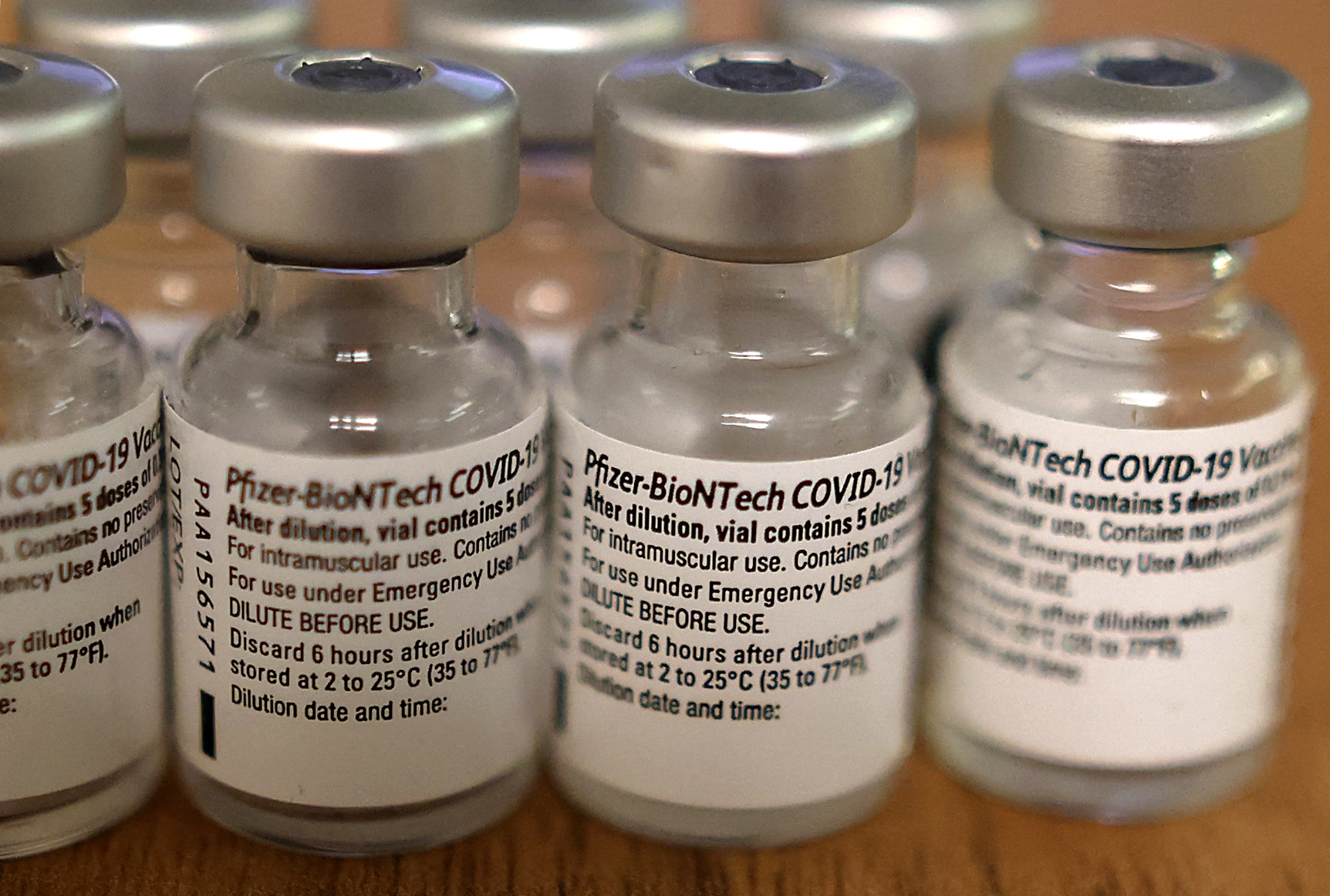
Hospital care for seriously ill COVID-19 patients is costing the US health care system billions of dollars. And with vaccines highly effective at preventing hospitalization now widely and freely available to everyone over the age of 12, insurers and some businesses want the unvaccinated—who make up the vast majority of COVID-19 hospitalizations—to cover more of those costs.

This past June and July alone, the estimated cost of caring for unvaccinated people who were hospitalized for preventable cases of COVID-19 reached about $2.3 billion, according to a recent analysis by the Peterson Center on Healthcare and Kaiser Family Foundation. The analysis estimated that in those two months there were 113,000 unvaccinated people who were hospitalized primarily for COVID-19 and that their infection would have been prevented with vaccination. They then multiplied that number by $20,000, a rough estimate of the average cost of hospital care for COVID-19 patients, bringing the total to $2.3 billion.

Waived waivers

Hospitalizations have only skyrocketed since then. On the last day of July, the country's seven-day rolling average of hospitalizations was around 40,000. Now, that average is nearly 86,000, according to the Centers for Disease Control and Prevention.

Read 6 remaining paragraphs | Comments

26 Aug 11:32

A Joyful New Read Celebrates Galveston’s Bygone Black-Owned Restaurants

by Cynthia J. Drake
Gus Allen's Cafe Lost Restaurants of Galveston's African American CommunityThe joy is undeniable. Vintage photos show patrons relaxed, happy, and dressed to the nines, plates piled high with stuffed shrimp and jambalaya, cans and bottles of Schlitz beer strewn across tabletops in 1950s Galveston. In the new book Lost Restaurants of Galveston’s African American Community (American Palate), locals rhapsodize about the taste of “mouthwatering pork bones, pork chops, crispy fried chicken and scrumptious meatloaf,” “mandatory Kool-Aid,” and “delicious pound cake topped with jelly icing” at Maggie “Big Momma” Fisher’s Twilight Grill. They recall cherry Cokes at T. D. Armstrong’s Drug Store, where it cost five cents to play a favorite tune, and where people congregated after school at Central High (Central High School was Texas’s first African American high school until federal widespread school integration…View Original Post

The post A Joyful New Read Celebrates Galveston’s Bygone Black-Owned Restaurants appeared first on Texas Monthly.

26 Aug 11:18

You have questions about the Gulf tropical system, and we have (a few) answers

by Eric Berger

We’re continuing to track development of a tropical system in Caribbean Sea that should move into the Gulf of Mexico this weekend. And while we don’t have a lot of additional clarity, we have received a lot of questions today. So although we can’t answer them all, we’re going to do our best.

As of Wednesday afternoon, here’s what we know, and what we don’t, about Invest 99L.

Where is Invest 99L going?

Not much has changed since this morning. We are reasonably confident that the storm will ultimately track toward Texas or Louisiana. Mexico seems less likely because it appears the storm’s center is further north than where forecast models initialized it earlier today. But beyond this there is a wide variance in solutions, and until the system gets more tightly defined, the models are going to struggle with solutions.

European model ensemble forecast released on Wednesday afternoon. (Weathernerds.org)

When will we know more?

We should know more within 24 hours, and probably have a pretty good sense of things by Friday.

When would we start to see effects the system tracks toward the upper Texas coast?

The earliest would probably be Sunday afternoon or evening, and more likely on Monday.

How strong will Invest 99L get

No idea. Anything from a tropical storm to a major hurricane is possible. However, we’re definitely concerned about intensification. The Gulf of Mexico is near its peak heating for the year, and the atmosphere does not appear particularly hostile to tropical systems this weekend. So yeah, a powerful hurricane is a definite possibility.

Be straight with us, is this going to be another Harvey?

Hurricane Harvey made landfall four years ago today, and then its steering currents collapsed. This lack of movement caused heavy rains to remain in place over the upper Texas coast, including Houston, for days. Right now we don’t expect a repeat of this, but there are some scenarios in which this system goes into the central Texas coast and then does slow down somewhat. In this case, Texas would see heavy rainfall, but probably not anything approaching Harvey’s biblical levels. It’s worth emphasizing that is just one of many possibilities we are watching at this point.

GFS ensemble forecast for Wednesday afternoon. (Weaternerds.org)

Stop it, y’all are scaring me.

Yeah, we get it. We don’t like hurricanes either. Matt and I own homes here. Hurricanes can be intimidating things. Please understand there are still a wide range of outcomes for this tropical system, and a majority of them right now involve minor impacts to the greater Houston region.

But here’s the deal. We probably aren’t going to have a real good handle on this system until later Thursday or Friday, and by that time we could only be two or three days from seeing significant impacts. So now is the time to review your hurricane plans. For example, under what circumstances would you evacuate? Where would you go? Do you have a plan to take care of pets? Do you have a hurricane kit if you’re staying home? When the time comes to make a decision, we want you to be ready to make it.

We’ll have a full update Thursday morning.

26 Aug 02:03

What Arin sounds like in BED - Mario RPG

by GameGrumps

It'll keep you up at night.

Click to SUBSCRIBE ► http://bit.ly/GrumpSubscribe
MERCH!! ► http://gamegrumps.com/merch
Our email list! ► http://bit.ly/GrumpsStuffEmail
Support us directly by becoming a channel member and get access to cool stuff like EMOTES ► https://youtube.com/gamegrumps/join

*********************************************

We have NEW MERCH every TUESDAY!

Visit our WEBSITE every TUESDAY to check out the NEW items!

►►► http://gamegrumps.com/merch

*********************************************

FACEBOOK ► https://www.facebook.com/GameGrumps
TWITTER ► https://www.twitter.com/gamegrumps
INSTAGRAM ► https://www.instagram.com/gamegrumps/
WEBSITE ► http://gamegrumps.com

*********************************************

Game Grumps are:
Arin ► http://www.youtube.com/Egoraptor
Danny ► http://www.youtube.com/NinjaSexParty

#ep8 #MarioRPG #pillowTalk
25 Aug 21:53

my employee gave me an “it’s her or me” ultimatum

by Ask a Manager

This post, my employee gave me an “it’s her or me” ultimatum , was originally published by Alison Green on Ask a Manager.

A reader writes:

I own and run a small store. Some of it is online and I have a remote employee to handle administration, IT, and our books, and I recently hired three people for our warehouse when I used to just use a shipping company.

“Miranda” has been my remote employee on the other side of the state, about three hours away. She’s been with me forever (almost four years) and I’ve never noticed how bad a job she does until my new employee came on board. “Laura” is my warehouse manager and she says that every day she has to fix Miranda’s mistakes and that if Miranda cared about the company she’d move to be closer to the warehouse and office. I’ve had such a difficult year with Covid personally and Laura has been a life-saving employee and friend, even helping me out with errands and lending me a vehicle when my husband’s car broke down. I couldn’t have made it through this year without Laura. She recommended the other two hires for the warehouse and they’re a great team since they all know each other and get along.

Miranda and Laura don’t see eye to eye on a lot of things, and Miranda seems to be really negative compared to Laura. She doesn’t want to try new things and is creating limits that I don’t think we need and saying no to new procedures and processes. I’m ashamed to admit I don’t know if Miranda is right or not and I don’t know what is a mistake and what isn’t or about our software and the business and limitations. I haven’t used our software in years and I don’t know that much about our product sourcing and things that Laura wants to change. I feel like they keep putting me in the middle and that’s really unprofessional. The other staff don’t need to talk to Miranda a lot, but they also say she’s difficult and hard to work with. It’s been a really tense few months at work and nobody’s getting along with Miranda. It feels like every day Miranda’s done something new that upsets the in-house team and she’s not even there. Laura had a good point the other day that you’d have to be abysmal at your job to cause problems when you’re not there in person.

A few months ago, I promoted Laura and gave her Miranda’s executive title, which was a demotion for Miranda. Afterwards, Miranda stopped working on certain projects and stopped helping Laura with certain aspects of the business Laura doesn’t know much about. Miranda also stopped responding to my calls and questions, and sometimes I’m waiting all evening for a response that I don’t get until the next morning. She didn’t respond to one of my questions and made me wait the whole weekend for an answer. Miranda asked me for a review of her job description and I feel like she should know what she has to do, I don’t have an updated job description for her. She and I spoke about her coming into the office three times a week for morale and she says she doesn’t want the commute and that nothing she does needs to be in the office.

I told her Miranda that the change in her title wasn’t personal, that Laura did such a great job helping me manage my life in the last year that it just seemed natural for her to be in charge. Miranda said that she felt my relationship with Laura was favoritism, which it isn’t. When I discussed this with Laura, she was so visibly upset. It was hard to see. When she calmed down, she said I need to fire Miranda because she doesn’t feel safe working with her.

I’m so confused I don’t know what to think. I left a lot of toxic jobs because I wanted my own business and camaraderie. The energy is so bad now. I just want someone to tell me what to do and help me run my life smoothly. Should I fire this employee?

I wrote back and asked why Laura says she feels unsafe working with Miranda and also whether Miranda is supposed to work nights and weekends, given the mention of waiting for answers from her during that time:

Laura said she felt unsafe because Miranda was so limiting and negative and that if she was going to accuse me of favoritism, that she’s obviously deflecting us away from her poor performance. She said Miranda won’t show her how to do anything in the software and I don’t know how to use it, and she feels like Miranda is trying to sabotage her and the company.

Miranda’s role was always more 9-5 for things like bookkeeping, bill paying, banking, and admin, which are normal admin hours but she was always reachable before no matter what.

So … it sounds like your perspective is really skewed against Miranda and toward Laura.

Laura may have legitimate complaints about Miranda for all I know, but none of them are in this letter.

What is in this letter are a number of ways that you and Laura are off-base and being unfair to Miranda. In no particular order:

1. Laura’s claim that if Miranda cared about the company, she’d move to be closer to the office is laughable. Miranda worked remotely for years — apparently to your satisfaction — and loads of people work remotely without it having any bearing on their commitment to their jobs. Moreover, how much Miranda “cares” about the company isn’t relevant; what’s relevant is her work and whether it’s good or bad. Lots of people do a great job without caring much about their companies at a personal level, and that’s fine. Laura seems like she’s trying to stir up trouble with this one.

2. You wrote that Laura has been a “life-saving employee and friend” to you during a difficult year and helped you out in your personal life. That has nothing to do with the work she does for your company, and factoring it into your assessment of her performance is wrong and unfair. You’re setting up a situation where other employees will feel that their willingness to do you personal favors will affect how you assess and reward them.

3. Miranda might be wrong in saying no to new procedures and processes — but you acknowledge that you don’t know if she’s right or what your software’s limitations are. You can’t hold this against her until you figure that out. Right now you could be wrongly penalizing her for accurately reporting on what your software can and cannot do.

4. It’s not unprofessional for Laura and Miranda to put you in the middle when they can’t resolve conflicts. You’re their boss; if they can’t resolve something between the two of them, they have to bring it to you.

In fact, you need to more actively manage your staff. With a staff this small, you need to be involved enough that you can tell who’s right and who’s wrong; right now you’re guessing based on who you like more, and that isn’t an okay way to do it. Similarly, if Miranda really was doing a bad job this whole time, you should have been involved enough to pick up on that — it shouldn’t only have come to light when Laura came on board. Frankly, I think it’s very likely that Miranda hasn’t been doing a bad job, but either way that’s something you need to know! You can’t be so hands-off that you’re stuck relying on other people to tell you.

5. Laura did not have a good point when she said that an employee would have to be abysmal at their job to cause problems when they’re not there in person. Anyone, regardless of location, can cause problems at their job. This sounds like Laura is just stirring the pot and looking for ways to criticize Miranda — and she’s getting traction with you even though she’s wrong.

6. In light of all of the above, look at these two statements next to each other and see if you see anything suspicious:
“Laura recommended the other two hires for the warehouse … they all know each other and get along.”
“The other staff don’t need to talk to Miranda a lot, but they also say she’s difficult and hard to work with.”

It’s very likely that the other staff are criticizing Miranda because they’re friends with Laura and she’s campaigning to push Miranda out.

7. Since Miranda’s job is 9-5, she’s not doing something wrong by “making you wait” for an answer in the evening or over a weekend. It’s very normal to have to wait until the next business day to get a reply from an employee, even if they were more responsive in their off-hours in the past. And given that you demoted Miranda, I’d assume she’s deliberately and rightly choosing to set some boundaries on her time because of that.

8. Let’s talk about that demotion. Here’s how that looks from Miranda’s perspective: She’s been with you forever, understood that she was doing a good job up until now, and then Laura showed up, got in your good graces by doing you personal favors outside of work, started trash-talking Miranda, and suddenly you’ve demoted Miranda and given her job to Laura. Miranda responded very reasonably by asking to talk about her job description since her title was taken away and given to Laura … and you don’t feel you need to bother because she should “just know.”

No wonder Miranda is declining to help Laura with things Laura doesn’t know much about! She probably feels that if Laura deserves her title, those are things she should be able to do without Miranda’s help.

9. You told Miranda that she was demoted because “Laura did such a great job helping me manage my life in the last year” — !!! You are explicitly saying that you demoted Miranda because someone else did personal favors for you. That’s pretty terrible. It’s the literal definition of unfair favoritism and she’s right to call it that.

10. Then there’s Laura’s claim that she feels “unsafe” working with Miranda, a claim that she doesn’t seem to have backed up by anything real. Miranda isn’t making anyone unsafe by anything you’ve described here. In fact, it’s the opposite — Laura is making Miranda unsafe, by actively campaigning for her to lose her job.

This is a mess, and you’re seeing it all through a very dirty lens.

I will tell you this with certainty: Laura is not trustworthy. The staff she brought with her may or may not be poisoned by her, but she definitely is poison.

I can’t unravel the whole thing in the space I have here, but you said you want someone to tell you what to do, so here goes: if Laura has given you an “it’s me or Miranda” ultimatum, take her up on it — and pick Miranda.

(I’m pretty sure you won’t want to do that because Laura has been a friend to you. That’s a sign that your personal feelings are blinding you and you’re not positioned to manage any of these people effectively, unfortunately.)

Read an update to this letter here.

25 Aug 13:46

I accidentally threw condoms all over my interviewer’s desk

by Ask a Manager

This post, I accidentally threw condoms all over my interviewer’s desk , was originally published by Alison Green on Ask a Manager.

A reader writes:

This week I finally landed my very first Big Post-Pandemic Interview! I studied hard, prepared extensively, and dug my circa-2019 interview clothes out of storage, along with my fancy business satchel and leather binder (the interview required me to bring a portfolio of prior work). I was ready to impress!

I sat down with my interviewer, feeling confident, collegial and chatty; got settled; pulled my portfolio out of my satchel with a self-assured flourish … and not one, not two, but FOUR CONDOMS came sailing out of my bag and went clattering across my interviewer’s desk. (Unopened condoms, to be clear, the kind you might grab a handful of from those fishbowls in certain bars and toss optimistically into your fancy business satchel, just before you spend an entire 16 months having zero need of neither condoms nor satchel … but condoms nonetheless.)

I did my best to gather them up quickly and toss them back into my bag, but clearly the damage was done. My interviewer even had to nudge one of them back to me so I could collect it. We both sort of awkwardly sputtered about it (she said something like, “Oop!”, I said something like, “Guess I need to clean out this bag!” which, ew) before continuing the interview, which I obviously have zero memory of because my brain was no longer anywhere near my body. The interviewer kept it professional throughout, to her great credit, but you can’t exactly put the condoms back in the bag, as they say.

Of course my question is, what do I do now? Do I mention the condom disaster in my post-interview follow-up email? Do I just write off this interview as a loss entirely and not even get back in touch? Do I need to worry about this looking like some sort of sexual harassment (I’m a youngish (gay) man, my interviewer was a woman maybe 20 years my senior)? Do I apologize profusely or pretend it never happened or try to get out ahead of it before I’m known forever in my industry as the guy who threw condoms around the room during his interview??

Any advice you have would be so, so appreciated. (Even if it’s just, make sure to empty out your fancy business satchel before your next interview, which, lesson learned!)

Oh noooo.

I’m trying to decide how I would react if I were on the interviewer side of this and … I would think it was funny! I would feel for you, but it wouldn’t change my assessment of you as a candidate unless you were interviewing for a job preaching abstinence or something. There’s a decent chance that your interviewer feels the same way.

It is very, very unlikely that your interviewer thought this was an attempt to harass her or introduce a sexual element into the conversation! (It would have been a terrible strategy if that were your goal.)

Having a hail of condoms explode from your satchel isn’t all that different from having tampons or a diaphragm case fly out of your bag at an interview. You don’t want it to happen, but it’s just evidence that you’re a human who exists outside of work. It’s a little embarrassing because we’re not generally thinking about those parts of life at an interview, but it’s not something shameful.

I would not mention the Condom Incident in your post-interview note! That would risk making it more awkward, and it’s not necessary — you dealt with it in the moment and you can just both move on as if it didn’t happen.

I very much hope you get this job, since (a) if you don’t, you’re forever going to wonder if the condoms are the reason why (when they really probably wouldn’t be) and (b) this has strong potential to become a hilarious story down the road.

Read an update to this letter here

25 Aug 13:42

some of my team did horribly working from home, regaining privacy at work, and more

by Ask a Manager

This post, some of my team did horribly working from home, regaining privacy at work, and more , was originally published by Alison Green on Ask a Manager.

It’s five answers to five questions. Here we go…

1. Being fair about remote work when some of my staff did horribly working from home

I oversee a medium-sized department who are all required to be on-site (the decision was made above me). When the pandemic was at its worst, we had the vast majority of staff working from home. I am being pushed very hard to allow hybrid working, and while I am open to it, there are circumstances that prohibit it from happening until later this year (yes, really).

During the time that the majority of people worked from home, some of the (non-exempt) staff really excelled at it, while others were frankly awful. Literally, the staff who were excellent outperformed the worst by a factor of ten to one. Unfortunately, the lower performers didn’t always recognize that they were not being productive.

The culture in my organization is very much one of equity, and I am trying to balance that with the knowledge that some staff just did not excel at working from home. If Andrew and Beth worked effectively from home, but Charles and Deanna did not, how can I be fair?

By providing clear metrics people for people to meet. Those metrics don’t need to be strictly quantitative if the work doesn’t lend itself to that; they can be things like reliably meeting deadlines, responsiveness, follow-through, and quality of work. Be really clear about what you need to see from each person in order for them to continue working from home — clear enough that you’ll both know if they’re meeting those marks or not. If they are, you can fairly conclude that working from home is a good fit for them and if they’re not, you’ll have something objective to point to. (Ideally each person already has clear goals that their performance is measured against, so this shouldn’t need to be created from scratch … although if you don’t already have those, you need them!)

One caveat: Some people’s work has suffered during the pandemic because of conditions caused by the pandemic itself, like not having child care because schools and daycares were closed, the strain on many people’s mental health, etc. It’s possible that some of your staffers who did badly working from home might not be inherently bad at working remotely; it could be about conditions that won’t be replicated down the road. Given that, you might plan to assess those metrics looking forward rather than retroactively. (That’s not a hard-and-fast rule; there might be cases where it’s clear that someone wasn’t hitting any reasonable mark regardless of what else was going on. But make sure you’re accounting for it.)

2. How can I regain my medical privacy at work?

About nine months ago, I joined a new team at work. A few months later, I had a seizure during a team lunch. Apparently I had a dosage issue with my medicine (I have epilepsy) and so my private medical issue became very, very public. The aftermath of this has led to numerous doctor’s appointments, being temporarily unable to drive for a substantial period of time, and just a whole lot of other junk. My coworkers now know WAY TOO MUCH about my private life and (even though it’s well-meaning) I feel like they know about every appointment, or when my ride is coming to get me, etc. etc. It’s like Pandora’s box has opened.

I recently got news that I have a totally unrelated medical issue that requires surgery and will require missing a few days of work. I need to ask for it off, but I would like to be as non-descript as possible (“I need to take X days off for medical procedure”) but I don’t know how to do that without seeming to take a 180 turn from what has been the norm for the past few months (coworkers asking me about appointments, rides, offering to pick me up, walk with me, if I feel okay, etc). I just want to reclaim some semblance of privacy but I don’t know how to do that without making things weird or inviting comments/talk. Part of me wants to just own it but I also don’t want to invite comments (even if well-meaning) from people or field any questions about what’s going on. Any advice?

When you tell your boss you’ll need X days for a medical procedure, add “It’s nothing to worry about, just something I need to have taken care of.” If she seems like she wants details, it’s fine to say, “I don’t want to get into the details at work, but it’s nothing to worry about.”

Your coworkers don’t even need to know the time off is for something medical! You could just say you’ll be out for a few days. If anyone asks what you’re doing with the time, you can be vague — “oh, nothing fun, just something I need to take care of” or so forth. But if you do share that’s it’s medical, you can still set boundaries: “I appreciate the concern, but it’s nothing to worry about.”

It does sound like you might need to explicitly walk back the boundaries now that they’ve been loosened. One option is to say to people, when they ask questions you don’t want them asking (not just about this upcoming procedure but about all of it), “I appreciate the concern, but I’m trying to regain some medical privacy at work. Thanks for understanding!” You might be feeling that because they’ve been so involved and maybe even helpful at times (with rides, etc.), it’s harder to draw those boundaries more narrowly now … but you still get to! You don’t have to forfeit all future privacy; you’re allowed to decide that you appreciated their help earlier but don’t need it now … or if you didn’t really want their help earlier but weren’t sure how to fend it off, you’re allowed to decide you’re going to have different boundaries now. This is your medical stuff, and you get to reset the boundaries to ones that are more comfortable for you at any time. People’s concern doesn’t supplant your right to make those choices.

3. Did I hurt my reputation by applying for a job I might not be qualified for?

Could I have hurt my reputation by applying for an internal job change I may not be qualified for? For context, I’m currently in a entry-level-ish role in my company. While it’s my first job out of college, a number of coworkers in the same role are older and much more experienced.

The other day, I applied for a more senior role in the company. I wouldn’t be managing anyone, but it’s more responsibility and all of the people on this team have at least five or six years of out-of-school experience (the job description asked for two to three). I have exactly two years of experience, all with this company.

My thoughts while applying were “the worst they can say is no,” but now I’m worried. What if the senior management team thinks I’m woefully underqualified and should have known better? Can applying when you’re not qualified hurt your reputation?

They asked for two to three years of experience and you meet that bar! They’re not going to think you’re woefully underqualified if you meet qualifications they explicitly listed. That doesn’t mean they’ll select you, of course, but you didn’t do anything outrageous by applying for a job that, at least on paper, matches your experience level.

I don’t subscribe to “the worst they can say is no” as an across-the-board policy (not just with job applications in particular, but at work in general). It is possible to ask for something so wildly out of touch that it calls your judgment into question. For example, if someone entry-level applies for a job running a whole department or asks for a 30% raise the week after a serious performance conversation, that’s going to look painfully naive (in the first case) or problematically out of touch with reality (in the second).

But applying to a job that asks for two to three years of experience when you have two isn’t that! What they listed in the ad tells you what they think a reasonable baseline is, and you’re at it.

4. People keep telling me to “take some time” after my layoff

I was just laid off, and people keep telling me that they hope I can “take some time” before deciding on what’s next. I think this is great advice, but I’m not quite sure what it means. I am so grateful to have a little severance that keeps this from being an emergency immediately, but my inclination is to start networking, updating my resume, and applying to jobs. “Taking time” sounds great, but I have kids and medical bills and [insert all the life stuff that we all have to varying degrees]. What kind of “taking time” is helpful and what isn’t?

It’s really more about what’s practical and possible. Taking some time off before starting an active job search can help you recharge and reflect on what you want to do next, but for many people it’s just not an option financially. It comes down to how much of a safety net you have and what you’d do if your search took longer than planned. If you only have, say, six months of living expenses on hand, it’s not practical to take more than a few weeks off (at most) before you launch a search. On the other hand, if you have much more robust savings or a partner who earns enough to cover you both, your situation could be very different. In that case, what would be helpful depends on what you think would be helpful. Some people grow antsy at the thought of spending any significant amount of time without a job or a job search, whereas others desperately need it.

“I hope you can take some time (before you plunge into a job search)” is one of those things people say because it feels supportive, but whether or not it will make sense really varies by person.

5. Can I use a cover story about why I’m leaving my job?

I’m leaving my job and moving cities for a new position, but I don’t really want to tell my current job the full details. Part of why I’m moving is to be closer to family, but mostly because I hate my current job and this new position has a great boss, higher salary, and more upwards mobility. Can I just make up a white lie about moving to help take care of my grandparents? It has some grains of truth in it — I’ll be likely helping them out once a week or so.

Why not just  say you’re moving to be closer to family, without attaching the lie? My concern about the grandparents story is that when this employer is contacted for references in the future, they’re likely to be asked why you left and ideally your stories should line up. It’s not the biggest deal in this case if they don’t (it’s not like they’ll be saying they fired you while you’re saying you quit or another discrepancy that would be more serious than this one), but it feels like unnecessary subterfuge.

25 Aug 13:36

WAY Harder Cookie Clicker - Mario RPG

by GameGrumps

They took some liberties with this sequel, but let's see if it pays off.

Click to SUBSCRIBE ► http://bit.ly/GrumpSubscribe
MERCH!! ► http://gamegrumps.com/merch
Our email list! ► http://bit.ly/GrumpsStuffEmail
Support us directly by becoming a channel member and get access to cool stuff like EMOTES ► https://youtube.com/gamegrumps/join

*********************************************

We have NEW MERCH every TUESDAY!

Visit our WEBSITE every TUESDAY to check out the NEW items!

►►► http://gamegrumps.com/merch

*********************************************

FACEBOOK ► https://www.facebook.com/GameGrumps
TWITTER ► https://www.twitter.com/gamegrumps
INSTAGRAM ► https://www.instagram.com/gamegrumps/
WEBSITE ► http://gamegrumps.com

*********************************************

Game Grumps are:
Arin ► http://www.youtube.com/Egoraptor
Danny ► http://www.youtube.com/NinjaSexParty

#ep6 #MarioRPG #scrodust
25 Aug 13:36

Arin Hanson: Chiropterologist - Mario RPG

by GameGrumps

Go to https://buyraycon.com/gamegrumps 15% off your order! Brought to you by Raycon.


"Bombastic Internet Funny Man, Arin Hanson" Arin Hanson continues to wear more hats.

Click to SUBSCRIBE ► http://bit.ly/GrumpSubscribe

MERCH!! ► http://gamegrumps.com/merch
Our email list! ► http://bit.ly/GrumpsStuffEmail
Support us directly by becoming a channel member and get access to cool stuff like EMOTES ► https://youtube.com/gamegrumps/join

*********************************************

We have NEW MERCH every TUESDAY!

Visit our WEBSITE every TUESDAY to check out the NEW items!

►►► http://gamegrumps.com/merch

*********************************************

FACEBOOK ► https://www.facebook.com/GameGrumps
TWITTER ► https://www.twitter.com/gamegrumps
INSTAGRAM ► https://www.instagram.com/gamegrumps/
WEBSITE ► http://gamegrumps.com

*********************************************

Game Grumps are:
Arin ► http://www.youtube.com/Egoraptor
Danny ► http://www.youtube.com/NinjaSexParty

#ep7 #MarioRPG #bat
25 Aug 13:35

PICK UP ARTISTRY FOR MOOSE!

by noreply@blogger.com (JerryMaguire)
25 Aug 13:20

20 Movies About Time Travel Ranked Worst To Best

by Audrey Fox

The notion of time travel is both inherently human (who wouldn't want the opportunity to see what the world will be like after they're gone, or to revisit the cherished memories of the past?) and intensely cinematic. So, it makes sense that it's a theme we see revisited in film time and time again. 

However, while time travel is rooted in science fiction, time travel movies embrace a variety of different genres. We're not limited to just sci-fi action-adventures (there are plenty of those, though, if that's your cup of tea.) Filmmakers have used time travel for romances, family dramas, stoner comedies, and even serial-killer thrillers. By using time travel, we can reckon with both our fixation on the past and our constant anxieties about the future. Besides, time travel is a whole lot of fun. If you're looking for a new time travel movie to watch, these are some of the best.

When We First Met
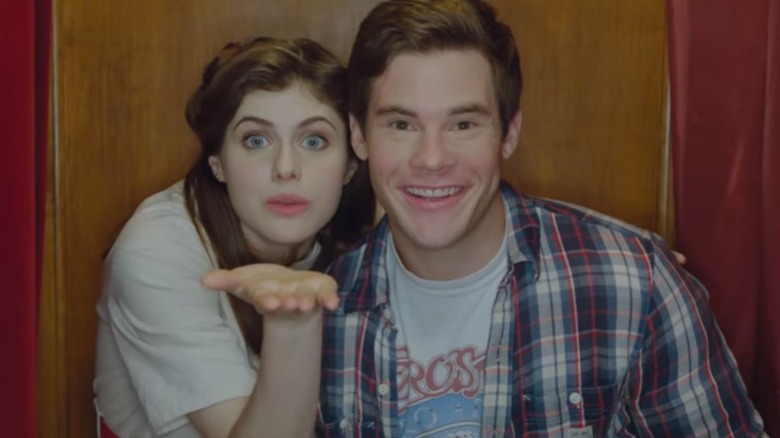
Throughout movie and TV history, we've seen DeLoreans, phone booths, and police boxes turned into time machines, but "When We First Met" may be the very first time we've gotten a time-traveling photo booth. When Noah (Adam DeVine) goes into the photo booth at his favorite piano bar, he gets the opportunity to go back to the night when he first met Avery (Alexandra Daddario), the "girl of his dreams" who is engaged to another man. Whatever Noah does on that fateful day causes ripples, and when he wakes up, it's in a slightly different version of the present. 

So, naturally, Noah takes as many chances as he can to engineer a happily ever after between himself and Avery. But "When We First Met" challenges the notion of the "perfect" girl who's just out of reach, and offers a parable about the dangers of letting an idealized version of someone take root in your brain, no longer letting you see them for who they really are. If nothing else, "When We First Met" deserves heaps of credits for featuring Adam DeVine at his most endearing.

Your Name

In Makoto Shinkai's "Your Name," Mitsuha and Taki are two ordinary high school students who live separate lives in different parts of Japan. Then, one day, the two strangers begin to switch bodies. "Your Name" begins as a classic gender-bending comedy, where Mtsusha and Taki are forced to live through each others' daily lives, fumbling through classes, interpersonal relationships, and unfamiliar gender expectations. This body swapping happens intermittently, without warning, and over time the two learn how to communicate with each other by leaving messages on paper, their phones, even their skin. 

Then, "Your Name" raises the stakes by revealing that the teens aren't just from different towns -- they're from entirely different time periods. Taki is living in a world three years older than Mitsuha's, and learns about a freak accident that caused untold devastation in her hometown. But can he warn everyone in time? "Your Name" is a gorgeously animated time-traveling romance that creates a genuine bond between its two central figures, who are bound together by a unique ability that ends up being their salvation.

Kate & Leopold
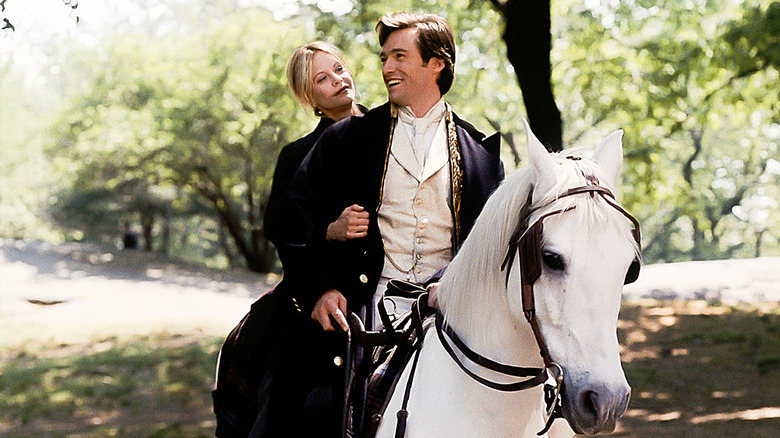
What happens when a hunky man from the 19th century ends up in modern-day New York? This is the important question that "Kate & Leopold" dares to ask. When Stuart (Liev Schreiber) discovers a time portal above the Brooklyn Bridge, he is eager to go back in time and explore. What he does not count on is Leopold, the 3rd Duke of Albany (played by an especially dreamy Hugh Jackman), following him back through the portal. 

After Stuart gets severely injured falling down an elevator shaft (if Leopold isn't around to invent elevators in the 1800s, they can hardly be expected to exist in the 2000s), his ex-girlfriend Kate (Meg Ryan) is stuck taking care of the anachronistic duke. Obviously, they fall in love -- look, it's Hugh Jackman and Meg Ryan. Why would you even bother putting them in a movie together if they weren't going to become romantically involved? 

Anyway, "Kate & Leopold" is a very sweet rom-com, even if it is sort of depressing that Meg Ryan ends up going to live in a past where she has no rights. Oh well. Love conquers all, right?

Palm Springs

"Palm Springs" follows in the footsteps of "Groundhog Day," with Andy Samberg serving as a natural successor to fellow "Saturday Night Live" alum Bill Murray. Trapped in a never-ending time loop and forced to relive his friend's wedding day over and over, Nyles has long since given up any hope of escaping his own personal prison. But unlike Phil in "Groundhog Day," who suffers in isolation, Nyles is joined by Sarah (Cristin Milioti), who follows him into the mysterious cave at the heart of the time loop and gets herself stuck as well. 

"Palm Springs" offers us two perspectives: one from a veteran time-looper who has lived the same day for potentially hundreds of years, and the other from a fresh-faced newbie experiencing it all for the first time. What's interesting about "Palm Springs" is that it fully leans into the devastating ennui that's the natural result of this sort of situation. The time loop isn't just a set-up for a bunch of jokes, it's a reality where hopelessness is only briefly staved off by mindless distractions. That this movie would come out in 2020, a year when most of us were facing the monotony of life in quasi-quarantine, only adds to its emotional resonance.

Back To The Future Part III
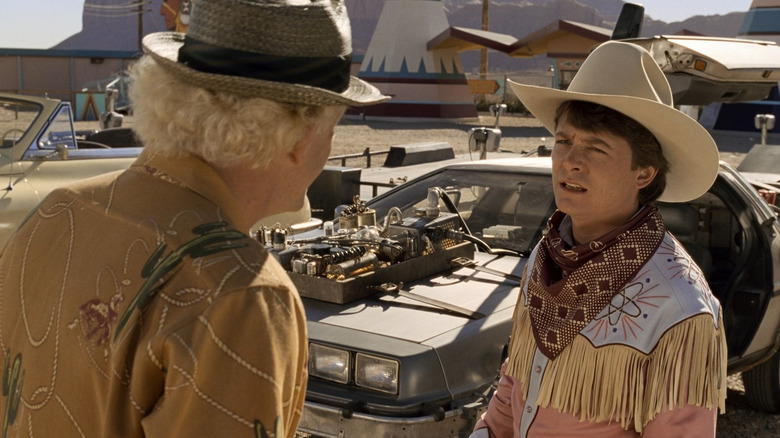
Ah yes, the much maligned final chapter in the "Back to the Future" series. But you know what? This movie gets so much more hate than it deserves. No, it doesn't reach the dizzying heights of the first and second Back to the Future movies, but that doesn't mean it isn't a good film. 

After Doc Brown's DeLorean is struck by lightning and he ends up back in the old West of 1885, Marty discovers Doc's tombstone, which shows that he died just a few days after writing a letter to Marty asking not to be rescued. Obviously, Marty does just that. The romance between Doc and Miss Clara Clayton (Mary Steenburgen) is absolutely adorable, allowing the Back to the Future crew to explore a different side of Doc's character. And this outing is just as clever with its callbacks to jokes from the other two films, especially when Marty gets to have his classic Clint Eastwood moment. Plus, Michael J. Fox doing an Irish accent to play a McFly ancestor? Totally worth the price of admission.

The Map Of Tiny Perfect Things

Structured much like "Groundhog Day," "The Map of Tiny Perfect Things" revolves around Mark (Kyle Allen), who has been living in a time loop for ages. He knows every single thing that's going to happen -- that is, until he meets Margaret (Kathryn Newton), who has been stuck in the same time loop. Together, they set out to build a map of all the strange, beautiful moments that occur in their town, the kinds of things that you'd only notice if you had several lifetimes to catalog them all. 

"The Map of Tiny Perfect Things" is unique in its subtlety, and the way it brings out a time loop's smaller implications. For example, on this particular day, Mark's mother went into work early and did a double shift, which means that he hasn't seen more than a glimpse of her in years. Margaret's own relationship with her terminally ill mother means that she's hesitant to get out of the time loop and sever that connection. These tiny moments help "The Map of Tiny Perfect Things" stand out in the increasingly crowded time-loop genre.

12 Monkeys
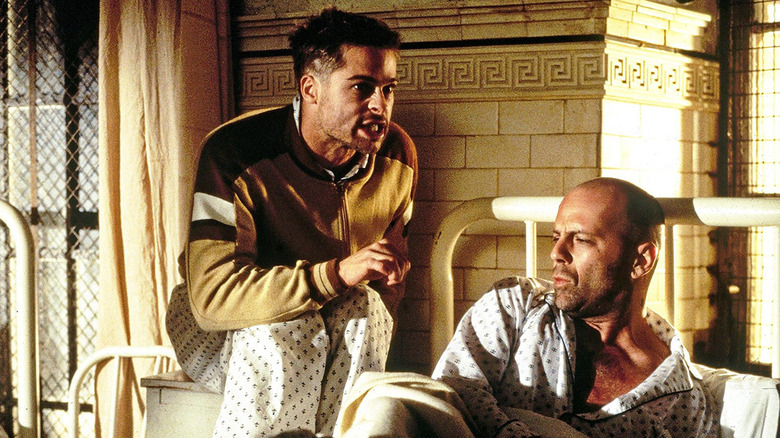
"12 Monkeys" is part traditional time travel story, part post-apocalyptic action thriller. Set initially in the 2030s, after a deadly plague has ravaged the planet, James Cole (Bruce Willis) is sent back in time to the '90s in order to prevent the devastating epidemic before it starts. 

Creatively directed by Terry Gilliam, the master of eccentric science fiction, "12 Monkeys" also has the honor of being one of the first films that would make people begin to take then-young heartthrob Brad Pitt seriously as an actor. His manic performance as Jeffrey Goines, the unstable leader of the eco-terrorist organization called the Army of the Twelve Monkeys, is one of the most memorable elements of the entire film. Performances aside, "12 Monkeys" also lays claim to a unique visual style that would influence several other science fiction films of the late '90s, and occupies a darker space than many other time travel films dare to enter.

Meet The Robinsons
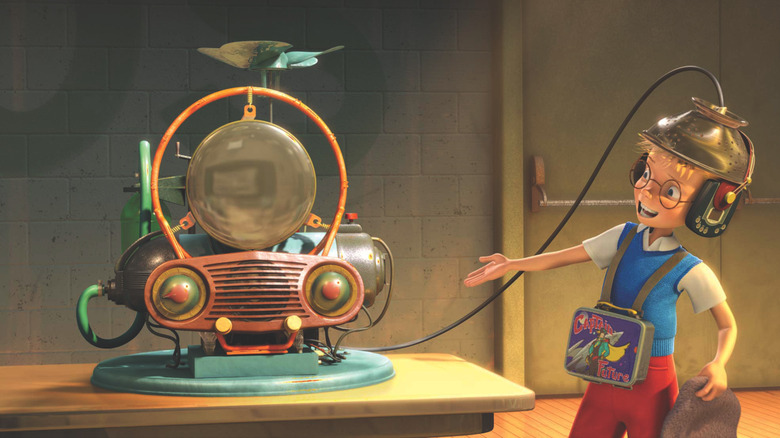
Here, we take the opportunity to shout from the rooftops that "Meet the Robinsons" is perhaps the single most underrated Disney film of all time. Much like its lead character Lewis, a brilliant orphan whose inventions have a knack for getting him into trouble, "Meet the Robinsons" is tragically misunderstood. Lewis struggles to find an adoptive family, partially because his inventions often go haywire at the most inopportune times, but also because he's entirely focused on the past and, in particular, finding out the identity of his biological mother. 

When a kid named Wilbur Robinson turns up and takes Lewis 30 years or so into the future, not only does Lewis get to see how far humanity progresses, but he is exposed to an eccentric family that is loving, empathetic, and entirely devoted to one another. "Meet the Robinsons" is genuinely hilarious; more importantly, it's also a heart-warming tale about building a family of your own.

Peggy Sue Got Married
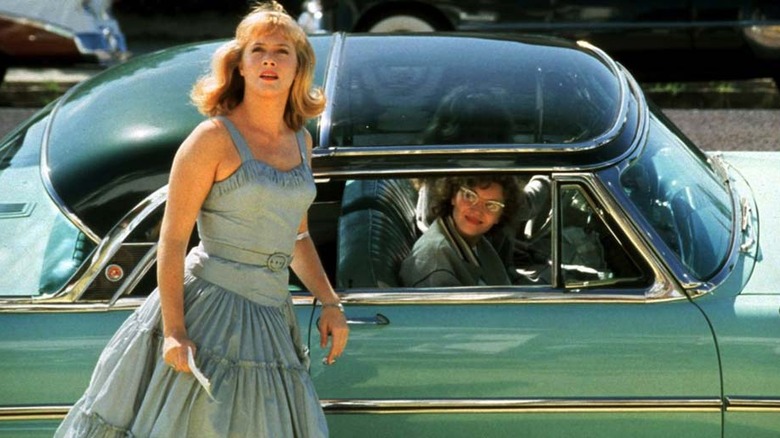
Probably the most common question asked of any adult staring down middle-age is, "If you could go back in time to relive your high school years, would you?" This hypothetical becomes a reality in "Peggy Sue Got Married," when Peggy Sue (Kathleen Turner), recently divorced and looking back on a life she thinks she's wasted, attends her 25th high school reunion. Her morose contemplation is interrupted, however, when she is suddenly thrust back in time to her senior year of high school in 1960. 

There, Peggy Sue faces certain choices. Given the opportunity to do it all over again, will she make the same decisions? Most notably, will she stick with Charlie (Nicolas Cage), her high-school sweetheart, even though she knows that their relationship is ultimately doomed? "Peggy Sue Got Married" is a bittersweet exploration of nostalgia, of growing older, and of looking back on your misspent youth with equal parts dissatisfaction and longing.

Somewhere In Time
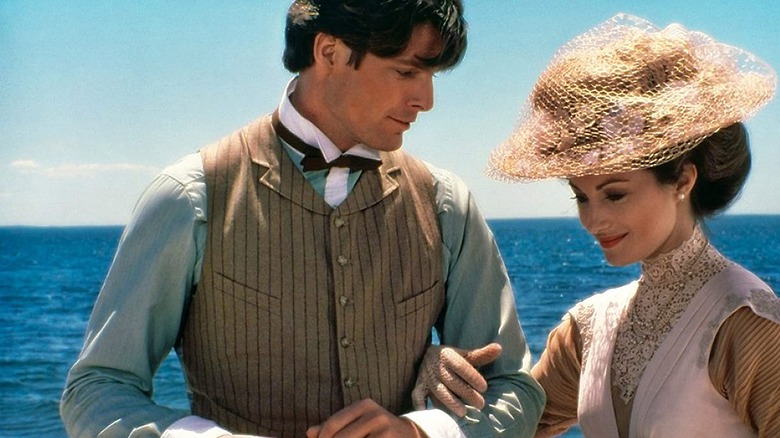
Before we even get into the time travel elements of "Somewhere in Time," it's important to address the elephant in the room: Have there ever been two people on earth more preternaturally beautiful than Jane Seymour and Christopher Reeve? Together, they star in this time travel romance, in which Reeve's playwright, Richard Collier, falls in love with a portrait of an actress (Seymour) nearly a century older, and learns how to use self-hypnosis to send himself back in time to 1912 so that they can be together. 

"Somewhere in Time" is a dreamy, fanciful production, with a gorgeously winsome score from John Barry. Reeve and Seymour have tremendous chemistry together, which makes their beautiful but ultimately doomed romance all the more compelling. Set against the backdrop of the historic Grand Hotel in Mackinac Island, Michigan, "Somewhere in Time" is a charming, whimsical, and heartbreaking tale of love across the ages.

Time After Time
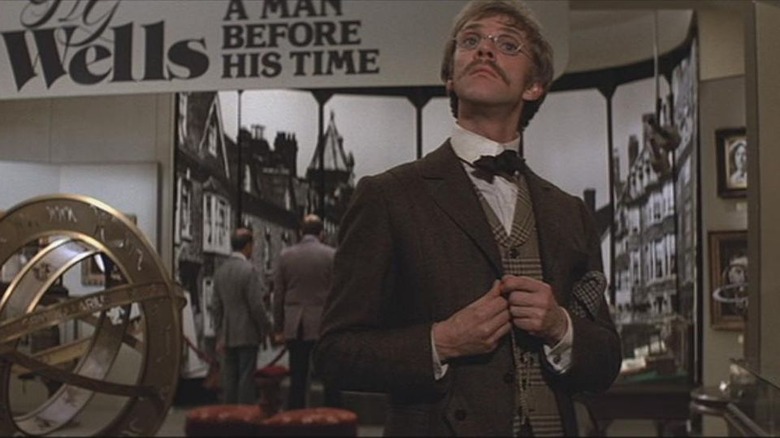
It's surprising, really, that HG Wells, the enormously imaginative science fiction writer who dreamt up "The Time Machine" (along with dozens of other sci-fi classics) has rarely featured in time travel stories himself. But he does star in "Time After Time," a pulpy thriller in which Wells (Malcolm McDowell) has his time machine stolen by Jack the Ripper (David Warner), who uses it to evade the police and travel to '70s San Francisco. 

Wells gives chase, and must track Jack down before he murders again (in the meantime, he falls in love with a bank teller played by Mary Steenburgen, as one does). This was remade recently as a fairly lackluster network drama that got pulled from the airwaves before it was halfway through its first season, but the original film is a lot of fun, featuring a battle of wits between these two famous historical figures.

La Jetée

"La Jetée" is a French short film directed by Chris Marker. It's approximately 28 minutes long, consisting mostly of still photography with voiceover narration. It is magnificent. 

"La Jetée" tells the story of a man imprisoned in the post-apocalyptic future, where scientists are working on devising methods of time travel to avert the calamity that has befallen humanity. He has a particularly strong memory from childhood of himself standing on a pier, witnessing a man being killed. This window to the past allows him to withstand the mental shock of time travel. 

Once safely in the past, the man meets a woman, whom he falls in love. But in the end, when he has finished his mission and is allowed to live out his days in the past, he realizes that the man he saw murdered was the adult version of himself. By utilizing still photography, Marker places tremendous importance on the power of images -- in this case, visuals are so strong that they literally allow one to travel through time. But Marker also sends an unmistakably clear message: you cannot escape your destiny, and despite our fixations on the past and the future, you can only ever live in the present.

Groundhog Day
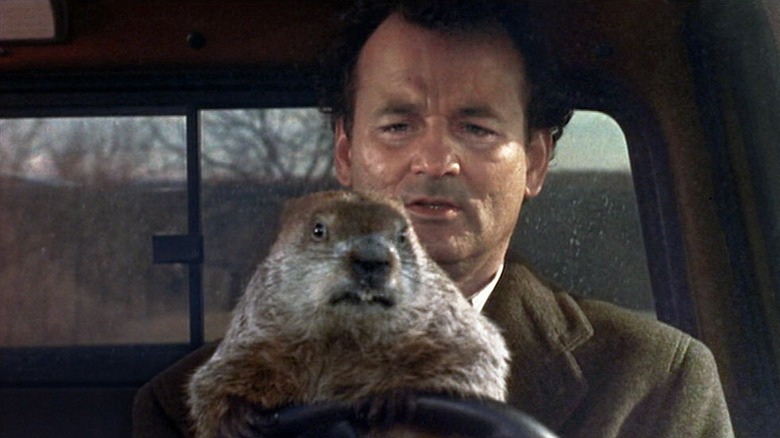
Groundhog Day is not our most beloved national holiday, but it is the backdrop of a time-travel comedy classic. Acerbic weatherman Phil (Bill Murray) reluctantly travels to Punxsutawney, Pennsylvania to cover a local ceremony in which a groundhog decides whether we'll end up having a longer winter or not. He is not happy about this assignment (to be fair, he's not happy about much of anything). But it gets even worse when Phil is forced to relive the same day over and over and over again. 

"Groundhog Day" does an amazing job of showing how Phil's emotions progress as he adapts to his situation: first, he's bemusemed, then angry, then depressed, and then finally comes to accept it. Once his new reality sets in, and all the fun of being able to do whatever you want with absolutely zero repercussions fades away, Phil lives a terribly isolating experience. No one he knows grows or changes; he can't have a single conversation with someone that they'll remember in the morning. It's to the credit of "Groundhog Day" that the horror of Phil's life is apparent even as it's mined for humor, giving Phil a genuinely hilarious existential crisis.

The Terminator
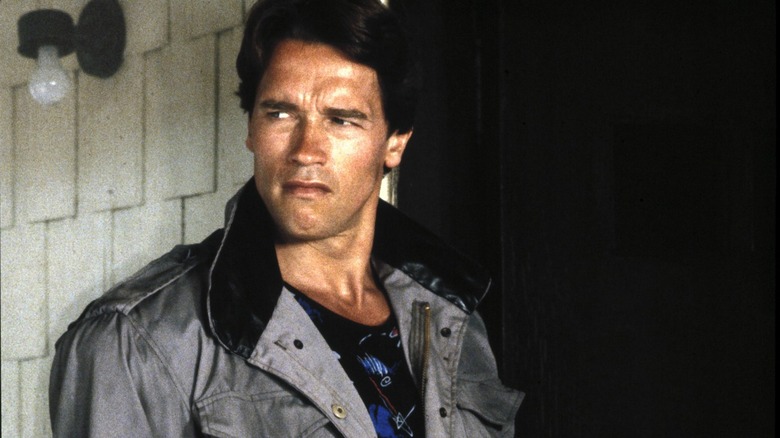
In terms of awkward conversations with your buddies, telling your best friend that he needs to go back in time to seduce your mother so that she'll get pregnant and give birth to you has to be right up there. But that's pretty much the central conceit behind "The Terminator." The future is an apocalyptic hellscape controlled by sentient machines, and the Terminator (a super-buff Arnold Schwarzenegger) is sent back in time to kill Sarah Connor before she can have her son John, who will grow up to become the leader in the fight against the machines. 

Although it's set almost exclusively in the '80s, the time travel element is baked into "The Terminator" from the very beginning. It's also an unusually intelligent science fiction action film. It has plenty of violence, fight scenes, and gore to keep adrenaline junkies happy, but some thoughtful subtext lurks just beneath the surface. Also, Linda Hamilton is note-perfect as Sarah Connor, going from a perfectly ordinary waitress to a warrior who battles killer robots in a matter of minutes.

Mirai

When Kun, a spoiled young boy used to being the center of attention, suddenly has to share his parents with his new baby sister Mirai, he's not a happy camper. But one day, Kun goes into his family's garden, and he is given the opportunity to meet not just the older version of his sister, but also his mother as a child, and his great-grandfather as a young man. 

This is the magic of "Mirai": It creates a separate metaphysical plane where Kun, a child whose worldview is entirely self-centered, is given access to all of the different branches of his family tree, giving him a greater understanding of the people he loves most by showing them at different points in their lives. It also teaches Kun that he's one small component of a much larger whole, a legacy that goes on unending forever. But although "Mirai" touches on philosophical themes, it is presented with a great sense of fun and whimsy; Kun's travels are adventures, not dry family history lessons.

Back To The Future Part II
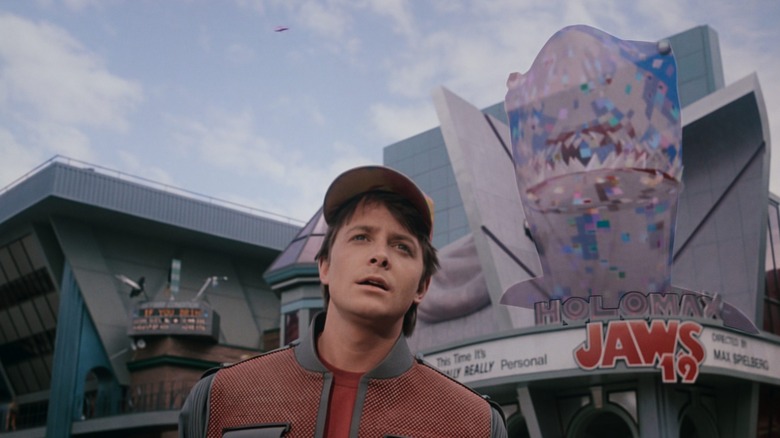
"Back to the Future Part II" picks up right where the first film left off. Marty reunites with Jennifer (whose actress has mysteriously changed between films), then Doc Brown bursts on the scene, frantically warning them that they need to travel to the future to fix the lives of their children. 

A huge selling point of "Back to the Future Part II" are the scenes set in the future world of 2015, which are so detailed and imaginative that they still feel futuristic, even though the real 2015 passed us by long ago. The way Hill Valley changes from 1955 to 1985 to 2015 is beautiful, showing the transformation of the California suburb over the decades. But "Back to the Future II" also revisits all of the original film's greatest hits, especially when Marty ends up having to travel to the '50s again to avoid Biff's incredibly Trump-esque rise to power. Some may claim that a large portion of the film is just a rehash of the first, but hey, why mess with what isn't broken?

The Time Machine
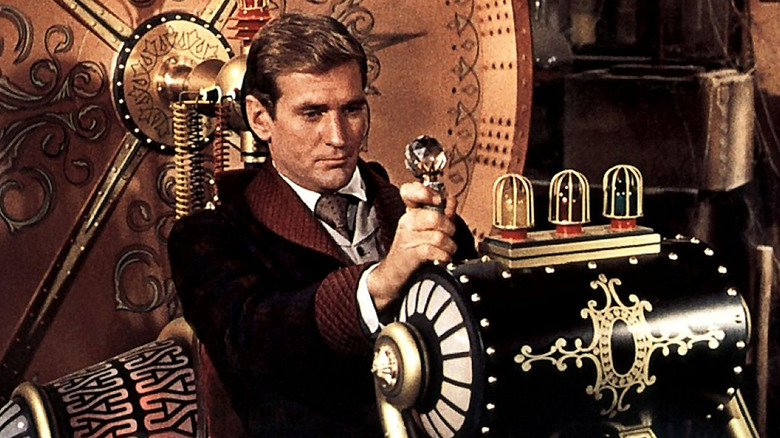
The classic HG Wells science fiction novel "The Time Machine" has had a few live-action adaptations, the best of which is directed by George Pal and stars Rod Taylor. George, an inventor at the turn of the century, is feverishly working to complete his time machine, a steampunk contraption that will allow him to see the future. He makes a few stops in the 20th century, where he sees the devastation of the first and second World Wars as well as the ever-present fears of nuclear attacks that would destroy humanity as we know it, before being knocked unconscious and travelling many thousands of years into the future. 

By then, humanity has recovered from nuclear blasts, but has split into two subspecies: the gentle surface-dwelling Eloi, and their subterranean predators, the Morlocks. "The Time Machine" is a clever, thought-provoking adventure that highlights many of the anxieties of both 1960, the year that this film was made, and the 1890s, when HG Wells wrote the original book. What will become of humanity in the long-term? Will we ever be able to curb the violent instincts that will likely lead to our downfall? "The Time Machine" provides answers to both.

About Time
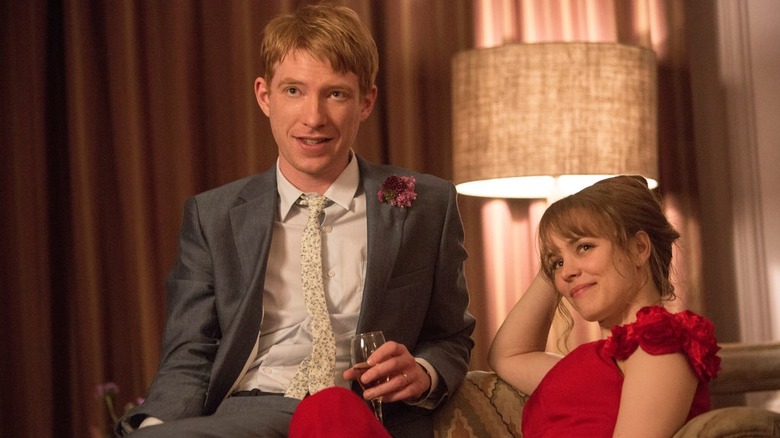
Time travel movies can make you feel a lot of things, but they don't usually make you cry ugly tears. Apparently "About Time" didn't get the memo. When Tim (Domhnall Gleeson) turns 21, his father (Bill Nighy) sits him down and tells him the family secret: all of the men in their family have the ability to travel back to any point in their own timeline. 

Initially, Tim uses this as an opportunity to have a second chance with a girl (Rachel McAdams) he struck out with. However, Tim's story takes on a much more poignant tone after his father unexpectedly dies. Suddenly, the moments they shared become unbelievably precious, especially when Tim realizes that there will come a point when he can't see his father without causing serious, permanent changes to the people he loves (after Tim's daughter is born, for example, any trip to the past could threaten her existence). "About Time" is billed as a romantic comedy, but it's so much more than that. It's a wonderful story about the love between a father and son, and a reminder to the viewer to embrace the beauty of every single day.

Bill And Ted's Excellent Adventure

It's hard to think of two more lovable airheads than Bill S. Preston, Esq. (Alex Winter) and Ted "Theodore" Logan, the stars of "Bill and Ted's Excellent Adventure." They're on the verge of failing their high school history class, which is majorly bad news for the future, given that Bill and Ted need to stick together long enough to write the song that will lead humanity to a peaceful utopian society. So, Rufus (George Carlin) springs into action, bringing the kids a time machine in the form of a phone booth that they can use to travel to the past and complete their history presentation. 

What follows is a madcap adventure through time. Bill and Ted end up packing their phone booth full of historical figures like Billy the Kid, Socrates, Joan of Arc, and Genghis Khan. "Bill and Ted's Excellent Adventure" is tremendously creative in its use of these famous people: having Napoleon get way too invested in an ice cream eating challenge, for example, might not be an obvious choice, but it makes perfect sense.

Back To The Future
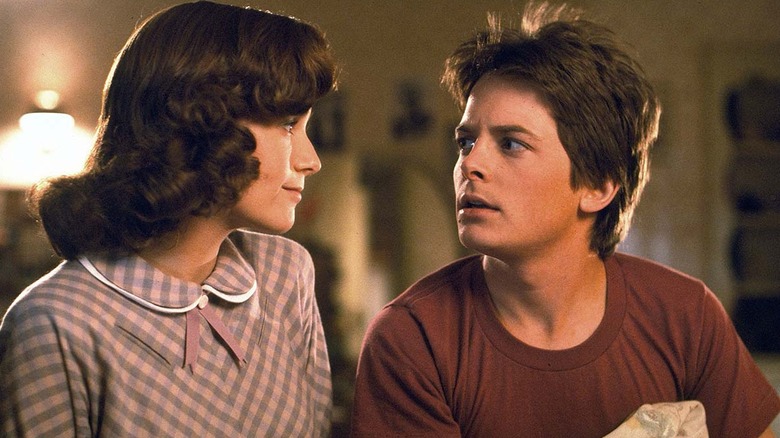
"Back to the Future" is the gold standard when it comes to time travel films. When Marty ends up stuck in 1955 using his best friend Doc Brown's time machine, he has to fight to get back to his original time without causing too much disruption, an endeavor that is significantly complicated when Marty's mother starts to fall in love with him, jeopardizing his entire existence (also, he invents rock music? Marty is a busy kid). 

The dynamic between Marty and Doc Brown is probably the most endearing aspect of the film in both the 1985 and 1955 segments. But it's also incredibly fascinating to watch Marty see his own parents when they're teenagers themselves. Crispin Glover and Lea Thompson are perfectly cast as Marty's father and mother, somehow able to play the younger and older versions of their characters with equal dexterity. Also, the entire movie is so tightly written and expertly crafted that it's hard to think of a single thing to say against it. Is "Back to the Future" a perfect movie? It's certainly possible!

Read this next: 'Back To The Future' Writer Explains Away A Long-Standing Issue Fans Have Questioned Over The Years

The post 20 movies about time travel ranked worst to best appeared first on /Film.

25 Aug 13:12

The 10 Best Sci-Fi Movie Villains

by Margaret David

It's long been said that heroes are only as good as the villains that face them. That's even more true in science fiction. In sci-fi, the villains aren't just foils. They're an integral for world-building, as their diabolical machinations and motivations help reflect the environment that created them. At their best, they're also flawed, complex, and relatable. 

The sci-fi villains who endure in our memories for decades aren't the ones that nearly win, but instead the ones who tell a story that the hero can't. Sometimes, that means serving as a dark counterpart to our protagonist, embodying all of the hero's flaws. At others, they're irrepressible forces of nature, who feel like a personification of the harsh and unforgiving world around them. Most terrifyingly, a few feel like cautionary tales, with unsettling connections to the real world. If science fiction represents our future, those are the ones we need to be extra-careful about.

Darth Vader Is The Biggest, Baddest Dad Of Them All

Darth Vader used to be a sweet kid who liked droids and hated sand, but we didn't know that when he made his first appearance in 1977's "Star Wars -- Episode IV: A New Hope," his black profile surging confidently as he emerged from a swirl of smoke and laser fire. The mystique behind Darth Vader lingered until "The Empire Strikes Back" unleashed the biggest twist in movie history: the relentless figure with a baritone voice is a father, and was once meant to bring balance back to the Force.

And Anakin Skywalker did fulfill his destiny, albeit in a gruesome manner, by becoming the secretive Darth Sidious' favorite weapon and personally cutting down dozens of Jedi children. The prequel trilogy took a little bite out of Darth Vader's legend, but "Rogue One" put him back on his pedestal with a final sequence that reminded audiences of the savage hold he held over us in the first place.

Though Luke Skywalker eventually discovered that there was still a caring human left inside Vader's sleek cyborg shell, Vader's legacy haunted the New Republic well after Vader's demise. Kylo Ren may not have been his grandfather's equal when it came to inspiring terror, but for the sake of the still-healing galaxy, that was probably for the best.

The Magnetic Talents Of Sir Ian McKellen's Magneto

Michael Fassbender deserves praise for imbuing Erik Lensherr with vitality and humanity in "X-Men: First Class," but, in all fairness, the ground had already been prepared by a master of the craft. Sir Ian McKellen gave the Holocaust survivor and mutant mastermind Magneto a stentorian depth and a conviction well-suited to the work of an experienced Shakespearean actor. And yet, McKellan's Magneto is never stuffy or dull. His eyes glint with playfulness whenever he meets his old friend Charles Xavier, even when they're locked in deadly combat over the future of mutant-kind.

Magneto has good reason to be Xavier's flinty counterpart. The Nazis showed Erik Lensherr first hand what humanity can do to those they've decided are "other," and he's determined to never let it happen to his new brotherhood of mutants. Magneto is one of the best and most complicated characters in superhero comics; he's a villain, but sometimes he's right, and McKellan couldn't have done a better job bringing this ambiguity to the screen.

"X-Men: Days of Future Past" was the last outing for McKellan's Magneto, and his presence highlights the stakes more clearly than any exposition: If Magneto is ready to join forces with his arch-enemy (and his best friend) in a last-ditch chance to save the past and the present, you know things have gotten pretty bad.

Even Bad Boys Like Alex DeLarge Love Ludwig Van

Anthony Burgess wasn't fond of how Stanley Kubrick ignored the final chapter of his novel, "A Clockwork Orange," but the change ensured the movie's immortality. In Kubrick's film, Alex DeLarge earns no lasting redemption. No "boys will be boys"-type excuses will let him grow into a respectable adult with his skeletons neatly buried in his closet.

Alex's rehabilitation tour, during which he experiences firsthand what he put his victims through, lasts long enough to teach him that serving authority means that you're the man holding the whip. It's easy to see the gears grinding in Alex's skull when he meets his former droogs, Dim and Georgie, in their crisp policeman uniforms. In light of current events, the state-sanctioned violence they unleash on Alex feels all-too relevant.

Alex is a realistic monster of both the past and present, thriving in a dystopian future that only cares about what he does when it breaks the carefully cultivated illusion of peace. To the authorities, all of Alex's crimes are meaningless until he murders a well-to-do woman. Suddenly, Alex matters. It's hard to muster sympathy for Alex when he agrees to the Ludovico treatment, and that's the point. "A Clockwork Orange" takes place in a totalitarian world; the government controls what its citizens see and do. The film is likewise. The audience can't look away, and the images of Alex's brutality haunt. But even that level of control doesn't permanently change society. Alex embodies humanity's ugliest parts, and he can't be erased or killed off that easily.

Agent Smith Is More Than A Copy

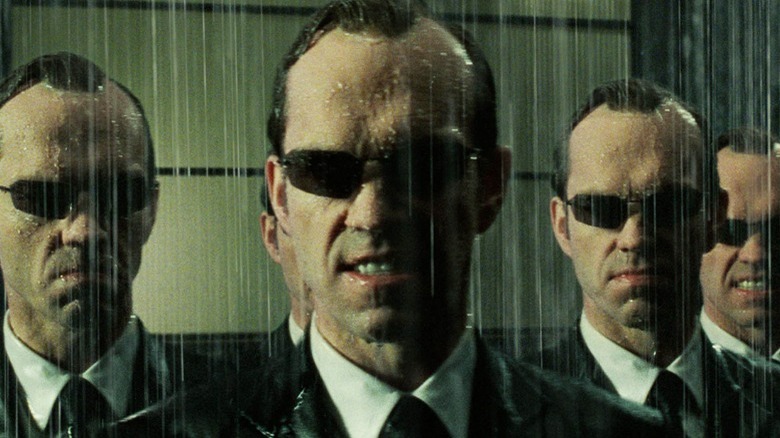
Hugo Weaving's stoic turn as Agent Smith in the first three films of The Matrix series (remember, there's a fourth installment on the way) made him the perfect foil in a franchise about free will and the divide between human and machine. Thanks to the Wachowski sisters' detail-rich storytelling, "The Matrix" is a perennially useful tool for philosophy teachers, and a great way to learn about religious dualism. In that light, Smith is Neo's dualistic match, the zero to his one. Peace between humanity and the world of machines can only happen when the gulf between these opposing forces is bridged. That's why Neo needs Agent Smith. Their shared hate is ultimately irrelevant, and their metaphorical union at the end of "The Matrix: Revolutions" is the only way to create a new peace.

Before that watershed moment, however, Smith is a chillingly relentless villain. Driven by his programming, and eventually transformed into the same kind of virus he once accused humanity of being, Smith never outwardly changes, which makes him all the more upsetting. Even when he hijacks a human body and begins to stalk Neo in the real world, he's as calculated as ever. If Microsoft Office's mascot Clippy could dream of revenge, it would dream of being Agent Smith.

Thanos Is Inevitable

The Marvel Cinematic Universe politely skimps on references to Thanos' classic title, the Mad Titan, although the nickname did get a shoutout in the fifth episode of "Loki." But any guy that claims as much power as Thanos did and applies it with such brutalist simplicity isn't a bastion of rational behavior. Josh Brolin's sturdy but subtly warped portrayal of the alien warlord makes him an instantly classic big-screen villain, combining Ming the Merciless' theatricality with real emotional weight.

To Thanos himself, his desires seem sensible: He will personally save the universe by shearing off great swaths of it, like a renewing forest fire. His logic doesn't hold up to anyone else, though, because it can't. It's the dumbest plan in the galaxy, a child's idea of how to share candy so that he still comes out on top. And yet, Thanos is so dedicated to his bizarre cause that he becomes a cult-like godhead to his generals, not to mention a galactic terror.

Thanos' idea of family is equally warped. His love for his stolen children is genuine enough to satisfy an Infinity Stone, but to Gamora and Nebula, they might as well be living in a science-fiction version of "Mommie Dearest." To them, the terror that Thanos inflicts is personal, haunting, fatal, and worst of all, inevitable.

Weyland-Yutani Builds Better Worlds

The acid-blooded creature known as a Xenomorph may be the obvious pick, but without the monolithic nightmare of Weyland-Yutani lurking in the background of nearly every entry Alien movie, we wouldn't even be here. Weyland-Yutani was the first megacorp to reach space, and all for self-serving reasons. Hiding behind the their benevolent slogan -- "Building better worlds" -- lurks a greedy search for exploitable resources and weaponry that can be sold for a profit.

The truth shows through in Weyland-Yutani's out-of-date hauling ships. They're cheap enough to barely get the job done, and disposable when a valuable opportunity appears. Even the Colonial Marines are Weyland-Yutani's to exploit. Nominally still part of the US military, the soldiers jump when the corporation tells them to. After all, their gear has to come from somewhere, and Weyland-Yutani is willing to do anything to stay on the cutting edge of the arms race.

In the films, Weyland-Yutani has had a few loathsome human faces. Carter Burke is so easy to hate that audiences cheer when he gets mauled by a Xenomorph in "Aliens." Peter Weyland displays enough arrogance during "Prometheus" that his ultimate fate seems obvious to everyone but him. Noah Hawley's upcoming "Alien" series on FX is primed to explore the depths of Weyland-Yutani's depravity. Good. It's past time to blow the whistle on these monsters.

The T-1000 Will Never Stop

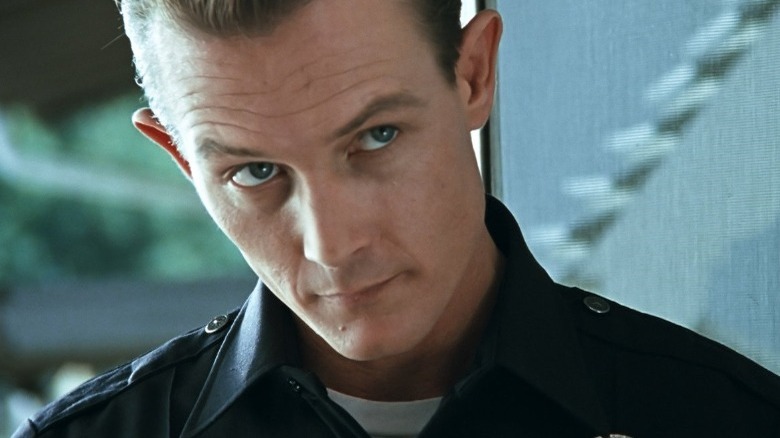
Throughout the "Terminator" franchise, Skynet does what it thinks it needs to do to survive. It chooses genocide after humanity panics about the Cyberdyne-designed AI's evolution, a calculated but emotionless decision. The T-1000, meanwhile, executes its master's plans with chilling complacency. Although Arnold Schwarzenegger codified the implacable terror of Skynet's cyborg assassins in "The Terminator," decades of humanization soften his portrayal. It's almost shocking when the final minutes of the original film remind us of the soulless steel skeleton hidden underneath recognizable flesh.

By contrast, star Robert Patrick gives the T-1000 a frozen, inhuman stare that terrifies without the need to be reminded of hidden chrome. Rarely speaking or blinking, the T-1000 hunts with the determination of trapdoor spiders, and with the speedy grip of a crocodile. The T-1000 can mimic anyone, but there's always a subtle flatness when it chooses to speak. It's not interested in learning more about the human shape it wears. The T-100 can undergo a mental evolution, giving the Terminator franchise an ongoing theme about what makes us human. The T-1000, however, wasn't programmed to care.  One gets the sense it would resent being asked to even try.

Ma-Ma Fought The Law And Nearly Won

"Game of Thrones" may have gone out with a hot taco burp, but the final season's problems didn't come from any of its performers. Lena Headey consistently brought her A-game as Cersei Lannister, and it's always a treat when Headey offers that same quality performance in other genre work. Ma-Ma, legal name Madeline Madrigal, lived through all the horrors of life on the streets of Mega-City One and decided she could make it even worse. As 2012's "Dredd" opens, she's the drug-lord regent of Peach Trees housing projects, overseeing thousands of people who live within one of the gigantic towers marring the city's skyline.

The heart of "Dredd" rests on the shelf of Karl Urban's magnificent chin, and the judge sees Ma-Ma as nothing but another drug lord in a hellish post-apocalyptic city. But Ma-Ma is a worthy opponent, even if Dredd will forget about her tomorrow. She's hedonistic, untrusting, and clever enough to make the building itself an extension of her power. The fear Ma-Ma inflicts keeps many of her hirelings bending the knee, and the drug-fueled delights she peddles bring in the rest. In the end, though, it's Ma-Ma's cruel intelligence that nearly ends Judge Dredd and his rookie, nearly bringing all of Peach Trees down with them.

Loki Does Bad, But He Looks Good Doing It

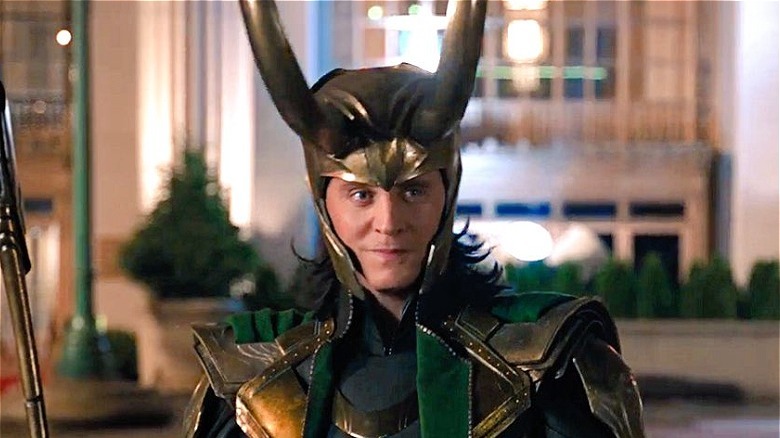
By the end of "Thor: Ragnarok," it's hard to call Loki a villain. But redemption through death is a common trope, and what the main timeline's version of Loki could have become will never be known. Meanwhile, the Loki seen in his self-titled Disney+ series undergoes a transformation worthy of his comic book counterpart, but none of that journey into mystery would have happened without the trickster god's original introduction and his antagonistic return.

Loki steals 2011's "Thor" out from underneath his charismatic brother, full of tearful emotion and a shaky grasp of his sanity after Odin reveals that Loki isn't the Asgardian prince he thought he was. The scars that result are visible every time Loki offers one of his signature twisted grins during his return in "The Avengers," although his human side does emerge as he considers Thor's brotherly pleas during the final Avengers Tower showdown.

Canonically, Loki's hate and anger are amplified by the Mind Stone hidden in his golden scepter, but that doesn't make Loki's actions prior to his Hulk-tacular beatdown any less chilling. Agent Mobius of the Time Variance Authority is right: whatever else was on his mind, Loki looked far too happy ripping out a man's eye. It's a brief but horrifying turn for one of Marvel's cheekiest villains, but Tom Hiddleston's terrific performance keeps bringing the better side of Loki back home.

Immortan Joe Rides Eternal, Shiny And Chrome

The "Mad Max" franchise rests not just on the shoulders of the world-weary Max Rockatansky, but on the various oddball villains that appear in his way. Auntie Entity was the Thunderdome's beautiful-but-deadly force of nature. Lord Humungus, the gasoline-obsessed hockey reject from "Mad Max 2," is memorable in his memetic weirdness. But Immortan Joe, played by Hugh Keays-Byrne, who was also the original "Mad Max" villain, Toecutter, is filled with repugnant purpose. Toecutter was a small-time biker with big dreams. Immortan Joe is his grotesque nightmares fulfilled.

Joe is the dragon that sits atop the only thing more precious than gold -- or gasoline -- in Australia's irradiated wastes: He's built his kingdom on top of a natural aquifer, doling out mouthfuls of clean water as he pleases, urging his peasants to avoid becoming addicted to the luxury. The few glimpses of Joe's stronghold show a clean, brightly lit manor sitting high above the realm's squalor. His harem of wives live in comfort. They also live in terrifying sexual slavery.

By the end of "Mad Max: Fury Road," Immortan Joe is revealed as a paper tiger. His power is seen through by one good-natured War Boy, and without the breathing apparatus hidden under Joe's fearsome mask, he's old, decrepit, and easily defeated. But the legend Joe built for himself cowed a kingdom. For a little while, even Mad Max himself was Joe's to own.

Read this next: All The Marvel Big Bads, Ranked By Badness

The post The 10 best sci-fi movie villains appeared first on /Film.

24 Aug 17:23

did I burn a bridge by resigning right after I was promoted?

by Ask a Manager

This post, did I burn a bridge by resigning right after I was promoted? , was originally published by Alison Green on Ask a Manager.

A reader writes:

The short version is, I tried really hard to resign without burning bridges but I don’t think I succeeded. How can I mitigate the situation and what should I have done differently?

The gory details:

I have worked for nine years at a small nonprofit — small enough that it thinks of itself as a family and at times is prone to the dysfunction that is implied by that phrase. I have gone through rounds of “should-I-stay-should-I-go” over the past several years, due to work-life balance issues and feeling undervalued and underappreciated, but stayed each time because I felt passionate about the projects I led and the external partners I worked with.

Fast forward to June of this year. I was again feeling underappreciated, since a coworker at my level had recently had frank conversations with me and with leadership, explicitly telling them that he saw a pattern of me doing a lot of work without getting credit for it — which was validating but also upsetting since it forced me to stop telling myself that maybe I was imagining it, wasn’t trying hard enough, wasn’t doing good work, etc.

A friend in local government sent me a job posting for a position that was almost an exact fit with my skill set and the type of work that I want to be doing. Positions at this particular government org are rare; this one opened because someone retired. So I applied. I figured if nothing else, it would be good practice.

A few weeks later, my manager, who had been with the org for 20 years and was the deputy director, announced that he was leaving. I told him at that point that I’d applied for another job. So he knew but didn’t tell anyone. He spent the month of July working on his transition out. Our leadership promoted me into a new role with a large chunk of his previous responsibilities and moving me from managing one direct report to six direct reports — more than any other person at the org. I had mixed emotions — excited about the potential of the new role, concern over the transition — and didn’t feel I had any choice but to accept the promotion. My manager, during his last conversation with me, told me that I’d need to lean in and work really hard to be heard because the executive director felt more comfortable with my male coworker due to unconscious bias. (My manager’s words, not mine. I am female-presenting.)

At the beginning of August, I had the second interview for the local government job. I thought it went poorly and moved on, trying to figure out how to be effective in my new role at my current job. But last week, the local government org made me an offer, I negotiated (!), and I had a really great offer letter officially in my inbox the next day. (Side note: HUGE THANKS to all your tips and advice; your book was incredibly helpful and every job seeker should read it!)

Wednesday morning, I took the first open slot on my executive director’s calendar and gave notice. It came as a shock to him, understandably, and to the rest of the staff (I reached out to each one personally). Almost everyone was supportive and congratulatory — except the leadership. I understand that they are stressed and concerned about the future of the org and the optics of two senior staff leaving within the span of a couple months and their reactions reflect that. I tried my best to do right by the organization — I pushed back my start date as far as I could negotiate, I am trying to arrange part-time/contract availability to help with the transition even after I am full-time at my new job, and I already have thorough documentation on project deliverables and deadlines through the end of the year.

But I feel that I have burned bridges given the leadership’s responses, which included, “If you were going to do this, you shouldn’t have taken the promotion. I hope this is a lesson in transparency for you going forward.” And the executive director’s follow-up: “I would have liked you to come to me before you accepted the position. Given the critical transition period we are already in, it could have allowed us to better prepare in all facets for your departure. [note: it would have been less than 24 hours of additional notice] We have already done some external PR around you taking on a new role and we were all excited to welcome you to that new position. We may have held off on that if we had known there was a possibility you could be moving on. That situational awareness is something to think about as you move through your career.” The email announcement he sent out today to all staff did not congratulate me or thank me for my work, in stark contrast to the email that went out announcing my manager’s departure, which had multiple (well-deserved!) paragraphs about his contributions and achievements.

I feel incredibly guilty. Am I being unreasonable? Should I have turned down the promotion in July? I asked for more time then and was pressed into making a decision on the promotion before I’d even gone through the first interview for the government job. Should I have told leadership I was interviewing and potentially jeopardized my current job? All the advice that I’ve read and discussed with friends says no. But clearly they expected that from me and are holding it against me that I didn’t tell them. Is there any way to mitigate or do damage control here? I’m heartsick that I devoted nearly a decade of work and sacrifice, sometimes in ways that were detrimental to my health, and that I’m now leaving on bad terms even though I feel I’ve done and will do everything in my power to make the transition as smooth as possible and leave solid support structures for my project staff.

There is a direct line from “they talk about themselves like a family” to “I devoted a decade of work and sacrifice, sometimes in ways that were detrimental to my health” to them now making you feel guilty for leaving in a way that’s inconvenient for them. It’s all connected.

You didn’t do anything wrong.

Yes, it’s inconvenient for them. Resignations often are.

Yes, it would have been more convenient if they had known you were going to leave back when they offered you the promotion. But telling them you had applied for another job would have been totally against your own interests, and it’s unreasonable to expect it of you. You hadn’t been offered the job at that point; I’m not sure you’d even had an interview by that point! People apply for jobs all the time without anything coming of it. You can’t put your career on hold while you wait to maybe hear back about a job that you might not even be interviewed for. If you had been in the very, very late stages of that hiring process — like if you’d been told to expect an offer — maybe at that point it would have made sense to try to put the brakes on your current organization’s plans for you. But even then, the offer might not have come through (or you might not have accepted it). Your current organization wishes they’d known because then they wouldn’t have promoted you — but why were you obligated to give up a promotion for a hypothetical job that might never have materialized?

Maybe they’d say that if they had known, they could have moved more slowly — that they wouldn’t have denied you the promotion, but they wouldn’t have announced it or made solid plans yet. And maybe that’s true. But it still wouldn’t have been in your interests to tell them, because often when employers learn someone is job searching, they end up penalizing the person, in big ways (like pushing them out before they’re ready to leave) or small (like not giving them high-profile projects in case they leave soon).

It’s understandable that they wish they’d known you were thinking of leaving, but utterly unreasonable to hold it against you that you didn’t act in a way so counter to your interests, particularly when your paycheck could be at stake.

And to lecture you about it, and in such patronizingly obnoxious ways — to say you need to learn a lesson and have more “situational awareness”! Blech. They are in no position to teach the lesson they think they’re imparting, because that lesson is wrong.

But their expectation goes right back to the “we’re like family” stuff you mentioned. “We’re like family” nearly always is used against employees, rather than in their favor. It usually means you’re going to be pressured to work unreasonable hours (check), receive insufficient recognition (check), be underpaid (check, I’d bet), sacrifice things that are important to you like your health (check), and that they’ll use your commitment to the work against you (check) and make you feel guilty when you make normal business decisions for yourself (check).

To answer your questions: No, you are not being unreasonable. No, you should not have turned down the promotion in July when you didn’t have another offer in hand. No, you should not have told them you were interviewing and potentially jeopardized your job.

As for whether there’s a way to smooth things over: Maybe. You shouldn’t need to, but it might help to say when you accepted the promotion you had no signals that you were going to be offered the other job / hadn’t even been asked to interview for it at that point, assumed you weren’t in the running for it, and were committed to moving forward with the position your current org had offered you. Really lean into the “I assumed there was no way I’d end up with the other offer” piece of it. Use language like, “Of course if I’d known, I would have shared that with you but at the time there was nothing to share. I understand the timing was bad, but I had no idea about when I accepted the promotion.” And perhaps, “I’d like to know that we’re parting on good terms, given my decade of good work here.”

Unless they’re really petty/vindictive/unreasonable, it’s likely that this will get smoothed over in time. Often when managers react unreasonably over someone’s departure, the reaction is based in panic and scrambling, and once they have a plan for moving forward (as well as time to process the situation), things relax. I can’t guarantee that’ll happen, but if you’ve got a decade of good work there behind you, it’s probably going to be fine.

But in a fairer world, they’d be the ones worrying about burning a bridge because of what they said to you.

One more thing: Please reconsider continuing to help after you leave unless you really, genuinely want to do it. You need to be able to focus on your new job, and staying on in any capacity will make it harder to move forward mentally. I know it probably seems like it could help smooth things over — and that’s something you care about — and you might be right. But if you do it, they’ll still be getting you to prioritize their needs over yours even after you’re gone.

24 Aug 17:08

Saturday Morning Breakfast Cereal - Slain

by tech@thehiveworks.com


Click here to go see the bonus panel!

Hovertext:
You know, Randall Munroe may be smarter, Kate Beaton funnier, Allie Brosh more insightful, Ryan North just wayyyy more attractive, and Boulet basically me but taller, better at art, and French, BUT I have the very most Alexander Pope quotes.


Today's News:

Kickstarter launching in 12 minutes! Stay tuned for bonus update...

24 Aug 17:06

Saturday Morning Breakfast Cereal - AGI

by tech@thehiveworks.com


Click here to go see the bonus panel!

Hovertext:
GPT-3 kept telling me not to post this, so I made it mop my floor.


Today's News:

Kickstarter launch in 6 minutes dorkwads! Please give it a look!

24 Aug 17:05

Saturday Morning Breakfast Cereal - New Boardgame

by tech@thehiveworks.com


Click here to go see the bonus panel!

Hovertext:
Thanks, everyone. We hope you like it!


Today's News:

Thanks geeks! Click here to check it out.

24 Aug 10:49

We are thrilled to announce a Spanish-language version of Space City Weather

by Eric Berger

Four years ago, today, Harvey re-formed in the Gulf of Mexico. This set the stage for a historic flooding event that would change parts of Houston and the upper Texas coast forever. Harvey also put Space City Weather on the map—since then this site has transformed from a small-time hobby to something many people and institutions in Houston and beyond rely upon. Matt and I are humbled by this, and we view Space City Weather as a public service. For this reason we’ve grown concerned about missing out on the nearly 40 percent of Houston for whom Spanish is a native language.

So we are legitimately thrilled to announce the creation of Tiempo Ciudad Espacial, or TCE, as a Spanish-language version of our website. To accomplish this we are partnering with Maria Sotolongo, a longtime Texas meteorologist who is fluent in Spanish. Like Matt and myself, Maria is passionate about getting people reliable information before and during storms.

Therefore Maria will, on, a daily basis, write an independent forecast on TCE. This will be part translation, part interpretation, of what appears on Space City Weather in a format curated for a Spanish-language audience. It is our hope that people who are more comfortable reading in Spanish will find this service helpful.

Here is a little bit from Maria about her background, in English, and then an explanation of what she hopes to bring to TCE in Spanish:

If you don’t speak Spanish, nothing is going to change. Occasionally, however, Maria may fill in for Matt or myself with an English-language post. She might also brighten up our social media channels or even cajole one or both of us into producing more videos. Matt and I are excited to have some extra help.

I want to thank Reliant, which is sponsoring TCE in addition to Space City Weather. We are kind of jumping into the unknown here, and don’t really know what audience exists for this product. So if you know someone who speaks Spanish, primarily, please pass along this news!

24 Aug 10:11

Comic for 2021.08.24

New Cyanide and Happiness Comic
24 Aug 03:33

Comic for 2021.08.23

New Cyanide and Happiness Comic
24 Aug 03:32

Projecting

This is something we all need to work on, but especially you all.
24 Aug 03:29

Make or Die (VOY S2E13)

by shows@maximumfun.org (Adam Pranica and Benjamin Harrison review Star Trek)
23 Aug 22:39

A Jeopardy! Board for Determining Who Should Be the Next Host of Jeopardy!

by Carlos Greaves


Our 14th most-read article of 2021.

- - -

Originally published August 23, 2021.

- - -

“Mike Richards, the executive producer of ‘Jeopardy!’ who was tapped to succeed Alex Trebek as host of the venerable game show franchise, announced Friday he is stepping aside amid recent scrutiny over past comments about women, Jews, and poor people.” – NBC News, 8/20/21

- - -


Click on each box to reveal the answer. After viewing, click back in browser to return to board. Mobile users: rotate to landscape.

- - -

QUESTION KEY

The Obvious Choice

$200: Who is “Levar Burton?”

$400: Who is “Levar Burton?”

$600: Who is “Levar Burton?”

$800: Who is “Levar Burton?”

$1000: Who is “Levar Burton?”

Other Obvious Choices

$200: Who is “Laura Coates?”

$400: Who is “Robin Roberts?”

$600: We would have accepted any marginalized group of people

$800: We would have accepted any answer other than “Aaron Rogers”

$1000: We would have accepted any answer other than “Dr. Mehmet Oz”

Red Flags

$200: Who are “Jewish people?”

$400: Who are “women?”

$600: Who are “people with a moral compass?”

$800: What is “a podcast?”

$1000: What is “look at one picture of the guy?”

Corporate No-Nos

$200: What is “nepotism?”

$400: What is “a conflict of interest?”

$600: What is “unfair hiring practices?”

$800: What is “bad faith?”

$1000: What is “the white supremacist heteropatriarchy?”

LeVar Burton Anagrams

$200: What is a “born vaulter?”

$400: What is an “urban revolt?”

$600: What is “a volt burner?”

$800: What is a “verbal turn on?”

$1000: What is “a burnt lover?”

White People

$200: Who are “white people?”

$400: Who are “white people?”

$600: Who are “white people?”

$800: Who are “white people?”

$1000: Who are “white people?”

- - -

This work uses a Jeopardy! template, created by Kinu Panda that is licensed under the Creative Commons Attribution-Share Alike 4.0 International license, Wikimedia Commons.


23 Aug 22:29

To Hell

by Reza
23 Aug 22:28

DAMN THESE KIDS ARE HIP HOP!

by noreply@blogger.com (JerryMaguire)
23 Aug 22:28

Saturday Morning Breakfast Cereal - Criteria

by tech@thehiveworks.com


Click here to go see the bonus panel!

Hovertext:
She's gonna get a really bad score on 'ignoring the way I'm perpetually judging her'.


Today's News:
23 Aug 22:25

On The Usefulness of Philosophy

by Corey Mohler
Carnap: "Hey, do you guys ever get the feeling that everything we are doing is totally pointless? "

Wittgenstein: "What do you mean, Carnap, like that life is pointless?"

Carnap: "No Wittgenstein, worse than that: what if...philosophy is pointless!?"

Carnap: "What if all of our arguments are just mental masturbation, and empirical science is the only thing capable of generating real knowledge?"

Wittgenstein: "Don't be stupid, of course philosophy is useful."

Carnap: "How so?"
Wittgenstein: "Without philosophy, how else could we ever determine whether or not we needed philosophy?"

Carnap: "That is true."
Wittgenstein: "Think next time before you say something."
23 Aug 16:05

Troubled Water

by Danielle Lopez


Robert Espericueta and his cousin Roland Moya stand outside the Lighthouse Assembly of God in Port Isabel, a sleepy town of roughly 6,000 people in South Texas. It’s a weekday in mid-April, overcast but bright, and the wind is coming on strong. The sound of waves crashing in the Gulf Coast bay just a few blocks down the road carries in the salty air.

Both in their early 40s, Espericueta and Moya are here to meet with Pastor Steven Hyde, who they haven’t spoken to in decades. Hyde rolls up in his white pick-up truck and steps out. As he walks up to Espericueta and Moya, they greet each other with warm hugs. 

“Pastor Hyde, how old are you now 20 years later?” Moya says, laughing. 

“You don’t wanna know!” replies Hyde, in a strong East Texas accent, waving everyone into the church. For the past few months, Espericueta has been doing a lot of this kind of thing, digging up old memories and meeting with old acquaintances, trying to piece together a night 20 years ago that has haunted him since.

On September 15, 2001, just four days after the planes struck the Twin Towers, Espericueta and Moya witnessed another tragedy. One of far less notoriety in the national eye, but just as present in South Texas lore. Early that morning, a large towing barge crashed into the side of the Queen Isabella Causeway—the bridge built in 1974 that connects Port Isabel to South Padre Island over 2.4 miles across the Laguna Madre—causing part of it to collapse. Eight people died. 

The north side of the Queen Isabella Causeway where the four fishermen initially anchored the night of the collapse. Jason Garza

Espericueta, Moya, and two other men were out fishing on the water that night and saved the lives of three people. Following a flurry of litigation, the fishermen’s attorney led them to believe they were bound by a gag order from speaking publicly. As the 20-year anniversary of the accident approaches and they started digging through records, they could find no such order. Now, they want to tell their side of the story.

That’s what brought them to Hyde’s doorstep. In February, alongside Joshua Moroles, founder of McAllen-based Alamo Digital Agency, Espericueta launched a podcast called “The True Story of The Queen Isabella Causeway Collapse” that chronicles the events of that night and its aftermath. Hyde, who met the fishermen and offered them a prayer the morning of the accident, had agreed to be a guest on the show to rehash his role in their story. Filled with anxiety and fear after the collapse, Espericueta and Moya say that prayer was the only peace they felt in all the chaos.

Thousands of people have listened as Espericueta, Moroles, and their guests have poured over documents from the case in order to determine what all went wrong that day and maybe—just maybe—get some closure.

Robert Espericueta (left), Pastor Steven Hyde (center), and Roland Moya pray outside the Lighthouse Assembly of God in Port Isabel in April 2021.

Anyone who has been to South Padre Island has likely had to cross through Port Isabel, which spans all of 14 square miles. It’s an old town, established after the Mexican War of Independence, full of locals who work on the island and relies heavily on traffic from beachgoers to stay running. The people on the island work in the mainland and get their groceries from the Port Isabel Walmart and HEB. 

Nearly everyone from the Valley remembers the bridge collapse. I grew up in McAllen, about an hour and a half from Port Isabel, and to this day, I always roll down my windows before crossing the bridge, which I decided as a child would save me from the same fate as the people who were lost that night. Friends have their own memories: one got trapped on the island with their family; another’s uncle got stuck on the bridge, waiting for the accident to clear. When I asked my mother what she remembered, she said, “Well, we all thought it was another terrorist attack.”

Another friend, who grew up in Harlingen, said he had always heard that the barge driver was drunk and that’s why he crashed into the pillars. “Why did we think that?” he says now.

BECOME A MEMBER

Help make journalism like this happen.

Though the Rio Grande Valley has a population of 1.3 million, everyone seems to know everyone. Stories have a way of spreading from town to town, each iteration more dramatic than the last. Like the infamous story of the woman who was said to have danced with the devil in the 1970s at the club Boccacio’s—her parents warned her not to go out during Holy Week, according to lore, and she ended up dancing with a handsome stranger who smelled of sulfur and had one hoof and one chicken’s talon in place of feet—here, legends become fact and facts become legend. 

But the story of the causeway collapse got overshadowed by what happened in New York. Even the anniversary news stories that commemorate the wreck every five years have never been complete.

The night of September 14, 2001, started like any other. Robert Espericueta, then 21, had recently bought a Glastron speedboat. Just a few days after watching the Twin Towers collapse, he wanted to let off some steam and fish in the bay and asked his cousins, Leroy and Roland Moya, and Roland’s then-brother-in-law, Tony Salinas, to come with him. 

The National Weather Service expected a rip tide and issued a warning for small boats, but the fishermen didn’t care. They packed up the boat and made their way out into the water around 10 p.m. 

The bay was quiet, the water was still, and the fish were biting. The fishermen posted up on the northwest side of the causeway, closer to Port Isabel. The lights that usually illuminated the road on the causeway were out, making the night nearly pitch black, except for the light of the moon reflecting on the water. All they could see were the little dots of red tail lights traveling across the bridge. “They looked like little cherries floating in the darkness,” Espericueta remembers.

Robert Espericueta (left) and Roland Moya in front of the Queen Isabella Causeway. Jason Garza

Then, around 1 a.m., they heard a long, bellowing groan of metal colliding with concrete. They were less than a mile away from the bridge when they saw it: a towing barge, which maneuvers other vessels, coming from the south had run into one of the pillars at the peak of the causeway. The towing barge, Brown Water V, halted and the concrete of the causeway came tumbling down, leaving a gaping hole about 160 feet wide. There was no way to warn the drivers speeding along the bridge what was waiting for them. 

The barge captain, David D. Fowler from Mobile, Alabama, had lost control of the ship. Contrary to many rumors, alcohol and drug tests would later prove he was sober. He told police that the towing barge hadn’t been properly maintained and didn’t have the necessary horsepower to redirect. On top of that, the rip tide had crept in and the green navigation lights on the causeway that help guide ships under the bridge weren’t on. “When I saw the bridge coming down, I kept blaring my horn and flashing my lights and trying to get the people to stop coming,” Fowler said, according to a story written by the Associated Press at that time.

The first car fell through the hole. Then another. And then another. A total of 11 people drove straight into the dark ocean from roughly 80 feet above the water. 

The fishermen watched it all happen, screaming out to the drivers to stop. But their calls were futile. Despite the risk, they steered their boat in the direction of the cars and called 911 for help. The Coast Guard station on South Padre Island was less than 4 miles away but it would be another two hours before the Coast Guard arrived. “I’ll never know why it took them so long to get to us,” Espericueta says. 

By the time help arrived, the group of young fishermen had managed to reel in three of the people who had fallen in: Rene Mata, Brigette Goza, and Gustavo Morales. Espericueta says the Coast Guard arrived in a large ship that towered above their small craft, making it nearly impossible to transfer the injured parties to the rescue boat. Instead, the Coast Guard left the survivors in the fishermen’s care and sent them to the mainland. 

The eight victims the fishermen could not rescue were Barry Welch, 53, and Chealsa Welch, 23; Julio Mireles, 23; Stvan Rivas, 22; Robin Leavell, 29; Hector Martinez, 32; and Robert Harris, 46. Gaspar Hinojosa died on his way to the hospital from the injuries he sustained. Help had come too late.


Hours after the accident, after the fishermen returned to land, they remember seeing families of the victims standing by the bridge, signs in hand, calling out for their missing loved ones. After a few hours of questioning by law enforcement, the fishermen made their way home.

The U.S. Coast Guard launched an investigation into the events of that night and a four-year-long class action lawsuit ensued. Dozens of lawsuits were filed against the American Commercial Barge Line (ACBL) and the company it hired to tow its boats, Brown Water Towing Service, for negligence. There were 17 plaintiffs in the case, including the families of the eight who died, the three survivors, and the four fishermen. 

After a towing barge hit the Queen Isabella Causeway, a roughly 160-foot section of the bridge collapsed. It took two months to repair the causeway.

The plaintiff’s lead attorney, Ray Marchan, had hoped to prove that the barge line, said to be insured for $500 million, hired a tow company that it knew had problems. But  U.S. District Judge Hilda Tagle dismissed ACBL from liability and instead focused on Brown Water, which was found guilty of having overstated its towing barge’s horsepower, resulting in the accident. In the end, the plaintiffs received a total of $9 million, less than half of the company’s insurance policy. 

“Once that was divided up, it was basically nothing,” Espericueta says. He feels wronged by the group of attorneys handling their case, including the attorney specifically assigned to the fishermen, Frank Enriquez. Enriquez died by suicide in 2019 and Marchan died by suicide in March 2013: A few days after being convicted of racketeering, he jumped off the Queen Isabella Causeway.

I couldn’t find any record of David Fowler, the barge captain, to ask him about that night. According to an AP report, Sheldon Weisfeld, Fowler’s attorney, said Fowler suffered from post-traumatic stress disorder and ended up in and out of mental health facilities following the accident. Though the Coast Guard’s report acknowledges the multiple contributing factors that led to the accident, they still attributed captain error as the main cause. The Coast Guard did not pursue criminal charges against Fowler, though they did strip him of his license.

For months, the incident hung over the island and Port Isabel. Residents on the island struggled to make it to work on the mainland, taking a daily ferry across the bay. Businesses closed down due to the lack of tourists. It took the state all of two months to repair the causeway. The only physical evidence that anything transpired is the bump you feel when driving over the segment of newer concrete.

To this day the causeway is still the main artery keeping South Padre Island and Port

The U.S. Coast Guard station on South Padre Island, less than 2 miles from the Queen Isabella Causeway.

Isabel connected, though a second bridge has been in talks for years. There are a number of safety measures in place to help prevent another disaster. Since 2001, the Texas Department of Transportation has required regular inspections and more robust maintenance of bridge lighting. In 2004, towing vessels were re-classified as inspected vessels, requiring approval from the U.S. Coast Guard. That same year, the county installed a fiber-optic warning system that automatically alerts local authorities if the bridge starts to shake or a piece breaks off. It also sends signals to gates that close off the bridge and turn on flashing lights that warn drivers. 

But without these systems in place in 2001, the night of the Queen Isabella Causeway’s collapse ended in devastation. If not for the fishermen out on the water, there might not have been any survivors. Last year, on the eve of the 19th anniversary of the collapse, an anonymous bomb threat was made threatening the causeway. Authorities shut down the bridge for a few hours while investigating, though nothing was found. Later that evening, community members gathered at the base of the causeway in Port Isabel to remember those who died.


Espericueta dreams about that night often. He still feels guilt over the people he couldn’t save. The smell of gasoline sometimes triggers memories. On top of that, the fishermen are haunted by the memory of a “woman in white,” who they recall beckoning to them in the water before disappearing, though all the victim’s bodies were accounted for and there is no record of her.

Espericueta says none of those who came out alive got the mental health help they needed. For a short period during the case, the men spoke to a therapist paid for by the state. But as soon as the settlement was reached, they were left on their own. Espericueta says he wishes he could have received some sort of “lifetime therapy” instead of his settlement money, which ended up being about $34,000. “I didn’t know then I would carry this with me forever,” he says. 

A monument to the victims of the 2001 Queen Isabella Causeway collapse is located near the foot of the causeway on South Padre Island.

Morales, one of the survivors who came on the podcast, says after the accident he felt guilty, asking God, “Why am I here and the others are not?” According to Espericueta, Rene Mata, another survivor, isn’t happy that the men are opening up the past. But Espericuerta and Moya say that finally talking about what happened out loud has been cathartic.

The fishermen feel like a part of them was stolen that night and yet there’s no one to pin the blame on. Nowhere to let their grief go. That evening is still shrouded in mystery, assumptions, and rumor. Almost everyone in South Texas knows the causeway collapsed, but few know the fishermen exist. We know people died, but the majority of us barely know their faces, or their names. They’re a part of the story that went missing as legend spread. 


Back inside the church, Espericueta, Moya, Moroles, and Pastor Hyde wrapped up their podcast after about an hour of talking. After they turn off the recording, Hyde asks if he can say a prayer with them. Each puts a hand on each other’s shoulders and bow their heads.

“Father,” Hyde starts, “we want to ask for your healing and peace to be with the families of the victims. Thank you for the opportunity to be here today with these men. I pray for your protection and peace over them. Thank you for the last 20 years.”

Then, all of them together, “Amen.”

The post Troubled Water appeared first on The Texas Observer.

23 Aug 16:02

New York City, The Country's Largest School System, Mandates Teacher Vaccinations

by The Associated Press
Principal Malik Lewis, second from left, is pictured at West Brooklyn Community High School in New York City in October 2020. All New York City public school teachers and other staffers will have to get vaccinated against the coronavirus, officials said Monday, as the nation

About 148,000 school employees, and contractors who work in schools, will have to have at least a first dose by Sept. 27. At least 63% of all school employees already have been vaccinated.

(Image credit: Kathy Willens/AP)

23 Aug 16:01

FDA approves Pfizer’s COVID-19 vaccine, now called Comirnaty

by Beth Mole
Empty Pfizer-BioNTech COVID-19 vaccine vials

Enlarge / Empty Pfizer-BioNTech COVID-19 vaccine vials (credit: AHMAD GHARABLI)

The Food and Drug Administration has granted full approval of the Pfizer/BioNTech COVID-19 vaccine, which will now be marketed as Comirnaty (koe-mir’-na-tee), the agency announced Monday.

The vaccine's full approval—or Biologics License Application (BLA)—applies for use of a two-dose regimen, given three weeks apart, in people ages 16 years and older. It is the first BLA to be issued for a vaccine against COVID-19. The vaccine will still be available under an Emergency Use Authorization (EUA) for adolescents ages 12 to 15 and for use as a third booster dose in certain people with compromised immune systems.

The name Comirnaty—already in use elsewhere, including Europe—is a mash-up of "COVID-19 immunity" and "mRNA" that is meant to evoke the word "community."

Read 9 remaining paragraphs | Comments