1. “I’ve been a religious reader of your blog since I finished my PhD and stumbled into the ‘real’ world more than a decade ago. Without your advice I’m not sure I would have:
1) applied for a UK Civil Service job that had 3000 applicants for 5 available posts,
2) made it past assorted screenings and assessments and interviews (at both of which I received a lot of praise for my covering letter, which explicitly and clearly explained why I thought I had a shot at a massive industry switch),
3) and then become an unanimous top pick by using the ‘do you have any questions for us?’ part of the second, more formal interview to unleash the magic question (which I paired with ‘are there any concerns about my candidacy that I could address for you?’).
When I asked those questions, I literally saw my interview panel perk up again towards the end of a pretty intense 90 minutes, and engage with me with renewed enthusiasm.
What makes all of this more surreal is that the Queen died an hour after I finished my second interview, and so, everything came to a juddering halt during the official mourning period. (I am moving from an Institution that holds Royal Charter status, so I can tell you that Sleeping Beauty’s castle probably felt more lively than the atmosphere in the office during those 10 days.) And yet, I went from application to job offer in… literally 4 weeks, when I hadn’t expected to hear anything (if at all) for literal months.
For the first time in my decade of non-academia professional life, I also, to my further disbelief, received a strong counter-offer. I heard your voice very strongly in my head about why not to accept one, though, and I turned it down gently but firmly. I am learning more and more that it is possible to love what you do, really believe in your organisation’s work, really really like most of the people you work with, and still want to defenestrate specific people and projects. I have run out of steam to fight specific systemic issues, and more money wouldn’t fix that. And I wouldn’t have known any of this, or been able to articulate it, without you.
My career trajectory isn’t linear – in some ways, I’m completely making it up as I go from a humanities PhD, to legal publishing, to civil engineering project management to the civil service (and 10 years and 4 promotions), but at least with your books on my Kindle and your blog in my favourites bar, I can do my best not to be THAT colleague or manager who is the subject of so many emails to you.”
2. “About a year and a half ago, I realized (for several reasons) I was sick of living in my state and wanted to move back to the east coast. Problem was/is, I’m in a tricky spot in my career where I don’t have my license yet but I’m too experienced for entry level work. My company has several offices across the country, and I thought maybe it’d be worth asking to transfer since it would keep me on track.
Wow, did that kick off an internal discussion! Despite our size, the only transfers had been to start up a new office or department. I was the first layperson to ask to move. Thankfully, my boss and grandboss were incredibly supportive and really tried to work with the other office to make it work. Unfortunately, the company was in a period of low contracts, and the transfer got put on hold.
Fast forward to 3 months ago, and the department head of the office reached out to my boss and said, ‘We have someone here looking to switch roles and it’s going to open a spot; is X still willing to transfer?’
YES! Yes, I was! It was whirlwind couple of months of getting everything packed, finding a new apartment, and then driving across the country with cats in the backseat, but I made it! And just in time to see the leaves change too!
The work I’ve switched into is a big change, but it’s the sort of work I like doing and have wanted to train in anyway. My new boss has been very patient with me as I adapt to new state standards, and my department head has been checking in to make sure I feel supported. I’m sort of the ‘proof of concept’ that moving talent around will strengthen the company, so that’s a little stressful, but the amount of relief I feel to finally be someplace I like overshadows that. It’s amazing how much more interested I am in my job now that I like where I live!”
3. “I have spent most of my career in the clerical ranks at a large university in the Midwest. In the late 1980s I was taking a teacher training course part-time and working as a general departmental secretary. My supervisor asked me to shift into the student services office at about the same time that I was due for my student teaching semester. I chose the student teaching, then moved away to take a teaching job. It soon became obvious that my skill set and interests lay in office work. Two years after quitting to do my student teaching, I got rehired by the university as a medical secretary.
Over the course of the next 30 years, I did secretarial/administrative assistant work in a variety of settings. On occasion, I’d look at the postings for student services work, but I simply didn’t have the work experience. Then the pandemic hit along with a hiring freeze. My department had posted a student services position just before the pandemic and couldn’t follow through on the process; however, the work still needed to be done. What didn’t need to be done was the event planning I’d been doing. I offered to help out with the student services work, and that offer was gratefully accepted.
After two years of learning on the job, I was promoted a month ago into a student services position. I bring to this job 34 years worth of administrative and people skills, and I could not be happier. This is the job from which I hope to retire in a few years. It was worth the wait.”
A federal judge in Phoenix issued a restraining order against right-wing group Clean Elections USA, prohibiting the ballot box watchers from openly carrying guns, recording, or yelling at voters within specified distances of the ballot boxes. What do you think?
NEW ORLEANS—Bringing to light the many dangers lurking in the dark wetlands, a new study published Friday by researchers at Tulane University exposed the risks of wandering through the Burkmoore swamp on a moonless night. “According to our research, those who find themselves walking through the sumps of Burkmoore on a…
BOCA GRANDE, FL—As he tore off his shirt and shouted that his body was covered in heinous transgressions of the law, Tucker Carlson screamed in agony Friday, claiming that he felt crime crawling all over him. “Please, someone, get these crimes off me!” yelled the 53-year-old television host, who reportedly scratched…
It’s on the ballot in Nevada, and it may be coming soon to a state near you.
Can much of America’s current political dysfunction be traced back to one feature of our system: the partisan primary? And if so, what should be done about that?
Nevada voters will be tasked with assessing those questions when they go to the polls Tuesday, to vote on “Question 3” — a proposed overhaul of the state’s election system that would effectively kill the partisan primary (the elections in which Democratic and Republican voters choose their party nominees).
Instead, Nevada would have a nonpartisan primary, from which the top five candidates of any party would emerge to the general election. The general election would then be conducted under ranked-choice voting (which lets people vote for multiple candidates for each office, ranked in order of their preference).
This is not just about election wonkery. The proposal’s backers say it could help fix American politics by weakening the forces of partisanship, polarization, and extremity. The two parties, they believe, have become captured by their bases’ most extreme elements, who can discipline anyone breaking from the party line through a primary challenge.
Indeed, when assessing how the Republican Party has moved into the hands of Donald Trump, it’s impossible to miss the importance of the primary. Some Trump critics have retired rather than face the primary electorate again: “The path that I would have to travel to get the Republican nomination is a path I’m not willing to take,” then-Sen. Jeff Flake (R-AZ) said in 2017. Others have taken on Trump anyway and, with a few exceptions, have faceddefeat. The most common strategy employed by GOP incumbents, though, was to become a strong Trump supporter to preemptively prevent losing renomination.
But while Sen. Lisa Murkowski (R-AK), who has defied Trump on several high-profile issues, did draw a right-wing challenger this year, she did not have to worry about getting primaried. In 2020, Alaska voters approved a similar reform to the one on the ballot in Nevada. That effectively guaranteed Murkowski would make it to the general election, rather than being taken down beforehand. Her case — and her GOP challenger Kelly Tshibaka’s — will go before the full Alaska electorate next week.
And yet progressives worried about the future of American democracy aren’t so enthusiastic about these reforms — in part because they’d likely weaken the left wing of the Democratic Party as well. Progressives have had their own success at taking down incumbents in primaries that elevated rising stars like Rep. Alexandria Ocasio-Cortez (D-NY) to Congress. They hope to punish Sen. Kyrsten Sinema (D-AZ) for opposing much of President Joe Biden’s agenda this year with a primary challenge in 2024. There is even speculation that fear of a primary challenge has made Senate Majority Leader Chuck Schumer focus hard on pleasing the left during Biden’s term.
If approved, these reforms probably wouldn’t live up to all their supporters’ ambitions — few reforms do. But they would present a clear path by which politicians of both parties disfavored by the party bases could make it to the general election. And for those who believe the rise of the Trump right presents a clear threat to US democracy, reforms that could weaken that movement’s power are probably worth at least some thought.
How voting would work in Nevada if Question 3 is approved
The Question 3 proposal would make two major changes. First, it would blow up the system in which the two parties hold separate primaries to choose their nominees — substituting instead one nonpartisan primary in which any registered voter can vote, and from which the top five vote-getters move on to the general election.
Many politicians now live under the fear of “getting primaried” — annoying their party’s base voters, losing a low-turnout election those voters dominate, and never even making it to the general election ballot. For instance, any potential GOP critic of Donald Trump must reckon with a looming primary dominated by strong Trump supporters and assess whether to fall in line, fight a likely losing battle, or simply retire. It’s a powerful incentive.
This reform would essentially ensure any incumbent, as well as any significant primary vote-getter, would get to make their case on Election Day. That could mean just one Democrat and Republican move on, or multiple candidates from one or both parties advance. Five candidates going forward also means more options than California and Washington’s nonpartisan top two primaries provide.
Now, if you have multiple candidates in a typical general election, there’s a possible problem — someone could win with merely a small plurality in a split field. So the second big change in this proposal is to conduct the general election with ranked-choice voting. This system lets voters rank several candidates for each office in order of their preference, rather than voting for just one. When votes are tallied, the low-performing candidates are gradually eliminated, and each vote for them is reallocated to the voter’s next-ranked candidate. This reform, supporters hope, will help the candidate truly preferred by a majority of the electorate win. (I wrote a detailed explainer last year on how ranked-choice voting works.)
The measure is funded mainly by a collection of bipartisan or nonpartisan businesspeople, many from outside the state. Yet most organized political interests in the state hate the proposal — the opposition includes leading Democratic and Republican politicians, progressive and conservative activists, and even minor parties.
Tuesday’s vote won’t settle the issue in Nevada — the state’s constitutional amendment process requires voters to approve the measure twice before it goes into effect, so if voters approve it now, there would be another big battle over it in 2024. And while the reform would apply to elections for congressional, legislative, and top state offices, it wouldn’t apply to the state’s presidential nominating and general election contests.
Regardless of Tuesday’s outcome, the proposal’s backers aren’t going away. They’ve already succeeded in getting a similar reform implemented in Alaska, and they hope for ballot initiative campaigns in as many as eight other states in 2024. Their idea could be coming to a ballot near you very soon.
The “rational centrist” behind final five voting
Nonpartisan primaries and ranked-choice voting are not new ideas. California and Washington both use a nonpartisan top two primary, while Maine, New York City, and other cities use ranked-choice voting for some elections.
But the combination of a top five primary and ranked-choice voting for the general election is the brainchild of Chicago business leader Katherine Gehl, who branded it as “final five” voting and provided the organization and much of the fundraising (her own and others’ money) behind it.
Her father had built the family company, Gehl Foods, into a dairy-based food product manufacturer with hundreds of millions of dollars in revenue, and Katherine took over as CEO in 2011 before arranging its sale to an investment firm in 2015. Gehl grew up as a Republican, but was impressed by Barack Obama and became a bundler for him. Obama appointed her to be a board member of a government entity investing in developing countries. Disillusioned with gridlock in Obama’s second term, she turned her attention to the political system.
“I would call myself a rational centrist,” Gehl told me in an interview. “What I saw after Obama went to the White House is that candidates can’t deliver in this system. And it was just clear it all traced back to the primary.”
Indeed, most members of Congress are in safely Democratic or Republican districts and are therefore effectively immune to general election pressures. Their primary election — often a low-turnout affair dominated by strong partisans or ideologues — is their only real election. And even those in swing districts still have to survive their primary before making it to the general election.
“The root cause of our political dysfunction is that November elections in this country are for the most part meaningless,” Gehl said. “Most November voters are wasting their time, which is not only profoundly undemocratic and unrepresentative, it’s the reason we can’t solve our complex problems and make necessary trade-offs.” She continued: “In the existing system where most people are elected and answer to only 8 percent of their side, they are forbidden to do the work of having those policy discussions and innovating across the aisle, of negotiating and making a deal.”
This dysfunctional system is propped up, Gehl believes, by the two-party duopoly and the large arrangement of entities supporting them, from donors to campaign professionals to ideological or partisan media to activists and organized interest groups. She began writing about this alongside Harvard Business School professor Michael Porter, and they began pitching final five voting as their solution. An election reform group, FairVote, had previously written about the possibility of linking a top four primary and ranked-choice voting, which Gehl and Porter cited in a 2017 report.
Now, Gehl’s organization, the Institute for Political Innovation, is working with local groups to seed the idea in various states — starting in Alaska and Nevada — and she’s helped win over other deep-pocketed tech and business donors to contribute, including major Democratic donor Reid Hoffman, major Republican donor Ken Griffin, and Rupert Murdoch’s liberal daughter-in-law Kathryn Murdoch.
“Everyone says there is no silver bullet. I think this is as close to a silver bullet as you can get,” said Gehl, arguing that final five voting’s implementation would mean politicians become “freed from the tyranny of the party primary” and newly able to work as problem-solvers and consensus builders. Her goal is that five states will be using the system by 2025, and said initiative campaigns in California, Ohio, Arizona, Colorado, Michigan, Utah, Idaho, and Wyoming are possible in 2024.
What are the criticisms of final five voting?
Not everyone is sold on the idea. The critics are legion, and they include most politicians and political groups in Nevada. We can think of these criticisms as falling into a few categories.
Defending parties or primaries: Before even getting into the nitty-gritty policy details, lots of people simply don’t want to weaken the parties, defang primary challenges, or allow purported centrist problem-solvers an easier path to victory.
The party establishments want to be able to run a coherent general election campaign with one nominee for each office, rather than the multiple Democrats or Republicans per contest this system could advance to Election Day. “That’s a basic function of political parties, essentially determining who gets to compete for office,” said David Damore, a political science professor at the University of Nevada Las Vegas.
Meanwhile, if you’re a progressive who believes enacting policies on the left is very important, and that elected Democrats are often too centrist, then you’d view the primary challenge as an important and valuable tool — as would conservatives in the GOP. And you wouldn’t be too enthused about proposals to elect more centrists. The system seems most likely to help candidates who could have trouble winning traditional primaries like, say, Kyrsten Sinema, Liz Cheney, Jeff Flake, Mike Bloomberg, Lisa Murkowski, Joe Lieberman, or Andrew Yang.
Part of this is about values. It’s a “fantasy,” Will Pregman of the progressive group Battle Born Progress told me, that “quote-unquote ‘moderate’ candidates are more desirable and accurately reflect the population that votes.” But it’s also partly about leverage. Activists really like the current primary system because turnout is low and it’s easier for them to influence the outcome, according to Damore.
Worrying about its effects on voters: The well-funded TV ad campaign promoting the proposal has focused overwhelmingly on the issue of letting independents vote in the primary, and avoided the more wonky territory of ranked-choice voting. But that reform has long had its critics, as I wrote last year.
For one, many fear that less privileged voters — voters who don’t speak English, who are lower-income, or who are less educated — will have more difficulty with the new system, if they haven’t been sufficiently informed about how to use it. Perhaps they may be more likely to have their ballots thrown out due to improper rankings. Or perhaps they may be less likely to use all their ranking slots, making their ballots disproportionately likely to be discarded in a later round. Or perhaps they’ll be deterred from turning out at all (though in places where it has been adopted, it hasn’t resulted in consistently lower turnout).
“In our voting rights coalition, we have over 25 organizations that work in faith communities, AAPI communities, Latinx communities, Indigenous communities, and none of those organizations were brought to the table and asked, ‘What is the impact this is going to have on your community?’” Emily Persaud-Zamora, the executive director of Silver State Voices, a civic engagement group that coordinates with Nevada progressive organizations, said after citing the above concerns. “That in itself is unacceptable.”
Another issue is that ranked-choice ballots in the US tend to take a long time to count. Election administrators need to determine the order of candidates so they can eliminate them one by one and reallocate their ballots accordingly. They also have to decide whether to release a preliminary reallocation tally well before every ballot is counted (as New York City did last year). With the threat of election denial from the right, a protracted count could lead to lower confidence in the results.
Critiquing the specific design: Separately, there have been some questions from voting systems experts about whether this system is properly designed, as Edward Foley, a law professor at Ohio State University, recently wrote in a Washington Post op-ed.
The issue is that ranked-choice eliminations can often eliminate the voters’ true consensus choice, if that person starts off with fewer first-choice votes. That appears to be what just happened when this system was used in Alaska’s House special election. Voters overall preferred the moderate Republican Nick Begich over both conservative Republican Sarah Palin and Democrat Mary Peltola in head-to-head matchups, but he was eliminated before either of them. This has happened elsewhere, too. Foley suggests a technical fix — tweaking the rules so that the order of elimination is based on a candidate’s total votes, not just first-choice votes.
This reform could have a real impact but likely won’t totally transform the system
Political scientists I interviewed were skeptical about the grander claims that final five voting would be able to solve so many of America’s political ills.
For one, few believed the primary system is really the main cause of polarization and dysfunction. “Primaries existed for a long time without producing MAGA winners,” said Drexel University political scientist Jack Santucci. The forces pushing the parties apart are much broader — journalist Ezra Klein has argued they trace back to a fundamental polarization of politics around voters’ core identities — and primaries are merely one arena in which they play out.
Even if partisan primaries went away, pressure from party leaders, donors, ideological media outlets, activists, and politicians’ social circles will remain. “When I look at the things that make party elites powerful, this doesn’t do a whole lot to change them,” said Florida State University political scientist Hans Hassell. “What I suspect will happen is you end up seeing parties and party elites adapt to it.”
Would-be politicians inclined to defy all this rather than just falling in line with one party or the other would need to find a support base somewhere. Yet voters less inclined to feel strongly toward one side or the other also tend to be less engaged with the political system in general. And it’s not clear their preferences really do incline toward a centrist, “problem-solving” business type. “The existence of this voter that is going to produce moderation itself is in question,” Santucci said.
Still, it seems indisputable that final five voting would achieve one key thing: It would let incumbents who run afoul of their party base get past the primary and make it to the general election (since you’d have to be a pretty incompetent incumbent to fall to sixth place in a primary). It does not necessarily ensure that those candidates will be more likely to win the general, but it lets them get there and present their case to voters.
It’s no accident that Alaska is the first state where a version of this was put in place. Murkowski, the incumbent moderate Republican senator, has long had a tense relationship with GOP primary voters. She actually lost her primary in 2010 but then subsequently ran as a write-in candidate and won the general election, keeping her seat. Yet after Trump became president, Murkowski defied him on several high-profile issues, so trouble appeared to loom ahead for her in the 2022 primary.
Scott Kendall was Murkowski’s lawyer during her write-in campaign, and believed the closed primary system was “broken,” he said. So in 2019, he began researching potential alternatives, and eventually found a report by Gehl and Porter proposing what was, at the time, final four voting. (They changed the number to five later.) Kendall told me he was already thinking along these lines, but the report “sorted what I was trying to do and was more eloquent than the actual thoughts in my head.” He put together a ballot measure on the topic, and eventually Gehl donated to the cause and was “one of the thought leaders I talked to during the journey,” he said.
Voters approved Alaska’s top four primary and ranked-choice general election in 2020, giving Murkowski an all-but-guaranteed ticket to the general election, and relieving primary pressure on her from the right. Three months later, Murkowski voted to convict Trump at his second impeachment trial.
So for Democrats and progressives who think preserving democracy is important, and that the GOP is being increasingly captured by extremists, these reforms deserve serious consideration. The reason Trump was stopped from stealing the 2020 election was largely because enough Republican elites defied his pressures. Yet open Trump critics have increasingly retired or been purged from the party. Election deniers have won GOP nominations in hundreds of contests across the country. The trends aren’t encouraging, and a future crisis could lie ahead.
Yes, final five voting would also weaken the power of the institutional Democratic Party. Yes, it would take away leverage progressives currently have over centrist Democrats. But if that comes along with helping the GOP become less of a pro-Trump personality cult — might that be worth the trade-off?
Update, November 7, 1:30 pm: This story was originally published on November 4 and has been updated to note the role of the group FairVote in linking a top four primary with ranked-choice general election voting.
An elected congresswoman pushes QAnon conspiracy theories, including the whopper that COVID was artificially developed in a lab and paid for by Dr. Fauci1
Drivers license test now includes reciting the Ten Commandments while parallel parking
Insurrectionists storm America’s capitol, smear feces on the floor, beat up police, and attempt to kill lawmakers. Half of America: “no biggie” 1
Comically obvious supervillain buys Twitter, and it devolves into a complete hellscape in under twenty-four hours1
Legal migrants seeking work shipped on buses across the country like cattle just for the lulz1
Wednesday's launches marked the first time a North Korean missile had flown over the de facto maritime border separating the two Koreas since the Korean War ended in an armistice in 1953.
(Image credit: Anthony Wallace/AFP via Getty Images)
The Modern Art Museum of Fort Worth’s education department has launched the thirteenth iteration of its billboard project, MODERN BILLINGS, which activates billboards in underserved neighborhoods of the city with works of art.
This fall, the Modern is presenting works by artist, writer, and educator Stephen Lapthisophon across the various billboard sites. While the majority of the past MODERN BILLINGS exhibitions have presented groups of artists, occasionally, as in this instance, the museum selects a single artist to present images across an array of billboards in Fort Worth.
Notably, to accompany his 2020 exhibition at the Modern, Mark Bradford selected three images from the archives of his longtime friend, Cleo Hill-Jackson, to go on view as the fifth iteration of the program. Then, in 2021, Annette Lawrence had a solo showing of her works through the program.
For MODERN BILLINGS XIII, Mr. Lapthisophon presents six works that speak to his artistic practice over the years, including fragments from his writing and installations. The image and text-based works on view relate to ideas of touch and mapping, common themes in the artist’s practice since 1994, when his vision began to significantly deteriorate.
Mr. Lapthisophon’s billboards, on view through December 4, can be seen at the following locations:
Stephen Lapthisophon, “Writing Art Cinema.”
1410 Jacksboro Highway, Fort Worth TX 76164
Stephen Lapthisophon, “Writing Art Cinema 1988-2010.”
Njideka Akunyili Crosby, “Still You Bloom in This Land of No Gardens,” 2021, acrylic, photographic transfers, colored pencil, and collage on paper, 96 x 108 inches.
“The Blanton Museum of Art at The University of Texas at Austin announces Njideka Akunyili Crosby, the tenth Contemporary Project in the museum’s rotating series of innovative work by contemporary artists. This intimate exhibition by Nigerian-born, Los Angeles-based artist Njideka Akunyili Crosby showcases four recent works made during the Covid-19 pandemic. Known for her signature photo-transfer technique using images sourced from her native Nigeria and life in the U.S., Akunyili Crosby’s artistic practice embraces her experiences as a Black woman and immigrant negotiating two cultures.
For these four paintings, Akunyili Crosby shifts her past focus on domestic interiors to exterior spaces—and plant life, exploring cultural hybridity through species found in Los Angeles and Lagos, Nigeria, occasionally merging the two to imagine new ‘cosmopolitan plants.’ The monumental work Still You Bloom in This Land of No Gardens depicts the artist sitting on her back porch with her young child, surrounded by vegetation. Such lush green foliage is the main subject of three brand-new works in the show, which will premiere at the Blanton.”
Robyn O’Neil, “The Paradise Fields (Spine)” detail, 2022, graphite on canvas, 37 7/8 x 26 1/4 x 3/4 inches.
“In HELL and the Paradisal, O’Neil presents a body of new work which are reactions and responses to her epic 2011 drawing HELL (2011), which is installed in the south gallery. In the main gallery, a group of graphite on canvas works collectively titled The Paradise Fields, are accompanied by other recent graphite drawings on canvas and paper. Directly informed and inspired by the HELL triptych, the Paradisal works are a reflective exercise for O’Neil as she looks back on this monumental piece in the context of her present-day practice.
There are several formal commonalities between HELL and the new works in the Paradisal: ferns growing from above, abstracted floating tree branches, dramatic cloud formations, shapes, and ghostlike enigmatic imagery. The tone, however, is entirely different. HELL is about death and destruction, while the Paradisal pieces are about growth, connection, beauty, thriving, nature, and calm, the latter the antidote to the former. ”
Ho Baron, “One,” 1994, bronze, 67 x 22 x 16 inches. El Paso Museum of Art, Gift of the artist, 2009.6. Photograph by Marty Snortum.
“Gods for Future Religions highlights the prolific career of local El Paso artist, Ho Baron. For more than fifty years, Baron has created surreal narratives in bronze and cast stone sculptures, pen and ink drawings, photographs, and assemblages. Working intuitively, he creates motifs that reflect his unique and personal style of anthropomorphic figures.”
Ann Stautberg, “3-18-12, P.M. Abilene,” 2012, oil on silver gelatin print, 38 1/8 x 54 1/2 inches. Collection of The Grace Museum, gift of Sindy and David Durham, Ann Stautberg, and Barry Whistler Gallery.
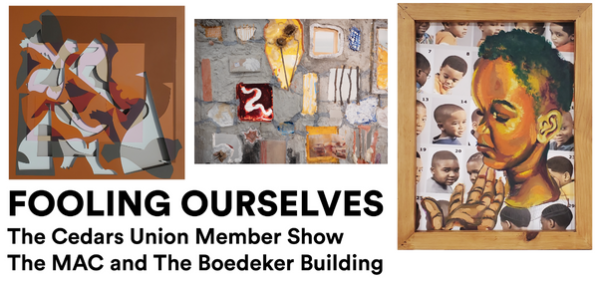
“Fooling Ourselves, a group show by current Cedars Union community members and cohort artists, will unfold across two venues: the historic Boedeker Building and nonprofit exhibition space The MAC. Located within walking distance of each other in the Cedars neighborhood, the two locations frame an exhibition that features the Cedars Union, a nonprofit art incubator, as a creative locus within the North Texas arts ecosystem. Featuring works of painting, drawing, sculpture, installation, and new media, Fooling Ourselves highlights the ways artists engage in discourse, collaboration, and cross-pollination at the Cedars Union. Themes, textures, and marks echo across the two venues, together forming a picture of what it looks like to be thinking about and making art in Dallas, now.
Participating artists include Taylor Cleveland, Laura Davidson, Inyang Essien, Angel Faz, Ammie Felder-Williams, Daniel Flores, Carlin Flores, Tiara Unique Francois, Beronica Gonzales, Gemma Guiomard, Maria Haag, Rachael Henson, Taylor Hinchliffe, Lisa Horlander, Natalie Lammers, Laura J. Lawson, Lori Maclean, Tina Medina, Claire Moore, Grace Nicole, Cat Rigdon, Hannah Rotwein, Brantly Sheffield, Kai Siebert, Darin Triplett, Ashley Whitt, Matthew “Woody” Wood, and Phallon Lauderback Wright.”
Drawing from her background in graphic design, Desireé Vaniecia is known for her flat, stylized portraits of women. Over the past few years, while her figures have remained consistent, the context in which they are presented has developed substantially. Been on My Way, Vaniecia’s first solo show at Conduit Gallery in Dallas in 2020, featured five large-scale portraits of female figures set against simple color block backgrounds, and nine smaller-scale paintings of objects.
Desireé Vaniecia, “Love And Happiness,” 2020, Flashe on canvas, 84 x 60 inches.
Since then, Vaniecia has begun to incorporate flowers and design elements into the backgrounds of her pieces. Her Portrait Study series, created in 2021, takes inspiration from stained glass windows. Though her portraits depict Black women, a demographic that is often underrepresented in art and media, the style of flat graphic shapes contained by heavy outlines, associated with stained glass, fits seamlessly with the artist’s unique portrait style, and adds a dynamic touch to the compositions.
Desireé Vaniecia, “Portrait Study,” 2021.
Vaniecia’s second solo show at Conduit, Is This Living?, opened last month. The exhibition presents a cohesive body of work that fully emerges Vaniecia’s signature figures in layered, ornate environments reminiscent of late 19th century Art Nouveau posters.
Desireé Vaniecia, “Just one More Light,” 2022, Flashe on canvas, 34 x 24 inches.
Each painting is a representation of one of the seven deadly sins, as defined by Christianity — lust, envy, pride, wrath, greed, sloth and gluttony. Vaniecia does not directly identify which painting represents which sin, but leaves it to the viewer to decipher through hints in the color palette and symbols within each piece. Instead, through the titles of the works, the artist seems to leave space for empathy, a reminder that the“deadly” sins all stem from a human place.
Desireé Vaniecia, “Am I Wrong?,” 2022, Flashe on canvas, 36 x 60 inches.
For example, in one painting the viewer is faced with a protective mother figure whose young child is seated in her lap. The red radiating from the bottom of the canvas feels like an intense fire burning. The scowl on both figures’ faces seems accusatory as they glare at the viewer. The title of the work, Am I Wrong?, makes one question: is wrath ever justified?
Though Vaniecia’s portraits have always been captivating, these new, expanded backgrounds bring a depth to her work. Along with contemplating the figure’s pose and expression, the viewer must also consider the significance of the symbols present in the world that the figure inhabits. While the color block backgrounds helped to keep the physical figure at the forefront of the composition, they also provide important context that grounds and humanizes the subjects, reminding us that behind each person is a deep and complex life we are rarely privy to.
Is This Living? is on view at Conduit Gallery in Dallas through November 26, 2022.
Robyn O’Neil, “Hell,” 2011, collage and graphite on paper, 83 5/8 x 172 1/2 inches
If Robyn O’Neil’s Hell triptych (2011), on view in the back room of her Inman Gallery exhibition, is a nod to Hieronymus Bosch, her other works in the show are more akin to doodles writ large. The largest drawings from 2022 are small, or even midsized by O’Neil’s standards, and they contain miniature elements ranging from children’s book illustrations to botanical studies to cave paintings. Rendered delicately in graphite on unprimed canvas, the works feel less like drawings than encounters. It’s as if a too-smart-for-school student’s desk graffiti has been delicately transferred to fabric, stretched, and hung on the wall.
Robyn O’Neil, “The Paradise Fields (Arterial),” 2022, graphite on canvas, 37 7/8 x 26 1/4 inches. Photo: Inman Gallery/Allyson Huntsman
Yet for all their visual busyness, the pieces aren’t alienating. Something I appreciate about O’Neil’s approach is that she uses relatively straightforward materials (graphite, canvas, paper) to create an easy-to-comprehend complexity. She also gives you room to breathe. Drawings in the show are predisposed to feeling unfinished, but here the blankness is a welcome respite. Spots of raw canvas become recovery and reset points to help navigate the pieces’ microenvironments. O’Neil used the same atmosphere-creating technique in her previous works, which were surveyed three years ago at the Modern Art Museum of Fort Worth. In her current pieces, however, the blank space is more tangible, more real — impacted by the simple choice of canvas over paper.
Robyn O’Neil, “The Paradise Fields (Spine),” 2022, graphite on canvas, 37 7/8 x 26 1/4 inches. Photo: Inman Gallery/Allyson Huntsman
Rounding out the show is a selection of smaller drawings. These are more complete in and of themselves and play on the artist’s love for repetitious, compacted landscapes. On one hand this is a greatest hits exhibition for O’Neil: it brings together her famed tracksuit men in Hell and miniature versions of forms we see in her other, larger, career-defining works. But it is also a weigh station — an artist kicking the tires on themselves and their influences, taking stock and figuring out where to go next. This is a logical point for O’Neil in 2022, coming off of critical success and an early-mid-career survey to boot. We’re lucky that instead of going through this introspection alone, in a sketchbook or on a Pintrest board, she’s giving us a window — a well-thought-out and visually captivating window — into her mind.
Installation view of “Robyn O’Neil: Hell and the Paradisal” at Inman Gallery. Photo: Inman Gallery/Allyson Huntsman
Robyn O’Neil: Hell and the Paradisal is on view at Inman Gallery in Houston through November 5, 2022.
****
MANUAL (Hill / Bloom), “Postcard Suite I: Magellanic Cloud,” 2018, archival pigment print, edition of 5, 22 x 22 3/4 inches.
I become subtly incensed whenever a museum’s postcard selection is lackluster. To me, it is the purest of souvenirs: small, affordable, transportable, and — if you so desire — shareable. I often end up collecting these more for their card properties than their post function. They’re a document of what I’ve seen, where I’ve been, and what I like. Oftentimes I’ve wondered, apparently as Ed Hill and Suzanne Bloom do, if I was one of the lone survivors paying for physical, printed reproductions of artworks instead of collecting them on my phone. It appears, surprisingly, we are legion.
Installation view of “MANUAL (Hill / Bloom): Being in Touch” at Moody Gallery in Houston. Photo: Moody Gallery
Hill and Bloom, who are collectively known as MANUAL, turn collecting (or, maybe, well-intentioned hoarding) into art. Their nine photographs, currently on view in the back room of Moody Gallery, chart accumulations of objects across years — mostly art postcards and other ephemera sourced from their own and their friends’ collections. A few of the postcard works become portraits of taste. For these images, the duo asked their friends, “Do you have a stash of postcards?” The results were arranged into layered mandalas, collapsing centuries of art historical associations into one image.
MANUAL (Hill / Bloom), “Postcard Suite I: Persistence of Memory,” 2018, archival pigment print, edition of 5, 22 x 22 3/4 inches.
On the most basic level, the photographs promote a sort of tactility specific to piles. A face-down smattering of polaroids forms a black hole in one picture; a jumbled heap of old postcards, address-side up, composes another. If you’ve ever played 52-card pickup, you know the drudgery of arranging rectangular objects back into a nice stack. Because of this, these photographs propagate unease: this feeling, of chaos and the impending need for work, mixes with a foreshortened perspective that makes the images seem just a little off. MANUAL is using their eye to play into ideas around art history, spinning a time-tested technique (foreshortening is thought of as a painter’s tool) to make the collections their own. These aren’t straight photographs of postcards, but are instead unique images composed of images.
Installation view of “MANUAL (Hill / Bloom): Being in Touch” at Moody Gallery. Photo: Moody Gallery
While the conceit of photographing photographs is well-tilled land, MANUAL’s pieces are fresh and unironic in a genre that could feel saccharine. They highlight the unique beauty that happens when objects, each with their own peculiarities and flaws, are assembled en masse. I appreciate this, as it helps justify my own impulses to collect postcards, photos, and the like. If anything, MANUAL’s works are an allowance: for pleasure, for unassuming beauty, and for relishing in one’s hoard.
MANUAL: Being in Touch is on view at Moody Gallery in Houston through November 5, 2022.
I recently had a job interview where I had a lot of questions I wanted to ask about the role and the firm that were going to be pretty important in my decision with whether to continue with the process.
The interview was booked for a 45-minute time slot, and the interviewer asked what questions I had right at the top. I asked my first question, and the interviewer took 20 minutes to answer it. She technically answered the question, but also then rambled about several different topics that were only tangentially related. It was clear that I wouldn’t have time to get through even close to all of the questions I had if she continued answering at that pace, especially since I needed to leave time for her to ask me questions too.
Is there a polite way to say, “I have a lot of questions I’d really like to get answered, so could you be more succinct” in situations like this?
It depends on the purpose of the interview.
If this meeting was framed as primarily for you to get your own questions answered, then one option was to say, “I want to be mindful of our time, and I have a bunch of other questions I was curious about — would you mind if I jumped to the next one?” You’d have to find the right moment to say that so you weren’t cutting her off mid-sentence. But if the rambling continued after that, probably all you could do was write off the meeting and try to get your questions answered by someone else later on. However, if this interviewer was the hiring manager, realize that you were getting a lot of information about what it would be like to work for her, even if it wasn’t the info you had intended to ask for.
But if the meeting was framed as a standard interview where she would be interviewing you, not the other way around, I’d be more worried that she wasn’t going to have any time to actually do that … which could put you at a real disadvantage (especially if different interviewers were talking with other candidates and could cite clear and compelling reasons for moving them forward, whereas she’d be less able to do that with you if she talked the whole time).
I know that you needed to ask your own questions to decide whether you wanted to continue in the hiring process or not … but you might not have even gotten the option to move forward if she never got around to interviewing you. So given that, I’d prioritize moving the conversation back to an actual interview so you could talk about what you’d bring to the role. And then if you were contacted to move to the next stage, you could say, “I did want to ask about X and Y before we move forward.” (And of course, you can always ask for time for your own questions if you get a job offer … but if you’re rejected there isn’t a way to say, “Hey, you didn’t ask anything about me! Can we set up another interview where you ask about my experience?”)
So if it was supposed to be an interview, then once the extent of the rambling became clear, ideally you would have jumped in and said something like:
* “Well, I know you have a lot of questions for me and I don’t want to take up all your time on my questions.”
* “I could ask questions about the role all day, but I know you have questions for me.”
* “That’s all great info, thank you. So what can I tell you to help you figure out if I’m the right match for what you need?”
* “Based on what you’ve said, why don’t I tell you a bit about similar work I’ve done and how I could help with the projects you’ve described?”
That said, some people are incorrigible ramblers and if your attempts to redirect didn’t work, there wasn’t a lot more you could do right in the moment, given the dynamics of interviews. But sometimes a well-timed “why don’t I tell you about…” can give you back some control.
Can you survive as a Black person in America? You can’t. It takes a special skill to be amongst us. We have a set of rules to ensure you stay alive. Now I’ll try to keep it simple but pay attention because it’s death row out here.
Now ladies, sit up straight. Be a sweetheart, but don’t let them walk all over you. No short skirts unless you want to get raped. No long skirts unless you want to be laughed at. Love yourself, but don’t be too confident. Boys don’t like that. Don’t wear braids—too ghetto. Don’t straighten or curl your hair, heat damage. Also, leave it to the white girls. Don’t talk proper, you won’t fit in with the Black crowd. Don’t use slang or you won’t fit in anywhere else. Don’t let them kick in your DO NOT DISTURB sign. Give an explanation for everything. Don’t gain too much weight or you won’t fit in the white crowd. Don’t be skinny or your aunts will say, “I need to eat how you eat, so I can be skinny like you.” Make sure your butt is fat, so he’s not “washing dishes.” Make sure you wear red lipstick at fourteen (it’s a right of passage). Make sure you smile but don’t show your crooked teeth. Make sure you wear lashes. Make sure you wear wigs and weaves. Make sure your nose isn’t too big and Black. Make sure you let the white girls touch your hair. Make sure you make yourself available for white boys to “get the black experience.” Let them call you “Nigger,” “Negro,” or “Nigga.” Don’t let them disrespect you. I’m not being political; I’m just being realistic. Make sure you pay attention, it’s death row out here.
My boys. Join the football team. Join the basketball team. Don’t join the baseball team—that’s a white man’s game. Be athletic but don’t do too much. Get a haircut. Grow your hair out. Shave your beard. You would look good with a beard. Only date dark skin black women. White girls are less of a headache. Don’t go out at night. You should get out more. Don’t be friendly. Don’t be antisocial. Don’t share your emotions. Real men cry. Always be a man. Be more emotional. Don’t wear pink. Why are you always wearing black? Support your family. Be the head of the household. Don’t let yourself fail. “But you don’t know what I’m—” Shut up. I’m trying to save your life. Please, my Black men, pay attention because they will put you on death row.
For the girls. Look up to the City Girls, Megan Thee Stallion, and Nicki Minaj. Those are the only role models you can have. Don’t do research on your Black history, but know everything about your history. Don’t get offended. Take word punches to the face and the gut. Don’t protest. Don’t be a feminist. Don’t curse. Don’t learn how to spell or read. Don’t want more for yourself. Make sure you open your legs. Make sure you have a baby in high school. Keep your legs closed. Make sure you have a job. Make sure you have a deadbeat baby daddy. Make sure you get unemployment. Make sure you get your food stamps. Don’t be broke. Have a luxurious lifestyle. Don’t be Black. Keep your composure. Don’t die. Don’t stress or you will die. Don’t wear all black. Don’t wear white after Labor Day, you can’t afford it. Don’t talk back. Don’t stand up for yourself. Don’t walk away from a situation or you’re a punk. Don’t fight. Don’t mess up that pretty Black face. Only use shea butter for your brown skin. Don’t gossip, but spill the tea. Make sure you pay attention, it’s death row out here.
Be polite to the colonizers that lock you up, beat you down, take away your dignity. Look both ways before you cross their minds. Watch your back, everyone is against you. Everyone wants to touch your Black skin. If you’re in trouble, go to the police. Don’t go to the police unless you wanna die. Be a breadwinner. Take on everyone’s problems. Don’t have depression. Don’t be weak. Only listen to rap. The only thing you’ll ever be good at is crime. Go to college. Get a job. Blue collar or white collar? Who am I kidding? White collar is for the white man. Let women put their hands on you. Don’t hit them back. Stand up for yourself. Don’t do ballet or you’re gay. Express yourself. Don’t have a big personality. Like, don’t be a Black man! You’re gonna die! What don’t you understand? Even if you try, you’re gonna be tied. Why are you so quiet? Is it because they have your legs in shackles, hands in cuffs, tied to a chair, with tape on your mouth? Learn how to escape.
Y’all can’t breathe? Is it because they take away your right to speak? You can’t live on the edge because our life gets snatched away at the slightest inconvenience. You are gawked at as the monkeys at the circus. Laugh at, belittle, beaten all the time. Can they get a break? If they’re not stepping on your neck, then they’re shooting you. Please Negroes, don’t sign your life away. But if you don’t, then they’ll take it away. Your striking brown eyes have put the fear in their vulnerable souls. Make sure you’re into Black art, Black poetry, and listen to Erykah Badu. Don’t hit your kids, but that baby needs a beating. When they cheat, accept it. When they lie, stick by them. Because as a Black person in America, you can’t survive on your own.
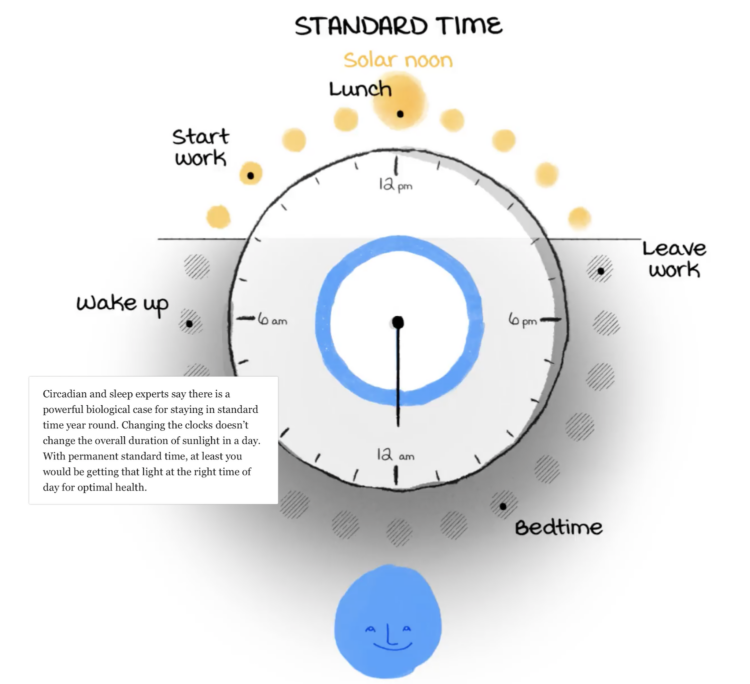
Daylight saving time ends in the United States this weekend and ended already in other places. This can only mean one thing, which is that we must hem and haw about whether to shift our clocks or not. Aaron Steckelberg and Lindsey Bever, for The Washington Post, illustrated the sleep challenges that arise when we have to change measured time, which is easy to shift with button presses, against our less malleable internal time, which is more in tune with sunlight.
Scrolling through, it started to feel like too many layers on top of that clock, but my main takeaway, and I think we can all agree on this, is that we should all get to sleep and wake whenever we want. Boom, problem solved.
A customer wanted to know why, when they opened a command prompt, the title was “Select Administrator”.
Select Administrator: C:\Windows\System32\cmd.exe
Microsoft Windows [Version 6.1.7601]
(c) 2009 Microsoft Corporation. All rights reserved.
C:\Windows\System32>
What is a “Select Administrator”? Is that some special elite kind of administrator?
No, that’s not what “Select Administrator” is saying.
In fact, it’s not even “Select Administrator”.
The clue is the white box in the command prompt window that the customer included in the screen shot.
That white box is evidence that the user clicked in the command prompt window with the mouse and initiated a selection. When a selection is active, the word “Select” is added to the front of the title.
What we really have is two unrelated adornments. One for selection, and another for elevation.
Selection
Title
↓
↓
Select
Administrator:
C:\Windows\System32\cmd.exe
↑
Elevation
The customer noted that they get this “Select Administrator” only when they launch the command prompt a certain way from a specific program. My guess is that the customer is double-clicking something that launches the command prompt on a single click. The command prompt appears after the first click, and the second click goes to the command prompt and triggers the selection.
So the solution is to single-click, not double-click. If you double-click by mistake, you can hit Esc to exit selection mode.
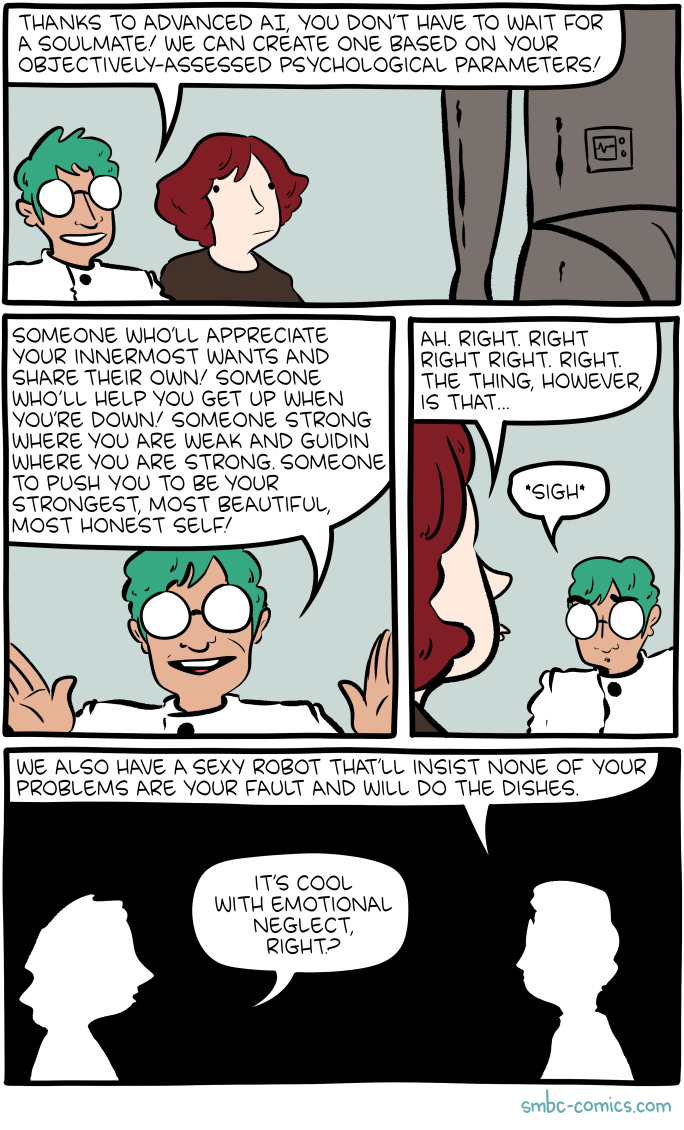
Hovertext: Someday, science will make us immortal and invent sexbots and then a lot of pretenses of literature and mythology will be quietly discarded.
The study, the subject of the press release, is: Sabia S, Dugravot A, Léger D, Ben Hassen C, Kivimaki M, Singh-Manoux A (2022) Association of sleep duration at age 50, 60, and 70 years with risk of multimorbidity in the UK: 25-year follow-up of the Whitehall II cohort study. PLoS Med 19(10): e1004109. https://doi.org/10.1371/journal.pmed.1004109
How it plays out in the press
You can see how this plays out in news reports by doing a little googling. Or closely reading the New York Times report., which says: “a recent study found that adults over 50 who slept for five hours or less each night had a greater risk of developing chronic diseases than those who slept for at least seven hours.”
Try out my quantum mechanics course (and many others on math and science) on https://brilliant.org/sabine. You can get started for free, and the first 200 will get 20% off the annual premium subscription.
Today we’ll talk about space junk, the carbon footprint of a Higgs Boson, more evidence against dark matter, plans for a nuclear fusion plant in California, a new data transmission record, what Greenpeace has to say about plastic recycling, and whether cats understand you.
00:00 Intro 00:31 ISS Has to Avoid Space Junk -- Again 01:54 The Carbon Footprint of a Higgs Boson 04:10 General Atoms Puts Forward Plan for Nuclear Fusion Plant 05:03 More Evidence Against Particle Dark Matter 06:47 New Data Transmission Record 08:18 New Greenpeace Report on Plastic Recycling in the US 10:31 Cats Seem To Listen To Their Owners 11:15 Check out my Quantum Mechanics Course on Brilliant
Twitter CEO Elon Musk says he plans to charge Twitter users for using the blue verification checkmark, quickly lowering the amount to $8 per month after sparking criticism for suggesting a $19.99 monthly fee. What do you think?
I have a direct report (let’s call her Bartleby) who has been underperforming for a while, in particular by not doing enough work that can be charged to our internal customers.
This might seem like an easy problem to call out and manage, but Bartleby and I have had communication problems since I took this position about five years ago, and they’ve only gotten worse. When she’s doing work that she feels is solidly in her preferred domain, she does well. If asked to work on something slightly different (but still well within her skillset and job description) in order to get more chargeable time, she becomes resistant. This manifests in conversations that run something like this (condensed to a few lines, when her actual responses are often five-minute monologues or longer):
Me: Please work with Marge on this chargeable task. B: Well, I don’t really feel comfortable with that. Me: Why? B: You provide so much more support to Marge and the others in the group and I feel uncomfortable doing this work knowing that I won’t have your support. Me: What do you mean by support here? B: You won’t back me up if things go wrong. Me: I will back you up, as I have in the past. Please work with Marge on this. B: I don’t feel comfortable with that because when Bill was a manager, he trained Marge on it, but not me. Me: He trained me as well before he left, and I’m happy to train you on it in turn. B: The difference is that Bill supported me, and you don’t. Me: As I said, I’m happy to support you as needed. B: I don’t feel comfortable that you will. Me: So, you’re refusing to have me train you so you can do this task? B: I never said that! Don’t accuse me of refusing to do work! Me: So, you’ll work with Marge on this? B: I don’t feel comfortable doing that without more support.
This continues until I just terminate the conversation, often after spending half an hour or more talking in circles like this. I then receive long, rambling emails that misrepresent what was said and complain that I won’t take the time to talk to her about things. I spend more time managing her than I do the other half-dozen (highly motivated and self-directed) people in my group put together!
I have really tried to think about what she means by “support,” and I have come up blank. I have asked for specifics and have gotten many vague words in response, but nothing actionable beyond the concern that that she’ll be blamed if things go wrong. If there are any customer questions or concerns about what we provide them, I will readily step in to deal with them; no blame ever accrues to her (or even to me, really) in the rare case of problems. When I try to offer her new projects or training, I get what I described above. Given how often Bartleby invokes the past manger, Bill, and how I don’t do things the way he did, I feel like the nucleus of her complaints about me often amount to, “You aren’t Bill.” That is certainly true, but it’s also not something I can fix, and there are good reasons I do things differently. (For one thing, I was specifically hired because I would spend more time on developing new work and less time on close, daily management of the activities of each group member than he did.) With the rest of the group, my management style seems to work well. I hardly need to mention a task before they are ready to take it on, and if they need training or help, they both ask for and receive it with complete grace.
I have brought the matter to my manager (with whom I have a great relationship, and who has given me high marks for performance and good advice when needed), and we have set some specific goals for her regarding the amount of work that she charges; if she doesn’t show progress towards these goals, we’ll put her on a formal PIP and move towards termination if things don’t improve.
I would like to avoid things getting to that point. First, she does have valuable technical expertise, and when she’s working on something where she feels comfortable, she does very good work. Second, I dread going through the (long, involved) termination process with her, since I know it will involve all sorts of similar evasions, misrepresentations, and accusations of favoritism. It will be exhausting, and while I’ll do it if needed, to borrow a quote, “I would prefer not to.”
So, is there a way I can change the direction things are going here, or is my only good option to hold the course and brace myself for the consequences?
Hold the course and brace for the consequences. Whatever’s going on with Bartleby, it sounds like it’s coming from her and not you.
And it sounds like you’ve made good faith efforts! You’ve asked what kind of support she wants and feels she’s not getting. You’ve asked for specifics. You’ve reflected privately. And you’re not getting anywhere. If there’s something specific she wants from you, she needs to tell you.
The one thing you can — and should — try that you haven’t already is to let her know how serious a problem this is and what is going to happen if she doesn’t change what she’s doing. The PIP is the formal way of doing that, but you can do a less formal version of that conversation first.
For example: “We have talked many times about your resistance to talking on projects like X and Y. I need to be clear with you that this has become a serious performance issue and if we can’t solve it, the next step will be a formal performance improvement plan, which would end with you being fired if this doesn’t change. I don’t want to see that happen, so I want to be very clear about what needs to change to avoid that. Specifically, when I assign you a task, I need you to either do the task or, if you don’t feel you can, give me specifics on exactly what you need from me that will allow you to do it. Simply not doing the tasks is not an option. If you have specific, concrete things you need from me to make that possible, I need you to name those. You cannot continue to resist the work without specifying exactly what support you are looking for. If you do continue that, we will need to start the PIP process.”
Then, after that conversation, if she’s resistant to another project in the same way you described in your letter, you’d handle the conversation more like this:
You: Please work with Marge on this chargeable task. B: Well, I don’t really feel comfortable with that. You: What specific actions do you need me to take to support you on this task? B: I’m worried you won’t back me up if things go wrong. You: I will indeed back you up, as I have in the past. I understand you’re worried about that, but regardless I do need you to begin this assignment now. B: I don’t feel comfortable with that because when Bill was a manager, he trained Marge on it, but not me. You: I’m happy to train you on it before you begin. But this is what we talked about earlier — I need you to take on projects like this one without pushing back. I’ve heard your concerns, I’m open to any specific requests for concrete things you need, I can give you more training if you need it, but meanwhile I need you to get started on this today. B: I don’t feel comfortable. You: Projects like this are a required part of your job. They’re not optional. If you don’t want the job knowing tasks like this are part of it, that’s a conversation we can have. But this is indeed part of your job and I need you to start on it today.
And if you have to have more than one conversation like this after the big-picture “we’re heading to a PIP” conversation, don’t delay any longer — get started on the PIP process ASAP. If your organization allows it, that PIP should be pretty short — think weeks, not months (as long as that’s enough time for these projects to come up and for you to see change or lack of change). Don’t let it drag out.
I’d also recommend that you go into these conversations with Bartleby assuming that it’s very likely this will end with needing to fire her. It sounds like you’ve been dealing with her as if she’s a rational person who’s so close to doing a good job if only she can fix this one little thing … and that’s leading you to indulge in these lengthy circular discussions more than you should. It is okay to short-circuit these discussions with “this is what we talked about, and I need you to do this today.” Don’t give her all this space to play out … whatever this is that she’s playing out.
For the record, it’s possible that Bartleby genuinely does feel unsupported and might have legitimate reasons for that! She might have worked with unsupportive managers in the past, or been penalized harshly for mistakes, or who knows what. That’s why it’s important for you to have looked back at your own history with her and to have heard her out. But taking you at your word that you’ve done that and she never gets blamed if something goes wrong, there’s a limit on what you can do to accommodate her fears. At this point whatever she’s dealing with has become disruptive and is getting in the way of work getting done. Lay out the changes you need in how she’s approaching projects, and then hold her to that and decline to get into these endless quagmires every time.
But yeah, assume this is going to end with needing to part ways.
Helping the Handicapped Teenager Mature
Ayrault
1971
When this book was published, handicapped students were invisible to mainstream students. Student that were different, were routinely shuffled into “special ed” regardless of ability or need. When I graduated college in 1982, mainstreaming students was a new concept. Before I graduated with a degree in education, a course was quickly thrown together for students discussing this concept. It was eye opening for me. Very few distinctions were made in a child’s ability. Regardless of physical or mental capabilities, everyone was lumped together under an umbrella of special ed and were virtually invisible.
This book is also published around the same time of Mills vs Board of Education of District of Columbia. This landmark case asserted that students with handicaps of any kind were entitled to an education. Prior to this decision students were routinely denied any kind of education.
What struck me was that this information wasn’t terribly different from advice for “regular” students for the time. Perhaps that is point. (Keep this one for the university and education collections, but public libraries should have weeded this book by 1975.)
AUSTIN, TX—In an effort to tamp down on the “outrageous” practice, Texas GOP officials reportedly shared a toll-free number Wednesday that Republican voters could call if they witnessed someone casting a legitimate vote. “If you see anyone who looks like they’re getting in line or speaking to poll workers, we urge you…
Enlarge / In a stunning Photoshop move, a Nintendo GameCube pulls ahead of the pack. (credit: Aurich Lawson / Getty Images)
On Sunday, NASCAR driver Ross Chastain made history with an unprecedented wall-riding maneuver that qualified him for a championship race and set the record for the fastest lap on the track at 18.845 seconds. Remarkably, Chastain said he learned the move playing NASCAR 2005 on the Nintendo GameCube when he was a kid.
The maneuver happened at the Xfinity 500 race hosted at Martinsville Speedway in Ridgeway, Virginia. Martinsville is a half-mile short track built in 1947 that is well known for its tight, shallow-banked turns that usually require heavy braking to negotiate.
During the final lap of the race, Chastain found himself in 10th place but needed to pick up two positions to earn enough points to qualify for the Championship race on November 6. Instead of slowing down on the turn, Chastain shifted into fifth gear and gunned it, riding the outside wall and passing five cars to finish the race in fith place.