A lot of the time, economic policy can seem pretty impersonal — cold, hard, data-driven. But at the heart of the Federal Reserve are people: fallible, complicated people who are just doing their best to steer the economy in the right direction.
Often, we remember them just for their economic decisions. But today, we're airing two episodes from our daily economics show The Indicator that profile the people inside the Fed. First, we're heading back to the 1970s to revisit Arthur Burns' oft-criticized stint as Fed chair. Next, we have a conversation with Mary Daly, the current president of the San Francisco Fed, about her remarkable path from high school dropout to one of the most important economic voices in the nation.
These two Indicator episodes were originally produced by Viet Le and Brittany Cronin. They were fact-checked by Sierra Juarez and Dylan Sloan and edited by Kate Concannon. The Planet Money version was produced by Dylan Sloan, engineered by Josh Newell and edited by Dave Blanchard.
CHARLESTON, SC—In the former South Carolina governor’s first major crisis as a presidential candidate, Nikki Haley was reportedly panicking Wednesday after someone actually ordered one of her campaign’s T-shirts. “I thought it was maybe my husband at first, but I asked him, and he said it wasn’t him—he didn’t even…
I am a fairly new manager for a small team of creatives. I have noticed that when my team has a request, they have almost all have a habit of making it a statement rather than a question. For example: “I have to come in a hour late on Tuesday,” or “I’m modifying the headline color in this document set.” To be clear, I have the final say on these decisions, and the team knows this. I find this habit grating, as it assumes that I will always agree and accommodate these requests.
Am I being too sensitive to a harmless habit? If not, how would you recommend addressing this? Virtually all of these requests are either reasonable requests I would approve anyway.
I answer this question over at Inc. today, where I’m revisiting letters that have been buried in the archives here from years ago (and sometimes updating/expanding my answers to them). You can read it here.
My mother woke up one morning last July itching all over her body, from the top of her head to the soles of her feet. She called me and I told her it was probably bug bites and her body’s antihistamine response was just misfiring.
It was not bug bites.
Several days later we learned she had a mass on her pancreas: cancer.
Several weeks later we learned that it had spread.
She was told in July that she had eight to eleven months to live. Maybe a bit more, maybe less.
I can’t explain strongly enough how blindsided I was. My mom, despite obviously being old enough to be my mom, is one of the healthiest people I know. She’s a passionate devotee of yoga and exercise. Half her friends are my age or younger (and my own friends tend to think she’s barely older than we are). Her sensibility is … not an old person’s. I recently watched her fill out a medical form that asked whether she’d had more than one sexual partner and she amused herself by writing, “Not at the same time.”
I guess my point is, she never really got old, regardless of her age, and at some level this led me to think I would have her forever. It turns out that I will not.
Metastatic pancreatic cancer is a bad cancer, as cancers go, and dying from pancreatic cancer is not a good death. It can be painful and prolonged. My mom doesn’t want to die that way, and she’s determined that she won’t — and that’s why I’m writing this.
For the last few years – starting well before her diagnosis – my mom has been a legislative advocate for Medical Aid in Dying.
Medical Aid in Dying allows a terminally ill, mentally capable adult with a prognosis of six months or less to live to request from their doctor a prescription for medication they can decide to take to die peacefully in their sleep. It’s only legal in 10 states and D.C. She’s been working to make it legal in Virginia, where we live.
When she started working on the issue, she had no idea that the issue would become so personal to her; she just cared deeply about adults’ autonomy and right to make their own end-of-life choices.
My mom has always lived her life on her own terms, so it’s been no surprise to me that she’s spending the limited time she has left continuing to fight to be able to do that. Since her diagnosis, she has testified before our state legislature, lobbied elected officials, and last month went on TV to speak about the need for the law to change.
She stresses that with this legislation, terminally ill patients can fill the prescription and then decide never to take it; many people find peace just knowing they have the medicine on hand in case they need it, but never end up using it. They just want to know they have that control. (Also, states where it’s legal have strict safeguards to ensure the decision can be made only by the sick person themselves, not by doctors or family members or anyone else.)
Last month, a Virginia Senate subcommittee voted (on almost straight party lines) against passing the legislation in our state, so – despite having lived here most of her adult life – my mom now has to move into D.C., where she’ll be allowed to die without suffering when the time comes.
Medical Aid in Dying is currently legal in California, Colorado, D.C., Hawaii, Maine, Montana, New Jersey, New Mexico, Oregon, Vermont, and Washington state. Legislation has also been introduced in Arizona, Connecticut, Indiana, Maryland, Massachusetts, New York, and Rhode Island.
If you live in a state that doesn’t currently give terminally ill people the right to ensure their death is a peaceful one, my mom and I very much hope you will contact your legislators and ask them to change that. The organization Compassion & Choices is the one she has been working with, and they make it easy for you to contact your elected representatives here.
Someone asked the shell team, “Why did you pick Power+VolumeDown as the hotkey to take a screen shot? Why not something simpler?”
Set the time machine to 2010. Windows 8’s tablet-focused user interface is being designed, along with tablet hardware devices to showcase it. Since one of the signature characteristics of tablets is that they don’t have a keyboard, non-keyboard affordances have to be invented for various operations. Many of them could be triggered by various types of touch gestures, but the hardware buttons themselves were also pressed into use:
Button
Action in Windows 8
Power
Turn screen on and off
Windows
Go to Start screen
VolumeUp
Increase volume
VolumeDown
Decrease volume
Power (hold)
Shut down
Power (long hold)
Emergency power-off
Windows+VolumeUp
Open/close screen reader
Windows+VolumeDown
Screen shot
Windows+Power
Ctrl+Alt+Del
In Windows 10, the requirement that tablets provide a Windows button on the chassis was removed, which means that the actions previously assigned to the Windows key were lost, and the ones deemed most important were reassigned.¹
Button
Action in Windows 10
Power
Turn screen on and off
VolumeUp
Increase volume
VolumeDown
Decrease volume
Power (hold)
Shut down
Power (long hold)
Emergency power-off
Power+VolumeUp
Screen shot
Power+VolumeDown
Ctrl+Alt+Del
Given that you can count on only three buttons (power, volume up, and volume down), the set of available combinations is rather limited, and it’s hard to claim that any of them are “intuitive” beyond the power button actions.
Bonus chatter: If you employ the “long hold” emergency power-off hotkey, the system tries to capture diagnostic information before the BIOS kills the power. These dump files are used by the Windows team to identify and fix the root causes for system lock-ups.
Windows recognizes a long power button hold at seven seconds, and the UEFI forces a power-off at ten seconds. Windows therefore has three seconds to collect whatever information it can before the UEFI pulls the plug. If you get a message from Windows acknowledging your emergency power-off request but asking you to release the power button, please do so if you can. This gives the kernel more time to capture the diagnostic information. Once the information is gathered, the kernel will turn off the system power.
¹ If you compare the two tables, you’ll find that the lost chassis hotkeys are “Open the Start menu” and “Open screen reader.” These two access points were moved to on-screen affordances and no longer need special hotkeys. The taskbar Start button opens the Start menu, and the lock screen Accessibility button lets you turn on the screen reader when signing in. (For opening the screen reader after signing in, you can use the Ease of Access / Accessibility section of the Settings app.)
Quite some time ago, I got an email from Dusan Strakl and Simon Luce, asking about making a port of Petscii Robots to the Oric. Honestly, I’d never even heard of the Oric before. I sent them the source code, and then I didn’t hear from them for a while. Then one day they sent me a 95% finished version of the game. After looking up a little information on how the Oric’s architecture works, I was very impressed!
Unfortunately, the Oric version is presented mostly in black and white. And this has to do with how the color attributes work on the system. It makes it nearly impossible to have each tile be its own color. Also the graphics had to be converted to 6×8 pixel characters instead of the usual 8×8. But it doesn’t affect the appearance too much.
The thing is, even though the graphics are maybe a little underwhelming compared to most of the other systems, the important thing is the game is quick and responsive. And the graphics are good enough that you can tell what everything is. So, that means it is totally enjoyable to play. I’ve really enjoyed beta-testing this version of the game, honestly!
Map View
One unexpected surprise is how nice the map view looks. Sure, it’s also in black and white. But they managed to use 4 pixels to represent one tile, so you can get a pretty good idea of what you are looking at.
And the best part? IT’S FREE! Yep, I had decided that since I didn’t have to put any money or work into developing this version, I saw no need to charge anything for it. And since Simon and Dusan also didn’t want anything, we decided to make this a free gift to the Oric community, small though it is! Download it here: Oric Robots (Full Version)
EAST LANSING, MI—In the hours following a violent rampage in Michigan in which a lone attacker killed at 3 individuals and injured 5 others, citizens living in the only country where this kind of mass killing routinely occurs reportedly concluded Tuesday that there was no way to prevent the massacre from taking place.…
As a child, I saw love everywhere, and it became my calling to play matchmaker to my toy bin.
Barbie paired up with my brother’s Luke Skywalker doll (which he insisted was an “action figure”). This romance persisted despite my being schooled on how a Jedi renounces personal attachments, and could I please just put his kimono back on?
A Happy Meal Gonzo wearing an ascot while driving a boat for some reason, and an elephant Beanie Baby that I’m hopeful is worth upward of one hundred dollars on eBay. Gonzo’s gusto seemed a good balance to Peanut’s lethargy. Also, the nose thing?
Donatello and Battle Damage He-Man bonded over their love of oversized weaponry, exaggerated musculature, and pizza. I enjoyed watching He-Man’s battle-ravaged heart heal, not through the Power of Greyskull, but through the power of love in a half-shell.
Chutes & Ladders came with four clumsy-yet-enthusiastic game pieces that naturally paired up to help each other navigate a game board rife with safety hazards. This tided me over in the doll department until I got my first box of crayons.
All my crayons were in monogamous relationships with colors I liked equally. If their wrappers were peeled off, they were definitely doing it. The weird broken colors, like chartreuse and goldenrod, were always the crayon babies.
Does your person have droll wit, a penchant for oversharing, and a secret recipe for curry vindaloo? Also, glasses? Who needed Tinder when you had Guess Who?
I say it was done by Miss Scarlet, with Professor Plum, in the conservatory, by candlelight.
My favorite playing card frequently made time with my favorite Uno card. Both wielded inordinate power in their respective games, but it was lonely at the top.
All the Hungry Hungry Hippos, because, apparently, they were also pretty thirsty.
Quite some time ago, I got an email from Dusan Strakl and Simon Luce, asking about making a port of Petscii Robots to the Oric. Honestly, I’d never even heard of the Oric before. I sent them the source code, and then I didn’t hear from them for a while. Then one day they sent me a 95% finished version of the game. After looking up a little information on how the Oric’s architecture works, I was very impressed!
Unfortunately, the Oric version is presented mostly in black and white. And this has to do with how the color attributes work on the system. It makes it nearly impossible to have each tile be its own color. Also the graphics had to be converted to 6×8 pixel characters instead of the usual 8×8. But it doesn’t affect the appearance too much.
The thing is, even though the graphics are maybe a little underwhelming compared to most of the other systems, the important thing is the game is quick and responsive. And the graphics are good enough that you can tell what everything is. So, that means it is totally enjoyable to play. I’ve really enjoyed beta-testing this version of the game, honestly!
Map View
One unexpected surprise is how nice the map view looks. Sure, it’s also in black and white. But they managed to use 4 pixels to represent one tile, so you can get a pretty good idea of what you are looking at.
And the best part? IT’S FREE! Yep, I had decided that since I didn’t have to put any money or work into developing this version, I saw no need to charge anything for it. And since Simon and Dusan also didn’t want anything, we decided to make this a free gift to the Oric community, small though it is! Download it here: Oric Robots (Full Version)
Across the nation, millions of Americans will be celebrating romance with chocolates, flowers, and other offerings of love. How are you celebrating Valentine’s Day?
Feria Material, known familiarly as simply Material, is significantly smaller and younger than the behemoth that is Zona Maco. While its manageable size makes it fairly easy to tackle, its youthful irreverence and DIY spirit make it unpredictable and anything but dull. The work can be provocative, the gallerists aloof, and the crowd tragically hip. Ironically, all of those factors can go down like a palate cleanser after the commercialized feast of Zona Maco. Perhaps unsurprisingly, discovery abounds here.
As Artnet pointed out in 2018, Material has become something of a stomping ground for collectors scouting for emerging artists. Hosted by the mid-sized convention center Expo Reforma and on view through Sunday, February 12, Material’s ninth outing united 67 exhibitors from 15 countries and served as an introduction to the new Todo-Mundo Art Book Fair. During our second stop during Art Week Mexico City, we identified five standouts that echo Material’s motto of “¡Arte, qué rico!”
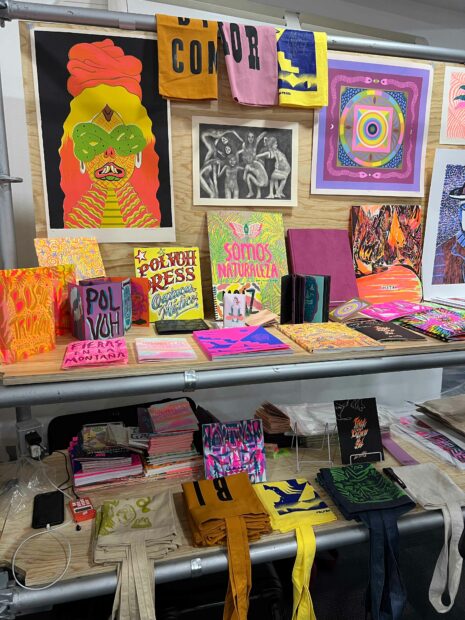
OMG Press at the Todo-Mundo Art Book Fair
OMG Press at Todo-Mundo Art Book Fair
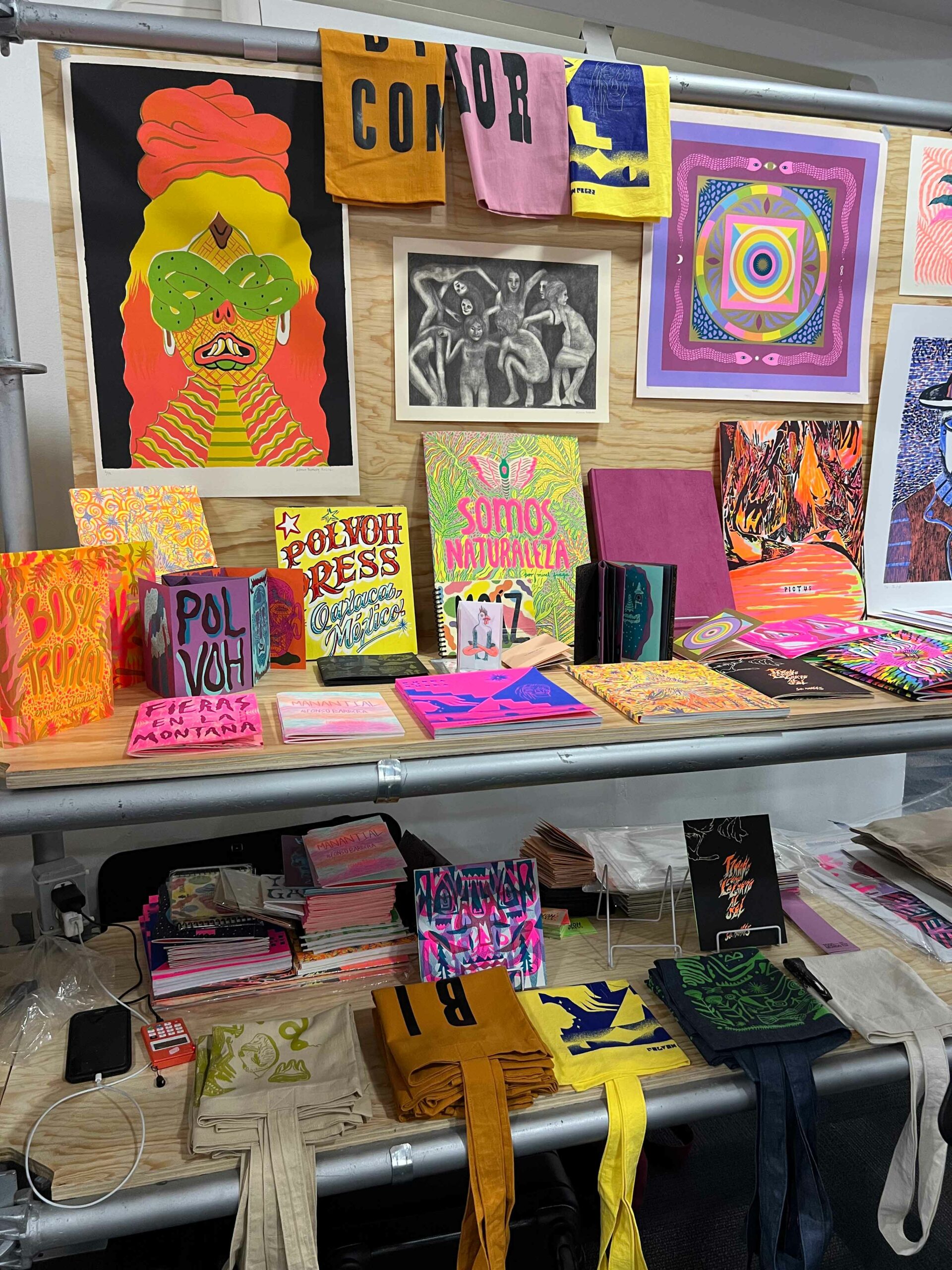
Organized by the Terremoto offshoot Temblores Publicaciones as part of the Reading Material section, the Todo-Mundo Art Book Fair brings together more than a dozen independent imprints from Mexico and beyond. Based between Brooklyn and the Mexico City borough of Tlalpan, OMG Press specializes in prints, zines, art books, and NFTs that “center around pop culture with themes that often revolve around the queer experience.” Among the printed curiosities up for grabs at OMG’s colorful table are Zebadiah Keneally’s spiral-bound project American Boredom, Mirel Fraga’s richly saturated Somos Naturaleza and other releases from Oaxaca-based Polvoh Press, and Abraham Mascorro’s Ars Pokénatura, which is billed as “the first volume of a more complex encyclopedia about Pokémon across time and space.”
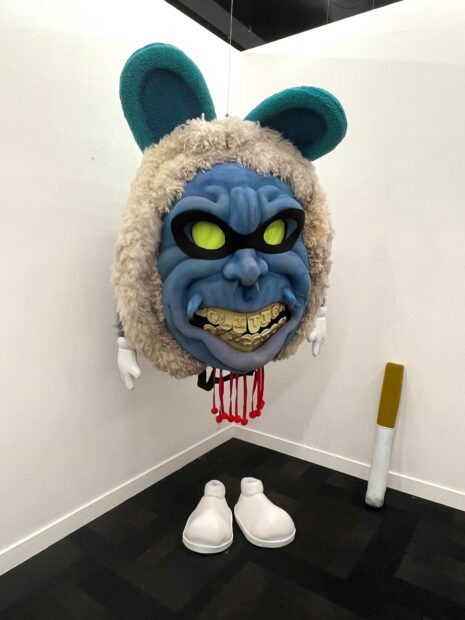
Work by Paloma Contreras at Pequod Co.’s booth
Paloma Contreras at Pequod Co. (Mexico City)
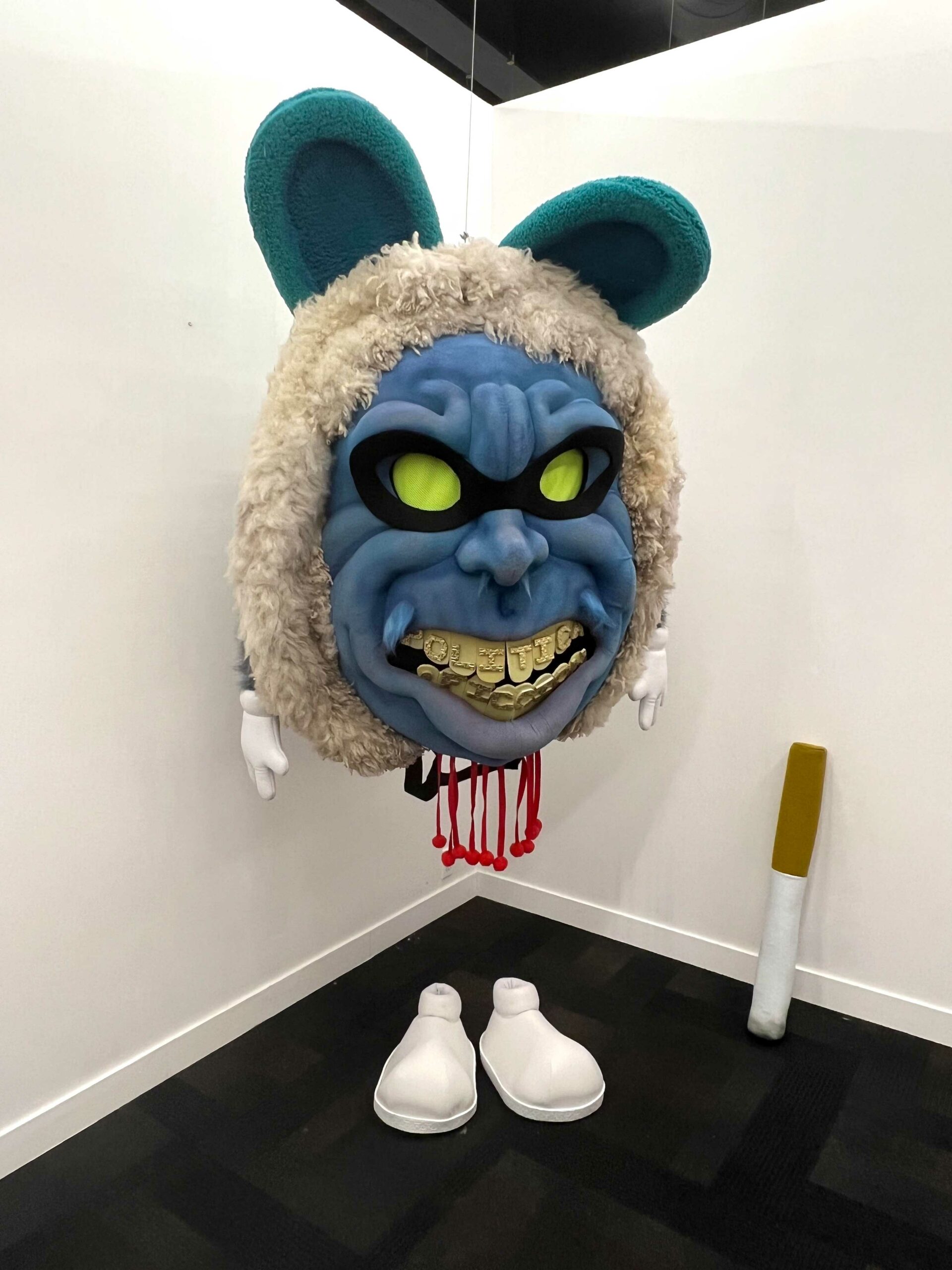
Working between sculpture, drawing, performance, video, and installation, Mexico City-based Paloma Contreras explores issues such as gender, politics, violence, and post-colonialism. Comical but incredibly dark, her pieces often place recognizable characters — Pikachu and Bugs Bunny among them — in a nightmarish context. A menacing presence commanding attention from the Pequod Co. booth at Material, her large-scale sculpture Puro Pajaro Nalgón employs a giant blue head — outfitted with floppy ears, acid-yellow eyes, and gold teeth — to jab at corrupt politicos. Beyond her work as an independent artist, Contreras is an integral part of the edgy multidisciplinary collective Biquini Wax.
Work by Andrea Ferrero at Revolver Galería’s booth
Andrea Ferrero at Revolver Galería (Lima, Buenos Aires, New York)
How much for the white chocolate lion? And does it come with the refrigerator? Although no one asked that question during our visit to Revolver Galería’s booth at Material, it was surely on the minds of a few. Part of a series by Mexico City-based Peruvian artist Andrea Ferrero that explores “‘powerful’ ornamental architecture in an attempt to reflect on how public spaces are marked by symbols of power and domination, and how we can reappropriate and resignify them,” the refrigerated — and edible — sculpture Disguises of Power is complemented by stainless steel trays of white chocolate shards the gallery was selling by weight — at the rate of $200 MXN (roughly $10 USD) for 100 grams.
Work by Georgina Treviño at Embajada’s booth
Georgina Treviño at Embajada (Puerto Rico)
Born in Tijuana and based in San Diego, artist Georgina Treviño pushes contemporary jewelry into unexpected territory. A fast-rising talent who’s collaborated with global brands and A-list celebs — Nike, Fenty, Beyoncé, Lady Gaga and Bad Bunny among them — Treviño created her sterling silver Ricas Carnitas purse as part of a Los Angeles Times commission. Given creative freedom to explore the concept of clarity, Treviño opted to address the erasure of more than 1,500 rótulos — hand-painted signs on Mexico City food carts — in conjunction with a neighborhood “beautification” project Cuauhtémoc Mayor Sandra Cuevas launched last year. Directly inspired by the crude yet joyful images and wonky fonts found on rótulos, Treviño created a maximalist and decidedly impractical handbag emblazoned with Tweety Bird, Pikachu, Lisa Simpson, a dolphin, a cowboy boot, the Playboy logo, and an ear adorned with earrings. (In Treviño’s world, even the accessories are accessorized.) “It’s such a personal, special piece,” Treviño told me about the purse, which she luckily got to keep after it was photographed for the Times.
Work by Melanio Zapata at Licenciado’s booth
Melanio Zapata at Licenciado (Mexico City)
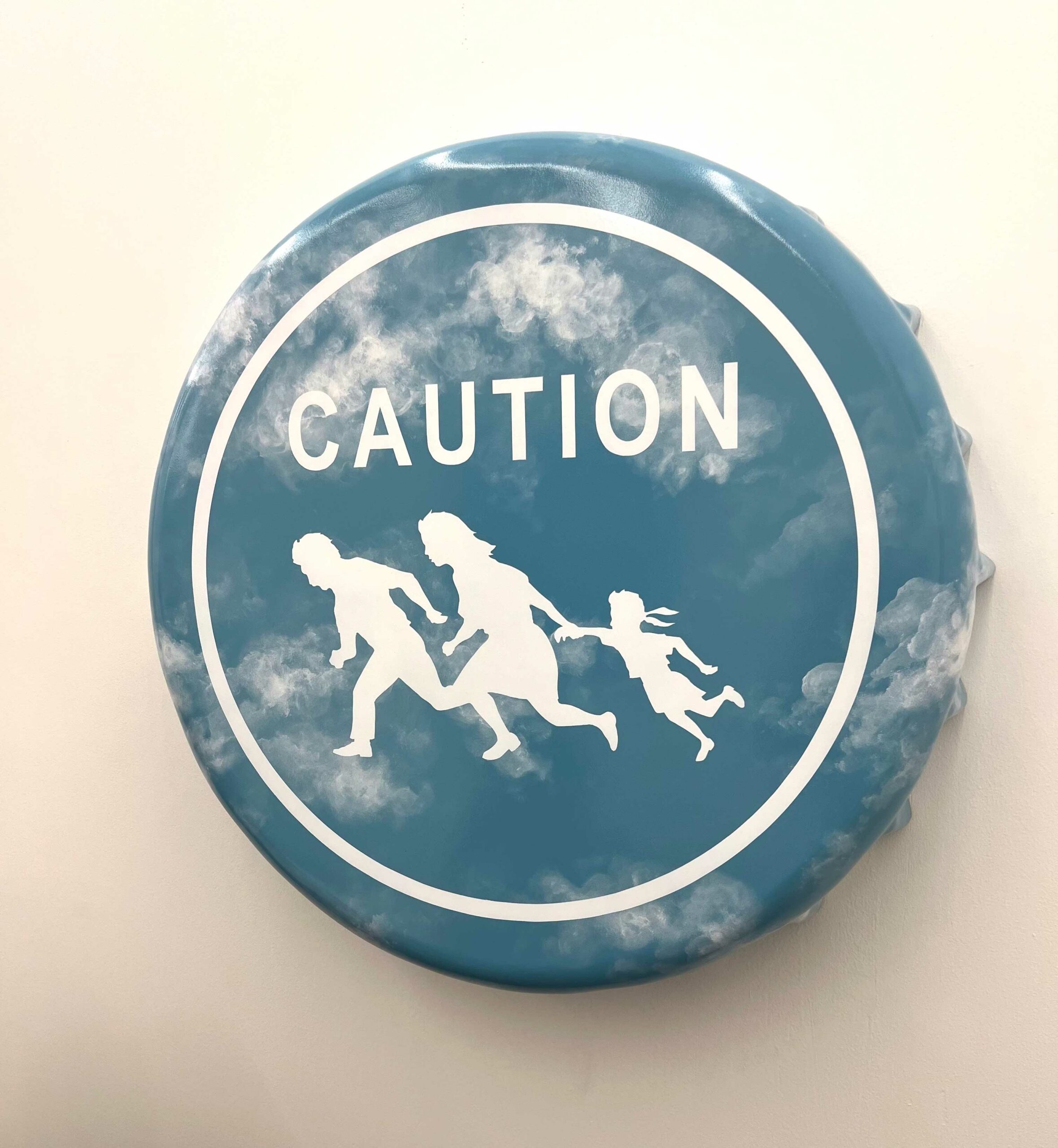
Multimedia artist Melanio Zapata was born in Arizona to undocumented Mexican immigrant parents who were deported in 2012. That same year, Zapata departed the U.S. and launched his artistic practice in Culiacán, Sinaloa. With sculpture, drawing, painting, and installation among his mediums of choice, Zapata often explores themes surrounding politics, cultural identity, and immigration. The first in a series of works modeled after bottle caps, his 2020 fiberglass piece Viento places the fleeing family from the so-called immigration sign — once a mainstay on thoroughfares near the U.S.-Mexico border — atop a sparsely clouded blue sky. As Mexico City gallery Licenciado points out in its notes about Viento, Zapata finds the sign particularly disturbing since its purpose is to protect drivers rather than the “‘wild human obstacles’ that might unexpectedly cross the road.”
Click here to see our coverage of the 2023 Zona Maco Art Fair.
Simmons was expected to step down June 1. The abrupt resignation appears to be over a difference with Texas A&M University System Chancellor John Sharp over hiring during the rest of Simmons’ term as president.
The cargo on the train included some hazardous materials, prompting Union Pacific to monitor air quality at the site of the crash, according to the Splendora Police Department.
The Menil Collection has announced the guest speakers for its spring 2023 Artist Talk series, including Hervé Youmbi, Larry Bell, George Herms, Ed Ruscha, and Robert Longo. The lecture series is open to the public and free of charge. While the programs will take place in person at 1533 Sul Ross Street in Houston, recordings will be made available on the museum’s YouTube channel.
Douala-based artist Hervé Youmbi (b. 1973) joins Dr. Silvia Forni, Director of the Fowler Museum at UCLA, for a conversation about his artistic practice and the visual traditions in Cameroon. Two of Youmbi’s multi-part artworks, Bamileke-Duala Nyatti Ku’ngang Mask, 2019, and Celestial Thrones, 2019, will be on view in the Menil’s exhibition Art of the Cameroon Grassfields, A Living Heritage in Houston.
Artists Larry Bell (b. 1939), George Herms, (b. 1935) and Ed Ruscha (b. 1937) reminisce about the Los Angeles art scene of the 1960s. This program is offered in conjunction with the Menil’s exhibition The Curatorial Imagination of Walter Hopps and the publication of Artists We’ve Known: Selected Works from the Walter Hopps and Caroline Huber Collection.
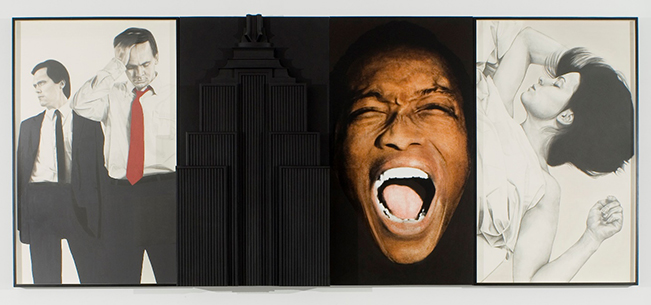
New York-based artist Robert Longo (b. 1953) discusses his practice spanning drawing, sculpture, film, and performance. The talk is organized to coincide with the inclusion of the artist’s large-scale work Master Jazz, 1982-1983, in The Curatorial Imagination of Walter Hopps.
EUGENE, OR—Unsure how to break it to him that they didn’t exist, sources in the head of local man Marshall Horbol confirmed Monday that no one had the heart to tell the 32-year-old they were all merely figments of his untethered mind. “I’m worried he would take it really hard if he found out that everyone in his life…
A friend of mine has been really down on his luck job-wise, but he’s finally managed to pass the final round of interviews for an IT position at a church. The way he tells it, it seems as though they are just waiting for his background check to go through and they’ll go forward with hiring him. He was given a copy of the employee handbook today, and as he was reading it, he said it stated that church staff are required to tithe! (For those who may be unfamiliar, a tithe is nowadays interpreted as 10% of your income given to the church). So, if he takes this job he will have to give 10% of his paycheck back to the church.
Normally I would just tell him to find a different job elsewhere, but in this case my friend has been looking for a job for months and has a kid to support, and this is his first real lead (his work history is pretty unfortunate and he has been a stay-at-home parent for most of the last five years). My thing is, even if this policy is illegal (which google tells me is not only legal, but fairly common practice), he likely won’t make any progress with trying to change any policy as a brand-new employee.
So I figure his options are to (a) take the job and just don’t tithe, and hope no one says anything, (b) tithe, suck it up, and try to make himself feel better about it by focusing on the discount he’s getting on their (not free) childcare program, or (c) start all the way back over with his job search, and risk homelessness.
None of those options are great, so what would you advise? Also, if my friend makes less than the minimum salary requirement for exempt employees after the tithe, is it still legal to require it? And the last thing — HOW is this legal???
It is indeed legal for churches to require their employees to tithe. I was skeptical at first too, but yep.
The answer to “how is that possible?” is that federal law exempts religious organizations like churches from laws against religious discrimination. That means that churches can, for example, require that employees be “church members in good standing” and good standing can require tithing.
So yes, your friend would be earning 10% less than the salary the church offers him, since 10% will be going right back to them. He should find out whether it’s taken as a pre-tax deduction from his paycheck (preferable) or whether he’ll be taxed on the money before he’s required to donate it back. (In most states they cannot withhold the money from his paycheck without his written permission … but they can also fire him for not tithing so, you know, tomato/tamahto.)
Normally if a required deduction takes your paycheck under minimum wage, it’s illegal … or if it takes an exempt employee under the exempt salary threshold, they’d lose the exemption and thus would be entitled to overtime (here’s an explanation of what that all means). However, that’s governed by the Fair Labor Standards Act (FLSA) and churches are often exempt from the FLSA! However, individual church employees can still be covered, depending on their duties, so there’s no blanket answer here. You’d need a lawyer to look at the specifics of his situation. (There are also a bunch of state-specific exceptions, so a lawyer is really the way to go if he wants definite answers.)
As for the options you laid out … if he’s really at risk of homelessness or not being able to buy food/medical care/other necessities, he should take the job. Hell, even if he’s not at risk of those things, he should take the job if it’s his only option for income. He doesn’t need to stay long-term, but it’ll get a paycheck coming in for now. He could try not tithing and see what happens — but my guess is he’ll be called on it eventually, even if not immediately, so he should be putting that 10% aside in case he suddenly needs to cough it up to stay in the job. (Or, if he has other options by the time that happens, maybe he doesn’t need to cough it up — but you don’t want him to find himself in a situation where he needs to and can’t.)
If he’s really opposed to tithing (which would be understandable), in theory he could take the job, not tithe, collect the paychecks for as long as he can, and then let them fire him for not complying at some point if they want to. But that’s not a great solution if he’s trying to repair a spotty job history. It also raises the ethical issue of whether, when an employer is up-front about the requirements of the job and you oppose those requirements, is it okay to take the job knowing you don’t intend to comply? On one hand, the law says the church has the right to only hire people who actively support their congregation, including monetarily. On the other hand, there’s some inherent coercion in this situation, especially when we’re talking about someone whose alternative might be homelessness. So … I don’t know. I don’t like the requirement to tithe, but they’re being up-front about it … and I’m also not a religious person trying to build a team of other religious people to run a church with (and I can see how my perspective might change if I were). I suppose ultimately I could argue it either way.
Hunger: Understanding the Crisis Through Games, Dramas, and Songs
Sprinkle
1971
Submitter: This is a book of literal Hunger Games by an author whose last name is Sprinkle. You just can’t make this up. The idea of the book is to help church-goers and likeminded folks better understand the experience of hungry people. There are bingo games for kids, as well as the attached activities. I find the drama interesting; Jane, the “active churchwoman” actually tells the long-haired young man to cut his hair to find a job. Spoiler, she dies at the end, goes to heaven, and gets a bread crust, an empty jar, and an old bathrobe. There’s also a song called “We plough the fields with tractors.”
Weeded from an academic library. Last circulation: ILL in 1987. Browsed in 1993. Not applicable to any academic program at the university… and probably not of lasting interest for students, faculty, or staff, either.
Holly: What does listing on a placemat what Jesus ate (second image below) have to do with learning about people who have nothing to eat?
I SUPPORT FREEDOM OF SPEECH UNLESS YOU ANSWER NO TO BEING MY VALENTINE
I WOULD STEAL MEMES 4 U
LET ME ACQUIRE YOUR LOVE AND THEN DECLARE MYSELF THE FOUNDER
[FUNNY FAMILY GUY REFERENCE]
ERROR 404: EMOTIONS NOT FOUND
OURS IS THE ONLY UNION I DON’T WANT TO BUST
PICKLE RICK LOL
THESE SHOULD HAVE AN EDIT BUTTON
A TWITTER POLL HAS DECIDED WE BELONG TOGETHER. VOX POPULI, VOX DEI
PRONOUNS SUCK EXCEPT FOR “YOU/ME”
RATIO
THE DRAGON SPACECRAFT IS EQUIPPED WITH SIXTEEN DRACO THRUSTERS USED TO ORIENT THE SPACECRAFT DURING THE MISSION, INCLUDING APOGEE/PERIGEE MANEUVERS, ORBIT ADJUSTMENT, AND ATTITUDE CONTROL. EACH DRACO THRUSTER IS CAPABLE OF GENERATING NINETY POUNDS OF FORCE IN THE VACUUM OF SPACE
Launched in 2002 and billed as “the largest art fair platform in Latin America,” Zona Maco is the undeniable mothership of Art Week Mexico City. Two decades into its tenure, it’s sparked spin-off fairs both locally and in other cities, including Guadalajara, essentially making February “art month” in Mexico. Bringing together more than 200 galleries — from blue-chip New Yorkers to lesser-known gems, not to mention entire sections dedicated to photography, design, and antiquities — Zona Maco is a feast for the senses and a truly international affair.
Beyond the dizzying amount of artwork on display, the crowd itself can be a sight to behold — painstakingly curated outfits, cocktail sipping, and selfie sticks abound. Determined to see it all, I combed the sprawling halls of Centro Banamex and came away with eight standout highlights of this year’s Zona Maco, which runs through Sunday, February 12.
Work by Thandiwe Muriu at 193 Gallery’s booth
Thandiwe Muriu at 193 Gallery (Paris)
Bold patterns mesh and mingle in the maximalist work of Thandie Muriu, a Kenyan photographer perhaps known best for her aptly titled CAMO collection. Taking shape in stylized images of African women modeling conceptual eyewear, architectural hairstyles and fashions cut from the same cloth as the bold backdrops they’re posed in front of, her signature series plays tricks on the eyes as her subjects appear to be emerging from — or disappearing into — vivid tableaus. Delivering one of the most immediately gratifying moments of Zona Maco Foto, 193 Gallery’s smartly painted showcase for Muriu highlights the artist’s masterful celebration of the power, beauty, and resilience of Black women.
Work by Cisco Jiménez at YAM Gallery’s booth
Cisco Jiménez at YAM Gallery (San Miguel de Allende)
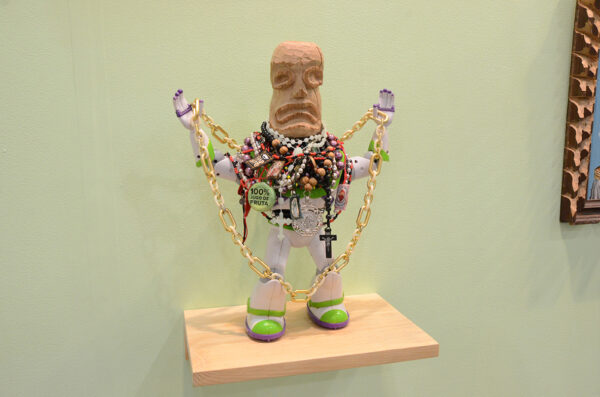
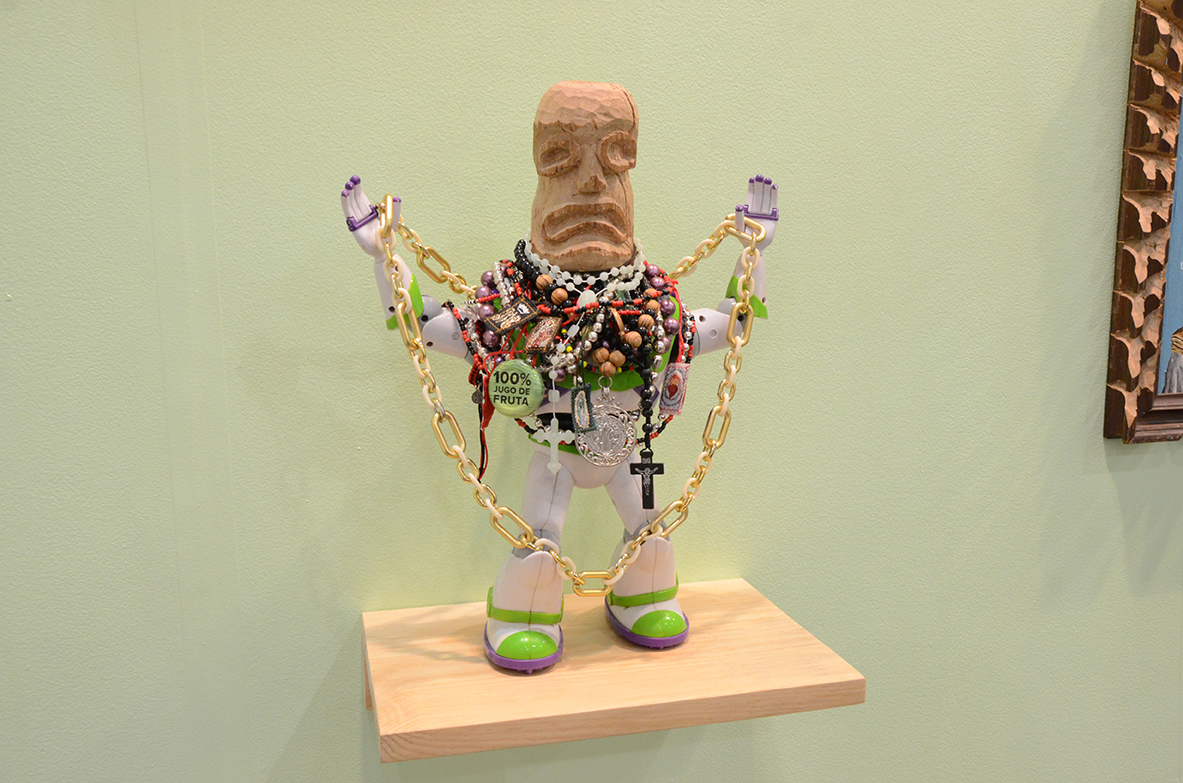
Boom boxes, turntables, volcanoes, and robots commingle in the covetable work of widely exhibited Mexican artist Cisco Jiménez. Whether working in painting, drawing, sculpture, collage, or installation, Jiménez owns a signature aesthetic that’s rooted in folk art and often enhanced with pointed use of text. Taking over an entire wall of YAM Gallery’s lively booth at Zona Maco, Jiménez’s paintings can be treated as eye candy or closely inspected for commentary rooted in pop culture and cultural identity. Taking these hallmarks a step further, Jiménez’s 2023 sculpture Robot Verde is a Frankensteined affair constructed from vintage toy parts and found objects, and accessorized with rosaries, chains, religious medals, and a juice bottle lid that reads “100% Jugo de Fruta.”
Work by Xavier Schipani at Big Medium’s booth
Xavier Schipani at Big Medium (Austin)
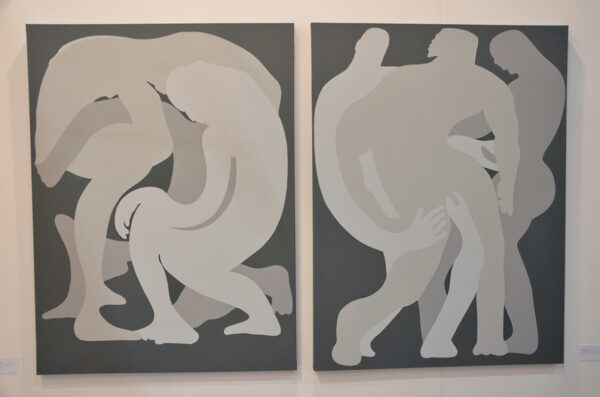
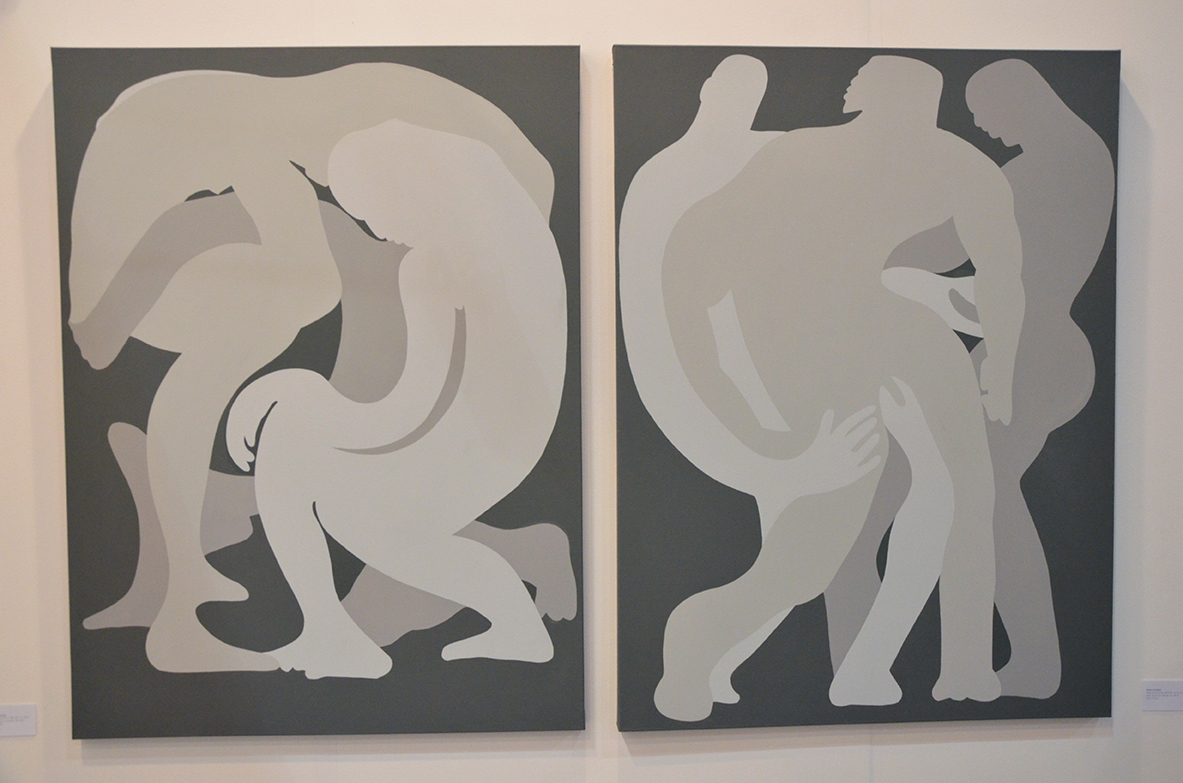
Born in Washington, D.C. and based in Austin, artist and trans activist Xavier Schipani explores gender identity and the human form in works he’s likened to “cave paintings.” Inspired by predecessors the artist considers his “transcestors,” Schipani’s paintings of intertwined bodies strike an intriguing balance between figuration and abstraction. Among the highlights of Austin-based gallery Big Medium’s Zona Maco booth, the multi-part 2022 painting Reflections of You, With Me, For Us is rendered in muted shades, but speaks loudly and even feels classical in nature — despite depictions of strap-on dildos.
Work by Pascale Marthine Tayou at Galleria Continua’s booth
Pascale Marthine Tayou at Galleria Continua (San Gimignano, Beijing, Les Moulins, Havana, Rome, São Paulo, Paris, Dubai)
Not bound by medium or thematic constructs, Cameroonian artist Pascale Marthine Tayou draws inspiration from travel and encounters with otherness. Characterized in his bio as “so spontaneous that it almost seems casual,” Tayou’s oeuvre encompasses anything from crystal totems donning statement spectacles and symbol-riddled murals to installations of rusted nails and whimsical interventions on the built environment. An eye-catching standout amid Galleria Continua’s feast of optical curiosities, Tayou’s swirling mixed-media work S/T exemplifies the artist’s fluid use of materials — in this case, hundreds of sticks of colored chalk.
Work by Sofía Táboas at Kurimanzutto’s booth
Sofía Táboas at Kurimanzutto (Mexico City, New York)
Originally a nomadic concept launched in 1999 by art star Gabriel Orozco and gallerists José Kuri y Mónica Manzutto, Kurimanzutto is a Mexico City destination with a second outpost in Manhattan. In a nicely varied space showcasing works by Orozco, Minerva Cuevas, Haegue Yang, Damián Ortega and Bárbara Sánchez-Kane, Mexico City-based artist Sofía Táboas’ 2022 piece Delta stands out as a compelling study of geometry and color. Evoking cut-paper collage and even origami, the sculptural painting evidences the artist’s keen interest in mosaics and imaginative use of commonplace materials.
Work by Merav Kamel & Halil Balabin at Braverman Gallery’s booth
Merav Kamel & Halil Balabin at Braverman Gallery (Tel Aviv)
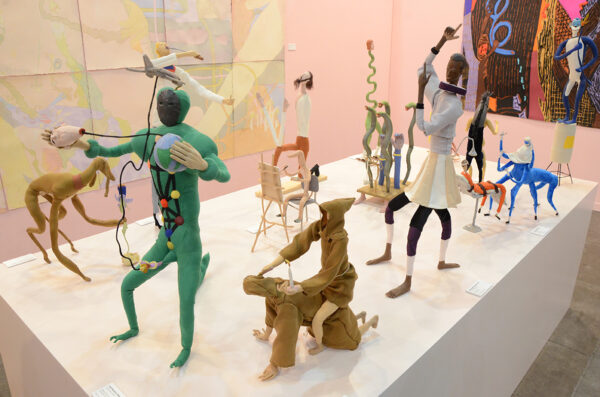
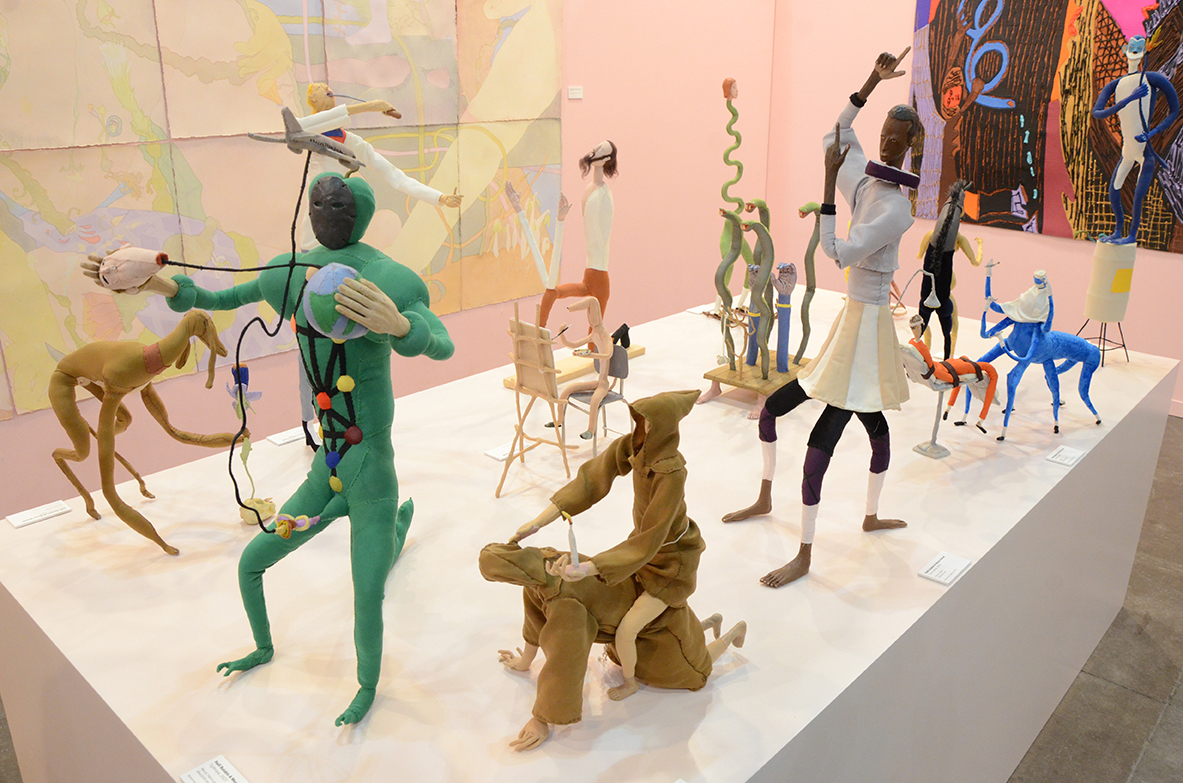
Collaborating as a duo since 2012, Israeli artists Merav Kamel and Halil Balabin work across a wide array of mediums, including painting, drawing sculpture, and installation. While they’re easily identifiable as human and animal forms, the pair’s curious soft sculptures exist in a decidedly surreal dimension. Nodding to folklore, mythology, rituals, and perversion, their tabletop arrangements are reminiscent of handcrafted dolls that never were. An anthropomorphic dog paints its Jesus-like master with disembodied arms, one hooded Druid-like figure rides another, and a bright-blue hybrid creature with six legs prepares to perform surgery on a human subject strapped to an operating table. Intricate and darkly cartoonish, the assembled cast of characters brings to mind sci-fi tropes and — as one viewer suggested — even the depraved horror of The Human Centipede.
Work by Megan Dominescu at Anca Poterașu Gallery’s booth
Megan Dominescu at Anca Poterașu Gallery (Bucharest)
Presented as part of a feminist dialogue with a dramatic parachute installation by collaborators Anetta Mona Chișa and Lucia Tkáčová, emerging artist Megan Dominescu’s tactile works employ the unlikely medium of hooked rugs to great effect. Bright and fuzzy at first glance, her irreverent takes on the nostalgia-laden craft quickly reveal loaded imagery addressing everything from political turmoil to Christianity. Cops wearing tutus and ballet flats dance across a wall alongside a three-eyed K9 unit, a crying woman clutches her head in a fit of rage, and a doctor brandishing a shovel and a handful of pills grins under a banner that reads “BIG PHARMER.” Musing about the 26-year-old Romanian American artist — who is “the CEO of Good Boy Security canine couture fashion company and one half of the hot and sizzly DJ duo Miss Clitoral” — gallery director Anca Poterașu offered, “She’s using humor as a weapon.”
Work by Dan Lam at Hashimoto Contemporary’s booth
Dan Lam at Hashimoto Contemporary (Los Angeles, New York, San Francisco)
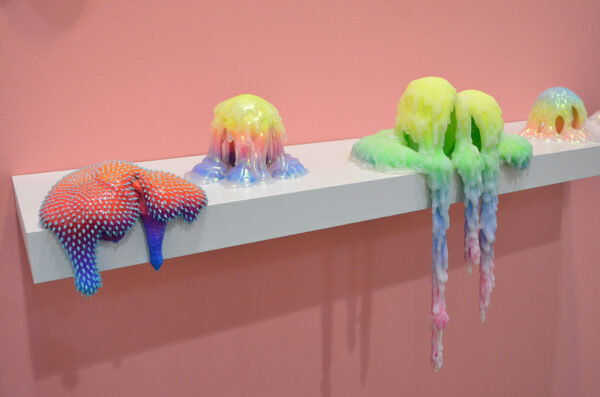
It makes perfect sense that Dallas-based sculptor Dan Lam is something of a social media sensation with nearly half a million Instagram followers. With polyurethane foam, epoxy resin, and acrylic paint as her mediums of choice, Lam creates “drippy” sculptures that bring to mind mutated jellyfish, technicolor microbes, melting candles, and slime experiments gone beautifully wrong. Vibrant and unabashedly weird, her works look right at home as curiosities on shelves, boldly blurring lines between fine art and conceptual home decor. When asked about the public reception to her work at Zona Maco, Hashimoto Contemporary founder Ken Harman Hashimoto confirmed that Lam is a crowd favorite at art fairs. “Her work is rewarding and fun,” he said. “People have been seeing it online for years and are always excited to see it in person.”














 Hunger: Understanding the Crisis Through Games, Dramas, and Songs