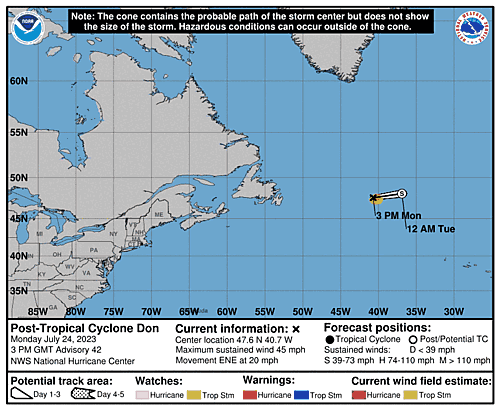
5-Day Uncertainty Track last updated Fri, 14 Jul 2023 08:33:40 GMT

Wind Speed Probabilities last updated Fri, 14 Jul 2023 09:22:53 GMT

The Supreme Court may have struck down a sweeping plan for student loan debt forgiveness, but under President Biden's new income-driven repayment plan, SAVE, borrowers stand to pay thousands less.
(Image credit: Jason Davis/Getty Images)


A successful landing by the spacecraft would make India the fourth country — after the U.S., the Soviet Union, and China — to achieve the feat.
(Image credit: AP)


Sure, car-sharing makes sense in a big city like Calgary, but what about mountain towns?
This post was written by Alison Green and published on Ask a Manager.
It’s four answers to four questions. Here we go…
1. Can I bring a heating pad to work for cramps?
I go into the office once a week. Today I’m on my period and having menstrual cramps — not debilitating by any means, but uncomfortable. On WFH days I heat up a microwaveable heating pad, which makes it much more pleasant. There is a microwave in the office kitchen — would it appropriate to bring in my heat pack and use it at my desk? Or would that be weird?
Nope, you’re fine. Do it. If anyone asks about it: “It’s helpful with a health condition” or “It’s helping with some pain.”
2. Job application wants my date of birth and Social Security number
I am a medical professional who is regularly sought after and I get a lot of messages from recruiters. I recently started looking for a second source of income and responded to one. The recruiter sent me an application (which made me fill out all the stuff that is already on my Indeed profile and CV, but okay, fine, I will do it). On the application form there were questions about my date of birth, Social Security number, marital status and place of birth. I have seen the date of birth and Social Security number questions many times and just put that I will supply them once we are moving forward with hiring. I also note I can legally work in the USA on the application. But I have never, ever, seen questions about marital status and place of birth. I think it is inappropriate and irrelevant and could set applicants up for discrimination. My gender, age, etc. does not matter in this role, either. Is this the new normal? I have not applied for any jobs in the past five years so am I out of the loop?
No, this isn’t normal and it’s hugely problematic for the reasons you say — plus giving out your Social Security number when you don’t actually need to puts you at risk of identity theft.
Are the fields required? If not, just skip them. But if they are, email the recruiter back and say, “Can you explain why you’re asking for info like my date of birth and Social Security number at this early stage? I’m happy to supply them if we reach the background check stage but supplying them now seems like a security risk to me and I wouldn’t typically do that.”
3. How to discuss my job at an abortion provider when interviewing
I am looking for a new job and I currently work for an abortion provider. The company I work for is not necessarily well known colloquially but it is the largest provider of abortions in my country (not the U.S.), and a simple search will tell people that.
I have encountered several awkward moments when interviewing for new jobs because of this. I will often be faced with “I don’t recognize the name of your employer, what do they do?” questions and I am stumped on the best way to answer them. Should I be up-front? I did that once and the tone in the room completely soured and the interview was quickly ended and. Is it better to talk about my company in general terms if someone asks?
I worry if I am not up-front and they google the company then they will know anyway (which has happened) and then I might look evasive. Once I said “we provide reproductive health services,” but when I was called back for a second interview, they told me that they looked up the company and I should have been more up-front, I should allow prospective employers to make a decision on what is acceptable or not, and my original answer came across like I was being deliberately deceptive. It felt like I was being lectured.
“We provide reproductive health services” or even just “we provide health care services” are both completely fine answers to this question. Accusing you of being deceptive was a ridiculous response from your interviewer and indicative of an issue on their end, not yours. Don’t let a weird interviewer throw you off and make you doubt the reasonableness of that answer in general.
You provide reproductive health services and it’s fine to say that.
4. How do I gracefully tell my manager I cannot take work trips?
I am a young professional in IT, who came into the profession in a way that’s a little unusual. I worked retail at my parents’ store for six years, then went to coding bootcamp and managed to land a job at a large corporation. I have fairly severe anxiety that is thankfully being managed at the moment, but large crowds and unfamiliar situations are a huge trigger for me. I mention this because I have very little experience with office etiquette and norms in a company of this size. Normally, I think people learn these social norms during college or internships, but I had to drop out of college multiple times due to mental health issues. I’m grateful for the job I have now, but there are some points at which I am very out of my depth.
My manager is asking if I’m interested in going to a professional conference out of town, with the implication that the only way to decline would be a scheduling conflict. I have never traveled without a family member before, and I’m worried that I will be trapped far from home with strangers. I’ve already had a bad experience when my department attended a large baseball game as a team-building activity — I managed to avoid having a panic attack, but it was slow torture for four hours and I felt extremely unsafe. Is there a way to decline the invitation without mentioning my anxiety?
Yes! If your sense is that you’re expected to go unless there’s a specific reason you can’t, you could say, “I’m dealing with a health issue that means I can’t travel right now — nothing to worry about, just something I need to take care of — but I appreciate you thinking of me for this!” This has the benefit of being true, and you don’t need to — and shouldn’t — elaborate beyond that.

Two decades ago, my life changed forever: hearing Bruce Schneier explain that "security" doesn't exist in the abstract. You can only be secure from some threat. A fire alarm won't protect you from burglaries. A condom won't protect you from mass shootings. It seems obvious, but how often do we hear about "security" without any mention of who is being made secure, and from which threat?
Take the US welfare system. It is very "secure" in that it is hedged in by a thicket of red-tape, audits, inspections and onerous procedures. To get food stamps, housing vouchers, or cash aid, you must navigate a Soviet-grade bureaucratic system of Kafkaesque proportions. Indeed, one of the great ironies of the post-Cold War world is that the USA has become a "Utopia Of Rules" (as David Graeber put it), subjecting everyday people to the state-run bureacracies that the USAUSAUSA set endlessly ridiculed the USSR for:
(The right says it wants to "shrink the US government until fits in a bathtub – and then drown it" – but not the whole government. They want unlimited government bloat for that part of the state that is dedicated to tormenting benefits claimants, especially if its functions are managed by a Beltway Bandit profiteer who bills Uncle Sucker up the wazoo for rubber-stamping "DENIED" on every claim.)
The US benefits system has a sophisticated, expensive, fully staffed anti-fraud system – but it's a highly selective form of anti-fraud. The system is oriented solely to prevent fraud against itself, with no thought to protecting benefits recipients themselves from fraud.
And those recipients – by definition the poorest and most vulnerable among us – are easy pickings for continuous, ghastly, eye-watering acts of fraud. These benefits are distributed via prepaid debit cards – EBT Cards – that lack the basic security measures that every other kind of card has had for years. These are simple magstripe cards, lacking basic chip-and-pin defenses, to say nothing of contactless countermeasures.
That means that fraudsters can – and do – install skimmers in the point-of-sale terminals used by benefits recipients to withdraw their cash benefits, pay for food using SNAP (AKA Food Stamps), and receive other benefits.
It's impossible to overstate how widespread these skimmers are, and how much money criminals make by stealing from poor people. Writing for Businessweek, Jessica Fu describes the mad scramble benefits recipients go through every month, standing by ATMs at midnight on the night of the first of every month in hopes of withdrawing the cash they use to pay for their rent and utility bills before it is stolen by a crook who captured their card number with a skimmer:
One of Fu's sources, Lexisnexis Risk Solutions's Haywood Talcove, describes these EBT cards as having the security of a "glorified hotel room key." He recounts how US police departments saw a massive explosion in EBT skimming: from 300 complaints in January 2022 to 18,000 in January 2023.
The skimmer rings are extremely well organized. The people who install the skimmers – working in pairs, with one person to distract the cashier while the other quickly installs the skimmer – don't know who they work for. Neither do the people who use cards cloned from skimmer data to cash out benefits recipients' accounts. When they are arrested, they refuse to turn on their immediate recruiters, fearing reprisals against their families.
These low-level crooks stroll up to ATMs and feed a succession of cloned cards into them, emptying account after account. Or they swipe cards at grocery checkouts, buying cases of Red Bull and other easily sold grocery products with some victim's entire SNAP balance.
Some police agencies are pursuing these criminal gangs and trying figure out who's running them, but the authorities who issue SNAP cards are doing little to nothing to stop the pipeline at their end. Simply upgrading SNAP terminals to chip-and-pin would exponentially raise the cost and complexity that thieves incur.
Indeed, that's why every other kind of payment card uses these systems. How is it that these systems were upgraded, while SNAP cards remain in mired in 20th century "glorified hotel room key" territory? Well, as our friends on the right never cease to remind us: "incentives matter."
When your credit card gets cloned, it's your banks and credit card company that pays for the losses, not you. So the banks demanded (and funded) the upgrade to new anti-fraud measures. By contrast, most states have no system for refunding stolen benefits to skimmers' victims.
In other words, all of the anti-fraud in the benefits system is devoted to catching benefits cheating – a phenomenon that is so rare as to be almost nonexistent (1.54%), notwithstanding right wingers' fevered, Reagan-era folktales about "welfare queens":
https://blog.gitnux.com/food-stamp-fraud-statistics/
Meanwhile, the most widespread and costly form of fraud in the benefits system – fraud perpetrated against benefits recipients – is blithely ignored.
Really, it's worse than that. In deciding to protect the welfare system rather than welfare recipients, we've made it vastly harder for benefits claimants who've been victimized by fraudsters to remain fed and sheltered. After all, if we made it simple and straightforward for benefits recipients to re-claim money that was stolen from them, we'd make it that much easier to defraud the system.
"Security" is always and forever a matter of securing some specific thing, against some specific risk. In other words, security reflects values – it reveals whose risk matters, and whose doesn't. For the American benefits system, risks to the system matter. Risks to people don't.
It's not just the welfare system that prioritizes its own risks against the people it exists to serve. Think of the systems used to fight drug abuse in clinical settings.
Medical facilities that use or dispense powerful pain-killers have exquisitely tuned, sophisticated, frequently audited security systems to prevent patients from tricking their doctors or pharmacists into administering extra drugs (especially opioids). "Extra" in this case means "more drugs than are strictly necessary to manage pain."
The rationale for this is only incidentally medical. Someone who gets a little too much painkiller during a medical procedure or an acute pain episode is not at any particular risk of enduring harm – the risks are minor and easily managed (say, by keeping a patient in bed a little longer while they recover from sedation).
The real agenda here is preventing addiction and abuse by addicted people. There's a genuine problem with opioid abuse, and that problem does have its origins in overprescription. But – crucially – that overprescription wasn't the result of wimpy patients insisting on endless painkillers until they enslaved themselves to their pills.
Rather, the opioid epidemic has its origins in the billionaire Sackler crime family, whose Purdue Pharma used scientific fraud, cash incentives, and other deceptive practices to trick, coerce, or bribe doctors into systematically overprescribing their Oxycontin cash cow, even as they laundered their reputation with showy charitable donations:
https://pluralistic.net/2021/07/12/monopolist-solidarity/#sacklers-billions
The Sacklers got to keep their billions – and people undergoing painful medical procedures or living with chronic pain are left holding the bag, subject to tight pain-med controls that forces them to prove – through increasingly stringent systems – that they truly deserve their medicine.
In other words, the beneficiary of the opioid control system is the system itself – not the patients who need opioids.
There's an extremely disturbing – even nightmarish – example of this in the news: the Yale Fertility Clinic, where hundreds of women endured unimaginably painful egg harvesting procedures with no anaesthesia at all.
These women had complained for years about the pain they suffered, and many had ended up needing emergency care after the fact because of traumatic injuries caused by undergoing the procedure without pain control. But the doctors and nurses at the Yale clinic ignored their screams of pain and their post-operative complaints.
It turned out that an opioid-addicted nurse had been swapping the fentanyl in the drug cabinet for saline, and taking the fentanyl home for her own use.
This made national headlines at the time, and it is the subject of "The Retrievals," a new New York Times documentary series podcast:
https://www.nytimes.com/2023/06/22/podcasts/serial-the-retrievals-yale-fertility-clinic.html
If the pain medication management system was designed to manage pain, then these thefts would have been discovered early on. If the system was designed so that anyone who experienced pain was treated until the pain was under control, the deception would have been uncovered almost immediately.
As Stafford Beer said, "the purpose of any system is what it does." The pain medication management system was designed to manage pain medication, not pain itself.
The system was designed to be secure from opioid-seeking addicted patients. It was not designed to make patients secure from pain. Its values – our values, as a society – were revealed through its workings.
(Image: Bjarne Henning Kvaale, CC BY-SA 3.0, modified)

Crump and Davis: Lost Artwork and Long-Forgotten Collaborations https://longforgottenhauntedmansion.blogspot.com/2023/06/crump-and-davis-lost-artwork-and-long.html
My Favorite Conspiracy Theory Confirmed https://cooldudezone.substack.com/p/my-favorite-conspiracy-theory-confirmed (h/t Kottke)
#10yrsago Lunch with the Financial Times https://www.ft.com/content/9a344ea2-e8af-11e2-aead-00144feabdc0#axzz2YuWbWNsa
Today's top sources:
Currently writing:
Picks and Shovels, a Martin Hench noir thriller about the heroic era of the PC. FIRST DRAFT COMPLETE, WAITING FOR EDITORIAL REVIEW
The Bezzle, a Martin Hench noir thriller novel about the prison-tech industry. FIRST DRAFT COMPLETE, WAITING FOR EDITORIAL REVIEW
Vigilant, Little Brother short story about remote invigilation. ON SUBMISSION
Moral Hazard, a short story for MIT Tech Review's 12 Tomorrows. FIRST DRAFT COMPLETE, ACCEPTED FOR PUBLICATION
Spill, a Little Brother short story about pipeline protests. ON SUBMISSION
Latest podcast: Ideas Lying Around https://craphound.com/news/2023/06/11/ideas-lying-around/
Upcoming appearances:
Armadillocon (Austin), Aug 4-6
https://armadillocon.org/d45/
Defcon (Las Vegas), Aug 10-13
https://defcon.org/
Recent appearances:
The Homeless Romantic
https://www.youtube.com/watch?v=wXn9wy5bHq0
Why the internet is getting worse
https://www.cbc.ca/listen/cbc-podcasts/209-front-burner/episode/15992083-why-the-internet-is-getting-worse
Latest books:
"Chokepoint Capitalism: How to Beat Big Tech, Tame Big Content, and Get Artists Paid, with Rebecca Giblin", on how to unrig the markets for creative labor, Beacon Press/Scribe 2022 https://chokepointcapitalism.com
"Attack Surface": The third Little Brother novel, a standalone technothriller for adults. The Washington Post called it "a political cyberthriller, vigorous, bold and savvy about the limits of revolution and resistance." Order signed, personalized copies from Dark Delicacies https://www.darkdel.com/store/p1840/Available_Now%3A_Attack_Surface.html
"How to Destroy Surveillance Capitalism": an anti-monopoly pamphlet analyzing the true harms of surveillance capitalism and proposing a solution. https://onezero.medium.com/how-to-destroy-surveillance-capitalism-8135e6744d59 (print edition: https://bookshop.org/books/how-to-destroy-surveillance-capitalism/9781736205907) (signed copies: https://www.darkdel.com/store/p2024/Available_Now%3A__How_to_Destroy_Surveillance_Capitalism.html)
"Little Brother/Homeland": A reissue omnibus edition with a new introduction by Edward Snowden: https://us.macmillan.com/books/9781250774583; personalized/signed copies here: https://www.darkdel.com/store/p1750/July%3A__Little_Brother_%26_Homeland.html
"Poesy the Monster Slayer" a picture book about monsters, bedtime, gender, and kicking ass. Order here: https://us.macmillan.com/books/9781626723627. Get a personalized, signed copy here: https://www.darkdel.com/store/p2682/Corey_Doctorow%3A_Poesy_the_Monster_Slayer_HB.html#/.
Upcoming books:
The Lost Cause: a post-Green New Deal eco-topian novel about truth and reconciliation with white nationalist militias, Tor Books, November 2023

This work – excluding any serialized fiction – is licensed under a Creative Commons Attribution 4.0 license. That means you can use it any way you like, including commercially, provided that you attribute it to me, Cory Doctorow, and include a link to pluralistic.net.
https://creativecommons.org/licenses/by/4.0/
Quotations and images are not included in this license; they are included either under a limitation or exception to copyright, or on the basis of a separate license. Please exercise caution.
Blog (no ads, tracking, or data-collection):
Newsletter (no ads, tracking, or data-collection):
https://pluralistic.net/plura-list
Mastodon (no ads, tracking, or data-collection):
Medium (no ads, paywalled):
(Latest Medium column: "Let the Platforms Burn: The Opposite of Good Fires is Wildfires" https://doctorow.medium.com/let-the-platforms-burn-6fb3e6c0d980)
Twitter (mass-scale, unrestricted, third-party surveillance and advertising):
Tumblr (mass-scale, unrestricted, third-party surveillance and advertising):
https://mostlysignssomeportents.tumblr.com/tagged/pluralistic
"When life gives you SARS, you make sarsaparilla" -Joey "Accordion Guy" DeVilla

BEAVERTON, OR—As part of the brand’s renewed effort to appeal to the average consumer, Nike rolled out an empowering new ad Thursday challenging viewers to just try getting up from the fetal position. “Come on, pal, you can do it,” said tennis star Serena Williams who, along with football quarterback Russell Wilson,…
This post was written by Alison Green and published on Ask a Manager.
Remember the letter-writer who didn’t like her super popular coworker and the coworker complained to their boss about it? Here’s the update.
About a year ago, I wrote in about a coworker (Susan) who complained to the boss because I didn’t like her. I tried being nice, but it was obvious she saw right through me. At the time, I couldn’t put my finger on why I didn’t like her – she seemed genuinely nice, and she is the darling of the office. For a while, things seemed to improve after I spoke to her (after many recommendations!)…but I think it might have been the old adage about keeping your friends close and enemies closer!
I’ll keep this brief, because I could go on about all of the intrigue and drama. Here are a few highlights:
– She likes to say, “I’m just a secretary.” This bothers me for a number of reasons, first and foremost because there is no “just” about it. Second, it only seems to come out when we have asked her to take on something new or when she doesn’t want to deal with a particular customer.
We’ve recently changed our accident procedure within our department. If an accident occurs with a company vehicle and only one mechanic is on duty, Susan should call in the second mechanic. The first accident that occurred after the change, Susan did not make the phone call. When asked, she said she is “just a secretary” and “overtime decisions” aren’t up to her. I attempted to explain the decision has been made and that she’s just carrying it out…but we eventually had to reassign the task to the first mechanic.
– Frequent emails to our grandboss detailing everything my boss and I are doing “wrong.” Is there room for improvement? You betcha. Are we sometimes just doing the best we can amidst historic staffing shortages? Often. Are we operating without much training and guidance because our predecessors were long gone before we started and left few, if any, training/SOP documents behind? Always. When we go to Susan with questions, does she offer suggestions or historic insight? No, because she’s “just a secretary” and didn’t handle any of these items in the past.
Here’s my favorite example. We had an emergency situation pop up – just one of those freak weather incidents that caused a delay in transporting. My boss decided to handle the delay personally and left the office. Because of the delay, the folx left in the office received call after call after call. Meanwhile, I wasn’t scheduled to come in for another 45 minutes – and I live 30 minutes away, so my boss decided not to call me because he knew I wouldn’t arrive much sooner. That incident generated multiple emails to our grandboss, who then questioned my boss’s decision to leave and why I wasn’t here to help answer the phone. (Apparently, this wasn’t the first conversation based on such an email – other emails had been about me but nothing my boss or grandboss thought needed to be brought to my attention – but it was the last, because my boss threatened to resign if Susan thought she could do his job better. My grandboss told us to have patience with Susan, because there have been some big changes in the office, and she is struggling with them.)
– Solo missions of mercy. As I mentioned before, Susan is much-beloved around here and is widely considered to be sweet, thoughtful, and charming. I’m not saying she isn’t – I’m just saying she makes sure she has that recognition. One of our employees was injured a few weeks ago. Because his wife is also disabled, I told him we would go grocery shopping, arrange transportation – anything they need. As soon as he limped out the door, Susan announced that she was spearheading the operation…and she did. She has sent him a couple of care packages and arranged for a former employee to transport him to doctor appointments, church, etc. The employee called to tell Susan and Nancy (another coworker) thank you. I asked Nancy about it, and I told her I was a bit hurt that I wasn’t included because I had offered to help. Apparently, Susan arranged them all in secret, and Nancy just happened to pick up the phone with a question about the grocery order and so added a couple take home meals onto it from her.
Honestly, at this point, there are days where I feel like she’s just being difficult. It feels like she is anchored in the past – we aren’t the people who previously held these roles, and we just can’t do things the same way anymore because of the employee shortage. I know her original complaint was that I didn’t like her…but, I feel like what she meant was, “She’s different.” I can’t help that. And even if I could, would I really want to be friends with someone like this? That’s a big nope. And I’m not even all that sorry that might hurt her feelings.
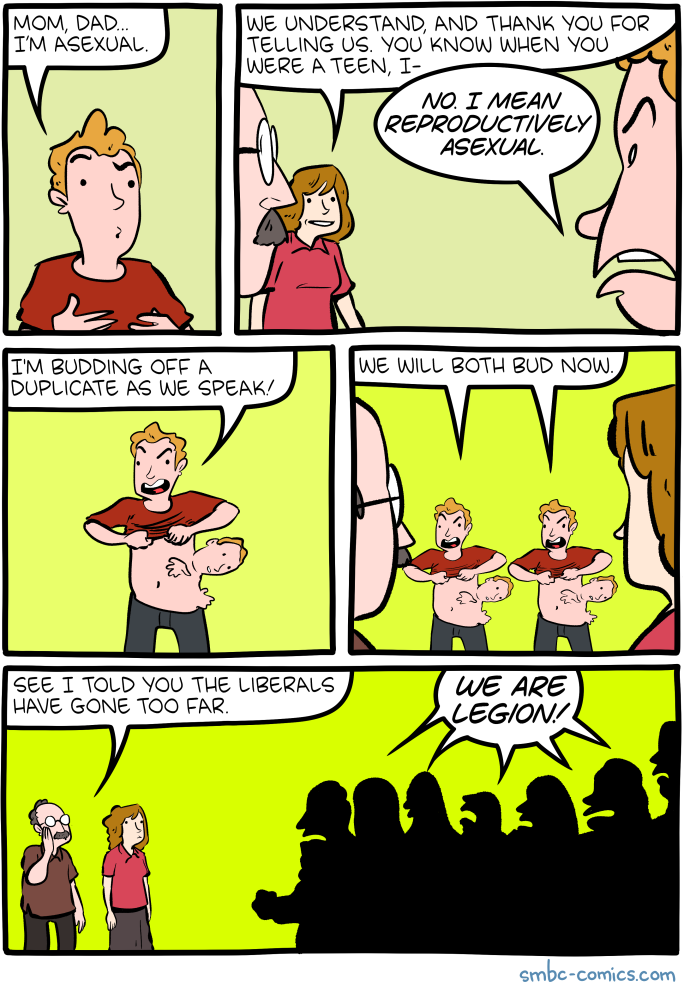
Hovertext:
Free movie idea: guy goes on a road trip to find himself, keeps asexually creating duplicates. Title: Buds

The new league makes its debut near Dallas on Thursday when the Texas Super Kings play the LA Knight Riders. The league's backers hope to cultivate a new generation of U.S. cricketers.
(Image credit: Bikas Das/AP)


Opinion is divided over whether to admit Ukraine to the intergovernmental military alliance NATO, with U.S. president Joe Biden leading those opposing Ukraine’s admission, to the reported frustration of Ukrainian president Volodymyr Zelensky. The Onion looks at the pros and cons of Ukraine joining NATO.
This post was written by Alison Green and published on Ask a Manager.
It’s almost time for Mortification Week 2023, and in preparation we need to hear your stories of mortifying experiences at work — yours or other people’s. Maybe you mistakenly emailed erotica to your team …or flashed your entire team during a video call … or gave a person two noses in an interview Photoshop test. Whatever it is, we want to hear in the comments about your stories of embarrassment at work.
And remember, mortification is universal and makes us human, and it is often hilarious.
“Remote work poses risks to physical health.” — The Hill
“Swollen eyes, a hunchback, and claw-like hands: What remote-workers will look like by 2100.” — The Daily Mail
Listen, it’s not me, Capitalism, saying you should be in an office under the watchful eye of a boss who controls your time and every move. It’s actual doctors, health experts, and even the World Health Organization who are worried about your sedentary lifestyle, which everyone knows can be improved by sitting in a poorly ventilated office for eight to ten hours a day.
If it were up to me, a “journalist” in this corporate-controlled media conglomerate, I’d be all for you having the healthy work-life balance that remote work has helped you achieve. It’s obvious to anyone paying attention that this remote/hybrid working arrangement has been good for you, your family, and your overall well-being—honestly, you look ten years younger. But it’s not up to me, is it? It’s up to the data, which clearly indicate that people are better off when they’re active, and what’s more active than listening to Simon tell you about his mortgage anxiety as you huddle over the water cooler located fifteen feet from your desk?
Check out this picture of a gargoyle who we’ll call Anna. Notice its gnarled hands. Gaze into its red, swollen eyes, and check out her hunchback. This is you in ten years, pal. But it doesn’t have to be you if you return to the office and give up the remote work, which has allowed you to take walks during the day, eat healthy home-cooked lunches, and do yoga during the Zoom progress report meetings.
Here’s the part where I will point out how using screens can damage your eyes and imply that remote work is somehow responsible for this visual deterioration and not the proliferation of screens themselves and our collective phone addictions. You probably won’t even stop and think about how you stare at a screen much more in an office setting since your boss and coworkers are there, because you’re too weirded out by that gruesome mutant golem Anna.
Natural light is the best thing for human wellness, so your windowless cubicle is probably the best place for you. These ergonomic chairs can help your posture, but they only work when your boss can micromanage your time. I know that makes no sense because wouldn’t an ergonomic chair work just as well at home? But look at this unrelated CDC graph I’ve pasted into this article about how remote work is terrible and be mesmerized by all these magical numbers.
Why are our corporate overlords desperate to get you back in an office? It’s not just that your life is expendable and your value to the system is only ever based on your ability to earn money for them; it’s that a commercial real estate crash is out of the question because most CEOs you serve own those office buildings. How do you expect them to function if they only earn partial income from those leases? Those yachts aren’t going to buy themselves.
Blood clots, migraines, chronic pain, becoming a dybbuk—you’re at risk for all these maladies when you work from home. The solution? Sit in a car for two hours every day for a soul-crushing commute, or perhaps jostle with masses of unhappy workers on sardine-packed trains. However you decide to get to the office is your business, just don’t be late.
Remember the pandemic? That’s the reason people started working from home—it was to protect their health. But now there’s a more significant, more horrible threat to your health, and that threat is working from home. Did you know working from home will lead to almost certain death for every single human being? Whereas working in an office means you’ll probably be immortal. At the very least, the monotony of your days will make them seem as if they’re dragging on endlessly. Wait, stop thinking about that last sentence. Look at this picture of Anna again—isn’t she hideous?
See you in the office at 9 a.m.

Meow Wolf’s “The Real Unreal” in Grapevine
The arts entertainment company Meow Wolf is set to open its Grapevine location, The Real Unreal, to the public this Friday, July 14. This week, prior to the grand opening, the space has been open for invitation-only preview days. Among the invitees were community partners, artists, friends and family of artists who contributed to the site, members of the press, and others. If you are planning to experience the space, here’s a recap of what to expect.

Meow Wolf , “The Real Unreal” greeter.

Meow Wolf , “The Real Unreal” house
Like the Santa Fe, Las Vegas, and Denver portals, as Meow Wolf calls them, The Real Unreal at the Grapevine Mills Mall has a thoroughly developed narrative and is laid out like a mystery to be solved. Similar to the original location in Santa Fe, when visitors enter the space they find a full-size two-story home. Walking inside, it is clear from the start that things are a bit amiss. Throughout the home are “Missing” signs for Jared Fugua, a young boy who “disappeared.” Clues, like videos, letters, diary entries, and small plant-like paintings on the walls with a phone number (and hashtag to text it), can be found throughout the home.
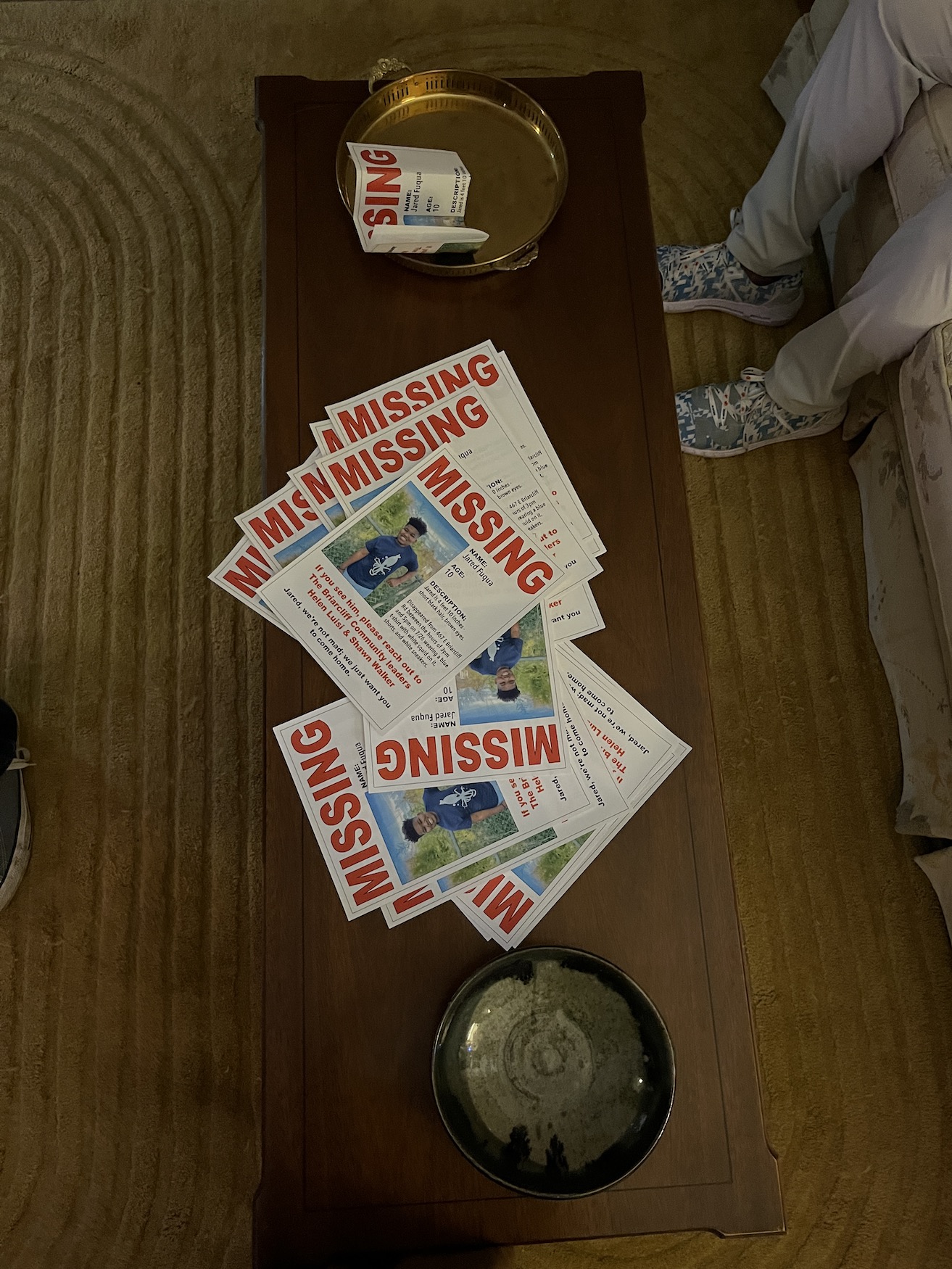
Meow Wolf, “The Real Unreal” MISSING signs.
While some visitors go straight to the narrative, others are drawn into the secret passageways of the house, which take them into the Unreal side of the world that has been created. Visitors can take a slide through a washing machine, open a refrigerator door and walk through a passage into a circular space with more refrigerator doors, and enter a closet and exit into another world.
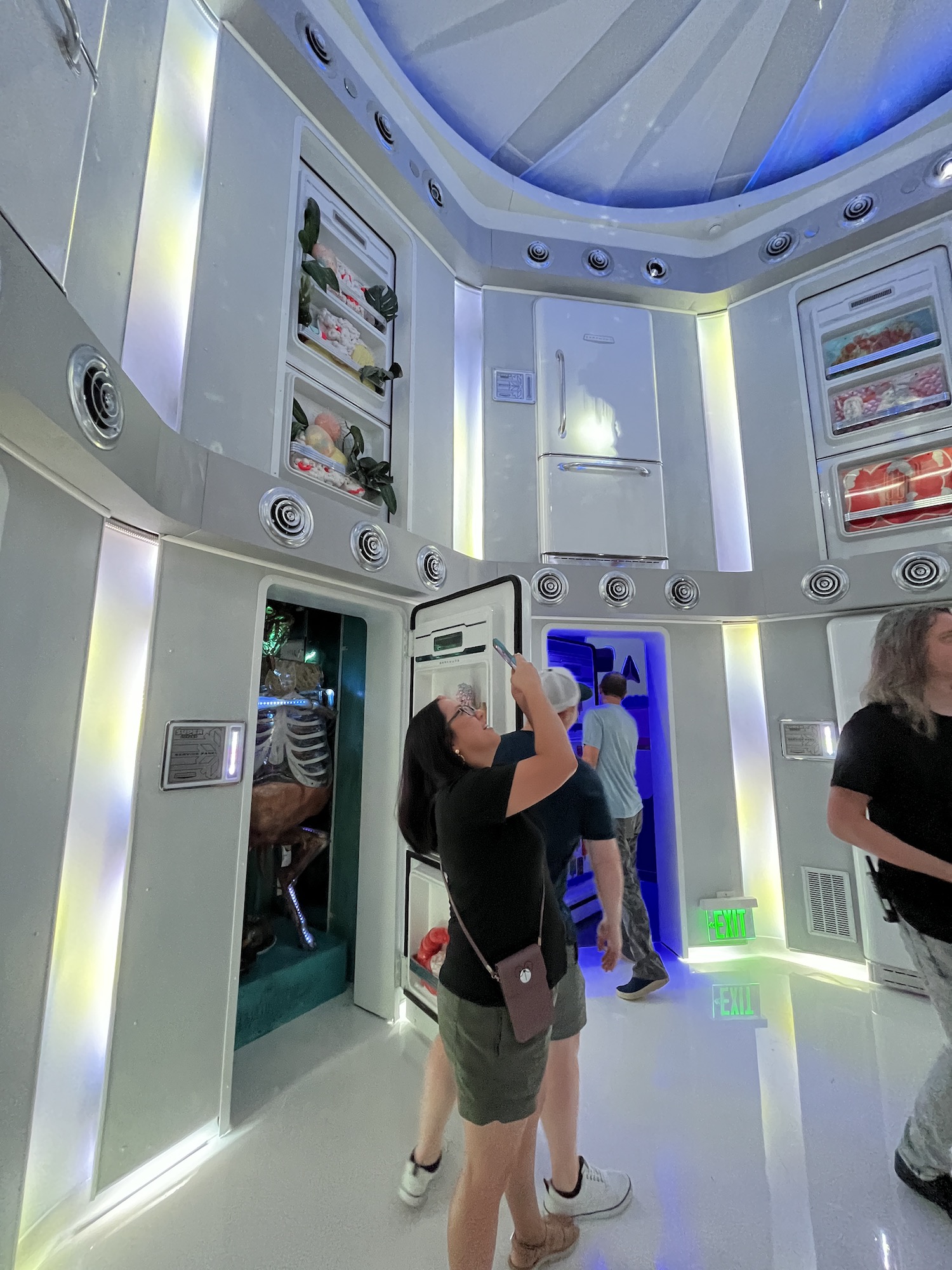
Meow Wolf , “The Real Unreal” refrigerator room.
Regardless of if you choose to search for Jared or to simply explore the space, expect to spend upwards of an hour at Meow Wolf. The various rooms and hidden gems seem endless, and each room and every object is a work of art. From the crafted photographs and writings that fill the house to the murals and intricately designed themed rooms in the Unreal, over 40 North Texas artists and more than 30 in-house Meow Wolf artists created the elements that bring the space to life.
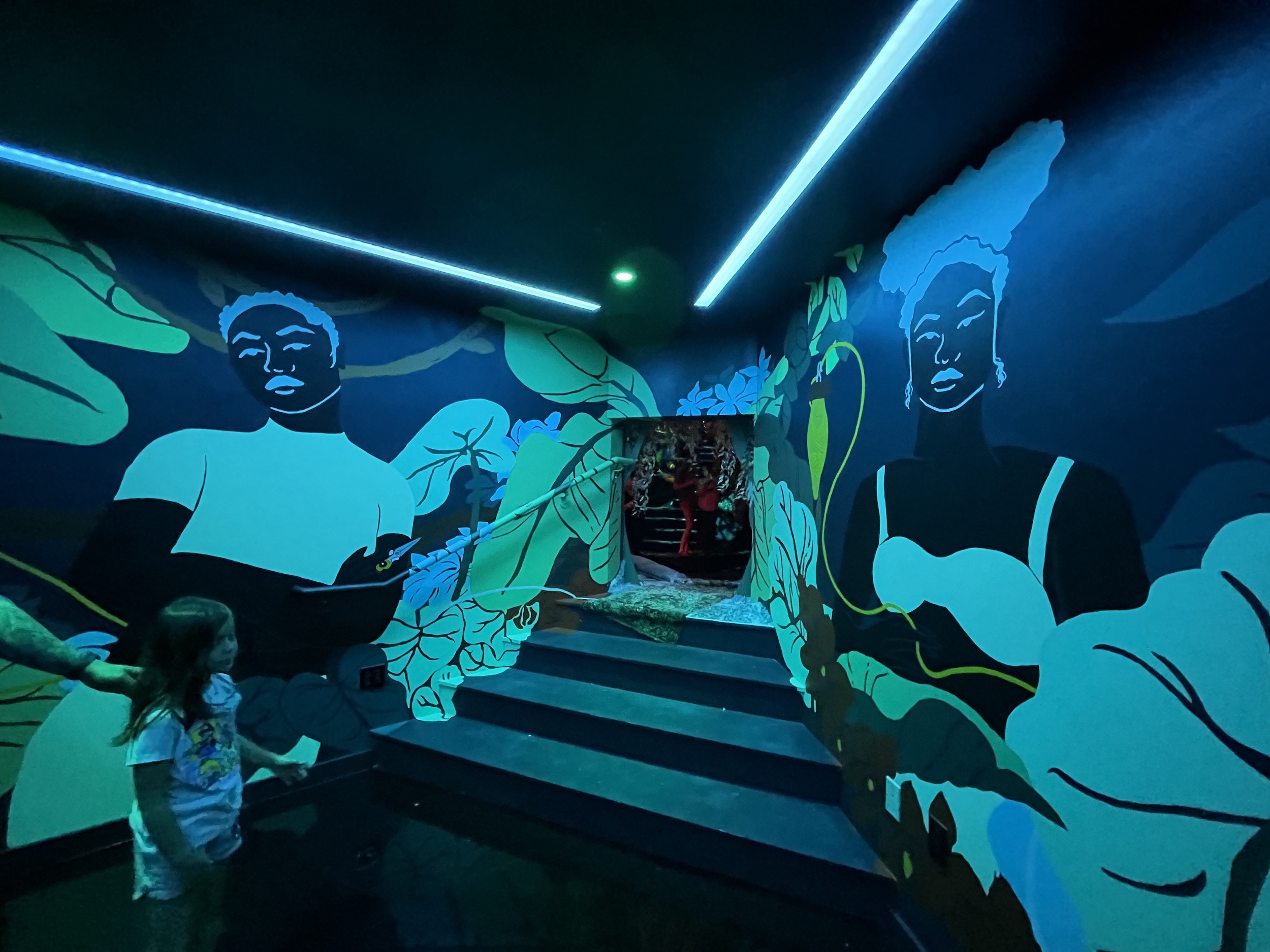
Meow Wolf , “The Real Unreal” murals by Desireé Vaniecia.
Glasstire spoke with a handful of people who attended the preview days, and here are some of their reflections on the experience:
Isaura Lopez-Sanchez, a Bilingual Distance Learning Teacher at the Amon Carter Museum of American Art, remarked, “Meow Wolf was an exciting interactive experience. I had no idea of what to expect, but was pleasantly surprised at all the exhibits and curiosities one can find. Definitely a must to wear comfy clothes and shoes!”
Mónica Hernández, a North Texas classroom teacher, described the experience this way: “Meow Wolf transported us through unexpected portals into the minds of each artist. It challenges all your senses in the best way.”
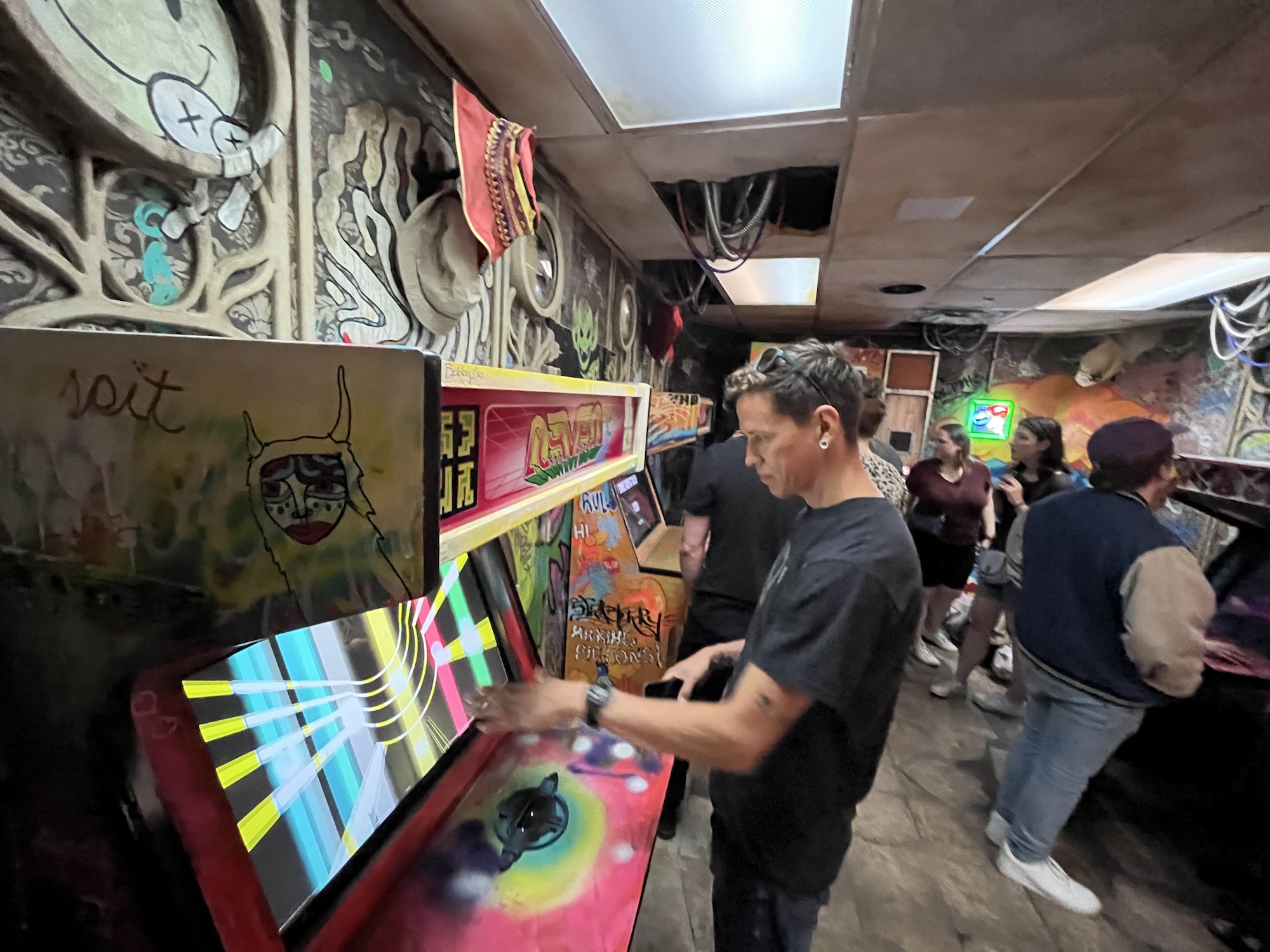
Meow Wolf , “The Real Unreal” arcade room.
James Padrón, a local electrician who has done work at the Grapevine Mills Mall, remarked, “From my point of view, [Meow Wolf] is a lighting person’s dream and nightmare. I would love to see what went into the design of it all. I did notice lots of control boxes in the cut outs that weren’t covered yet and it had me curious.”

Meow Wolf ‘s “The Real Unreal.”
Jessica Thompson-Castillo, a nonprofit arts consultant, stated, “I was really impressed with Meow Wolf Grapevine. I went to the one in Santa Fe and loved it, but thought that Grapevine would be smaller or fractional in some way. Not true — It’s incredibly dense with so, so much to look at, and [it was] so exciting to see art from local artists I recognized. It’s easy to be cynical about Meow Wolf, having gone to a couple of disappointing selfie museums myself, but art literally transforms every nook and cranny of the space, which makes it a unique experience. I can’t wait to go back, personally!”

Austin Ivy at Meow Wolf’s “The Real Unreal”
Austin Ivy, a computer engineering student at Rose State College who runs the YouTube channel Third Eye Psychology, spent nearly two full days at The Real Unreal — one day from 10 a.m. to 8 p.m., and a second day from 10 a.m. to 4 p.m. He noted, “My two favorite things about Meow wolf is the narrative element, and also the community aspect. There’s a ton of really awesome and diverse people (LGBTQ+) that I would never really have a chance to interact with. I spent a long time in the military, so it’s really nice to have a safe space to reintegrate into society while learning about other people.”
He continued, “Walking in, my only goal was to get some cool footage. It’s funny how fast that changed. I was not really planning on talking to people or making friends, but as we all know, plans are the first thing that goes flying out the window. My experience at The Real Unreal was incredible. I cannot talk highly enough about the exhibit, or the team that put it all together.”
Click here to watch a video Mr. Ivy made about Meow Wolf. (Please note, it does contain spoilers related to The Real Unreal’s story.)

Meow Wolf ,”The Real Unreal” black light forest
While many will find The Real Unreal to be exciting and enjoyable, others may get overwhelmed with the space. The lights, sounds, and crowds of people will make the experience less enjoyable for some.
Anne Lenhart, Director of Collections and Exhibitions at the Meadows Museum, admitted that she hadn’t done her research on what to expect from Meow Wolf. She described the experience as “Chaos. Like Alice in Wonderland staged in 2023 — an unending rabbit hole where I hadn’t eaten the right cake.”
Ms. Lenhart went on to explain, “The museum professional in me was absolutely floored by the construction quality of the elements in the space and the amazing levels of creativity. There were tools in the garden shed that were actual branches that merged into a normal shovel handle. I kept touching them to confirm they were actually wood (and they were!)… but I was overly distracted by visual and audible cacophony — the jarring impact was amplified by the crowds of visitors. If I plugged my ears and tuned everything out, I could look closely at the really magical little bits of art that were everywhere, but inevitably someone would bump into me, and I was jolted back into an environment that felt confusing and chaotic. I left with a pounding headache, feeling overwhelmed and claustrophobic.”
Ms. Lenhart advised that people who have issues with sensory overload or anxiety in large crowds should look into purchasing tickets at unpopular timeslots. There are also pockets of quiet spaces where people can get away from the crowds, but these can be hard to locate. Meow Wolf encourages visitors who need a moment in a space like this to speak with one of their representatives.

A calm room inside Meow Wolf ‘s”The Real Unreal.”
Ms. Lenhart also spoke of another issue that some may find with the space. If you come looking to dive into the story but don’t know how and where to start, the whole experience can quickly feel overwhelming. She explained, “In addition to my general anxiety, I left feeling really angry. I try to leave art exhibitions with an understanding of what the artist intended, regardless of my personal opinion of the work. This experience made me feel like I was back in high school: a chubby gay kid in rural Oklahoma who wasn’t allowed to ‘get’ the inside joke.”
Glasstire’s Assistant Editor, William Sarradet, who recently visited Meow Wolf Santa Fe, noted, “It is interesting to see the lessons that the organization has learned from their success. The two venues are quite similar in themes and function, with the addition of larger walkways and improved visitor mobility for the Grapevine location. My remaining curiosity is how Meow Wolf will either future-proof their installs for durability, or how the organization will use their spaces as living exhibitions which change over time.”
Meow Wolf Grapevine, The Real Unreal, opens this Friday, July 14. To learn more and purchase tickets, visit the Meow Wolf website.
The post Meow Wolf Opens its Grapevine Location This Friday; Here’s What to Expect appeared first on Glasstire.


The 5-year-old female southern sea otter was first seen hijacking surfboards in Santa Cruz last September. Officials successfully drove the otter away from the area, but she has since returned.
(Image credit: Mark Woodward/@NativeSantaCruz)


European drug safety officials have launched a probe into Ozempic after patients reported thoughts of suicide or self-harm. What do you think?
The Biden administration plans to provide Ukrainian troops with controversial weapons known as “cluster munitions,” a battle tool that has been banned by more than 100 nations and lambasted by human rights groups for indiscriminately killing civilians. What do you think?
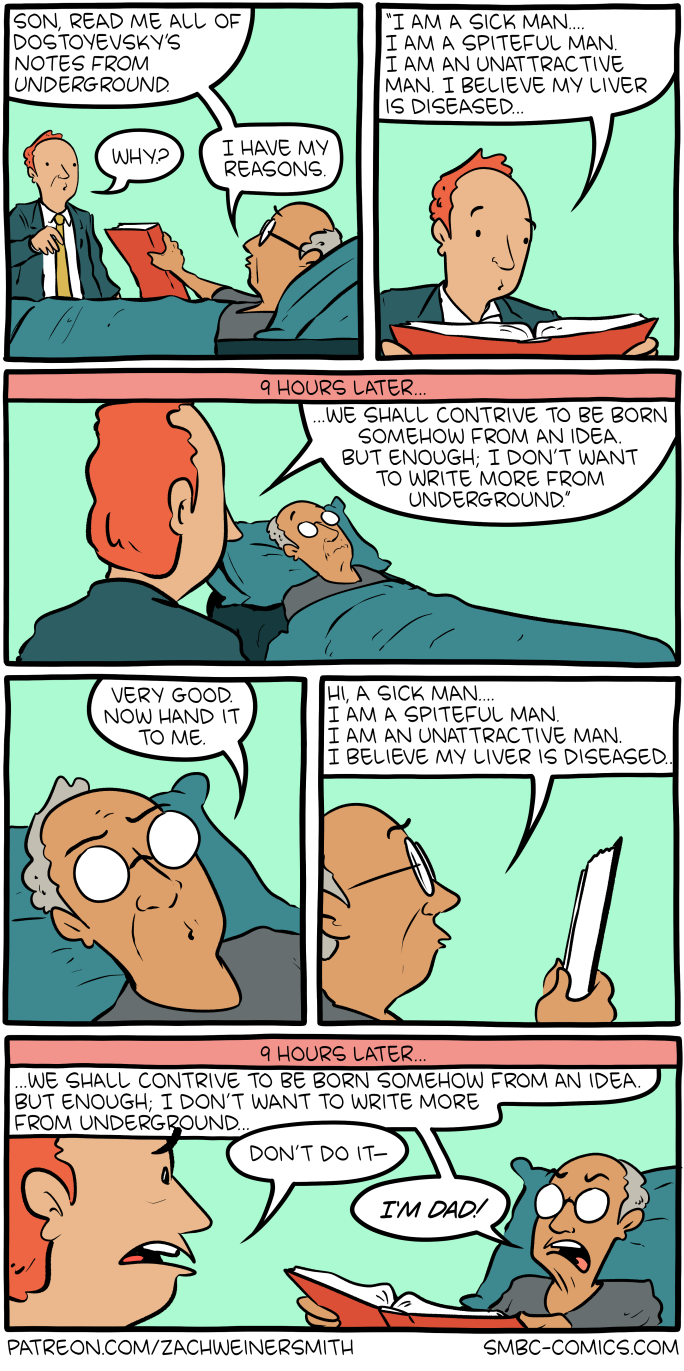
Hovertext:
Suddenly regretting that I didn't just draw a word for word graphic novel of the entire book twice.

Farias was discovered alive in Houston last month. Details that have emerged since then indicate that Farias had in fact returned home and was living with his mother.
(Image credit: Texas Center for the Missing/Screenshot by NPR)


This article originally appeared on Inside Climate News, a nonprofit, independent news organization that covers climate, energy and the environment. It is republished with permission. Sign up for their newsletter here.
As a massive heat dome engulfed much of Texas in 100-degree-plus weather throughout the second half of June, breaking temperature records throughout South and West Texas, renewable energy output also set new records. Renewables’ contribution to the Texas grid reached an all-time high on June 28, when 41.6 percent of the electricity on the grid was coming from wind and solar power during peak hours.
With demand for electricity also setting a record in late June, the grid operated by the Electric Reliability Council of Texas (ERCOT) has so far held up to the challenge. But summer is only beginning, and Texans are already enduring high electric bills.
John Nielsen-Gammon, the Texas state climatologist at Texas A&M University, said he expected the extreme heat to continue in the coming months, and noted that the highest temperatures in the eastern half of the state typically come in late July and August.
Texas consumes more energy than any other state and has also connected the most renewable energy resources to the grid, with 773 additional megawatts of solar projects added in June. Yet despite the record contributions from renewables, experts say the grid’s efficiency is diminished by a strained transmission infrastructure that can’t handle the full load that renewable energy can deliver.
The official notes from a June 20 ERCOT board meeting said the grid operator expects “export constraints from Panhandle, West Texas and areas of the Rio Grande Valley during high wind conditions” for the rest of the summer. That same day the meeting was taking place, Texans were being asked to conserve energy as the gap between supply and demand narrowed in the crippling heat.
“Depending on weather conditions and generation output, we could see tight grid conditions periodically this summer,” a spokesperson for the grid operator told Inside Climate News. “ERCOT will continue to monitor conditions and keep Texans informed.”
Ed Hirs, an energy economist and lecturer at the University of Houston, noted that more transmission lines and battery installations are coming to Texas in a flurry of new construction and will help stabilize the grid. But they “cannot come online fast enough” to replace retiring coal and natural gas plants that are near the end of their life spans or no longer profitable, he said.
A report released last month by the nonprofit advocacy group Americans for a Clean Energy Grid gave ERCOT a “D+” on transmission planning and development, a grade that was about average for the nation’s regional grids but well below those in the Midwest and California.
The report describes an “almost doubling of congestion” on the ERCOT grid from 2020 to 2021, and estimated the value of energy that could not reach Texas consumers due to crowded transmission lines in 2022 at $2.8 billion.
“Greater congestion equates to higher energy delivery costs and limits the opportunity for desired generation resources to add power to the grid,” the report said.
Transmission lines are like the highways of an electrical grid: When energy production is high, all of the lanes fill up. When that congestion occurs, a portion of the electricity coming from renewable sources is wasted because it can’t reach businesses, households and other consumers that need it. This is called curtailment.
Elise Caplan, vice president of regulatory affairs at the American Council for Renewable Energy, said that lines running from West Texas to population centers further east were the most congested, periodically forcing wind and solar power companies to ”stop generating even though they are fully capable of doing it.”
“If you’re not generating, you’re not getting paid for that electricity,” Caplan said.
The economic burden on solar and wind industries could get worse before it gets better. In Texas, up to 5 percent of renewable generation is currently curtailed, according to a 2022 study by the Energy Systems Integration Group that used ERCOT’s own data analysis, but 20 to 28 percent could be curtailed by 2030.
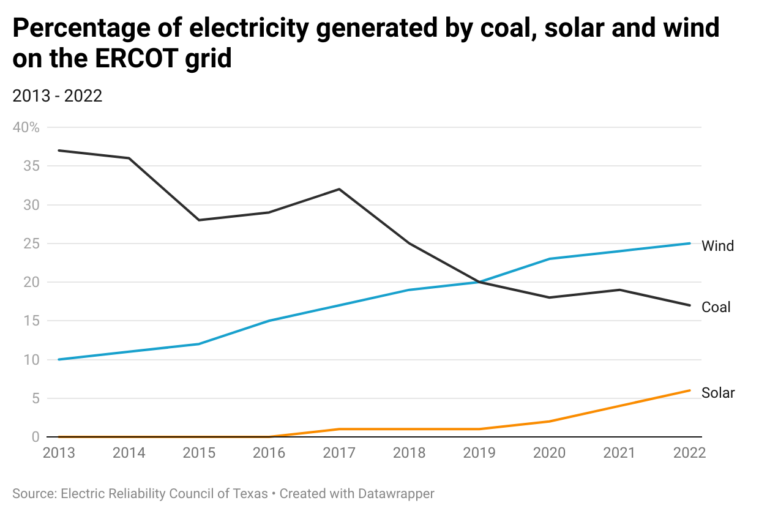
Despite the shortage in transmission capacity, the share of renewables in ERCOT’s fuel mix has been steadily rising over the past decade as coal’s contribution has gone down and natural gas and nuclear have remained relatively steady.
On June 28, when wind and solar generation set a new record, Joshua Rhodes, a research scientist at the University of Texas at Austin and nonresident fellow at Columbia University, pointed out on Twitter that the record could have been even higher if not for limited transmission capacity.
Although real-time curtailment data is hard to come by, Rhodes said in an interview, he would “look for negative pricing out in West Texas” and “solar not producing as much as it’s forecasted to” as indicators that operators are curtailing renewable energy.
On June 10, ERCOT rolled out a new reserve power program known as ECRS. The grid operator pays power generators to set aside a portion of the energy they are capable of producing on standby, according to a council spokesperson. If the grid needs an extra boost to meet demand, the ECRS power can turn on in about 10 minutes and provide 2,000 megawatts. Right now, the reserve power is mostly generated on the spot by natural gas plants, but it could include more energy stored in batteries, Hirs said.
Hirs said the new standby system allowed for “massive price gouging” by power generators on June 20, when the wholesale energy cost reached about $5,000 per megawatt-hour.
As the grid operator, ERCOT pays power generators for energy, and utility providers pay into ERCOT. By paying the generators to stay offline, it saves a backup supply for emergencies. But, in a recent newspaper column, Hirs estimated that Texans paid more than $1 billion extra in electricity costs from June 16 to 20 because of the excessive prices paid for the electricity that had been held back under the new program and the overall effect of a tightening energy supply.
“That’s coming out of consumers’ pockets and going to somebody’s pockets on the generator’s side without any increase in service,” he said.
On top of the added cost of paying for extra reserve power, the inadequacy of transmission lines prevents cheaper wind and solar from bidding into the market. “We end up with essentially dirtier, more expensive power,” Rhodes said.
Separate from ECRS, ERCOT has a regular congestion pricing mechanism under which it charges utilities extra fees for the cost of turning on more power plants, mostly natural gas, to meet demand when wind or solar is being curtailed. Hirs says the grid operator views this as a way to “construct conditions conducive” to building transmission: In theory, it will be more profitable over the long run for power companies to build new transmission lines than to continue paying congestion fees.
There is some indication that it’s working, as the industry will spend $3.4 billion this year on building 470 miles of new transmission lines and upgrading 808 existing miles, according to data from ERCOT. About $11.6 billion worth of transmission projects are in the planning stages or under construction.
But Hirs said the pace of building and upgrading transmission has not kept up with the need, and not enough actors in the ERCOT market have the incentive to invest in transmission.
On another track, the Biden administration’s Infrastructure Investment and Jobs Act of 2021 authorized $13 billion in federal funding for transmission projects through the Grid Resilience Innovation Partnerships program. Part of the funding will support large interregional lines to connect the nation’s disparate electrical grids.
Rhodes said that interconnecting ERCOT with the Southwest through El Paso is “an active area of research.” If the grids were connected, they could “supply power to people cheaper with fewer power plants and with a cleaner grid mix than keeping Texas islanded from the rest of the system,” he said.
One major obstacle to interconnection is political, Rhodes said: the enduring “Texas psyche of doing it on your own,” without being subject to federal regulation of interstate commerce.
Pattern Energy, a global renewable energy developer, is working on a line called Southern Spirit Transmission with the goal of allowing ERCOT to connect with the Southeast. The project could link the grids without bringing Texas’s grid operator under the regulatory authority of the Federal Electric Reliability Council because the new line will run from Mississippi to Louisiana to the Texas-Louisiana border, and a partner project using DC connections will fill the 40-mile gap to connect with the rest of ERCOT.
Adam Renz, director of project development at Pattern Energy, said the project would enable ERCOT to send power to the Southeast when the region needs access to clean energy, and allow ERCOT to “pull from Southeastern markets when the ERCOT grid is experiencing a scarcity event.”
Renz said the project has been approved by FERC and state agencies in Texas but is awaiting state approval from Louisiana and Mississippi. Construction on the $2.6 billion, 320-mile long project is set to begin in 2025, with completion projected in 2028.
As climate change drives more extreme weather, including torrid temperatures, projects such as Southern Spirit Transmission could help the region limit power interruptions.
If Texas is suffering now, the future looks far worse. “We’ve projected a further doubling of the number of 100-degree days over the next few decades,” the state climatologist, Nielsen-Gammon, noted.
The post Texas Wastes Renewable Energy During June Heatwave appeared first on The Texas Observer.



/https://static.texastribune.org/media/files/ca3efeb49b399a2c13db3d04fde08bed/0616%20Comal%20County%20JT%20TT%2053.jpg)

/https://static.texastribune.org/media/files/deca096136c8b79b23f088c35efdde89/DPS_presence_Oct_30.jpg)
