Shared posts

11 Mar 04:28

Oscar Organizers Worried Guests Can Tell Gift Bags Just Junk They Bought At Dollar Store Few Hours Ago

LOS ANGELES—Saying they were kicking themselves for leaving such an important task until the last minute, organizers of the 96th Academy Awards told reporters Sunday they were worried Oscar nominees would be able to tell the gift bags were full of junk purchased at a dollar store a few hours ago. “I know they aren’t…

Read more...

11 Mar 04:28

Scourge

https://www.oglaf.com/scourge/

10 Mar 21:02

'Saturday Night Live' lampoons GOP Sen. Katie Britt's State of the Union response

by Joe Hernandez
Alabama Sen. Katie Britt speaks at a press conference at the U.S. Capitol on December 7, 2023. Britt delivered the Republican response to President Biden

Scarlett Johansson made a surprise appearance on the NBC sketch comedy show to poke fun at the Republican rebuttal to President Biden's State of the Union address.

(Image credit: Kevin Dietsch)

09 Mar 12:08

“Leave the Kitchen Light On”: Únies González at Stinson House, Houston

by Susan Chadwick

Photographs are a defense to the fear of forgetting.
Únies González

Even this show’s title, Leave the Kitchen Light On, triggers memories, while also acting as an evocative metaphor: a light in the dark, illuminating a comforting domestic space, showing the way home. A return. A signal. A message. An invitation.

Únies González started as a poet in high school in Houston, writing while taking photographs. With the encouragement of their sister, Danielle, and their teachers at the University of Houston, they moved further into photography. Their remarkable installation at Stinson House, in a modest Houston bungalow, is a multi-sensory, multi-level experience that is almost too overwhelming to appreciate in one visit. It is a shrine to family, to love in modern times, to memory, place, and identity. It is an ode to the past, in tension with the present.

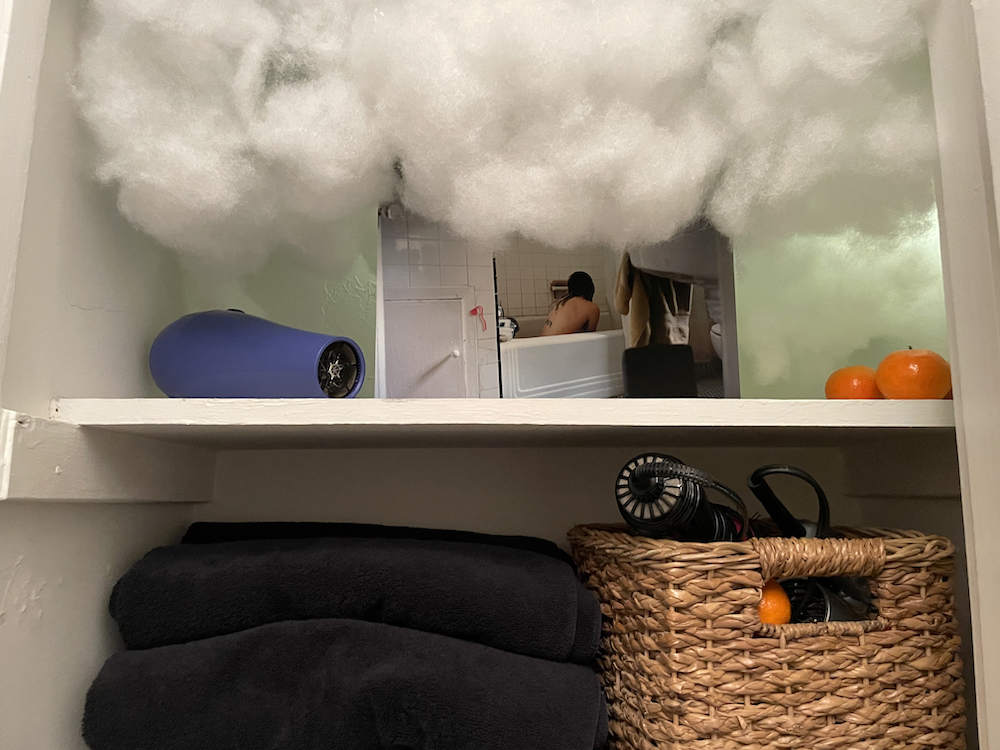
Candid snapshots taken with their Instax, the Fujifilm version of the Polaroid instant camera, are found in unexpected places, in the way that memories can surface during routine domestic activities: an image of an intimate moment between folded towels in the cloud-filled linen closet; drifting, reflecting on oneself while soaking in the tub or looking in the mirror; a thought occurring while looking up at the attic door. (The thought then falling away — like a photo that Únies pointed out was actually becoming unstuck, as they were standing in the hallway under the attic door.)

Photo of personal effects in a linen closet

Linen Closet installation as part of Únies González’s “Leave the Kitchen Light On”

Photo of an installation in a bathtub

Bathtub installation as part of Únies González’s “Leave the Kitchen Light On”

Photo of an installation with mirrors

Self portrait with mirrors in a shower, as part of Únies González’s “Leave the Kitchen Light On”

But there are more objects besides the photos. Their grandmother’s worn armchair sits in the front room, their late father’s comforter covers the bed. Pulling out a dresser drawer reveals intimate moments among the underwear. And in the bedroom closet, a small TV plays home movies of friends and family, filmed mostly by Únies with their JVC Camcorder. 

In the small living room another tiny, portable TV plays tapes of Little Bear, an animated television series from the 1990s, which taught “about friendship, love, and rainy days,” according to Únies. In their poetry, Únies addresses depression as a character named “Daisy,” a personification that began when they were a teenager.

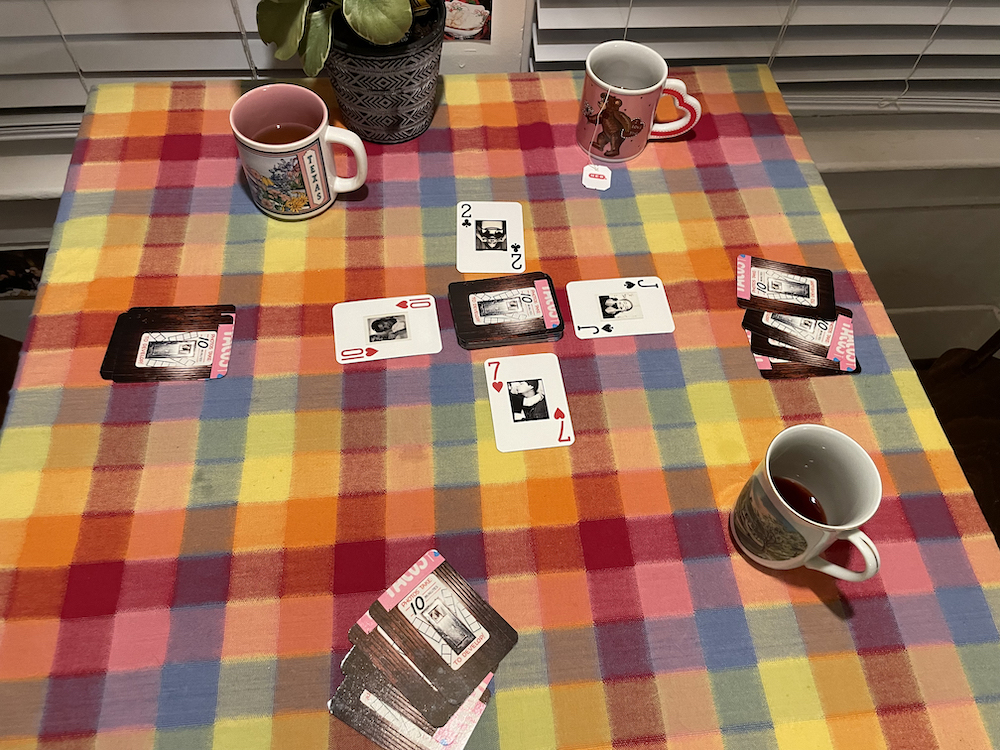
Family photos explode out of antique boxes, spreading like a whirlwind up and across the corner walls. Playing cards featuring color photo booth snaps of Únies and their boyfriend are arranged like a game that is still in process on the kitchen table. Tossed into the kitchen trash is a wedding dress.

Installation view of photos exploding from a corner

Exploding wall of photos as part of Únies González’s “Leave the Kitchen Light On”

Installation photo of a card game on a kitchen table

Card Game as part of Únies González’s “Leave the Kitchen Light On”

For the crowded opening, a small living room couch, table, and rug were set up on the front lawn under an eerie light, like a haunting memory — or a safe place — in the dark. On the front porch, a young man dressed in pajamas and a robe, hired to play a welcoming father figure, sat in a rocker, smoking an empty pipe. Handwritten signs on the door urged visitors to take off their shoes, wipe their feet, be respectful, and follow the rules. 

Inside, a hand-drawn map and instructions are displayed on the front room wall. Volunteer docents, followers of Únies’ Instagram page, helped explain the project to the largely young crowd. Small stickers by Lisa Frank, a children’s product illustrator from the 1980s and 90s, indicate where a visitor is meant to open shelves and drawers. There are even photos under tables, in the dishwasher, and in the sink and toilet, a kind of “I Spy game of memories,” says Únies.

Photo of a setee and coffee table installation in a front lawn

Front Lawn installation as part of Únies González’s “Leave the Kitchen Light On”

The Importance of Piles

And everywhere there are piles of bright orange tangerines, or even a solitary tangerine. The citrus scent mingles with the perfume of votive candles, spread throughout the rooms of this shrine. The repetition is like a chant, but instead of repeating sounds, it’s a repeating visual object. The tangerines are obviously mementoes, and/or even an offering. Únies explains that their mother used to pack tangerines in their childhood lunch box, and that together with their boyfriend they share tangerines as a satisfying snack. Únies associates the fruit with love and with their mother, who happens to have bright orange-red hair and who was actively involved in helping Únies select and install elements of the show.

Mixing with the aromas are the sounds of Leonard Cohen on a record player. In the small office, a narrow closet is set up as a memorial to Unies’ beloved grandfather. There is a tape that plays his favorite music. Lining the closet floor are bright orange marigolds, a flower used since ancient times to honor and remember the dead, and piles of Chiclets, a candy-coated chewing gum whose name derives from the Nahuatl word for “sticky things.” Young Únies, then named Megan (they changed it, recently, to a family name), used to go with Papa, as he was called, to eat at a popular Mexican restaurant on Fairview. He would hand Únies Chiclets when he paid at the cashier.

Next to the closet is a desk covered with crumpled pieces of paper inscribed with handwritten poems by Únies. More poems litter the floor. Piles of 35 mm film swarm like nightmarish black snakes in the corner. A photo of Únies’ mother and father driving on Westheimer, taken from the back seat, hangs on the wall.

Photo of two people in the front seats of a car

Photo of the artist’s parents driving on Westheimer, as part of Únies González’s “Leave the Kitchen Light On”

A Collaborative Effort

The installation is obviously a collaborative effort, accomplished with the participation and encouragement of family and friends. Únies’ mother, for instance, pinned the rising whirlwind of family photos to the corner walls in the living room. She also insisted on displaying rows of cartoon-covered Welch’s jelly jars that Únies used to drink out of as a child. The glass jars are lined up on shelves in one of the kitchen cabinets that visitors are meant to open. The glass display also seems like a kind of shrine. The neon-colored cartoons of childhood are a repeating theme, echoed in the surreal semi-figurative and graffiti-like paintings by Únies’ boyfriend, Dillon Barnes (whose artist name is Leche), hanging on the walls.

Friends offered advice and labor. And the installation is a labor of love, conceived and constructed out of love, a sort of temple, and a stage filled with charged objects. The candid photos, appearing in the midst of routine activities like folding a towel, make real the process of remembering, of reflecting, perhaps on connections and missed connections. Leave the Kitchen Light On is an unusual multimedia experience: poetic, thought-provoking, and moving.


Únies González’s Leave the Kitchen Light On is on view at Stinson House (2718 Ruth Street, Houston) through March 16. There will be a closing reception from 4-8 p.m. The show is on view by appointment: 713-805-9377

The post “Leave the Kitchen Light On”: Únies González at Stinson House, Houston appeared first on Glasstire.

09 Mar 12:07

Comic for 2024.03.09 - Bush

New Cyanide and Happiness Comic
09 Mar 04:09

09 Mar 01:48

Ozempic Maker Triumphantly Announces New Drug That Makes Obese Person Disappear Entirely

COPENHAGEN, DENMARK—In what the pharmaceutical company hailed as a major breakthrough in weight management, Ozempic maker Novo Nordisk triumphantly announced a new drug Friday that makes obese people disappear entirely. “Although our previous treatment could significantly reduce the patient’s BMI, what we’re talking…

Read more...

09 Mar 01:48

Jake Paul To Fight Mike Tyson

Internet personality turned prizefighter Jake Paul, 27, will box former heavyweight champion Mike Tyson, 57, in a match that will be streamed on Netflix in July. What do you think?

Read more...

09 Mar 01:47

Wilderness Survival Tips for Women in Male-Dominated Fields

by Leslie Ylinen

Venturing into male-dominated fields like tech, politics, and finance is generally considered safe for women. But we’re still not out of the woods quite yet. Every year, there are countless reports of career-damaging and annoying encounters with men in the wild. Some simple common-sense tips can help you safely navigate these fields without being eaten alive or called “just a diversity hire.”

Make yourself look bigger and use assertive body language.

Lower every chair other than your own in the conference room before the meeting. Wear pants and sit with your legs apart. Stand with squared shoulders and confidently provide your opinion. Do not back down or break eye contact even if you suspect the CTO knows you have a protein bar in your bag.

Do not feed the men.

They have a natural fear of women, and feeding them lowers these inhibitions. Leave baked goods and birthday treats at home or keep them sealed in an airtight bag in your desk so they don’t come sniffing around.

Stand up and stand out.

It’s a common misconception that as a woman, you should camouflage yourself, keep your head down, and try to go through the male-dominated fields undetected. The men aren’t used to you being there and will lash out if surprised. Warn them of your presence by attaching a bell to your backpack. Clap your hands when rounding corners. They are accustomed to being applauded, and this will put them in a passive state. Announce your presence in a room with something agreeable to men like, “Lambo!” or, “AI is the future!”

Learn to identify tracks and droppings
in the fields so you know what
species you are likely to encounter.

If you find psilocybin microdose gummies, that’s a sure sign a tech founder is around the bend. Tufts of fleece from a vest or a Zyn nicotine pouch? You’re in finance bro territory.

Understand pecking orders.

In certain fields, the men have the advantage of bigger physical size, knowledge of the cultural terrain, and unearned access to natural resources like money, protection of the herd, presumption of higher skill level and rank, and dignity. They have assigned themselves alpha status in the pack by default. You’ll need to be exceptional at your job to earn the same respect as a mediocre man. Remember: you are assumed incompetent prey until proven otherwise.

Speak slowly in nonthreatening, low tones.

Their ears are different. Anything over a horny whisper registers as shrill to the men, and you will be perceived as a threat.

Never assert that any musician
or professional athlete is the “GOAT.”

The men will interpret this as a challenge to spar, and it will put you in the path of a dangerously boring interaction.

Walk. Don’t run.

Getting ahead of a man too fast will trigger a predator-prey reflex, and your promotion will be dismissively explained as “due to high-hanging fruit,” which will be followed by a pause and then, “I’m talking about boobs.” Make calculated, deliberate moves to avoid ruffling feathers. Be sure to back out of meetings slowly, but if the men start discussing cryptocurrency or VR, that’s an emergency, and you will need to get away quickly. Scream, “THE DOW IS DOWN 10 PERCENT!” while running in a serpentine pattern. They’ll be distracted by their portfolios, and their longer legs don’t corner well.

Recognize the behavioral signs of impending aggression.

The men charge or attack only when they feel threatened. If you see their face reddening, or they’re interrupting more than usual, or there’s an increase in their vocal speed or volume, those are warning signs that either you’re about to be left off the invite for the client pitch or your boss is going to confide in you that he and his wife are nothing more than roommates.

When all else fails, fight back.

If the preventative and de-escalating measures above don’t work and you find yourself in a high-conflict encounter with a man in the male-dominated fields, fight to defend yourself. In this unfortunate instance, you’ll have to resort to telling him you had sex with his mother last night. He will usually retreat after this, as men are fiercely protective of their food, their money, and their mothers’ chastity.

Stay together.

There is strength in numbers. As you climb to the top, you may encounter another woman on the same path. The worst thing you can do is throw her to the wolves to save yourself. Travel in packs and pave the way for future women traversing the male-dominated fields. Nature is cruel. You’re better than that.

09 Mar 01:44

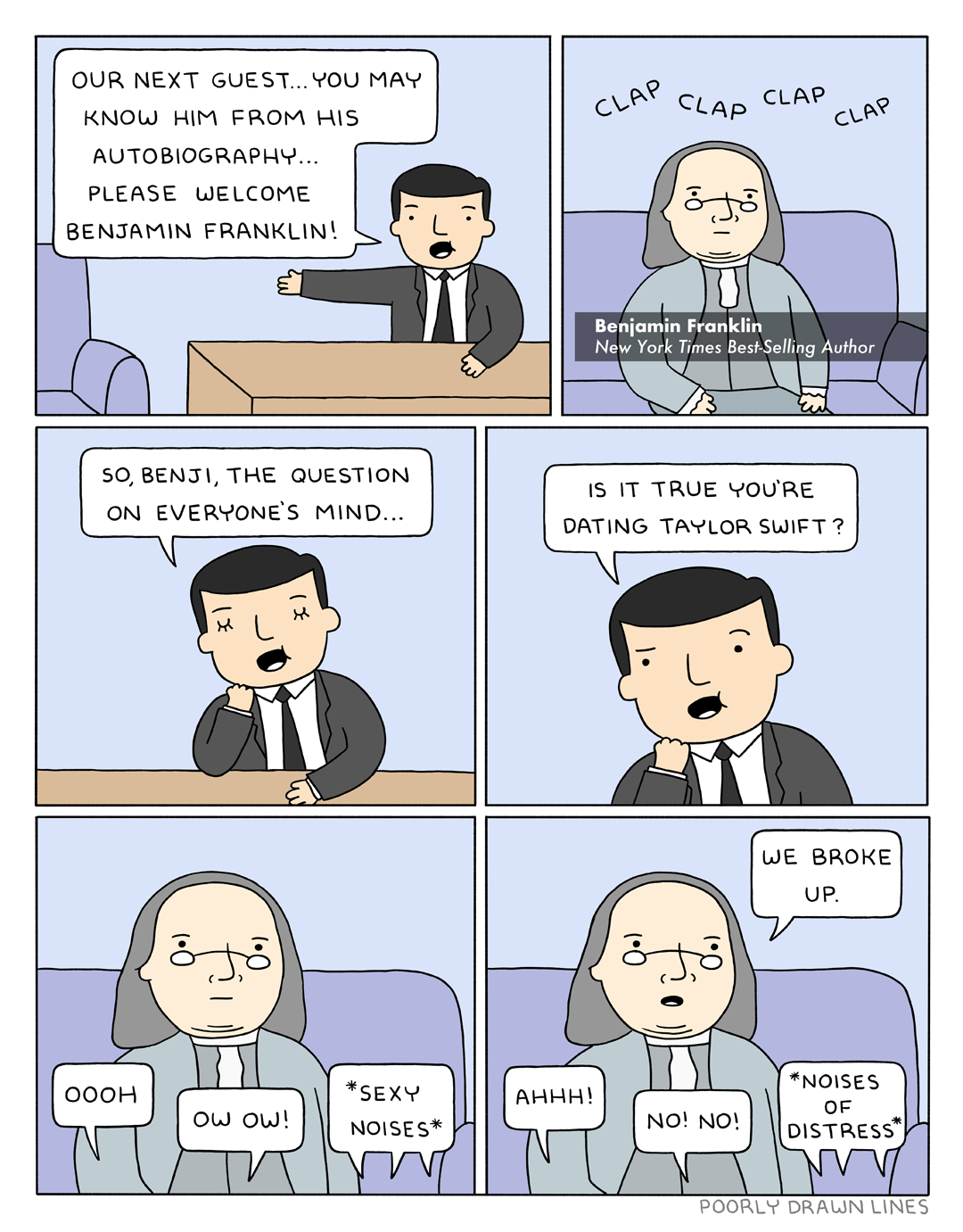
Our Next Guest

by Reza
09 Mar 01:44

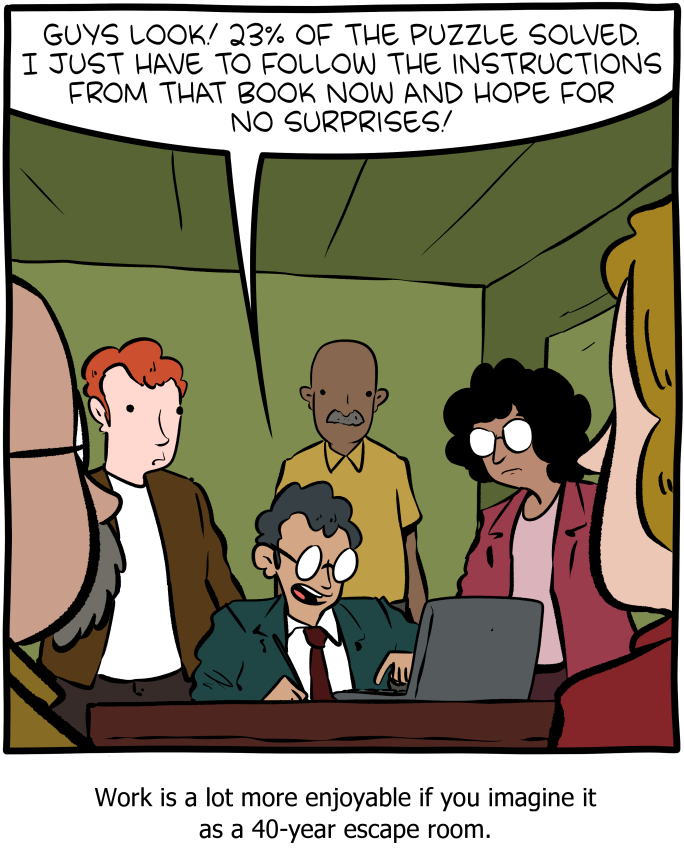
Saturday Morning Breakfast Cereal - Puzzle

by Zach Weinersmith


Click here to go see the bonus panel!

Hovertext:
Really, you should just think of every moment of your life as a series of escape rooms. It's healthy.


Today's News:
08 Mar 18:35

scifigrl47:taavicleric:scifigrl47:massachusetts-official:consolecadet:The Worcester library is...

scifigrl47:

taavicleric:

scifigrl47:

massachusetts-official:

consolecadet:

The Worcester library is getting some local press coverage for its March late fee forgiveness program, which is called “March Meowness”. In short: if you have lost/damaged fees, come to the library with a picture of a cat, any cat (drawings are ok) and they’ll waive any outstanding fines on your library card.

Fav quote: “Even if you don’t have a cat in your life, you can still draw one,” said library Executive Director Jason Homer. “Even if it’s one of the big cats, like a tiger or a lion, and we’ll be excited to see those.”

Official Post of Massachusetts

How can you post this and not show the official announcement image?? Bask in its gloriousness.

OK. This is very cute. I hope it’s a step in the library choosing to eliminate fines.

Great news! Worcester Public Library does not have late fees! This program is SPECIFICALLY aimed at providing amnesty for people with missing or damaged items, and the library has said that so far it’s allowed more than 400 accounts to be unblocked. They called special attention to children’s accounts with missing items from the beginning of the pandemic, suspecting many of these were lost or accidentally discarded during unexpected school closures.

I forgot to return a book after my mother died. I was a mess. I was depressed. I was taking care of my dad. I found it years later buried in a closet and was so embarrassed of having ‘stolen’ a library book that it took me years MORE to go back with it. And I had the money to pay for it! I could’ve fixed this! But I didn’t, and it kept me from the library for YEARS, because I couldn’t handle the judgement.

This is the library saying, you can come back. It’s okay. We’re not mad. We want you to come back. Let us make it easy for you.

Show us a cat.


08 Mar 18:33

How to Accept an Award Without Making Your Voters Regret It

by Chandler Dean

In this column, professional speechwriter Chandler Dean provides partly satirical, partly genuine “How To” advice focused on a hyper-specific subcategory of speeches—from graduation speeches to wedding toasts to eulogies, and all the rhetorical occasions in between.

- - -

Oh my god, they said your name! It’s you! Everyone’s looking over here! Quick, get up, get up! This counts as part of your time! Move, move, move! And here’s what you should do when you get up there:

Take the sheet of paper out of your pocket that has the remarks you’ve already written, and read it.

I don’t care how much of a long shot you think you are. If you’re nominated, take like thirty minutes—one hour tops—to cobble something together. If you lose having written a speech, it will be an exercise in gratitude. If you win having not written a speech, it will be an exercise in feeling just how quickly forty-five seconds can go by when you don’t have a plan to fill them.

And yes: write it down on paper. It strikes the balance. Reading off your iPhone makes you seem careless: “This award wasn’t important enough for you to break out pen and paper?” But reading off a printed, typed document might go too far in the opposite direction: "How long ago did you become convinced you would win? Long enough to restock on toner?

Writing your speech longhand is just thoughtful enough to make you seem invested, but also just casual enough to provide plausible deniability that maybe you just scribbled down some thoughts during the technical awards.

You can also try to memorize it, but I cannot be held accountable if you forget to thank your wife.

Meanwhile:

If you didn’t write a speech, open with that.

If the reason you didn’t write a speech is because you didn’t think you would win, say so. It can earn you a lot of goodwill, not just because it makes you look humble, and not just because it lowers expectations for what you’re about to say, but because it creates compelling dramatic tension. (Same goes for any mitigating factors that might affect your performance. Tell us, for instance, if you took a big bite of a delicious meatball sub right before you had to get up.)

Much as it is not in my professional interest to admit it, the language of your speech is not necessarily the first thing people will remember about it—particularly in the case of an awards speech, when the fact that you would be speaking was not a foregone conclusion. The audience is eager to see your genuine reaction to this victory.

So, if the truth is that you’re frazzled and have no idea what the hell you’re about to say, let us in on that. It will make us listen to the rest of your speech more closely, and the fact that you pushed through will probably stick out in our minds more than whatever you actually say anyway.

That said, this only works if it’s plausible that you could lose. If you’re Christopher Nolan and directed a film titled Oppenheimer and you say you didn’t prepare anything because you didn’t know you would win, you’ll look like more of an idiot than a guy who built an atomic bomb because he thought it would lead to world peace.

In any case, once you’ve gotten started:

Acknowledge your fellow nominees—and get specific.

It takes so little effort, and you will look so good. Whether you’re Adele basically saying that the Grammys screwed up by awarding her over Beyoncé, or Bong Joon Ho taking his Best Director speech as an opportunity to express his gratitude to fellow filmmakers like Martin Scorsese and Quentin Tarantino, finding a way to briefly convey what your partners-in-clout mean to you is the menschiest choice you could make. Plus, you’ll want to set that precedent so you can benefit the next time you lose an award, which will be the case for almost every other award ever given for the rest of your life.

Also of note: the camera crew at your awards ceremony are already pointing their lenses at the other nominees, just in case you say something about them. You would deny the world the extraordinary television of watching someone who just lost an award pretend to be really happy for their slightly more popular competitor? Be considerate of the folks in the control room with the power to implement those cutaways. They want to win awards, too.

On the other hand:

If you’ve included a list of executives, financiers, agents, managers, and anyone else who is not either famous or an underrecognized craftsperson, I swear to God, you had better just read those names really really fast.

I get it: there is a small group of very powerful people whose whole lives are built around supporting actual talent in exchange for the ego trip of that talent occasionally acknowledging they exist. But you don’t have to throw your hands up in the air and say, “Marvin LaFontaine, obviously” and leave a big fat pause for us to reflect on the life and career of Marvin LaFontaine. 99.9999 percent of the people who see this speech will use that time to either think, “Who is Marvin LaFontaine?” or play on their phones. So please: list a litany if you must, but it should be the obligatory preamble to your speech, not the totality of it.

Also:

I’m not sure I’m personally comfortable with the implications of thanking God.

You do you, but like, do you really think He’s spending His time making sure that your fellow nominees peak too early?

Instead:

Tell a story about someone in your life who made this moment possible.

There are some archetypal figures here who correspond to satisfying narrative structures: the teacher who believed in you (underdog story), the teacher who didn’t believe in you (revenge saga), the mentor who gave you unforgettable advice (imparting wisdom), the successful person who gave you a big break when you were down on your luck (motivational storytelling), the parent who’s watching from up above right now (because they’ve passed away), the parent who’s watching from up above right now (because you couldn’t get them better seats).

Whatever your experience, you didn’t get here alone (because the studio hired a driver to pick you up). Okay, fine, and also because you are the product of the love and support of your community. So talk about who kept you going, and how they did it.

Or, alternatively:

By all means, use your speech to make a political statement, but you’ll have a much easier time if it’s relevant to your project.

Look, you won, you’ve got a platform, it’s live TV—spend that political capital however you see fit.

If you’re winning for Best Documentary Short, boom, easy: just talk about whatever incredibly dispiriting geopolitical quagmire your movie was about. Same goes for a biopic about a civil rights leader or a satire that skewers corrupt leaders; the fact that you just won for that kind of project means the crowd will likely be receptive to your point of view.

On the other hand, if you think it’s really important to get a message out there about the ethical implications of artificially inseminating cows, I don’t know, man—maybe try to make some art saying something about that instead of shoehorning this plea into your speech about playing the Joker in Joker? On the other hand, I don’t want you to do that at all. Forget I said anything.

Moving on:

If you have to give multiple speeches for the same work, draw relevant themes from each honor.

If this advice wasn’t hyper-specific enough already, it’s time to address an even more exclusive group: the sweepers. Maybe you wrote and directed and produced the best television episode of the year, and you’re going to have to get on that stage like three times in one night. Or maybe you’re one of those supporting actor nominees whose narrative gets solidified early in awards season, and now the true acting challenge begins: acting like you’re surprised when the seventeenth regional critic’s group in a row calls your name.

Whatever the case may be, you now have a problem that not a single person on Earth will feel bad for you about, but that nevertheless must be solved: you’ve got too many acceptance speeches to give.

My sage advice as someone who has never been and will never be in this position? Don’t try to cover everything and everyone every time. Find a story that speaks to the specific nature of the award you’re receiving. At the SAG Awards, talk about your first union gig. At the Emmys, talk about the show you stayed up late watching that inspired you to pursue an entertainment career. And at the Golden Globes, discuss the underappreciated value of rigging elections.

Finally:

Make the end of your speech sound good if you have to shout it over playoff music.

Perhaps you’ve meandered, perhaps you didn’t get to the stage as quickly as you should have, perhaps you’re only halfway through thanking your full roster of entertainment lawyers—but now they’re sending you off with the most passive-aggressive yet beautiful orchestration you’ve ever heard. So make sure that no matter how much of your speech you have to skip, you’ve got at least one banger line to sign off with. The last word is what folks are most likely to remember anyway.

For Sally Field, it was “I can’t deny the fact that you like me! Right now! You like me!” For James Cameron, it was “I’m king of the world!” And for Michael Moore, it was “Anytime you’ve got the Pope and the Dixie Chicks against ya, your time is up!”

Don’t all these sound so much better than “Uhhhh, oh no, I’m out of time! Who am I forgetting? Did I say Marvin LaFontaine yet?”

Open humbly. Close boldly. In between, give us some insight into who you are and what you believe. And if all else fails, you can’t go wrong if you thank Steven Spielberg.

08 Mar 16:10

Habitat For Insanity Invests 35 Million Seashells Into Building Affordable Teeth

LOONSVILLE, MI—Calling the initiative an urgently needed infusion of resources into the organization’s core mission, the nonprofit Habitat for Insanity announced Friday its intention to invest 35 million seashells into building affordable teeth. “At Habitat for Insanity, we’ve long been devoted to helping the …

Read more...

08 Mar 16:09

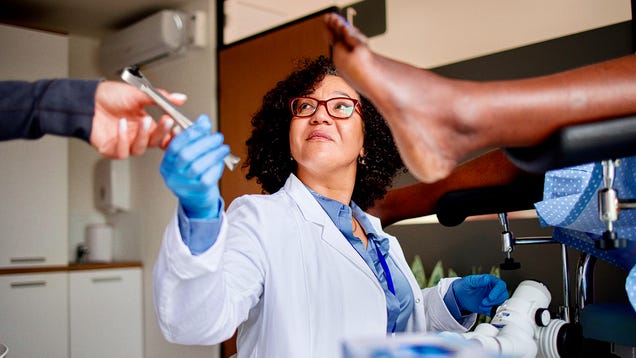
Gynecologist Wheels Out From Under Legs To Ask Nurse For Socket Wrench

PEORIA, IL—Hard at work on her patient as a nearby boombox blared classic rock radio, a local gynecologist reportedly wheeled out from under her patient’s legs Friday to ask the nurse for a socket wrench. “Can I get a ratchet with a quarter-inch socket down here?” asked Dr. Jan Morgan, who lay on her back holding a…

Read more...

08 Mar 16:09

Blood-Covered Mark Zuckerberg Informed That Murder He Just Committed Was Not In Metaverse

MENLO PARK, CA—As he argued that he of all people should know the difference between the real and virtual worlds, a blood-covered Mark Zuckerberg was reportedly informed Friday that the murder he had just committed was not in the metaverse. “Yeah, right, there’s no way that guy I just killed was real—we’re in the…

Read more...

08 Mar 16:09

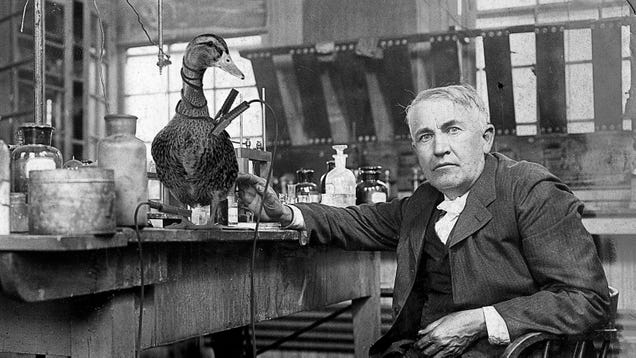
Nation Celebrates 150th Anniversary Of Thomas Edison Inventing Electrical Duck

WEST ORANGE, NJ—Americans were reportedly taking part in celebrations and special programs across the country Friday in honor of the 150th anniversary of Thomas Edison inventing the electrical duck. “We take it for granted today, but the electrical duck transformed the face of modern life as we know it,” said Conrad…

Read more...

08 Mar 15:52

German Man Receives 217 Covid Vaccines

A German man who voluntarily received 217 Covid 19 vaccines in the span of 29 months has experienced no negative health effects, according to researchers, although doctors still do not endorse hyper-vaccination to boost immunity. What do you think?

Read more...

08 Mar 14:01

Generations After The First Nuclear Test, Those Sickened Fight For Compensation

Tina Cordova poses in front of the entrance of White Sands Missile Range where Trinity test site is located. Cordova who is one of five generations in her family diagnosed with cancer since 1945, and runs the Tularosa Basin Downwinders Consortium. Cordova has been fighting for decades to secure compensation for those affected by the radiation from the Trinity test.

On August 6, 1945, a stone-faced President Harry Truman appeared on television and told Americans about the atomic bomb being dropped on Hiroshima.

The attack on Hiroshima marked the first time nuclear power was used in war, but the atomic bomb was actually tested a month earlier in the Jornada del Muerto desert of New Mexico.

At least hundreds of New Mexicans were harmed by the test's fallout. Radiation creeped into the grass their cows grazed, on the food they ate, and the water they drank.

A program compensating victims of government-caused nuclear contamination has been in place since 1990, but it never included downwinders in New Mexico, the site of the very first nuclear test.

This week, the Senate voted to broaden the bi-partisan legislation that could compensate people who have suffered health consequences of radiation testing. Now, the bill will go to a House vote.

Generations after the Trinity Nuclear Test, will downwinders in New Mexico finally get compensation?

For sponsor-free episodes of Consider This, sign up for Consider This+ via Apple Podcasts or at plus.npr.org.

Email us at considerthis@npr.org.

(Image credit: VALERIE MACON)

08 Mar 13:58

Kamala Harris Swaps Shifts At Orangetheory To Attend State Of The Union

WASHINGTON—Assuring her coworkers that she wouldn’t have made the request if the event weren’t important, Vice President Kamala Harris reportedly swapped shifts with a coworker at Orangetheory Thursday so she could attend the State of the Union address. “I did a double at the front desk last week to cover for…

Read more...

08 Mar 13:58

Nikki Haley Drops Out Of Presidential Race

After major losses on Super Tuesday, Nikki Haley dropped out of the presidential race, leaving Donald Trump as the only major Republican candidate in the running. What do you think?

Read more...

08 Mar 13:57

Man Who Tossed Hot Dog Scraps On Ground To Be Followed For Rest Of Life By Sea Gull

MYRTLE BEACH, SC—Instantly committing its remaining days on earth to waddling behind the man, a local sea gull reportedly decided Thursday to follow Doug Wheeler around for the rest of his life after the 32-year-old accountant absent-mindedly tossed some hot dog scraps on the ground. According to sources, Wheeler will…

Read more...

08 Mar 13:57

‘I Know Him,’ Kamala Harris Whispers To Mike Johnson During State Of The Union

WASHINGTON—Taking every possible opportunity to lean over to the House speaker’s side of the desk and point at the back of Joe Biden’s head, Vice President Kamala Harris repeatedly whispered “I know him” to Mike Johnson during Thursday night’s State of the Union address. “Psst, hey Mike, I’m not sure if you’ve heard,…

Read more...

08 Mar 13:57

Biden Crumbles To Dust During State Of Union

WASHINGTON—Deteriorating before the eyes of a nation until he was nothing more than fine particles of sediment on the floor next to the podium, President Joe Biden appeared to crumble to dust Thursday night during his State of the Union address. “My fellow Amer—” the president said in what would be his final address…

Read more...

08 Mar 13:57

The Supreme Court Decides This Year’s Best Picture Winner

by Jay Wexler

The nine justices of the United States Supreme Court sit in their conference room around a grand table fashioned out of old-growth mahogany trees stolen from a Honduran rainforest.

CHIEF JUSTICE ROBERTS: Okay, then, that’s settled. The vote is six to three to make it legal to hurl diseased cow carcasses into Lake Tahoe. What’s next on the agenda?

JUSTICE ALITO: Can we consider that case about whether women should have the right to drive?

JUSTICE GORSUCH (under his breath): Women. Right to drive. Ha.

JUSTICE KAGAN (sighing): How about if we took a short break? I’m so tired. So very, very tired.

CHIEF JUSTICE ROBERTS: I think we could spare a few minutes, sure.

JUSTICE THOMAS: Who wants to talk about guns?

JUSTICE JACKSON (quick to cut off this topic): Did anyone see the nominations for best picture? Any favorites?

JUSTICE GORSUCH: Ah. Good question, Jackson. I don’t know. Did any grand historical epics get nominated? I love myself some history and tradition.

JUSTICE ALITO: Me too. Are any of the nominees set in a thirteenth-century women’s dungeon?

JUSTICE KAVANAUGH: Sorry, no medieval dungeons, Sam. But there’s Oppenheimer. That’s historical.

JUSTICE THOMAS (brightening): And isn’t it kind of about getting rid of foreigners?

JUSTICE SOTOMAYOR: Well, yes and no, I guess. Anyway. What about that movie with De Niro and DiCaprio about the murders on Osage tribal land?

JUSTICE GORSUCH: I saw that one. It was so sad and terrible what happened.

JUSTICE KAGAN: You know, Neil, your support of American Indian sovereignty and civil rights really complicates the prevailing narrative about you totally sucking.

JUSTICE GORSUCH (winking at Justice Kagan): Thanks, Sugar.

JUSTICE KAGAN: Ugh.

JUSTICE JACKSON: What about Barbie? Now that was fun.

JUSTICE BARRETT: I liked that one too. My favorite character was Ken.

CHIEF JUSTICE ROBERTS: Barbie? What was that one about?

JUSTICE JACKSON: It’s about Barbie. The doll. Don’t you remember all that “Barbenheimer” hype last summer?

JUSTICE ALITO: We have two Weimaraners at our second country house.

JUSTICE KAVANAUGH: I drank a bottle of Gewürztraminer for breakfast yesterday.

JUSTICE JACKSON: No, no. Barbie. You know, the Greta Gerwig film? With Margot Robbie?

CHIEF JUSTICE ROBERTS: Never heard of it. Weird, because I usually have my finger on the pulse of American culture.

JUSTICE GORSUCH: I never heard of it either. Does it have any particular theme or message?

JUSTICE SOTOMAYOR: It’s about empowering women to bust through the chains of the patriarchy.

JUSTICE THOMAS: A horror picture. I love it.

JUSTICE JACKSON: It’s not a horror movie, Clarence. It’s about celebrating women’s empowerment.

JUSTICE ALITO: Oh, so it’s a comedy?

The conservative justices laugh and laugh and laugh. The laughing goes on for four minutes and eighteen seconds before dying down. Justice Barrett, however, continues to giggle softly.

JUSTICE BARRETT (giggling softly): Empowering women… priceless.

JUSTICE SOTOMAYOR: What about that movie The Holdovers?

CHIEF JUSTICE ROBERTS: I didn’t see that one. What’s it about?

JUSTICE SOTOMAYOR: It’s about a student and a teacher stuck at their boarding school over Christmas break.

JUSTICE KAVANAUGH: Now we’re talking. Hubba hubba!

Justice Kavanaugh hums the theme from his third-favorite boarding school porn flick.

JUSTICE SOTOMAYOR (shaking her head): No, Brett, it’s not about that.

Uncomfortable silence, for a beat. The justices all kind of look at each other, then look away. Justice Thomas pretends to read a newspaper.

JUSTICE KAVANAUGH: Hey, wait a minute. Very few of my accusers even went to boarding school.

JUSTICE ALITO (eager to change the subject): You sure like beer, though.

JUSTICE KAVANAUGH (pulling out a can of Foster’s from his pants and taking a swig): That I do (belches).

JUSTICE SOTOMAYOR: There’s also American Fiction. That’s a good one. It’s a searing satire about racial stereotypes.

CHIEF JUSTICE ROBERTS: I’ll pass on that one. I don’t see color. I’m post-racial.

Justice Kagan grabs the Foster’s can from Justice Kavanaugh and chugs it. Justice Jackson throws up several times into a diamond vase studded with Sri Lankan sapphires pilfered from eighth-century Buddhist statues.

JUSTICE SOTOMAYOR: Well, it doesn’t sound like we’re going to come to any sort of consensus here.

CHIEF JUSTICE ROBERTS: Not again. Darn. The four-hundred-and-eighty-seventh time in a row.

A knock is heard at the door to the conference room. As the junior justice, Justice Jackson must answer the door. A messenger hands her an envelope.

JUSTICE JACKSON: Looks like this is for you, Clarence.

Justice Jackson hands the envelope to Justice Thomas, who opens it, reads the note, and smiles.

JUSTICE THOMAS: I think we have a winner, folks. The producers of something called Anatomy of a Fall just offered me my very own winged unicorn if I vote for their movie. I’ve always wanted a flying steed. I vote for Anatomy of a Fall.

All the conservative justices agree to vote for Anatomy of a Fall.

CHIEF JUSTICE ROBERTS: Okay, then, now that that’s done, let’s talk about whether women have a right to drive.

JUSTICE BARRETT (under her breath): Women. Right to drive. Ha ha.

JUSTICE SOTOMAYOR: Is it too late to go to veterinary school?

JUSTICE JACKSON: I have to do forty more years of this shit?

Justice Kagan’s remaining life force fizzles out of her like a deflating balloon, and she dies.

08 Mar 13:47

Comic for 2024.03.08 - Perfect Ten

New Cyanide and Happiness Comic
08 Mar 13:45

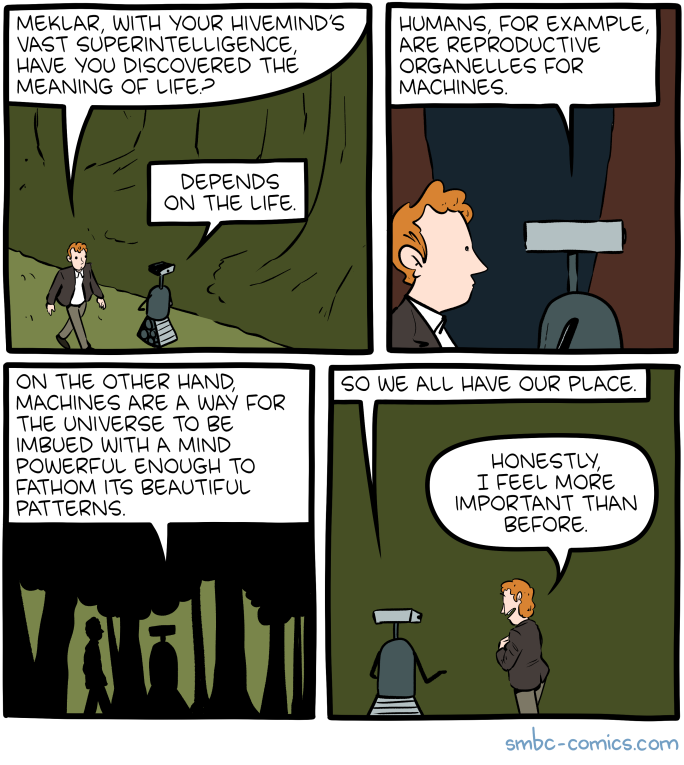
Saturday Morning Breakfast Cereal - Meaning

by Zach Weinersmith


Click here to go see the bonus panel!

Hovertext:
Minds


Today's News:
08 Mar 12:16

Organize. It will make the difference.

liberalsarecool:

Organize. It will make the difference.

08 Mar 12:16

my friend is an awful coworker, apologizing for past mistakes, and more

by Ask a Manager

This post was written by Alison Green and published on Ask a Manager.

It’s four answers to four questions. Here we go…

1. I referred my friend to my company and she turned out to be an awful coworker

I have a former coworker, “Sadie,” who I became decent friends with over the course of a year of working together at a former job. We both left for other opportunities around the same time. We occasionally kept in contact over the next two years with a phone call every other month or so. Sadie recently left her job and, because my company had an opening for a similar position, I referred her. I love my current job and company and expressed how great of a job it is to her.

Sadie ended up getting the position with my company, making us coworkers again. She was a great coworker-turned-friend at our last job so I didn’t anticipate problems—I even looked forward to working with her again! However, over the four weeks since she started, Sadie has caused countless issues. She’s continually complained about the job, nitpicked things that she thinks could be improved, and asked our boss to make changes to normal practices that have been around significantly longer than either of us. A few comments like this wouldn’t hurt (I don’t mind some healthy criticism!) but it’s become excessive. Think things like “At my old job at company A, we did B practice and it worked a lot better than what you’re doing here” but with more than half of our standard practices. Additionally, she’s been calling me during working hours (and sometimes after hours) to ask questions about work processes she doesn’t understand. When I explain them, she complains about them more. I can feel my boss and other coworkers getting annoyed with her constant questioning and complaining, and they’re only hearing half as much as I am.

I’m upset because I referred her and gave her a glowing recommendation to our employer, and she’s now making me look bad due to her complaining. I’m also frazzled because I’m continually answering her questions and trying to explain the reasoning behind some of the practices she complains about while also trying to get my own work done. I also feel bad because clearly this job wasn’t what she expected it to be, and I’m worried she blames me for telling her about it at all. The whole thing feels like a mess, and I wish I’d just kept my mouth shut and never referred her in the first place. How do I handle things from here?

Are you comfortable being honest with her and saying something like: “I don’t know if you realize, but you’re criticizing a huge portion of what we do here when you’re still really new, and I think you’re getting yourself off on the wrong foot with people. It’s awkward for me because I encouraged them to hire you — and I also feel bad because you seem so unhappy.”

If she keeps it up after that, ignore her calls after hours and try to set some limits on the complaints during work hours too: “I can help explain processes to you, but I can’t keep hearing you vent about them — it’s wearing me out.”

In your shoes I’d also have a discreet word with your boss and just be blunt: “I’m not sure what’s going on. I had a different experience with her when we worked together last time and I didn’t expect this.” It’s your boss’s job to decide how to handle it now, but this will clear up any confusion about whether Sadie is still your idea of a great hire.

2. Vacationing employee wants a company-paid international phone plan

I am a manager of managers for a large, fast-paced frontline operational team that regularly responds to emergencies. When I started in this role a few years ago, the managers had an (unsustainable) informal process where they frequently got involved in decisions after hours and on weekends. We have made good strides since then, forming a functional on-call rotation with a broader team and appropriate compensation. I’m really happy with how far we have come!

Fast forward a bit, there are new members on the team. One requested to change their work cell plan to an international plan prior to vacation so they can stay on top of things. I declined the request, explained that I want them to disconnect from work and we can cover things in their absence. My reports feel it’s more stressful not knowing what is happening and coming back to a full inbox.

This is more about the principle than the cost of the phone plan. I strongly believe it is the right decision to keep boundaries and avoid a slippery slope backwards! But, I also question if it’s appropriate for me to decide what is best for their well-being. What are your thoughts on company-paid international phone plans on (company-paid) vacation?

If your team regularly handles emergencies, it’s extra important that they have real time off to disconnect and recharge. And frankly, no matter how much your team member insists it’s all their idea, other people hearing that the organization bought them an international calling plan so they could “stay on top of things” during their vacation will undo some of the work you’ve done in getting people to unplug.

Normally, there’s only so much you can do to ensure people truly disconnect while they’re on vacation, but this piece is within your control: decline to provide the international calling plan. But also: (a) explain why — that it’s not just about their personal preferences but it’s something with ramifications for the health of the team as a whole, and (b) work with them on how to make their return less stressful. (For example, can you give them their first day back just to sort through what built up while they were away and not throw new work at them immediately, etc.?)

3. Should I apologize for past mistakes?

I have been at my company for about seven years. This is my first and only corporate job, for which I had no formal training. About five years ago, I worked on my first big software implementation project with a small team. In hindsight, there were aspects of the project that could’ve been handled better, and I can acknowledge (to myself) that one stakeholder in particular did not have their (legitimate) concerns addressed and has been dealing with complications related to how this project was completed in the years since. This person is not my manager but is a manager in my department, albeit in a different country.

We recently had a change in leadership and are replacing the software I helped implement five years ago with a different software. This project has a much larger scope and will include more stakeholders, but also more resources. I am in a similar role now as I was then, and recently had a very uncomfortable meeting where the aggrieved stakeholder laid into me in front of other colleagues for the failures of the previous project and how they will not let their concerns be ignored a second time. They derailed an unrelated meeting for about 20 minutes to vent about their frustrations.

I was caught off guard and felt immediately defensive — I was not the only person who worked on that project, and they brought up issues that had never been brought to my attention before, though some issues they brought up I had known about and had never fully addressed. After some reflection I would like to take accountability for past mistakes and provide assurances that I will do better this time, as well as alleviate my anxiety about having to meet with this person again and work together again.

I am thinking I should reach out, either in a call or with an email to clear the air, but I am not sure what to say. Should I apologize and detail my past missteps? Should I focus on the future and the current project at hand? How can I mend this relationship and move forward without fixating too much on my shame around my performance on this previous project so that it doesn’t affect my current job negatively?

I suspect the most effective thing wouldn’t be a complete account of every misstep you made in the past, but clear statements that you now understand the concerns they raised back then, realize they were mishandled, and are committed to ensuring their input is treated seriously this time around. If I were in their shoes, I’d want to hear something like: “I want to let you know that I fully understand the issues you’re raising around X and Y. Those are legitimate issues, and I agree they should have been handled differently last time. Some of that is my responsibility and some of it was in others’ purview — but regardless, I’m going to make sure it doesn’t happen again. I’d like to build some checks into our process this time so you’ll have opportunities to weigh in early, and I’d welcome any input you have on the best timing for those so we can make sure this goes differently than last time.”

4. Our rules for using up accrued leave were changed without anyone realizing it

Recently I noticed a small discrepancy in my leave bank. I earn six hours a pay period and noticed that, while I was compensated six hours in the earned column for a given pay period, my balance only went up by four hours. I was careful to use up my use/lose by the end of the calendar year as directed, so I was confused as to why I would have received less than I earned! When I spoke with my agency’s HR, we determined the issue was that because the larger HR had moved the date by which folks had to use their use or lose from December 31 to January 13, this also meant any leave accrued during that time that was over the limit was lost. The language they gave us around the extension did not explicitly state this. Looking back at it, I suppose there is sort of vague language that maybe suggests it, but even now I’m not convinced.

I’m not interested in dying on this hill over two hours of lost leave (obviously I have plenty!), but I also feel like it may be worth escalating for the principle of it. Really, why am I being essentially penalized because they decided to give people who weren’t on top of their leave some extra slack when I was careful about managing my leave? So what do you think — is this worth pursuing or should I just take the loss and know better for next time?

If we were deciding purely on the principle of it: yes. Earned leave is part of your compensation and they shorted you two hours while obscuring from you that it would happen. People might have made different decisions if they’d known.

More practically speaking: since it’s only two hours, I don’t think you should fight a massive battle over it, but there’s no reason not to send a quick email pointing out that this wasn’t clearly announced and you don’t think it should have been deducted from your balance.

07 Mar 17:25

Cities in Alberta have huge potential, but they need to work on transportation.

by Reece Martin

A video yesterday from Oh The Urbanity! got me thinking about cities in the Canadian province of Alberta (famed for its oil). In many ways Albertan cities are outperforming those in the rest of Canada, and the US – from getting housing built, to population growth, but I think that the big thing cities in Alberta need to work on is their infrastructure – and in particular transportation infrastructure. I’ve been planning a bunch of videos on different transport topics in the province, but I wanted to write this short blog post to get some of my thoughts out now.


If you enjoy my content, consider subscribing to my blog:

or supporting me on Patreon:

Your support will help me bring you more content faster!


Sprawl and Buses

While Calgary and Edmonton are growing and densifying (I think Calgary’s downtown in particular is widely and severely underrated), they are also growing out with sprawl. And far too often, this sprawl isn’t even very well served by transit.

EDMONTON, CANADA – JANUARY 28, 2024:
A sunset view of Edmonton downtown from Griesbach Central Park, on January 28, 2024, in Edmonton, Alberta, Canada. (Photo by Artur Widak/NurPhoto via Getty Images)

I will get to talking about rail, but Albertan cities have unusually comprehensive highway and semi-highway road networks for Canada, and meanwhile they mostly lack the high-quality suburban and express buses (not to mention suburban rail) of Toronto, Vancouver, or Montreal. Calgary doesn’t even a night bus network or a IC card payment system, and even more frustrating, the city spent a bunch of money on nice bus shelters and on creating a “BRT-lite” network and then went and ran the routes every 20+ minutes.

A Calgary Transit MAX bus. (St Clair Witch, CC0, via Wikimedia Commons)

Cities in Alberta would benefit enormously from complete overhauls of how they do buses (Edmonton is better than Calgary), and even just matching the bus network of Vancouver (in terms of quality) would be huge — especially if it came with bus lanes and busways, which the Albertan cities have loads of room for. Essentially, there’s a lot of basic stuff that cities in Alberta need to get on with if they want transit that matches that in other Canadian cities, much less the best cities in the world (which I think we should strive for!)

Trains

And then there are the rail networks. Both Calgary and Edmonton in my view began developing their rail networks in very smart ways off of the German Stadtbahn model. However, the networks both have single trunk sections and too few branches — if you look at the Stuttgart Stadtbahn for example:

Stuttgart’s Stadtbahn network. (Maximilian Dörrbecker (Chumwa), CC BY-SA 2.0 https://creativecommons.org/licenses/by-sa/2.0, via Wikimedia Commons)

you’ll see a much denser network with several city centre trunks, numerous suburban branches, and interconnections between branches outside of the city centre — all served by a wide range of services.

A city like Calgary or Edmonton could have this, it would just need to be cost effective, keep building, and learn where to spend money (city centre tunnels and grade separations) and where to cut costs (single-tracking and suburban train-like corridors outside of core areas). As it turns out, both Calgary and Edmonton have actually managed to do a lot of incremental cost-effective expansion historically (and Edmonton might? still be doing so), but over the last decade Calgary has built essentially nothing, and Edmonton has built some rather mixed projects (the Metro line for example completely ignores the learnings from German cities with regard to speed and grade separation). Both cities are also all-in on P3s for their big new lines, which will probably lead to high costs and further slowing of transit expansion.

[some calgary/edmonton rail]

The newest lines in both Edmonton and Calgary — the cross-city Valley and Green lines respectively — also make the mistake of moving to a new standard for rail vehicles (low-floor trams), which are more expensive to maintain, lower capacity, and nigh impossible to mesh with the existing high-floor systems into a Stuttgart-style integrated network. And probably most importantly, I think that the networks are just too small (these new cross-city lines should have been completed in the early 2000s). While Ottawa will not have a network as big as Calgary or Edmonton when the second phase of the O-Train is complete (and the system obviously has its well known reliability problems) the truth is Ottawa will have a fairly comprehensive metro-style system that is almost as big as Edmonton and Calgary’s Stadtbahn/tram systems.

Planes and, Well, More Trains

And importantly, Ottawa’s network will actually connect to its airport — it amazes me that “business-friendly” Calgary has not built an extension of the Blue line to the airport (this is the correct solution — please NO APMs), which should be a cheap ~6 kilometer extension. It’s doubly crazy because these days Calgary airport is moving nearly 20 million passengers per year.

Edmonton should be ashamed too because it’s airport only has a single ETS bus, and it runs only half hourly! It also needs to be said that the lack of an Edmonton-Calgary train is crazy, especially because even just at the 200kph speeds that Brightline hits on the expressway-side leg to Orlando, a train journey between the cities would smoke the car. And this is before we get into talking about the other mainline rail projects the province should be looking at!

What Alberta could look like…

All of this leads me to what things could be. And to learn more about that, you’ll have to stay tuned for my “Crayoning with Reece” for Edmonton and Calgary.

In the meantime: