Shared posts

07 Mar 16:40

What would it take to fix retirement?

by Adrian Ma
undefined

The rising cost of living and longer life expectancy is making it harder for Americans to retire comfortably. Millions of Americans are behind on saving for retirement and face the possibility of working in their old age.

Economist Teresa Ghilarducci says she has a plan that could fix retirement in America. In her book, "Work, Retire, Repeat: The Uncertainty of Retirement in the New Economy," she proposes a few policies that she believes can help Americans currently struggling to retire. Today on the show, we talk to her about her ideas and why the current status quo is more serious than we think.

For sponsor-free episodes of The Indicator from Planet Money, subscribe to Planet Money+ via Apple Podcasts or at plus.npr.org.

Music by
Drop Electric. Find us: TikTok, Instagram, Facebook, Newsletter.

07 Mar 14:46

Is dynamic pricing coming to a supermarket near you?

by Amanda Aronczyk
The Norwegian supermarket chain REMA 1000 uses dynamic pricing for all the items in its stores, including Kvikk Lunsj chocolate bars and Solo soda.

Dynamic pricing is an increasingly common phenomenon: You can see it when Uber prices surge during rainy weather, or when you're booking a flight at the last minute or buying tickets to your favorite superstar's concert. On an earnings call last week, Wendy's ignited a minor controversy by suggesting it would introduce dynamic pricing in its restaurants, but the company quickly clarified that it wasn't planning on using it for "surge pricing."

One place you hardly ever see dynamic pricing? American supermarkets.

Why is that? Why shouldn't the prices for meat or bread or produce go down as they get older? Why does all the milk in the store cost the same, even when the "sell by" dates are weeks apart? Wouldn't a little more flexibility around prices be better for customers and help reduce waste?

Professors Robert Evan Sanders and Ioannis (Yannis) Stamatopoulus had similar questions. So they set out to discover what was keeping supermarkets from employing a more dynamic approach, and what might convince them it was time for a change ... in pricing.

This episode was hosted by Amanda Aronczyk and Nick Fountain. It was produced by Willa Rubin and edited by Keith Romer. It was engineered by Valentina Rodríguez Sánchez and fact-checked by Sierra Juarez.

(Image credit: Jessica Robinson)

07 Mar 14:44

Archaeologists Uncover First Caves Gentrified By Homo Sapiens

ROQUEBRUNE-CAP-MARTIN, FRANCE—Describing a migration pattern that had a devastating effect on prehistoric neighborhoods, archaeologists from the University of California, Berkeley, announced Thursday they had uncovered the first caves gentrified by Homo sapiens. “While excavating caverns in southern France, we…

Read more...

07 Mar 14:44

Study Finds Humans Cannot Accurately Interpret Cat Behavior

A new study from researchers in France found that one third of the study’s 630 participants couldn’t read the behavioral cues of an unhappy cat, ascribing the animal happy emotions when in fact they were signaling distress. What do you think?

Read more...

07 Mar 14:43

Waitstaff Watches Helplessly As Limo Full Of Screaming 12-Year-Old Girls Pulls Up To Restaurant

WILLOW GLEN, CA—Knowing full well that their fate had been sealed, local waitstaff at TGI Fridays watched helplessly Thursday as a limousine full of screaming 12-year-old girls pulled up in front of their restaurant. “Dear God, we’re doomed,” said head waiter James Orsen, who stood motionless as several preteens…

Read more...

07 Mar 12:19

Stardust pissed it’s now you

by Lindsay Ellis

EARTH – After spending 13 billions years drifting across interstellar space, a speck of stardust is pissed that it’s now you – a nobody in the overall grand scheme of the universe. Before arriving on Earth, it travelled the vastness of time and space and was part of an infinite number of things. It spent […]

The post Stardust pissed it’s now you appeared first on The Beaverton.

07 Mar 12:18

Hearse Driver Makes Small Talk With Corpse Riding In Back

KANSAS CITY, MO—Chitchatting as he took his passenger from a funeral home to a graveside service nearby, local hearse driver Glen Holland reportedly made small talk Thursday with the corpse riding in the back of his vehicle. “Going to Elmwood Cemetery, huh?” Holland said to the man who had died from multiple gunshot…

Read more...

07 Mar 00:25

Krysten Sinema Will Not Seek Reelection

Sen. Kyrsten Sinema (I-AZ) announced that she will not seek reelection, leaving just one term after winning as a Democrat and leaving the party to become an independent. What do you think?

Read more...

06 Mar 21:39

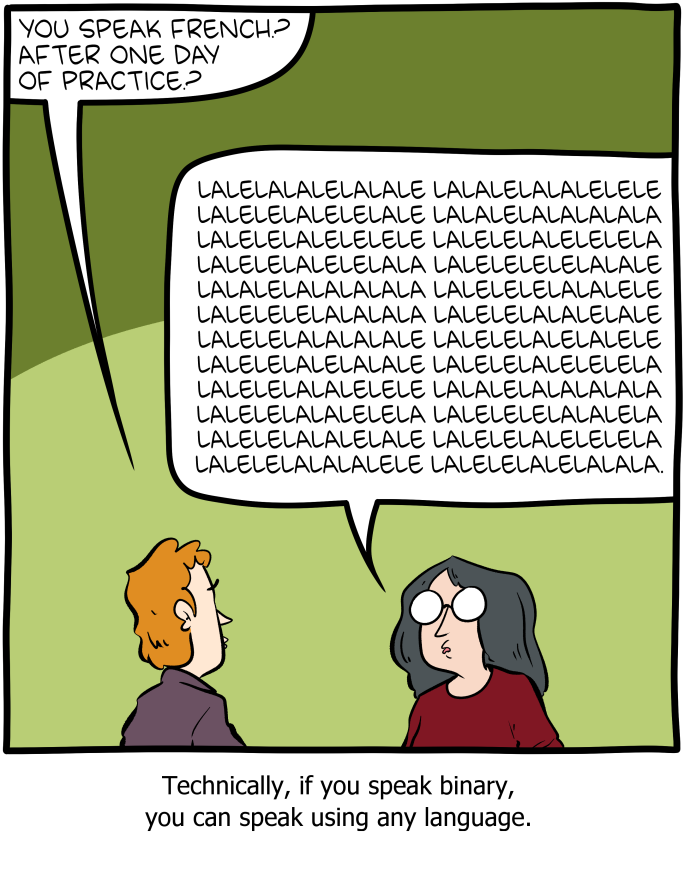
Saturday Morning Breakfast Cereal - Lalala

by Zach Weinersmith


Click here to go see the bonus panel!

Hovertext:
After 10 minutes of DuoLingo, my daughter and I were able to have entire conversations in Greek just by inflecting the word karoto.


Today's News:
06 Mar 21:36

Saturday Morning Breakfast Cereal - Superintelligent

by Zach Weinersmith


Click here to go see the bonus panel!

Hovertext:
Later she's forced against her will to take care of her physical and mental wellbeing.


Today's News:
06 Mar 21:35

I’m buying a business — how do I tell one employee (who’s currently my coworker) that I’m not keeping her on?

by Ask a Manager

This post was written by Alison Green and published on Ask a Manager.

A reader writes:

I am a healthcare provider buying a practice that I have worked at for the past three years. This will be an asset purchase, meaning legally all employees will be considered terminated by the previous business and re-hired by me (if I choose). There is one employee who has been there about four months, Sue, who I am concerned about keeping on.

My main issues with Sue are that she does not take direction well from coworkers, tends to go right to me with questions regarding scheduling and other tasks to supersede her coworkers (especially inappropriate considering I do not own the practice yet), and has an overbearing personality. To give an example of this, she approached me recently about whether I was buying the building of the practice and in a way backed me into a corner to tell her I was considering purchasing the practice and then immediately asked me a favor to use the lawn behind the building for her dog since she may be purchasing the adjacent apartment building which doesn’t have a yard (that conversation gave me extremely bad vibes). I merely said I was considering buying it and didn’t want to make any promises. After that conversation, I found out that she told multiple employees about me buying the practice (to me, this came off as a power move to put her above the other employees). The other employees have now been formally informed by me once the bank financing was final, and are excited (other than understandable nerves) about the development.

Since Sue is a relatively new employee, has performance issues that multiple employees have noticed and tried to address, doesn’t vibe with the team, and works very part-time hours, I’m confident in my decision that this is one employee I should leave behind.

I’m looking for advice on what to say without making the weeks to months prior to me taking over a tension-filled mess. I already established with all the employees (including Sue) that I will be meeting with them individually to discuss changes, pay scale, etc. and am hoping to do that as soon as possible to set expectations. Do I just keep it simple that I don’t see a place for her in the new practice and wish her the best? The empathetic side of me wants to give her reasons, but I don’t want that to backfire and cause negativity, but what if she asks why? I’m hoping the current owner will have my back if she starts being toxic, but if not it could be a rough transition until she’s gone.

One more complication is that Sue’s daughter is a long-time employee who needed some leave time but who I’d be happy to bring back on when she is available again. I guess if this ends up burning that bridge, it is what it is.

Especially with the dynamic of going from an older male owner to me, a young woman (significantly younger than most employees), I really need to make clear decisions early on to set a precedent.

I wrote back and asked, “What’s the timeline here — how much time will there be between when you would ideally tell Sue you’re not keeping her on and when you’ll actually take over? Also, do you expect her daughter to return during that interim period, or only after it?”

There would be about two to three weeks in between when I’m hoping to do the meetings with staff and when I actually acquire the practice.

I’m meeting with her daughter soon, because she wanted to clear up her plan for coming back. But most likely she wouldn’t return until after the transition. The daughter has years of history working with the practice and has made it clear to me that she considers it her career, so I’m pretty confident she’ll still come back if I let her mom go. But handling it well on my end definitely would make that easier, I’m sure.

Where does the old owner/manager stand on the question of Sue?

I’m asking because ideally you’d tell Sue the news at the same time that you’re meeting with others. You can’t really avoid it if everyone knows you’re meeting with each person about their future at the practice, and you shouldn’t delay those meetings until after you take over (because if you do, you risk other employees figuring their jobs are at risk and starting to look around). However, that gives everyone a few weeks of working with Sue after she hears the news, so you need to think through how that’s likely to go. Is Sue likely to handle it reasonably well or is she likely to make things uncomfortable for you, her coworkers, or even patients? Do you trust her to continue performing her work well during that time or do you have to worry about sabotage? (That sounds dramatic, but it happens.)

To make this work, you’d need to coordinate with the current owner/manager and agree that if Sue doesn’t handle the news well, she’ll be asked to leave sooner. (Hell, would the current owner/manager be willing to let Sue go now with severance? That would make this somewhat cleaner. You could offer to roll the severance costs into your purchase price if that’s worth it to you.)

But if you can’t count on the current owner to handle Sue well if this goes badly while he’s still in charge, your options get less appealing. You could simply wait to give Sue the news until take over, but that could be messy. You of course shouldn’t tell her she’s staying and then reverse course once you’re the owner — but in theory you could say you aren’t ready to make a decision on her position yet, and deliver the news once you’re in charge. It would give her some incentive not to blow things up in those final weeks … but it doesn’t feel great. The other option is to be honest with her, trust her to behave professionally, and figure the fall-out will be fairly limited if she doesn’t. But that’s got to be a judgment call based on what you know of Sue and how much potential she has to do damage.

As for what reason to give Sue, you could keep it vague (like you’re trimming staff) or you could be honest that you haven’t see the kind of work from her that you’d need to see to keep her on. Decide which approach to use based on what you know of Sue and how she’s likely to take it. Yes, it can be a kindness to give honest feedback when you’re letting someone go — but you also need to think about the greater good of the business if she’s going to be around a few more weeks.

As for Sue’s daughter: You’re right that she may feel weird coming back to a place that let her mom go. But she might understand it (she probably knows her mom’s weaknesses better than most people do!) or she might find it easy to move forward with you regardless. You can’t control that — but you’re right that ensuring her mom is handled with respect and dignity will give all of you the best shot of making things work.

Good luck, and we want an update when it’s all behind you!

06 Mar 21:23

Mom Offers To Set Single Daughter Up With Nice Man From Salad Dressing Label

CONCORD, CA—Assuring the single 37-year-old that she had already vetted the prospective suitor, local mom Tina Salerno announced Wednesday that she would like to set her daughter Anna Salerno up with the nice man from the salad dressing label. “Honey, don’t be mad, but there’s a man I’d like you to meet who is…

Read more...

06 Mar 21:22

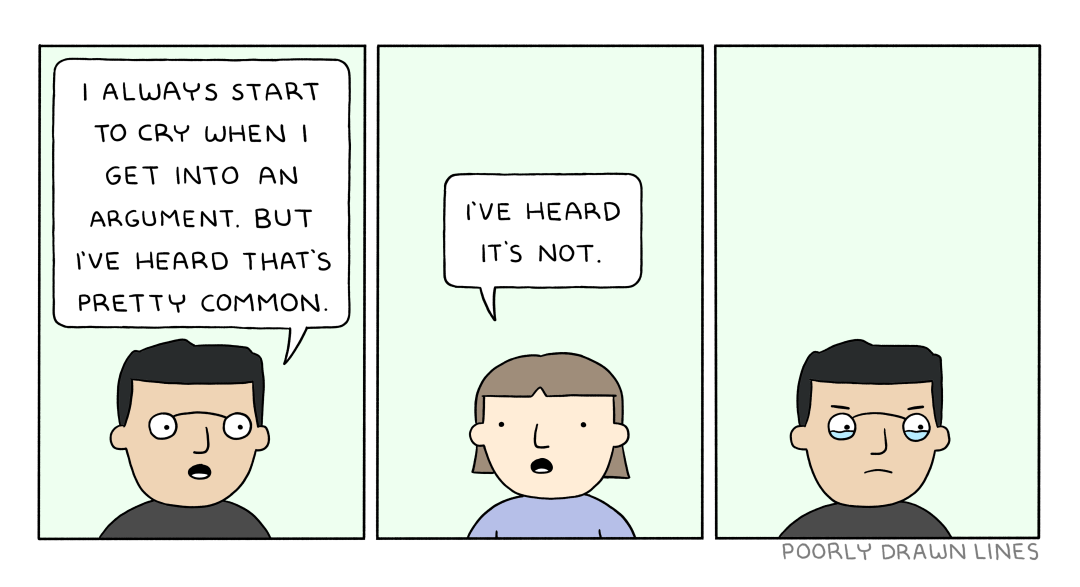
Pretty Common

by Reza
06 Mar 21:22

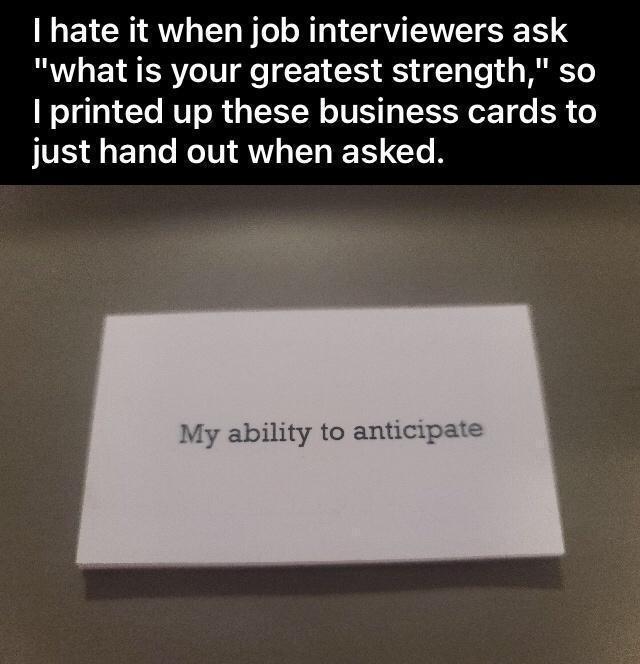
bigscaryd: memewhore: Also printing up a ...

bigscaryd:

memewhore:

Also printing up a set of “over-commitment to the bit” for when they ask about my greatest weakness.

06 Mar 17:21

Houston’s Art Car Museum to Permanently Close

by Jessica Fuentes

The Art Car Museum, a private institution dedicated to contemporary art, has announced that it will permanently close in late April 2024. 

An installation photograph of a gallery featuring two art cars.

Art Car Museum

Established in 1998 by Ann and James Harithas, the museum has been an important part of the Houston art scene for more than 25 years. The museum was born out of a 1984 exhibition, Collision, curated by Mrs. Harithas at the Lawndale Art Center. The exhibition also launched the annual Art Car Parade, making Houston a significant part of the international art car movement. 

The museum’s website explains: “The art car movement is influenced by the modern tradition in art emphasizing personal expression and a choice of imagery or subject matter selected from popular culture. The art car artist is a pioneer of a new image of the automobile, an image which in its diversity reflects fundamental changes in popular consciousness, changes based on the desire for greater independence and individual rights. All art cars are subversive and have in common the transformation of the vehicle from a factory-made commodity into a personal statement or expression.”

A photograph of a truck carrying a tall sculpture of a phoenix.

The Orange Show Art Car Parade, 2022

In addition to establishing the Art Car Parade and the Art Car Museum, Ann and James Harithas founded the Station Museum of Contemporary Art in Houston and the Five Points Museum of Contemporary Art in Victoria. Mrs. Harithas died in 2021 and Mr. Harithas died two years later. Since the death of Mrs. Harithas and prior to the death of Mr. Harithas, the future of these museums has come into question. On November 1, 2022, the Station Museum announced that it would close until further notice, and it remains closed at the time of this article; the Five Points Museum is currently open with an exhibition marking the bicentennial of Victoria, Texas.

The Art Car Museum website notes that “Discussions are in progress with local and regional arts organizations to continue and evolve the Art Car Museum’s presence, legacy, and mission in the future.” Details of these conversations and the plans that emerge will be shared as they are available. 

Currently, the museum will be open to the public through Sunday, April 28, 2024. Learn more about the museum via its website

The post Houston’s Art Car Museum to Permanently Close appeared first on Glasstire.

06 Mar 17:11

Satanic Couple No Longer Has Shared Dark Vision For Future

PHOENIX—Having grown apart over the years in their perspectives on sin, depravity, and strange, diabolical rites, satanic couple Dane and Melissa Sinclair told reporters Tuesday they no longer have a shared dark vision for the future. “We used to see eye-to-eye on our Dark Lord’s plan for us, but as we’ve grown older,…

Read more...

06 Mar 17:11

Apple Unveils New Apple Vision Pro Mini

CUPERTINO, CA—Touting the product as the smallest virtual reality headset in the world, Apple held a keynote presentation at its headquarters Wednesday to unveil a brand-new product, the Apple Vision Pro Mini. “When it comes to spatial computing, the Apple Vision Pro was just the first step, and our latest model fits…

Read more...

06 Mar 17:10

Nation Longs For Days When Poverty Mostly Meant Making Monkey Dance On Street For Cash

WASHINGTON—Noting how much better things used to be for those struggling financially, Americans across the country confirmed Wednesday that they longed for the days when poverty mostly meant making a monkey dance on the street for cash. “Just a few decades ago, being below the poverty line was way more tolerable, and…

Read more...

06 Mar 17:07

Nutritionists Say Fuck It After Discovering Little Debbie Cakes

HINSDALE, IL—Barely audible through their snack-cake-stuffed cheeks, members of the American Nutrition Association said fuck it Wednesday after discovering Little Debbie desserts. “Oh my God, forget everything I said about ultra-processed foods—these things are incredible,” said registered dietitian Veronica Chernov,…

Read more...

06 Mar 17:07

Bono Dedicates Song At Final Sphere Performance To Jill Biden

During U2’s final performance at the Las Vegas Sphere, Bono dedicated the song ‘All I Want Is You’ to Jill Biden, who was in attendance, saying “This song, when we wrote it, I tried to write the lyrics from the point of view of the woman or the bride [...]. And one woman in particular who is with us tonight, she’s a…

Read more...

06 Mar 17:06

Marianne Williamson Successfully Primaries Biden In All 63 Counties Of Astral Plane

06 Mar 17:05

Comic for 2024.03.06 - Fight This

New Cyanide and Happiness Comic
06 Mar 17:05

Dial-Up Is Still, Just Barely, a Thing

by Lewin Day

In an era dominated by broadband and wireless cellular networks, it might come as a surprise to many that dial-up internet services still exist in the United States. This persistence is not a mere relic of nostalgia — but a testament to the diverse and uneven nature of internet infrastructure across the country.

Yes, dial-up internet, with those screechy, crackly tones, remains a useful tool in areas where modern, high-speed internet services are either unaffordable or unavailable. Subscriber numbers are tiny, but some plough on and access the Internet by the old ways, not the new.

The Old Ways

The resilience of dial-up internet in the U.S. market is underpinned by several factors that ensure its continued relevance. Primarily, it caters to rural and remote areas where the infrastructure for high-speed internet has not been fully developed.

AOL weirdly still hosts a dialer program on its dial-up page, but it doesn’t actually have any dial-up functionality in it.

Despite significant advancements in telecommunications technology, there are still many regions in the U.S. where geographical challenges and the high cost of infrastructure development make it difficult for service providers to offer typical broadband or wireless services. In these areas, dial-up internet becomes the only feasible option for connecting to the digital world. For context, in 2019, census figures suggested just 0.2% of households used dial-up internet, a number surely even smaller today.

If you’re trying to get on the internet via telephone line today, though, you’ll find your options are pretty limited. Some big players like EarthLink and AOL stuck with dial-up for longer than most, but the companies no longer offer sign-ups on their websites. Not surprising, given the take rate must have been near zero.

You can apparently get free dialup internet access from NetZero, though you will still be paying for phone calls made when you dial in.

Instead, you’ll need to look at a company like NetZero, which offers a dial-up service for $29.95 a month. For that money, you get unlimited internet access with no time limit, which is probably easy to offer when customer numbers are so low. The company also touts its service as “HiSpeed Accelerated Dial-Up,” but it’s just some basic compression or caching system that doesn’t actually net you any data rate increase over the usual 56 Kbps speed of traditional dialup connections. It also offers an ad-supported “Free ISP” service offering up to 10 hours of usage per month, including webmail.

Juno is another ISP operating in the dial-up space, similarly offering “accelerated” service with unlimited hours for $29.95 a month. Hilariously, DSLExtreme offers unlimited dial-up too, despite its name. On an annual contract, it’s as cheap as $9.95 a month, or $12.95 a month if you’re paying as you go.

It’s easy to imagine that for some, the cost factor could play a significant role, but it’s not really the case. Regular broadband connections can be had fairly cheaply, as can cellular service with Internet access bundled in. Ultimately, dial-up isn’t really a cheaper way to get online at all, especially when you consider you have to pay for regular telephone service as well. It really only makes sense if you’re far away from any wireless or wired broadband infrastructure and it’s the only way you can get online. In this way, it can prove a useful way for those in remote areas to do simple tasks like access email or process credit-card payments.

You won’t do much beyond that, though, because dial-up tech is firmly stuck in the 1990s as far as speeds are concerned. At best, you’ll get something approaching 56 Kbits/sec if you’ve got a nice V.92 modem and a great connection. In reality, if you’re calling your ISP from a great distance from a rural area, you might find that your speeds are somewhat lower if the connection isn’t crystal clear.

Classics Never Go Out of Style

At least getting yourself a modem is still fairly easy. US Robotics still maintains a small range of 56K modems, and states that most of them are compatible even with Windows 11.

If you want a high-quality modem these days, you might find buying a refurbished US Robotics unit to be your best bet. They were built to last and look like they’re still living in 1989.

The 5670 is a PCI soft modem if you like your operating system to do the heavy lifting, with an MSRP of just $14.99. You can also source a high-quality refurbished USR3453C if you have a demanding business-grade application.

Other options include the 5686G external modem with an RS232 interface, or the 5639 soft-modem if you simply have to have a USB interface. StarTech does actually sell a hardware USB modem, however, if you’re looking for modern connectivity and a more reliable experience. Ultimately, though, much of what you’ll find for sale online is cheap new USB soft-modems, whereas most hardware modems for sale are used units from the early 2000s and before.

For most of us, it’s hard to imagine using dial-up internet in this era for anything other than pure historical interest. It’s too slow to reasonably load most regular websites, which have all been designed for the higher speeds of modern broadband connections. However, if you’re doing something that needs connectivity on the end of some dusty old rural phone line, you might find yourself getting familiar with the screechy kind of Internet once more.

06 Mar 05:59

In domain\user syntax, you can often use the period as an abbreviation for “this computer”

by Raymond Chen

In general, the Windows syntax for a user in a domain on a system is domain\user or computername\user. A handy abbreviation is using a single period to represent the local computer name. For example, at the main logon screen, if you want to log in as a local account, you can type .\user instead of some monstrosity like DESKTOP-LWFX8QRP\user.

This is also useful when connecting remotely to another system either via Remote Desktop or the Visual Studio remote debugger: You can type .\user to provide a local account on the remote system.

Just a handy little typing-saver for today, that’s all.

The post In domain\user syntax, you can often use the period as an abbreviation for “this computer” appeared first on The Old New Thing.

06 Mar 05:50

my employee makes up words and is impossible to understand

by Ask a Manager

This post was written by Alison Green and published on Ask a Manager.

A reader writes:

I have an employee in a technical role (my small team is all technical, including me) who seems to make up words and concepts when he’s talking about things. The results of this are an echo of the issues in the first letter in this previous post but in that case you, correctly I think, suggested leaving it to the manager — and in this case, I am the manager and I’m not sure what to do. This is exclusive to the way this person speaks in meetings (not in his writing) but given we’re all remote, we spend a lot of time in virtual meetings.

Compounding this is that when he goes down this path of using incorrect concepts and words to explain something, he is long-winded. Exact echoes of all the issues in this letter. I really, really like your advice there and will be trying to put some of it into action.

What stops me from going all-in on your advice there, though, is that it’s not the case that everything this long-winded employee says is accurate, correct, or even valuable so I’m not sure about putting in the effort to help this employee succeed, grow, and advance in our organization because I’m not sure he has the skills. I feel like I have to fix the first problem (made-up words and concepts) before I focus on the second problem of long-windedness.

I don’t know how to approach the first thing, because I struggle to understand what’s being said. It takes extreme amounts of effort to determine what he’s actually trying to say so that I can actually answer questions or assess situations. I’ve had to be direct and simply say, “I don’t understand what you just said because those words don’t make sense to me — can you try again?” I’m not sure what to do — this isn’t a second language issue (he’s a native English speaker) and I’m concerned not only that he doesn’t understand his job, but that he may literally lack the capacity to understand it, even with coaching. The employee is not new — he was just very junior when he started and I’ve been ramping him up, but I’m now concerned we’ve gotten to a point of technical complexity where there’s suddenly a limit.

The final issue is that the made-up words can often be quite fantastical, and so certain less technical people who encounter him in meetings perceive him as very smart and technical because they have no idea what he’s trying to say and he’s simply just a tall, straight, white man saying words loudly with authority.

Can I do something to address this?

Yes!

First, though: how’s the rest of his work? If his work isn’t good aside from the made-up words and the long-windedness, it might be simpler to just focus on the other issues. You don’t have to spend the time and energy trying to solve these two things if he’s not going to be right for the position regardless.

But if that’s not the situation, then my advice is: focus on the outcome you want. The outcome you want here is that he communicates clearly and people understand him, so approach it from that angle. For example: “When you talk about technical topics like X and Y, I and others are struggling to understand what you’re saying. You’re using words that don’t convey the concepts you intend. For example, last week in our meeting with Joe (insert specific example) and this morning in your meeting with me (insert specific example). We end up spending a lot of effort trying to understand, and I’m concerned it’s pointing to larger issues with your grasp of the material.”

Then see what his perspective is, and go from there.

At some point in that conversation you should likely say, “To perform well in this job, you need to communicate in ways that others can understand. If people aren’t grasping your point, it’s a sign that you need to explain differently — even if it’s clear to you. If you’re struggling to find a way to do that, let’s dig deeper into what’s going on.”

Also, because you’re concerned that he fundamentally doesn’t understand his job, have a longer conversation with him to probe for that. Talk about the concepts he needs to understand, and try to assess how much he grasps and how correctly. You’ll probably need to actively test for this (“if I assigned you X, how would you approach that?” … “what’s your understanding of Y?” … “walk me through how you think about Z” … etc.). In doing that, if you realize that he doesn’t have the foundational knowledge and understanding to do the work, you should switch your focus from how he’s communicating to whether he’s equipped to do the job at all. It sounds like you’ll need to be open to the possibility that he’s not. At that point you could look at whether some short, intensive training could get him to where you need him to be — or whether it’s simply a mismatch.

06 Mar 05:39

explaining a shaved head, missing work conversations because I don’t smoke, and more

by Ask a Manager

This post was written by Alison Green and published on Ask a Manager.

It’s five answers to five questions. Here we go…

1. How do I explain shaving my head to my coworkers?

I’m a late 20s woman who has been dealing with genetic hair loss (female pattern baldness) for over 10 years now. It’s at the point where I’m over getting anxious every time the wind blows or stressing about styling my hair to hide it. I’m going to shave it all off tonight.

However, I’m pretty sure no one at work has really noticed, and I know as a woman it’s always a big deal when you turn up bald. Do you have any advice for how to approach questions and comments without being too rude or specific? I’m dreading being asked if I’m raising money for something.

P.S. I’m so happy baldness is becoming a more and more chill thing for men to talk about, but I’m shitty it is still so so stigmatised for women.

Are you comfortable saying, “It’s just a style choice!” Or even just a cheery, “Yep, shaved it off!” People aren’t entitled to know more than that and if you make it clear you chose to do it, anyone even moderately polite should accept that.

You might get some questions from people who are simply curious about it (a lot of women will find it fascinating and have questions, which will be more about their relationship with their own hair than with yours) but if you don’t want to get into it, it’s fine to say, “Oh, I’d love not to talk about it since half my reason for doing it was not to think about it anymore — thanks for understanding.”

2. Is my manager overreacting to small mistakes?

I started my first corporate job six months ago, but I had 15 years of work experience prior to my current role. My boss told me he was unhappy with three mistakes I made in weekly reports I sent to him. Over six months: I incorrectly totaled one column in Excel, I duplicated a tab in one report, and once I used the wrong colored text for a field. None of these mistakes had any business impact and I promptly corrected them when he pointed out the issues. I think this was a reasonable number of mistakes in my first six months.

My performance review and ranking were very bad. The review stated I have “poor attention to detail” and required me to make a plan to improve my performance. I’m stunned because I haven’t made any errors since November. Is this a normal thing for corporate jobs? The HR specialist said she’s giving me six months to improve my attention detail, citing those three reports. There are no other examples of having poor attention to detail in the review. I have met all internal and external deadlines and my work has received good reviews from the other managers. This one manager is known to be particular but he is high up in the company.

Unless there’s really important context missing (like you were asked to fix the mistakes but then you finalized the report without bothering to change anything), this is not normal. This sounds like a routine, unalarming number of minor mistakes made during your first months on the job — and it’s particularly weird that it’s being brought up months later.

Instead of making a plan to improve your performance, I would make a plan to get away from this manager.

3. I’m missing out on work conversations because I don’t smoke

I work for a government department through a contracted agency. There are 50 of us working varied days and hours. No one is allowed to smoke on grounds, so a designated smoking location is by the parking lot. Several members of my department schedule their smoke breaks at the same time every day, making a rather large group from the department.

One of my directors, “John,” joins staff on these scheduled breaks. During these breaks, department information is shared and discussion of department scheduling and staffing decisions/options take place. John has spoken to one of my coworkers, “Jane,” who I work most directly about possible workload decisions. Jane and I work very well together, and to her credit she does share conversations with me and I am aware that my input is also passed on to John during these breaks.

I am a non-smoker. I do not want to join a group of smokers as the non-smoker so I can be part of the “department.” I do have health issues that would be compromised and I do not feel the need to participate in everything involved in a smoke break (going out to the parking lot, weather concerns, my own scheduling, signing in and out for building clearances, etc.).

John has been there as long as I have. I often feel he was promoted beyond his competence, or possibly unprepared for the management role within the department, and has difficulty managing staff who were his former coworkers and remain his friends.I guess I would not have a problem with a smoke break that happened to be at the same time as some of the staff and it happened infrequently. Is there an issue with any of this or do I let it go and not let it bother me?

You’re right to be bothered by it. It’s fine for John to take his smoke break with other smokers, but he should make a point not to have significant work conversations there. He’s putting you at a disadvantage because you don’t smoke and don’t want to be around smoke.

What’s your relationship with John like and how reasonable is he? Ideally you’d talk to him, say you’re missing out on important work conversations that you’d like to be part of, and ask if hold those conversations back in the office instead. Whether or not he’ll be amenable to that is a question — but he should be, and it’s a reasonable thing for you to raise.

Another option if you need it: any chance Jane would be willing to make the same point whenever the work conversations start up out there?

4. Who pays for a travel mistake that’s partly my fault, partly my employer’s?

I went on a work trip to another state, and HR booked my tickets. I asked in advance to return three days later than other colleagues, as I have a good friend in the state we travelled to. I travel there a few times a year and work has always approved this arrangement as long as I cover costs for the additional nights and the date change doesn’t result in a substantial price change. Being out of the office the following three days doesn’t have an impact because I work remotely on any weekdays and we have a hybrid policy, so I wouldn’t be in the office anyway. The extra days make the trip more manageable for me, because otherwise HR books our flights on the same day as our meetings, resulting in long days (think a full day of meetings on the final day, a work dinner, and flight arriving home at 2 am — we’re generally expected to log on a couple of hours later the next day if we choose, but still work a full day unless taking annual leave).

This time, HR booked my flights with the return on the same day as everyone else. They sent me the tickets, but only a few days beforehand when we were all crazy busy preparing for this trip. I didn’t notice the return date was different than I wanted until my intended return date — when I realized the flight had been booked for three days earlier, along with everyone else’s, and had to get a last-minute ticket to get myself home.

I’m happy to suck up the cost and chalk it up to experience, but would I be totally off-base if I did ask my employer if they’d consider contributing toward the new ticket I needed to buy? I admit I’m responsible for not noticing the different date, but I was clear about the dates I wanted in our back and forth about booking and when they forwarded my ticket they didn’t flag that they’d booked a different date to the one I requested. I can see that from their point of view, the mistake arose from them going out of their way to try to accommodate me, but it’s also not a huge accommodation since there’s no extra cost to them and if anything, this arrangement leaves me more well rested. We used to book our own flights and get reimbursed, and I know if I’d done that, I’d have been checking details more thoroughly.

Hmmm. I think you can ask, but be prepared for them to say no. Frame it as, “The ticket purchased for me was different than the dates we’d agreed to before the trip, which left me needing to buy a last-minute ticket on my own to get home. I’m hoping that’s something the company will help me cover, at least partially, since the mistake was on the booking side.” It’s not a super strong argument, and if they say no, I wouldn’t pursue it any further (since, as you point out, the mistake arose from them trying to accommodate you for something personal and they can argue it was your responsibility to check the dates), but I think you can at least raise it and see what happens.

Caveat: If this results in them not being willing to book late returns for you in the future, will you regret having raised it? If so, skip it and just check the dates religiously in the future.

5. Calling students “clients” when moving out of teaching

I’m a teacher looking to move to a different profession, and I am seeing some advice about the language to use when “translating” experience as a teacher to careers outside of education. Some of it makes sense — for instance, not using abbreviations that are often used in education but instead spelling out these things (ex. Learning Management System). Some of it, though, feels akin to bending the truth or lying — suggestions like replacing “students” with “clients” and “parents” with “stakeholders” on a resume. This feels disingenuous to me and like something a hiring manager would roll their eyes at. Does it matter one way or the other?

Yeah, do not call students “clients” or parents “stakeholders.” Hiring managers will indeed roll their eyes at it, and it will seem like you’re trying to paint the experience as something it’s not (when it’s perfectly valuable stated as exactly what it is).

06 Mar 05:29

France Guarantees Abortion Access In Constitution

French legislators voted 780-72 in favor of an amendment guaranteeing women’s right to abortion access in their Constitution, becoming the first country in the world to do so. What do you think?

Read more...

06 Mar 05:28

Oregon OKs right-to-repair bill that bans the blocking of aftermarket parts

by Kevin Purdy
iPhone battery being removed from an iPhone over a blue repair mat

Enlarge (credit: Getty Images)

Oregon has joined the small but growing list of states that have passed right-to-repair legislation. Oregon's bill stands out for a provision that would prevent companies from requiring that official parts be unlocked with encrypted software checks before they will fully function.

Bill SB 1596 passed Oregon's House by a 42 to 13 margin. Gov. Tina Kotek has five days to sign the bill into law. Consumer groups and right-to-repair advocates praised the bill as "the best bill yet," while the bill's chief sponsor, state Sen. Janeen Sollman (D), pointed to potential waste reductions and an improved second-hand market for closing a digital divide.

"Oregon improves on Right to Repair laws in California, Minnesota and New York by making sure that consumers have the choice of buying new parts, used parts, or third-party parts for the gadgets and gizmos," said Gay Gordon-Byrne, executive director of Repair.org, in a statement.

Read 6 remaining paragraphs | Comments

05 Mar 19:51

I might run into the person whose life I ruined at a work event

by Ask a Manager

This post was written by Alison Green and published on Ask a Manager.

A reader writes:

Almost a decade ago, I found out my fiancé (who I had been with for many years) was still with Sarah, the woman he had been dating for years before we got together — the one he told me he had broken up with to date me. It broke my heart and horrified me — I was, in my eyes, essentially his mistress for the entirety of our relationship, and because I did not question certain things enough, I had allowed him to cheat on her with me. I decided shortly after I found out to go to Sarah’s house and tell her the truth.

It went about as well as you’d expect. After she initially opened the door, I quickly and succinctly word-vomited his betrayal, my existence, the seriousness of our relationship, and how I never knew about their continued relationship until a few days earlier. I then told her I was done with him, would have never dated him if I had known he was still with her, and thought she had the right to know what had been going on. She said nothing — seemingly stunned more than anything. After a long pause, she slowly closed the door in my face.

I did email her once more after that to give her my contact information and offered to answer any questions she might have (because I certainly had a ton of questions about how so many years of my life were a lie), but she never reached out and I didn’t want her to feel like I was harassing her, so I left it alone after that. The last I heard, she and my ex had parted ways immediately afterward and she moved to a neighboring state in a field unrelated to her previous business (let’s say that previous business was teapot design). She was a locally renowned teapot designer — which doesn’t pay great, but she had tried hard for years to make it a profitable profession. And in one fell swoop it ended because my ex had stepped out of his relationship with her for one with me.

Fast forward to the present day. I am now working a prestigious dream job at a vaguely tea-related organization in the very Mayberry-esque small town that my ex and Sarah had lived in. Their old house is a short walk away from my new workplace. I have no fears that anyone in town knows of my involvement with her ex — she was a presence in the community and he was not and they did a lot of things very independently of each other, so I actually doubt many people in town even knew my ex really existed. The sale of their house and her business happened so quickly that a lot of people locally didn’t even know she had left for months after she had gone (he moved away at the same time). However, people in the area still know Sarah and remember her skills as a teapot designer fondly.

A few weeks ago I was meeting with a board member of mine over a tea-related project complete with a gala and on-site teapot designing station. He mentioned the possibility of bringing notable teapot designers in to work during the party to add to the experience and specifically name-dropped Sarah.

I was very much caught off-guard, and tried to recover by casually asking, “Oh, I thought she had moved out of state a few years back?”

And then that’s when I got to hear my board member give me the Spark Notes version of what I already knew — “Yeah, things didn’t work out with the guy she was dating — he was cheating on her — and she left. But she still comes back from time to time. She’s giving some design classes at [local nonprofit] in a few months.”

The proposed gala may not happen (this board member tends to come up with grand ideas that don’t always pan out), or may not happen in the way my board member pictured it. However, the whole interaction has sent me spiraling and unlocked a new fear in me: meeting the person whose personal and professional life I ruined in my work setting.

If my board member’s plan does go through, and a gala is organized with Sarah in attendance … what should I do? In my role at this organization, I’m most likely going to be in some form of contact with her at such an event. My last name has changed since we met, but she will probably still recognize my face despite the fact that I’ve aged a bit since our only face-to-face interaction. I also have no idea how she feels about me after all this time. I don’t know if she blames me for what happened and harbors resentment towards me. From the little I know of her, I don’t think she would cause a scene … but I simply do not know.

Should I pretend I’m just meeting her for the first time? Do I have a responsibility to share the situation with my board member and my boss in case something happens during any interaction with her (or to get them to help me stay away from her?) Should I just try my best to just avoid her without explanation to anyone?

I never thought I’d have to deal with my ex’s ex in a workplace setting. The relationship with my ex was very traumatic, and not just because of what happened to Sarah. It took me years of therapy to deal with the fallout of that relationship. This new potential situation is giving me nightmares.

You are catastrophizing!

First, you didn’t ruin Sarah’s life. Your ex is the one responsible for the impact on Sarah, not you. You were only the messenger — and delivered a message she chose to act upon, so for all we know she might appreciate what you said that night you came to her house, regardless of how upsetting it was in the moment. And she might not consider her life ruined at all!

Second, she met you once 10 years ago for a few extremely emotionally-charged minutes. It’s very possible, even likely, that she won’t recognize you a decade later.

But if she does recognize you, the most likely scenario is that everything will be fine. You’re not showing up as Sarah’s new sister-in-law or boss; you’d be a professional contact who she won’t need to work closely with. In fact, since you’re in a small town, she’s already probably aware she could run into you at some point.

We also don’t know if Sarah even cares! It’s been a decade; it’s more likely than not that she’s moved on and your existence in the same room might be awkward but not devastating … or it could even be entirely neutral. It’s extremely unlikely that Sarah will cause a scene. (And for what it’s worth, if I were in Sarah’s shoes and heard someone was worried about me causing a scene over something they weren’t responsible for a decade ago, I’d be taken aback!)

As for what to do …. act the way you would if you were meeting for the first time. Be professional and polite. If Sarah does recognize you, she’ll likely appreciate that you’re not forcing her to engage on a more intense level when she’s in a professional mode.

I don’t think you need to share the situation with your board or the board member either, since it’s so unlikely that there will be fall-out. If this had all happened last month instead of a decade ago, I’d advise you differently (in that case I’d recommend giving them a discreet heads-up) but at this point this is all such old news that you can just treat Sarah professionally and assume she’ll do the same.

05 Mar 19:41

The Supreme Court Rules You Cannot “Stop Hitting Yourself, Stop Hitting Yourself”

by Andrew Paul

“The Supreme Court on Monday unanimously restored Donald Trump to 2024 presidential primary ballots, rejecting state attempts to ban the Republican former president over the Capitol riot.” – The Boston Globe

- - -

The nation’s temperature is running hot, and tensions continue to flare as US citizens enter an incredibly consequential presidential election year. As such, we feel it is vital that this country’s highest judicial body comes to a decision in this legal matter put before us. After hearing the arguments presented by both sides and considering past precedent, the following ruling is to be upheld:

We, the Supreme Court of the United States, conclude that you do not possess the proper legal authority to simply stop slapping your face with your own hands, while we sarcastically whine, “Stop hitting yourself! Stop hitting yourself!”

As clearly established in both Dignity and Self-Worth v. Irony and South Carolina v. Bad Faith, citizens are in no position to dissuade themselves from limply smacking their heads with either of their five-fingered appendages—even if we are the ones who grabbed said hand and are currently controlling its motion and movement. We’ve made it clear you don’t possess the right to choose your sexuality, your odds of getting needlessly gunned down in schools, your ability to stave off climate collapse, or what you can read. Why would you get any say in ending a tired, humiliating farce of our own making?

If Americans truly wish to end their soul-crushing loss of autonomy and self-actualization, they should petition their duly elected, career playground pissants to enact legislation that might, and we quote, “quit it already.” This has been the American democratic process for generations, and we Justices are in complete agreement that safely watching your ongoing internal squabbling from an impersonal, perhaps even inhumane, remove is best.

It’s not our responsibility to be moral, empathetic, or even logical; it’s our sovereign responsibility to continue calcifying antiquated, fundamentally flawed laws. That, and not biting the hand that feeds us.

After all… where else would we get the strength to shove your own hand against your cheek, over and over and over again, while the rest of us cackle with sadistic glee?