Cowboy Who?
Shared posts
Former Houston Livestock, Rodeo VP convicted of wire fraud totaling over $2.8 million
Houston lawyer Tony Buzbee to represent over 50 clients in new Diddy sexual assault lawsuit
Paxton sues Austin over abortion travel fund

/https://static.texastribune.org/media/files/2870eb33f701bd8b6342ca8baf293840/0624%20Capitol-Austin%20File%20OA%20TT%2029.jpg)
The SCW Q&A: Heading inland, hurricanes vs. winter, AI models, pool evaporation, late storm tracks
In the September Q&A, even though we think Texas’ hurricane season is in our rear-view mirror, many of the queries we tackle this month are hurricane related. Oh, except for the one about humidity and swimming pool water!
Got questions you’d like us to consider for next month? Reply in the comments below, or use the Contact link on the blog’s home page.
Q, As I get older, and having been through Ike and Beryl in Pearland, I’m becoming much less willing to endure another major storm so close to the coast. If a Cat 4 or 5 were to hit somewhere near Freeport or Galveston, would living somewhere like Magnolia or Katy really offer much more protection than Pearland? After Beryl, we drove to Dallas and saw downed trees all the way through Madisonville, about halfway there.
A. You know, I had similar thoughts as we rode out Beryl in League City. It was an unpleasant experience. (Personal note: I’m very much not a storm chaser. I appreciate the video and images they capture, but I like my storms far away, thank you). I used to think that I would stay in place for a Category 1 or Category 2 hurricane, but with the wildly swaying trees during Beryl, I’m not sure any more.
As for what you’ve asked, there is no question that Magnolia (especially) or Katy would on average be less susceptible to impacts from wind than areas closer to the coast, including Pearland. However, much depends on the strength of the hurricane, the angle at which it strikes the coast, and the speed at which it moves inland. Let’s look at a reasonably good wind gust forecast for Beryl:
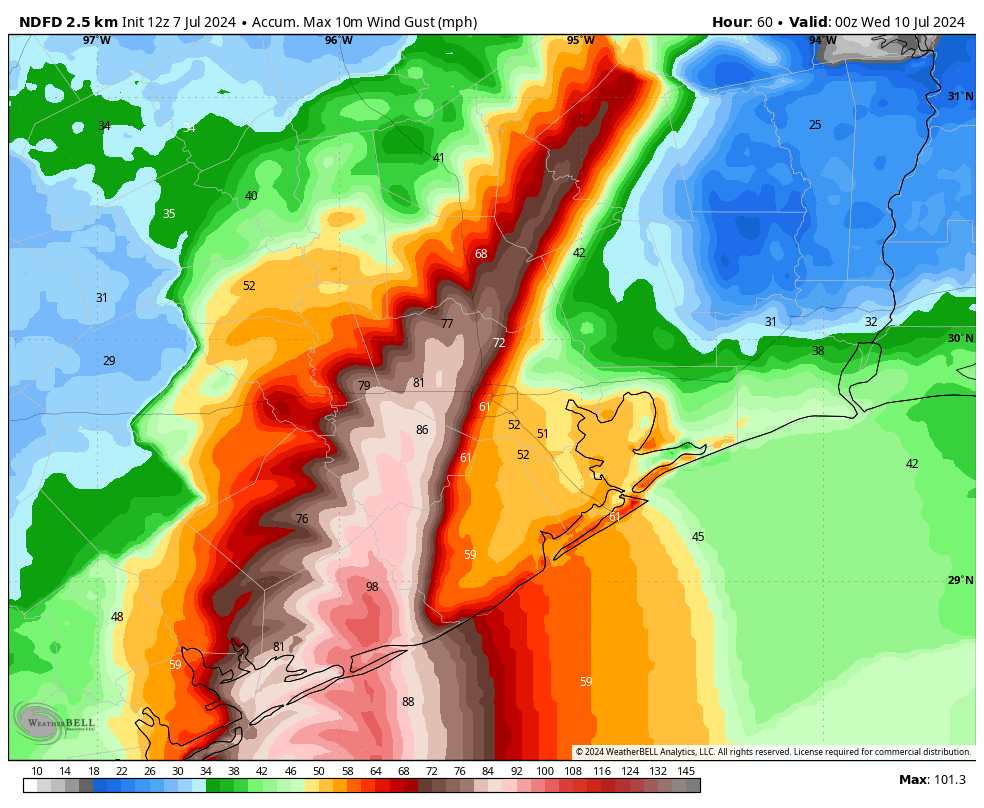
This is not exactly what happened, but it’s pretty close, and it is illustrative of what I want to talk about. Specifically, note how important the track, and proximity to the core, is for the strongest winds. Whereas some areas of Galveston County near the water experienced gusts well below that of hurricane force, areas north of Montgomery County, including San Jacinto County, were vulnerable to hurricane force gusts. This is more than 100 miles from the coast.
The bottom line here is that there are a lot of variables. In general, however, the further you live from the coast, the lower the odds that you’ll experience significant wind damage from a hurricane. But that doesn’t mean the odds are zero.
– Eric
Q: (Are) there any historical trends or data to predict a ‘strong’ winter weather (e.g. extremely cold) based upon the low hurricane season activity relevant to Houston? As well as broader US implications? Given our weather patterns are tied together, highs dragging hurricanes and lows pushing them.
A: So the simple answer is no, there is no consistent way to use hurricane season as a gauge for the upcoming winter. We also hear a lot of people say “Well we had a hurricane, so we’re getting snow this winter!” Back in 2021, I wrote a section in our winter outlook, specifically for Houston that showed, historically, a hurricane strike on Houston doesn’t mean anything really and that the odds of snow in a normal winter were pretty much identical to the odds of snow in a post-hurricane winter.
But in a broader sense, a weather company (WDT, which I believe is now part of DTN) published a post a few years back to correlate Accumulated Cyclone Energy (ACE) to winter temps, which found nearly no correlation. The atmosphere is complicated and singular weather events like hurricanes, whether frequent or infrequent are unlikely to have an appreciable impact on an entire season’s worth of weather 3-4 months later.
I will say, there has been some work done to try to quantify this at a hemispheric scale, and there have been some results. A professor at Florida State has done good work on this. So I think there may be something we will eventually be able to gather from all this, but it’s unlikely to be due to one ocean basin’s activity.
– Matt
Q. Love your content. I’m curious, the models you cite [during hurricane coverage] sound like the same ones we’ve been using. Are AI models in development? I wonder if we can dump them all into AI and see what it thinks…
A1. This is the first year that we’ve really begun to use AI models as tools for hurricane forecasting. (If you’re curious how they work, compared to traditional physics-based models, I wrote a longer article here). We’re going to need to get to the end of the hurricane season to know precisely how well they worked. At that point there will be some comprehensive studies done to calculate how well AI-based models handled hurricane tracks in comparison to physics-based models. But my sense is that, for a new product, they’re surprisingly useful. They’re another tool in the arsenal that we look at every day. Matt may have some thoughts about this as well.
– Eric
A2: I will add that specifically for this year’s Gulf storms, the European AI model (the AIFS) has done astoundingly well. It has locked in early on and has tended to front-run the other model guidance in the right direction. In my day to day with it, I have also found it to occasionally have some skill in snuffing out risks to the forecast, such as a cooldown in mid-summer. Perfect? No. Useful? I believe so. The AI suite will get a good test this winter of how reliable they are at picking out cold snaps or snowstorm risks in the Midwest/Northeast. But they are firmly in my toolkit daily now. –
–Matt
Q: This may have an obvious, easy answer but why am I constantly filling up the pool in the hot HUMID summer? I would figure dry air would sop up pool water (moisture) quickly but not so much air already saturated with water.
A: This is an interesting question, and your assumption is correct: More humid air tends to reduce evaporation of water in a pool. So the question then becomes, what’s going on?
One possible reason could be exposure to sun. If it’s in a lot of sun with limited tree coverage, even in high humidity, you’ll still deal with evaporation. Another possible explanation could be the very dry stretch we went through in August. The spigot shut off for an extended time, which probably didn’t help. Beyond those two explanations, there may be something else afoot! Probably something to monitor for pool maintenance folks, just in case!
–Matt
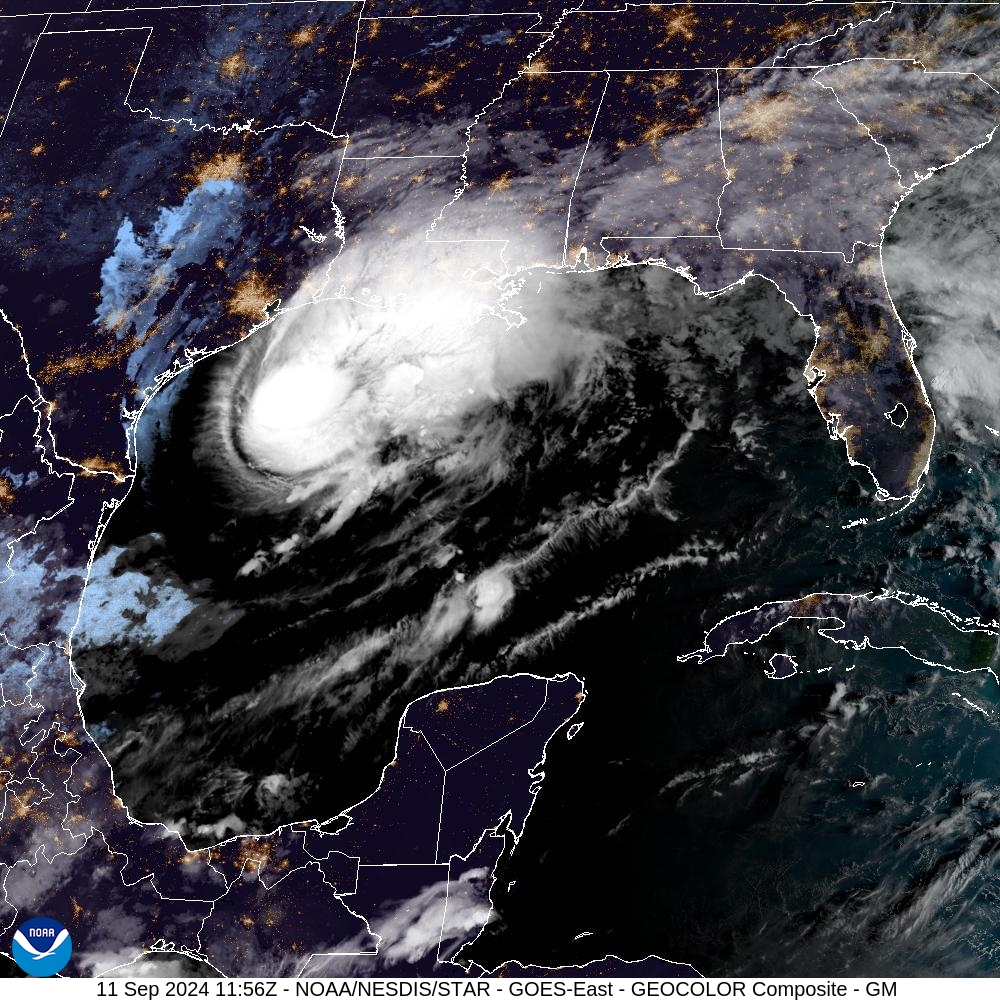
Q. I’ve noticed that many major hurricanes in the Gulf of Mexico during September and October tend to impact Louisiana and Florida more than Texas. I’m curious about the reasons behind this pattern. For example, does it have anything to do with the position of the Bermuda High or seasonal changes in weather patterns? Additionally, is it common for hurricanes to stop hitting Texas after mid-September, or are there historical exceptions?
A. I noticed this phenomenon nearly 20 years ago, and did a little research to figure out that after the date of September 24 the historical odds of a hurricane striking the state of Texas are about 1-in-50. So every year, around this date, I write something to the extent that the Texas hurricane season is pretty much over. (Here’s this year’s post). At some point I’ll probably be embarrassingly wrong about this, but generally, if we get to September 24 and things look quiet, it’s a fairly safe bet that we’re done with the threat of hurricanes. And I am talking about hurricanes—the odds of a tropical storm or depression are higher.
There are sound reasons why this is. Generally, as we get toward the end of September, the upper air pattern starts to change as the jet stream begins to move southward. This provides a generally eastward steering flow that we don’t see in August or earlier in September. A good indicator of this is when we start to get our first cool fronts (we’ve already had two this month). The big risk here, of course, is that the Caribbean Sea and Gulf of Mexico are still plenty warm in October to support hurricanes, so the threat is there. It’s just that, meteorologically speaking, it’s difficult for these storms to track westward into Texas. That’s not a taunt, mind you.
–Eric

Liberals change rules so more Canadians can buy the shittiest condos ever built
OTTAWA – The Trudeau Liberals have announced relaxing of several mortgage rules, all with the intent of allowing more Canadians to barely afford the crappiest, tiniest investment condos that have ever existed. “We are pleased to allow young Canadians the opportunity to spend 30 years paying off these absolutely unliveable shoebox properties,” proclaimed Finance Minister […]
The post Liberals change rules so more Canadians can buy the shittiest condos ever built appeared first on The Beaverton.
Trump Forced To Play Glockenspiel At Rally After Every Artist Bars Use Of Songs
WALKER, MI—Plunking out a solo as the performance entered its 45th minute, Republican presidential candidate Donald Trump was reportedly forced to play the glockenspiel at a rally Friday after every musical artist in the country banned him from using their songs. “He started out with some sheet music, but within minutes he was just hammering away at the same few notes over and over,” rally-goer Ray Garza said as Trump regaled the crowd with a medley of public domain material including “Alexander’s Ragtime Band” and “Take Me Out To The Ball Game.” “I’ve heard at other rallies he’ll go for hours at a time. At first I was kinda unsure, but he just has so much confidence. While I never really liked jazz before, he can improv on those keys, and it just keeps me hooked. I’m not sure if he really invented the glockenspiel, like he claimed, but he’s the best I’ve ever heard, and he says all of Kamala Harris’ glockenspiel performances are fake.” At press time, the estate of Irving Berlin was suing the former president for his glockenspiel rendition of “God Bless America.”
The post Trump Forced To Play Glockenspiel At Rally After Every Artist Bars Use Of Songs appeared first on The Onion.
Archangel Hangs Around After Delivering Message Hoping For Tip
BAKERSFIELD, VT—Having proclaimed the word of the Lord Almighty before a humble, trembling man, the Archangel Michael reportedly hung around after delivering the divine message Friday in hopes of receiving a tip. “So was everything okay with your holy revelation? I’ll probably head back to heaven soon if that’s it—just a reminder that my name is Michael if you need anything else,” the towering archangel said as he rocked back and forth on his heels expectantly, twiddling a feather on one of his enormous wings while he waited for the man to take out his wallet. According to reports, the archangel then conspicuously cleared his throat to make sure the awestruck man noticed he was still there, after which he drummed his fingers upon the hilt of his flaming sword and passive-aggressively remarked that it really wasn’t cheap doing upkeep on a blade of that kind. At press time, sources confirmed the archangel had asked the man if he could use his bathroom.
The post Archangel Hangs Around After Delivering Message Hoping For Tip appeared first on The Onion.
Hit Man Opens Guitar Case Concealing Guitar He Going To Beat Target’s Ass With
SAN ANTONIO—Breezing past security in the guise of a musician and entering the ballroom where his target was attending a cocktail party, area hit man Don Meston reportedly opened a guitar case Friday in which he had concealed the guitar he planned to beat his victim’s ass with. “There were guards out front, but I kept a low profile and slipped right through—along with a little present for our friend,” Meston radioed to his handler, looking left and right before ducking into an out-of-the-way utility closet where he uncased the hidden Gibson Les Paul, attached a strap so he could carry it comfortably over his shoulder, and turned all the instrument’s knobs up to 10. “I’ll try to smack the shit out of the target quick and clean. Keep the car running, though, because if he puts up a fight, I may have to whale on his ass for a while before I can make my getaway.” At press time, witnesses confirmed security had subdued the contract killer after he paused in the middle of carrying out his hit to check the guitar’s tuning.
The post Hit Man Opens Guitar Case Concealing Guitar He Going To Beat Target’s Ass With appeared first on The Onion.
Nude Photos Of Cancer Patients Leaked
A Pennsylvania health care system agreed to pay $65 million to victims of a ransomware attack after hackers posted nude photos of cancer patients online, the largest settlement of its kind in terms of per-patient compensation for victims of a cyberattack. What do you think?

“Despite the circumstances, it was still nice to see pictures of my aunt.”
Abdel Hadir, Greeting Screener

“I have some ethically sourced nudes if you need them.”
Jared Ho, Unemployed

“Maybe they were just looking for a few million second opinions.”
Priya Choudhury, Serum Enhancer
The post Nude Photos Of Cancer Patients Leaked appeared first on The Onion.
PBS Already Had Maggie Smith Marathon Scheduled For Today
ARLINGTON, VA—Admitting they had not been keeping up on recent news about the venerable British actress, PBS officials told reporters Friday that they already had a Maggie Smith–themed marathon planned for today. “Yes, we have been receiving quite a few messages about our regularly scheduled Weekend Of Dame Maggie marathon,” said PBS spokeswoman Sandra Ryan, describing the three-day television event as the perfect way to honor the grand dame of stage and screen’s “contributions to the art of acting” through hours of her dry wit and inimitable presence in period dramas and stage adaptations from across her career. “We’re sure viewers are going to love her in Othello, A Room With A View, Gosford Park, Death On The Nile, Quartet, The Best Exotic Marigold Hotel, and, of course, a complete rerun of all six unforgettable seasons of Downton Abbey. May she keep gracing our screens for years to come.” At press time, PBS released demographic analysis showing that hundreds of thousands of elderly aunts and grandmothers had already settled in to watch the marathon, as they did every year.
The post PBS Already Had Maggie Smith Marathon Scheduled For Today appeared first on The Onion.
Botox: Myth Vs. Fact
The wrinkle-reducing treatment Botox is the most popular nonsurgical cosmetic procedure in the world. The Onion debunks some of the most common myths surrounding the injectable.
MYTH: Botox makes patients’ faces look frozen.
FACT: The majority of Botox patients can easily move their face around with the help of their fingers
MYTH: Botox is painful.
FACT: At this point, most women wouldn’t trust a pain-free procedure.
MYTH: Botox is the most effective treatment for reducing fine lines and wrinkles.
FACT: A $2.99 photo-editing app that sells your data to Russia works just as well.
MYTH: Only women get Botox.
FACT: While women represent the majority of patients, men are increasingly comparing photos of themselves to celebrities.
MYTH: Botox injections can only be administered by a doctor.
FACT: Technically, anyone holding a syringe is a doctor
MYTH: If you get Botox, you can choose a dose so light that nobody will even know it was done.
FACT: They’ll wait until you leave the room to bring it up.
MYTH: Botox is not covered by insurance.
FACT: Just say you have migraines, girl.
The post Botox: Myth Vs. Fact appeared first on The Onion.
Moo Deng Worried Chubbier, Feistier Pygmy Hippo Coming To Take This All Away
SI RACHA, THAILAND—Expressing concern over how long the joy ride would last, internet phenom and zoo resident Moo Deng told reporters Friday she was worried a chubbier, feistier pygmy hippo was coming to take this all away. “I’ve sacrificed everything to get where I am—everything—but it will disappear in an instant if some plucky upstart pygmy hippo comes along who’s so fat she can’t even run without adorably tripping over herself,” said Deng, staring at her reflection in a puddle as she ruminated about how just a single photo of a delightfully plump hippo baby eating a watermelon would be enough to bring everything crashing down. “Even the chubbiest of hippos don’t stay on top forever, I know that. When you’re No. 1, there’s always some sloth or otter trying to take you down. Hell, if it happened to [2017 social media star] Fiona the hippo, it could happen to me.” At press time, a zoo spokesperson confirmed Moo Deng was seeking help for abusing anti-growth hormones in an attempt to stay small forever.
The post Moo Deng Worried Chubbier, Feistier Pygmy Hippo Coming To Take This All Away appeared first on The Onion.
New Philosophy Tube coming soon! #election
Saturday Morning Breakfast Cereal - Arthur

Saturday Morning Breakfast Cereal - Util
Click here to go see the bonus panel!
Hovertext:
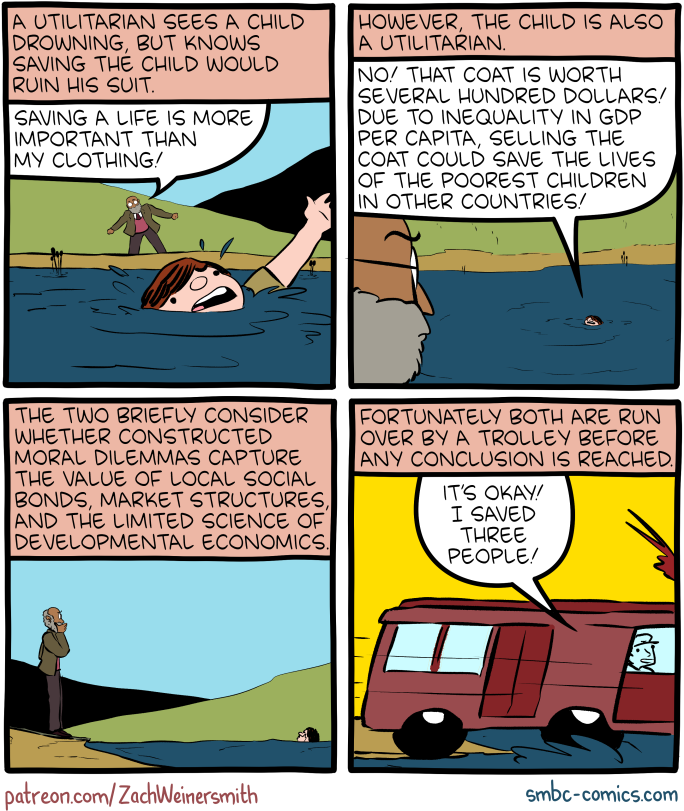
Unfortunately the driver drowns so it's a moral stalemate.
Today's News:

A Texas Pipeline Giant Is Backing a Regulatory Disaster
A massive pipeline fire broke out last week outside of Houston, generating billowing black clouds of smoke that hovered over the industrialized suburb of Deer Park for multiple days. That fire began after an SUV hit a 20-inch-wide natural gas pipeline owned by Energy Transfer. The resulting explosion and fire killed the SUV driver, forced evacuations, and left hundreds of homes without power for nearly two days during a week of near-constant 90-degree heat.
Energy Transfer, a corporate energy infrastructure giant, delayed issuing a response, including waiting more than three hours before confirming that it owned the exploded valve, misstating the amount of people injured by the fire, and seemingly refusing to answer questions from the public and the press. Unfortunately, this is par for the course for the company, also behind the Dakota Access Pipeline, and its infamous Executive Chairman (and ex-CEO) Kelcy Warren.
Energy Transfer is one of the Fortune 500 companies headquartered in Texas, and Warren is its extremely politically connected co-founder. Warren is also one of the most generous donors in the Texas (and national) conservative political scene, and has funneled huge donations to politicians like Governor Greg Abbott, Lieutenant Governor Dan Patrick, and Attorney General Ken Paxton. Warren’s investments, unfortunately, seem to have paid off. In 2021, Energy Transfer and its execs profiteered $2.4 billion off of the February collapse of Texas’ electric grid, which resulted in the deaths of at least 246 Texans. Governor Abbott subsequently, and successfully, steered scrutiny away from Energy Transfer and other energy companies who were either responsible for or profited from the crash. Mere months later, Warren sent Abbott’s campaign a million-dollar check.
Warren and other Energy Transfer leaders and lawyers now seem poised to manipulate the system in favor of the pipeline company once again, this time in the federal courts.

Prior to the recent raging pipeline fire in Texas, Energy Transfer was behind a very different disaster unfolding at the National Labor Relations Board (NLRB), the federal agency that often acts as a watchdog for labor unions and regularly fields and reviews complaints from union members nationwide. In 2022, an unidentified employee of Energy Transfer’s subsidiary La Grange Acquisition filed an unfair labor practice charge against the company, alleging that it had retaliated against him for complaining about unsafe working conditions, including “radioactive material and hazardous dust in work areas.” The NLRB opened an administrative case, investigating those claims and the subsequent allegation that he was fired in part for filing the complaint.
In 2024, Energy Transfer sued the NLRB, seeking to halt the administrative proceedings and joining SpaceX, Amazon, and other corporations in basically arguing that the board’s foundational structure is unconstitutional. That argument threatens the basic function of the NLRB (and other agencies like it) and could have sweeping consequences for its ability to conduct investigations or engage in basic enforcement actions for violations of labor rules and regulations.
That suit ultimately landed in front of Judge Jeffrey Vincent Brown of the Southern District of Texas—a Trump appointee—who issued a preliminary injunction against the NLRB’s investigation into Energy Transfer in order to allow the company’s suit against the NLRB to proceed.
Though the NLRB has nearly 90 years of case law supporting its structure and administrative court reviews, Brown’s ruling cited instead a recent Fifth Circuit ruling, Jarkesy v. U.S. Securities and Exchange Commission (SEC), which held that the SEC’s structure and enforcement procedures were unconstitutional. In July of this year, the Supreme Court partially affirmed Jarkesy, but remained silent on the Fifth Circuit’s ruling on the (un)constitutionality of the SEC’s administrative law judges, a structure that the commission shares with the NLRB—and many other federal agencies.
When the Supreme Court does not affirm nor reject an aspect of a ruling issued by a lower court, the lower court’s ruling is functionally left in place, which now poses a serious threat to the basic functionality of the SEC and other federal regulatory agencies that are mandated to act as watchdogs over unscrupulous corporations and in defense of the public interest. Contradictory rulings on the issue from other federal judges have highlighted the conflicting precedents that have allowed the Fifth Circuit to activate an issue that had been deemed settled for decades.
The crux of SCOTUS’s Jarkesy ruling doesn’t clearly apply to the NLRB’s powers or proceedings—the case addresses an entirely different agency with different powers and authorities. Even so, Brown was the second Texas-based federal judge to cite the Fifth Circuit’s Jarkesy decision in a ruling against the NLRB, thereby playing his part in right-wing attempts to render the agency—along with the rest of the federal regulatory administration—nonexistent. Brown’s judicial overreach is unsurprising for a lifetime appointee who has been described by civil rights leaders as a right-wing “ideological extremist.”
Of course, Brown’s apparently eager weaponization of his court to aid Energy Transfer’s corporate interests may also be contextualized, or perhaps motivated, by the prior relationships Brown has to Energy Transfer, its proxies, and its execs.
Before becoming a federal judge in 2019, Brown served as an elected member of the Supreme Court of Texas.
During Brown’s 2018 reelection bid, Kelcy Warren gave Brown’s campaign $6,250, making Warren Brown’s third largest individual contributor overall, according to information compiled by TransparencyUSA.org. In 2014, during his first successful campaign for the seat, Brown’s campaign received $25,000 from the Texas Oil & Gas Association (TXOGA). The company’s Vice President of Government Affairs currently serves on TXOGA’s Board of Directors.
Energy Transfer was represented before Brown’s court by Amber Michelle Rogers, a partner at Hunton Andrews Kurth, LLP. Hunton Andrews Kurth’s PAC donated a whopping $43,000 to Brown’s various judicial campaigns, making the firm’s PAC one of Brown’s top five biggest donors, per FollowTheMoney.org.
When the company filed an amicus brief at the Supreme Court supporting the court’s affirmation of the Fifth Circuit’s ruling in Jarkesy, it was represented by attorneys for Vinson & Elkins LLP. Vinson & Elkins’s PAC appears to be the third all-time biggest donor to Brown’s campaigns, contributing $63,500 over the course of his state judicial campaigns, according to data posted on FollowTheMoney.org.
Warren is also a member of the Horatio Alger Association, which has lavished gifts on Associate Supreme Court Justice Clarence Thomas, according to the New York Times.
The significant financial interconnections between Energy Transfer, the lawyers representing the pipeline company, and Brown’s past campaigns are incredibly concerning. 28 U.S. Code § 455(a) establishes that a judge “shall disqualify himself in any proceeding in which his impartiality might reasonably be questioned.” That same statute later dictates that, “He shall also disqualify himself” if he knows that he “has a financial interest in the subject matter in controversy or in a party to the proceeding, or any other interest that could be substantially affected by the outcome of the proceeding.”
At minimum, the prior connections between Energy Transfer, its lawyers, and Judge Brown raise questions about Brown’s impartiality in this case.
Yet, judicial ethics are largely predicated on self-reporting and enforcement standards, and Brown does not seem particularly concerned with the strictures of such a practice. An NPR investigation just this year found that he, along with two other Southern District of Texas judges, had failed to file a required form disclosing his attendance of a privately funded seminar.
The case is far from settled, and it will now be heard by the Fifth Circuit with the NLRB’s appeal of Brown’s earlier ruling. What happens next is yet to be seen, but with the foundation of the government agency that historically has protected labor union members’ rights in the hands of a notoriously partisan court that previously attacked it, the outlook is not promising.
The post A Texas Pipeline Giant Is Backing a Regulatory Disaster appeared first on The Texas Observer.
Helene drenching the Southeast and causing widespread severe flooding
Ex-Hurricane, now Tropical Storm Helene is causing a historic flood event this morning all across the Southeast. I count no less than 10 flash flood emergencies as I write this between Georgia and the Carolinas. These include Atlanta, Charlotte, and Asheville.

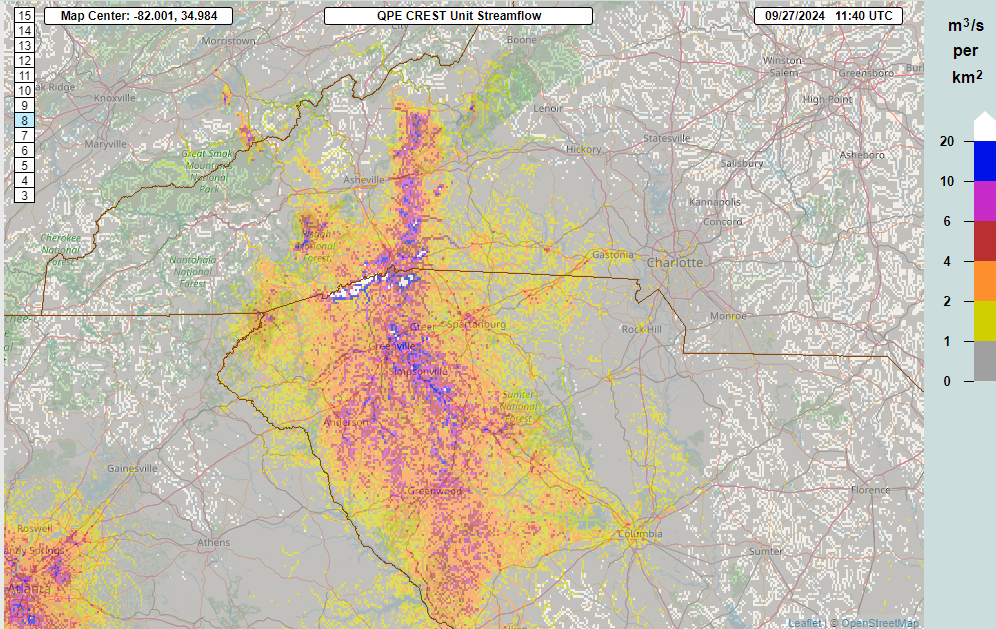
I don’t recall the last time I saw 10 flash flood emergencies at once. Suffice to say it can probably be counted on one hand or less.
A “high” risk (level 4/4) for flooding remains in effect today in western North Carolina. It’s surrounded by a moderate risk. all the way into extreme southern West Virginia. A second area of moderate risk exists just west of Nashville. High risks correlate strongly to the worst flooding outcomes in terms of damage and loss of life, so much like yesterday and overnight, this will be a rough stretch.
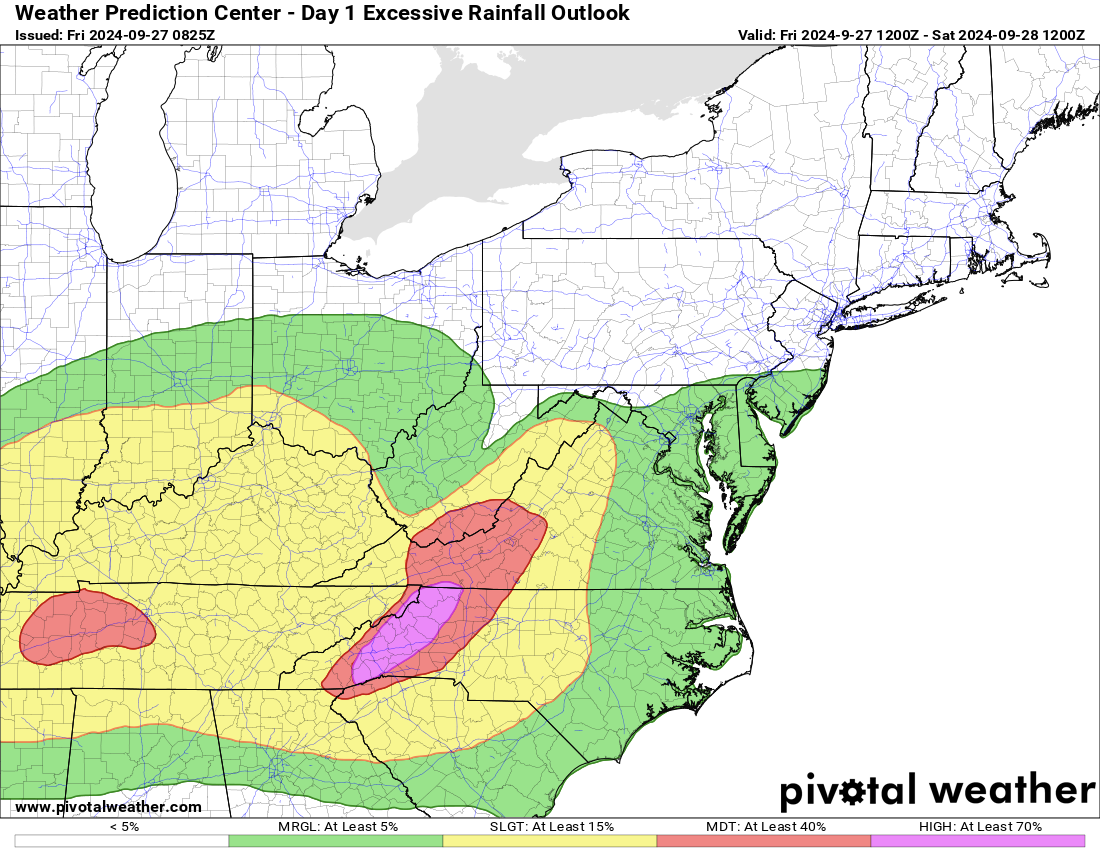
Conditions should improve in Atlanta today, but the damage is done. Asheville remains at risk, as do locations up through Roanoke through Virginia.
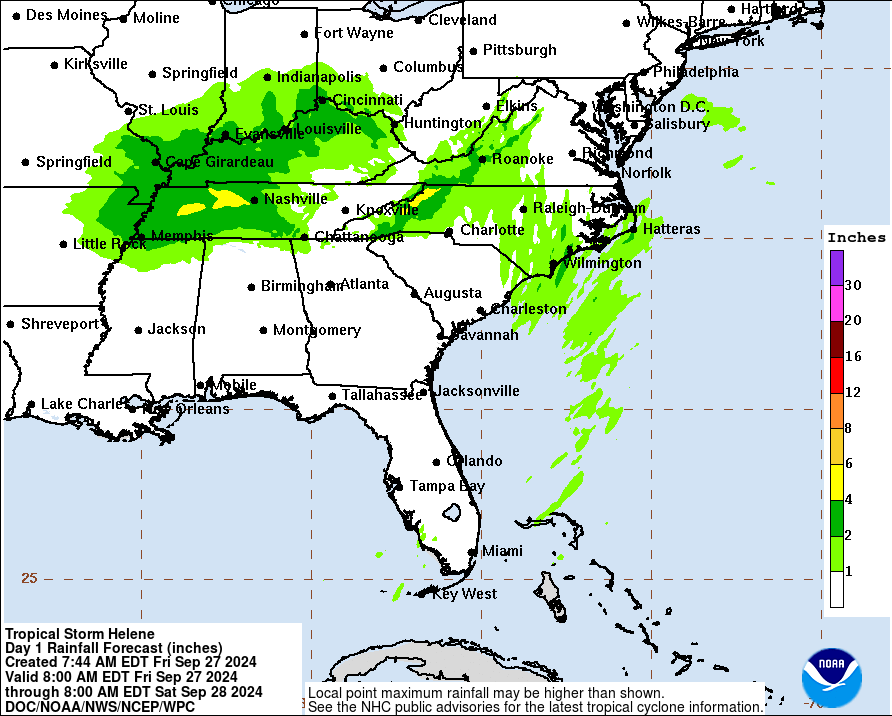
Meanwhile, winds continue gusting in excess of 50 and 60 mph all across South Carolina with even some 70 mph gusts too in North Carolina. Power outages are up to about 3.5 million between Florida and Virginia. Those numbers may continue to increase a bit more. The hope is that the low pressure center of Helene will slowly lose identity and weaken by later today and tonight. Flooding risks should drop off heading into tomorrow, though isolated flooding will be possible north and west of the hardest hit areas, perhaps into southern Indiana or Kentucky.
I have not had time to dig through reports from the Florida coast, but I know that it will take time for the worst surge reports to emerge. It always does. And we will almost certainly see the NHC forecasts of 15 to 20 feet verify. The Tampa area broke all their surge records yesterday by a wide margin. This was far and away the worst modern storm to hit the northern west coast and Big Bend area of Florida. More on this to come.
Other news and notes
We’ve neglected other things this week for obvious reasons. Here’s just a quick rundown of what else is happening. More to come on this.
- Tropical Storm Isaac formed and was upgraded to a hurricane today. It is headed out to sea.
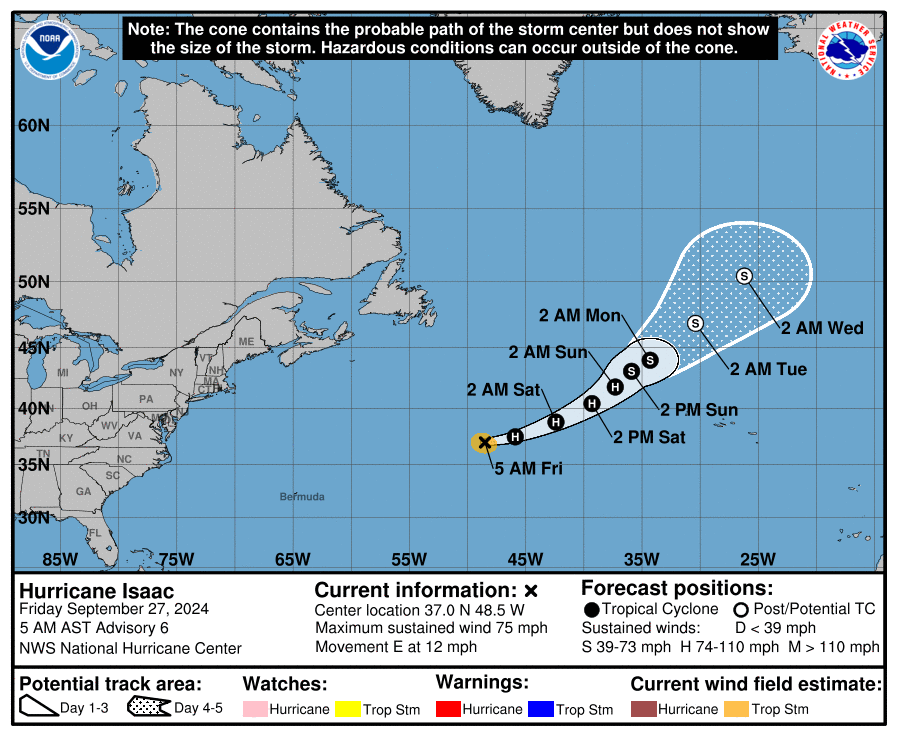
- Invest 98L, also in the deep, open Atlantic has a good chance to be upgraded to a depression or Tropical Storm Joyce later today. It is no threat to land.

- The NHC dropped an area of interest yesterday in the Caribbean in a very similar spot to where Helene was conceived. It has a 30% chance of developing over the next week.
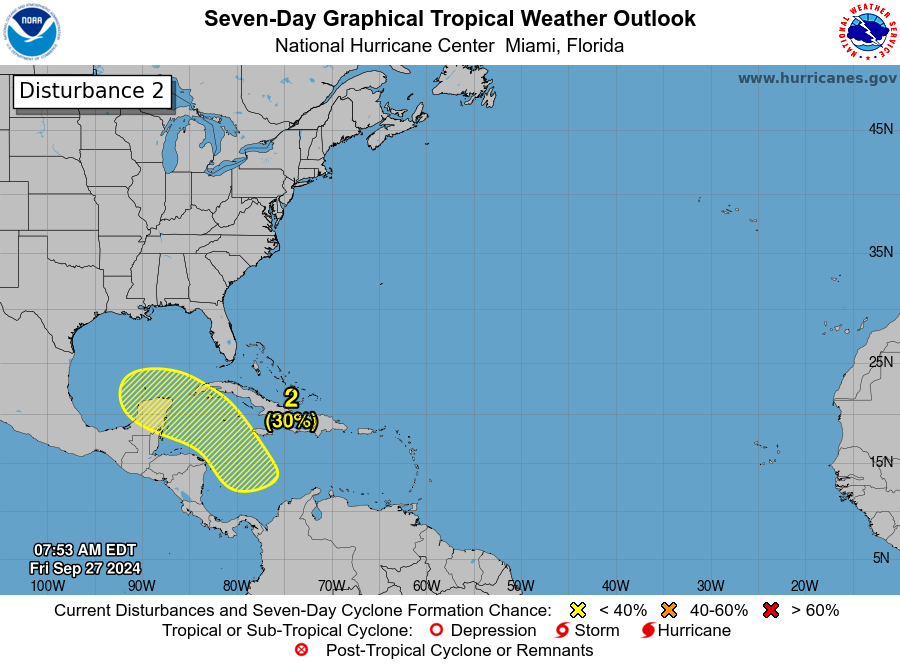
- This Caribbean or Yucatan area does not currently have the same degree of model support we saw at this point from Helene for something high-end. However, there is a substantial signal for something in the region next week. We’ll have more on this later in the weekend. For now, don’t worry about it but check back in for updates.
We will post again later today with an update on Helene and anything else of note.
Vanishing Culture: On 78s
The following guest post from audio preservation expert George Blood is part of our Vanishing Culture series, highlighting the power and importance of preservation in our digital age.

Thomas Edison produces the first machine that can record and playback sound in 1877. The flat disc is first patented in 1888. The concept is very simple: a sound wave is captured on the record as a physical wave in the disc, most often shellac (the shell of the lac beetle). Most discs spin at approximately 78 rpm, hence the name 78s. Other speeds, such as 80, 90 and 100 rpm are not uncommon. In addition to speed, the equalization and stylus size varies – either to improve the sound or to dodge someone else’s patent. In the 1950s they slowly give way to the LP or microgroove record, though in some parts of the world they remain common well into the 1960s.
Why is it important to preserve 78rpm discs?
The cultural record of the 20th century is different from all other periods of human history by the presence of audiovisual recordings. Prior to 1877, there was no way to record the sound of a nursery rhyme being read at bedtime, a musical or theatrical performance, or the world around us. During the ensuing 147 years, formats came and went as technology and preferences changed. Yet for nearly half that time, 78rpm discs were the way we learned about each other and entertained the world. It was a time when the world became a much smaller place. The invention of the automobile and the airplane, the expansion of the railroads, the telephone and radio, to the dawn of the space age, 78s were there. Through 78s, we could hear traditional music from Hawaii long before it was a state. American popular music – jazz, fox trot, big bands, even the Beatles – spread out across the globe, well ahead of Hollywood, and long before television. A thousand people might attend a concert, a theater performance, a speech, or a dramatic reading by Charles Dickens. With the 78, it became possible for those experiences to be shared and repeated, and spread far and wide, not once and done.
The period of 78s doesn’t just parallel other historical developments. The sounds on 78s document cultural norms, performance practices, tastes, and the interests of people who, after centuries of drudgery and lives spent in the fields and hard labor, finally had free time. My mother liked to remind me that nothing tells you more about a person than what makes them laugh. The comedy routines and lyrics give us a window into a time when groups of people were preyed upon, disparaged, and disrespected in stereotypes and bigotry, which shines a mirror on how we can still do better to our fellow beings. We hear the buoyant sounds of the roaring ‘20s, a happy, hopeful time, of liberation and greed. Music borne of the heavy hand of oppression and poverty that conveys gospel, blues, and gives us jazz—all quintessentially American. On 78s, we can hear and learn of the other peoples of the world: of ragas and gamalans, performers who do not traverse great oceans, the cultures of foreign lands we could only read about. We can feel the despondency of the Great Depression in the songs that empathize with the struggles of a nation. Through 78s we can hear firsthand accounts of the attack on Pearl Harbor, the angry, vile speeches of dictators, the songs that inspired a once divided nation to pull together in a common cause against evil, to fight for peace for our time, for days that will live in infamy. Bursting out of the war to end all wars, big bands, swing, then rock n’ roll. It makes one long to hear Bach play the organ, Mozart play the piano, Paganini play the violin, or Orpheus beg for the turn of Euridice, and know, that if we preserved these 78rpm recordings, future generations will understand our joys and pains, to have a window, through sound, into the arc of history, the slow advance of progress of the human condition.
To remember half of recorded history, it is important to preserve 78rpm discs.
About the author
George Blood is an expert in the audio and video preservation industry.
Vanishing Culture: Preserving African Folktales
The following interview with African folklore scholars Laura Gibbs and Helen Nde is part of our Vanishing Culture series, highlighting the power and importance of preservation in our digital age.

Crafting and sharing folktales by word or performance is a long-standing tradition on the African continent. No one owned the stories. They were community treasures passed down through the generations.
Over time, many disappeared. The few stories that were written down enjoyed a broader audience once published. As those books were harder to find or out of print, digitized versions kept some folktales alive.
Laura Gibbs and Helen Nde are among researchers of African folktales who rely on digital collections to do their work. They maintain that digital preservation is essential for these rare cultural artifacts to remain accessible to the public.
Much of the transmission of African stories through performance has been lost. “That’s a culture that has either completely vanished or is vanishing,” said Nde, who immigrated from Cameroon to the United States.

In her forthcoming book on African folklore by Watkins Publishing (March 2025), Nde said 70% of her references were from sources she found through the Internet Archive. The Atlanta-based folklorist uses material either in the public domain or available through controlled digital lending (CDL) for her research. She also turns to the online collection to inform writing for her educational platform, Mythological Africans.
Many books produced on the African continent by smaller publishing houses are now out of print or very expensive. Nde said without access to a library that carries these folktales, they can be forgotten.
“What’s tragic is that quite often those books that are so hard to get are the books that are written by people from within the culture, or African scholars,” Nde said. “They speak the languages and in some cases, remember the traditional ways the stories are told. They understand the stories in ways that people from outside the cultures cannot.”
“I cannot emphasize enough how important it is that these [African folklore] texts be not only preserved, but made accessible. With the recent ruling in the publishers’ lawsuit, I fear researchers, journalists, writers and other people on or from the African continent who investigate and curate knowledge for the public have lost a valuable tool for countering false narratives.”
Helen Nde, author
These authors can fill in gaps from researchers with a different perspective than those who documented the stories from outside, she said, adding that’s why digital preservation is so important. While many African folklore texts are in the public domain in the United States, much of the anthropological and historical texts with commentary from both African and non-African scholars that provide the necessary context for these folktales are not, Nde said. “In many instances, these important auxiliary texts are out of print, which means access via the Internet Archive is the best way scholars not located in the West might ever be able to access them,” Nde said. “I cannot emphasize enough how important it is that these texts be not only preserved, but made accessible. With the recent ruling in the publishers’ lawsuit, I fear researchers, journalists, writers and other people on or from the African continent who investigate and curate knowledge for the public have lost a valuable tool for countering false narratives.”
For Gibbs, online access to digitized books is critical to the volunteer work she does since retiring from teaching mythology and folklore at the University of Oklahoma. She compiled A Reader’s Guide to African Folktales at the Internet Archive, a curated bibliography of hundreds of folktale books that she has shared with the public through the Internet Archive.

“For me doing my work, the Internet Archive is my library,” said Gibbs, who lives in Austin, Texas. “There are books at the Internet Archive that I can’t get at my local library or even in my local university library. Some of these books are really obscure. There just physically aren’t that many copies out there.”
Being able to check out one digital title at a time through controlled digital lending opened up new possibilities. In her research, she can use the search function with the title of a book, name of an illustrator or some other kind of detail. Now in her digital research, she can use the search function to perform work that she couldn’t do with physical books, such as keyword searches, with speed and precision. The collection also has been helpful in her recent project at Wikipedia to fill in information on African oral literature, such as proverbs and folktales.
“Digital preservation is not only preservation, it’s also transformation. Because when things have been digitized, you can share them in different ways, explore them in different ways, connect them in different ways,” Gibbs said. “So, I connect different versions of the stories to one another, and then I can help readers connect to all those different versions of the stories. But now, because of the publishers’ lawsuit, many important African folktale collections and reference works are no longer available for borrowing at the Archive.”
What would it mean to lose digital access to these folktales? “It would be the end of my work,” said Gibbs. “My whole goal is to make the African folktales at the Archive more accessible to readers around the world by providing bibliographies, indexes, and summaries of the stories. But now the publishers are shutting down that public access.”
“The stories were embodied in the traditional storytellers and in their communities, and the continuity of that tradition over time has been so disrupted,” Gibbs said. “The loss is just staggering. The stories that were recorded are just a tiny fraction of the thousands of stories in the hundreds of different African languages…We can’t afford to let this kind of loss happen again in the digital world.”
Gibbs adds that just as museums are repatriating artifacts from colonized countries, the original stories of African countries need to be made available to their communities. “Digital libraries like the Internet Archive are a crucial way to make these stories available to African readers.”
Preservation of African folklore is not just important for research purposes, but also for self-exploration and reflection. When examining African folklore, Nde often asks: “What can these stories tell me about myself?” she said. “Speaking from my own experience, African folktales are an underexplored resource for understanding the cultural history of African peoples,” Nde said. “Mythology and folklore are how people make sense of themselves as people on this planet.”
New Feature Alert: Access Archived Webpages Directly Through Google Search

In a significant step forward for digital preservation, Google Search is now making it easier than ever to access the past. Starting today, users everywhere can view archived versions of webpages directly through Google Search, with a simple link to the Internet Archive’s Wayback Machine.
How It Works
To access this new feature, conduct a search on Google as usual. Next to each search result, you’ll find three dots—clicking on these will bring up the “About this Result” panel. Within this panel, select “More About This Page” to reveal a link to the Wayback Machine page for that website.
Through this direct link, you’ll be able to view previous versions of a webpage via the Wayback Machine, offering a snapshot of how it appeared at different points in time.
A Commitment to Preservation
At the Internet Archive, our mission is to provide, “Universal Access to All Knowledge.” The Wayback Machine, one of our best-known services, provides access to billions of archived webpages, ensuring that the digital record remains accessible for future generations.
As Mark Graham, director of the Wayback Machine, explains:
“The web is aging, and with it, countless URLs now lead to digital ghosts. Businesses fold, governments shift, disasters strike, and content management systems evolve—all erasing swaths of online history. Sometimes, creators themselves hit delete, or bow to political pressure. Enter the Internet Archive’s Wayback Machine: for more than 25 years, it’s been preserving snapshots of the public web. This digital time capsule transforms our “now-only” browsing into a journey through internet history. And now, it’s just a click away from Google search results, opening a portal to a fuller, richer web—one that remembers what others have forgotten.”
This collaboration with Google underscores the importance of web archiving and expands the reach of the Wayback Machine, making it even easier for users to access and explore archived content. However, the link to archived webpages will not be available in instances where the rights holder has opted out of having their site archived or if the webpage violates content policies.
For more information about the Wayback Machine and how you can explore the web’s history, visit https://web.archive.org/.
Monstrous Hurricane Helene about to make landfall near Perry, FL on Thursday evening
Hurricane Helene is about to make landfall by midnight, likely in Taylor County, FL, just south of Perry in the Big Bend as at least a 140 mph category 4 monster of a storm. There are too many superlatives to cover right now between the surge and wind and flooding and tornadoes. But suffice to say that Helene is en route to retirement in all likelihood.

Historic water level values have all been met or broken in Tampa Bay.
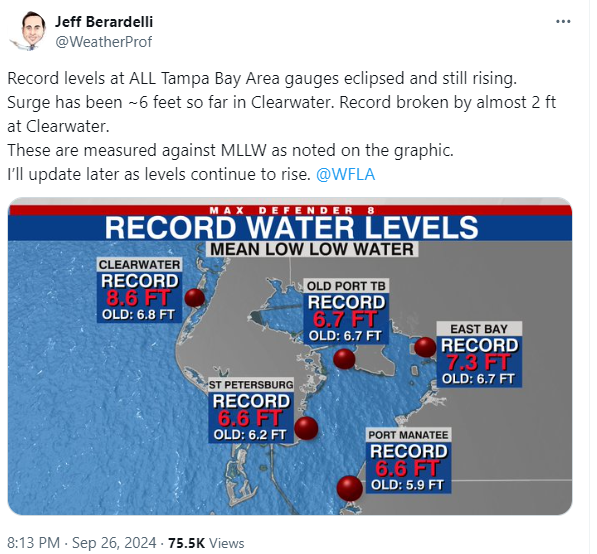
Widespread rain is causing flash flooding all over the Southeast that will worsen overnight.
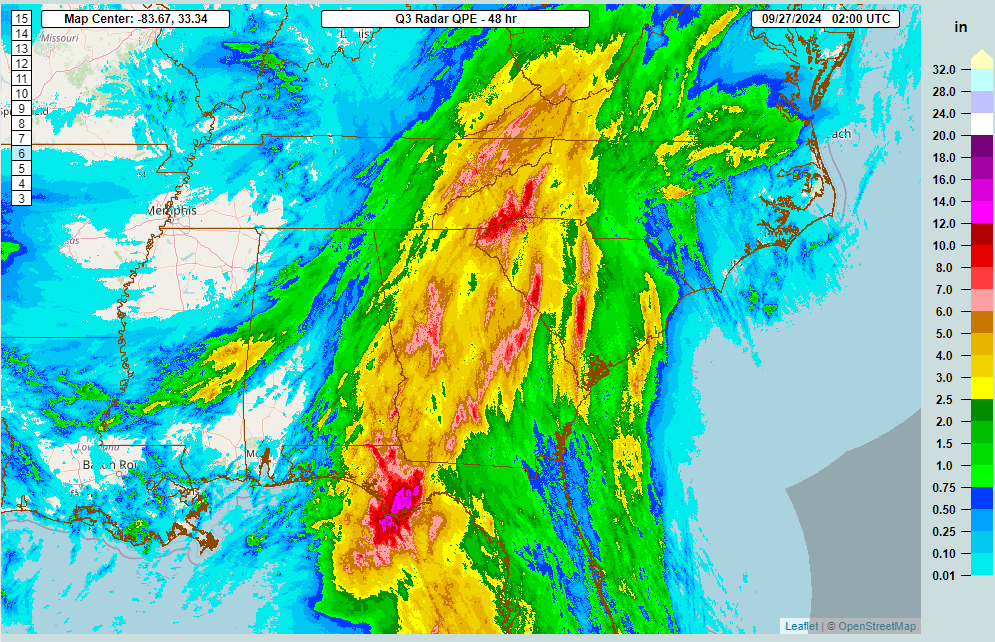
Tornado Watches blanket much of the Southeast and numerous tornado warnings have occurred today. And an extreme wind warning is in effect just east of Tallahassee, the rarest of warnings reserved for only the mightiest of landfalling hurricanes. Helene joins that club shortly.
There have been no changes of note to the storm track, but the potential for stronger winds inland has expanded somewhat through the day today, and the wind risk map now looks like this:
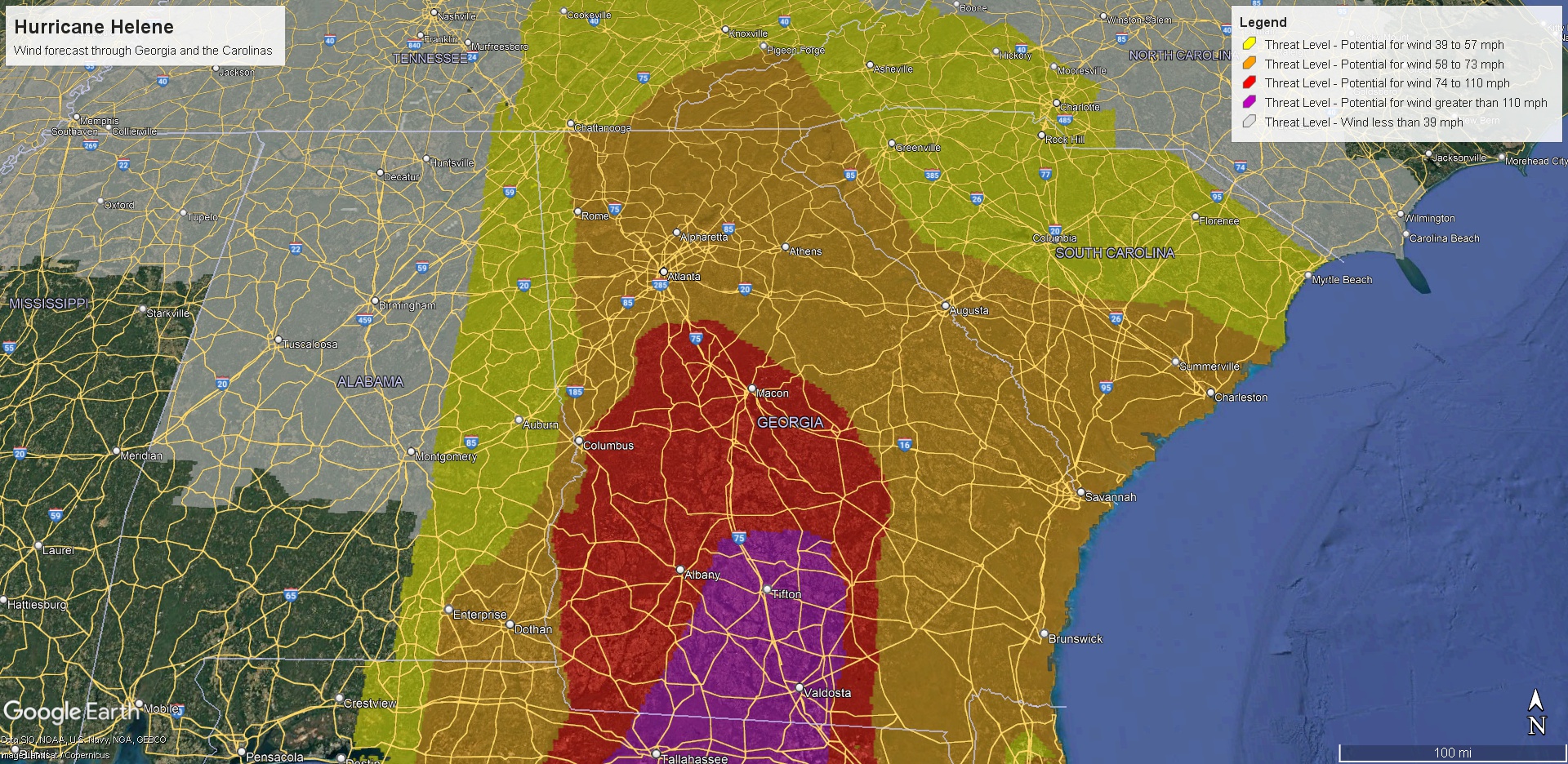
This is likely to cause significant, long-duration power outages in Georgia and the Carolinas in addition to the anticipated widespread, severe, potentially catastrophic flash flooding. This includes the Atlanta metro. Charge your phones now if you have not already.
We’ll continue to watch this tonight and have a complete update later or in the morning.
Lending of Digitized Books

On Sept 4, 2024, the US Court of Appeals in New York affirmed the lower court ruling in the lawsuit filed against us by Hachette Book Group, HarperCollins Publishers, John Wiley & Sons, and Penguin Random House. While the Internet Archive is disappointed by this opinion—it was never the Internet Archive’s intention to get into a lawsuit over lending digitized books—we respect the outcome.
To date, we have removed over 500,000 books from lending on archive.org (and therefore also openlibrary.org). While we are reviewing all available options, this judicial opinion will lead to the removal of many more books from lending. It is important for the Internet Archive and all libraries to continue to have a healthy relationship with publishers and authors.
Please be assured that millions of digitized books will still be available to those with print disabilities, small sections will be available for those linking into them from Wikipedia and through interlibrary loan, books will continue to be preserved for the long term, and other protected library uses will continue to inform digital learners everywhere.
The Internet Archive is also increasing its investment in digital books from publishers willing to sell ebooks that libraries can own and lend. While this is currently from a small number of publishers, the number is growing and we see it as a future for the long term sustainability of authors, publishers, and libraries. Encouragingly, the Independent Publishers Group recently endorsed selling ebooks to libraries. The growing number of libraries purchasing and owning digital books brings fair compensation to authors and publishers, along with permanent preservation and access to author’s works for communities everywhere.
We respect the opinion of the courts and, while we are saddened by how this setback affects our patrons and the future of all libraries, the Internet Archive remains strong and committed to our mission of Universal Access to All Knowledge. Thank you for your help and support.
Vanishing Culture: On Filmstrips
The following guest post from film archivist Mark O’Brien is part of our Vanishing Culture series, highlighting the power and importance of preservation in our digital age.

In 1999, I was working in information technology at a school district in rural upstate New York, and dreaming of writing angst-ridden, sample-laden music that might help people understand what it felt like to be me. Autism was not well-understood when I was a child, and I was simply left to try to pretend to be normal. One day I walked into the school’s library and saw an entire wall of shelves being emptied. The district was getting rid of old educational multimedia, most of it filmstrips.
Filmstrips were like slideshows, but on a continuous strip of 35mm film, published equally by independent publishers and juggernauts like Coronet, Jam Handy, Disney, and Hanna-Barbera. By the 1960s, most had soundtracks on record or cassette. A beep or bell sound on the recording told the projectionist to move the filmstrip forward one frame. Today, most people incorrectly call 16mm motion pictures “filmstrips,” but they were in fact a separate and distinct thing all of their own.
Instinctively aware that the records and tapes probably contained cheesy, anachronistic material that could also be manipulated in the music I dreamed of making, and also aware that no one else had probably thought to dig through filmstrip soundtracks, I quickly pled my case to the librarian, and she let me take them all home.
I gleefully digitized all the records and tapes over the next few months. At the time, I had a good turntable and cassette deck, a professional audio interface, and experience working with audio. I got a couple of filmstrip projectors too, and hosted a few get-togethers with friends where we laughed at the filmstrips’ authoritarian, buttoned-down nature, the out-of-time fashions and styles, and the failed attempts to try to seem cool to a high-school-aged audience. We pretended we were on Mystery Science Theater 3000, chastising the images on the screen. While everyone else was simply throwing filmstrips away, I had discovered a cultural artifact and viewing experience that aligned perfectly with the subversive zeitgeist of the 90s.
Sample film from the Uncommon Ephemera collection at Internet Archive
While I began to dream of some way to digitize the film and, perhaps, put it together with the audio in a pre-YouTube world (“Maybe I could learn Macromedia Flash!” I thought. Spoiler alert: I couldn’t.) — I had neither the money nor the smarts to get it done. I hung onto the filmstrips for a few years and, feeling like a failure, finally threw them and the soundtracks away. Due to my ignorance and storage space constraints, the only thing left of those soundtracks are MP3s. These two atrocities – saving only MP3s instead of lossless audio, and throwing away the filmstrips, most of which I still haven’t found again – haunt me to this day.
Fast forward to 2018. After a long bout of fatigue, I was diagnosed with thyroid cancer. I got the offending gland removed, but the fatigue did not abate. Still in rural upstate New York, I only had access to doctors who would say “your bloodwork looks correct, it’s not my problem.” I had no choice but to learn to live with the fatigue and, paradoxically, scramble to find something that could financially sustain me and accommodate my medically required non-traditional schedule.
I forget now, but something made me look into filmstrips again. Surely, between 1999 and 2019 someone had taken up this cause and I wouldn’t need to, right? In fact, just the opposite was true, and it shocked me: no one was saving them. I bought some on eBay and started to experiment.
I also continued to do research — wait, what do you mean 35mm film scanners cost $700,000?! No wonder these things aren’t getting saved! Still, I wondered if there was some way I could do it on equipment I could afford. I was hopeful maybe I could scan them somehow, put them together in a video editor and post them to YouTube and people would enjoy them, and maybe they would support me through Patreon.
Learn more about Mark O’Brien & Uncommon Ephemera
– Uncommon Ephemera website: https://uncommonephemera.org/
– Internet Archive collection: https://archive.org/details/uncommonephemera
But I quickly realized this wasn’t preservation as much as it was triage. Most filmstrips were printed on Eastmancolor, a film stock which is now notorious for self-destruction. First, the cyan and yellow dyes fade, destroying fine detail and leaving the film an intense shade of red. Then, the binder chemical that holds the dye layers in place begins to disintegrate. Once this happens, the dye layers move and smear, destroying the images on the film. The speed at which this happens is dependent on the environmental conditions in which the film was stored. All Eastmancolor film is now red, most of it can no longer be properly color-corrected, a lot of it is in the beginning stages of binder breakdown (called “vinegar syndrome”), and some filmstrips are already physically lost.
Realizing this wasn’t traditional preservation, and researching the methods by which a small number of others had saved a small number of filmstrips, I came to an uncomfortable decision: the only way to get this done with limited economic resources was to use a flatbed scanner that accepted 35mm negatives, and carefully cut them to fit in the scanner’s film negative adapter. I’ve heard this makes “real” preservationists wince, but they had thirty-plus years to digitize the format on the right equipment. If I do not do this work now, these filmstrips, containing K-12 and university educational media, business and industry training films, presentations for religious organizations, and sales films used by insurance companies, Amway, and other organizations would be completely unviewable in less than a decade.
With my obsessive-compulsiveness on full alert, I began learning how to make high-quality scans, and developed a process in a video editor to make the filmstrips behave like they did when viewed on a projector, with their characteristic visible movement of the film between frames. In 2019 I was still a long way from being a good preservationist; some of the filmstrips I digitized at the beginning were still discarded after I got a good scan. Today, I try to keep everything just in case.
I left YouTube for a while in 2022, when Scholastic, one of the largest children’s book publishers on earth, tried to get my channel deleted. Turns out they bought the assets of a defunct filmstrip publisher whose work I was trying to save. So not only had no one preserved these things, but a corporation hoarding bankruptcy assets now threatened the very point of preservation in the first place: making history available for viewing. That’s when I moved my primary home to the Internet Archive, who have been unequivocally wonderful to me.
“Sadly, what I’ve learned is that preserving filmstrips isn’t important to practically anyone, including institutions whose job is to preserve film, and even the publishers who produced the filmstrips in the first place.”
Mark O’Brien, film archivist
Without filmstrips, our memory of American culture in the 20th century would be severely lacking. They provide historical perspective, cultural context, and reflect the successes and failures of our education system. They are original sources, unaffected by the space constraints and biases of historians and content aggregators. And they’re fun, full of anachronism, awkward photography, non-theistic proselytizing, and so much incredible hand-drawn artwork that runs the gamut from gorgeous to insane to psychedelic to “my three-year-old drew this.” I feel they could be equally attractive to historians and meme makers, squares and cool kids, the religious and nonreligious, fans of education and fans of comedy.
For this essay, I was asked to explain why preserving filmstrips is important. And that’s why I’ve told you this story; sadly, what I’ve learned is that preserving filmstrips isn’t important to practically anyone, including institutions whose job is to preserve film, and even the publishers who produced the filmstrips in the first place. As an independent and self-taught archivist, it’s disheartening when I have an interaction with people who admonish me about my credentials (I don’t have any), my affiliation with a university (I flunked out of one once, does that count?), or my methods, borne out of necessity and urgency. It’s heartbreaking when people on a “lost media” subreddit flame me for saving “lost media no one cares about,” or when universities and institutions dismiss what I do while simultaneously beating their chests about the important work they’re doing. And it’s ignorantly classist when someone suggests I just wait until I have $700,000 to scan them “correctly.” (I assure you, there will be no Eastmancolor film left on the planet in preservable condition by the time that money comes around.)

While I continue to improve my processes, I am regularly disappointed at how much of what I do isn’t actual preservation: it turns out to be mostly raising awareness, setting boundaries, scraping for a dozen YouTube views here and there, and shouting into the void that is social media — none of which I am particularly good at, having what is effectively a social learning disability which challenges my ability to be an effective communicator.
However, pressing questions remain: how do I convince people it’s not only important, but urgent to save whatever of this format is still out there? How do I get help instead of gatekeeping from other archives and institutions? How do I compensate preservationists who help for their time? How do I compete for attention and financial support on platforms that thrive on viral, rage-bait, and us-versus-them content? Can one person, working as hard as he can on something important but not popular, ever do enough, in an age of content creators with a hundred employees and millions of followers, to even be seen?
I hope these words reach some people, but I’m acutely aware of just how many thousands it takes to truly spread the word about something in the modern age. I have more than 2,000 filmstrips left to scan, most from a few generous donors, and I estimate that’s about ten years of full-time work. Most are printed on Eastmancolor. It will probably take longer to save them than they have left. I am saving as many as I can, but I fear unless I find a way to more effectively communicate the urgency of it all, I won’t be able to save them all. I think it would be shameful if those things got in the way of saving filmstrips, a critical and cool part of our past.
About the author
Mark O’Brien lives in upstate New York with his wife, who you can follow on X at @MrsEphemera, and their cat Charlie, who they got at a yard sale.
Illuminating the Stories of Brooklynites Through Digitized Directories
The following guest post from Dee Bowers (they/them), Archives Manager at the Brooklyn Public Library Center for Brooklyn History, is part of a series written by members of the Internet Archive’s Community Webs program. Community Webs advances the capacity of community-focused memory organizations to build web and digital archives documenting local histories and underrepresented voices.
Some say as many as one in seven Americans have family roots in Brooklyn, and I expect the newly digitized Brooklyn city directories now available through the Internet Archive will get heavy use from genealogists, historians, authors, journalists, students, and even artists to trace connections to the diverse and ever-changing borough.

What is now the Center for Brooklyn History first joined the Internet Archive’s Community Webs program in 2017 as part of the original cohort. This program gave us the tools and training we needed to save over 2TB of web-based Brooklyn history content, including over 1,000 individual URLs. We also host our digitized high school newspapers and audiovisual material on the Internet Archive.
In addition to helping us preserve this web-based content, Community Webs has now also made it possible to increase access to our physical collections through digitization. As part of the Collaborative Access to Diverse Public Library Local History Collections project, made possible by a grant from the National Historical Publications and Records Commission, we were able to partner with the Internet Archive to digitize 236 microfiche sheets of Brooklyn city directories.

These directories show the movement, growth, and changing nature of immigrant populations in Brooklyn in the early to mid 19th century and help document the immigrant experience by providing data on the residency and, in some cases, ethnicities of Brooklynites over time. We knew that expanding digital access would be extremely useful to the many researchers who use our online resources, especially since our number one research topic is genealogy. The project is also directly in line with our mission:
“Democratize access to Brooklyn’s history and be dedicated to expanding and diversifying representation of the history of the borough by unifying resources and expertise, and broadening reach and impact.“
By increasing the visibility of these collections through digitization and freely available public access, researchers and historians will have a richer, more accessible view into the diversity of American history. The history of Brooklyn is extraordinarily diverse but, like many archives, our collections don’t always tell the fullness of those stories. By expanding access to our city directories, we provide insight into earlier residents of Brooklyn and enable diverse communities to trace their Brooklyn roots to a greater degree.

Here’s an example of how the directories look in the Internet Archive. In this screenshot above, they include content outside of just directory listings. In this case, there’s a chronological listing of “memoranda” – notable moments in Brooklyn history – including “June 11, 1812 – News received in Brooklyn, of the declaration of war between the United States and Great Britain.”
One example of research that can be conducted with these directories is finding out more about early Black Brooklynites. Slavery was abolished in New York State in 1827, so the earliest days of post-enslavement Brooklyn are represented in the digitized directories.

By searching the text of the directories using keywords, I picked out an individual to learn more about, Rev. William J. Hodges, who lived on Broadway in Brooklyn in 1857. By cross-referencing with our digitized newspapers, I was able to find out more about him and his abolitionist activism in Brooklyn and beyond. It turns out he was not born in Brooklyn, nor did he reside there very long, but he did make an impact during his time there, as he founded the Colored Political Association of Kings County (which is the modern-day borough of Brooklyn).

If not for the digitized city directories, I doubt I ever would have learned of Rev. Hodges and his time in Brooklyn. I hope that many more stories like these will emerge once researchers start digging into these directories.

The directories also contain items like this – an advertisement showing this architect and builder’s office on Schermerhorn Street in Downtown Brooklyn. This part of Brooklyn looks very different now, and this insight into what it looked like pre-photography is invaluable, particularly for people conducting house, building, and neighborhood research.
The directories are linked on our Search Our Collections page. We also have a tutorial for using the digitized directories. Additionally, we have several related research guides which assist researchers in exploring various topics. These materials are in the public domain, and we hope they will be used for a broad spectrum of applications, from family research to demographic research to writing to artwork. We are grateful to Community Webs, the Internet Archive, and the National Historical Publications and Records Commission for making this material available and searchable online and allowing us to expand access across the borough, city, and beyond.
New Pixel camera can make your parents look like they’re in love again
VANCOUVER, B.C. – His parents may have bought him Google’s newest flagship smartphone to take the sting out of their impending divorce, but 11-year-old Andy Liske is using the phone’s state-of-the-art generative AI camera software to ensure he never has to think about how much his parents hate each other ever again. “I cried for […]
The post New Pixel camera can make your parents look like they’re in love again appeared first on The Beaverton.
Missouri Executes Man Despite Questions About Evidence
The state of Missouri executed Marcellus Williams shortly after the U.S. Supreme Court rejected a request for a delay, forging ahead despite forensics experts determining that he was not the source of DNA found on the knife used in the murder. What do you think?

“Let this be a warning to whoever the real killer is.”
Elia Lynch, Transit Critic

“If new evidence comes to light they can always unkill him.”
Javier Pineda, Amateur Exonerator

“Evidence has no place in our criminal justice system.”
Doug Serratore, Appellate Expert
The post Missouri Executes Man Despite Questions About Evidence appeared first on The Onion.
Panicked Eric Adams Takes City Hall Employees Hostage
NEW YORK—Erratically waving a pistol as he declared himself a mayor with nothing left to lose, a panicked Eric Adams took multiple hostages Thursday at New York City Hall, according to reports from inside the building. “I don’t want to hurt any of you, but I also need everybody to be smart and not try to be a hero,” said the federally indicted mayor, the adrenaline reportedly coursing through his veins as he donned a bomb-laden vest and told his terrified hostages to stack more furniture in front of the doors if they didn’t want him to “blow [them] all to kingdom come.” “Good, now everybody lie down in the center of the room, hands on your head. Do it slow! No sudden movements! You, in the red jacket, get up. You’re gonna go outside and tell them that for all these municipal employees to walk out of here in one piece, I need a helicopter with enough fuel to get me to the Turkish embassy. And…and a couple vegan pizzas too, the kind you can only find here in wonderful New York City. Don’t test me, motherfuckers! I’m a man at his wits’ end!” At press time, the NYPD confirmed to reporters that they had safely killed everyone in the building.
The post Panicked Eric Adams Takes City Hall Employees Hostage appeared first on The Onion.
coworker’s food restrictions mean that I’ll be the one restricted, saying you have to discuss an offer with your spouse, and more
This post was written by Alison Green and published on Ask a Manager.
I’m off this week. Here are some past letters that I’m making new again, rather than leaving them to wilt in the archives.
1. My coworker’s food restrictions mean that I’ll be the one restricted
My company is based mainly in two cities. Every so often, we all meet up in one city or another and go out to eat, paid for by the company. It’s usually a really nice evening, and viewed as a real treat. We’ve always had to be a little careful where we book, because a couple of employees need gluten-free food. But both cities have fantastic restaurants with lots of options — not the kind of places with 30 different menu options and only one gluten-free. So it’s never been much of an issue.
Now we have a new employee who has particular religious dietary requirements. He offered to do the research to find a restaurant which would suit everyone in his city. Great, I thought. Except the only restaurants which he claims will work are ones which serve curry. Curry is — literally — the only thing I cannot eat. I’ve tried so many times, and been sick so many times, that now I can barely tolerate the smell.
His response was, “Well, there will be a non-curry option for you.” Yes, there will. But in most places, it’s plain, dull, uninteresting food. When I’ve tried this in the past, I’ve been served unseasoned chicken lumps and potato, or egg omelettes and chips. I don’t want to be sitting eating that when previously we had lovely evenings with steaks, Italian, or Chinese food, and it was a real treat.
I feel as though I’m being penalized for someone else’s needs — that something I previously enjoyed is essentially being taken away. Frankly, I’d rather not attend at all as I feel that I’m being made into the exception when my own needs should be the easiest of all to meet. It’s literally one dish I need to avoid.
The other employee won’t accept my looking for an alternative restaurant, as he says I don’t know enough about his needs to find one. Is there any way at all to push back on this?
If this is more than preference for you, and the smell of the restaurant will actually make you sick, that needs to be accommodated. It doesn’t make sense to put him in charge of picking a place that meets everyone’s needs if he’s not in fact willing to do that.
But if this is just an issue of preference — you can eat there but you’d prefer somewhere with food you like better — and if it’s really true that he can’t eat anywhere else in the city, then this is just part of the deal with business meals; sometimes you’re going to be stuck with food you’re not thrilled about. I know that sucks when the food has previously been a big part of the appeal, but if he truly can’t eat anywhere else, it’s more important that he be included than that the food be awesome. Unfortunately, because he’s refusing to share information about his needs, he’s making it impossible for you to suggest other options, and that’s not reasonable.
If you haven’t already, I’d first take a look at the menu at the place he picked to make sure you’re right that it’s not somewhere you could happily eat. But if that is indeed the case, it’s reasonable to say, “Unfortunately that restaurant would be difficult for me, so can we discuss other options?”
But if he refuses to share information about what would make a restaurant work for him, it’s worth talking to whoever organizes these evenings about what other options there might be. In the end, it might turn out that this is it — but since it does impact other people, he should be willing to have a dialogue about it.
– 2018
2. Is it better to send the perfect application or apply right away?
I’d be very grateful for your take on a recent job application problem I had: I saw a really exciting job opening at my current company, for which you had to apply via the company’s application site. I only saw the opening on Friday afternoon and didn’t have the chance to look at it properly until the weekend. It said the deadline was the Monday and it had the standard application format on this website, which includes the option of uploading a portfolio. It didn’t seem to be compulsory for this job, but it’s the kind of job for which my portfolio would be relevant, and I thought since I was a stretch for the job (they seemed to want more experience than I had), it would be best to do everything I could to help my application.
Unfortunately the best and most recent samples of my work are work I did at my current job, which I didn’t have at home. I decided to write a draft cover letter and CV, bring the samples home from work on Monday so I could scan and upload them in the evening, and gamble that the job opening would still be open. Unfortunately when I got home it had closed. Out of interest, do you think I did the right thing? Is it better to send a weaker application (in this case, without an up-to-date portfolio) while the opening is still there, or only apply if your application is perfect?
There’s no good answer here, other than “send in a good application as soon as you reasonably can” — which is what you tried to do. Sometimes the timing just won’t work in your favor, and it’s impossible to fully guard against that. You could have taken only an hour, and it still could have closed before you applied if you happened to have bad timing. The main thing is not to delay because of obsessive perfectionism or procrastination. In your case, though, you weren’t doing that.
The one thing I would do differently is, if you know you’re job searching or are likely to be job searching reasonably soon, have everything you need ready to go. You never know when something will pop up that you want to apply for, and ideally you wouldn’t be starting from scratch at that point in getting materials together.
– 2018
3. Should I admit to using internet blocking software?
I recently installed a blocking software on my work computer that allows me limited minutes per day on a custom list of time-wasting websites, a decision which – coupled with a few other changes – has massively upped my work day productivity and organization.
My manager has asked what I’ve done that’s had such a big impact on my organization. I feel a bit conflicted about talking about this software – mostly because I feel I shouldn’t admit that, up until now, I’ve had real problems with procrastinating online! Would you suggest keeping it vague, or should I be honest about a useful tool I’ve found to help me address a problem my boss told me head on I needed to fix?
Ooooh. Yeah, this is likely to come across as “I was wasting so much time before that you were seeing it reflected in my work” and that’s not a great thing to say to your manager, even if it’s now behind you. You mentioned you made a few other changes too, so I might just explain those and not focus on this one.
– 2018
4. Saying that you have to talk over a job offer with your spouse
What are your thoughts on telling a potential employer, “I will need to talk this over with my husband/wife” when considering a job offer? Does it sound too dependent or is it just honest?
It’s pretty common to say “I’d like a few days to think it over and talk with my spouse.”
That said, there’s no need to say it. People without spouses also ask for time to think over offers. It’s fine to simply say, “I’d like to take a few days to think this over. Could I get back to you by Friday?”
– 2016