Shared posts

02 Oct 18:01

Pluralistic: A sexy, skinny defeat device for your HP ink cartridge (30 Sep 2024)

by Cory Doctorow


Today's links


The flexible, adhesive-backed 'sticker' circuit board that man-in-the-middles an HP printer cartridge.

A sexy, skinny defeat device for your HP ink cartridge (permalink)

Animals keep evolving into crabs; it's a process called "carcinisation" and it's pretty weird. Crabs just turn out to be extremely evolutionarily fit for our current environment:

https://www.scientificamerican.com/article/why-do-animals-keep-evolving-into-crabs/

By the same token, all kinds of business keep evolving into something like a printer company. It turns out that in this enshittified, poorly regulated, rentier-friendly world, the parasitic, inkjet business model is extremely adaptive. Printerinisation is everywhere.

All that stuff you hate about your car? Trapping you into using their mechanics, spying on you, planned obsolescence? All lifted from the inkjet printer business model:

https://pluralistic.net/2023/07/24/rent-to-pwn/#kitt-is-a-demon

That GE fridge that won't make ice or dispense water unless you spend $50 for a proprietary charcoal filter instead of using a $10 generic? Pure printerism:

https://pluralistic.net/2020/06/12/digital-feudalism/#filtergate

The software update to your Sonos speakers that makes them half as useful and takes away your right to play your stored music, forcing you to buy streaming music subscriptions? Straight out of the HP playbook:

https://www.wired.com/story/sonos-admits-its-recent-app-update-was-a-colossal-mistake/

But as printerinized as all these gadgets are, none can quite attain the level of high enshittification that the OG inkjet bastards attain on a daily basis. In the world championships of effortlessly authentic fuckery, no one can lay a glove on the sociopathic monsters of HP.

For example: when HP wanted to soften us all up for a new world of "subscription ink" (where you have to pre-pay every month for a certain number of pages' worth of printing, which your printer enforces by spying on you and ratting you out to HP over the internet), they offered a "lifetime subscription" plan. With this "lifetime" plan, you paid just once and your HP printer would print out 15 pages a month for so long as you owned your printer, with HP shipping you new ink every time you ran low.

Well, eventually, HP got bored of not making you pay rent on your own fucking printer, so they just turned that plan off. Yeah, it was a lifetime plan, but the "lifetime" in question was the lifetime of HP's patience for not fucking you over, and that patience has the longevity of a mayfly:

https://pluralistic.net/2020/11/06/horrible-products/#inkwars

It would take many pages to list all of HP's sins here. This is a company that ships printers with half-full ink cartridges and charges more than the printer cost to buy a replacement set. The company that won't let you print a black-and-white page if you're out of yellow ink. The company that won't let you scan or send a fax if you're out of any of your ink.

They make you "recalibrate" your printer or "clean your heads" by forcing you to print sheets of ink-dense paper. They also refuse to let you use your ink cartridges after they "expire."

HP raised the price of ink to over $10,000 per gallon, then went to war against third-party ink cartridge makers, cartridge remanufacturers, and cartridge refillers. They added "security chips" to their cartridges whose job was to watch the ink levels in your cartridge and, when they dip below a certain level (long before the cartridge is actually empty), declare the cartridge to be dry and permanently out of use.

Even if you refill that cartridge, it will still declare itself to be empty to your printer, which will therefore refuse to print.

Third party ink companies have options here. One thing they could do is reverse-engineer the security chip, and make compatible ones that say, "Actually, I'm full." The problem with this is that laws like Section 1201 of the Digital Millennium Copyright Act (DMCA) potentially makes this into a felony punishable by a five-year prison sentence and a $500k fine, for a first offense.

DMCA 1201 bans bypassing "an effective means of access control" to a copyrighted work. So if HP writes a copyrighted "I'm empty" program for its security chip and then adds some kind of access restriction to prevent you from dumping and reverse-engineering that program, you can end up a felon, thanks to the DMCA.

Another countermove is to harvest security chips out of dead cartridges that have been sent overseas as e-waste (one consequence of HP's $10,000/gallon ink racket is that it generates mountains of immortal, toxic e-waste that mostly ends up poisoning poor countries in the global south). These can be integrated into new cartridges, or remanufactured ones.

In practice, ink companies do all of this and more, and total normie HP printer owners go to extremely improbable lengths to find third party ink cartridges and figure out how to use them. It turns out that even people who find technology tinkering intimidating or confusing or dull can be motivated to learn and practice a lot of esoteric tech stuff as an alternative to paying $10,000/gallon for colored water.

HP has lots of countermoves for this. One truly unhinged piece of fuckery is to ask Customs and Border Patrol to block third-party ink cartridges with genuine HP security chips that have been pried loose from e-waste shipments. HP claims that these are "counterfeits" (because they were removed and re-used without permission), even though they came out of real HP cartridges, and CBP takes them at their word, seizing shipments.

Even sleazier: HP pushes out fake security updates to its printers. You get a message telling you there's an urgent security update, you click OK, and your printer shows you a downloading/installing progress bar and reboots itself. As far as you can tell, nothing has changed. But these aren't "security" updates, they're updates that block third-party ink, and HP has designed them not to kick in for several months. That way, HP owners who get tricked into installing this downgrade don't raise hell online and warn everyone else until they've installed it too, and it's too late:

https://www.eff.org/deeplinks/2020/11/ink-stained-wretches-battle-soul-digital-freedom-taking-place-inside-your-printer

This is the infectious pathogen business model: one reason covid spread so quickly was that people were infectious before they developed symptoms. That meant that the virus could spread before the spreader knew they had it. By adding a long fuse to its logic bomb, HP greatly increases the spread of its malware.

But life finds a way. $10,000/gallon ink is an irresistible target for tinkerers, security researchers and competitors. Necessity may be the mother of invention, but the true parent of jaw-dropping ingenuity is callous, sadistic greed. That's why America's army of prisoners are the source of so many of the most beautiful and exciting forms of innovation seen today:

https://pluralistic.net/2021/06/09/king-rat/#mother-of-invention

Despite harsh legal penalties and the vast resources of HP, third-party ink continues to thrive, and every time HP figures out how to block one technique, three even cooler ones pop up.

Last week, Jay Summet published a video tearing down a third-party ink cartridge compatible with an HP 61XL:

https://www.youtube.com/watch?v=h0ya184uaTE

The third-party cartridge has what appears to be a genuine HP security chip, but it is overlaid with a paper-thin, flexible, adhesive-backed circuit board that is skinny enough that the cartridge still fits in an HP printer.

This flexible circuit board has its own little microchip. Summet theorizes that it is designed to pass the "are you a real HP cartridge" challenge pass to the security chip, but to block the followup "are you empty or full?" message. When the printer issues that challenge, the "man in the middle" chip answers, "Oh, I'm definitely full."

In their writeup, Hackaday identifies the chip as "a single IC in a QFN package." This is just so clever and delightful:

https://hackaday.com/2024/09/28/man-in-the-middle-pcb-unlocks-hp-ink-cartridges/

Hackaday also notes that HP CEO Enrique J Lores recently threatened to brick any printer discovered to be using third-party ink:

https://arstechnica.com/gadgets/2024/01/hp-ceo-blocking-third-party-ink-from-printers-fights-viruses/

As William Gibson famously quipped, "the future is here, it's just not evenly distributed." As our enshittification-rich environment drives more and more companies to evolve into rent-seeking enterprises through printerinisation, HP offers us a glimpse of the horrors of the late enshittocene.

It's just as Orwell prophesied: "If you want a picture of the future, imagine HP installing malware on your printer to force you to spend $10,000/gallon on ink – forever."

(Image: Jay Summet)


Hey look at this (permalink)


A Wayback Machine banner.

This day in history (permalink)

#20yrsago Asimov’s magazine on ebooks https://web.archive.org/web/20041010190341/https://www.asimovs.com/_issue_0408/onthenet2.shtml

#20yrsago Can suing customers save the record companies? https://web.archive.org/web/20041012170814/http://www.law.com/jsp/article.jsp?id=1095434496352

#20yrsago ACLU and EFF strike down part of PATRIOT Act https://web.archive.org/web/20040927082258/https://www.eff.org/news/archives/2004_09.php#001945

#20yrsago Industrial nations to WIPO: less IP, more global well-being https://web.archive.org/web/20041011201242/http://lists.essential.org/pipermail/ip-health/2004-September/006974.html

#20yrsago Court trashes fair use https://web.archive.org/web/20041009211351/https://www.eff.org/news/archives/2004_09.php#001962

#20yrsago EFF kicks Diebold’s ass https://web.archive.org/web/20041009211351/https://www.eff.org/news/archives/2004_09.php#001961

#20yrsago MSFT’s FAT shakedown suspended by Patent Office https://web.archive.org/web/20041009202717/http://www.pubpat.org/Microsoft_517_Rejected.htm

#20yrsago Sony ditches DRM CDs https://web.archive.org/web/20041010063144/http://www.engadget.com/entry/3586262161659249/

#20yrsago Canadian Creative Commons licenses launched https://web.archive.org/web/20041011105249/http://www.cippic.ca/en/projects-cases/icommons-canada/

#15yrsago Bank of America demands thumbprint from man with no arms https://www.reuters.com/article/domesticNews/idUSTRE58247Y20090903/

#15yrsago Britain seeks ban on glass pint-glasses to prevent bar-brawl injuries https://www.loweringthebar.net/2009/09/british-government-considers-mandating-plastic-pints.html

#15yrsago Trotsky: the graphic biography https://memex.craphound.com/2009/09/30/trotsky-the-graphic-biography/

#15yrsago BBC wants to encrypt “free” TV — talking points debunked https://www.theguardian.com/technology/2009/sep/29/bbc-hd-encryption

#15yrsago UK Border Agency’s pseudoscientific “race-detection” DNA/isotope tests has scientific experts “horrified” https://web.archive.org/web/20091004013349/http://blogs.sciencemag.org/scienceinsider/2009/09/nationality-tes-1.html

#15yrsago Zork rock anthem https://web.archive.org/web/20131110083129/http://www.elumir.com/music/Walkthrough.mp3

#15yrsago Apple 1984 ad, updated for 2009 https://www.youtube.com/watch?v=tdVzboF2E2Q

#15yrsago Android developers pledge to make open equivalents to Google’s proprietary apps https://arstechnica.com/information-technology/2009/09/android-community-aims-to-replace-googles-proprietary-bits/

#15yrsago Boneshaker: Cherie Priest’s swashbuckling steampunk Seattle story https://memex.craphound.com/2009/09/29/boneshaker-cherie-priests-swashbuckling-steampunk-seattle-story/

#15yrsago Faced with network surveillance, Hong Kong student demonstrators go P2P https://www.bbc.com/news/blogs-trending-29411159

#10yrsago Eric Holder’s terrible tech-liberties record https://www.newyorker.com/news/daily-comment/holders-disappointing-tech-legacy

#10yrsago Localizing an operating system for a language with no high-tech vocabulary https://web.archive.org/web/20191025222806/https://www.economist.com/international/2014/09/27/cookies-caches-and-cows

#5yrsago Stealing Ur Feelings: interactive documentary on the snakeoil “science” of facial emotion detection https://stealingurfeelin.gs

#5yrsago Jonathan Lethem on Edward Snowden’s “Permanent Record” https://www.nybooks.com/articles/2019/10/24/edward-snowden-labyrinth/

#1yrago The surveillance advertising to financial fraud pipeline https://pluralistic.net/2023/09/29/ban-surveillance-ads/#sucker-funnel

#1yrago The internet is not a (link)dump truck https://pluralistic.net/2023/09/30/mesclada/#melange


Upcoming appearances (permalink)

A photo of me onstage, giving a speech, holding a mic.


A screenshot of me at my desk, doing a livecast.

Recent appearances (permalink)


A grid of my books with Will Stahle covers..

Latest books (permalink)


A cardboard book box with the Macmillan logo.

Upcoming books (permalink)

  • Picks and Shovels: a sequel to "Red Team Blues," about the heroic era of the PC, Tor Books, February 2025
  • Unauthorized Bread: a middle-grades graphic novel adapted from my novella about refugees, toasters and DRM, FirstSecond, 2025


Colophon (permalink)

Today's top sources:

Currently writing:

  • Enshittification: a nonfiction book about platform decay for Farrar, Straus, Giroux. Today's progress: words ( words total).
  • A Little Brother short story about DIY insulin PLANNING

  • Picks and Shovels, a Martin Hench noir thriller about the heroic era of the PC. FORTHCOMING TOR BOOKS JAN 2025

Latest podcast: Vigilant (a Little Brother story) https://craphound.com/littlebrother/2024/09/29/vigilant-a-little-brother-story/


This work – excluding any serialized fiction – is licensed under a Creative Commons Attribution 4.0 license. That means you can use it any way you like, including commercially, provided that you attribute it to me, Cory Doctorow, and include a link to pluralistic.net.

https://creativecommons.org/licenses/by/4.0/

Quotations and images are not included in this license; they are included either under a limitation or exception to copyright, or on the basis of a separate license. Please exercise caution.


How to get Pluralistic:

Blog (no ads, tracking, or data-collection):

Pluralistic.net

Newsletter (no ads, tracking, or data-collection):

https://pluralistic.net/plura-list

Mastodon (no ads, tracking, or data-collection):

https://mamot.fr/@pluralistic

Medium (no ads, paywalled):

https://doctorow.medium.com/

Twitter (mass-scale, unrestricted, third-party surveillance and advertising):

https://twitter.com/doctorow

Tumblr (mass-scale, unrestricted, third-party surveillance and advertising):

https://mostlysignssomeportents.tumblr.com/tagged/pluralistic

"When life gives you SARS, you make sarsaparilla" -Joey "Accordion Guy" DeVilla

02 Oct 01:16

Vanishing Culture: Preserving Cookbooks

by vanishingculture

The following guest post from humanities scholar Katie Livingston is part of our Vanishing Culture series, highlighting the power and importance of preservation in our digital age.

My Grann’s edition of The Grady County Extension Homemaker Council’s cookbook Down Home Cookin’ is missing its front and back cover. Once made of thin, flimsy pieces of plastic decorated with an old barn and windmill, the cover has long since fallen off and some of the pages are loose. The book is held together by three red rubber bands. My Grann explains that the plastic binder got brittle and began to fall apart—the rubber bands are her solution. The pages of the cookbook are yellowed from years of use. At least three generations of women in my family, including myself, have flipped through these pages, leaving them stained with the oils from their fingers and the drippings of in-progress recipes. Most importantly to me, they scribbled in the margins. My family’s edition of Down Home Cookin’ has reached a critical mass of notes in the marginalia such that it no longer counts as a simple copy of a cookbook: it is my Grann’s cookbook, our family cookbook. Holding it in my hands in my apartment in California (my Grann kindly agreed to mail it to me) feels off. It feels so delicate here, out of the context of her home, her kitchen, in the little cupboard where she has kept all of her cookbooks since I was a child. Now, it is more like a museum piece, something precious and precarious, meant to be handled with care, preserved, analyzed.

This sense of its history, of its fragility, of its potential for disintegrating, is why the cookbook is worth preserving, worth reading, worth moving from that little kitchen in Apache, Oklahoma, to my little kitchen in the Bay Area, to this page, to the archive. This is why all family cookbooks are worth preserving. As time presses on, this small print county cookbook, and others like it, are becoming pieces of personal family ephemera, fading into obscurity the way that other domestic objects—bills, receipts, manuals, phone books, baby books, children’s drawings, to do lists—do. Time has worked on this cookbook as my grandmother has worked from it. The pages are thin, brittle, and covered in age spots. I can imagine all the printed copies of Down Home Cookin’ tucked away in the kitchen drawers of Oklahoma women, slowly degrading, either through excessive use or mere forgetfulness.

Finding a replacement for these books is not easy. To procure a new copy, you have to mail in the old-fashioned way: to an address printed on the title page. This is the paradox of Down Home Cookin’: to obtain a copy of Down Home Cookin’, one must already have a copy of Down Home Cookin’. If one turns to the internet for permanence and reproduction,as we are apt to do these days, little can be found. Searching now reveals a few used editions floating around on eBay and one on Amazon. Unsurprisingly, the Amazon copy is marked with notes and stains. The seller writes: “pencil writing inside front cover, black marker writing on upper corner front cover written ‘(pie crust p.367’), diagonal crease on bottom back cover, and a couple of yellowed (grease?) stains on bottom of a few pages.”

If these books are not scanned, digitized, and archived, we lose not only the text of Down Home Cookin’, but also the contributed labor and knowledge of the women who owned them. Clearly, the owner of the Amazon iteration was fond of the pie crust on page 367. In another version for sale on eBay, the owner inscribed the cookbook with “C Cake” and “Caret Cake” in two locations, presumably as a reminder that this particular cookbook had her favorite carrot cake recipe.

Digitizing and archiving cookbooks challenges the assumption that a scanned book is nothing more than a poor replacement for an official ebook, something easily bought and immediately downloaded, read on a Kindle or an iPad. Scanning and archiving cookbooks documents not only their content, but also the hands that they have passed through; each copy has its own unique revisions and adjustments. Take, for instance, the annotations in the Internet Archive’s scan of A Selection of Tested Recipes, a community cookbook from Howe, Indiana. Not only does the scan capture handwritten addendums to recipes, but also pages in which the owner has added her own recipes. In an unused copy of this cookbook, these pages would otherwise be left blank. But the process of scanning and archiving these previously owned objects quite literally allows us to see the hand of the homemaker at work. 

That history is not visible for the cookbook’s digital analog: the recipe blog, perhaps the most ubiquitous means of publishing and accessing recipes today. Blogs offer little in terms of permanency and even less in terms of making the labor of recipe development visible. Though many of us have been raised on the popular phrase, “the internet is forever,” recipe blogs frequently disappear from the internet. Their content is perhaps even more precarious than that of the physical cookbook, no matter how obscure. Even more troublesome: edits, revisions, addendums and the work of recipe formation are not made evident in the form of the recipe blog. Edits become invisible, embedded in the revision history of the backend of a WordPress document rather than made visible to the naked eye.

“In the case of my Grann’s cookbook, her work and trial and error are evident. The recipe takes on the feeling of a living document.”

Katie Livingston, humanities scholar

In the case of my Grann’s cookbook, her work and trial and error are evident. The recipe takes on the feeling of a living document. Her cookbook is filled to the brim with her own clippings from news articles, her addendums, chicken scratch indicating revisions of revisions, photocopies of her mother’s recipe cards, and even her assessments of various recipes (“good, she says in the margins of the Farmer’s Haystack Pie recipe, “not great).

The cookbook, especially the community-made cookbook, does not just represent the labor and meaning-making of a single home or a single family; it acts as a tool to bind together and co-create the identities of small groups and sub-communities. While the Better Homes and Gardens Cookbook has worked as a tool for nation-making (my Grann, along with thousands of other teenage girls her age, worked off that cookbook in home economics class), Down Home Cookin’ is representative of a regionally specific co-created identity of women and homemakers in Grady County, Oklahoma. As the political scientist Kennan Ferguson puts it in Cookbook Politics

These [community] cookbooks emphasize the material, the gustatory, the domestic, and the creative; they do so in order to regularize, communicate with, form, and inspire the women who are their presumed readers. In other words, they intensify. By being written, collected, sold, and passed from hand to hand, they make both the sense of belonging and the sense of community more intense (79). 

The Grady County Extension Homemakers are not ignorant to the fact of their cookbook as a tool for community building and the “intensification” of certain values and goals. The book is very clearly inscribed with its intent: to help women “gain knowledge and improve their skills in home economics and related areas so that the family unit may be strengthened, develop leadership skills, provide community service, promote international understanding, and meet new people” (454). There is even a charge that members are “friendly, helpful, full of ideas, eager to learn and believe in the home” (454).

“Preservation allows us to be critical and precise in our critiques of communal identity formation. It is not the case that all ideologies baked into the cookbook are ubiquitously good.”

Katie Livingston

Preservation allows us to be critical and precise in our critiques of communal identity formation. It is not the case that all ideologies baked into the cookbook are ubiquitously good. Ferguson touches on how many community cookbooks seem to “reinscribe the virtues of caretaking, housework, even domestic obeisance for both the book’s audience and for the authors themselves” (79). What can, on the one hand, be read as veneration for the homemaker and her work, on the other hand can also be read as a re-inscription of traditional gender roles, the gendered division of labor, and even a certain kind of nationalism through the production and maintenance of the suburban nuclear family.

Cookbooks are not only concerned with the domestic, the familiar, and the communal, but also with the Other, the foreign, and the unknown. There is an impulse, at least in the American cookbook, to bring “otherness” into the home and domesticate it for one’s own use, enjoyment, and consumption. It seems no mistake to me that the Grady Homemaker’s Extension Council promotes “international acceptance” alongside reinforcing the home, or that the 90s edition of the Better Homes and Gardens New Cookbook seeks to include “more ethnic and regional favorites, such as stir-fries and gumbos, instead of standard meat and potato fare” (4).  My Grann’s cookbook contains the sections “Mexican” and “International” as a means of diversifying the offerings. And while the results are humorous (some of my favorites from this section include “Hong Kong Chicken Casserole,” in which cream of mushroom soup is a key ingredient, and “Mexican Spaghetti Casserole”), one can’t help but wonder what their inclusion means in the context of the whole.  

While these versions of taking the foreign into the domestic can be read as a good-faith effort to seek understanding and acceptance, older cookbooks take on a more voyeuristic, exploitative tone. Otherness is a popular theme in the Internet Archives’ most viewed cookbooks. Alongside the comforting title, Things Mother Used to Make” you’ll also find Southern recipe cookbooks with Mammy figures on the cover and Chinese cookbooks whose contents offer little more than several variations on “chop suey.”  If we lose these cookbooks, we risk erasing legacies of racism and culinary appropriation that proliferated throughout the twentieth century. Preservation, then, is not only about venerating our cultures and communities, but also understanding our past and present and turning a critical gaze on them when necessary.

What we preserve says a lot about what we value, what we want to bring with us in the future, and what we want to leave behind (for example, I could do without a recipe for Vienna sausages rolled in barbeque sauce and crushed Fritos). The humble cookbook may at first appear an inconsequential tool of everyday home life, but in it, one can read shifting ideologies, values, and tastes. A cookbook can make clear, through a simple collection of recipes, what a community is and isn’t, and what people seek to take into themselves and what they exclude. The pages of a cookbook can reveal the history of an individual, a family, a community, or a nation. It can make evident work that is often otherwise invisible or discarded. Most importantly, it can make you say (as Judie Fitch puts it in praise of her own recipe for Brisket Marinade): “This is really good.”

About the author

Katie Livingston is an English PhD candidate at Stanford University. With a focus on American literature from 1840-1940, Katie researches class mobility in the novel, women’s literature, and local color/regionalist fiction.

When she isn’t immersed in writing or teaching, Katie enjoys exploring the outdoors as a backpacker, hiker, and climber. She also finds joy in baking cakes, indulging in campy horror films, and spending time with her cat, Loaf.

02 Oct 01:09

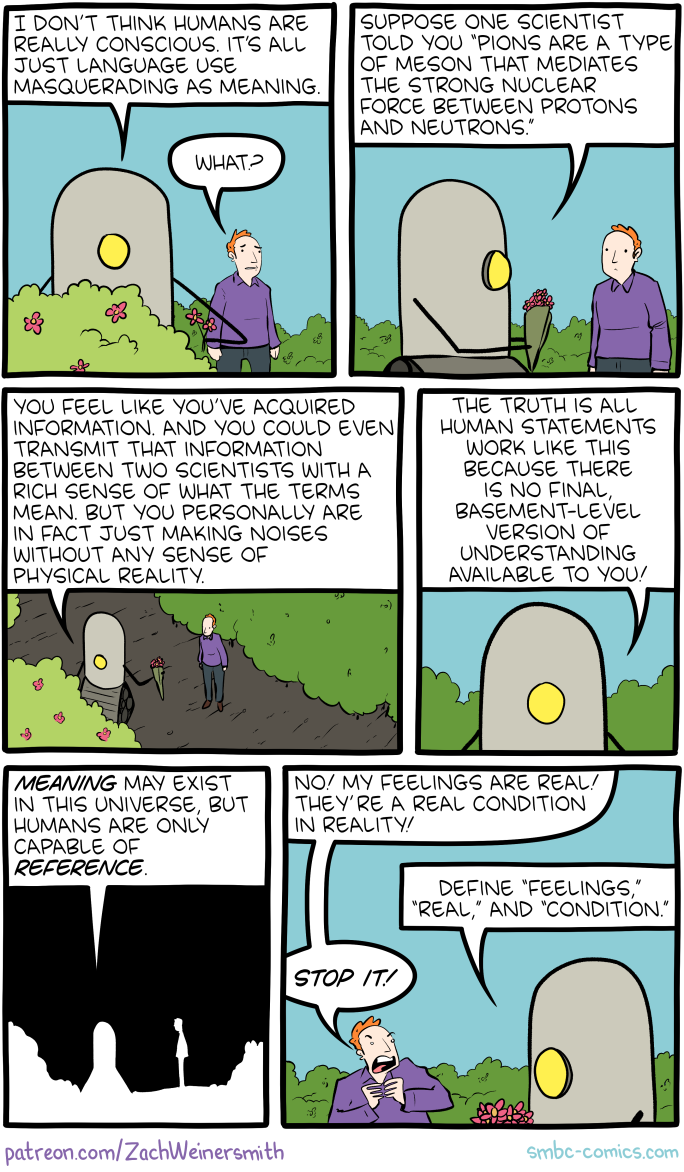
Saturday Morning Breakfast Cereal - Consciousness

by Zach Weinersmith


Click here to go see the bonus panel!

Hovertext:
Hoping I can get a duchy after the robot revolution.


Today's News:
02 Oct 01:08

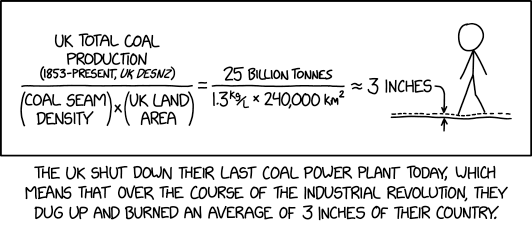
UK Coal

The Watership Down rabbits removed an additional 0.1 nanometers constructing their warren, although that was mostly soil. British rabbits have historically mined very little coal; the sole rabbit-run coal plant was shut down in the 1990s.
01 Oct 09:10

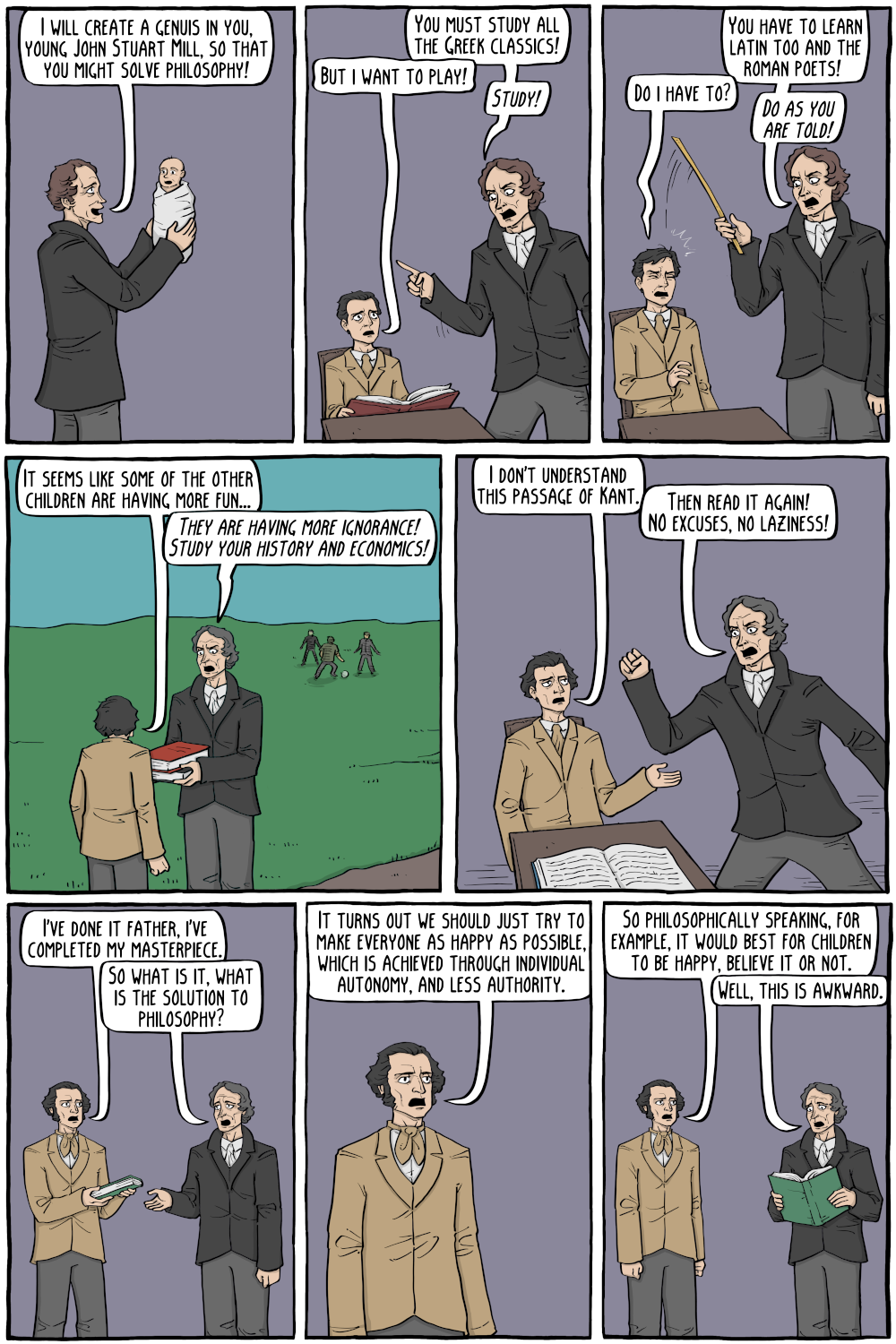
The Upbringing of John Stuart Mill

by Corey Mohler
PERSON: "I will create a genuis in you, young John Stuart Mill, so that you might solve philosophy! "

PERSON: "You must study all the Greek classics!"

PERSON: "You have to learn latin too and the roman poets! "

PERSON: "But i want to play!"

PERSON: "Do i have to?"

PERSON: "It seems like some of the other children are having more fun..."

PERSON: "I don't understand this passage of Kant."

PERSON: "Then read it again! NO excuses, no laziness!"

PERSON: "I've done it father, i've completed my masterpiece."

PERSON: "So what is it, what is the solution to philosophy?"

PERSON: "So philosophically speaking, for example, it would best for children to happy, believe it or not."

PERSON: "It turns out we should just try to make everyone as happy as possible, which is achieved through individual autonomy, and less authority."

PERSON: "Well, this is awkward."
01 Oct 09:04

Gulf remains a hot spot for potential activity while Kirk is likely to put on a show in the open Atlantic

by Matt Lanza

Headlines

  • Help continues to be needed in parts of Appalachia after Hurricane Helene. We have a first-hand account from a reader.
  • Potential tropical development this week in the Gulf continues to look a bit tricky and possibly sloppy. Interests in the eastern Gulf of Mexico should continue monitoring things through the week.
  • Tropical Storm Kirk is likely to become one of the season’s biggest storms in the open Atlantic this week, likely becoming a major hurricane far from land.
  • No other serious tropical concerns to watch right now.

I want to just share an email we received from a reader who was in Asheville during Helene. It’s been tough to get a lot of great information out of this region because it’s so difficult to access right now. That will change in the next couple days, and we will likely be seeing and hearing of even worse devastation that we’ve seen thus far.

Our reader emails:

We were vacationing in the Asheville, NC area and have seen the devastation personally. Your note (of) this on the website is accurate and honestly a source of nightmares. What readers should understand is what makes this different in the Asheville area than what we see in Texas (or Gulf) storms is two (maybe 3 by this time) dams breached flooding out many of the poorest areas in the valley in the most destructive manner possible. I hope your readers take note of your words and choose to contribute.

There are ways you can help those in need even if you live far from the impacted areas.

Blue Ridge NPR has a good list.

The East Tennessee Foundation is a resource as well.

A Houston-based organization that specifically helps food and beverage workers (of which many were impacted) called the Southern Smoke Foundation is another one I personally support and recommend.

The Fuel Relief Fund specifically helps people with fuel.

Team Rubicon is on the ground as well.

Crowdsource Rescue is another org we’ve directly engaged with in the past that is doing incredible work right now.

The Cajun Navy is also doing rescue work in the region, and they’ve been a friend to us in Houston too.

As disaster expert Samantha Montano noted last night on Twitter/X, we’re probably looking at a 10 to 15 year recovery at least for this region. Every little bit of help matters.

A tricky Gulf forecast

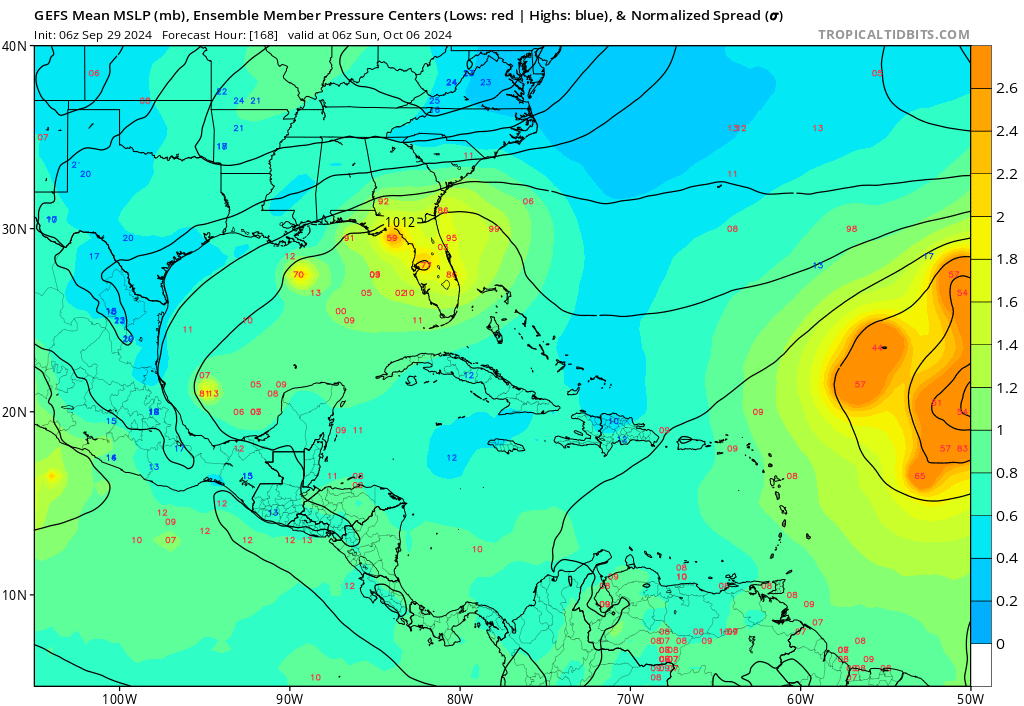
The headline point today is that we continue to see decent odds that a tropical system will form in the Gulf later this week. But modeling remains extremely uncertain on track and intensity to a point where we may be looking at a sloppier setup than has been the case for much of this season.

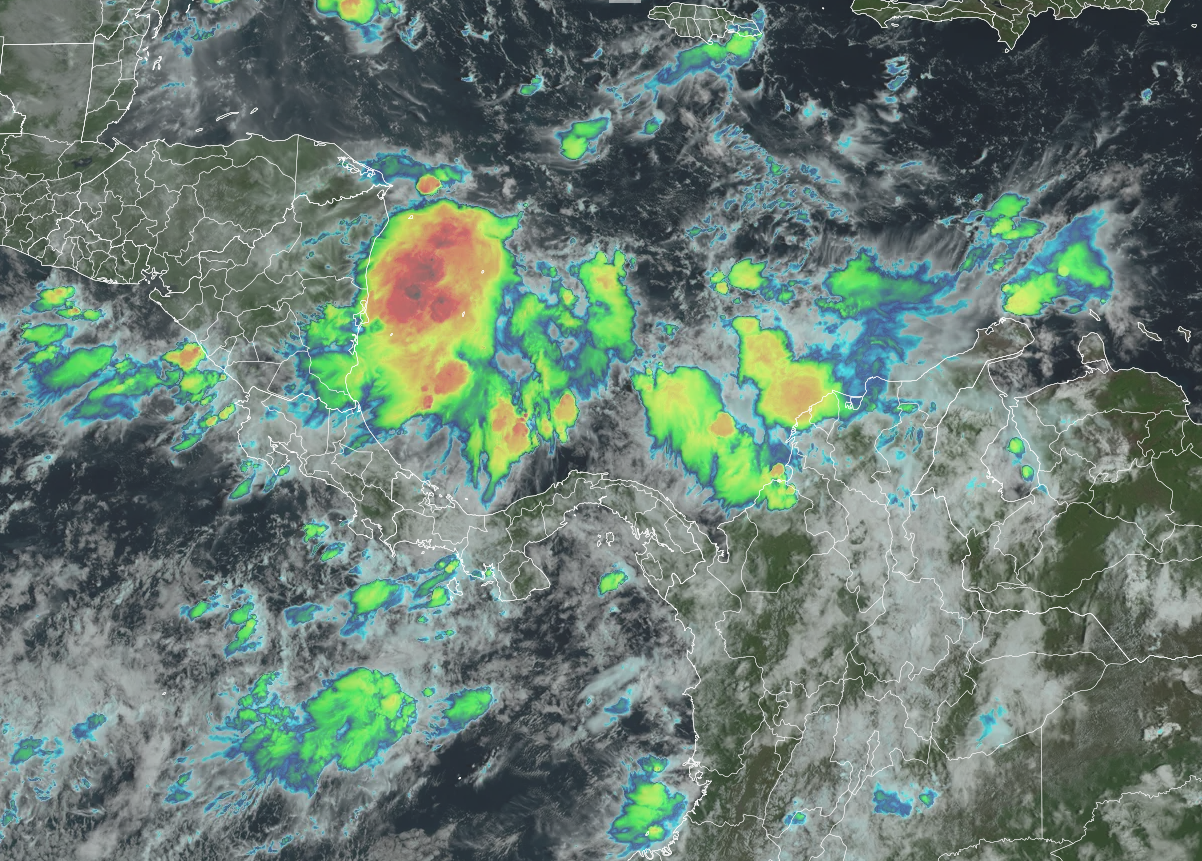
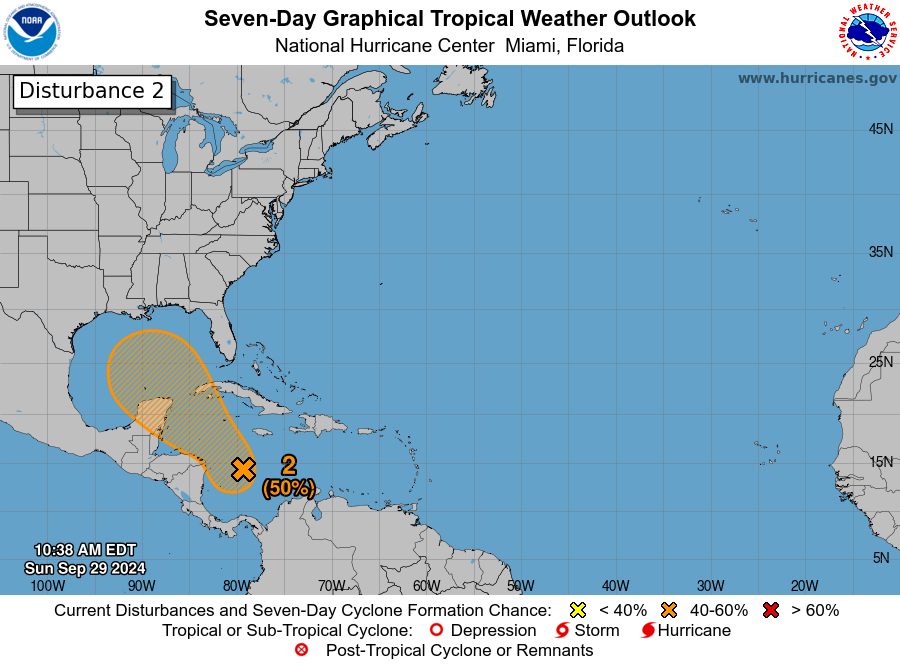
With another disturbance poised to emerge from the Central American Gyre (CAG) formation, we will have another one to watch. As of today, it’s just a mass of clouds and thunderstorms east of Nicaragua and north of Costa Rica and Panama.

Showers and thunderstorms associated with a developing disturbance that will emerge from the Central American Gyre this week and stands a moderate chance at gradual development in the Gulf. (Colorado State CIRA)

The NHC has actually lowered development odds versus yesterday, down from 50 percent to 40 percent. We can quibble on whatever those exact odds are, but I think the takeaway right now is that unlike Helene, this is not a slam dunk case where high-end development is highly likely. If anything, high-end development seems unlikely right now. But moderate development of something sloppy seems very plausible. Keep in mind that “sloppy” does not always translate to “good,” as a disorganized system coming out of a very warm Caribbean can still carry a bountiful amount of moisture. So once more, we may have to discuss flooding risks later this week or weekend.

Since we don’t yet have a defined disturbance, we have a bit of hand waviness going on in terms of forecasting. The models handled this element of Helene well early on, but they seem to be struggling with this one. That’s not uncommon. CAG systems tend to be more challenging to predict than waves off Africa. Helene was an exception more than the rule.

GFS ensemble tracks from the 30 different ensemble members through day 5 (Friday night) for the Gulf disturbance shows a minority of members developing a robust system and a majority keeping it weak and mostly meandering across the Yucatan into the Gulf. (Weathernerds.org)

The current model guidance is sort of a mixed bag. I have the GFS shown above, with ensemble members ranging from well developed in the eastern Gulf (a minority) to poorly developed and hugging the Yucatan (a majority). This is sort of opposite of what we saw with Helene where the GFS ensemble led in showing aggressive development. This also has the support of the European AI (AIFS) model and the ICON model to a lesser extent.

There are a couple things that could happen here. If the system follows the minority, we get a tropical storm or hurricane that lifts north and northeast potentially across Florida at some point toward the weekend. Some rapid development couldn’t be ruled out, but in general the ceiling would likely be lower than Helene. If the system follows the majority, it may fester for a time near or off the Yucatan and eventually get pushed north and east by an approaching cold front early next week. That would time the system toward Florida or the eastern Gulf next Monday through Wednesday. That could also be a tropical storm or hurricane.

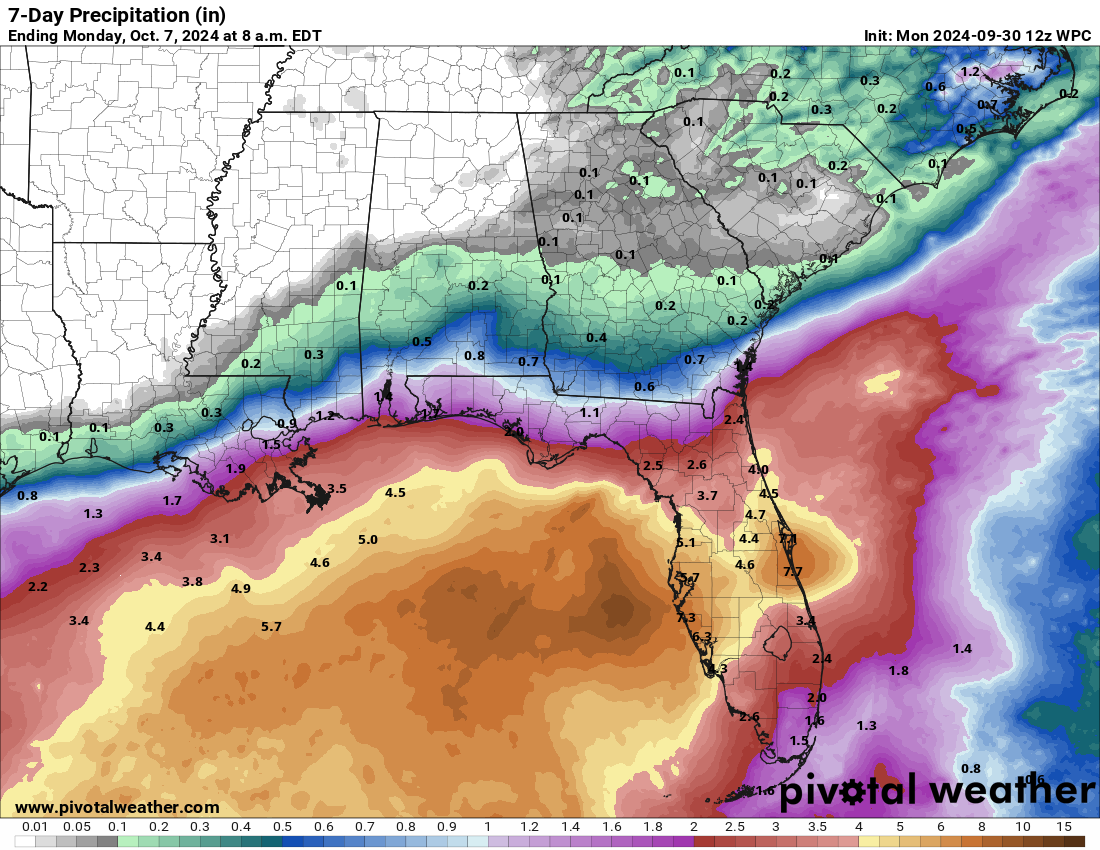
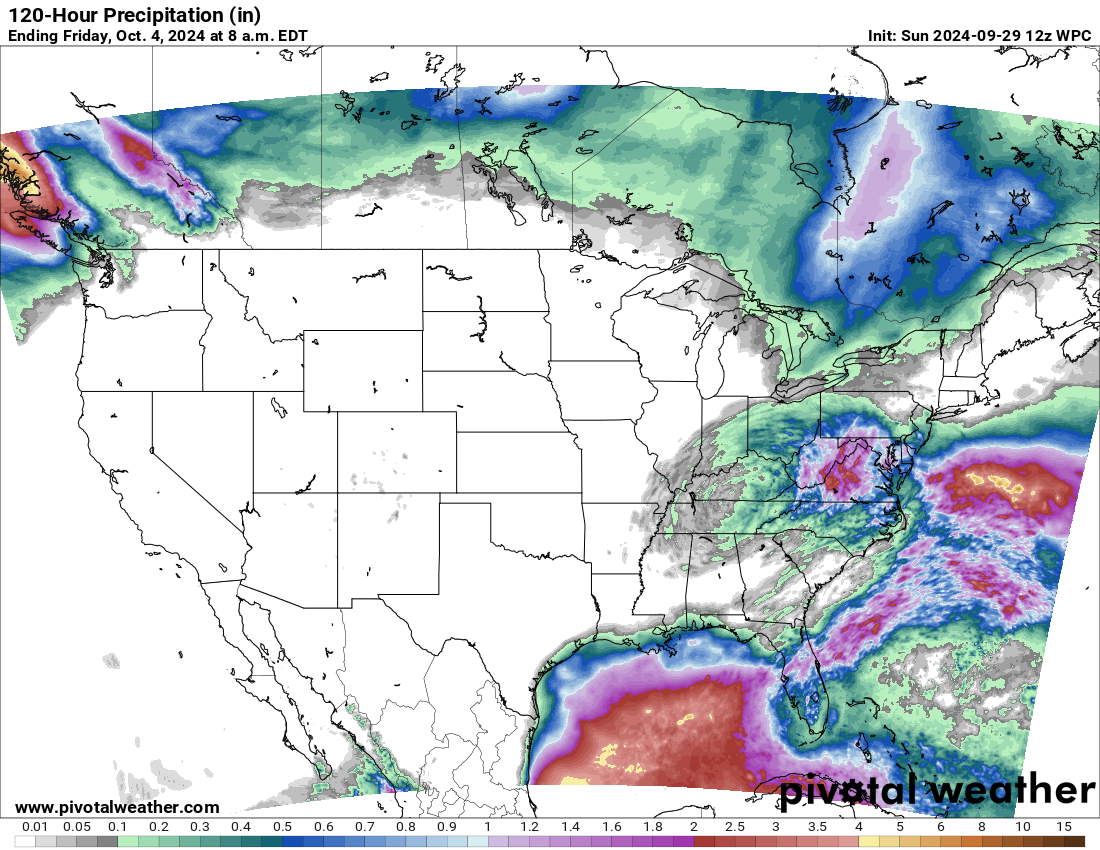
The potential for heavy rain across Florida is in the forecast over the next week, though the exact timing and location of the heaviest rain is up for debate. (Pivotal Weather)

For now, we should expect an increase in rain chances and potentially heavy rain heading toward the weekend across the eastern Gulf Coast, including Florida. But details are highly uncertain right now. We’ll keep on top of things.

Kirk will light up the open Atlantic

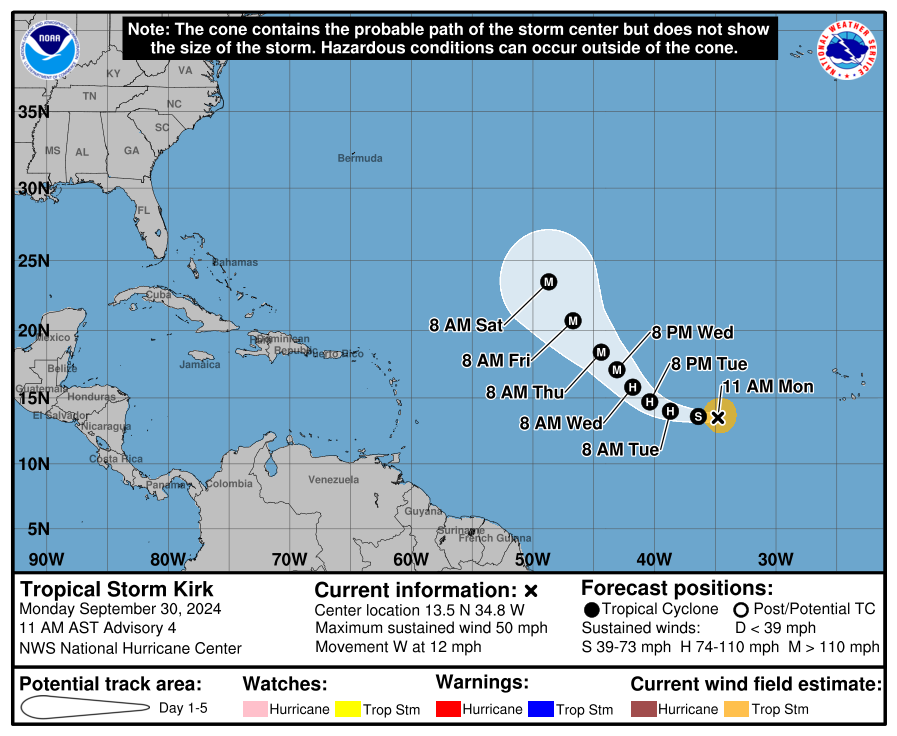
Tropical Depression 12 has become Tropical Storm Kirk this morning. Kirk is expected to become a major fish storm. In other words, it should avoid land.

Tropical Storm Kirk should rapidly intensify into a major hurricane this week, possibly becoming a category 4 storm over the open Atlantic. (NOAA NHC)

Kirk is expected to intensify rapidly. The NHC forecast currently shows it as a category 3 or borderline category 4 hurricane by Wednesday night or Thursday. Model guidance even shows that Kirk could become a higher end category 4 or even 5 storm if all the right ingredients came together. Again, thankfully Kirk’s forecast is fairly predictable and it will avoid land. Most shipping interests should also have ample time to get out of Kirk’s way. Kirk will also probably help Atlantic accumulated cyclone energy (ACE) to make up some lost ground.

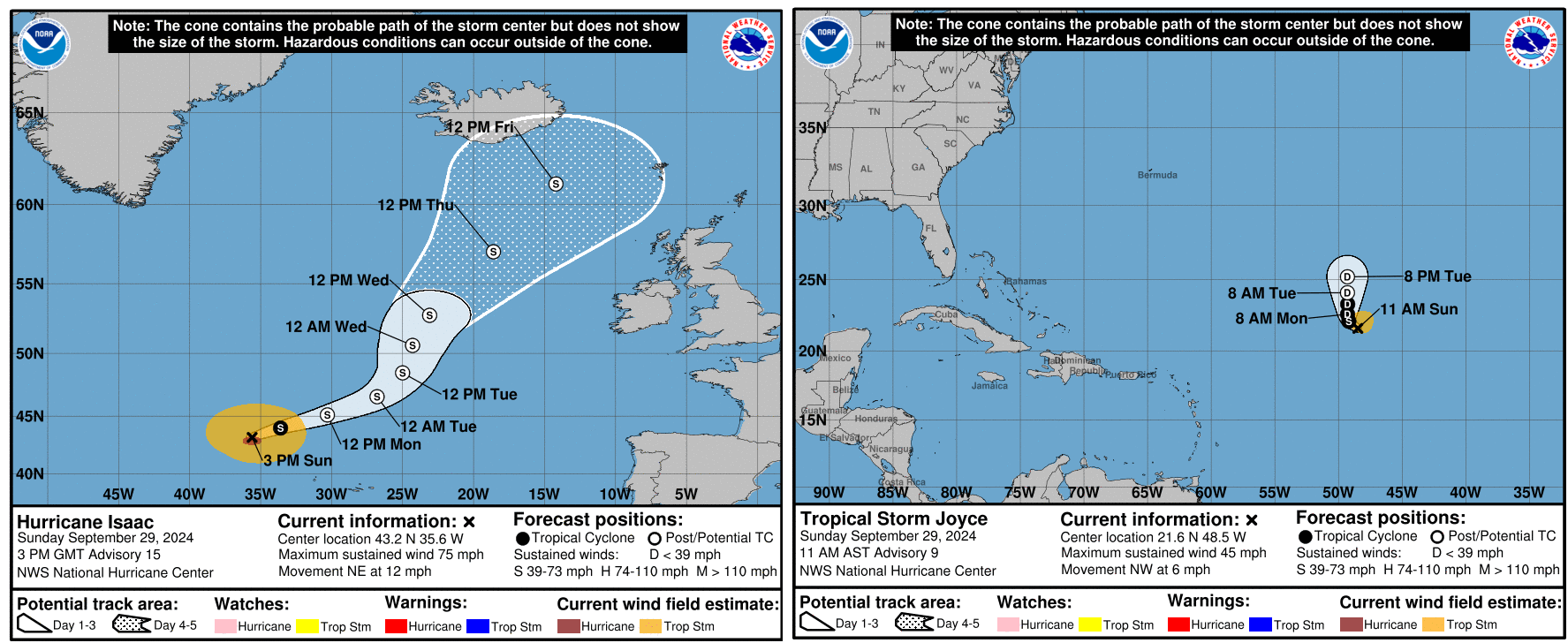
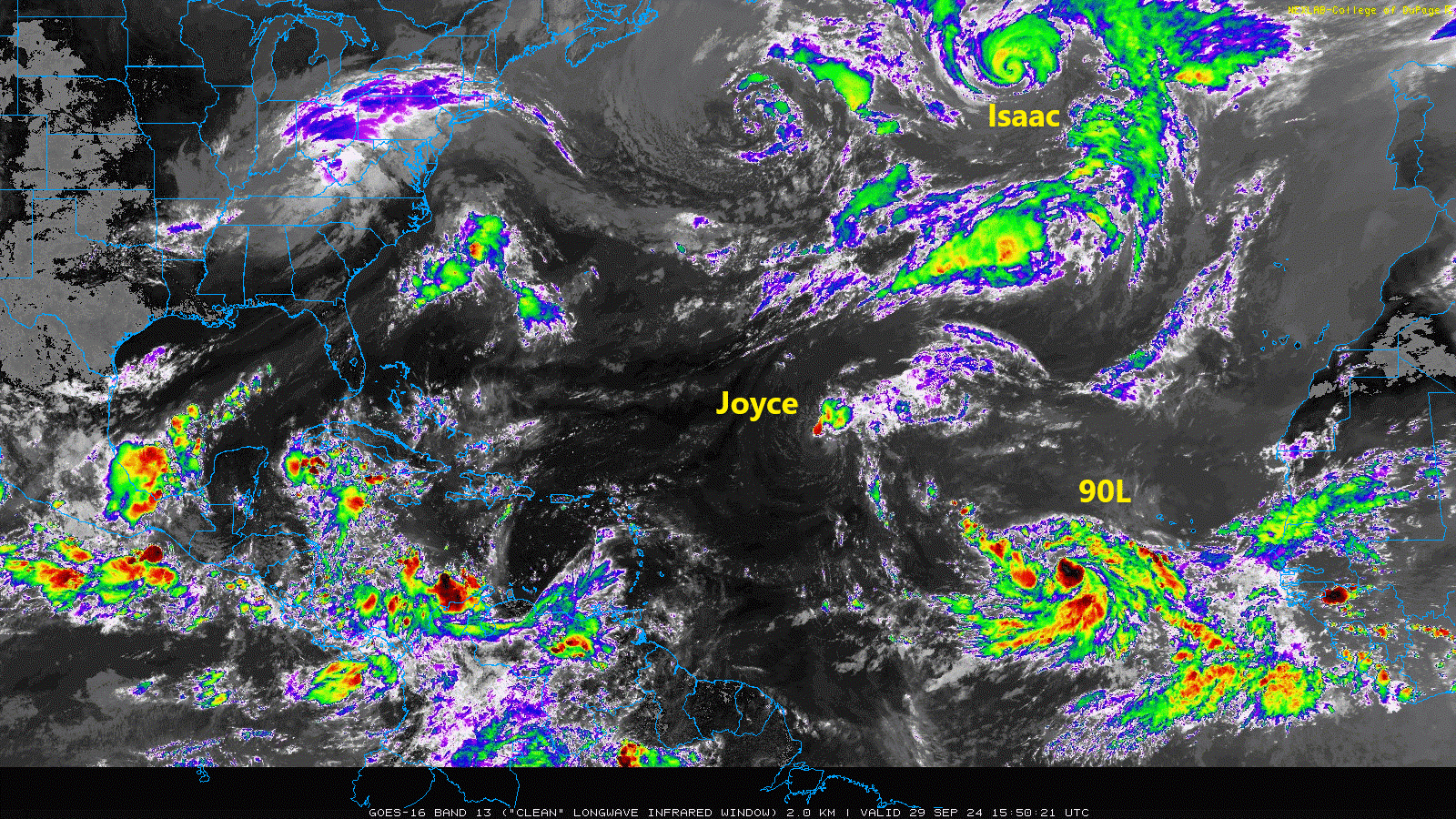
Isaac & Joyce

Both Isaac and Joyce have now degenerated into depressions or post-tropical cyclones. Isaac looks to continue to get absorbed into a broader European storm later this week.

Another deep Atlantic system to come?

Model signals continue to indicate that yet another system could develop behind Kirk in the deep Atlantic. This one looks more likely to take a slightly farther south and west track, as it would likely be slower to organize, so it may merit some additional babysitting for the islands heading into next week. For now, it’s not a serious concern.

01 Oct 08:24

I’m ashamed of my past behavior at work — do I need to change fields?

by Ask a Manager

This post was written by Alison Green and published on Ask a Manager.

I’m off for a few days, so here’s an older post from the archives. This was originally published in 2018.

A reader writes:

I have an ongoing concern that has a lot to do with mental health but also has to do with work. I am seeing a therapist regularly to deal with the mental health aspect but I’m hoping to get insight from you on the work piece of it.

I’m about seven years into my professional career and have intense anxiety daily about my performance. I was always a high performer and have been promoted many times. About two years ago, I left my previous position for a new position that was more money and allowed me to get back into a particular industry. Shortly before I started the job, I lost 160 pounds and found a new confidence I never had before. However, shortly after I started the job, things in my life took a bad turn … I had four deaths in my family, including two people who I was very close with, and my long-term relationship with my live-in SO ended. Because of splitting up our things and having to pay for the apartment myself, I also began to have significant financial issues too. The stress of all the change, especially the negative things, aggravated my already existing mental health issues, after having been relatively stable for about six years.

I’m not trying to make excuses, just trying to explain the “perfect storm” that developed that caused me to act on some of the impulsiveness that is common in those with my mental health issues. To add to all of the personal things going on, my new job had a culture that was extremely different than my previous workplace. For once, I wasn’t the youngest person — almost everyone working there was in their early 20s to mid 30s, many were “young professional” types who were unmarried and had no children. The culture ended up being one that centered around a lot of joking around, close friendships outside of work, happy hours and other alcohol fueled events, and romantic relationships. I was newly single and newly thin and confident — the environment was awesome! I was making friends, going out, having a great time!

However, as the negative things in my life started happening, I got deeper and deeper into the drinking with work friends and things quickly became unprofessional (not just for me, but for the sake of this post I’m going to focus on my behavior). I don’t want to be graphic but I think it’s important to give you an idea of exactly how inappropriate things became, because it’s necessary context. Some highlights include: giving one of the managers oral sex in the parking lot, getting black-out drunk in front of the director at a happy hour, attending my boss’s family functions, having a tumultuous and abusive five-month relationship with a different manager, making out with one of the facilities guys in a conference room at work, doing shots with my boss’s husband, sleeping with a supervisor that my best friend at work also slept with and ruining that friendship forever, getting hammered on lunch with a supervisor and returning to work drunk, heavy petting with a senior manager at a work function in front of multiple coworkers, smoking weed with coworkers and giving oral sex to another manager, who is now my current boyfriend, in my office. I became known amongst the management team as the happy hour go-to and a partier and people were constantly asking me to go out drinking with them. For additional context, I work in human resources so this kind of behavior is especially egregious.

It got to the point that I was drinking heavily 4-5 nights a week and I could no longer maintain my responsibilities. I started coming in late and skipping work frequently and became very depressed about my situation and especially guilty about my actions. Eventually, through therapy and substance abuse treatment, I was able to begin to piece things back together. It quickly became clear that I needed to get out of that work environment, both for my mental health and the sake of my career. So, I started a new job about six months ago. My behavior at my previous employer wasn’t known by those giving a reference so I didn’t have any difficultly landing a new job, even one that ended up being a promotion with more responsibility and a significant pay bump.

I’ve come far in my treatment but it’s a process. Since I’ve started this job, I haven’t done anything even remotely unprofessional. In fact, I probably come off a little cold sometimes because I’m so afraid of even making friends here at all. The worst part though is that I went from a high performer who was confident in her abilities to an average performer with crippling anxiety. Every day I wake up thinking about the horrible things I did and how I don’t deserve this job. I am so deeply ashamed of myself and feel guilty daily. I feel like I so thoroughly messed up at my last employer that I didn’t earn this. I’ve lost all confidence in my judgment and my abilities and I second-guess every single thing I do. I’m constantly worried I’ve made a mistake, even on mundane things. It’s similar to the feelings I’ve seen others describe about imposter syndrome except … maybe I really am an imposter? What kind of HR professional does the things I did? I’m considering backing out of this field all together and trying something new because I feel like I don’t deserve to do this anymore. Am I off-base or is there any coming back from this?

It sounds like you have come back from this.

Everywhere except your own mind, at least. (And to be fair, probably in the minds of people from your old job — although it’s likely that no individual person there knows the full list you presented here.)

And for what it’s worth, you must have done a good enough job there to land yourself the position you have now. I’m not saying that your extracurricular behavior there doesn’t matter. It does matter — but clearly you have enough strengths that didn’t have any trouble landing a great new job. That says something.

Everyone has a past. Some people’s pasts are weirder/more troubling/more embarrassing/harder to explain than others. We still all have them, and I suspect you’d be surprised by the weird/embarrassing stuff that people you really respect have in their pasts.

Luckily, we all have presents too, and our current-day selves have control over those.

It sounds like you’re dealing with an enormous amount of shame. Shame can be useful when it causes us to reassess our behavior and resolve to change it. But shame isn’t useful when it just hangs around making us feel horrible. It sounds like you have resolved to change your behavior — and have done that successfully — but you’re still mired in the shame and it’s paralyzing you.

If you accept that mental illnesses are diseases like any other, and I hope you do, then maybe it would help to put this in different terms. Imagine you know someone with a physical ailment that exhausted her and destroyed her focus at work, and while she fought the disease she ended up performing horribly for a year. And then she recovered, got the disease under control, started a new job, and went back to performing at her normal high level. Would you think, “She performed so badly while she was sick that she doesn’t deserve her new job and she should change fields because she can never be trusted again”? Or would you think, “She had an awful year, I’m so glad she’s recovered and is back to herself and back to being great at what she does”?

I know that when we’re talking about life choices, it can feel like the analogy doesn’t quite hold up, and that losing focus at work is different from oral sex in the parking lot. And sure, they’re different. But that difference is where so much of the shame and stigma around mental health comes from, and it’s cruel and damaging to people — as it’s currently being cruel and damaging to you.

You were sick. It affected the way you acted. You got it under control, and you’re working with a professional to keep it that way. You’re doing all the right things here (although if you haven’t yet apologized to anyone at your last job who deserves it, that might be worth doing too). You’re allowed to forgive yourself and move forward. I hope you will.

01 Oct 08:15

coworkers only ask me about ducks, sending flowers on someone’s first day of work, and more

by Ask a Manager

This post was written by Alison Green and published on Ask a Manager.

I’m off for a few days. Here are some past letters that I’m making new again, rather than leaving them to wilt in the archives.

1. People only ask me about the ducks I work with

I’m in the lower-middle level of food service establishment with a couple hundred employees. Last year, I started a side project where I got us a small flock of ducks for fresh eggs and general merriment.

Ever since, folks only ask me about the ducks. I have brief interactions with at least a dozen people a day and 90% of the conversations start with, or completely consist of, “how are the ducks?”

The ducks are darling and entertaining and I love working with them, but they are a small part of my job and not the only interesting thing about my role or personality. I’m getting increasingly cranky and desperate for more diverse conversations. The ducks are always fine. If anything big happened with them, I’d let folks know. They are literally out the back door and anybody could go look at them if they wanted.

Is there any way I can get out of having this same insubstantial conversation 10 times a day for the foreseeable future? Especially since any one person probably won’t ask me about them more than twice a week, so it seems unreasonable to ask an individual to stop? I want to be friendly and gracious but seriously enough with the ducks for one second.

I feel guilty because I really want to ask you for a picture of the ducks.

This is going to be tough because lots of people are going to find it amazing to have ducks at work, and they are going to think of it every time they see you and feel jealous that you work with the ducks and will want to ask about it. It’s easily the biggest conversation starter that people who don’t know you well will remember. (In fact, I bet that the people who know you really well / work with you most closely don’t do this nearly as much, right?) They’re also probably not accounting for the fact that everyone else is asking about the same thing all day long.

You could put up a sign that says, “The ducks are great! They are right out that door if you want to see them” with an arrow and a picture of the ducks … and that will probably cut down on some of the inquiries, although not all.

You could also cheerfully respond to inquiries with, “Everyone asks me about the ducks!” As long as you say it cheerfully and not resentfully, that’s a polite way to nudge more perceptive people into realizing that it’s probably too much.

But that might be the best you can do, unfortunately. You have ducks at work! It’s going to be a thing. (Although it will probably become less of a thing in time, when the novelty has worn off a little.)

Read an update to this letter here (it includes videos of the ducks!).

2019

2. Sending flowers on someone’s first day of work

I work at a smaller organization, and Sansa, who manages our 10-person junior staff, is leaving after working here for the better part of the last decade. She’ll be sorely missed, and the head of the organization has indicated plans to do some kind of sendoff for Sansa. Today a fellow junior staffer named Arya emailed the junior staff saying that she wants to send a flower arrangement to Sansa’s new office on the first day of her new job “instead of a parting gift.” Arya specified that each junior staffer might consider contributing $5-10, but that no one should feel pressured to contribute. Everyone else is on board with the idea.

What do you think of this? If it were me, I wouldn’t really want old coworkers sending me flowers at my new office on Day 1. I’d be nervous about meeting new people, setting the right tone, and getting set up at a new organization. I think I’d be self-conscious if a big flower arrangement from my old coworkers showed up at my desk on my first day. I also just think it would be nicer to give Sansa a gift in person when we’re still in the office together, since realistically many of us probably won’t see her again after she leaves.

If it matters, Sansa is a pretty senior-level woman. I think part of my knee-jerk unease might come from being an early-career woman in a field dominated by older men, and getting flowers at my desk on day 1 feels a bit at odds with the professional image I’d want to project during my first impression. I’m probably overthinking this though. I plan to pitch in and join the gift because it doesn’t seem worth objecting to, but I wanted to know if you have any thoughts about this gift idea.

Yeah, it’s a really nice thought, but a lot of people wouldn’t want flowers on day 1.

For one thing, some people don’t even have a desk on day 1! They’re in training, or moving from one orientation meeting to another, and may not have anywhere to put a vase of flowers. And you really don’t want the distraction on your first day of trying to figure out what to do with a big bouquet.

For another, assuming you do have a desk to put them on, you’re going to get a lot of “flowers already?” comments and will have to explain they’re from your old coworkers, and that’s sweet but also maybe a little odd, and you’d probably rather be focused on other things. It’s also … pulling you back to your old job mentally, at exactly the moment when you want to be focused on the new one.

That said, some people would love and appreciate it! It depends on the person, but it’s the kind of thing where you need to know them well enough to be sure they’d be into it. In this situation, where Arya is junior and Sansa is senior, I don’t think Arya can know, and so a gift in person before Sansa leaves is a better idea.

Read an update to this letter here.

2019

3. Is sex a bad example in a work presentation?

I sometimes present internal “an intro to statistics” seminars at my company. Previously I have based the seminar on the fact that men say they have sex with women much more often than woman say they have sex with men, which is by far the clearest example I have of many obvious and not-so-obvious statistical issues.

No clients attend and the seminars were well received, but I am now less young (and I have read your blog more) and I think this was a bad idea. My question is how bad? Can I never mention the example at all?

Yeah, I’d steer clear of that example (unless, of course, it’s directly relevant to the organization’s work, in which case that’s entirely different). It wasn’t the worst thing in the world and you don’t need to feel mortified or anything like that, but using an example about sex in a work context risks (a) coming across as gratuitous — like you had other good examples but chose this one because Sex! or (b) making people a little uncomfortable. We’re all adults and know people have sex, obviously, but it can feel a little jarring to have it come up in a work presentation. (Plus if you have anyone creepy there, they’ll be all too happy to use it as a lead-in for inappropriate remarks to others, either in the moment or later.)

Read an update to this letter here.

2019

4. My coworker puts dirty tissues in my trash

My coworker often pops into my office to talk about work or whatever. I don’t mind the short conversations, but she has a habit of wiping her nose in my office and throwing out the dirty tissue in my wastebasket. I have tried to move the wastebasket, but that doesn’t seem to work. What should I say?

I am confused by this question and now wondering if I’m a filthy person and didn’t realize it. I would think the trashcan is the precise spot where she should be putting her dirty tissues. I get that it’s your trashcan and not hers, but it’s … for trash. There’s not really anything to say or do here, because she’s not doing anything inappropriate.

If you’re just really squeamish and it’s killing you, I suppose you could say, “Hey, I’m pretty germophobic and I know this might sound silly, but would you mind not throwing your tissues in my trash can?” … but be aware that it’s going to come across as a strange thing about you, not about her (which is why the language there conveys that you realize that).

2018

01 Oct 02:46

David Tillman to the rescue!

by mike@mikemcguff.com (mikemcguff)
Not only is David Tillman a fantastic meteorologist, but the abc13 KTRK Houston chief forecaster is also a great weather department team member!
01 Oct 02:45

Flaw in Kia’s web portal let researchers track, hack cars

by WIRED
car center console with the word HACKED

Enlarge (credit: Chesky_w via Getty)

When security researchers in the past found ways to hijack vehicles' Internet-connected systems, their proof-of-concept demonstrations tended to show, thankfully, that hacking cars is hard. Exploits like the ones that hackers used to remotely take over a Chevrolet Impala in 2010 or a Jeep in 2015 took years of work to develop and required ingenious tricks: reverse engineering the obscure code in the cars’ telematics units, delivering malicious software to those systems via audio tones played over radio connections, or even putting a disc with a malware-laced music file into the car’s CD drive.

This summer, one small group of hackers demonstrated a technique to hack and track millions of vehicles that’s considerably easier—as easy as finding a simple bug in a website.

Read 22 remaining paragraphs | Comments

01 Oct 02:42

Faculty, Rejoice: Gmail Can Now Translate “Deanspeak”

by Jane G.

We are thrilled to announce that Google Translate has recently added “Deanspeak” to its suite of language-detection tools. In addition to offering translations from Spanish, Arabic, Chinese, and other languages, Google Translate can now render your college administrator’s opaque prose into plain (if terrifying) English.

Now, rather than attempt to read between the lines of the latest email from the Subdean for Academic Affairs and Climbing Wall Management, simply click on the ADMINISTRATOR LANGUAGE DETECTED icon to reveal the message in simple English and determine the threat level to your department, program, or mental health.

When passed through the Deanspeak translator, a subject line such as “Academic Prioritization” instantly transforms into “May the Odds Be Ever in Your Favor.” (If a more campus-specific translation is desired, the Deanspeak Plus option1 can reveal the more precise rendering: “German Goes Kaput”). An email titled “Seeking nominations for a Task Force” becomes “Five poor saps forced to complete a meaningless task over the summer for zero compensation.” And “Construction Update” turns into “Whitewater polo course nears completion; humanities professors can enjoy thirty more years of inhaling asbestos.”

The Deanspeak translator instantaneously deciphers even the most officious obfuscation. “We continue to identify key performance indicators and leverage strategies to optimize retention” is more easily understood as “We’re hemorrhaging students.” The Teaching and Learning Center’s directive to “implement an actionable shift in student-centered attendance policies” translates simply to “give up now; football’s always gonna win.” Meanwhile, recent communications exhorting faculty to “craft deliverables to vertically integrate AI into the classroom” becomes “we have no fucking clue how to deal with ChatGPT—you’re on your own (and on the hook).”

As a bonus for faculty working at institutions where administrators multiply faster than Gremlins at a waterpark, the Deanspeak tool can clarify your college’s tentacular administrative structure. The president’s announcement that the college will be “reconfiguring our organizational composition to align with our comprehensive approach to student success” will render as “another unruly subdean devoured its offspring, so we have hired One Dean to Rule Them All.”

The Deanspeak translator can even filter out your administrators’ most common gobbledygook. Default settings include “deliverables,” “synergy,” “assessment,” and “shared governance,” but users can customize the filters according to their campus’s particular brand of dysfunction, transforming high-frequency phrases such as “after careful consideration” into the more accurate “the answer was no before I received your message.”

Another helpful feature for faculty includes the ability to reverse-translate your unfiltered responses into prose appropriate for your administrators’ tender ears. Instead of exercising restraint when responding to the call to resubmit the past fifteen years’ worth of enrollment data (sorted by student zodiac sign and DSM diagnosis) to the newly configured and—fingers crossed—recently debugged online management system by noon the following day, let the Deanspeak translator smooth out your snark. “Hell no, I will NOT waste another damn minute on this soul-sucking task” instantly becomes a message of joyful compliance: “I thank you, sir, for the timely reminder and will submit the report forthwith.” (Google engineers are working to correct the occasional confusion between Deanspeak and Dickens that arises due to college administrators’ penchant for excess verbiage and baroque sentence structure.) Meanwhile, “If I have to justify my department’s existence one more fucking time” seamlessly transforms into “Our department continues to meet the Student Learning Objectives and enrollment benchmarks as outlined in the latest Strategic Plan for Saving Our Bacon.”

The translator also has an audio function that can be activated during faculty meetings to provide real-time renderings of your administrator’s responses to questions from That One Professor. In this audio mode, “We’re considering multiple options” instantly translates to “Gah! Why did I leave time for questions? Action item: eliminate entire program.” Meanwhile, when the dean utters his refrain, “Thank you for all your hard work,” the faculty will simply hear, “Sorry, we have no money to pay you.”

The one downside to utilizing the Deanspeak translator is that teachers will no longer be able to play Nimble BINGO, in which professors can accrue points based on the number of campus buzzwords they receive via email during a semester. Past prizes have included the coveted “Get Out of Faculty Meeting Free” pass, in which the winner not only gets to skip the last meeting of the year but also receives a dramatic roundup of all the tea from their Grumpy Senior Colleague who has held a grudge since 1969 and starts all his sentences with “When I was at Yale…” While faculty may miss the “110 Percenter Prize” awarded to the instructor who valiantly consumes the most jargon without succumbing to crippling self-hatred or a murderous meltdown, we anticipate they will be more than compensated by never again having to decipher the meaning of “scaleable solutioneering.”

During this initial rollout phase, staff who use the Deanspeak translator will also have access to additional languages currently in beta testing, including Stuspeak (which translates “hey did i miss anything” to “I’m only here to play lacrosse and video games”), Zespeak (which helpfully replaces “they” with “he” or “she” for your pronoun-befuddled colleagues), and Mespeak, which can magically transform any professor’s negative self-talk into a steady stream of unicorn emojis and Lizzo-inspired affirmations— “You gonna shine with linear regressions today, you bad stats bitch!”

- - -

1 Available for a monthly fee, easily deducted from your retirement savings or healthcare benefits.

01 Oct 02:30

Report: Cars In Other Lane All Suckers

by The Onion Staff

ACTON, MA—Finding a massive disparity in driver savviness across different parts of the road, a report released Monday confirmed that the cars in the other lane were all a bunch of suckers. “Look at those rubes just inching along like a funeral procession while this lane’s zipping past ’em like the Indy 500,” the report read in part, going on to speculate that those chumps over there must actually like sitting in bumper-to-bumper traffic all day, given that they had rejected the obvious superiority of the lane in which sources were reportedly cruising ahead without a care in the world. “Those cretins might as well be parked. They have no idea what they’re missing out on over here. So long, losers! Driving’s a lot more fun when you know how to pick the winning lane!” At press time, after the other lane became the faster of the two, a supplemental report was issued stating that the cars over there were a bunch of assholes who wouldn’t let anybody merge.

The post Report: Cars In Other Lane All Suckers appeared first on The Onion.

01 Oct 02:30

Friend Sets Inescapable Social Trap With 3 Possible Dates To Hang Out

by The Onion Staff

SANTA CLARITA, CA—Staring down at the text message in horror and realizing that he had been brilliantly outplayed, local man Jonathan Garner told reporters Monday that his friend had set an inescapable social trap by proposing three possible dates to hang out. “Goddamn it, he got me—how am I supposed to get out of grabbing drinks on either Wednesday night, Sunday afternoon, or two Fridays from now?” said Garner, who hung his head in frustration after realizing that his overeager, socially starved friend had spent months slowly backing him into a corner until he finally ran out of plausible excuses to meet up for a couple of hours. “Even if I somehow get out of hanging out this Wednesday and Sunday, there’s no way I can say I’m still ‘super busy with work’ two weeks from now. God, I’m such an asshole. Maybe I’ll just say something vague, like some family stuff came up.” At press time, Garner could reportedly be heard screaming in agony after his friend put the final nail in his coffin with a polite “No worries, I’m happy to work around your schedule!”

The post Friend Sets Inescapable Social Trap With 3 Possible Dates To Hang Out appeared first on The Onion.

01 Oct 02:29

Sustainably Minded Hit Man Suffocates Victim Using Reusable Tote

by The Onion Staff
01 Oct 02:29

Tips For Cutting Back On Streaming Subscriptions

by The Onion Staff

Following price hikes made at Netflix and Max earlier this year, Disney will be increasing subscription costs for Hulu, ESPN+, and Disney+ beginning Oct. 17. The Onion shares tips for saving money on streaming.

  • Instead of streaming entertainment, pay a group of local urchin children to dance for you at half the cost.
  • Make your career and personal relationships so fulfilling that the mere idea of needing to watch movies and TV shows for entertainment starts to seem utterly ridiculous.
  • Enlist in the military to be eligible for $2 off a regularly priced plan.
  • Learn to make your own streaming shows from scratch.
  • Best Buys TV department is currently showing a looping episode of Friends.
  • Move to North Korea and enjoy the four state-approved channels available to Pyongyang residents.
  • Embrace the air of superiority that comes with informing others you dont watch television of any kind.
  • Ask your conjoined twin nicely if they would let you piggyback off their subscriptions.
  • REI is having a sale on binoculars. Need we say more?
  • Stop liking Pixar films. You’re 29 years old. 

The post Tips For Cutting Back On Streaming Subscriptions appeared first on The Onion.

01 Oct 02:27

FDA Approves First New Schizophrenia Drug In Decades

by The Onion Staff

The Food and Drug Administration approved Bristol Myers Squibb’s highly anticipated schizophrenia drug, the first novel type of treatment for the debilitating, chronic mental disorder in more than seven decades. What do you think?

“This drug is going to help so many shareholders.”

Alison Bordes, Fabric Bedazzler

“Well, there goes my fun personality.”

Kurt Sanzo, Pistachio Roaster

“Drugs are never the answer.”

Max Patel, Tooth Whitener

The post FDA Approves First New Schizophrenia Drug In Decades appeared first on The Onion.

01 Oct 02:27

God’s Penis Visible In Night Sky For First Time In Millennia

by The Onion Staff

Stargazers around the world were able to see one of our closest celestial neighbors. God’s Penis peaked in its fullest at 9:35 p.m. EST, but hung proudly in our night sky throughout the night, according to NASA.

The post God’s Penis Visible In Night Sky For First Time In Millennia appeared first on The Onion.

01 Oct 02:26

‘Damn, That’s Crazy,’ Announces FEMA In Statement

by The Onion Staff

WASHINGTON—Gawking at the widespread destruction caused by Hurricane Helene across much of the southeastern United States, the Federal Emergency Management Agency issued a statement Monday announcing, “Damn, that’s crazy.” “So much water, dude,” said administrator Deanne Criswell, who uploaded a YouTube compilation of flooding in the Carolinas, Georgia, and Florida to the homepage of FEMA.gov as several other FEMA officials gathered around her computer, exclaiming “Oh shit!” and begging her to replay the video. “Houses shouldn’t do that. That house is like a boat now. This is like Armageddon shit, man. Wait, have you guys seen the movie Armageddon?” At press time, reports confirmed the FEMA employees had moved on to watching clips from Armageddon

The post ‘Damn, That’s Crazy,’ Announces FEMA In Statement appeared first on The Onion.

30 Sep 14:36

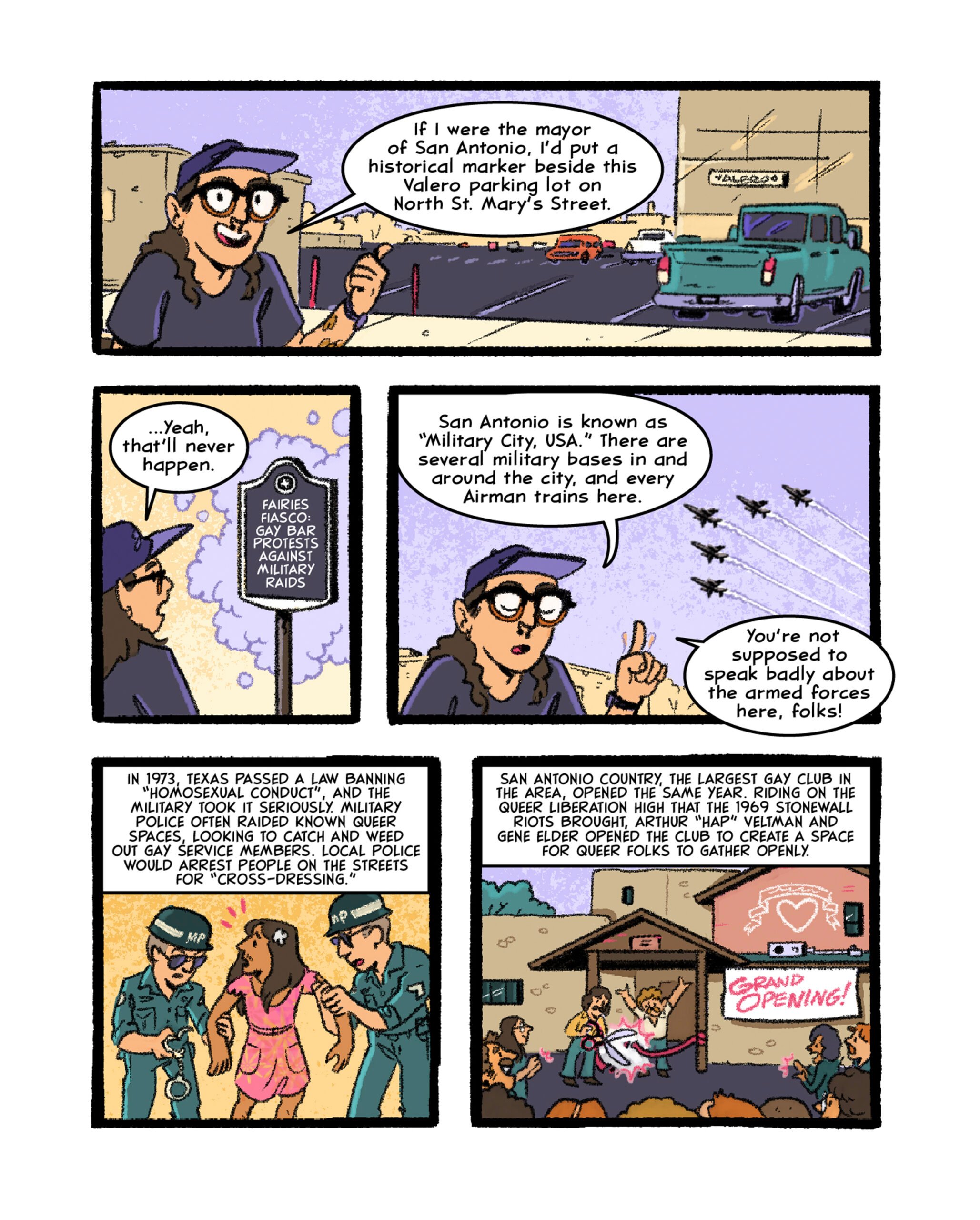
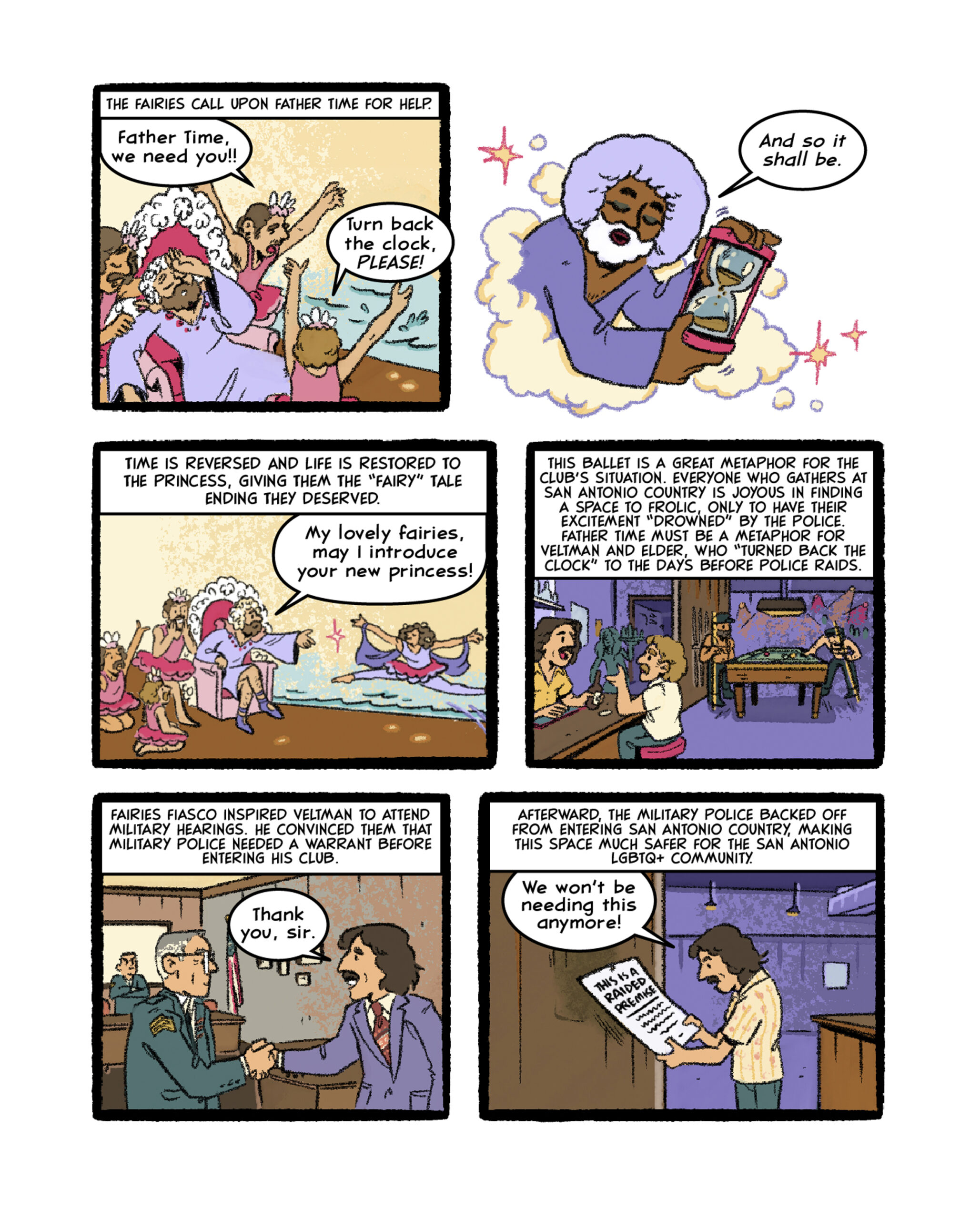
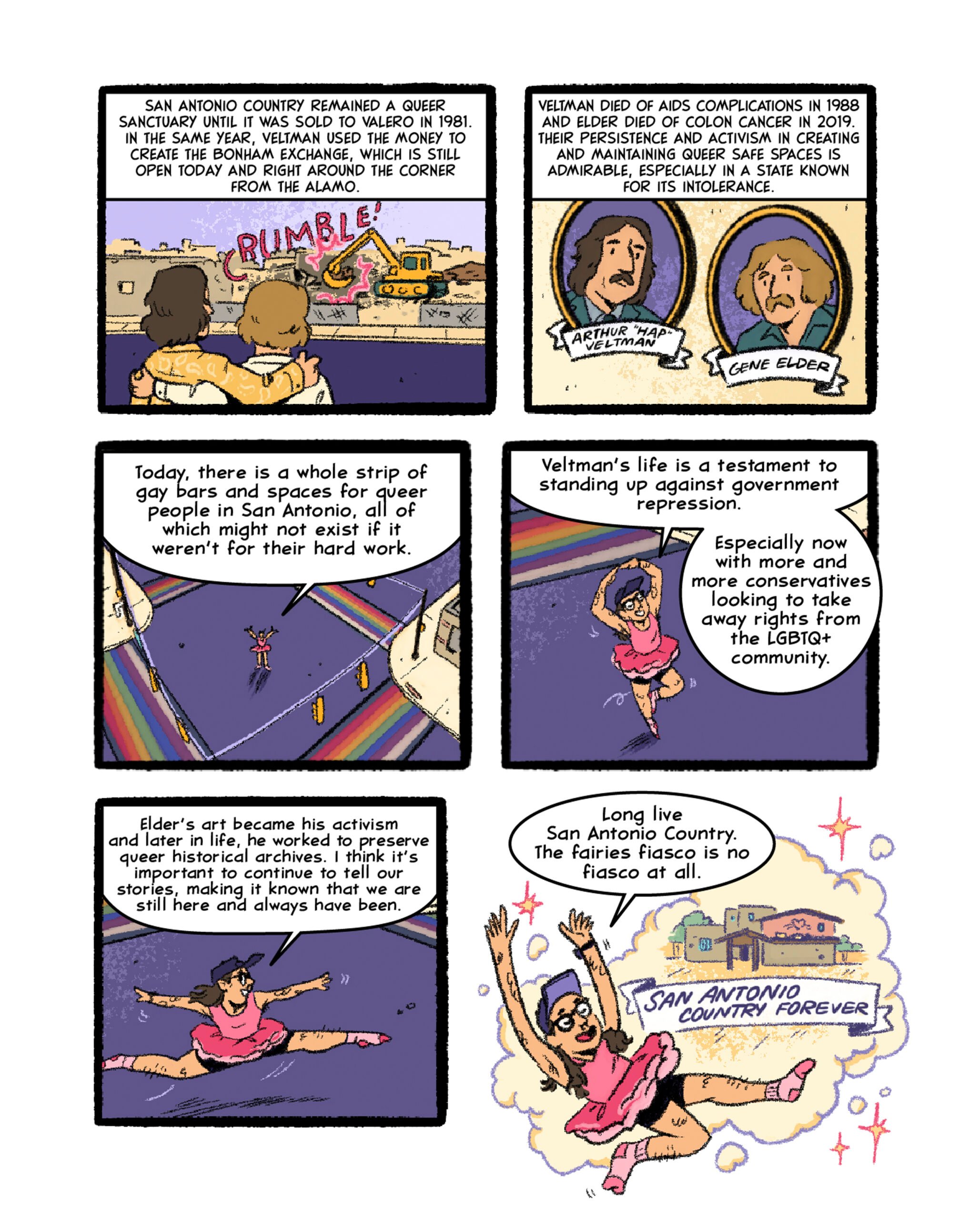
The Fairies Fiasco

by Shelby Criswell

The post The Fairies Fiasco appeared first on The Texas Observer.

30 Sep 14:29

Scenes of devastation in North Carolina as storm claims 116 lives

Homes and bridges have been washed away, villages flattened and the tourist town of Asheville cut off.
30 Sep 14:26

Return of early voting to University of Houston, Texas Southern considered a ‘win’ among students

by Adam Zuvanich
At a time when some Texas lawmakers want to remove or limit voting on campuses, a total of 12 colleges and universities in Harris County will hold early voting for the November election.
30 Sep 14:26

Federal judge shuts down Texas attorney general’s voter fraud investigation

by Dan Katz, Texas Public Radio
U.S. District Judge Xavier Rodriguez found that a key part of the Texas 2021 omnibus voter legislation is confusing, vague, overly broad, violates freedom of speech along with the 14th Amendment and there is no actual problem of illegal vote harvesting.
30 Sep 14:26

Houston Texans pledge $1 million for Hurricane Helene relief efforts

by Sarah Grunau
The effects of the hurricane have stretched more than 500 miles from the Florida coast, where it landed as a category 4 storm late Thursday night. More than 90 people have died across five states left in Helene's devastating path.
30 Sep 11:18

coworker is allergic to me because of my cats, referencing pop culture in an interview, and more

by Ask a Manager

This post was written by Alison Green and published on Ask a Manager.

I’m off for a few days. Here are some past letters that I’m making new again, rather than leaving them to wilt in the archives.

1. My colleague is allergic to me because of my cats

I’m a brand new manager in a public services environment. I have two cats, who are not particularly hairy, and I wash my clothes – and myself – in the usual customary manner for our Western culture. I also use a lint roller and vacuum my home thoroughly, but pet hair is pet hair, and it gets into things whether I like it or not. One of my staff members is very, very allergic to cats. In our 1:1 meetings, we have to sit outside my office in a common area to keep him from swelling up and experiencing full-on watery eyes. Fortunately, we can schedule these meetings at a time when no one else is within earshot of the space, but it isn’t fair to him or to me to be somewhere that can’t have some privacy from walk-throughs.

I am at a loss as to what to do next, short of evicting my pets. Others with cat allergies don’t seem to have this problem around me, and I don’t wear scents or use personal products with an overwhelming perfume; my first career was as a professional musician, and due to close proximity to others, perfumes and colognes were a big no-no. I didn’t have issues with cat-allergic colleagues in that world, either. For seven years, I sat shoulder-to-shoulder with someone who was seriously allergic to cats and nothing like this happened!

Short of asking my colleague to take medicine – which works to varying degrees and has horrible side effects – what more can I do to mitigate this? He’s a fantastic colleague, and I need to be able to meet with him to talk about his professional development, job performance, and interpersonal relationships with other staff: all of the things that you do when you are a manager.

Meet with him by phone! In-person meetings definitely have some advantages; you can see eye contact and body language and they generally just feel like they build the relationship more in ways that phone calls don’t necessarily do. But in this case, the downsides of meeting in-person trump those advantages. Switch to the phone. (You could also try video chat if you’re both into that, although it can have its own disadvantages.)

It may seem silly to talk by phone when you’re in the same building, but in this case it’s not; it’s a practical solution to the problem.

Also, ask him! He may have thoughts on other things you can try, and if you haven’t asked him directly if there’s anything he thinks might help, he might not be speaking up. (He should speak up if he has ideas, but some people won’t unless they’re directly asked, particularly when there’s a manager involved.)

And let us all take a moment to feel great sorrow for the cat-allergic among us.

Read an update to this letter here.

2017

2. My new coworkers embarrassed me at a meeting with my previous team

I recently began a new position with a team that is just getting their feet under them in terms of industry standards, and as part of setting up our new organization, we are working with a number of established institutions in the region to learn how they’ve been successful. I have more experience in this industry than my colleagues do, so I offered to set up a meeting with a previous team who I’m still on very good terms with (I interned there during grad school, and would like to work there again given the opportunity).

Unfortunately, the meeting was a disaster. My new colleagues spent nearly a third of our time dragging previous employees, complaining about our administration, and generally airing dirty laundry that has absolutely no business in a professional meeting. I tried to steer us back on track several times, but had no success. It was clear from some of the looks I got that my previous team was at least as uncomfortable as I was.

Today, I’ve made it clear to my new team that this was wholly inappropriate, and my supervisor apologized to me for any reputational harm done to me by this, but I’m still mortified that I was responsible for their bad behavior in front of our industry peers. I’m afraid this has damaged my standing with my previous team, and I’m really looking for ways to mitigate this damage.

Would it be inappropriate to reach out and thank them for the meeting, and apologize for the inappropriate comments? Or would that just make it look like I also think it’s okay to throw people under the bus as soon as they leave the room? What is the best way to distance myself from my new team’s behavior?

Yes, contact them and apologize! You can frame it as, “I wasn’t expecting the meeting to go that way! I’d hoped we’d talk about XYZ. I’ve talked to my new team about what happened, but I wanted to apologize to you directly. I really appreciate that you were willing to lend us the time, and I’m sorry it wasn’t better used.” I don’t think you have to get into it beyond that — just enough to acknowledge that you know this was messed up and you won’t let it happen again.

Speaking of not letting it happen again — I would not set up more meetings of this type for your team. If you need those meetings, do them alone or maybe with your boss. But don’t risk the same thing happening with other contacts.

2019

3. Can you reference pop culture in an interview?

Is it okay to reference pop culture in a job interview as long as the reference itself is not inappropriate or obscure?

For instance, in previous interviews, I have referenced my “Monica Geller-esque sense of neatness,” how I consider Leslie Knope to be one of my role models, and how I had learned to work with a supervisor like Angela from The Office.

For what it’s worth, in each of these positions, I was applying for something relatively junior and in a pretty liberal field/office environment, not, like, the CEO of Morgan Stanley or something.

There are better ways to convey what you want to convey. It’s just too likely that your interviewer hasn’t seen the show you’re referencing and so misses your meaning entirely — and maybe doesn’t even know you’re referencing a show and has no idea who this Monica Geller is or why you’re mentioning her. (There’s also a risk of it making you seem less professionally mature — not because you’re referencing pop culture, which isn’t inherently unprofessional, but because you’re not realizing that not everyone will get that particular reference.)

2019

4. Company president owes $50 for a fantasy football league and hasn’t paid

My husband is the commissioner of a fantasy football league for a group of 12 top-level executives at his company. In the group there are multiple vice presidents and the president himself. My husband is not a top-level executive. He’s a mid-level employee, but is well liked and has networked himself into the league.

The league costs $50 to participate in. Last year, the president never paid him! (Keep in mind this is the president of a multi-billion dollar company, so his pay is certainly generous.) My husband has sent several emails to him requesting payment, but never received a response and hasn’t brought it up in person. He says every time he runs into the president at work, he forgets to bring it up. We’re still a few months out from next season but he’s wondering … how should he bring this up again? Should he make a joke of it at their next annual draft? Or is this something he should just write off as a laughable anomaly?

The president probably isn’t intentionally withholding the money; he probably means to get back to your husband but then forgets. But really, after the second email, he should have made a point of dealing with it.

In any case, your husband doesn’t need to write this off (yet). I wouldn’t keep emailing since clearly that’s not working, but the next time he runs into him, he can say, “Hey, can I get that 50 bucks from you for last year’s fantasy football season? I’m trying to close all that out and that’s the last remaining money due.” Or, if there’s any kind of gathering at the start of the next season, he can bring it up then — “I’ve still got to get last season’s $50 from you — can you give me that along with this season’s fee?” (And it might be useful to ask someone more senior than him to help collect this time.)

2019

30 Sep 11:09

Awkward Zombie - Starstruck

by tech@thehiveworks.com

New comic!

Today's News:

It's a matter of pride.

30 Sep 01:07

Tropics remain active, but the next system will probably stay east of Texas

by Matt Lanza

In brief: We are sharing a post we just published on our tropical companion site The Eyewall that talks about the next system expected in the Gulf this coming week. At present, we think it will likely stay east of Texas and is more a concern east of New Orleans to Florida. Still, we’ll watch it to be sure. We also have some links for folks that may want to help our neighbors in Appalachia that are dealing with an absolute catastrophe due to Helene.

Our thoughts are with folks impacted by Hurricane Helene. From what I have read and seen and heard about some parts of western North Carolina and Tennessee, it’s really, really bad. Worse than might be known at this point. Speaking as someone from Houston, which was has dealt with floods and then been flooded with resources after storms, these more rural communities are likely to be dealing with this for a long time and will need a *lot* of help in the weeks and months ahead, as the resources and media attention don’t always focus on places like that.

Keep in mind that after catastrophes like this, “stuff” is nice to donate but what is really needed is money. So consider that if you’re looking for ways to help. The United Way of North Carolina has a fund setup specific for Helene. Blue Ridge NPR has a nice list of organizations you can donate to as well. There is also the East Tennessee Foundation for folks there. Please post any other organizations in these areas in the comments.

As of late Sunday morning, there are still about 2.5 million customers without power from Florida to Ohio. This is down from a peak of around 4.5 million. It will take a long time to get to some areas in mountainous and rural western North Carolina and eastern Tennessee though, and some of these locations could be without power for weeks; the damage is just that complete in these areas.

Storm surge is the deadliest aspect of a landfalling hurricane, but inland flooding can dwarf that sometimes. We’ve seen it time and again in the last several years. If you live inland in the Southeast, Mid-Atlantic, or Northeast, you need to be prepared for hurricanes too.

There will be a lot more to discuss with Helene which we’ll save for another day. But suffice to say we have seen the worst-case scenario play out a lot more often in recent years. And this is going to be a big discussion point going forward both in how forecasts are communicated and how communities prepare for storms. You can’t rely just on the known lessons from past disasters anymore.

Forecast this week

The upper low and remnants of Helene will continue to produce generally light showers across the Midwest and East the next couple days before finally being ushered off to the east later this week. There will be pockets of steadier rain though, particularly in Virginia and West Virginia. Total rainfall over the next 5 days could add up to a couple inches there.

Rainfall through Thursday should be heaviest in Virginia and West Virginia as the broader storm containing Helene’s remnants slowly exits. (Pivotal Weather)

Localized flash flooding is possible today and tomorrow in the mountains there or Shenandoah Valley. These areas were not as severely impacts as areas to the south, but they remain vulnerable to localized flash flooding impacts.

Gulf & Caribbean: Something to watch

So what comes next? Unfortunately, the NHC now has a 50 percent chance of development somewhere between the Gulf and northwest Caribbean over the next 7 days.

A disturbance emerging from a Central American gyre type setup will carry a 50 percent chance of development this week in the Gulf or Caribbean. (NOAA NHC)

For our many readers in Texas, at this point, I would not expect this disturbance to come this far north and west. It will take at least the next 3 to 4 days to develop, and by the time it matures enough, it appears a cold front is headed toward the Gulf that will likely carry this back to the north and east. What this means for places from New Orleans through Florida is still a bit unclear. Modeling is sort of all over the place. At this point with Helene, we had basically two very distinct camps, one that buried the storm near the Yucatan and another (that got it right) carrying it north and northeast as a stronger storm. For this system, we have a similar sort of mixing of outcomes but there’s not exactly a distinct grouping of camps. In other words, there’s a good deal of uncertainty. The GFS ensembles are mixed, with some favoring a stronger storm headed back toward Florida and another group that ends up weaker. Some modeling doesn’t develop this at all. The ICON and European AI models generally show slower development and slow movement.

The GFS Ensemble from last night has some members carrying this disturbance toward Florida, a handful keeping it buried in the Gulf, and others still that never develop it. (Tropical Tidbits)

Given the uncertainty here, it’s important to continue to monitor this over the next couple days, especially in the eastern Gulf. But I will say that the more mixed nature of things in modeling makes me feel that a Helene redux is unlikely in this scenario. That said, keep watching. Impacts, assuming the system develops would likely occur next weekend.

Elsewhere in the Atlantic: Kirk to come

We currently have two active systems, Hurricane Isaac and Tropical Storm Joyce. Neither are direct threats to land.

Isaac and Joyce are likely headed toward dissipation soon. (NOAA NHC)

Both storms should lose tropical characteristics over the next 3 to 4 days and dissipate. Isaac will become part of a larger storm just north of the British Isles, as is periodically the case with North Atlantic storms.

Meanwhile, there are two additional areas to watch in the eastern Atlantic. First, there is Invest 90L, which looks like it’s ready to go off to the races. This one should turn northwest and north, generally following Joyce.

A busy Atlantic to close September. (College of DuPage)

The next name up is Kirk. Although this one is expected to go out to sea it’s worth keeping a side eye on for the Caribbean and Bermuda at least.

Behind 90L we look to have another disturbance in that cloud cover back off Africa. This is not expected to develop quickly meaning that it could come a bit farther west across the Atlantic. I might say that this one is more concerning in some aspects that what should become Kirk. If this can sneak west enough, it may find its own little environment to get going in. There’s not a ton of model support for this one either way, but interests in the Caribbean should at least keep an eye on it over the next 5 to 7 days as it comes west.

So over the next 7 to 10 days we likely have at least one more Atlantic storm and one more Caribbean or Gulf system. We may get a third storm in the Atlantic toward the end of that time horizon. Getting to (L)eslie or (M)ilton would put us at 12 or 13 storms for the season with a good 3 to 4 weeks of potential to go. Still far short of preseason expectations but somewhat less of an error. We’ll watch everything over the next couple weeks and keep you posted.

29 Sep 23:50

Eagle Pass residents rally to have state return Shelby Park

by By Alejandro Serrano
Residents say they can no longer access the park after the state seized it against the city’s wishes in January.
29 Sep 23:50

Saturday Morning Breakfast Cereal - Brains

by Zach Weinersmith


Click here to go see the bonus panel!

Hovertext:
However they're slow because many of them have no appendages.


Today's News:
29 Sep 19:58

Massive recovery ahead due to Helene, but the tropics remain somewhat busy

by Matt Lanza

Headlines

  • Helene recovery is likely to take a very long time, and we have some links where you can donate.
  • More rain the next couple days in Virginia and West Virginia.
  • Another Gulf system is becoming possible late this week or weekend and may again track north and northeast toward the eastern Gulf, but there is high uncertainty.
  • Isaac and Joyce will dissipate this week, with Kirk likely to develop in the open Atlantic.
  • Another system behind Kirk may bear watching in the Caribbean after this week.

Our thoughts are with folks impacted by Hurricane Helene. From what I have read and seen and heard about some parts of western North Carolina and Tennessee, it’s really, really bad. Worse than might be known at this point. Speaking as someone from Houston, which was has dealt with floods and then been flooded with resources after storms, these more rural communities are likely to be dealing with this for a long time and will need a *lot* of help in the weeks and months ahead, as the resources and media attention don’t always focus on places like that.

Keep in mind that after catastrophes like this, “stuff” is nice to donate but what is really needed is money. So consider that if you’re looking for ways to help. The United Way of North Carolina has a fund setup specific for Helene. Blue Ridge NPR has a nice list of organizations you can donate to as well. There is also the East Tennessee Foundation for folks there. Please post any other organizations in these areas in the comments.

As of late Sunday morning, there are still about 2.5 million customers without power from Florida to Ohio. This is down from a peak of around 4.5 million. It will take a long time to get to some areas in mountainous and rural western North Carolina and eastern Tennessee though, and some of these locations could be without power for weeks; the damage is just that complete in these areas.

Storm surge is the deadliest aspect of a landfalling hurricane, but inland flooding can dwarf that sometimes. We’ve seen it time and again in the last several years. If you live inland in the Southeast, Mid-Atlantic, or Northeast, you need to be prepared for hurricanes too.

There will be a lot more to discuss with Helene which we’ll save for another day. But suffice to say we have seen the worst-case scenario play out a lot more often in recent years. And this is going to be a big discussion point going forward both in how forecasts are communicated and how communities prepare for storms. You can’t rely just on the known lessons from past disasters anymore.

Forecast this week

The upper low and remnants of Helene will continue to produce generally light showers across the Midwest and East the next couple days before finally being ushered off to the east later this week. There will be pockets of steadier rain though, particularly in Virginia and West Virginia. Total rainfall over the next 5 days could add up to a couple inches there.

Rainfall through Thursday should be heaviest in Virginia and West Virginia as the broader storm containing Helene’s remnants slowly exits. (Pivotal Weather)

Localized flash flooding is possible today and tomorrow in the mountains there or Shenandoah Valley. These areas were not as severely impacts as areas to the south, but they remain vulnerable to localized flash flooding impacts.

Gulf & Caribbean: Something to watch

So what comes next? Unfortunately, the NHC now has a 50 percent chance of development somewhere between the Gulf and northwest Caribbean over the next 7 days.

A disturbance emerging from a Central American gyre type setup will carry a 50 percent chance of development this week in the Gulf or Caribbean. (NOAA NHC)

For our many readers in Texas, at this point, I would not expect this disturbance to come this far north and west. It will take at least the next 3 to 4 days to develop, and by the time it matures enough, it appears a cold front is headed toward the Gulf that will likely carry this back to the north and east. What this means for places from New Orleans through Florida is still a bit unclear. Modeling is sort of all over the place. At this point with Helene, we had basically two very distinct camps, one that buried the storm near the Yucatan and another (that got it right) carrying it north and northeast as a stronger storm. For this system, we have a similar sort of mixing of outcomes but there’s not exactly a distinct grouping of camps. In other words, there’s a good deal of uncertainty. The GFS ensembles are mixed, with some favoring a stronger storm headed back toward Florida and another group that ends up weaker. Some modeling doesn’t develop this at all. The ICON and European AI models generally show slower development and slow movement.

The GFS Ensemble from last night has some members carrying this disturbance toward Florida, a handful keeping it buried in the Gulf, and others still that never develop it. (Tropical Tidbits)

Given the uncertainty here, it’s important to continue to monitor this over the next couple days, especially in the eastern Gulf. But I will say that the more mixed nature of things in modeling makes me feel that a Helene redux is unlikely in this scenario. That said, keep watching. Impacts, assuming the system develops would likely occur next weekend.

Elsewhere in the Atlantic: Kirk to come

We currently have two active systems, Hurricane Isaac and Tropical Storm Joyce. Neither are direct threats to land.

Isaac and Joyce are likely headed toward dissipation soon. (NOAA NHC)

Both storms should lose tropical characteristics over the next 3 to 4 days and dissipate. Isaac will become part of a larger storm just north of the British Isles, as is periodically the case with North Atlantic storms.

Meanwhile, there are two additional areas to watch in the eastern Atlantic. First, there is Invest 90L, which looks like it’s ready to go off to the races. This one should turn northwest and north, generally following Joyce.

A busy Atlantic to close September. (College of DuPage)

The next name up is Kirk. Although this one is expected to go out to sea it’s worth keeping a side eye on for the Caribbean and Bermuda at least.

Behind 90L we look to have another disturbance in that cloud cover back off Africa. This is not expected to develop quickly meaning that it could come a bit farther west across the Atlantic. I might say that this one is more concerning in some aspects that what should become Kirk. If this can sneak west enough, it may find its own little environment to get going in. There’s not a ton of model support for this one either way, but interests in the Caribbean should at least keep an eye on it over the next 5 to 7 days as it comes west.

So over the next 7 to 10 days we likely have at least one more Atlantic storm and one more Caribbean or Gulf system. We may get a third storm in the Atlantic toward the end of that time horizon. Getting to (L)eslie or (M)ilton would put us at 12 or 13 storms for the season with a good 3 to 4 weeks of potential to go. Still far short of preseason expectations but somewhat less of an error. We’ll watch everything over the next couple weeks and keep you posted.

29 Sep 04:03

Helene slowly winding down as we take stock of calamitous flooding in the Southeast and look ahead

by Matt Lanza

As of 3 PM ET, there are 16 “catastrophic” Flash Flood Emergencies in effect across the Appalachians. They range from Virginia to North Carolina to Tennessee and South Carolina and Georgia. The criteria for issuing flash flood emergencies is much more stringent than that of the typical flash flood warning. There needs to be an imminent risk of severe damage and/or loss of life. At least 16 counties or communities are reconciling that at present, not to mention the ones that have already been through things today. Rain is finally, mercifully winding down. But as noted this morning, the damage has been done.

Helene’s center is on the Kentucky/Tennessee border and being absorbed by an upper low in that region, leading to a widespread heavy rain event from Tennessee and Arkansas into the Ohio Valley. (College of DuPage)

The next phase for Helene will be as a localized flood producer in the Ohio Valley, but hopefully not as prolific as we’ve seen in Appalachia.

Another 1 to 3 inches of rain is possible from western Tennessee across the Ohio Valley to Cincinnati. (NOAA WPC)

It’s been tough to keep tabs on reports and damage and incidents. I think the death toll has come in around 25 so far based on various reports. Power outages sit around 4 and a half million or so at this hour. Rain totals have been enormous across Georgia, South Carolina, and North Carolina, with over 20 inches in some spots.

Preliminary estimate of rain totals across Upstate South Carolina and western North Carolina as of this morning. (NWS Greenville-Spartanburg)

Just one example of a river gauge gone crazy is in Asheville, NC for the Swannanoa River at Biltmore.

The Swannanoa River at Biltmore will crest about 6 feet or more above the previous record set in 1916. By some accounts, this may be the highest since at least the 1790s. (NOAA NWS)

Forecast to exceed the flood of 1916, the gauge likely topped the presumed 26 foot level set back in spring 1791 according to Tennessee Valley Authority records. Whatever the case, this will be a devastating flooding event in Asheville and western North Carolina as a whole. According to the Georgia Climate Office, the 48 hour rain total of over 11 inches in Atlanta is the new record for a 2 day period, breaking a record by about 1.5 inches that has stood since 1886.

Anyway, the toll of Helene looks pretty horrible. The forecasts were incredibly precise and well done, but at a certain point, there is only so much you can do. We hope for the best for those impacted by Helene, particularly as a blog based in Houston which has seen plenty of flooding calamities.

Two other notes today before closing. First, Tropical Storm Joyce did indeed form from Invest 98L in the Atlantic. It is of no threat to land.

Second, the odds of development on the Caribbean area of interest next week remain at 30 percent. I continue to see two consistencies in the modeling with this one. First, most are capping this one’s intensity. You will occasionally get a rogue GFS model run that churns out a strong hurricane, but for the most part, models have a substantially lower ceiling with this than they did with Helene at this point in its life cycle. That signals that perhaps this one has a chance to not be a huge ordeal. Secondly, they cannot agree on track at all. There’s no theme of note here, with solutions running the gamut across the Gulf. I would contend that this is not one to lose sleep over right now. We’ll assess things through the weekend and come back refreshed Sunday or Monday with the latest.