LONDON—Urging the public to remain calm as authorities worked to recapture the mentally disturbed individual, city officials confirmed Monday that novelist J.K. Rowling had escaped from a London insane asylum.
At 7:33 this morning, medical staff reportedly discovered the Harry Potter author and outspoken anti-trans activist had broken out of her padded, maximum-security cell at St. Edmund’s Hospital for the Criminally Insane, where she has been an inmate for the past 10 years. The news sent shockwaves through the United Kingdom, whose 70 million residents sheltered in place while law enforcement swept libraries, electronics stores, and other locations with free internet-enabled computers where it was believed the “dangerous” and “highly reactive” fugitive might try to access social media.
“Ms. Rowling currently poses an extreme danger both to herself and the public, and we will not rest until she is apprehended,” said Deputy Commissioner of the Metropolitan Police Matt Jukes, who added that citizens should report sightings to an emergency hotline and should not, under any circumstances, attempt to debate her. “If you spot her, contact authorities immediately, and do not, I repeat do not, engage. Her brain doesn’t work like a healthy person’s. She has fallen far beyond the brink of reason.”
A security camera caught mental patient J.K. Rowling breaking free from her restraints.
“Keep your eyes and ears open,” Jukes added. “You will hear her, and her opinions, coming.”
According to guards, Rowling had a history of disturbing behavior within the high-security mental facility and would often go on unhinged rants, threatening to kidnap the late Queen Elizabeth II, imprison her in a life-size replica of Hagrid’s hut, and expose her as the transgender leader of a LGBTQIA+ cabal.
Despite her heavily impaired cognitive abilities, officials said Rowling was still “easily” able to unlock her cell’s half dozen electromechanical deadbolts, kill several armed guards with her bare hands, and use her feces to smear “TERF IS A SLUR” on the facility’s walls before scaling a 20-foot-tall barbed-wire fence and disappearing into the London night.
Sightings of a barefoot, straightjacket-clad individual who matched Rowling’s description were reported just hours after her escape. Terrified witnesses said this person sprinted into open traffic and jumped onto the hoods of vehicles, screaming, “This highway is for biological females only!” and “You’ll never be a biological woman! You’re a car!”
Several reports indicated that a decoy iPad loaded with nothing but the X app was planted at the base of the Shaftesbury Memorial Fountain in Piccadilly Circus, where officers lay in wait hoping that Rowling would take the bait.
“I’ve spent my whole career treating the most extreme cases of mental illness—many that ended in homicides—but J.K. Rowling is by far the most alarming patient I’ve encountered,” said a St. Edmund’s staffer who spoke on the condition of anonymity, noting that healthcare workers at the psychiatric facility preferred working with rapists and murderers to the “unpredictable” and “erratic” Rowling. “No matter how many antipsychotics we gave her, she still thought every orderly was Emma Watson. Last month, she bit a nurse’s arm and then called her ungrateful.”
“We’d tranquilize her every night; otherwise, she wouldn’t sleep,” the staffer added. “She claims we gave her ‘male sheets,’ but I think she just means they’re blue.”
Authorities confirmed Rowling was sighted this afternoon in Hackney, where the bestselling author burst into the waiting room of a pediatric dentist office while foaming at the mouth, her appearance causing patients and their parents to scream and run for cover. A receptionist at the dental practice was reportedly left with minor injuries, including a broken nose, after Rowling assaulted her and accused the practice of performing “illegal gender surgery” on minors.
“I tried telling her, ‘I just answer phones here! We clean teeth!’ but she was having none of it,” said receptionist Rebecca Shepherd, who gripped her jaw and recalled with horror the “wild look” in Rowling’s eyes. “She said, ‘The teeth are the children! You’re mutilating the teeth!’ and then punched me in the face. I’ll never forget the look on her face. It wasn’t human—it was TERF.”
At press time, officials reported Rowling had been recaptured after entering an empty women’s bathroom, yelling “I know you’re in there,” and knocking herself unconscious as she tried to break down a stall door.
LAUSANNE, SWITZERLAND—In what scholars have called the largest shake-up of the game’s rule set in centuries, the International Chess Federation announced Tuesday that it was adding a race car piece to the playing board. “In all officially sanctioned matches played from today forward, the pawn immediately in front of a player’s king will be replaced with a sick little hot rod that can move any number of squares horizontally, vertically, or in a circle like it’s doing donuts,” said the president of the game’s global governing body, Arkady Dvorkovich, who imitated the sound of a revving engine with his mouth as he maneuvered the new race car piece around a chessboard in a demonstration match with grandmaster Magnus Carlsen. “The race car piece gets to go twice in one turn because it’s so fast, and it can also launch off a rook of the same color to fly over the other pieces like this—VRRRRRR WOOSH. The pawns are its pit crew and can use a turn to turbocharge the race car, allowing it to capture all the enemy pieces in a straight line at once. The king can also go for a joyride in the race car, and then he’s invincible for three turns because the race car has a super powerful force field, too.” Dvorkovich went on to say that upon reaching the eighth rank, the race car piece could be turned sideways and gain the ability to Tokyo drift.
[Note that this article is a transcript of the video embedded above.]
Hurricane Helene was one of the more unusual tropical storms to hit the United States. In late September 2024, it made landfall on the gulf coast of Florida as a Category 4 hurricane. We’re used to seeing storm damage on the coast from hurricanes, but this time the worst damage was hundreds of miles inland. As Helene tracked northward across the Appalachian Mountains, it dropped a deluge of rainfall, swelling rivers, destroying buildings, washing away bridges, and ultimately causing more than 250 deaths in the US. Places normally immune to tropical storms faced flooding worse than anything in recorded history, with some areas receiving more than three feet (or 900 millimeters) of precipitation. The worst of the rain was in a narrow band centered roughly on Asheville, North Carolina.
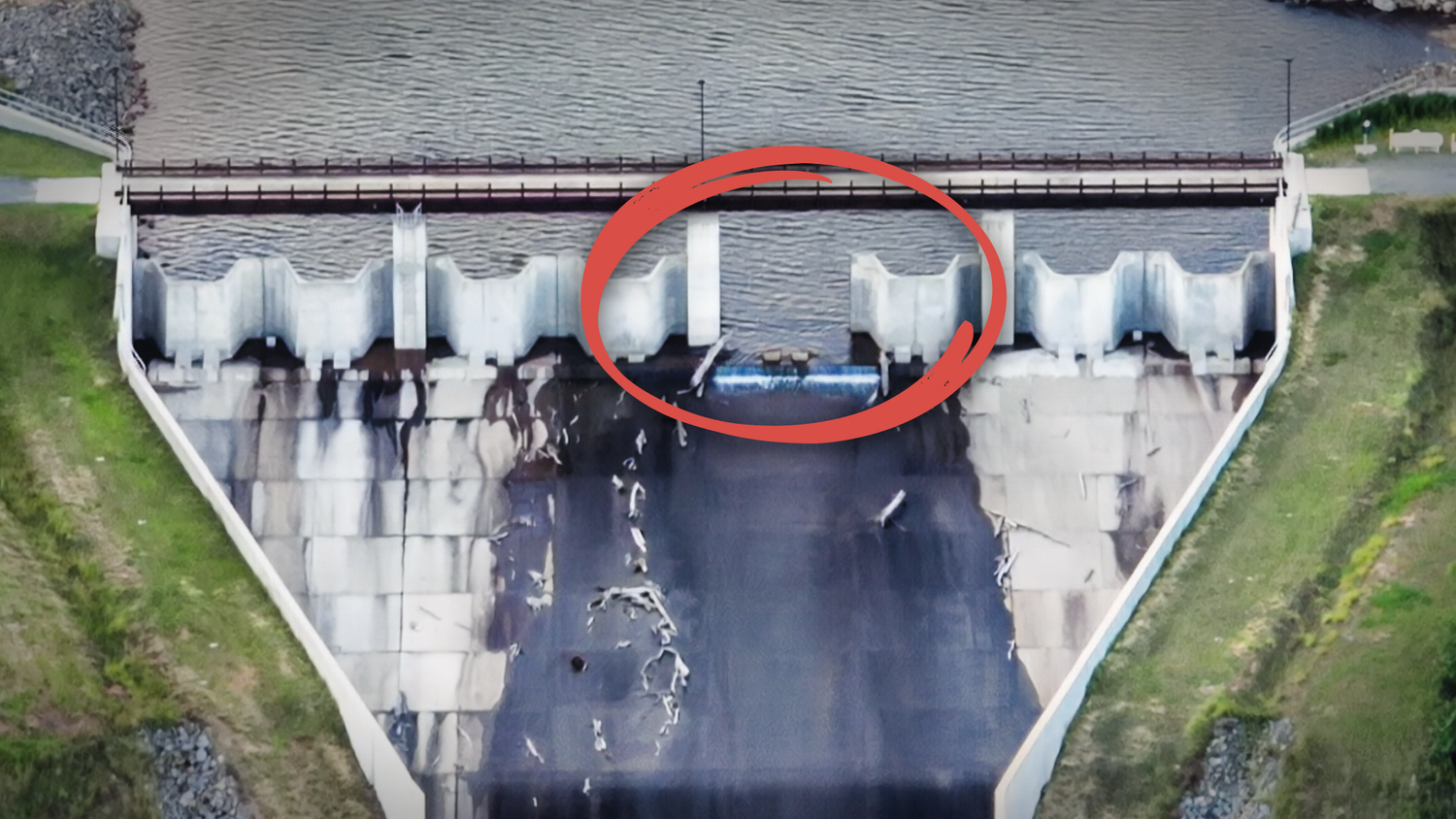
Asheville’s primary source of water is the North Fork Reservoir northeast of the city. Built in the early 1950s, North Fork Dam impounds a relatively pristine portion of the Swananoa River. After some earlier major floods and six decades of service life, the dam was starting to show its age, so the City of Asheville embarked on a major rehabilitation project. The project included a new auxiliary spillway to help manage floods and make the dam safer under newer state regulations. It was finished in October 2021, and three years later, nearly to the day, Hurricane Helene hit the region. When it did, a part of that brand new spillway blew out, tumbling down the chute, unleashing a torrent of reservoir water downstream. In other words, it worked exactly like it was designed. I’m Grady, and this is Practical Engineering.
Nearly every dam has a spillway for a pretty simple reason: every once in a while, a big storm comes along. In most cases, it doesn’t make sense to build a dam tall enough to absorb a once-in-a-lifetime flood, and then keep that storage volume empty until one comes. It’s not a good use of resources. Even dams designed explicitly for flood control that intentionally keep some or all of the reservoir empty in anticipation of heavy rain usually aren’t intended to store the largest of floods entirely. Instead, we use spillways to discharge that water in a safe and controlled way so that it doesn’t overtop the dam or cause damage to the structure. I’ve done a bunch of videos about spillways if you want to learn more after this.
One of the most fundamental decisions when it comes to designing a spillway is whether to include gates. The vast majority of dams around the world use uncontrolled spillways, meaning there’s no way to make adjustments in real time. Usually, some kind of weir sets the elevation where the spillway engages and water naturally flows through. Depending on the configuration of the dam and the type of spillway, this might be the normal water level where the reservoir sits when it’s full. Other dams have auxiliary spillways that don’t engage until a higher level. In either case, once the water reaches the crest of the weir, it flows over. A chute controls and directs the flow down, and often a special pool or structure called a stilling basin helps dissipate the energy in the water, making it less erosive as it transitions into a natural channel downstream.
Most spillways are designed according to a simulated extreme storm called the design flood. In many cases, it’s the Probable Maximum Flood, essentially the most extreme inflow that we think is meteorologically possible. The flow through a spillway is proportional both to its width and the height of the water, called the “head” by engineers. So there are some tradeoffs here. For a given design flood, a smaller spillway means the reservoir is going to rise higher as the water builds up waiting to get out. This difference between the reservoir’s normal operating level and the maximum level during the design storm is called the flood surcharge storage. So, on top of the height you need to store the normal water in the reservoir, you also need extra height up to the top of the surcharge storage, plus usually some additional margin for waves. If you widen the spillway, you can get more water out quickly, decreasing the height of the surcharge pool and reducing the need for a taller dam. Smaller spillway, taller dam. Wider spillway, smaller dam. Both have costs, so it’s an engineering balancing act. But with an uncontrolled spillway, there’s no human intervention needed at all. The spillway discharges water when the reservoir reaches a certain elevation, and that’s it. There’s a fixed relationship between the reservoir level and the discharge rate, called the spillway’s rating curve. But sometimes you need more flexibility than that.
Adding gates doesn’t increase the width of a spillway, but it can change that second part of the equation: the head. And it really only makes sense for reservoirs designed to hold a permanent pool of water, usually for irrigation or water supply. Obviously, with an uncontrolled spillway, you have to choose a crest height above the level of that permanent pool or you would just lose all your water. You can only use the height above the crest to drive that water through the spillway. Not true if you have gates. Opening a gate instantly gets you a lot more head above the spillway crest, providing greater flow. That means, for a given design storm, a gated structure can be a lot narrower. You don’t need to rely on width to get the water out. Of course, the gates are an added expense, but there are situations where that cost is offset by the reduced width of the spillway. Plus you have a lot more flexibility. Discharge is no longer fixed to the level of the reservoir. You can adjust releases based on season or downstream conditions or even forecasted inflows, providing greater control.
Those gates don’t only add to a project’s overall cost; they also add to the complexity. You have moving parts, which means more wear and tear and more maintenance. Gates rely on hoists or hydraulics, seals, gearboxes, and other specialized equipment where knowledge and replacement parts aren’t always readily available. The other thing is: they need someone to open them when a storm comes.
There are plenty of spillways equipped with some level of automation, but in general you want a real human brain in the decision tree. Remember that spillways are a critical safety feature of a dam. The whole purpose is to protect the structure so it doesn’t breach during a flood, the consequences of which can be catastrophic. On the other side of that coin, opening floodgates can be dangerous to people and property downstream. Dams with gated spillways usually have elaborate systems to warn people when making releases, including lights, sirens, and sometimes even emergency alerts sent to cell phones. A gate opening when it shouldn’t can be almost as bad as one not opening when it should have. There are risks on both sides. That means nearly all gated spillways require someone to be on call 24/7/365 to make sure operations go to plan. It means checking the weather forecasts every day, testing gates regularly to make sure they stay operable, and having staff available mornings, nights, weekends, and holidays in case of a storm. It is a major obligation, especially when you consider the decades or centuries-long lifetimes of these structures. There cannot be a single day when someone isn’t available to handle a flood. For large organizations, like federal agencies or water districts, it’s definitely doable. Most of the largest dams in the world have gated spillways with whole teams of staff dedicated to their operation. But it’s still a challenge, especially for small owners like cities. So there is another option, kind of in between controlled and uncontrolled spillways, and its use is growing worldwide.
Behold, a fuse plug spillway. Let me put some water in this flume and show you how this works… You can see water builds up on the upstream side, but none is released yet. As soon as the water rises above the plug, things happen pretty quickly. The overtopping water erodes the fuse plug down, quickly washing it away and opening up a much larger area for the water to flow. It’s basically a floodgate made of dirt. Obviously, in my little demo, there’s not really a reservoir, so the water level drops pretty quickly back down. But you can imagine if there was a larger volume of water to release, the difference in flow rate before and after the fuse plug washed out would be pretty dramatic.
It’s funny because this is exactly what you don’t want to happen at an embankment dam. Overtopping is basically a worst-case scenario precisely because of how that erosion can cut through an embankment so quickly. But that erosive force can be used in a beneficial way on a spillway. It’s a little crude, but the advantages are obvious. You don’t need a person on site to operate gates, and there are no moving parts. Plus, maintenance for an earthen structure is a lot simpler than for mechanical and electrical components. Just like an electrical fuse is a small section of wire that fails before the main wiring fails, the fuse gate is like a mini-dam that fails before the big dam is at risk.
Of course, this takes some pretty careful engineering. The materials you use for a fuse plug have to be both sufficiently durable - able to consistently hold water back for non-overtopping reservoir levels - but also relatively erodible so that they will wash out in a predictable and controlled way when called upon to function. Usually, this means a zoned embankment, where part of the structure is pre-weakened using erodible materials like sands, silts, or fine gravel. Many fuse plugs include a pilot channel or notch to give the erosion a head start. So you tune both the materials and the geometry of the fuse plug so it performs as intended. And these are used in quite a few dams. One of the most famous examples is at Warragamba Dam in Australia that provides the primary source of water for Sydney. You can see that the service spillway in the center of the dam still uses gates to control more frequent, lower magnitude floods. But each bay of the auxiliary spillway is equipped with a fuse plug of earth and rock fill. The crests of each plug are staged so they don’t all wash away at the same time. As the reservoir gets closer and closer to the top of the dam, more of the bays will open up to increase the discharge capacity of the spillway. But these structures aren’t foolproof.
In 2003, the fuse plug spillway failed at Silver Lake Basin, a reservoir in a remote part of Michigan’s Upper Peninsula. No one was hurt, but the event prompted the evacuation of nearly 2000 residents. Bridges were washed out, and the failure inflicted millions of dollars of damage to the areas downstream. When the fuse plug overtopped, it eroded down as designed, but the erosion didn’t stop. The foundation soil was just as erodible, if not more, than the fuse plug, and water continued to cut downward until most of the lake had drained out. It’s a good case study in why engineers only use soil erosion as a failsafe measure in limited situations. It’s hard to predict and hard to control. So there’s a similar solution to this kind of fusible spillway that avoids it altogether.
I’ve removed the fuse plug in my demo and replaced it with something a little more elaborate. I mounted a sliding bracket on the side of the flume now. On one side is a float, and on the other is a little arm. And I have a crest gate mounted to the bottom. Let me get this set up and turn on the water. You can see just like the fuse plug, this holds back the water when the reservoir comes up. And actually, this gate can allow water over the top as it gets higher. But at a certain point, my mechanism slides up (pushed by the float), and the arm clears the top of the gate. When it does, the gate folds down, quickly opening up the spillway for a lot more flow.
This has a major benefit over fuse plugs in that it can release some water before it fully opens. The gate basically acts like an uncontrolled spillway until the reservoir reaches the literal tipping point. It’s not an all-or-nothing thing like the fuse plug. The other benefit here is control. I can adjust the float or the arm to change the exact point when this gate opens, unlike an erodible structure that has some inherent uncertainty around the amount and the duration of flow required to wash it out. But you might be thinking: “Grady, this is a mechanical system with a sliding bearing and moving parts.” And you’d be exactly right. You’re not likely to find a system exactly like this installed on a dam. It’s not even that reliable in my model, to be honest, so I wouldn’t trust it at full scale. I’m just using it to show the fundamental advantages because all of the fusible concrete spillways that I know of around the world use a proprietary system called Fusegates developed by the company, Hydroplus. I didn’t want to step on any of their patents by building a model in my garage, but the way they work is pretty clever.
Fusegates are concrete structures set on top of a platform with a chamber built into the bottom. An inlet connects the chamber to a prescribed elevation above the gate. When the reservoir reaches that target elevation, water flows into the chamber, pressurizing it just enough that the gate loses stability and tips downstream. The benefits are the same as my demo: namely, that you can discharge water before the gate washes out, and the precise control you get over when the gate tips. A lot of dams around the world have been equipped with Fusegates. In the US, a few high-profile projects include (of course) the North Fork Dam in Asheville, Canton Dam in Oklahoma, and Terminus Dam that holds back Lake Kaweah in California.
One important application of both fuse plugs and Fusegates is extending the life of an existing reservoir. I’ve talked about sedimentation in a previous video, where a reservoir gradually loses storage as it fills up with silt and sand transported from upstream. There are no easy fixes, and there are plenty of cases where dams have to be decommissioned or removed because they just don’t have enough storage anymore. For dams that use uncontrolled spillways, the volume typically reserved for flood surcharge above the spillway crest is kind of an untapped resource. So, there are projects where a fuse plug or similar-type spillway is retrofitted onto an existing dam to gain more storage without sacrificing spillway capacity. In some cases, this can save millions of dollars associated with decommissioning a dam and developing an alternative source of water. But there are some downsides too.
When a fuse plug or tipping spillway activates, it’s a major endeavor to put it back. Unlike a gate that you just close after the flood is over, replacing a fusible spillway is a construction project, which brings along all kinds of complications, like hiring an engineer, procuring a contractor, significant expenses, and a lot of time. The time is important because, until it’s replaced, you’ve lost a lot of storage in your reservoir. The other disadvantage to these systems is also what makes them useful in the first place: there’s no human control. It does make them safer; it also means that there may be little warning when they activate. In places with a lot of development downstream, that’s a big deal, because dramatic and sudden increases in water levels are dangerous. That’s why these systems usually break up the fusible structures into stages that give way at different reservoir levels, smoothing out the changes in flow as a flood passes through. But even then, it can still cause problems.
North Carolina came face-to-face with the issue when Hurricane Helene hit in 2024. A major impetus for the new auxiliary spillway at North Fork Dam was a previous storm, Hurricane Frances. Flows through the old spillways washed out key pipelines that carry water from the treatment plant at the dam into Asheville. In response, the city built a new bypass line to provide redundancy against failures. When Hurricane Helene hit and tipped one of the Fusegates at the auxiliary spillway, the surge eroded the channel downstream, taking out not just the original transmission lines but the bypass line too. So, somewhat ironically, the flood left major parts of the city without water for weeks.
The water crisis in Asheville was just one of the problems caused by Hurricane Helene along its path. But I think it’s important to recognize the tragedies that didn’t happen too, one of those being that North Fork Dam was never in any danger of breaching. Despite the incredible rainfall, and despite the fact that there was no way to control releases, the flood passed through exactly as designed. The fusible spillway tipped just when it was supposed to, allowing more discharge during an extreme event, and no one had to be there to push a button.
In brief: In today’s post we celebrate the recent Artemis II lunar flyby, and look ahead to warmer and somewhat cloudier weather after today. Rain chances spike on Friday, but they won’t entirely go away this weekend.
A total eclipse of the Sun, as seen from the Moon on Monday. (NASA)
Fly me to the Moon
I’m not sure I’ll ever look at the Moon the same way again. On Monday four astronauts—our friends and neighbors in Houston; Reid Wiseman, Victor Glover, Christina Koch, and Jeremy Hansen—flew around the far side of the Moon (see images here). There they saw some incredible lunar geography (selenography in space talk), Earth setting behind the Moon, and a stunning eclipse of the Sun. I’m hoping this mission is breaking through to the broader public because this is an incredible crew, and it is delightful to see NASA daring to fly into deep space again. If we do this right, this is just the beginning of a long, sustained program to explore and settle on the lunar surface.
Wednesday
Back here on Earth, we are not going to see any eclipses, but we will see plenty of sunshine throughout the day. We are starting to see a more pronounced onshore flow, but dewpoints should hold in the 50s (read: drier air) through the afternoon before humidity shoots up later today. I expect high temperatures in the vicinity of 80 degrees, with overnight lows in the mid-60s.
Thursday
After today we’re going to see less sunshine for the next few days, but I don’t expect it to go away entirely. Highs on Thursday will again be in the range of 80 degrees, with a fair bit of humidity. Winds will blow from the east-southeast at about 10 mph with higher gusts. A few light showers will be possible during the daytime, but I don’t expect any real accumulations. Lows Thursday night will only drop to around 70 degrees. And that’s pretty much going to be our low temperatures for the next week, so get used to them.
Friday
This day will bring our best chance of rain for the week as an upper-level disturbance moves into the area and combines with a fairly moist atmosphere. The best chance of rain is likely to be southwest of Houston, so places like Fort Bend and southern Brazoria counties. However, I expect most of the area to see a healthy chance of rain, with much of us probably picking up between 0.25 to 0.75 inch of rain through Friday night. Highs will be near 80 degrees with another muggy night.
NOAA rain accumulation forecast for now through Friday night. (Weather Bell)
Saturday or Sunday
I’m afraid we’re still playing the will-it or won’t-it rain game for this weekend game. A lot of our modeling indicates that the chances for showers will drop off considerably by Saturday morning, but I’m not convinced there will be enough high pressure in play to entirely shut off the spigot. I’m going to go with a 40 percent chance of showers on Saturday, and 30 percent on Sunday, and not feel great about the forecast. Regardless, I don’t anticipate heavy rainfall this weekend. Expect highs around 80 degrees with continued warm nights and partly sunny skies.
Next week
Most of next week looks to remain on the warm side, with highs in the low 80s, warm nights, and plenty of humidity. Rain chances are never going to go away, but they may be a little higher during the middle of the week as the atmosphere becomes a little more perturbed. We shall see.
1. My boss blames my employee for getting stuck in the Middle East during the war
My employee used six weeks of vacation to go back to his home country with his pregnant wife and toddler. It was the first time he’d be with his parents and siblings all together in over a decade. He was due to fly back three days after the war with Iran started, and as his flight went through that region, his flight was cancelled. He was rebooked two weeks later but tried daily to get a different flight and showed up to the airport, he and his family fully packed, because flights going out that day weren’t officially cancelled until around noon each day. After a hellish 55-hour journey, he and his family are safely back and he’s back to work. That period between his normally scheduled flight and when he got back exhausted the small remaining amount of vacation hours he had.
But hark! HR told me we have a policy to allow for up to 10 days of admin leave in the event of a disaster, and said this qualifies. Wonderful! I asked if the policy is that the 10 days can be used first or if it can be used only after vacation time has been exhausted, which is a frequent stipulation in some of our other leave policies.
My boss responded that she thinks because “we all knew” war was imminent and he didn’t try to leave earlier, he should get to use only five days and not the full 10. If the employee was in Iran when the war broke out, she’d give him the full 10. But she wants to hear what efforts he made ahead to get out quicker.
She consistently lets her feelings about people’s work cloud her judgment to be a good human when it’s not only the most righteous, but also easiest, choice to make. But hey, at least she put this BS in an email so I can share it back with HR. How should I respond?
“We all knew” war was imminent? Some of Congress didn’t even know war was imminent. Your boss is an ass.
Your employee and his family went through a scary and exhausting ordeal. Your company has a policy set up specifically for disasters. This was a disaster. He should be given the full amount of time HR said was available.
Share your boss’s response with HR and say that you’d like your employee to receive the full 10 days, and that you’re dismayed by the suggestion to penalize him on the grounds that he “should have known.” You might also point out that your boss’s suggestion could be taken as national origin discrimination, which is illegal.
2. I’m about to get promoted but I want to quit
I am mid-20s working at a small office with less than a dozen people while I finish my degree. My boss has told me I will be promoted once funding is approved, and because of that I have been asked to take on more leadership tasks. I have three coworkers who were both hired less than six months ago who both think that, if promotions were to come, they should get them (this is their first job). I have another coworker who is technically an external contractor who works closely with the three new people. Because of her role/contract, she is essentially unfireable for the next two years. She often acts as if she is in charge, something management has told me she has been asked not to do.
A week ago, I had a startling conversation with her and my three other coworkers. She has a habit of staying in conference rooms during meetings she is not a part of, and during this meeting she said that she was the de facto manager of the office, told the other coworkers to disregard what I was asking them to do as it was “not their work” (it is), and asked why I am still working here and said I should have left by now. The other three seemed to feel that the work being discussed was beneath them and heavily implied that they saw me as an obstacle to promotion.
It was clear to me I cannot stay at this job. The power struggle being played into long predates my coworkers, and now that they are friends with this new person and feel half of their workload is irrelevant, I feel strongly that there is no way I can continue my work without being resented or undermined.
My problem is this. I have been working closely with my supervisors to prep me for this promotion. They will feel blindsided if I just quit, and I struggle to imagine how I could pretend everything is fine for the next two months. But if I tell my supervisor what happened, I assume they would try to address things, which I just don’t want. I don’t want to hurt my reputation by covering for them (especially as a recommendation from my supervisor will be important in future career/education steps) but I also don’t want to make the last few weeks of the job miserable. What should I say to my boss and how should I approach the next eight weeks?
Wait, wait! Deciding to leave feels premature — why not first talk to your manager about what got said in that meeting and share your concerns about what this means for your ability to be effective in your work there? If they’ve told this contractor in the past to stay in her lane, it’s very likely that they’ll be upset to hear she’s doing this again. If your manager is even a little bit decent at her job, there’s a strong chance she’ll want to intervene with both the contractor and the other three coworkers.
If you’re just done with this job and ready to get out regardless, that’s of course your prerogative! But otherwise there’s value in talking to your manager about this conversation before you decide anything.
If you do decide you’re going to leave … well, job searching usually takes some time and there’s a decent chance you could still be there two months from now. But at whatever point you do leave, if they’re blindsided by that when they told you to expect a promotion, that’s not necessarily reasonable on their side. It doesn’t sound like they’ve given you a specific timeline and “you’ll be promoted once funding is approved” can mean anything from “you’ll be promoted in three weeks” to “we hope you’ll be promoted sometime next year” to “there are no solid plans at all and I can’t give you any sort of timeline, but it’s something we’d like to do.” It’s not reasonable to assume someone will pass up other opportunities on that sort of thin promise.
But even if they have a solid timeline in place that you find credible, you’re still allowed to leave! You’d frame it as, “I really appreciate you going to bat to get me a promotion, but another opportunity fell in my lap and was too good to pass up.” Or, “I really appreciate you going to bat to get me a promotion, but I’ve realized staying doesn’t make sense for me because of X / a different role is more aligned with what I want to do / etc.”
3. New employee doesn’t want to work the hours we hired them for
We hired an employee for a specific time slot — evenings and Saturdays. Because of clients’ needs, we were able to move the original schedule earlier (11am-7pm instead of 5pm to midnight). The employee appreciated this. The employee then negotiated for Thursdays off because of regularly being scheduled for Saturdays. Then they asked that the Saturday work be remote, so we offered a trial of on-call that would require them to come in only if necessary. Now the employee is asking that Saturdays be rotational.
I would be sad to lose this employee, but I’m guessing we need to start searching again? The evening and weekend hours of this role were communicated up-front, and I find it frustrating that the employee is regularly coming back to try to renegotiate.
Yes, you’re probably going to need to start searching again, but first just be straightforward with the employee and ask for them to be straightforward in return: “We hired for this role specifically because we need someone to work Saturdays, and that’s not something we can change. Knowing that the job does require working Saturdays and it can’t be rotational, does the position still make sense for you?”
4. Explaining why I’m quitting the federal government
I thought I could stick out this administration, but my job has become a nightmare. After losing roughly half our group, the demands have only grown, particularly with quick deadlines. This, apparently, is in exchange for forcing us to commute every day, imposing a cap on the number of employees exceeding expectations, and changing the primary criteria to remove or demote employees due to performance evaluations.
Is there any exception to not disclosing reasons for quitting and the prohibition on speaking ill of a former employer when that employer explicitly is trying to put its employees in trauma and dread going to work every day? Is it too much to say it’s no longer a good fit, or the costs now are too great?
You can just say, “With everything going on in government work right now, I’m interested in moving to something more stable, and I’m particularly interested in this job because ____.”
You’re falling into the very common trap of thinking you need to give an accurate or comprehensive answer to this question; you don’t, and it’s often not in your best interests to, even when you’re 100% in the right (and even when the employer would know you were likely in the right; you want their focus on why you’d be great for the job they’re hiring for, not whatever bananas drama is happening at your old job).
I am a non-exempt employee who works in healthcare for a large company that provides a specific contracted service. My hours are unpredictable and vary day by day, week by week. Sometimes I work overtime, although usually I average about 30 hours/week. I punch in/out using an electronic payroll app on a company-provided device. We’ve recently gone through a period with an unusually high patient census and are also understaffed, so more hours and overtime for me.
During this time, I noticed that my paychecks did not seem to accurately reflect the hours that I worked, so I started keeping my own record and then compared it to my punch times on the payroll system. I found that my manager has been editing my timesheets. I believe she is trying to meet (in my opinion, unreasonable) company metrics, but it is extremely disheartening to be working these ridiculous hours to find out that I’m not being compensated for them. In the app, you can see that the time was edited and who did the editing (my manager’s name).
My partner is a manager for a well-known company, and he has a good relationship with his HR and asked for their advice. HR informed him that adjusting employee timesheets is illegal and a firing offense, and it puts the company at risk.
My partner wants me to report this. One of the reasons I never went into management is because of the politics and pressure involved, but I do love my job and my patients, and at this stage in my career I do not want to face retaliation or the inability to find another position in my field. Then again, I’m feeling anger and frustration at stepping up and working unreasonably long hours when no one else was available, without compensation for all the time that I worked. I’ve always had a good relationship with my manager so there’s the feeling of betrayal as well. My manager has also been in her position for many years, in a role that is notorious for high turnover, so I’m unsure whether the company would even be supportive if I reported. I’ve been thinking about contacting an employment lawyer to help me navigate this situation, especially in the event of retaliation. Honestly, I’d just like to be paid for my time and continue doing the job I love. Since I brought the discrepancies to my manager’s attention, my timesheets have not been touched. But I do wonder if this is happening to others on my team and within my company, and that is weighing on my conscience as well.
You absolutely need to report this to your company. It’s illegal, it’s a liability for them, and you are legally owed that money. It doesn’t matter what your manager’s reasons were for doing it; it’s flatly against the law, and you are being stolen from.
If you’re concerned about retaliation, you don’t need to mention that your manager is the one who did this when you report it. Just say that your paychecks aren’t matching up to the hours you’ve logged and ask that it be investigated and fixed. You don’t need a lawyer to do this; it’s worth involving one if you do start seeing retaliation, but most likely you’ll report it and your company will fix it since the law is black and white on this. If they don’t, then bring in the lawyer.
It’s that time of year again when we hear about how the plants are growing across the country. For the Washington Post, Ben Noll, John Muyskens, and Naema Ahmed have the maps for leaves and flowers.
Meteorological spring started March 1. The astronomical season started March 20. But there’s a third option: The season as decreed by the plants. They don’t follow any calendar and instead leaf out when it’s warm enough.
The first emergence of leaves can be estimated by temperatures since the start of the year. A certain amount of warmth needs to accumulate before leaves appear. This warmth is typically measured through a metric called growing degree days.
In the first days after Pam Bondi was appointed attorney general last year, the Department of Justice began shutting down pending criminal cases at a record pace.
The cases included an investigation into a Virginia nursing home with a recent record of patient abuse; probes of fraud involving several New Jersey labor unions, including one opened after a top official of a national union was accused of embezzlement; and an investigation into a cryptocurrency company suspected of cheating investors.
In total, the DOJ quietly closed more than 23,000 criminal cases in the first six months of President Donald Trump’s administration, abandoning hundreds of investigations into terrorism, white-collar crime, drugs and other offenses as it shifted resources to pursue immigration cases, according to an analysis by ProPublica.
The bulk of these cases, which were closed without prosecution and known as declinations, had been referred to the DOJ by law enforcement agencies under prior administrations that believed a federal crime may have been committed. The DOJ routinely declines to prosecute cases for any number of reasons, including insufficient evidence or because a case is not a priority for enforcement.
But the number of declinations under Bondi marks a striking departure not only from the Biden administration but also the first Trump term, according to the ProPublica analysis, which examined two decades of DOJ data, including the first six months of Trump’s second term. ProPublica determined the increase is not the result of inheriting a larger caseload or more referrals from law enforcement.
In February 2025 alone, which included the first weeks of Bondi’s tenure, nearly 11,000 cases were declined, the most in a month since at least 2004. The previous high was just over 6,500 cases in September 2019, during Trump’s first administration.
Some of the cases shut down were the result of yearslong investigations by federal agencies such as the FBI and the Drug Enforcement Administration. For complex cases, the DOJ can take years before deciding whether to bring charges.
The shift comes as the DOJ has undergone an extraordinary overhaul under the Trump administration, with entire units shuttered, directives to abandon pursuit of certain crimes and thousands of lawyers quitting or, in some cases, being forced out of the agency.
In doing so, the DOJ is retreating from its mission to impartially uphold the rule of law, keep the country safe and protect civil rights, according to interviews with a dozen prosecutors and an open letter from nearly 300 DOJ employees who have left the department under Trump. The Trump DOJ, the employees wrote, is “taking a sledgehammer” to long-standing work to “protect communities and the rule of law.”
The change in priorities was outlined in a series of memos sent to attorneys early last year. Trump’s DOJ has said it is “turning a new page on white-collar and corporate enforcement” and emphasizing the pursuit of drug cartels, illegal immigrants and institutions that promote “divisive DEI policies.” Trump, in an address last March at the department, said the changes were necessary after a “surrender to violent criminals” during the past administration and would result in a restoration of “fair, equal and impartial justice under the constitutional rule of law.”
The department prosecuted 32,000 new immigration cases in the first six months of the administration, which was nearly triple the number under the Biden administration and a 15% increase from the first Trump term. It has pursued fewer prosecutions of nearly every other type of crime — from drug offenses to corruption — than new administrations in their first six months dating back to 2009.
The DOJ has also closed hundreds of cases involving alleged crimes that the administration has publicly emphasized as enforcement priorities. Even as the Trump administration unleashed Elon Musk’s Department of Government Efficiency operatives to root out waste, fraud and abuse in the federal government, the DOJ declined over 900 cases of federal program or procurement fraud. About three times as many cases of major fraud against the U.S. were declined under Trump compared with the average of similar time periods under prior administrations. And while the Trump administration has promised to “make America safe again,” its DOJ has declined more than 1,000 terrorism cases, also more than prior administrations.
Federal prosecutor Joseph Gerbasi had spent years in the department’s Narcotic and Dangerous Drug Section helping build cases against major suppliers of fentanyl ingredients in India and China. After Bondi came in, he was left bewildered when his team was ordered to abandon its work.
“All of the building blocks of what would become successful prosecutions were pulled out,” said Gerbasi, who retired as the section’s acting deputy chief for policy in March 2025 after 28 years with the department.
The move had an “overwhelming deflating effect on morale,” he said.
Barbara McQuade, who worked as a federal prosecutor in Michigan for two decades until 2017 during Republican and Democratic administrations, said it was not unusual for new administrations to come to office with a few “pet priorities” — such as a focus on violent crime or drug trafficking. But she said those changes usually involved modest adjustments in policy and that most of the decisions on what crimes to focus on were typically made at the local level by the district U.S. attorney in coordination with the FBI or other agencies.
“We would revise those about every five years, not having anything to do with any administration, just because it made sense,” she said.
A DOJ spokesperson, in an emailed response to questions about the spike in declinations, said that in “an effort to clean, remediate, and validate data in U.S. Attorneys’ case management system,” the department reviewed all pending criminal matters opened prior to the 2023 fiscal year, which included updating the status of closed cases. “This Department of Justice remains committed to investigating and prosecuting all types of crime to keep the American people safe, and the number of declinations is a direct result of our efforts to run the agency in a more efficient manner.”
The agency did not respond to questions about the types of cases declined.
The spike of declined cases began in February 2025 when the department ordered prosecutors to review every open case launched prior to October 2022 and determine whether to close it. Such a review would typically take months, according to one attorney tasked with reviewing cases. A memo, which was described to ProPublica reporters, ordered the review to be completed within 10 days.
Former DOJ prosecutors told ProPublica that they typically reviewed caseloads every six months with supervisors and that closing out languishing cases wouldn’t ordinarily be cause for concern. They said the February directive, however, was unusual. None could recall a similar order.
The directive came as higher-ups in the department had begun making frequent demands for data about specific types of cases and charging decisions, such as the outcome of fentanyl cases, according to former prosecutor Michael Gordon. Gordon, who helped prosecute Jan. 6 cases before moving to white-collar crime prosecutions, said the “fire drills” from officials in Washington became so regular that he grew used to the forlorn look on his supervisor’s face when he showed up at Gordon’s door, apologetically delivering yet another frantic request.
“It was either ‘give us stats we can use to make ourselves look good’ or ‘give us the stats to show how bad things are in this area,’” Gordon said. “It was never productive fact-finding.”
Though Gordon didn’t see the memo, he remembered getting the request to review all cases that had been open for more than two years and report back on their status, entering into a master spreadsheet basic information about any that he wanted to keep pursuing.
“The office was pushing us to close everything by a certain date so that when they had to report up to D.C. they had a low number of open cases,” he said. “You really had to go to bat to keep open a case that was more than two years old.”
Gordon said he was fired by the DOJ last June. He has filed a lawsuit alleging his termination was politically motivated. The department did not respond to questions about Gordon’s comments or his lawsuit. The government filed a motion to dismiss the case late last year, arguing that the federal court did not have jurisdiction over the matter. The court has not yet ruled on that motion, and the case is still pending.
Investigations into individuals or corporations declined for prosecution are generally not reported to courts and usually only disclosed in summary form by the DOJ in annual reports. To conduct its analysis, ProPublica obtained declination data from the DOJ and the Transactional Records Access Clearinghouse, a center that obtains data through Freedom of Information Act requests.
Here are some of the areas most impacted by the spike in declinations.
Drugs
As president, Trump has spoken frequently about the “scourge” of drugs coming into the country. At the same time, the Justice Department has declined to prosecute nearly 5,000 cases of federal drug law violations, including trafficking and money laundering. The number of declinations were 45% higher than the average of the prior three new administrations.
Gerbasi, the counternarcotics prosecutor, declined to comment on specific cases that might have been declined in his office. But, he said, once Bondi was appointed, the priority in the office became building cases against Tren de Aragua, a Venezuelan group that the Trump administration has labeled a foreign terrorist organization.
“Tren de Aragua was not anywhere close to the scale or impact of the cartels we were focused on,” Gerbasi said. “But we were told to generate those cases.”
He said his office had to scramble to fly people to investigate local gangs in small towns that were reportedly affiliated with Tren de Aragua. “They never would have merited a full-scale federal investigation,” he said.
“It told me that decisions were going to be based on political appearances and not based on the merits of where investigative resources should be placed.”
The DOJ declined to comment on Gerbasi’s remarks.
National Security
Under Bondi, the DOJ declined more than 1,300 cases involving terrorism and national security, nearly twice what was typical at the start of the most recent new administrations. While domestic terrorism was the hardest-hit program, just over 300 cases involving charges of providing material support to foreign terrorist organizations were also dropped.
The DOJ program handling matters relating to national internal security — which considers cases of alleged spy activity and the security of classified information — saw over 200 declinations, which is four times as many as typical in the first six months of a new administration. Some of the cases related to serving as an unregistered foreign agent, a charge Bondi ordered prosecutors to stop pursuing unless they involved “conduct similar to more traditional espionage by foreign government actors.”
Jimmy Gurulé, a former federal prosecutor and George W. Bush appointee to the U.S. Treasury Department who investigated the financing of terrorism, said the decline in terrorism cases was troubling.
“The Trump DOJ has been used as a political weapon,” he said. “It’s a question of prioritizing resources. Are they going to be used for national security threats or to prosecute his political enemies and critics?” The DOJ did not respond to a request for comment on Gurulé’s remarks.
Labor
The DOJ shut down over 60 union corruption and labor racketeering cases, 2.5 times the number in Trump’s first term. Nearly half of the cases turned down for those offenses were out of the New Jersey U.S. attorney’s office, which in the past has aggressively pursued alleged union corruption. All were noted as declined for insufficient evidence.
Most of those cases had been opened by Grady O’Malley, an assistant U.S. attorney who oversaw several prosecutions of union corruption while working in the New Jersey office over four decades. He retired in 2023 and was disturbed to learn from former colleagues that the office was shutting down the open union probes.
A Trump supporter, O’Malley said that while he doesn’t blame the president, he worries the decision to drop so many cases could embolden unions that he and his colleagues spent years working to hold accountable. “No one is assigned to do labor union cases, and the unions have every reason to believe no one is looking.”
The New Jersey U.S. attorney’s office said it had no comment on the declination of labor cases.
White-Collar Crime
The Trump administration has pledged to root out “rampant” fraud in federal benefit programs like food stamps and welfare. The controversial surging of federal agents to Minnesota in January began as a stated crackdown on noncitizens allegedly ripping off nutrition and child care programs.
The DOJ, however, shut down more than 900 cases of federal program or procurement fraud in the first six months of the administration, including one targeting a mortgage lender accused by several state regulators of defrauding the Federal Housing Administration. The case was dropped due to “prioritization of federal resources and interests.” The U.S. attorney’s office for the Northern District of Alabama, which declined the case, did not reply to a request for comment. The number of fraud cases closed was about double that in the same time period of the Biden and first Trump administrations.
The agency also closed over 100 health care fraud cases as a result of “prioritization of resources and interests” even though the Trump administration has said it is making this area of enforcement a priority.
Among other cases the DOJ determined weren’t a priority: the probe into the Virginia nursing home accused of abuse, as well as investigations in Tennessee into fraud at a national hospital chain and one of the largest Medicaid managed care companies.
The Western District of Virginia U.S. attorney’s office, through a spokesperson, declined to comment on the nursing home case. A spokesperson for the U.S. attorney in the Middle District of Tennessee said the office does not comment on investigations that do not result in public charges.
The DOJ’s Antitrust Division, which focuses on preventing big businesses from creating harmful monopolies, also declined an unusually high number of cases in Trump’s second term. More than 40 cases were dropped within the first six months of Bondi’s tenure. That’s more than double the number declined in the same time period by the prior three new administrations.
Despite the declinations, the department said it charged slightly more people with fraud in 2025 compared with the final year of the Biden administration, and those cases alleged larger financial losses.
Promises Kept
The DOJ under Bondi has also rapidly pursued many of the priorities laid out in Trump’s early executive orders and her own “first day” directives to staff.
Trump in February 2025 issued an executive order pausing new investigations under the Foreign Corrupt Practices Act, which prohibits citizens and companies from bribing foreign entities to advance their business interests. The order asked the attorney general to review and “take appropriate action” on any existing probes to “preserve Presidential foreign policy prerogatives.”
In the first six months, Bondi’s DOJ shut down 25 such cases, which is more than the combined number dropped by the prior three new administrations over the same time period. One of the cases declined for prosecution involved a major car manufacturer, which had reported possible anti-bribery violations to federal investigators involving a foreign subsidiary. The DOJ declined the case for prosecution last June, citing the “prioritization of federal resources and interests.”
On her first day, Bondi ordered a review of criminal prosecutions under the Freedom of Access to Clinic Entrances, or FACE Act, which prohibits people from illegally blocking access to abortion clinics and places of worship. The department dropped as many cases under the act in its first six months as the past three new administrations combined, over the same time frame. Bondi’s order focused on “non-violent protest activity,” although at least one of the closed cases was being investigated as a violent crime. The DOJ has since charged protesters against Immigration and Customs Enforcement and journalists in Minneapolis under the FACE Act. The defendants in the case have pleaded not guilty.
The agency closed three times the number of cases alleging environmental crimes as the Biden administration did and one-and-a-half times as many as compared with Trump’s first term. The declinations came as the DOJ reassigned and cut prosecutors working on environmental cases. One-fifth of all of the dropped environmental protection cases were shut down for “prioritization of federal resources and interests.”
OTTAWA – Reflecting on being PM for over a year, Mark Carney told reporters that he loves every aspect of the job, except for “the short amount of time I have to spend in Canada every month.” “I’ve enjoyed my time in office immensely,” said Carney. “I like going to international conferences, taking international meetings, […]
NEW YORK- The complete eradication of sentient life on our planet spurned the end of history, the death of time, and a permanent all-consuming blackness, as markets reacted negatively, shedding eleven points to close down .02% on the day. “To some degree, the losses associated with the end times were priced-in by investors,” claimed BMO […]
A U.S. Air Force officer who went missing after his fighter jet was shot down over a remote area of Iran has been rescued, with the CIA having developed a deception plan to buy time for the high stakes operation. What do you think?
“Good, he can work off the cost of the jet.”
Vera Sokolova, Contract Printer
“I take it word of our victory hasn’t yet reached the front.”
Kenneth Wolff, Systems Analyst
“If they can’t rescue people without lying, they shouldn’t be rescuing people at all.”
We recently hired a nursing mother with the understanding that she would be taking time to pump three times a day for about a year. She is being paid for the time used to pump. She was provided a comfortable private space in which to do so and she logs the time as “general overhead” on her timesheets (unbillable); it comes to about 90 minutes per day. We’re just now, a few months in, realizing how quickly this time adds up – in the last billing period (five weeks) it was nearly 40 hours! Is there a tactful, legal way to ask her to make up some of this time (50%?) so that we get more billable hours from her?
Ou company is pro-family, but having done the math this comes out to about 10 full work weeks per year in paid pumping time, time that we cannot bill to our clients.
I answer this question — and two others — over at Inc. today, where I’m revisiting letters that have been buried in the archives here from years ago (and sometimes updating/expanding my answers to them). You can read it here.
Other questions I’m answering there today include:
I’m not included in meetings about my team’s work
Can I borrow language from other job descriptions?
It’s hard to get real-world information about what jobs pay. Online salary websites are often inaccurate, and people can get weird when you ask them directly.
So to take some of the mystery out of salaries, it’s the annual Ask a Manager salary survey.
Fill out the form below to anonymously share your salary and other relevant info. (Do not leave your info in the comments section! If you can’t see the survey questions, try this link instead.)
WASHINGTON—In an effort to keep his airways clear while his colleagues discussed foreign policy, U.S. Secretary of Defense Pete Hegseth was laid on his side for a Cabinet meeting Friday, according to sources within the White House. “Hey, Scott [Bessent], could you grab us a couple towels to support his head and soak up some of the piss?” said Secretary of State Marco Rubio, who reportedly kneeled beside Hegseth while the former Fox News host lapsed in and out of consciousness, drying heaving and occasionally muttering incoherent threats against Sen. Mark Kelly of Arizona. “Before I can brief you guys on the situation in Nigeria, I need someone to help me wriggle him out of his suit so we can wash off the vomit. Ugh, the whole Cabinet Room smells like sour Jägermeister. I’m gonna turn him on his other side so he’s not breathing on us. Let’s try to get some water in him once we’re sure he can keep it down. JD [Vance], would you mind taking over for me down here while I present? Just use your fingers to scoop out his mouth if it seems like he’s choking on puke.” At press time, an aide was seen hoisting the completely limp defense secretary over his shoulder and taking him back to the Pentagon to oversee the invasion of Greenland.
NEW YORK—In a desperate ploy aimed at playing on the sympathies of concerned viewers, CBS News editor-in-chief Bari Weiss reportedly attempted to boost ratings for her struggling programs this week by kidnapping the mother of evening anchor Tony Dokoupil. “I’m not going to hurt you, Ms. Dokoupil, but you’ll be staying with me at least until the end of spring sweeps next month,” said a masked Weiss, who, according to sources, planned to seed tentpole shows such as Face The Nation and Sunday Morning with lurid details of Gail Dokoupil’s captivity, counting down the days, hours, and minutes until a deadline set by an “anonymous kidnapper” to bring in an additional 2 million viewers. “If all goes to plan, particularly in the more coveted demographics, I’ll get you home safe and sound. If not—well, let’s just hope the audience comes through for you.” At press time, CBS News ratings had yet to improve, and witnesses claimed to have seen a masked woman ushering the granddaughters of longtime 60 Minutes host Lesley Stahl into the back of a van.
McSweeney’s contributor Johanna Gohmann channels the chaos and charm of life with a toddler intoAll Toddlers Are Scorpios a hilarious astrology guide illustrated by cartoonist (and McSweeney’s contributor) Emily Flake.
We’re thrilled to share an excerpt today from the book’s opening chapter. All Toddlers Are Scorpios is out now and available at your nearest bookseller.
- - -
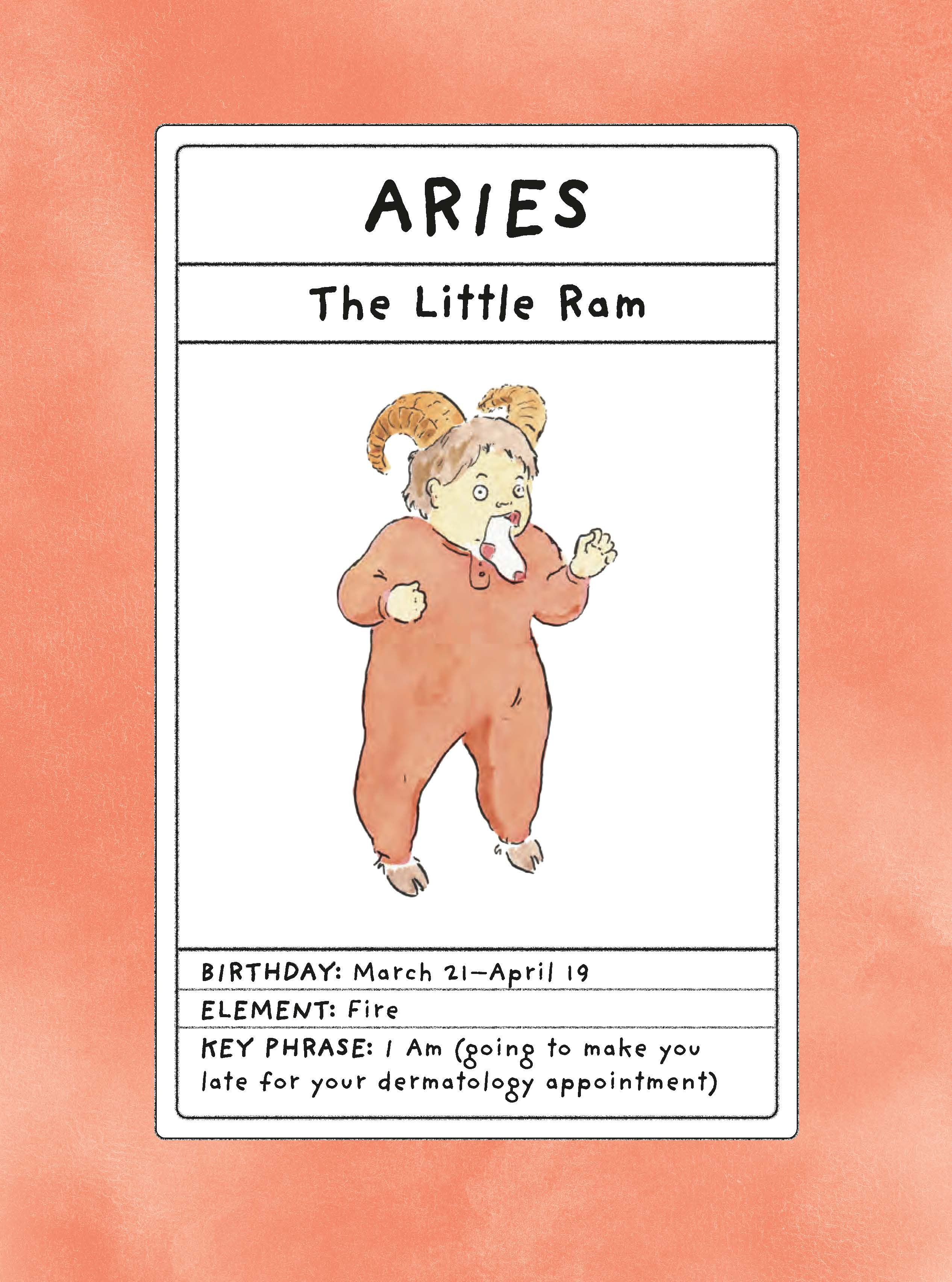
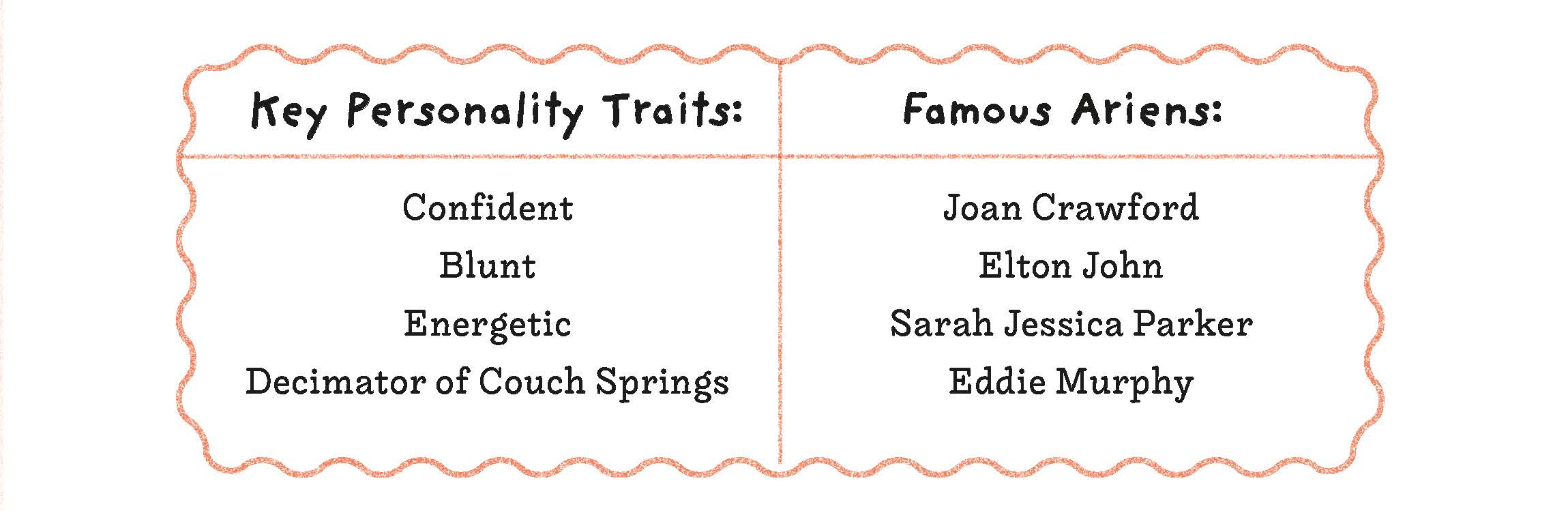
With the fiery planet of Mars as their ruling house, the Aries toddler is known for their high energy and adventurous nature. A bold, fearless child, they can often be found rapidly scaling the nearest Barnes & Noble bookcase or attempting to fit their head into the neighbor’s Dalmatian’s mouth. You, meanwhile, can most often be found struggling to open some Tylenol or cleaning up the hummus the Aries has smeared all over the doorknobs for absolutely no reason whatsoever.
The Aries communication style can be both honest and quite blunt, and parents should be prepared for them to ask why Grandpa’s mouth resembles old hot dogs, or for them to loudly inform the UPS driver that Mommy has been crying because her pants no longer button. The little ram can be extremely self-confident as well as combative, and you should expect to lose many minutes of your life locked in heated arguments over things like why they aren’t allowed to power the lawn mower or cut their own hair.
Creative, impulsive, and a smidge accident-prone, parenting an Aries may mean taking lots of deep, calming breaths, as well as having many uncomfortable conversations with Dr. Bettenmeyer, explaining how your little ram got a Calico Critters coffeepot lodged inside their nasal cavity.
Best Playdate for the Aries Toddler: Libra
As the Libra toddler is also fun-loving and adventure-seeking, they can make for a very amusing companion. A Libra will happily join an Aries in repeatedly kicking over the bubble machine at a sing-along or pretending your night guard is a Chinese throwing star. However, Libras are also known to be a bit more cautious in nature, so when your child suggests rolling down the stairs in the laundry basket, the Libra might offer not to ride but rather to give them a push.
Worst Playdate for the Aries Toddler: Cancer
The fun-loving little ram might find the changeable moods of a Cancer rather confusing and struggle to discern why mere moments ago they were happily engaged in a contest over who could quack the loudest, but now the Cancer is sadly stomping the Little People farmhouse. Meanwhile, the Aries’ blunt manner might upset the sensitive Cancer, and the child may take offense when the Aries smacks them in the face with The Giving Tree.
Best Babysitter for the Aries Toddler: Virgo
A Virgo makes an excellent caregiver for the Aries, as adult Virgos are both patient and protective, thus keeping the Aries entertained and out of harm’s way. The ideal Virgo sitter will be well-rested and relatively fit—someone who can handle a small human clambering up their vertebrae like a fire escape and whose skin can tolerate the harsh scrubbing required to remove facial tattoos etched with a Sharpie.
Best Sibling Match for the Aries Toddler: Leo
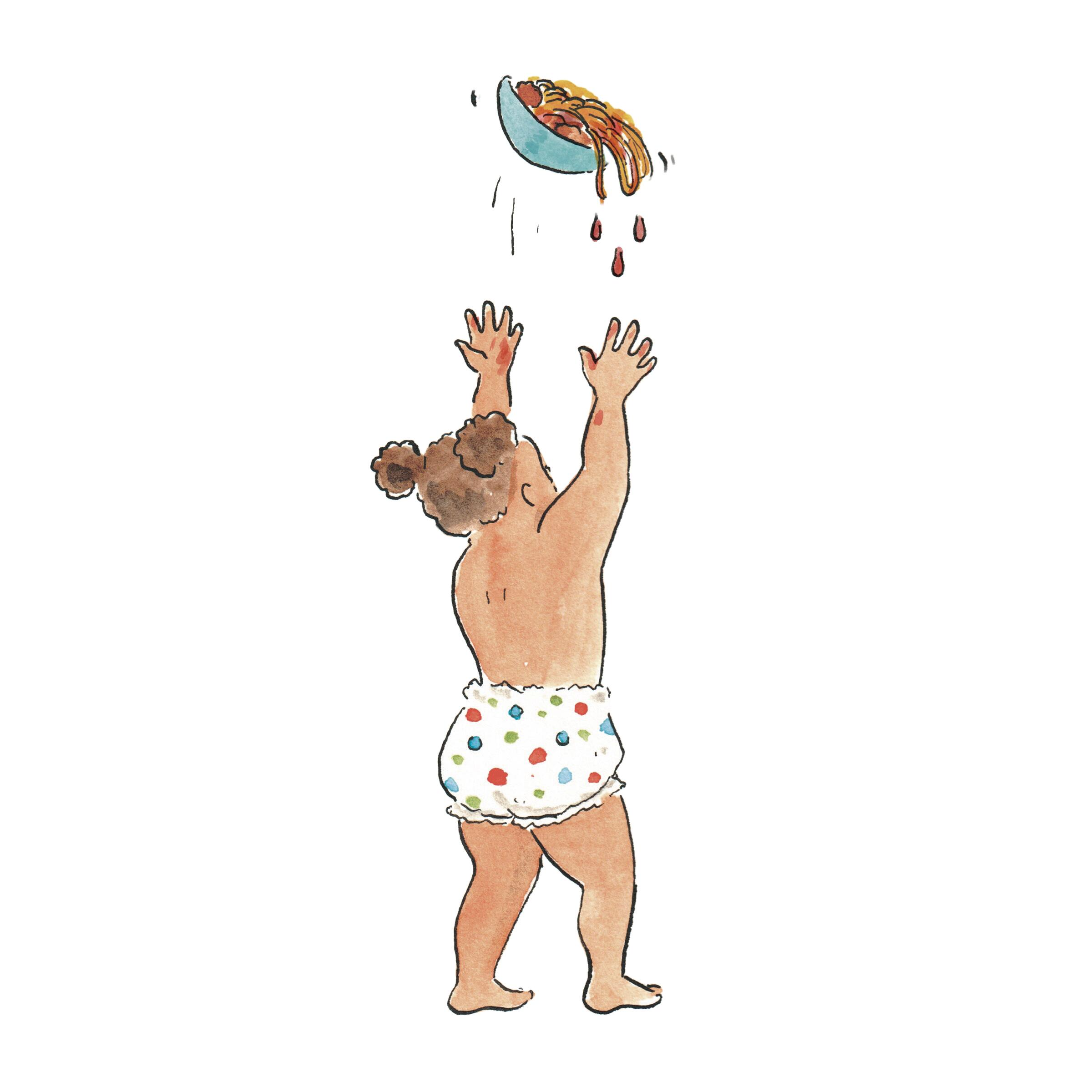
Aries and Leo possess a similar high-spirited zest for life, making them an excellent sibling match. These two will feed off each other’s wild ideas, such as throwing wet spaghetti at the ceiling, throwing wet spaghetti at each other’s faces, and just generally testing how the laws of physics apply to overcooked pasta. This enthusiastic pairing is sure to mean a home of laughter and hijinks, as well as one where the parents receive a large weekly wine delivery.
Preferred Music of the Aries Toddler
Anything upbeat and slightly unhinged will bring a grin to the Aries’ Nutella-smeared face. They may especially enjoy “John Jacob Jingleheimer Schmidt” (particularly when sung at the most manic speed possible), as well as AC/DC’s “Thunderstruck” when played at 200 decibels. Classic rock, dad rock, or really any music they can wildly run around to while throwing actual rocks. They may also make some music of their own, squeezing the life out of their toy accordion and playing many private concerts near Mommy’s head, preferably in the predawn light of morning.
Preferred Snacks of the Aries Toddler
Ideally, this will be something that can be easily consumed while attempting to roll off the hood of Uncle Eric’s Kia (e.g., a GoGosqueeZ, or whatever was in that Burger King cup they just found in the sandbox). The Aries isn’t too fussy about their food, so long as they aren’t chained for a prolonged period of time to the meal prison commonly known as their high chair. Some live to eat; others eat to live—but the Aries eats so that they may get back
Preferred Toys of the Aries Toddler
The little ram loves action and anything in motion. Pull-back race cars, the moving sidewalk at LaGuardia, and the garage door clicker may be counted among their favorite playthings. Mini-trampolines, inflatable punching bags, and the skateboard you keep discreetly rolling under the bed will also be coveted items, as will pencils, umbrellas, and anything with optimal eye-poking potential.
Ideal Pet for the Aries Toddler
The Aries can be rather forgetful, so the best pet will be one that can be fed every other day… or never. As the child is still learning “gentle touch,” their pet should be comfortable being gripped by the neck, chased at high speed, and launched into frigid bathwater. This makes the ideal pet for the Aries toddler to, in fact, be no pet at all… or perhaps a small betta fish kept high on a shelf and admired from a great distance.
Best Play Outing for the Aries Toddler
A playground or park is generally a good option for the active Aries. Just be sure to always have a large tube of Neosporin on hand, as well as several Band-Aids that do not feature the likeness of any cartoon characters they disdain. (They’d sooner bleed out than let you affix Moana to their flesh.) More sedate activities like children’s story hours are not recommended for the Aries toddler, unless you enjoy saying “Shhhhhh, listen” approximately 483 times a minute while an irritated librarian hisses Chicka Chicka Boom Boom in your general direction.
Best Halloween Costume for the Aries Toddler
Aries are often known for their trailblazing ways, so don’t be surprised if your confident little ram eschews the standard Elsa or Elmo garb and thinks a little more outside the box. In fact, that might be exactly what they want to wear: a box… with a pancake as a hat. And then tell everyone they are “a pumpkin bone.” While confusing, it is best to go along with their selection, as all attempts to coax them into anything resembling either a cute insect or fairy will only be met with fury and a set of mangled wire wings from Party City.
Preferred Screen Time of the Aries Toddler
Cartoons that are either fast-paced or slightly bananas will hold great appeal, making anything Minions-related a solid choice. Lovers of slapstick and physical humor, they may also enjoy reels featuring brides falling into swimming pools, children crying on ski lifts, and gender reveals that result in midsize explosions. Were the Aries put in charge of the Hollywood Foreign Press, all Golden Globes would be awarded to the video of Daddy gagging while changing their diaper… though a close runner-up might be the YouTube clip of a Ford F-150 rolling over a large bowl of Jell-O.
Best Reading Material for the Aries Toddler
Getting the Aries toddler to sit still for a story can at times feel on par with asking a badger to do your taxes: it is unlikely to go well and has a high probability of resulting in puncture wounds. But opting for books with absurdist humor might engage the creative Aries, making authors like Seuss and Sendak solid selections. The child may also enjoy flipping through the Bible, though their interest seems less spiritual in nature, and instead lies more in the thin, easily tearable pages. Be forewarned that if left unsupervised, they can completely shred the Old Testament in under two minutes.
Best Birthday Party for the Aries Toddler
The ideal birthday bash will be at an establishment that boasts a ball pit, bouncy castle, and/or trampoline—basically any place that features numerous fun ways to accidentally step on someone’s windpipe, as well as numerous opportunities to contract hand, foot, and mouth disease. There should be as many guests as you can cram into the space, and the Black Eyed Peas’ “I Gotta Feeling” should be played at a volume that makes Daddy quietly book a vasectomy while eating a slice of ice-cream cake.
Preferred Tantrum Style of the Aries Toddler
As one might expect from the theatrical, passionate Aries, their tantrums are likely to be full-bodied and full-throated, bringing numerous stares of reproach from your fellow Whole Foods shoppers. The impulsive Aries may be prone to the raking of things from shelves, as well as the raking of tiny fingernails over your ankles. Should they suddenly fall quiet mid-meltdown, parents should attempt to remove them from the public sphere as quickly as possible, as if removing a small, overalls-clad bomb from the scene. For silence merely means the child is gathering every bit of force and power they can summon from their wee lungs, and they will soon issue forth a wail that will make you rethink all of your life choices leading up to that moment, including dating that trombone player with the goatee in college.
by Story and Photos by Justin Hamel, The Waco Bridge
Urban minister Jimmy Dorrell bade farewell Sunday to his outdoor Waco congregation after baptizing a dozen people in the chilly waters of the Middle Bosque River.