Cowboy Who?
Shared posts


Five things to look for in Canada's election
Carney calls April 28th election, clarifies Canadians can’t just write “Fuck Trump”
OTTAWA – Prime Minister Mark Carney has called for a snap election to be held on April 28th, and has specified that Canadians will be required to choose an MP in their riding, as opposed to just writing in “SUCK MY BALLS TRUMP!” “We are facing the most significant crisis of our lifetimes because of […]
The post Carney calls April 28th election, clarifies Canadians can’t just write “Fuck Trump” appeared first on The Beaverton.
Heavyweight boxing legend George Foreman dies aged 76
Weather balloon launch cuts: An honest look at how it should impact forecasts
As we navigate the world right now, we have an obligation to keep our readers informed on the news of the day as it relates to weather forecasting. After all, if you are using this site and others for weather forecast information, you have an interest. But there’s a lot of news out there, and a lot of opinions masquerading as news. No matter your political leanings, the “zone” as it were is flooded and trying to piece together facts vs. stretched truths can be difficult in any ideology. So, periodically I think it helps to take a step back and assess a topic as realistically as possible. This is meant to be as unbiased a look as possible at one topic of note: Weather balloon launches being cut.
What is happening?
Due to staffing constraints, as a result of recent budget cuts and retirements, the National Weather Service has announced a series of suspensions involving weather balloon launches in recent weeks.
On February 27, it was announced that balloon launches would be suspended entirely at Kotzebue, Alaska due to staffing shortages. In early March, Albany, NY and Gray, Maine announced periodic disruptions in launches. Since March 7th, it appears that Gray has not missed any balloon launches through Saturday. Albany, however, has missed 14 of them, all during the morning launch cycle (12z).
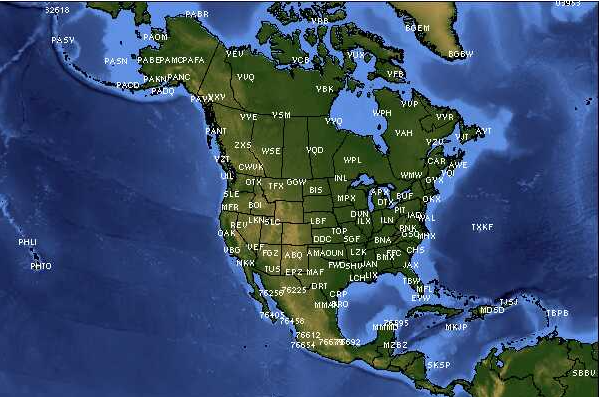
The kicker came on Thursday afternoon when it was announced that all balloon launches would be suspended in Omaha, NE and Rapid City, SD due to staffing shortages. Additionally, the balloon launches in Aberdeen, SD, Grand Junction, CO, Green Bay, WI, Gaylord, MI, North Platte, NE, and Riverton, WY would be reduced to once a day from twice a day.
What are weather balloons anyway?
In a normal time, weather balloons would be launched across the country and world twice per day right at about 8 AM ET and 8 PM ET (one hour earlier in winter), or what we call 12z and 00z. That’s Zulu time, or Noon and Midnight in Greenwich, England. Rather than explain the whole reasoning behind why we use Zulu time in meteorology, here’s a primer on everything you need to know. Weather balloons are launched around the world at the same time. It’s a unique collaboration and example of global cooperation in the sciences, something that has endured for many years.
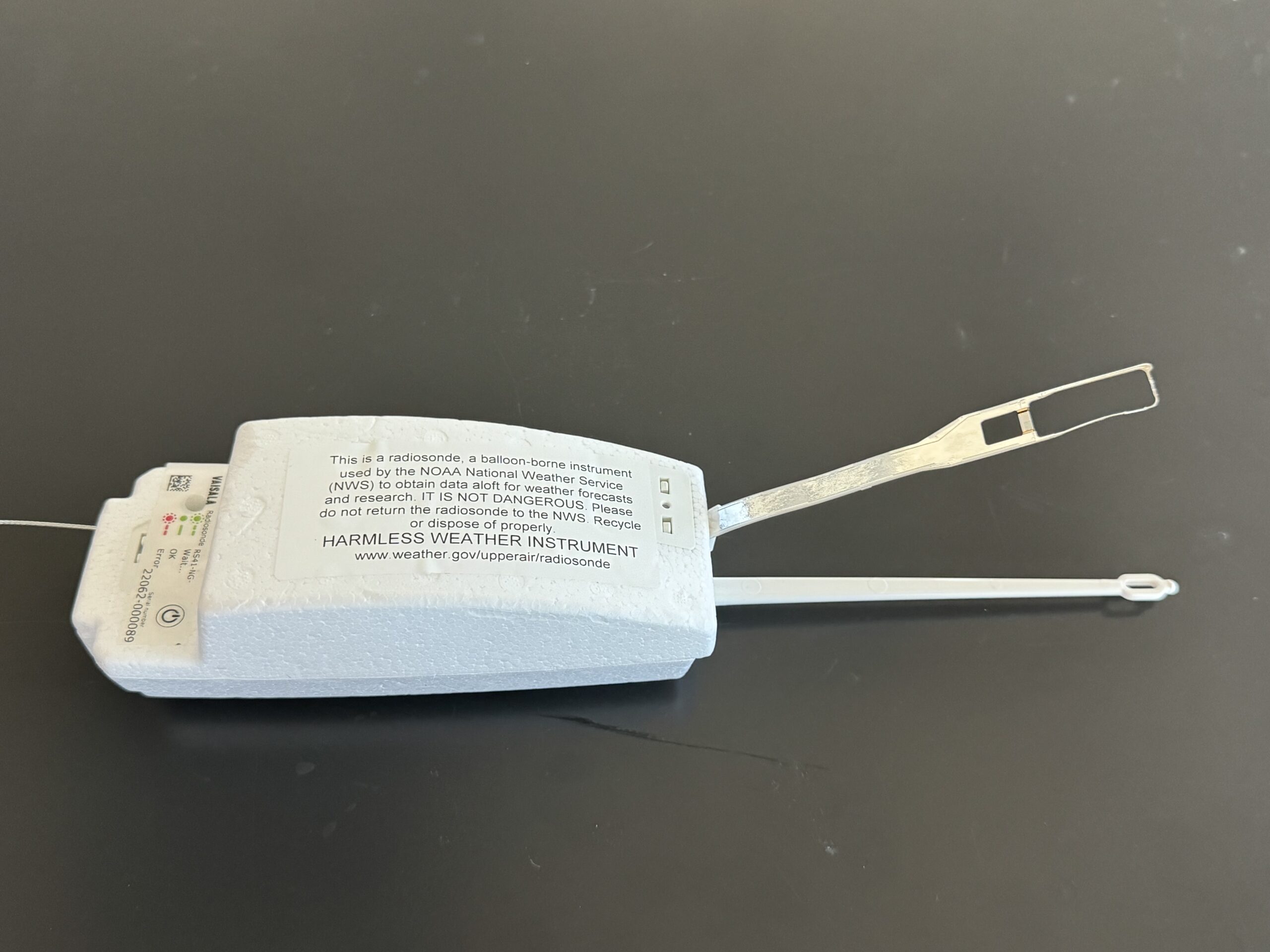
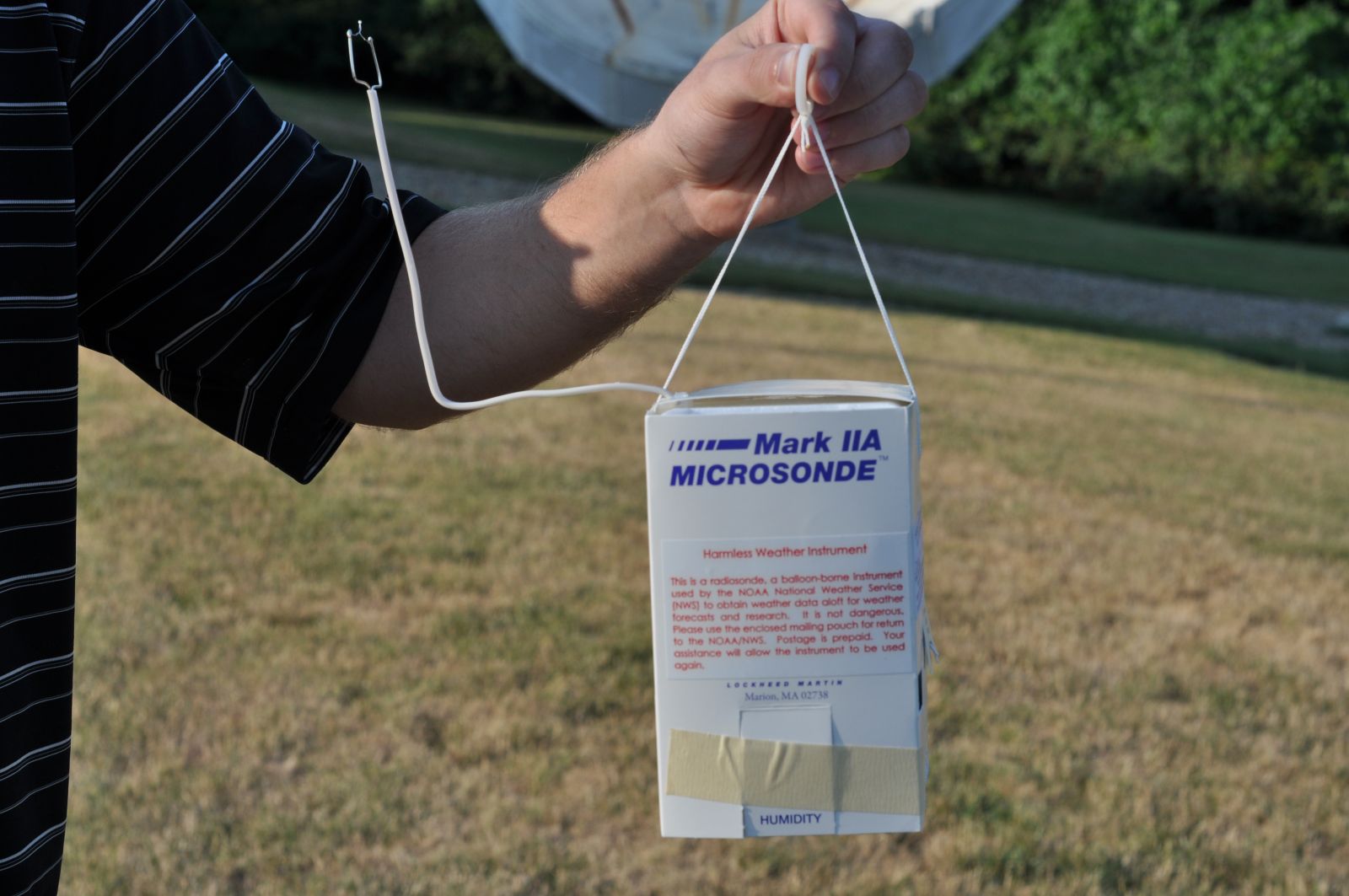
These weather balloons are loaded up with hydrogen or helium, soar into the sky, up to and beyond jet stream level, getting to a height of over 100,000 feet before they pop. Attached to the weather balloon is a tool known as a radiosonde, or sonde for short. This is basically a weather sensing device that measures all sorts of weather variables, like temperature, dewpoint, pressure, and more. Wind speed is usually derived from this based on GPS transmitting from the sonde. What goes up must come down, so when the balloon pops, that radiosonde falls from the sky. A parachute is attached to it, slowing its descent and ensuring no one gets plunked on the head by one. If you find a radiosonde, it should be clearly marked, and you can keep it, let the NWS know you found it, or dispose of it properly. In some instances, there may still be a way to mail it back to the NWS (postage and envelope included and prepaid).
What does the data from weather balloons do?
In order to run a weather model, you need an accurate snapshot of what we call the initial conditions. What is the weather at time = zero? That’s your initialization point. Not coincidentally, weather models are almost always run at 12z and 00z, to time in line with retrieving the data from these weather balloons. It’s a critically important input to almost all weather modeling we use. The data from balloon launches can be plotted on a chart called a sounding, which gives meteorologists a vertical profile of the atmosphere at a point. During severe weather season, we use these observations to understand the environment we are in, assess risks to model output, and make changes to our own forecasts. During winter, these observations are critical to knowing if a storm will produce snow, sleet, or freezing rain. Observations from soundings are important inputs for assessing turbulence that may impact air travel, marine weather, fire weather, and air pollution. Other than some tools on some aircraft that we utilize, the data from balloon launches is the only real good verification tool we have for understanding how the upper atmosphere is behaving.
Haven’t we lost weather balloon data before?
We typically lose out on a data point or two each day for various reasons when the balloons are launched. We’ve also been operating without a weather balloon launch in Chatham, MA for a few years because coastal erosion made the site too challenging and unsafe. Tallahassee, FL has been pausing balloon launches for almost a year now due to a helium shortage and inability to safely switch to hydrogen gas for launching the balloons. In Denver, balloon launches have been paused since 2022 due to the helium shortage as well.
Those are three sites though, spread out across the country. We are doubling or tripling the number of sites without launches now, many in critical areas upstream of significant weather.
Can’t satellites replace weather balloons?
Yes and no. On one hand, satellites today are capable of incredible observations that can rival weather balloons at times. And they also cover the globe constantly, which is important. That being said, satellites cannot completely replace balloon launches. Why? Because the radiosonde data those balloon launches give us basically acts as a verification metric for models in a way that satellites cannot. It also helps calibrate derived satellite data to ensure that what the satellite is seeing is recorded correctly.
But in general, satellites cannot yet replace weather balloons. They merely act to improve upon what weather balloons do. A study done in the middle part of the last decade found that wind observations improved rainfall forecasts by 30 percent. The one tool at that time that made the biggest difference in improving the forecast were radiosondes. Has this changed since then? Yes, almost certainly. Our satellites have better resolution, are capable of getting more data, and send data back more frequently. So certainly it’s improved some. But enough? That’s unclear.
An analysis done more recently on the value of dropsondes (the opposite of balloon launches; this time the sensor is dropped from an aircraft instead of launched from the ground) in forecasting west coast atmospheric rivers showed a marked improvement in forecasts when those targeted drops occur. Another study in 2017 showed that aircraft observations actually did a good job filling gaps in the upper air data network. Even with aircraft observations, there were mixed studies done in the wake of the COVID-19 reduction in air travel that suggested no impact could be detected above usual forecast error noise or that there was some regional degradation in model performance.
(NASA)
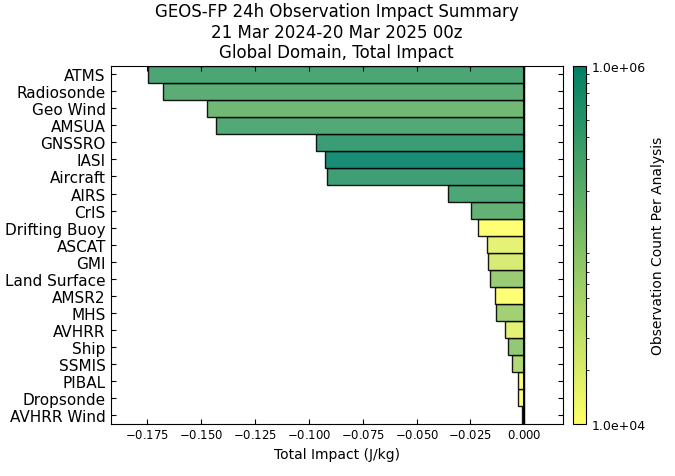
But to be quite honest, there have not been a whole lot of studies that I can find in recent years that assess how the new breed of satellites has (or has not) changed the value of upper air observations. The NASA GEOS model keeps a record of what data sources are of most impact to model verification with respect to 24 hour forecasts. Number two on the list? Radiosondes. This could be considered probably a loose comp to the GFS model, one of the major weather models used by meteorologists globally.
What’s the verdict?
In reality, the verdict in all this is to be determined, particularly statistically. Will it make a meaningful statistical difference in model accuracy? Over time, yes probably, but not in ways that most people will notice day to day.
However, based on 20 years of experience and a number of conversations about this with others in the field, there are some very real, very serious concerns beyond statistics. One thing is that the suspended weather balloon launches are occurring in relatively important areas for weather impacts downstream. A missed weather balloon launch in Omaha or Albany won’t impact the forecast in California. But what if a hurricane is coming? What if a severe weather event is coming? You’ll definitely see impacts to forecast quality during major, impactful events. At the very least, these launch suspensions will increase the noise to signal ratio with respect to forecasts.
In other words, there may be situations where you have a severe weather event expected to kickstart in one place but the lack of knowing the precise location of an upper air disturbance in the Rockies thanks to a suspended launch from Grand Junction, CO will lead to those storms forming 50 miles farther east than expected. In other words, losing this data increases the risk profile for more people in terms of knowing about weather, particularly high impact weather.
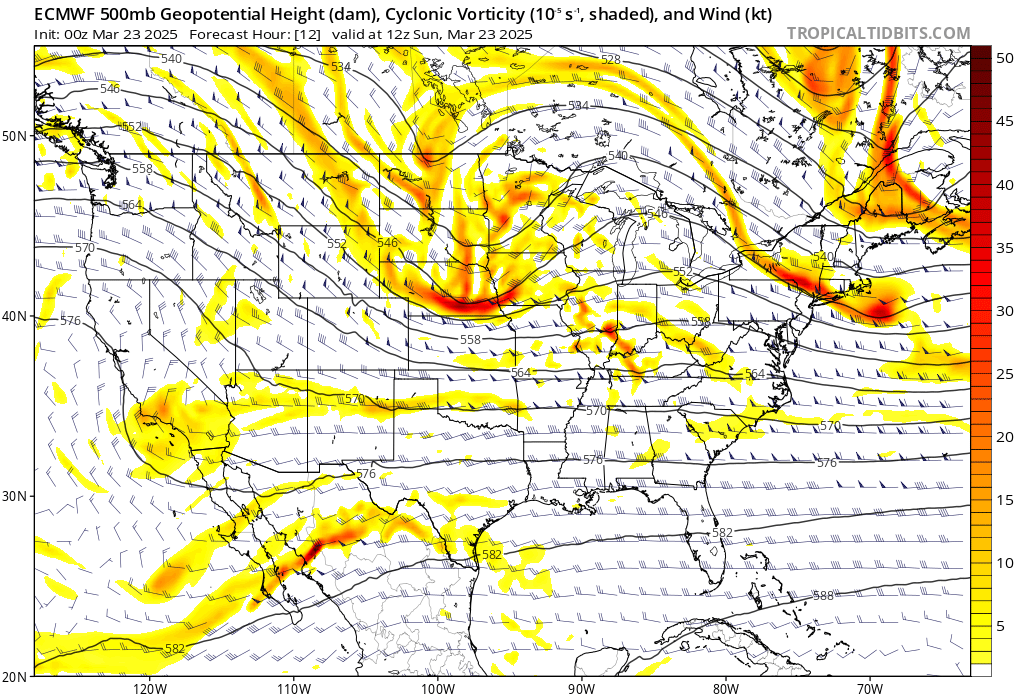
Let’s say we have a hurricane in the Gulf that is rapidly intensifying, and we are expecting it to turn north and northeast thanks to a strong upper air disturbance coming out of the Rockies, leading to landfall on the Alabama coast. What if the lack of upper air observations has led to that disturbance being misplaced by 75 miles. Now, instead of Alabama, the storm is heading toward New Orleans. Is this an extreme example? Honestly, I don’t think it is as extreme as you think. We often have timing and amplitude forecast issues with upper air disturbances during hurricane season, and the reality is that we may have to make some more frequent last second adjustments now that we didn’t have to in recent years. As a Gulf Coast resident, this is very concerning.
I don’t want to overstate things: Weather forecasts aren’t going to dramatically degrade day to day because we’ve reduced some balloon launches across the country. They will degrade, but the general public probably won’t notice much difference 90 percent of the time. But that 10 percent of the time? It’s not that the differences will be gigantic. But the impact of those differences? That could very well be gigantic, put more people in harm’s way, and increase the risk profile for an awful lot of people. That’s what this does: It increases the risk profile, it will lead to reduced weather forecast skill scores, and it may lead to an event that surprises a portion of the population that isn’t used to be surprised in the 2020s. To me, that makes the value of weather balloons very, very significant, and I find these cuts to be extremely troubling.
One addendum that I have edited to add: This is our current situation. It’s a static look at a fluid problem. Should further cuts in staffing lead to further suspensions in weather balloon launches, we will see this problem magnify more often and involve bigger misses. In other words, the impacts here may not be linear, and repeated increased loss of real-world observational data will lead to very significant degradation in weather model performance that may be noticed more often than described above.
Field Notes: A Huntsville & Houston Travelog
Author’s Note: This is the fourth in a series of articles about my travels related to a series of articles I am writing that are funded by the Andy Warhol Foundation’s Arts Writers Grant.
Last month, I traveled to Huntsville and Houston with a few different goals in mind. The Houston trip was directly related to a series I am working on about culturally specific institutions in Texas, but my day in Huntsville was centered around Sam Houston State University students. I spent a few hours speaking with MFA students about their Social Practice projects. The three-year program sees a remarkable range of students engaged with social practice in various ways. From exploring community-building through tattoo culture to building a food truck as a space to share creativity and culinary practice, it was invigorating to hear from students at various stages of the program speak about their practice and the concepts propelling their work.
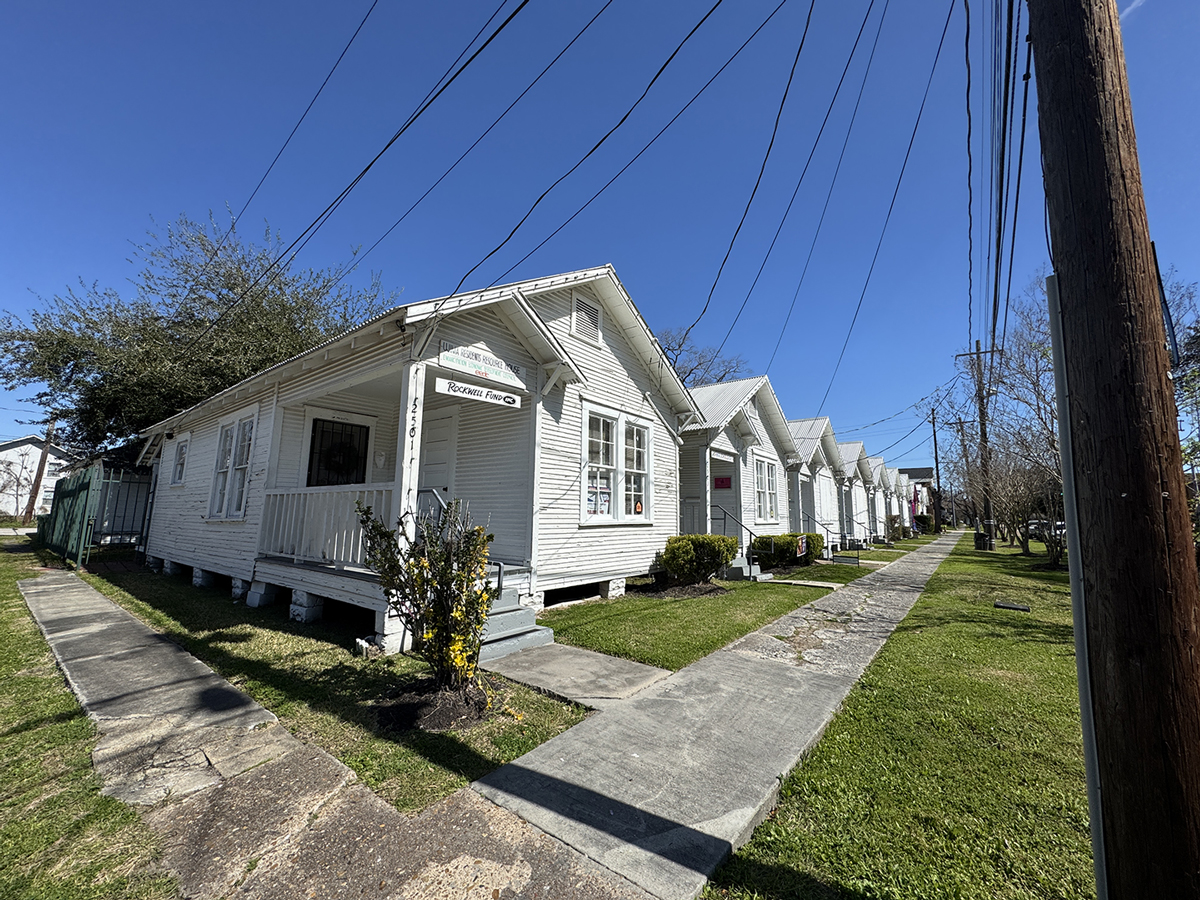
Project Row Houses, February 2025
The next day, I was off to Houston, with my main focus being to interview Danielle Burns Wilson, Executive Director at Project Row Houses. The interview was the first step in preparing to write about PRH, as part of a series about art spaces in Texas founded by artists of color to support communities of color. Established in 1993, PRH is one of the oldest still-running institutions of this kind in our state.
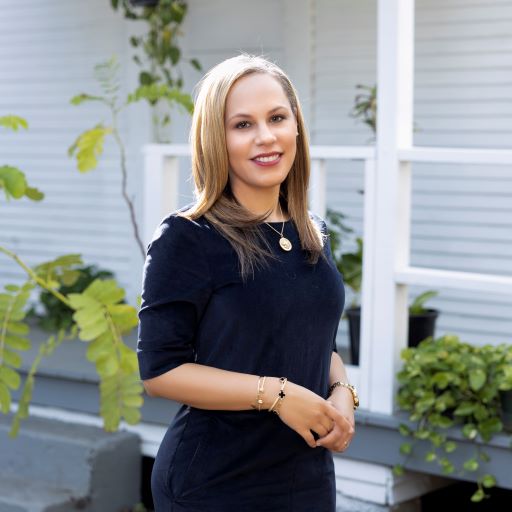
Danielle Burns Wilson. Photo: Emile C. Browne
Though Wilson was appointed Executive Director last year, her experience with the organization spans a much longer time period. Through our conversation, I learned how her early experiences attending programs and talks at PRH shaped her professional interests and goals. We spoke about the past, present, and future of the organization, and Wilson shared some of the successes and challenges PRH has faced. At the end of our time, Wilson suggested that I speak with Trinity Pasco-Stardust, the Community Engagement Coordinator, who was managing the front desk at the time.
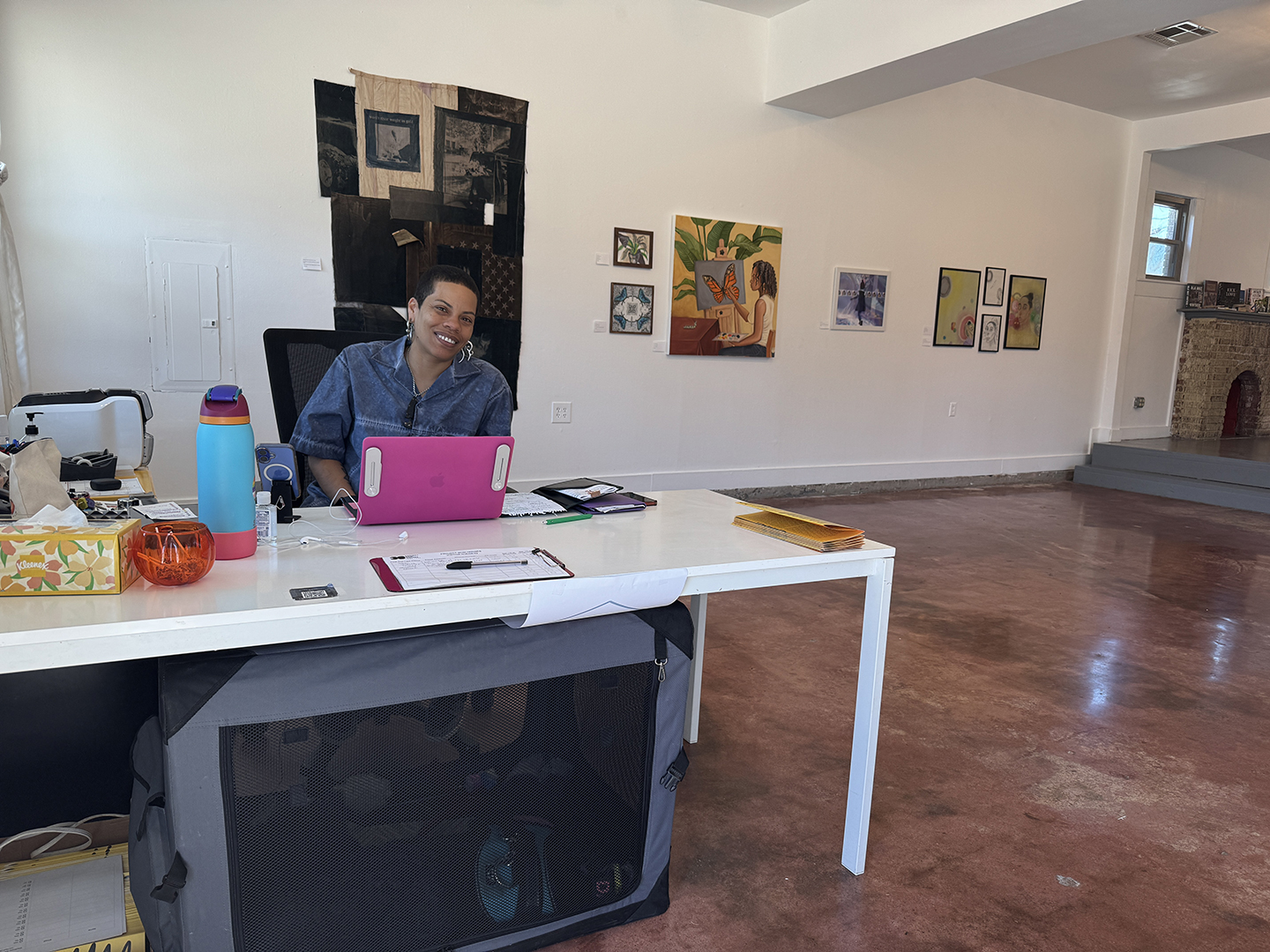
Trinity Pasco-Stardust
Pasco-Stardust shared her story of coming from New York City to Houston because of the opportunities available at PRH. She spoke about how the organization has been a major source of community over the years, and that she has played multiple roles at PRH, including as a tenant and working in various capacities. I plan to revisit PRH this summer and spend time in the archives, as well as attend events and speak with more community members.
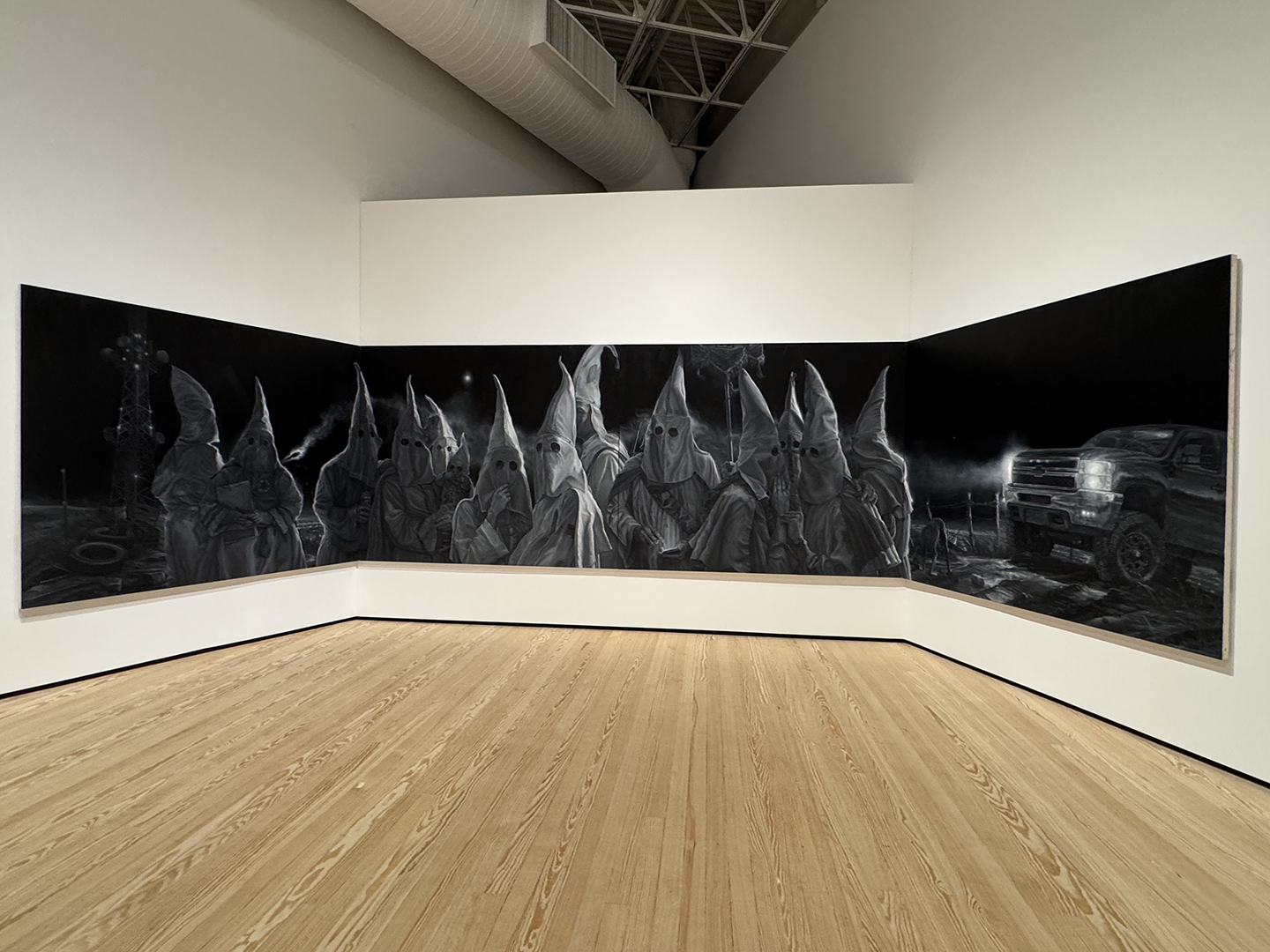
Vincent Valdez, “The City I and II”
Following my PRH visit, I made my way to the Contemporary Arts Museum Houston (CAMH) to see Vincent Valdez’s Just a Dream… While I had a chance to see Valdez’s People of the Sun (Grandma and Grandpa Santana) at the Smithsonian National Portrait Gallery’s The Outwin 2022: American Portraiture Today, I had never seen a solo show of his work before. His portraits filled both floors of the CAMH in a powerful way. Of course, the overtly political pieces, like paintings featuring the Supreme Court Justices, the Ku Klux Klan, and Presidents, were poignant given the state of the Union at the moment. But I also spent a fair amount of time considering his 2002 series Made Men.
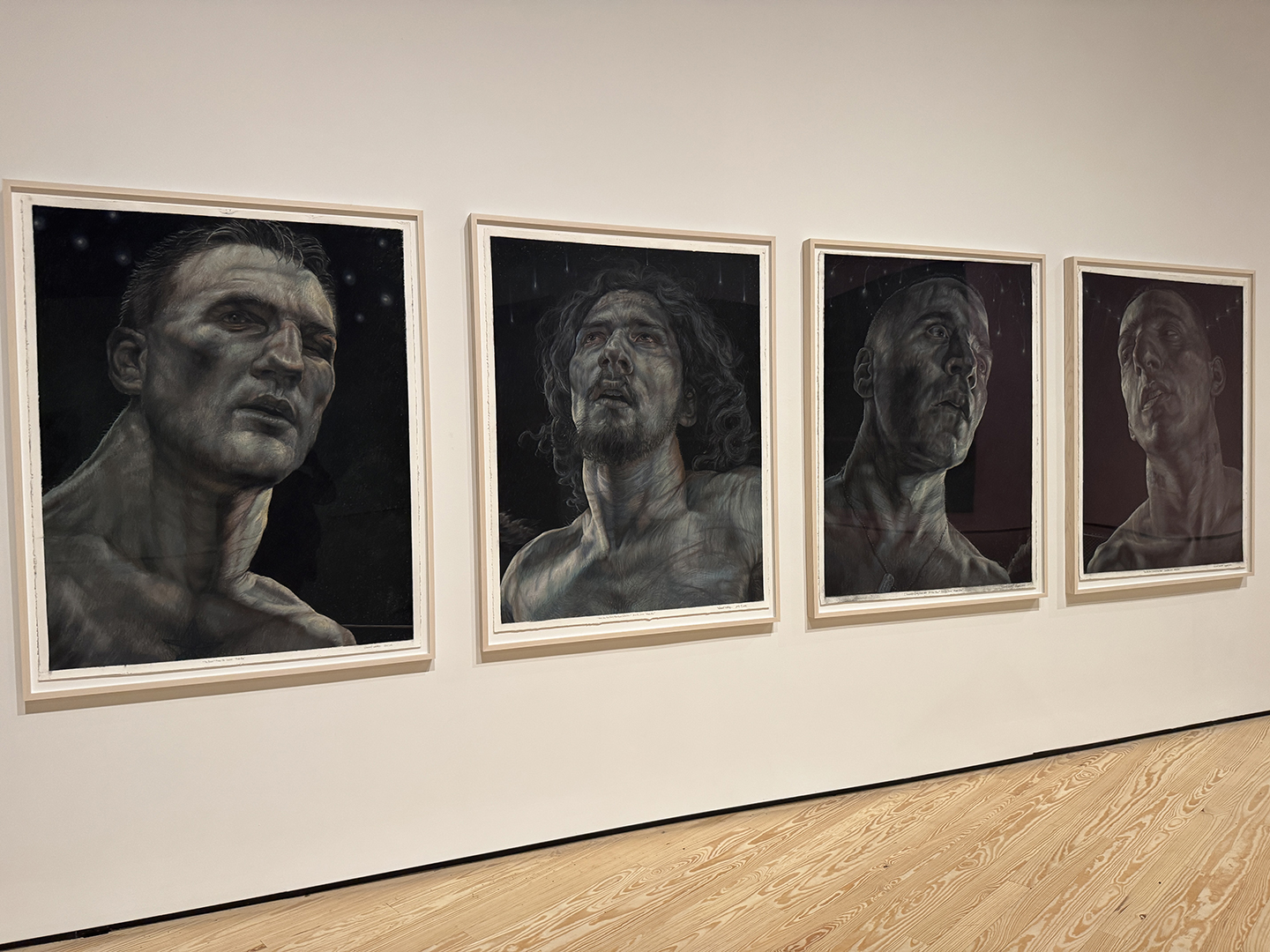
Vincent Valdez, “Made Men”
The services of four large pastel drawings on paper depict archetypes of masculinity — the boxer, the martyr, the soldier — alongside a contemporary image of a tattooed man. I suppose it struck a chord with me because I often think about how toxic masculinity affects men in our society. These pieces read as a starting point for the exhibition, but also for the cascading downfall of our patriarchal society. The pressures and expectations put on men to work tirelessly, to emote nothing other than anger, and to sacrifice, cannot be the bedrock of a healthy society. And across the show, we see the reality behind “the American dream” that it was never intended for everyone, that it is a fallacy.
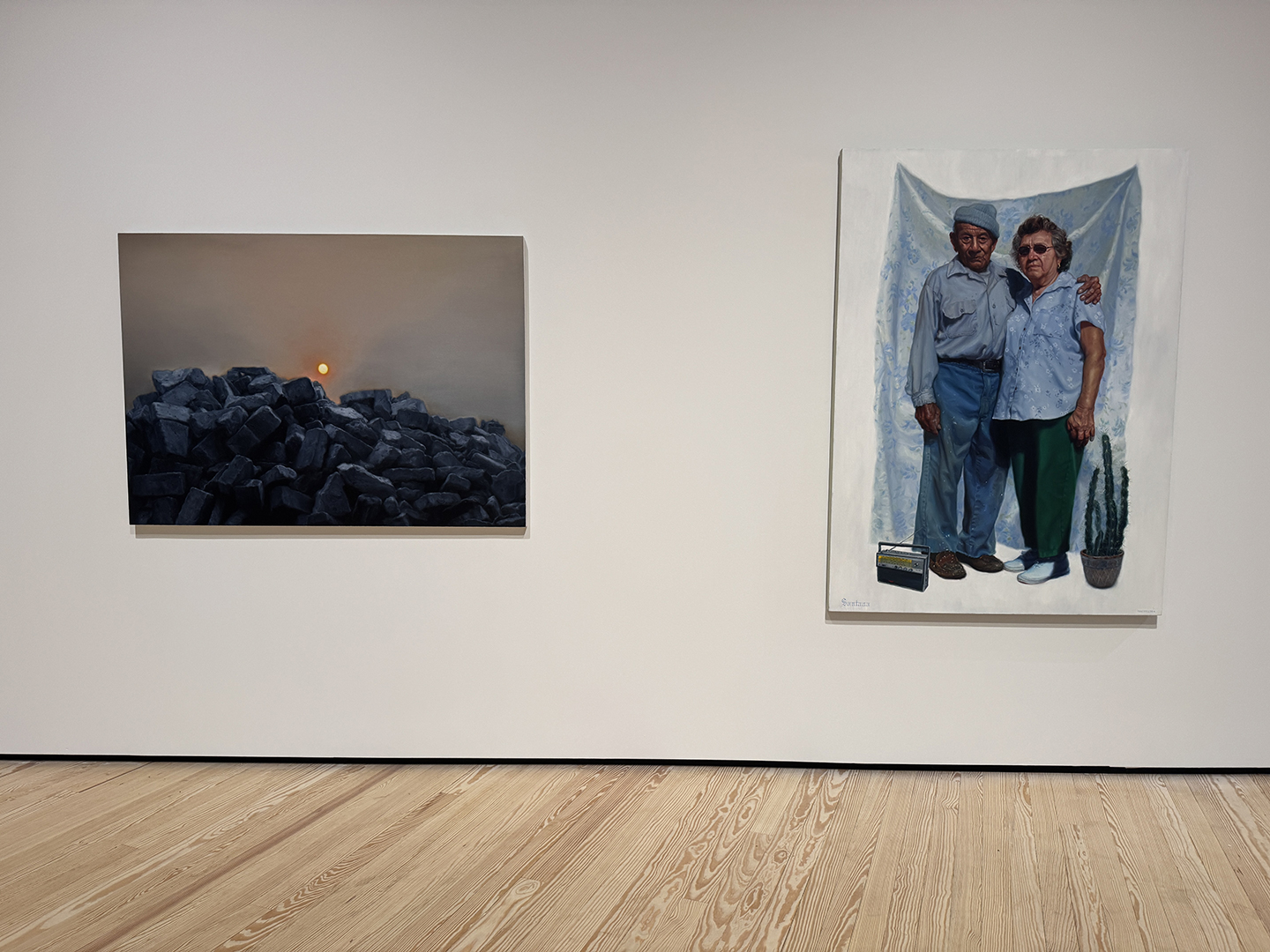
Vincent Valdez, “Rise” and “People of the Sun (Grandma & Grandpa Santana)”
Perhaps the most uplifting moment in the exhibition is a single wall that pairs a landscape painting of a sunrise over a pile of rocks or bricks alongside Valdez’s portrait of his grandparents. The bright sun rising over a dull heap of rubble is hopeful in and of itself, but with Valdez’s People of the Sun beside it, the works speak to love, equality, solidarity, devotion, and defiance.
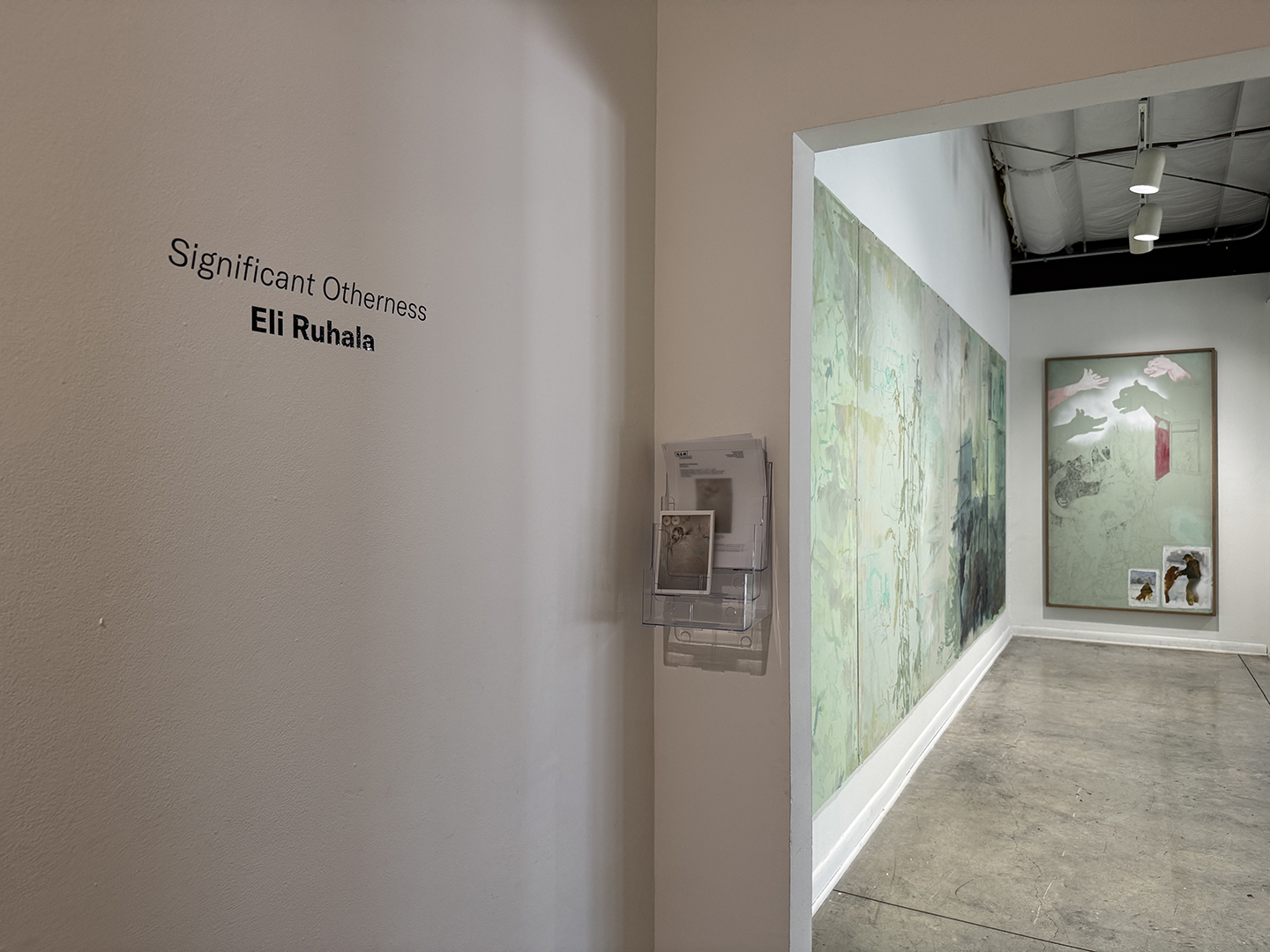
Installation view of “Eli Ruhala: Significant Otherness”
Another stop during my time in Houston was at Art League Houston. While all three shows were strong, I was taken by Eli Ruhala’s exhibition, Significant Otherness. Ruhala is currently based in my hometown of Fort Worth and is completing his MFA at Texas Christian University. All to say, I’ve seen Ruhala’s work in North Texas, including installations he created as part of Refract, the 2024 MFA candidacy exhibition, and the Dallas Contemporary’s (DC) Open University. Ruhala is clearly a talented painter, so it has been nice to watch his experiments with sculptural work. The installation at DC embraced painting quite a bit more than his earlier installation, where paintings were done on translucent material and filled some, but not all, of the structural spaces. In Open University, paintings made up the full walls of a much sturdier structure.
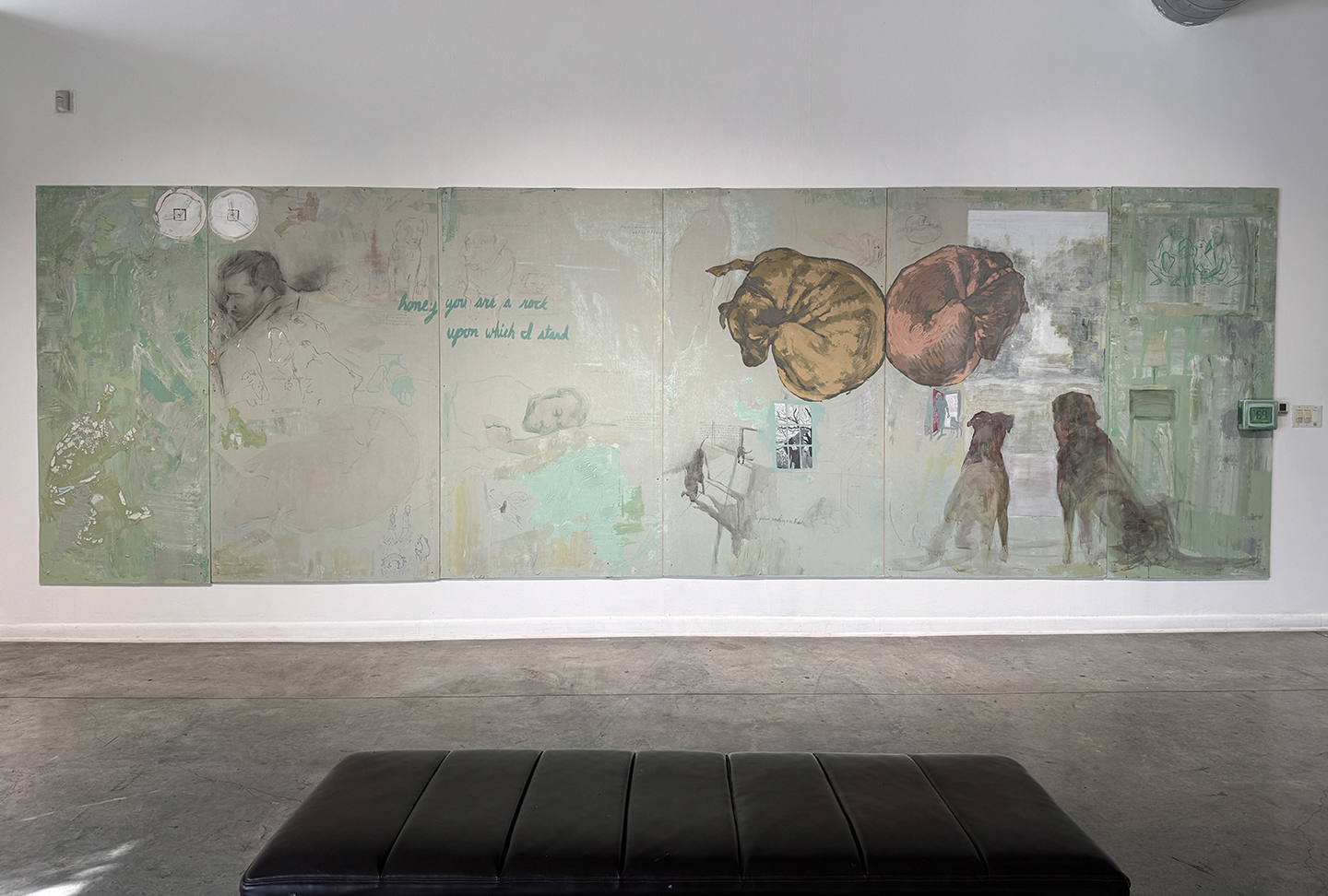
A work from “Eli Ruhala: Significant Otherness”
The works in Significant Otherness are more straightforward paintings, in the physical sense. They are large panels that are hung on walls, rather than being part of a sculptural installation. However, the pieces fill the small gallery creating an immersive effect. These paintings feel like sketches or dreams. The tall panels, constructed of drywall and lumber, contain imagery of people and pets, at various stages of completion. Some areas seem like preliminary studies, while others have been worked more densely. Some components feel like paintings of photographs, and others are like grasping at memories. Through the depictions of male figures in these intimate domestic scenes and the reference to Felix Gonzalez-Torres’ Untitled (Perfect Lovers), the work is a reflection on queer love. It is beautiful and vulnerable, it at once feels fragile and enduring.
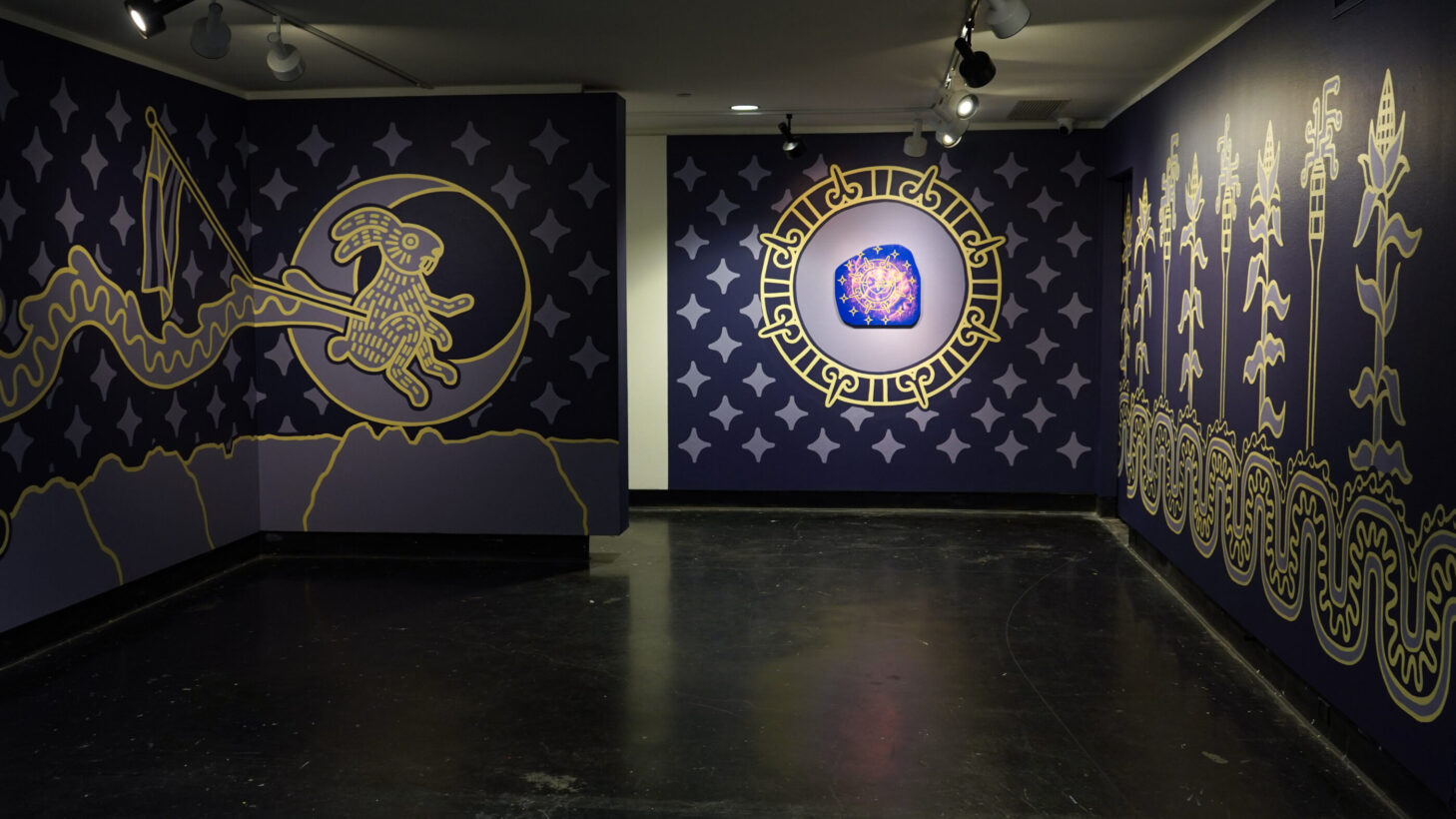
Installation view of “Dario S. Bucheli: Not Without a Cost.” Image courtesy of Lawndale
My last Houston stop was Lawndale for the opening night of Dario S. Bucheli’s Not Without a Cost, Farima Fooladi’s The Fever, and Carlos Vielma’s An Infinite Picnic. Bucheli’s site-specific painting draws on imagery of pre-colonial Mexican codices to consider the concept of self-sacrifice. However, it isn’t in the sense that we often think of, rather than sacrificing yourself for others, Bucheli’s mural is about the things we give up to have the life that we want. In speaking with the artist, he talked about other potential paths that laid ahead of him at earlier points in his life, but let go of to pursue being an artist and arts professional.
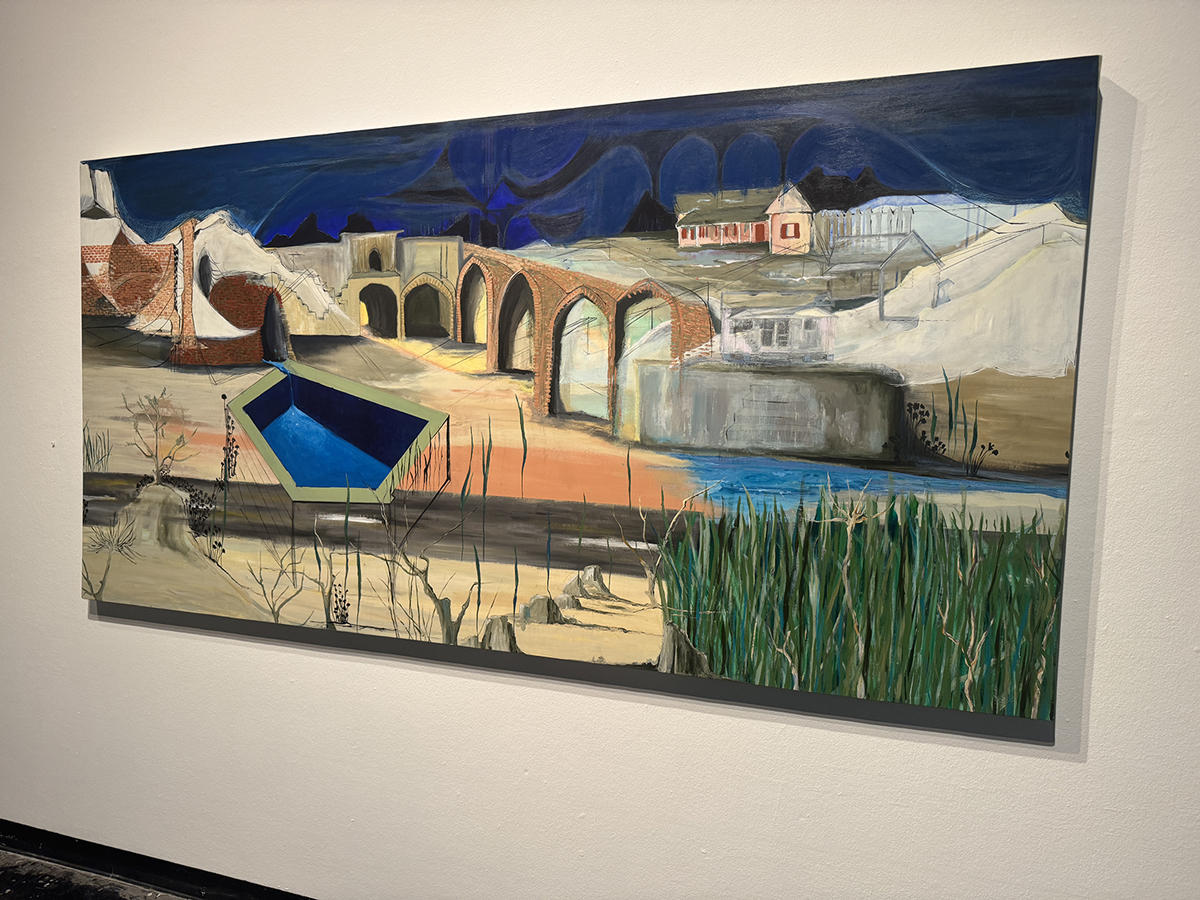
A work by Farima Fooladi
Fooladi’s The Fever presents a new series of paintings by the artist, created during her 2024 MacDowell residency in Peterborough, New Hampshire. The surreal paintings that combine mountainous landscapes, architectural forms, forests, and pools feel reminiscent of William Kentridge’s charcoal scenes. Like Kentridge’s work, there are familiar elements but overall the pieces have a post-apocalyptic sense, however, Fooladi’s paintings maintain an eerie quietness.
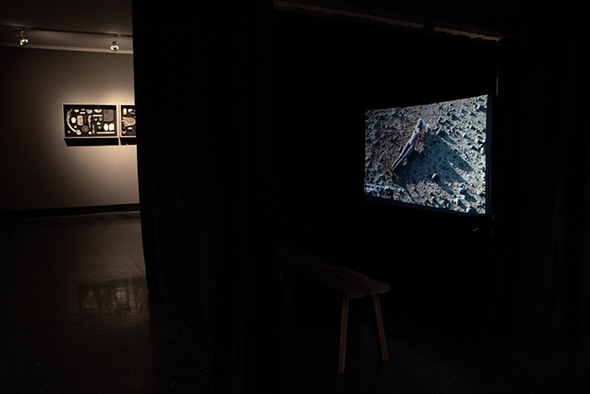
Carlos Vielma: An Infinite Picnic. Image courtesy of Lawndale.
In the upstairs gallery, Vielma’s video work is accompanied by found objects arranged in shadow boxes. Vielma told me that the video was inspired by the Mars rover’s last message. Received on June, 10, 2018, Opportunity’s last communication was “My battery is low and it’s getting dark.” The artist used this as a jumping off point for the creation of An Infinite Picnic. The words appear at the beginning of the film, which then goes into a dystopian story, adapted from Ray Bradbury’s The Million Year Picnic. Filmed in the ghost town of Marte (Mars) in the Mexican state of Coahuila de Zaragoza, the work is strange and compelling. As I watched the story unfold, I considered my place in the world and humanity’s place in the timeline of life on Earth. The display of found objects added to the reflective experience — contemplating the objects we leave behind and what sense, if any, might be made from it in the future.
The post Field Notes: A Huntsville & Houston Travelog appeared first on Glasstire.
As US measles cases continue to rise, so do vaccinations
Columbia University agrees to Trump administration's demand for mask ban
Inside Danielle Smith’s list of demands to Mark Carney
OTTAWA – Alberta Premier Danielle Smith has presented newly-sworn-in Prime Minister Mark Carney with a list of demands, along with promises to “blow up this entire country and myself so help me God I’ll do it!” The list of demands, printed entirely from letters cut out of SunCor “clean oil” pamphlets, was delivered to PM […]
The post Inside Danielle Smith’s list of demands to Mark Carney appeared first on The Beaverton.
Twelve hours of not thanking the bus driver and other atrocities witnessed during Canadian version of The Purge
OTTAWA – Reports are coming in that Canadians from coast to coast engaged in horrifying acts of rudeness, thoughtlessness, and impoliteness during this year’s Purge Day: Canadian Edition. “The famously self-effacing spirit of our country doesn’t just happen,” said Emmett Barwick, Professor of Sociology at Memorial University of Newfoundland. “We need a day to blow […]
The post Twelve hours of not thanking the bus driver and other atrocities witnessed during Canadian version of The Purge appeared first on The Beaverton.
Three killed and 15 injured in New Mexico mass shooting
Saturday Morning Breakfast Cereal - Child
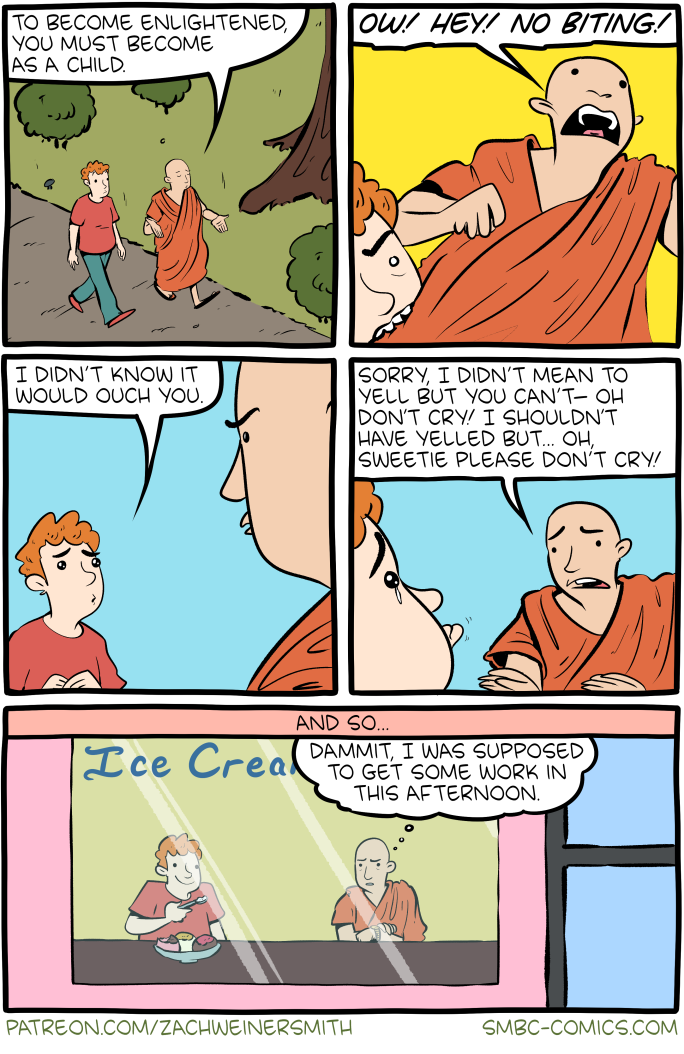
Click here to go see the bonus panel!
Hovertext:
Ohh, you meant a romanticized well-behaved child in a permanent state of the kind of wonder actual children achieve three or four times a year.
Today's News:
The CIDR House Rules
Hello AWS adventurer, and welcome back to Chapter 3! So far we have learned about VPCs, internet gateways, and subnets. We have learned that a VPC is our own private network on AWS. We have learned that we need to create instances inside subnets. And finally, we have learned that to connect our servers to the internet, we need to connect our subnet to an internet gateway.

In order to connect our subnet to an internet gateway, we need to use a route table. And to use a route table, we need to know about CIDR notation. So this chapter is about CIDR notation.
What is CIDR notation? Well, to recap, this is an IP address
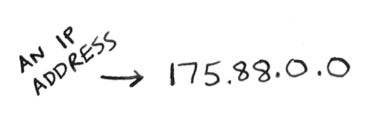
Instead of a single address, CIDR notation lets you specify a range of IP addresses.
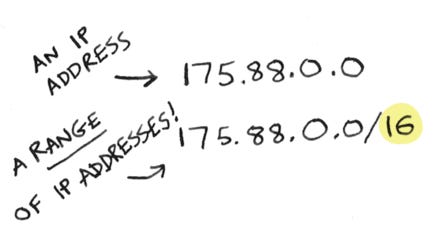
This particular notation is equivalent to saying

Let's dig into what this notation means. In an IP address, you have four numbers. Each number is 8 bits, so it can be a number from 0 to 255
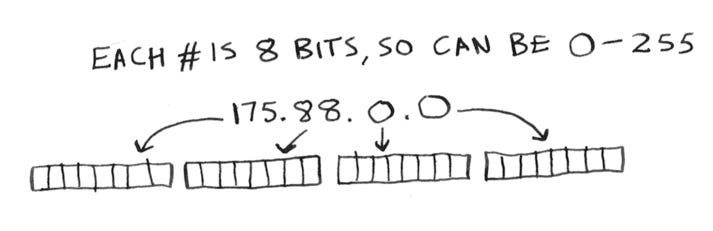
Lets look at the CIDR range 175.88.0.0/16. The 16 means the first 16 bits are fixed, which means the last 16 bits can change.
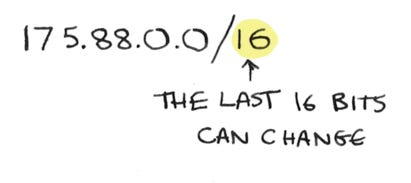
You can equivalently say this as the last two numbers can change,

or replace the last two numbers with x's,
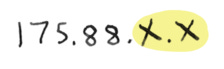
or say this range
All of those are the same.
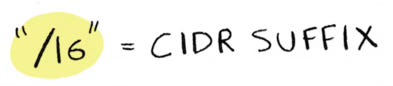
That /16 is called a CIDR suffix.
Here's another example
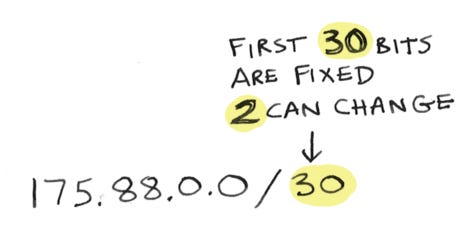
This is a /30, so the first 30 bits are fixed, and the last two can change. Note that it's convention that the numbers that can change are written as zeros, but you don't need to.
And, of course, when using CIDR notation, the last number can be a zero as well
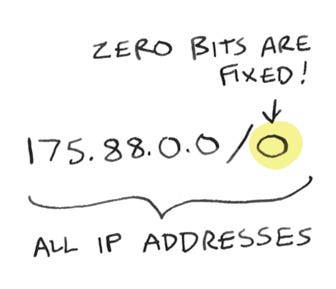
In that case, we're talking about all IP addresses. This is more commonly written like this
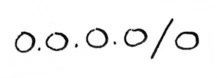
You may see this notation in a route table. For example, if you have a route table where a connection to any IP address gets routed to an internet gateway, you would write it like that
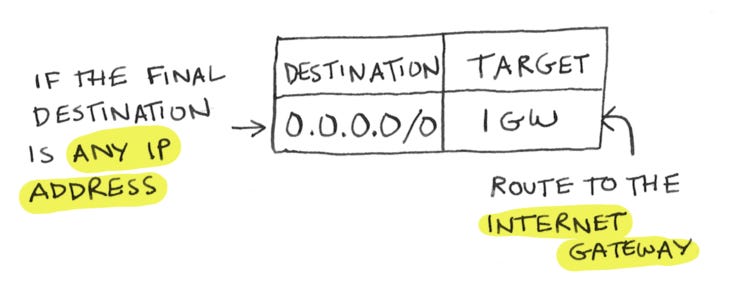
(We'll talk about route tables in the next chapter, so don't worry if you don't understand this image).
VPC CIDR Ranges
BTW, each VPC you create will have a CIDR range. That means it's assigned a range of IP addresses, and the resources within that VPC have IP addresses that are somewhere in that range. For example, say the range for this VPC is 172.98.0.1 to 172.98.255.254. Any resource in this VPC will have an IP address somewhere in that range. That means that every resource in this VPC will have an IP address that starts with 172.98.
Subnets have their own CIDR ranges, and since each subnet is inside a VPC, its CIDR range is within the VPC's CIDR range.
For example:
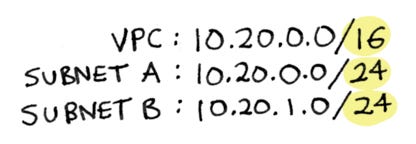
Notice the /24 is a smaller range than the /16, even though the number is bigger.
That's all there is to it! Explanations for CIDR notation can get complicated, but at its heart, we just use it to specify a range of IP addresses.
In the next chapter, we will learn more about route tables. We’re about halfway through our journey, at the end of which, we will be able to connect an EC2 instance to the internet. Yes, it’s a long journey. But I'm glad to be with you, Samwise Gamgee.
Summary
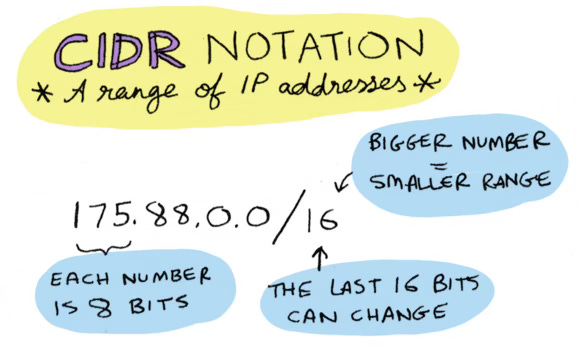
CIDR notation lets you specify a range of IP addresses.
Each number is 8 bits.
The bigger the suffix, the smaller the range.

Thanks for reading DuckTyped! Subscribe for free to receive new posts and support my work.
Judge in deportations case says government lawyers 'disrespectful'
Trump revoking protections for Cubans, Haitians and other migrants
machine box
machine box
...
![[img]:soxsre](https://analognowhere.com/_/soxsre/soxsre.png)
a person in a box with a phone, cat5 cable and a porcelain elephant
https://analognowhere.com/_/soxsre
George Foreman, the fearsome heavyweight from Houston who became a beloved champion, dies at 76
the computer can't
the computer can't
can't what?
![[img]:ghoote](https://analognowhere.com/_/ghoote/ghoote.png)
Person holding a rabbit. A computer wants to touch the rabbit.
https://analognowhere.com/_/ghoote
Trump revoking protections for 530,000 Cubans, Haitians and other migrants
Heavyweight boxing legend George Foreman dies aged 76
FAA temporarily halts flights arriving at Austin’s airport from Houston and Dallas
Three Houston-area bridges identified for vulnerabilities after Francis Scott Key Bridge collapse
Montgomery County deputy indicted, terminated in connection to crash that killed fellow deputy
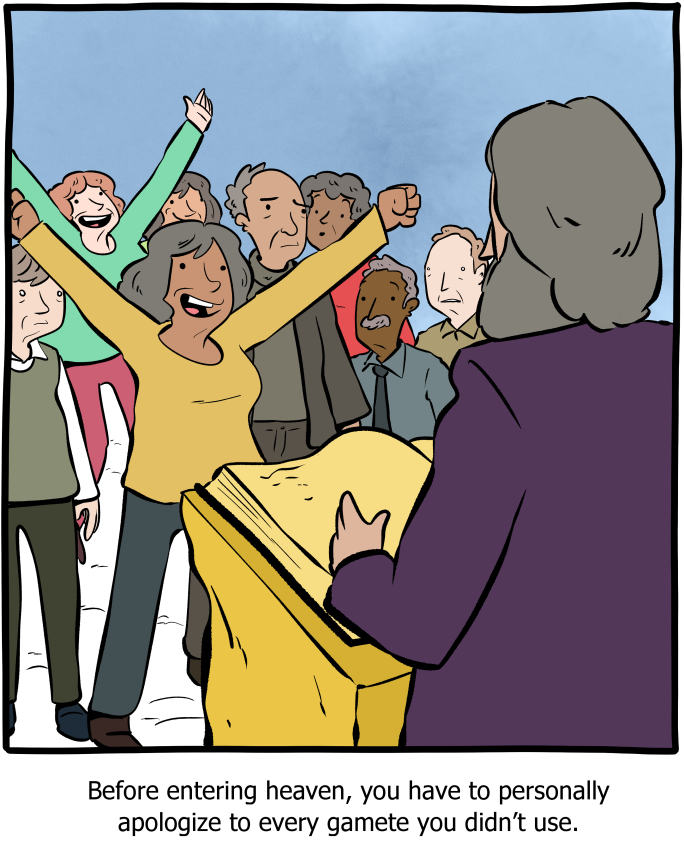
Saturday Morning Breakfast Cereal - Apologize

Experts Recommend Using Hunger As Egg Substitute
WASHINGTON—In the wake of soaring egg prices and shortages nationwide, food experts from the U.S. Department of Agriculture released new guidelines Friday recommending the use of hunger as an appropriate egg substitute. “Whether used as a binder in baked goods or on its own as a savory breakfast, not eating can be substituted for eggs in most recipes,” said a USDA spokesperson, citing the practice as a popular method of food preparation that dates back to the Great Depression, when many Americans had nothing on hand in the pantry, making hunger a practical alternative for many meals. “In the finished product, you’ll hardly notice a difference between the pangs of starvation and the pleasant feeling of satiation that comes from necessary, balanced nutrition. It’s also vegan, cost-effective, and much lower in cholesterol compared to a typical egg-based dish. Note that two hours of a painfully empty stomach is roughly equal to one egg, though, so you’ll likely need to suffer at a two-to-one ratio per lack of egg.” USDA officials added that many people found imagining eating an egg far more flavorful than substituting with egg whites.
The post Experts Recommend Using Hunger As Egg Substitute appeared first on The Onion.
Israel Ranked 8th Happiest Country
Israel remains in the top 10 list of happiest countries in the world, ranking eighth according to an annual global survey, despite the ongoing wars in Gaza and Lebanon. What do you think?

“And isn’t being happy the ultimate land annexation?”
Jessica Moschini, Garlic Mincer

“When you love what you do, joy follows.”
Bobby Glowe, Necklace Detangler

“I’d hate to know the atrocities the happier countries are committing.”
Neil Cornish, Pool Filler
The post Israel Ranked 8th Happiest Country appeared first on The Onion.