
Shared posts
20 May 13:36
Eating on Airplanes
by Mike Dang
AmberSurprisingly fascinating!
by Mike Dang

I flew on American Airlines during a recent trip and decided to order something to eat. The flight attendant said I could choose between fruit and cheese, a caesar salad, and a chicken sandwich, and I chose the sandwich, which she handed to me after swiping my credit card. The sandwich was actually a wrap filled with chicken in some kind of mayonnaise—not particularly tasty, but I ate it and wasn’t hungry for the rest of the flight.
Why is airplane food often so bad?
Our pal Julie Beck looks into the history of food served on airplanes (multi-course meals used to be served with items that included prime rib and lobster), and why airplane food isn’t as good as it used to be. As it turns out, the mayonnaise in that chicken wrap was there with a purpose:
Today’s planes, which reach altitudes of 35,000 feet or more, are pressurized so you only feel like you’re about 6,000 to 8,000 feet above sea level. This helps keep you, you know, breathing at those high altitudes, but it also numbs your taste buds, making food taste blander. Older aircraft didn’t fly as high, meaning the prime cuts of steak being served on those early flights tasted more like they would have on the ground.
Other aspects of the airplane environment make it less than gastronomically ideal—cabin humidity is typically lower than 20 percent (as opposed to the 30 percent or more that is normal in homes), which can dry out your nose, weakening your sense of smell. And smell is inextricably linked to taste. (The dryness of the cabin makes you thirsty, too.) Also, the air in the cabin is recycled about every two to three minutes. That, plus air conditioning, can dry up and cool down food very quickly, according to de Syon.
“If you were to serve a nice breast of chicken, which you can do on board, within a minute or two, the chicken would be like sawdust,” he says.
The solution is in the sauce.
It’s all very fascinating.
Okay, now someone explain hospital food next.
Photo: Rolling Okie
2 Comments
19 May 20:53
Telling Stories About Appalachia: An Interview With Adam Booth About Poverty Culture and Storytelling
by Diana Clarke
AmberI was friends with Adam in college, he's still one if the coolest people I know!
by Diana Clarke

Adam Booth is a native Appalachian and professional storyteller who teaches Appalachian Studies at Shepherd University in West Virginia’s Eastern Panhandle. This spring, I saw him speak at a session on new Appalachian stereotypes at Marshall University, where he discussed moving away from the pop-cultural barefoot-and-pregnant image, and into a reclamation of traditional practices and crafts like canning, foraging, square dancing, and quilting. Booth characterized the young people in their 20s and 30s who are doing much of this reclaiming as “Super Appalachians” who make themselves vessels for their cultural heritage. Immediately I knew who he was describing—and they reminded me of people I know in Brooklyn. I started thinking about the rising popularity of old-time culture in both urban and rural areas across the United States, and got in touch. We spoke by phone about Appalachian identity, the fetish for poverty culture, the popularity of story slams, and the coal economy.
I was really excited when I heard your talk because I just moved from New York City to Pocahontas County, West Virginia last fall. It’s been a really interesting experience, just to be living here, and to be part of the culture that is both totally American and completely unlike anything I grew up with. So that got me thinking about Appalachia, and even little things like—the bar I used to live next to in Manhattan serves their cocktails in mason jars and of course that’s a very hip, cool thing to do now.
Of course, right. Mason jars, and then you go to the [Union] Square Farmers’ Market and ramps are like $15 a pound.
Oh my god, I know! People here don’t believe me when I tell them that [Ed: Ramps are native to the Appalachian region, and are so prolific here that they sell for $2-5 a pound]…so I was wondering if you could just start by giving a brief overview of yourself and what you do.
I grew up on the far western side of West Virginia, and now I live on the far eastern side. I am a professional storyteller, which for me includes my area of expertise, or at least what’s becoming my area of expertise—my walk as a contemporary Appalachian. It might sound a little self-centered to say that I am my own area of expertise, but actually it’s something that people are really intrigued by, especially because I moved away from Appalachia and then made a conscious decision to come back, and turned my energies towards looking at what Appalachia has been and what it is today, particularly through story.
That’s a really hard thing, to embrace an identity and have yourself stand for it. Could you speak to that a little bit?
Yeah. So how did I get to this? Well, my college and my graduate work is in music. And the critical theory I studied, that was crucial in showing me that outsiders can have a really interesting and powerful spin on the way people perceive the cultural products of a particular group of people. That being stated, all the while I was working on storytelling just as a hobby, coming back to West Virginia and competing and doing some folklife work. Initially, I was just looking at storytelling culture, and maybe how I could make that a career, especially with the music I was doing. But I realized that a lot of what people advertise as being Appalachian—like if you hear of an Appalachian festival, an Appalachian movie, Appalachian foods—it was all Appalachia from 400 years ago through like 60 years ago. It wasn’t a contemporary Appalachia. Which was when I realized, as a young, contemporary person from Appalachia who now has some educational training in the research process, why not try to take those efforts and see where we’ve come from, but really focus them on where we are now, including myself as someone who is a contemporary Appalachian creative?
Where do you think that fixation on the past comes from in Appalachian storytelling heritage?
Storytelling is an interesting art form in that orature is always changing, unlike literature, where, once a work is recorded, it’s always going to be the same. Orature is different. Let’s take a folktale like “Cap-o’-Rushes.” That tale is going to be a little bit different every time it’s told, especially once you get the generational tellings in. Three generations from now that story is going to be very different, especially if it remains in the orature. Folks in the 20th Century started coming around to collect remnants of the past, and the volumes that were produced from that have become really good resources, but they’re also period resources, you know? They let us know what storytelling and orature was like at that time. But when you pause a text like that—just because we think literarily these days—it’s going to say that what’s collected in this particular book or that particular book is what orature is. Even though time moves on, we rely on the past for our storytelling traditions.
Another part of it is that a lot of Appalachian tradition and culture was for a very long time like tradition and culture always was: someone older taught it to you. Then when you were old enough to hob yours as a trade, you taught it to someone else. And that was always the way it was for as long as humans have known it up until the post-World War period, or maybe if we want to be a little more generous, once we get into radio. Once media gets into the way that we transmit information from person to person. So because Appalachia was for a number of reasons—well, had a harder time keeping up with the times as United States society changed, as it industrialized, modernized in the 1940s, 1950s, 1960s—those old methods were preserved in Appalachia, at least for another generation or two. So storytelling is just part of these wider art forms in Appalachia that always look to the past.
What do you think that has to do, if anything, with the rise of broadly American, non-regional storytelling programs? Think about This American Life. Think about The Moth, which has these installations in big cities all over the country.
Well you know, I think when a lot of the United States started to embrace convenience and technology in the mid-twentieth century, people didn’t share stories with each other like they had before. They weren’t sitting around collectively working on a quilt, or making apple butter all day, or canning things for the winter. And so the communal times that people had always up until then, they didn’t have anymore. And when you lose that you lose a lot of your tradition and your culture, and thank goodness some people have come along and seen that void and said let’s start telling stories again. If you want to think sociologically, a program like This American Life fills that gap for people who didn’t grow up hearing stories or telling stories or being part of a storytelling culture. Appalachia retained that, at least a lot longer than the rest of the United States.
These contemporary metropolitan storytelling traditions often require money. In my mind it’s one more iteration of the way industrialization and technological dependence forces us to merchandize and commodify really basic things.
Well, I’m on the fence to be honest. As a storyteller I grew up with one foot in the oral tradition. I spent a lot of time as a kid with very old people in my family who just talked and told stories about all kinds of things. Because I have that background, and I now try to make my living as a storyteller and want to be paid for it, at the same time I also produce a storytelling series and need to pay the storytellers I bring in for that—see, my perspective has changed about this in the last year. A lot of people within my circle in this mid-Atlantic area, they have storytelling events but they don’t charge for them. It’s like a suggested $10 donation, but it’s not required.
Now here’s what I’ve noticed: At the one that I run, you have to buy a ticket to come into it. I have seen the audience at the one I run grow and grow. And I’m sure it’s not just because of the admission I charge, but I have noticed that the folks who come to this event, they take the art very seriously because they’ve paid for it. They research the artists beforehand, they want to buy the merchandise afterwards, and they also stay and talk. There’s a sense of reverence for the storyteller who’s up there, and it’s really, really interesting. My friends who say, well, there’s no cost and you can donate something for it, they might have five people who show up in the audience, and what that means is that they can’t pay the storyteller what they’re worth for their art, if indeed it is an artful storyteller.
Up until last year, I would have said “Storytelling is for everyone! Everyone needs stories!” And we shouldn’t be paying for it—it’s a folk art. But it’s an art form, and there’s a lot of people who spend a lot of time crafting stories and trying to communicate messages with their stories. Hundreds of years ago, the same thing was happening with music. Music is still a folk art, but I pay now to go to a contra dance and hear the band, I pay to go to a folk concert, why would I not pay to hear some storytelling? Even if the person is talking about contemporary issues, or their own life, it’s still a folk art. What’s happening today is going to be part of someone else’s past. It’s their history and their folklore. It’s at the point right now where I think it’s important to pay for it. Which is a funny concept because the people I learned from would never, ever have accepted money for talking.
That makes a lot of sense, as a writer who puts things on the internet.
Can I add one more thing to that? One thing that I really like about paying to see storytelling, and also paying storytellers, most of the storytelling circuits that are in the United States, whether that’s the festival circuit or the slam circuit, most of them are not industrialized, which means when we’re paying the artists, we’re actually paying the artists. We’re not paying some giant conglomerate that then gives one half of one percent to the artists. You’re actually paying the storyteller to do what they do.
In arts fields that I’ve worked in, there’s an expectation that you should put in time because you love something in a way that idealizes the art while ignoring the fact that the people who make it need to live and eat and also need to have the mental space and time to do their art.
Absolutely. And a lot of my perspective on that came from being an adjunct professor at a university for many years. Here’s this army of instructors who actually make the university run as far as the courses are considered, the courses which most of the students take, and we’re paying them a fraction of what the professors earn, and of what they actually deserve, and they have no time to work on what they’re really passionate about because in most cases they’re teaching these introductory classes—if you have a Ph.D. in English, it’s kind of like teaching someone the alphabet rather than what you want to be doing or what you’re trained to be doing. That absolutely bleeds over into the world of art, whether you’re a journalist or a storyteller or a basket-maker. Give people what they deserve, you know?
Out of these folk-crafts, people make jokes about underwater basket-weaving, but here you are actually teaching storytelling at a university, in Appalachia no less. So how does that translate? Are most of your students Appalachian? I’m wondering how your teaching and your classes are received, how your students react to being taught what, in some cases, could be construed as their culture.
For the Appalachian Storytelling class, even though we’re at the last edge of Appalachia, we’re almost part of the D.C. Metro area here, what I see is that about half the students who take the course are from Appalachia. Now, of the fifty or so percent who are from Appalachia, most of them are from this area, not from Central Appalachia, which is what we think of—the mountaineer people, the coal mining people, the people who lives up in the hills and highlands. This is government-designated Appalachia, like “You are part of the war on poverty, you’re part of West Virginia, you’re part of this region.” Most of the students who take the class are from here and know the term, but don’t really know what it means. “I didn’t grow up with anyone in my family that ever dug coal. I’ve never seen coal, actually”—that kind of thing.
Even those folks who take the class from outside the region want to know, number one, what is Appalachia, and they come in thinking we’re going to spend most of our time on Cinderella stories and the Moth Man—that’s Appalachian storytelling. Well it is, and that’s part of the class, but that’s not the whole class. We look at balladry. We look at the contributions of people whose ancestors were from Africa and Europe, we look at the old stories that have been passed down and collected. We also look at contemporary stories, we look at modern stories, stories that were collected at the beginning of the 20th century. We look at ghost stories, we look at all types of stories. Not only do the students have to listen to traditional stories, they have to go out and learn stories from someone who is alive and Appalachian right now. Those often turn out to be family stories. We also look at Cherokee stories. We look at so much in that class, and a lot of what ends up happening is that the students say, ‘Wow, I never knew this was all Appalachia. I thought Appalachia was old and white people who were Protestant and coal-mining.’ They leave the class saying Appalachia is so much more than that, and the stories reflect that. The stories aren’t just Jack and Old Dry Frye, it’s the stories of people who are living here today.
Not that this is fair, but since what you’re trying to do in your life is ask and maybe offer some answer to the question, what is Appalachia?—what do you think you can say about Appalachia’s reality for you?
I’m not a lot of the things that you’d think of as the traditional Appalachian. People look at me and think, you don’t talk like you’re from Appalachia, or at least you don’t have a really thick accent. I grew up in a not very rich household, but we had means to get by. I’m very well educated. I’m a member of the LGBTQ community, but I’m also a very faithful person who has a lot of these Appalachian religious beliefs. Half my family’s Jewish! And so part of my mission as an Appalachian storyteller and cultural representative, is to say Hey, here’s what Appalachia can be. Here’s what it is. I’m from the inside. I know a lot of people who are immigrants or the children of immigrants—who had an experience that wasn’t what the news reported in the 1960s about what Appalachia was, which all my life has shaped my perception of what Appalachia is.
I grew up in Huntington, West Virginia, which is a city, by Appalachian standards, but it’s a town by the rest of the country’s standards. I grew up there but had a lot of family in really rural areas and spent a lot of time there, running around the hills and playing in creeks catching crawdads and skipping stones and learning how to call birds and identify plants and things like that. So I have this really interesting background influencing what I think Appalachia is, and so it’s important to me to know my roots and know what came before me. To understand my family—a lot of my family came from Europe, but way back in the bloodlines there’s probably, as far as we’ve been able to tell, a little bit of African ancestry, and a little indigenous ancestry, and that’s part of the Appalachia I want to share with people when I say “This is what Appalachia is.” Like I was saying, I want to know what my roots are, I want to know what my heritage is, but the unfortunate stereotype, like when you meet someone and they say “You have all kinds of teeth and wear shoes!” Well of course I do, but now that you’ve noticed that let me tell you some more about Appalachia and what Appalachia is. It’s this really diverse ecosystem, and a diversity of people and their beliefs is included within that.
What you’re saying both fits into and pushes back against this American narrative of the melting pot, this sometimes very damaging mythology of pulling up by your bootstraps, and this broader American dream which I think is getting dismantled. There’s something very interesting to me about the way you describe both your identity within Appalachia and the necessary complicating of Appalachian stories and Appalachian identities to people who are asking about them. I guess I was wondering if you had something to say connecting Appalachia to the broader American story and especially to money and the kind of life a person can imagine.
Oh, this is a touchy one for me right now because I’m really developing—I don’t even know how to say this, you can tell I’m excited because I can’t even get the words out. I’m trying to develop what I believe about the Appalachian story and its relationship to that normative American experience, especially as it relates to wealth and especially the capitalist myth of the United States. We often agree that a lot of Appalachians are very independent, they’re rather loyal to whatever’s happening—unfortunately that’s shifting now, it could be loyalty to prescription medication rather than a loyalty to the land or something like that. But independence, there’s loyalty, there’s a tradition of hard work. The backstage of what the United States is today, particularly because of the fossil fuel deposits in Appalachia and how they relate to what the United States has turned into and how they relate to the energies needed to maintain what the US has built up in terms of its economic system.
The whole coal-mining history, the present history of hydraulic fracking. The whole idea that we should be so proud of the coal that comes out of Appalachia because it keeps the lights on in the rest of the United States. And me, I’m proud of the people who mined that coal, but I’m not proud of the [economy] that keeps the people of Appalachia fettered to that profession, you know? And that’s such a hard concept for me to deal with because it goes against everything I was raised to believe. But the more I think about it, the more I think it has put a cloak on Appalachian identity, and how we fit in with the rest of the United States. We fit into this economic system, we’re part of this system and this society, but there’s been a long tradition of making us feel inferior, and I think that storytelling has shown to me that the stories that are told to us from the outside are part of what’s making that persist, and I think it shouldn’t persist. I think Appalachia is too wonderful of a place and I think the people are too unique of a resource not to allow that story to continue to be told. And I think that we are brothers and sisters with the rest of the U.S. experience.
I’m really glad you said that. It hits me on a personal note because I work with teenagers and the part of my job that I love is mentoring and tutoring and reading and writing and using that as a tool to open up questions about identity. The part of my job that I hate is college access.
I think that universities are wonderful places, and they’re a wonderful resource for some people, but I don’t think this myth of access to a, quote, better life is doing people good, or just trapping a lot of people in student debt.
What you’re saying reminds me so much of a conversation I’ve had a lot with my roommate. She’s another adjunct—she teaches art at the university. And her dad is a carpenter, and I think that really influenced her art-making, because she learned how to use tools at a really young age, and she learned to put up sheetrock and drywall with a screwdriver, and now she can make sculptures. She said, “You know, there’s this idea that you have to graduate high school and go to college, and then go to graduate school because a bachelor’s degree isn’t enough anymore.” And she said “You know, I teach so many of these kids and I just think, you don’t need to be here. It’s not the place for them.” We joke about plumbers or carpenters—oh, they can’t get another job, or they’re poor, you can see their butt crack. But the thing is, their trade is so important—being a skilled worker!
And I think this relates to Appalachia because people ask me, Why don’t you move away? A lot of my friends have moved away to bigger places. Why don’t you move up to New York? I go up there a lot. Why don’t you move to Los Angeles or down to Houston? I have a lot of friends down there. Because Appalachia is this and that, and there’s no future with it, and it’s like, well, there is a future here. There’s a lot of work to do here. And it’s that same lie we’re being told, like, if you’re a plumber you have a bad life. Actually, I think plumbers make a pretty good salary. And they don’t work long hours, they get the weekends off—and even better, if they’re self-employed, they work when they want to work, and they can have a good family and a good job and be part of a community. And it’s the same thing about Appalachia—why wouldn’t I want to stay here? There’s so many great things happening here, and great people. And I’m not believing the things people tell me because I’m from here and I know about it.
And that future is never going to exist if people interested in it don’t stay to make it happen.
Yeah, and I want to be a part of that.
It’s interesting, what you’re saying about this dismissal of trade work in favor of going to college. In a lot of metropolitan, creative class communities, along with the storytelling, along with the pickles, there’s this fascination with manual labor, with working with your hands. I don’t know if you’ve ever seen Modern Farmer magazine?
No, I haven’t seen it, but I can imagine it.
It’s part of this dissonance between what the American narrative tells people they should be—urban and educated, and monetarily successful but not dependent on community—and the fact that manual labor always needs to happen, while in terms of strict, basic animalistic survival, maybe if you’re really rich you don’t need community, but in terms of humanity, you do need that, you know?
That might be that last step in ceasing to be an animal. That you can exist without that community. I think that whole part of the narrative is the great American costume party. I make pickles! I learned what a ramp looks like—although I’ve never seen it in the wild, I know what it looks like! And I’m going to dress up in this costume and live in Williamsburg. But the costume comes off at the end of the day, or at the end of five years, and then it’s like who am I really? Who was I under all that? I had the magazine subscription, I read the articles and I looked at the cute illustrations, but it wasn’t the life for me. What is the life for me?
The narrative of gentrification usually portrays white people moving into a neighborhood whose residents are mostly people of color, but of course class—money—is also involved.
People from D.C. are starting to move here [Ed: to the Eastern Panhandle] and it’s like come on, really? And they’re like oh, it’s so quaint, people do old things here, and you can buy from the farmers’ market. But do they know what else they’re doing? They’re skyrocketing the price of everything by moving here, and now the people who are from here can’t afford to live here. Think about that before you buy that house over there. But also here’s a pot, thanks for coming to the neighborhood.
And it’s a little anthropological too—I’m moving into so-and-so community. I want to be somewhere where there is community. But when you move to a community you have to become part of the community. Otherwise you’re an outsider studying us. And we tell stories about you and you become part of our mythology.
Exactly. Do you feel like there’s anything else that you need to touch on?
Yes. A lot of what I’ve said has talked about identity and community and other people moving in, and an important part of Appalachia that is growing, especially where I live, is a Latino community, and I think it’s pretty different than the situation of the affluent D.C. folks [Ed: because Latin@ immigrants often come here seeking work, or for specific jobs]. And one thing that I think we have to keep in mind when we’re talking about stories and wealth and economy in Appalachia is that part of understanding where your roots are in Appalachia is so you can identify it when there’s a new version of that starting. And I think that’s happening right now, again.
Interview has been condensed and edited for clarity.
Diana Clarke tries to be a good listener.
Photo: Donnie Nunley
3 Comments
19 May 16:33
Met puts huge digital image trove online
by Jason Kottke
AmberNeat!
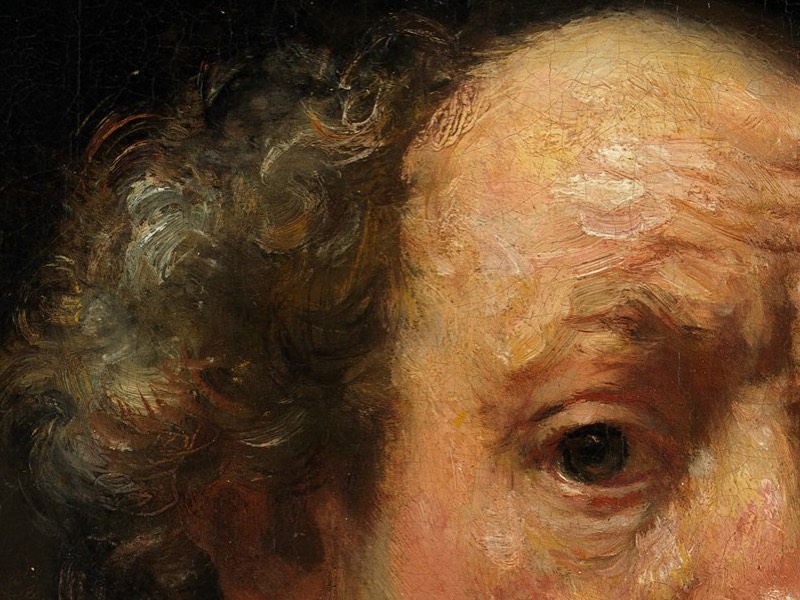
NYC's Metropolitan Museum of Art has made a whopping 400,000 high-resolution digital images of its collection available for free download. You can browse the collection here.
In making the announcement, Mr. Campbell said: "Through this new, open-access policy, we join a growing number of museums that provide free access to images of art in the public domain. I am delighted that digital technology can open the doors to this trove of images from our encyclopedic collection."
The Metropolitan Museum's initiative-called Open Access for Scholarly Content (OASC)-provides access to images of art in its collection that the Museum believes to be in the public domain and free of other known restrictions; these images are now available for scholarly use in any media.
For instance, here's a 12-megapixel image of Rembrandt's 1660 self-portrait...you can see quite a bit of detail:
(thx, fiona)
Update: Wendy Macnaughton on why the high-resolution images released by the Met are such a big deal for art students and art history fans.
Tags: art Met Museum museums NYC RembrandtFor someone who went to art school being able to do this is a revelation. I used to go to the museum with my sketchpad and copy the old masters. I'd get as close as I could to understand the brush strokes, colors, lines. The guards knew who to watch out for and would bark suddenly when we stuck our faces over the imaginary line.
As class assignments we were required to copy hundreds -- literally hundreds -- of the masters drawings and paintings. for those we mostly worked from images in books -- a picture the size of a wallet photo.
Which is one of the many reasons this new met resource is fucking phenomenal.
You can get so, so close -- far closer than one could in real life.
Matthew McCormick, Shortfatsteve likes this

17 May 17:40
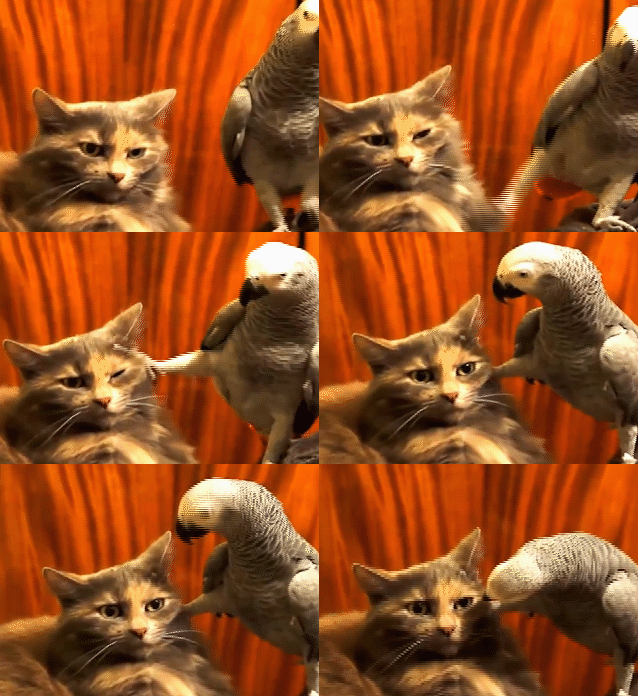
When I'm trying to watch a movie with a bored significant other
AmberYUP. I have been both the bird and the cat =)
claudzim, Luke.stirling and 5 others like this
16 May 18:17


We Taste 9 Fast Food Vanilla Milkshakes (and Risk Permanent Brain Freeze)
by Todd Brock
AmberNews you can use!

Our Favorites!
Chick-Fil-A
Sonic
Steak 'N Shake
Poor vanilla. Such a smooth and lovely flavor that complements so many things, yet the word itself has become shorthand for "boring, plain, and unexciting." Take vanilla ice cream, for example. Doesn't your heart sink just a little bit when someone offers you cake and ice cream.. and then you find out it's just vanilla? Don't you kind of start looking around for the syrups and toppings and mix-ins? Isn't that how sundaes and splits and Blizzards and DIY sold-by-the-ounce fro-yo bars were born, from this instinctive need to take vanilla and improve upon it by adding other stuff?
Ladelfuls of hot fudge, scoops of broken-up candy bars, crumbled-up brownies and cookies and pies, sprinklings of fruits and nuts (and sprinkles) are all awesome, sure, and can go a long way in camouflaging a weak ice cream product. But really great vanilla ice cream—served plain—appeals to the purist in me, too.
Like a perfect vanilla milkshake. Without all the add-ins and crazy bells and whistles, you can even get away with calling a vanilla milkshake the "drink" that accompanies your meal without looking like a glutton. ("A burger, fries, and a Peanut Butter Chocolate Chip Cookie Dough with M&M's Shake" implies a whole different level of writing-off the rest of the day.)
But if you're gonna do it, do it right. Which fast food outlets have vanilla milkshakes that actually go beyond "boring, plain, and unexciting?" We tasted shakes from nine nationwide chains, put our waistlines on the line, and braved the worst case of brain freeze in recorded history to find out.
Here's are the restaurants we tried, in alphabetical order:
- Arby's
- Burger King
- Chick-Fil-A
- Dairy Queen
- Hardee's (Carl's Jr.)
- McDonald's
- Sonic
- Steak 'n Shake
- Wendy's
When tasting the milkshakes, we evaluated them on consistency (were they creamy, dense, and smooth?), flavor (clean vanilla and dairy is what we were after), and value. Not all of the shakes made the grade—some were soupy, some had artificial or freezer-burned flavor.
Here are our favorites—the ones worth driving out of your way for.
Chick-fil-A

When Chick-fil-A changes their storefront marquees to announce the rollout of the Peach Milkshake in summer, you can watch local traffic patterns change. But the vanilla is worth a special trip, too. Hand-spun and crowned with just the right amount of whipped cream and a cherry**, it has the perfect consistency: pleasantly thick, but it can still be worked with a straw almost immediately. (Good thing, since they don't have long spoons.)
**Chick-fil-A and Sonic were the only two shakes to feature a cherry with a stem. I point this out mainly because I think it adds to the "genuineness" of the overall package; a cherry with a stem feels less like an afterthought that was plucked from a jar of red dye and syrup. Maybe it still was. Maybe it's just a pricier jar. But it's a cool detail. And I dig cool details. Also, it's a reminder that I need to make friends with someone who can do that trick where they tie a cherry stem into a knot using just their tongue. 'Cos that freaking ROCKS.
Why was it our favorite? With genuine-tasting ice cream (even though they insist on calling it—cue the eye roll—"Icedream"), enough of it to feel substantial, and the ideal middle ground between thick and drinkable, Chik-fil-A hits it out of the park every time. I'm hard-pressed to not order a Dr. Pepper when I go (don't you tell me that the Styrofoam cup doesn't improve the taste), but when I have a hankering for a milkshake on any day but Sunday, it's awfully tough to do better than Chick-fil-A.
Actual weight with packaging: 21.625 ounces, large (2nd heaviest)
Consistency in one word: Ideal
Toppings: Whipped cream and cherry
Spoon or straw: Straw... with just the right amount of effort required
Price: $3.15 (4th priciest)
Sonic

If excess is your thing (Hi, my name is Todd, and I have a problem...), Sonic is your milkshake HQ. Dozens of flavors and half-price happy hours are sweet enough, but Sonic's large shake weighs in at well over a pound and a half. That's more milkshake than one from Hardee's PLUS a large from McDonald's!
It's the priciest of the lot, but you're paying for quality as much as quantity. It's real ice cream, hand mixed, with whipped topping and a cherry. The ice cream was more yellow than white and absurdly rich. It was the thickest shake I tried; my straw was worthless for the first 15 minutes. (Maybe that's why I had to specifically ask for one.) And even once I moved from spoon to straw, it took some serious suction to get my flow on.
Nothing about Sonic's milkshake is instant gratification. It takes a while to make, it takes a while to drink. But I'll most definitely be back for another.
Actual weight with packaging: 27.375 ounces, large (heaviest by almost 6 ounces)
Consistency in one word: Packed
Toppings: Whipped cream and cherry
Spoon or straw: Spoon... unless you wait a loooong time
Price: $4.19 (priciest)
Steak 'n Shake

You may cry foul at Steak 'n Shake's inclusion in this milkshake cage match. "Fast food?" They come take your order at your table and have real dishes and silverware and stuff. True, but there's also a drive-thru, and that defines "fast food" to me. Plus, c'mon. "Shake" is in the name of the place. If I had to slurp through some of the bottom-feeders of this list, there was no way I was not getting in on some shake from a place that knows what they're doing.
Steak 'n Shake offers milkshakes in just one size. And while it may be tough to bypass some of the exotic flavors and side-by-side twofer shakes, the vanilla is no slouch. This was honest-to-God, hand-packed ice cream scooped out to order and combined with real milk. And it tasted every bit of it. Thick and rich, there was no artificiality to this shake whatsoever.
The Styrofoam cup was a bit of downer, mainly because I love getting the tall glass with my table service and having it accompanied by the leftover in the stainless steel mixing cup, so I can top myself off as needed. But shockingly, my to-go shake weighed in as the second-lightest of the group. I can't help but wonder if you get less shake for your dollar if you don't eat in.* Still, an awesome milkshake.
* Note: This really bothered me. So I went back. I was seated and ordered a shake, which came to my table in the tall old-fashioned glass. Then I asked for it to-go. They brought an empty cup, the same size I had been given with my takeout order. The entire shake fit in the Styrofoam cup. So there goes that theory. I guess it just seems taller in the glass. And no extra shake in the stainless steel mixing cup for topping off. Didn't that used to be a thing???
Actual weight with packaging: 13.25 ounces, only size offered (2nd lightest)
Consistency in one word: Thick
Toppings: Whipped cream and cherry
Spoon or straw: You can suck, but you'll want to scoop, too
Price: $2.99 (tied for 3rd cheapest)
Wendy's

There was some debate about whether or not Wendy's classic Frosty even qualifies for our little roundup here. It's ice cream and milk, which certainly says "milkshake." But they never call it that. Except now when you go to Wendy's, they have something called a Frosty Shake. Except that's not available in vanilla. Confused? Me too.
Clearly, the poor kid behind the counter had never been quizzed on this conundrum before. He explained to me that a Frosty Shake (chocolate, strawberry, or caramel) "comes shooken up" (his words). The website points out that whipped topping and flavored syrup are also added. It's also more expensive than the classic Frosty, which comes in chocolate or vanilla and is "thicker." So there you go.
Yes, my vanilla Frosty was thick. It had that traditional almost-gritty Frosty consistency that made me want to start dipping some French fries in like when I was 8. I found the vanilla version to have a somewhat artificial taste, but I could have closed my eyes and told you that this was unmistakably a Wendy's Frosty.
Plus, the large Frosty was the cheapest of all the milkshakes—by an entire dollar—and nowhere near the smallest. So if bang for your buck is a factor, the pigtailed girl is a cheap milkshake date.
Actual weight with packaging: 15.875 ounces, large (4th lightest)
Consistency in one word: Solid
Toppings: None
Spoon or straw: Spoon only
Price: $1.99 (cheapest)
Dairy Queen

I guess I assumed Dairy Queen would fall in the middle of the pack here. I mean, yes, they built their entire brand on ice cream, but no one ever really raves about their ice cream, either. I found their soft serve to be pretty darn good, but well short of spectacular.
Whipped cream and cherry? Check. The shake was on the swishy side; I could suck it through my straw immediately and with ease. I was surprised to check my food scale (Yes, I brought one with me. Shut up.) to see that this was the third-heaviest shake of the whole lineup... despite being among the least expensive. It may get lost in the shuffle of Blizzards and Peanut Buster Parfaits, but the DQ milkshake may be one of the best values on the menu.
Actual weight with packaging: 21.5 ounces, large (3rd heaviest)
Consistency in one word: Sloshy
Toppings: Whipped cream and cherry
Spoon or straw: Straw
Price: $2.99 (tied for 3rd cheapest)

16 May 15:14
Filed under: Media, TV Tagged: coming out, Ellen Page, STEPHEN COLBERT, the colbert report


Stephen Colbert Confronted Ellen Page On All Things Coming Out And It Was Pretty Much Perfect
by Kris Maske
AmberAdorable!
Ellen Page dropped by The Report last night to plug Days of Future Past in what is one of her first late night appearances since her coming out announcement earlier this year. That of course means Colbert was pretty much obligated (even as a faux journalist) to ask her all about it, so he did what he does best in interviews and cloaked the obvious questions with relentless jokes, easing her into the subject while making fun of Canada. Everyone wins!
Do yourself a favor and stick around for the scene read. It’s hard not wonder what an interview like this will look like when Colbert is hosting The Late Show.
Filed under: Media, TV Tagged: coming out, Ellen Page, STEPHEN COLBERT, the colbert report
16 May 14:40

Filed under: TV Tagged: BOARD GAMES, COUCH GAGS, THE SIMPSONS


This Sunday’s ‘The Simpsons’ Couch Gag Is Remarkably Depressing
by Josh Kurp
Amber*sigh*
FOX
If a struggling college dean, probably named something like Dean Evilboner, ever needs to boost admission numbers, she should head over to the nearest high school, and show this Sunday’s The Simpsons couch gag to a group of juniors. (That’s how college works, right?) “If you don’t think college is important,” Dean Felchman could say, “take a look at this.” Then she’d mistakenly show the students some Animal House-themed misery porn before realizing her mistake, and switch to the couch gag.
Filed under: TV Tagged: BOARD GAMES, COUCH GAGS, THE SIMPSONS
16 May 14:14

Filed under: TV Tagged: airplanes, AMY POEHLER, PREGNANT


Amy Poehler Gave Her First-Class Seat To A New Mom, Because Amy Poehler’s The Best
by Josh Kurp
NBC
We’re reached a point where pretty much every headline with Amy Poehler in it should end with, “…Because Amy Poehler’s the Best.” I refuse to believe she’s capable of evil, and was only sent here, Earth, to do good: Amy Poehler Plays a Flaming Guitar Solo That Brings About World Peace, Because Amy Poehler’s the Best. Amy Poehler Teaches Eskimos Another Word for Snow, Because Amy Poehler’s the Best. Amy Poehler Clones Herself, Because Amy Poehlers Are the Best. Amy Poehler Gave Her First-Class Seat To A New Mom, Because Amy Poehler’s The Best.
Hey, that one actually happened!
Amy Poehler showed off her kind side when she gave up her first class-seat on a flight from Los Angeles to New York to a mother with an infant, according to a U.S. report.
The Parks and Recreation star noticed the new mum was struggling with the baby and her luggage and insisted she take her larger seat on the plane – but it took some convincing.
A source [says], “The woman kept refusing the offer, but Amy wouldn’t budge. She literally had to push the mom into her first-class seat. It was really sweet.” (Via)
Now that the mom has had a taste of the first-class lifestyle, she can never go back to coach. She’ll spend all her life savings experiencing only the finest, most expensive things the world has to offer, until the day she’s broke and homeless, because Amy Poehler’s the best?

Filed under: TV Tagged: airplanes, AMY POEHLER, PREGNANT
16 May 13:35

Filed under: Media, TV Tagged: A1 SAUCE, branding, COMMERCIALS, Facebook, FOOD, marketing, STEAK


A.1.’s ‘New Friend Request’ Commercial Is A Strangely Beautiful Food Love Story
by Ashley Burns
AmberThis is weirdly adorable...
YouTube
Plenty of companies have tried the same old, same old when it comes to ads that pretend to show social networking and branding awareness, and a lot of times those commercials are met with groans and Liz Lemon eye rolls. At the same time, one particular condiment that Internet experts and so-called foodies love to complain about and debate is steak sauce, because there’s a rule among meat-eaters that a steak should be so good that it never needs sauce. So with those two ideas in mind, we were expecting the worst from a new A.1. Sauce commercial that uses Facebook as its core theme to announce that it’s ditching the “Steak” in its name.
However, if there’s a blueprint for how to successfully pull off a Facebook-themed commercial using something as silly as steak and sauce growing apart because of a bunch of different types of food, then A.1. just drew it up with “New Friend Request.” I don’t usually find myself emotionally affected by just some old commercial – those Publix Christmas commercials do nothing to my cold, black heart – but this one touched me. Mainly in the stomach.
I would like a steak now, please.
Filed under: Media, TV Tagged: A1 SAUCE, branding, COMMERCIALS, Facebook, FOOD, marketing, STEAK
15 May 11:18

Filed under: Media, Sports Tagged: ARIZONA DIAMONDBACKS, BASEBALL MASCOTS, MASCOT RACES, Mascots, MATT WILLIAMS, MLB, WASHINGTON NATIONALS


Manager Matt Williams Wants Nothing To Do With Mascot Matt Williams
by Ashley Burns
Amber@Charity
MLB.com
On Monday, the Washington Nationals scored two runs in the 9th to pull off a 6-5 win over the otherwise lowly Arizona Diamondbacks, but the reason for Nats manager Matt Williams’s vengeance may have been due to the antics of a racing mascot. Specifically, the D-Backs had a mascot race that featured terrifyingly large-headed versions of the franchise’s all-time greatest players, including Randy Johnson, Mark Grace, Luis Gonzalez and, of course, Matt Williams (maybe next year, Greg Colbrunn), and the Williams mascot had the race locked up until he spotted his human counterpart tinkering with his lineup in the Nats dugout.
As if it wasn’t bad enough that the mascot’s decision to stop cost him the race – Gonzalez won, if you’re keeping score at home – the actual Williams wasn’t even slightly amused by the attention from his mascot counterpart, and I think the man inside that large head was pretty lucky that baseball has rules against managers beating the piss out of mascots.
Your browser does not support iframes.And the all-important GIF form, via Cut 4…

(H/T to reader Jacob)
Filed under: Media, Sports Tagged: ARIZONA DIAMONDBACKS, BASEBALL MASCOTS, MASCOT RACES, Mascots, MATT WILLIAMS, MLB, WASHINGTON NATIONALS
15 May 11:13


Filed under: Film Drunk Tagged: FIRST-HAND ACCOUNTS, INTERGALACTIC FELINE FILM AND VIDEO FESTIVAL FOR HUMANS, JAY WERTZLER, LIL BUB, MATT LIEB, OWLBERT, REPORTAGE, RYAN BRADFORD


Reporting Live From A Film Festival Devoted Entirely To Cats
by Vince Mancini
Amber<3 Owlbert <3
Matt Lieb for FilmDrunk
Matt Lieb snuggles with "Owlbert.'
PUSSY RIOT! Live From ‘The First Annual Intergalactic Feline Film and Video Festival for Humans’ In San Francisco
WARNING: Cat puns abound
San Francisco is home to many grand and esoteric film festivals. This summer alone, our fine city will feature such festivals as the San Francisco Lesbian and Gay Film Festival (SFLGFF), the San Francisco Women of Color Film Festival (SFWOCFF), and of course the San Francisco Queer Women of Color Film Festival (SFQWOCFF). But for local film enthusiasts/Pub Trivia quizmasters Mike Keegan and Jay Wertzler, all of these trite and liberal-arty film festivals were missing two crucial elements: 1) a longer, more complicated acronym and 2) kitty cats. And so they created The First Annual San Francisco Intergalactic Feline Film and Video Festival For Humans (SFIFFAVFFH).
Watch this trailer to catch a glimpse of the magic I experienced on May 10th.
The First Annual SFIFFAVFFH is a film festival for the modern attention span. Rather than two full weeks of screenings, awards, Q&As with directors and celebrities, endless press engagements and self-congratulatory after parties, the SFIFFAVFFH squeezed all the pomp and circumstance of a traditional film festival into 12 fur-tastic hours. The festival was purr-fection. A great scratch-ievment. Meowtstanding! PANDAmonium! (wait…) It was the most fun I’ve had watching internet cat videos since… the last time I watched internet cat videos. Except this time I was not naked and coming down from a quick ‘bate sesh. This time I was surrounded by over 200 cat and film lovers from all across the Bay Area.
Getty Image
Lil Bub and Bridevsky at a New Jersey book signing.
The festival started off with a tribute to internet feline legend (fe-legend) Lil Bub, who received the First Annual Lil Bub Award for Outstanding Achievement in Cat. Lil Bub was there in purr-son to receive the award with her owner Mike Bridavsky. However, since Lil Bub is not used to large crowds and loud roaring audiences, the festival organizers instructed to crowd to be quiet as Lil Bub approached the stage. The spectacle of watching hundreds of cat-thusiats having to scale back their cat-thusiasm as to not upset their kitty overlord was bizarre and hysterical.
Getty Image
Lil Bub with Robert Deniro at Tribeca.
The festival’s centerpiece featured world purr-mieres from filmmakers and cat owners all over the country, and purr-portedly the galaxy. One short film featured a cat being denied a bite of her owner’s taco, and was aptly titled “Don’t. Eat. Muh. Taco.” But the absolute breakthrough film of the festival was called “If Cats Directed Tuna Commercials” by Ryan Bradford. Check it out:
[Editor's Note: I really want to see what Bob Ray could do with this format.]
Mike and Jay pulled off the festival with puns blazing. From “All Cat-cess” fest badges, to the centerpiece feature “Scratch Tracks: Live Meowsic & Film,” this film festival used every combination of cat, meow, fur, scratch and purr puns linguistically possible in the English language.
“Cat Agent” creator Kent Osborne is no stranger to art of cat puns. When Kent appeared at the festival via Skype for a Q&A with the audience, he pointed out that 90% of Tom Hanks movies can be turned into cat puns. “Furrest Gump, The Purrminal, Cloud Catlas, Extremely Meowd & Incredibly Close – the list goes on and on.” This started a chain reaction within the crowd of everyone yelling out Tom Hanks cat puns. My cries of “Apollo Furr-teen!” and “Scratch Me If You Can!” went mostly unnoticed.
Matt Lieb for FilmDrunk
The highlight of the festival for me involved a celebrity cat named Owlbert (who received The First Annual Colonel Meow In Memoriam Award for Exquisite Grooming and Style) and the bizarre Q&A between Owlbert’s owner Pi and the organizers Mike and Jay. Like Lil Bub before him, Owlbert was treated to a suppressed ovation by a crowd eager to smother the fat cat with cheers, hugs and kisses. The awkward interview included exchanges like this:
Mike: What’s a typical day in the life of Owlbert?
Pi: Napping. Um… (longest pause in the world) mostly napping.
Matt Lieb for FilmDrunk
At one point Mike was goaded by the audience to hold Owlbert, and he did so at a distance similar to Rafiki holding Simba in The Lion King. He then started sniffling and revealed that he was horribly allergic to cats. I caught up with Mike and Jay later and asked Mike how he was feeling.
“Healthwise… I’m not fantastic. Emotions-wise, it’s really good.” Mike pointed out that he had a very special reason for wanting to hold a feline film festival. “As someone with a disability, in that I’m allergic to cats, I can only experience cats through the magic of cinema and I wanted to share that revelation with the world.”
He was scratching his fur-laden beard throughout the interview.
Jay Wertzler had different reasons for creating the festival. “There are so many people who love cats, and so many people who watch cat videos, and we thought ‘Hey! Why can’t we get all those people together in one place?’”
Jay, a graduate of UC Santa Cruz’s film program, is a veteran festival organizer and has been staffed in some of San Francisco’s most purr-stigious festivals, including SF Sketchfest (Scratch-fest! THIS IS SO FUN!!!). “That’s what film festivals are about. Expanding your cinematic horizons. And no one’s been doing that… for felines.”
Jay was happy to create a festival that appeals less to prurient interests, and more to purr-ient interests.
“I’m just glad that we’ve been able to keep this thing mostly PG, and avoided the R-rated stuff most festivals show.”
When asked if he was aware that there was an “Oakland Internet Cat Video Festival” happening on the same day of his festival, he responded “That festival is for pussies.”
Unfortunately, as the festival went on Mike became more and more sickly. And towards the end of the festival, he and Jay decided that there would not be a Second Annual San Francisco Intergalactic Feline Film and Video Festival for Humans. The team is going to take their feline film festival to the Bonnaroo Music and Arts Festival and that will likely be the end of the SFIFFAVFFH forever. However, they also revealed that they are gearing up for next year’s festival, The First Annual San Francisco Intertemporal Time Travel Film and Video Festival for People in the Present (SFITTFAVFFPITP). I, for one, can’t wait.
You can find more information about their future film festivals at www.thefirstannual.com. Whatever they do, I’m sure it’ll be supurrrrrrrrb.
Filed under: Film Drunk Tagged: FIRST-HAND ACCOUNTS, INTERGALACTIC FELINE FILM AND VIDEO FESTIVAL FOR HUMANS, JAY WERTZLER, LIL BUB, MATT LIEB, OWLBERT, REPORTAGE, RYAN BRADFORD
14 May 23:33
Where Is All Our Money Going?
by Mike Dang
by Mike Dang
Where does our money go? Bloomberg View looked at consumer purchasing data from the Bureau of Labor Statistics for the past three decades and compared how the rich spent their money compared to the poor (and then they presented their findings in a slideshow, which I don’t love but what are you going to do).
According to their findings, both the rich and poor spend a higher percentage of their incomes on housing now than they did 30 years ago, college costs have soared more than 500 percent, health care spending has risen for both the rich and the poor, and food spending has increased among the poor, taking up a bigger part of their budget.
Where are we spending less? Clothes for one (because they’ve gotten cheaper), and we’re also spending less on vices like cigarettes and booze. The four big things that are busting our budgets are: Housing, food, transportation, and health care—the poor spends more than three-quarters of their budget in those four categories.

The data shows that we’re not busting our budgets by shopping too much. The costs of needs like housing and food is what’s really hurting our budgets.
0 Comments
13 May 14:24

Filed under: Web Culture Tagged: ADVICE COLUMNS, Amy Dickinson, ask amy


Take The Weekend To Appreciate That This Horrible Woman Isn’t Your Mom
by Josh Kurp
AmberAsk Amy is no Carolyn Hax, but DAMN.
AMC
Tomorrow is Mother’s Day. Did you remember to get her a card? You should get your mom a card. It doesn’t have to expensive or one of those monstrosities with a Talking Phil Dunphy on it, but you can do better than the $.99 bargain bin, too. Not sure what to write on it? I have an idea: print out the “Ask Amy” column below, and tell your mom thank you for not being a terrible person like “Sad Sister.” And maybe buy her a ticket to go see Amy Dickinson. I bet they’d be good friends.

Filed under: Web Culture Tagged: ADVICE COLUMNS, Amy Dickinson, ask amy
13 May 12:44
Filed under: GammaSquad, TV Tagged: BILL NYE, CLIMATE CHANGE, JOHN OLIVER, LAST WEEK TONIGHT, science


John Oliver And Bill Nye On The Opinions Of Climate Change Deniers: ‘Who Gives A Sh*t?’
by Cajun Boy
AmberThis show has been wonderful so far!
Last night on Last Week Tonight John Oliver had on the main guy going around shaming climate change deniers of late: American hero Bill Nye, the science guy. Citing recent polling data showing that one if four Americans are skeptical of climate change, Oliver broke out the knives.
“Who gives a sh*t? You don’t need people’s opinion on a fact,” Oliver proclaimed. “You might as well have a poll asking: ‘Which number is bigger, 15 or 5?’ or ‘Do owls exist?’ or ‘Are there hats?’” He added: “The only accurate way to report that one out of four Americans are skeptical of global warming is to say, ‘A poll finds that one in four Americans are wrong about something,’” he added.
Taking exception with the fact that cable news shows usually pit Nye one-on-one against a denier — which creates a statistical illusion — Oliver brought out 96 other scientists to back Nye against 3 climate change deniers, a more representative sample — “in the interest of mathematical balance,” as Oliver put it — of the scientific community on the issue. Enjoy.
Filed under: GammaSquad, TV Tagged: BILL NYE, CLIMATE CHANGE, JOHN OLIVER, LAST WEEK TONIGHT, science
13 May 12:30

Filed under: GammaSquad Tagged: IN RUSSIA, RUSSIA, THE SIMS, The Sims 4, video games


‘The Sims 4′ Gets An Adults Only Rating In Russia For Exactly The Reason You’re Probably Guessing
by Nathan Birch
Amber@Charity!
EA/Maxis
Hmmm, five ladies in a room and one very disinterested dude — somebody call the Russian authorities!
That’s right — if you want to buy EA and Maxis’ latest innocuous life sim and you live in Russia you’d better bring ID, because the The Sims 4 has been rated 18+ in that country. Whoa, really? Is Russia getting a special version of the game with ungarbled Simlish and no pixelation over the Sim butts? Unfortunately no.
The Sims 4 has run afoul of Russian law 436-FZ. You know, the law that prohibits anything “harmful to the health and development of children” (a list that includes same-sex relationships). This is the law that basically allows the Russian government to shut down any sort of gay demonstration or protest, because, you know, a Russian child’s eyes might accidentally see a rainbow flag and explode.
The Sims has made same-sex relationships possible ever since the first game back in the year 2000, which is kind of surprising since the series has never really been the subject of any controversy of backlash. Probably because most straight Sims players didn’t even realize same-sex relationships were a part of the game, and if they did they didn’t get upset about it, because why would you? Not trying to tell you how to run your country, but when you’re acting less reasonably then American gamers from the early 2000s, you’ve got a problem Russia.
But hey, don’t feel too bad about underage Russian Sims fans — this is Russia we’re talking about here. I’m fairly certain nobody has walked into a brick-and-mortar store and purchased a video game there, like, ever.
via VG24/7
Filed under: GammaSquad Tagged: IN RUSSIA, RUSSIA, THE SIMS, The Sims 4, video games
13 May 11:44
“Now Tell Me Where You Keep Your Valuables”
by Meaghan O'Connell
AmberThis is awesome.
by Meaghan O'Connell

When the man removed his hand, standing there in the shadows, my mother answered him. And this I remember as clearly as she enunciated it.
“I am a single working mother. I don’t have any valuables. I don’t have any money. My jewelry is all costume jewelry. Our silverware is made of stainless steel and that’s in a cabinet in the hall.
If you’re hungry, there’s a roast in the fridge.”
It was as if the intruder were a door-to-door salesman, and while my mother was very clearly not interested in what he was selling, she wasn’t going to be inhospitable about it.
From Erika Hall’s essay “The Roast in the Fridge,” on her mother, eminent domain, feminism, and being an outspoken woman.
Photo: brownbelt
0 Comments
13 May 11:29
Spurious correlations
by Jason Kottke
AmberThese graphs are the best
Tyler Vigen is collecting examples of data that correlate closely but are (probably) otherwise unrelated.
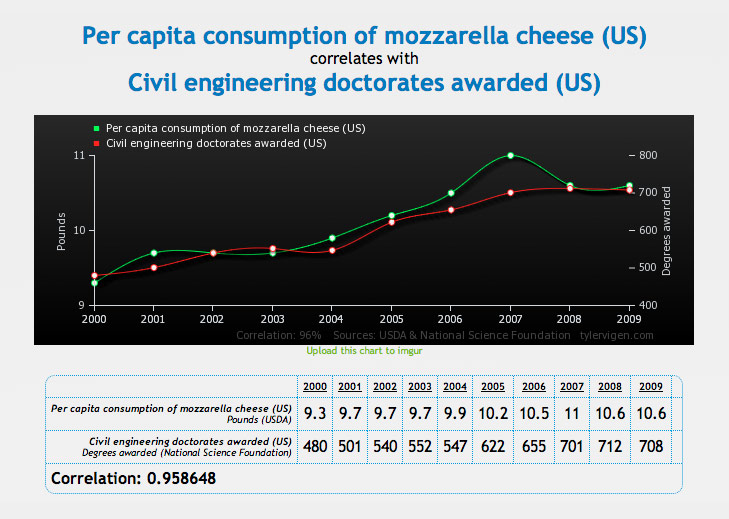
Remember kids, correlation != causation.
Tags: infoviz Tyler Vigen
Corinne.brzeski, Bwel1985 and -1 others like this
09 May 19:16
“@PollyPhokeev: One of the kids I babysit was playing ‘Ring Around The Rosie’.4yo:...
AmberHAHAHA
“@PollyPhokeev: One of the kids I babysit was playing ‘Ring Around The Rosie’.
— ReasonsMySonIsCrying (@ReasonsMySonCry) May 8, 2014
4yo: ‘Hashtag, hashtag, we all fall down!’”
ITS ALL OVER NOW
09 May 13:55
A splash of seawater
by Jason Kottke
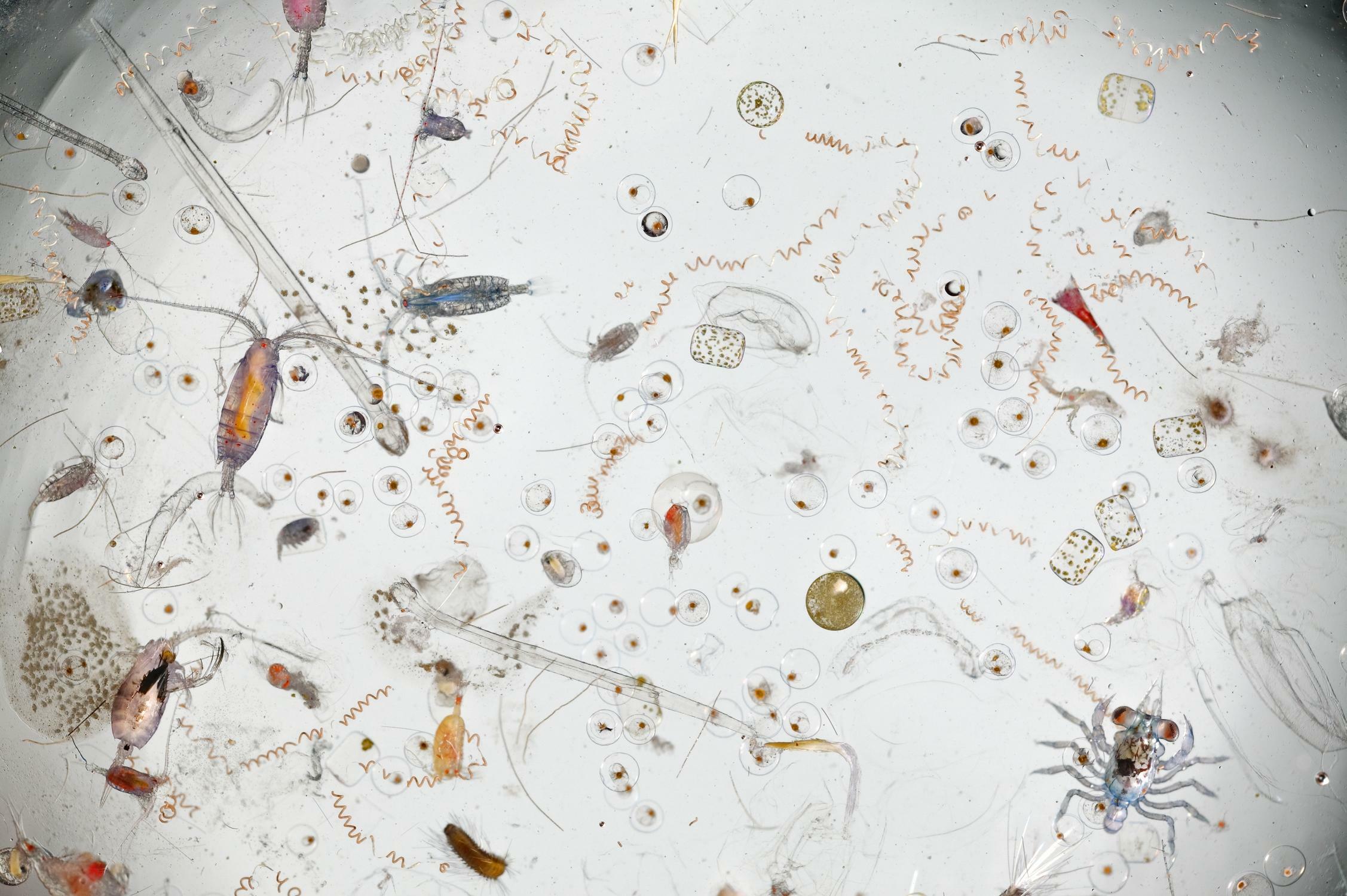
Photographer David Liittschwager captured the little ecosystem of life contained in a splash of seawater magnified 25 times:
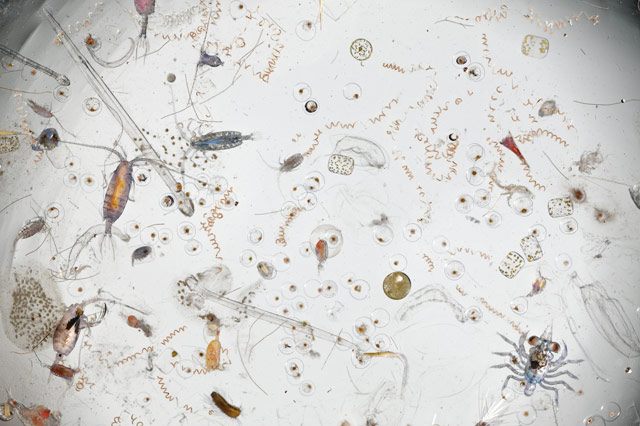
It's the microscopic equivalent of the Hubble Deep Field image and worth seeing larger. Here's part of the larger image:
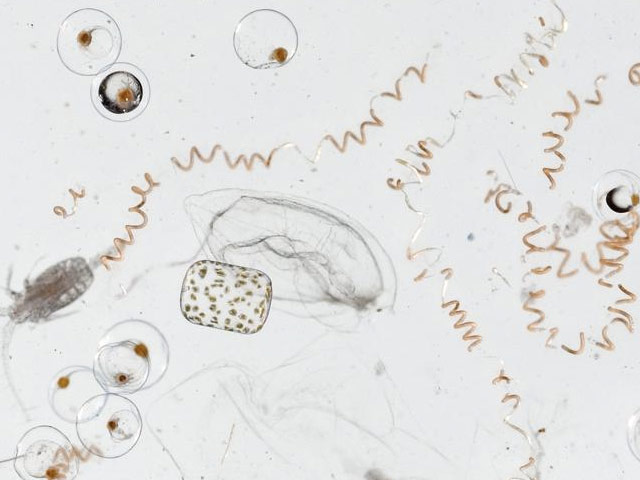
Liittschwager took the photo for National Geographic, but it also might be contained in his book, A World in One Cubic Foot, in which he took photos in locations all over the world of the life that passed through 1 cubic foot of space in 24 hours.
For A World in One Cubic Foot, esteemed nature photographer David Liittschwager took a bright green metal cube-measuring precisely one cubic foot-and set it in various ecosystems around the world, from Costa Rica to Central Park. Working with local scientists, he measured what moved through that small space in a period of twenty-four hours. He then photographed the cube's setting and the plant, animal, and insect life inside it -- anything visible to the naked eye. The result is a stunning portrait of the amazing diversity that can be found in ecosystems around the globe.
Prints of this image are available at Art.com in sizes up to 64"x48". (via colossal)
Tags: A World in One Cubic Foot books David Liittschwager photography
09 May 13:54

Filed under: TV, Web Culture Tagged: Jason Derulo, KEVIN SPACEY, THE TONIGHT SHOW


Kevin Spacey And The Ragtime Gals Give The Barbershop Treatment To Jason Derulo’s ‘Talk Dirty’
by Andrew Roberts
AmberThis, this, a million times this!
NBC
Kevin Spacey seemed to be all over the place yesterday. First he did his Frank Underwood thing in the latest Call of Duty trailer and then he pulled out some deep love of barbershop music on The Tonight Show.
Spacey and his Ragtime Gals, with Jimmy Fallon of course because he’s always there grinning like weird puppet, performed a blistering version of Jason Derulo’s hit ‘Talk Dirty.’ Along with the sad clown cover of Lorde’s “Team,” this is yet another example of me learning about new music through silly parody covers.
(Via The Tonight Show)
Filed under: TV, Web Culture Tagged: Jason Derulo, KEVIN SPACEY, THE TONIGHT SHOW
07 May 23:51
Filed under: TV, Web Culture Tagged: Bryan Cranston, GODZILLA, jimmy fallon, THE TONIGHT SHOW


Watch Bryan Cranston Play A Silly Word Game On ‘Fallon’ And Completely Butcher ‘Badonkadonk’
by ryanuproxx
Amberworth watching the whole thing, but the gold is around 2:40!
After seeing Bryan Cranston as Hal in Malcolm in the Middle, Walter White/Heisenberg in Breaking Bad, a bespectacled hemorrhoid expert in a Preparahtion H commercial, and LBJ in All The Way, it’s become quite clear that the man can do it all. Except one thing: pronounce “badonkadonk.”
That little tidbit made itself hilariously apparent during Cranston’s appearance on The Tonight Show last night. Jimmy Fallon reeled him into a silly game called “Word Sneak” — in which the duo was handed cards with random words to casually work into the conversation — and Cranston fared pretty well until it was time to whip out a certain “ebonic expression for an extremely curvaceous female behind.”
If you thought Fallon was giggly next to Horatio Sanz, wait until you see him catch a dose of the Cranston charm. I’m genuinely surprised his head did not explode.
The Tonight Show Starring Jimmy Fallon
Filed under: TV, Web Culture Tagged: Bryan Cranston, GODZILLA, jimmy fallon, THE TONIGHT SHOW
07 May 23:40

When Chic Met Shabby: 1958
by Dave
Somewhere around Los Angeles circa 1958. "Aluminum Group furniture (chairs, ottomans, tables) designed by Charles Eames for Herman Miller Inc." Large format negative from the Office of Charles and Ray Eames. View full size.
07 May 22:23
Get Rich Slowly “If You Can”
by Ester Bloom
AmberMight be worth downloading.
by Ester Bloom
 If you want to live beyond 90 and be an adorable Oldest of the Old yourself, you have to plan ahead. The New York Times this weekend suggested one way to do that in a Most Emailed article called “A Path to Retirement” about “If You Can,” a free investment manual for the youngs. Also everyone, but primarily the youngs: we need it most.
That’s why “If You Can,” a concise, no-nonsense instruction manual on saving and investing for retirement, is so welcome. It’s by William J. Bernstein, an investment adviser and author on financial subjects, who is making it available free as an e-book, no strings attached, on his website. (It’s also available on Amazon.com for 99 cents, though Mr. Bernstein is giving it away free there, too, on certain days, including May 4 and 5, as posted on his site.) This pamphlet could be extremely helpful, especially for the group that Mr. Bernstein is specifically targeting: younger people who aren’t yet in the work force or have just started their careers.
Bernstein’s manual is as readable as his facts are sobering. (None of us have pensions! We’re screwed!) The most important thing you can do is to save 15% of your income starting at age 25, he says. It will get you in the habit of saving, which is good because, get ready, there’s lots more saving to do.
Saving 15 percent for a purpose that is decades away requires commitment, especially when it’s not all you’ll need to save: For example, it doesn’t include money for a rainy-day fund, a home’s down payment, a car, a child’s education, a vacation, a wedding, a bar mitzvah, a sweet 16 or anything else. All of that comes on top of the retirement savings. Yet in Mr. Bernstein’s view, that 15 percent is a bare minimum. “You’ve got to accumulate enough money on your own to replace your income one day,” he says. “You’re much better off if you start doing that early.”
Easier said than done, like all commitments that require long-term thinking when we are wired much more strongly for the short-term. Bernstein compares investing to dieting and admits he finds it easier to save for retirement than to forego the extra slice of pizza. That said, he comes ready with advice for ways to think frugally and with the future in mind. Know thyself, he says. Understand how to work with your own personality to figure out how to defer gratification in functional ways.
Read the manual and let us know what you think. Do you already save at least 15% of your income? Or is it pointless because global warming — and/or the Rapture — will get us before we reach 90?
41 Comments
07 May 16:20
Lying to Ruth
by Jason Kottke
Amberthis is heart-breaking
Peter Bach, a cancer doctor, writes about losing his wife to cancer.
The streetlights in Buenos Aires are considerably dimmer than they are in New York, one of the many things I learned during my family's six-month stay in Argentina. The front windshield of the rental car, aged and covered in the city's grime, further obscured what little light came through. When we stopped at the first red light after leaving the hospital, I broke two of my most important marital promises. I started acting like my wife's doctor, and I lied to her.
I had just taken the PET scan, the diagnostic X-ray test, out of its manila envelope. Raising the films up even to the low light overhead was enough for me to see what was happening inside her body. But when we drove on, I said, "I can't tell; I can't get my orientation. We have to wait to hear from your oncologist back home." I'm a lung doctor, not an expert in these films, I feigned. But I had seen in an instant that the cancer had spread.
The last sentence here really got to me:
Our life together was gone, and carrying on without her was exactly that, without her. I was reminded of our friend Liz's insight after she lost her husband to melanoma. She told me she had plenty of people to do things with, but nobody to do nothing with.
Bach's discussion of treatment options reminded me of Siddhartha Mukherjee's The Emperor of All Maladies, which is one of my favorite books of recent years. I was also reminded of how doctors die.
Tags: books cancer crying at work medicine Peter Bach Siddhartha Mukherjee The Emperor of All Maladies
Danbusha and -1 others like this



06 May 13:49


The New Anova Precision Cooker Promises to Be the Best, Most Cost-Effective Sous-Vide Solution on the Market
by J. Kenji López-Alt
AmberPurchased!

Exciting news in the world of home sous-vide cooking: Anova Culinary has just announced the launch of the Anova Precision Cooker, the first major upgrade to the sous-vide circulator they introduced last year. I visited their studio in San Francisco last week to get an exclusive look at the product, whose Kickstarter fundraising phase is starting today. I played around with it and chatted with its designer Jeff Wu for a few hours, and man, was I impressed.
I can confidently say that when it comes out in September, this will be the best, most cost-effective consumer-grade sous-vide solution on the market.
You may remember when I tested the original model against its closest competitors back in December. It was a favorite even then, with the sturdiest build, the tightest clamp, the best impeller features, the easiest-to-clean components, and perfectly accurate temperature controllers, all built by the company with the longest track record for building precision, long-lasting tools (Anova was well known as one of the two biggest suppliers of lab-grade equipment before launching their consumer-level culinary division).

The old Anova on the left and the new precision cooker on the right.
The new Precision Cooker* puts all of that performance into a smaller, sleeker package, addresses the few issues I had with the first model, and adds some awesome new features (hello Bluetooth control and open-source software!), all at a lower price point. The first 1,000 will get theirs for $99 ($99 UNITS SOLD OUT), the following 1,000 Kickstarter backers will get it for $129, and the remaining backers will get it for $159 (the final retail price will be $169).
UPDATE: Anova has added 500 units each at $135, $139, $145, and $149 price points. They are also offering a "Hacker Special" at $229 which includes a prototype unit shipped in August along with a software development kick, in addition to a finalized unit shipped upon completion (that's two complete units).
The final retail price is a full $30 below their original model's (and the closest comparable competitor) pricing. And as a Serious Eats reader, you've got the story and access here before anywhere else!
*As the new model has been dubbed—I like it, it's a much more consumer-friendly nomenclature than "sous vide cooker" or "water bath controller" or "isothermal circulator.
There was a time when sous-vide cooking was limited to fancy restaurants and large food service operations. That time is past, as precision cooking has moved well into the realm of the home cook, both in terms of pricing, and in terms of increased understanding of how it works, along with plenty of recipes freely available online. With this new Anova cooker, there are really no excuses. It's cheaper than an all-clad skillet, and built to last.
For the record: I'm a strong proponent of modular circulators. That is, the type that you clip to the side of a pot or a cooler. They're smaller, easier to clean and fill, more cost effective, and far more versatile than fixed volume all-in-one units.
Here's a quick look at some of the upgrades on the new Anova precision cooker.
The Interface

The old Anova on the left and the new precision cooker on the right.
The old Anova model featured a touchscreen interface that required a few button presses to turn on and off, and frankly, was more complicated than it needed to be. The new model takes the iPhone approach with streamlined, intuitive controls. It now features two buttons—a power button and a timer button—along with a mouse-style scroll wheel for making adjustments.

The mouse-style scroll wheel.
The LED display is bright and large, and—a key improvement over the previous model—stays lit all the time, allowing you to quickly glance at the unit from across the room to see what temperature you've set it at, and the current water temperature.
Programmable Bluetooth Control
While the streamlined physical interface is great, you may be wondering why they decided to remove the touchscreen and the programming potential it offered. Well, they very wisely realized that practically everybody has a fully functional, networked touchscreen controller in their pockets at all times: their smart phone.
That's right, the new cooker will be fully controllable from your smart phone.

One of the big issues with bringing sous-vide cooking to the general public has been one of education: people simply aren't used to cooking at sous-vide temperatures and times, and thus have no intuitive sense of the process. You wouldn't believe the number of emails and tweets I get asking what temperature and time guidelines to follow for cooking a chicken breast or a fish filet.
By building apps for your phone with all of these temperature and time settings already in place, those worries will be a thing of the past.

It's going to come bundled with an app that has presets for dozens of common foods—chicken breasts, salmon filets, or short ribs, for instance. All you have to do is bag the food you're cooking, drop it into the cooker, hit go on your phone, and the temperature and time will be automatically set for optimal end results.
Of course, this programmability also means that you'll be able to hold cooked food automatically. Say you drop in those chicken breasts to cook at 145°F for one hour. You can then program your Anova to drop the temperature down to 130°F and hold them there; It's a temperature that is hot enough to eat (and to prevent any bacterial spoilage), but cool enough to prevent further cooking. That chicken is ready to serve when you're ready to eat.

Anova is very wisely making the source code open source, which means that where this connectivity is really going to shine is with the custom apps that will undoubtedly be built for it, allowing you to share and follow recipes.
Imagine this: You see me rave and post a photo about a fantastic pork chop that I cooked in my precision cooker last night? Well now you'll be able to cook that exact same pork chop at home at the push of a button.
Is this the future yet? I think this is the future.
New Adjustable Clamp = No Minimum Water Height
Anyone who's tried cooking sous vide at home knows that one of the most annoying issues is that you have to use a fairly large pot with a fairly large volume of water, even if you're just cooking for one or two. The issue is that circulators have a minimum pot height and a minimum water height that is usually pretty high. In the case of the previous Anova model, your pot had to be at least 7 inches high, and the water had to be filled to at least three inches. This was pretty great by industry standards.

The adjustable clamp.
The new model does it one better with a clamp that not only tightens as securely as the previous one (you can flip your pot entirely upside down and the Anova will stay clamped in place), but is now fully adjustable in height, allowing you to use your precision cooker in any pot you have.

Not only that, but because the water intake and output has been redesigned, it will now work with just 2 1/2 inches of water (with the potential to be lowered before the release in September).

Clear impeller head for easy redirection.
The all-metal base of the unit has also been replaced with a transparent polycarbonate cover which you can twist to adjust the direction of the water flow, making it easier to see just where your water is going. As with the previous model, this one operates nearly silently.
The Tech Specs
Wanna get real nerdy? Here are some of the other vital stats. The older model used a 1,000W heater to heat water, while this one has been downsized to an 800W heater. But better programming in its fuzzy logic means that it heats almost as quickly to a set temp as the older model. I timed it heating 1.5 gallons (5.5 liters) of water from a 77°F (25°C) tap to ready-to-cook 140°F (60°C) in just over 16 minutes. That ain't bad!
Its smaller heater also means that its maximum capacity has been reduced slightly from 22 liters to 19 liters (this can be improved with insulated containers like a cooler), while the pump pushes around 8 liters per minute for up to 99 hours at a go.
It's got total dimensions of 2.75- by 2.75- by 14.75-inches, weighing in at 2 1/2 pounds, making it a truly portable device (yeah, this is gonna go in my travel bag for weekend trips when it comes out).
It's been a curious and exciting journey watching home sous-vide cookers come out and evolve over the past few years, and frankly, it's all happened far faster than I ever anticipated. For a while, it wasn't obvious to me who would be the first to crack the home cooking code, but with this new model, with all its features and low price, Anova is pretty squarely in the lead. I predict a lot of these units under the tree this holiday season.
How to Order
Like I said, we managed to score an exclusive first look at this thing, which means that you, as Serious East readers, get first crack at nabbing one of the early pricing units. That's $99 for the first 1,000 orders, and $129 for the next 1,000 after that before it bumps up to the final retail price of $169! Orders are being taken through their Kickstarter campaign (free shipping is included with all orders) and shipping is expected some time in September.
06 May 00:14

Opening Game: 1923
by Dave
Amber@Charity
April 26, 1923. "Opening game." Washington's first game of the season at Griffith Stadium, where President Harding tossed out the ball and the Nats bested Philadelphia 2-1. National Photo Company glass negative. View full size.
05 May 23:37
Filed under: TV Tagged: NETFLIX, ORANGE IS THE NEW BLACK


Netflix Has Already Picked Up ‘Orange Is The New Black’ For A Third Season
by dguproxx
Amberwoot!

A little context: Netflix has a habit of picking up future seasons of shows before the next one debuts. They picked up a third season of House of Cards two weeks before the second season premiered, they picked up a second season of Orange Is the New Black three weeks before the first season premiered, etc. It’s kind of becoming their thing. So, when you couple that with the fact that Orange Is the New Black is (a) their biggest hit, (b) great, and (c) returning for its second season in about a month, this news isn’t actually all that surprising.
But, whatever. It’s still cool, so here goes.
The streaming service has renewed critical darling Orange Is the New Black for a third season.
The prison drama from Weeds exec producer Jenji Kohan has received its second early renewal, with Netflix granting another run a full month before its sophomore season bows June 6. [THR]
As someone who spends a lot of time — too much time, honestly — worrying about the fates of critically-beloved comedies (Parks & Rec, Community, Happy Endings [RIP]), I gotta say, this is … this is nice, right? I mean, it’s so FREEING. It’ll be a breath of fresh air to sit back enjoy one of these without also wondering if/when the cancellation hammer is gonna drop, and whether a Hail Mary social media campaign will keep it from doing so for another 8-12 months. Yes, this will do just fine. More like this, plz and thx.
In other news, the announcement was made on Instagram by Laura Prepon, who sent it out along with a list of purported Season 3 episode titles. Looks like I have to scrap my screenplay for “Hanging Ten in Blowjob City.” They beat me to it fair and square.
Filed under: TV Tagged: NETFLIX, ORANGE IS THE NEW BLACK