Shared posts

14 Jan 00:01

Novo 007 vai investigar onde as pessoas escondem o racismo

by Sensacionalista

Foi anunciado mais um 007: Idris Elba. Imediatamente uma onda de racismo tomou conta da internet. Revelou-se, então, que essa era justamente a missão de 007, descobrir onde as pessoas escondiam o racismo e, de primeira, ele conseguiu! Temos aí o mais rápido 007 de todos os tempos.

O novo 007 já surge com diversos tipos de inimigos que terá que enfrentar: neonazistas, pessoas que não acham que 007 pode ser negro, arianos, eurocêntricos e o pior de todos os vilões: aquele que tem até amigos negros.

Por @Cacofonias

12 Jan 15:55

The Evolution-Is-Over Fallacy

by Robin Hanson

David Brin and Jerome Barkow both responded to my last Cato Unbound comment by assuming that the evolution of aliens would end at somewhere around our human level of development. While aliens would acquire new tech, there would be little further change in their preferences or basic psychology over the following millions or billions of years. In my latest comment, I mainly just repeat what I’d said before:

Even when each creature has [powerful tech and] far broader control [over its local environment], this won’t prevent selection from favoring creatures who better use their controls to survive and reproduce. No, what is required to stop selection is very broad and strong coordination. As I wrote:

Yes it is possible that a particular group of aliens will somehow take collective and complete control over all local evolution early in their history, and thereby forever retain their early styles. … Such collective control requires quite advanced coordination abilities. … Anything less than complete control of evolution would not end evolution; it would instead create a new environment for adaptation.

My guess is that even when this happens, it will only be after a great degree of adaptation to post-biological possibilities. So even then adaptation to advanced technology should be useful in predicting their behaviors.

I’ll call this mistake the “evolution is over” fallacy, and I nominate it as the most important fallacy about aliens, and our future. Evolutionary selection of preferences and psychology is not tied to DNA-based replication, or to making beings out of squishy proteins, or to a lack of intelligence. Selection is instead a robust long-run feature of decentralized competition. The universe is influenced more by whatever wins competitions for influence; where competition continues, selection also continues.

12 Jan 11:48

Blindado que era do exército russo é agora usado como táxi em São Petersburgo (vídeo)

by Ricardo de Oliveira

blindado-taxi

O BRDM APC é um veículo blindado de reconhecimento e comando usado pelo exército russo e que está chamando a atenção do público em São Petersburgo. Antes utilizado em operações militares, agora um exemplar do modelo serve como táxi na famosa cidade do norte da Europa.

Inicialmente, as autoridades locais não quiseram conceder a licença para um veículo de uso militar como táxi, mas depois liberaram mediante algumas exigências, entre elas mudar a pintura camuflada para algo mais civil. Então, o proprietário decidiu pintar o blindado em cor vermelha semelhante ao de carros de combate a incêndios, destacando-se assim entre os carros de cor amarela.

No entanto, o BRDM APC não pode circular por algumas das ruas históricas de São Petersburgo por causa de seu grande peso. Ainda assim, por ser anfíbio, pode atravessar o rio Neva sem precisar de uma ponte. Portando um fuzil desativado, o blindado russo tem tarifa equivalente a US$ 100 por pessoa para uma volta muito diferente na antiga capital da Rússia.

A noticia Blindado que era do exército russo é agora usado como táxi em São Petersburgo (vídeo) foi publicada no site Notícias Automotivas - Carros.


09 Jan 14:22

Mentirinhas #752

by Fábio Coala

mentirinhas_741

Menos mimimi e mais ação.

O post Mentirinhas #752 apareceu primeiro em Mentirinhas.

09 Jan 13:41

Find Someplace Else!

09 Jan 13:39

Get Creative With Your Warnings

09 Jan 13:39

Well, That's Comforting

08 Jan 17:27

Place These Next to All Your Security Cameras!

08 Jan 17:27

Nicely Done

08 Jan 17:24

The Tips Will Roll in Now!

08 Jan 17:24

It's Important to Keep Up Appearances

08 Jan 17:24

They Make House Calls Now!

08 Jan 00:10

Fim de ano de engorda

08 Jan 00:10

Viva Intensamente # 189

08 Jan 00:07

Union of the Dark Lords

04 Jan 20:17

All you can eat books vs. all you can eat food

by Tyler Cowen

In the book market:

…a new complaint is about Kindle Unlimited, a new Amazon subscription service that offers access to 700,000 books — both self-published and traditionally published — for $9.99 a month.

It may bring in readers, but the writers say they earn less.

Here is some analysis:

“Your rabid romance reader who was buying $100 worth of books a week and funneling $5,200 into Amazon per year is now generating less than $120 a year,” she said. “The revenue is just lost. That doesn’t work well for Amazon or the writers.”

Amazon, though, may be willing to forgo some income in the short term to create a service that draws readers in and encourages them to buy other items. The books, in that sense, are loss leaders, although the writers take the loss, not Amazon.

And when it comes to food?:

New research shows that paying that much for a buffet might actually make the food taste better. Three researchers did an all you can eat (AYCE) buffet field experiment to test whether the cost of an AYCE buffet affected how much diners enjoyed it. They conducted their research at an Italian AYCE buffet in New York, and over the course of two weeks 139 participants were either offered a flier for $8 buffet or a $4 buffet (both had the same food). Those who paid $8 rated the pizza 11 percent tastier than those who paid $4. Moreover, the latter group suffered from greater diminishing returns—each additional slice of pizza tasted worse than that of the $8 group.

“People set their expectation of taste partially based on the price—and it becomes a self-fulfilling prophecy. If I didn’t pay much it can’t be that good. Moreover, each slice is worse than the last. People really ended up regretting choosing the buffet when it was cheap,” said David Just, professor at Cornell’s Dyson School of Applied Economics and Management, and one of the study’s authors.

In the old days one heard speculation about bundling a great number of newspapers and blogs into a single-price access model, but in retrospect this probably never had much financial potential, for reasons which by now should be clear.  What would an “all-you-can-eat buffet for economists” mean?  And who if anyone would benefit from it?

03 Jan 14:32

More Data on Attributing the Sony Attack

by schneier

An analysis of the timestamps on some of the leaked documents shows that they were downloaded at USB 2.0 speeds -- which implies an insider.

Our Gotnews.com investigation into the data that has been released by the "hackers" shows that someone at Sony was copying 182GB at minimum the night of the 21st -- the very same day that Sony Pictures' head of corporate communications, Charles Sipkins, publicly resigned from a $600,000 job. This could be a coincidence but it seems unlikely. Sipkins's former client was NewsCorp and Sipkins was officially fired by Pascal's husband over a snub by the Hollywood Reporter.

Two days later a malware bomb occurred.

We are left with several conclusions about the malware incident:

  1. The "hackers" did this leak physically at a Sony LAN workstation. Remember Sony's internal security is hard on the outside squishy in the center and so it wouldn't be difficult for an insider to harm Sony by downloading the material in much the same way Bradley Manning or Edward Snowden did at their respective posts.

  2. If the "hackers" already had copies, then it's possible they made a local copy the night of the 21st to prepare for publishing them as a link in the malware screens on the 24th.

Sony CEO Michael Lynton's released emails go up to November 21, 2014. Lynton got the "God'sApstls" email demand for money on the 21st at 12:44pm.

Other evidence implies insiders as well:

Working on the premise that it would take an insider with detailed knowledge of the Sony systems in order to gain access and navigate the breadth of the network to selectively exfiltrate the most sensitive of data, researchers from Norse Corporation are focusing on this group based in part on leaked human resources documents that included data on a series of layoffs at Sony that took place in the Spring of 2014.

The researchers tracked the activities of the ex-employee on underground forums where individuals in the U.S., Europe and Asia may have communicated prior to the attack.

The investigators believe the disgruntled former employee or employees may have joined forces with pro-piracy hacktivists, who have long resented the Sony's anti-piracy stance, to infiltrate the company's networks.

I have been skeptical of the insider theory. It requires us to postulate the existence of a single person who has both insider knowledge and the requisite hacking skill. And since I don't believe that insider knowledge was required, it seemed unlikely that the hackers had it. But these results point in that direction.

Pointing in a completely different direction, a linguistic analysis of the grammatical errors in the hacker communications implies that they are Russian speakers:

Taia Global, Inc. has examined the written evidence left by the attackers in an attempt to scientifically determine nationality through Native Language Identification (NLI). We tested for Korean, Mandarin Chinese, Russian, and German using an analysis of L1 interference. Our preliminary results show that Sony's attackers were most likely Russian, possibly but not likely Korean and definitely not Mandarin Chinese or German.

The FBI still blames North Korea:

The FBI said Monday it was standing behind its assessment, adding that evidence doesn't support any other explanations.

"The FBI has concluded the government of North Korea is responsible for the theft and destruction of data on the network of Sony Pictures Entertainment. Attribution to North Korea is based on intelligence from the FBI, the U.S. intelligence community, DHS, foreign partners and the private sector," a spokeswoman said in a statement. "There is no credible information to indicate that any other individual is responsible for this cyber incident."

Although it is now thinking that the North Koreans hired outside hackers:

U.S. investigators believe that North Korea likely hired hackers from outside the country to help with last month's massive cyberattack against Sony Pictures, an official close to the investigation said on Monday.

As North Korea lacks the capability to conduct some elements of the sophisticated campaign by itself, the official said, U.S. investigators are looking at the possibility that Pyongyang "contracted out" some of the cyber work.

This is nonsense. North Korea has had extensive offensive cyber capabilities for years. And it has extensive support from China.

Even so, lots of security experts don't believe that it's North Korea. Marc Rogers picks the FBI's evidence apart pretty well.

So in conclusion, there is NOTHING here that directly implicates the North Koreans. In fact, what we have is one single set of evidence that has been stretched out into 3 separate sections, each section being cited as evidence that the other section is clear proof of North Korean involvement. As soon as you discredit one of these pieces of evidence, the whole house of cards will come tumbling down.

But, as I wrote earlier this month:

Tellingly, the FBI's press release says that the bureau's conclusion is only based "in part" on these clues. This leaves open the possibility that the government has classified evidence that North Korea is behind the attack. The NSA has been trying to eavesdrop on North Korea's government communications since the Korean War, and it's reasonable to assume that its analysts are in pretty deep. The agency might have intelligence on the planning process for the hack. It might, say, have phone calls discussing the project, weekly PowerPoint status reports, or even Kim Jong Un's sign-off on the plan.

On the other hand, maybe not. I could have written the same thing about Iraq's weapons of mass destruction program in the run-up to the 2003 invasion of that country, and we all know how wrong the government was about that.

I also wrote that bluffing about this is a smart strategy for the US government:

...from a diplomatic perspective, it's a smart strategy for the US to be overconfident in assigning blame for the cyberattacks. Beyond the politics of this particular attack, the long-term US interest is to discourage other nations from engaging in similar behavior. If the North Korean government continues denying its involvement, no matter what the truth is, and the real attackers have gone underground, then the US decision to claim omnipotent powers of attribution serves as a warning to others that they will get caught if they try something like this.

Of course, this strategy completely backfires if the attackers can be definitely shown to be not from North Korea. Stay tuned for more.

EDITED TO ADD (12/31): Lots of people in the comments are doubting the USB claim.

01 Jan 23:03

Chaos Computer Club Demonstrates How to Reproduce Fingerprints Using Public Photos [iOS Blog]

by Richard Padilla
The Chaos Computer Club (CCC) claims that it can reproduce fingerprints to overcome security measures from simple photos of a user's fingers, reports VentureBeat. CCC member Jan "Starbug" Krissler presented his method for recreating a fingerprint at the group's annual convention in Hamburg, Germany over the weekend, as he generated the thumbprint of German Defense Minister Ursula von der Leyen by using a public photo and computer program VeriFinger.

cccfingerprint Image credit: Gizmodo
Instead, he explained how fingerprints can be snatched from persons at public events by simply using a “standard photo camera.”

The main source was a close-up picture of von der Leyen’s thumb, obtained during a news conference in October, along with photographs taken from different angles to get an image of the complete fingerprint.
The CCC demonstrated last year how it could bypass Apple's Touch ID fingerprint sensor with a photo of the original user's fingerprint. The newest method presented by the group does not require a hacker to obtain a physical object to recreate the fingerprint, although Krissler notes that other security methods like facial recognition can also easily be fooled through similar means. The group and Krissler hope to highlight the potential exploits in newer technology, and also noted that additional security layers like passwords should also be activated to secure information properly.


01 Jan 22:46

I sense a disturbance in the force! #9gag


I sense a disturbance in the force! #9gag

31 Dec 15:39

AEP : A kind of magic?

The following correction was printed in the Guardian's Corrections and clarifications column, Monday December 10 2007

The comment piece below responded in part to an earlier article by Jeanette Winterson: In defence of homeopathy, and referred to her view that there is a role for homeopathy in the treatment of HIV in Africa. Jeanette Winterson has asked us to make clear, in case there is any doubt, that she does not believe that homeopathy can replace anti-retroviral drugs (ARVs) and she does not support homeopaths who make claims that may deter those with HIV from taking ARVs.

There are some aspects of quackery that are harmless - childish even - and there are some that are very serious indeed. On Tuesday, to my great delight, the author Jeanette Winterson launched a scientific defence of homeopathy in these pages. She used words such as "nano" meaninglessly, she suggested that there is a role for homeopathy in the treatment of HIV in Africa, and she said that an article in the Lancet today will call on doctors to tell their patients that homeopathic "medicines" offer no benefit.

The article does not say that, and I should know, because I wrote it. It is not an act of fusty authority, and I claim none: I look about 12, and I'm only a few years out of medical school. This is all good fun, but my adamant stance, that I absolutely lack any authority, is key: because this is not about one man's opinion, and there is nothing even slightly technical or complicated about the evidence on homeopathy, or indeed anything, when it is clearly explained.

And there is the rub. Because Winterson tries to tell us - like every other homeopathy fan - that for some mystical reason, which is never made entirely clear, the healing powers of homeopathic pills are special, and so their benefits cannot be tested like every other pill. This has become so deeply embedded in our culture, by an industry eager to obscure our very understanding of evidence, that even some doctors now believe it.

Enough is enough. Evidence-based medicine is beautiful, elegant, clever and, most of all, important. It is how we know what will kill or cure you. These are biblical themes, and it is ridiculous that what I am going to explain to you now is not taught in schools. So let's imagine that we are talking to a fan of homeopathy, one who is both intelligent and reflective. "Look," they begin, "all I know is that I feel better when I take a homeopathic pill." OK, you reply. We absolutely accept that. Nobody can take that away from the homeopathy fan.

But perhaps it's the placebo effect? You both think you know about the placebo effect already, but you are both wrong. The mysteries of the interaction between body and mind are far more complex than can ever be permitted in the crude, mechanistic and reductionist world of the alternative therapist, where pills do all the work.

The placebo response is about far more than the pills - it is about the cultural meaning of a treatment, our expectation, and more. So we know that four sugar pills a day will clear up ulcers quicker than two sugar pills, we know that a saltwater injection is a more effective treatment for pain than a sugar pill, we know that green sugar pills are more effective for anxiety than red, and we know that brand packaging on painkillers increases pain relief.

A baby will respond to its parents' expectations and behaviour, and the placebo effect is still perfectly valid for children and pets. Placebo pills with no active ingredient can even elicit measurable biochemical responses in humans, and in animals (when they have come to associate the pill with an active ingredient). This is undoubtedly one of the most interesting areas of medical science ever.

"Well, it could be that," says your honest, reflective homeopathy fan. "I have no way of being certain. But I just don't think that's it. All I know is, I get better with homeopathy."

Ah, now, but could that be because of "regression to the mean"? This is an even more fascinating phenomenon: all things, as the new-agers like to say, have a natural cycle. Your back pain goes up and down over a week, or a month, or a year. Your mood rises and falls. That weird lump in your wrist comes and goes. You get a cold; it gets better.

If you take an ineffective sugar pill, at your sickest, it's odds on you're going to get better, in exactly the same way that if you sacrifice a goat, after rolling a double six, your next roll is likely to be lower. That is regression to the mean.

"Well, it could be that," says the homeopathy fan. "But I just don't think so. All I know is, I get better with homeopathy."

How can you both exclude these explanations - since you both need to - and move on from this impasse? Luckily homeopaths have made a very simple, clear claim: they say that the pill they prescribe will make you get better.

You could do a randomised, controlled trial on almost any intervention you wanted to assess: comparing two teaching methods, or two forms of psychotherapy, or two plant-growth boosters - literally anything. The first trial was in the Bible (Daniel 1: 1-16, since you asked) and compared the effect of two different diets on soldiers' vigour. Doing a trial is not a new or complicated idea, and a pill is the easiest thing to test of all.

Here is a model trial for homeopathy. You take, say, 200 people, and divide them at random into two groups of 100. All of the patients visit their homeopath, they all get a homeopathic prescription at the end (because homeopaths love to prescribe pills even more than doctors) for whatever it is that the homeopath wants to prescribe, and all the patients take their prescription to the homeopathic pharmacy. Every patient can be prescribed something completely different, an "individualised" prescription - it doesn't matter.

Now here is the twist: one group gets the real homeopathy pills they were prescribed (whatever they were), and the patients in the other group are given fake sugar pills. Crucially, neither the patients, nor the people who meet them in the trial, know who is getting which treatment.

This trial has been done, time and time again, with homeopathy, and when you do a trial like this, you find, overall, that the people getting the placebo sugar pills do just as well as those getting the real, posh, expensive, technical, magical homeopathy pills.

So how come you keep hearing homeopaths saying that there are trials where homeopathy does do better than placebo? This is where it gets properly interesting. This is where we start to see homeopaths, and indeed all alternative therapists more than ever, playing the same sophisticated tricks that big pharma still sometimes uses to pull the wool over the eyes of doctors.

Yes, there are some individual trials where homeopathy does better, first because there are a lot of trials that are simply not "fair tests". For example - and I'm giving you the most basic examples here - there are many trials in alternative therapy journals where the patients were not "blinded": that is, the patients knew whether they were getting the real treatment or the placebo. These are much more likely to be positive in favour of your therapy, for obvious reasons. There is no point in doing a trial if it is not a fair test: it ceases to be a trial, and simply becomes a marketing ritual.

There are also trials where it seems patients were not randomly allocated to the "homeopathy" or "sugar pill" groups: these are even sneakier. You should randomise patients by sealed envelopes with random numbers in them, opened only after the patient is fully registered into the trial. Let's say that you are "randomly allocating" patients by, um, well, the first patient gets homeopathy, then the next patient gets the sugar pills, and so on. If you do that, then you already know, as the person seeing the patient, which treatment they are going to get, before you decide whether or not they are suitable to be recruited into your trial. So a homeopath sitting in a clinic would be able - let's say unconsciously - to put more sick patients into the sugar pill group, and healthier patients into the homeopathy group, thus massaging the results. This, again, is not a fair test.

Congratulations. You now understand evidence-based medicine to degree level.

So when doctors say that a trial is weak, and poor quality, it's not because they want to maintain the hegemony, or because they work for "the man": it's because a poor trial is simply not a fair test of a treatment. And it's not cheaper to do a trial badly, it's just stupid, or, of course, conniving, since unfair tests will give false positives in favour of homeopathy.

Now there are bad trials in medicine, of course, but here's the difference: in medicine there is a strong culture of critical self-appraisal. Doctors are taught to spot bad research (as I am teaching you now) and bad drugs. The British Medical Journal recently published a list of the top three most highly accessed and referenced studies from the past year, and they were on, in order: the dangers of the anti-inflammatory Vioxx; the problems with the antidepressant paroxetine; and the dangers of SSRI antidepressants in general. This is as it should be.

With alternative therapists, when you point out a problem with the evidence, people don't engage with you about it, or read and reference your work. They get into a huff. They refuse to answer calls or email queries. They wave their hands and mutter sciencey words such as "quantum" and "nano". They accuse you of being a paid plant from some big pharma conspiracy. They threaten to sue you. They shout, "What about thalidomide, science boy?", they cry, they call you names, they hold lectures at their trade fairs about how you are a dangerous doctor, they contact and harass your employer, they try to dig up dirt from your personal life, or they actually threaten you with violence (this has all happened to me, and I'm compiling a great collection of stories for a nice documentary, so do keep it coming).

But back to the important stuff. Why else might there be plenty of positive trials around, spuriously? Because of something called "publication bias". In all fields of science, positive results are more likely to get published, because they are more newsworthy, there's more mileage in publishing them for your career, and they're more fun to write up. This is a problem for all of science. Medicine has addressed this problem, making people register their trial before they start, on a "clinical trials database", so that you cannot hide disappointing data and pretend it never happened.

How big is the problem of publication bias in alternative medicine? Well now, in 1995, only 1% of all articles published in alternative medicine journals gave a negative result. The most recent figure is 5% negative. This is very, very low.

There is only one conclusion you can draw from this observation. Essentially, when a trial gives a negative result, alternative therapists, homeopaths or the homeopathic companies simply do not publish it. There will be desk drawers, box files, computer folders, garages, and back offices filled with untouched paperwork on homeopathy trials that did not give the result the homeopaths wanted. At least one homeopath reading this piece will have a folder just like that, containing disappointing, unpublished data that they are keeping jolly quiet about. Hello there!

Now, you could just pick out the positive trials, as homeopaths do, and quote only those. This is called "cherry picking" the literature - it is not a new trick, and it is dishonest, because it misrepresents the totality of the literature. There is a special mathematical tool called a "meta-analysis", where you take all the results from all the studies on one subject, and put the figures into one giant spreadsheet, to get the most representative overall answer. When you do this, time and time again, and you exclude the unfair tests, and you account for publication bias, you find, in all homeopathy trials overall, that homeopathy does no better than placebos.

The preceding paragraphs took only three sentences in my brief Lancet piece, although only because that readership didn't need to be told what a meta-analysis is. Now, here is the meat. Should we even care, I asked, if homeopathy is no better than placebo? Because the strange answer is, maybe not.

Let me tell you about a genuine medical conspiracy to suppress alternative therapies. During the 19th-century cholera epidemic, death rates at the London Homeopathic Hospital were three times lower than at the Middlesex Hospital. Homeopathic sugar pills won't do anything against cholera, of course, but the reason for homeopathy's success in this epidemic is even more interesting than the placebo effect: at the time, nobody could treat cholera. So, while hideous medical treatments such as blood-letting were actively harmful, the homeopaths' treatments at least did nothing either way.

Today, similarly, there are often situations where people want treatment, but where medicine has little to offer - lots of back pain, stress at work, medically unexplained fatigue, and most common colds, to give just a few examples. Going through a theatre of medical treatment, and trying every medication in the book, will give you only side-effects. A sugar pill in these circumstances seems a very sensible option.

But just as homeopathy has unexpected benefits, so it can have unexpected side-effects. Prescribing a pill carries its own risks: it medicalises problems, it can reinforce destructive beliefs about illness, and it can promote the idea that a pill is an appropriate response to a social problem, or a modest viral illness.

But there are also ethical problems. In the old days, just 50 years ago, "communication skills" at medical school consisted of how not to tell your patient they had terminal cancer. Now doctors are very open and honest with their patients. When a healthcare practitioner of any description prescribes a pill that they know full well is no more effective than a placebo - without disclosing that fact to their patient - then they trample all over some very important modern ideas, such as getting informed consent from your patient, and respecting their autonomy.

Sure, you could argue that it might be in a patient's interest to lie to them, and I think there is an interesting discussion to be had here, but at least be aware that this is the worst kind of old-fashioned, Victorian doctor paternalism: and ultimately, when you get into the habit of misleading people, that undermines the relationship between all doctors and patients, which is built on trust, and ultimately honesty. If, on the other hand, you prescribe homeopathy pills, but you don't know that they perform any better than placebo in trials, then you are not familiar with the trial literature, and you are therefore incompetent to prescribe them. These are fascinating ethical problems, and yet I have never once found a single homeopath discussing them.

There are also more concrete harms. It's routine marketing practice for homeopaths to denigrate mainstream medicine. There's a simple commercial reason for this: survey data show that a disappointing experience with mainstream medicine is almost the only factor that regularly correlates with choosing alternative therapies. That's an explanation, but not an excuse. And this is not just talking medicine down. One study found that more than half of all the homeopaths approached advised patients against the MMR vaccine for their children, acting irresponsibly on what will quite probably come to be known as the media's MMR hoax. How did the alternative therapy world deal with this concerning finding, that so many among them were quietly undermining the vaccination schedule? Prince Charles's office tried to have the lead researcher sacked. A BBC Newsnight investigation found that almost all the homeopaths approached recommended ineffective homeopathic pills to protect against malaria, and advised against medical malaria prophylactics, while not even giving basic advice on bite prevention. Very holistic. Very "complementary". Any action against the homeopaths concerned? None.

And in the extreme, when they're not undermining public-health campaigns and leaving their patients exposed to fatal diseases, homeopaths who are not medically qualified can miss fatal diagnoses, or actively disregard them, telling their patients grandly to stop their inhalers, and throw away their heart pills. The Society of Homeopaths is holding a symposium on the treatment of Aids, featuring the work of Peter Chappell, a man who claims to have found a homeopathic solution to the epidemic. We reinforce all of this by collectively humouring homeopaths' healer fantasies, and by allowing them to tell porkies about evidence.

And what porkies. Somehow, inexplicably, a customer satisfaction survey from a homeopathy clinic is promoted in the media as if it trumps a string of randomised trials. No wonder the public find it hard to understand medical research. Almost every time you read about a "trial" in the media, it is some bogus fish oil "trial" that isn't really a "trial", or a homeopath waving their hands about, because the media finds a colourful quack claim more interesting than genuine, cautious, bland, plodding medical research.

By pushing their product relentlessly with this scientific flim-flam, homeopaths undermine the public understanding of what it means to have an evidence base for a treatment. Worst of all, they do this at the very time when academics are working harder than ever to engage the public in a genuine collective ownership and understanding of clinical research, and when most good doctors are trying to educate and involve their patients in the selection of difficult treatment options. This is not a nerdy point. This is vital.

Here is the strangest thing. Every single criticism I have made could easily be managed with clear and open discussion of the problems. But homoeopaths have walled themselves off from the routine cut-and-thrust of academic medicine, and reasoned critique is all too often met with anger, shrieks of persecution and avoidance rather than argument. The Society of Homeopaths (the largest professional body in Europe, the ones running that frightening conference on HIV) have even threatened to sue bloggers who criticise them. The university courses on homeopathy that I and others have approached have flatly refused to provide basic information, such as what they teach and how. It's honestly hard to think of anything more unhealthy in an academic setting.

This is exactly what I said, albeit in nerdier academic language, in today's edition of the Lancet, Britain's biggest medical journal. These views are what homeopaths are describing as an "attack". But I am very clear. There is no single right way to package up all of this undeniable and true information into a "view" on homeopathy. When I'm feeling generous, I think: homeopathy could have value as placebo, on the NHS even, although there are ethical considerations, and these serious cultural side-effects to be addressed. But when they're suing people instead of arguing with them, telling people not to take their medical treatments, killing patients, running conferences on HIV fantasies, undermining the public's understanding of evidence and, crucially, showing absolutely no sign of ever being able to engage in a sensible conversation about the perfectly simple ethical and cultural problems that their practice faces, I think: these people are just morons. I can't help that: I'm human. The facts are sacred, but my view on them changes from day to day. And the only people who could fix me in one camp or the other, now, are the homeopaths themselves.

It doesn't all add up ...
The 'science' behind homeopathy

Homeopathic remedies are made by taking an ingredient, such as arsenic, and diluting it down so far that there is not a single molecule left in the dose that you get. The ingredients are selected on the basis of like cures like, so that a substance that causes sweating at normal doses, for example, would be used to treat sweating.

Many people confuse homeopathy with herbalism and do not realise just how far homeopathic remedies are diluted. The typical dilution is called "30C": this means that the original substance has been diluted by 1 drop in 100, 30 times. On the Society of Homeopaths site, in their "What is homeopathy?" section, they say that "30C contains less than 1 part per million of the original substance."

This is an understatement: a 30C homeopathic preparation is a dilution of 1 in 10030, or rather 1 in 1060, which means a 1 followed by 60 zeroes, or - let's be absolutely clear - a dilution of 1 in 1,000,000,000,000,000,000, 000,000,000,000,000,000,000,000,000, 000,000,000,000,000.

To phrase that in the Society of Homeopaths' terms, we should say: "30C contains less than one part per million million million million million million million million million million of the original substance."

At a homeopathic dilution of 100C, which they sell routinely, and which homeopaths claim is even more powerful than 30C, the treating substance is diluted by more than the total number of atoms in the universe. Homeopathy was invented before we knew what atoms were, or how many there are, or how big they are. It has not changed its belief system in light of this information.

How can an almost infinitely dilute solution cure anything? Most homeopaths claim that water has "a memory". They are unclear what this would look like, and homeopaths' experiments claiming to demonstrate it are frequently bizarre. As a brief illustration, American magician and debunker James Randi has for many years had a $1m prize on offer for anyone who can demonstrate paranormal abilities. He has made it clear that this cheque would go to someone who can reliably distinguish a homeopathic dilution from water. His money remains unclaimed.

Many homeopaths also claim they can transmit homeopathic remedies over the internet, in CDs, down the telephone, through a computer, or in a piece of music. Peter Chappell, whose work will feature at a conference organised by the Society of Homeopaths next month, makes dramatic claims about his ability to solve the Aids epidemic using his own homeopathic pills called "PC Aids", and his specially encoded music. "Right now," he says, "Aids in Africa could be significantly ameliorated by a simple tune played on the radio."

· Ben Goldacre is a doctor and writes the Bad Science column in the Guardian. His book Bad Science will be published by 4th Estate in 2008. Full references for all the research described in this article, and the text of the Lancet article, can be found at badscience.net.

31 Dec 14:57

1453 – Explicações

by Carlos Ruas

2575

30 Dec 13:54

*What makes this book so great*

by Tyler Cowen

That is the title of the new Jo Walton book, and the subtitle is Re-Reading the Classics of Science Fiction and Fantasy.  It is an extended paean to the pleasures of re-reading, exhibiting a taste which is interesting , useful, and yet uneven (fifteen separate works by Lois McMaster Bujold are covered, each with its own chapter.  I do like her, but…).  Most of the book offers analyses of individual works, here is one broader bit:

In a science fiction novel, the world is a character, and often the most important character.

In a mainstream novel, the world is implicitly our world, and the characters are the world.

In a mainstream novel trying to be SF, this gets peculiar and can make the reading experience uneven.

…The difference between a mainstream novel and a SF one is that different things are just scenery.

She is trying to tell me that I should attempt Samuel R. Delany’s Dhalgren again.  She recommends re-reading Neal Stephenson’s Anathem, but can’t bring herself to say it is good.  Overall buying this book caused me to make four additional Amazon purchases, a good sign that is was worth my while.

29 Dec 01:42

tastefullyoffensive: (comic by Cyanide & Happiness)

27 Dec 21:12

1452 – Traumas 2

by Carlos Ruas

2570

27 Dec 13:45

Ração para Otários

by SELVA BRASILIS
O brasileiro é um otário. Macaqueia todas as modas ridículas do exterior. A mais recente é a moda gourmet, que surgiu há 20 anos nos EUA baseada na combinação da técnica e aparato sofisticados dos chefes cozinhando receitas populares. A grande contribuição para a humanidade da moda gourmet foi transformar um hamburguer que custa 1 dólarvéi no McDonald’s num hamburguer gourmet de 40 dólarvéi. Na selva a moda pegou recentemente e brasileiro para variar extrapola, vejam as receitas populares entre os consumidores otários que se acham sofisticados para comer gourmet: que tal um sacolé de laranja com manjericão?…pqp…
27 Dec 13:42

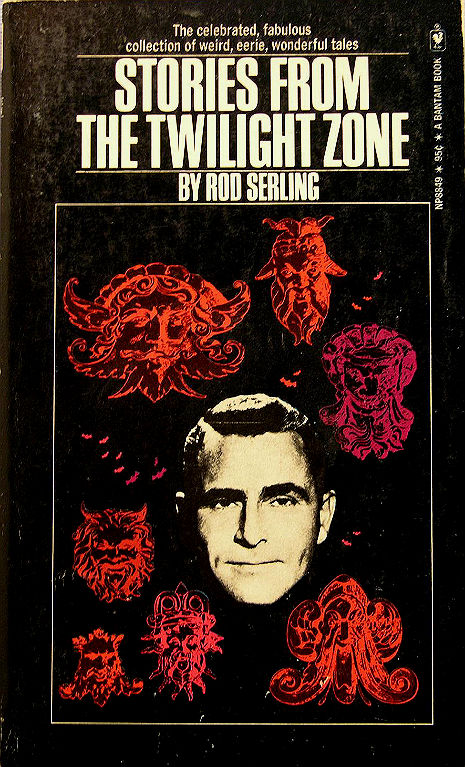
AEP : Rod Serling explains how censorship led to the creation of ‘The Twilight Zone’

Rod Serling explains how censorship led to the creation of ‘The Twilight Zone’

title


By 1959, Rod Serling had had it with the dumbing down of American television by what he saw as overly sensitive TV sponsors who forced writers to edit scripts with impunity during the boob tube’s early years. Most sponsors wanted zero controversy and nothing to appear in a script that might incline viewers to think “improperly” about a particular brand of cake batter, or car or whatever else was being promoted on a given show. In the fiery discussion below, which aired (according to IMDB) on September 22, 1959, we find Serling on The Mike Wallace Interview talking about his early writing career and the heavy hand of corporate sponsorship that led to his creation of a soon-to-debut science fiction and fantasy television series called The Twilight Zone (the first episode would air a little over a week later on October 2, 1959). A passionate exchange about early TV’s potential, thoughts about what Wallace calls “the battle of the writer to be his own man” and copious on-air smoking ensues.

After spending a few years writing promotional testimonial letters for a Cincinnati television station and making $700 during his best year, Serling was bored out of his mind with the “dreamless occupation.” He set out with his wife for New York City in 1951 to try to make a name for himself as a freelance television scriptwriter. By 1959, Serling had done just that, winning three Emmys and distinguishing himself as being possibly the first television author in history to have a live TV drama (1955’s Patterns) aired twice due to rave reviews and audience demand. 

By the way, Patterns is worth checking out.  It’s not a great copy, but you can watch it here on YouTube. The Kraft Television Theatre production addresses an episode panic-inducing jealousy brought on by the hiring of a new upstart corporate employee while promoting light and fluffy Kraft cream cheese during the station break. 

In the interview with Mike Wallace, Serling discusses being shut down by sponsors for trying to address the Emmett Till case, and receiving many complaints from a “lunatic fringe of letter writers” about an episode of Lassie wherein the iconic collie has puppies. Some wacko viewers felt that the episode promoted sexuality. The complaints lead the station to shy away from presenting the birth of puppies in the future according to Serling. He goes on to talk about the backlash caused by writers using the term “gas chamber” in a Playhouse 90 production of Judgment at Nuremberg (an early version of the 1961 film of the same name) by a sponsor who sold gas stoves. “This, I rebel against,” Serling forcefully declares.

Despite some critics being worried that Serling’s insistence on writing for television (and the money that it provided) was holding him back from making important art (a contention that Wallace brings up on a few occasions), Serling comes across as being deadly serious about his belief in TV’s possibility for greatness. Serious enough, in fact, that he was in the process of trying to get out of a quarter million dollar (obviously big money at the time), three-year writing contract with Metro-Goldwyn-Mayer so that he could devote all of his time to The Twilight Zone where he claimed to have more direct control over the relationship with sponsors. Serling indicates he was only guaranteed 26 episodes of The Twilight Zone, and that he would stand to lose a lot of money if the show didn’t carry on beyond that.  Ultimately, it ran for five seasons and 156 episodes were made. 
 

Posted by Jason Schafer
27 Dec 02:21

The Interview está enfim disponível online, mas…

by Ronaldo Gogoni

the-interview

A Sony Pictures passou por poucas e boas nas últimas semanas por conta de The Interview, o filme de Seth Rogen que despertou a ira da Melhor Coreia e seus simpatizantes. Depois de terem seus PCs hackeados e um sem número de dados vazados, ameaças a funcionários e tudo o mais (leia aqui para um breve resumo), ter cedido à chantagem e cancelado a estreia do filme pegou muito mal, por abrir precedentes perigosos. Obama criticou duramente a decisão, dizendo que “ditadores não devem nos censurar”.

Percebendo a burrada o estúdio voltou atrás e resolveu lançar The Interview em algumas salas de cinema, bem como disponibilizá-lo para streaming online. Só que neste último caso a Sony Pictures prova que de fato não entende a internet, ou não teria bloqueado geograficamente o filme.

A Sony disponibilizou The Interview em quatro canais: YouTube Movies, Xbox Video, Google Play Filmes e através do site da Kernel, a empresa escolhida às pressas (atenção para este detalhe) para ficar responsável pela distribuição online (isso porque a Sony possui o Crackle, mas divago), e o filme pode ser alugado por US$ 5,99 pelo período de 48 horas ou comprado por US$ 14,99.

Só que ao invés de notar a comoção que todo o rolo causou no mundo e liberá-lo para quem quisesse assistir, o estúdio o distribui atualmente apenas nos Estados Unidos: no site da Kernel e no Xbox Video somente pessoas com IP local e um cartão de crédito emitido no país poderão assistir a película de forma legal. Já no YouTube e Play Filmes…

the-interview-001

Eu até consigo entender os motivos que levaram a Sony a fazer tal coisa, mas em pleno 2014 é inaceitável ainda trabalharem com esse tipo de usura, impedindo um produto de ser comprado (sim, diferente do que aconteceu com BSG: B&C a distribuição não é gratuita) por quem quiser assistir, em qualquer parte do mundo. Desnecessário dizer que os torrents do filme estão indo de vento em popa, embora o pessoal tenha descoberto que o filme é bem ruim.

Para completar o festival de presepadas: ter contratado a Kernel para distribuir o filme em um site dedicado acabou rendendo uma tremenda dor de cabeça (embora alguns digam que tenha sido proposital): ao realizar o aluguel do filme no site era possível baixá-lo na íntegra com um simples clique direito. E por The Interview não possuir nenhum tipo de DRM, o bug facilitou e muito a vida daqueles que queriam distribuí-lo ilegalmente. A Kernel diz que está tentando resolver a situação; já sobre a distribuição localizada tanto a empresa quanto a Sony estão “estudando formas” de atender mais países. O Canadá recebeu o filme horas depois.

@kernelfilms You guys need some serious DRM help. pic.twitter.com/HwyQpHRAGM

— Expensive Looks (@expensivelooks) December 24, 2014

Fato: 2014 será um ano que a Sony tentará esquecer de qualquer jeito.

Fonte: TV.

Leia também:

The post The Interview está enfim disponível online, mas… appeared first on Meio Bit.


26 Dec 18:39

AEP : Inadvertent Algorithmic Cruelty

I didn’t go looking for grief this afternoon, but it found me anyway, and I have designers and programmers to thank for it.  In this case, the designers and programmers are somewhere at Facebook.

I know they’re probably pretty proud of the work that went into the “Year in Review” app they designed and developed.  Knowing what kind of year I’d had, though, I avoided making one of my own.  I kept seeing them pop up in my feed, created by others, almost all of them with the default caption, “It’s been a great year! Thanks for being a part of it.”  Which was, by itself, jarring enough, the idea that any year I was part of could be described as great.

Still, they were easy enough to pass over, and I did.  Until today, when I got this in my feed, exhorting me to create one of my own.  “Eric, here’s what your year looked like!”

image

A picture of my daughter, who is dead.  Who died this year.

Yes, my year looked like that.  True enough.  My year looked like the now-absent face of my little girl.  It was still unkind to remind me so forcefully.

And I know, of course, that this is not a deliberate assault.  This inadvertent algorithmic cruelty is the result of code that works in the overwhelming majority of cases, reminding people of the awesomeness of their years, showing them selfies at a party or whale spouts from sailing boats or the marina outside their vacation house.

But for those of us who lived through the death of loved ones, or spent extended time in the hospital, or were hit by divorce or losing a job or any one of a hundred crises, we might not want another look at this past year.

To show me Rebecca’s face and say “Here’s what your year looked like!” is jarring.  It feels wrong, and coming from an actual person, it would be wrong.  Coming from code, it’s just unfortunate.  These are hard, hard problems.  It isn’t easy to programmatically figure out if a picture has a ton of Likes because it’s hilarious, astounding, or heartbreaking.

Algorithms are essentially thoughtless.  They model certain decision flows, but once you run them, no more thought occurs.  To call a person “thoughtless” is usually considered a slight, or an outright insult; and yet, we unleash so many literally thoughtless processes on our users, on our lives, on ourselves.

Where the human aspect fell short, at least with Facebook, was in not providing a way to opt out.  The Year in Review ad keeps coming up in my feed, rotating through different fun-and-fabulous backgrounds, as if celebrating a death, and there is no obvious way to stop it.  Yes, there’s the drop-down that lets me hide it, but knowing that is practically insider knowledge.  How many people don’t know about it?  Way more than you think.

This is another aspect of designing for crisis, or maybe a better term is empathetic design.  In creating this Year in Review app, there wasn’t enough thought given to cases like mine, or friends of Chloe, or anyone who had a bad year.  The design is for the ideal user, the happy, upbeat, good-life user.  It doesn’t take other use cases into account.

Just to pick two obvious fixes: first, don’t pre-fill a picture until you’re sure the user actually wants to see pictures from their year.  And second, instead of pushing the app at people, maybe ask them if they’d like to try a preview—just a simple yes or no.  If they say no, ask if they want to be asked again later, or never again.  And then, of course, honor their choices.

It may not be possible to reliably pre-detect whether a person wants to see their year in review, but it’s not at all hard to ask politely—empathetically—if it’s something they want.  That’s an easily-solvable problem.  Had the app been designed with worst-case scenarios in mind, it probably would have been.

If I could fix one thing about our industry, just one thing, it would be that: to increase awareness of and consideration for the failure modes, the edge cases, the worst-case scenarios.  And so I will try.

26 Dec 12:48

Estudo revela que televisão é quem mais tem assunto na visita de natal à casa da tia

by Sensacionalista

O Núcleo de Pesquisas da América Latina (NuPAL) entrevistou 7 bilhões de brasileiros para estudar hábitos de natal. A pesquisa descobriu um dado que chamou muito a atenção: é a televisão o membro da família que mais tem assunto para conversar na sala durante o dia 25 de dezembro.

Segundo a pesquisa, pessoas visitam certos parentes uma vez por ano e não têm a menor intimidade para conversar por mais de dois minutos. Sendo assim, a televisão cumpre o papel social importante de quebrar o silêncio da sala.O estudo revelou também que a frase mais dita durante o enterro dos ossos é: “essa programação tá tão ruim, né?”

Por @Cacofonias

26 Dec 10:07

6 things I learned from riding in a Google Self-Driving Car

Last week, a friend and I got a sneak peek at Google's new self-driving cars. In addition to spending an afternoon cheating on my Intergalactic SpaceBoat of Light and Wonder, I got to chat with the engineers about the project.

1. Human beings are terrible drivers.

We drink. We doze. We text. In the US, 30,000 people die from automobile accidents every year.(Source) Traffic crashes are the primary cause of death worldwide for people aged 15-24, (Source) and during a crash, 40% of drivers never even hit the brakes. (Source) We’re flawed organisms, barreling around at high speeds in vessels covered in glass, metal, distraction, and death. This is one of Google’s "moonshots" -- to remove human error from a job which, for the past hundred years, has been entirely human.

2. Google self-driving cars are timid.

The car we rode in did not strike me as dangerous. It struck me as cautious. It drove slowly and deliberately, and I got the impression that it’s more likely to annoy other drivers than to harm them. Google can adjust the level of aggression in the software, and the self-driving prototypes currently tooling around Mountain View are throttled to act like nervous student drivers.

In the early versions they tested on closed courses, the vehicles were programmed to be highly aggressive. Apparently during these aggression tests, which involved obstacle courses full of traffic cones and inflatable crash-test objects, there were a lot of screeching brakes and roaring engines and terrified interns. Although impractical on the open road, part of me wishes I could have experienced that version as well.
YOLO

3. They're cute.

Google's new fleet was intentionally designed to look adorable. Our brains are hardwired to treat inanimate (or animate) objects with greater care, caution, and reverence when they resemble a living thing. Psychological studies have been done whereby participants, when asked to harm an inanimate object, were less likely to hurt the object if it had a face. Participants in the study would happily bludgeon a potato with a hammer, unless you stuck some hair and a pair of eyeballs to the potato, at which point their moral compasses would obediently snap into place.

By turning self-driving cars into an adorable Skynet Marshmallow Bumper Bots, Google hopes to spiritually disarm other drivers. I also suspect the cuteness is used to quell some of the road rage that might emerge from being stuck behind one of these things. They're intended as moderate-distance couriers, not open-road warriors, so their max speed is 25 miles per hour.

The road ready version of Google's self-driving car
Google's next generation of self-driving cars are your Marshmallow Overlords.

4. It’s not done and it’s not perfect.

Some of the scenarios autonomous vehicles have the most trouble with are the scenarios human beings have the most trouble with, such as traversing four-way stops or handling a yellow light (do you brake suddenly, or floor it and run the light?). At one point during the trip, we were attempting to make a right turn onto a busy road. Everyone’s attention was directed to the left, waiting for an opening. When the road cleared and it was safe to turn right, the car didn’t budge. I thought this was a bug at first, but when I looked to my right there was a pedestrian standing very close to the curb, giving the awkward body language that he was planning on jaywalking. This was a very human interaction: the car was waiting for a further visual cue from the pedestrian to either stop or go, and the pedestrian waiting for a cue from the car. When the pedestrian didn’t move, the self-driving car gracefully took the lead, merged, and entered the roadway.

Freaky.

The cars use a mixture of 3D laser-mapping, GPS, and radar to analyze and interpret their surroundings, and the latest versions are fully electric with a range of about 100 miles. The radar is interesting because it allows the car to see through objects, rather than relying on line-of-sight. At one point during our drive the car recognized and halted for a cyclist who was concealed behind a row of hedges.

Despite the advantages over a human being in certain scenarios, however, these cars still aren't ready for the real world. They can't drive in the snow or heavy rain, and there's a variety of complex situations they do not process well, such as passing through a construction zone. Google is hoping with enough logged miles and data, eventually the cars will be able to handle all of this as well (or better) than a human could.

5. I want this technology to succeed, like … yesterday.

I'm biased. Earlier this year my mom had a stroke. It damaged the visual cortex of her brain, and her vision was impaired to the point that she'll probably never drive again. This reduced her from a fully-functional, independent human being with a career and a buzzing social life into someone who is homebound, disabled, and powerless.

When discussing self-driving cars, people tend to ask a lot of superficial questions: how much will these cars cost? Is this supposed to replace my car at home? Is this supposed to replace taxis or Uber? What if I need to use a drive-thru?

They ignore the smarter questions. They ignore the fact that 45% of disabled people in the US still work. (Source: page 20) They ignore the fact that 95% of a car's lifetime is spent parked.(Source) They ignore how this technology could transform the lives of the elderly, or eradicate the need for parking lots or garages or gas stations. They dismiss the entire concept because they don't think a computer could ever be as good at merging on the freeway as they are.

They ignore the great, big, beautiful picture staring them right in the face: that this technology could make our lives so much better.

6. It wasn’t an exhilarating ride, and that's a good thing.

Riding in a self-driving car is not the white-knuckled, cybernetic thrill ride one might expect. The car drives like a person, and after a few minutes you forget that you’re being driven autonomously. You forget that a robot is differentiating cars from pedestrians from mopeds from raccoons. You forget that millions of photons are being fired from a laser and interpreting, processing, and reacting to the hand signals of a cyclist. You forget that instead of an organic brain, which has had millions of years to evolve the cognitive ability to fumble its way through a four-way stop, you’re being piloted by an artificial one, which was birthed in less than a decade.

The unfortunate part of something this transformative is the inevitable, ardent stupidity which is going to erupt from the general public. Even if in a few years self-driving cars are proven to be ten times safer than human-operated cars, all it’s going to take is one tragic accident and the public is going to lose their minds. There will be outrage. There will be politicizing. There will be hashtags.
It’s going to suck.

But I say to hell with the public. Let them spend their waking lives putt-putting around on a crowded interstate with all the other half-lucid orangutans on their cell phones.

I say look at the bigger picture. All the self-driving cars currently on the road learn from one another, and each car now collectively possesses 40 years of driving experience. And this technology is still in its infancy.

I say ignore the anecdotes, embrace the data.

I’m ready for our army of Skynet Marshmallow Bumper Bots.

I'm ready for the future. I'm ready for the marshmallows.

-The Oatmeal