Jacopo.bertolotti
Shared posts
[In Depth] A reboot for wave energy
[In Depth] More delays for ITER, as partners balk at costs
How IBM’s new five-qubit universal quantum computer works
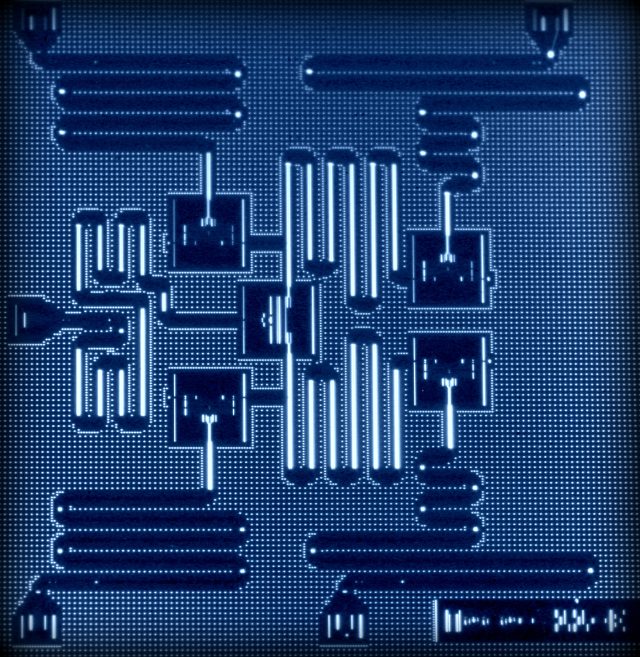
The five qubits in IBM's quantum computer. (credit: IBM)
In the wee hours of Wednesday morning, IBM gave an unwary world its first publicly accessible quantum computer. You might be worried that you can tear up your passwords and throw away your encryption, for all is now lost. However, it's probably a bit early to call time on the world as we know it. You see, the whole computer is just five bits.
This might sound like some kind of publicity stunt; maybe it's IBM's way of clawing some attention back from D-Wave's quantum computing efforts. But a careful look shows that serious science undergirds the announcement.
The IBM system is, on a very superficial level, similar to D-Wave's. Both systems use superconducting quantum interference devices as qubits (quantum bits). But the similarity ends there. As IBM emphasizes, its quantum computer is a universal quantum computer—which D-Wave's is not.
Nine years of censorship
Nine years of censorship
Nature 533, 7601 (2016). http://www.nature.com/doifinder/10.1038/533026a
Author: Lesley Evans Ogden
Canadian scientists are now allowed to speak out about their work — and the government policy that had restricted communications.
The nuclear option
Jacopo.bertolottiFor once, the comments at the bottom of the article are actually more interesting than the article itself.
The nuclear option
Nature 533, 7601 (2016). doi:10.1038/533007b
China is vigorously promoting nuclear energy, but its pursuit of reprocessing is misguided.
ResetPlug is a $60 device to keep you trapped in crappy Wi-Fi hell

If you need this, you probably deserve this. (credit: ResetPlug)
It’s Monday night and you finally collapse into your favorite chair after a day that started at 5:00am. The dogs are crated, the kids are in bed, and your spouse has graciously agreed to do dinner clean-up. You lean your head back and sigh. There’s a whole week’s worth of worry stacked up in your forebrain, but for the next 20 minutes, none of it will matter. The tablet is warm in your hands as you tap the Netflix app, and you smile in anticipation of the one truly good thing that you’ll get to experience today. The theme song is already playing in your head: "Un—BREAKABLE! They’re alive, dammit! It’s a mir-a-cle!" For the next 20 minutes, you can escape.
…except you can’t, because instead of transporting you away from your worries, the stupid screen is showing a giant-ass error message: "Netflix is not available."
The vein in your forehead—you know the one, right at your hairline—starts throbbing. You can feel it. You know what comes next. You can already see it in your mind. You’re going to have to go upstairs into your youngest’s room—because for some incredibly insane reason the cable drop is in there, which makes you want to find the person who built the damn house and throttle them to death with six feet of coax—and you’re going to have to reach back under the kid’s bed, over the dust and the dog hair and the Lego bricks and broken Star Wars toys and whatever the hell else is under there and find the damn plug for the damn router. After you unplug and plug it back in, you’re going to have to lie there watching the damn lights on the stupid thing blink for minutes—whole minutes!—while your tiny window of Netflix time slowly trickles away.
Powerful physics
Nature Physics 12, 375 (2016). doi:10.1038/nphys3769
Although driven by the promise of almost limitless energy, fusion research touches on plenty of gripping, fundamental physics — and the wider scientific community has every reason to be supportive.
Death by GPS

One early morning in March 2011, Albert Chretien and his wife, Rita, loaded their Chevrolet Astro van and drove away from their home in Penticton, British Columbia. Their destination was Las Vegas, where Albert planned to attend a trade show. They crossed the border and, somewhere in northern Oregon, they picked up Interstate 84.
The straightest route would be to take I-84 to Twin Falls, Idaho, near the Nevada border, and then follow US Route 93 all the way to Vegas. Although US 93 would take them through Jackpot, Nevada, the town near the Idaho state line where they planned to spend the first night, they looked at a roadmap and decided to exit I-84 before that junction. They would choose a scenic road less traveled, Idaho State Highway 51, which heads due south away from the I-84 corridor, crossing the border several miles to the west. The Chretiens figured there had to be a turnoff from Idaho 51 that would lead them east to US 93.
Albert and Rita had known each other since high school. During their thirty-eight years of marriage, they had rarely been apart. They even worked together, managing their own small excavation business. A few days before the trip, Albert had purchased a Magellan GPS unit for the van. They had not yet asked it for directions, but their plan wasn’t panning out. As the day went on and the shadows grew longer, they were not finding an eastward passage. They decided it was time to consult the Magellan. Checking their roadmap, they determined the nearest town was Mountain City, Nevada, so they entered it as the destination into their GPS unit. The directions led them onto a small dirt road near an Idaho ghost town and eventually to a confusing three-way crossroads. They chose the one that seemed to point in the direction they wanted to go. And here their troubles began.
Viewpoint: Particles Move to the Beat of a Microfluidic Drum
Author(s): Derek Stein
A thin vibrating plate can organize microscopic particles within a liquid into different patterns, an effect like that observed in 18th century studies of musical instruments.
[Physics 9, 46] Published Mon May 02, 2016
Samsung Smart Home flaws let hackers make keys to front door
Jacopo.bertolottiRotfl
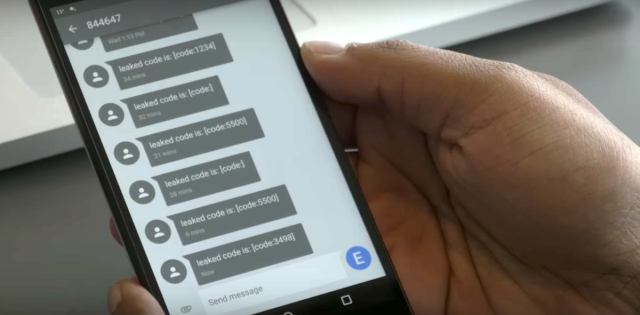
Computer scientists have discovered vulnerabilities in Samsung's Smart Home automation system that allowed them to carry out a host of remote attacks, including digitally picking connected door locks from anywhere in the world.
The attack, one of several proof-of-concept exploits devised by researchers from the University of Michigan, worked against Samsung's SmartThings, one of the leading Internet of Things (IoT) platforms for connecting electronic locks, thermostats, ovens, and security systems in homes. The researchers said the attacks were made possible by two intrinsic design flaws in the SmartThings framework that aren't easily fixed. They went on to say that consumers should think twice before using the system to connect door locks and other security-critical components.
"All of the above attacks expose a household to significant harm—break-ins, theft, misinformation, and vandalism," the researchers wrote in a paper scheduled to be presented later this month at the 2016 IEEE Symposium on Security and Privacy. "The attack vectors are not specific to a particular device and are broadly applicable."
Il Governo non ha capito a cosa servono i Dottorati
Riceviamo e pubblichiamo da Gherardo Vita, dottorando in Fisica al MIT
“Il governo si prepara a stanziare oltre 16 milioni di euro per un programma di inserimento nel mondo del lavoro di chi è in possesso di un PhD, ossia un dottorato di ricerca.
Già questo da solo dovrebbe far ridere. O piangere. Detta in breve per chi non lo sapesse, il PhD è il livello più alto di formazione che una persona possa ottenere e si ottiene dopo una laurea e un master. Dopo il PhD tipicamente la metà si dedica full-time a fare ricerca in enti o università (academia), mentre l’altra metà entra nel mondo del lavoro.
Vista l’altissimo livello di formazione e il numero tutto sommato limitato di coloro che detengono un PhD, essi sono merce pregiatissima per le aziende. Infatti di solito li strapagano.
Gli stipendi variano molto da settore a settore, ma in generale negli Stati Uniti uno con un PhD al primo impiego in azienda guadagna in media più di 80.000$ l’anno, cifre che aumentano notevolmente fino a più che raddoppiare se si va nei settori più richiesti (computer science, finance, economics e consulting) e/o si esce da università prestigiose.
Ad esempio lo stipendo medio al primo impiego di uno che ha preso un phd in informatica ad MIT nel 2014 era di 140.000$, 215.000$ per quelli di matematica. (dati qui)
Cose analoghe ci sono anche senza andare oltre oceano, in Germania è piuttosto facile trovare posti a 5-6.000€ al mese se si ha un PhD in ingegneria o informatica.
Per sintetizzare tutto in un solo dato, basta dire che il tasso di disoccupazione di chi ha un phd in America oscilla tra l’1% e il 2%. Sostanzialmente, rumore di fondo. Quindi che in Italia serva aiutare con soldi pubblici chi ha un PhD a trovare lavoro è quanto meno allarmante.
Ma se si va oltre il titolo, le cose sono ancora più tragicomiche.
Inizialmente mi sarei aspettato che un programma del genere servisse a colmare il gap tra gli stipendi molto alti che i PhD prendono sul mercato del lavoro internazionale e quelli del lavoratore medio di un’azienda italiana. D’altronde si sa, per varie ragioni, le aziende italiane investono poco o nulla in R&D e spesso coloro che devono assumere sono altamente più incompetenti del candidato da assumere.
Pertanto poteva starci che il governo dicesse «Guardate care aziende, in tutto il mondo i PhD portano un grosso valore aggiunto alle aziende in cui vanno quindi sarebbe bene che ne assumeste un po’, anche perchè se no se ne vanno all’estero. E’ vero costano, ma ci crediamo così tanto che siamo disposti a darvi dei soldi per farveli “provare” ad un costo per voi che è come quello di un lavoratore normale».
Invece:
“Da bando, il contratto di lavoro prevederà un minimo salariale di 30 MILA EURO LORDI annuali fino ad un massimo salariale di 35 mila euro.
Il Miur finanzierà l’80% dello stipendio per il primo anno di contratto, il 60% per il secondo anno e il 50% per il terzo, per un investimento complessivo di oltre 16 milioni di euro.
Le posizioni riservate ai dottori di ricerca sono principalmente concentrate su due aree tematiche: Information Technology (il 49%) e Salute e scienze della vita (il 21%). “
Cioè praticamente il programma serve a cofinanziare l’inserimento in azienda di possessori PhD a 1.500€ al mese, con un costo per l’azienda ridotto fino all’80%.
E’ vergognoso anche solo pensare una cosa del genere.
Con l’80% pagato dallo stato all’azienda questi lavoratori costano 6.000€ l’anno, meno di uno stagista, meno di un contratto di collaborazione occasionale, cioè niente.
Potete pertanto immaginare la tragicomicità delle offerte.
Una tra le più belle credo sia quella del Salumificio che cerca un “Visual Designer – Responsabile Marketing”.
D’altronde chiamali scemi. Quando ti ricapita di metterti in casa un PhD al prezzo di uno stagista del liceo?“

Storia di un furto informatico da un miliardo di dollari
 Sono emersi alcuni dettagli tecnici molto interessanti a proposito del furto informatico milionario ai danni della Bangladesh Bank che ho raccontato un mesetto fa.
Si sapeva già che criminali informatici erano riusciti a penetrare nei computer della banca centrale del Bangladesh e a sottrarre le credenziali necessarie per effettuare bonifici, inviandone una quarantina per un importo complessivo di circa un miliardo di dollari, che sarebbero finti nei conti di complici nelle Filippine e nello Sri Lanka se i ladri non avessero commesso un banale errore di ortografia (indicando come beneficiaria la Shalika Fandation al posto della Shalika Foundation) che aveva insospettito un intermediario presso la Deutsche Bank. Il furto era stato quindi interrotto quando la cifra sottratta era soltanto (si fa per dire) di circa ottanta milioni di dollari.
Ora è emerso che la Bangladesh Bank era in pratica priva di firewall e usava una rete informatica di seconda mano con componenti a bassissimo costo, secondo le indagini della BAE Systems, che hanno rivelato che i ladri avevano alterato il software del sistema SWIFT in modo da poter spedire denaro in tutto il mondo senza lasciarne tracce in Bangladesh.
Normalmente il sistema interbancario SWIFT è sicuro: è una rete privata e la maggior parte delle banche consente trasferimenti soltanto fra mittenti e destinatari concordati. Per alterarlo bisogna essere all’interno dell’organizzazione di una delle banche che partecipano al sistema, come appunto la Bangladesh Bank. Purtroppo questa banca, usando componenti di rete a basso costo, non aveva isolato i propri sistemi SWIFT dal resto della rete informatica aziendale.
Come spiega Ars Technica, questa vulnerabilità ha consentito ai criminali di entrare nella rete bancaria via Internet, farsi strada fino ai sistemi SWIFT e alterare il software Alliance Access, che effettua e registra le transazioni SWIFT. La modifica ha rimosso i controlli di integrità e coerenza di questo software, consentendo di alterare gli importi dei bonifici e il contenuto dei messaggi di conferma in modo che non rimanesse traccia dei bonifici fraudolenti dopo il loro invio. Il tutto veniva gestito da un server situato in Egitto, anche se questo non vuol dire che i criminali risiedevano in questo paese.
Il riciclaggio del denaro sottratto è passato attraverso le Filippine, dove è in corso un’indagine governativa: i soldi sono arrivati su conti intestati a due cittadini cinesi che gestiscono il gioco d’azzardo a Macao e nelle Filippine, e da lì sono stati trasferiti a vari casinò e poi a conti bancari internazionali. I casinò nelle Filippine sono esentati dalle norme antiriciclaggio e quindi sono un canale perfetto (consapevole o inconsapevole) per queste operazioni fraudolente. Le indagini hanno già portato alle dimissioni del governatore della Bangladesh Bank e all’incriminazione di altre persone che hanno fatto da tramite per i movimenti illeciti di denaro.
Saturday Morning Breakfast Cereal - Education
Jacopo.bertolottiThe danger with metrics

Hovertext: If you have two medical degrees, can you prescribe yourself twice as many painkillers?
New comic!
Today's News:
[Policy Forum] The growing problem of patent trolling
[Perspective] A fresh eye on nonequilibrium systems
[Feature] The frustrated science student behind Sci-Hub
[Feature] Who's downloading pirated papers? Everyone
Nanophotonics: Momentum in metamaterials
Nature Photonics 10, 291 (2016). doi:10.1038/nphoton.2016.81
Author: Brandon A. Kemp
Optical forces are increasingly relevant in nanoscale optical science and engineering, but optical momentum in materials is still not fully understood. It is now shown that microstructure details as well as macroscopic optical parameters are important in determining optical momentum.

Quantum phases from competing short- and long-range interactions in an optical lattice
Quantum phases from competing short- and long-range interactions in an optical lattice
Nature 532, 7600 (2016). doi:10.1038/nature17409
Authors: Renate Landig, Lorenz Hruby, Nishant Dogra, Manuele Landini, Rafael Mottl, Tobias Donner & Tilman Esslinger
Insights into complex phenomena in quantum matter can be gained from simulation experiments with ultracold atoms, especially in cases where theoretical characterization is challenging. However, these experiments are mostly limited to short-range collisional interactions; recently observed perturbative effects of long-range interactions were too weak to reach new quantum phases. Here we experimentally realize a bosonic lattice model with competing short- and long-range interactions, and observe the appearance of four distinct quantum phases—a superfluid, a supersolid, a Mott insulator and a charge density wave. Our system is based on an atomic quantum gas trapped in an optical lattice inside a high-finesse optical cavity. The strength of the short-range on-site interactions is controlled by means of the optical lattice depth. The long (infinite)-range interaction potential is mediated by a vacuum mode of the cavity and is independently controlled by tuning the cavity resonance. When probing the phase transition between the Mott insulator and the charge density wave in real time, we observed a behaviour characteristic of a first-order phase transition. Our measurements have accessed a regime for quantum simulation of many-body systems where the physics is determined by the intricate competition between two different types of interactions and the zero point motion of the particles.
Physics: Cold coffee beans grind smaller
Jacopo.bertolottiNo, wait. What?
Physics: Cold coffee beans grind smaller
Nature 532, 7600 (2016). doi:10.1038/532417b
Roasted coffee beans that are ground when cold give smaller particles than those ground at room temperature, which could affect the drink's flavour.Christopher Hendon at the Massachusetts Institute of Technology in Cambridge and his colleagues ground coffee beans (grinding burr pictured) and measured
Synopsis: Did Black Hole “Mimickers” Produce LIGO Signal?
Jacopo.bertolottiCan we devise a model which includes speculative physics and putative celestial objects to explain a dataset which is already perfectly fitted by the commonly accepted theory?
Yes, we can. And since we can, why bother with Occam's razor?
Recently detected gravitational waves might not be a signature of black holes but of other massive objects that lack an event horizon.
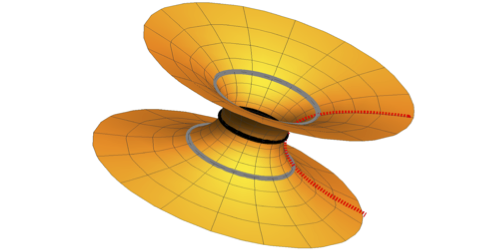
[Physics] Published Wed Apr 27, 2016
Saturday Morning Breakfast Cereal - Cognitive Decline
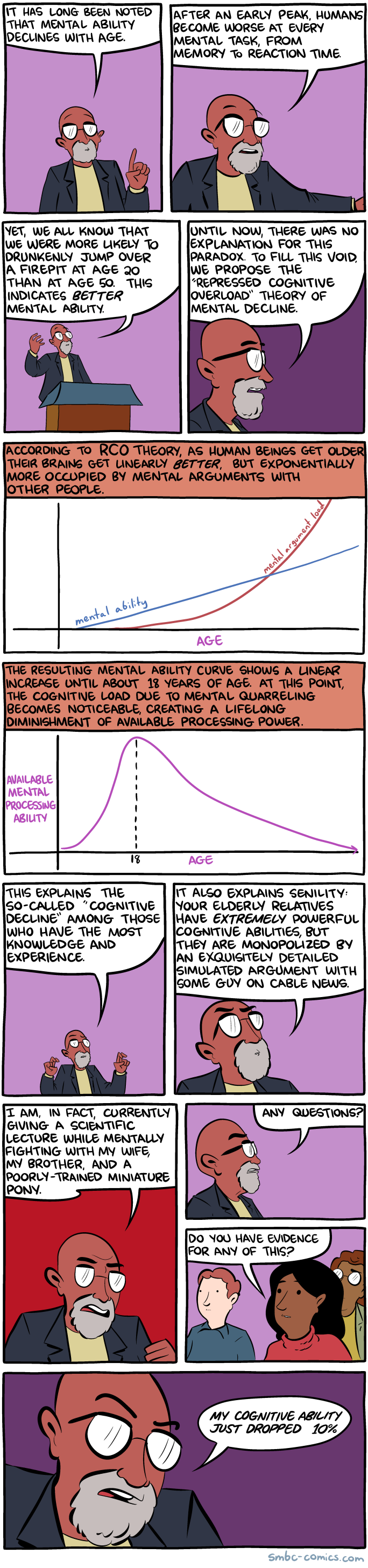
Hovertext: Interestingly, YOU'RE getting dumber too!
New comic!
Today's News:
Hey Patreon patrons-- tomorrow's comic will be posted a bit late, since I've got a bad stomach flu. Sorry!


AI will frag each other with rocket launchers in 'Doom'
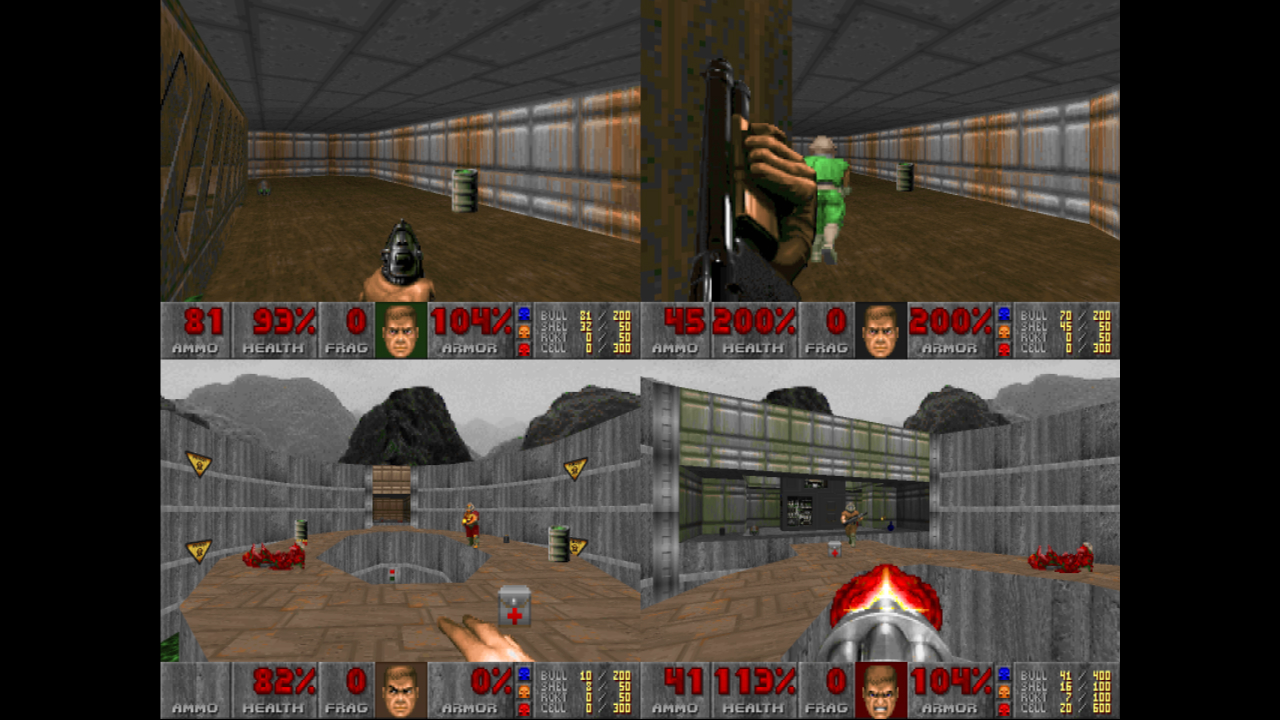 An AI learning to walk through a Doom-inspired maze by sight is one thing, but how can it handle live multiplayer mayhem? That's what the "Visual Doom AI" competition this September hopes to discover. The first set of matches are limited to a dozen 1...

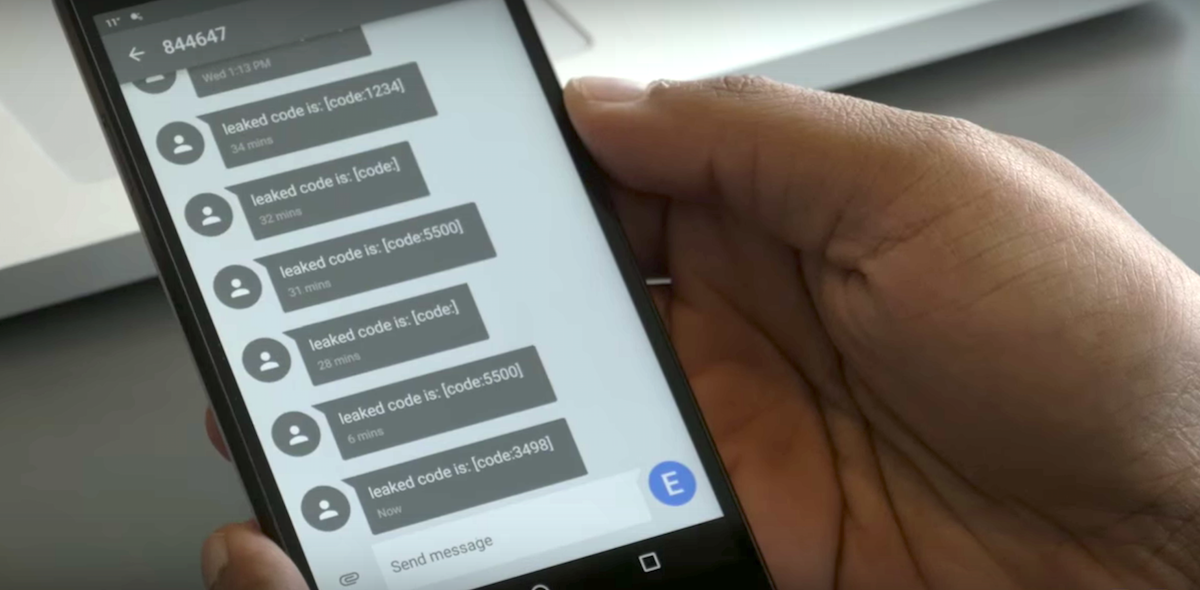
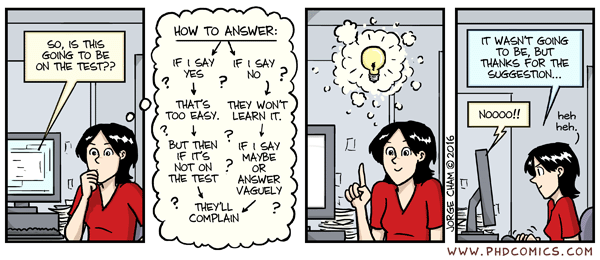
04/22/16 PHD comic: 'How to Answer `Is this going to be on the test?`'
| Piled Higher & Deeper by Jorge Cham |
www.phdcomics.com
|
|
 |
||
|
title:
"How to Answer `Is this going to be on the test?`" - originally published
4/22/2016
For the latest news in PHD Comics, CLICK HERE! |
||