Next week, the 2016 Nobel Prize in Physics will be announced, and many scientists expect it to honor the detection of ripples in space called gravitational waves, reported in February by scientists working with the Laser Interferometer Gravitational-Wave Observatory (LIGO). If other prizes are a guide, the Nobel will go to the troika of physicists who 32 years ago conceived of LIGO: Rainer Weiss of the Massachusetts Institute of Technology in Cambridge, and Ronald Drever and Kip Thorne of the California Institute of Technology (Caltech) in Pasadena. But some influential physicists, including previous Nobel laureates, say the prize, which can be split three ways at most, should include somebody else: Barry Barish, a particle physicist at Caltech. Barish didn't invent LIGO, but he made it happen. The hardware at LIGO's two observatories in Hanford, Washington, and Livingston, Louisiana; the structure of the collaboration; even the big-science character of gravitational wave research—all were molded by Barish, who is now 80. Without Barish, some physicists say, there would have been no discovery.
Author: Adrian Cho
A. Malavalli, M. Ackermann, C. M. Aegerter In turbid media, light gets multiply scattered to an extent that all the information of its propagation is scrambled over a characteristic distance called the transport mean free path. Controlling light propagation through such media is therefore challenging. By using a feedback signal, the input ... [Opt. Express 24, 23018-23026 (2016)]
The design of holographic displays usually involves a trade-off between size and viewing angle. Here, the authors combine holographic projection with a digitally designed holographic optical element so that display size and the visual angle can be designed independently.
Non-reciprocal devices, such as circulators and isolators, are indispensable components in classical and quantum information processing in integrated photonic circuits. Aside from these applications, the non-reciprocal phase shift is of fundamental interest for exploring exotic topological photonics, such as the realization of chiral edge states and topological protection. However, incorporating low-optical-loss magnetic materials into a photonic chip is technically challenging. In this study we experimentally demonstrate non-magnetic non-reciprocity using optomechanical interactions in a whispering gallery microresonator, as proposed in a previous work. Optomechanically induced non-reciprocal transparency and amplification are observed and a non-reciprocal phase shift of up to 40° is also demonstrated. The underlying mechanism of optomechanically induced non-reciprocity has great potential for all-optical controllable isolators and circulators, as well as non-reciprocal phase shifters in integrated photonic chips.
UPDATE (Sept 24): In this photo, the new Ig Nobel Prize winners bask in applause at the conclusion to the Ig Informal Lectures at MIT. Kneeling in front of them are the four fly-swatter-wielding timekeepers, plus two official Confused Bystanders. Thanks to John Jenkins and the The MIT Press Bookstore for, as, always, helping to produce the event. Photo by Richard Baguley.
On the island of Santorini, Greece, a group of AIs has been facing off in an epic battle of Doom.
This is VizDoom, a contest born from one man's idea: To improve the state of artificial intelligence by teaching computers the art of fragging. That si...
A simple technique has been developed that produces holograms made of sound waves. These acoustic landscapes are used to manipulate microscale objects, and offer great potential in medical imaging and selective heating. See Letter p.518
Authors: Kai Melde, Andrew G. Mark, Tian Qiu & Peer Fischer
Holographic techniques are fundamental to applications such as volumetric displays, high-density data storage and optical tweezers that require spatial control of intricate optical or acoustic fields within a three-dimensional volume. The basis of holography is spatial storage of the phase and/or amplitude profile of the desired wavefront in a manner that allows that wavefront to be reconstructed by interference when the hologram is illuminated with a suitable coherent source. Modern computer-generated holography skips the process of recording a hologram from a physical scene, and instead calculates the required phase profile before rendering it for reconstruction. In ultrasound applications, the phase profile is typically generated by discrete and independently driven ultrasound sources; however, these can only be used in small numbers, which limits the complexity or degrees of freedom that can be attained in the wavefront. Here we introduce monolithic acoustic holograms, which can reconstruct diffraction-limited acoustic pressure fields and thus arbitrary ultrasound beams. We use rapid fabrication to craft the holograms and achieve reconstruction degrees of freedom two orders of magnitude higher than commercial phased array sources. The technique is inexpensive, appropriate for both transmission and reflection elements, and scales well to higher information content, larger aperture size and higher power. The complex three-dimensional pressure and phase distributions produced by these acoustic holograms allow us to demonstrate new approaches to controlled ultrasonic manipulation of solids in water, and of liquids and solids in air. We expect that acoustic holograms will enable new capabilities in beam-steering and the contactless transfer of power, improve medical imaging, and drive new applications of ultrasound.
The phenomenon of electronic wave localization through disorder remains an important area of fundamental and applied research. Localization of all wave phenomena, including light, is thought to exist in a restricted one-dimensional geometry. We present here a series of experiments to illustrate, using a straightforward experimental arrangement and approach, the localization of light in a quasi-one-dimensional physical system. In the experiments, reflected and transmitted light from a stack of glass slides of varying thickness reveals an Ohm's law type behavior for small thicknesses, and evolution to exponential decay of the transmitted power for larger thicknesses. For larger stacks of slides, a weak departure from one-dimensional behavior is also observed. The experiment and analysis of the results, showing many of the essential features of wave localization, is relatively straightforward, economical, and suitable for laboratory experiments at an undergraduate level.
We investigate here the question raised in the literature about the correct expression for the electromagnetic field momentum, especially when static or stationary fields are involved. For this, we examine a couple of simple but intriguing cases. First, we consider a system configuration in which electromagnetic field momentum is present even though the system is stationary. We trace the electromagnetic momentum to be present in the form of a continuous transport of electromagnetic
energy from one part of the system to another, without causing any net change in the energy of the system. In a second case, we show that the electromagnetic momentum is zero irrespective of whether the charged system is static or in motion, even though the electromagnetic
energy is present throughout. We demonstrate that the conventional formulation of electromagnetic field momentum describes the systems consistently without any real contradictions. Here, we also make exposition of a curiosity where electromagnetic
energy decreases when the charged system gains velocity. Then we discuss the more general question that has been raised: Are the conventional formulas for energy-momentum of electromagnetic fields valid for all cases? Specifically, in the case of so-called “bound fields,” do we need to change to some modified definitions? We show that in all cases it is only the conventional formulas that lead to results consistent with the rest of physics, including the special theory of relativity, and that any proposed modifications are thus superfluous.
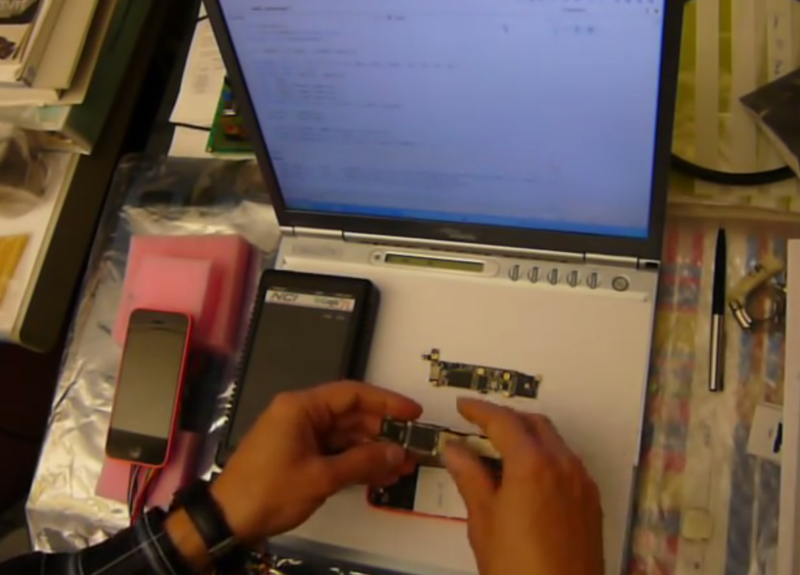
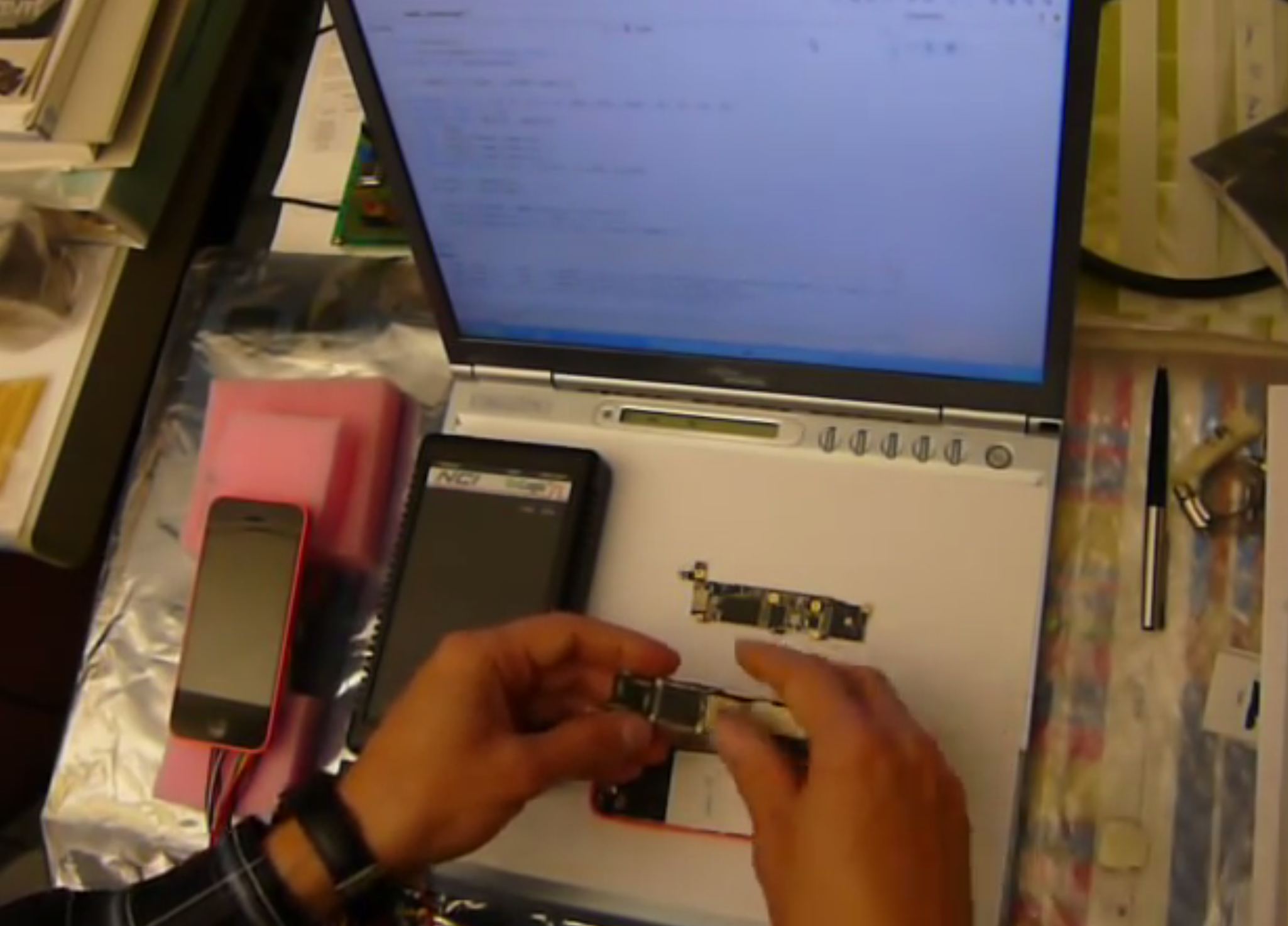
Passcodes on iPhones can be hacked using store-bought electronic components worth less than $100 (£77), according to one Cambridge computer scientist.
Sergei Skorobogatov has demonstrated that NAND mirroring—the technique dismissed by James Comey, the director of the FBI, as unworkable—is actually a viable means of bypassing passcode entry limits on an Apple iPhone 5C. What's more, the technique, which involves soldering off the phone's flash memory chip, can be used on any model of iPhone up to the iPhone 6 Plus, which use the same type of LGA60 NAND chip. Later models, however, will require "more sophisticated equipment and FPGA test boards."
In a paper he wrote on the subject, Skorobogatov, a Russian senior research associate at the Cambridge Computer Laboratory's security group, confirmed that "any attacker with sufficient technical skills could repeat the experiment," and while the technique he used is quite fiddly, it should not present too much of an obstacle for a well-resourced branch of law enforcement.
Annunciato un po' in sordina, è stato organizzato per il 29 settembre 2016 un convegno dal titolo infinito:
"Le Medicine Tradizionali, Complementari e Non Convenzionali nel Servizio Sanitario Nazionale per l’uguaglianza dei diriti di salute oltre le esperienze regionalistiche: Salutogenesi e Prevenzione, Formazione a Proflo Defnito, Buona Pratica Clinica, Ricerca Clinica No-Proft. Criticità, esigenze sociali, prospetive future: un confronto interdisciplinare".
Dietro questo romanzo intricato c'è semplicemente un incontro di medici alternativi di tutti i tipi: omeopati, ayurvedici, agopuntori, fitoterapeuti, operatori di...medicine energetiche e così via.
Niente di strano, ognuno è libero di incontrarsi e parlare di quello che vuole ma c'è qualcosa che suona male, molto male. L'incontro si svolgerà in un'aula del Senato della Repubblica, istituzione per eccellenza ed è organizzato dal vicepresidente della commissione salute del Senato.
Questo è quello che mi suona male, malissimo. Leggendo il programma del convegno, inoltre, si nota come tra i moderatori degli interventi vi sia il dott. Roberto Gava, omeopata, noto esponente dell'antivaccinismo italiano, che promuove l'omeopatia come cura dell'autismo. Alla fine, il logo della AMCP (Associazione per la medicina centrata sulla persona) che, nella sua pagina internet, parla tranquillamente di omeopatia per fermare le epidemie, di arte sacra tibetana e di meridiani Shiatsu. Stiamo parlando di medicina, salute e persone o di usanze folkloristiche e colorate?
È normale tutto questo? È normale che l'istituzione promuova le vaccinazioni e la salute e nello stesso tempo promuova chi diffonde cattiva informazione e false credenze? Perché allora non organizzare un convegno sulla difesa delle città dagli attacchi dei draghi?
A quando un convegno su come difendersi dai rapimenti alieni?
In un'epoca di progresso scientifico e di particolare attenzione alla salute, è giusto che le istituzioni ospitino e promuovano incontri su pratiche pseudoscientifiche?
Sappiamo che l'omeopatia non ha alcuna base scientifica e si basa su teorie ottocentesche, sappiamo che non funziona in nessuna patologia. Sappiamo anche che pratiche come l'osteopatia, la chiropratica o l'omotossicologia non hanno anch'esse basi scientifiche né hanno mostrato di funzionare nella maggioranza dei casi.
L'unica terapia, tra quelle ospitate, che mostra un'efficacia accertata (con dei limiti che gli stessi operatori riconoscono) è la fitoterapia.
Poi l'agopuntura: cerca da anni, in tutti i modi, di vendersi come pratica scientifica. Perché siede accanto agli altri? Perché si mescola con omeopati, antivaccinisti ed operatori...energetici? Il dott. Giovanardi, che parteciperà allo stesso convegno e che in una discussione avvenuta in questo blog in passato ci teneva a sottolineare che l'agopuntura sarebbe una pratica scientifica, che gradualmente vuole modernizzare il suo linguaggio, cosa ci fa in un convegno tra operatori energetici, antivaccinisti ed omeopati?
Non lo so, ognuno si dia le sue risposte. A me piacerebbe che la medicina oggi fosse solo nell'interesse del paziente, mi piacerebbe anche che si evitasse di spacciare per medicina delle vere e proprie stregonerie ma questo è il mondo perfetto che vorrei, la realtà è ben diversa. Quello che invece pretendo da cittadino e da operatore della salute è l'impegno, da parte delle istituzioni, di promuovere solo pratiche mediche con buone prove di efficacia, di diffondere solo cultura medica e non superstizioni e di sforzarsi per lasciare ai nostri eredi una nazione evoluta, moderna, non una regione europea dove ancora parliamo di "energie", "memoria dell'acqua" e "meridiani". Favorendo la diffusione di falsa medicina e superstizioni (cosa sono le "energie" se non superstizioni ottocentesche?) si confonde e danneggia il cittadino, si sprecano soldi e risorse, si fa cattiva informazione e si favoriscono i privati che vendono illusioni e l'ottundimento della popolazione.
Contro questa iniziativa si è mosso il Cicap (Comitato Italiano per il Controllo delle Pseudoscienze) ed il suo appello è stato raccolto da Walter Ricciardi, presidente dell'Istituto Superiore di Sanità: "No alle pratiche antiscientifiche nelle istituzioni":
Ed ha ragione: basta.
Alla prossima.
AGGIORNAMENTO 20/09/16, 18:20 : La risposta del sen. Romani, organizzatore del convegno.
Aggiornamento: 03/10/2016: Mentre da noi fanno i simposi per inserire le medicine alternative nel SSN, nel Regno Unito anche il distretto di Wirrel interrompe i rimborsi dell'omeopatia da parte del SSN. Restano solo Londra e Bristol
In arancione gli unici distretti nei quali, in UK, il SSN rimborsa ancora l'omeopatia.
Author(s): Andi Tan et al. (PandaX-II Collaboration)
The PandaX-II experiment reports results from their first full physics run in search of dark matter. They find none, and their data cut in half the existing upper limit on the scattering cross section for 40 GeV WIMPS.
[Phys. Rev. Lett. 117, 121303] Published Fri Sep 16, 2016
Ricevo, ripubblico volentieri e sottoscrivo questo comunicato del CICAP, segnalando una rettifica arrivatami dal CICAP: il simposio citato sarà organizzato dal senatore Maurizio Romani (e non Paolo Romani). Il CICAP si scusa per l'errore.
Per una medicina basata sull'evidenza, a tutela dei cittadini
Il 29 settembre si terrà a Roma un simposio, organizzato dal senatore Maurizio Romani, che intende favorire l’introduzione nel sistema sanitario nazionale di medicine alternative come omeopatia, ayurveda, chiropratica, osteopatia e medicina antroposofica (http://www.quotidianosanita.it/allegati/allegato191125.pdf).
Come CICAP sosteniamo la necessità di fornire le prove delle proprie affermazioni. Tra le pratiche presenti nel programma del convegno, l’unica ad aver dato chiari risultati sperimentali positivi, pur con alcune limitazioni, è la fitoterapia.
Pur riconoscendo il diritto individuale alla libertà di cura, riteniamo che il sistema sanitario nazionale, finanziato con denaro pubblico, debba garantire esclusivamente le terapie di efficacia dimostrata.
Riteniamo irresponsabile che le più alte istituzioni pubbliche promuovano eventi antiscientifici, proprio nel momento in cui la cronaca riporta diversi casi di persone morte per avere abbandonato cure efficaci in favore di pratiche alternative.
Chiediamo al presidente dell’Istituto Superiore di Sanità Gualtiero Ricciardi di prendere posizione contro questa pericolosa iniziativa e al presidente del Senato Pietro Grasso di promuovere attività di informazione corretta sulla salute.
Il CICAP è un'associazione scientifica e educativa che promuove un'indagine scientifica e critica nei confronti delle pseudoscienze, del paranormale, dei misteri e dell'insolito. Fondata nel 1989 da Piero Angela e da altre personalità del mondo della scienza e della cultura, tra cui Margherita Hack, Rita Levi Montalcini, Umberto Eco e Tullio Regge, vede oggi tra i suoi componenti Umberto Veronesi, Silvio Garattini, Carlo Rubbia ed Edoardo Boncinelli.
Scritto da Paolo Attivissimo per il blog Il Disinformatico. Ripubblicabile liberamente se viene inclusa questa dicitura (dettagli). Sono ben accette le donazioni Paypal.
A veritable army of outfits in Iran offer to write theses and scientific papers for a fee, advertising on the internet, through fliers, and via the placard-carrying touts who line the sidewalk outside the University of Tehran. It's unknown how many papers and theses are ginned up under false pretenses. In 2014, a member of Iran's Academy of Sciences estimated that each year as many as 5000 theses—roughly 10% of all master's and Ph.D. theses awarded in Iran—are bought from dealers. Such transactions may soon be illegal. This autumn, Iran's parliament is expected to take up work on a bill that would outlaw shady practices in scientific publishing.
Author: Richard Stone
What seemed a coup has turned into a nightmare for Sweden's most prestigious university, the Karolinska Institute (KI). In 2010, KI and its associated hospital in Stockholm managed to recruit star surgeon Paolo Macchiarini, who made international headlines when he implanted artificial windpipes into patients. With his groundbreaking tissue engineering work, KI leaders hoped he would propel the university to the top of a hot field. Instead, Macchiarini has plunged Swedish science and KI into their most serious misconduct scandal in decades, with allegations ranging from faking scientific data to subjecting patients to a risky procedure without the necessary approvals, in at least two cases leading to their deaths. Over the past 2 weeks, four investigations have released their damning findings. One confirms that Macchiarini committed misconduct, while the other three paint an unflattering image of the roles KI and the hospital have played in the affair. The case has led to a wave of resignations and dismissals, both at KI and the Nobel Assembly, the august body of 50 KI professors that selects the winners of the Nobel Prize in Medicine or Physiology. But restoring trust won't be easy. A recent survey by a leading polling company found that the institute's reputation had plunged as a result of the scandal.
Author: Gretchen Vogel
For Turkish researchers and educators, the aftershocks of the failed 20 July military coup are continuing. With just weeks to go before the start of the academic year, the government has launched a broader reorganization of higher education. Using powers granted under an ongoing state of emergency, the government fired 2346 more university staff, closed 15 private universities—leaving tens of thousands of students in the lurch—and launched a fresh wave of firings at secondary schools. The nation's science funding agency, known as TÜBİTAK, has postponed all upcoming calls for proposals. And to the dismay of international collaborators, officials shut down one of Turkey's major archaeological digs.
Author: John Bohannon






 On the island of Santorini, Greece, a group of AIs has been facing off in an epic battle of Doom.
This is VizDoom, a contest born from one man's idea: To improve the state of artificial intelligence by teaching computers the art of fragging. That si...
On the island of Santorini, Greece, a group of AIs has been facing off in an epic battle of Doom.
This is VizDoom, a contest born from one man's idea: To improve the state of artificial intelligence by teaching computers the art of fragging. That si...